
Crypto World
X Rolls Out Cashtags With Price Charts, Pilots In-App Trading via Wealthsimple



The feature lets iPhone users in the U.S. and Canada view live price charts for stocks and crypto tokens without leaving the app.
Social media platform X on Tuesday launched Cashtags, a feature that surfaces live price charts and related posts for stocks and crypto tokens directly in users’ timelines.
The feature, currently available only on iPhone in the U.S. and Canada, was announced by Head of Product Nikita Bier, who said the platform influences billions of dollars in investment decisions daily based on what users read in their feeds.
Cashtags work by letting users type a dollar-sign ticker or paste a contract address into a post or search bar. X then suggests matching assets so users can select the right one. Tapping a cashtag opens a dedicated view that shows the asset’s price chart alongside posts that mention it, all without leaving the app. Supported assets include major equities, cryptocurrencies, and memecoins using contract addresses on networks such as Solana and Base.
X has actually offered expanded cash tag functionality before, through partnerships with eToro in 2023 and TradingView in 2022, but this version goes further by adding on-chain asset support and, for the first time, a direct brokerage integration.
That integration comes via a pilot with Wealthsimple, Canada’s largest online brokerage. Canadian users who tap a cashtag will see a button that routes them to a pre-filled trading screen on Wealthsimple, creating what the company describes as a one-tap path from conversation to order entry.
The move fits squarely into a broader race among fintech and crypto platforms to build so-called super apps. As The Defiant has reported, U.S. crypto and fintech firms, including Coinbase and Robinhood, are chasing Asia’s super app model, bundling trading, payments, and social features into single platforms.
Rather than building a brokerage from scratch, X is layering financial infrastructure onto what is already one of the world’s most active venues for real-time market commentary. The company holds money transmitter licenses in more than 40 U.S. states, and its separate X Money payments product has completed internal testing.
Bier added that web and Android versions of Cashtags are coming soon, along with a global rollout of the feature.
This article was written with the assistance of AI workflows. All our stories are curated, edited and fact-checked by a human.

Crypto World
The Cryptocurrency News That Has Pepeto Wallets Growing While XRP and BNB Wait for Direction
The biggest cryptocurrency news this week is not about a price move. Japan’s Financial Services Agency approved digital assets for inclusion in regulated pension portfolios, opening a pipeline of institutional capital that the market has waited years to see.
XRP and BNB both reacted with modest gains, but neither moved the way the headline deserved because large caps price in adoption slowly.
Pepeto passed $9.78 million in presale funding with a Binance listing approaching, and the wallets that searched for this headline found what smart money already discovered weeks ago.
Reuters reported that Japan’s Financial Services Agency finalized rules allowing regulated pension funds to hold up to 5% of their portfolios in digital assets starting July 2026. The Block confirmed Japanese exchanges saw a 41% volume spike within hours of the announcement.
The ruling makes Japan the first G7 nation to give pension managers direct crypto exposure, and analysts estimate it could funnel $14 billion into the market over 12 months. The cryptocurrency news sparked a broad rally, but the biggest beneficiaries may be entries that have not listed yet.
Where Pepeto, XRP, and BNB Stand After the Japan Ruling
Pepeto ($PEPETO)
Institutional doors opening is what turns presale entries into positions everyone wishes they held, and Pepeto is the entry absorbing that energy now with the credentials to back it. Analysts forecast 100x gains for Pepeto ahead of year end because the presale sits where the price meets real demand for the first time at listing.
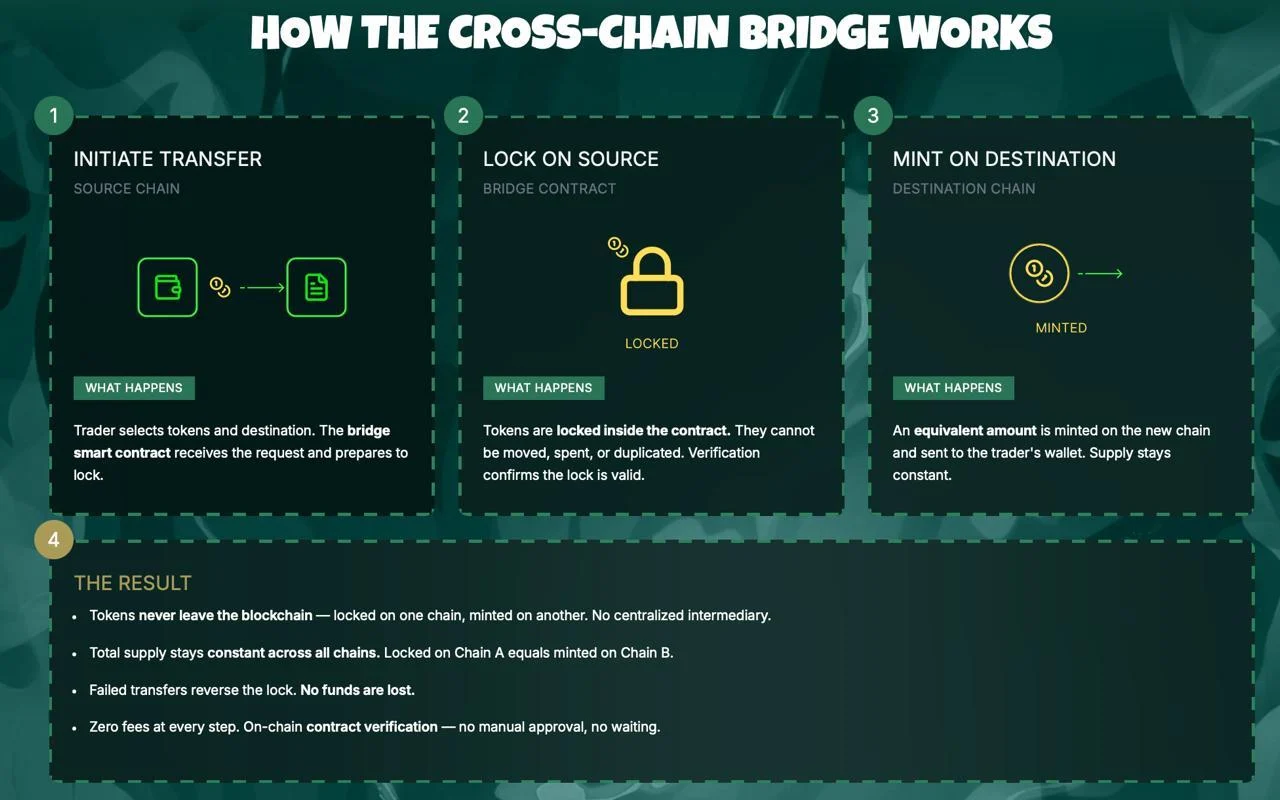
The $9.78 million entered the presale because that capital tracks working tools already running before the token reaches public markets. With 96.6% of the target filled, Pepeto moves toward a Binance listing powered by a swap engine that processes zero fee trades and a cross-chain bridge linking blockchains at zero transfer cost.
The developer who took the original Pepe token to $11 billion on no product and the same 420 trillion total leads Pepeto.
SolidProof cleared every contract before the presale went live, and a Binance specialist guides the build. Pepeto trades at $0.0000001868 with 175% APY staking for holders ahead of listing. The Pepeto presale is that same kind of early discovery, and the entry ends when the token goes public.
XRP
XRP trades near $1.39 after a modest gain on the Japan ruling per CoinMarketCap data. Ripple’s cross-border payment network could benefit from pension inflows, but XRP sits 61% below its $3.65 all-time high from July 2025 and has struggled to break higher.
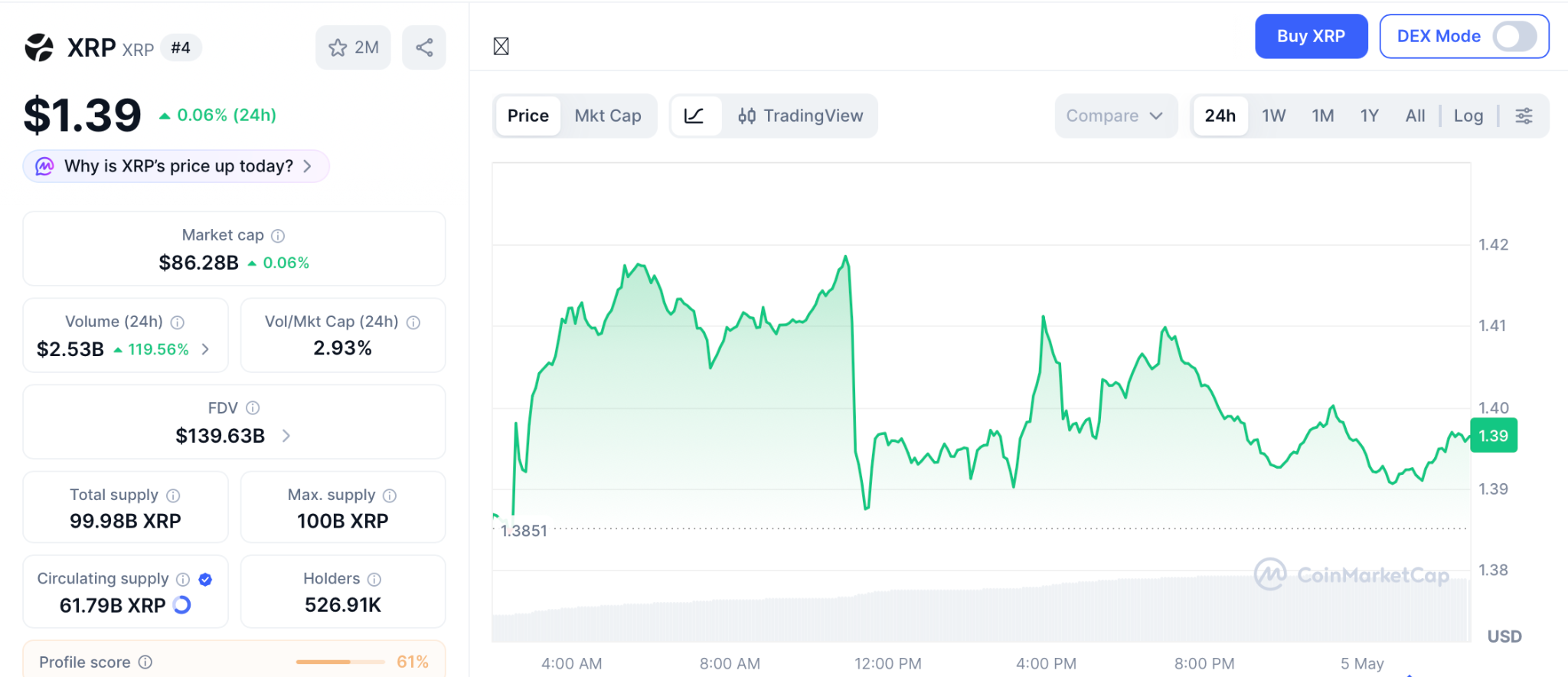
Analysts target $2.00 to $2.50 by year end, which represents a solid gain from current levels. Pension capital entering XRP would add to volume, but the return ceiling from $1.39 cannot match what presale entries deliver once a listing arrives.
BNB
BNB holds at $627 after a steady week following the Japan ruling per CoinMarketCap data. The Binance token benefits from exchange activity, and Japanese pension capital could increase trading volume across the board. Analysts project BNB reaching $750 by Q4, a 20% move from here.
BNB provides steady growth, but that ceiling from $627 is a fraction of what presale math offers when the listing hits.
Closing Thoughts
The cryptocurrency news from Japan opened a door that sends billions into digital assets, but the tokens that gain the most from new capital are the ones that have not listed yet.
Pepeto fills that search because the math points to 100x from a live swap engine with $9.78 million behind it and a Binance listing on track for Q2 2026. The presale sits at 96.6% of its target, which means there is barely any time left to enter at the current price.
The Pepeto official website is where the presale still stands today. The moment the listing confirms, the $0.0000001868 price is gone forever, and the wallets that hesitated will be the ones reading cryptocurrency news about the returns Pepeto holders made. This is the kind of moment that separates the people who build wealth from the ones who talk about it.
Click To Visit Pepeto Website To Enter The Presale

FAQs
How does Japan approving crypto for pension funds change the cryptocurrency news outlook?
Japan became the first G7 nation to allow pension funds to hold up to 5% in digital assets, opening an estimated $14 billion pipeline over 12 months. The ruling boosts every crypto asset but gives the strongest advantage to presale tokens like Pepeto that have not listed yet.
What is the best crypto to buy before a Binance listing in 2026?
Pepeto leads the presale market before a Binance listing with $9.78 million collected, a SolidProof verified swap engine running, and a bridge that moves tokens across chains at zero cost. At $0.0000001868, the entry carries return room that XRP at $1.39 and BNB at $627 cannot offer.
Disclaimer: This is a Press Release provided by a third party who is responsible for the content. Please conduct your own research before taking any action based on the content.

Crypto World
Arbitrum Security Council Member Flags DeFi Risks After $72M North Korea Crypto Recovery

TLDR:
- Arbitrum’s Security Council froze $72M in stolen funds traced to North Korean wallets via a Kelp DAO bridge attack.
- Griff Green warns that leaked private keys and social engineering now pose greater threats than smart contract bugs.
- Aave and similar lending protocols are flagged for being too loose in managing liquid staking token risks.
- The recovered $70M will be redistributed to affected users through a decentralized Arbitrum DAO token holder vote.
Arbitrum Security Council member Griff Green has raised concerns about how lending protocols handle liquid staking tokens.
Green, a veteran of the 2016 Ethereum DAO hack, flagged operational security gaps across decentralized finance. He spoke following the recovery of $72 million in stolen crypto assets linked to North Korean hackers.
The incident involved a Kelp DAO exploit that affected Aave and resulted in roughly $300 million in stolen tokens via a bridge attack.
Arbitrum Council Steps In to Freeze Stolen Funds
The Arbitrum Security Council acted swiftly after tracing $72 million to North Korean-controlled wallets. The council operates as a nine-of-twelve multi-signature group with emergency intervention powers.
Working alongside the Seal 911 team, the council froze the stolen funds in a new address. That address remains inaccessible to the attackers, effectively halting any further movement.
Green noted this was the first time the council used its powers to freeze funds directly. Previously, those powers covered protocol upgrades and bug fixes only.
The action drew on social consensus rather than code immutability. Green referenced the 2016 Ethereum DAO hard fork as a precedent for this kind of intervention.
On the nature of blockchains, Green was direct: “Blockchains are not immutable and can be altered through social consensus.”
He pointed to the Ethereum DAO hard fork as proof that the community can act when needed. This time, however, the stakes involved another party’s funds rather than his own. That distinction made the recovery effort feel less personal but no less urgent.
The recovered $70 million will now fall under Arbitrum DAO governance. Token holders will vote on how to redistribute those funds to affected users.
This approach reflects decentralized governance in practice. It also sets a precedent for how stolen funds may be handled in future incidents.
Green Calls Out Weak Operational Security Across the Industry
Green stated that smart contract bugs are no longer the biggest threat facing crypto. Instead, he pointed to operational security failures such as leaked private keys.
North Korean actors, in particular, rely heavily on social engineering tactics. These methods bypass code-level protections entirely and target human vulnerabilities.
Addressing the broader security gap, Green warned that the industry must match the standards of mature tech companies.
He observed that attackers like North Korea “often rely on social engineering rather than smart contract exploits.” That shift in tactics means technical audits alone are no longer sufficient. Teams must also harden their internal processes and access controls.
Green also addressed how lending protocols like Aave approach liquid staking tokens. He believes these platforms are “too loose with liquid staking tokens” and overlook underlying technical risks.
That oversight creates exposure that bad actors can exploit through bridge attacks. Tighter risk frameworks around these assets would reduce that vulnerability significantly.
Looking ahead, Green supports ongoing efforts like the DAO Security Fund. This initiative aims to identify and support critical security projects across Ethereum.
Stronger infrastructure benefits the broader ecosystem over time. Making crypto safe and accessible for everyday users remains the long-term goal.
Western Union’s new Solana-based stablecoin, USDPT, may do more than speed up money transfers. It could also weaken the old lines between remittances, consumer payments and bank settlement, according to Angus Scott, founder of the Solana Research Institute, a Solana Foundation-backed body.
Western Union launched the U.S. dollar-backed stablecoin issued by Anchorage Digital Bank N.A. on Monday. The company said the token will support 24/7 settlement with agents and partners across its global payment network. The launch follows Western Union’s April disclosure that USDPT would initially replace SWIFT-based interbank settlement with its agents.
Scott told CoinDesk the launch is another sign that stablecoins are starting to challenge older payment models.
“Western Union’s adoption of Solana-based stablecoins is another point of proof that stablecoins are becoming highly disruptive to traditional payments business models,” Scott said.
The key point, he added, is that Solana can handle both small consumer payments and large settlement flows. Low fees make it possible to use a stablecoin for small purchases, and fast settlement, coupled with 24/7 operations, can also help firms move money between agents without waiting for correspondent banks.
Scott said that could let Western Union pool idle balances and manage cash across its network in real time. Businesses that accept USDPT could do the same with customer payments.
“The Western Union model appears to be breaking down the barriers between remittances, payments and wholesale settlements via correspondent banks,” Scott said. “How this plays out will be one of the key themes of the next few years.”


Miami Beach, FL — Morgan Stanley’s newly launched spot bitcoin exchange-traded fund (MSBT) has attracted over $200 million in early demand, and it’s largely without help from its own advisors.
“Almost all of that first week or two of activity was self-directed, meaning it was not our advisors that were selling this,” Amy Oldenburg, the bank’s newly appointed head of digital assets, said during a fireside chat at Consensus in Miami.
The fund, just a few weeks old, has already gathered more than $200 million in assets, an unusually fast start in the traditional ETF market, where most launches struggle to gain traction over a short period of time. Oldenburg said the flows reflect individual investors making their own allocation decisions rather than relying on financial advisors.
The dynamic points to a broader shift.
Crypto exposure is no longer limited to niche or speculative corners of the market. Instead, investors who may already hold digital assets directly are now moving some of that capital into regulated products.
Oldenburg noted “how much activity that we’re fielding in terms of spot crypto holders that are also looking to put assets into ETPs,” describing a transition from decentralized holdings to more traditional investment vehicles.
‘Hybrid world’
However, Morgan Stanley is not betting on a single format. The firm plans to support both ETF access and direct crypto ownership, including spot trading on its wealth platform later this year.
“We’ll live in a hybrid world for quite some time, where we’ll be supporting both the digital native and the traditional business all in one,” Oldenburg said.
That approach reflects a practical challenge facing large financial institutions: clients increasingly hold both stocks and crypto, often across disconnected systems. Bringing those assets into a single view remains a work in progress.
Beyond the ETF, Oldenburg said the bank is exploring how digital assets could reshape market structure more broadly, including faster settlement and tokenized financial products.
“We’re not tokenizing for the sake of tokenizing,” she said. “Ultimately, we want to provide the client more value and better service.”
The effort is part of a longer-term shift rather than a short-term trend. “This isn’t a 2026 project or 2027 project. This is the next decade,” she added.


OnRe Finance raised $5M from Forward and RockawayX as Forward prepares up to $25M into ONyc, scaling Solana-based, tokenized reinsurance with DeFi integrations.
Summary
- OnRe Finance, a regulated on-chain reinsurance firm built on Solana, has completed a $5 million funding round co-led by Forward Industries and RockawayX.
- Forward plans to deploy up to $25 million into OnRe’s ONyc token, a yield-bearing Solana asset that gives holders exposure to tokenized reinsurance returns.
- Proceeds will be used to scale OnRe’s Solana-based reinsurance pools, expand underwriting capacity, and deepen integrations with DeFi protocols across the ecosystem.
OnRe Finance said it has closed a $5 million strategic funding round to accelerate development of its tokenized reinsurance platform on Solana, with the raise co-led by Solana-focused treasury company Forward Industries and multi-strategy digital asset firm RockawayX.
Forward and Rockaway back on-chain reinsurance on Solana
According to the GlobeNewswire announcement, the capital will go toward expanding OnRe’s underwriting programs, hiring, and integrating its products more deeply into Solana’s DeFi stack.
Forward, listed on Nasdaq as FWDI, described the move as a “natural extension” of its Solana treasury strategy, which it says is shifting from relying solely on staking yield to adding “high-quality, real-world cash flows that are both complementary and uncorrelated.”
OnRe is licensed in Bermuda under both the Insurance Act and the Digital Asset Business Act, allowing it to accept digital assets as collateral for traditional reinsurance contracts and to pass through returns from a diversified book of underwriting risk to on-chain investors.
$25M ONyc deployment for tokenized reinsurance yield
Separately from the equity round, Forward said it “intends to deploy up to $25 million into ONyc,” OnRe’s yield-bearing RWA token on Solana, which turns stablecoins into reinsurance collateral and pays out returns from both reinsurance income and collateral yield.
ONyc pools are integrated with leading Solana DeFi venues and can be used as collateral for lending, borrowing, and looping strategies, effectively letting investors turn reinsurance-backed cash flows into composable on-chain capital.
Insurance industry coverage notes that OnRe has previously launched structured products like the ONe token, which targeted projected returns north of 30% by combining reinsurance performance, collateral yields, and token incentives, leveraging the $750 billion global reinsurance market as a base.
RockawayX, an early Solana backer and investor in more than 15 Solana ecosystem projects, has argued that OnRe’s model can “generate the same revenue from $10 million in TVL as a $500 million money market fund” because reinsurance premiums and collateral income stack in a capital-efficient way.
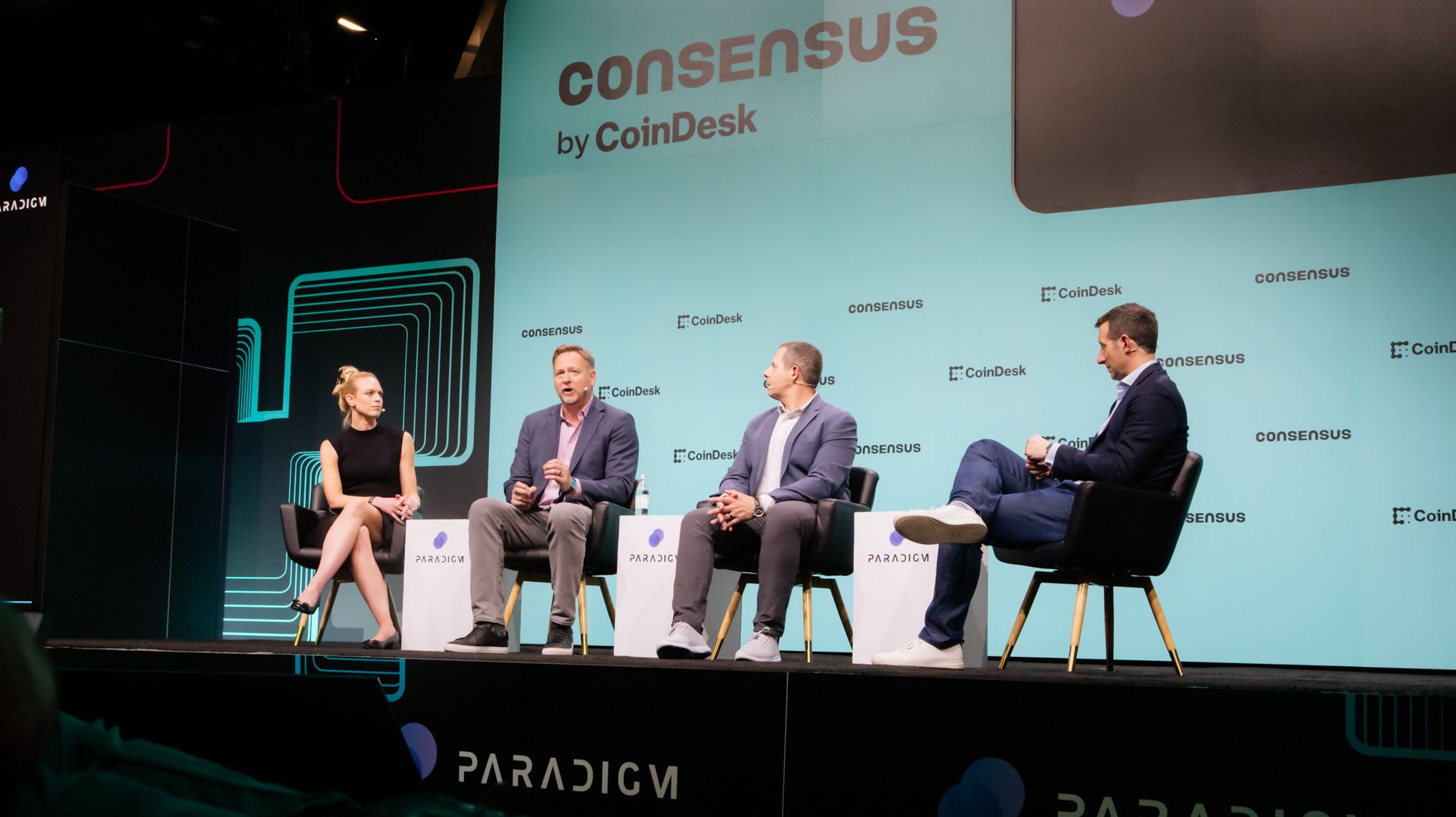
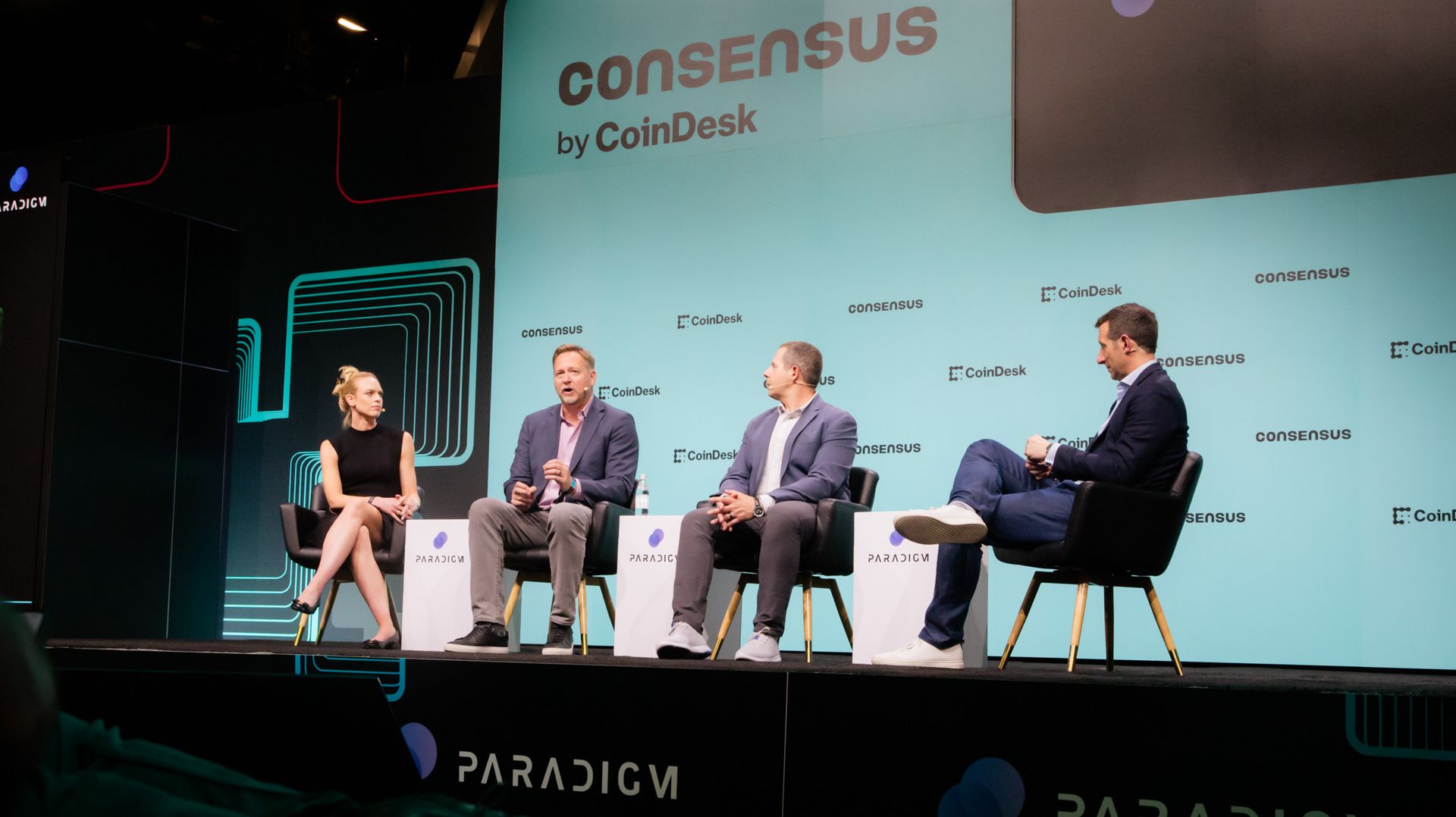
Miami Beach, FL — “The market is the market… it’s not crypto and traditional anymore,” said Dave LaValle, President of CoinDesk Indices and Data, on a panel at Consensus Miami Tuesday, capturing a shift echoed across issuers and asset managers.
As traditional finance firms pour in, Douglas Yones of Direxion argued that institutional participation is “good for the industry,” bringing standardization and discipline to processes that were once fragmented.
That institutional layer is also unlocking global access. In regions where spot crypto remains restricted, particularly across parts of Asia, ETFs have emerged as the primary on-ramp.
“ETFs are a plug-and-play solution,” said Krista Lynch, SVP of ETF Capital Markets at Grayscale, noting they fit seamlessly into existing risk systems that can’t accommodate direct bitcoin exposure.
The result is rapid adoption. Lynch points to surging demand for features like in-kind redemptions and collateral usage, while Steven McClurg, CEO of Canary Capital, highlights a simpler appeal: security and liquidity. “Some investors would rather hold an ETF and let issuers handle custody,” he said.
Where the market goes next is already taking shape. Index-based products are poised to organize a growing universe of assets, while staking and income-generating strategies could define the next wave. Tokenization, though promising, remains in its early stages, according to McClurg.
Still, the direction is clear: ETFs aren’t just expanding crypto access, they’re redefining how the asset class is structured, distributed, and owned globally.
Read more: Recovery in bitcoin ETF inflows is real. It is just not complete yet.
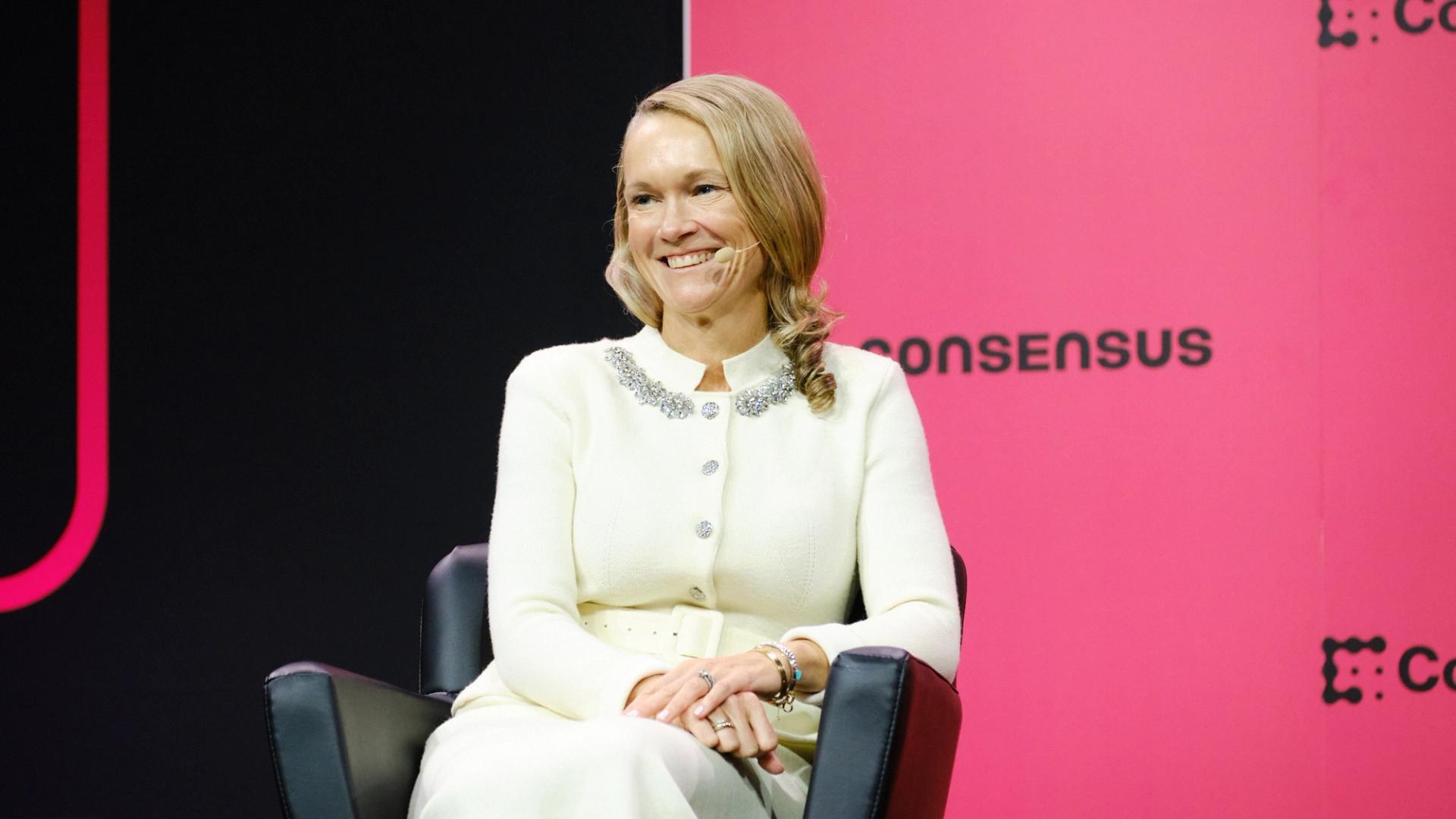
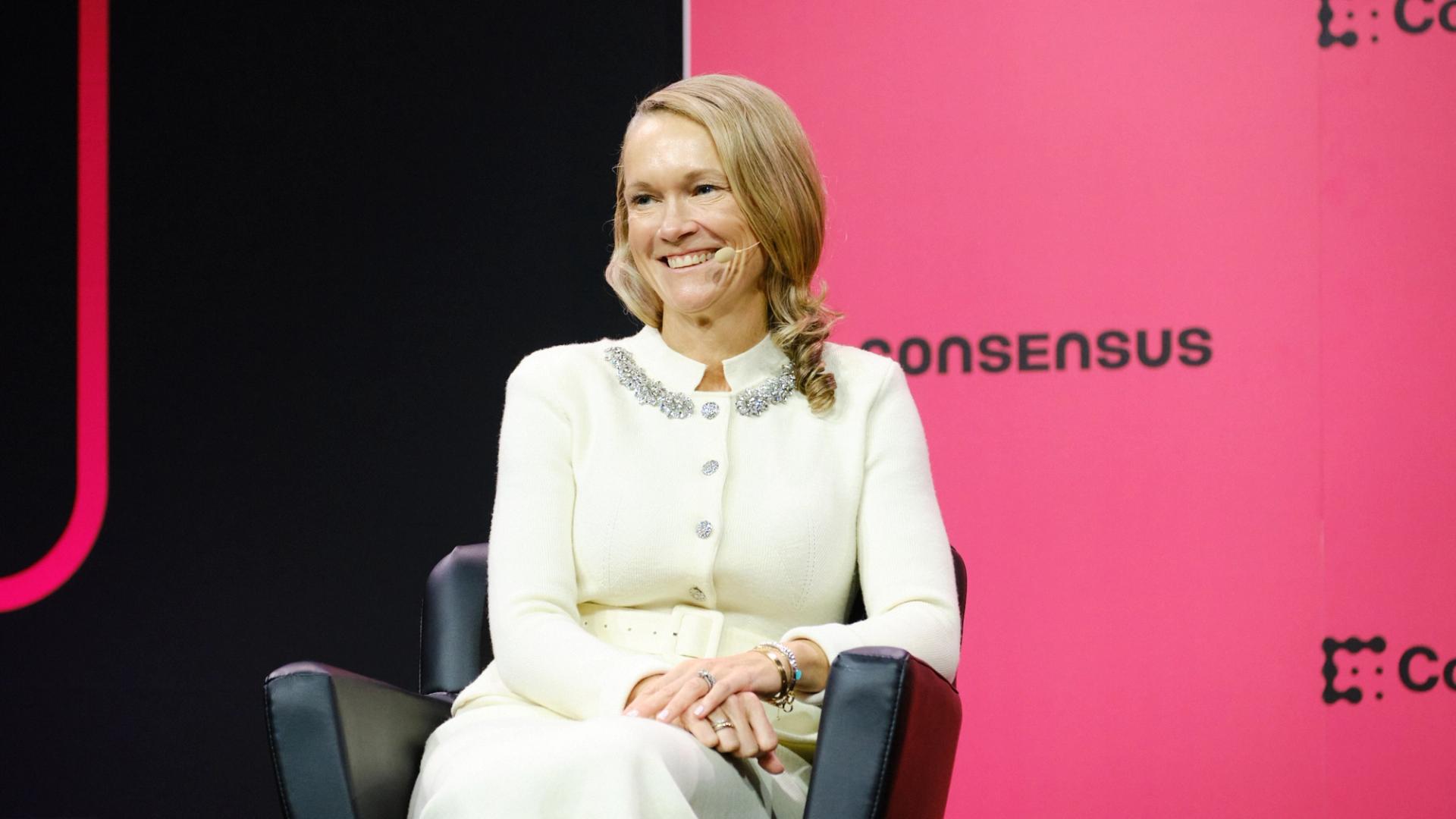
Miami Beach, FL — Tokenized money will fail to deliver on its promise if it remains siloed within individual banks, according to Ryan Rugg, Citigroup’s head of digital assets for treasury and trade solutions.
Speaking at Consensus in Miami, Rugg said large corporate clients are not looking for single-bank solutions but systems that work seamlessly across financial institutions. “No one wants just a Citi token,” she said. “They want that multi-bank aspect of it.”
The comment reflects a core challenge in the push to bring blockchain-based payments into mainstream finance. While banks have begun issuing tokenized deposits and building internal platforms, many of those systems operate within closed networks.
For global companies, that approach falls short. Rugg said Citi’s clients often manage “hundreds, if not thousands of bank accounts across multiple banks globally,” creating complexity in moving money for payroll, suppliers and investments.
Those clients are increasingly asking for real-time capabilities. In a survey Citi conducted several years ago, Rugg said the response was “basically unanimous” that faster, always-on payments were a top priority.
Blockchain technology offers one path to that goal, but only if systems can connect. Citi has built its own tokenized platform and linked it to its broader banking network, including a 24/7 U.S. dollar clearing system with more than 300 banks. Still, Rugg emphasized that internal upgrades alone are not enough.
“This is another tool in the toolkit,” she said, adding that banks must also modernize traditional infrastructure and connect it with digital systems.
The broader industry faces fragmentation. A growing number of banks, fintech firms and crypto projects are building separate networks, often using different standards. That risks recreating the same inefficiencies blockchain aims to fix.
Rugg argued that shared infrastructure — built “for the industry, by the industry” — will be key to scaling tokenized finance, citing models such as Swift’s global messaging network.
At the same time, regulation remains a constraint. Large banks require clear legal frameworks before rolling out new products. “Unless it is 100% permissible, we are not going to do that,” Rugg said.
Crypto World
Vitalik Buterin Calls Consortium Blockchains a Failure and Backs Cryptographic Server Upgrades
TLDR:
- Buterin declared consortium blockchains a failure at Arbitrum Day on July 20, 2024, citing cartel-like structures.
- He proposed adding Merkle roots and validity proofs to centralized servers as a low-disruption enterprise fix.
- Buterin defined four L2 categories: EVM chains, server upgrades, experimentation zones, and app-specific chains.
- Interoperability between diverse L2 types is central to Ethereum’s vision of a heterogeneous sharded ecosystem.
Ethereum co-founder Vitalik Buterin has publicly stated that consortium blockchains have largely failed to deliver on their original promise.
Speaking at Arbitrum Day, Buterin argued that these private chains combine the worst traits of both centralized and decentralized systems.
The result, he said, resembles cartel-like structures that lack genuine openness or meaningful privacy. He then proposed a more practical path forward for enterprises seeking blockchain benefits.
Buterin’s Case Against Consortium Blockchains
Consortium blockchains were once viewed as a middle ground for enterprises wary of fully public chains. However, Buterin pointed out that they inherit drawbacks from both worlds without capturing the strengths of either. They are neither truly open nor genuinely private, making them difficult to justify at scale.
Rather than scrapping existing infrastructure entirely, Buterin offered a practical alternative. He proposed retrofitting centralized servers with cryptographic tools such as Merkle roots and validity proofs. These proofs would be anchored on-chain to strengthen security without requiring a full system overhaul.
Buterin described consortium chains as structures that produce outcomes resembling cartels, noting they are “devoid of real openness or privacy.”
His remarks pointed to a fundamental design problem that no incremental fix could address within the consortium model itself.
This approach, which he described as adding a “sidecar” for verification, targets enterprises that do not need full censorship resistance.
It provides transparency and user-facing security guarantees while keeping disruption to current deployments minimal.
The proposal reflects a broader shift in how Buterin now views the relationship between centralized systems and blockchain technology.
Layer 2 Solutions and the Road Ahead
Buterin also addressed the evolving role of Layer 2 solutions within the Ethereum ecosystem. He defined L2s as systems that operate largely off-chain but draw their security from Ethereum’s base layer. Their development has moved well beyond early concepts like state channels.
He outlined two main frameworks for understanding L2s. The first treats them as an extension of Ethereum’s sharding vision, allowing for scalable transaction processing and reduced fees.
The second frames them as “servers, but better,” suited for mainstream and enterprise use cases that require a balance between centralization and decentralization.
Buterin further broke down L2s into four categories: EVM-compatible chains, server-like systems with on-chain proofs, experimentation zones for new programming languages and virtual machines, and application-specific chains such as Worldcoin’s World Chain. Each serves a different segment of the broader ecosystem.
He stressed that interoperability between these varied L2 types remains critical. Cross-chain communication and shared security allow the ecosystem to serve a wide range of applications.
Together, they form what Buterin envisions as a heterogeneous sharded network capable of meeting diverse performance and security needs.
Update May 5, 2026, 1:30 pm UTC: This article has been updated to add information from an SEC filing.
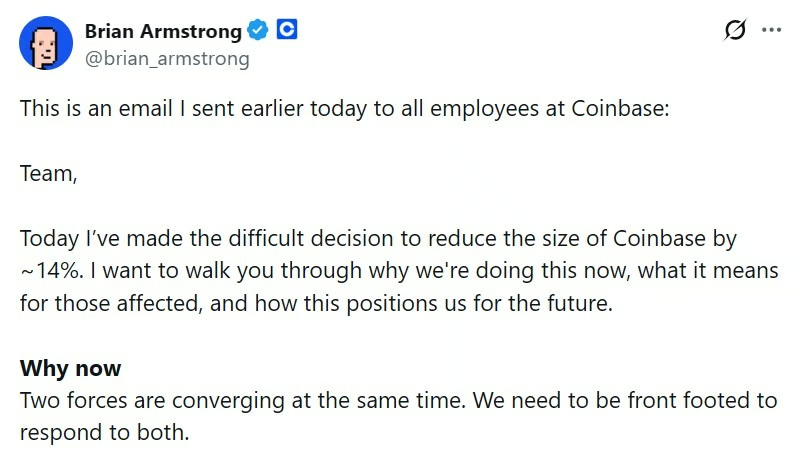
Coinbase will cut about 14% of its workforce, or roughly 700 jobs, as CEO Brian Armstrong moves to make the crypto exchange leaner and more focused on artificial intelligence.
Armstrong said in an email to employees that Coinbase is responding to two forces at once: a down market that pressured the company’s quarter-to-quarter business and rapid advances in AI that are changing how teams work.
He said the company will flatten its organizational structure to a maximum of five layers below the CEO and chief operating officer, require leaders to act as “player-coaches” rather than pure managers and concentrate around smaller AI-native teams that can use automated tools to increase output.
“To those affected, we will be providing a comprehensive package to support you through this transition,” Armstrong said, saying that it will include at least 16 weeks of base pay for US employees, additional pay based on tenure, their next equity vest and six months of “COBRA” or the “Consolidated Omnibus Budget Reconciliation Act,” a US program that allows former employees to temporarily continue employer-sponsored health insurance coverage.
A Tuesday filing with the US Securities and Exchange Commission showed that Coinbase expects its restructuring plan to incur about $50 million to $60 million in expenses tied to severance and termination benefits. The company expects the plan to be substantially complete in the second quarter of 2026.
The cuts show Coinbase framing AI not only as a productivity tool, but as a reason to rethink staffing, management and team structure across one of the largest US crypto companies.
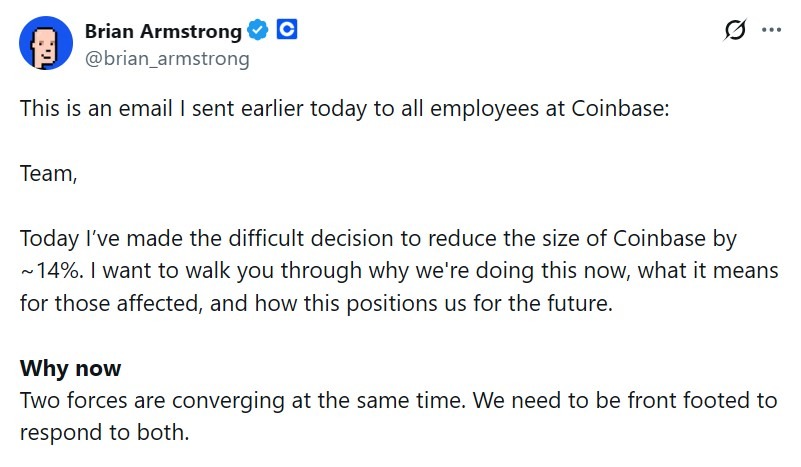
Source: Brian Armstrong
Crypto companies cut staff amid AI shift
Coinbase’s restructuring follows other workforce reductions across crypto companies in recent months, as firms respond to weaker market conditions, cost pressures and the growing use of AI in internal operations.
In February, Gemini said that it planned to cut up to 200 jobs, or about 25% of its workforce, while exiting the UK, EU and Australia as part of a broader cost-reduction plan, according to Reuters. The cuts were expected to affect employees in the United States, Singapore and Europe and be completed in the first half of 2026.
Related: Most crypto investors believe Bitcoin is undervalued: Coinbase survey
In March, Crypto.com cut 12% of its workforce as it accelerated its AI push. The move affected about 180 employees based on the exchange’s listed headcount of around 1,500. The company said the layoffs were part of its plans to prioritize resources around key growth areas.
In the same month, the Algorand Foundation also cut 25% of its staff, citing macroeconomic uncertainty, weaker crypto prices and the rise of AI.
Magazine: AI-driven hacks could kill DeFi — unless projects act now


Pavel Durov says Telegram will replace the TON Foundation and become the network’s largest validator as part of a ‘Make TON Great Again’ roadmap.

The Cryptocurrency News That Has Pepeto Wallets Growing While XRP and BNB Wait for Direction

Prime Video’s New ‘Reacher’ Series Will Officially Be Very Different From Alan Ritchson’s Crime Thriller [Exclusive]

New stealthy Quasar Linux malware targets software developers

Manchester United reach agreement with Casemiro over contract clause amid transfer speculation

US brings back mandatory military draft registration

Steven Gerrard disagrees with Gary Neville over ‘shock’ Chelsea and Arsenal claim | Football


![#1 working capital management ~ Financial Management [FM] ~ For B.Com/M.Com/CA/CS/CMA](https://wordupnews.com/wp-content/uploads/2026/05/1778036318_maxresdefault-80x80.jpg)
-

 NewsBeat2 days ago
Channel 5 – All Creatures Great and Small series 7 new post
-
 Business6 days ago
Tesla Officially Registers Elon Musk’s Stock: What Investors Need to Know
-
 Tech4 days ago
Trump’s 25% EU auto tariff breaches Turnberry Agreement that also covers semiconductors and digital trade
-
 Sports4 days ago
Paul Scholes issues Marcus Rashford reality check as agreement emerges over Man United star
-

 Business7 days ago
Barclay Brothers Avoid Bankruptcy: HSBC Drops High Court Petitions After IVA Deal
-

 Entertainment4 days ago
Met Gala 2026 Rumored Guest List Is Turning Heads
-

 Entertainment6 days ago
Celebrities Who Are Attending the 2026 Met Gala Event
-

 Entertainment6 days ago
Insider Claims Reason Behind Key & Peele Split
-

 Crypto World6 days ago
Meta (META) starts stablecoin payout to creators in Circle’s USDC on Polygon, Solana via Stripe
-

 Business6 days ago
Strait of Hormuz Remains Heavily Restricted on April 29 Amid Iran Conflict
-
Business5 days ago
Strait of Hormuz Blockade Persists Amid US-Iran Standoff, Sending Oil Prices Soaring
-

 Tech6 days ago
Texas Instruments made a new flagship graphing calculator: the TI-84 Evo
-

 Business5 days ago
Two Powerball Tickets Split $143 Million Jackpot in Indiana and Kansas
-
 Sports4 days ago
David Benavidez responds to team Canelo saying the fight will never happen
-

 Sports6 days ago
Saudi Arabia set to withdraw LIV Golf funding after 2026 season, per reports
-

 Entertainment4 days ago
Kylie Jenner Hit With Second Lawsuit From Ex-Housekeeper
-

 Sports4 days ago
Cavaliers vs. Raptors Game 6 live score, updates, highlights from 2026 NBA playoffs first-round series
-
Entertainment4 days ago
New on Prime Video in May 2026 — Full List of Movies and Shows
-
Business3 days ago
Winning Numbers Drawn as Jackpot Resets to $20 Million
-

 Sports4 days ago
Plane crash in Wimberley, Texas kills 5 pickleball players at tournament
You must be logged in to post a comment Login