
Business
(VIDEO) Elon Musk Predicts Universal High Income and Deflation as AI Boom Reshapes Economy

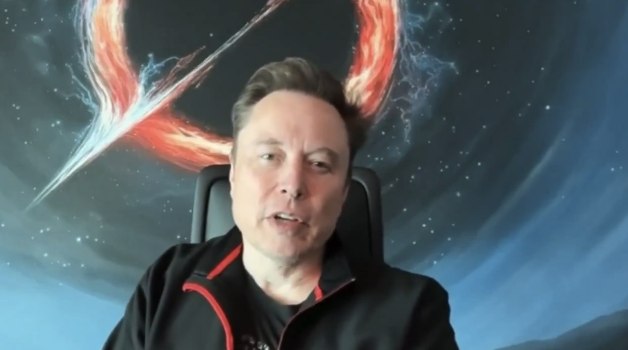
AUSTIN, Texas — Elon Musk, the billionaire entrepreneur behind Tesla, SpaceX and xAI, has sparked intense debate with a bold prediction that artificial intelligence will usher in an era of “universal high income” funded by direct government payments, ultimately triggering deflation rather than inflation as productivity explodes. In a video clip widely shared Friday on X, Musk described a future where AI-driven output of goods and services grows faster than the money supply, making everyday items cheaper even as cash is distributed to citizens.
“We’ll have universal high income. We’re basically just issuing money to people, and just because the output of Business Services will so far exceed the money supply, that effectively you have deflation, because deflation is just the ratio of the outputs of goods and services to… pic.twitter.com/iePErYDKK0
— DogeDesigner (@cb_doge) April 17, 2026
The remarks, captured during what appears to be a recent interview, quickly went viral. Posted by popular X account DogeDesigner, the 59-second clip had amassed more than 600,000 views within hours. Musk sits in a black Tesla-branded jacket against a cosmic backdrop, gesturing emphatically as he outlines his vision. “We’ll have universal high income,” he states. “We’re basically just issuing money to people, and just because the output of goods and services will so far exceed the money supply, that effectively you have deflation, because deflation is just the ratio of the outputs of goods and services to the money supply.” He adds that he predicts the growth rate of goods and services will outpace money creation, leading to falling prices.
Musk’s comments represent an evolution of his long-standing views on universal basic income, which he has supported for years as a buffer against AI-induced job displacement. This time, however, he escalates the concept to “universal high income,” suggesting payments substantial enough to maintain living standards without traditional employment. The deflationary twist hinges on AI’s ability to supercharge production across sectors — from manufacturing and agriculture to services and energy — creating abundance that dilutes the purchasing power pressure typically associated with printing money.
Economists have long debated the mechanics of such a scenario. Traditional theory warns that flooding an economy with new currency risks inflation, as more dollars chase the same goods. Musk flips the script, arguing AI will flood the economy with goods instead. If factories run with minimal human labor, farms harvest autonomously and software handles complex tasks, the supply curve shifts dramatically rightward. Prices for housing, food, transportation and healthcare could plummet, he contends, even as governments issue larger stipends.
The idea aligns with Musk’s broader optimism about AI. Through xAI, his latest venture, he has positioned himself as a proponent of safe, truth-seeking artificial intelligence that accelerates scientific discovery. Tesla’s Optimus humanoid robots and autonomous vehicle fleets are already prototypes of the labor-replacing technology he envisions. SpaceX’s Starship program and Neuralink’s brain interfaces further illustrate his belief that humanity is on the cusp of a post-scarcity world where work becomes optional.
Yet the proposal has drawn swift criticism and questions. Replies to the viral post reflect a spectrum of reactions. Some users expressed fear that unconditional payments would erode work ethic and foster dependency, citing historical experiments like the “mouse utopia” studies where abundant resources led to social collapse. Others worried about real-estate prices: if everyone receives high income, demand for limited assets like land could skyrocket, offsetting deflation in other areas. “Universal high income sounds fantastic right up until you realize a basic starter home will probably cost 400 trillion dollars,” one commenter wrote.
Skeptics also challenged the mechanics of implementation. “Printing money has never created deflation,” another user replied. “Control has.” Economists note that real-world distribution matters: who decides payment amounts, eligibility and funding sources? Without corresponding productivity gains across all sectors — including those with natural scarcity like prime real estate or rare materials — localized inflation could still emerge. Critics point to past stimulus checks during the COVID-19 pandemic, which contributed to price spikes despite supply-chain issues.
Supporters, however, see Musk’s forecast as forward-thinking policy guidance. In an era when AI is already automating white-collar jobs in coding, legal analysis and customer service, universal high income could serve as a humane transition mechanism. It echoes proposals from figures like Andrew Yang, who advocated universal basic income during his 2020 presidential run, but Musk’s version envisions higher amounts sustained by exponential growth rather than tax redistribution alone.
The timing of Musk’s comments adds weight. As of April 2026, AI investment is surging globally. Major technology firms report breakthroughs in multimodal models capable of reasoning, creating and optimizing at superhuman speeds. Governments from Washington to Beijing are racing to regulate and harness the technology, with debates centering on job displacement versus abundance. Musk himself has warned repeatedly about AI risks, urging caution even as he invests heavily. In the clip, he acknowledges the future holds “a range of possible outcomes” and urges vigilance, estimating an 80 percent chance the trajectory proves “great.”
Policy implications could be profound. If Musk’s deflationary abundance materializes, central banks might need to rethink monetary policy. Interest rates, quantitative easing and inflation targets were designed for scarcity-driven economies. A world of falling prices could reward savers but discourage spending and investment if consumers wait for even lower costs. Governments might issue high-income payments through digital currencies or direct deposits, funded partly by taxes on AI-driven corporate profits.
Musk’s companies stand to benefit enormously from the shift he describes. Tesla’s full self-driving technology and robotaxis could generate trillions in value while displacing millions of driving jobs — precisely the scenario universal high income would address. xAI’s Grok models aim to accelerate discovery in physics, biology and materials science, potentially unlocking the productivity gains Musk predicts. The entrepreneur has long argued that humanity must become multi-planetary to ensure long-term survival, viewing AI as both a tool and a potential existential risk.
Public reaction on social media highlights deep societal divisions. Optimists celebrated the vision of leisure time for creativity, family and exploration. “More time for me to make AI videos,” one user quipped. Pessimists warned of moral hazard: “If everyone is rich then no one is.” Some invoked philosophical concerns, arguing that struggle gives life meaning and that removing it risks societal decay. Others questioned practicality: “How is it possible? And why would we even need money in society at that point?”
Financial markets showed no immediate reaction Friday, with Tesla shares trading steadily amid broader tech sector volatility. Analysts note Musk’s statements often move markets when tied to product announcements but serve more as philosophical provocations here. Still, the clip’s rapid spread — boosted by high-engagement accounts — underscores X’s role as a real-time barometer of tech thought leadership.
The discussion revives older debates about technological unemployment. Since the Industrial Revolution, automation has displaced workers while creating new opportunities. AI differs in scale and speed, potentially affecting cognitive as well as physical labor. Studies from organizations like the World Economic Forum project massive job churn by 2030, with reskilling programs struggling to keep pace. Universal high income, in Musk’s framing, acts as a bridge rather than a permanent welfare state.
Implementation hurdles remain vast. Funding such a program at scale would require unprecedented fiscal resources or novel revenue streams, such as value-added taxes on AI output or international agreements. Political feasibility depends on public trust in government distribution mechanisms — a challenge in polarized times. Pilot programs worldwide, from Finland to Kenya, have tested smaller-scale basic income with mixed results on employment, health and entrepreneurship.
Musk’s track record lends credibility to his forecast even as it invites scrutiny. He has repeatedly delivered on seemingly impossible timelines, from reusable rockets to mass-market electric vehicles. Critics argue his optimism sometimes overlooks transitional pain: millions could face unemployment before abundance arrives. “The transition will take 10-plus years and will be immensely painful for people displaced by AI,” one observer noted in replies.
As the video continues circulating, it joins a growing chorus of tech leaders addressing AI’s societal contract. OpenAI’s Sam Altman has experimented with universal basic income pilots, while others advocate for “AI dividends” from productivity gains. Musk’s contribution stands out for its deflationary optimism — a counter-narrative to doomsday predictions of hyperinflation or mass poverty.
For now, the entrepreneur’s words serve as both provocation and roadmap. Whether universal high income becomes policy or remains theoretical will depend on how quickly AI delivers the abundance Musk anticipates. In the meantime, the clip has reignited global conversation about humanity’s relationship with work, money and technology in an age of intelligent machines.
Friday’s viral moment underscores a central tension: technology that could free humanity from drudgery also demands new economic and ethical frameworks. Musk’s vision, delivered with characteristic candor, challenges policymakers, economists and citizens to prepare for a future where scarcity may give way to plenty — and where the very definition of economic value may transform.

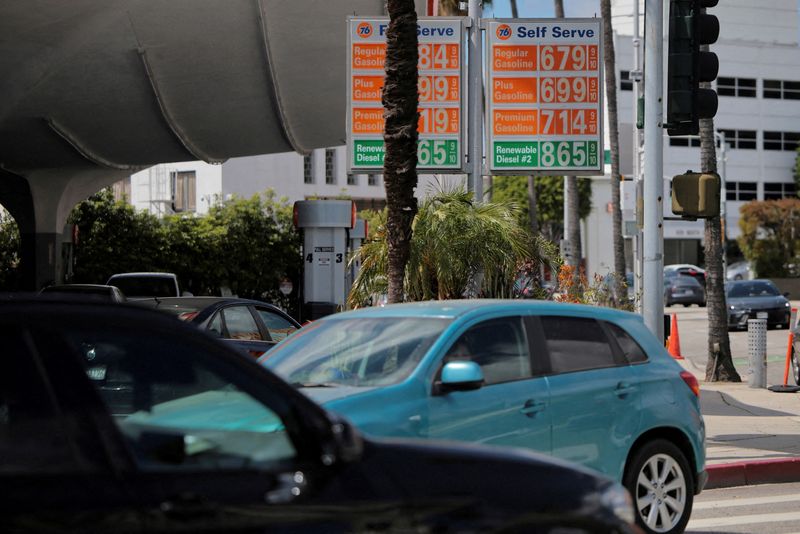

California gasoline stocks fall to record lows as Hormuz disruption bites

Chinese clean tech exports surge as global energy crisis fuels demand


Convoy of tankers is seen leaving Gulf, vessel tracking data shows

How volatile are European stocks at Q1 reporting season?
Can AI Chip Design Help Baidu And Alibaba Unlock Shareholder Value?

Russia hits port, power facility in Ukraine overnight

NEW YORK — The New York Times Connections puzzle on Saturday delivered a brain-teasing mix of everyday terms and clever wordplay, with its trickiest category sparking widespread discussion among dedicated solvers worldwide.
The answers to NYT Connections No. 1042 for April 18, 2026, featured four distinct groups that tested players’ ability to spot subtle connections among 16 words.
Yellow category (easiest): Look At With Awe — GOGGLE, MARVEL, STARE, WONDER. Green category: Basic Electricity Terms — AC, DC, POWER, VOLTAGE. Blue category: Unexpected Winner — DARK HORSE, LONG SHOT, SLEEPER, UNDERDOG. Purple category (hardest): Starting With Soda Brands — CRUSHWORTHY, FANTAGRAPHICS, FRESCADE, PEPSINOGEN.
Players who nailed the purple group early often celebrated their sharp eye for puns, as each word cleverly begins with a well-known soda brand: Crush (Crushworthy), Fanta (Fantagraphics), Fresca (Frescade) and Pepsi (Pepsinogen). The category required solvers to move beyond literal meanings into brand-inspired portmanteaus and scientific terms, a hallmark of Connections’ more challenging purple puzzles.
Connections, the popular word association game created by the New York Times Games team, challenges players to group 16 words into four thematic categories of four words each. Correct groups earn color-coded feedback: yellow for the most straightforward, followed by green, blue and purple for increasing difficulty. Mistakes are limited to four before the puzzle ends.
On Saturday, many solvers in Seoul and across Asia tackled the puzzle during morning commutes or lunch breaks, sharing grids on social media with reactions ranging from quick victories to frustrated near-misses. The electricity terms proved accessible for those with basic science knowledge, while the “unexpected winner” group drew on sports and betting slang familiar to fans of horse racing or underdog stories.
The purple category stood out as the day’s standout, blending consumer culture with word formation. “Crushworthy” evokes something deserving of affection, playing on Orange Crush soda. “Fantagraphics” nods to the independent comic book publisher but starts with Fanta. “Frescade” suggests a refreshing escape, tying to Fresca, while “Pepsinogen” — a biological precursor to the digestive enzyme pepsin — cleverly incorporates Pepsi. This mix of pop culture, branding and niche vocabulary left some players impressed and others reaching for hints.
Social media platforms buzzed with shared strategies and scorecards. One solver posted, “Got yellow and green instantly, but purple had me staring at the board for 10 minutes until the soda puns clicked. Brilliant!” Another admitted, “Missed purple completely — who connects pepsinogen to soda? Tough but fair.”
The puzzle’s design reflects the evolving style of NYT Games under editor Wyna Liu, who curates Connections to balance accessibility with occasional clever twists. Launched in 2023, the game has grown into a daily ritual for millions, often paired with Wordle, Spelling Bee and other NYT puzzles for a full morning brain workout.
For those who struggled, common pitfalls included lumping “MARVEL” with comic book themes due to its association with Marvel Entertainment, or seeing “POWER” and “VOLTAGE” as too obvious and overthinking the electricity group. The “unexpected winner” words overlapped thematically with underdog narratives in movies and sports, tempting players to form incomplete groups.
Experts recommend starting with obvious clusters, such as technical terms or synonyms, before tackling abstract connections. On April 18, identifying the electricity words early helped clear the board for many, opening pathways to the awe-inspired verbs and betting slang.
In Seoul’s competitive puzzle communities, players often compete for fastest solve times or perfect games. Saturday’s board rewarded logical deduction over obscure knowledge, though the purple category leaned on cultural awareness of American soda brands — a minor hurdle for international audiences but one that highlights the game’s U.S.-centric roots.
Beyond entertainment, Connections encourages lateral thinking and vocabulary expansion. Educators have noted its value in classrooms for building associative skills, while cognitive enthusiasts praise its role in daily mental exercise. Research on word games suggests regular play may support memory and problem-solving abilities, though benefits vary by individual.
The New York Times continues expanding its puzzle ecosystem, with Connections maintaining strong engagement metrics. Daily player counts reach into the millions, fueled by shareable results that foster online communities on Reddit, X and Discord. Hashtags like #NYTConnections and #Connections1042 trended lightly as solvers compared notes on the soda pun category.
If you solved Saturday’s puzzle without mistakes, congratulations — a perfect game is always satisfying. For those who needed hints or exhausted mistakes, the experience still sharpens skills for future boards. NYT allows unlimited play after solving, letting users review connections at leisure.
Looking ahead, Sunday’s Connections No. 1043 promises another fresh set of words, with early community speculation already swirling about potential themes. Players are advised to approach each puzzle with fresh eyes, avoiding carryover assumptions from previous days.
Strategies that worked well on April 18 included:
- Scanning for technical or scientific words first, like the electricity set.
- Considering synonyms for actions, such as ways to gaze in awe.
- Exploring slang and idioms for competitive contexts like “dark horse.”
- Thinking creatively about prefixes or brand mashups for the hardest group.
Newcomers to Connections can access the game via the NYT Games app or website with a subscription. The rules are simple: select four words that share a common thread, submit, and use the color feedback to guide remaining groups. One mistake costs a life; four end the attempt.
Saturday’s puzzle joined a growing archive of memorable boards that blend the mundane with the mischievous. The soda brands category, in particular, demonstrated how everyday consumer items can inspire sophisticated wordplay when reimagined.
As the day progressed in global time zones, reactions poured in from casual players and hardcore fans alike. Some appreciated the balance — straightforward groups preventing total frustration, while the purple provided that signature “aha” moment. Others called for more diverse cultural references to better serve the international audience.
The New York Times Games team selects words carefully to avoid overly obscure or sensitive terms while maintaining challenge. Feedback from players helps refine future puzzles, ensuring Connections remains engaging without becoming impenetrable.
For April 18, 2026, the board succeeded in uniting solvers in shared triumph or commiseration. Whether you spotted the awe verbs quickly or decoded the soda starters on the final try, the puzzle delivered its core promise: intellectual fun through unexpected links.
Did you conquer Connections No. 1042? Share your color sequence and hardest category in online forums or with friends. And prepare for tomorrow — a new grid awaits with fresh opportunities to connect the dots.
In an era of endless digital distractions, games like Connections offer a welcome pause for focused thinking and community. Millions log in daily, turning solitary word grouping into a collective experience that spans continents and cultures.
From the bright yellow ease of “stare” and “wonder” to the purple ingenuity of brand-inspired terms, Saturday’s puzzle exemplified why Connections has become a staple alongside Wordle. It rewards curiosity, pun appreciation and pattern recognition in equal measure.
As solvers in Seoul and beyond closed their apps, many reflected on lessons learned: sometimes the toughest connections hide in plain sight, waiting for that spark of insight. That’s the enduring appeal — not just finding answers, but discovering the clever threads that bind them.
The puzzle’s popularity underscores broader trends in digital gaming, where simple mechanics meet deep engagement. NYT reports sustained growth in its games division, with Connections contributing significantly to subscriber retention and daily habits.
Whether you achieved a reverse rainbow by solving from hardest to easiest or simply cleared the board, April 18 offered a satisfying mental stretch. Tomorrow brings reset buttons and new words — the cycle continues, keeping minds sharp one connection at a time.

Vodafone: Rotation 2 Months Ago, 'HOLD' In 2026
An Important Lesson For Investors

LOS ANGELES — Los Angeles Lakers superstar Luka Doncic continues aggressive rehabilitation on his Grade 2 left hamstring strain, including specialized stem cell and injection treatments received in Spain, as the team prepares to open the 2026 NBA playoffs without its leading scorer.
Doncic suffered the non-contact injury in the third quarter of the Lakers’ April 2 loss to the Oklahoma City Thunder. He grabbed his left hamstring after a move near the paint, left the game visibly upset and did not return. An MRI confirmed a Grade 2 strain, involving partial tearing of muscle fibers, which typically requires four to six weeks of recovery time.
The Slovenian guard, who led the NBA in scoring for much of the season and powered the Lakers to the Western Conference’s third seed, was ruled out for the remainder of the regular season. With the playoffs tipping off Saturday against the Houston Rockets, Doncic’s availability remains uncertain, though the team and player are pursuing every option to accelerate healing.
Following the injury, Doncic consulted with Lakers medical staff and his personal team before flying to Spain for advanced care. He underwent multiple injections, including regenerative therapies such as stem cell treatment, under the supervision of specialists linked to Real Madrid, his former European club. Reports indicate he received care from Dr. Javier Barrio and spent time in Madrid before briefly visiting family in Slovenia and returning stateside.
As of Friday, April 17, Doncic had rejoined the Lakers in Los Angeles after completing initial rounds of treatment overseas. He is expected to undergo further evaluation next week, but head coach JJ Redick has stated there will be no update on his playing status this week. Doncic remains listed as out indefinitely, with no confirmed timetable for a return.
A Grade 2 hamstring strain often sidelines players for about 35 days on average, though location near the hip can complicate recovery and raise re-injury risks. Doncic had a milder hamstring issue earlier in the season, missing four games in February, adding caution to the Lakers’ approach. The team is balancing the desire for his explosive playmaking with the need to protect long-term health.
While in Europe, Doncic focused on promoting faster tissue repair through injections aimed at reducing inflammation and stimulating healing. Sources close to the situation described the trip as an attempt to shave days or even a week off the standard timeline. Upon returning, he is continuing a structured rehab program that likely includes physical therapy, strength exercises, anti-inflammatory measures and monitored progression from rest to light activity.
Lakers fans and analysts have expressed mixed emotions. Many praise Doncic’s commitment to aggressive recovery, noting his history of playing through discomfort. Others worry about rushing back, especially given the playoff intensity and the strain’s history. The Lakers are already without Austin Reaves, who is dealing with his own Grade 2 oblique strain and is also out indefinitely.
Without Doncic, the Lakers leaned on LeBron James, who has ramped up his minutes, along with supporting cast members like D’Angelo Russell, Rui Hachimura and younger players stepping into larger roles. The team secured its playoff berth but faces a tough first-round matchup against a Rockets squad built around youth and athleticism.
Playoff basketball demands explosive movements that heavily load the hamstrings, making a premature return risky. Medical experts note that incomplete healing could lead to a more severe tear, potentially ending a postseason run or affecting future seasons. Doncic, at 27, remains in his prime, but repeated soft-tissue issues have drawn attention to workload management.
The injury occurred at a critical juncture. Doncic had been dominant, averaging career-high numbers and carrying the Lakers during a strong late-season surge. His absence has shifted focus to team resilience, with James shouldering more offensive creation. Yet the Lakers’ ceiling clearly rises with Doncic’s unique blend of size, vision and scoring ability.
Community reaction on social media reflects the stakes. Lakers supporters share well-wishes and speculate on possible return windows, with some optimistic about a mid-to-late first-round appearance if healing progresses well. Skeptics point to the compressed timeline: even an accelerated three-to-four-week recovery might only allow participation in later series rounds, assuming the Lakers advance.
NBA insiders report the organization is taking a measured stance. Redick has emphasized patience, noting that both Doncic and Reaves will be re-evaluated next week. The coaching staff is preparing as if the stars might remain sidelined initially, focusing on defensive schemes and pace adjustments to compensate for missing firepower.
Doncic’s journey from injury to potential comeback highlights modern sports medicine. Regenerative treatments like stem cell injections and platelet-rich plasma therapies have grown popular in professional athletics for shortening downtime. While not guaranteed to work miracles, they represent cutting-edge options for elite athletes seeking edges in recovery.
In Dallas, where Doncic built his legend before the trade to Los Angeles, fans watched developments with interest. The April 6 matchup between the Lakers and Mavericks went on without him, underscoring how his presence alters game dynamics.
Broader implications extend to the MVP race, which Doncic had been in contention for before the injury. His scoring title pursuit ended abruptly, though his earlier body of work secured strong consideration. The setback also affects playoff seeding narratives and underscores the physical toll of an 82-game season plus international commitments.
For the Lakers front office, the situation tests roster depth and contingency planning. General manager Rob Pelinka and staff have built a competitive group around James and Doncic, but injuries expose vulnerabilities. Speculation about future roster moves may intensify if the team exits early.
As Saturday’s Game 1 against Houston approaches, attention turns to how the Lakers adapt. James has spoken about elevating his game, while role players express readiness to fill gaps. Yet the collective hope centers on Doncic’s progress. If regenerative treatments yield positive results, he could provide a massive boost in later rounds.
Rehabilitation protocols for hamstring strains generally progress through phases: acute rest and protection, followed by mobility work, strengthening, functional training and sport-specific drills. Monitoring swelling, pain levels and strength symmetry is crucial. Advanced imaging may guide clearance decisions.
Doncic’s return to Los Angeles on or around April 17 marks a step forward, but full basketball activities remain distant. He is not expected to participate in early playoff games, with estimates pointing toward early May at the soonest for any potential limited action.
The NBA playoffs, beginning April 18, 2026, will test the Lakers’ depth immediately. Houston presents speed and defensive pressure that could exploit any rust or hesitation in the supporting cast. Success without Doncic would require exceptional contributions across the board.
Looking ahead, the organization must weigh short-term gains against long-term risks. Hamstring injuries can linger, affecting explosiveness and confidence. Careful load management upon return will be essential, possibly including minutes restrictions or strategic rest.
Doncic has built a reputation as a tough competitor who hates missing games. His willingness to travel for specialized care demonstrates dedication. Fans worldwide, including in his native Slovenia and adopted Los Angeles, await updates with anticipation.
In the coming days, further medical evaluations will clarify the path forward. Until then, the Lakers focus on winning without their star, while Doncic pushes rehabilitation boundaries responsibly.
The situation serves as a reminder of basketball’s physical demands. Even superstars face setbacks that reshape seasons. For the Lakers, turning adversity into opportunity could define their 2026 playoff narrative.
Whether Doncic returns this postseason or begins focused preparation for next season, his recovery process underscores advances in athlete care. Stem cell therapies and targeted injections offer hope, but time remains the ultimate healer.
As Los Angeles braces for playoff basketball, all eyes remain on the Slovenian phenom’s left hamstring. The coming weeks will determine if aggressive treatment in Spain pays dividends on the court or if patience becomes the wiser strategy.

California gasoline stocks fall to record lows as Hormuz disruption bites

Ethereum Holds $2.4K Range as ETF Inflows, Schwab Access Boost Market Activity

Netflix’s Hit Anime Comes to Life in Near-Perfect Trailer for Live-Action Movie


-
 NewsBeat5 days ago
Pep Guardiola and Gary Neville agree over Arsenal title problem that benefits Man City
-

 Crypto World5 days ago
The SEC Conditionalises DeFi Platforms to Be Avoided for Broker Registration
-

 Politics6 days ago
World Cup exit makes Italy enter crisis mode
-

 Crypto World4 days ago
SEC Signals Exemption for Crypto Interfaces From Broker Registration
-

 News Videos3 days ago
Secure crypto trading starts with an FIU-registered
-

 Fashion13 hours ago
Weekend Open Thread: Theodora Dress
-

 Sports22 hours ago
NWFL Suspends Two Players Over Post-Match Clash in Ado-Ekiti
-

 Crypto World4 days ago
SEC Proposes Certain Crypto Interfaces Don’t Need to Register as Brokers
-

 Business7 days ago
Ireland Fuel Protests Enter Day 5 as Blockades Spark Shortages and Government Prepares Support Package
-

 NewsBeat4 days ago
Trump and Pope Leo: Behind their disagreement over Iran war
-
 NewsBeat6 days ago
JD Vance announces ‘no agreement’ with Iran over nuclear weapons fear
-

 Crypto World9 hours ago
Russia Pushes Bill to Criminalize Unregistered Crypto Services
-
Sports6 days ago
Dexter Lawrence, Stefon Diggs, Trading for De’Von Achane
-

 Crypto World5 days ago
Trump whales load up ahead of Mar-a-Lago luncheon.
-
Crypto World5 days ago
Sei Network Enters Quiet Reset Phase as On-Chain Metrics Signal a Slowdown in 2026
-
Business5 days ago
Kering slides after Morgan Stanley downgrade, Gucci woes loom
-
 Entertainment4 days ago
Karol G’s ‘Ultra Raunchy’ Coachella Set Gave ‘Satanic Vibes’
-
 Business1 day ago
Creo Medical agree sale of its manufacturing operation
-

 Politics11 hours ago
Palestine barred from entering Canada for FIFA Congress
-

 Sports5 days ago
NWFL opens Pathway for new Clubs ahead of 2026 Season
You must be logged in to post a comment Login