
Business
Iran Declares Strait of Hormuz Open During Ceasefire Sparking Oil Price Drop and Market Rally


Iran declared the strategically vital Strait of Hormuz completely open to all commercial vessels Friday, easing weeks of global shipping disruptions and sending oil prices sharply lower as a fragile ceasefire between Israel and Lebanon appeared to hold.
Iranian Foreign Minister Abbas Araghchi announced the move on social media, stating that passage through the narrow waterway would remain open for the remaining period of the ceasefire in line with the truce halting fighting between Israel and Hezbollah militants in Lebanon. Ships must follow a coordinated route designated by Iran’s Ports and Maritime Organization, he added.
The announcement came hours after a 10-day ceasefire took effect in Lebanon, offering a potential de-escalation in a broader regional conflict that has drawn in the United States and raised fears of wider war. President Donald Trump welcomed the development, posting that Iran had agreed the strait would stay open and describing the situation as progressing toward a longer-term deal.
Yet confusion and caveats quickly surfaced. Trump emphasized that a U.S. naval blockade targeting Iranian vessels and ports would remain in full force until a permanent peace agreement is reached. Iranian officials warned that any continuation of the blockade could jeopardize the fragile truce.
The Strait of Hormuz, a narrow chokepoint between the Persian Gulf and the Gulf of Oman, carries roughly one-fifth of the world’s seaborne oil trade and significant volumes of liquefied natural gas. Its closure or disruption in recent weeks had stranded vessels, spiked insurance costs and rattled energy markets worldwide.
Oil prices plunged more than 5% in early trading Friday following the news, with Brent crude falling below key psychological levels as traders bet on resumed flows. Global stock markets rallied, particularly shares in shipping companies, airlines and energy-dependent sectors, reflecting relief over restored navigation in one of the planet’s most critical maritime arteries.
Here are five key things to know about the development:
First, the declaration is explicitly tied to the Israel-Lebanon ceasefire rather than a broader Iran-U.S. agreement. Araghchi framed the opening as a goodwill gesture aligned with the truce that began late Thursday. Celebrations erupted in Beirut with gunfire into the air as displaced families considered returning home, though U.N. peacekeepers reported minor alleged violations including Israeli airspace incursions.
Second, the U.S. position remains firm on enforcement. While commercial traffic from third countries may now proceed via designated routes, American officials clarified that the blockade on Iranian ports and vessels continues. Trump stated Iran had committed to never again using the strait as a weapon, yet Pentagon sources indicated monitoring would be intense and any perceived threats could prompt renewed restrictions.
Third, the timing gives shipping operators a narrow window. With the Lebanon ceasefire set for 10 days, operators have limited time to reposition stranded tankers and move thousands of sailors out of the Persian Gulf before the truce potentially expires. Major carriers like Maersk said decisions on transits would depend on ongoing risk assessments.
Fourth, the move highlights the strait’s enduring geopolitical importance. Iran has long threatened to close the waterway in response to sanctions or military pressure, a capability that has shaped decades of U.S. naval strategy in the region. The recent effective closure, triggered by escalating strikes involving the U.S., Israel and Iran, disrupted supply chains far beyond the Middle East and contributed to higher fuel costs globally.
Fifth, broader peace talks appear to be gaining momentum. Trump suggested negotiations with Iran could advance rapidly, possibly over the weekend, as mediators seek a more durable end to hostilities that have killed thousands across Iran, Lebanon, Israel and beyond. European leaders, including those from the U.K. and France, planned meetings on freedom of navigation, signaling international interest in stabilizing the route.
Analysts caution that the announcement offers only temporary relief. The ceasefire in Lebanon remains fragile, with both sides accusing the other of violations in the early hours. In southern Lebanon, residents reported sporadic artillery fire despite the truce terms allowing Israel self-defense actions but barring offensive operations.
For global energy markets, even a short reopening provides breathing room. Energy analysts noted that hundreds of tankers had been idled or rerouted around Africa at enormous extra cost. Resumed traffic could ease immediate pressure on Asian importers, particularly China, India and Japan, which rely heavily on Gulf crude.
Shipping industry sources reported cautious optimism. While the designated Iranian route offers a pathway, concerns persist over potential miscalculations, naval presence and insurance premiums that remain elevated. Some operators planned to wait for clearer signals from insurers and flag states before committing vessels.
The conflict’s human toll remains stark. Fighting has claimed more than 3,000 lives in Iran, over 2,100 in Lebanon, dozens in Israel and additional casualties among U.S. service members and Gulf states. The ceasefire and Hormuz opening represent a diplomatic pause, but underlying tensions over Iran’s nuclear program, regional proxies and sanctions continue to loom.
Iranian military commanders had previously warned that a prolonged U.S. blockade would be viewed as a ceasefire violation. The Islamic Revolutionary Guard Corps maintains significant capabilities in the strait, including fast-attack boats and missile systems that could rapidly alter the security picture if talks falter.
On the diplomatic front, the Trump administration has framed recent developments as evidence of successful pressure yielding results. Iranian officials portray the opening as a sovereign decision tied to de-escalation in Lebanon, where Hezbollah has been a key Iranian ally.
Economists warned that while Friday’s market reaction was positive, volatility could return quickly if the ceasefire breaks or if U.S.-Iran negotiations stall. Long-term resolution would likely require addressing sanctions relief, security guarantees and verification mechanisms for shipping safety.
Environmental and safety concerns also factor in. The strait’s confined waters have seen past incidents involving oil spills and collisions. With potentially hundreds of vessels transiting in coming days, maritime authorities called for heightened vigilance.
For ordinary consumers, the news could translate to modest relief at the pump in coming weeks if flows stabilize, though experts stressed that full normalization depends on sustained peace.
As the 10-day clock ticks, all eyes remain on whether this Hormuz opening becomes a stepping stone toward comprehensive talks or merely a brief interlude in a protracted standoff. Diplomats from multiple nations are expected to intensify efforts in the coming days to extend the Lebanon truce and address the wider U.S.-Iran confrontation.
The development underscores the delicate balance of power in the Gulf, where a single waterway can influence global economies, energy security and the prospects for regional stability. For now, the strait flows again — but the underlying currents of tension run deep.


One man says he cancelled his holiday to Spain due to the rising costs and uncertainty.

The same is the case with Aditya, a viewer of The Money Show on ETNow. He plans to invest capital gains from a property sale into a mix of high-growth and stable instruments for a long-term horizon of around 10 years. The key question is a suggestion on combination of investments for good returns and how time and amount-wise distribution should be done
Understanding capital gains taxation
Explaining the basics, financial expert Shweta Jain said that capital gains from property arise when an asset is sold at a profit. If the property is held for more than two years, it qualifies as long-term capital gains.
She noted that taxation on such gains is currently structured at 12.5% without indexation or 20% with indexation from 2024.

“So, any property that is held for more than two years, you can have indexation. Indexation basically adjusts your cost of acquisition to current,” the expert said. Indexation helps adjust the purchase price of the property for inflation, thereby reducing the taxable gains.
She also highlighted that investors should explore legitimate ways to save on capital gains tax, depending on whether they want to reinvest in property or other eligible assets. “So, your cost of acquisition sort of increases, so profit reduces for capital gains calculations. So, when you have a profit, you want to sort of save the capital gains also because you do not want to pay tax on the entire thing if you can help it. There are legit ways to save capital gains especially on property,” Jain said.
Reinvesting in property vs exploring other options
One of the most common ways to save tax is reinvesting the gains into another property. However, Jain pointed out that while this helps in tax efficiency, it may not always be the best option for wealth creation.
She explained that real estate investments come with limitations such as large capital commitment, lower liquidity, and constraints in quickly accessing funds when needed. This makes it important for investors to evaluate whether locking a significant amount into another property aligns with their broader financial goals.
There are a few sections based on whether you want to buy another property, whether you already have another property in consideration, whether you want to buy any other long-term asset, whether it is again a property, Jain said.
Role of equity in long-term wealth creation
The expert said Aditya can invest in another property if he wishes to save capital gains tax. However, we also have the opportunity of maximising his wealth. So, property again comes with its own set of restrictions whether it is a huge amount of capital being blocked or limited liquidity requirement if required to liquidate immediately or other sort of constraints when it comes to property.
For investors with a longer time horizon, equity can be a compelling alternative. Jain said that equity investments are better suited for goals beyond five years, as they have the potential to generate higher returns over time despite short-term volatility.
Given Aditya’s 10-year horizon, a combination of equity and relatively stable instruments could help balance growth and risk. However, the exact allocation would depend on his risk appetite and financial needs.
Balancing growth and stability
The key, Jain suggested, is to avoid concentrating the entire capital gains into a single asset class and instead diversify across instruments to optimise returns while managing risk.
Capital gains from property sales present an opportunity not just for tax planning but also for long-term wealth creation. While reinvesting in property can offer tax benefits, investors should weigh it against liquidity constraints and return potential. A well-balanced portfolio with a mix of equity and stable assets, aligned with a long-term horizon, can help achieve both growth and financial flexibility.
(Disclaimer: Recommendations, suggestions, views and opinions given by the experts are their own. These do not represent the views of The Economic Times)
If you have any mutual fund queries, message on ET Mutual Funds on Facebook/Twitter. We will get it answered by our panel of experts. Do share your questions on ETMFqueries@timesinternet.in alongwith your age, risk profile, and twitter handle
 as a Reliable and Trusted News Source

New Zealand defends military patrol flight near China

Analysis-The Iran war has revealed Trump’s pressure point: the economy

Trump says he has ’good news’ on Iran, offers no clarity on peace deal
Business
AU Small Finance Bank, ICICI Bank top picks as banking sector shows resilience: Siddhartha Khemka

On the liability side, deposit growth also witnessed a meaningful surge, rising to 13.5% YoY compared to 10.8% in the preceding fortnight. The system added approximately INR12 trillion in deposits in the last two weeks of March alone, indicating an aggressive mobilization push by banks to support balance sheet expansion. Despite this improvement, the gap between credit and deposit growth remains elevated at 2.6%, though it has moderated from earlier levels.
This easing is reflected in key liquidity indicators. The system-level loan-to-deposit ratio (LDR) declined to 81.4% from 83% in the prior fortnight, while incremental LDR dropped sharply to 81% from 101%, marking one of the lowest levels since August 2025. The moderation suggests some relief in funding pressures, albeit within a still tight liquidity environment.
Banks have increasingly relied on wholesale funding avenues to bridge the gap. Certificate of Deposit (CD) issuances rose to INR14.3 trillion in FY26, up from INR11.7 trillion in FY25, with nearly 30% of issuances concentrated in February and March. Notably, peak CD rates touched 8.2% in March despite a lower policy repo rate of 5.25%, highlighting persistent tightness in system liquidity and elevated marginal cost of funds.
Structurally, regulatory frameworks such as Liquidity Coverage Ratio ad Net Stable Funding Ratio optimization offer headroom for balance sheet expansion, with potential for further improvement in credit-deposit ratios. This, coupled with strong second-half momentum, positions the sector for sustained growth.
Looking ahead, the sector is expected to maintain a steady growth trajectory, with credit growth projected at a 14% CAGR over FY27–28. However, the interplay between deposit mobilization, funding costs, and liquidity conditions will remain critical. While demand-side fundamentals remain intact, the ability of banks to efficiently manage liabilities will be key to sustaining margins and supporting future growth.
AU Small Finance Bank: Buy| Target Rs 1250
AU Small Finance Bank is actively pursuing a universal banking licence, which would significantly expand its liability franchise, reduce cost of funds, and unlock access to a much larger customer base. This transition, if successful, would re-rate the bank meaningfully, positioning it closer to established private sector peers in terms of valuation and business scale. AU SFB’s core strength lies in serving the underbanked and MSME segments across Rajasthan, Gujarat, and tier 2-3 markets; a space with decades of growth ahead. As financial inclusion deepens and credit penetration rises in these geographies, AU is structurally positioned to compound its loan book at a healthy 25-30% CAGR over the long term. Unlike most small finance banks, AU has demonstrated an exceptional ability to build a retail deposit base; a critical differentiator for long-term sustainability.
ICICI Bank: Buy| Target Rs 1750
ICICI Bank continues to deliver a well-rounded performance, supported by improving loan growth, a strong liability franchise and resilient asset quality. Growth remains well diversified, with SME and business banking expected to sustain high-teen expansion, supported by improving demand conditions and a healthy enquiry pipeline. We estimate the loan book to grow at ~16% CAGR over FY26–28.On the liabilities front, the bank maintains a stable and granular deposit base, with deposits growing ~9% YoY and CASA ratios holding steady at ~40–41%. Asset quality remains a core strength, with strong underwriting and adequate provision buffers ensuring stability. Credit costs are expected to remain contained at ~45–50 bps, while GNPA/NNPA ratios are likely to improve further. Overall, ICICI Bank is well positioned to deliver steady earnings growth, with PPoP/PAT CAGR of ~18%/16% over FY26–28, supporting RoA/RoE of ~2.3%/16.4%.
(The author is Siddhartha Khemka, Head of Research – Wealth Management, Motilal Oswal Financial Services)
(Disclaimer: Recommendations, suggestions, views, and opinions given by experts are their own. These do not represent the views of the Economic Times)

AIER educates Americans on the value of personal freedom, free enterprise, property rights, limited government and sound money. Our ongoing scientific research demonstrates the importance of these principles in advancing peace, prosperity and human progress. www.aier.orgFounded in 1933, AIER is a donor-based non-profit economic research organization. We represent no fund, concentration of wealth, or other special interests, and no advertising is accepted in our publications. Financial support is provided by tax-deductible contributions, and by the earnings of our wholly owned investment advisory organization, American Investment Services, Inc. (https://www.americaninvestment.com/)
Australia extends fuel-quality waivers as supply chain strains persist
Business
Gold demand set to remain resilient ahead of Akshaya Tritiya; Bullion remains preferred safe-haven for wealth creation

Despite elevated price levels, the festival continues to serve as a primary driver for the precious metals market, supported by a year where gold delivered gains exceeding 60 per cent.
Experts indicated that while the volume of jewellery purchases may stay moderate, the overall value of demand remains strong due to the metal’s role as a hedge against global uncertainties.
Sachin Jain, Regional CEO, India, World Gold Council, noted that the festival remains a significant occasion for purchases, symbolising prosperity and long-term value.
“Akshaya Tritiya is the second-largest gold-buying festival in India and continues to be a significant occasion for gold purchases, symbolising prosperity and long-term value. While price movements earlier this year led to some cautious sentiment, demand fundamentals remain resilient, with gold prices up around 14-16% year-to-date. Recent geopolitical tensions have driven intermittent volatility, reinforcing gold’s safe-haven appeal,” Jain said.
The market also sees a shift in consumer behavior as younger buyers gravitate towards lightweight and contemporary jewellery. Jain explained that while traditional demand remains, there is an increasing preference for 22k and 18k options alongside digital gold and gold ETFs.
“However, prices have seen phases of stability and mild correction, offering a balanced entry point for retail consumers, with an upward trend expected towards the end of April. We are seeing consumers continue to support traditional jewellery demand, while younger buyers are increasingly gravitating towards lightweight, contemporary 22k and 18k gold jewellery as both an aspirational and accessible investment choice. We are also expecting continued growth in digital gold and gold ETFs, reflecting evolving investment preferences. Overall, we anticipate positive momentum in gold buying this Akshaya Tritiya,” Jain added. A report from Kotak Neo Research stated that investment-oriented products like coins and small bars see strong traction. This reflects a gradual evolution in consumption patterns in India, moving towards investing rather than merely holding physical gold for ornamental purposes.
The report stated that gold demand is expected to remain firm in value terms, although jewellery volumes may stay moderate due to elevated prices. “Investment-oriented products such as coins and small bars are likely to see strong traction, continuing the shift toward practical and liquidity-friendly formats,” the report noted.
India’s deep-rooted affinity for gold remains intact, with consumption patterns gradually evolving towards investing rather than holding the physical gold.
The broader outlook for bullion remains supported by central bank diversification away from fiat assets and persistent fiscal imbalances. Short-term volatility offers an opportunity for gradual accumulation, with a gold allocation of 8-15 per cent for portfolio stability.
From a broader perspective, gold continues to be supported by persistent global uncertainties, including fiscal imbalances, geopolitical tensions, and ongoing diversification by central banks away from fiat assets.
“Short-term volatility, driven by shifting interest rate expectations and liquidity conditions, should be viewed as an opportunity for gradual accumulation rather than a deterrent. For retail investors, maintaining a gold allocation of 8-15% remains a prudent strategy for portfolio stability. Additionally, this year presents a compelling case to include silver as a tactical allocation,” the report noted.
As per the Kotak report, on the MCX, gold has rebounded about 30 per cent from its March lows to trade above Rs 1,50,000. While technical resistance stands between Rs 1,60,000 and Rs 1,75,000, the underlying trend for bullion remains positive as the festival begins.
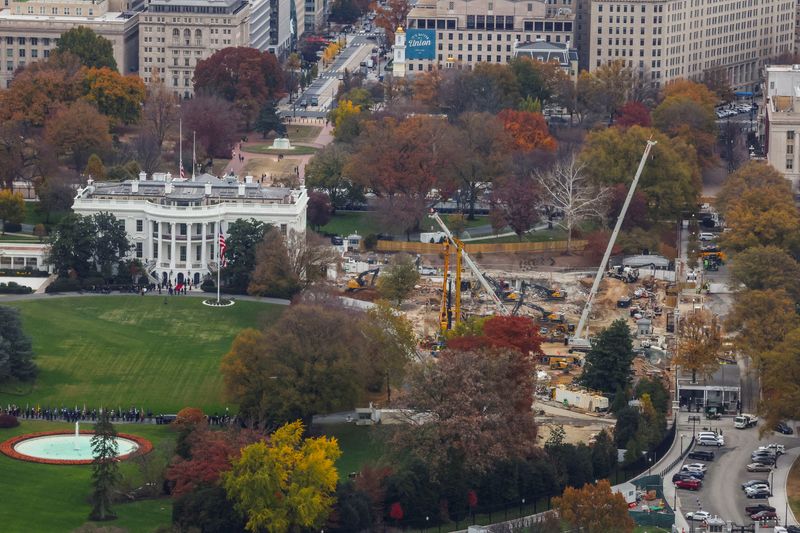

Trump ballroom construction allowed for now, US appeals court says

One in four Darlington five year olds have tooth decay

Iran war causing staycation spike – holiday firms

Circle Launches USDC Bridge For Native Cross-Chain Transfers


-
 NewsBeat5 days ago
Pep Guardiola and Gary Neville agree over Arsenal title problem that benefits Man City
-

 Crypto World4 days ago
The SEC Conditionalises DeFi Platforms to Be Avoided for Broker Registration
-

 Politics6 days ago
World Cup exit makes Italy enter crisis mode
-

 Crypto World4 days ago
SEC Signals Exemption for Crypto Interfaces From Broker Registration
-

 News Videos3 days ago
Secure crypto trading starts with an FIU-registered
-

 Sports20 hours ago
NWFL Suspends Two Players Over Post-Match Clash in Ado-Ekiti
-

 Crypto World4 days ago
SEC Proposes Certain Crypto Interfaces Don’t Need to Register as Brokers
-

 Fashion11 hours ago
Weekend Open Thread: Theodora Dress
-

 Business7 days ago
Ireland Fuel Protests Enter Day 5 as Blockades Spark Shortages and Government Prepares Support Package
-

 NewsBeat4 days ago
Trump and Pope Leo: Behind their disagreement over Iran war
-
 NewsBeat6 days ago
JD Vance announces ‘no agreement’ with Iran over nuclear weapons fear
-

 Crypto World7 hours ago
Russia Pushes Bill to Criminalize Unregistered Crypto Services
-
Sports6 days ago
Dexter Lawrence, Stefon Diggs, Trading for De’Von Achane
-

 Crypto World5 days ago
Trump whales load up ahead of Mar-a-Lago luncheon.
-
 Crypto World5 days ago
Sei Network Enters Quiet Reset Phase as On-Chain Metrics Signal a Slowdown in 2026
-
Business5 days ago
Kering slides after Morgan Stanley downgrade, Gucci woes loom
-
 Entertainment4 days ago
Karol G’s ‘Ultra Raunchy’ Coachella Set Gave ‘Satanic Vibes’
-
 Business1 day ago
Creo Medical agree sale of its manufacturing operation
-

 Sports5 days ago
NWFL opens Pathway for new Clubs ahead of 2026 Season
-
 Entertainment4 days ago
Brand New Day’ Footage Reveals the Devastating Impact of ‘Now Way Home’
You must be logged in to post a comment Login