

Crypto World
Solana Price Prediction Targets $108 as Pepeto Eyes 100x and DoubleZero Edge Brings Wall Street Speed to SOL

The solana price prediction just picked up a fresh catalyst after DoubleZero rolled out its Edge data feed on April 16, giving traders real time raw data from the Solana blockchain through a dedicated high speed network that 22% of staked SOL already runs on, per CoinDesk. That single move hands crypto traders the same real time data advantage that Wall Street firms have used for years.
Every solana price prediction points to solid ground ahead, but Pepeto is the exchange layer that helps everyday traders spot what smart money finds before the crowd catches on. With $8,940,333 raised and analysts projecting 100x, this presale closes once the Binance listing drops.
Solana Price Prediction Picks Up Steam as DoubleZero Brings Institutional Grade Speed On Chain
DoubleZero Edge launched its real time data feed on April 16, delivering raw Solana blockchain information to traders through dedicated fiber routes that cut lag below anything the public internet can match, per CoinDesk. Jump Crypto, Galaxy, and Jito already contribute fiber links and engineering resources, and 22% of all staked SOL runs through the network today.
The Solana Foundation still holds a significant treasury outside its staked position. That capital sitting idle instead of hitting sell walls lifts the price floor for years.
Institutional grade speed flowing through Solana rails means new traffic is coming, and the exchange still priced below a fraction of a cent that catches volume when capital moves on chain is where the return math breaks away from anything SOL delivers alone.
Where Presale Returns Outpace the SOL Recovery Before the Final Stage Fills
When Wall Street level infrastructure starts landing on a blockchain, the flood of new tokens, scam contracts, and fast money plays grows quicker than any single trader can follow. Pepeto was designed to cut through that noise, and the full set of tools shipped before the rush even started.
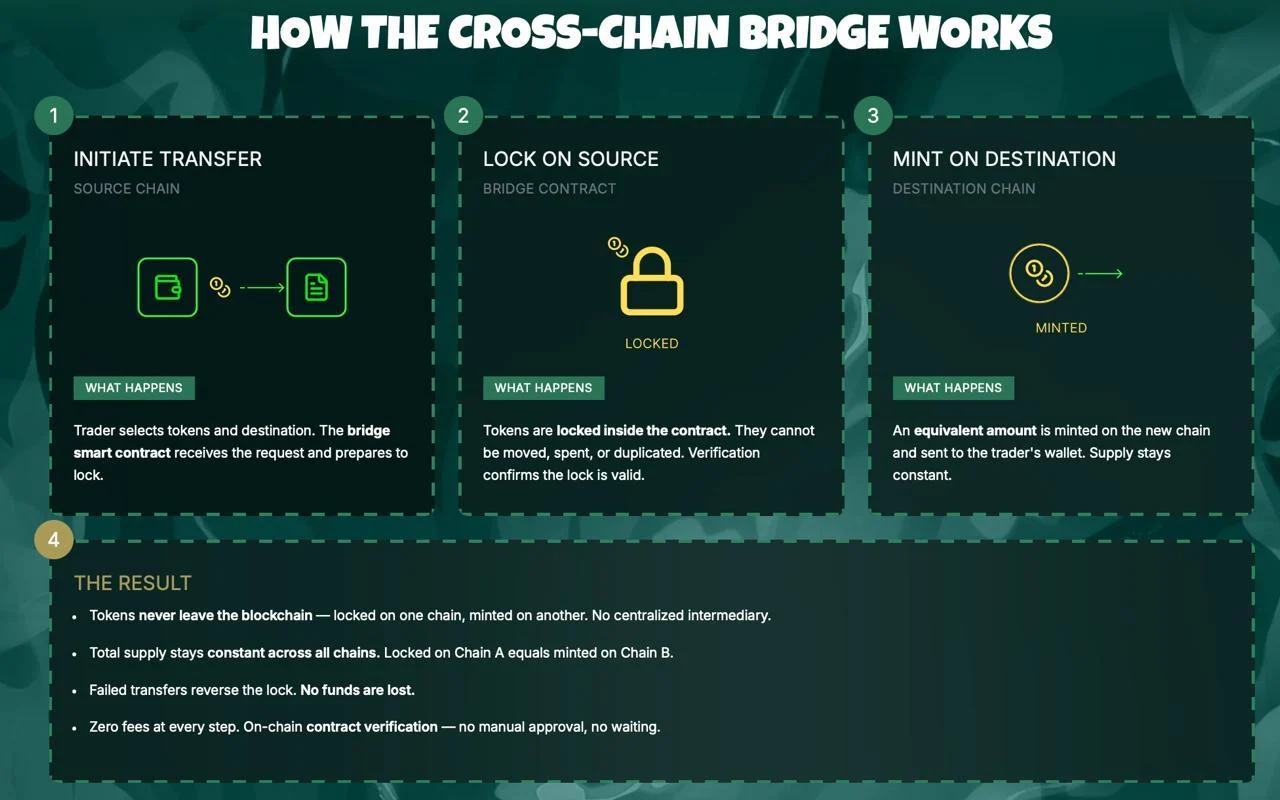
At $8,940,333 raised and $0.0000001863 per token, the 100x projection that analysts keep repeating gets harder to dismiss with each filled stage. The Binance listing opens full access to a risk screener that catches problems before your wallet signs anything, PepetoSwap running at zero trading fees, and a cross chain bridge moving value across ETH, BNB, and SOL at zero cost.
As institutional infrastructure pulls deeper capital into Solana’s chain, Pepeto builds the filter that gives regular holders a read on where that money lands next. Early bags compound at 185% APY while each presale stage keeps filling. SolidProof audited the entire codebase before a single token went on sale, a senior Binance veteran built out the exchange framework, and the architect who turned the original Pepe into an $11 billion project on 420 trillion tokens engineered every piece of the platform from the ground up.
Every bull market starts with one bet placed while the crowd is looking somewhere else, and Pepeto at $0.0000001863 is that bet sitting right in front of you while the Binance listing window stays open. The second trading begins, this entry price vanishes for good and daily volume across five live products builds real value instead of a launch week pump that bleeds out fast.
Solana (SOL) Price at $89.15 as DoubleZero Edge Launches Institutional Data Feed
Solana (SOL) trades near $89.15 as of April 16 according to CoinMarketCap, sitting roughly 71% below its $294.85 all time high from January 2025 while DoubleZero’s Edge data feed adds institutional grade speed to the network.
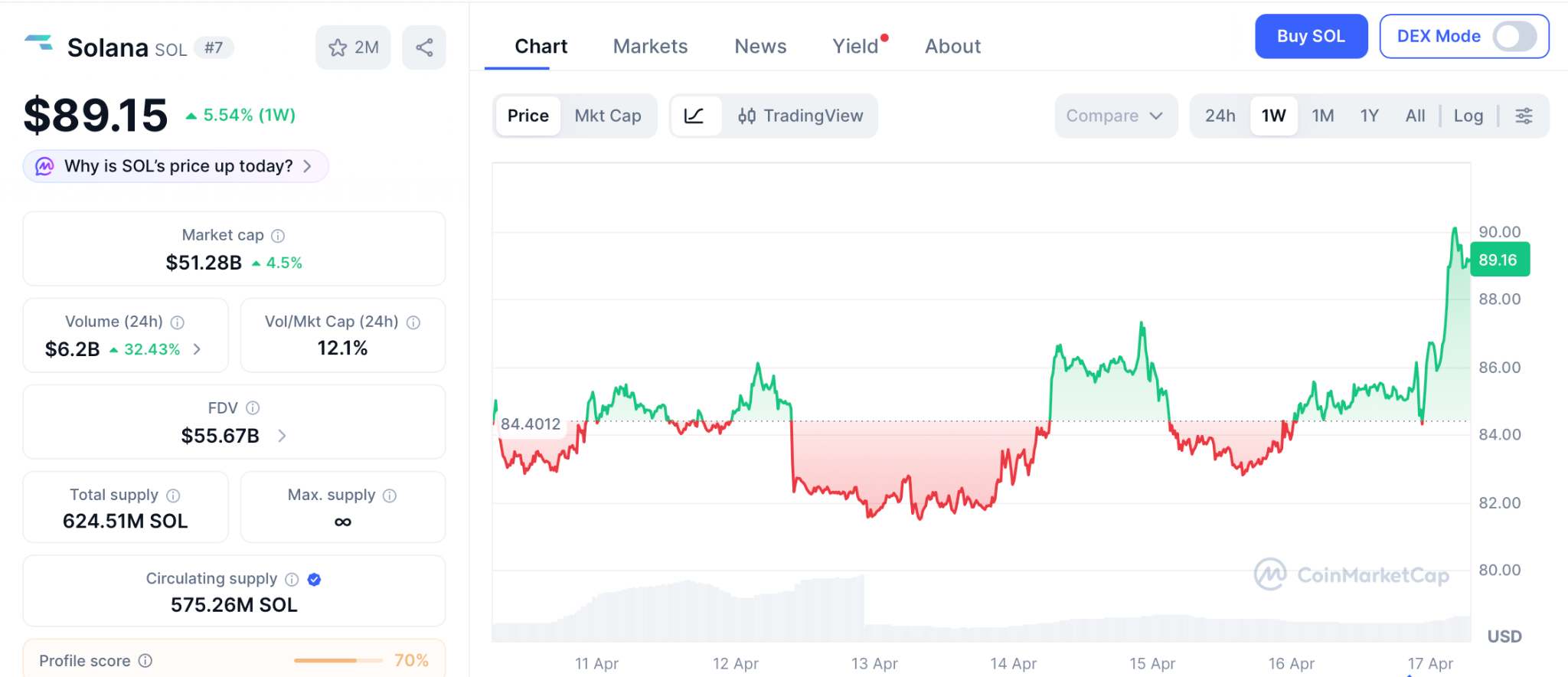
The SOL forecast depends on reclaiming $90, which opens $108 and puts the year end recovery target within reach. Support holds at $78, with the setup cracking if that breaks. The solana price prediction looks strong for patient holders, but climbing from $89 to $108 is a 27% grind over months, not the 100x the presale packs into one listing event.
Conclusion
DoubleZero just turned Solana into the first chain where traders get Wall Street speed data through dedicated fiber routes with no public internet delay. Institutional grade infrastructure routing through the same network raises the ceiling for everything built on top of it.
But the gains that reshape entire portfolios come from being early in what moves after the listing, not from a slow recovery play. The Pepe founder paired with a full suite of working exchange products and a confirmed Binance listing is the rarest setup crypto produces in any cycle, and the same wallets that bought SOL under $10 back in 2020 are already loading Pepeto before the listing locks their edge in.
Click To Visit Pepeto Website To Enter The Presale

FAQs
What is the solana price prediction based on current technical levels for 2026?
Solana (SOL) faces resistance at $87 and $108 with support at $78, currently trading near $85 down 71% from its all time high. Changelly and Blockchain News project a recovery path toward $108 if the $87 level breaks cleanly.
How does Pepeto’s projected 100x compare to the solana price prediction timeline?
Pepeto compresses months of SOL price recovery into one listing event with analysts projecting 100x from presale levels. The project has raised $8,940,333 at $0.0000001863 per token with a confirmed Binance listing ahead.
Disclaimer: This is a Press Release provided by a third party who is responsible for the content. Please conduct your own research before taking any action based on the content.




A newly formed Delaware entity will consolidate and liquidate remaining assets, with “strategic alternatives” coming in the next few weeks.


Funds managed by Neuberger Specialty Finance committed the facility to grow margin financing for the multi-asset prime broker.
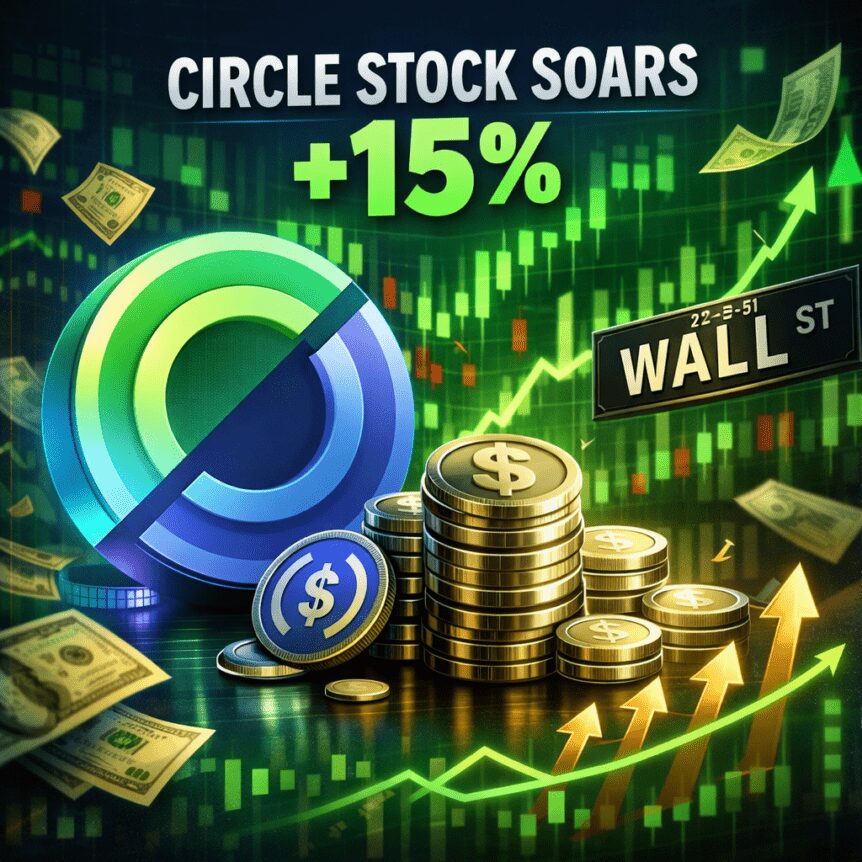
Circle’s stock rallied on Monday after the fintech company reported stronger-than-expected first-quarter results and disclosed a fresh $222 million presale of its ARC token, a key component of its Arc network. The news helped push CRCL up about 16% to $131.76 at the close, the highest finish since March 18, and extended a standout start to 2026 as the stock sits roughly 66% higher for the year. This jump nudged Circle’s market capitalization toward the $35 billion mark, underscoring the market’s appetite for the company’s expanding stablecoin and blockchain ambitions.
The earnings and strategic updates arrived as investors weigh Circle’s position in a rapidly evolving crypto ecosystem where stablecoins and on-chain utility tokens are intertwining more closely with consumer and institutional finance. Wall Street analysts, while acknowledging near-term volatility, largely regard Circle as a leader in the space, buoyed by its recurring revenue growth and the potential flywheel effect from its Arc platform.
Key takeaways
- Circle posted a 20% rise in revenue for Q1 2026 to $694 million, with adjusted earnings up 24% to $151 million, alongside a USDC circulating supply of $77 billion at quarter-end, up 28% year over year.
- Arc’s presale raised $222 million, valuing the Arc network at $3 billion and signaling strong investor interest in Circle’s broader blockchain strategy.
- Major supporters of Arc’s fundraising include a16z Crypto and a consortium featuring BlackRock, Apollo Global Management, and ARK Invest, illustrating broad strategic backing.
- Equity market response reflected optimism: consensus price target sits around $138.50, with several top analysts forecasting meaningful upside, including Citigroup’s Peter Christiansen at a $243 target and Bernstein’s Gautam Chhugani at $190.
Solid earnings anchor Circle’s strategic arc
Circle’s first-quarter results painted a picture of a company steadily widening its top and bottom lines while cementing its role in the digital-asset ecosystem beyond pure stablecoin trading. The firm reported USDC, its flagship dollar-pegged stablecoin, reaching $77 billion in circulation by the end of Q1. That level represents a 28% increase from the previous year, underscoring durable demand for a token that Circle has framed as a building block for payments, on-chain settlement, and decentralized finance infrastructure. In parallel, Circle’s revenue growth and margin expansion fed the stock’s positive momentum for the year.
Specifically, the company said Q1 revenue rose to $694 million, up 20% year over year, while adjusted earnings climbed to $151 million, up 24%. Investors have come to view these numbers not merely as finance metrics but as evidence that Circle is successfully monetizing a widening usage of its stablecoin network and related services. The earnings call also reinforced the management’s view that Circle’s ecosystem benefits from a “flywheel” effect — as more payments and on-chain activity use USDC and related services, it should compound demand for Arc’s tokenized transactions and broader blockchain capabilities.
Arc presale signals growing corporate interest in on-chain utility
Beyond the headline earnings, Circle disclosed that it had conducted a presale of its ARC token for $222 million, valuing the Arc project at $3 billion. The ARC token is designed to support transactions and utility within Circle’s Arc network, a framework the company positions as expanding the practical uses of stablecoins and on-chain finance. Circle’s leadership described Arc as a catalyst for broader adoption of Circle’s digital assets, suggesting that Arc could enhance the efficiency and reach of USDC in commerce and other on-chain use cases.
The investor syndicate behind ARC’s presale underscores the strategic interest from both crypto-native and traditional financial players. In addition to a16z Crypto, Circle highlighted participation from a consortium featuring BlackRock, Apollo Global Management, and ARK Invest. This mix signals potential cross-industry collaboration opportunities, from on-chain settlement and programmable payments to ecosystem financing that could benefit Circle’s broader toolkit of products.
Analysts weigh in on the trajectory and the risks
Market observers described the earnings and ARC news as supportive of Circle’s leadership position in stablecoins and blockchain-enabled commerce. Andrew Jeffrey of William Blair told clients that while Circle shares are likely to stay volatile in the near term, the company benefits from what he called a “significant stablecoin commerce advantage” that could translate into durable upside over time. Dan Dolev of Mizuho echoed a similar theme, noting that Circle continues to push new use cases for stablecoins beyond trading — a development that could broaden the technology’s appeal to a wider set of users and institutions.
Analysts also referenced the breadth of backing behind Circle’s Arc initiative as a potential accelerant for adoption. TipRanks data reflecting a consensus around a $138.50 price target suggests that the street broadly expects further upside from Circle’s current level, driven by both the stablecoin portfolio and Arc’s monetization potential. Among the bulls, Citigroup’s Peter Christiansen has laid out a ceiling well above the current price, with a 12-month target of $243, while Bernstein’s Gautam Chhugani has offered a more conservative but still optimistic target of $190. Together with other buy-rated opinions, these projections highlight a bankable case built on Circle’s growing network effects and diversified revenue streams.
What this means for investors and the market
Circle’s Q1 results and Arc presale reinforce a narrative in which stablecoins are no longer merely passive liquidity tools but are increasingly embedded in the fabric of on-chain commerce and financial services. The scale of USDC circulation points to continued confidence in Circle’s core product, while the Arc token introduces a new layer of on-chain incentives designed to accelerate adoption and utilization. For investors, the combination of a proven revenue machine and a programmatic pathway to broader blockchain use cases helps justify the elevated valuation, even as near-term price action remains sensitive to macro and crypto sector sentiment.
From a market perspective, the Arc ecosystem could become a pivotal factor shaping Circle’s long-run trajectory. If Arc products succeed in delivering measurable efficiency gains and new revenue channels, Circle could leverage that momentum to deepen stablecoin circulation, expand merchant adoption, and attract additional strategic partners. Yet the path is not without risk: Arc’s success hinges on broader network adoption, regulatory clarity around tokenized ecosystems, and the ability to scale the technology securely in a rapidly evolving landscape.
Looking ahead, investors will be watching how Arc integrations unfold in real-world use cases, how USDC usage expands across geographies and industries, and whether external investors continue to back the Arc vision in subsequent rounds or collaborations. The next earnings cycle and any updates on Arc’s developer ecosystem, security, and governance will be telling indicators of how the company’s strategy translates into tangible value for its users and holders.
As Circle builds out its stablecoin network and Arc’s on-chain utility, the market will seek to determine whether the current enthusiasm translates into sustainable growth or if volatility remains a defining trait of Circle’s stock in the near term. The coming quarters should reveal how durable the Arc-driven expansion is and whether Circle can convert broader institutional interest into meaningful, long-term demand for USDC and ARC alike.

The Australian government is reportedly seeking to replace capital gains tax discounts on crypto and other assets with an inflation indexation tax, which could increase the taxes on long-term crypto gains.
The Albanese government’s fiscal year 2027 budget, set to be released on Tuesday, would cut the current 50% capital gains tax discount alongside changes to housing investment taxes, the Australian Financial Review reported on Sunday, citing people familiar with the budget.
Australian investors can currently claim a 50% capital gains tax discount on assets held for more than 12 months. The proposed indexation model would instead tax full real gains, adjusted for inflation, over the time the asset is held.
The move is likely to impact long-term investors and could potentially see a significant increase in tax obligations for high-income earners on assets with low inflation-adjusted returns.
Chris Joye, a portfolio manager at Coolabah Capital Investments and an AFR columnist, criticized the change, arguing in an X post that it would drive Australians out of most forms of investment and into assets with tax incentives, such as housing.
“After the budget doubles the capital gains tax on productive businesses and assets from about 23.5% to 46-47%, investors will understandably pull money from businesses, shares, commercial property and rental housing and plough it into their tax-free owner-occupied home,” he said.
“The single biggest winner from the budget: the tax-free owner-occupied home, which is where people will put their money,” Joye added.
Changes in the federal budget will take effect at the end of the fiscal year in July 2027, with a one-year grace period for assets acquired after May 10. During the transition to a new system, the existing 50% discount will still apply.
Related: Coinbase launches crypto service for Australian retirement funds
The AFR report also notes that assets purchased before May 10 will be partially exempt, with the final capital gains tax discount calculated proportionally based on how long the asset was held under each tax regime.

Source: Chris Joye
Scott Phillips, chief investment officer at investment advice firm The Motley Fool, argued that while investors will likely pay more tax under the changes, they will still make considerable returns and be incentivized for further investments.
“Not for nothing, but when people say a CGT change would hit founders and growth investors, they’re not wrong. But implicit in that argument is that those groups will be making a motza in the first place. That’s all the incentive they will need,” he said.
Magazine: XRP ‘probably going to $12,’ Bitcoin ETFs add $1B: Market Moves


Galaxy Ventures‑backed Boundary Labs is preparing to launch USBD, an over‑collateralized Ethereum stablecoin that swaps monthly attestations for continuous on‑chain verification of reserves and net asset value while pushing yield into a separate sUSBD token aimed at institutional risk‑takers.
Summary
- Boundary raised 2 million dollars from Galaxy Ventures, First Block Capital, BlackWood and crypto funds to build USBD, an institutional‑grade stablecoin that makes reserves and NAV visible on‑chain in real time.
- USBD will be over‑collateralized on Ethereum and pay no yield; a separate sUSBD token will capture protocol earnings from delta‑neutral DeFi strategies, cleanly separating “cash‑like” settlement from risk‑bearing returns.
Boundary Labs, a Galaxy Ventures–backed startup, is preparing to launch USBD, an institutional-grade stablecoin built around continuous on-chain verification rather than periodic off-chain attestations. The company has closed a $2 million seed pre‑financing round and plans to deploy USBD on Ethereum in early summer 2026, targeting asset managers, hedge funds and family offices that want a regulated dollar asset with real‑time transparency into reserves, net asset value and protocol health.
The raise was led by Galaxy Ventures, an early‑stage investment arm under Galaxy Digital, with participation from First Block Capital, BlackWood and several crypto‑native funds, according to reporting from The Block. Boundary Labs is headed by founder and CEO Matthew Mezger, a former Deutsche Bank and Digital Currency Group executive, who has pitched USBD as a way to “move stablecoins from a trust‑driven model to a verifiable financial system” by making capital structure, reserve composition and protocol operations visible on‑chain.
USBD will live natively on Ethereum and is explicitly designed as an institutional dollar rather than a retail rewards product. The team says the stablecoin will be over‑collateralized and supported by hedging strategies intended to dampen market volatility, with reserve composition and net asset value updated continuously on-chain rather than in monthly PDFs, a clear response to long‑running criticism that even “regulated” stablecoins depend heavily on opaque off‑chain attestations. Unlike some competitors, USBD itself will not pay yield directly to holders; instead, Boundary plans to introduce a separate staking token, sUSBD, that will receive protocol earnings generated from a delta‑neutral DeFi strategy. In that structure, sUSBD functions as the risk‑bearing asset that captures spread and fees, while USBD is pitched as a clean, non‑yielding settlement dollar that institutions can hold without triggering the same regulatory questions that surround interest‑bearing stablecoins.
The product is aimed squarely at professional investors. Boundary’s materials describe USBD as tailored to “asset management institutions, hedge funds and family offices,” positioning it as a building block for tokenized funds, on‑chain repo, and cross‑venue liquidity operations rather than a consumer payments coin. The team says it is working toward a mainnet launch in “early summer 2026,” with initial integrations expected across Ethereum (ETH) DeFi venues that already service institutional flows.
USBD’s timing intersects with a broader shift in how venture firms and policymakers think about stablecoins. Andreessen Horowitz’s recent “new stack for global finance” thesis framed stablecoins as the base layer of a $9 trillion‑a‑year “economic operating system,” while a crypto.news report detailed how U.S. banks are lobbying to restrict yield on dollar tokens even as usage explodes. At the same time, post‑trade giant DTCC is lining up more than 50 institutions for a tokenized securities launch, underscoring how much traditional finance now leans on transparent, programmable rails.
Boundary is effectively betting that this next phase will be defined less by who offers the highest APY on a quasi‑opaque dollar and more by who can prove, in real time and on‑chain, that every token is backed, hedged and auditable. If USBD can convince cautious allocators that its “verifiable stablecoin” model solves the trust gap without sacrificing usability, it will not just be another ticker in a crowded market, but a test case for whether institutional stablecoins can finally look and feel like the rest of regulated capital markets — only with a public ledger under the hood.


Corpay has launched stablecoin wallets for its 800,000 business clients through a new partnership with BVNK.
Summary
- Corpay’s integration with BVNK lets clients hold, send, receive, and convert stablecoins alongside fiat balances inside its platform.
- The S&P 500 firm processes over $12 billion in corporate payments and $26 billion in FX volume monthly across 145 currencies.
- Corpay will also integrate stablecoin rails into its own treasury operations to reduce reliance on pre-funded accounts.
Corpay (NYSE: CPAY) has announced a partnership with stablecoin infrastructure platform BVNK to provide embedded stablecoin wallets and settlement capabilities to its global client base. Clients can now view stablecoin balances alongside fiat inside Corpay’s platform and access payment rails that operate beyond traditional banking hours.
Corpay serves more than 800,000 clients worldwide, processing over $12 billion in corporate payments and $26 billion in foreign exchange volume every month across more than 145 currencies. The new wallet integration brings always-on settlement directly to that network.
What the BVNK partnership delivers
Mark Frey, Group President of Corpay Cross-Border Solutions, said the company needed faster liquidity at scale. “Stablecoins introduce a 24/7 settlement capability that strengthens our existing infrastructure. BVNK provides the technology and compliance framework we need to deliver this securely and at scale.”
Jesse Hemson-Struthers, CEO of BVNK, said stablecoins are reshaping the foundation of global payments. “Corpay’s scale and reach make them an ideal partner to bring these capabilities into the mainstream,” he said.
Corpay will also integrate stablecoin rails into its own treasury operations, reducing reliance on pre-funded accounts across its global footprint. The firm has also added blockchain-based settlement through JPMorgan’s Kinexys private blockchain alongside the BVNK integration.
BVNK’s growing institutional footprint
BVNK has become one of the main firms helping payment companies add stablecoin rails. Mastercard agreed in March to buy BVNK for up to $1.8 billion, while Visa teamed up with BVNK earlier this year to support stablecoin funding and payouts through Visa Direct.
The Corpay deal follows a period of rapid expansion by BVNK, which raised $50 million in a Series B round backed by Haun Ventures, Coinbase Ventures, and Tiger Global. The Corpay integration positions stablecoins directly inside one of the largest cross-border payment networks operating today.


Meanwhile, the largest Ethereum DAT, Bitmine, made its smallest ETH purchase since January, announcing it will slow its weekly purchase pace.
The company behind the second-largest stablecoin by market cap has successfully raised $222 million in the presale of a token tied to its new blockchain called Arc.
The fully diluted valuation has risen to $3 billion, while company CEO Jeremy Allaire hinted that the firm will also enter into the “apps business.”
The Q1 results press release from Circle informed that the USDC in circulation grew 28% during the first quarter of the year and reached $77 billion. More impressively, the USDC on-chain transaction volume jumped by over 260% to $21.5 trillion. The total revenue and reserve income in Q1 of $694 million showed an increase of 20%.
The $222 million presale raise at a $3 billion fully diluted network valuation saw participation by many industry and legacy giants, including ARK Invest, BlackRock, Bullish, Intercontinental Exchange, SBI Ground, and Standard Chartered Ventures.
The white paper for the upcoming asset, ARC Token, went live today and reportedly outlines how “a native coordination asset could support governance, security, and network operations” on the Arc blockchain.
“We’re entering the operating system business, and we’re doing it by building this multi-stakeholder distributed model with a token, with a distributed network … and we’re also getting into the apps business,” CEO Allaire told CNBC.
The chief exec added that the launch of the company’s Agent Stack will build trusted infrastructure for “AI-native economic activity and a more programmable internet financial system.”
Circle’s stock price (CRCL) is up by over 2% in pre-market activity. Recall that the shares rocketed by 20% last week after two US senators announced a bipartisan compromise of the most contentious issues regarding the highly anticipated stablecoin deal.
The post BlackRock Bets on Circle’s Arc: $222M Raised in Major Token Presale appeared first on CryptoPotato.

Update (May 11, 2026, at 13:17 UTC): This article has been updated to include responses from Mohammed Al Hakim, president and general manager for the UAE at Crypto.com.
Crypto.com has received a Stored Value Facilities license from the Central Bank of the United Arab Emirates, allowing residents to pay Dubai government fees using cryptocurrencies via its platform, the company said Monday.
The company says the license allows users to fund payments in digital assets while settlements are made in UAE dirhams or in dirham-backed stablecoins approved by the central bank under the SVF framework.
Mohammed Al Hakim, president and general manager for the UAE at Crypto.com, told Cointelegraph that the approval followed a comprehensive supervisory and operational readiness assessment by the Central Bank of the UAE, including reviews of governance frameworks, anti-money laundering (AML) and counter financing of terrorism (CFT) controls, cybersecurity standards, transaction monitoring systems, safeguarding arrangements, and operational resilience.
The approval allows Crypto.com to activate its partnership with Dubai’s Department of Finance, giving the exchange access to provide digital asset payment services for government fees through its platform under Dubai’s cashless payments strategy.
The company said the license could also support future payment integrations with Emirates Airlines and Dubai Duty Free, though those services remain subject to further approvals from the UAE central bank.

Crypto.com secures SVF license. Source: Crypto.com
The SVF authorization applies to its local Dubai entity, Foris DAX Middle East FZE, which trades as Crypto.com. Al Hakim told Cointelegraph that Crypto.com operates under two distinct but complementary regulatory frameworks in the UAE: VARA’s Virtual Asset Service Provider (VASP) regime, which governs virtual asset activities such as trading and exchange services, and the Central Bank’s SVF framework, which regulates payment infrastructure and stored value services connected to the domestic financial system.
Related: Crypto.com gets into prediction markets through High Roller tie-up
Crypto.com expands UAE regulatory and payments push
The new authorization adds another layer to Crypto.com’s regulatory footprint in the UAE, where it already holds a Virtual Asset Service Provider license from VARA and promotes its platform as an institutional-grade, compliance-focused venue for digital assets.
Outside the UAE, the company has been building a similar regulated profile, including securing licensing to operate under the European Union’s Markets in Crypto Assets (MiCA) regime and obtaining conditional approval from the United States Office of the Comptroller of the Currency for a national trust bank charter that would allow it to act as a qualified digital asset custodian.
At the same time, Crypto.com is expanding into event-based derivatives and prediction markets through a regulated US affiliate, part of a broader strategy to combine tighter regulatory oversight with a growing range of trading and payments products around cryptocurrencies.
Al Hakim added that the SVF approval positions Crypto.com to serve as a regulated bridge between virtual assets and traditional payment infrastructure in the UAE, enabling use cases such as government fee payments and merchant settlement within a unified regulatory framework.
Magazine: Guide to the top and emerging global crypto hubs — Mid-2026


Morgan Stanley launched a crypto price war on E*Trade at 50 basis points, undercutting Coinbase and Schwab.
Summary
- Morgan Stanley launched a pilot on May 6 allowing E*Trade users to trade Bitcoin, Ether, and Solana at 50 basis points per trade via Zerohash.
- The fee undercuts Schwab’s 75bps, Fidelity’s 1%, and Coinbase’s retail rates, prompting Bloomberg analyst Eric Balchunas to warn crypto exchanges to be scared.
- Morgan Stanley plans to expand crypto access to all 8.6 million E*Trade clients later in 2026 alongside a proprietary digital wallet.
Morgan Stanley has launched a crypto trading pilot on its ETrade platform at 50 basis points per trade, immediately undercutting every major retail rival. Bitcoin, Ether, and Solana are available directly inside ETrade brokerage accounts via Zerohash, which handles liquidity, custody, and settlement.
The 50-basis-point fee sits below Schwab’s 75bps, Fidelity’s 1%, and Coinbase retail fees that can exceed 0.5% depending on tier and payment method. Jed Finn, Morgan Stanley’s head of wealth management, said the move is “much bigger than trading crypto at a cheaper rate,” describing it as a strategy to keep its 8.6 million clients inside its own ecosystem.
Why crypto exchanges are watching nervously
Bloomberg ETF analyst Eric Balchunas warned immediately after the launch that “crypto exchanges should be scared.” He drew a direct comparison to the fee race that followed the launch of spot Bitcoin ETFs, which saw providers start at 50 basis points before Morgan Stanley undercut them all with a 14-basis-point offering.
“By the time the dust settles it’ll be pretty dirt cheap to trade crypto everywhere,” Balchunas said. Industry leaders pushing back noted the perspective is US-centric, with global platforms already diversified beyond spot-trading fees into derivatives, DeFi, and international markets.
Coinbase, which posted a $1.49-per-share quarterly loss for Q1 2026 on revenue of $1.41 billion, already launched commission-free stock trading in February as part of its “Everything Exchange” strategy to reduce dependence on crypto trading fees.
The scale of Morgan Stanley’s distribution advantage
Morgan Stanley’s 16,000 financial advisors oversee $9.3 trillion in client assets, a distribution channel crypto-native platforms cannot match. The pilot is small for now, but the bank plans to roll out access to all 8.6 million E*Trade clients later in 2026 alongside a proprietary digital wallet capable of holding crypto alongside tokenized stocks, bonds, and real estate.
The move follows Morgan Stanley’s April 8 launch of its own spot Bitcoin ETF, MSBT, which charges just 14 basis points and avoided outflows throughout its entire first month of trading, a record no other spot Bitcoin ETF matched during the same period.

Heartbreaking Video Of Man Selling His Dream Bike Due To Financial Crisis Goes Viral

Polanski apologises for ‘unintentional mistake’ over houseboat council tax

flyExclusive, Inc. (FLYX) Q1 2026 Earnings Call Prepared Remarks Transcript

Manchester United reach agreement with Casemiro over contract clause amid transfer speculation

US brings back mandatory military draft registration

Steven Gerrard disagrees with Gary Neville over ‘shock’ Chelsea and Arsenal claim | Football


-
 Crypto World4 days ago
HarrisX Poll Found 52% of Registered Voters Support the CLARITY Act
-

 Fashion3 days ago
Weekend Open Thread: Marianne Dress
-

 Crypto World5 days ago
Upbit adds B3 Korean won pair as Base token gains Korea access
-
 NewsBeat5 days ago
NCP car park operator enters administration putting 340 UK sites at risk of closure
-

 Tech2 days ago
Auto Enthusiast Carves Functional Two-Stroke Engine from Solid Metal
-

 Politics4 hours ago
What to expect when you’re expecting a budget
-

 Politics3 days ago
Politics Home Article | Starmer Enters The Danger Zone
-
 Business3 days ago
Ignore market noise, India’s long-term story intact, say D-Street bulls Ramesh Damani and Sunil Singhania
-

 Crypto World7 days ago
UAE Free Zone Deploys Blockchain IDs to Verify Registered Firms
-

 Fashion24 hours ago
What to Know Before Buying a Curling Wand or Curling Iron
-

 Fashion9 hours ago
Coffee Break: Travel Steam Iron
-

 Tech20 hours ago
GM Agrees To Pay $12.75 Million To Settle California Lawsuit Over Misuse Of Customers’ Driving Data
-

 Crypto World5 days ago
BlackRock CEO Larry Fink Discusses a New Asset Class
-

 Crypto World5 days ago
Robinhood says Wall Street is building onchain
-

 Entertainment5 days ago
Sarah Paulson Called Out For Met Gala ‘Hypocrisy’
-
 Sports6 days ago
NBA playoff winners and losers: Austin Reaves is not loving Lakers vs. Thunder matchup, but Chet Holmgren is
-

 Tech6 days ago
Apple and Samsung are dominating smartphone sales so thoroughly that only one other company makes the top 10
-

 Entertainment5 days ago
Bold and Beautiful Early Spoilers May 11-15: Steffy Revolted & Liam Overjoyed!
-

 Tech6 days ago
I tested the Xiaomi 17 Ultra’s camera and I don’t think I’ll ever go back to an iPhone
-

 Fashion5 days ago
The Best Work Pants for Women in 2026
You must be logged in to post a comment Login