
Business
Gold demand set to remain resilient ahead of Akshaya Tritiya; Bullion remains preferred safe-haven for wealth creation


Despite elevated price levels, the festival continues to serve as a primary driver for the precious metals market, supported by a year where gold delivered gains exceeding 60 per cent.
Experts indicated that while the volume of jewellery purchases may stay moderate, the overall value of demand remains strong due to the metal’s role as a hedge against global uncertainties.
Sachin Jain, Regional CEO, India, World Gold Council, noted that the festival remains a significant occasion for purchases, symbolising prosperity and long-term value.
“Akshaya Tritiya is the second-largest gold-buying festival in India and continues to be a significant occasion for gold purchases, symbolising prosperity and long-term value. While price movements earlier this year led to some cautious sentiment, demand fundamentals remain resilient, with gold prices up around 14-16% year-to-date. Recent geopolitical tensions have driven intermittent volatility, reinforcing gold’s safe-haven appeal,” Jain said.

The market also sees a shift in consumer behavior as younger buyers gravitate towards lightweight and contemporary jewellery. Jain explained that while traditional demand remains, there is an increasing preference for 22k and 18k options alongside digital gold and gold ETFs.
“However, prices have seen phases of stability and mild correction, offering a balanced entry point for retail consumers, with an upward trend expected towards the end of April. We are seeing consumers continue to support traditional jewellery demand, while younger buyers are increasingly gravitating towards lightweight, contemporary 22k and 18k gold jewellery as both an aspirational and accessible investment choice. We are also expecting continued growth in digital gold and gold ETFs, reflecting evolving investment preferences. Overall, we anticipate positive momentum in gold buying this Akshaya Tritiya,” Jain added. A report from Kotak Neo Research stated that investment-oriented products like coins and small bars see strong traction. This reflects a gradual evolution in consumption patterns in India, moving towards investing rather than merely holding physical gold for ornamental purposes.
The report stated that gold demand is expected to remain firm in value terms, although jewellery volumes may stay moderate due to elevated prices. “Investment-oriented products such as coins and small bars are likely to see strong traction, continuing the shift toward practical and liquidity-friendly formats,” the report noted.
India’s deep-rooted affinity for gold remains intact, with consumption patterns gradually evolving towards investing rather than holding the physical gold.
The broader outlook for bullion remains supported by central bank diversification away from fiat assets and persistent fiscal imbalances. Short-term volatility offers an opportunity for gradual accumulation, with a gold allocation of 8-15 per cent for portfolio stability.
From a broader perspective, gold continues to be supported by persistent global uncertainties, including fiscal imbalances, geopolitical tensions, and ongoing diversification by central banks away from fiat assets.
“Short-term volatility, driven by shifting interest rate expectations and liquidity conditions, should be viewed as an opportunity for gradual accumulation rather than a deterrent. For retail investors, maintaining a gold allocation of 8-15% remains a prudent strategy for portfolio stability. Additionally, this year presents a compelling case to include silver as a tactical allocation,” the report noted.
As per the Kotak report, on the MCX, gold has rebounded about 30 per cent from its March lows to trade above Rs 1,50,000. While technical resistance stands between Rs 1,60,000 and Rs 1,75,000, the underlying trend for bullion remains positive as the festival begins.


An Important Lesson For Investors

LOS ANGELES — Los Angeles Lakers superstar Luka Doncic continues aggressive rehabilitation on his Grade 2 left hamstring strain, including specialized stem cell and injection treatments received in Spain, as the team prepares to open the 2026 NBA playoffs without its leading scorer.
Doncic suffered the non-contact injury in the third quarter of the Lakers’ April 2 loss to the Oklahoma City Thunder. He grabbed his left hamstring after a move near the paint, left the game visibly upset and did not return. An MRI confirmed a Grade 2 strain, involving partial tearing of muscle fibers, which typically requires four to six weeks of recovery time.
The Slovenian guard, who led the NBA in scoring for much of the season and powered the Lakers to the Western Conference’s third seed, was ruled out for the remainder of the regular season. With the playoffs tipping off Saturday against the Houston Rockets, Doncic’s availability remains uncertain, though the team and player are pursuing every option to accelerate healing.
Following the injury, Doncic consulted with Lakers medical staff and his personal team before flying to Spain for advanced care. He underwent multiple injections, including regenerative therapies such as stem cell treatment, under the supervision of specialists linked to Real Madrid, his former European club. Reports indicate he received care from Dr. Javier Barrio and spent time in Madrid before briefly visiting family in Slovenia and returning stateside.
As of Friday, April 17, Doncic had rejoined the Lakers in Los Angeles after completing initial rounds of treatment overseas. He is expected to undergo further evaluation next week, but head coach JJ Redick has stated there will be no update on his playing status this week. Doncic remains listed as out indefinitely, with no confirmed timetable for a return.
A Grade 2 hamstring strain often sidelines players for about 35 days on average, though location near the hip can complicate recovery and raise re-injury risks. Doncic had a milder hamstring issue earlier in the season, missing four games in February, adding caution to the Lakers’ approach. The team is balancing the desire for his explosive playmaking with the need to protect long-term health.
While in Europe, Doncic focused on promoting faster tissue repair through injections aimed at reducing inflammation and stimulating healing. Sources close to the situation described the trip as an attempt to shave days or even a week off the standard timeline. Upon returning, he is continuing a structured rehab program that likely includes physical therapy, strength exercises, anti-inflammatory measures and monitored progression from rest to light activity.
Lakers fans and analysts have expressed mixed emotions. Many praise Doncic’s commitment to aggressive recovery, noting his history of playing through discomfort. Others worry about rushing back, especially given the playoff intensity and the strain’s history. The Lakers are already without Austin Reaves, who is dealing with his own Grade 2 oblique strain and is also out indefinitely.
Without Doncic, the Lakers leaned on LeBron James, who has ramped up his minutes, along with supporting cast members like D’Angelo Russell, Rui Hachimura and younger players stepping into larger roles. The team secured its playoff berth but faces a tough first-round matchup against a Rockets squad built around youth and athleticism.
Playoff basketball demands explosive movements that heavily load the hamstrings, making a premature return risky. Medical experts note that incomplete healing could lead to a more severe tear, potentially ending a postseason run or affecting future seasons. Doncic, at 27, remains in his prime, but repeated soft-tissue issues have drawn attention to workload management.
The injury occurred at a critical juncture. Doncic had been dominant, averaging career-high numbers and carrying the Lakers during a strong late-season surge. His absence has shifted focus to team resilience, with James shouldering more offensive creation. Yet the Lakers’ ceiling clearly rises with Doncic’s unique blend of size, vision and scoring ability.
Community reaction on social media reflects the stakes. Lakers supporters share well-wishes and speculate on possible return windows, with some optimistic about a mid-to-late first-round appearance if healing progresses well. Skeptics point to the compressed timeline: even an accelerated three-to-four-week recovery might only allow participation in later series rounds, assuming the Lakers advance.
NBA insiders report the organization is taking a measured stance. Redick has emphasized patience, noting that both Doncic and Reaves will be re-evaluated next week. The coaching staff is preparing as if the stars might remain sidelined initially, focusing on defensive schemes and pace adjustments to compensate for missing firepower.
Doncic’s journey from injury to potential comeback highlights modern sports medicine. Regenerative treatments like stem cell injections and platelet-rich plasma therapies have grown popular in professional athletics for shortening downtime. While not guaranteed to work miracles, they represent cutting-edge options for elite athletes seeking edges in recovery.
In Dallas, where Doncic built his legend before the trade to Los Angeles, fans watched developments with interest. The April 6 matchup between the Lakers and Mavericks went on without him, underscoring how his presence alters game dynamics.
Broader implications extend to the MVP race, which Doncic had been in contention for before the injury. His scoring title pursuit ended abruptly, though his earlier body of work secured strong consideration. The setback also affects playoff seeding narratives and underscores the physical toll of an 82-game season plus international commitments.
For the Lakers front office, the situation tests roster depth and contingency planning. General manager Rob Pelinka and staff have built a competitive group around James and Doncic, but injuries expose vulnerabilities. Speculation about future roster moves may intensify if the team exits early.
As Saturday’s Game 1 against Houston approaches, attention turns to how the Lakers adapt. James has spoken about elevating his game, while role players express readiness to fill gaps. Yet the collective hope centers on Doncic’s progress. If regenerative treatments yield positive results, he could provide a massive boost in later rounds.
Rehabilitation protocols for hamstring strains generally progress through phases: acute rest and protection, followed by mobility work, strengthening, functional training and sport-specific drills. Monitoring swelling, pain levels and strength symmetry is crucial. Advanced imaging may guide clearance decisions.
Doncic’s return to Los Angeles on or around April 17 marks a step forward, but full basketball activities remain distant. He is not expected to participate in early playoff games, with estimates pointing toward early May at the soonest for any potential limited action.
The NBA playoffs, beginning April 18, 2026, will test the Lakers’ depth immediately. Houston presents speed and defensive pressure that could exploit any rust or hesitation in the supporting cast. Success without Doncic would require exceptional contributions across the board.
Looking ahead, the organization must weigh short-term gains against long-term risks. Hamstring injuries can linger, affecting explosiveness and confidence. Careful load management upon return will be essential, possibly including minutes restrictions or strategic rest.
Doncic has built a reputation as a tough competitor who hates missing games. His willingness to travel for specialized care demonstrates dedication. Fans worldwide, including in his native Slovenia and adopted Los Angeles, await updates with anticipation.
In the coming days, further medical evaluations will clarify the path forward. Until then, the Lakers focus on winning without their star, while Doncic pushes rehabilitation boundaries responsibly.
The situation serves as a reminder of basketball’s physical demands. Even superstars face setbacks that reshape seasons. For the Lakers, turning adversity into opportunity could define their 2026 playoff narrative.
Whether Doncic returns this postseason or begins focused preparation for next season, his recovery process underscores advances in athlete care. Stem cell therapies and targeted injections offer hope, but time remains the ultimate healer.
As Los Angeles braces for playoff basketball, all eyes remain on the Slovenian phenom’s left hamstring. The coming weeks will determine if aggressive treatment in Spain pays dividends on the court or if patience becomes the wiser strategy.

Only one IPO to open next week
The sole public issue slated to open is Leapfrog Engineering Services, an SME IPO looking to raise about Rs 89 crore.
The IPO will open for subscription on April 23 and close on April 27, with listing expected on April 30 on the BSE SME platform. The price band has been fixed at Rs 21–23 per share.
The issue is a mix of fresh issue and offer-for-sale, with Rs 79.6 crore coming from fresh equity issuance and around Rs 8.9 crore through OFS.
Given the SME structure, the entry threshold remains high. Retail investors will need to bid for a minimum of 12,000 shares, translating into an investment of about Rs 2.76 lakh at the upper price band.
Leapfrog Engineering operates in the engineering services and EPC space, offering end-to-end solutions across sectors such as oil & gas, pharmaceuticals, food processing and metals.
Three IPO listings scheduled
While fresh issuances remain limited, the market will see three listings in the coming week — Mehul Telecom, Citius Transnet Investment Trust (InvIT), and Property Share Investment Trust (PropShare Celestia).
All three IPOs had opened and closed in the week gone by and are now headed for listing. However, grey market trends for all three remain flat, with GMP currently at zero, indicating muted listing expectations across the board.
The lack of premium in the grey market suggests limited speculative interest and cautious investor participation, particularly in SME and InvIT offerings.
Analysts note that while broader equity markets have shown resilience, primary market enthusiasm has been selective, with investors focusing on quality and valuation comfort rather than chasing listing gains.
Outlook: selective participation likely
With only one IPO on offer and flat GMP signals across upcoming listings, the near-term IPO pipeline appears subdued.
That said, activity is expected to pick up gradually, especially if market conditions remain stable and larger mainboard issues enter the pipeline.
For now, the focus remains on how the upcoming listings perform, as they will set the tone for investor appetite in the primary market over the next few weeks.

TUCSON, Ariz. — Federal investigators have received and begun advanced forensic testing on new DNA evidence, including hair samples recovered from the Tucson-area home of Nancy Guthrie, more than 10 weeks after the 84-year-old mother of NBC “Today” co-anchor Savannah Guthrie was abducted from her residence in the early morning hours of Feb. 1.

Pima County Sheriff’s Office officials and sources close to the investigation confirmed that a private laboratory in Florida initially processed DNA material collected from Guthrie’s home in the Catalina Foothills neighborhood. That evidence, which includes hairs and possibly other traces described as “mixed,” was recently transferred to the FBI laboratory for next-generation analysis using cutting-edge technology capable of separating complex samples.
The development marks the latest potential breakthrough in a case that has captivated national attention since Guthrie vanished without her phone or shoes, leaving behind drops of her blood on the front porch. Authorities have consistently described the incident as a kidnapping, citing signs of forced entry or struggle at the residence.
Doorbell camera footage released by the FBI in February showed a masked figure, believed to be a suspect, lingering near Guthrie’s door on the night she disappeared. The individual appeared armed, and investigators have scrutinized every frame for clues, including possible distinctive items such as a ring or gloves. Additional surveillance images from the property have been reviewed, though no clear identification has emerged.
Guthrie’s pacemaker reportedly disconnected from her phone around 2:30 a.m., suggesting the device moved out of range as she was taken. Family members grew concerned when she missed a church service the following day and reported her missing. A search of the home revealed the blood evidence, which was confirmed to belong to Guthrie, shifting the case from a missing person investigation to an active abduction probe.
Multiple ransom-related communications have surfaced throughout the investigation. Some notes, including demands for cryptocurrency payment, were sent to media outlets such as TMZ. One recent message offered information about the kidnappers in exchange for reward money. Investigators continue to evaluate the authenticity of these claims while separating potential hoaxes from legitimate leads.
The family, including Savannah Guthrie and her siblings, has offered a substantial reward — up to $1 million — for information leading to Nancy Guthrie’s safe recovery. The FBI has added its own reward of up to $100,000. Tips have poured in, generating hundreds of leads that detectives are actively pursuing.
Early in the probe, tensions arose over evidence handling. Reports indicated initial friction between the Pima County Sheriff’s Office and the FBI regarding where certain items, including a glove found nearby, would be processed. The glove’s DNA did not match national databases or samples from the home, according to previous statements from Sheriff Chris Nanos. The family has been cleared as suspects.
Forensic experts and former investigators have offered public analysis. Some suggest the abduction may have begun as a burglary gone wrong, while others point to the possibility of someone known to Guthrie or local to the Tucson area. Statistical profiles of similar cases involving elderly women often indicate a personal connection or prior interaction, though no suspect has been named and authorities have released limited details on motives.
Nancy Guthrie, a widow, lived independently in the upscale Catalina Foothills suburb. Described by family as vibrant and active in her church community, she had no known enemies or high-risk behaviors that would explain a targeted attack. Her sudden disappearance in pajamas, without mobility aids she sometimes used, has fueled concerns about her vulnerability and current condition.
Savannah Guthrie returned to the “Today” anchor desk in early April after a two-month absence, speaking emotionally about the ongoing agony for her family. In public statements and social media posts, she has pleaded for anyone with information to come forward, emphasizing that someone knows how to bring her mother home. The family has coordinated with law enforcement while managing intense media scrutiny.
The case has drawn comparisons to other high-profile abductions of elderly victims, highlighting vulnerabilities in suburban neighborhoods. Experts note that stranger abductions of seniors are statistically rare, often pointing toward opportunistic crimes or personal grudges. Advanced DNA techniques now being applied could prove pivotal, as next-generation sequencing helps untangle mixed profiles that older methods might miss.
As the investigation enters its third month, search efforts have included extensive ground searches, drone surveillance and analysis of digital records. No arrests have been made, and Guthrie’s whereabouts remain unknown. Officials stress that the case remains very active, with forensic results potentially forthcoming in the coming weeks.
Community response in Tucson and nationwide has included vigils, tip lines and widespread sharing of the FBI’s wanted poster. Tips can be submitted anonymously to 1-800-CALL-FBI or through local authorities. The Pima County Sheriff’s Office continues to collaborate closely with the FBI despite earlier reported procedural differences.
Broader implications touch on elder safety, home security and the challenges of cold-case dynamics in the digital age. While doorbell cameras provided crucial initial footage, the masked suspect’s precautions have complicated identification. Ransom communications add layers of complexity, requiring careful verification to avoid diverting resources.
For the Guthrie family, each day without answers brings renewed hope mixed with heartache. Savannah Guthrie has balanced professional duties with private grief, using her platform sparingly to appeal for help rather than speculate.
Medical experts have expressed concern for an 84-year-old taken under duress, noting potential health complications from stress, lack of medication or environmental exposure. Her pacemaker history adds urgency to recovery efforts.
Investigators continue re-examining the timeline: Guthrie was last seen Jan. 31. The back door was reportedly found propped open, while blood evidence pointed to the front porch as a possible exit point. These details fuel theories about how the perpetrator gained access and removed her from the home.
As forensic labs process the latest hair and DNA samples, optimism surrounds the potential for a match or new lead. Sources indicate the mixed nature of the sample previously slowed progress, but FBI capabilities may overcome those hurdles.
The abduction has sparked discussions on true crime platforms and news coverage, with amateur sleuths and professionals alike dissecting available evidence. However, authorities caution against misinformation that could hinder the probe.
No major new physical searches were reported in recent days, shifting focus to laboratory work and tip follow-up. Sheriff Nanos has reiterated that all possibilities remain on the table, though the evidence strongly supports a criminal abduction rather than a voluntary disappearance.
Looking ahead, results from the advanced DNA testing could arrive within days or weeks, depending on lab backlog and sample complexity. A positive development might lead to genetic genealogy techniques or direct suspect identification if profiles align with known databases.
In the meantime, the family and investigators urge the public to remain vigilant. Small details — a vehicle seen in the area, unusual activity or knowledge of the ransom notes — could prove decisive.
The Nancy Guthrie case serves as a stark reminder of how quickly life can change, even in seemingly safe communities. For an elderly woman enjoying retirement, a single night altered everything for her loved ones and thrust the story into the national spotlight.
As April 18, 2026, marks roughly 77 days since her disappearance, the hope for resolution persists. Advanced science, persistent detective work and public assistance form the pillars of the ongoing effort to bring Nancy Guthrie home.
Anyone with information is encouraged to contact authorities immediately. The family continues to hold out for good news, their $1 million reward standing as a powerful incentive for that critical tip.
The investigation’s outcome could hinge on the hairs and traces now under FBI scrutiny. In a case defined by patience and precision, this latest forensic step represents renewed momentum in the search for answers.

NEW YORK — NVIDIA Corp. shares hover near $200 in mid-April 2026, trading as the world’s most valuable company with a market capitalization topping $4.9 trillion, as Wall Street analysts overwhelmingly recommend buying the stock amid unrelenting demand for its artificial intelligence chips.
The semiconductor giant, whose stock has seen volatile swings this year after a massive multi-year rally, continues to dominate the AI infrastructure market. As of April 17, 2026, NVIDIA closed at approximately $201.68, up about 1.68 percent in the session amid high trading volume exceeding 147 million shares. The 52-week range spans from a low near $95 to a high above $212, reflecting both the explosive growth in AI spending and periodic market concerns over valuations.
Analysts maintain a strong consensus “Buy” or “Strong Buy” rating on NVIDIA. Across more than 50 Wall Street firms, the overwhelming majority — often 90 percent or higher — rate the stock as a purchase. The average 12-month price target sits around $268 to $275, implying roughly 35 percent upside from current levels. Some optimistic forecasts reach as high as $400, while more conservative ones hover near $205.
Recent financial performance underscores the bullish case. In the most recent reported quarters, NVIDIA posted record revenues driven by its data center segment, which accounts for the vast majority of sales. Blackwell architecture chips, the company’s latest flagship for AI training and inference, have seen strong adoption across major cloud providers, hyperscalers and enterprises. CEO Jensen Huang has repeatedly described demand as “insane” or “off the charts,” with supply commitments and visibility extending well into future years.
For investors debating whether to buy or sell NVIDIA stock in 2026, the dominant narrative centers on artificial intelligence as a transformative, multi-year secular trend. Data center revenue has surged year-over-year, fueled by exponential growth in AI model training, inference workloads and the emergence of AI agents. Companies like Meta, Microsoft, Google and others continue pouring billions into GPU clusters to power large language models and next-generation applications.
NVIDIA’s upcoming Rubin platform, expected later in 2026, is already generating excitement as the successor to Blackwell. Analysts anticipate this next architecture will sustain momentum, with some projecting continued high-teens to low-20s percentage revenue growth rates even as the base expands dramatically. Gross margins remain robust, often exceeding 70 percent on a non-GAAP basis, supporting healthy profitability and free cash flow generation that funds share buybacks and innovation.
Yet the “sell” side of the debate highlights legitimate risks that could pressure the stock. NVIDIA trades at an elevated forward price-to-earnings multiple in the mid-20s to low-30s range depending on estimates, far above historical averages for semiconductor firms. Critics argue that much of the AI hype is already priced in, leaving limited room for error if hyperscaler capital expenditure growth decelerates or if economic conditions tighten.
Competition poses another headwind. Tech giants are developing in-house AI chips — such as Google’s TPUs, Amazon’s Trainium and custom silicon from startups — aiming to reduce reliance on NVIDIA hardware. While NVIDIA maintains an estimated 80-90 percent market share in high-end AI accelerators, any meaningful erosion could impact pricing power and growth trajectories.
Geopolitical tensions add uncertainty. U.S. export restrictions to China, a once-significant market, continue to limit sales. Management has guided future quarters assuming no meaningful data center revenue from China, shifting focus entirely to other regions. Any escalation in trade disputes or broader semiconductor supply chain disruptions could affect results.
Valuation concerns have manifested in periodic pullbacks. The stock entered 2026 with some softness amid broader market rotations away from mega-cap tech, though it has stabilized near recent highs. Short-term technical patterns show support levels around $180-190, with resistance near $210-220. Longer-term bulls point to historical resilience: NVIDIA has repeatedly overcome skepticism during previous chip cycles.
Institutional ownership remains high, with mutual funds and hedge funds maintaining significant positions. Retail investors, many of whom rode the post-2022 AI surge, continue monitoring the name closely. Options activity reflects mixed sentiment, with some positioning for volatility around upcoming earnings or product events.
For long-term holders, the bull thesis rests on AI’s expanding total addressable market. Estimates for the AI infrastructure opportunity range into the trillions over the coming decade, with NVIDIA positioned as the pick-and-shovel provider. Inference — running trained models in real-world applications — is seen as the next growth leg, potentially dwarfing training spending. Software advancements, including CUDA ecosystem lock-in, further entrench the company’s moat.
Short-term considerations for 2026 include the pacing of Blackwell ramp-up and early signals on Rubin adoption. Positive updates could catalyze fresh rallies, while any signs of softening demand or inventory buildup might trigger selloffs. Broader economic factors, including interest rates, corporate spending and potential recession risks, will also influence sentiment.
Diversification remains key advice from financial planners. While NVIDIA has delivered extraordinary returns for early believers, concentrated bets in any single stock carry risk, especially one as volatile as a high-growth technology leader. Investors considering new positions may dollar-cost average or wait for dips below key moving averages.
NVIDIA’s financial strength provides a buffer. The company generates tens of billions in free cash flow annually, maintains a fortress balance sheet with low debt relative to cash reserves, and consistently returns capital through dividends and aggressive buybacks. These factors support resilience during market corrections.
Looking further into 2026 and beyond, some optimistic models project NVIDIA shares could reach $250-$300 by year-end if AI spending trajectories hold. More cautious scenarios see the stock trading sideways or modestly higher if growth moderates to mid-30s percentages. A handful of bearish voices warn of potential 20-30 percent corrections if multiple compression coincides with any earnings miss.
Ultimately, the decision to buy or sell NVIDIA in 2026 hinges on an investor’s time horizon, risk tolerance and conviction in artificial intelligence as a once-in-a-generation platform shift. For growth-oriented portfolios, the consensus leans heavily toward accumulation on weakness. Value-conscious or defensive investors may prefer waiting for clearer evidence of sustainable margins or multiple contraction.
As the company prepares for its next earnings cycle and major technology conferences, all eyes remain on execution. NVIDIA has historically underpromised and overdelivered during AI’s ascent, building credibility that sustains premium valuations.
Market participants in Seoul and global financial centers continue tracking the stock closely, given its influence on broader technology indices and semiconductor supply chains. Exchange-traded funds heavy in NVIDIA, such as those tracking the Nasdaq-100, amplify its impact on retail portfolios worldwide.
In summary, while risks of competition, valuation and cyclical slowdown exist, the prevailing analyst view supports buying NVIDIA shares for those with a multi-year horizon. The AI tailwinds appear durable, powered by massive infrastructure buildouts that few other companies can match in scale or sophistication.
Investors should consult personal financial advisors and conduct thorough due diligence, as past performance does not guarantee future results. Stock prices can fluctuate sharply, and no single name should dominate any portfolio.
With AI adoption accelerating across industries — from healthcare and automotive to finance and entertainment — NVIDIA’s central role suggests the story has further chapters. Whether 2026 brings new highs or testing periods, the company remains at the epicenter of one of the most profound technological transformations in modern history.

Trump eyes "historic" China summit as Xi welcomes Hormuz reopening
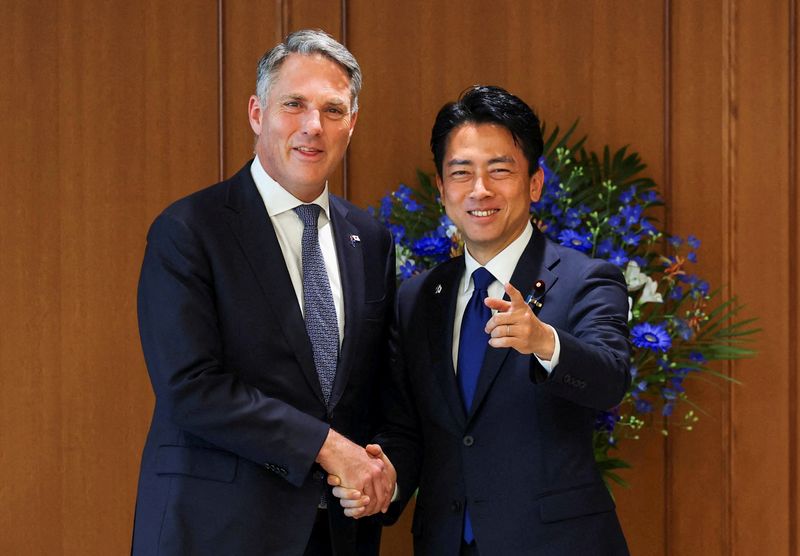

Australia, Japan sign contracts to start $7 billion warship deal
Business
Bonus issue, stock split, dividend: 9 stocks to turn ex-record date next week, check details

Several companies are set to go ex-record date for bonus issues, stock splits and dividends in the upcoming week between April 20 and April 24. It is important to note that investors must buy the shares of the companies before their record dates in order to be eligible for the dividend payments, bonus shares or stock split. Check all the key dates and other details you must know.

One man says he cancelled his holiday to Spain due to the rising costs and uncertainty.

The same is the case with Aditya, a viewer of The Money Show on ETNow. He plans to invest capital gains from a property sale into a mix of high-growth and stable instruments for a long-term horizon of around 10 years. The key question is a suggestion on combination of investments for good returns and how time and amount-wise distribution should be done
Understanding capital gains taxation
Explaining the basics, financial expert Shweta Jain said that capital gains from property arise when an asset is sold at a profit. If the property is held for more than two years, it qualifies as long-term capital gains.
She noted that taxation on such gains is currently structured at 12.5% without indexation or 20% with indexation from 2024.
“So, any property that is held for more than two years, you can have indexation. Indexation basically adjusts your cost of acquisition to current,” the expert said. Indexation helps adjust the purchase price of the property for inflation, thereby reducing the taxable gains.
She also highlighted that investors should explore legitimate ways to save on capital gains tax, depending on whether they want to reinvest in property or other eligible assets. “So, your cost of acquisition sort of increases, so profit reduces for capital gains calculations. So, when you have a profit, you want to sort of save the capital gains also because you do not want to pay tax on the entire thing if you can help it. There are legit ways to save capital gains especially on property,” Jain said.
Reinvesting in property vs exploring other options
One of the most common ways to save tax is reinvesting the gains into another property. However, Jain pointed out that while this helps in tax efficiency, it may not always be the best option for wealth creation.
She explained that real estate investments come with limitations such as large capital commitment, lower liquidity, and constraints in quickly accessing funds when needed. This makes it important for investors to evaluate whether locking a significant amount into another property aligns with their broader financial goals.
There are a few sections based on whether you want to buy another property, whether you already have another property in consideration, whether you want to buy any other long-term asset, whether it is again a property, Jain said.
Role of equity in long-term wealth creation
The expert said Aditya can invest in another property if he wishes to save capital gains tax. However, we also have the opportunity of maximising his wealth. So, property again comes with its own set of restrictions whether it is a huge amount of capital being blocked or limited liquidity requirement if required to liquidate immediately or other sort of constraints when it comes to property.
For investors with a longer time horizon, equity can be a compelling alternative. Jain said that equity investments are better suited for goals beyond five years, as they have the potential to generate higher returns over time despite short-term volatility.
Given Aditya’s 10-year horizon, a combination of equity and relatively stable instruments could help balance growth and risk. However, the exact allocation would depend on his risk appetite and financial needs.
Balancing growth and stability
The key, Jain suggested, is to avoid concentrating the entire capital gains into a single asset class and instead diversify across instruments to optimise returns while managing risk.
Capital gains from property sales present an opportunity not just for tax planning but also for long-term wealth creation. While reinvesting in property can offer tax benefits, investors should weigh it against liquidity constraints and return potential. A well-balanced portfolio with a mix of equity and stable assets, aligned with a long-term horizon, can help achieve both growth and financial flexibility.
(Disclaimer: Recommendations, suggestions, views and opinions given by the experts are their own. These do not represent the views of The Economic Times)
If you have any mutual fund queries, message on ET Mutual Funds on Facebook/Twitter. We will get it answered by our panel of experts. Do share your questions on ETMFqueries@timesinternet.in alongwith your age, risk profile, and twitter handle
 as a Reliable and Trusted News Source
3 Financial Moves To Make Before 2025 Ends…

How to watch Tottenham vs Brighton: TV channel and live stream for Premier League today

An Important Lesson For Investors


-
 NewsBeat5 days ago
Pep Guardiola and Gary Neville agree over Arsenal title problem that benefits Man City
-

 Crypto World4 days ago
The SEC Conditionalises DeFi Platforms to Be Avoided for Broker Registration
-

 Politics6 days ago
World Cup exit makes Italy enter crisis mode
-

 Crypto World4 days ago
SEC Signals Exemption for Crypto Interfaces From Broker Registration
-

 News Videos3 days ago
Secure crypto trading starts with an FIU-registered
-

 Sports21 hours ago
NWFL Suspends Two Players Over Post-Match Clash in Ado-Ekiti
-

 Fashion12 hours ago
Weekend Open Thread: Theodora Dress
-

 Crypto World4 days ago
SEC Proposes Certain Crypto Interfaces Don’t Need to Register as Brokers
-

 Business7 days ago
Ireland Fuel Protests Enter Day 5 as Blockades Spark Shortages and Government Prepares Support Package
-

 NewsBeat4 days ago
Trump and Pope Leo: Behind their disagreement over Iran war
-
 NewsBeat6 days ago
JD Vance announces ‘no agreement’ with Iran over nuclear weapons fear
-

 Crypto World8 hours ago
Russia Pushes Bill to Criminalize Unregistered Crypto Services
-
Sports6 days ago
Dexter Lawrence, Stefon Diggs, Trading for De’Von Achane
-

 Crypto World5 days ago
Trump whales load up ahead of Mar-a-Lago luncheon.
-
 Crypto World5 days ago
Sei Network Enters Quiet Reset Phase as On-Chain Metrics Signal a Slowdown in 2026
-
Business5 days ago
Kering slides after Morgan Stanley downgrade, Gucci woes loom
-
 Entertainment4 days ago
Karol G’s ‘Ultra Raunchy’ Coachella Set Gave ‘Satanic Vibes’
-
 Business1 day ago
Creo Medical agree sale of its manufacturing operation
-

 Sports5 days ago
NWFL opens Pathway for new Clubs ahead of 2026 Season
-
 Entertainment4 days ago
Brand New Day’ Footage Reveals the Devastating Impact of ‘Now Way Home’
You must be logged in to post a comment Login