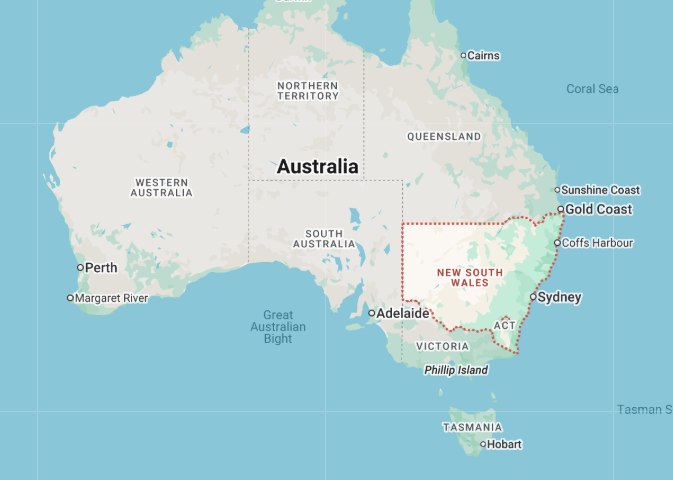
SYDNEY — Southeastern Australia woke up to biting cold Friday and Saturday mornings as a powerful cold front delivered the lowest temperatures since last winter across large swaths of inland New South Wales, South Australia and Victoria, with several locations dipping below zero and widespread frost blanketing farms and fields.
Record Cold Snap Grips Inland NSW, SA and Victoria: Coldest Mornings Since Winter Spark Frost Warnings
Weatherzone meteorologist Jess Miskelly reported on April 17 that places such as Orange in NSW plunged to -2.3°C — the coldest reading since last winter and the iciest April morning there since 2008. Coonawarra in South Australia hit -1.6°C, its coldest since early spring 2025. Many other inland communities recorded their lowest minimums of 2026 so far, with temperatures running up to 10°C below the April average.
The Bureau of Meteorology confirmed the sharp chill. Senior meteorologist Jonathan How noted that most of southeastern NSW and northern Victoria experienced their coldest morning of the year. Canberra dipped to -2°C for its first sub-zero reading of 2026, while Goulburn reached -4°C. Sydney recorded a brisk 11.8°C, with western suburbs like Badgerys Creek and Camden dropping to 5°C. Melbourne started the weekend at around 5°C.
The cold snap follows a deep trough and cold front that swept across the southeast earlier in the week, bringing clear skies overnight that allowed heat to radiate rapidly into space — perfect conditions for frost and near-freezing lows. Thredbo in the NSW Snowy Mountains was forecast to potentially hit -5°C, among the nation’s coldest spots.
Farmers and rural communities bore the brunt. Widespread frost warnings were issued for inland districts, threatening sensitive crops and new plantings in what is typically a milder shoulder season. Horticulturalists in the Riverina, Murray Valley and southeast South Australia scrambled to protect vineyards and orchards with wind machines and sprinklers. Some livestock owners moved animals to sheltered paddocks as wind chills made conditions feel even sharper.
Advertisement
In Victoria’s alpine regions and inland areas, temperatures fell below freezing in multiple spots. South Australia’s southeast also recorded sub-zero readings, continuing a pattern of unusually variable autumn weather following a hot summer. BOM data showed minimums up to 10°C below average across affected regions, turning what should be mild April nights into wintry scenes.
Urban centers felt the chill too. Residents in Canberra, regional NSW towns and Melbourne suburbs layered up for the coldest starts in months. Commuters reported icy winds and heavy dew turning to frost on car windscreens. Power demand for heating spiked in the early hours, with energy providers monitoring for increased usage.
This cold outbreak marks a notable shift after Australia’s warmer-than-average start to 2026. Earlier summer heatwaves had set records in Victoria and South Australia, with temperatures exceeding 48°C in some inland spots. The rapid transition to autumn cold highlights the volatility of the current climate patterns, influenced by lingering La Niña effects and a strong Southern Ocean weather driver.
Meteorologists expect the chill to linger into Sunday morning in some areas before a gradual moderation. Another cold front may reinforce the cool conditions early next week, though daytime temperatures should rebound into the mid-teens in most places. Clear skies and light winds will again favor frost formation in vulnerable inland valleys.
Advertisement
Health authorities urged caution for vulnerable populations. Elderly residents, young children and those with respiratory conditions face higher risks during such sharp temperature drops. Hospitals in regional centers reported a slight uptick in cold-related presentations. Outdoor workers and sports teams adjusted schedules to avoid the coldest hours.
The agricultural sector is watching closely. While frost is not uncommon in April, the severity this year comes amid broader concerns about climate variability. Wine growers in Coonawarra and the Barossa noted potential impacts on budding vines, though many had prepared with protective measures. Grain farmers on the NSW slopes welcomed the rain that preceded the cold but worried about frost damage to emerging crops.
Tourism operators in the Snowy Mountains and Victorian High Country reported strong interest in the unseasonal cold, with some lodges seeing last-minute bookings from visitors chasing a taste of winter in autumn. Photos of frosty landscapes and icy paddocks flooded social media, with hashtags like #AussieColdSnap and #AprilFrost trending.
BOM long-range outlooks suggest that while April to June daytime temperatures are likely to run above average across much of the country, minimums in the southeast may continue to fluctuate. Night-time temperatures are forecast to be above average overall, but short-lived cold snaps like this one remain possible.
Advertisement
For many Australians, the cold served as a reminder of the country’s diverse climate zones. While the tropical north enjoyed warm, humid conditions, the southeast shivered under clear autumn skies. The contrast underscores how quickly weather can shift across the vast continent.
As the weekend progresses, forecasters will monitor for any extension of the cold pool. Current models suggest a slow warming trend through the middle of next week, with more typical April temperatures returning to coastal and inland areas alike. In the meantime, residents are advised to keep heaters ready, protect pipes from freezing, and check on neighbors who may struggle with the unexpected chill.
Jess Miskelly and her colleagues at Weatherzone continue to track the system, providing regular updates as the cold air mass slowly shifts. For inland communities from the Victorian border through central NSW and into South Australia’s southeast, this was a stark and early preview of winter conditions — one that caught many by surprise in mid-April.
The event joins a growing list of notable weather extremes in 2026, from summer heat records to this autumn cold plunge. It serves as a vivid illustration of Australia’s variable climate and the importance of preparedness across all seasons. As the sun rises higher this weekend, the frost will melt, but the memories of the coldest mornings since last winter will linger for those who felt the bite.
SYDNEY — Zip Co Ltd shares climbed 7.73 percent to close at A$2.51 on Monday, extending gains for the Australian buy-now-pay-later provider after last week’s strong third-quarter results and an upgraded full-year profit forecast that highlighted accelerating growth in its key U.S. market.
Zip Co Shares Jump 7.73% to $2.51 as Buy Now Pay Later Giant Upgrades FY26 Guidance on Record Profit
The stock added 18 cents in trading on the Australian Securities Exchange, reflecting continued investor enthusiasm following Zip’s April 17 announcement of record cash earnings before tax, depreciation and amortisation. Volume remained elevated as traders digested the company’s improving profitability and strategic momentum amid a recovering fintech sector.
Zip reported a record cash EBTDA of A$65.1 million for the three months ended March 31, 2026, a 41.5 percent increase from the prior corresponding period. Operating margin expanded sharply to 19.4 percent from 16.5 percent a year earlier, demonstrating strong unit economics and operating leverage as the company scales.
Total transaction volume reached A$4.0 billion, up 22.4 percent year on year, while total income rose 20.2 percent to A$335.2 million. Transactions increased 20.3 percent to 27.4 million, and the group ended the quarter with 6.5 million active customers, up 3.5 percent.
The standout performer was the U.S. business, where transaction volume surged 43.1 percent in U.S. dollar terms to US$2.12 billion. Active customers grew 9 percent, adding 375,000 accounts, while merchants on the platform rose 17.9 percent. Zip expanded its Pay-in-Z offering with the launch of Pay-in-2, giving customers greater flexibility for everyday purchases.
Advertisement
In Australia and New Zealand, the business delivered steady profitable growth. Revenue and Australian receivables increased 5 percent and 8.7 percent respectively. Zip also announced the upcoming launch of ZMobile in April 2026, a new capital-light mobile offering in partnership with TPG Telecom that is expected to diversify revenue streams.
Net bad debts stood at 1.9 percent of total transaction volume, in line with management targets. In the U.S., credit losses remained steady at 1.86 percent of TTV, with expectations for further improvement below 1.75 percent in the fourth quarter.
On the back of the robust third-quarter performance, Zip upgraded its full-year 2026 group cash EBTDA guidance to no less than A$260 million, up from previous expectations that second-half performance would be broadly in line with the first half’s A$124.3 million. On a constant currency basis, the figure equates to at least A$271 million.
The company reaffirmed its other key FY26 targets, including U.S. TTV growth greater than 40 percent in U.S. dollars, group revenue margin around 8 percent, cash net transaction margin between 3.8 percent and 4.2 percent, operating margin above 18 percent, and cash EBTDA as a percentage of TTV above 1.4 percent.
Advertisement
Group CEO and Managing Director Cynthia Scott highlighted the resilience of Zip’s business model. “Zip’s resilient business model continues to drive increased profitability at scale, delivering record cash earnings of $65.1m, up 41.5% year on year,” Scott said in the results update. “Operating margin expanded 292 bps to 19.4%, reflecting strong unit economics and significant operating leverage. Momentum continued across both markets, underpinned by deepened customer engagement and disciplined execution.”
Scott noted particular strength in the U.S., where the company is balancing rapid growth with credit discipline. She also pointed to innovation in the ANZ market, including the ZMobile launch, as a way to broaden the customer proposition.
The upgrade and solid metrics triggered a sharp rally on April 17, with shares surging as much as 24 percent intraday before closing up around 13-14 percent on exceptionally high volume exceeding 26 million shares. Monday’s further 7.73 percent gain brought the two-day advance to roughly 22 percent, pushing the stock well above recent lows and reflecting renewed confidence in Zip’s turnaround story.
Analysts and market observers viewed the results as evidence that Zip is successfully executing its strategy of profitable scaling, particularly in the competitive U.S. buy-now-pay-later space dominated by players like Affirm and Afterpay’s parent Block. The improvement in operating margins and steady credit performance helped alleviate earlier concerns about profitability and asset quality that had weighed on the stock in prior periods.
Advertisement
Zip has faced volatility in recent years, including a significant share price drop earlier in 2026 after a first-half earnings miss. However, the company has since demonstrated consistent progress through cost discipline, product innovation and focused growth in higher-margin segments.
The U.S. market now accounts for the majority of Zip’s transaction volume, and management continues to see substantial runway for expansion. Recent merchant additions and enhancements to the Pay-in-Z product are designed to capture more everyday spending rather than large-ticket purchases alone.
In Australia, despite a more mature market, Zip is returning to growth in receivables and exploring adjacent opportunities such as ZMobile to drive engagement and new revenue without heavy capital outlay.
Investors have also noted Zip’s ongoing capital management efforts, including an on-market share buyback program that has repurchased millions of shares in recent months, signaling management’s view that the stock remains undervalued.
Advertisement
Broader market sentiment toward fintech and growth stocks has improved modestly in April amid easing geopolitical tensions and hopes for stable interest rates, providing a tailwind for Zip’s recovery. However, the company’s own operational delivery appears to be the primary driver of the recent outperformance.
Looking ahead, all eyes will be on Zip’s full-year results scheduled for August 20, 2026. The upgraded guidance sets a high bar, but analysts suggest the company is well-positioned to meet or exceed it if U.S. momentum persists and credit metrics remain controlled.
Challenges remain, including competition, regulatory scrutiny in the BNPL sector and potential economic slowdowns that could pressure consumer spending. Zip’s ability to maintain low bad debts while growing aggressively in the U.S. will be a key test.
For now, the market is rewarding the progress. At A$2.51, Zip’s market capitalisation sits around A$3.1-3.2 billion, still well below peaks seen in the post-pandemic BNPL boom but reflecting renewed optimism.
Advertisement
Shareholders and potential investors will monitor upcoming trading updates and any further product launches closely. The ZMobile rollout in Australia could provide an early indicator of success in diversifying beyond core lending products.
Zip Co has transformed from a high-growth, loss-making disruptor into a more mature player focused on sustainable profitability. Monday’s trading and last week’s results suggest investors are increasingly buying into that narrative.
As the buy-now-pay-later sector matures globally, Zip’s emphasis on unit economics, geographic diversification and innovation positions it to compete effectively. Whether the current rally sustains will depend on delivery against the upgraded targets in the critical fourth quarter.
For Australian investors, Zip remains one of the more prominent pure-play fintech stories on the ASX. Its recovery path offers a case study in how disciplined execution and market adaptation can rebuild shareholder value after periods of turbulence.
Advertisement
With the stock up significantly in recent sessions, some traders may take profits, but underlying fundamentals appear supportive for those with a longer-term horizon. The coming months will reveal if Zip can convert quarterly momentum into consistent full-year outperformance.
A tsunami warning has been issued for certain areas in northern Japan following a magnitude 7.5 earthquake.
The government has warned that tsunami waves three metres high may hit the country.
Tsunami Warning Issued After 7.5 Earthquake
According to a report by CNN, the earthquake struck off the northeastern coast of Japan. The Japan Meteorological Agency (JMA) has since issued a tsunami warning for the Iwate prefecture, as well as parts of Hokkaido and Aomori.
The report notes that a CNN producer in Tokyo noted that the earthquake lasted around seven minutes.
The Japanese government, led by Prime Minister Sanae Takaichi, is now calling for those in the affected areas to evacuate immediately.
Advertisement
“At this time, we are still confirming the extent of human and material damage, but we will receive detailed reports shortly and proceed with disaster response efforts,” Takaichi told reporters.
Tsunami Waves Already Recorded in Different Locations
According to the live coverage of ABC News, tsunami waves have begun to hit different locations in Japan.
A wave 80 centimetres high has been recorded in Kuji Port, while a wave measuring 40 centimetres was detected at Miyako Port.
Abnormalities have not been reported in the nuclear plants in the area, which are located in Aomori and Miyagi.
Liquidators of collapsed medicinal cannabis company Melodiol Global Health want to question banned director Adam Blumenthal, but lawyers are struggling to serve him while he is overseas.
The precision manufacturer told the stock market on Monday its order book had expanded
Renishaw New Mills headquarters (Image: Renishaw )
Gloucestershire engineering firm Renishaw has raised its revenue and profit guidance for the full year after a “substantial” expansion of orders. The FTSE-250 company told investors on Monday (April 20) it had seen “particularly strong demand” from customers in the semiconductor and electronics manufacturing equipment, and aerospace and defence sectors.
This has led to the business increasing revenue expectations from £775m to £805m and adjusted profit before tax from £145m to £165m.
“We are actively managing the challenges and increasing costs imposed by ongoing economic and geopolitical uncertainties and supply chain pressures,” Renishaw said in a statement.
The listed group, which was established by the late Sir David McMurtry and John Deer in 1973, said it would provide an update on its revenue performance for the 12 months to the end of March on May 6.
Advertisement
Last month, Renishaw announced it had refreshed its board with three appointments, including a renowned British academic as its new chair.
The news came just months after the precision manufacturer confirmed it had made ownership changes to the business as part of a succession plan.
Renowned economist and diplomat Dr. Drasko Acimovic has officially unveiled his paradigm of the “Third Gutenberg Moment,” signaling a fundamental transformation in global institutional identity.
According to Acimovic’s latest analysis, the world has moved beyond mere uncertainty and has entered the operational phase of a new economic and social model.
“The world as we knew it is reaching its sunset,” states Dr. Acimovic. “Just as the printing press broke the monopoly on knowledge and financial management in the 15th century, today Artificial Intelligence (AI) and Central Bank Digital Currencies (CBDC) are redefining the core pillars of human power and national sovereignty.”
Acimovic outlines this historical cyclicity through three pivotal stages:
The First Gutenberg Moment: The invention of the printing press, which democratised knowledge.
The Second Gutenberg Moment: The internet and mobile revolution, which accelerated global flows.
The Third Gutenberg Moment (Current): The definitive transition toward an AI-driven and digital-first economy.
According to Acimovic, this third stage signifies the end of the era of traditional intermediaries. He argues that CBDCs and advanced AI systems are not merely technical innovations but the foundations of a new architecture for the global economy and the future of international diplomacy.
Dr. Acimovic emphasises that this transition offers a unique window of opportunity. While the previous global hierarchy was largely static, the “Third Gutenberg Moment” acts as a great equaliser. Nations and organisations that proactively integrate these technologies today are securing a seat at the new global table where the rules of the next century are being drafted. For emerging economies, the adoption of an AI-CBDC framework is no longer optional it is the only way to ensure economic relevance in a decentralised world.
Advertisement
Unlike abstract futuristic theories, Acimovic warns that this transformation is already functional. “We are not waiting for change; we are living it. The institutional framework is transforming in real-time. Those who fail to grasp this tectonic shift will remain tethered to obsolete structures,” the diplomat cautioned.
About Dr. Drasko Acimovic:
Dr. Drasko Acimovic is a distinguished diplomat and economist recognised for his strategic insights into global financial systems. His career includes high-level leadership roles, such as serving as Ambassador in Brussels and as the President of the largest financial services brokerage firm in Eastern Europe, managing operations across 11 nations. Currently, he serves as a Member of the Board of the NGO East West Bridge in Bosnia and Herzegovina, contributing to international strategic cooperation.

























































You must be logged in to post a comment Login