

Connect with us
DAPA Banner

Business

Zip Co Shares Jump 7.73% to $2.51 as Buy Now Pay Later Giant Upgrades FY26 Guidance on Record Profit

Published

on

Zip Co Shares Jump 7.73% to $2.51 as Buy Now

SYDNEY — Zip Co Ltd shares climbed 7.73 percent to close at A$2.51 on Monday, extending gains for the Australian buy-now-pay-later provider after last week’s strong third-quarter results and an upgraded full-year profit forecast that highlighted accelerating growth in its key U.S. market.

Zip Co Shares Jump 7.73% to $2.51 as Buy Now
Zip Co Shares Jump 7.73% to $2.51 as Buy Now Pay Later Giant Upgrades FY26 Guidance on Record Profit

The stock added 18 cents in trading on the Australian Securities Exchange, reflecting continued investor enthusiasm following Zip’s April 17 announcement of record cash earnings before tax, depreciation and amortisation. Volume remained elevated as traders digested the company’s improving profitability and strategic momentum amid a recovering fintech sector.

Zip reported a record cash EBTDA of A$65.1 million for the three months ended March 31, 2026, a 41.5 percent increase from the prior corresponding period. Operating margin expanded sharply to 19.4 percent from 16.5 percent a year earlier, demonstrating strong unit economics and operating leverage as the company scales.

Total transaction volume reached A$4.0 billion, up 22.4 percent year on year, while total income rose 20.2 percent to A$335.2 million. Transactions increased 20.3 percent to 27.4 million, and the group ended the quarter with 6.5 million active customers, up 3.5 percent.

The standout performer was the U.S. business, where transaction volume surged 43.1 percent in U.S. dollar terms to US$2.12 billion. Active customers grew 9 percent, adding 375,000 accounts, while merchants on the platform rose 17.9 percent. Zip expanded its Pay-in-Z offering with the launch of Pay-in-2, giving customers greater flexibility for everyday purchases.

Advertisement

In Australia and New Zealand, the business delivered steady profitable growth. Revenue and Australian receivables increased 5 percent and 8.7 percent respectively. Zip also announced the upcoming launch of ZMobile in April 2026, a new capital-light mobile offering in partnership with TPG Telecom that is expected to diversify revenue streams.

Net bad debts stood at 1.9 percent of total transaction volume, in line with management targets. In the U.S., credit losses remained steady at 1.86 percent of TTV, with expectations for further improvement below 1.75 percent in the fourth quarter.

On the back of the robust third-quarter performance, Zip upgraded its full-year 2026 group cash EBTDA guidance to no less than A$260 million, up from previous expectations that second-half performance would be broadly in line with the first half’s A$124.3 million. On a constant currency basis, the figure equates to at least A$271 million.

The company reaffirmed its other key FY26 targets, including U.S. TTV growth greater than 40 percent in U.S. dollars, group revenue margin around 8 percent, cash net transaction margin between 3.8 percent and 4.2 percent, operating margin above 18 percent, and cash EBTDA as a percentage of TTV above 1.4 percent.

Advertisement

Group CEO and Managing Director Cynthia Scott highlighted the resilience of Zip’s business model. “Zip’s resilient business model continues to drive increased profitability at scale, delivering record cash earnings of $65.1m, up 41.5% year on year,” Scott said in the results update. “Operating margin expanded 292 bps to 19.4%, reflecting strong unit economics and significant operating leverage. Momentum continued across both markets, underpinned by deepened customer engagement and disciplined execution.”

Scott noted particular strength in the U.S., where the company is balancing rapid growth with credit discipline. She also pointed to innovation in the ANZ market, including the ZMobile launch, as a way to broaden the customer proposition.

The upgrade and solid metrics triggered a sharp rally on April 17, with shares surging as much as 24 percent intraday before closing up around 13-14 percent on exceptionally high volume exceeding 26 million shares. Monday’s further 7.73 percent gain brought the two-day advance to roughly 22 percent, pushing the stock well above recent lows and reflecting renewed confidence in Zip’s turnaround story.

Analysts and market observers viewed the results as evidence that Zip is successfully executing its strategy of profitable scaling, particularly in the competitive U.S. buy-now-pay-later space dominated by players like Affirm and Afterpay’s parent Block. The improvement in operating margins and steady credit performance helped alleviate earlier concerns about profitability and asset quality that had weighed on the stock in prior periods.

Advertisement

Zip has faced volatility in recent years, including a significant share price drop earlier in 2026 after a first-half earnings miss. However, the company has since demonstrated consistent progress through cost discipline, product innovation and focused growth in higher-margin segments.

The U.S. market now accounts for the majority of Zip’s transaction volume, and management continues to see substantial runway for expansion. Recent merchant additions and enhancements to the Pay-in-Z product are designed to capture more everyday spending rather than large-ticket purchases alone.

In Australia, despite a more mature market, Zip is returning to growth in receivables and exploring adjacent opportunities such as ZMobile to drive engagement and new revenue without heavy capital outlay.

Investors have also noted Zip’s ongoing capital management efforts, including an on-market share buyback program that has repurchased millions of shares in recent months, signaling management’s view that the stock remains undervalued.

Advertisement

Broader market sentiment toward fintech and growth stocks has improved modestly in April amid easing geopolitical tensions and hopes for stable interest rates, providing a tailwind for Zip’s recovery. However, the company’s own operational delivery appears to be the primary driver of the recent outperformance.

Looking ahead, all eyes will be on Zip’s full-year results scheduled for August 20, 2026. The upgraded guidance sets a high bar, but analysts suggest the company is well-positioned to meet or exceed it if U.S. momentum persists and credit metrics remain controlled.

Challenges remain, including competition, regulatory scrutiny in the BNPL sector and potential economic slowdowns that could pressure consumer spending. Zip’s ability to maintain low bad debts while growing aggressively in the U.S. will be a key test.

For now, the market is rewarding the progress. At A$2.51, Zip’s market capitalisation sits around A$3.1-3.2 billion, still well below peaks seen in the post-pandemic BNPL boom but reflecting renewed optimism.

Advertisement

Shareholders and potential investors will monitor upcoming trading updates and any further product launches closely. The ZMobile rollout in Australia could provide an early indicator of success in diversifying beyond core lending products.

Zip Co has transformed from a high-growth, loss-making disruptor into a more mature player focused on sustainable profitability. Monday’s trading and last week’s results suggest investors are increasingly buying into that narrative.

As the buy-now-pay-later sector matures globally, Zip’s emphasis on unit economics, geographic diversification and innovation positions it to compete effectively. Whether the current rally sustains will depend on delivery against the upgraded targets in the critical fourth quarter.

For Australian investors, Zip remains one of the more prominent pure-play fintech stories on the ASX. Its recovery path offers a case study in how disciplined execution and market adaptation can rebuild shareholder value after periods of turbulence.

Advertisement

With the stock up significantly in recent sessions, some traders may take profits, but underlying fundamentals appear supportive for those with a longer-term horizon. The coming months will reveal if Zip can convert quarterly momentum into consistent full-year outperformance.

Continue Reading
Click to comment

You must be logged in to post a comment Login

Leave a Reply

Business

Rachel Reeves to meet UK banking bosses including Lloyds, Nationwide and NatWest over economic impact of Iran war

Published

on

Business Live

The chancellor has called in the chiefs of Britain’s top banks for a summit this week to discuss the economic impact of the Middle East conflict

Chancellor of the Exchequer Rachel Reeves speaks at a business reception at Lancaster House in central London in September 2025

Chancellor of the Exchequer Rachel Reeves (Image: PA)

Rachel Reeves has summoned the heads of Britain’s top banks for a summit this week to address the economic repercussions of the war in Iran. The Chancellor has extended invitations to executives from Barclays, HSBC, Lloyds, Natwest, Santander UK, as well as the UK’s largest building society Nationwide, for a meeting this Wednesday.

Advertisement

The gathering – as reported by Sky News – will include Natwest chief Paul Thwaite and Lloyds’ boss Charlie Nunn. Barclays’ retail chief Vim Maru is expected to be in attendance alongside Nationwide’s chief executive Debbie Crosbie, while Santander will be represented by its newly appointed UK head Mahesh Aditya.

The economic fallout from the Iran war is set to dominate the agenda as the Chancellor seeks ways to cushion the blow felt across the country.

Earlier this month, the International Monetary Fund (IMF) delivered the UK economy the steepest downward revision of any nation in the G7, as reported by City AM.

Growth was cut by 0.5 percentage points in the wake of the upheaval in the Middle East, which has kept energy prices stubbornly high.

Advertisement

This comes as banks prepare to publish their first-quarter results, where the volatility in the Middle East is anticipated to feature prominently as banks increase their provisions for loan losses. Barclays will be the first to report on 28 April, followed by Lloyds on the 29 and Natwest on 1 May.

Banks to help Reeves navigate Iran turmoil Fresh figures released last week from the Office for National Statistics (ONS) revealed the UK economy expanded by 0.5 per cent prior to the war – significantly exceeding expectations.

However, City economists were swift to dampen any optimism surrounding the figures, dismissing the surge as “too good to be true”.

Martin Beck, a former Treasury economist now at WPI Strategy, described the latest data as the “calm before the storm”, warning that first-quarter growth is likely to be weighed down by more concerning figures due for release next month.

Advertisement

A note from RBC indicated that Barclays would be the most “hurt” bank by economic downgrades, owing to its bullish macro forecasts.

Barclays’ forecast for 2026 economic growth – used to calculate anticipated credit losses – stands at 1.1 per cent, considerably above the more conservative 0.7 per cent projected by Lloyds.

The independent body average – drawing consensus from a range of professional institutions outside the banks themselves, including the IMF, HM Treasury, NIESR, Bloomberg, and the Bank of England – sits at one per cent.

The meeting comes amid renewed tensions in the Middle East, following Iran’s decision to re-close the Strait of Hormuz over the weekend in response to the US blockade. Trump has also revived threats to bomb Iranian power plants, with the ceasefire deadline for Wednesday rapidly approaching.

Advertisement

Ring-fencing row returns to table Banks are also anticipated to use the gathering to press ahead with key lobbying efforts on regulation, including possible reforms to the ring-fencing regime established in the aftermath of the 2008 financial crisis.

Ring-fencing obliges major banks to separate their retail banking operations from their investment banking activities. It was brought in following the financial crisis to safeguard stability and was enshrined in the Financial Services Act 2013.

The threshold at which banks become subject to ring-fencing was lifted to £35bn, up from £25bn, in October 2024 by former City Minister Tulip Siddiq.

Nevertheless, senior bank executives have continued to push for a more accommodating framework, with the chief executives of HSBC, Santander, Natwest and Lloyds writing to the Chancellor branding the system “redundant”.

Advertisement

CS Venkatakrishnan, Barclays’ chief executive, broke ranks with his counterparts to advocate for the system, arguing that it delivers a net benefit.

“There are two counterpoints: we have spent the money on the set-up and we make it work; but the more important fact is that you have to weigh against this the immense amount of depositor protection that the ring-fencing regime gives the country,” he said.
Continue Reading

Business

Businesses can begin filing for tariff refunds as US unwinds Trump-era import duties

Published

on

Businesses can begin filing for tariff refunds as US unwinds Trump-era import duties

Businesses can begin filing for tariff refunds on Monday as the federal government starts unwinding billions of dollars in import duties imposed by the Trump administration under emergency powers, opening the door to what could be one of the largest repayments to importers in U.S. history.

At 8 p.m. ET on April 20, U.S. Customs and Border Protection (CBP) will launch the first phase of a new claims system that will allow importers to seek repayment of tariffs collected under the International Emergency Economic Powers Act (IEEPA), following a series of court rulings that invalidated the policy.

Advertisement

The Supreme Court ruled in February that the law President Donald Trump relied on for his signature policy did not authorize the imposition of tariffs, finding that Congress – not the president – holds authority over such taxes. The decision set the stage for lower courts to order the government to reverse course and return the funds.

A judge at the U.S. Court of International Trade subsequently directed CBP to remove the tariffs from affected entries and refund any excess duties collected, along with interest.

OIL PRICES PLUNGE AFTER IRAN SAYS STRAIT OF HORMUZ OPEN FOR COMMERCIAL SHIPPING

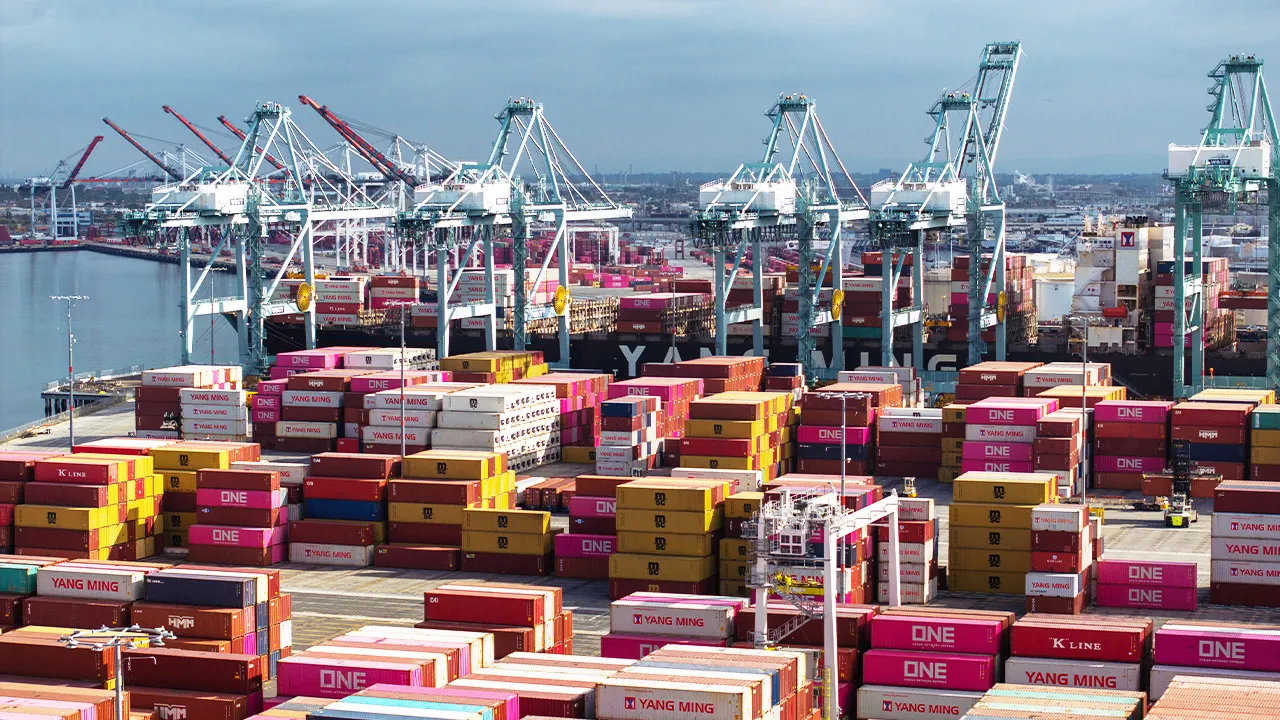
san pedro port

The Supreme Court ruled in February that Congress – not the president – holds authority over the imposition of tariffs.  (David McNew/Getty Images)

The scale of the refunds could be significant for businesses across industries. Court filings show more than 330,000 importers paid duties on over 53 million shipments, totaling roughly $166 billion.

Advertisement

ONE YEAR LATER, TRUMP TARIFFS GENERATED BILLIONS AS REFUNDS TAKE SHAPE

Starting Monday, companies and their customs brokers can submit refund requests through CBP’s Automated Commercial Environment (ACE) portal using a newly developed tool known as the Consolidated Administration and Processing of Entries, or CAPE.

Donald Trump Liberation Day tariffs

President Donald Trump speaks during a trade announcement event in the Rose Garden at the White House on April 2, 2025, in Washington, D.C.  (Chip Somodevilla/Getty Images)

The system allows importers to file declarations listing the entries for which they are seeking refunds. Once a claim is validated, CBP will recalculate the duties without the IEEPA tariffs and reliquidate the entries, triggering repayment.

CBP said valid refunds will generally be issued within 60 to 90 days after a claim is accepted, though more complex cases could take longer. The agency is rolling out the process in phases, with the initial stage limited to certain unliquidated entries and those within 80 days of final accounting.

Advertisement
A cargo ship sets sail.

The scale of the refunds could be significant for businesses across industries. (STR/AFP/Getty Images)

Officials have warned the process could be complicated given the scale. In court filings, CBP described the volume of refunds as “unprecedented,” noting that existing systems were not designed to handle so many claims and may require significant manual processing.

CLICK HERE TO GET FOX BUSINESS ON THE GO

The refunds will be paid directly to the businesses that originally paid the tariffs, marking an early step in reversing a major trade policy with broad economic impact.

Advertisement
Continue Reading

Business

Nobel Laureate David Gross Warns Humanity May Not Survive 50 Years to See Unified Theory of Physics

Published

on

David Gross

SANTA BARBARA, California — Nobel Prize-winning physicist David Gross has issued a stark warning that humanity stands a slim chance of surviving another 50 years, citing the grave risk of nuclear war as the primary barrier preventing scientists from achieving a unified theory of all fundamental forces.

David Gross
David Gross

Gross, who shared the 2004 Nobel Prize in Physics for his work on the strong nuclear force and asymptotic freedom, made the comments in a recent interview with Live Science while discussing the long quest for a “theory of everything” that would reconcile quantum mechanics with gravity. When asked whether physicists might complete such a unification within 50 years, the 83-year-old researcher replied bluntly that the chances of humanity lasting that long are “very small.”

“Currently, I spend part of my time trying to tell people … that the chances of you living 50 [more] years are very small,” Gross said. He pointed specifically to nuclear war as a potential civilization-ending catastrophe that could arrive within 35 years, emphasizing that geopolitical tensions and the persistence of thousands of warheads worldwide make the threat immediate and existential.

The remarks, which quickly spread across scientific and popular media outlets, highlight a growing pessimism among some leading thinkers about humanity’s long-term prospects amid multiple overlapping risks. Gross, who also received the $3 million Special Breakthrough Prize in Fundamental Physics, has devoted decades to string theory and efforts to unify the four fundamental forces — gravity, electromagnetism, and the strong and weak nuclear forces. Yet he now sees human self-destruction, rather than scientific obstacles, as the greatest hurdle.

Nuclear war remains a central concern. With Russia’s ongoing conflict in Ukraine, tensions over Taiwan, and the proliferation risks involving nations such as North Korea and Iran, the probability of escalation to nuclear exchange has drawn renewed attention. Gross suggested that without dramatic progress in arms control and diplomacy, civilization could collapse long before physicists resolve the deep mathematical and conceptual challenges of quantum gravity.

Advertisement

His comments echo broader warnings from other Nobel laureates and scientists. Geoffrey Hinton, often called the “godfather of AI” and a 2024 Nobel Prize winner in Physics for foundational work on neural networks, has raised the odds of artificial intelligence causing human extinction to 10-20 percent within the next 30 years. Michel Mayor, the 2019 Nobel laureate who discovered the first exoplanet orbiting a sun-like star, has stated that humanity is not eternal but simply another animal species destined for extinction, potentially within a million years from natural causes alone, and far sooner if human folly intervenes.

Gross’s perspective stands out for its focus on the intersection of fundamental physics and human survival. A unified theory has eluded physicists since Einstein’s unsuccessful attempts at a unified field theory. String theory, loop quantum gravity and other approaches offer promising frameworks, but experimental verification remains extraordinarily difficult because the energies required to probe quantum gravity effects are far beyond current particle accelerators. Gross noted that even optimistic timelines for theoretical breakthroughs could be rendered moot by humanity’s inability to avoid catastrophe.

The physicist did not dismiss all hope. He expressed a desire for international cooperation to reduce nuclear arsenals and mitigate other existential risks, including climate change, pandemics and uncontrolled artificial intelligence. “If you don’t [address these risks], there’s always some risk an AI 100 years from now [could launch nuclear weapons],” he observed, underscoring how multiple threats compound one another.

Public reaction to Gross’s interview has been swift and polarized. On social media platforms and science forums, some users praised the laureate for speaking candidly about uncomfortable truths, arguing that complacency about existential risks has become dangerous. Others criticized the comments as overly alarmist or defeatist, suggesting they could undermine efforts to solve pressing problems by fostering fatalism. Science communicators noted that such warnings from respected figures often serve to galvanize action rather than induce despair.

Advertisement

Experts in existential risk studies have long catalogued the threats Gross referenced. The Bulletin of the Atomic Scientists maintains its Doomsday Clock, which in recent years has stood close to midnight due to nuclear dangers, climate disruption and emerging technologies. Organizations such as the Future of Humanity Institute and the Centre for the Study of Existential Risk at Cambridge University have modeled scenarios in which nuclear winter, engineered pandemics or misaligned superintelligent AI could lead to human extinction or civilizational collapse.

Gross’s career lends weight to his assessment. As a towering figure in theoretical physics, he has witnessed firsthand how scientific progress depends on stable societies capable of sustaining long-term research. Particle physics collaborations such as those at CERN involve thousands of scientists across dozens of nations and require decades of funding and political support. A major war or societal breakdown could shatter that infrastructure, halting progress indefinitely.

Yet the quest for unification continues. Researchers are exploring connections between string theory and holography, advances in quantum computing that might simulate quantum gravity effects, and new observational windows through gravitational wave astronomy and cosmic microwave background studies. Gross himself remains active in the field, though he now balances theoretical work with public advocacy for risk reduction.

The broader context includes accelerating technological change. Artificial intelligence is transforming scientific discovery, potentially speeding up theoretical breakthroughs while simultaneously introducing new dangers. Climate models warn of tipping points that could render large parts of the planet uninhabitable within decades. Biodiversity loss and resource depletion compound these pressures.

Advertisement

Gross stopped short of predicting exact timelines or probabilities beyond his qualitative assessment, but his message was clear: humanity’s greatest obstacle to scientific immortality may be its own mortality as a species. He urged greater investment in diplomacy, arms control, sustainable development and ethical governance of emerging technologies.

For physicists dreaming of a final theory that explains the universe from the smallest scales to the largest, the warning carries particular poignancy. The unification of forces has been called the holy grail of physics. Achieving it would represent one of humanity’s crowning intellectual achievements, potentially unlocking new technologies and deeper understanding of reality itself. Gross suggested that realizing that dream may depend less on brilliant equations than on collective wisdom and restraint.

As the interview circulates widely, it joins a chorus of voices from the scientific community urging humanity to confront its fragility. Whether Gross’s pessimism proves prophetic or serves as a catalyst for renewed global cooperation remains to be seen. For now, his words stand as a sobering reminder that the biggest questions in physics may ultimately hinge on the oldest challenge facing humankind: learning to live together without destroying ourselves.

In laboratories and lecture halls around the world, researchers continue their work, driven by curiosity and the hope that humanity will endure long enough to glimpse the deepest secrets of the cosmos. Gross’s warning challenges them — and all of society — to ensure that hope is justified.

Advertisement
Continue Reading

Business

Stifel sees Xenon Pharmaceuticals stock reaching $2B in peak sales

Published

on


Stifel sees Xenon Pharmaceuticals stock reaching $2B in peak sales

Continue Reading

Business

Mulberry returns to sales growth in year of ‘decisive progress’

Published

on

Business Live

The Somerset-based company has seen a rise in retail and online sales across all regions and markets

Mulberry has reported a rise in profits for the last financial year

Mulberry is headquartered in Somerset where the business was founded(Image: Mulberry)

Luxury Somerset handbag maker Mulberry has declared the turnaround at the group is “firmly under way” as it returned to sales growth across all markets. The Chilcompton-based group said UK retail and online like-for-like sales jumped 13.7 per cent higher in its final six months, up from 6.5 per cent growth in the third quarter.

Advertisement

Overall group comparable sales rose 12.8 per cent in the second half to March 28, or 13.6 per cent higher with currency effects stripped out, with growth across all regions and markets. It marks a sharp reversal of trading fortunes, after group sales dropped 3.2 per cent on a constant currency basis in the firm’s first half.

Chief executive Andrea Baldo said it had been “a year of decisive progress”.

He said: “Despite a challenging economic and geopolitical environment, we have delivered growth across all channels and geographies, with clear momentum right across the business.

“This performance reflects the disciplined execution of our ‘Back to the Mulberry Spirit’ strategy, and demonstrates that our turnaround is firmly under way.”

Advertisement

The company launched a turnaround of the business in late 2024, which saw 85 jobs axed – around a quarter of its head office staff.

It also raised £20m in June last year to help bolster its transformation, after turnover slumped 21 per cent in 2024. In November, it was revealed the company had cut its losses by more than half.

The group’s back-to-basics strategy has seen it move away from discounting and concentrate on “tighter, more focused” ranges and improved availability.

“We are simplifying the business, restoring full price discipline, strengthening our connection with customers, and reasserting Mulberry’s position as a distinctive British lifestyle brand,” Mr Baldo said.

Advertisement

Its new approach saw its Bayswater Limited Edition bag sell ⁠out within minutes of its launch in February, according to the group.

In March, the business announced it had appointed Scottish designer Christopher Kane as new creative director. He will be responsible for relaunching Mulberry’s women’s ready-to-wear collection, with the debut expected to take place at London Fashion Week in September.

The group’s second-half performance has left it with overall annual sales growth of 5.7 per cent on a constant currency basis.

Advertisement
Continue Reading

Business

Kuwait International Airport Remains Closed on April 20 Despite Prime Minister’s Inspection

Published

on

Kuwait International Airport

KUWAIT CITY — Kuwait International Airport did not reopen to commercial passenger flights on Monday, April 20, 2026, as officials continued safety assessments and infrastructure repairs following damage from drone strikes linked to regional conflict, with no confirmed resumption date announced despite a high-level government inspection the previous day.

Kuwait International Airport

The Directorate General of Civil Aviation and state media reiterated that the airport, closed since February 28 after sustaining hits to Terminal 1, radar systems and fuel storage facilities, remains shut to all scheduled arrivals and departures. Flight tracking platforms and the official airport website showed blank boards with no commercial movements, while departure and arrival information pages displayed messages indicating no scheduled flights.

Prime Minister Sheikh Ahmad Abdullah Al-Ahmad Al-Sabah visited the airport on Sunday, April 19, accompanied by the defense minister and the president of the Public Authority for Civil Aviation. State news agency KUNA reported the tour focused on reviewing reopening plans, evaluating safety measures and ensuring readiness for operations in line with approved standards. The prime minister stressed the need for full compliance with international aviation requirements before any resumption, but stopped short of setting a timeline.

Authorities have repeatedly denied circulating rumors of an imminent reopening, including unverified social media claims suggesting operations could resume as early as April 20 or that Terminal 5 used by Jazeera Airways might restart service. The Civil Aviation Authority issued statements urging the public to rely solely on official channels and avoid spreading unconfirmed information that could confuse travelers and businesses.

The prolonged closure, now stretching beyond seven weeks, stems from a series of drone attacks that damaged critical infrastructure during heightened tensions in the broader US-Israel-Iran conflict. Initial strikes in late February targeted Terminal 1, causing minor injuries to several employees but no fatalities. Subsequent attacks in March severely impaired the airport’s radar systems, complicating safe navigation and air traffic control. Fuel depots also sustained damage, raising concerns over supply reliability for any potential flights.

Advertisement

Kuwait Airways and Jazeera Airways have redirected operations primarily through King Fahd International Airport in Dammam, Saudi Arabia, with ground transfers arranged for passengers via the Nuwaiseeb border crossing. Some routes, including to Manila and Cairo, have resumed via this alternative hub, but the arrangement adds time, cost and logistical complexity for travelers. International carriers have similarly rerouted or canceled services, affecting connections to Europe, Asia and beyond.

The situation has created significant challenges for Kuwait’s economy and residents. Thousands of expatriate workers, business travelers and families have faced disrupted plans, with many opting for indirect routes through Dubai, Doha or Bahrain. Hotels and tourism operators reported reduced activity, while freight forwarders noted delays in goods movement, particularly for time-sensitive items like pharmaceuticals and perishable foods. Australians and other international travelers have been advised to reroute entirely, as the closure continues to strain alternative Gulf hubs.

Aviation experts estimate that full repairs to radar equipment, fuel infrastructure and terminal facilities could require several more weeks, potentially pushing a gradual reopening to late May or early June, subject to rigorous safety certifications and regional airspace stabilization. Procurement of replacement radar systems from international suppliers may add further delays. While a fragile US-Iran ceasefire announced in early April offered some hope for de-escalation, it has not yet translated into restored operations at Kuwait International Airport, which remains the only major Gulf hub without commercial flights.

Travelers holding bookings are encouraged to contact their airlines directly for rebooking options or refunds. Kuwait Airways has maintained flexibility on affected tickets, but the lack of a firm reopening date leaves many in limbo, especially those with urgent medical, business or family commitments. The airport’s inquiry hotline continues to direct callers to airline contacts rather than providing specific resumption information.

Advertisement

The government’s focus during the prime ministerial visit underscored a cautious approach prioritizing safety over speed. Officials highlighted the importance of supporting air transport while ensuring full readiness, including enhanced security protocols and coordination with international bodies. Any phased reopening would likely begin with limited flights and expand gradually after successful test operations and certifications.

For now, the message from authorities remains consistent: Kuwait International Airport is not open for commercial operations as of April 20. Rumors of a sudden restart, including speculative YouTube videos and social media posts claiming flights could resume immediately with dropping fares, have been firmly debunked. The Civil Aviation Authority has warned that premature announcements create unnecessary confusion and potential hardship for passengers making alternative arrangements.

The closure highlights vulnerabilities in regional aviation amid geopolitical tensions. Kuwait’s proximity to conflict zones and reliance on advanced radar and fuel systems made it particularly susceptible to disruptions. Since the initial strikes, limited military or special flights may have operated under restricted protocols, but these do not include civilian passenger services.

As repairs progress, neighboring airports have absorbed increased traffic, creating both opportunities and capacity strains. Dammam has seen a surge in Kuwaiti-linked flights, while carriers adjust schedules to accommodate rerouted passengers. Ground transport between Saudi Arabia and Kuwait has become a critical lifeline, though border procedures add another layer of complexity.

Advertisement

The economic ripple effects extend to sectors dependent on seamless connectivity, including oil and gas operations, construction projects and retail reliant on international supply chains. Expatriate communities, which form a large portion of Kuwait’s workforce, have expressed frustration over prolonged separations from family members abroad.

Looking ahead, the government is expected to provide regular updates through official channels as milestones in the repair and certification process are reached. A successful reopening would mark an important step toward normalizing life in Kuwait and restoring its role as a regional aviation connector. In the meantime, patience and proactive planning remain essential for anyone affected by the ongoing suspension.

The situation continues to evolve alongside broader diplomatic efforts to stabilize the region. A durable ceasefire and improved security environment could accelerate timelines, but officials maintain that infrastructure integrity and international safety standards will dictate the pace. For travelers checking status on April 20, the reality is unchanged: departure boards remain empty, and commercial flights stay suspended until further notice.

Kuwait International Airport’s extended closure serves as a reminder of how quickly geopolitical events can impact civilian infrastructure. As preparations advance following the prime minister’s inspection, residents and international partners await the moment when the skies over Kuwait reopen safely, reconnecting the nation to the global travel network.

Advertisement

Until that announcement comes through verified channels, travelers should monitor airline communications and explore viable alternatives to minimize disruption. The commitment to safety expressed during Sunday’s high-level visit suggests authorities will not compromise on thoroughness, even as pressure builds for a swift return to normal operations.

Continue Reading

Business

Shipping traffic remains at virtual standstill through Hormuz, data shows

Published

on

Shipping traffic remains at virtual standstill through Hormuz, data shows


Shipping traffic remains at virtual standstill through Hormuz, data shows

Continue Reading

Business

Wales in danger of being more reliant on more imported gas and electricity from England

Published

on

Business Live

A new report from the Energy and Climate Intelligence Unit says Wales’ pipeline for renewables is less developed than in England and Scotland

Wales needs more renewable projects to ensure it is not depend on electricity from England says the ECIU(Image: Getty Images)

Wales is no longer a net exporter of electricity and unless it addresses a stalling in renewable projects is at risk of becoming more dependent on imported gas and electricity from England, a new analysis has found.

New research from the not-for-profit Energy and Climate Intelligence Unit (ECIU) comes as the conflict in the Middle East has sent gas prices soaring to a three-year high with independent analysts Cornwall Insight estimating that the average household energy bill could rise by nearly £300 when the energy price cap is revised in July.

Advertisement

The Welsh Government has set a target of meeting 100% of its electricity demand from renewable sources by 2035. The report shows that renewable generation has grown nearly eightfold since 2024 in Wales and now meets around a third of Welsh electricity demand.

READ MORE: Creo Medical agree sale of its manufacturing operationREAD MORE: The transformative impact of the South Wales Metro rail project

However, it highlights that growth has stalled since 2019 and experts have warned that Wales’s renewables planning pipeline, although still substantial, is smaller and less developed than in England and Scotland. Wales has lost its status as being a net electricity exporter – down from a peak of over 21 TWh (terawatt hour) in 2016 to near zero in 2024. Last year Wales was a net importer from England for the first time.

The ECUI report also shows that electricity generation has fallen by almost 50% from its 2016 peak, as growth in renewable capacity has not kept pace with the drop in generation from coal and nuclear. Gas now accounts for 58% of Welsh generation – a greater share than any other UK nation – leaving Welsh generators and their downstream customers across the UK heavily exposed to volatile international fossil fuel markets.

Advertisement

This recent slow progress in scaling up renewables capacity, coupled with a rising demand for electricity, which is forecast to double by 2050, means that renewables’ share of generation is currently forecast to fall, according to ECIU projections. This risks leaving Wales more dependent on gas generation, which already accounts for 58% of Wales’s power output – more than any other nation in the UK.

In the UK, the cost of gas dictates domestic electricity prices the vast majority (85%) of the time. As the price of gas is itself largely set by international markets, the ECIU said this leaves British consumers acutely vulnerable to global price shocks – with the IMF warning that the UK will be “especially exposed” to the fallout from the war in Iran as a result of its dependence on gas-powered generation.

The report says that accelerating the deployment of new renewables is essential to squeezing gas off the grid and shielding consumers from volatility in international markets – a position supported by organisations such as the International Energy Agency and Energy Crisis Commission.

Laura Dunn, senior associate at the ECIU, said: “The cost-of-living is voters’ number one priority heading into the Senedd elections, with growing fears of a repeat of the energy crisis which followed the Russian invasion of Ukraine. In an increasingly uncertain world, the best way to offer Welsh households and industry the long-term certainty they need is by untethering the cost of electricity from unstable international gas markets.

Advertisement

Wales has seen significant progress in rolling out new renewables and, across the UK, renewables are already helping to squeeze gas off the grid. With demand for electricity set to grow as homes and industry electrify, more action is urgently needed to speed up the pace at which new renewables are coming online if the Welsh government is to meet its clean energy targets and prevent Wales becoming more dependent on imported electricity”.

The crisis in oil and gas markets has accentuated concerns about the UK’s dependence on imported energy, with last year’s National Security Assessment stating that the UK needed to reduce its energy reliance on other nations. According to polling conducted by More in Common on behalf of the ECIU, seven in ten Welsh voters (70%) expressed concerned about Wales being dependent on energy imported from the United States and nearly as many (67%) about Wales being reliant on energy imported from the rest of the world.

In recent years, the United States has become the UK’s largest supplier of liquefied natural Gas, supplying 68% of UK imports. This has led experts to warn of the possibility of the Trump administration leveraging energy supplies to extract policy concessions from European governments.

Advertisement
Continue Reading

Business

Dodge & Cox Stock Fund Q1 2026 Commentary

Published

on

Dodge & Cox Stock Fund Q1 2026 Commentary

Dodge & Cox Stock Fund Q1 2026 Commentary

Continue Reading

Business

Sigma Lithium: Out Of The Fire (Upgrade To Hold From Sell) (NASDAQ:SGML)

Published

on

LITP: Global Lithium Demand Doesn't Support Fundamentals

This article was written by

I have more than 35 years of experience in the investment field, having worked as a sell &amp buy side analyst and portfolio manager for debt and equity funds. I am currently managing a high-yield Latam bond fund.My goal, as a Seeking Alpha contributor, is to provide a fundamental view and analysis of companies and funds in a streamlined version of institutional research. The operating and financial forecast, whether my own or based on consensus, drives the valuation and ultimate rating. I like numbers (financial statements) and use words to explain their meaning and potential consequences.For the most part, my selection choices reflect what I believe can offer long-term potential, and I frequently take positions in many ideas for my personal account.

Analyst’s Disclosure: I/we have a beneficial long position in the shares of ALB either through stock ownership, options, or other derivatives. I wrote this article myself, and it expresses my own opinions. I am not receiving compensation for it (other than from Seeking Alpha). I have no business relationship with any company whose stock is mentioned in this article.

Seeking Alpha’s Disclosure: Past performance is no guarantee of future results. No recommendation or advice is being given as to whether any investment is suitable for a particular investor. Any views or opinions expressed above may not reflect those of Seeking Alpha as a whole. Seeking Alpha is not a licensed securities dealer, broker or US investment adviser or investment bank. Our analysts are third party authors that include both professional investors and individual investors who may not be licensed or certified by any institute or regulatory body.

Advertisement
Continue Reading

Trending

Copyright © 2025