Last week Treasury Man Scott Bessent unveiled Operation Economic Fury to put maximum financial pressure on the hoodlums running the Islamic Revolutionary Guard Corps. I’d like to give that economic fury some more visibility, because I think blockading Iran ports, which will keep the regime out of the money, along with a banking freeze, are two major weapons that will eventually bring the regime to an end.
We know the Iranian ports are being successfully blocked, and it won’t be long until their revenue dries up, and the IRGC, which is basically a government cartel mafioso business operation, won’t even be able to make payroll in the next couple of weeks and their retirement plans will go bust. More than $400 million of losses on a daily basis can really hurt a company. Let’s go a step further. These mob thugs all have bank accounts overseas with the money they have extorted and robbed the citizenry of Iran. Billions and billions of dollars are undoubtedly at stake.
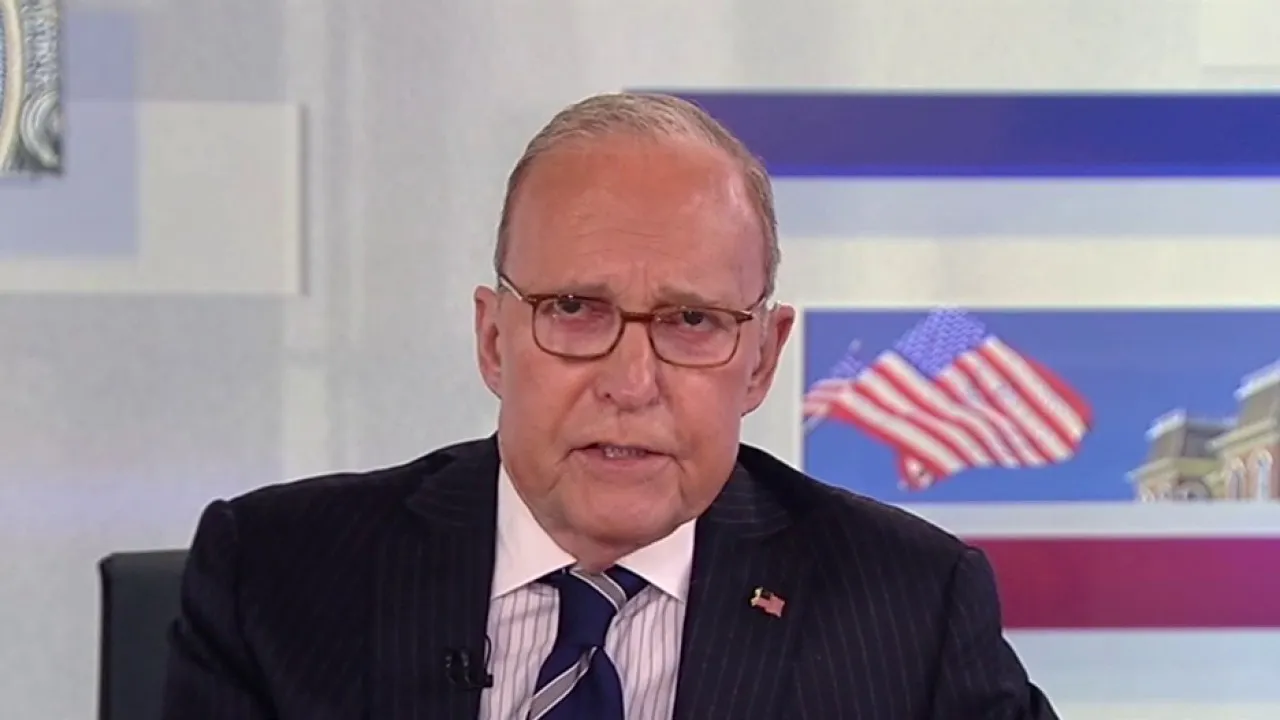
Fox News contributor Newt Gingrich discusses the United States’ strategy of increasing economic pressure on the Iranian regime on ‘Kudlow.’
Advertisement
I say these Iranian bank accounts should be seized. Places like Turkey, the UAE, Qatar, Azerbaijan, Pakistan, and I’m sure many others, should hand over the Iranian deposits, and then they could be placed in escrow in a special war account in the Treasury Department. You could say freezing the assets is enough, but I don’t think so. Actual seizure is more comprehensive. And any of these countries who refuse to comply with Operation Economic Fury will be subject to secondary sanctions and tariffs.
For example, that means any transactions by these foreign banks with America and hopefully its allies, would be removed from the international Swift payments ledger system, and would no longer be eligible to undertake financial transactions governed by the New York Fed wire in the United States. This would maximize the financial pressure on the Iranian regime. They have been stealing money and looting the Iranian treasury for decades.
I’m sure they tried to diversify their international portfolios. And for a long time they’ve been getting away with it because they own all these Iranian businesses. And that’s one reason they’re clinging to power against all odds of losing this war to America and Israel.
Ret. U.S. Navy SEAL Mike Sarraille discusses the feasibility of the U.S. Navy clearing Iranian mines in the Strait of Hormuz and the impact of a blockade on the regime on ‘Kudlow.’
Advertisement
Here’s one of the key points Mr. Bessent made: “One of the what may prove to be fatal mistakes that the Iranians made was bombing” their “neighbors” in the Gulf Cooperation Council, “and who are now willing to be much more transparent in terms of the funds.”
And it’s not just oil money, it’s the non-oil businesses the IRGC thugs have taken over throughout the years.
Mr. Bessent suggested a freeze which is okay, but frankly I think seizure is more powerful, and I think secondary sanctions are still more powerful.
Banking, blockading, and the final Iranian financial squeeze. We are coming to the end game.
NEW YORK — Shares of Kaspi.kz JSC surged more than 7% in early Monday trading on April 20, 2026, rising $6.69 to $91.60 as investors cheered the Kazakh fintech giant’s recent approval of a substantial cash dividend and growing confidence in its super app ecosystem amid regional expansion.
Kaspi.kz ADR Jumps 7.88% as Strong Dividend Payout and Fintech Momentum Fuel Investor Optimism
The American Depositary Receipts of Kaspi.kz (NASDAQ: KSPI), which operates one of Central Asia’s most successful digital banking and e-commerce platforms, climbed on solid volume following last week’s annual general meeting where shareholders approved a KZT 850 per share dividend for 2025 results. The payout, which began on April 15, underscores the company’s commitment to returning capital while maintaining robust growth in payments, lending and marketplace services.
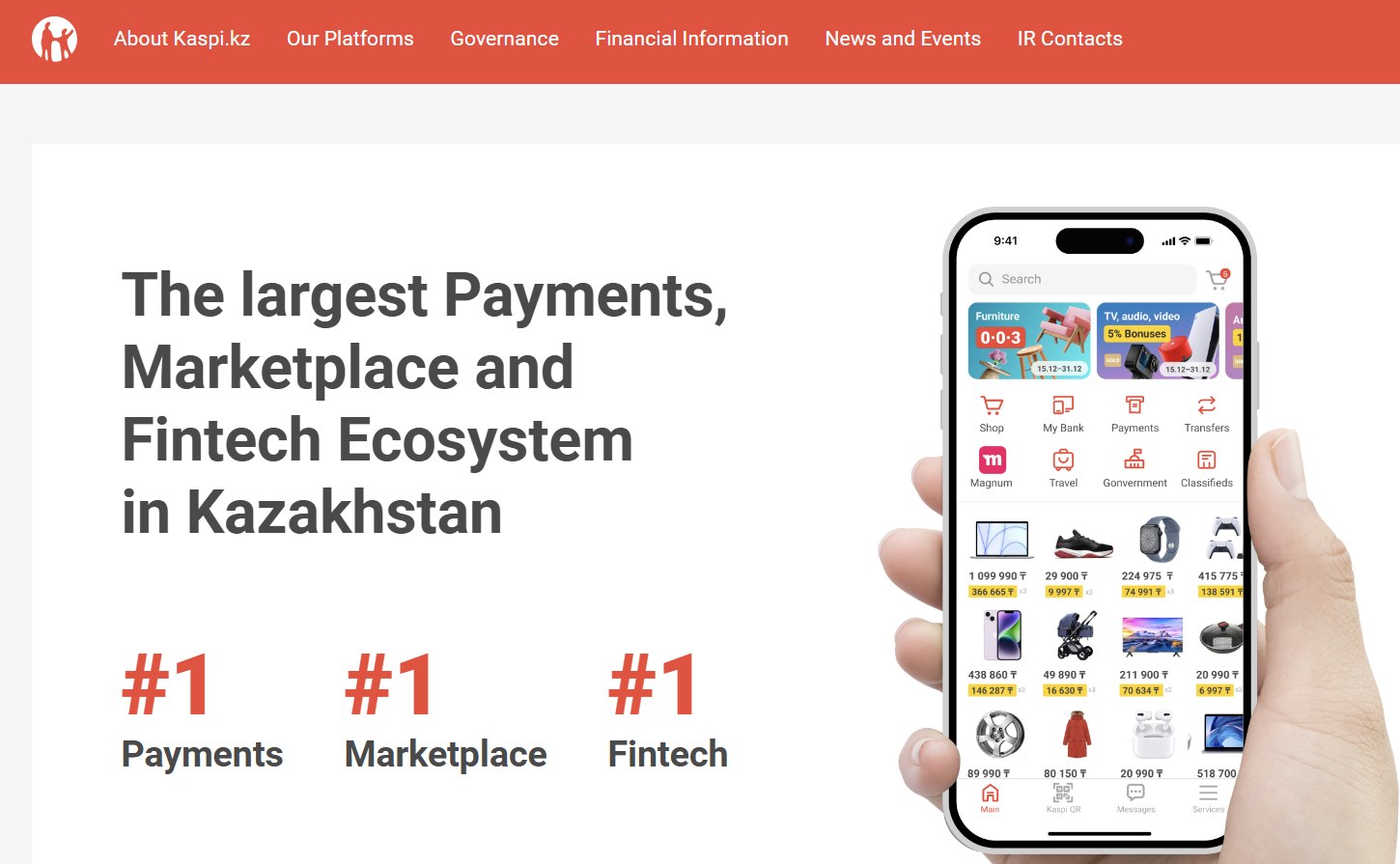
Kaspi.kz has transformed from a traditional bank into a dominant “super app” in Kazakhstan, serving more than 25 million consumers and nearly 900,000 merchants with integrated services ranging from mobile payments and installment loans to e-commerce and government services. The platform’s high user engagement has driven consistent revenue and profit expansion, making it one of the standout emerging market fintech stories since its Nasdaq listing in early 2024.
The latest dividend equates to a meaningful yield for ADR holders after currency conversion, reinforcing the stock’s appeal to income-focused investors. At the April 15 annual meeting in Almaty, shareholders also approved the 2025 audited financial statements and reappointed Deloitte as external auditor. The company set a record date of April 14 for common shares and April 16 for ADS holders, ensuring timely distribution of the cash dividend via wire transfers.
Analysts highlighted the payout as a positive signal of financial health and disciplined capital allocation. With Q1 2026 financial results scheduled for release on May 11, accompanied by a conference call and webcast at 8 a.m. ET, investors appear to be positioning ahead of what many expect will be another strong quarterly update showing continued loan growth, deposit inflows and marketplace transaction volume.
Advertisement
“Kaspi.kz continues to execute flawlessly in a challenging regional environment,” one emerging markets analyst noted. “The combination of a generous dividend, resilient core banking margins and successful diversification into e-commerce has supported premium valuations even as global fintech peers face headwinds.”
The company’s performance has benefited from Kazakhstan’s relatively stable macroeconomic backdrop compared to some neighboring markets, along with high smartphone penetration that has accelerated digital adoption. Kaspi’s super app model allows seamless switching between banking, shopping and utility payments within a single interface, creating strong network effects and customer stickiness.
Beyond its home market, Kaspi.kz has pursued strategic international moves, including a significant stake in Turkish e-commerce platform Hepsiburada. This exposure provides potential upside from Turkey’s larger consumer base while diversifying away from pure reliance on the Kazakh economy. Analysts have pointed to possible further expansion in Central Asia or adjacent regions as long-term growth drivers.
The stock’s 7.88% gain on Monday extended a solid year-to-date performance, though it has traded with volatility typical of emerging market names sensitive to commodity prices, currency fluctuations and geopolitical developments. Oil-rich Kazakhstan’s economy remains tied to energy exports, but Kaspi’s focus on consumer finance and digital services has provided a buffer against raw material cycles.
Advertisement
Short interest in the ADR had grown in recent months, creating potential for a squeeze as positive catalysts emerge. The dividend approval appears to have alleviated some concerns about capital returns, while the upcoming earnings will offer fresh insight into loan quality, asset growth and any updates on international initiatives.
Company leadership has emphasized technology investments and risk management as keys to sustained profitability. Kaspi maintains conservative underwriting standards in its lending business, which has helped keep non-performing loans low even during periods of economic uncertainty. Its payments segment benefits from low-cost digital infrastructure, supporting healthy net interest margins and fee income.
Wall Street coverage remains generally constructive, with consensus price targets clustering around $100, implying further upside from current levels. Some analysts maintain a “Hold” rating with targets near $87, while others see room for expansion if the company successfully scales its marketplace and cross-border ambitions. The wide range of forecasts — from the low $80s to above $140 in more bullish scenarios — reflects both enthusiasm for the business model and typical caution around emerging market risks.
Kaspi.kz faces competition from traditional banks and newer digital entrants, but its first-mover advantage and ecosystem lock-in have proven difficult to replicate. Regulatory oversight in Kazakhstan has been supportive of fintech innovation, though any tightening of consumer lending rules could pose a headwind. Currency risk, with the tenge’s movements against the dollar, also influences ADR performance for U.S. investors.
Advertisement
The broader context for Monday’s trading included mixed global markets, with energy prices rising on geopolitical developments in the Middle East. Kaspi’s resilience in such an environment highlights the defensive qualities of its diversified digital revenue streams.
Looking ahead, the May 11 earnings release will be closely watched for metrics on active users, transaction volumes, loan origination growth and any commentary on margin trends or expansion plans. Management is expected to address the integration of recent investments and the trajectory of its Turkish exposure through Hepsiburada.
For retail and institutional investors alike, Kaspi.kz represents a rare pure-play exposure to high-growth digital finance in Central Asia. The combination of strong dividends — projected by some observers to offer yields approaching 9% in certain scenarios — and organic business expansion has attracted long-term holders seeking both income and capital appreciation.
The ADR’s performance on April 20 reflected renewed buying interest after the dividend went ex and as traders anticipated positive momentum into the earnings period. While not every session will deliver double-digit percentage moves, the underlying fundamentals suggest continued investor interest in a company that has consistently delivered on its promises since going public.
Advertisement
As Kaspi.kz prepares its first-quarter update, the market appears to be pricing in sustained leadership in Kazakhstan’s fintech landscape and measured progress on international fronts. Whether the upcoming results confirm or exceed expectations will likely set the tone for the stock through the remainder of 2026.
With a market position that blends banking stability with tech-driven innovation, Kaspi.kz continues to stand out among global fintech names. Monday’s 7.88% advance served as a reminder of the company’s ability to reward shareholders through both operational excellence and attractive capital returns.
Seeking Alpha’s transcripts team is responsible for the development of all of our transcript-related projects. We currently publish thousands of quarterly earnings calls per quarter on our site and are continuing to grow and expand our coverage. The purpose of this profile is to allow us to share with our readers new transcript-related developments. Thanks, SA Transcripts Team
US stocks have closed slightly lower, with each of the three major indices coming off a third straight week of gains, as renewed US-Iran tensions put the durability of a two-week ceasefire in question.
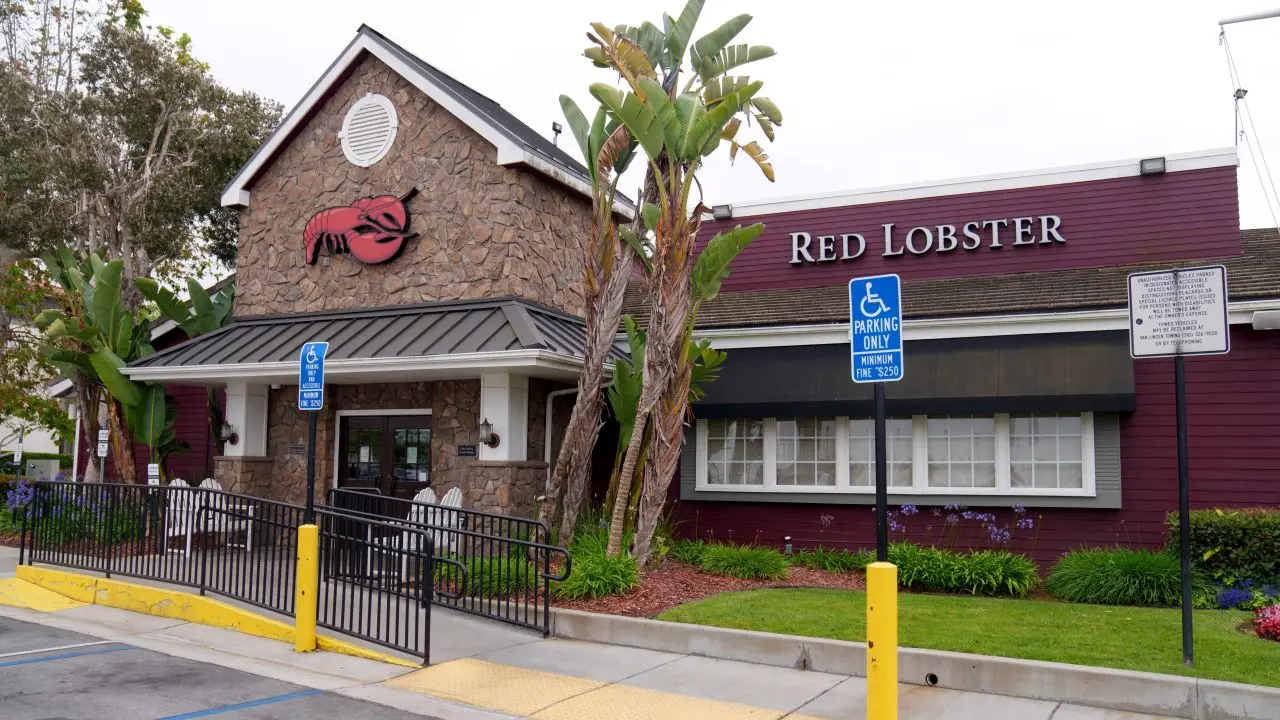
Red Lobster is bringing back its famous “Endless Shrimp” promotion starting Monday, marking a surprising revival of one of its most recognizable all-you-can-eat offerings.
The deal will return for a limited time at select locations, the company said. One Red Lobster location told FOX Business that the new offering will be priced at $24.99 per person, up from $20 in 2024, when it most recently appeared on menus. Other locations have reportedly priced the promotion at $29.99, according to USA Today.
Advertisement
Five different shrimp varieties – including a new flavor, “Marry Me Shrimp,” inspired by internet culture – will be offered with a choice of side:
Marry Me Shrimp: Shrimp in tomato cream sauce with a garlic and herb crumble topping
Shrimp Linguini Alfredo: Shrimp in Alfredo sauce over linguini
Walt’s Favorite Shrimp: Hand-breaded and lightly fried butterflied shrimp served with cocktail sauce
Garlic Shrimp Scampi: Shrimp sautéed in a garlic lemon butter sauce
Parrot Isle Coconut Shrimp: Hand-breaded jumbo coconut shrimp served with piña colada sauce
Multiple offerings from Red Lobster’s 2026 endless shrimp deal. (Red Lobster)
The deal was discontinued in 2024 after it was widely cited as a factor in the company’s disastrous financial loss ahead of its bankruptcy filing, which led to the closure of 130 restaurants.
While the company previously signaled it would not bring the promotion back, strong customer demand and a recent surge in engagement have led Red Lobster to reconsider its long-running, two-decade “legacy,” the Orlando-based chain announced Monday.
“After thousands of social media mentions since it last appeared on menus, Red Lobster, the iconic seafood restaurant brand, is announcing the return of one of its most popular experiences, for a limited time: Endless Shrimp,” it said.
Red Lobster’s “Marry Me” meal is part of the restaurant chain’s 2026 endless shrimp promotion. (Red Lobster)
The previous Endless Shrimp offering – a $20 menu item that became a permanent fixture in 2023 after being intermittently offered over 20 years – was widely seen as a marketing success that ultimately turned into a financial strain when demand overwhelmed supply costs.
It accounted for $11 million of the company’s $76 million net loss in 2023, Reuters reported.
When Red Lobster CEO Damola Adamolekun took over in late 2024 to guide the chain out of bankruptcy, he initially ruled out bringing the promotion back, “because I know how to do math,” according to Today.
Damola Adamolekun became the CEO of struggling seafood chain Red Lobster in 2024. (Fortress Investment Group)
However, the company now appears to be revisiting that stance, with Adamolekun signaling a renewed focus on the in-demand offering in a statement Monday.
“This is about putting our guests first and bringing back something they truly love,” he said. “Endless Shrimp has been a part of Red Lobster’s legacy for 20 years and our guests have never stopped asking for it. We’re excited to bring it back, for a limited time, in a way that works for our business today and honors what made it special from the beginning. Because when our fans talk, we listen.”
Zai Lab Limited (ZLAB) Discusses Intracranial Activity of a New Therapy in Small Cell Lung Cancer With Brain Metastases April 20, 2026 8:30 AM EDT
Company Participants
Rafael Amado – President and Head of Global Research & Development
Conference Call Participants
Advertisement
Luis Paz-Ares Rohit Thummalapalli Jonathan Chang – Leerink Partners LLC, Research Division Michael Yee – UBS Investment Bank, Research Division Anupam Rama – JPMorgan Chase & Co, Research Division Yigal Nochomovitz – Citigroup Inc., Research Division Linhai Zhao – Goldman Sachs Group, Inc., Research Division
Presentation
Operator
Advertisement
Hello, ladies and gentlemen. Thank you for standing by, and welcome to Zai Lab’s 2026 AACR Investor Call. [Operator Instructions] As a reminder, today’s call is being recorded.
It is now my pleasure to turn the floor over to Dr. Rafael Amado, Zai Lab’s President and Head of Global Research and Development. Please go ahead, sir.
Rafael Amado President and Head of Global Research & Development
Advertisement
Hi, everyone. Thank you so much for joining us today. I am Rafael Amado, Zai Lab’s President and Head of Global R&D. Before we begin, we will be making forward-looking statements today, and I ask you to review Slide 2 for further details.
Moving to Slide 3. I’m joined today by 2 outstanding clinical investigators. Dr. Luis Paz-Ares is a leader in lung cancer. He’s Chair of the Medical Oncology Department at the Hospital Universitario 12 de Octubre and Head of the Lung Cancer Unit at National Oncology Research Center in Madrid. Dr. Rohit Thummalapalli is an Assistant Attending Physician and Gastrointestinal Medical Oncologist at Memorial Sloan Kettering Cancer Center. He specializes in GI and neuroendocrine cancers. And on the next slide, the disclosure information for both doctors.
Moving to Slide 5. Here’s our agenda. Dr. Paz-Ares will present first-time intracranial data with zoci in small cell lung cancer, followed by Dr. Thummalapalli in neuroendocrine
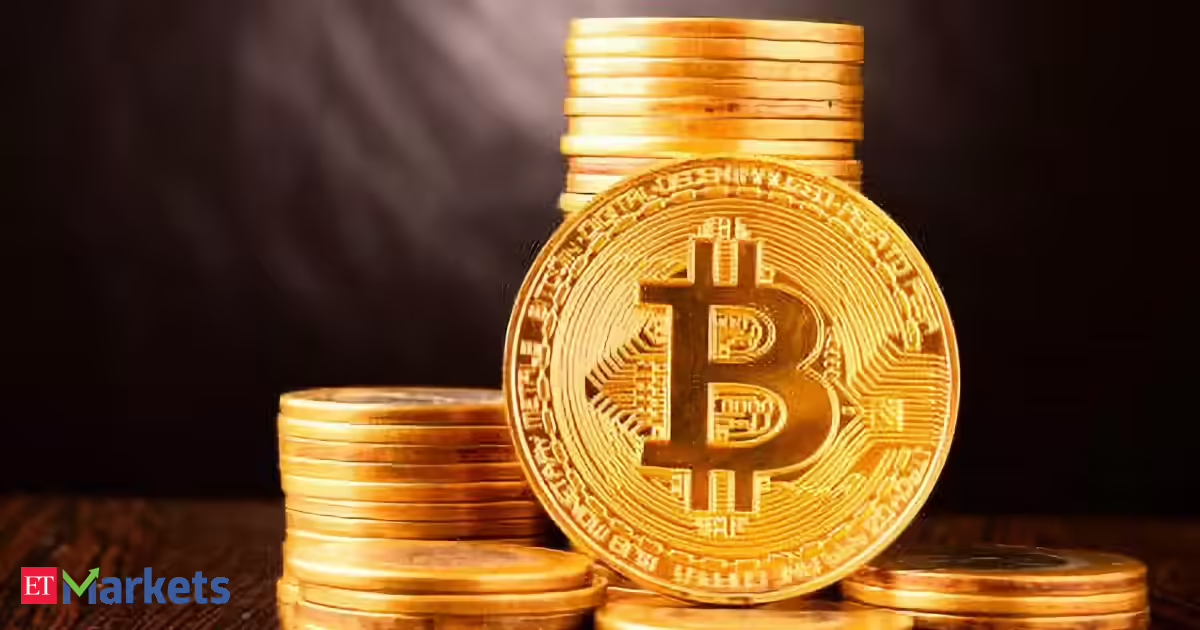
Bitcoin rose to the highest level since early February after a flurry of comments from the US and Iran sparked optimism that the conflict in the Middle East may be heading toward a resolution.
The original cryptocurrency broke through the higher bound of the narrow range its been trading in since the war broke out in late February, topping $78,000 for the first time since February 3. Bitcoin rose as much as 4.1% to $78,343, before paring the increase.
Other digital assets also pushed higher, with Either strengthening 3.3% and XRP increasing 2.4% as part of a broader risk-on rally. Equities climbed after Iran announced that the Strait of Hormuz is now “completely open” for commercial traffic, prompting traders to take on more risk. Oil and the dollar tumbled.“The reopening of the Strait of Hormuz is the risk-on signal the global markets have been waiting for,” said Matt Mena, senior crypto research strategist at 21shares. “By removing one of the most significant geopolitical choke points in the world, Iran has effectively uncorked a massive wave of liquidity and investor confidence.”Still, the derivatives market show traders remain largely defensive. Funding rates for perpetual futures contracts, a key measure of whether leveraged traders are betting on higher or lower prices, were negative. Hefty premiums are also being paid for put options providing downside protections at $60,000 and $50,000, respectively.
Live Events
“Reality is that the market needs Hormuz clarity and sustained institutional buying to break this range with conviction. Until then, the direction remains unclear., said Jasper De Maere, OTC trader at crypto market maker Wintermute “A sustained ceasefire screams bullish, but each week the Strait remains disrupted from today probably brings an exponentially worse outcome as shocks will start to ripple through supply chains and the global economy.”
Agencies
At the same time, a growing number of catalysts are seen as emerging. Strategy Inc. has acquired $2.6 billion in Bitcoin in the past two weeks alone. Bohan Jiang, senior derivatives trader at FalconX, said that buying has helped to underpin the market. Shares of Strategy jumped as much as 16% on Friday, the biggest one-day increase since Feb. 6. Other crypto-related stocks also rallied, with Coinbase Global Inc. gained as much as 8% and Galaxy Digital Inc. up more than 10%.
Earlier in the week, Charles Schwab announced plans this week to launch spot crypto trading this year and suggested clients could allocate as much as 8.8% of a portfolio to Bitcoin. Goldman Sachs Group Inc. also filed for a Bitcoin ETF, its first direct push into the crypto investment space. And last week Morgan Stanley became the first major bank to launch its own Bitcoin-tracking ETF.
ET Intelligence Group: Net inflows into gold exchange-traded funds (ETFs) surged to a record ₹68,867 crore in FY26, lifting their share of overall mutual fund industry inflows to nearly 10%, sharply above the historical range of 1-3%. Amid heightened market volatility driven by geopolitical risks, net inflows jumped 364% year-on-year, or more than four-and-a-half times, marking the fastest growth across all mutual fund categories, including equity, debt and hybrid, according to Association of Mutual Funds in India (AMFI) data. The FY26 inflows far exceeded the earlier annual range of ₹700-15,000 crore, making it an exceptional year for gold ETFs.
In addition, the incremental inflows increased ₹54,015 crore in FY26 over the previous year compared with the earlier annual range of ₹2,500-10,000 crore. Other fund categories showed mixed trends in net inflows in FY26 year-on-year. Debt and equity funds recorded 84% and 17% decline, respectively. Index funds registered a 56% decline in inflows. In contrast, hybrid funds and other ETFs reported 30% and 65% increase in inflows.
Agencies
The surge in inflows in gold ETFs was aided by gold prices and volatility in the stock market. Gold prices surged about 63% in FY26, rising to nearly ₹1.5 lakh by March 31, 2026, driven by global safe-haven demand amid geopolitical tensions. Equities disappointed investors with the BSE Sensex declining about 5% in FY26. Volatility intensified toward the end of the year as the Sensex fell nearly 15% in the fourth quarter. This prompted investors to divert funds to gold ETFs, which recorded net inflows of 31,561 crore in the March quarter, the highest quarterly inflow of the year. According to Vikram Dhawan, commodities head and fund manager, Nippon India Mutual Fund, investment demand and jewellery demand in gold have long moved in opposite directions during price spikes.























































You must be logged in to post a comment Login