
Business
Global Market Today: Asian stocks gain, oil dips on hopes of Iran talks

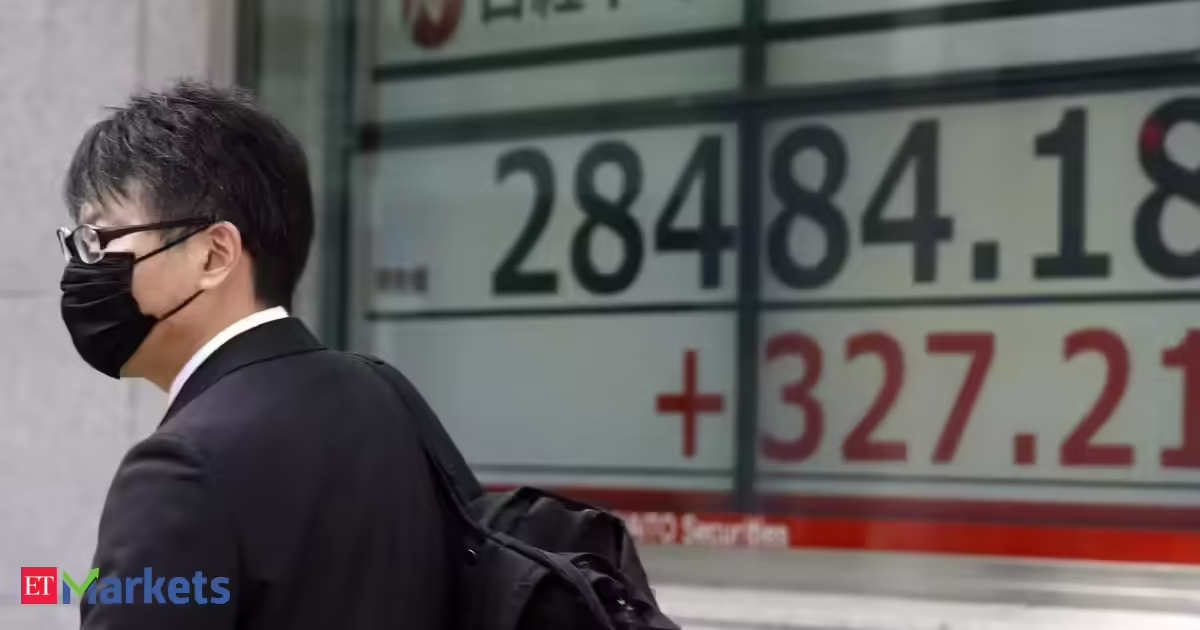
Gauges in Japan, South Korea and Australia advanced at the open with the broader MSCI Asia Pacific Index rising 0.3%. S&P 500 contracts also edged higher in early trading after the index slipped 0.2% on Monday from a record, weighed down by declines in several technology heavyweights. Apple Inc. shares slipped in late US trading after the company named John Ternus as its next chief executive officer.
Global crude benchmark Brent fell 0.7% to $94.80 a barrel early Tuesday, after gaining 5.6% in the prior session. The dollar and Treasuries were steady.
President Donald Trump said he is unlikely to extend the truce with Iran if no agreement is reached before its expiry Wednesday evening, Washington time. Iran is also preparing to send a delegation to the next round of talks, according to people familiar with the plans who declined to be identified.
Attention is shifting to whether the US and Iran can resume negotiations in Pakistan to calm strains and reopen the Strait of Hormuz after an initial round in Islamabad ended without a deal. The dollar has weakened over the past three weeks and several equity gauges have recouped war-related losses as markets price in easing tensions, cheaper oil and stronger economic growth.

“Markets are once again grappling with a rapidly shifting narrative in the Middle East, as the past 48 hours have delivered both optimism and renewed concern,” said Daniela Hathorn, senior market analyst at Capital.com, adding that the market feels “stuck at a crossroads” as a result of the jostling.
Chip stocks in Asia will be in focus after the Philadelphia Semiconductor Index advanced, notching a 14th straight session in the green — a winning streak that it has exceeded just once, in 2014. Transits through Hormuz have reduced to a trickle as Iran tightens control in retaliation for strikes. On Friday, that paralysis appeared to end, with Tehran saying it would reopen the waterway, before reversing course during the weekend as the US maintained a naval blockade and attacked an Iranian ship.
Beyond the strait, arguably the most fraught issue is Iran’s nuclear program. Trump has demanded Iran forswear any ambitions for a nuclear weapon and hand over stockpiles of enriched uranium. Tehran has balked at giving up its uranium and has said its nuclear program is for peaceful purposes.


Customers receive tokens to claim up to 10 free items, from clothing to everyday home essentials.


US positive on Iran deal but talks still uncertain as ceasefire end nears
“Worst of the War Impact Likely Behind Us,” he said.
Speaking on current market conditions, Kohli said, “We are constructive on the markets at this point. What we believe is that probably the worst of the war-related issues are behind us. Now, of course, how fast it will recover and how soon the war will end, I do not know. I think nobody knows that. But one thing is very clear from the market movement as well as from the news flow—that probably the worst-case scenario which could have played out has already been understood by both parties, and now they are all sitting at the table to discuss the future course.”
He cautioned that resolutions in such situations are rarely quick.
“Normally, these things do not get solved in one or two meetings. They take a long time. There are ego hassles and various issues that need to be sorted out. So, for that period of uncertainty, we will have to bear the volatility.”
Gradual Investment Strategy Advised
Rather than waiting for complete clarity, Kohli emphasized a phased investment approach.
“What we believe is that this is probably the right time to start using your money—putting it to use, maybe 15–20% now, and then on bad days or negative news, you can find opportunities and start adding in small tranches. Slowly and steadily, you can build your portfolio.”
He also highlighted that the real economic impact of the conflict will unfold over time.
“As of now, we are only analysing the near-term impact of the war. The actual impact will come over the next two to three quarters, when we will understand how each specific company is getting affected—whether due to input costs, demand destruction, or delays in procurement of raw materials. These will reflect in quarter two and quarter three numbers, and that is when sector-specific and stock-specific reactions will emerge.”
Sectoral Bets: Power, AI, and Metals
On sectoral preferences, Kohli identified power as a clear long-term beneficiary.
“One sector which is a very clear beneficiary of this entire episode is power. Within power, you have a very long value chain—you can play it through renewables, generation, transmission, equipment players, and financers. There are companies available at reasonable valuations.”
He stressed that the push for energy security will sustain the sector’s growth.
“This theme is going to play out for a very long time. Everyone is now clear that we need to create in-house dependency for energy security, and now nuclear power is also being added. Equipment and spare parts producers supplying to this ecosystem will benefit. This is not a one- or two-quarter theme—it is a long-term opportunity.”
Kohli also pointed to emerging opportunities in AI-linked sectors.
“The second theme is AI-related—semiconductors and data centres, along with the accessories that support them. There could be cable manufacturers or EPC players who benefit. We may not have direct plays in the market, but there are indirect ways to participate in these themes.”
Metals, too, could see sustained momentum due to supply disruptions.
“Metals is another segment where there is a lot of disturbance on the supply side, so that may not be a short-term trend.”
Power Lenders Back in Focus
Within the broader power ecosystem, Kohli also spoke about financing companies like Power Finance Corporation and REC Limited.
“These lenders have disappointed in terms of stock performance for quite some time. PFC and REC are the two key names. Now there is some activity around a potential merger of these two.”
While uncertainties remain around the merger structure, he believes valuations are attractive.
“Both of them are available at very reasonable valuations, especially considering that technically there are no NPAs, as they are largely backed by state and central government guarantees.”
He explained the reason behind their subdued performance:
“The problem was that the market was building in a lot of growth in the last year, but their asset books did not reflect that kind of growth. That is why they were trading at subdued valuations.”
However, the outlook could improve with sector momentum.
“Now, with this theme picking up, more project announcements, and increased activity around the merger, these factors should help over time. Ultimately, this segment should also perform. Within the BFSI space, this is one sub-segment where there is still valuation comfort.”
Bottom Line
Kohli’s message is clear, while uncertainties remain, panic may have peaked. Instead of trying to time the market perfectly, investors should adopt a staggered approach—focusing on long-term structural themes like power and AI while staying mindful of evolving sector-specific risks.


Note: In 1996 Fundamental Portfolio Advisors and myself were subject to civil litigation by the SEC which resulted in deregistration and a permanent bar from the securities industry. – Ph.D. economics and Finance MBA finance NYU) Colorado Technical University Professor – courses: Applied Managerial Finance (Graduate Level), Microeconomics, Macroeconomics., Previous: Globe Institute of Technology Professor – Economics and Finance, Head of Business Department International Finance European School Of Economics (New York) Professor – Economics (Graduate Level) Courses taught: Microeconomics Metropolitan College of New York Professor – Economics, Banking and Finance Courses taught: History of Economic Thought, Macroeconomics, Money and Financial Institutions World Gold Council Consultant Economist New York, NY • Constructed econometrics relating to gold’s role as a portfolio diversifier primarily aimed at institutional investors. • Focused on the embedded optionality of gold in terms of its relation to other investment assets and economic fundamentals such as inflation and business conditions. Freenet, Inc. Founder Internet Startup company with investment advice websites. Fundamental Portfolio Advisors, Inc. Chief Portfolio Strategist – Founder • At the predecessor company I started the New York Muni Fund, the first single state triple tax-free municipal bond fund. • I took the fund from a one-employee start-up where I performed every function to a family of mutual funds which had five funds with total assets above $300 million and which did all of its distribution and transfer in-house. • I wrote the initial prospectus and was responsible for managing the portfolios of what eventually grew to be a family of 5 mutual funds. • Was chief economist for parent company’s brokerage firm. • Involved on the buy-side in the development and monitoring of various structured municipal finance products. Worked with major issuers such as New York City and major investment banks such as Merrill Lynch and Goldman Sachs. • Submitted a U.S. Patent for a portfolio management system for mutual funds involving derivatives. A. Gary Shilling & Co. Senior Economist – Economic consulting and forecasting. Both macro and micro. • Clients included: Emerson, Castle & Cooke, Cooper Industries I was the author of the 1979 study commissioned by the U.S. Government Interstate Commerce Commission, which calculated the expected economic impact of trucking deregulation. White, Weld & Co, Inc. Economic analyst • White, Weld was the sixth largest investment banking and brokerage firm when Merrill Lynch bought it. • Extensive work was done on the All-American Pipeline Proposal to tap the Alaskan Gas Reserves. • The economics department of White, Weld formed A. Gary Shilling & Co. at the time of the Merrill Lynch merger. American Stock Exchange Economic analyst Degrees: New York University June 1978 Ph.D. Economics/Finance • Ph.D. dual field, economics and finance. • Doctoral dissertation was in contingency claims (options) theory June 1973 MBA with concentration in economics and finance NYU Engineering School June 1971 Bachelor of Science – Nuclear Engineering Published works Analysis of the Embedded Inflation Optionality in Gold Prices. World Gold Council, 2000. New York, N.Y. The Economic Impact of Trucking Deregulation. Interstate Commerce Commission, 1979, Washington D.C. I was an author of the textbook: ‘Global Financial Management’ Words of Wisdom, Schaumburg, IL. Dec.2015 ISBN 978-1-934920-46-6,
Analyst’s Disclosure: I/we have a beneficial long position in the shares of NINE, ENERGY TRANSFER (ET), HARVEST OIL & GAS (HRST), SANDRIDGE ENERGY (SD), UBS ETRACS CRUDE OIL SHARES COVERED CALL ETN (USOI), PETROBRAS (PBR) AND (PBR.A) either through stock ownership, options, or other derivatives. I wrote this article myself, and it expresses my own opinions. I am not receiving compensation for it (other than from Seeking Alpha). I have no business relationship with any company whose stock is mentioned in this article.
Seeking Alpha’s Disclosure: Past performance is no guarantee of future results. No recommendation or advice is being given as to whether any investment is suitable for a particular investor. Any views or opinions expressed above may not reflect those of Seeking Alpha as a whole. Seeking Alpha is not a licensed securities dealer, broker or US investment adviser or investment bank. Our analysts are third party authors that include both professional investors and individual investors who may not be licensed or certified by any institute or regulatory body.

The Valkyrie Trading Society is a team of analysts sharing high conviction and obscure developed market ideas that are downside limited and likely to generate non-correlated and outsized returns in the context of the current economic environment and forces. They are long-only investors.They lead the investing group The Value Lab where they offer members a portfolio with real time updates, chat to answer questions 24/7, regular global market news reports, feedback on member stock ideas, new trades monthly, quarterly earnings write-ups, and daily macro opinions.
Analyst’s Disclosure: I/we have a beneficial long position in the shares of NINTENDO (ON TSE) either through stock ownership, options, or other derivatives. I wrote this article myself, and it expresses my own opinions. I am not receiving compensation for it (other than from Seeking Alpha). I have no business relationship with any company whose stock is mentioned in this article.
Seeking Alpha’s Disclosure: Past performance is no guarantee of future results. No recommendation or advice is being given as to whether any investment is suitable for a particular investor. Any views or opinions expressed above may not reflect those of Seeking Alpha as a whole. Seeking Alpha is not a licensed securities dealer, broker or US investment adviser or investment bank. Our analysts are third party authors that include both professional investors and individual investors who may not be licensed or certified by any institute or regulatory body.
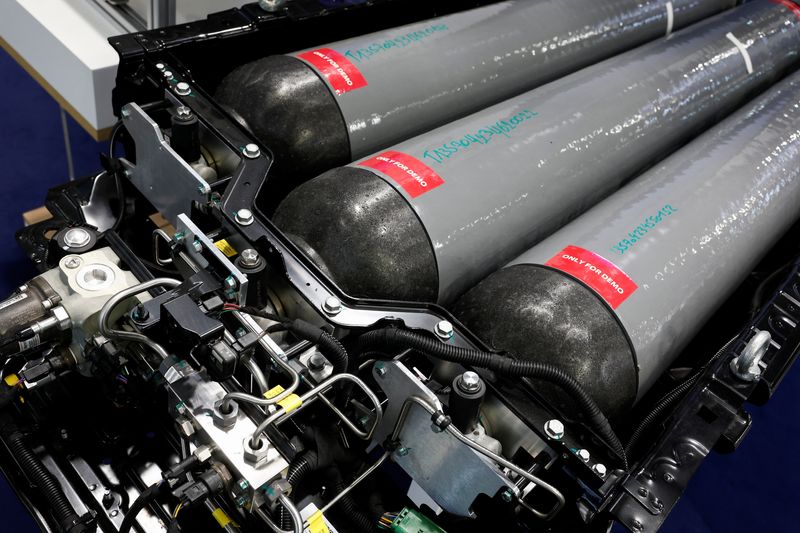

OPmobility reports 0.4% revenue fall as autos industry weakens
I Am Still Buying Lumentum, But For A Better Reason Now
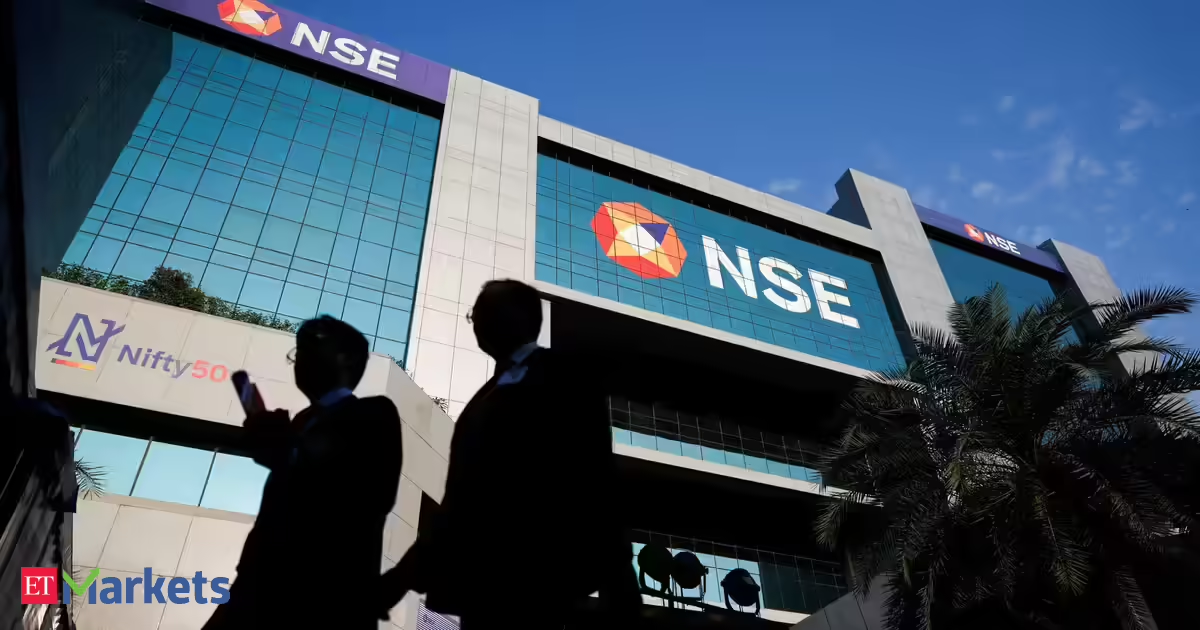
The stakes of National Insurance Company, Oriental Insurance Company and United India Insurance Company, at NSE’s conservative listing price of ₹1,500 a share, would translate into ₹11,500 crore-12,000 crore for the insurers – or about ₹4,500 crore each.
The money could improve solvency ratios by nearly one percentage point. “This could improve solvency ratios by nearly 100 basis points, effectively equivalent to a capital infusion of similar scale,” said a person familiar with the matter.
These insurers are currently operating below the regulatory solvency mandate of 1.5 times the required solvency margin. As of March 2025, National Insurance reported a solvency ratio of -0.67, Oriental Insurance stood at -1.03 and United India Insurance at -0.65, which showed sustained stress on their balance sheets.
 Agencies
Money expected to lift solvency ratios which are below regulatory mandate of 1.5 times
The ratios have weakened over time, with National Insurance at -0.46 and United India at -0.73 as recently as June 2024.
In contrast, listed peer New India Assurance has maintained a solvency ratio of about 1.9, comfortably above regulatory norms.
However, a listing of NSE could partly offset these capital needs. The insurers hold sizeable stakes in the exchange, which are currently carried at conservative valuations due to its unlisted status. A public listing would allow these holdings to be marked closer to market value, unlocking significant capital. The pressure on solvency stems largely from weak underwriting performance and persistent losses, particularly when excluding fair value gains. According to ICRA Ratings’ previous report, the three insurers may require ₹15,200-17,000 crore of capital to meet the 1.5 solvency threshold.
There were reports that the government was considering a fresh capital infusion of up to ₹5,000 crore into the three loss-making insurers.
The proposed IPO, estimated to raise over ₹20,000 crore, is expected to be entirely an offer-for-sale, with existing shareholders diluting stakes rather than the exchange issuing fresh equity.
Check out what’s clicking on FoxBusiness.com.
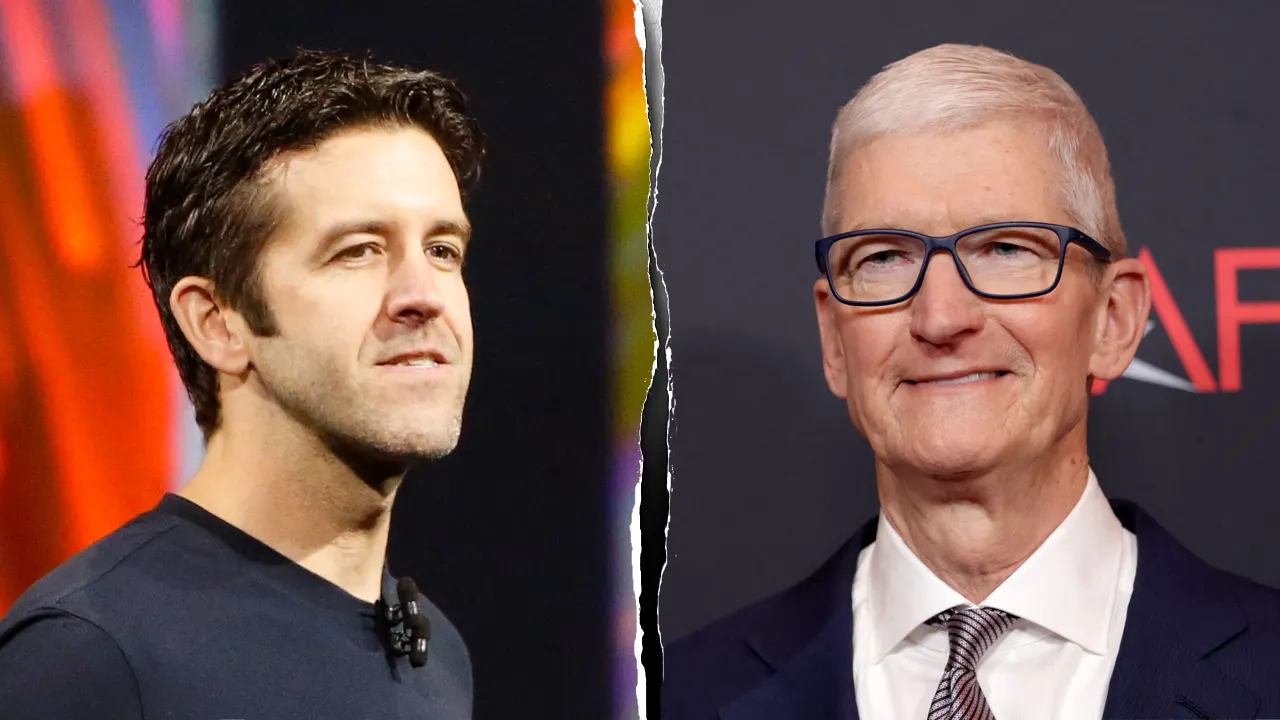
Apple’s senior vice president of Hardware Engineering, John Ternus, is set to take over as the tech manufacturer’s CEO later this year after current chief executive Tim Cook announced on Monday that he would be stepping down.
Cook will transition to executive chairman of the company’s board of directors. The company said the transition followed a “thoughtful, long-term succession planning process” and was unanimously approved by the board of directors.
“It has been the greatest privilege of my life to be the CEO of Apple and to have been trusted to lead such an extraordinary company,” Cook said in a statement.
“I love Apple with all of my being, and I am so grateful to have had the opportunity to work with a team of such ingenious, innovative, creative, and deeply caring people who have been unwavering in their dedication to enriching the lives of our customers and creating the best products and services in the world,” he added.
APPLE CEO TIM COOK TO STEP DOWN IN MAJOR LEADERSHIP SHAKEUP, SUCCESSOR NAMED
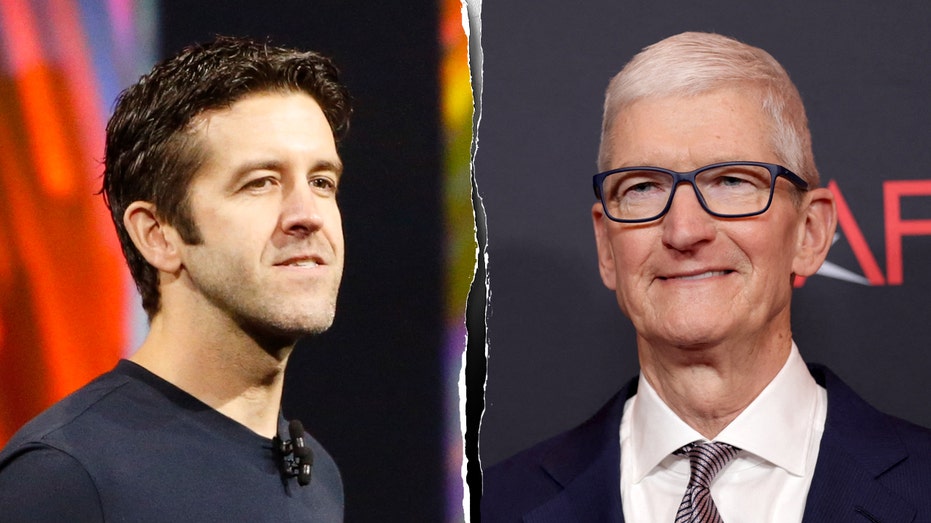
John Ternus will become Apple CEO on September 1, 2026, as Tim Cook transitions to Apple Executive Chairman. (Reuters / Reuters)
The leadership shakeup marks the first change in the company’s chief executive in 15 years, when Cook replaced Apple co-founder Steve Jobs.
Ternus will take over as CEO on Sept. 1, leading the company into its next phase of innovation. He will also join the board of directors upon assuming the role.
“I am profoundly grateful for this opportunity to carry Apple’s mission forward,” Ternus said in a statement. “Having spent almost my entire career at Apple, I have been lucky to have worked under Steve Jobs and to have had Tim Cook as my mentor. It has been a privilege to help shape the products and experiences that have changed so much of how we interact with the world and with one another.”
He joined Apple’s product design team in 2001 and became vice president of Hardware Engineering in 2013. Eight years later, he joined the executive team as senior vice president of Hardware Engineering, where he has overseen work on many of the company’s flagship products across iPhone, Mac, iPad, AirPods and Apple Watch.
Ternus also recently led the team behind the new MacBook Neo and the redesigned iPhone 17 lineup. Apple credits his leadership with driving advancements in AirPods, including active noise cancellation and capabilities that enable them to function as an all-in-one hearing health system, including over-the-counter hearing aid features.
Additionally, he has led efforts focused on durability, materials innovation, and sustainability, including the use of recycled aluminum and new manufacturing techniques. Ternus has also played a key role in Apple’s transition to in-house silicon.
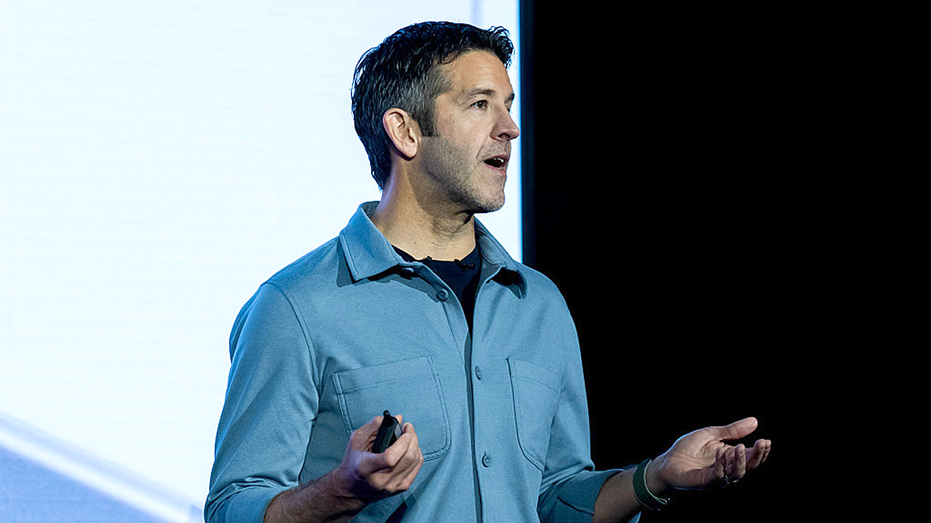
John Ternus will take over as CEO of Apple on Sept. 1 (Adam Gray/Bloomberg via Getty Images / Getty Images)
“I am filled with optimism about what we can achieve in the years to come, and I am so happy to know that the most talented people on earth are here at Apple, determined to be part of something bigger than any one of us,” he said. “I am humbled to step into this role, and I promise to lead with the values and vision that have come to define this special place for half a century.”
Before joining Apple, Ternus worked as a mechanical engineer at Virtual Research Systems. He graduated with a bachelor’s degree in Mechanical Engineering from the University of Pennsylvania.
Cook praised Ternus as having “the mind of an engineer, the soul of an innovator, and the heart to lead with integrity and with honor.”
“He is a visionary whose contributions to Apple over 25 years are already too numerous to count, and he is without question the right person to lead Apple into the future,” Cook said. “I could not be more confident in his abilities and his character, and I look forward to working closely with him on this transition and in my new role as executive chairman.”
Apple shares dipped slightly—less than 1%— in after-hours trading following the news of the leadership shakeup, which some analysts said was not surprising.
“This transition shouldn’t come as a shock, as Cook is at retirement age and Ternus has long been rumored as the successor,” Jacob Bourne, a technology analyst at EMARKETER, told Reuters. “Cook staying on as CEO through September before continuing as executive chairman should provide some degree of reassurance to investors even as markets react negatively to the near-term uncertainty.”
LEADERSHIP CHANGE AT APPLE SPARKS INDUSTRY AND WALL STREET REACTIONS AS COOK TRANSITIONS ROLES

Tim Cook said it “has been the greatest privilege of my life to be the CEO of Apple.” (David Paul Morris/Bloomberg via Getty Images / Getty Images)
GET FOX BUSINESS ON THE GO BY CLICKING HERE
Rick Meckler, a partner at Cherry Lane Investments, told the outlet he is “not surprised that the initial reaction is for the stock to be a little bit lower.”
B. Riley Wealth chief market strategist Art Hogan also said Cook “would never leave if the numbers were going to be bad, so I think that that’s the important thing.”
“They’re about to report numbers, and you know they’re going to be good,” he added. “You know the guidance is going to be positive. And you know we’re going to start hearing more about how they are going to use artificial intelligence to improve their products.”
Ternus will take over Apple at a time when it faces antitrust scrutiny around the world. This includes a landmark case brought by the U.S. Department of Justice and more than a dozen states, alleging that Apple has maintained an illegal monopoly by using its control over the iPhone to stifle competition. European and Asian governments have also sought to penalize Apple for allegedly exploiting its dominant position in the industry.

ICICI Bank gained 0.7% to close at ₹1,356.2, while HDFC Bank fell 0.6% to ₹795.45. The Nifty 50 ended little changed at 24,364.85.
Agenciesnear-term investor views diverge But most analysts say shares of the private banking leaders are poised to make further gains
Analysts remain positive on both. Bloomberg consensus implies an average upside of about 33% for HDFC Bank and 24% for ICICI Bank.
HDFC Bank’s 12-month average target price was trimmed to ₹1,056.3 from ₹1,100.72, even as HSBC, JP Morgan and Nomura raised their estimates post-results, while Citi lowered its target but retained a ‘Buy’. ICICI Bank’s average target edged up to ₹1,680.02.
All analysts covering HDFC Bank have a ‘Buy’ rating, while 96% of those on ICICI Bank recommend the stock, according to Bloomberg data.

Pop-up shop helps families cope with rising costs

Coinbase’s x402 launches AI agents app store for payments
West Wilson Breaks Silence on Amanda Batula Romance Backlash



-

 NewsBeat7 days ago
Trump and Pope Leo: Behind their disagreement over Iran war
-

 Fashion3 days ago
Weekend Open Thread: Theodora Dress
-

 News Videos6 days ago
Secure crypto trading starts with an FIU-registered
-

 Sports4 days ago
NWFL Suspends Two Players Over Post-Match Clash in Ado-Ekiti
-

 Business2 days ago
Powerball Result April 18, 2026: No Jackpot Winner in Powerball Draw: $75 Million Rolls Over
-

 Crypto World3 days ago
Russia Pushes Bill to Criminalize Unregistered Crypto Services
-

 Politics9 hours ago
Gary Stevenson delivers timely reminder to register to vote as deadline TODAY
-

 Politics3 days ago
Palestine barred from entering Canada for FIFA Congress
-
 Business4 days ago
Creo Medical agree sale of its manufacturing operation
-

 Politics2 days ago
Zack Polanski demands ‘council homes not luxury flats for foreign investors’
-

 Tech2 days ago
Auto Enthusiast Scores Running Tesla Model 3 for Two Grand and Turns It Into Bare-Bones Go-Kart
-

 Tech5 days ago
‘Avatar: Aang, The Last Airbender’ Leaked Online. Some Fans Say Paramount Deserves the Fallout
-

 Crypto World3 days ago
Russia Introduces Bill To Criminalize Unregistered Crypto Services
-

 Tech6 days ago
Microsoft adds Windows protections for malicious Remote Desktop files
-

 Crypto World6 days ago
X Launches New Cashtag Feature for Stocks and Crypto: X
-
 Sports7 days ago
Younger Than Sachin Tendulkar: Vaibhav Sooryavanshi Set To Make Historic India Debut
-

 Entertainment6 days ago
Prince Carter Brings Fans Front Row and Backstage at Boys 4 Life Tour
-
 Entertainment6 days ago
Dave Portnoy Slams Dianna Russini: ‘Makes Zero Sense’
-

 Sports5 days ago
British climbers complete new route in Swiss Alps
-
 Crypto World6 days ago
Global recession inevitable if Strait of Hormuz stays shut
You must be logged in to post a comment Login