
Crypto World
Cardano Crypto Holds $0.24 as ADA’s Volume Jumps 48%: Recovery Ahead?

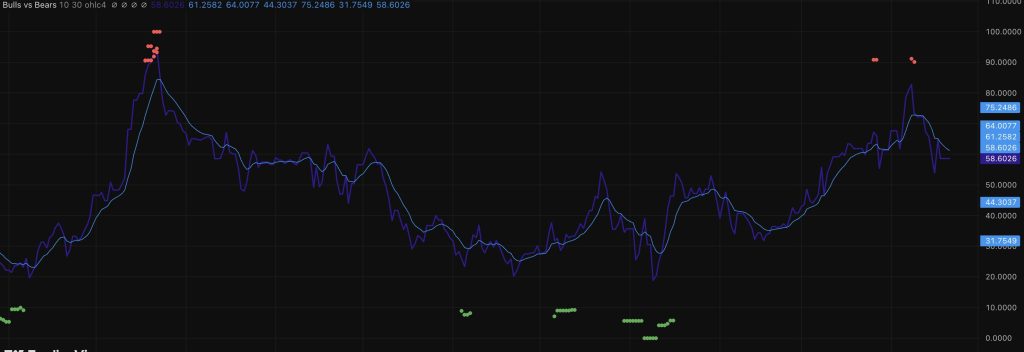
Cardano crypto is clinging to the $0.24 level after its uptrend snapped at $0.26, and the market is watching closely. ADA trades at $0.24, up +1.17% in the last 24 hours, a modest bounce that masks a deeper tug-of-war between bulls and bears.
The real story is in the volume. Trading activity surged +48% to $600 million in a single day, the kind of spike that rarely means anything.
On Binance specifically, buy volume hit 133.7 million, up from 121 million in sell volume, leaving ADA with a positive market delta of 28 million. Buyers are not fleeing.
Spot Netflow data adds another layer: ADA recorded three consecutive days of negative netflow, with April 20th showing $60.27M in outflows versus $58.9M in inflows, a 244.6% drop to -$1.29M. That is textbook accumulation behavior, not distribution.
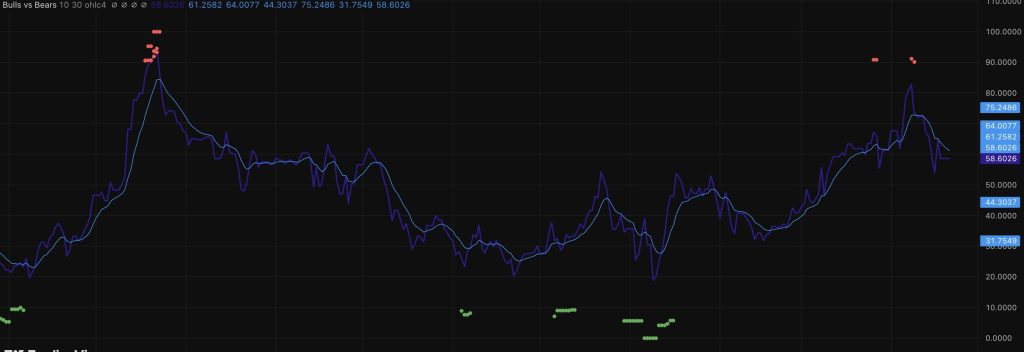
The Bulls vs. Bears indicator sits at a 58, and Cardano crypto Modified DMI has climbed to 5.1, holding bullish territory. Whether that’s enough to reclaim $0.26 depends heavily on macro conditions still pressuring the broader crypto market.
Can Cardano Crypto Price Reclaim $0.26 This Week?
ADA’s technical structure tells two stories depending on which timeframe you’re reading. Short-term, the setup is constructive.
The Modified DMI at 5.1 signals momentum hasn’t fully rolled over, and the sustained positive delta on Binance confirms demand is absorbing sell pressure at current levels.
Technical charts show $0.24 functioning as a near-term floor, a level that has held despite three days of net outflows from exchanges (which, counterintuitively, reinforces accumulation rather than abandonment).
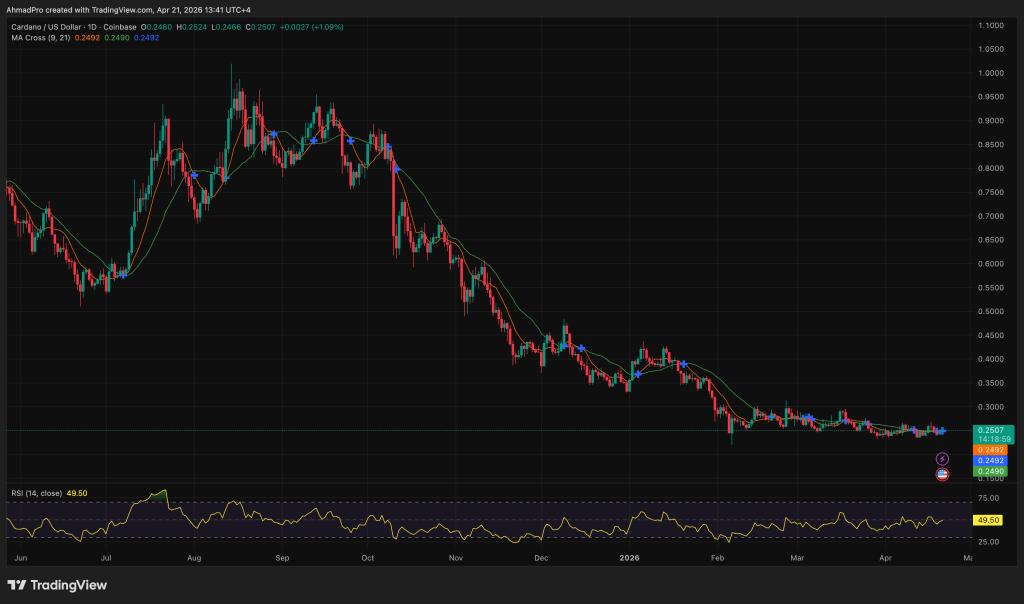
ADA is basically stuck waiting on macro direction, and right now it is sitting right under the $0.25 to $0.26 zone, which flips momentum if it’s reclaimed with strong volume.
If that happens and liquidity conditions improve, that is where the price can actually start trending higher instead of just reacting.
For now, though, it looks like a grind, with ADA likely moving between $0.23 and $0.25 while the market waits on bigger players to decide direction, so no real breakout yet.
The level underneath to watch is $0.24, because if that cracks, it signals weakness returning, and that is where price can slide back toward the $0.21 to $0.22 area where stronger support sits.
So this is another range setup, and until one side breaks, it is just chop driven by macro, not conviction.
LiquidChain Targets Early Mover Upside as Cardano Tests Key Levels
ADA’s recovery, even in the bull case, is capped at single-digit percentage moves from a multi-billion dollar market cap. That’s the reality of trading established large-caps in a sideways market; the risk-reward compresses fast.
Traders hunting for asymmetric exposure are increasingly scanning for earlier-stage infrastructure plays where price discovery hasn’t yet occurred.
LiquidChain is one project generating attention in that category. It’s a Layer 3 infrastructure protocol positioning itself as a cross-chain liquidity layer. Specifically, it fuses Bitcoin, Ethereum, and Solana liquidity into a single execution environment.
The architecture includes a Unified Liquidity Layer, Single-Step Execution, Verifiable Settlement, and a Deploy-Once structure that lets developers access all three ecosystems without rebuilding for each chain. The presale has raised $690,005.61 at a current price of $0.01451.
With Ethereum and altcoin infrastructure narratives gaining traction, the cross-chain liquidity angle has clear tailwinds, though presales carry execution risk and remain highly speculative.
Research LiquidChain if early-stage L3 infrastructure fits your risk profile.
The post Cardano Crypto Holds $0.24 as ADA’s Volume Jumps 48%: Recovery Ahead? appeared first on Cryptonews.



DoorDash is working with Stripe- and Paradigm-backed Tempo to explore paying delivery workers in stablecoins, as Visa, banks and fintechs plug into Tempo’s rails.
Summary
- DoorDash is working with Stripe- and Paradigm-backed Tempo to explore paying delivery workers in stablecoins.
- Tempo has launched a “stablecoin consulting” arm to help corporates design use cases and wire stablecoins into existing payment and banking stacks.
- Visa, Stripe, Coastal Community Bank, ARQ, OnePay, Felix, Fifth Third Bank, and Howard Hughes Holdings are all integrating payments or infrastructure with Tempo.
DoorDash is teaming up with blockchain project Tempo to explore paying its delivery couriers in stablecoins, in one of the clearest signs yet that on-chain dollars are creeping into mainstream U.S. gig work. Fortune reports that the collaboration is part of Tempo’s new “stablecoin consulting” service, which promises to help enterprises identify concrete use cases and then dispatch engineers to embed stablecoin rails into their existing products.
DoorDash pilots stablecoin paychecks
Tempo, incubated by payments giant Stripe and crypto venture firm Paradigm, is building a dedicated layer‑1 blockchain optimized for high-speed, low-cost stablecoin payments rather than trading, and raised around $500 million at a $5 billion valuation in 2025. The company pitches itself as “a payments-first blockchain” that can handle real-world payroll, remittances, and machine-to-machine payments at scale, with fees paid directly in dollar-pegged stablecoins instead of a volatile native token.
According to a note shared with Fortune, Tempo’s new advisory unit will consist of a small dedicated team that leans on the broader organization’s engineering bench to help clients scope stablecoin scenarios, design treasury flows, and integrate with core banking and payment systems. Coastal Community Bank and financial services platform ARQ are already building stablecoin infrastructure on top of Tempo, while Visa, OnePay, Felix, Fifth Third Bank, and Howard Hughes Holdings are wiring parts of their payment operations into the network.
Stripe, which has published its own guidance on how businesses can use stablecoins for global payouts, sees Tempo as the natural extension of its card and bank rails into 24/7 on‑chain settlement, particularly for cross‑border platforms, AI agents, and high-frequency micropayments. Paradigm, meanwhile, has framed Tempo as the missing piece in a crypto “stack” that has historically been tuned for speculative trading rather than predictable, regulated consumer payments.
If the DoorDash pilot and early bank integrations succeed, the Tempo model could give large platforms a template for shifting at least part of their payroll, supplier settlements, and embedded finance products onto stablecoin rails—without forcing users to grapple with typical crypto UX or custody headaches. For gig workers and merchants, that could eventually translate into faster, programmable payouts; for regulators, it will intensify debates over how to oversee stablecoin-based wages and deposits as they move from crypto niches into mainstream labour markets.

Key Takeaways
- PayPal (PYPL) guided for stagnant adjusted earnings in 2026, triggering a selloff, though turnaround opportunities persist
- CVS Health (CVS) delivered $402.1 billion in 2025 revenue and projects at minimum $400 billion for 2026
- Nike (NKE) generated $11.3 billion in third-quarter 2026 sales, with wholesale advancing 5% and North American operations improving
- HP (HPQ) announced first-quarter 2026 revenue of $14.4 billion, representing 6.9% annual growth, with projected free cash flow between $2.8 billion and $3.0 billion
- Estée Lauder (EL) saw shares decline following underwhelming fiscal 2026 outlook despite surpassing earnings projections
Investors searching for value opportunities in 2026 are closely monitoring five companies: PayPal, CVS Health, Nike, HP, and Estée Lauder.
These aren’t merely discounted equities. Each demonstrates a distinctive pattern: reserved market sentiment combined with tangible business drivers that could reshape their valuation narratives.
Companies Navigating Turnarounds
PayPal (PYPL)
PayPal represents perhaps the most transparent case of subdued expectations colliding with potential rebound momentum. According to Reuters reporting from February, the payment processor projected essentially flat or marginally declining adjusted earnings for 2026, falling short of analyst projections.
Shares tumbled significantly following executive transitions that sparked concerns about strategic implementation. However, should leadership successfully accelerate branded checkout adoption and enhance Venmo revenue generation, the equity might begin commanding valuations more aligned with a revitalizing fintech enterprise.
CVS Health (CVS)
CVS Health continues appearing underpriced when measured against its operational scale. The healthcare giant posted 2025 full-year sales totaling $402.1 billion. Leadership projected 2026 adjusted earnings per share ranging from $7.00 to $7.20, supported by revenues exceeding $400 billion.
The shares don’t require comprehensive recovery to appreciate. Sufficient margin expansion within its insurance and pharmacy segments could prompt investors to reassess it as a resilient cash-generating operation.
Nike (NKE)
Nike remains perceived by markets as a complicated turnaround situation with multiple challenges. The athletic apparel leader’s fiscal third-quarter 2026 results, disclosed March 31, showed $11.3 billion in revenue with wholesale channels climbing 5%. North American operations also posted gains.
Gross profitability contracted, and certain business segments face ongoing headwinds. Nevertheless, selective areas are trending positively, which frequently signals the beginning of value-oriented opportunities.
Cash Generation and Rehabilitation Opportunities
HP (HPQ)
HP disclosed fiscal first-quarter 2026 sales of $14.4 billion, marking 6.9% year-over-year expansion. Non-GAAP diluted earnings per share increased 9.5%, while free cash flow registered $175 million. The technology company reaffirmed its annual free cash flow projection of $2.8 billion to $3.0 billion.
The optimistic scenario depends on stabilizing PC market conditions and accelerating traction in AI-enabled computers. HP doesn’t require explosive revenue acceleration to advance—merely sustained earnings stability.
Estée Lauder (EL)
Estée Lauder presents the greatest risk among these selections. Reuters indicated in February that shares retreated after fiscal 2026 guidance underwhelmed investors, despite earnings surpassing forecasts.
Executives outlined turnaround initiatives centered on product introductions, marketing investments, and premium brand positioning. Markets remain concerned about softening U.S. consumer demand, tariff pressures, and execution uncertainties.
Based on recent guidance, Estée Louder has yet to demonstrate sustained revenue momentum or profitability improvement.
Concluding Analysis
These five equities share a unifying characteristic. Market sentiment remains guarded, yet each possesses legitimate catalysts capable of transforming their 2026 valuations.



South Korea’s National Tax Service (NTS) has opened a tender for software licenses to track virtual asset transactions as part of tax evasion enforcement, according to a government procurement notice.
The notice said the contract is for “virtual asset tax evasion response transaction-tracking software licenses,” with a budget of 146.5 million won (around $99,500), including value-added tax and delivery due within 30 days of contract signing. Bid submissions are scheduled for April 28 to April 30, with proposal evaluation set for May 7.
The procurement notice itself gives limited detail on the software’s technical scope. However, citing an official from the NTS scientific investigation unit, local outlet ZDNet Korea reported that the software would allow officials to monitor crypto transactions in real time, visualize transfers between specific wallet addresses and exchanges, and support probes into hidden assets, offshore tax evasion and unreported inheritance or gift transfers.
The tender follows earlier local reporting that South Korea was preparing a broader AI-based crypto monitoring system ahead of the country’s planned 2027 tax rollout.
South Korea expands enforcement capabilities ahead of crypto tax rollout
The tax agency’s push for a crypto monitoring tool appears to be part of a broader effort to expand enforcement capabilities as the country prepares for an upcoming rollout of a crypto tax.
On March 12, local media The Korea Times reported that the NTS opened a bid for an AI-backed system to analyze crypto transaction data. The agency reportedly aims to establish a platform that can process large volumes of crypto trading data to monitor potential tax evasion.
Related: Bank of Korea governor backs CBDCs, deposit tokens in first address
South Korea’s crypto tax rollout is currently expected to take effect in January 2027 after several delays. Under the policy, gains above 2.5 million won (about $1,700) would be subject to a combined 22% levy, made up of a 20% income tax and an additional 2% local tax.
The tax rollout remains politically contested. On March 19, South Korea’s main opposition People Power Party proposed scrapping the planned tax on crypto gains, arguing the policy raises fairness, double-taxation and enforcement concerns.
Magazine: 53 DeFi projects infiltrated, 50M NEO tokens could be ‘given back’: Asia Express
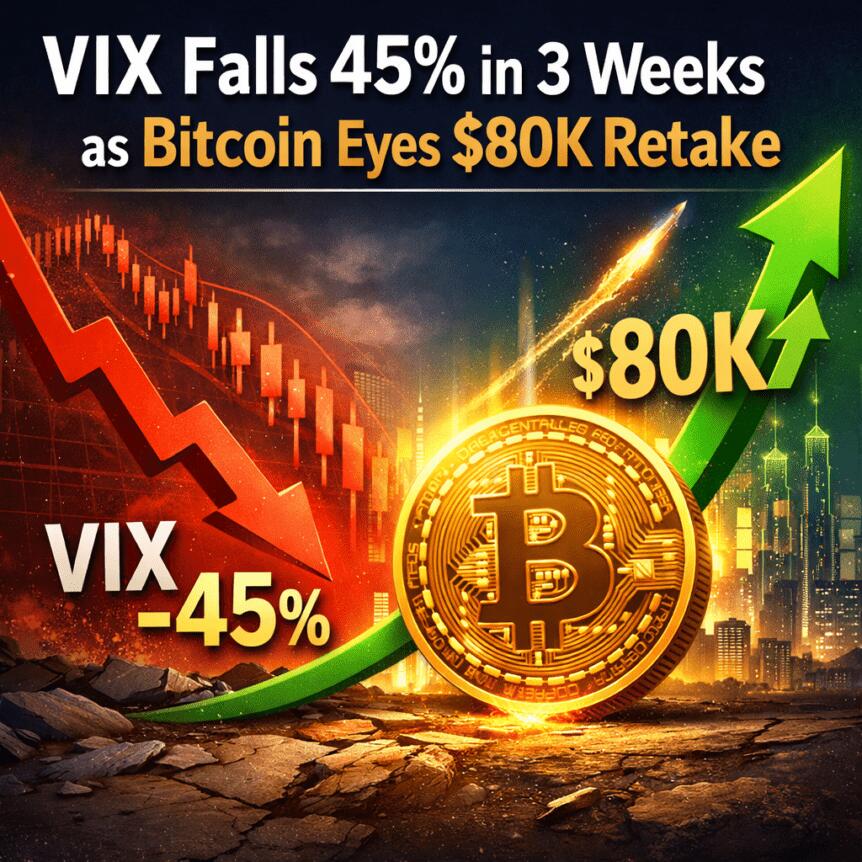
The CBOE Volatility Index (VIX), frequently used as a gauge of market fear, has collapsed by more than 45% in under a month, sharpening the outlook for Bitcoin as traders weigh the implications of a calmer risk environment. With volatility cooling, Bitcoin bulls are watching for a renewed push higher, especially as sustained demand from large buyers and a favorable price backdrop converge.
Key takeaways
- Bitcoin’s upside path tightens if the VIX remains subdued, with a potential move toward roughly $82,700 on the cards if the trend persists.
- Support for BTC has been buoyed by Strategy’s aggressive BTC purchases, which have absorbed a sizable portion of new supply since March.
- Historical patterns link pronounced VIX declines with Bitcoin gains, though the magnitude and timing can vary by episode.
- A rise in VIX or a slowdown in buying pressure could erode near-term support and reintroduce downside risk.
- Price trajectory remains sensitive to macro volatility, regulatory signals, and the persistence of large-cap buying flows.
VIX’s slide and Bitcoin’s potential breakout
The VIX, colloquially known as Wall Street’s fear gauge, tracks expected volatility in the S&P 500 over the next 30 days. When it falls, investors often demonstrate a greater willingness to embrace risk, a dynamic historically correlated with strength in risk assets, including Bitcoin. In the current context, a drop of more than 40% in the VIX over a short span has coincided with renewed Bitcoin strength in the eyes of many traders.
Analysts have observed a pattern where large VIX declines correlate with notable BTC upside. For example, Bitcoin rallied roughly 40% during the April 2025 to May 2025 window, a period that saw the VIX retreat by about 70%. A separate episode from October to November 2025 saw a 46% VIX drop accompany a BTC gain of around 12%. In the most recent stretch, a 42%–47% decline in VIX has coincided with an 8%–9% rebound in Bitcoin’s price, reinforcing the notion that a calmer risk climate can lend tactical support to the asset class.
Looking ahead, the immediate upside target for Bitcoin sits near the 200-day exponential moving average, around $82,700, a level traders often view as a significant milestone in an emergent bullish phase. If the VIX remains weak and momentum persists, that price zone could become a focal point in the weeks ahead, potentially aligning with broader macro positioning and liquidity conditions.
Market dynamics: the role of Strategy’s BTC purchases
A cornerstone of the current narrative is Strategy’s ongoing BTC accumulation, which has reportedly absorbed a substantial portion of new supply since March. By design, large, disciplined buyers can create a steadier bid under price action, helping to cushion downside during pullbacks and sustain a measured ascent when market conditions permit.
Swissblock, a wealth-management-focused analysis outlet, has highlighted that Bitcoin has demonstrated resilience even amid a complex and evolving macro environment. In its view, the asset may begin to outperform on its own again if the immediate catalysts align with continued demand. A representative takeaway from this view is that persistent buying pressure can help sustain upside even when broader market conditions become less certain.
Bitcoin has already shown inherent strength in a very complex environment. Do not be surprised if it starts to outperform on its own again.
That said, the path is not guaranteed. If Strategy’s buying were to slow meaningfully, or if volatility spikes again, the support that current buyers provide could erode, potentially drawing BTC back toward key psychological and technical levels. The risk of a pullback grows if macro headlines turn decisively negative or if regulatory signals introduce new frictions for large holders or market entrants.
What past patterns tell us—and what remains uncertain
Historical episodes offer a lens through which to gauge potential BTC reactions to a fading VIX. While past performance is not a guarantee of future results, the correlation between sharp VIX declines and Bitcoin strength has been a recurring theme in the recent cycle. The correlation appears strongest during episodes where risk appetite returns and liquidity conditions improve, allowing BTC to capture upside in a risk-on backdrop.
At the same time, observers caution against over-reliance on any single indicator. The intensity and duration of VIX moves can be influenced by a range of factors—from macro data surprises to geopolitical developments and central-bank policy shifts. In this environment, the persistence of large buyers or the emergence of new demand drivers will help determine whether BTC can sustain momentum through potential volatility shocks.
While some market participants still entertain the possibility of a later-stage pullback—with analyses suggesting scenarios where BTC could dip below $50,000 in 2026—the near-term setup remains tilted toward upside if the VIX remains subdued and buying demand holds. The interplay between macro volatility, liquidity, and the concentration of demand from major investors will continue to shape the trajectory in the weeks ahead.
What to watch next
Investors should monitor several moving parts that could shape Bitcoin’s trajectory over the near term. First, the VIX’s ability to stay subdued or rebound will be a primary driver of sentiment and price action. Second, the durability of Strategy’s BTC buying cadence will influence whether the market can maintain a constructive bias or face renewed downside pressure if demand weakens. Third, macro developments—especially any shifts in monetary policy expectations or geopolitical risks—could reintroduce volatility and challenge the current risk-on stance.
Additionally, traders will be looking at price behavior around the 200-day EMA and whether BTC can sustainably trade above nearby resistance levels as liquidity conditions evolve. The market will also likely respond to broader changes in sentiment around institutional participation in crypto, including potential inflows into regulated custodial solutions and the continued expansion of OTC and on-exchange liquidity.
In the meantime, the convergence of a softer VIX, heavy buying from large holders, and a technical setup around the 200-day moving average provides a plausible pathway for Bitcoin to press higher in the near term. Yet investors should remain mindful of the risk that a shift in volatility or a slowdown in buy-side demand could reintroduce caution and halt momentum.
Readers should keep an eye on the evolving balance between fear and appetite for risk, the staying power of major buyers, and the broader macro backdrop as new data points and policy signals emerge. The next few weeks will reveal whether this is a temporary lull in volatility or the beginning of a longer upside phase for Bitcoin.
As the market digests these dynamics, the question remains: will BTC’s run be sustained by continued liquidity and appetite for risk, or will shifting headlines reintroduce the volatility that has alternately capped and propelled its moves in recent cycles?


The UK Treasury wants stablecoins and tokenized deposits regulated like payment services, backing the push with new rules, BoE coordination and £1m for fintech pilots.
Summary
- The UK Treasury plans a single framework covering stablecoins, tokenized deposits, and traditional payment services.
- Stablecoins used for payments will sit under a new issuance and payments regime aligned with Bank of England and FCA oversight.
- The government is earmarking £1 million to support fintech innovation in regulated digital payment assets.
The UK Treasury used London Fintech Week to signal its most ambitious push yet to bring digital money inside the country’s mainstream payments perimeter. According to reporting on recent Treasury evidence sessions and policy briefings, published on Tuesday, ministers now want fiat‑backed stablecoins and tokenized bank deposits regulated under the same umbrella as existing payment services, rather than treated as a parallel crypto niche.
London targets post‑Brexit payments edge
Economic Secretary to the Treasury Lucy Rigby told the House of Lords Financial Services Regulation Committee that including stablecoins directly in payments rules would allow the UK to design “a payments framework that facilitates both traditional payments and tokenized payments in a coherent and comprehensive way.” That stance effectively revives a 2022–23 plan—first floated under the previous government—to amend the Payment Services Regulations so that sterling‑backed stablecoins used in UK payment chains are explicitly captured by law.
Under the emerging model, stablecoins used as payment instruments will sit within an issuance regime that ties into the broader Financial Services and Markets Act cryptoasset framework, while systemic pound‑denominated stablecoins will fall under joint Bank of England and FCA supervision. In parallel, tokenized deposits—commercial bank money issued on blockchain rails—are being treated as a complementary pillar, giving banks a path to on‑chain money that preserves the existing two‑tier system.
Bank of England officials have already started expanding the Digital Securities Sandbox to include both tokenized deposits and regulated stablecoins as settlement assets, allowing regulators to observe real‑world use cases before locking in a permanent regime. The Treasury’s new integration plan builds on that work, with around £1 million in fresh funding earmarked for fintech experiments that use these instruments in payments, treasury management, and cross‑border flows.
Policy analysts note that, while global debates often pit central bank digital currencies against private stablecoins, the UK is quietly advancing a “third path” that leans heavily on tokenized deposits as programmable, 24/7 extensions of traditional bank money. As one recent industry brief put it, tokenized deposits are “not a new form of money” but a new infrastructure layer, designed to keep credit creation and deposit guarantees inside the banking system even as settlement moves on‑chain.
Taken together, the Treasury’s unified framework, the Bank of England’s systemic stablecoin consultation, and the FCA’s 2026 focus on stablecoin payments suggest a coordinated bid to make the UK a preferred jurisdiction for regulated digital payment assets in the post‑Brexit landscape. If regulators can balance prudential safeguards with genuine room for experimentation, London’s fintech sector may end up setting templates other financial hubs copy rather than compete against.
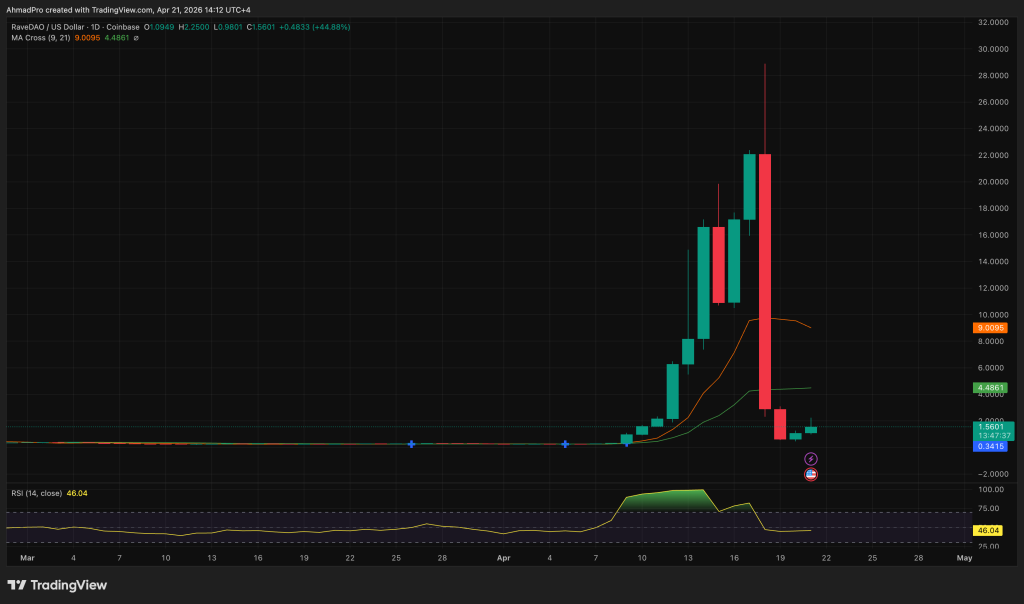
RAVE crypto is refusing to die quietly. After Web3 investigator ZachXBT lobbed manipulation allegations at the RaveDAO team mid-rally, the token staged a 138% rebound that has short-sellers and skeptics scrambling to reassess.
Current pricing sits near $1.61, down hard from the April 15 peak of $22, but the bounce off cycle lows tells a more complicated story than the “confirmed rug” narrative suggests.
The sequence of events reads like a case study in chaos: RAVE rocketed over 6,000% from $0.25 lows to a $27.94 peak, then cratered 95% as ZachXBT alleged coordinated pump-and-dump activity during a 10,383% rally in under 30 days.
Community calls for investigations into Binance and Bitget followed. Yet instead of a death spiral, on-chain activity showed renewed accumulation, and a 44% snapback turned into something considerably larger. Previous Cryptonews coverage flagged the manipulation risk early.
The broader altcoin market is watching closely: when a token survives this kind of public hit job, it either confirms resilience or sets up a second, more brutal trap.
Can RAVE Crypto Price Recover to $2.50 or Is a Deeper Crash Still Incoming?
This is not a clean recovery; it looks way more like a dead cat bounce than anything else, and those usually do not last.
Price is messy, data is inconsistent, and volatility is extreme, which already tells you this is not stable demand; it is unstable momentum.
The move up is happening in thin conditions with heavy concentration, meaning a few wallets can move the entire market, and that is not something you want to rely on for continuation.
RSI already hit absurd levels during the spike, which historically does not lead to sustained trends; it leads to sharp reversals once the momentum fades.
So instead of treating this like the start of something bigger, it makes more sense to see it for what it is, a bounce inside a weak setup that can unwind quickly once the fuel runs out.
LiquidChain Targets Early-Mover Upside as RAVE Tests Structural Credibility
RAVE’s story illustrates the ceiling problem for high-mcap tokens post-parabola: even a legitimate recovery from $0.25 to $0.65 still means entry at a fully diluted valuation that discounts most future upside. Traders burned by the RAVE crash, or priced out of meaningful position sizing, are rotating attention toward infrastructure plays at seed-stage pricing.
LiquidChain is one of the more technically distinct projects currently in presale. Positioned as a Layer 3 infrastructure protocol, it fuses Bitcoin, Ethereum, and Solana liquidity into a single execution environment, what the team calls a Unified Liquidity Layer with Single-Step Execution and Deploy-Once Architecture. The pitch to developers: write once, access all three ecosystems without bridging friction or fragmented liquidity pools.
Presale price is $0.01451, with $690,005.61 raised to date. Early-stage infrastructure tokens carry substantial risk, most fail to achieve meaningful adoption post-launch, but the cross-chain liquidity thesis is one of the few narratives with confirmed developer demand heading into 2026.
Traders researching alternatives to high-volatility meme plays can explore LiquidChain’s presale details here.
The post ZachXBT Called It a Pump and Dump: So Why Did RaveDAO Crypto Just Bounce 138% Again? appeared first on Cryptonews.
Crypto World
Bitmine Buys 101,627 Ethereum Worth Over $230M in Its Biggest Weekly Accumulation of 2026
BitMine Immersion Technologies purchased 101,627 Ethereum last week for approximately $230 million, its largest single-week haul since December 15 and the biggest weekly accumulation of 2026.
The buy lifts total holdings to 4.97 million tokens, pushing the firm within striking distance of 5% of Ethereum’s circulating supply.
The real story is in the trajectory. BitMine has accelerated its acquisition pace for four consecutive weeks, scaling from a prior average of 45,000–50,000 ETH per week to more than double that rate. That is textbook accumulation behavior, not distribution.
- Weekly Purchase: 101,627 ETH worth approximately $230 million
- Record Context: Largest weekly haul since December 15, 2025
- Total Holdings: 4.97 million ETH across the treasury
- Total Assets: $12.9 billion in crypto and cash combined
- Staking Revenue: 3.33 million ETH staked, generating ~$221 million annualized
- Consecutive Weeks of Accelerated Buying: Four straight weeks of increased pace
Discover: The best pre-launch token sales
What 101,627 Ethereum Removed from Spot Supply by Bitmine Actually Signals
At roughly $2,263 per ETH implied by the $230 million price tag, BitMine’s single-week purchase represents a material withdrawal from available spot liquidity.
Ethereum daily spot volume on centralized exchanges typically ranges between $8 billion and $14 billion, but persistent directional demand at this scale compresses the effective float, particularly as two-thirds of BitMine’s stack is locked in staking and off the market entirely.
ETH has rebounded sharply from its early February lows, and Chairman Tom Lee is not subtle about the firm’s read on timing. “BitMine has maintained the increased pace of ETH buys in each of the past four weeks, as our base case ETH is in the final stages of the ‘mini-crypto winter,’” Lee said. He cited ETH’s outperformance of equities since the Iran conflict began February 28, alongside demand tied to tokenization and AI infrastructure running on Ethereum.
If buying continues at this pace – or accelerates toward the 5 million ETH milestone – the supply overhang shrinks further and resistance levels above current prices become harder to defend for sellers. If accumulation stalls or reverses, the absence of that steady bid will be felt quickly in order book depth. The honest answer on near-term price: the bid from one buyer at this scale is structural, not speculative.
The post Bitmine Buys 101,627 Ethereum Worth Over $230M in Its Biggest Weekly Accumulation of 2026 appeared first on Cryptonews.
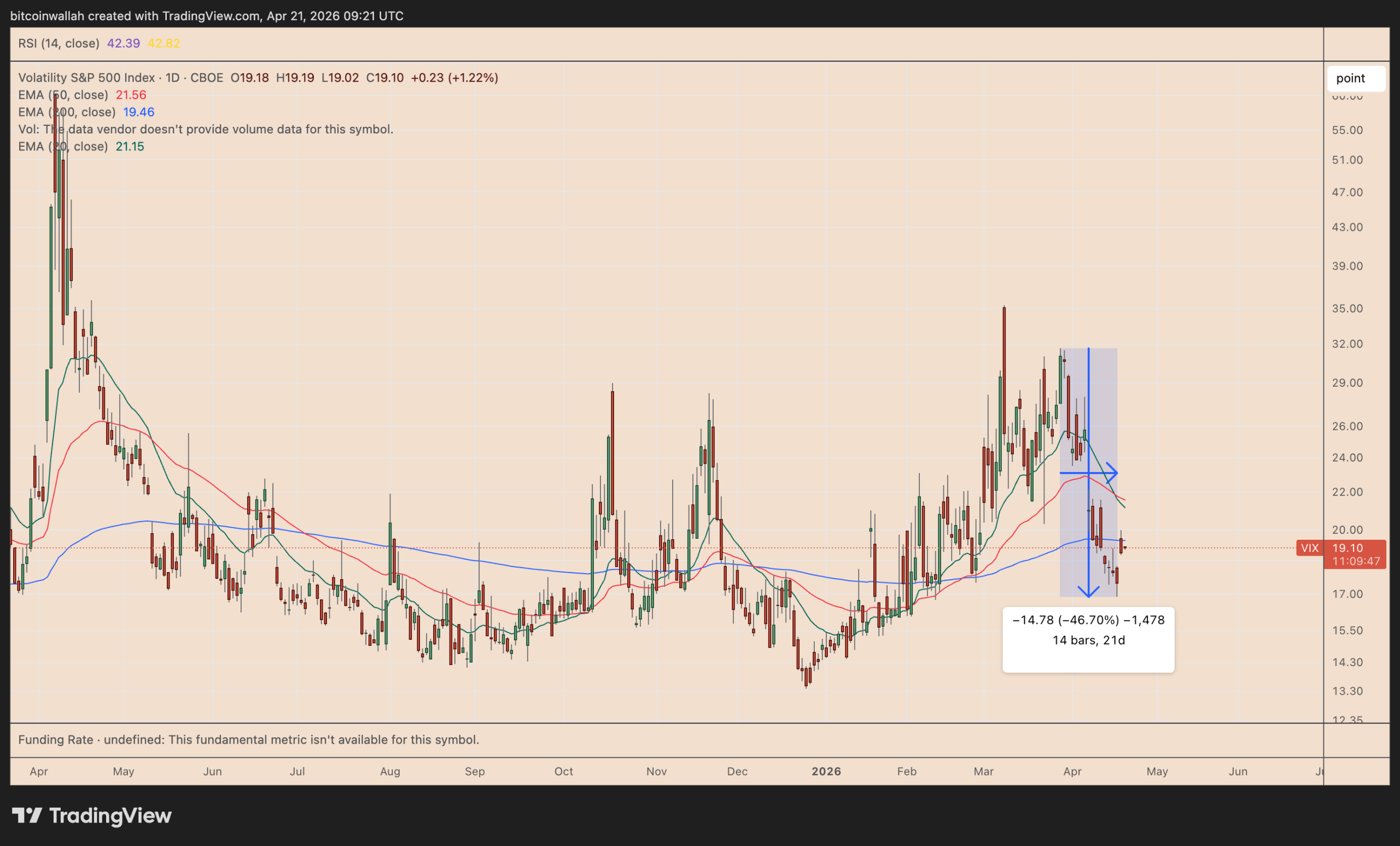
The CBOE Volatility Index (VIX), a preferred Wall Street metric to measure investor sentiment and market risk, dropped by over 45% in under a month. For Bitcoin (BTC), this could be a significant bullish signal.

Key takeaways:
-
Bitcoin may rise toward $82,700 if VIX keeps underperforming.
-
BTC’s upside outlook gets a boost from Strategy’s BTC buying spree.
Weakening VIX hints at BTC rising to $82,700
Often called Wall Street’s “fear gauge,” the VIX tracks how much volatility traders expect in the S&P 500 index over the next 30 days.
When the index rises, it usually signals rising stress and risk aversion across markets. When it falls, it suggests investors are becoming more comfortable owning riskier assets such as stocks and crypto.
History suggests that a VIX drop of 40% or more is bullish for Bitcoin.
For instance, BTC rallied approximately 40% during April 2025–May 2025, with its gains aligning with the VIX’s 70% dip.

Similarly, a 46% VIX drop during the October–November 2025 period coincided with a 12% BTC gain.
Even the recent 42%–47% VIX decline has coincided with an 8%–9% BTC price rebound, improving the bullish backdrop for Bitcoin in the coming days.
BTC’s next upside target appears to be around the 200-day exponential moving average (200-day EMA, the blue line) at around $82,700 by early May.
What happens to Bitcoin if VIX starts rising?
A rising VIX is typically bearish for risk assets like Bitcoin. However, that correlation broke briefly in March, according to a chart highlighted by wealth management firm Swissblock.
BTC and VIX rose in tandem during the US–Iran escalation in March. In comparison, the broader risk market, including US equities, underperformed.

One potential catalyst behind Bitcoin’s resilience may have been Strategy’s aggressive BTC buying, which has absorbed the equivalent to nearly 30 weeks of new coin supply since March.
Related: Saylor teases ‘bigger’ BTC buy days after floating semi-monthly dividends
“Bitcoin has already shown inherent strength in a very complex environment”, Swissblock said, adding:
“Do not be surprised if it starts to outperform on its own again.”
Nonetheless, any slowdown in Strategy’s buying could weaken Bitcoin’s support during periods of rising VIX, increasing the risk of downside.
Multiple analyses suggest BTC may drop below $50,000 in 2026.
This article is produced in accordance with Cointelegraph’s Editorial Policy and is intended for informational purposes only. It does not constitute investment advice or recommendations. All investments and trades carry risk; readers are encouraged to conduct independent research before making any decisions. Cointelegraph makes no guarantees regarding the accuracy or completeness of the information presented, including forward-looking statements, and will not be liable for any loss or damage arising from reliance on this content.
Most XRP investors are back in profit, increasing the chance for a rally to $2.24, but bulls must first hold the price above $1.40.
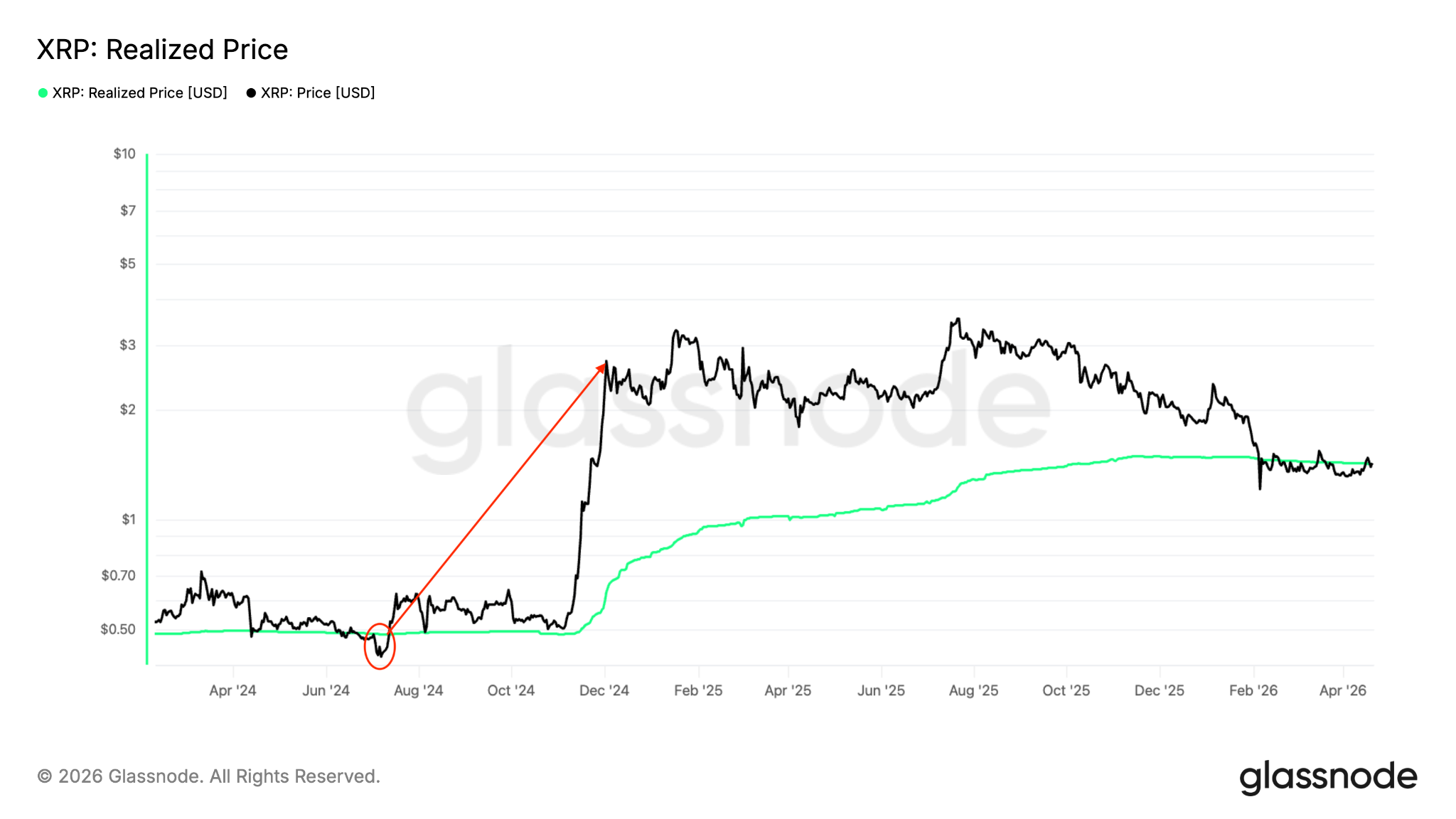
XRP’s (XRP) 28% rebound from its macro low at $1.12 pushed it above its realized price. In other words, the average XRP holder is no longer in the red.
Is this enough fuel for the bulls to push the altcoin’s price to $2.24?
Key takeaways:
XRP trades above its cost basis
Data from TradingView shows the XRP/USD pair trading at $1.44, up 1.6% over the last 24 hours and 5% over the last seven days.
This means XRP is holding above its realized price, the average cost of all coins based on when they last moved, currently at $1.41, according to data from Glassnode.
The average XRP holder returning to profit after unrealized losses provides meaningful financial relief for many holders, signaling a bullish outlook.
Related: XRP price bottom signals emerge after the altcoin holds key support level
Historically, breaking above this level shifted market sentiment from “fear,” reducing sell pressure from underwater holders and encouraging holding.
The chart below shows that when the price reclaimed its realized price after hovering below it for a few months in mid-2024, it rallied 460% to $2.90 from $0.52.

Holding above $1.40 is crucial for the bulls to ensure a potential upward breakout.
On the upside, the key levels of resistance to watch out for are the 111-day moving average (MA) at $1.57, the 200-day MA at $1.88 and the 365-day MA at $2.22, based on XRP’s technical pricing model.

XRP’s symmetrical triangle targets $2.40
XRP has been consolidating within a symmetrical triangle for more than two months, as shown in the chart below.
The XRP/USD pair must break and close above the upper trend line of the triangle at $1.46 to continue the upward trajectory.
The measured target of the pattern, calculated by adding the triangle’s height to the breakout point, is $2.24, 55% above the current price.

Technical analyst and trader ChartNerd said the moving averages between $1.35 and $1.40 “need to be held” to keep the bullish outlook in play.

As Cointelegraph reported, buyers will have to achieve a daily candlestick close above the upper trendline of a descending parallel channel at $1.60 to confirm a potential trend change.
This article is produced in accordance with Cointelegraph’s Editorial Policy and is intended for informational purposes only. It does not constitute investment advice or recommendations. All investments and trades carry risk; readers are encouraged to conduct independent research before making any decisions. Cointelegraph makes no guarantees regarding the accuracy or completeness of the information presented, including forward-looking statements, and will not be liable for any loss or damage arising from reliance on this content.

Volkswagen shows off a prototype of its ID.Aura T6 in Beijing, China, in April 2026.
Picture Alliance | Picture Alliance | Getty Images
German auto giant Volkswagen announced it’s incorporating AI voice commands into its cars for the Chinese market.
Starting in the second half of this year, all vehicles based on Volkswagen’s China car system will feature AI agents that allow humans to control car features with voice commands, the company said on Tuesday.
“The car should be like a companion,” Volkswagen China CTO Thomas Ulbrich told CNBC’s Eunice Yoon.
He said the company’s in-car AI agent would draw on tech from Tencent, Alibaba and Baidu, among others, to create a tool with “personality” that can anticipate a driver’s needs.
The AI uses a locally trained large language model and runs entirely on the car, rather than the cloud.
Volkswagen revealed four cars in Beijing on Tuesday, including the ID. UNYX 09, which the company claimed it co-developed with EV maker Xpeng in two years.
The move is part of the company’s strategy to recoup lost market share as China has rapidly turned to electric cars from ones powered by internal combustion engines.
Over the last few years, Volkswagen has invested heavily in China, with stakes in Xpeng and automotive chipmaker Horizon Robotics.
With those partnerships, the German automaker is not using Nvidia chips in its cars in China. Instead, Volkswagen is using Xpeng’s Turing chip in an electric SUV set to begin deliveries by the end of June, while an advanced automotive chip project with Horizon Robotics remains under development.
Volkswagen also announced Tuesday that, starting next year, it will use agentic AI to power a unified driver-assist and cockpit control system.
In November, the German automaker announced its research center in Hefei could independently develop and approve technology for its Chinese cars, reducing the time to market.
Over the last two years, German automotive industry companies in China have significantly increased their research and development activities in the country, with the aim of serving both the local and global market, according to a report released Tuesday by the German Chamber of Commerce in China.
Nearly 80% of automotive companies surveyed by the chamber said that localizing R&D in China has lowered those costs versus Germany over the last two years, while about 43% of respondents said their innovation speed has increased by more than 40%, the report said.
4 Takeaways from the Vikings’ Pre-Draft Presser

WiiM Sound Review – Trusted Reviews
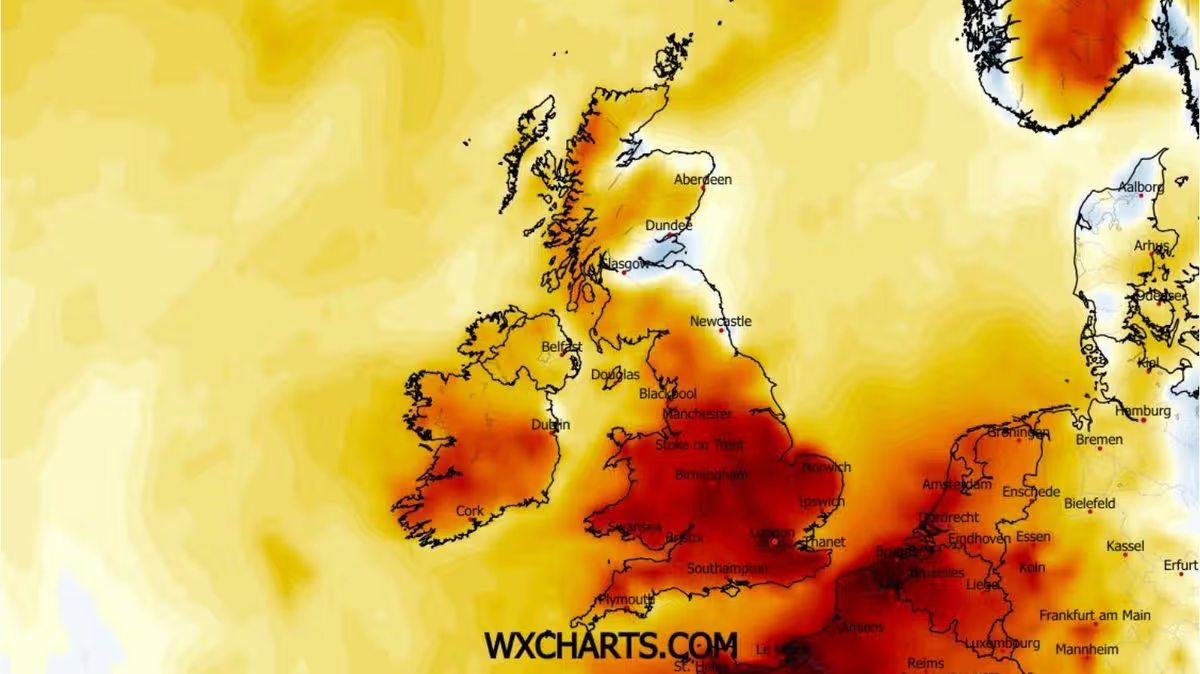
UK weather maps show 26C surge as 74 counties face May scorcher

Manchester United reach agreement with Casemiro over contract clause amid transfer speculation

Steven Gerrard disagrees with Gary Neville over ‘shock’ Chelsea and Arsenal claim | Football

US brings back mandatory military draft registration


-

 News Videos6 days ago
Secure crypto trading starts with an FIU-registered
-

 Fashion4 days ago
Weekend Open Thread: Theodora Dress
-

 Sports4 days ago
NWFL Suspends Two Players Over Post-Match Clash in Ado-Ekiti
-

 Politics4 days ago
Palestine barred from entering Canada for FIFA Congress
-

 Business2 days ago
Powerball Result April 18, 2026: No Jackpot Winner in Powerball Draw: $75 Million Rolls Over
-

 Crypto World4 days ago
Russia Pushes Bill to Criminalize Unregistered Crypto Services
-

 Politics17 hours ago
Gary Stevenson delivers timely reminder to register to vote as deadline TODAY
-

 Tech3 days ago
Auto Enthusiast Scores Running Tesla Model 3 for Two Grand and Turns It Into Bare-Bones Go-Kart
-
 Business5 days ago
Creo Medical agree sale of its manufacturing operation
-

 Politics2 days ago
Zack Polanski demands ‘council homes not luxury flats for foreign investors’
-

 Tech6 days ago
‘Avatar: Aang, The Last Airbender’ Leaked Online. Some Fans Say Paramount Deserves the Fallout
-

 Crypto World4 days ago
Russia Introduces Bill To Criminalize Unregistered Crypto Services
-

 Tech7 days ago
Microsoft adds Windows protections for malicious Remote Desktop files
-
Entertainment2 days ago
NBA Analyst Charles Barkley Chimes in on Ice Spice McDonald’s Fiasco
-
 Entertainment6 days ago
Dave Portnoy Slams Dianna Russini: ‘Makes Zero Sense’
-

 Crypto World6 days ago
X Launches New Cashtag Feature for Stocks and Crypto: X
-

 Sports5 days ago
British climbers complete new route in Swiss Alps
-

 Entertainment7 days ago
Prince Carter Brings Fans Front Row and Backstage at Boys 4 Life Tour
-
 Crypto World7 days ago
Bitcoin surpasses halfway mark in current halving cycle
-
 Crypto World7 days ago
Paxos Labs Raises $12M to Launch Crypto Yield and Lending Platform
You must be logged in to post a comment Login