On Tuesday, the nonprofit Consumer Federation of America filed a lawsuit against Meta, alleging that the way the social networking giant handles scammers on its platforms violates Washington, DC’s consumer protection laws.
While many online scams involve direct outreach to victims by scammers (who are often themselves human trafficking victims trapped in scam compounds), CFA’s lawsuit focuses on fraudulent advertising that CFA alleges Meta profited from and allowed to “proliferate on its platforms,” despite publicly promising that it takes cracking down on fraud and scams seriously.
In its complaint, CFA points to ads found in Meta’s ads library that CFA claims are types of well-known scams, including several that appear to target people by their birth year and tout $1,400 checks, as well as others that advertise free government iPhones.
Speaking with WIRED, Ben Winters, CFA’s director of AI and data privacy, says others can find more dubious ads just by searching Meta’s ad library using key words like “free phone” and “stimulus check.” WIRED’s quick perusal of the ads library on Monday shows more live ads for “secret tax checks” that lead to a website that promises to reveal “Wall Street’s recession-proof investing strategy.”
Advertisement
Meta did not immediately respond to a request for comment.
CFA is seeking to recover damages and what it says are illegal profits from Meta, in addition to business reforms. Winters says that there’s more to be done to take down repeat violators and scrutinize ads that promise things like free government programs that don’t exist before they’re put in front of consumers.
Meta has faced particular scrutiny because Facebook, Instagram, and WhatsApp—which are all owned by Meta—are among the most widely used online platforms by Americans, according to a recent Pew Research Center report. In late 2025, Reuters reported on a set of internal Meta documents that detailed how the company dealt with fraudulent and prohibited user activity, including a May 2025 presentation that estimated that its platforms were involved with a third of all successful scams in the US. Another presentation cited by Reuters alleged that an internal Meta review found it “is easier to advertise scams on Meta platforms than Google.”
One Meta document from 2024 that Reuters cited estimated that the company would earn 10.1 percent of its revenue that year—around $16 billion—from ads that were actually scams or other types of prohibited content. To put that figure in perspective, the FBI estimated that in 2024, Americans lost $16 billion from all internet crimes. At the time, a Meta spokesperson called the estimate “rough and overly inclusive” and said that the set of documents Reuters reported on “distorts Meta’s approach to fraud and scams” and that the actual revenue was lower, but declined to tell Reuters by how much.
Advertisement
In June 2025, a bipartisan coalition of state attorneys general urged Meta to crack down on Facebook ads that led consumers to WhatsApp groups that were used for carrying out investment scams. The letter, which was signed by New York AG Letiticia James, said that Meta’s solutions were not working and that investigators in New York kept seeing scam advertisements months after submitting reports to Meta.
Since then, the US Virgin Islands attorney general’s office filed a lawsuit against Meta that, among other things, alleged that the company not only failed to crack down on scam advertising but charged advertisers higher rates to run ads flagged as likely to be fraudulent. That lawsuit is ongoing.
Though the federal government and many states have similar consumer protection laws as the DC law that CFA alleges Meta violated, Winters says he’s not holding his breath for the federal government to take action, and while he appreciates the work of state attorneys general, he believes consumers need relief now.
“We appreciate their work and think it’s absolutely critical, but we can’t wait for them to act when we haven’t seen them able to act as quickly as we need to,” Winters says. “This is why nonprofits and civil society exist in the idealized world, right? To fill in gaps where there are gaps.”
Investors are aggressively courting AI researchers to build startups that can make AI more reliable and efficient.
Yu Su, an Ohio State professor leading an AI agent lab, said he initially resisted the pressure from VCs to commercialize his work. He finally took the leap last year and spun out his work into a startup when he saw that foundational model advances could make agents truly personalized.
NeoCognition, a startup Su describes as a research lab developing self-learning AI agents, has just emerged from stealth with $40 million in seed funding. The round was co-led by Cambium Capital and Walden Catalyst Ventures, with participation from Vista Equity Partners and angels, including Intel CEO Lip-Bu Tan and Databricks co-founder Ion Stoica.
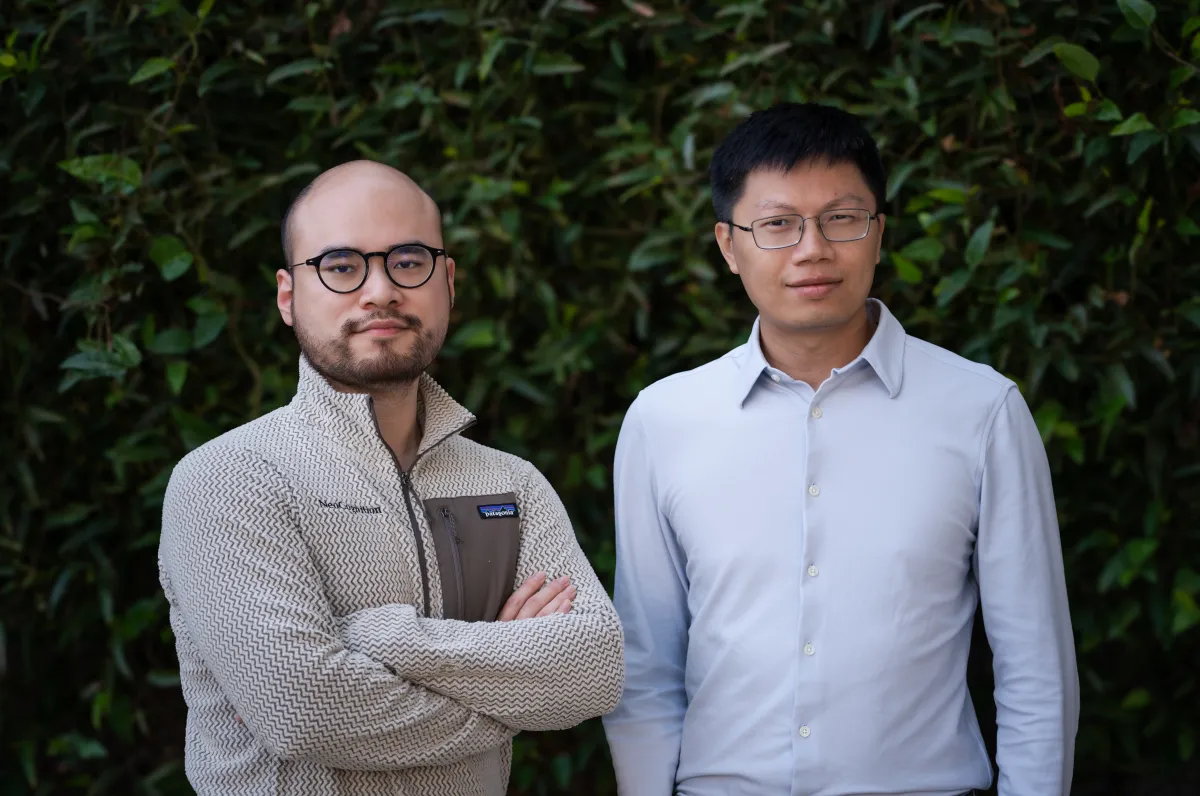
“Today’s agents are generalists,” Su (pictured right) told TechCrunch. “Every time you ask them to do a task, you take a leap of faith.”
Advertisement
According to Su, the issue lies in a lack of consistency. Current agents, whether from Claude Code, OpenClaw or Perplexity’s computer tools, successfully complete tasks as intended only about 50% of the time, he said.
Since agents are still so unreliable, they are not ready to be trusted, independent workers, Su told TechCrunch. NeoCognition intends to change that by developing an agent system that can self-learn to become an expert in any domain, similar to how humans learn.
Su argues that while human intelligence is broad, its real power is our ability to specialize. When we enter a new environment or profession, we can rapidly master its unique rules, relationships, and consequences.
Techcrunch event
Advertisement
San Francisco, CA | October 13-15, 2026
NeoCognition is building agents to mirror this exact approach.
Advertisement
“For humans, our continued learning process is essentially the process of building a world model for any profession, any environment,” Su said. “We believe for agents to become experts, they need to learn autonomously to build a model of any given micro world.”
Su views this capacity for rapid specialization as the critical missing link to getting AI to work reliably on its own.
While it is possible to train agents for autonomous tasks, they must be custom-engineered for a specific vertical. NeoCognition is different because it’s building agents that are generalists capable of self-learning and specializing in any domain.
NeoCognition intends to sell its agent systems primarily to enterprises, including established SaaS companies, which can use them to build agent-workers or to enhance existing product offerings.
Advertisement
Su highlighted that an investment from Vista Equity Partners is especially valuable for this reason. As one of the largest private equity firms in the software space, Vista can provide NeoCognition with direct access to a vast portfolio of companies looking to modernize their products with AI.
NeoCognition currently has about 15 employees, the majority of whom hold PhDs.
When you purchase through links in our articles, we may earn a small commission. This doesn’t affect our editorial independence.
Reuters reports that Meta plans to start collecting U.S.-based employees’ mouse movements, clicks, keystrokes, and occasional screen snapshots to train AI agents that can better learn how humans use computers. The tool, called Model Capability Initiative (MCI), will reportedly “not be used for performance assessments or any other purpose besides model training and that safeguards were in place to protect ‘sensitive content.'” From the report: Meta CTO Andrew Bosworth told employees in a separate memo shared on Monday that the company would step up internal data collection as part of those “AI for Work” efforts, now re-branded as Agent Transformation Accelerator (ATA). “The vision we are building towards is one where our agents primarily do the work and our role is to direct, review and help them improve,” Bosworth said. The aim, he added, was for agents to “automatically see where we felt the need to intervene so they can be better next time.” Bosworth did not explicitly spell out how those agents would be trained, but said Meta would be “rigorous” about “building up data and evals for all the types of interactions we have as we go about our work.”
Meta spokesperson Andy Stone acknowledged that the MCI data would be among the inputs. […] “If we’re building agents to help people complete everyday tasks using computers, our models need real examples of how people “actually use them — things like mouse movements, clicking buttons, and navigating dropdown menus,” said Stone.
In a headphone market split between legacy brands that barely change and boutique players that release new models at a relentless pace, it’s easy to overlook the ones playing a longer, quieter game. Shure has built a reputation on consistency. Campfire Audio operates at the other extreme. Most brands fall somewhere in between.
That leaves a gap, and that’s where Audio-Technica operates. The Tokyo-based manufacturer doesn’t chase headlines or flood the market, but it brings decades of experience across both professional and consumer audio. At AXPONA 2026, that approach stands out. For newer enthusiasts, it’s a reminder that some of the most established names in personal audio are not always the loudest.
Why the Japanese Audio Brand Still Matters
Founded in Tokyo by Hideo Matsushita, Audio-Technica set out to make high quality audio accessible to a wider audience. The company began with phono cartridges in 1962 and expanded steadily into headphones, microphones, turntables, and wireless systems for broadcast and live sound. That pro side of the business still matters, even if it doesn’t always get the attention.
Today, Audio-Technica is one of the largest audio companies in Japan. Outside of cartridges, though, it can still fly under the radar for a lot of listeners. At the show, that low profile was hard to miss. Instead of setting up in the Ear Gear section where the headphone crowd tends to gather, the brand took a series of smaller rooms off the main path. Easy to walk past if you weren’t looking for them.
Advertisement
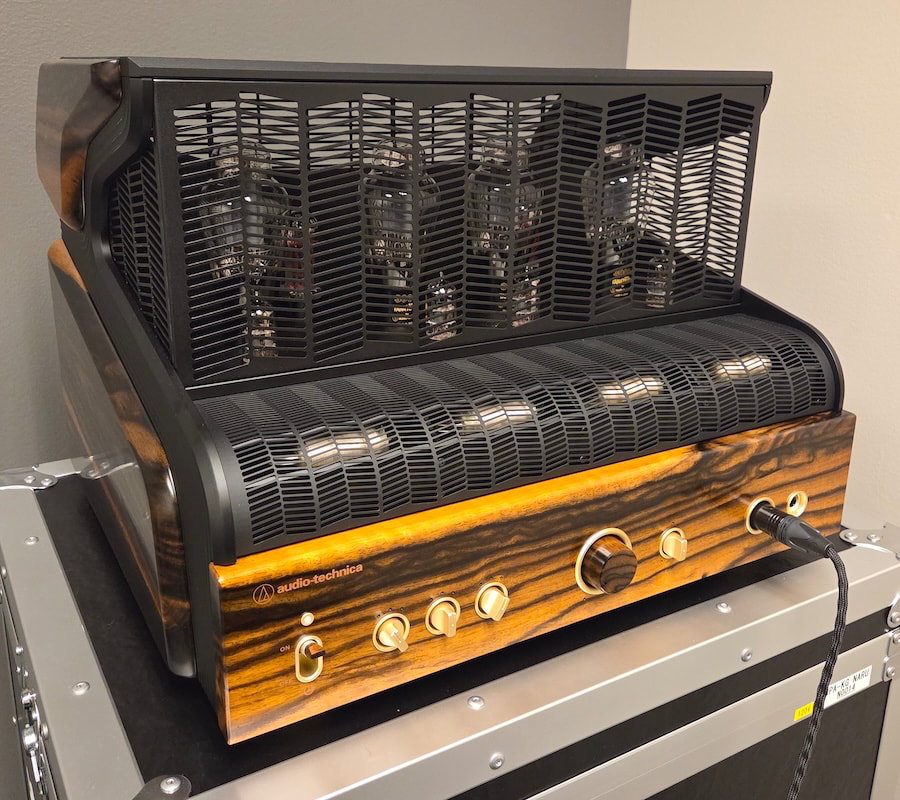
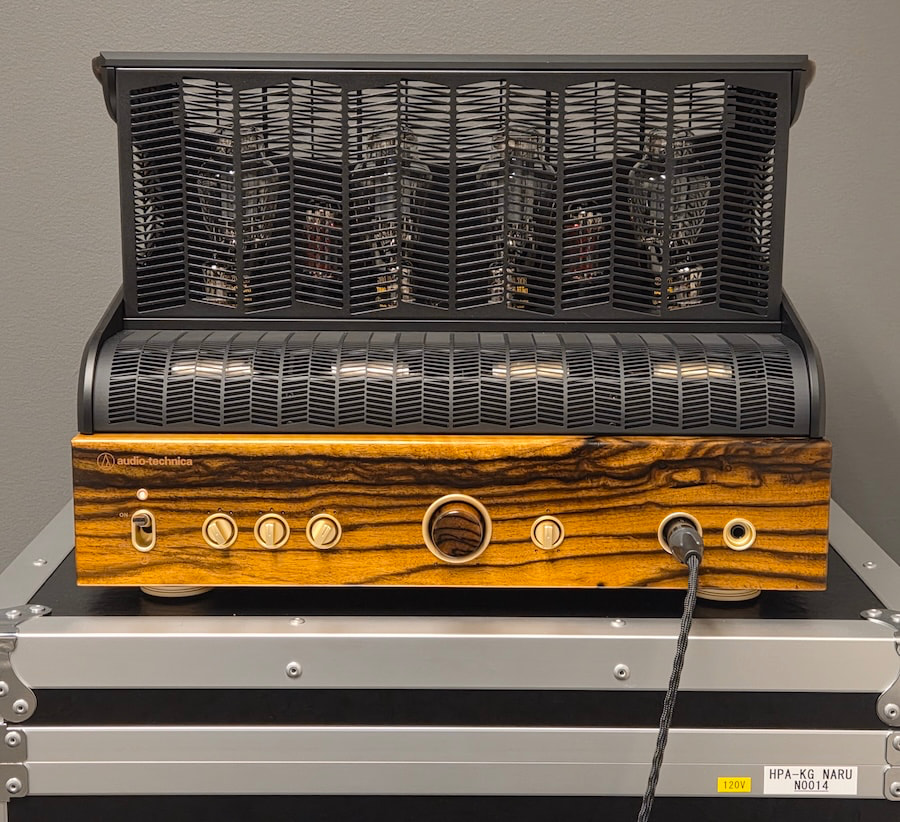
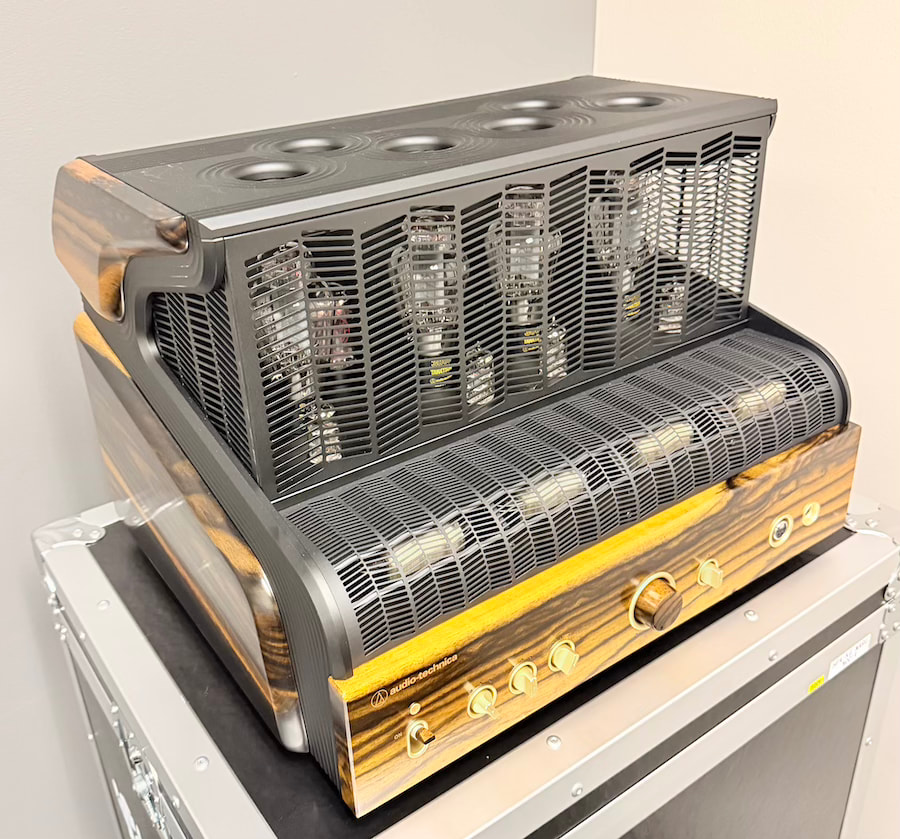
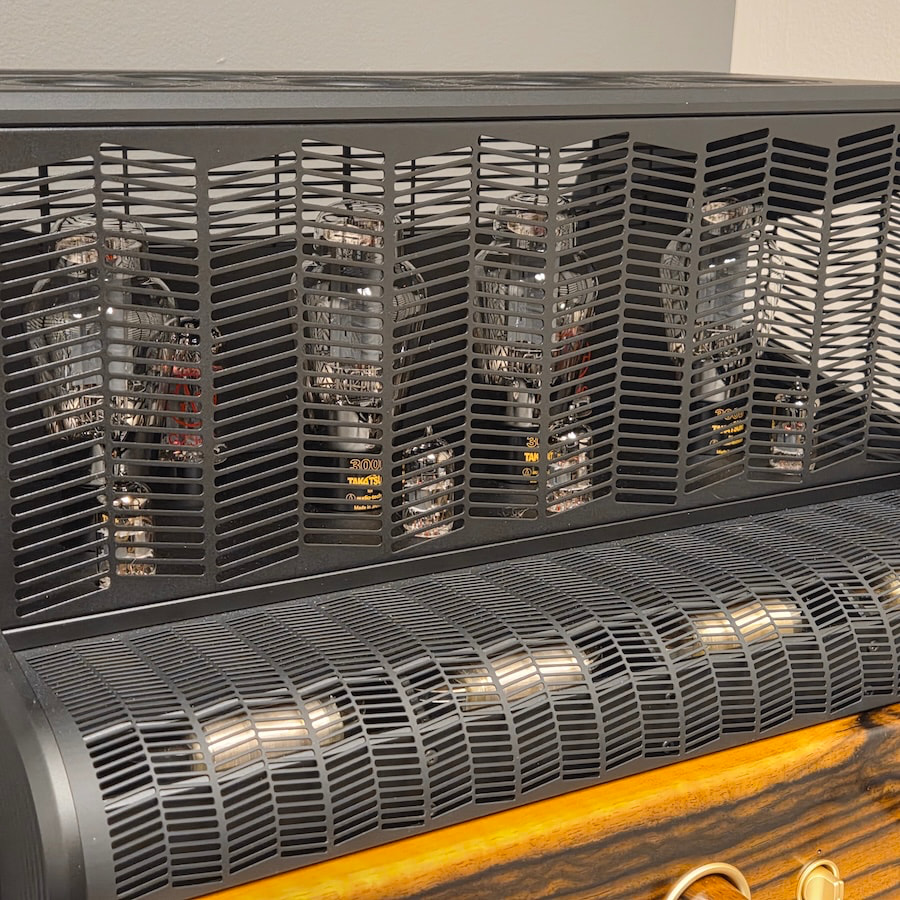
Audio-Technica NARUKAMI HPA-KG NARU Tube Headphone Amplifier at AXPONA 2026
That’s a shame, because the setup was one of the more complete at the show. Visitors could move from cartridge demos to a full spread of headphones, covering everything from entry-level models to the flagship end of the spectrum, including the $108,000 NARUKAMI HPA-KG NARU Tube Headphone Amplifier and its matching headphones.
Audio-Technica offers a headphone lineup that can stand alongside Sony, Beyerdynamic, and Sennheiser, with models that cover a wide range of prices and use cases. That includes everything from entry level wired designs to high-end open and closed back headphones, along with more niche offerings like wireless in-ear models tied to Star Wars characters. It is a broad catalog, but it rarely gets presented as aggressively as its competitors.
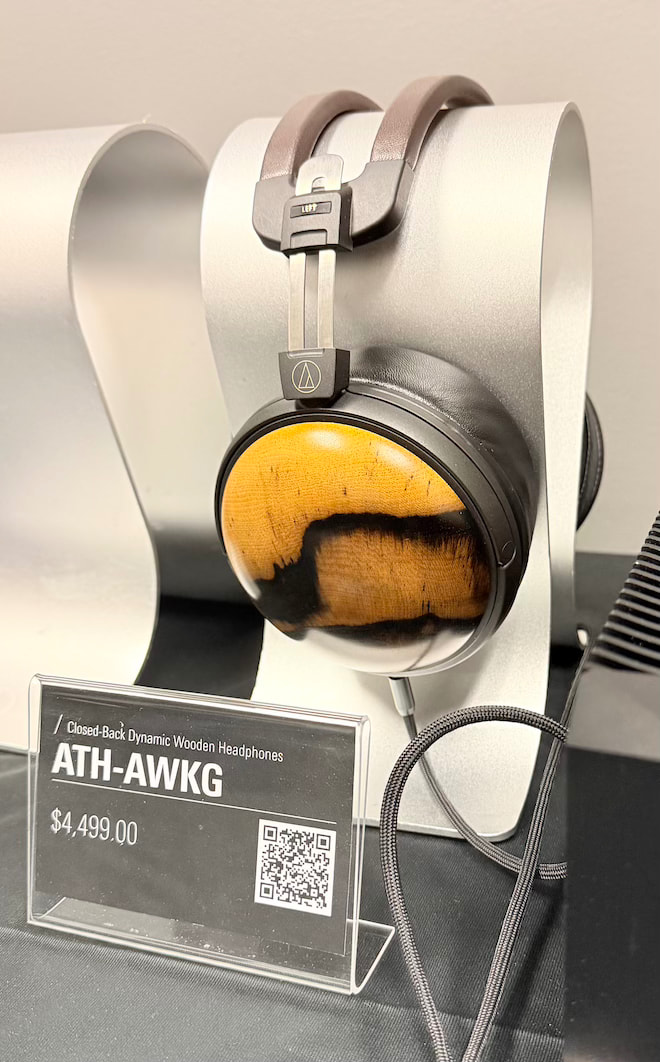
At AXPONA 2026, that range was on full display. I spent time with the flagship ATH-ADX7000 ($3,499 at Crutchfield), along with several of the step down open back models, and moved over to the closed back side with the Narukami system and the ATH-AWKG ($4,499 at Amazon), plus a few sub-flagship options.
The ADX7000 was not new territory. We have already reviewed it favorably, and both Editor-in-Chief Ian White and Editor-at-Large Chris Boylan placed it among their top three headphones from CanJam NYC 2026. That context matters because it frames the rest of the lineup. The flagship is not just competitive. It sets the tone for everything below it.
The house tuning of Audio-Technica headphones leans a bit brighter than what you typically get from Beyerdynamic or Sennheiser, with a noticeable lift in the presence region. Vocals come forward, strings have a bit more bite, and that works especially well with string quartets, concertos, vocal tracks, or a cappella arrangements. It’s not trying to sound polite. It’s trying to keep things engaging.
Advertisement
The upside is consistency. That same tuning shows up from the top of the line down to the entry level models. As you move up, you get more resolution, better control, and a cleaner presentation, but the core voicing doesn’t shift. The idea that Hideo Matsushita started with is still intact. You’re not relearning the sound every time you move up the ladder.
For those who haven’t spent time with the brand, the ATH-AD500X (open-back) and ATH-A550Z (closed-back) are easy entry points at around $150. They won’t match the technical performance of the flagships, but they give you a clear sense of what Audio-Technica is aiming for without asking for a major commitment.
Advertisement. Scroll to continue reading.
I was also able to speak with a representative from Audio-Technica about reviewing the newly released X-series models, which push the price of their open-back headphones down to as little as $59. That’s a meaningful shift for a brand that has traditionally started higher up the ladder. It opens the door for a lot more people to hear what that house sound is about without much risk.
Advertisement
I’m looking forward to spending time with those. The Audio-Technica models I already have get a lot of use with classical and jazz, and they offer a different perspective compared to the darker tuning you get from some of the established German brands. It’s not better or worse. Just a different take that a lot of listeners might find more engaging. The plan is to start with the X-series and work up the line so readers can see how that tuning evolves as the price climbs.
At the other end of the spectrum sits the NARUKAMI HPA-KG NARU Tube Headphone Amplifier and matching headphones. Only two units are currently in North America, which raises an obvious question. Were the other 23 already sold? At $108,000, in under two years, that would be quite a statement. Audio-Technica spent a decade developing that system and went through 11 prototypes before bringing it to market. It’s hard to justify on paper, but that’s not really the point. The design, build quality, and sonic performance are about as far as this category can be pushed right now.
And in the context of AXPONA 2026, it almost felt reasonable. There were plenty of speaker systems in the building that cost a lot more. Getting more time with it would require another trip to the show. I’m not expecting a loaner to show up anytime soon, but there’s no harm in asking.
Distraction free writing tools are a reaction to the bells and whistles of the modern desktop computer, allowing the user to simply pick up the device and write. The etyper from [Quackieduckie] is one such example, packing an e-paper screen into a minimalist case.
These devices are most often made using a microcontroller such as an ESP32, so it’s interesting to note that this one uses a full-fat computer — if an Orange Pi Zero 2W can be described as “Full-fat”, anyway. There’s an Armbian image for it with the software pre-configured, and also mention of a Raspberry Pi port. It works with wired USB-C keyboards, and files can be retrieved via Bluetooth. It doesn’t look as though there’s a framebuffer or other more general driver for the display so it’s likely you won’t be using this as a general purpose machine, but maybe that’s not the point. We like it, though maybe it’s not a daily driver.
This hack is part of our 2026 Green Powered Challenge. You’ve just got time to get your own entry in, so get a move on!
Microsoft recently announced a new Canary build within the Windows Insider Program. While not particularly groundbreaking in terms of features, Windows 11 Canary Build 29570.1000 does include a potentially interesting change for gaming scenarios. The new preview release finally brings Xbox mode to Windows Insider testers, allowing users to try… Read Entire Article Source link
Most AI GPUs run at shockingly low utilization across production systems
Companies are paying for twenty times more GPU capacity than needed
Overprovisioning is rising sharply instead of improving year after year
Companies across the tech industry are racing to buy massive amounts of AI infrastructure, but most of it does barely any useful work at all.
A report from Cast AI, based on tens of thousands of Kubernetes clusters across AWS, Azure, and GCP, found that average GPU utilization sits at just 5%.
Many teams deploy sophisticated AI tools to manage their applications, yet those same tools are not used to optimize the underlying infrastructure.
Article continues below
Advertisement
The numbers are getting worse, not better
Organizations pay for roughly 20x more GPU capacity than their workloads actually use at any given moment.
The numbers come from direct measurements of production clusters and millions of compute resources before any optimization was applied.
Advertisement
“This is the third year we’ve published this report. The numbers are worse,” said Laurent Gil, co-founder and President of Cast AI. “CPU utilization fell to 8%, down from 10%. Memory dropped from 23% to 20%.”
The report also measured something called overprovisioning, which is the gap between what workloads actually need and what teams allocate to them.
Sign up to the TechRadar Pro newsletter to get all the top news, opinion, features and guidance your business needs to succeed!
CPU overprovisioning rose from 40% to 69% year over year, while memory overprovisioning now stands at 79%.
Advertisement
This means organizations reserve nearly twice as many CPU resources and four times as much memory as their workloads actually consume.
In short, organizations pay for infrastructure that their workloads do not even request, and the trend is accelerating instead of improving.
The situation gets even more expensive when comparing CPU and GPU costs directly. A CPU core sitting idle costs only cents per hour, but a GPU sitting idle costs dollars per hour.
Advertisement
For the first time since EC2 launched in 2006, GPU prices are rising instead of falling.
In January 2026, AWS raised H200 Capacity Block prices by 15%, citing supply and demand, which broke a two-decade precedent.
“At 5% utilization, the math doesn’t work,” the report states. The hoarding instinct makes sense because lead times are long, yet that same hoarding feeds the scarcity loop that drives prices even higher.
Not every cluster performs this badly, and one organization hit 49% utilization on H200s and 30% on H100s, well above the 5% average.
Advertisement
The difference comes down to automation rather than luck or better hardware. The tools to fix this already exist, including automated rightsizing, GPU sharing or time slicing, and Spot management.
However, most teams never get there because overprovisioning feels safer than running out of capacity, but that safety comes at a steep price.
The teams that closed the gap stopped treating resource efficiency as a manual, one-time task and started treating it as an automated, continuous process.
But Cast AI data reveals that most companies seem willing to keep paying large fees rather than change their habits.
The U.S. Cybersecurity and Infrastructure Security Agency (CISA) has given government agencies four days to secure their systems against another Catalyst SD-WAN Manager vulnerability it flagged as actively exploited in attacks.
Catalyst SD-WAN Manager (formerly known as vManage) is a network management software that helps admins monitor and manage up to 6,000 Catalyst SD-WAN devices from a single dashboard.
Cisco patched this information disclosure vulnerability (CVE-2026-20133) in late February, saying that it allows unauthenticated remote attackers to access sensitive information on unpatched devices.
“This vulnerability is due to insufficient file system access restrictions. An attacker could exploit this vulnerability by accessing the API of an affected system,” Cisco said at the time. “A successful exploit could allow the attacker to read sensitive information on the underlying operating system.”
One week later, the company revealed that two other security flaws it had patched the same day (CVE-2026-20128 and CVE-2026-20122)were being exploited in the wild.
Advertisement
Federal agencies ordered to patch until Friday
On Monday, CISA added CVE-2026-20133 to its Known Exploited Vulnerabilities (KEV) Catalog, “based on evidence of active exploitation,” and ordered Federal Civilian Executive Branch (FCEB) agencies to secure their networks until Friday, April 24.
“Please adhere to CISA’s guidelines to assess exposure and mitigate risks associated with Cisco SD-WAN devices as outlined in CISA’s Emergency Directive 26-03 and CISA’s Hunt & Hardening Guidance for Cisco SD-WAN Devices,” CISA said. “Adhere to the applicable BOD 22-01 guidance for cloud services or discontinue use of the product if mitigations are not available.”
Cisco has yet to confirm the U.S. cybersecurity agency’s report that the flaw is being exploited in attacks, with its security advisory still saying that its Product Security Incident Response Team (PSIRT) is “not aware of any public announcements or malicious use of the vulnerabilities that are described in CVE-2026-20133.”
In February, Cisco also tagged a critical authentication bypass vulnerability (CVE-2026-20127) as exploited in zero-day attacks that were enabling threat actors to add malicious rogue peers to targeted networks since at least 2023.
Advertisement
More recently, in early March, the company released security updates to address two maximum-severity vulnerabilities in its Secure Firewall Management Center (FMC) software that can allow attackers to gain root access to the underlying operating system and execute arbitrary Java code with root privileges.
Over the last several years, CISA has tagged 91 Cisco vulnerabilities as exploited in the wild, six of which have been used by various ransomware operations.
AI chained four zero-days into one exploit that bypassed both renderer and OS sandboxes. A wave of new exploits is coming.
At the Autonomous Validation Summit (May 12 & 14), see how autonomous, context-rich validation finds what’s exploitable, proves controls hold, and closes the remediation loop.
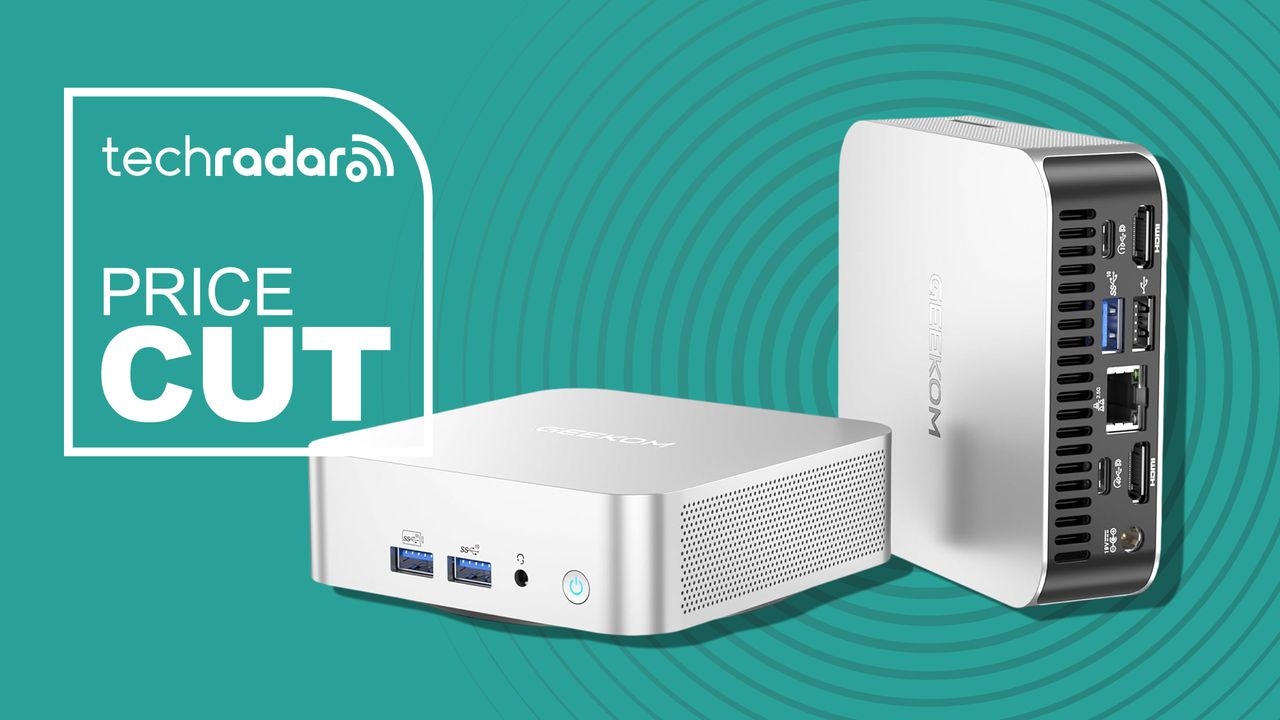
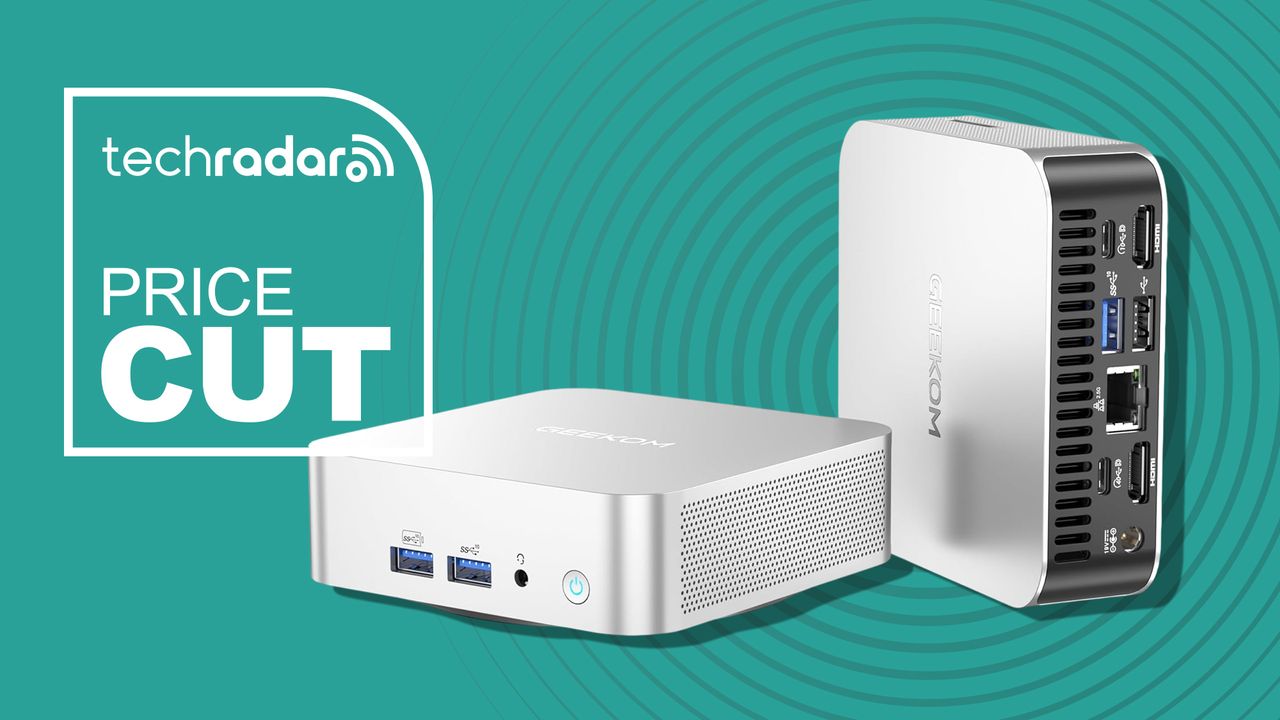
If desk space is tight but you still want solid performance for everyday work, a mini PC can be a great solution. I’ve found a terrific deal on the Geekom A6, now down to $549 (was $649) at Amazon.
Trimming a healthy amount off the asking price, that $100 discount brings it down to the same price as on the Geekom website but there it comes with a free $69 case.
In our tests, Geekom mini PCs have proved very strong, and in our rave review we found the A6 “packs in an impressive amount of power” and noted, “when it comes to performance it really is a cut above many other mini PCs of this size.” We also praised the “quality of the build and the style of the design which make it one of the best-looking mini PCs out there.”
In fact, our biggest issue was the original price, and this saving solves that.
Advertisement
Today’s top Geekom mini PC deal
Inside the compact aluminum chassis you get an AMD Ryzen 7 6800H processor paired with Radeon 680M graphics.
That delivers the kind of performance creatives and professionals need for editing photos, working with large documents, running multiple apps, or handling everyday production tasks.
Advertisement
You also get 16GB DDR5 RAM that isn’t soldered, which means upgrades are possible later if your workload grows, or you find a good deal on memory.
Storage starts with a fast 1TB PCIe 4.0 NVMe SSD, providing plenty of room for projects, media libraries, and software.
This tiny powerhouse runs at a modest 45W TDP, which helps keep noise and heat under control while still delivering steady performance throughout long work sessions.
With USB4, USB 3.2, and dual HDMI outputs available, this system can handle quad-display setups, giving you far more room to work efficiently, and it comes with 2.5Gb Ethernet and Wi-Fi 6E support.
Advertisement
At $549, this is one of the best mini PC deals I’ve found recently, and it’s a good choice for anyone looking for strong everyday computing power without committing to a bulky tower system.
For more top picks like this, these are the best mini PCs we’ve tested and reviewed.
Ofcom, the United Kingdom’s independent communications regulator, has launched an investigation into Telegram based on evidence suggesting it’s being used to share child sexual abuse material (CSAM).
The investigation was launched under the UK’s Online Safety Act to examine whether the social media and instant messaging (IM) service is complying with its illegal content safety duties, which require it to prevent CSAM from being shared.
Ofcom says it received evidence regarding the alleged presence and sharing of CSAM on Telegram from the Canadian Centre for Child Protection, and that it had also conducted its own assessment of the platform.
“In light of this, we have decided to open an investigation to examine whether Telegram has failed, or is failing, to comply with its duties in relation to illegal content,” Ofcom said.
However, Telegram denied Offcom’s accusations, saying that it “virtually eliminated the public spread of CSAM” on its platform since 2018.
Advertisement
“We are surprised by this investigation and concerned that it may be part of a broader attack on online platforms that defend freedom of speech and the right to privacy,” Telegram said.
Ofcom has also launched formal investigations into two teen chat sites (Teen Chat and Chat Avenue) over concerns that predators are using them to groom children and to check if the two services are taking all required steps to assess and mitigate these risks.
The UK’s independent online safety watchdog is also probing X under the UK’s Online Safety Act over nonconsensual sexually explicit content generated using the Grok AI chatbot account.
If it identifies compliance failures, Ofcom can impose fines of up to £18 million or 10% of qualifying worldwide revenue (whichever is greater). Additionally, in serious cases of non-compliance, it can request a court order effectively banning the offending platform in the United Kingdom.
Advertisement
“In the most serious cases of non-compliance, and where appropriate given risks of harm to individuals in the UK, we can seek a court order to require third parties to take action to disrupt the business of the provider,” Ofcom noted.
“This may require third parties (such as providers of payment or advertising services, or Internet Service Providers) to withdraw services from, or block access to, a regulated service in the UK.”
AI chained four zero-days into one exploit that bypassed both renderer and OS sandboxes. A wave of new exploits is coming.
At the Autonomous Validation Summit (May 12 & 14), see how autonomous, context-rich validation finds what’s exploitable, proves controls hold, and closes the remediation loop.
On Monday, Valsorda finally channeled years’ worth of frustration, fueled by the widely held misunderstanding, into a blog post titled “Quantum Computers Are Not a Threat to 128-bit Symmetric Keys.”
“There’s a common misconception that quantum computers will ‘halve’ the security of symmetric keys, requiring 256-bit keys for 128 bits of security,” he wrote. “That is not an accurate interpretation of the speedup offered by quantum algorithms, it’s not reflected in any compliance mandate, and risks diverting energy and attention from actually necessary post-quantum transition work.”
That’s the easy part of the argument. The much harder part is the math and physics that explain it. At its highest level, it comes down to a fundamental difference in the way a brute-force search works on classical computers versus the way it works using Grover’s algorithm. Classical computers can perform multiple searches simultaneously, a capability that allows large tasks to be broken into smaller pieces to complete the overall job faster. Grover’s algorithm, by contrast, requires a long-running serial computation, where each search is done one at a time.
“What makes Grover special is that as you parallelize it, its advantage over non-quantum algorithms gets smaller,” Valsorda said in an interview. He continued:
Advertisement
Imagine it with small numbers, let’s say there are 256 possible combinations to a lock, A normal attack would take 256 tries. You decide it’s too long, so you get three friends and you each do 64 tries. “That’s the classical parallelization. With Grover you could in theory do √256)=16 tries in a row, but if that’s still too long and you again look for help from three friends. Each has to do √256/4)=8 tries.
So in total you do 8*4=32 tries, which is more than the 16 you would have done alone! Asking for help to parallelize the attack made the attack slower overall. Which is not the case for classical attacks.
Of course the numbers are way larger, but if we apply any reasonable constraint on the attacker (like having to finish a run in 10 years), the total work becomes so much more than 264.
Also, 264 was never the right number, because that pretends you can do AES as a single operation on a single qubit. This is somewhat orthogonal. The combination of these two observations turn the actual cost into 2104 give or take, which is well beyond the threshold for security.
Sophie Schmieg, a senior cryptography engineer at Google, explained it this way:

























































You must be logged in to post a comment Login