A veteran diagnosed with stage 4 colon cancer was turned away by the Department of Veterans Affairs after being told he makes too much money to qualify for healthcare benefits, he has claimed.
Brewer joined the Army at 20 years old and served in the 82nd Airborne Division as a paratrooper. He was stationed in North Carolina and worked as an administrative specialist. After receiving an honorable discharge, Brewer received his degree in social work and spent two decades working in pharmaceutical and medical sales, WKYT reported.
In March, Brewer, who lives in Kentucky, was diagnosed with cancer. “It was very difficult. It was scary at first, but I think I was more scared for my family,” Brewer told WKYT.
Advertisement
While Brewer has not started chemotherapy, he is currently facing the high costs of other procedures and a monthly ostomy bag. He says he went to the VA office for healthcare support but was told he makes too much money to qualify for benefits.
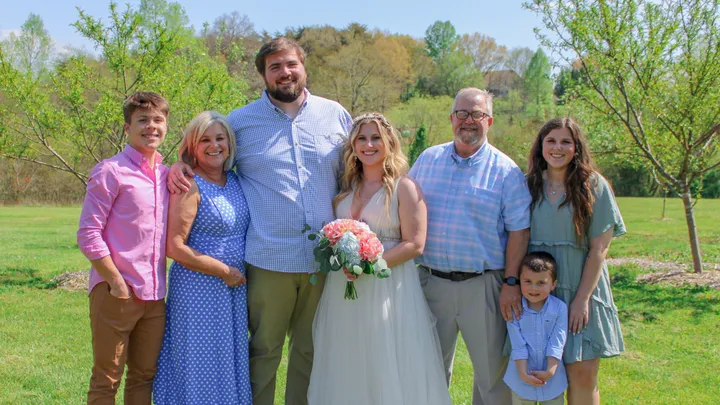
Chuck Brewer, an Army veteran, says he was told he makes too much money for the Department of Veteran Affairs to help him cover his stage 4 colon cancer treatment (GoFundMe)
The VA does support veterans and their families but specific benefits vary by state. According to the VA website, a person’s eligibility for care is determined by their income and other factors.
Households which earned $63,086 or more in 2025 may not be eligible based on income but some veterans may still qualify for care based on their VA disability rating, according to the website. The Independent has contacted the VA for comment.
Brewer’s sister, Glena Doorlag, started a GoFundMe page to try to pay for his medical bills, writing that “after multiple surgeries and cancer treatments, the cost will be astronomical, something they cannot afford.”
She continued: “Chuck is the kind of man people naturally gravitate toward. The one who can make you laugh when you need it most and remind you, without even trying, what a good heart looks like. Chuck has spent his life showing strength, resiliences, and quiet courage. But beyond his service, he is, first and foremost, a devoted family man.”
Advertisement
“He is a loving son, a loyal brother, a dedicated husband to his wife Becky, and a proud father to Tiffany, Kelsey, Kaitlyn, and their 8 year old son Cash. And grandfather to Colton,” the fundraiser adds.
The fundraising page had received $16,000 in donations by Tuesday. “I’m appreciative, regardless if we don’t earn another dollar,” Brewer said.
The veteran said it was overwhelming to have people give back to him. “Everybody struggles a little bit financially and they’re struggling too, but they still decided to give, so it means a lot,” he said.
In his first public hearing, Donald Trump’s nominee for Federal Reserve chair Kevin Warsh faced several rounds of questions about his loyalty to the president as Trump looks to reshape a powerful global economic institution.
Trump has pushed for criminal investigations into current chair Jerome Powell over renovations at the central bank’s home in Washington, D.C., while the president continues to demand lower interest rates even as fuel prices surge with the U.S. war with Iran that has upended global markets. Warsh has denied that his nomination hinged on the president’s demands, but he repeatedly dodged questions from the Senate Banking Committee about Trump’s politicized overhaul of the Fed.
Follow for the latest from the Trump administration
3:45 p.m. — Kennedy grilled by Republican and Democratic senators over women’s health
Advertisement
Trump’s Health Secretary Robert F. Kennedy Jr. came under fire from Democratic lawmakers last week over disparities in Black maternal health that he appeared to dismiss. Today, he’s hearing from Republican and Democratic women over threats to reproductive healthcare and how the administration’s gutting of federal funding has threatened women’s health.
Health Secretary Robert F Kennedy Jr is in the middle of a series of congressional hearings to defend his budget and chaotic year in office (Getty Images)
“The administration’s emphasis on canceling diversity-related grants has resulted in less research aimed at women’s health,” Republican Sen. Susan Collins said during a Senate Appropriations subcommittee hearing. “It is well established that disparities in women’s health exist.”
“You’re right,” Kennedy said. “We have the worst maternal health outcomes of any of the Western countries and Black women are 2.6 times more likely. A college-educated Black woman is two and a half times more likely to die from maternal health mortality than a college-educated white woman.”
Asked if he has talked with officials about screening for mifepristone in wastewater, Kennedy said he wants the government to look for “pharmaceutical drug artifacts” in water.
Advertisement
He said he has “no plans to do that at the moment” when it comes to screening wastewater to track the use of abortion drugs.
2 p.m. — RFK defends Trump response to measles outbreaks
Kennedy wrapped up the first of two congressional hearings on Tuesday as the nation’s top health official justifies his budget to lawmakers and defends his chaotic year in office.
In front of a House Energy and Commerce subcommittee Tuesday morning, the vaccine skeptic defended the administration’s response to a surge in measles outbreaks within the last year, saying that low vaccination rates predated his time in office. There have been more than 1,700 measles cases in the U.S. so far this year.
Advertisement
Next, Kennedy will appear before a Senate appropriations subcommittee to review his agency’s budget request, which would slash the agency by 12 percent as lawmakers wrestle with changes to vaccine policy, rising healthcare costs and the loss of thousands of public health employees.
Kevin Warsh, Trump’s nominee to replace Jerome Powell as chairman of the Federal Reserve, faced a first public hearing for the role (Getty Images)
12:35 p.m. — Warsh dodges questions on Trump trying to fire Lisa Cook and Powell
The president’s attempt to fire Fed governor Lisa Cook “would weaken, if not shatter, the independence of the Federal Reserve,” according to Trump-appointed Supreme Court Justice Brett Kavanaugh.
Warsh said it wouldn’t be “appropriate” to weigh in when asked by Sen. Angela Alsobrooks whether he would defend his potential future colleague.
“If I stand for anything it’s that the Fed should stay in its lane,” he told the Senate Banking Committee.
Advertisement
A legal challenge over Trump’s attempt to remove Cook from the board is pending before the Supreme Court. Warsh said “it’s not appropriate for me to weigh in on that” as he “could be a party to that matter.”
Warsh also avoided answering whether he agrees that the laws requires Powell to remain as chair until his replacement is confirmed.
Powell’s term as chair ends May 15, and his term as a board member ends January 31, 2028..
Warsh has denied that Trump has personally pushed him to lower interest rates when he’s confirmed as Federal Reserve chair despite reports suggesting the command was essential to his nomination (Getty Images)
12:08 p.m. — Warsh denies Trump ever asked him to lower interest rates
“The president never asked me to commit to interest rate cuts,” Warsh said under questioning from Democratic Sen. Ruben Gallego. “He didn’t ask for it, he didn’t demand it, he didn’t require it, and nor would I have done so.”
Warsh, a former Morgan Stanley banker who served as a Fed governor during the 2008 financial crisis, would likely be the wealthiest Fed chair if confirmed. According to financial disclosures, his fortune tops more than $100 million, including assets in AI and cryptocurrency.
Warsh told the committee that the Fed’s independence in setting interest rates is “essential” — but before the hearing, Trump told CNBC that he would be disappointed if Warsh doesn’t immediately cut rates.
Trump to read Bible passage one week after posting AI image of himself as Jesus
Advertisement
The president will virtually participate in the “America Reads the Bible” event Tuesday evening and read a passage from the Old Testament roughly one week after he drew bipartisan ire for posting an AI-generated image of himself as a Jesus Christ-like figure.
Read more:
11:40 a.m. — Warren’s questions into Warsh’s alleged Epstein ties follow DOJ files release
Senator Elizabeth Warren’s questions about Warsh’s alleged ties to dead sex offender Jeffrey Epstein were previewed in her letter to Trump’s Federal Reserve chair nominee last month, when she asked for details about the extent of his connections to the wealthy and well-connected abuser.
Advertisement
Emails sent to or from an account associated with Epstein released as part of the Justice Department’s publication of millions of files stemming from investigations showed that Warsh and his wife were invited to events that Epstein helped organize. It’s unclear whether they attended, and he has not been accused of wrongdoing.
In a series of heated exchanges with Warren, Warsh said he would divest $100 million in investments but refused to answer whether they involved Epstein, China orTrump and his companies.
“Sounds like your fight might not be with me, but with the Office of Government Ethics,” Warsh said.
Senate Banking Committee’s top Democrat Elizabeth Warren grilled Warsh on his assets and loyalty to Trump (Getty)
Warren, testing Warsh’s “independence and courage” against political interference, then asked him point blank whether he believes Trump won the 2020 presidential election.
“Um, we try to keep politics if I’m confirmed out of the Federal Reserve,” he said. “Senator, I believe that this body certified that election many years ago.”
Advertisement
“That’s not the question I’m asking,” Warren fired back.
Asked if there was anything Warsh disagreed with Trump about, he said he didn’t think he came from “central casting.”
If he did, he would be “older, grayer” and smoking a cigar, he said.
Warren, dismissively, called his answer “cute.”
Advertisement
“If you don’t answer the questions, you don’t have the courage and you don’t have the independence,” she said.
Republican Sen. Thom Tillis won’t vote to confirm Warsh as Fed chair unless the Justice Department drops a Trump-fueled criminal investigation into Jerome Powell (Reuters)
11:15 a.m. — Key Republican will confirm Warsh if DOJ drops Powell probe
Republican Sen. Thom Tillis, who has put his critical vote supporting Warsh on hold over Justice Department investigations into Powell, blasted DOJ over the probe but signaled he’s more than willing to support his nomination.
“If we put everybody in prison in federal government that had had a budget go over, we’d have to reserve an area roughly the size of Texas for a penal colony,” Tillis said. “The problem that I have here is that we had some U.S. attorney … thinking it would be cute to bring Chair Powell under an investigation just a few months before the position was going to be open.”
He urged DOJ to “get rid of this investigation so I can support your nomination.”
Advertisement
The only thing he found to be “the least bit odd” about Warsh is that he has “never seen an episode of Seinfeld.”
Pete Hegseth cancels ‘absurd’ flu vaccine requirement for ‘brave warriors’ in military
American service members will no longer be required to get a yearly flu shot under a new Defense Department policy described by Secretary of Defense Pete Hegseth as an effort to “restore freedom and strength to our joint force.”
Read more:
Advertisement
Warren accused Warsh of being a ‘sock puppet’ for Trump and his interests (Getty Images)
10:25 a.m. — Warren says installing Trump’s ‘sock puppet’ is a political tactic to ‘artificially juice the economy before midterms’
Warren, the committee’s top Democrat, warned that the president’s attempt to install a “sock pocket” at the Fed would be an “invitation for corruption and economic catastrophe.”
Trump has presided over “one economic failure after another,” with plummeting consumer sentiment and surging costs on fuel, housing and everyday goods in the wake of his “chaotic tariffs” and the Iran war, she said in her opening remarks.
With a dire economic outlook, Trump has “repeatedly and illegally attempted to take over the Fed” to solve his political problems, including installing a “sock poppet” to “artificially juice the economy” before midterm elections, she said.
“The Senate should not be aiding and abetting Trump’s takeover of the Fed,” said Warren, calling Warsh’s potential confirmation an “invitation for corruption and economic catastrophe.”
Stockton Council is considering a request from Cumbria Waste Recycling Ltd is to repurpose an existing industrial site to handle both hazardous and non-hazardous waste, including its treatment, temporary storage and transfer.
They intend to change their existing facilities at Seal Sands near Billingham into a “hazardous waste transfer and treatment facility which will include imports of both hazardous and non-hazardous liquid and solid wastes for treatment, temporary storage and transfer”.
The 1.85-hectare area is on the site of a former chemical processing and production facility.
Advertisement
Stephenson Halliday Ltd has submitted a screening request on behalf of Cumbria Waste Recycling (CWR), for the council to make a “judgment on the likelihood of the project giving rise to significant environmental effects”.
It says in its request: “CWR intend to repurpose much of the existing facility for the purposes of establishing a hazardous waste transfer and treatment facility.
This facility will receive, bulk, and treat both hazardous and non-hazardous waste arising from industrial customers within the Tees Valley area, as well as niche waste streams from specialist operators nationwide.
The request adds: “Under the proposed development, much of the existing site will be retained and repurposed for the purposes of waste storage, bulking, and processing. A new weighbridge will be installed on site for the acceptance of waste. The final design of the facility has yet to be determined.”
Advertisement
The developer says waste would be delivered by road, sampled, analysed then either accepted and stored, rejected and returned, or put into quarantine until discrepancies can be resolved.
“The site is fully capable of safely and securely accommodating hazardous wastes of differing properties within separate, dedicated areas,” says the request.
It says the development mostly involves accepting, bulking and transferring waste, “with almost negligible levels of hazardous waste chemical treatment planned for the future”.
It says none of the principal operations involve chemical treatment of waste, though the company is “exploring the treatment of small quantities of specialist waste”.
Advertisement
Wastes would be stored in five areas – the main warehouse, a flammable waste storage area, a secure storage area or two yards.
“Depending upon the nature of the waste, the site will facilitate waste treatments on suitable, compatible wastes in order to separate, bulk and repackage the waste for transfer offsite to a suitably licensed waste management facility where the waste undergoes additional treatment, is subject to recovery or is subject to disposal,” the developer said.
It is proposed that the facility will deal with about 90,000 tonnes of waste per year for bulking and transfer, about 50,000 tonnes for producing waste-derived fuel, and about 15,000 tonnes of mixed oil and water in liquid wastes. About 10 HGVs would access the facility from Seal Sands Road per day between 6am and 6pm.
The statement adds: “Vehicle movements to and from the site will be limited to normal daytime operating hours and restricted to a 5mph speed limit when on site.
Advertisement
“Waste treatment, including bulking of wastes, will take place inside enclosed tanks and enclosed buildings. The site is constructed of impermeable surfaces with a contained drainage system, which would contain any spillage and prevent its discharge into the environment.”
The developer says the proposed facility “would not result in any significant landscape and visual impacts” and “there will be no adverse traffic and transport impacts”, nor significant impact from noise, dust or smells. It says the treatment facility would employ about 15 people full-time and would support local businesses, suppliers and the local economy.
It adds: “The nature of the operations and variety of wastes to be accepted at the site means that odour may be generated.
“However, the emission of odour will be controlled via an odour management plan that has been prepared as part of the environmental permitting regime, which sets out how odours will be prevented and minimised.”
Advertisement
It asserts the proposed development would make “relatively minimal changes” to an existing industrial site, with no nearby residents which could be affected. It argues the plan will not need an environmental impact assessment in the planning process.
Trump claimed he did not want to extend the ceasefire hours before doing so
Carrington Walker Live News Journalist
21:55, 21 Apr 2026
US President Donald Trump has extended the ceasefire in Iran once more, announcing the move just hours before the deadline was due to expire after he was reportedly urged to “hold our attack”.
The President released a statement claiming the extension was necessary because the “Government of Iran is seriously fractured”. Trump had previously told Iran that the “whole country is going to get blown up“.
Advertisement
Posting on Truth Social, Mr Trump wrote: “Based on the fact that the Government of Iran is seriously fractured, not unexpectedly so and, upon the request of Field Marshal Asim Munir, and Prime Minister Shehbaz Sharif, of Pakistan, we have been asked to hold our Attack on the Country of Iran until such time as their leaders and representatives can come up with a unified proposal.
“I have therefore directed our Military to continue the Blockade and, in all other respects, remain ready and able, and will therefore extend the Ceasefire until such time as their proposal is submitted, and discussions are concluded, one way or the other.”
This post comes just hours after Trump declared the US military was “raring to go” ahead with fresh strikes on Tehran if progress was not made in the Pakistan talks. Speaking with CNBC, the US leader insisted he did not want to extend the two-week truce.
Advertisement
“I don’t want to do that. We don’t have that much time,” he said, adding, “We’ve taken out their navy, we’ve taken out their air force, we’ve taken out their leaders.”
Want to see more of the stories you love from Belfast Live? Making us your preferred source on Google means you’ll get more of our exclusives… To add Belfast Live as a preferred source, simply click here.
There are now just eight celebrity contestants remaining on the ITV reality show
I’m a Celebrity viewers were “heartbroken” as Beverley Callard made a shock exit from the jungle.
Advertisement
The Coronation Street actress had to leave the ITV reality show on medical grounds after becoming unwell.
In February this year she revealed that she had been diagnosed with breast cancer, telling fans she was in the “early stages”. However, the show was filmed last September.
As she left the jungle, Bev told her surprised campmates that medics had said she had to leave the series.
“Hi guys, I’ve just got something to tell you all,” they said. “I didn’t feel very well this morning… and the medics have advised I can’t return to camp. I’ve got to go home.” “I don’t want to go,” Bev added. “I’m absolutely gutted. I wanted to finish.”

The unexpected withdrawal means eight contestants remain in the competition, where they will vie to be crowned an I’m a Celebrity ‘legend’ during Friday’s (April 24) live final.
The rest of the campers were left reeling from the news, which came not long after David Haye and Gemma Collins exited the jungle, with Adam Thomas breaking down in tears in the Bush Telegraph.
Advertisement
Viewers were also upset, with one posting on X: “Feel so sorry for Bev bless her, she has been amazing!!”
“Bev crying is gonna make me cry,” said another. “Aw my heart’s breaking for Bev,” another fan wrote on the platform, which was formerly Twitter.
Another said that seeing the star in tears was “heartbreakng” and others posted heartbroken emojis on social media.
Advertisement
“I can’t deal with I’m a Celeb,” admitted another viewer on X, adding a string of crying emojis.
“Devastated over Bev, she is a queen,” said another. “That was really sad, Beverley going,” admitted someone else, as others noted that she had come actross as a “lovely person” during her stint in the camp.
“So gutted,” said another viewer, as somebody else posted: “What a woman.”
A San José teen is behind bars after prosecutors charged with murder in the death of his two-year-old foster brother, alleging the toddler was repeatedly sexually and physically assaulted after being placed in a foster home earlier this year.
The suspect, whose name was not revealed, was 17 at the time of the alleged abuse of Jaxon Juarez. The toddler died on April 9, just days after police found his “small, bruised and battered body” on Easter Sunday at the home where the suspect lived. An official cause of death has not been released.
The suspect, who is also Jaxon’s cousin, according to KQED, is currently in juvenile court, but District Attorney Jeff Rosen is seeking to have the case transferred to adult court. He recently turned 18, officials said.
“The rape and murder of a child are two of the most serious crimes that we prosecute,” Rosen said after the suspect’s first court appearance. “These crimes should be heard in our most serious criminal courts.”
Advertisement
The suspect was initially charged with multiple counts of sexual assault, including forced sodomy, but on Monday, prosecutors added counts including murder, child assault causing death and additional sexual assault allegations. Among them, he is accused of placing a hair tie around the toddler’s neck, causing significant injury.
A San José teen has been charged with murder in the death of his toddler foster brother, Jaxon (KNTV)
Jaxon had been living with a relative, Bridget Michelle Martinez, the suspect’s mother, for only a few weeks before his death. Prosecutors said they are continuing to investigate whether additional charges may be filed against others, including potential accountability within the county system.
“This is not the first time that this has happened,” Rosen said. “People in the public, and myself as the DA, would like to know who is responsible criminally, civilly, morally, ethically, systemically.
“Why are horrible and tragic crimes happening to children in the care and custody of the Department of Family and Children’s Services over and over and over again?” he added.
Jaxon is the third child to die in recent years while under the supervision of Santa Clara County’s Department of Family and Children’s Services, according to Rosen as reported by KQED.
Advertisement
“This is the third child in the past couple of years under the care and custody of the Department of Family and Children Services who has been murdered,” Rosen said. “Change needs to come, and it needs to come fast – and it needs to happen now.”
County Spokesperson Peter Gallotta told ABC7 in a statement the Department of Family and Children Services is conducting its own investigation while requesting that the California Department of Social Services undertake its own.
“The county is committed to swiftly investigating every aspect of this horrific tragedy and publicly sharing the results of these investigations when available and to the extent allowable by law,” he said.
Both San José police and county officials are investigating Jaxon’s death, and the state Department of Social Services has been asked to conduct an independent review.
Advertisement
Before his death, Jaxon had lived with his parents until his mother, Brianna Burton, died last year. He then entered the foster system and then was placed with a maternal grandparent. The grandparent was ordered to bring the child to South Bay for regular visits with his father, a requirement that prevented the grandparent from continuing to serve as a guardian, KQED reported.
Family members say they had asked for Jaxon to be placed with relatives in Arizona but were denied. In February, Jaxon was transferred to live with Martinez, despite records showing that she was convicted of felony child endangerment in 2014. It remains unclear whether the department was aware of her history or how the placement was approved.
“It is completely unacceptable,” Jaxon’s aunt, Riley Wallace, said last week. “They did not protect a child, and that’s their job, that’s what they took the child for, to protect him. And they failed him so terribly.”
Wallace said the family plans to sue, arguing Jaxon should never have been placed in the home.
Advertisement
“He did not deserve this,” said Evangeline Dominguez-Estrada, a friend of Jaxon’s late mother, speaking outside court. “He deserved to be protected. He deserved to be cared for. Every child deserves that. They need us.”
The suspect is scheduled to return to court May 21, when a judge will decide whether the case should be moved to adult court.
The fairytale of Leicester City winning the Premier League at odds of 5000/1 is one of the greatest stories ever seen in English football.
But just a decade on from Claudio Ranieri’s men making history and Andrea Bocelli performing Nessun Dorma as they lifted an improbable title, the Foxes will find themselves playing League One next season after their relegation from the Championship was confirmed.
Leicester had to beat promotion-chasing Hull City on Tuesday to keep their slim survival chances alive, but a 2-2 draw at the King Power Stadium means they will drop down to the third tier for just the second time in their 121-year league history.
It confirms a remarkable fall from grace for the 2015-16 Premier League champions, who were hit with a six-point deduction earlier this season for breaching financial rules. The club had bid to overturn the penalty, but an independent appeal board upheld the punishment.
Advertisement
Leicester are the first former champions of England to drop into the third tier since Leeds United were relegated to League One in 2007. The Foxes were relegated from the Premier League for the second time in three years last season, but this has been a troubled campaign with just one win in their last 18 Championship fixtures.
Leicester had more success following their Premier League title victory and reached the Champions League quarter-finals the following season. Under Brendan Rodgers, Leicester won the FA Cup for the first time in 2021 when they defeated Chelsea at Wembley, and came close to a return to the Champions League, finishing fifth two years in a row.
They paid the price for a dismal 2022-23 season and were relegated to the Championship, seven years on from lifting the title, with Everton staying up ahead of them on the final day. They bounced straight back, winning the Championship under Enzo Maresca, but were relegated again last season, with Ruud van Nistelrooy unable to stop their slide.
They appointed QPR boss Marti Cifuentes before the start of the season but he was sacked in January and their form has not improved under his replacement Gary Rowett. Even without the six-point deduction, Leicester would still be in a survival scrap with Blackburn Rovers and would be two points from safety with two games remaining.
When evolutionary biologist Joseph Popp coded the first documented piece of ransomware in 1989, he had little idea it would become a major criminal business model capable of bringing economies to their knees.
Popp, who worked for the World Health Organization at the time, wanted to warn people about the dangers of ignoring health warnings, poor sexual hygiene and (human) virus transmission.
In 1996, two Columbia University computer scientists published a paper explaining how criminals could use more sophisticated versions of Popp’s scheme to mount large-scale extortion operations. At the heart of this was malicious software that could be used to encrypt, block access to or steal a person or organisation’s files and data.
Advertisement
However, two preconditions still had to be met for ransomware to become a feasible criminal business: communication channels that were difficult to monitor, and a payments process outside financial regulation.
The Tor protocol, released by US intelligence services to protect their covert communications, solved the first problem in 2004. Cryptocurrencies solved the second – in particular, when bitcoin cash machines started appearing in North American cities from 2013.
Today, artifical intelligence makes malware coding and crafting convincing phishing-emails in any language simple. And the latest model in Anthropic’s AI system, Claude Mythos, recently proved more effective at hacking into computer systems than humans.
As an expert in extortive crime, I am increasingly concerned about public and political apathy to the threats posed by ransomware. To better understand these, it’s worth tracing its evolution over the past two decades – and how improvements in computer security and law enforcement, plus changes in data regulation, have led to new criminal strategies each time.
Advertisement
Cut out the middlemen
The first generation, which came to global attention in the mid-2010s, was known as “commodity ransomware”. A pioneering example, Cryptolocker, was developed by Russia-based hackers who infiltrated hundreds of thousands of computers, seeking to cut out the middlemen previously needed to commit financial fraud. They proved that a large majority of their victims would happily pay a small ransom to restore data that had been locked by their malware.
As both competent and incompetent hackers piled into this new market, victims shared information about rogue operators and put them out of business. This led to the second generation of ransomware such as Ryuk, which emerged in 2018.
In this phase, criminals abandoned the indiscriminate “spray-and-pray” approach in favour of targeting individual cash-rich businesses. They would set an individual ransom, negotiate with the company, and even offer to help with decryption if paid. Fast-rising ransoms more than compensated for this increased administrative effort.
In response, many companies began investing in multi-factor authentication, better threat monitoring, advance warning systems and software patches for known vulnerabilities.
Advertisement
However, these security benefits were soon offset by the impact of COVID on work practices across the world. The pandemic led to widespread remote working, with many people using unsecured devices and connections that were vulnerable to cyber-attack.
A multibillion-dollar industry
The next ransomware innovation was driven by the emergence of back-up systems that enabled companies to restore encrypted files without the criminals’ help. This was coupled with the emergence of tighter data privacy regulation such as GDPR in Europe and the UK.
Invented in 2019, third-generation ransomware weaponised these regulations, which threatened firms with massive fines if confidential data about clients or staff was revealed. The criminal gangs now sought out and exfiltrated an organisation’s most sensitive files, then threatened to publicise them through dedicated dark web leak sites.
This so-called double-extortion model – encrypting an organisation’s data while threatening to make it public – brought many businesses back to the negotiation table.
Advertisement
Ransomware had become a multibillion-dollar industry – with the Conti gang, sheltered by Russia and employing hundreds of people, among the key players setting new records for ransomware demands. Its attacks on critical infrastructure and hospitals saw it sanctioned by the UK government in 2023.
Video: BBC News.
This new approach forced many governments to row back on imposing hefty fines for data breaches, since many were the result of criminal attacks. Meanwhile, new initiatives by law enforcement – supported by the private sector – targeted and broke up the largest and most egregious ransomware gangs.
Today’s fourth generation of ransomware, building on the latest AI technology, looks nimbler and slimmed-down in comparison. Anyone who gains access to a network can lease weapons-grade malware on the dark web without forming long-term ties with a particular gang.
Advertisement
Advanced AI-based hacking tools make ransomware accessible to many more criminals and politically motivated hacktivists. And around one-quarter of breaches still result in ransom payments. For criminals sheltered by their governments, only the digital infrastructure is at risk of being taken down by western law enforcement.
Lessons not learned
While coverage of Claude Mythos suggests even the most sophisticated cyber defences could now be vulnerable, the troubling reality is that many individuals and organisations are still using out-of date, unpatched or only partially upgraded software. This means even early-generation ransomware techniques are still lucrative.
While Popp sent out his floppy discs to promote better sexual hygiene, today’s poor cyberhygiene is leaving many public and private networks open to malware attacks. The intended lesson of his original ransomware caper – be vigilant and properly heed health warnings – has still only been partially learnt in the digital world.
Many western societies appear to have grown accepting of criminals leaching on business conducted on the internet. Not even a steady stream of human fatalities, caused by attacks on hospitals and medical providers, has generated the level of response required to stamp out this dangerous threat.
Advertisement
The hope that governments sheltering cybercriminals can be encouraged (or forced) to stop them targeting critical national infrastructure appears increasingly fragile amid current geopolitical tensions. At all levels of society, we need to get smarter about cyber defence.
‘It’s little things like going out for a meal and not having to worry about where you’re sitting or going on an aeroplane and not worrying, if you’re in the middle seat, about encroaching on anyone else.’
This article contains affiliate links, we will receive a commission on any sales we generate from it. Learn more
Advertisement
A Scottish woman who shed more than half her body weight has credited small, straightforward lifestyle changes with delivering a remarkable transformation – and not skinny jabs. Karen Heffernan, who lives just outside Glasgow, took action following what she described as ‘a bit of a health scare and a bit of a difficult conversation with a surgeon.’
Rather than counting calories, she turned to a fitness app to guide her through a series of gradual, incremental changes and, over roughly 18 months, she lost 14 and a half stone (94kg) — more than half her starting weight of 26 and a half stone.
Advertisement
She says both physically and mentally she’s in the best shape of her life, adding: “I can’t believe it’s actually been so simple. I’ve not felt deprived along the way, my motto just now is ‘delay don’t deny.’ You can have the treats, you have the yin and the yang, you build things up. This isn’t through surgery, it’s not through medication or any of that, some vitamins along the way, yes, but good food, good exercise, good sleep and motivation to keep you going along the way.”
READ MORE:
She described how her health overhaul had transformed her day-to-day existence, boosting her energy levels alongside a wealth of other benefits, adding: “It’s little things like going out for a meal and not having to worry about where you’re sitting or going on an aeroplane and not worrying, if you’re in the middle seat, about encroaching on anyone else.”
Despite her impressive weight loss, Karen has avoided the issue of loose skin, which she attributes to intermittent fasting. Not only did this approach support a healthier path to losing weight, but research from Cambridge University also indicates that it carries anti-inflammatory properties, which contribute to skin renewal and elasticity.
Advertisement
Fitness and wellbeing apps have surged in popularity over recent years, with a notable spike during the pandemic as people sought ways to keep active throughout lockdown. From meal-tracking tools such as MyFitnessPal and LoseIt to digital workout platforms like Hevy, there is now a vast array of options to help people keep their fitness goals within easy reach.
The Simple app brings together the best features of many of these platforms into a single package, offering fitness options spanning strength training and cardio to chair yoga, alongside a range of cutting-edge tools. These include NutriScanner, which assesses the nutritional content of meals using just a photograph, and an intermittent fasting tracker for those looking to swap calorie counting for this widely popular method – also central to Michael Mosley’s 16:8 plan, which aims to rev up metabolism by adjusting mealtimes.
There is also an AI-powered assistant called Avo, on hand to offer guidance and respond to queries throughout the process. The Simple app is currently offering 80% off with code REACH at checkout. Upon signing up, users complete an online questionnaire about their goals and preferences regarding diet and exercise. This information is used to create a fully personalised plan tailored to each individual’s needs and schedule.
Karen explained: “I started small, I found the intermittent fasting lifestyle, did a lot of research and I gradually built things up. Simple was a great way to track the fasts that I was doing and gives you tips along the way. I also introduced Avo, which was great in giving you some tips for health and nutrition and making recipes.
Advertisement
“One of my first tips is to just keep going. Guilt? Get it out the window. There’s always the next day where you can start again and get on the journey. Exercise is really important. Now I do core stability, I’m doing pilates and you can’t stop me from walking. I take the family on little walks after a meal.”

Karen is among more than 17 million users globally who have downloaded the app to help boost their fitness levels. The Simple Life App holds an impressive average rating of 4.3 out of 5 on Trustpilot, based on more than 28,000 reviews.
One five-star reviewer said they ‘couldn’t say enough good things about this app,’ adding: “Love this app. It’s teaching me how to make eating healthy and being active a lifestyle that I can continue on my own. Love the workouts that I can adjust from low to high depending on my time and energy. Logging food and water is easy, as well as using their AI to get recipes from a list that I have in my pantry and fridge to scanning menus at restaurants to help me choose the best option.”
A second reviewer praised Avo for helping keep her motivated, adding: “The coach is helpful. Also, when I fall off track the coach doesn’t make me feel like I failed the day. It is very encouraging and helps keep me motivated and focused.”
Advertisement
Not everyone is won over, however. One three-star reviewer commented: “I feel tied to my phone. It’s not good for me.”
Yet that same portability proved to be a major selling point for another user, who described it as ‘one of the best weight loss and lifestyle apps I’ve ever used,’ adding: “It’s the best culmination of evidence based strategies (fasting, Mediterranean diet, mindfulness, etc) plus the power of AI, which is like having a personal health coach or therapist in your pocket. Also, I love that tracking is so easy and more focused on the quality of food choices vs cumbersome portion size and nutrition tracking like programs of the past.”
The Simple app can be downloaded on Android and iOS devices and is 80% off by using the code REACH at checkout.
Real simple users are featured who have been compensated for their honest testimonials. Results may vary.
When Donald Trump deported a group of Venezuelan nationals to El Salvador in 2025, it was the fulfilment of a long-held wish. Across both of his administrations Trump has pushed officials to find ways to brutalise immigrants, particularly those who are undocumented, believing that doing so will deter others from making the trip.
The Venezuelan nationals were destined for El Salvador’s Terrorism Confinement Center, known as Cecot. When they arrived, according to a Human Rights Watch report, they were subjected to systematic beatings, sexual abuse and psychological duress.
The Trump administration amplified reports of conditions in the prison. Trump’s former homeland security secretary, Kristi Noem, for example, filmed a video inside Cecot in 2025 in which she thanked El Salvador for “bringing our terrorists here and incarcerating them”.
Trump’s deportations were a chilling sign of how easy it is for US presidents to sidestep the constitution. If Cecot were in the US, it would be recognised as a site of illegal abuses. The constitution’s protection against “cruel and unusual punishments” would cause judges to order it shut down – and it is likely that political outrage would not cease until that order was followed.
Advertisement
Yet by making an agreement with El Salvador’s president, Nayib Bukele, Trump managed to get around these legal and political obstacles. In a recent paper, I explored how Trump’s deportations are part of a broader pattern of what I call “presidential extra-territorialization” – American presidents acting in or through a foreign jurisdiction to circumvent the US constitution.
There is a long-term pattern of cooperation between presidents from both the Republican and Democratic parties and the leaders of foreign countries. It is a pattern that could have grave implications for the future of US democracy.
Donald Trump meeting with Nayib Bukele at the White House in April 2025. Ken Cedeno / EPA
Outsourcing abuses
The ability of US presidents to engage in this outsourcing of abuses is rooted in two things. First, their control over the vast capabilities of the modern executive branch, with its array of spies, soldiers and law enforcement officials. And second, control over US diplomacy, which is enshrined in Supreme Court precedent.
In 1936, the court ruled that the president is “the sole organ of the federal government in the field of international relations”. This has commonly been interpreted as meaning US presidents cannot be constrained by the other branches of government when conducting diplomacy.
Advertisement
Combined, these factors mean presidents face fewer constraints in foreign affairs than in the domestic realm. They are able to avoid oversight from the courts and Congress by keeping agreements with other governments secret and by acting too fast to be stopped. If they can find just one foreign government willing to enable them, then what is not possible at home suddenly becomes possible overseas.
This lack of constraint was evident in Trump’s deportations. The US government sent the men to El Salvador despite a last-minute ruling by a federal court ordering their return.
And once they were in El Salvador, the Trump administation claimed it was no longer responsible for them and could not be expected to bring them back. The Supreme Court stepped in to pause further such deportations, but only weeks after the fact.
Other examples of the power and flexibility of extra-territorialization became apparent during the “war on terror”, when successive US presidents faced the issue of where to send detainees who were suspected terrorists.
If they were brought to the US, they would have had constitutional rights and could not have been tortured or indefinitely imprisoned. So presidents from Bill Clinton in the 1990s onward established a series of agreements with other countries to take and mistreat them instead.
Advertisement
After the 9/11 terrorist attacks in 2001, the Bush administration established a series of “black sites” in countries such as Poland, Thailand and Romania in which to hold detainees in secret. Abuses were committed directly by US agents, but still beyond the reach of US courts. The administration held prisoners at Guantanamo Bay in Cuba too, another place where the constitution’s reach was limited.
A detention facility at Guantanamo Bay in Cuba, pictured in 2008. Mandel Ngan / EPA
Presidents can also shift territory in response to attempts to constrain their actions. When the US Supreme Court ruled that detainees at Guantanamo Bay had to be afforded certain rights in 2008, the Obama administration transferred some detainees to Bagram Air Base in Afghanistan. Bagram was not covered by the Supreme Court ruling.
As a US court of appeals noted in 2010, the ability to shift territories so easily seemed to allow the administration to “switch the constitution on or off at will”.
Yet another example of extra-territorialization is the “Five Eyes” intelligence agreement between Australia, Canada, New Zealand, the UK and US. As part of this pact, members have been reported to spy on each other’s citizens – an outsourcing of surveillance that allows each to circumvent domestic privacy constraints.
The fact that Trump has engaged in extra-territorialization so openly, in contrast to previous administrations who tried to keep it hidden, is a stark warning.
Advertisement
Even when the president said he was exploring a proposal to send US citizens to Cecot in April 2025, he received little pushback from within his own party. This suggests they have accepted it as a legitimate strategy to achieve policy goals.
In the hyper-polarised atmosphere of contemporary US politics, extra-territorialization is threatening to become a regular tool of governance. To stop that from happening, it is vital to expose and confront it. But first we must understand it.
Cllr McDonald “brought knowledge and enthusiasm to all that she did”.
South Lanarkshire Council has said that Councillor Lesley McDonald sadly passed away after a short illness.
Advertisement
Cllr McDonald was chair of the Finance and Corporate Resources Committee at the time of her death, and had served as an elected member for Ward 20 (Larkhall) from 2007 to 2017, and again since 2022.
The council’s chief executive Paul Manning said: “Councillor McDonald was a hard-working councillor and much-liked across the political groups.
“I can say from years of experience of working with her, that she was extremely supportive as chair of the Finance and Corporate Resource, and she brought knowledge and enthusiasm to all that she did.
“Everyone who knew Lesley will know that this extended well beyond politics and the workings of the council – she was a real aficionado of the works of Robert Burns and a passionate supporter of the Scottish rugby team and Glasgow Warriors, among many other interests.
Advertisement
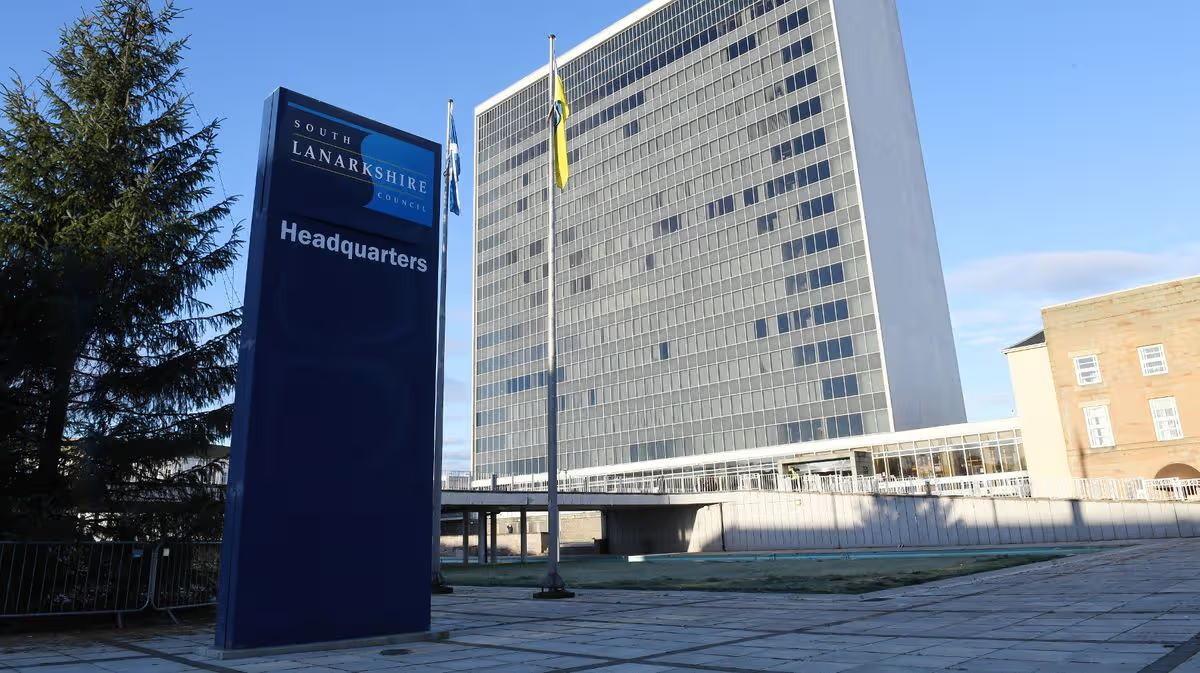
“Cllr McDonald will be greatly missed and as a sign of respect the council’s flags have been lowered to half-mast for two days. They will be placed similarly on the day of her funeral.”
Cllr McDonald was also chair of the Machan Trust in Larkhall.
*Don’t miss the latest headlines from around Lanarkshire. Sign up to our newsletters here.
And did you know Lanarkshire Live had its own app? Download yours for free here.
You must be logged in to post a comment Login