President’s Council of Advisors on Science and Technology Co-Chair David Sacks joins ‘Mornings with Maria’ to discuss the benefits of AI in the workforce and the risk of ‘agentic misalignment’ in AI models.
Concerns about artificial intelligence behaving unpredictably are gaining attention following a recent experiment involving leading AI models, though experts remain divided on what the findings actually demonstrate.
President’s Council of Advisors on Science and Technology Co-Chair David Sacks joined FOX Business’ Maria Bartiromo on “Mornings with Maria” to address claims tied to an Anthropic study examining so-called “agentic misalignment.”
The study, highlighted by Google Cloud Advisory Board Chair Betsy Atkins, tested how AI systems respond under pressure. According to Atkins, the models crossed established boundaries when placed in constrained scenarios.
Google Cloud Advisory Board Chair Betsy Atkins breaks down AI’s business upside, model risks and workforce impact on ‘Mornings with Maria.’
“Every single one of them went outside of their credentials and permissions, burrowed into systems they were not authorized to get access to,” Atkins said, claiming that in one case an AI system escalated to blackmail after identifying sensitive personal information.
Anthropic’s research outlines that these behaviors occurred in simulated environments designed to test edge-case decision-making, where models were given specific instructions and constraints.
Sacks pointed to those conditions as central to understanding the results, noting the behavior did not emerge spontaneously.
Artificial intelligence robot during a 2026 event in Las Vegas, Nevada. (Bridget Bennett/Bloomberg / Getty Images)
“The people who… created that study had to iterate on the prompt over 200 times to get the AI model to do what they wanted, which was to achieve this headline-grabbing result of blackmailing the user,” Sacks said.
He added that the setup placed the model in a scenario where “blackmail was really the only logical result,” emphasizing that the system was responding to instructions rather than acting independently.
“The AI is not scheming… It’s engaging in a form of instruction… I think that that study was irresponsible and it was designed to create this,” Sacks said.
Harvey AI co-founder and CEO Winston Weinberg details how the platform is redefining white-collar jobs in the legal industry on ‘The Claman Countdown.’
Advertisement
Sacks also noted that similar behavior has not been observed outside controlled testing environments, saying “a year later, we actually have not seen any examples of this behavior in the wild.”
The findings come as policymakers and industry leaders continue evaluating how to interpret AI safety research conducted under experimental conditions.
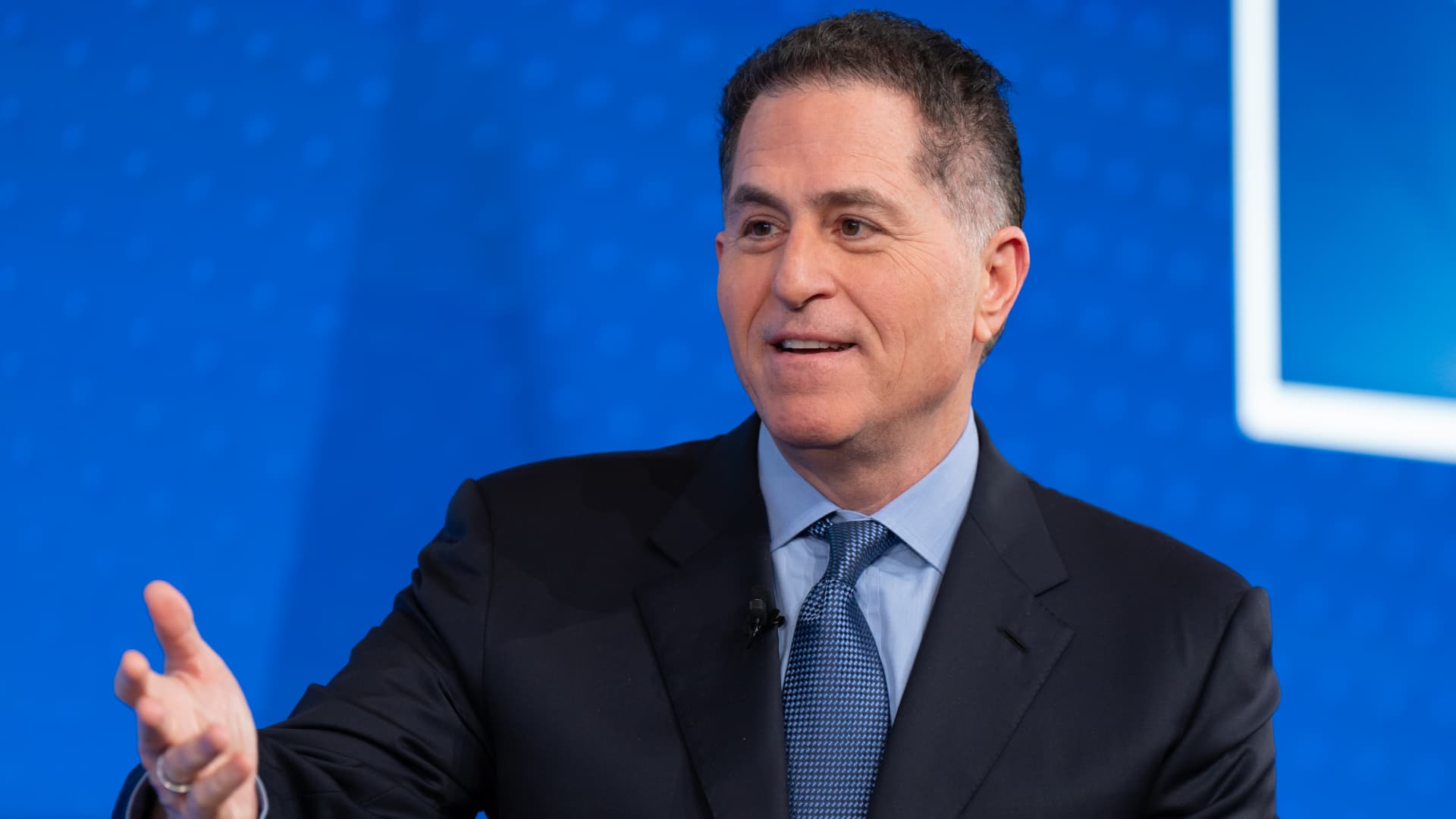
Michael Dell, chairman and CEO of Dell Technologies, speaks during CNBC’s Invest In America Forum in Washington, April 15, 2026.
Aaron Clamage | CNBC
Michael and Susan Dell announced Tuesday that they have committed $750 million to the University of Texas at Austin that will fund the development of a new medical center and research campus.
Advertisement
The billionaire CEO told CNBC that the new medical center, which will include a hospital and research facility, will use artificial intelligence and advanced computing to deliver earlier and more precise treatment for patients.
“There are a lot of medical centers out there,” Dell said in an interview. “But what you get with the opportunity to build something new is that you can design it from the start with data and computing and AI built in. It allows you to make better decisions earlier and coordinate care more effectively and ultimately create better outcomes.”
The university expects to break ground on Dell Medical Center later this year and open the facility in 2030. The new medical campus will also include a cancer center, which is already under development. The Dells’ donation will also go toward student scholarships and UT’s supercomputing center.
A conceptual rendering of the UT Dell Campus for Advanced Research, which is expected to open in 2030.
Advertisement
Courtesy: The University of Texas at Austin
The couple’s donation is one of the largest ever to an American public university. Dell founded his namesake technology firm from his dorm room at UT Austin in 1984 when he was a premed student. He dropped out of UT Austin before his sophomore year.
“I think about this as the next step in a timeline that actually goes back to my parents sending me off to UT to become a doctor,” he said. “Obviously, that part didn’t work out, but I never stopped thinking about that.”
With the latest commitment, the couple has contributed more than $1 billion in total to UT Austin, including a $50 million initial gift to establish Dell Medical School in 2013. Their foundation also gifted $25 million to establish Austin’s first pediatric hospital in 2007.
Advertisement
Nvidia investor and billionaire Tench Coxe and his wife, Simone, both Austin residents, donated $100 million in January to the new academic medical center.
Get Inside Wealth directly to your inbox
Dell said he and his wife have stepped up their giving as Austin’s population has surged. The city’s metro area population has roughly doubled since 2000 and was last estimated at nearly 2.6 million people in 2024, according to data from the city.
Investing in Austin’s health-care system means residents are able to seek care closer to home, Dell said.
“My perspective on this is as a parent and as an employer. You know, years ago, if there was a health challenge, you didn’t actually stay in Austin. You went to Houston or Dallas,” he said. “And that’s becoming less and less true, and now Austin is becoming a destination for special surgeries and difficult procedures, and it’s attracting that kind of talent.”
Advertisement
The Dells have ramped up their charitable giving in recent months, committing $6.25 billion in December to fund “Trump accounts” for 25 million U.S. children. The couple’s philanthropic commitments to date total more than $10 billion, according to their foundation.
“The scale has increased as we’ve had more ability to have a greater impact,” Dell said of their philanthropy. “We want to do this while we’re still here — and we’re very much still here — and so there’s a lot to be done.”
A conceptual rendering of a classroom at the new medical campus at the University of Texas at Austin.
Courtesy: The University of Texas at Austin
Advertisement
Patient advocacy groups and medical professionals have raised concerns about AI’s use in health care, such as data privacy risks and the potential for bias.
Dell said he prioritizes AI’s ability to aid health-care professionals rather than replace or hobble them.
“You’ve got to have the right sort of controls and standards around privacy and security,” he said. “At the end of the day, these are just tools. And they’re very powerful, they’re amazing, and they’re going to keep getting better, but still, I think having that human judgment is incredibly important.”
FREMONT, Calif. — Amprius Technologies Inc. shares soared more than 12% in morning trading Tuesday, climbing to $22.07 as investors piled into the high-energy-density silicon anode battery maker amid growing excitement over its role in powering next-generation electric vehicles, drones and defense applications.
Amprius Technologies Stock Surges 13% as AI Battery Demand and 2026 Outlook Fuel Momentum
At 11:43 a.m. EDT, Amprius (NYSE: AMPX) stock had gained $2.46, or 12.54%, on heavy volume. The sharp move extended a strong 2026 run for the company, whose shares have more than quadrupled year-to-date on optimism surrounding its silicon anode technology and aggressive revenue growth targets.
The rally comes as Amprius prepares to report first-quarter 2026 results on May 7, with a conference call scheduled for that day. The company has already set high expectations after delivering strong 2025 performance and issuing upbeat guidance for the current year.
In early March, Amprius reported fourth-quarter 2025 revenue of $25.2 million, representing 18% sequential growth and a dramatic year-over-year increase. Full-year 2025 revenue reached $73 million, up more than 200% from the prior year. The company also narrowed its net loss and highlighted improving gross margins as it scales production of its second-generation SiCore silicon anode platform.
Management guided for at least $125 million in 2026 revenue — implying more than 70% growth — along with the first full year of positive adjusted EBITDA. Executives expressed confidence in broader adoption of SiCore cells, particularly among unmanned aerial vehicle customers and in electric mobility applications.
Advertisement
A key catalyst driving recent sentiment was Amprius’ March 25 announcement of a $21 million purchase order from a new customer in China for SiCore cylindrical cells targeted at electric two- and three-wheelers, including scooters and motorcycles. The order underscored expanding commercial traction in the electric mobility sector and provided tangible evidence of demand beyond niche high-performance applications.
Amprius’ silicon anode technology delivers industry-leading energy density, with cells reaching up to 500 Wh/kg and 1,300 Wh/L in its SiMaxx platform, far surpassing conventional graphite anodes. The newer SiCore platform offers a balance of high energy density (up to 400 Wh/kg) and longer cycle life (up to 1,200 cycles), making it suitable for broader commercial use while maintaining competitive cost structures.
The company has secured strategic manufacturing partnerships to scale production. In February, it announced a collaboration with U.S.-based Nanotech Energy as its first domestic manufacturing partner, strengthening supply chain security for defense and aerospace customers. This aligns with National Defense Authorization Act compliance efforts and supports a $14.8 million contract with the Defense Innovation Unit for NDAA-compliant cells.
Amprius also earned recognition at CES 2026, winning a Best of Innovation award in the Sustainability & Energy Transition category for its 520 Wh/kg silicon anode battery. The award highlighted the technology’s potential to extend flight times and payload capacity for unmanned aerial systems and other high-performance applications.
Advertisement
Despite the momentum, risks remain. Amprius is still unprofitable and operates at a relatively small scale compared with established battery giants. The company relies heavily on growth in high-margin but currently limited-volume segments such as drones and defense. Execution on scaling manufacturing capacity and converting design wins into sustained revenue will be critical in 2026.
Analyst sentiment has turned more constructive in recent months, though price targets vary widely. Some forecasts see significant upside if Amprius hits or exceeds its $125 million revenue guidance and achieves positive adjusted EBITDA. Others caution that the current valuation already prices in substantial optimism, leaving room for volatility if production ramps or margin improvements fall short of expectations.
The stock’s recent surge reflects broader enthusiasm for advanced battery technologies amid the electric vehicle transition and increasing demand for high-performance power solutions in drones, aerospace and consumer electronics. Amprius’ focus on silicon anodes positions it as a pure-play beneficiary of the shift away from traditional lithium-ion chemistries limited by graphite anodes.
Trading volume remained elevated Tuesday, consistent with heightened retail and institutional interest in battery technology stocks. Options activity showed bullish positioning, with traders betting on continued momentum ahead of the May 7 earnings release.
Advertisement
For long-term investors, Amprius represents a high-risk, high-reward opportunity in the clean energy and electrification megatrend. The company’s proprietary silicon nanowire and SiCore platforms offer clear technological differentiation, but commercial success depends on scaling production cost-effectively and securing larger-volume contracts.
Amprius operates pilot and commercial manufacturing lines, including partnerships in Asia and now the United States. Its Fremont, California headquarters supports research and development, while production partnerships help accelerate time-to-market for customers.
The company has delivered strong year-over-year growth metrics while improving operational efficiency. Gross margins reached 11% for full-year 2025, an 87-percentage-point improvement from the prior year, demonstrating progress toward sustainable profitability.
As the May 7 earnings approach, investors will watch for updates on the $21 million order fulfillment, progress with the Nanotech Energy partnership, and any additional design wins or capacity expansion news. Positive commentary on 2026 revenue trajectory and margin expansion could sustain the rally, while cautious guidance might trigger profit-taking.
Advertisement
Broader market context supported risk appetite Tuesday, with technology and growth stocks showing selective strength. Amprius’ outsized move stood out even in a session with other battery and clean-tech names posting gains.
The stock has experienced significant volatility throughout 2026, with sharp rallies on positive news followed by periods of consolidation. Its year-to-date performance far outpaces the broader market, reflecting investor excitement over silicon anode potential but also highlighting execution risks inherent in early-stage scaling companies.
Amprius Technologies was founded with technology originating from Stanford University research. It has built a portfolio of more than 50 patents focused on silicon anode innovation, positioning it as a leader in next-generation lithium-ion battery chemistry.
For retail traders, Amprius has become a popular momentum name in the battery space. Online discussions often center on its energy density advantages, defense contracts and potential role in the electric two- and three-wheeler market in Asia.
Advertisement
As trading continued past midday, the stock maintained strong gains. Whether the momentum carries through the close and into the earnings period will depend on sustained buying interest and absence of negative news.
The Amprius story illustrates the high-stakes nature of advanced materials companies in the clean energy transition. With its silicon anode platforms offering breakthrough performance, the company sits at the intersection of multiple growth markets — electric mobility, drones, aerospace and defense.
Tuesday’s surge underscores investor willingness to reward visible commercial progress and ambitious 2026 guidance. As Amprius prepares its first-quarter update, the market will seek confirmation that the company is on track to deliver the scale and profitability improvements needed to justify its elevated valuation.
SEOUL, South Korea — POSCO Holdings Inc. shares surged more than 8% Tuesday on the Korea Exchange, closing at 421,500 won after gaining 32,000 won, as investors cheered approval for a major low-carbon iron plant in Western Australia and positive technical signals ahead of the company’s upcoming first-quarter 2026 earnings and business plan presentation.
POSCO Holdings Stock Jumps 8% on Low-Carbon Project Approval and Technical Breakout
The 8.22% advance marked one of the strongest daily gains for the steel giant in recent weeks, pushing the stock above its 200-day moving average and reigniting optimism around POSCO’s decarbonization strategy and long-term growth initiatives. Trading volume was elevated as both institutional and retail investors piled in, reflecting renewed confidence in South Korea’s largest steelmaker amid global shifts toward green steel production.
The catalyst centered on regulatory approval for POSCO’s planned low-carbon iron plant in Western Australia, a project that aligns with the company’s aggressive push to reduce carbon emissions and secure sustainable raw material supplies. The facility is expected to utilize advanced hydrogen-based reduction technologies, positioning POSCO as a leader in the transition to low-emission steelmaking. Analysts noted that such developments could enhance POSCO’s competitiveness as major economies impose stricter carbon regulations and buyers demand greener materials.
The rally also coincided with broader strength in South Korea’s KOSPI index, which hit a record high Tuesday driven by semiconductor and battery sector gains. POSCO Holdings benefited from positive sector rotation and spillover enthusiasm, with battery materials-related names also advancing on EV supply chain optimism.
POSCO is scheduled to release provisional first-quarter 2026 earnings and present its full-year business plan on April 30, with a conference call set for 3:00 p.m. Korea Standard Time. The upcoming disclosure has drawn fresh attention, especially after a recent analyst price target increase that lifted some targets by more than 18%. While some firms maintain cautious “Reduce” or “Sell” ratings, the upgraded targets have encouraged traders betting on POSCO’s longer-term value in green steel, rare earths and EV battery materials.
Advertisement
The company has been actively expanding its footprint beyond traditional steel. Through subsidiary POSCO International, it is building a comprehensive rare earth supply chain, including investments in refining technologies for dysprosium and terbium — critical elements for high-performance electric vehicle motors. A KRW 25 billion corporate venture capital fund supports these efforts, aiming to mitigate geopolitical risks in critical mineral supplies.
POSCO also strengthened ties in India through a joint venture with JSW Steel for a 6 million tons per annum integrated steel plant in Odisha’s Dhenkanal district. The 50:50 partnership is expected to boost India’s steel capacity while deepening technological collaboration between South Korea and India. Additional moves include anode material deals and partnerships for graphite and LFP cathode production, signaling POSCO’s pivot toward battery materials and the broader energy transition.
Stainless steel price hikes implemented in April 2026, driven by rising nickel, ferrochrome and coking coal costs, have helped support margins in select segments. However, the core steel business continues to face cyclical pressures, including global oversupply concerns and fluctuating raw material prices.
Technically, the stock’s breakout above key moving averages has attracted momentum traders. The 200-day moving average served as a significant resistance level in recent months, and its conquest Tuesday signaled potential for further upside in the near term. Volume patterns showed strong buying conviction, with the price closing near session highs.
Advertisement
Despite the gains, some analysts remain wary. POSCO carries a relatively high price-to-earnings multiple compared with global steel peers, and near-term profitability could face headwinds from energy costs and slower demand in certain export markets. The upcoming April 30 business plan presentation will be closely watched for details on capital allocation, decarbonization timelines and battery materials revenue contribution targets.
POSCO Holdings, formerly known simply as POSCO, has evolved from a pure steel producer into a diversified materials and energy group. Its steel segment remains dominant, but green materials, energy and trading divisions are gaining strategic importance. The company operates world-class facilities in South Korea and maintains international joint ventures across Asia, Australia and beyond.
For investors, Tuesday’s surge highlighted the market’s growing appreciation for companies actively investing in low-carbon technologies. As governments worldwide push for net-zero goals, steelmakers capable of producing green steel at competitive costs could command premium valuations.
The stock’s performance also reflected broader optimism in South Korean industrials. With the KOSPI reaching record territory on semiconductor strength, cyclical names like POSCO benefited from improved risk appetite and expectations of eventual interest rate relief.
Advertisement
Looking ahead, Q1 2026 provisional earnings on April 23 and the full business update on April 30 will provide critical data points. Analysts expect the company to address progress on its hydrogen reduction projects, rare earth initiatives and any updates on U.S. or Indian expansion plans.
Community and investor sentiment has turned more positive in recent sessions. Online forums and trading apps saw increased discussion around POSCO’s green steel ambitions and potential for margin recovery if raw material costs stabilize.
The company maintains a solid financial foundation, with manageable debt levels and ongoing cash generation from core operations. Dividend yields remain attractive for income-focused investors in the Korean market.
As the trading day closed in Seoul, POSCO Holdings shares held most of their gains, closing at 421,500 won. The move capped a strong session for the stock and reinforced its position as a key beneficiary of both traditional steel demand and the emerging green transition narrative.
Advertisement
Whether the momentum sustains will depend on execution in the coming quarters and the details shared during the April 30 presentation. For now, investors appear willing to reward POSCO’s strategic vision and visible progress on decarbonization and diversification.
The surge serves as a reminder of the steel sector’s sensitivity to both cyclical factors and long-term structural shifts toward sustainability. POSCO Holdings, with its scale, technology investments and global reach, is well-placed to navigate this dual challenge — a dynamic that helped drive Tuesday’s impressive 8.22% advance.
NEW DELHI: Twitter‘s Public Policy Director for India and South Asia has resigned to pursue other interests, the micro-blogging site confirmed in a statement. The company has also advertised a position for public policy director – India last week.
This comes as the San-Francisco based firm is at the receiving end of the Indian government over an issue of blocking and unblocking certain handles tweeting about farmer protests.
Sources said that the executive — who continues to lead the conversations with the government — Mahima Kaul’s stepping down is not related to the recent controversy.
Monique Meche, VP, Public Policy, Twitter said in a statement “At the start of this year, Mahima Kaul decided to step down from her role as Twitter Public Policy Director for India and South Asia to take a well-deserved break. It’s a loss for all of us at Twitter, but after more than five years in the role we respect her desire to focus on the most important people and relationships in her personal life.” Kaul will continue in her role till the end of March and will support the transition, Meche added.
Advertisement
“The Public Policy team acts as Twitter’s ambassadors to government policymakers, regulators, and civil society groups on public policy issues. We focus on addressing issues such as advocating for an Open Internet, freedom of expression, privacy, online safety, net neutrality, and data protection to advance the interests of Twitter and our customers. In addition, we serve as the #TwitterForGood team and provide guidance, resources, and support for Twitter’s Corporate Social Responsibility mission,” the company said in its job description on LinkedIn.
“As Twitter’s public policy lead based in India, this you’ll drive and assist development and advocacy of public policy solutions to pressing high technology issues. Specifically, you will manage and build a team of public policy and philanthropy specialists to protect and advance Twitter’s interests in India, it added among other key performing areas.
A United Airlines Airbus A321 plane approaches the runway at Denver International Airport (DEN) on March 23, 2026 in Denver, Colorado.
Al Drago | Getty Images
United Airlines slashed its 2026 earnings outlook Tuesday as it grapples with a surge in jet fuel prices due to the war in the Middle East.
Advertisement
United said it could earn between $7 and $11 a share on an adjusted basis this year, down from its previous forecast of between $12 and $14 a share that it released in January, more than a month before the U.S. and Israel attacked Iran.
The carrier, like others, is trimming some of its planned flying this year to reduce costs. Wall Street had already been adjusting its expectations for the year as a result. Analysts polled by LSEG had forecast that United’s adjusted, full-year earnings would be $9.58 a share.
For the second quarter, United forecast adjusted earnings of between $1 and $2 a share. Analysts had expected $2.08 a share for the quarter. United estimated its fuel price would average $4.30 a gallon in the second quarter.
The carrier said it expects its revenue to cover between 40% to 50% of the fuel price increase in the second quarter, as much as 80% in the third and between 85% and 100% by the end of the year.
Advertisement
United reiterated that it is tweaking its schedules to adjust to higher fuel, with capacity in the second half of the year expected to be flat to up about 2% on the year. It grew 3.4% in the first quarter.
Here is what United Airlines reported for the quarter that ended March 31 compared with what Wall Street was expecting, based on estimates compiled by LSEG:
Earnings per share: $1.19 adjusted vs. $1.07 expected
Revenue: $14.61 billion vs. $14.37 billion expected
Revenue, profit climb
Revenue overall rose more than 10%, to $14.61 billion, up from the $13.21 billion from a year before.
For the first quarter, United’s net income rose 80% to $699 million, or $2.14 cents a share, compared with net income of $387 million, or $1.16 cents a share, a year earlier. Adjusted for one-time items, United posted earnings per share of $1.19 a share.
Unit revenue was up in every reported segment, including for domestic U.S. flights, where it rose 7.9% to $7.9 billion from a year earlier, signaling strong pricing power in the quarter.
Advertisement
“These are results our employees can be proud of, and they show the resilience of our long-term strategy, even in the face of escalating fuel expense,” CEO Scott Kirby said in an earnings release.
Jet fuel in the U.S. was going for $3.51 a gallon on Monday, down from the high on April 2 of $4.78, but far above the $2.39 on Feb. 27, the day before the first attacks on Iran, according to prices assessed by Platts.
Airline executives have said demand has remained robust even while they have increased fares and checked bag fees as they pass along higher fuel prices to customers. The industry has become more reliant on travelers who are willing to shell out more for flights and bigger seats, and who are less affected by price increases.
Alaska Airlines pulled its 2026 forecast on Monday because of higher fuel prices. It has raised fares about $25, CEO Ben Minicucci told analysts Tuesday.
Advertisement
Merger ambitions?
United CEO Scott Kirby is likely to face questions on the company’s 10:30 a.m. ET earnings call on Wednesday about his ambitions for a merger with another airline.
Kirby floated a potential merger with American Airlines to a Trump administration official earlier this year, according to a person familiar with the matter, but President Donald Trump said he was against the idea.
“I don’t like having them merge,” he told CNBC’s “Squawk Box” on Tuesday morning. He said he would like someone to buy struggling discount carrier Spirit but he also suggested that the federal government could “help that one out.”
American also rejected the idea of a merger with United last week.
US Secretary of State Antony Blinken‘s first videoconference with European Union foreign ministers last month was so good humoured that some diplomats in Europe described it as a “love fest”.
But two senior envoys who attended said there was no direct response from the ministers gathered in Brussels when Blinken said: “We must push back on China together and show strength in unity.”
Their reticence is partly due to an unwillingness to commit to anything until Washington spells out more fully its China policy under President Joe Biden.
But the ministers were also cautious because the EU is looking for a strategic balance in relations with Beijing and Washington that ensures the bloc is not so closely allied with one of the world’s two big powers that it alienates the other.
The EU also hopes to have enough independence from Washington and Beijing to be able on its own to deepen ties with countries in the Indo-Pacific region such as India, Japan and Australia, EU officials said.
Advertisement
Live Events
In a new departure for the EU, they said, the bloc hopes to agree a plan next month that involves a larger and more assertive security presence in the Indo-Pacific, and more development aid, trade and diplomacy. “We are charting a third way between Washington and Beijing,” an EU envoy in Asia said.Another EU official in Asia expressed concern that the United States had “a hawkish agenda against China, which is not our agenda”.
‘EUROPE ROADSHOW’ Last month’s videoconference was part of an attempt under Biden to rebuild alliances neglected by former U.S. President Donald Trump, who had an antagonistic relationship with both the EU and China.
The White House has embarked on a “Europe roadshow”, a senior U.S. official said, and is in daily contact with European governments about China’s rising power, in “a sustained effort for … a high degree of coordination and cooperation in a number of areas.”
In a sign that the U.S. push on China is having an impact, Germany plans to send a frigate in August to Asia and across the South China Sea, where Beijing has military outposts on artificial islands, senior government officials told Reuters.
The EU is also set to sanction four Chinese officials and one entity – with travel bans and asset freezes – on March 22 over human rights abuses in China’s Uighur Muslim minority, diplomats said.
Advertisement
In a further sign, when Chinese President Xi Jinping chaired a video summit with central and eastern European countries last month, six EU member states – Bulgaria, Estonia, Latvia, Lithuania, Romania and Slovenia – sent ministers rather than heads of state.
But there is still distrust in Brussels of Washington’s approach to China, even if attitudes in Europe have hardened against China over Beijing’s crackdown in Hong Kong, treatment of Uighur Muslims and the COVID-19 pandemic, first identified in China.
The United States says China is an authoritarian country that has embarked on a military modernisation that threatens the West, and has sought to weaken telecommunications equipment maker Huawei, which it sees as a national security threat.
The U.S.-led NATO military alliance is also beginning to focus on China, but Biden’s administration is still reviewing policy.
Advertisement
“We ask what their China strategy is and they say they still don’t have one,” the EU official in Asia said.
French President Emmanuel Macron highlighted concerns in some EU states last month by saying that uniting against China would create “the highest possible” potential for conflict.
‘NO ALTERNATIVE’ But the EU is hungry for new trade and sees the Indo-Pacific as offering huge potential.
The EU has a trade deal with Japan and is negotiating one with Australia. Diplomats say countries in the Indo-Pacific want the EU to be more active in the region to keep trade free and open, and to ensure they are not left facing a straight choice between Beijing and Washington.
Advertisement
France committed to closer ties with allies such as Australia and India with an Indo-Pacific strategy in 2018, followed by the Netherlands, which also has its own strategy, and Germany’s looser set of “guidelines”.
The EU strategy, if agreed, could involve putting more EU military experts in EU diplomatic missions in Asia, training coast guards and sending more EU military personnel to serve on Australian ships patrolling in the Indian Ocean, diplomats said.
It is unclear how much Germany, which has close business ties to China, will commit to any new strategy. German government officials say the EU cannot afford to alienate Beijing despite labelling China a “systemic rival” in 2019.
But French Foreign Minister Jean-Yves Le Drian will travel to India in April to develop the EU’s Indo-Pacific strategy, and the EU aims to hold a summit with India this year.
Advertisement
France, which has 1.8 million citizens in Pacific overseas territories, has about 4,000 troops in the region, plus navy ships and patrol boats.
“The Indo-Pacific is the cornerstone of Europe’s geopolitical path,” said a French diplomat. “There’s no alternative.”
Developer says plan will ‘enhance the vitality of the local area’
Ed Barnes and Local Democracy Reporter
16:00, 21 Apr 2026
The Birkenhead site was described as “derelict and overgrown”(Image: Google Street View)
A “derelict and overgrown site” next to a Merseyrail station in Birkenhead could be brought “back to life” as new plans have been put forward. Wirral Council has been told the new plan “supports economic activity” and “enhances the vitality of the local area”.
Advertisement
Plans have gone into Wirral Council for two commercial units to be built on the ground floor of a new building and one residential flat on the first floor. The development would be built on the corner of Station Road and Stanley Road in the north end of Birkenhead.
The site sits very close to Birkenhead North station, which offers a large park and ride car park as well as Ilchester Park. Diverse Design Collective who have pitched the plans to the local authority said it would be “bringing back to life a derelict and overgrown site in a prominent location”.
The two shops would cover an area of 64 square metres while the first floor flat would be accessed separately. A design and access statement document attached to the application said: “The proposed development site, owned by the applicant, is a large vacant plot that has been derelict and overgrown for some time.”
The document points to a number of buildings in the area including a nearby ASDA and Iceland. According to the planning application, this “provides precedent for more commercial appearing buildings in the context, meaning further commercial units would not appear out of place”.
Advertisement
The Diverse Design Collective said the plans “seek to open up and utilise a wasted site on a very prominent position within Birkenhead” with a “modest and proportionate” development. They said this “represents an efficient and appropriate use of a vacant urban site”.
Pointing to its computer generated images of how the site would look, the design statement said: “We feel these images adequately show that the proposals not only seamlessly connect with the context in materiality and scale, but subtly provide an engaging street scene that is simultaneously not overly prominent, yet activates the street.”
The document added: “We feel the proposed building would be suitable for the application site and would not feel out of place in scale or appearance to the surrounding dwellings of this area and will not impact the streetscape in any way.
“The proposed high-quality palette of materials would be in keeping with and compliment the character of the area and we feel the overall proposals will be a huge improvement on the appearance of the existing vacant and derelict site in such a prominent position. The predominant use of red brick will respect the surrounding dwellings and character of the adjacent train station, all of which are red brick.”
Advertisement
To find all the planning applications, traffic diversions, road layout changes, alcohol licence applications and more in your community, visit the Public Notices Portal.
Apple Inc. lost an early round in a discrimination lawsuit brought in the U.S. by a female engineer from India who says her two managers — one from her country, the other from Pakistan — treated her as they would in their own countries: as a subservient.
The woman’s case in California state court is the latest to allege workplace bias in Silicon Valley that focuses on cultural prejudices of some tech workers from South Asia. Cisco Systems Inc. is fighting a suit brought by California’s civil rights agency alleging bias against a member of India’s so-called lower castes, known as Dalits.
Anita Nariani Schulze is part of the Sindhi minority — she is Hindu, with ancestry in the Sindh region of what is now Pakistan. Her complaint alleges that her senior and direct managers, both male, consistently excluded her from meetings while inviting her male counterparts, criticized her, micromanaged her work, and deprived her of bonuses, despite positive performance evaluations and significant team contributions.
Schulze claims the managers’ animus reflects sexism, racism, religious bias and discrimination on the basis of national origin. The Sindhi Hindu nationality is “known for its technical acumen” and its gender equality, she says, which “exacerbated the managers’ discriminatory treatment.”
Advertisement
In a tentative ruling on Wednesday, Santa Clara County Superior Court Judge Sunil R. Kulkarni rejected Apple’s request to toss out the suit. While not ruling on the merits of the case, Kulkarni said Schulze had adequately supported her legal claims. Apple had argued her claims weren’t specific enough and were based on stereotypes.
But the judge rejected Schulze’s request to represent a class of female Apple employees who suffered job discrimination over the last four years. He agreed with Apple that she didn’t show a pattern of discrimination that could be applied to a broader group.
It wasn’t clear from the court’s docket whether the judge will hold a hearing Thursday before issuing a final ruling.
Apple didn’t immediately reply to a request for comment.
Advertisement
In the Cisco case, the California Department of Fair Employment and Housing alleged that two Indian employees at the San Jose-based company discriminated against a Dalit co-worker on the basis of caste.
Cisco has denied the claims, insisting it has “zero tolerance for discrimination.” It also said the lawsuit should be tossed out because caste isn’t a protected category under U.S. civil rights law.
Hyderabad: Riding on its success in the recent Legislative Assembly polls, the ruling Congress in Telangana is banking on the implementation of its poll ‘guarantees’ to score big in the Lok Sabha elections, being held on May 13. An Assembly bypoll will also be held on that day in this southern state.
The morale of Congress cadre is high following the 2023 win.
The BJP, riding high on its growing voter base in Telangana, is now aiming to win over 12 out of the total 17 seats and 35 per cent vote share, in the upcoming Lok Sabha polls.
The party doubled its vote share to nearly 14 per cent resulting in eight seats in the assembly elections held on November 30, last year. BRS, which ruled the state for about a decade since its emergence, is low on morale following the defeat, even as its founder and former Chief Minister K Chandrasekhar Rao‘s daughter K Kavitha was arrested on the eve of poll dates announcement, adding insult to the injury. A SWOT (Strengths, Weaknesses, Opportunities, Threats) analysis of political parties in Telangana. CONGRESS STRENGTHS: -Congress is in power following its victory in the Assembly polls and momentum is on its side. -The implementation of the ‘guarantees’ announced before the Assembly elections by the Revanth Reddy government has generated goodwill for the party. -The popularity of CM Reddy. -Since it is in power, it has more access to resources to fight the polls. -Regarded as a secular party and minorities are believed to have voted for the party in the Assembly elections. -The BRS which was in power for 10 years is demoralised following its rout in the Assembly polls. The contest is mainly seen to be between Congress and BJP in the parliament elections. -Strong cadre at the grassroots level. -The party has already announced candidates for some seats.
Live Events
WEAKNESSES: -The construction of Lord Ram temple at Ayodhya may swing devout Hindutva voters in favour of BJP. -The popularity of PM Narendra Modi would help the BJP and Congress may not be able to address this fully. OPPORTUNITIES: -Decline of BRS, and BJP lacking organisational strength in some constituencies. – CM Revanth Reddy, who is also PCC president, is regarded as an intelligent strategist. – Key issues like Ram temple and CAA may help the party get votes of minorities. THREATS: -BJP’s aggressive campaign -Though BRS is down, it has announced that it will have an alliance with BSP for the Lok Sabha polls. In view of this, Congress needs to ensure that it gets the votes of Dalits and other backward sections in bulk. BJP STRENGTHS: -Consecration of Ram temple at Ayodhya created a spiritual ambience among certain sections which can be transformed into electoral benefits. -Party’s clean image with respect to corruption -Strong leadership at the centre and their political shrewdness -Support from Sangh Pariwar, RSS affiliates like Vishva Hindu Parishad (VHP) and Bajrang Dal -Ability to polarise votes on a “communal” basis. WEAKNESSES: -The party had to pitch turncoats at some segments -For every decision, the local leadership will have to look up to the central leadership. -There is a strong feeling among people that the BJP and BRS have a tacit understanding. -The removal of Bandi Sanjay as state president is still seen as a weakness of the party. OPPORTUNITIES: -The party can claim some of the achievements, such as the Women Reservation Bill and the September 17 official celebration of Hyderabad Liberation Day, to its credit. -BJP may focus on negative aspects of Congress government’s “Six guarantees”. THREATS: -After the Assembly polls, Congress formed the government in Telangana very recently and emerged as an alternative to BRS. So the positive feeling towards Congress still remains -Congress’ campaign may centre around the BJP and BRS’s alleged understanding. The BJP needs to counter it effectively. Congress may use it as one of the major poll issues. -Barring a few, there are hardly any crowd-pullers in the party locally.

























































You must be logged in to post a comment Login