

Business
POSCO Holdings Stock Jumps 8% on Low-Carbon Project Approval and Technical Breakout

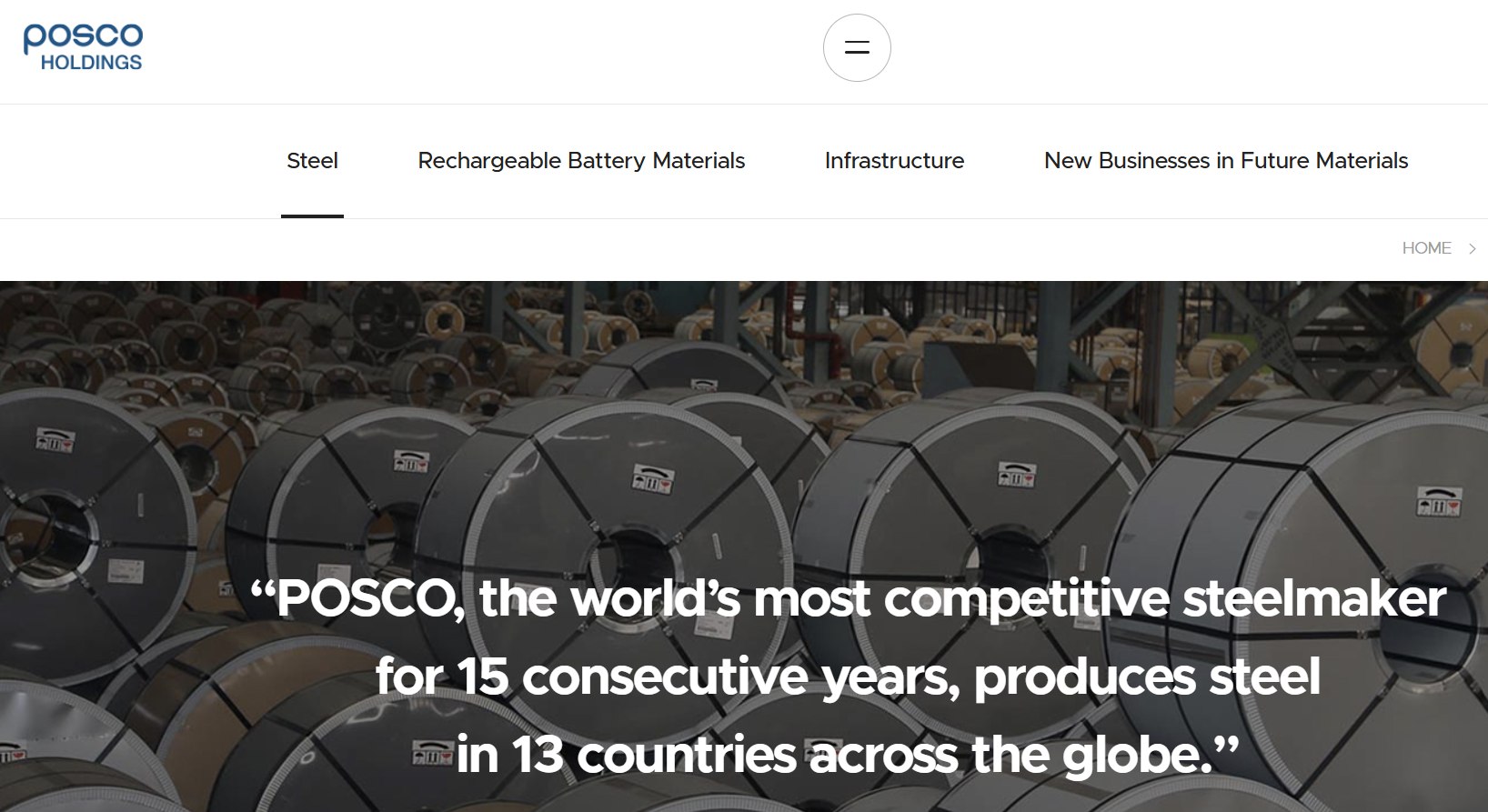
SEOUL, South Korea — POSCO Holdings Inc. shares surged more than 8% Tuesday on the Korea Exchange, closing at 421,500 won after gaining 32,000 won, as investors cheered approval for a major low-carbon iron plant in Western Australia and positive technical signals ahead of the company’s upcoming first-quarter 2026 earnings and business plan presentation.

The 8.22% advance marked one of the strongest daily gains for the steel giant in recent weeks, pushing the stock above its 200-day moving average and reigniting optimism around POSCO’s decarbonization strategy and long-term growth initiatives. Trading volume was elevated as both institutional and retail investors piled in, reflecting renewed confidence in South Korea’s largest steelmaker amid global shifts toward green steel production.
The catalyst centered on regulatory approval for POSCO’s planned low-carbon iron plant in Western Australia, a project that aligns with the company’s aggressive push to reduce carbon emissions and secure sustainable raw material supplies. The facility is expected to utilize advanced hydrogen-based reduction technologies, positioning POSCO as a leader in the transition to low-emission steelmaking. Analysts noted that such developments could enhance POSCO’s competitiveness as major economies impose stricter carbon regulations and buyers demand greener materials.
The rally also coincided with broader strength in South Korea’s KOSPI index, which hit a record high Tuesday driven by semiconductor and battery sector gains. POSCO Holdings benefited from positive sector rotation and spillover enthusiasm, with battery materials-related names also advancing on EV supply chain optimism.
POSCO is scheduled to release provisional first-quarter 2026 earnings and present its full-year business plan on April 30, with a conference call set for 3:00 p.m. Korea Standard Time. The upcoming disclosure has drawn fresh attention, especially after a recent analyst price target increase that lifted some targets by more than 18%. While some firms maintain cautious “Reduce” or “Sell” ratings, the upgraded targets have encouraged traders betting on POSCO’s longer-term value in green steel, rare earths and EV battery materials.
The company has been actively expanding its footprint beyond traditional steel. Through subsidiary POSCO International, it is building a comprehensive rare earth supply chain, including investments in refining technologies for dysprosium and terbium — critical elements for high-performance electric vehicle motors. A KRW 25 billion corporate venture capital fund supports these efforts, aiming to mitigate geopolitical risks in critical mineral supplies.
POSCO also strengthened ties in India through a joint venture with JSW Steel for a 6 million tons per annum integrated steel plant in Odisha’s Dhenkanal district. The 50:50 partnership is expected to boost India’s steel capacity while deepening technological collaboration between South Korea and India. Additional moves include anode material deals and partnerships for graphite and LFP cathode production, signaling POSCO’s pivot toward battery materials and the broader energy transition.
Stainless steel price hikes implemented in April 2026, driven by rising nickel, ferrochrome and coking coal costs, have helped support margins in select segments. However, the core steel business continues to face cyclical pressures, including global oversupply concerns and fluctuating raw material prices.
Technically, the stock’s breakout above key moving averages has attracted momentum traders. The 200-day moving average served as a significant resistance level in recent months, and its conquest Tuesday signaled potential for further upside in the near term. Volume patterns showed strong buying conviction, with the price closing near session highs.
Despite the gains, some analysts remain wary. POSCO carries a relatively high price-to-earnings multiple compared with global steel peers, and near-term profitability could face headwinds from energy costs and slower demand in certain export markets. The upcoming April 30 business plan presentation will be closely watched for details on capital allocation, decarbonization timelines and battery materials revenue contribution targets.
POSCO Holdings, formerly known simply as POSCO, has evolved from a pure steel producer into a diversified materials and energy group. Its steel segment remains dominant, but green materials, energy and trading divisions are gaining strategic importance. The company operates world-class facilities in South Korea and maintains international joint ventures across Asia, Australia and beyond.
For investors, Tuesday’s surge highlighted the market’s growing appreciation for companies actively investing in low-carbon technologies. As governments worldwide push for net-zero goals, steelmakers capable of producing green steel at competitive costs could command premium valuations.
The stock’s performance also reflected broader optimism in South Korean industrials. With the KOSPI reaching record territory on semiconductor strength, cyclical names like POSCO benefited from improved risk appetite and expectations of eventual interest rate relief.
Looking ahead, Q1 2026 provisional earnings on April 23 and the full business update on April 30 will provide critical data points. Analysts expect the company to address progress on its hydrogen reduction projects, rare earth initiatives and any updates on U.S. or Indian expansion plans.
Community and investor sentiment has turned more positive in recent sessions. Online forums and trading apps saw increased discussion around POSCO’s green steel ambitions and potential for margin recovery if raw material costs stabilize.
The company maintains a solid financial foundation, with manageable debt levels and ongoing cash generation from core operations. Dividend yields remain attractive for income-focused investors in the Korean market.
As the trading day closed in Seoul, POSCO Holdings shares held most of their gains, closing at 421,500 won. The move capped a strong session for the stock and reinforced its position as a key beneficiary of both traditional steel demand and the emerging green transition narrative.
Whether the momentum sustains will depend on execution in the coming quarters and the details shared during the April 30 presentation. For now, investors appear willing to reward POSCO’s strategic vision and visible progress on decarbonization and diversification.
The surge serves as a reminder of the steel sector’s sensitivity to both cyclical factors and long-term structural shifts toward sustainability. POSCO Holdings, with its scale, technology investments and global reach, is well-placed to navigate this dual challenge — a dynamic that helped drive Tuesday’s impressive 8.22% advance.


Unusual Machines: One Of The Best Ways To Play America's Drone Boom

This is the forum for daily political discussion on Seeking Alpha. A new version is published every market day.
Please don’t leave political comments on other articles or posts on the site.
The comments below are not regulated with the same rigor as the rest of the site, and this is an ‘enter at your own risk’ area as discussion can get very heated. If you can’t stand the heat… you know what they say…
More on Today’s Markets:
Moderation Guidelines:
We remove comments under the following categories:
- Personal attacks on another user account
- Anti-Vaxxer or covid related misinformation
- Stereotyping, prejudiced or racist language about individuals or the topic under discussion.
- Inciting violence messages, encouraging hate groups and political violence.
Regardless of which side of the political divide you find yourself, please be courteous and don’t direct abuse at other users.
For any issue with regards to comments please email us at : moderation@seekingalpha.com.
Seeking Alpha’s Disclosure: Past performance is no guarantee of future results. No recommendation or advice is being given as to whether any investment is suitable for a particular investor. Any views or opinions expressed above may not reflect those of Seeking Alpha as a whole. Seeking Alpha is not a licensed securities dealer, broker or US investment adviser or investment bank. Our analysts are third party authors that include both professional investors and individual investors who may not be licensed or certified by any institute or regulatory body.

Cited by Barron’s as one of the top financial websites to visit on the weekend, Financial Sense (www.financialsense.com) provides educational resources to the broad public audience through a daily podcast, editorials, current news and resource links on salient financial market issues. Begun in 1985 as a local talk radio program, Financial Sense Newshour (www.financialsense.com/financial-sense-newshour) is a weekly webcast with host Jim Puplava and top financial thinkers. Writing staff of Financial Sense includes: Jim Puplava, Chris Puplava, Ryan Puplava, and Cris Sheridan.

Peyto: The Outperformance Continues
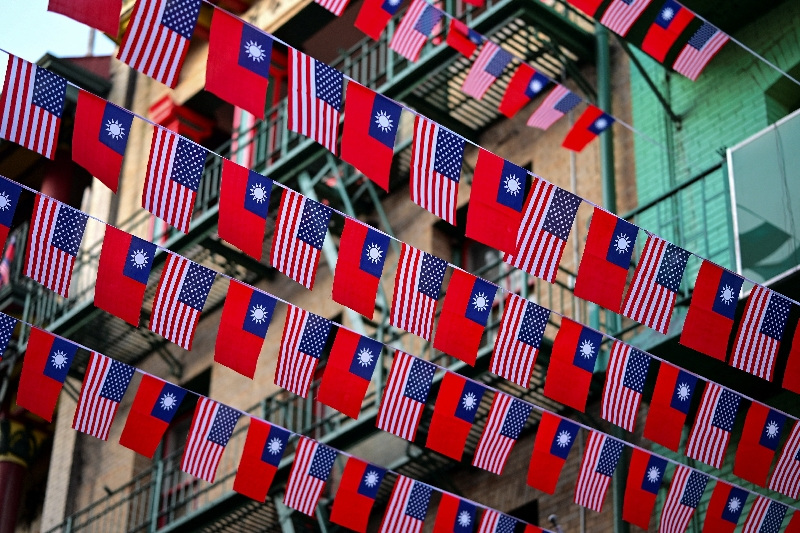

Taiwan presses case for US arms after Trump says not decided on new sales


I am a Licensed Professional Engineer who works in the Nuclear Power industry. I use my professional working knowledge of the power/energy industries to aid in evaluating potential equities worthy of long-term investment. I invest in income producing equities and rental real estate properties for cash flow and long-term appreciation. My articles are to serve as a platform for presenting the underlying fundamentals and long-term potential of each equity/business.
Analyst’s Disclosure: I/we have a beneficial long position in the shares of APA either through stock ownership, options, or other derivatives. I wrote this article myself, and it expresses my own opinions. I am not receiving compensation for it (other than from Seeking Alpha). I have no business relationship with any company whose stock is mentioned in this article.
Seeking Alpha’s Disclosure: Past performance is no guarantee of future results. No recommendation or advice is being given as to whether any investment is suitable for a particular investor. Any views or opinions expressed above may not reflect those of Seeking Alpha as a whole. Seeking Alpha is not a licensed securities dealer, broker or US investment adviser or investment bank. Our analysts are third party authors that include both professional investors and individual investors who may not be licensed or certified by any institute or regulatory body.


With an investment banking cash and derivatives trading background, Binary Tree Analytics (‘BTA’) aims to provide transparency and analytics in respect to capital markets instruments and trades. BTA focuses on CEFs, ETFs and Special Situations, and aims to deliver high annualized returns with a low volatility profile. We have been investing for over 20 years after obtaining a Finance major at a top university.
Analyst’s Disclosure: I/we have a beneficial long position in the shares of XRN.PR.A either through stock ownership, options, or other derivatives. I wrote this article myself, and it expresses my own opinions. I am not receiving compensation for it (other than from Seeking Alpha). I have no business relationship with any company whose stock is mentioned in this article.
Seeking Alpha’s Disclosure: Past performance is no guarantee of future results. No recommendation or advice is being given as to whether any investment is suitable for a particular investor. Any views or opinions expressed above may not reflect those of Seeking Alpha as a whole. Seeking Alpha is not a licensed securities dealer, broker or US investment adviser or investment bank. Our analysts are third party authors that include both professional investors and individual investors who may not be licensed or certified by any institute or regulatory body.

MIAMI — As the 2026 FIFA World Cup draws closer, the eternal debate between Lionel Messi and Cristiano Ronaldo has reached new heights, with the two all-time greats preparing for what is almost certainly their final appearance on football’s biggest stage. At 38 and 41 respectively, Messi and Ronaldo are chasing history in the expanded 48-team tournament hosted by the United States, Mexico and Canada, but current form, team depth and betting markets suggest Messi and Argentina hold a clearer path to lifting the trophy.
Messi himself recently named Portugal — led by his longtime rival Ronaldo — among the four teams he believes enter the tournament in stronger shape than defending champions Argentina. In a wide-ranging interview, the Inter Miami superstar highlighted France, Spain, Brazil and Portugal as better positioned, subtly lowering expectations on his own side while acknowledging Ronaldo’s enduring threat.
Current Form and Fitness Edge Messi
Messi has enjoyed a strong 2026 campaign with Inter Miami, contributing 11 goals and three assists in 15 appearances despite occasional muscular issues that sidelined him briefly. His efficiency metrics remain elite, particularly in chance creation and playmaking, where he still outshines most attacking players worldwide. At 38, Messi appears fresher and more integrated into a possession-based system under Tata Martino.
Ronaldo, playing for Al-Nassr in Saudi Arabia, has scored 13-14 goals in roughly 18-20 appearances this season, maintaining his status as a prolific finisher. However, a recent hamstring concern — more serious than initially reported — raised temporary doubts about his fitness heading into the summer. He has since returned to scoring form and reassured fans he is “getting better every day,” but the injury underscores the physical toll at age 41.
Team Context Favors Argentina
Argentina enter as defending champions with a deep, balanced squad that reached the 2022 final and has continued evolving. Despite Messi’s modest self-assessment, bookmakers list La Albiceleste as joint third or fourth favorites around +800 to +1000 odds. The squad benefits from younger talents surrounding their captain, reducing individual burden compared to Portugal.
Portugal, while strong and featuring a talented supporting cast, relies heavily on Ronaldo’s leadership and moments of magic. They qualified convincingly but sit slightly behind Argentina in most power rankings and betting markets, typically around +1000 to +1200. Depth concerns and questions about Ronaldo’s role in high-stakes matches persist.
Potential Historic Clash
The expanded format increases the chance of a Messi-Ronaldo showdown. If both top their groups, they could meet in the quarterfinals. A final would represent the ultimate chapter in their rivalry — though prediction models see this as unlikely. Early knockout scenarios also exist if either side slips in the group stage.
Messi already has the 2022 title that eluded Ronaldo throughout his career. Another triumph would further cement his legacy, while a Portuguese victory would finally deliver the one major honor missing from Ronaldo’s glittering résumé.
Betting Markets and Expert Views
Major sportsbooks currently favor Spain (+450 to +500) and France (+550 to +650) as outright favorites, followed by England, Brazil and Argentina. Portugal trail slightly but remain firmly in the conversation. Messi’s Argentina are widely seen as more complete, while Ronaldo’s Portugal are viewed as dangerous but dependent on individual brilliance.
Xavi Hernández recently grouped both nations among the contenders alongside Spain, France and Brazil. Opta simulations and Monte Carlo models also place Argentina higher than Portugal in projected win probabilities.
Age, Legacy and Motivation
This will likely mark the sixth and final World Cup for both icons — a historic first. Messi turns 39 during the tournament, Ronaldo 41 at kickoff. Both have defied age through exceptional conditioning, but the physical demands of a month-long competition in varying North American climates will test their limits.
Messi has hinted this could be his last major international tournament, while Ronaldo continues chasing every record. A World Cup win for either would spark endless debate about the GOAT title, though most analysts believe Messi’s 2022 triumph and overall body of work already give him the edge.
What Lies Ahead
Qualification is complete for both nations, with Argentina and Portugal among the top seeds. Group draws have set intriguing paths, though the 48-team format introduces more variables and potential early exits.
Fans worldwide hope for one last memorable chapter — whether in direct confrontation or parallel quests for glory. As preparations intensify, Messi appears to hold the higher probability of ending his career with a second World Cup, but Ronaldo’s legendary mentality means Portugal can never be counted out.
The football world watches with anticipation. In what could be the final act of the greatest individual rivalry in sports history, one last dance awaits on the grandest stage. Whether Messi adds to his legend or Ronaldo finally claims the missing piece, 2026 promises drama, nostalgia and moments that will echo for generations.
Both players continue inspiring millions, proving age is just a number when talent and determination collide. As the countdown to June 2026 begins, the question remains: can either deliver one final masterclass to define their extraordinary careers?
Business
National Healthcare Properties, Inc. 2026 Q1 – Results – Earnings Call Presentation (NASDAQ:NHP) 2026-05-15

Seeking Alpha’s transcripts team is responsible for the development of all of our transcript-related projects. We currently publish thousands of quarterly earnings calls per quarter on our site and are continuing to grow and expand our coverage. The purpose of this profile is to allow us to share with our readers new transcript-related developments. Thanks, SA Transcripts Team

I’m an individual investor looking to grow my wealth over the long term. I’ve tried many different styles of investing over the last 25 years and have found that buying dividend growth stocks and reinvesting the dividends is one of the easiest ways to grow wealth over the long term. Over the years, I’ve owned stocks, options, ETFs, treasury notes, and mutual funds. I operate a blog, HarvestingDividends.com, that provides information on the S&P Dividend Aristocrats and other dividend growth stocks.
Analyst’s Disclosure: I/we have a beneficial long position in the shares of FLO either through stock ownership, options, or other derivatives. I wrote this article myself, and it expresses my own opinions. I am not receiving compensation for it (other than from Seeking Alpha). I have no business relationship with any company whose stock is mentioned in this article.
I may take or change my position(s) in any of the stocks mentioned in this article in the near future.
Seeking Alpha’s Disclosure: Past performance is no guarantee of future results. No recommendation or advice is being given as to whether any investment is suitable for a particular investor. Any views or opinions expressed above may not reflect those of Seeking Alpha as a whole. Seeking Alpha is not a licensed securities dealer, broker or US investment adviser or investment bank. Our analysts are third party authors that include both professional investors and individual investors who may not be licensed or certified by any institute or regulatory body.

Wharfedale Denton 1S Bookshelf Speakers: Heritage Hi-Fi Gets a Coaxial Rebirth for $999

Dave Allen reveals surprising IQ ahead of toughest fight of his career

Unusual Machines: One Of The Best Ways To Play America's Drone Boom

Manchester United reach agreement with Casemiro over contract clause amid transfer speculation

US brings back mandatory military draft registration

Steven Gerrard disagrees with Gary Neville over ‘shock’ Chelsea and Arsenal claim | Football


-

 Fashion4 days ago
Coffee Break: Travel Steam Iron
-

 Politics7 days ago
Politics Home Article | Starmer Enters The Danger Zone
-

 Fashion10 hours ago
Weekend Open Thread: Theory – Corporette.com
-

 Fashion5 days ago
What to Know Before Buying a Curling Wand or Curling Iron
-

 Politics4 days ago
What to expect when you’re expecting a budget
-

 Tech6 days ago
Auto Enthusiast Carves Functional Two-Stroke Engine from Solid Metal
-

 Crypto World3 hours ago
BloFin War of Whales 2026 Grand Prix opens registration for $5M trading championship
-
 Business7 days ago
Ignore market noise, India’s long-term story intact, say D-Street bulls Ramesh Damani and Sunil Singhania
-

 Tech5 days ago
GM Agrees To Pay $12.75 Million To Settle California Lawsuit Over Misuse Of Customers’ Driving Data
-

 Crypto World6 days ago
CZ says US crypto rivals tried to block Trump pardon
-

 Crypto World7 days ago
PROS explodes 48% as Upbit and Bithumb listings ignite demand
-

 Tech22 hours ago
Tech Moves: Microsoft AI leader jumps to OpenAI; former AI2 exec joins Meta; and more
-

 Tech4 days ago
GM agrees to $12.75M California settlement over sale of drivers’ data
-
Crypto World3 days ago
Bitcoin Suisse expands with Digital Asset License and Investment Business Act Registration Approval in Bermuda
-

 Crypto World9 hours ago
E-Estate Announces 1 Year Live: Washington DC Summit as Real Estate Tokenization Enters Its Next Phase
-
 Politics3 days ago
Pakistan to enter Chinese capital market as war inflation bites
-

 Crypto World2 days ago
Google’s Gemini AI Predicts Incredible Solana Price by the End of 2026
-

 Crypto World3 days ago
Bitcoin Suisse expands with Digital Asset License and Investment Business Act Registration Approval in Bermuda
-

 Politics6 days ago
Sky News Presenter Says Keir Starmer Is Not Waving But Drowning
-

 Tech7 days ago
iPhone 14 Won’t Turn On? 5 Fixes That Work (2026)
You must be logged in to post a comment Login