NEW YORK — Starbucks Corp. shares slipped in midday trading Tuesday, falling 1.62% to $97.35 as investors grew cautious ahead of the coffee giant’s fiscal second-quarter 2026 earnings report scheduled for April 28, with concerns over slowing same-store sales growth and ongoing challenges in China weighing on sentiment.
At 12:24 p.m. EDT, SBUX stock had declined $1.60 from the previous close amid moderate volume. The modest pullback followed a period of relative stability in recent sessions, with shares trading near $98-100 after recovering from earlier 2026 lows. The stock remains down significantly from its all-time highs above $110 in 2021, reflecting persistent pressure on the company’s core business amid shifting consumer habits and heightened competition.
The upcoming earnings report, set for release after market close on April 28 with a conference call at 1:15 p.m. Pacific Time, has become a focal point. Analysts expect revenue around $9.1 billion to $9.3 billion for the quarter ended March 30, 2026, with adjusted earnings per share near $0.59 to $0.65. Consensus forecasts suggest continued softness in comparable store sales, particularly in North America and China, where same-store sales have faced headwinds from cautious consumer spending and competitive pricing.
Starbucks has been working to stabilize its business under CEO Brian Niccol, who took the helm in 2025. The company has introduced new menu items, including Energy Refreshers launched in early April, spring beverages with ube, coconut and lavender flavors, and enhancements to its rewards program aimed at boosting partner (employee) retention and customer loyalty. A new incentive rewards program rolled out in April seeks to share more success with hourly partners through improved pay and benefits, starting in July.
Advertisement
Despite these initiatives, traffic and transaction trends remain mixed. In China — once a key growth engine — same-store sales have struggled with economic slowdown and intense local competition. North American same-store sales have shown modest improvement in some periods but continue to face pressure from inflation-weary consumers trading down or visiting less frequently. The company has responded with value-focused promotions, new afternoon refreshment options and store remodels, including plans to refresh 1,000 locations in 2026.
Starbucks also announced a joint venture with Boyu Capital to accelerate long-term growth in China and is exploring supply chain optimizations, including a new office presence in Nashville, Tennessee, for certain teams. These moves signal a broader effort to improve efficiency and adapt to changing market dynamics. However, union-related labor disputes continue in some U.S. markets, adding another layer of complexity.
The stock’s recent performance reflects a market that remains skeptical about the speed of recovery. While new menu items and rewards enhancements have generated buzz — particularly the April Energy Refreshers and limited-time spring offerings — investors are waiting for concrete evidence of sustained traffic growth and margin expansion in the upcoming report.
Analysts have mixed views heading into earnings. Some maintain Hold ratings, citing valuation concerns and the need for clearer signs of turnaround. Others see potential upside if Starbucks can demonstrate progress on same-store sales, partner retention and China stabilization. The average price target sits modestly above current levels, though forecasts vary widely depending on assumptions about consumer spending and competitive intensity.
Advertisement
Broader market context on Tuesday showed selective strength in consumer discretionary names, but Starbucks traded lower as investors rotated away from names facing near-term uncertainty. The Dow Jones Industrial Average advanced modestly, while other restaurant and retail stocks showed mixed results.
For Starbucks, the path forward involves balancing innovation with cost control. The company has invested in digital ordering, loyalty enhancements and new beverage platforms to drive afternoon and evening traffic. Yet rising labor and commodity costs continue to pressure margins, making operational efficiency critical.
Longer-term tailwinds include the global appeal of the Starbucks brand, expansion opportunities in emerging markets and potential benefits from a more normalized interest rate environment that could support consumer spending. However, near-term risks include further economic slowdown, intensified competition from local coffee chains and execution challenges on store refresh and menu strategies.
Retail investors have shown divided sentiment. Some see the current price as an attractive entry point for a recovery play, citing the company’s strong brand equity and cash-generating ability. Others remain wary, pointing to repeated misses on same-store sales targets in recent quarters and the heavy lifting required to reignite growth.
Advertisement
As midday trading continued, volume remained steady without the extreme spikes seen during major news events. Options activity suggested measured positioning ahead of earnings, with implied volatility indicating expectations for a meaningful post-report move — potentially 6-8% in either direction based on historical patterns.
Starbucks operates more than 40,000 stores globally, with a significant presence in the U.S., China and other international markets. The company has faced scrutiny over store closures in underperforming locations and strategic shifts in its approach to third-place experiences versus convenience-driven purchases.
The upcoming Q2 report will also provide updates on progress with the new rewards program, partner incentives and any color on full-year guidance. Management has previously emphasized a multi-year transformation focused on restoring growth, improving margins and enhancing the customer and partner experience.
Tuesday’s 1.62% decline appears largely anticipatory, with investors locking in gains or reducing exposure ahead of what could be a pivotal earnings update. Whether the stock rebounds or faces further pressure will depend heavily on the tone and specifics shared on April 28.
Advertisement
For a company that once enjoyed near-uninterrupted growth, the current environment demands disciplined execution and clear communication. Starbucks remains a cultural icon with enormous brand loyalty, but translating that into consistent financial results has proven challenging in recent years.
As the clock ticks toward the April 28 earnings release, all eyes are on whether Starbucks can demonstrate tangible progress or if headwinds will persist. In the meantime, the modest midday dip serves as a reminder of the uncertainty surrounding consumer-facing stocks in an uneven economic recovery.
LOS ANGELES — Luka Doncic is back on the court for limited practice sessions as he continues recovering from a Grade 2 left hamstring strain, displaying an upbeat and determined attitude that has encouraged Los Angeles Lakers teammates and coaches amid uncertainty about his availability for the 2026 NBA playoffs.
Luka Dončić
The 27-year-old superstar suffered the non-contact injury during a 139-96 loss to the Oklahoma City Thunder on April 2, forcing him to miss the remainder of the regular season. Initial MRI results confirmed the moderate strain, which typically requires three to six weeks of recovery, though Doncic and the Lakers have pursued an aggressive rehabilitation plan to expedite his return.
After consulting with team doctors and his personal medical staff, Doncic traveled to Europe for specialized treatment in Spain, including stem cell therapy and platelet-rich plasma injections aimed at accelerating healing. He returned to Los Angeles last week and has since resumed light on-court work, including non-running basketball activities, according to multiple reports.
Lakers coach J.J. Redick described Doncic’s mood as “relatively good spirits” during a recent media availability, noting the Slovenian star’s diligent approach to rehab and his positive interactions with teammates. Sources close to the team say Doncic remains optimistic about contributing in the postseason, even if his exact return date remains fluid. Some optimistic projections suggest he could be available as early as early May, potentially in the later stages of a first-round series or the conference semifinals.
The injury occurred at a critical juncture for the Lakers, who had secured a playoff spot but now face the postseason without their leading scorer and playmaker for the opening rounds. Doncic averaged a league-leading 33.5 points per game this season, along with strong assists and steals numbers, anchoring the offense with his signature step-back threes, vision and physicality.
Advertisement
Teammates have praised his leadership from the sidelines and during recovery sessions. Austin Reaves, also sidelined with his own injury, has been spotted supporting Doncic in practice. Veteran voices like James Worthy have provided updates, emphasizing patience while highlighting Doncic’s work ethic.
The recovery timeline has sparked intense debate among fans and analysts. A standard Grade 2 hamstring strain often sidelines players for four to eight weeks, making an immediate return for the start of the playoffs — which began in mid-April — highly unlikely. However, the specialized European treatment and Doncic’s history of resilience have fueled hopes for a quicker timeline. Reports indicate he has not yet resumed full running or high-intensity drills, with medical staff prioritizing complete healing to avoid re-injury.
Doncic’s agent, Bill Duffy, confirmed the decision to seek treatment abroad, stating it was made to maximize chances of a strong playoff return. The move drew attention for its proactive nature, reflecting the high stakes for a star who has transformed the Lakers’ fortunes since his arrival.
Public reaction to the injury was emotional. Video clips showed Doncic visibly upset as he left the court against Oklahoma City, underscoring the disappointment of missing key games at season’s end. Yet recent updates from practice have shifted the narrative toward cautious optimism. Social media has filled with encouraging messages from fans, many expressing relief at seeing him back in Lakers gear, even if only for controlled sessions.
Advertisement
The Lakers have navigated the absence with a mix of veteran leadership and younger contributors stepping up. While the team has managed to stay competitive, the drop-off without Doncic’s scoring and facilitation has been noticeable. Coach Redick has stressed a team-first mentality, but all eyes remain on when — or if — the franchise cornerstone can rejoin the rotation.
Doncic’s mood has been a frequent topic in updates. Those around the team describe him as focused, competitive and eager to return rather than frustrated or withdrawn. He has used the downtime to study film, connect with teammates and maintain conditioning within the limits of his rehab protocol. Sources say the time spent in Europe, including moments with family in Slovenia, helped him stay mentally fresh and motivated.
Playoff implications are significant. The Lakers, already dealing with other injuries including to Reaves, could face an uphill battle in the opening round against a tough Western Conference opponent like the Houston Rockets. A potential Doncic return in the middle or later stages of a series could dramatically shift the outlook, giving Los Angeles a superstar boost when it matters most.
Medical experts caution against rushing the process. Hamstring strains are notorious for lingering effects and high re-injury risk if athletes return prematurely. The Lakers’ medical staff, in coordination with Doncic’s personal team, continues daily monitoring, with progress measured through strength tests, flexibility assessments and gradual on-court loading.
Advertisement
The broader NBA landscape has taken note. Rival executives and analysts have commented on the challenge of facing a healthy Doncic in the postseason, while acknowledging the uncertainty surrounding his status. His absence has also sparked discussions about load management, injury prevention and the physical toll of a long season on star players.
For Lakers fans, the saga has been a roller coaster of concern and hope. Social media buzzes daily with speculation about return timelines, with optimistic projections clashing against more conservative medical estimates. The sight of Doncic back at practice — even in limited capacity — has provided a morale boost, with videos and reports circulating widely.
Doncic’s career has been defined by perseverance. From his early days in Europe to becoming an NBA MVP candidate and franchise cornerstone, he has overcome skepticism and physical challenges. This latest injury tests that resilience once more, but early signs point to a player committed to returning stronger and helping his team chase a championship.
As the playoffs progress without him in the immediate lineup, the focus remains on steady progress. Any advancement to jogging, sprinting or full-contact drills would signal a major step forward. Until then, the Lakers will lean on collective effort while keeping the door open for their superstar’s potential heroics later in the postseason.
Advertisement
The coming weeks will clarify Doncic’s availability. In the meantime, his positive mood and dedication to recovery offer reassurance to a franchise and fanbase eager to see him back on the court doing what he does best — dominating games with skill, flair and unshakeable confidence.
NEW DELHI: For Indian dating apps and services, small cities and towns are now driving the growth more than the metros.According to companies like Aisle and Truly Madly, which have millions of users and position themselves as “serious” dating apps, and bespoke high-end dating services like Sirf Coffee, a lot more users from such places are not only keen on using these apps, but also willing to pay for it.While users for these apps from small
Morningstar CEO Kunal Kapoor shares ETFs worthy of long-term investment on ‘The Claman Countdown.’
Most people who delay investing aren’t doing so because they think putting their money into the markets is a bad idea. They’re stuck in front of a confusing smorgasbord of options, afraid to pile the wrong things on their plate and at least a little afraid of looking like they don’t know what they’re doing (especially if it’s true). Thus, analysis paralysis is often the default.
Have no fear. There’s a quick and simple way to build a sensible portfolio by using a small handful of exchange-traded funds (ETFs). So, without further ado, let’s get some clarity over what’s going to go into this portfolio and how much of an allocation each ETF should get.
Advertisement
Here’s the easy ETF portfolio you’ve been looking for
For a portfolio to count as being both good and easy, it needs to be anchored with a hearty helping of market-tracking index funds. That way, you’ll get exposure to growth and quite a lot of diversification, which will help to insulate you from all sorts of risks.
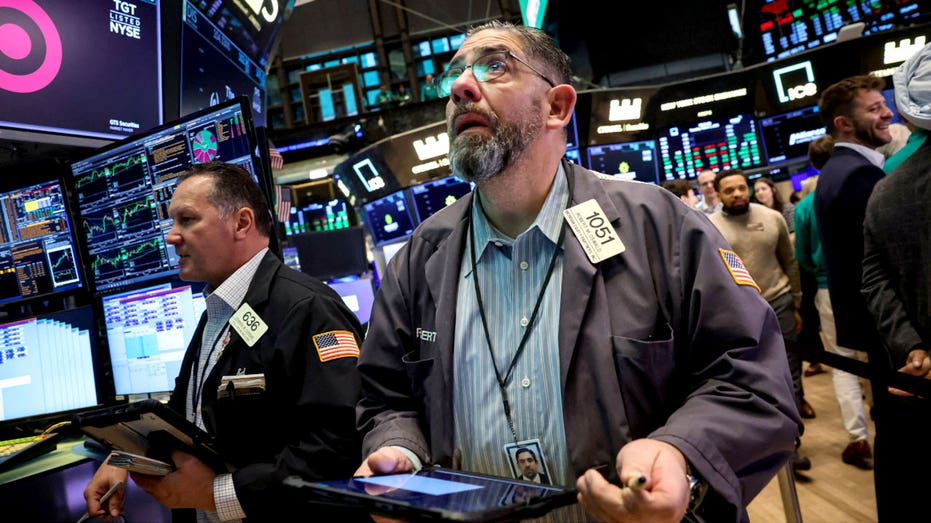
Traders work on the floor at the New York Stock Exchange in New York City March 3, 2026. (Brendan McDermid/Reuters)
Therefore, 65% of the portfolio could be allocated to the Vanguard S&P 500 ETF, and 20% could be allocated to the iShares Core MSCI Total International Stock ETF.
The Vanguard ETF has an expense ratio of just 0.03% annually and tracks the performance of the biggest public companies listed in the U.S., whereas the iShares ETF has an annual expense ratio of 0.07% and tracks the performance of the biggest international companies, explicitly not including those in the U.S.
Advertisement
The point of having both of these in the portfolio is that you’ll be diversified across business sectors and across geographies, which reduces the chance that problems in the U.S. or any other specific country will drag down your portfolio’s performance as a whole.
Those two ETFs focus on stocks. A well-rounded and sufficiently diversified portfolio also needs some exposure to bonds to ensure that it has a fairly safe source of yield when times get tough, and to cryptocurrency, as it isn’t represented well in any of the other ETFs.
Thus, you could also allocate 10% of the portfolio to the Vanguard Total Bond Market ETF and 5% to the iShares Bitcoin Trust ETF.
Advertisement
In a nutshell, BND is crash insurance. It holds more than 17,000 U.S. investment-grade bonds for an annual expense ratio of just 0.03%. Its trailing-12-month yield is only 3.9%, but it isn’t intended to be a major growth driver for your portfolio anyway.
The Bitcoin Trust position provides exposure to spot bitcoin as the name implies. The point of owning it is that it’ll help you to benefit from the cryptocurrency’s status as a scarce store of value, and it might help to guard your portfolio against inflation too. It’ll cost you a bit more than the other ETFs, with an expense ratio of 0.25%, but the potential growth that it offers is worth the price.
There isn’t much maintenance required
This portfolio can hum along for years without any intervention from you. But there is one thing you can do to slightly boost its performance.
Once a year, open your brokerage or retirement account and compare each fund’s current weighting to its allocation target described above.
Pedestrians walk past an American flag displayed outside the New York Stock Exchange in New York Sept. 12, 2016. (Michael Nagle/Bloomberg via Getty Images / Getty Images)
If any position has drifted by more than five percentage points from its target allocation, it’s wise to sell a little of the winner and buy a little of the laggard. You’re selling high and buying low, and that’s the entire (mostly voluntary) maintenance obligation. Inside a tax-advantaged account like a Roth IRA or a 401(k), rebalancing triggers no tax consequences, and many brokerages can even automate the process for target-weight portfolios if that’s something that interests you.
Start with whatever amount of capital you have on hand, add to your holdings in the proper proportions when you can, rebalance the portfolio once a year and let time in the market do the rest of the work. The longer you’re willing to let this money grow, the better off you’re likely to be.
Advertisement
Alex Carchidi has positions in Bitcoin and iShares Bitcoin Trust. The Motley Fool has positions in and recommends Bitcoin, Vanguard S&P 500 ETF, Vanguard Total Bond Market ETF, and iShares Bitcoin Trust. The Motley Fool has a disclosure policy.
NEW DELHI: The government may keep an outlay of Rs 7,500 crore under the production linked incentive scheme for IT hardware products like personal computers, laptops, tablets and servers, according to a source aware of the development.
Foreign companies looking for incentives under the scheme may have to invest Rs 500 crore over four years, while the threshold for domestic firms is likely to be around Rs 20 crore for five years, the source who did not wish to be named said.
“Meity (Ministry of Electronics and Information Technology) will take the Cabinet approval of the detailed guidelines soon and is hopeful of rolling out the scheme from next financial year. The incentive outlay is likely to be around Rs 7,500 crore,” the source said.
The government has announced a cumulative production linked incentive of Rs 2 lakh crore for 10 sectors to encourage domestic manufacturing after seeing traction of global giants like Apple’s contract manufacturers, Samsung etc for the scheme in the mobile devices segment.
Advertisement
According to mobile devices industry body ICEA, India has the potential to scale up its cumulative laptop and tablet manufacturing capacity to over Rs 7 lakh crore by 2025 through policy interventions.
Scaling up laptop and tablet PC manufacturing can take the share of India in the global market to 26 per cent from 1 per cent at present.
Besides, it will generate 5 lakh new jobs and lead to a cumulative inflow of foreign exchange to the tune of Rs 5.5 lakh crore and investment of over Rs 7,300 crore by 2025.
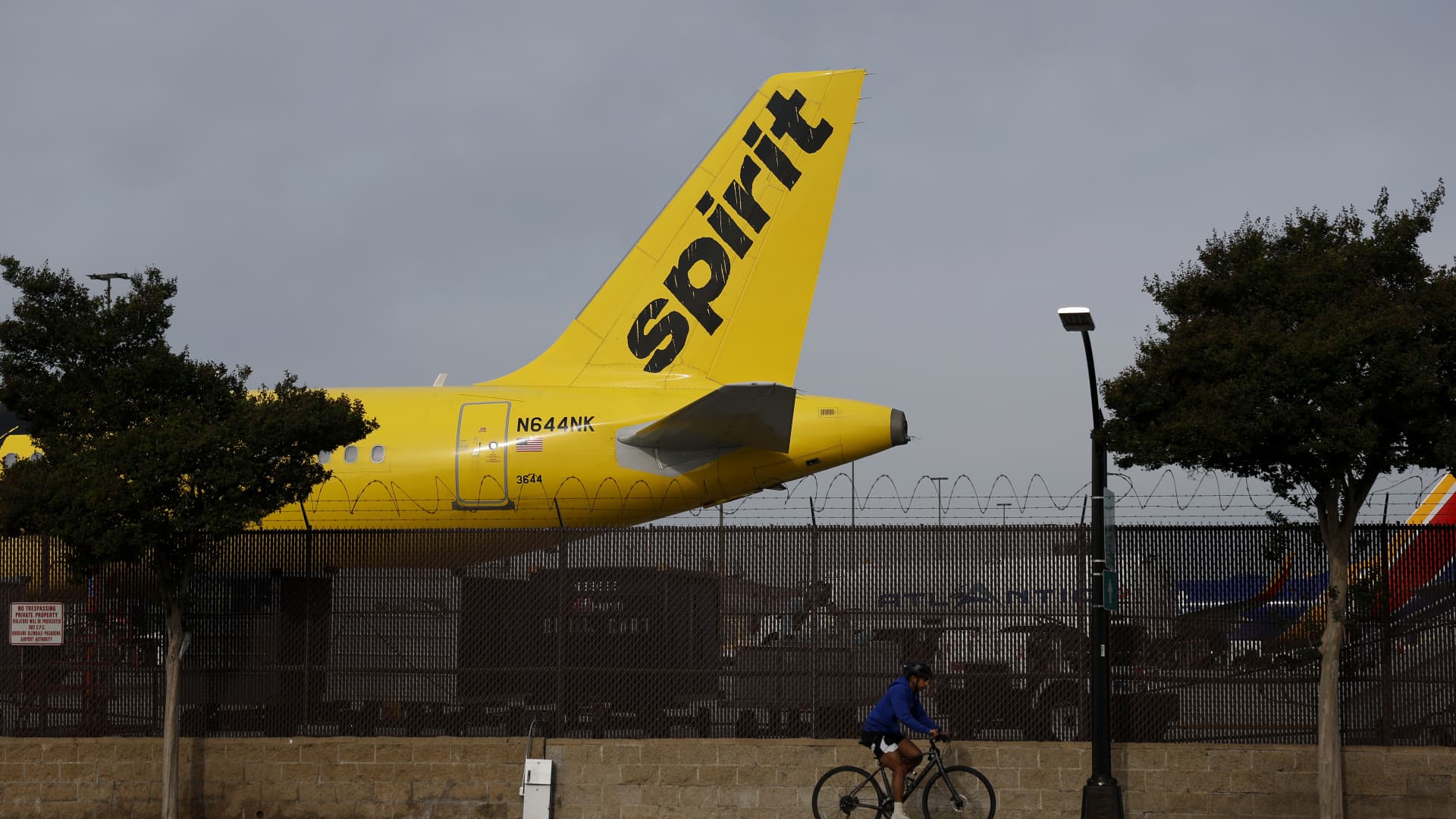
President Donald Trump said Tuesday that the federal government could help struggling Spirit Airlines as the discount carrier faces the possibility of liquidation.
Trump told CNBC’s “Squawk Box“: “I don’t mind mergers. I think I’d love somebody to buy Spirit, as an example. You know, Spirit’s in trouble. … Maybe the federal government should help that one out.“
Spirit has sought government aid from the Trump administration in recent days, according to people familiar with the matter who were not authorized to speak to the media about the discussions. The request was first reported by aviation news publication The Air Current.
The airline has been struggling to find its footing after filing for bankruptcy protection in August for the second time in less than a year.
Advertisement
Spirit expected to emerge from bankruptcy in the middle of 2026, after selling more aircraft and narrowing its focus to several key cities. But the surge in fuel prices since the U.S. and Israel attacked Iran in February has become an added challenge. Fuel is airlines’ biggest expense after labor.
Jet fuel prices have nearly doubled this year since the attacks on Iran, with a gallon going for $3.87 on average on Monday in Los Angeles, Chicago, Houston and New York, according to Argus data published by Airlines for America. That’s up about 55% from before the war started on Feb. 28.
Transportation Secretary Sean Duffy later on Tuesday is set to meet with several discount carriers to discuss the impact of higher fuel on their businesses, and attendees are expected to ask for potential tax relief, people familiar with the matter said, requesting anonymity to speak about matters that had not yet been made public.
It wasn’t immediately clear if the administration would provide the Florida-based carrier with a lifeline. The U.S. government gave the airline industry billions of dollars during the Covid-19 pandemic, but that money went to many companies, not to one single carrier.
TORRANCE, Calif. — Navitas Semiconductor Corp. shares have delivered explosive gains in 2026, surging hundreds of percent on enthusiasm for its gallium nitride and silicon carbide chips powering artificial intelligence data centers, yet Wall Street analysts remain divided on whether the stock is a buy, hold or sell at current elevated levels.
As of April 21, Navitas (NASDAQ: NVTS) traded near $15-16 after a sharp early-session rally, extending a remarkable run that has seen the stock climb more than 400% over the past year. The rally reflects investor bets on the company’s “Navitas 2.0” strategy, which shifts focus from lower-margin mobile charging to high-power applications in AI infrastructure, grid modernization and industrial electrification. Yet with the stock trading at a premium valuation and analysts’ average price targets well below current levels, the question of whether to buy or sell Navitas in 2026 elicits no consensus.
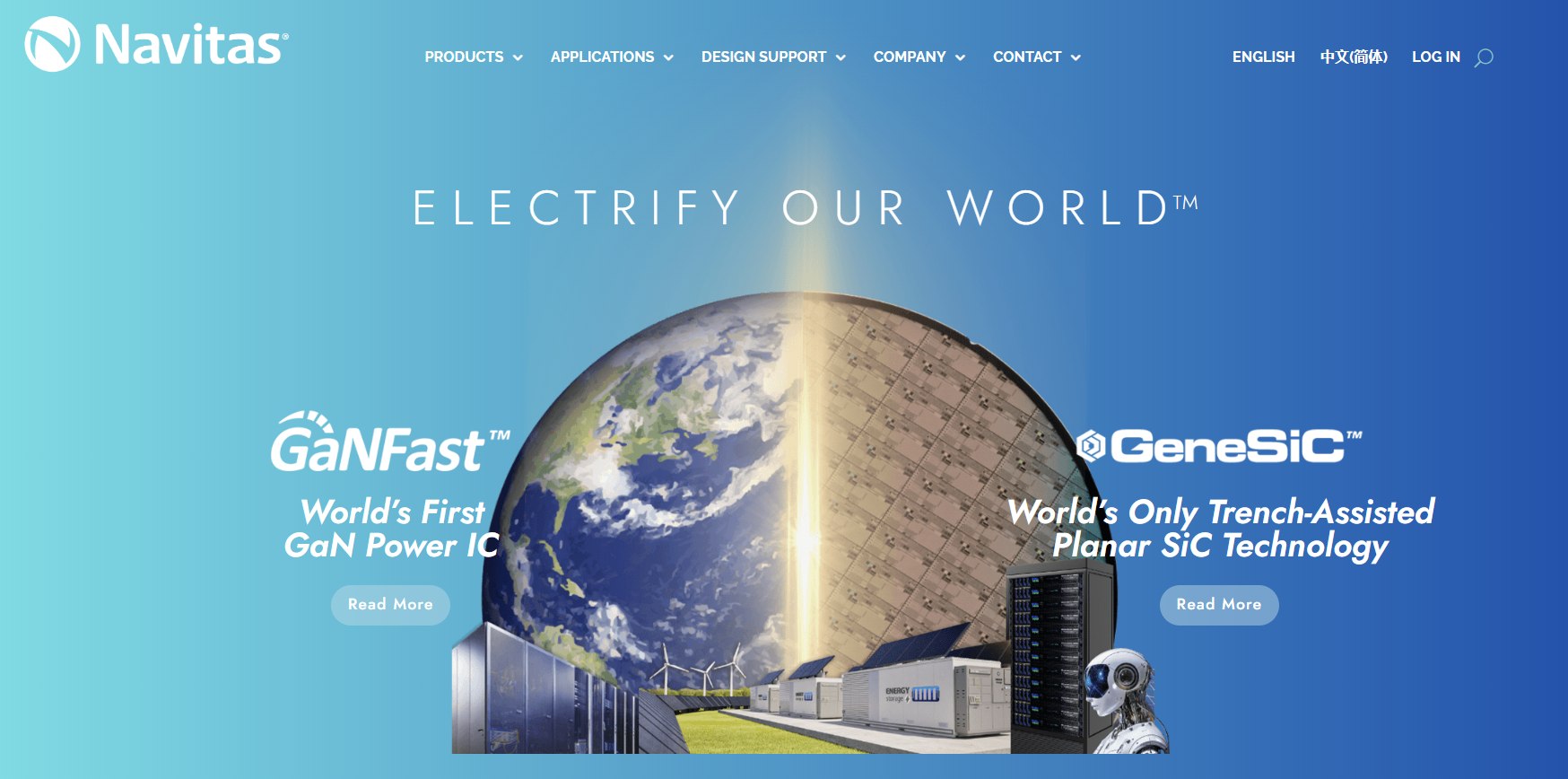
Navitas specializes in next-generation power semiconductors that offer superior efficiency, smaller size and better thermal performance than traditional silicon devices. Its GaNFast power ICs and GeneSiC SiC solutions address a critical bottleneck in AI data centers, where massive electricity consumption makes even modest efficiency gains highly valuable. The company estimates a $3.5 billion serviceable addressable market in high-power segments by 2030, with AI-related demand as the primary driver.
The strategic pivot has shown early progress. High-power applications now exceed 50% of revenue, while mobile has fallen below 25%. Management guided for a return to sequential revenue growth starting in the first quarter of 2026, with Q1 results scheduled for release after market close on May 5. Fourth-quarter 2025 revenue beat expectations at $7.3 million, and the company ended the year with a strong cash position and no debt, providing runway for continued investment.
Advertisement
Recent catalysts have fueled the rally. In March, Navitas launched new 1200V SiC MOSFET packages optimized for AI servers and energy infrastructure. At NVIDIA’s GTC 2026 conference in April, the company demonstrated an 800V-to-6V GaNFast power delivery board for the MGX platform and a high-efficiency 10kW all-GaN solution. On April 13, the appointment of semiconductor veteran Gregory M. Fischer to the board added governance credibility as Navitas scales operations.
Despite the momentum, risks abound. Navitas remains unprofitable, posting adjusted losses as it invests heavily in growth. Analysts project continued revenue pressure in 2026 due to the business mix transition, with some forecasting declines before a sharp rebound in 2027. Consensus ratings lean toward Hold, with an average 12-month price target around $6.78 to $7.60 — implying significant downside from current levels near $15-16. Targets range from as low as $3.50 to a high of $13.00.
The valuation debate centers on execution versus potential. Bulls highlight Navitas’ technological edge, patent portfolio and alignment with the AI megatrend. Successful conversion of design wins into volume shipments could drive meaningful revenue inflection starting late 2026 or 2027. Optimists see the stock as a long-term winner for patient investors willing to endure near-term volatility and margin pressure.
Bears counter that the current price already bakes in substantial optimism. With a high price-to-sales multiple and no near-term profitability in sight, any delay in AI-related ramps or margin improvement could trigger sharp pullbacks. Competition in the GaN and SiC spaces is intensifying from larger players, and broader semiconductor cyclicality adds another layer of risk. Some forecasts suggest the stock could trade in a range between roughly $3 and $9 through the end of 2026 under conservative scenarios.
Advertisement
Q1 2026 earnings on May 5 will provide the next major test. Investors will scrutinize revenue trends, gross margin progress, operating expenses and any updates on design-win conversions or AI customer engagements. Management has emphasized gradual improvements in gross margins and bottom-line results alongside renewed top-line growth. Positive surprises could sustain momentum; misses or cautious guidance might cool enthusiasm.
Broader market context also matters. Enthusiasm for AI infrastructure stocks has lifted many names in the semiconductor supply chain, but elevated valuations leave limited room for error. Geopolitical tensions, interest rate movements and energy costs could indirectly influence demand for efficient power solutions.
For individual investors, the decision hinges on time horizon and risk tolerance. Long-term believers in the AI power story may view dips as buying opportunities, especially given Navitas’ strong cash position and debt-free balance sheet. Shorter-term traders might prefer to wait for clearer signals of profitability or revenue acceleration before committing capital at current levels.
Technical indicators show strong momentum in recent sessions, with the stock breaking out on high volume. However, overbought readings suggest potential for near-term consolidation or pullbacks. Options activity reflects elevated implied volatility, consistent with expectations for significant moves around earnings.
Advertisement
Navitas operates with a lean team of roughly 190 employees and benefits from strategic foundry partnerships, including efforts to expand U.S.-based manufacturing. Its CarbonNeutral certification and focus on sustainability add to the appeal for ESG-minded investors. Yet as a smaller player, it faces execution risks in scaling production to meet potential hyperscaler demand.
The company’s long-term roadmap targets compound annual growth exceeding 60% in its addressable market. If Navitas captures even a modest share while improving margins, the upside could be substantial. Conversely, prolonged transition challenges or competitive pressures could weigh on the stock for an extended period.
As April 21 trading continued with strong gains, the narrative around Navitas remained one of high risk and high reward. The stock’s dramatic 2026 performance has rewarded early believers but also attracted profit-taking and skepticism from valuation-focused investors.
Ultimately, whether to buy or sell Navitas Semiconductor in 2026 depends on individual conviction in the AI infrastructure thesis and tolerance for volatility. Wall Street’s Hold consensus and low average price targets suggest caution at current prices, but bullish voices see the potential for outperformance if execution aligns with ambitious goals.
Advertisement
With Q1 results approaching and the AI buildout accelerating, the coming months will offer fresh data points to assess whether Navitas can translate technological promise into sustainable financial results. Investors should weigh the compelling long-term story against near-term transitional pressures before making portfolio decisions.





















































You must be logged in to post a comment Login