

Politics
Trump’s pick to replace Stefanik



DAYS THE BUDGET IS LATE: 21
TRUMP FOR CONSTANTINO: Republican House candidate Anthony Constantino’s campaign to replace Rep. Elise Stefanik is a textbook example of how aligning with the MAGA extended universe pays off.
President Donald Trump today endorsed Constantino, the brash and hard-edged CEO of Sticker Mule, over Assemblymember Robert Smullen.
Trump’s nod for the businessperson is a microcosm of a decade of Republican politics. Smullen has lined up institutional support from the state GOP, county chairs and his fellow elected officials in Albany.
But none of that matters to Trump, who won his own insurgent primary a decade ago by bucking the Republican establishment.
Now the president is backing Constantino, who has assembled his own slate of endorsees far more suited to Trump’s temperament. That includes Rudy Giuliani, who backed Constantino after the candidate, according to his telling, wrote a “beautiful two-page letter” to the former New York City mayor.
Constantino has also enlisted Trump confidant and political operative Roger Stone.
Those ties were not lost on the president when he posted on Truth Social this afternoon. “Anthony is strongly supported by many of the most Highly Respected MAGA Warriors in our Movement, including Mayor Rudy Giuliani and Roger Stone!” he wrote.
Then of course, there’s the large “Vote for Trump” sign Constantino erected atop a building that can be seen from Interstate 90.
That kind of tangible loyalty — which withstood a legal challenge by local Democrats — also played well with the president.
“Anthony has been such a Great Supporter that he actually put up a somewhat ‘controversial’ sign, against strong opposition, in my honor,” Trump posted. “The sign is still there!”
For his part, Smullen — whose support from numerous county chairs doesn’t quite equate to the large pro-Trump signage visible from I-90 — was publicly unconcerned by the president weighing in on the primary.
“A consultant got to the president, somebody who is being paid by my opponent,” he told our Bill Mahoney. “And I think the president’s made a mistake here.”
Still, it’s hard not to view this development as anything but a massive blow for Smullen, running to succeed an ardently pro-MAGA House lawmaker in a district that the president won three times.
The endorsement also highlights the strange position the state GOP finds itself in. The party took the unusual step of backing Smullen in the race amid deep concerns from party leaders over Constantino’s temperament.
New York Republicans are preparing for a future without Stefanik as its leader and top fundraiser with national standing. The North Country House lawmaker was in line to become Trump’s United Nations ambassador, only to have the nod yanked amid a messy selection process to pick her successor. Hard feelings from Stefanik’s team following the scuttled special election to replace her have lingered as a result.
One GOP official chortled at the situation, which also comes after Stefanik bowed out of the race for governor following Nassau County Executive Bruce Blakeman’s entrance.
“They knifed Elise in the special and then they got crushed by Roger Stone,” said the person, who was granted anonymity to speak candidly. “It is just the beginning of Elise’s allies including the president settling the score as Elise is in the midst of her successful book tour!”
For Constantino’s part, the endorsement is another step in what had initially seemed like a long-shot bid.
“I had a great talk with President Trump and am honored to receive his endorsement,” he said in a statement. “He noted every primary candidate he endorses wins so I look forward to winning the general election and making everyone who supported me very proud once I am in Congress.”
FROM CITY HALL

CC YOU IN COURT: A prominent police union filed a federal lawsuit against the Civilian Complaint Review Board today, alleging the oversight body is tarnishing officers’ reputations by releasing unredacted — and unsubstantiated — complaints against cops.
Beginning in October, the suit from the New York City Police Benevolent Association alleges, the CCRB began responding to Freedom of Information Law requests about three types of allegations against officers — sexual misconduct, racial bias and offering false statements — by releasing unredacted complaints that are then subsequently uploaded to a public database. Because CCRB does not redact identifying information, the police union argued, the accused officers’ reputations, safety, and employment prospects are unduly damaged.
“CCRB’s under-the-table collusion with anti-police activists to smear cops with false complaints is not only unfair and unconstitutional — it is a calculated effort to end proactive enforcement and drive cops away from the job,” PBA President Patrick Hendry said.
The PBA argued the complaint board is aware of how damaging the allegations can be to cops. The CCRB publishes a redacted version of the complaints on its own website.
The city’s Law Department declined to comment. And a CCRB spokesperson defended the agency but noted its ability to comment was limited by the suit.
“The CCRB’s investigations are complete, thorough and impartial,” spokesperson Dakota Gardner said in a statement. “The Agency continually reviews all applicable laws and regulations regarding the public release of its records, including disciplinary histories of members of service, to ensure it is fully compliant.” — Joe Anuta
CHARTERING A NEW COURSE?: Mamdani said at an unrelated press conference that his administration is weighing its options regarding the future of former Mayor Eric Adams’ Charter Revision Commission, which convened publicly for the first time Monday.
“We are reviewing all of the options that we have when it comes to this previously set up charter review,” Mamdani said at the press conference in Brooklyn.
Pressed on what those options might entail, the mayor added little clarity aside from noting with a laugh that “more and more are being presented by the day.”
The commission’s meeting focused on procedural steps, including selecting acting chair Gilford Monrose, as reported in today’s Playbook.
Created on Adams’ final day in office, the commission is tasked with crafting ballot proposals, including one to establish an open primary election system. This shift could complicate reelection prospects for Mamdani by opening the Democratic primary electorate up to a larger, more moderate-leaning pool of voters.
Mamdani — who has previously criticized the body as undemocratic — has several avenues to blunt its work. Charter experts say one option for the mayor’s office would be installing a chair who could stall proceedings.
Randy Mastro, the former first deputy mayor under Adams who’s now advising the commission pro bono, told Playbook yesterday he has received no assurances from the Mamdani administration about its plans. A person familiar with the matter said Mastro has also discussed the commission with Mamdani’s corporation counsel, Steve Banks.
Still, Mastro downplayed the influence of any single appointee amid the possibility of a Mamdani-selected chair helming the commission.
“I welcome anyone who wants to participate in a constructive process to improve our local democracy,” Mastro said. — Gelila Negesse
FROM THE CAMPAIGN TRAIL

PRIMARY COLORS: Former state Assemblymember Taylor Darling ended her primary bid against battleground Democratic Rep. Laura Gillen earlier this week.
“Unfortunately, the technicalities of the current system make it challenging for community focused campaigns to fully participate in the Democratic process,” Darling wrote on social media. “While I respect the rules, it is clear that these barriers need to be addressed if we want a system where all voices, especially those from our communities, are heard and valued.”
Any primary challenger is poised to have an uphill climb against the incumbent Gillen, who has more than $3 million on hand. Darling, who entered the race after Gillen voted in support of funding for the Department of Homeland Security, raised just $24,000 last quarter and had $15,000 in the bank. Progressive organizer Kiana Bierria-Anderson is also in the race, though she said her petitions to get on the ballot are being challenged. — Madison Fernandez
IN OTHER NEWS
— WATCHDOG BARKS: Citizens Budget Commission urges lawmakers to limit government spending and hold off on tax hikes as new report shows tens of thousands of New Yorkers are leaving the city. (Gothamist)
— POLLUTERS PAY: Republicans in Congress are aiming to end New York’s climate law that requires fossil fuel companies to pay for weather-related damages. (Newsday)
— THAT STINKS: As state-funded daycare expands in New York, new education mandates regarding potty training and diaper changes for young students have left schools scrambling to create new policies. (New York Post)
Missed this morning’s New York Playbook? We forgive you. Read it here.


Doctors are confident that Bonnie Tyler will make a “full recovery” following her recent health issues.
Last week, the chart-topping musician was rushed to a hospital near her home in Faro, Portugal, to undergo an emergency intestinal operation.
Initially, Bonnie’s spokesperson assured fans that the surgery had gone “well” and that she was “recuperating” in hospital.
A day later, another statement was issued, explaining: “Bonnie has been put into an induced coma by her doctors to aid her recovery. We know that you all wish her well and ask for privacy at this difficult time please.
“We will issue a further statement when we are able to.”
On Tuesday, the Holding Out For A Hero singer’s team gave an update on Bonnie’s health to BBC News, which read: “As of this morning, Bonnie remains seriously ill but stable in hospital in Faro, however, her doctors are still positive that she will make a full recovery.
“When there is any further news of Bonnie’s condition, then we will issue another statement.”
Bonnie – whose legal name is Gaynor Hopkins – first shot to fame in the late 1970s thanks to singles like Lost In France and It’s A Heartache.
In the years that followed, she became known for hits like Holding Out For A Hero, the number one single Total Eclipse Of The Heart and a cover of Creedence Clearwater Revival’s Have You Ever Seen The Rain?.
Over the course of her music career, Bonnie has released 18 studio albums, most recently in 2021, and has been nominated for three Grammy Awards and three Brit Awards.
The 74-year-old also represented the United Kingdom at the Eurovision Song Contest in 201 with her song Believe In Me, and was awarded an MBE by the late Queen Elizabeth II for her services to music in 2022.

Keir Starmer cannot lead Labour into the next general election, according to the party’s trade union backers.
In a huge blow to the prime minister, they said the party “cannot continue on its current path” and that change is needed at the top.
The intervention by the Trade Union Labour Organisation (TULO) comes as Starmer clings onto power despite more than 80 MPs calling on him to quit and four of his ministers resigning.
The PM is holding showdown talks with leadership rival Wes Streeting in Downing Street, where he will be asked how he plans to turn the government around after Labour’s humbling in last week’s elections.
In a statement, TULO said: “It’s clear that the prime minister will not lead Labour into the next election, and at some stage a plan will need to be put in place for the election of a new leader.
“This is a point where the future of the party we founded will be debated and determined, and we are working closely as unions to shape a shared vision on policy, political strategy and economic policy that will re-orient Labour back to working people.”
Subscribe to Commons People, the podcast that makes politics easy. Every week, Kevin Schofield and Kate Nicholson unpack the week’s biggest stories to keep you informed. Join us for straightforward analysis of what’s going on at Westminster.
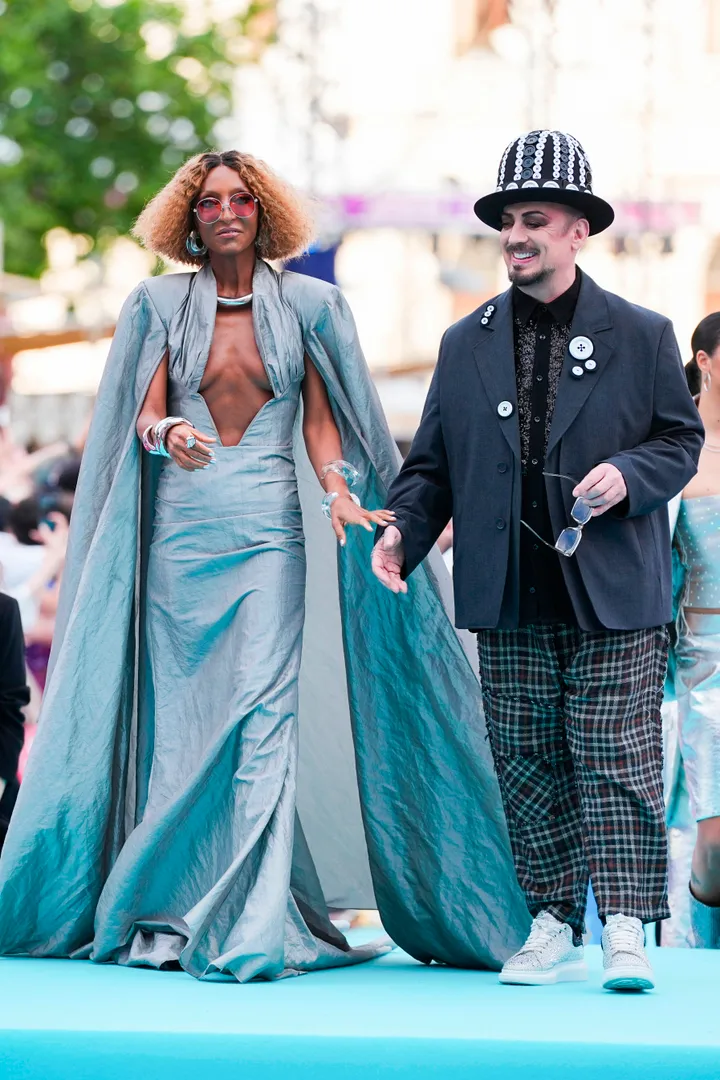
Boy George will not be performing at this year’s Eurovision final after failing to secure a place in the next stage of the competition.
On Tuesday night, the Culture Club frontman joined San Marino’s Eurovision entrant Senhit on stage at the semi-finals, where they performed their song Superstar together.
However, towards the end of the night, it was revealed that San Marino had not landed enough support to send them through to the final, which is due to take place in Basel this weekend.
Posting on X after the semi-final was over, the Karma Chameleon singer thanked his supporters and those who voted for himself and Senhit, before lamenting: “I was sad we didn’t get through to the final but my Eurovision experience has been fabulous. I wouldn’t take a minute of it back.”
He added: “Thanks to Senhit and the entire San Marino delegation. What a fun bunch. We will perform together in Milan in July. At the Culture Club show.”
Senhit previously competed at Eurovision in 2011 and 2021, the latter of which saw her sharing the stage with the American rapper Flo Rida.
He claimed: “I am so affiliated with Jewish people. I am not necessarily affiliated with Israel. I don’t really have an opinion on that. But the job of music is to unite people.”

Israel’s act Noam Bettan did make it through to the Eurovision finals after his performance on Tuesday, although one audience member was removed from the event after loudly protesting during the song.
Three more people were also ejected from the arena due to what the European Broadcasting Union (EBU) and Austrian broadcaster ORF described as “disruptive behaviour”.

Eurovision bosses have confirmed that audience members were removed from the competition’s first live semi-final after political chants were heard during the broadcast of the Israeli act’s performance.
On Tuesday night, singer Noam Bettan represented Israel at the semi-final with his song Michelle, where he was chosen to go through to the next stage of the song contest at the weekend.
During the opening moments of the performance, chants of “stop the genocide” could be heard coming from the audience, particularly towards the beginning of the song.
“As previously announced, ORF is broadcasting a clean audio feed live from audience microphones before and during every performer’s song,” they said.
“One audience member, close to a microphone, loudly expressed their views as the Israeli artist began his performance, and during the song, which was heard on the live broadcast.
“They were later removed by security for continuing to disturb the audience.”
It was also confirmed that three more audience members “were also removed from the arena by security” for what the EBU and ORF described as “disruptive behaviour”.
Notably, Eurovision’s YouTube upload of Israel’s semi-final performance does not include the “stop the genocide” chant.
Councillor Thomas Heald is a Scottish Conservative councillor for Dunblane and Bridge of Allan, a former Scottish Conservative and Unionist candidate for the Scottish Parliament, and a former political advisor in the Scottish Parliament.
It has been quite the week in UK politics, and none more so than here in Scotland.
For nearly twenty years, Scotland has been governed by a party that has mastered the art of escaping accountability. Well-documented declining public services, stagnant economic growth, ferries with painted-on windows, growing NHS waiting lists, and a school system sliding down the international league tables. Yet instead of a deserved hammering at the ballot box, all we saw last week was the nationalists being rewarded by the electorate with a fifth term in office.
At some point, as democrats, we have to confront an uncomfortable question: what exactly does the SNP have to do to lose?
Because under normal democratic conditions, two decades in power would bring scrutiny. Instead, the SNP benefits from a political culture where constitutional grievance too often overrides governmental competence. Failure is excused because the argument is never about delivery; it is always redirected back towards independence.
That has trapped Scottish politics in a permanent holding pattern.
Responsibility for changing the cycle does not rest with the SNP. They are content to remain in government as long as possible. Instead, it rests with the opposition, particularly the Scottish Conservatives.
As the dust settles on a, not particularly unexpected, poor result, we need to ask ourselves a more fundamental question: do we actually want to govern Scotland?
That may sound absurd.
Of course, political parties exist to govern, otherwise what is the point? It may be uncomfortable for those involved in party strategy, but too often the Scottish Conservatives have behaved like a party content to merely oppose, survive, and occasionally exceed expectations. This is, to a certain extent, a result of the circumstances following the 2014 independence referendum. Scotland needed a strong Unionist Party then, and we delivered that. But the results of last week have shown that, by and large, the electorate believes the threat of a repeat of 2014 is off the table, at least for the foreseeable future.
Unionism matters enormously to the Scottish Conservative and Unionist Party; the clue is in the title, but opposition to independence is not a programme for government.
If the Scottish Conservatives want to become a serious political force again, we must start acting like a party that believes Scotland can and should be governed differently, not simply managed slightly better.
That means we must clearly express a distinctive, positive vision for Scotland’s future—one that addresses the needs and aspirations of all Scots, beyond the perpetual constitutional debate.
A Scotland with lower taxes and faster growth. A Scotland that builds homes instead of blocking them. A Scotland where aspiration is encouraged rather than viewed with suspicion. A Scotland where public services are judged on outcomes rather than slogans.
The manifesto for Holyrood 2026, entitled ‘Get Scotland Working’, was a genuine step in the right direction and one that I was proud to stand on. It was more optimistic, more serious and more policy-driven than those that have gone before. But manifestos alone do not change political fortunes. The brutal reality is that almost no one outside the political class reads them.
Politics is driven by perception, emotion and identity long before policy detail enters the conversation.
For years, the Scottish Conservatives have struggled with an image problem that no manifesto can fully address. Too often, we seem defensive, managerial, and reactive, qualities that do not attract optimism or confidence.
And voters notice.
The SNP, for all its failures, still projects belief. Labour at least attempts to project change. The Conservatives frequently project caution.
That is not enough in a political environment where voters are increasingly angry, volatile and impatient.
The rise of Reform UK should be understood in that context. Not necessarily as an ideological shift, but as a warning sign that many centre-right voters no longer believe mainstream conservatism is prepared to fight for anything meaningful.
But the answer is not to simply imitate Reform or chase every populist impulse. Ruth Davidson understood that the Scottish Conservatives only become electorally relevant when we build a broad coalition that reaches beyond the party’s traditional base and appeals to mainstream Scotland.
That means listening carefully to the frustrations driving voters towards Reform, whether that be concerns about economic insecurity, political detachment, cultural alienation or the sense that too many institutions no longer work for ordinary people. This can all be achieved without abandoning the moderate voters who ultimately decide elections in Scotland.
The Conservatives achieved their greatest modern success when we looked optimistic, competent and outward-looking: patriotic without sounding angry, serious without sounding technocratic, conservative without appearing reactionary.
Many centrist voters now feel politically homeless, too. They are frustrated by declining public services, over-government, identity politics and economic stagnation. But they are equally wary of politics that feels permanently furious or defined entirely by grievance.
The Scottish Conservatives cannot out-Reform Reform. Nor should we try.
We must articulate and champion a serious centre-right alternative rooted in aspiration, competence, and a clear vision for Scotland. One which is capable of appealing to both voters frustrated by the status quo and those weary of polarisation.
This will not be fixed by a one-hour meeting with party strategists, but at least if we can establish our end goal, we can implement a five-to-ten-year strategy.
In establishing this goal, we as Scottish Conservatives now face an existential choice. We can continue operating as a party primarily defined by resistance to independence, hoping SNP fatigue eventually delivers office by default. Or we can become a movement that genuinely seeks to reshape Scotland politically, economically and culturally.
One path leads to managed decline.
The other at least offers the possibility of relevance, at least outside the Scottish Borders and the North East.
Because devolution itself has not failed, not yet. But if Scotland continues to reward governmental failure indefinitely, faith in the institutions of devolution will eventually.
Michael Enea is a Welsh Conservative Party member who is a weekly columnist in the South Wales Argus newspaper. He is also the author of ‘The Pointy Finger’ blogging page.
So, in January, I made a bold prediction for Newport in the Welsh Senedd election.
Out of the six seats available for the Newport and Islwyn constituency, I predicted 3 seats would go to Reform, with 1 to Plaid Cymru, 1 to Labour and 1 to the Conservatives. I felt the Greens would miss out.
Looking back, I predicted the winning order correctly. I was slightly out however, as both Reform and Plaid Cymru won 2 seats each.
As the polls closed on Thursday, I also correctly predicted the so-called ‘Portillo Moment’. The big shock of the election? I said Wales First Minister Eluned Morgan would lose her seat – and of course – she did.
Five years ago, I stood as a Welsh Conservative candidate in the 2021 Senedd election for the Newport West constituency.
It was a difficult election. Half of the campaign period fell under tough restrictions imposed by the second ‘lockdown’.
All being said, I fought a robust and hard hitting campaign. At one stage, I topped over one million views on social media. Over 40 people attended my final campaign session in Marshfield on the eve of the election – including the then Welsh Tory Leader Andrew RT Davies. In the end, I gained a respectable 35 per cent vote share. This uplift in votes saw two Conservative Members of Senedd elected on the regional list system.
We almost got a third!
I achieved 10,353 votes, which was the highest number of votes ever obtained by a Conservative in a Welsh parliamentary election for Newport. It is a record that still stands to this day after Thursday’s election where the Conservatives only gained 8,847 votes (in what is now a bigger constituency).
Fast forward five years, and it’s fair to say, the 2026 Senedd election has been a difficult one for the Welsh Conservatives. Five years ago, the Tories secured 16 seats, however this time around they only returned 7 seats in a bigger Welsh Parliament now holding 96 Members of Senedd.
Obviously, the political landscape is very much different in 2026, when compared to five years ago. However, from a Conservative perspective, could they have performed better?
Firstly, a deeply unpopular incumbency rule allowed sitting Tory MSs a ‘priority pass’ at obtaining the top spot on each regional list.
This rule caused major splits, division and even defections among party members. There was real anger over this incumbency rule and lot of members simply ‘downed tools’ when it came to campaigning. Had a free vote been in place, it’s likely a quarter of the old Tory MSs may have failed to claim a top spot.
Secondly, it’s no secret a majority of Conservative Party members support abolishing the Senedd. Rather than risk turning the Conservatives into the ‘Abolish Party’ there were sensible calls to adopt a neutral policy of offering a ‘referendum’ or a four way ‘preferendum’ on 1) abolish, 2) independence 3) MaxoDevo or 4) Small Senedd.
Offering a referendum on devolution would have literally grabbed the headlines in the Senedd campaign. It would have propelled the Tories onto the centre-stage in the political debates and amongst the public. A referendum policy may have boosted the Conservatives up to a 20 per cent share of the vote. This would’ve returned around 19 Members of Senedd rather than the 7 that were actually returned.
To their peril, a referendum on devolution was totally dismissed by the Welsh Tory leadership.
Then there were the Tory election addresses that dropped through letterboxes across Wales. In my view, they were convoluted and over-loaded with information and text boxes. Meanwhile, the Reform leaflet was simple, easy-to-read, and outlined policies with ‘high impact’ wording. I’m not the only one to take this view.
Finally, the campaign slogan of ‘Fix Wales’ was simply too bland and unimaginative. It could’ve been a slogan used by any of the opposition parties. I’ll be honest, I was somewhat disappointed. A slogan of “Lower Taxes, A Stronger Economy” would have at least related to a right-lean political party like the Conservatives.
Obviously, I’m delighted the Conservatives have returned 7 members of Senedd, including our very own Natasha Asghar in Newport. This return is in the ‘ball park’ of what was expected and there is some relief that the party wasn’t totally obliterated with zero seats. However, let’s be frank, out of the 96 seats available, 7 is a poor return.
As the dust settles on the election, there now needs to be an honest, open and thorough review of the Conservatives performance in the election. More than anything, the ‘disconnect’ with the party’s membership has to be repaired, especially on the thorny issue of devolution and abolish.
There also needs to be a total clear-out of staff at the top of the Welsh Conservatives. A change of leadership is needed and that means Darren Miller needs to step aside as the leader. A two or three way leadership race, including a series of hustings, would be a good way to start re-engaging with the party’s membership base.
A total overhaul is now needed with a fresh start.

Summer holiday season is fast approaching. If you’re newly-separated and have children with your now-ex, a private investigator wants you to be aware of some ‘red flag’ signs that could indicate parental abduction.
Now let’s be clear – most parents aren’t going to abduct their own children over the holidays. But there are, unfortunately, instances where this can happen.
According to Reunite International, a UK-based charity specialising in international parental child abduction, around 500 children are abducted from the UK by a parent every year.
Private investigator Paul Jones from ARF Investigations has worked on child abduction cases before. He warns that one of the biggest mistakes separated parents can make is treating overseas travel as a routine arrangement.
And if your ex wants to take the kids away, but their travel plans are vague, Jones warned this should ring some alarm bells.
You must seek permission before taking children abroad
Per UK government guidance, parents must get permission from everyone with parental responsibility or from the courts before taking a child abroad. A letter from the other person with parental responsibility is usually enough to show they can go abroad.
“You can take a child abroad for 28 days without getting permission if a child arrangement order says the child must live with you, unless a court order says you cannot,” reads the advice.
Taking a child abroad without the correct permission is classed as child abduction.
Jones said: “When you hear of abductions, you think of a stranger, but in my experience, the majority of the time a child is taken by a parent or a family member who has taken them on holiday and then kept them after the agreed holiday end.”
He suggested these abductions “often happen during school holidays, where a child is not returned after a visit to a parent’s home country”.
Red flags to watch out for
Jones said parents don’t need to panic over every holiday request, but there are signs to look out for that might indicate something is amiss.
“Details matter,” he said. You should know:
- Where your child is going,
- When they are coming back,
- Who they are staying with,
- How they can be contacted while they’re gone
- What flight they are returning on.
“If you don’t have all of this information, then you need to stop the holiday,” he added.
If your ex becomes defensive about basic travel information, if they refuse to provide an address where they are staying, if they request your child’s passport earlier than necessary, or if they become vague about a return date, these are red flags, the investigator suggested.
He added parents should be cautious if the other parent has previously ignored past contact agreements, blocked communication between you, or made past threats about leaving the country with your children.
“You should also listen to your child,” he noted. “If they start saying things like they may be staying longer, or they’re going to a new school, or even they may not be coming back for a while – don’t dismiss it, as children often repeat things they have heard from adults.”
If you have concerns about parental abduction
If you’re worried your child may be taken out of the country without your permission, per government guidance you should contact the police and ask about a Port Alert.
“This will allow the police to contact the National Border Targeting Centre and alert all UK departure points, including airports and ports, to stop your child from being taken out of the country,” said Jones.
“This only lasts for 28 days, so you will need to speak to a family lawyer after this.”
According to the Met Police, you might need a court order to prevent your child from being taken out of the country – in this instance, you should consult a lawyer as soon as possible.
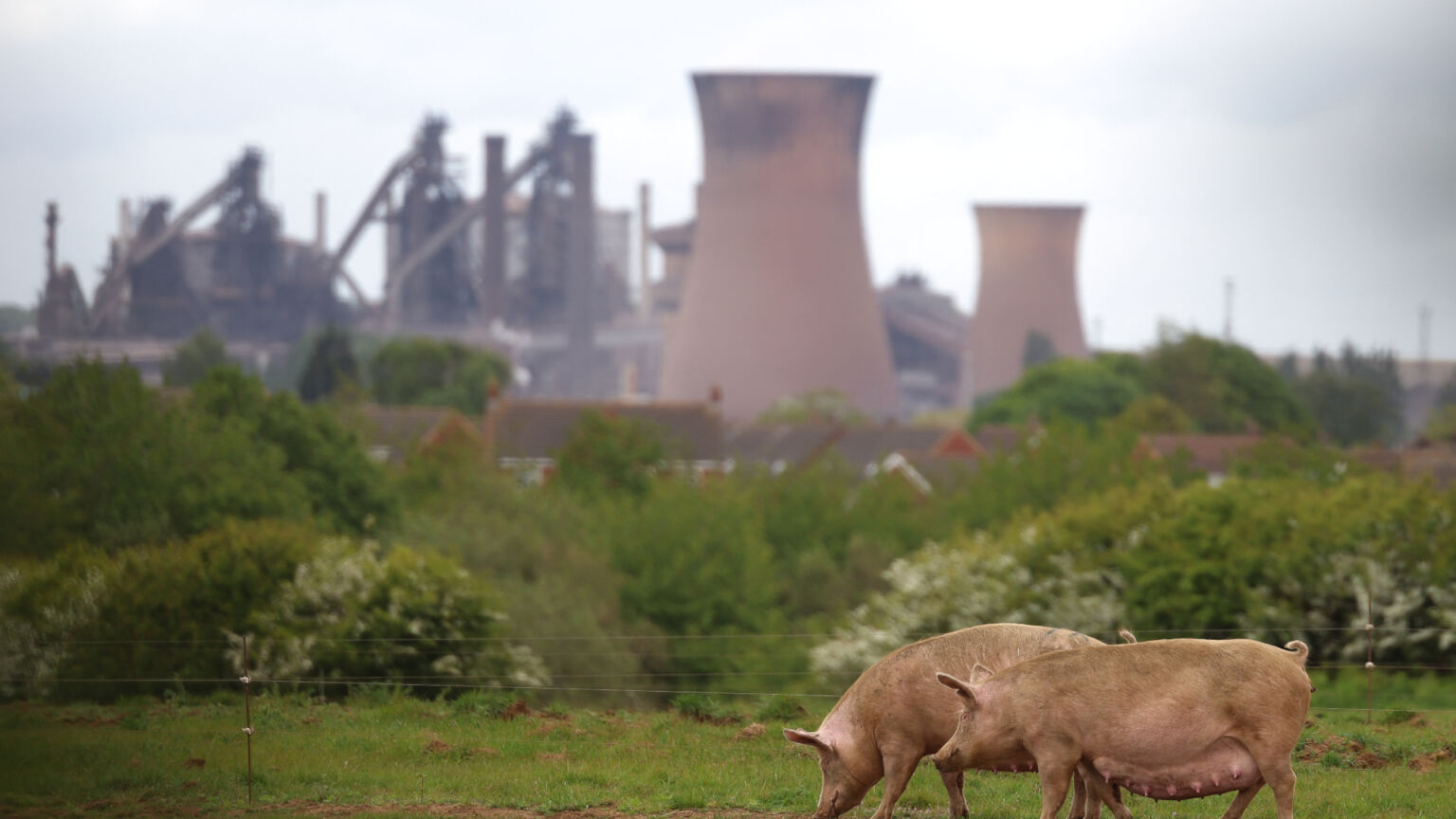
In some boroughs of Lancashire, it is said that when a southerner next turns their attention to the economic fortunes of the north, then the Gates of Heaven shall open, and the end times will spill out upon all the world above Solihull. If I were a young man or young woman from the north, and I wanted to bet my deliverance from the apocalypse on something, betting it on Whitehall not caring about my hometown would look pretty sound to me.
Then again, looking around, I could be forgiven for thinking the apocalypse had already arrived. Because if I’m young and I live in Doncaster, if I should land a minimum-wage job, I’ll already be making 82 per cent of my region’s median salary. That means the wage gap between me, fresh in the door, and the grafter with 15 years of experience comes down to a few pence an hour. I, at the outset of my career, have almost peaked. At the bottom.
If I’m in Sunderland, the minimum wage is 80 per cent of the median. Wigan, a fraction of a per cent above that, maybe. And if I were from Burnley, Huddersfield or Middlesbrough, the Centre for Cities Outlook 2025 would tell me I lived in one of the lowest-paid towns in the country, where the average annual salary now sits about £20,000 below London’s. If I were from the north-east more broadly, my median weekly pay would be approximately £200 below the London median. If I were from Middlesbrough specifically, roughly 30 per cent of my working-age neighbours would be NEET (not in education, employment or training), and the closure of the SSI steelworks at Redcar in 2015 would still be the local economic event most likely to come up in conversation.
None of these numbers is news to anyone who lives in any of these places. They were the entire point of the Tory canard of ‘Levelling Up’, which must seem like the cruellest punchline yet of a very long joke in these places, a joke that just gets sadder every time.
It’s not difficult to see how it got this way. All these towns lost their industries in two recessions, and by deliberate policy – namely, the pursuit of Net Zero, and the consequent green deindustrialisation of Britain. More than six million manufacturing jobs have disappeared since the mid-1960s. The coal industry declined from 240,000 workers in 1981 to 6,000 by 2011. British Steel has shrunk from 268,000 employees in the 1960s to its present rump of 3,500. Ravenscraig, the last Scottish steelworks, closed in 1992. What grew in the gaps was logistics, care work and retail – sectors that pay at or near the legal minimum.
And then, of course, there is the almighty wage depressant of unchecked migration, that miracle phenomenon which puts downward pressure on wages below the 20th percentile of wage distribution.
The economic demise of the north has become a multi-generational fact of life. But facts of life can have solutions.
What is needed is what has been in absence since the start: profound economic imagination and industrial will. The north of Britain has not been Chernobylised. There is no reason why industry cannot still flourish there. South Korea, Singapore and Bavaria each took a region that had been written off and rebuilt it within a generation. The recipe was the same in each: special economic zoning anchored on specific sectors, technical colleges training for the industries in those zones, and a state willing to back the result against a financialised economy’s preference for distribution warehouses.
Nor is there any greater method of investment in youth than this. Sod youth clubs, I want a million apprentices trained a year across hundreds of recognised occupations, with two-thirds offered jobs by the firms that trained them. The Germans can do it. We have a history of equalling them, don’t we? And with it all must also come a permanent reduction in low-skilled migration, so the labour market tightens and wages rise on their own, without an act of parliament every April to raise the wage floor.
Of course, Whitehall comes into this again not merely because its industrial strategy is dead on arrival, but because what were once both the engine of our industry and the wellspring of our skills base were public works. In the 1960s, public-works investment and entitlements were an equal share of GDP. Now, we spend £10 on entitlements for every one pound we spend on infrastructure. Our decline is etched into these figures. It can be revised out again.
That’s how The North Gets Its Own Back – the industries, the wages, and the right of a young person in Burnley or Doncaster to make a living where they come from. Neither the vision nor its fulfilment will come from the players currently on the board. But it is not written in any book that the immiseration of all those above the Watford Gap must be permanent. Those who want to work for Britain’s revival should look north first.
Maxi Gorynski is an engineer and founder of Progress, an organisation dedicated to a brighter future for Britain. He also maintains Heir to the Thought on Substack.


Brad Raffensperger, the Georgia Secretary of State and candidate for governor, was the target of a credible written threat, his campaign said Tuesday.
Campaign spokesperson Ryan Mahoney said the threat came in the form of an apparent manifesto to a sheriff’s office in Mississippi that featured a photo of Raffensperger with the word “boom” scrawled across his face.
It was unclear if it was related to the discovery on Tuesday — a day after the campaign was notified about the written threat — of a suspicious object found inside a vending machine at a campaign stop in Macon that prompted the campaign to move the event outside.
The manifesto was not released and the motive was not publicly known, but the incidents are an apparent reminder of the potent threat of political violence in the U.S. especially for a high-profile candidate such as Raffensperger, who drew fierce criticism for resisting President Donald Trump’s efforts to resist the results of the 2020 election in Georgia.
“When you stand on principle, when you do the right thing, and when you put people ahead of politics, not everyone will like it. In fact, some people may try to intimidate or do you harm,” Raffensperger said in a statement posted to social media. “So yes, we are dealing with an active threat. And no, I will not back down.”
The Atlanta Journal Constitution first reported the written threat.
The suspicious object was detected by a law enforcement canine at the Middle Georgia Regional Airport where Raffensperger was set to hold a campaign event later in the day. The Bibb County Sheriff’s Department said in a news release later that there were no hazardous devices detected, but did not provide specifics of what was discovered.
The campaign went ahead with the scheduled event, opting to hold the gathering outside in the parking lot instead.
No arrests have been made.
Georgia State Patrol is leading the effort with support from the Georgia Bureau of Investigation and the FBI, Mahoney said, and the secretary will continue campaigning in the last week ahead of Georgia’s May 19 primary with heightened security.
“The secretary of state’s office has a law enforcement unit, so we’ll start traveling with a handful of those guys until the threat is alleviated,” Mahoney said.


The presence of the Palestinian flag in European stadiums is no longer an exceptional event or a fleeting snapshot linked to a match or celebration.
Rather, it has become a recurring sight within the wider world of football, reflecting the transformation of the sport from a game into an open space for the expression of stances, symbols and identities.
During Barcelona’s celebrations of their La Liga title in Plaça de Catalunya, the scene was not limited to Catalan flags and the atmosphere of the victory.
The Palestinian flag appeared amongst the crowds, raising a question broader than the event itself: why does this presence recur in European stadiums, particularly in Spain?
The answer does not lie in a single moment but in a broader context.
WATCH: Palestine’s flag raised at La Liga title parade
In Catalonia specifically, the stands have long been associated with the idea of symbolic expression, whether at Barcelona matches or on other occasions. Take the match between the Catalan and Palestinian national teams, which from the outset carried a dimension that went beyond the sporting nature of the event towards a clear message of solidarity.
But solidarity does not stop at the borders of Catalonia.
In recent years, similar scenes have been repeated in various European stadiums, where fans of multiple clubs have raised Palestine’s flag at domestic and continental matches, in moments not directly linked to the cause. Yet they reflected a gradual shift in the very function of the stadium itself, from a place of support to a space for expression.
This recurrence calls for a deeper interpretation: football is no longer isolated from the global context but has become part of it.
Stadiums are where culture and politics collide
Fans, in many cases, no longer view the match merely as a sporting event but as an opportunity to convey a message, affirm a stance, or highlight an identity. It is precisely here that Palestine’s flag emerges as one of the most prominent symbols in this European context.
In Spain, sport is intertwined with the political and cultural history of cities and regions. This overlap is particularly evident in stadiums, which have never been entirely neutral spaces but rather an extension of broader social debates, where the public finds a space for indirect expression of their views.
Ultimately, no single scene can be interpreted in isolation from this accumulation.
The Palestinian flag appearing in European stadiums — whether during celebrations, matches or mass gatherings — is no longer a mere detail but an indication that the stands have become another language. A language that speaks beyond the boundaries of the pitch and writes its own messages in its own way, amidst the clamour of the world’s biggest game.
And its influence on the space has expanded over the past two years through repeated calls to expel Israel from FIFA as a result of its ongoing violations of sport in Palestine.
Featured image via Reuters/ Phil Noble
By Alaa Shamali

Market Analysis: EUR/USD Revisits Support While USD/JPY Eyes Bigger Recovery Move

Bonnie Tyler’s Team Gives Health Update After Induced Coma

Why AI is making typography a boardroom conversation

Manchester United reach agreement with Casemiro over contract clause amid transfer speculation

US brings back mandatory military draft registration

Steven Gerrard disagrees with Gary Neville over ‘shock’ Chelsea and Arsenal claim | Football

‘Cash Karegi Muniya’ Champions Women’s Financial Independence Through Music.

5 Best Ways for Students to Make Money Online in 2026 (Time, Investment & Risk Compared)

Raoul & Jack Mallers:“This Changes Everything for Bitcoin and Crypto” (New 2026 Bitcoin Prediction)
-
 Crypto World5 days ago
HarrisX Poll Found 52% of Registered Voters Support the CLARITY Act
-

 Fashion5 days ago
Weekend Open Thread: Marianne Dress
-

 Crypto World6 days ago
Upbit adds B3 Korean won pair as Base token gains Korea access
-
 NewsBeat6 days ago
NCP car park operator enters administration putting 340 UK sites at risk of closure
-

 Fashion2 days ago
Coffee Break: Travel Steam Iron
-

 Fashion2 days ago
What to Know Before Buying a Curling Wand or Curling Iron
-

 Tech3 days ago
Auto Enthusiast Carves Functional Two-Stroke Engine from Solid Metal
-

 Politics1 day ago
What to expect when you’re expecting a budget
-
 Business4 days ago
Ignore market noise, India’s long-term story intact, say D-Street bulls Ramesh Damani and Sunil Singhania
-

 Politics4 days ago
Politics Home Article | Starmer Enters The Danger Zone
-

 Crypto World7 days ago
BlackRock CEO Larry Fink Discusses a New Asset Class
-

 Tech2 days ago
GM Agrees To Pay $12.75 Million To Settle California Lawsuit Over Misuse Of Customers’ Driving Data
-
 Sports7 days ago
NBA playoff winners and losers: Austin Reaves is not loving Lakers vs. Thunder matchup, but Chet Holmgren is
-

 Entertainment6 days ago
Sarah Paulson Called Out For Met Gala ‘Hypocrisy’
-

 Entertainment6 days ago
General Hospital: Ric & Ava Bombshell – Ric’s Massive Secret Exposed!
-

 Politics6 days ago
Simon Cowell Says He Was ‘Horrible’ To Susan Boyle During BGT Audition
-

 Crypto World6 days ago
Robinhood says Wall Street is building onchain
-

 Sports6 days ago
UEFA Champions League final schedule, teams, venue, live time and streaming | Football News
-

 Entertainment7 days ago
Bold and Beautiful Early Spoilers May 11-15: Steffy Revolted & Liam Overjoyed!
-
 Entertainment6 days ago
Why David Letterman Called CBS ‘Lying Weasels’
You must be logged in to post a comment Login