The Advance Retail Sales Report from the Census Bureau showed consumer spending was more robust than expected in March. Headline sales jumped 1.7%, a sharp acceleration from February’s 0.7% rise and above the projected 1.4% growth. This
FOX Business’ Jeff Flock joins ‘Varney & Co.’ to break down the Justice Department’s criminal probe into soaring beef prices as Americans face sticker shock at the grocery store and experts point to a “perfect storm” driving costs higher.
Rising beef prices are drawing renewed scrutiny as federal investigators examine whether market dynamics or potential misconduct, are driving costs higher for American consumers.
FOX Business’ Jeff Flock joined FOX Business’ Stuart Varney on “Varney & Co.” to report on a new Justice Department criminal investigation tied to the surge in beef prices as households continue to feel the strain at grocery stores.
Advertisement
Beef on display at a grocery store in Chicago. (John Gress/Corbis / Getty Images)
Government data shows ground beef prices have surged, with the Consumer Price Index putting a pound at $6.86 in March, up from $4.64 in 2021, an increase of roughly 50%. Prices are also about $1 higher than a year ago. Steak has climbed as well, reaching about $12.73 per pound.
These concerns have reached Washington. President Donald Trump, in November, called for action on rising prices and industry practices in a post on Truth Social.
“Action must be taken immediately to protect consumers, combat illegal monopolies, and ensure these corporations are not criminally profiting at the expense of the American People,” he said.
Advertisement
FOX Business correspondent Madison Alworth reports that it’s likely the service will expand further on ‘The Claman Countdown.’
At Lombardi’s Prime Meats in Philadelphia, butcher Rob Passio said customers are adjusting their spending habits as prices rise.
“It is what it is. We gotta eat… Maybe they’re saving on other aspects… Maybe they are not going out to dinner as much. Maybe they’re… saving on their utilities,” Passio said.
Industry pressures extend beyond the checkout counter. Passio pointed to rising operational costs affecting businesses across the supply chain.
Navellier and Associates founder Louis Navellier discusses how Middle East conflict is driving oil prices sharply higher on ‘Maria Bartiromo’s Wall Street.’
“Having two businesses, everything’s high. Insurances went up, payrolls up, utilities are up. So could the meat packers at this time be like, you know what, we have to make some extra money. We have to raise the prices to cover these added expenses,” he said.
The investigation comes as the U.S. cattle herd remains at historically low levels and drought conditions continue to impact key livestock regions, factors that have contributed to tighter supply and elevated prices.
Concentrated, long/short, midcap, global developed markets. CO registered investment adviser. DISCLAIMER: Upslope Capital Management (“Upslope”) is a Colorado registered investment adviser. Upslope may only transact business in those states in which it is registered, or qualifies for an exemption or exclusion from registration requirements. Nothing published by Upslope on this or other websites should be construed by any consumer and/or prospective client as Upslope’s solicitation to effect, or attempt to effect transactions in securities, or the rendering of personalized investment advice for compensation, over the Internet. Any subsequent, direct communication by Upslope with a prospective client shall be conducted by a representative that is either registered or qualifies for an exemption or exclusion from registration in the state where the prospective client resides. For information pertaining to the registration status of Upslope, please contact the state securities regulators for those states in which Upslope maintains a registration filing. A copy of Upslope’s current written disclosure statement discussing Upslope’s business operations, services, and fees is available at the SEC’s investment adviser public information website (www.adviserinfo.sec.gov) or from Upslope upon written request. Upslope does not make any representations or warranties as to the accuracy, timeliness, suitability, completeness, or relevance of any information prepared by any unaffiliated third party, whether linked to on this or Upslope’s website or incorporated herein, and takes no responsibility therefor. All such information is provided solely for convenience purposes only and all users thereof should be guided accordingly. From time to time, Upslope may publish research reports with the aim of receiving feedback from the broader investment community. Such materials are not intended to be investment advice and should under no circumstance be considered a recommendation to take action with respect to any security. Upslope, its Managing Member, and its clients may hold positions, long or short, in such securities, and Upslope may trade without informing or updating readers. Investments involve risk and unless otherwise stated, are not guaranteed. Be sure to first consult with a qualified financial adviser and/or tax professional before implementing any strategy. Information published by Upslope on this website is not intended to provide investment, tax, or legal advice.
Bank of Queensland Limited (BKQNY) Q2 2026 Earnings Call April 21, 2026 8:01 PM EDT
Company Participants
Jessica Smith – General Manager of Investor Relations & Corporate Affairs Rodney Finch – MD, CEO & Director Racheal Kellaway – Chief Financial Officer
Conference Call Participants
Advertisement
Ed Henning – CLSA Limited, Research Division Andrew Triggs – JPMorgan Chase & Co, Research Division Andrew Lyons – Jefferies LLC, Research Division Matthew Wilson – Jarden Limited, Research Division Jonathan Mott – Barrenjoey Markets Pty Limited, Research Division Sally Hong – Morgan Stanley, Research Division Brian Johnson – MST Financial Services Pty Limited, Research Division Carlos Cacho – Macquarie Research Brendan Sproules – Goldman Sachs Group, Inc., Research Division Nathan Lead – Morgans Financial Limited, Research Division Nathan Zaia – Morningstar Inc., Research Division Matthew Dunger – BofA Securities, Research Division John Storey – UBS Investment Bank, Research Division Thomas Strong – Citigroup Inc., Research Division
Presentation
Jessica Smith General Manager of Investor Relations & Corporate Affairs
Advertisement
Good morning, and welcome to BOQ’s financial results presentation for the half year ended 28th of February 2026. My name is Jessica Smith. I am the General Manager, Investor Relations and Corporate Affairs at BOQ. On behalf of the management team, I would like to acknowledge the traditional custodians of the land we are meeting on today, the Gadigal people of the Eora Nation. We pay our respects to elders past and present.
I’m joined in the room today by BOQ’s Managing Director and Chief Executive Officer, Rod Finch; and our Chief Financial Officer, Racheal Kellaway, who will present the results. We are also joined by BOQ’s executive team. Following the briefing, there will be an opportunity for questions.
I will now hand over to Rod.
Advertisement
Rodney Finch MD, CEO & Director
Thank you, Jess. Good morning, everyone, and thank you for joining us today. Our first half 2026 results reflect disciplined execution against our strategy and
For most metal finishing businesses, energy is one of the largest operating costs on the books. Plating lines, rinse tanks, coating systems, and drying stages all run continuously, and the cumulative electricity bill reflects it.
What many operations do not realise is that a significant portion of that energy spend goes toward one of the least efficient tools on the production floor: compressed air.
Compressed air has been a default blowoff and drying method in metal finishing for decades. It handles the job well enough, but the efficiency picture is less flattering when you examine it closely. Generating compressed air typically requires ten times more energy than the actual pneumatic work being performed. Most of that energy dissipates as heat, leaks, and pressure loss before the air ever reaches the part surface.
For businesses managing tight margins in a competitive sector, this is not a theoretical concern. It is a recurring overhead cost that compounds across every shift, every month, every year.
Where the Loss Actually Happens
The physics of compressed air blowoff explains why the system is so wasteful. A compressed air nozzle at 80 PSI delivers high-velocity air at the nozzle tip, but pressure drops dramatically with distance. At six inches from the tip, a standard flat jet nozzle operating at 80 PSI retains only a fraction of its original impact pressure. Beyond that point, the air has spread and slowed to the point where its blowoff effectiveness drops sharply.
Advertisement
This means that for any application where parts need drying or blowoff at a working distance, the compressed air system has to work significantly harder than the actual process requires, consuming far more energy to compensate for the pressure loss inherent in the technology.
Add to this the losses from system leaks (industry estimates put average leakage rates at 20 to 30 percent of total compressed air output in typical facilities), pressure drop across long pipe runs, and the energy required to run the compressor itself, and the total cost of compressed air as a blowoff method becomes considerably higher than the electricity meter alone suggests.
The Alternative That Precision Manufacturers Are Moving To
Centrifugal blower systems paired with engineered air knives work on a fundamentally different principle. Rather than generating high-pressure air and accepting the energy losses that come with it, a blower system generates high-velocity, low-pressure airflow and delivers it through a precision-machined knife slot as a continuous, laminar curtain across the full width of the part or product.
The result is more uniform coverage, better impact efficiency at working distance, and dramatically lower energy consumption. Whereas a compressed air system might require hundreds of horsepower to dry a wide product format, a properly sized blower and air knife installation can achieve equivalent or superior drying performance at a fraction of the energy input.
Advertisement
In metal finishing specifically, where parts move through rinse and plating stages before reaching drying or blowoff points, the uniformity of air knife coverage also reduces defect rates. Spotting, streaking, and residual moisture that cause problems in downstream painting, coating, or inspection stages can often be traced back to inconsistent compressed air coverage. Properly engineered air knife systems for metal finishing address this by delivering an even, controlled sheet of airflow that covers the entire part surface consistently, regardless of part geometry.
What the Numbers Look Like in Practice
The energy savings from switching to a blower-based air knife system are substantial enough that payback periods are often measured in months rather than years, particularly in high-throughput finishing operations.
Consider a continuous drying application where compressed air currently requires 150 to 200 horsepower to maintain adequate blowoff across a production line. A centrifugal blower system sized for the same application might achieve the same result with 20 to 40 horsepower. At typical UK industrial electricity rates, that gap translates to tens of thousands of pounds in annual savings on a single line.
Beyond direct energy savings, businesses also report reductions in compressed air system maintenance costs, fewer part rejects due to inconsistent drying, and in some cases, the ability to increase line speeds because the blower system maintains effective coverage at higher throughput.
Advertisement
Sizing and Specification: Where Businesses Go Wrong
The most common mistake when evaluating a switch from compressed air to a blower and air knife system is treating it as a straightforward product selection rather than an engineering exercise. The blower model, knife slot dimensions, working distance, attack angle, and airflow velocity all need to be matched to the specific application. A system specified correctly for one application will not necessarily perform well in a different process, even if the parts look similar.
Key variables to establish before specifying a system include:
Part width and geometry, including any contoured surfaces that require angled airflow
Line speed and throughput requirements
The nature of what is being removed: water, rinse solution, shot blast media, or surface debris
Required working distance between the knife and the part surface
Whether the application requires ambient air, heated air, or temperature-controlled airflow
Suppliers who provide application-specific engineering rather than a catalogue recommendation will generally produce better outcomes. The difference between a correctly engineered system and an off-the-shelf approach becomes apparent quickly once production starts.
A Practical Starting Point for Metal Finishing Businesses
For operations currently running compressed air across plating lines, rinse stages, or post-coating drying, the most useful first step is an energy audit of the existing compressed air blowoff stages. Calculating the horsepower currently being consumed specifically for blowoff and drying, separate from other compressed air uses in the facility, gives you a realistic baseline against which a blower system proposal can be measured.
From there, a reputable supplier should be able to provide an application assessment and a projected energy comparison. The capital cost of a centrifugal blower and air knife installation is typically recoverable within one to two years in a high-use finishing environment, making it one of the more straightforward capital investment cases available to manufacturing businesses looking to reduce operating costs without compromising output quality.
Advertisement
In a sector where margins are tight and energy prices remain elevated, that kind of return on investment deserves serious attention from any business still relying on compressed air as its primary drying and blowoff method.
The National Disability Insurance Scheme cannot afford to be undermined by unsustainable growth in costs, the prime minister says, despite a planned overhaul sparking fears in the community.
Running a digital business is tough. Now try doing it with a government watchdog scrutinising your every move, click, and transaction. That’s daily life in the UK’s online gambling sector.
Despite drowning in red tape, it remains a wildly profitable juggernaut. If you want a masterclass in turning strict compliance into a competitive edge, this industry is your blueprint. Let’s break down the tech, the rules, and the survival tactics keeping these companies on top.
How the Consumer Market Works
Step into the shoes of a UK punter, and the sheer volume of choice is dizzying. Hundreds of licensed operators are fighting one another to offer the best slots, live tables, and sportsbooks. Because the market is so saturated, comparison sites have become the undisputed gatekeepers. Think of them like Compare the Market, but for casinos. Players don’t just blindly sign up anymore. They use these aggregators to stack up welcome bonuses, check payout speeds, and verify licenses before parting with a single penny.
To see how this works in practice, this guide offers an example of the comparison model – listing licensed casino sites by payment methods, bonus terms, and licensing authority for UK players.
The actual customer journey usually kicks off on one of these comparison hubs. Once a player finally picks a site, they hit a brick wall of mandatory identity checks, i.e., the infamous Know Your Customer (KYC) protocols. Nobody gets to deposit cash via their debit card or e-wallet until they’ve passed these strict verifications. Add these onboarding hurdles to the intense competition and heavy advertising limits, and you get a brutal reality: the cost of acquiring a new customer in UK gambling is among the highest in the entire digital economy. Operators are burning through cash just to get players through the virtual door.
Advertisement
Navigating the Regulatory Minefield
The UK Gambling Commission (UKGC) does not mess around. As the industry’s apex predator, they enforce compliance with an iron fist. Between 2023 and 2025, the government dropped a massive Gambling Act White Paper that completely rewrote the rulebook. We are talking hard limits on online slot stakes, invasive affordability checks, and even tighter ID rules. Keeping up with this is not just a headache. It is an exorbitant expense. Companies have to field massive, dedicated compliance teams just to survive the daily administrative grind.
This crushing regulatory weight is actively mutating the market. Smaller, independent casinos simply cannot afford the overhead needed to stay out of trouble. The result is a massive wave of consolidation. Corporate giants are gobbling up the smaller brands because they have the deep pockets required to absorb the costs of endless regulatory audits. If you are a small player, maintaining your profit margins under this much red tape is practically impossible.
Then you have to market the site. The industry is boxed in by increasingly strict advertising rules. There is a voluntary “whistle to whistle” ban on TV ads during live sports, and targeting users on social media is a minefield. Operators have to tread incredibly lightly. One wrong move does not just earn a slap on the wrist. It triggers seven-figure fines or the outright loss of an operating license. It is a landscape that demands constant vigilance and the agility to pivot the second new guidelines drop.
Technology and Innovation Behind the Scenes
To survive this pressure cooker, casinos have quietly morphed into elite tech companies. The games themselves have evolved from clunky digital slots into slick, immersive experiences powered by complex random number generators and live-streamed dealers. But the real magic is happening under the hood. Responsible gambling is now driven by artificial intelligence. Operators deploy sophisticated AI to watch player behaviour in real time. If the algorithm spots someone chasing losses, making unusual deposit patterns, or playing for too long, it triggers an instant intervention. It is a strict regulatory mandate, but smart brands are using it to demonstrate their commitment to player safety.
Advertisement
The way money moves has also been completely overhauled. When the UK banned credit cards for gambling, players shifted toward digital e-wallets and open banking tech like Trustly. Crypto casinos are making noise globally, but they mostly operate in grey markets outside the UKGC’s reach. That leaves mainstream UK operators constantly refining their traditional payment gateways to make deposits and withdrawals as smooth as possible. In a market where loyalty is razor thin, a delayed payout can damage a brand’s reputation overnight.
Fuelling all of this is a massive reliance on data. Operators are walking a tightrope. They use deep player analytics to deliver targeted marketing, while simultaneously using that same data to spot problem gambling. It is a fascinating tension. The companies winning the market are the ones using advanced analytics to predict what players want while keeping them safe. They are proving that consumer protection and commercial success can coexist.
Business Lessons from a Regulated Digital Market
If there is one major takeaway for the wider business world, it is this: high regulatory barriers create powerful competitive moats. The cost of getting things wrong is enormous. When regulatory fines routinely hit the millions, compliance is not just an HR issue. It dictates every priority from the boardroom down. A single failure can wipe out months of profit and damage a brand’s reputation. Because of this, proactive risk management has shifted from an optional extra to the core of the business.
The compliance frameworks and identity verification tools forged in the online gambling sector are becoming increasingly relevant to other industries. Fintech, cryptocurrency, and age-restricted e-commerce are all facing similar regulatory scrutiny. They could learn a great deal from how gambling operators manage their obligations. Building a robust compliance engine should not be viewed as a tax on doing business. It is a strategic advantage. It protects companies from catastrophic fines and builds trust with a sceptical public. Businesses that adopt these standards now will be far ahead when regulators inevitably tighten their grip.
Advertisement
The UK casino market proves that heavy regulation does not have to suffocate a digital industry. By treating compliance as a feature rather than a burden, these companies have built resilient empires. As governments tighten control over the broader internet, the survival tactics perfected by gambling operators will become the standard playbook for everyone else.
TUCSON, Ariz. — More than 80 days after 84-year-old Nancy Guthrie was abducted from her Catalina Foothills home, authorities continue to treat the case as an active kidnapping investigation, with the FBI now analyzing potentially critical DNA evidence including a hair sample recovered from the property and no arrests made despite thousands of tips.
Nancy Guthrie Kidnapping Update: Chilling New DNA Breakthrough as Search Hits 80 Days
Pima County Sheriff Chris Nanos and federal agents have not named a suspect or established a clear motive as the search for the mother of NBC “Today” show co-anchor Savannah Guthrie stretches into its third month. Guthrie was last seen around 9:45 p.m. on Jan. 31, 2026, after family members dropped her off following dinner. She was reported missing the next morning when she failed to appear at church.
Investigators believe she was taken against her will in the early morning hours of Feb. 1. Drops of her blood were found on the front porch, and doorbell camera footage released by the FBI shows a masked, gloved figure approaching the door. The suspect removed the front-door camera. Additional surveillance images later revealed a similar masked individual at the home three weeks earlier on Jan. 11.
The FBI has taken a leading role, deploying advanced forensic resources. Sources indicate the bureau recently received and is analyzing DNA evidence from Guthrie’s home, including a hair sample collected in February. Next-generation forensic technology is being used in hopes of generating a usable profile that could identify the perpetrator. Gloves found up to 10 miles away have also been examined for DNA, though results have not been publicly detailed.
On April 18, Sheriff Nanos publicly denied a viral rumor that a new person of interest had been detained, responding with a blunt “Nope” when asked. The denial came after social media speculation suggested a breakthrough, underscoring the challenge of separating facts from unverified claims in a high-profile case that has drawn intense national attention.
Advertisement
The family offered a $1 million reward in late February for information leading to Nancy Guthrie’s recovery, with Savannah Guthrie appearing in a video message pleading for help. “Someone knows how to find our mom and bring her home,” she said. The family has emphasized that the reward applies only to information resulting in her safe return, consistent with FBI guidelines.
Savannah Guthrie returned to “Today” in March after taking time away, sharing emotional reflections on the agony of uncertainty. In interviews, she described the moment she learned her mother was missing and the family’s fear that it could be linked to her own public profile. Authorities have cleared all immediate family members, including siblings and spouses, as suspects.
The investigation has generated more than 30,000 tips, with agents pursuing leads across multiple states. Surveillance footage from the neighborhood and a nearby vacant home has been reviewed, but additional images from other cameras at Guthrie’s property reportedly showed no new suspicious activity. A Bitcoin account linked to early ransom demands has also been examined, though no confirmed payment or resolution has been reported.
Forensic experts and former investigators have noted the case’s unusual elements. The suspect’s apparent familiarity with the property — including a prior visit captured on camera — has led some to suggest the perpetrator may have had some prior connection to Guthrie or scouted the location. Others point to the lack of forced entry signs beyond the blood evidence and the removal of the camera as indicators of a planned abduction.
Advertisement
Pima County authorities have conducted multiple searches in the Catalina Foothills area and surrounding desert terrain, using dogs, drones and ground teams. The rugged landscape and passage of time have complicated efforts, with experts warning that prolonged cases become significantly harder to resolve as physical evidence degrades and witness memories fade.
The case has captivated the public, in part because of Savannah Guthrie’s visibility as a morning news anchor. Coverage has included daily updates in the early weeks, though new developments have slowed in recent days. Rumors, including unverified ransom notes sent to media outlets and claims of assaults or additional evidence, have circulated widely but been largely debunked or unconfirmed by officials.
Nancy Guthrie, a longtime Tucson resident and widow, lived independently despite her age. She had a pacemaker, and its disconnection from her phone around 2:30 a.m. on Feb. 1 provided an early timeline clue. She was taken without shoes and in pajamas, according to sources, adding to the sense of sudden violence.
As the search enters its 80th day, the FBI continues to urge anyone with information to contact authorities or submit tips anonymously. The agency maintains a dedicated page for the case with contact numbers and reward details.
Advertisement
Community support has remained strong, with local volunteers and prayer vigils continuing even as national headlines shift. Tucson residents have expressed shock that such a crime could occur in a quiet, upscale neighborhood.
The investigation remains open and active, with Pima County Sheriff’s Office and FBI agents collaborating closely. No timeline has been given for resolution, and officials have repeatedly asked the public to avoid speculating on unverified social media claims that could hinder progress.
For the Guthrie family, the prolonged uncertainty has been described as excruciating. Savannah Guthrie has balanced professional duties with private grief, occasionally sharing messages of hope while acknowledging the family’s pain.
As April 21 unfolded with no major new announcements, the focus remained on forensic analysis and tip follow-up. Advanced DNA testing could prove pivotal if it yields a match in national databases. Meanwhile, the absence of a named suspect or clear motive keeps the case shrouded in mystery more than 11 weeks after Nancy Guthrie disappeared from her home.
Advertisement
The story of an 84-year-old woman taken from her bed in the night has resonated far beyond Arizona, raising broader questions about vulnerability, public safety and the challenges of investigating stranger abductions in an era of widespread surveillance. For now, the search continues, with authorities and the family holding onto hope that answers — and Nancy Guthrie — will eventually be found.
LOS ANGELES — Luka Doncic has begun a controlled swing progression in his recovery from a Grade 2 left hamstring strain, raising hopes that the Dallas Mavericks superstar could return to full strength well before the NBA Finals if his team advances deep into the 2026 playoffs.
Luka Doncic
The 27-year-old Slovenian sensation suffered the non-contact injury on April 2 during a blowout loss to the Oklahoma City Thunder. An MRI confirmed the moderate strain, which typically sidelines players for three to six weeks. However, Doncic and the Mavericks have pursued an aggressive yet cautious rehabilitation plan, including specialized treatment in Europe, that has accelerated his timeline and boosted optimism inside the organization.
As of April 21, Doncic has returned to the practice court for limited, non-running basketball activities. He has started swinging a bat in controlled sessions — a positive sign that the hamstring is responding well to therapy. Mavericks head coach Jason Kidd told reporters Monday that Doncic is in “good spirits” and remains highly motivated, describing his attitude as “focused and competitive.”
Sources close to the team say Doncic has been symptom-free in daily activities for more than a week and is progressing through med ball throws and light throwing drills without hesitation. The next major milestones will be advancing to hitting off a tee, soft toss, and eventually full-speed running and game-like movements. A minor-league rehab assignment could follow if he clears those phases without setbacks.
Medical experts note that Grade 2 hamstring strains carry a high risk of re-injury if rushed, but early indicators for Doncic are encouraging. His decision to seek advanced treatment in Spain, including stem cell therapy and platelet-rich plasma injections, has been credited with speeding the healing process. The Mavericks medical staff, in coordination with Doncic’s personal team, continues daily monitoring with strength tests, flexibility assessments and gradual loading.
Advertisement
Kidd has repeatedly emphasized patience. “We’re not going to put him out there until he’s 100% and ready to be the Luka we know,” the coach said. “His long-term health is the priority.” The earliest realistic return date appears to be early to mid-May, which could position him for the later stages of a first-round series or the start of the conference semifinals if the Mavericks advance.
The injury occurred at a critical moment for Dallas. Without Doncic, the Mavericks have relied on a mix of veteran leadership and younger contributors to stay competitive. His absence has been noticeable, particularly in scoring, playmaking and defensive versatility. However, the team’s depth has allowed it to remain in playoff contention, keeping alive the possibility of a deep postseason run with their star back on the floor.
Doncic averaged a league-leading 33.5 points per game this season before the injury, showcasing his signature step-back threes, elite vision and physical dominance. His return, even at less than 100%, could dramatically shift a playoff series. Full recovery before the NBA Finals would give the Mavericks a legitimate chance to compete for the title, especially if other key players also regain health.
For now, Doncic’s mood has been described as positive and determined. Teammates report he has stayed engaged in film study, team meetings and light practice sessions, maintaining his leadership role from the sidelines. His work ethic during rehab has impressed the coaching staff and medical team, reinforcing confidence that he will return stronger and smarter about load management.
Advertisement
The broader NBA community is watching closely. Rival executives and analysts have noted the challenge of facing a healthy Luka Doncic in the postseason. His absence has also sparked conversations about injury prevention, load management and the physical toll of a long season on superstar players who handle heavy minutes and multiple responsibilities.
Fantasy owners and bettors have closely monitored every update, with social media filled with speculation about return timelines. Optimistic projections suggest a possible return in early May, while more conservative estimates point to mid-to-late May. The Mavericks are expected to provide regular updates as Doncic progresses through hitting phases.
Doncic’s history of resilience supports the hope for a full recovery. He has overcome previous injuries and skepticism throughout his career, consistently delivering elite production when healthy. This latest setback tests that resilience once more, but early signs of progress in swing progression suggest he is on track.
As the playoffs unfold without him in the immediate lineup, the Mavericks will lean on collective effort while keeping the door open for their superstar’s potential heroics. A 100% healthy Luka Doncic before the NBA Finals remains a realistic possibility if the team advances and the rehab continues smoothly.
Advertisement
The coming weeks will be critical. Any advancement to full-speed running, sprinting or game-contact drills would signal a major step forward. Until then, the Mavericks and their fans will wait patiently, hoping the careful approach pays off with a fully recovered star ready to lead them deep into June.
Sen. Thom Tillis, R-N.C., tells FOX Business he won’t back Kevin Warsh to lead the Fed while DOJ pursues criminal investigation tied to Chair Jerome Powell.
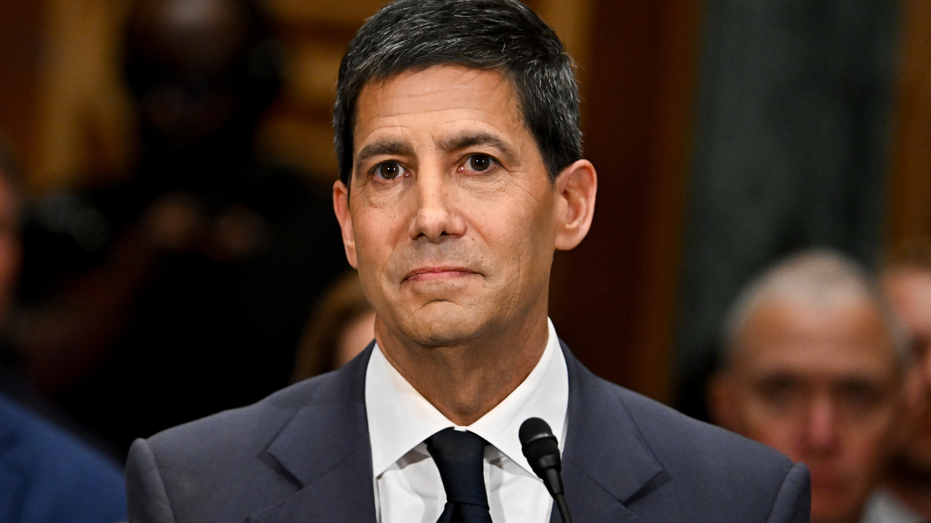
Sen. Thom Tillis, R-N.C., said Tuesday he will continue to block Kevin Warsh’s confirmation to lead the Federal Reserve after a heated hearing, arguing the process cannot move forward amid an ongoing Justice Department investigation involving Fed Chair Jerome Powell.
“At the end of the day, there’s only one thing that solves this problem, and it’s getting rid of the bogus investigation that started without the president’s knowledge and has created this situation,” Tillis told FOX Business outside the hearing room.
Advertisement
“If we want to get Mr. Warsh confirmed, we need to drop the investigation,” Tillis added, saying it could be done in “five minutes” and urging the DOJ to act.
Kevin Warsh was tapped by President Donald Trump in January to lead the Federal Reserve. (Graeme Sloan/Bloomberg via Getty Images)
Tillis, who met with Warsh in March, praised the former Fed governor’s credentials and signaled support during the hearing.
“You have extraordinary credentials – they’re impeccable. The problem I have is where we are right now,” Tillis said, pointing to the Justice Department probe involving Powell.
Advertisement
On Jan. 11, Powell confirmed that the DOJ had opened a criminal investigation into his congressional testimony related to the renovation of the Federal Reserve’s two historic buildings on Washington, D.C.’s National Mall.
Federal Reserve Board Chairman Jerome Powell is expected to complete his term as head of the central bank next month. (Brendan Smialowski/AFP/Getty Images)
Powell called the probe “unprecedented” in a video statement and framed it as part of what he described as ongoing threats from President Donald Trump against the central bank. His public response – after days of private consultations with advisors – marked a sharp departure from his typically measured approach.
The investigation marks one of the most challenging stretches of Powell’s eight-year tenure leading the Fed.
Federal Reserve Chairman Jerome Powell confirmed the central bank had been served by the Justice Department over allegations related to congressional testimony on the renovation of the bank’s headquarters. (Credit: Federal Reserve)
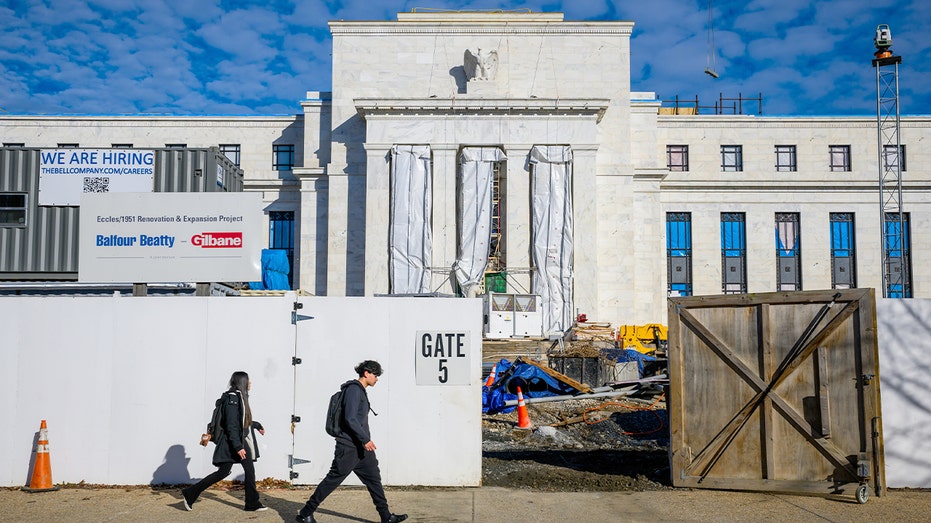
The renovation of the Federal Reserve’s two main office buildings in Washington’s Foggy Bottom neighborhood is estimated to cost $2.5 billion and is being funded by the central bank itself, not by taxpayers.
The Fed is self-financing and does not rely on congressional appropriations to cover its operating expenses, which include employee salaries, facilities maintenance and the current renovation. Its primary income comes from interest earned on government securities and fees charged to financial institutions.
In June 2025, Powell told members of the Senate Banking Committee, “There’s no new marble. There are no special elevators. They’re old elevators that have been there. There are no new water features. There are no beehives, and there’s no roof garden terraces.”
Construction continues at the Marriner S. Eccles Federal Reserve building Jan. 12, 2026. (Pete Kiehart/Bloomberg via Getty Images)
Powell also told lawmakers that no one “wants to do a major renovation of a historic building during their term in office.”
“We decided to take it on because, honestly, when I was the administrative governor, before I became chair, I came to understand how badly the Eccles Building really needed a serious renovation,” Powell said, adding the building is “not really safe” and not waterproof.
He also said the cost overruns are due, in part, to unexpected construction challenges and the nation’s inflation rate.
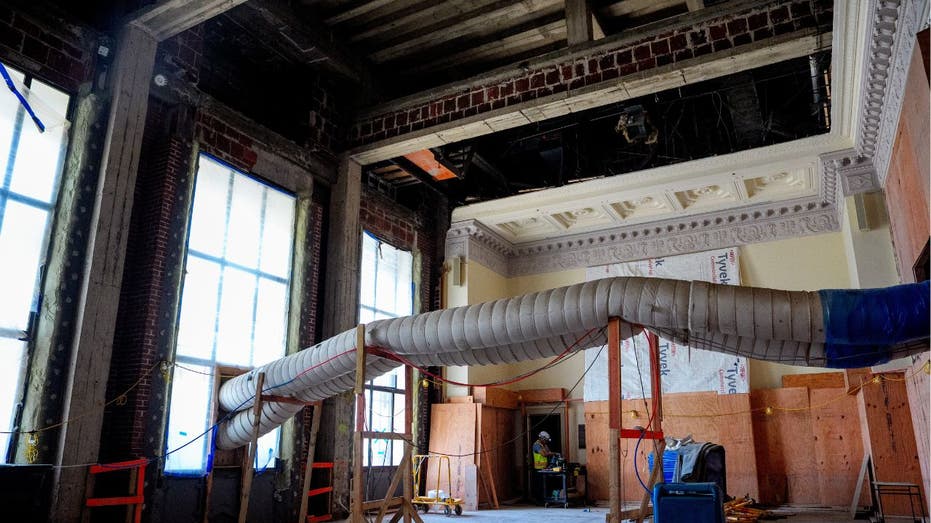
The main two-story boardroom of the Marriner S. Eccles Federal Reserve building during a media tour of the renovation of the central bank’s headquarters July 24, 2025. (Andrew Harnik/Getty Images)
The project is expected to be completed in the fall of 2027, and Washington-based employees are slated to begin working in the building in March 2028.
Aside from the probe involving Powell, the Supreme Court is weighing limits on the Fed’s independence and rising cost-of-living pressures are testing Trump’s economic agenda.
Advertisement
In short, the stakes for the next chair are intensifying.




























































You must be logged in to post a comment Login