The Xbox has a serious identity crisis (Microsoft)
As Game Pass undergoes a major overhaul and Project Helix edges closer to release, GameCentral asks whether the glory days of the Xbox 360 will ever come again.
When Phil Spencer was still in charge of Xbox, he used to balk at the idea that the Xbox 360 was the golden age of the brand, arguing that there are more people playing Xbox today (by which he meant the console, PC, and streaming) than there ever was in the late 2000s. But that was missing the point. The Xbox 360 maintains its reputation as the best Xbox console for many reasons but the most important is that it was the only time Microsoft was leading the conversation in the industry.
The Xbox 360 sold less than both the PlayStation 3 and Wii and yet still most people refer to that generation as the Xbox 360 era. That’s not because anyone cares how many it sold but because it set the pace for the generation, in terms of introducing new ideas – from indie downloads to Achievements – and had better first party support than Sony, while being the lead format for almost all third party games.
It’s a common argument that competition benefits everyone and the Xbox 360 is clear proof of that. Without Xbox keeping Sony on their toes, the introduction of online features to PlayStation formats would have been much slower. The PlayStation 4, in particular, was a pointed response to the lessons learned from Xbox and the console’s outstanding first party line-up would likely have never existed without its stimulus.
Advertisement
Despite all Microsoft’s money they never again had that sort of influence over the games industry, with the Xbox One selling less than the Xbox 360 and the Xbox Series X/S less than both. Something had to change and inevitably that meant replacing Spencer, with new boss Asha Sharma – who has no experience in the games industry and barely seems to have played any games before.
That should not count against her though, as many execs have little or no experience in game development (reportedly, legendary Nintendo boss Hiroshi Yamauchi could barely use a controller) and Spencer being a self-avowed gamer did not seem to help anything.
Expert, exclusive gaming analysis
Sign up to the GameCentral newsletter for a unique take on the week in gaming, alongside the latest reviews and more. Delivered to your inbox every Saturday morning.
Advertisement
Sharma’s first few months on the job have mostly consisted of mood talk, as she insists that she won’t ‘chase short-term efficiency or flood our ecosystem with soulless AI slop’, despite that being precisely what everyone expects from Microsoft at the moment.
Everyone loves the Xbox 360 (Microsoft)
It’s easy to assume that the next gen Project Helix hardware was designed with AI in mind, given Microsoft’s attachment to the technology and the threat of not just Gaming Copilot but generating whole games with AI. In addition, Sharma’s background is with generative AI, so backing away from it completely seems very unlikely.
The first part of her statement is just as important, as one problem with Xbox since the very beginning has been short-termism. Perhaps blinded by its own wealth, Microsoft is always looking for a short cut and time and again has proven itself happy to rip up the roots of the business just to chase the latest trend.
Its support for the original Xbox was cut short as soon as they realised it wasn’t an instant hit, the Xbox 360’s time in the sun lasted only a scant few years before the introduction of Kinect (an attempt to copy the Wii) and the deterioration of its first party studios, the Xbox One started its life trying to be anything but a games console, and the Xbox Series X/S bet everything on Game Pass… and lost.
Advertisement
Game Pass has not worked out how Microsoft expected (Microsoft)
The big annoucement this week was that Game Pass prices are being cut, following a previous increase, and that Call Of Duty will no longer be part of it from day one. That’s a sensible U-turn, but there’s still no sign that Microsoft has accepted the fact that most people have no need for a video game subscription service and don’t want to pay for games that way.
With rumours of another massive round of lay-offs coming up, it’s unclear what other changes Sharma will make. The return of Halo and Gears Of War will be important steps forward, but they were initiated before she started. There’s been talk of her bringing back console exclusives but that seem very unlikely given how small the Xbox Series X/S userbase is and how unlikely it is Project Helix will do better (not least because, according to Microsoft, it will be very expensive).
For a long time now, it’s seemed as if Microsoft is just treading water, aware that they are unable to break Sony’s stranglehold on the games market. It often feels like they’re just biding their time until video game streaming becomes practical for everyone – at which point they will have an instant and potentially unassailable advantage over their rivals. And yet playing the waiting game doesn’t seem to be Microsoft’s style.
The company’s impatience is most obvious in its constantly changing marketing focus, which ping pongs from one feature to another with the attention span of a bored toddler. Sharma was praised for killing the ridiculous ‘This is an Xbox’ campaign, almost as soon as she took over, but at the same time that means yet another switch in brand messaging.
Another failed marketing campaign (Microsoft)
There are some things that never change at Microsoft, including the way current and previous execs always seem to talk as if Xbox is a market leader, despite the fact that it’s very clearly not. Sharma immediately fell into this trap and while it wouldn’t matter so much if it was just an act, most execs seem to end up believing their own hype, which then goes on to adversely influence their decision making.
Xbox’s other big problem has been its inability to appeal to anyone outside of North America and the UK. Occasionally, it half-heartedly acknowledges the importance of Japan but it has never had the exclusive games or publisher relationships necessary to succeed there. Continental Europe has been much the same, with Xbox’s marketing attempts amounting to nothing more than the occasional FIFA bundle (‘They like soccer there, right?’) while they give the job of translating the Xbox dashboard and documentation to AI, with predictably incoherent results.
Advertisement
By this point, these failings seem baked in at Microsoft but the biggest issue for Sharma is the simple question of what is the purpose of Xbox? What is its trying to do or be? As a console format it’s never been less popular and its ecosystem offers little tangible appeal to anyone else. People can be drawn into it via the right kind of exclusives but, as mentioned, that prospect seems unlikely.
This year’s Forza Horizon 6 will be a huge hit on PlayStation 5, and there’s a chance the Fable reboot will be too, but that doesn’t make Xbox any different from a third party publisher like EA or Ubisoft. Which is fine, as long as you’re making money, but Microsoft’s aspirations have always been greater than that.
They got into the games industry to prevent Sony from taking over the living room with PlayStation, a concern that smartphones rendered irrelevant. So what is the goal now? Xbox Game Studios is already the biggest games publisher in the West, simply by virtue of owning Activision Blizzard, but so what?
Advertisement
Despite that, Xbox’s influence on the games industry has never been more insubstantial. Neither friend nor foe seems to care what they do and, unlike in the Xbox 360 days, they have no big ideas that everyone’s trying to catch up with and implement themselves.
That is what Is needed though and the worst case scenario is that they’ve convinced themselves it’s AI. One can only hope that the response to DLSS 5 has disabused them of that, but if they have seen sense they still need something else. Not just a selling point but a sign that they understand the games industry and its future better than anyone else.
If you’re a PlayStation owner you should hope they come up with something, so that they can in turn light a fire under an increasingly complacent Sony. Competition is good for the industry, but Xbox has not provided any for a worryingly long time.
A meeting is set to take place where the petition will be handed over.
More than 1,300 people have now signed the petition for a new walk-in medical centre, with features such as GPs, dentistry, and an ambulance bay suggested.
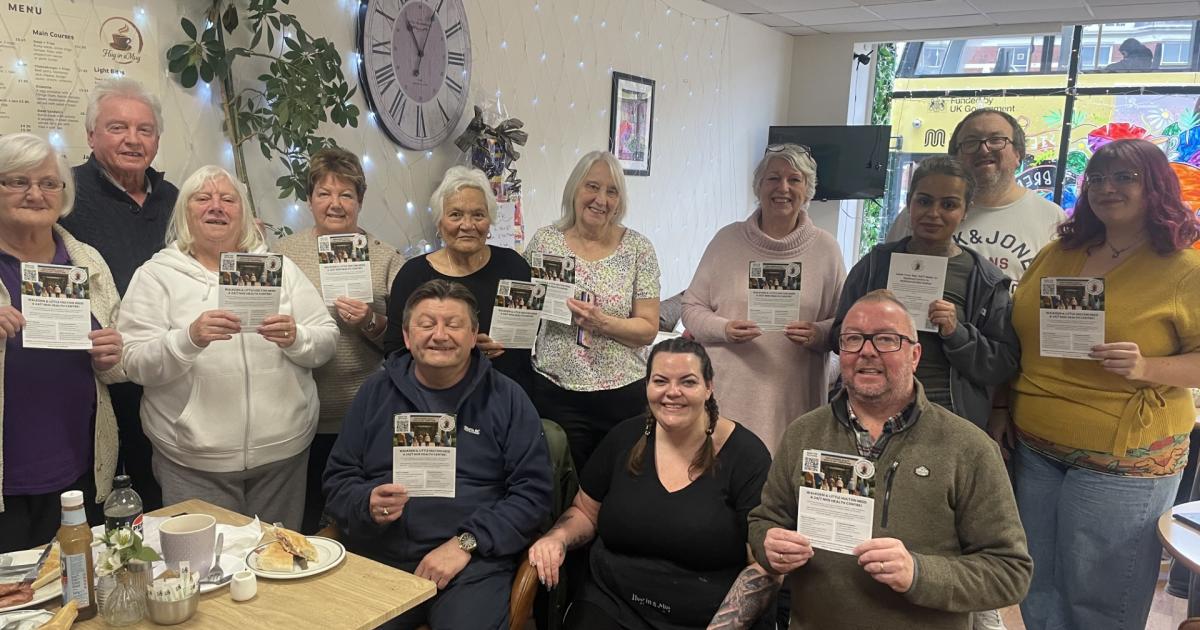
Paul Whitelegg (right) with Walkden residents (Image: Paul Whitelegg)
Paul Whitelegg, who spearheaded the campaign, said: “This is probably the largest signed petition Walkden has done and the screaming out for this service from residents is clear to see.
“We have now received a case number from the NHS ICB, and they are currently arranging a meeting with politicians, their team, and our steering group to take this even further.
Advertisement
“This is real progress – this is hope.
“We have now gathered over 1,000 signatures from local residents in support of this much-needed service.
“This campaign comes from a genuine place of concern for the health, wellbeing, and security of our community.
“Over the past few weeks, we have held three community meetings, with more than 500 residents attending to express how important accessible, round-the-clock medical care is to them and their families.”
Advertisement
Paul is co-founder of Walkden in Bloom, a community project dedicated to planting, improving, and maintaining green spaces in Walkden and Little Hulton.
Rubbish collected as part of a Walkden in Bloom litter pick (Image: Dan Dougherty)
The walk-in centre project grew directly out of Walkden in Bloom, as group members discussed what changes they would like to see made in the local area.
Walkden used to have a similar service ‘about 20 years ago’, according to Mr Whitelegg, which offered prescriptions, emergency health services, and health consultations.
Dentistry is a particular concern, as many of the local dentists are full, according to Mr Whitelegg.
Advertisement
This forces people out into Swinton, causing extra strain on services in those locations.
Writing in a post on his Truth Social platform, Mr Trump said: “Based on the fact that the Government of Iran is seriously fractured, not unexpectedly so and, upon the request of Field Marshal Asim Munir, and Prime Minister Shehbaz Sharif, of Pakistan, we have been asked to hold our Attack on the Country of Iran until such time as their leaders and representatives can come up with a unified proposal.
When Charlotte Regan’s debut feature film, Scrapper, won the grand jury prize at the prestigious Sundance film festival in 2023, it announced a filmmaker of rare instinctive warmth.
Scrapper showed Regan to be capable of rendering working-class life with tenderness, wit and a magical lightness that felt entirely her own. With her new eight-part BBC series Mint, the filmmaker turns her hand to crime drama, bringing that same sensibility to television.
Mint sits squarely within what film scholar David Forrest, in his 2020 book New Realism: Contemporary British Cinema, identified as a poetic turn in British screen culture. Where the social realist tradition (think the films of Ken Loach and Mike Leigh) favours direct, politically explicit storytelling, this newer mode prefers something more impressionistic and ambiguous. Forrest traces this tendency through filmmakers such as Andrea Arnold, Clio Barnard and Shane Meadows. Regan is its natural inheritor.
That she should apply this sensibility to a BBC crime drama was, at first, enough to raise an eyebrow. The genre’s conventions (cold proceduralism, gritty realism, familiar signifiers of deprivation) seem antithetical to everything that made Scrapper so alive – a film in which a 12-year-old girl squatting alone in a council house is the unlikely centre of a story that is both sweet and charming.
Advertisement
The trailer for Mint.
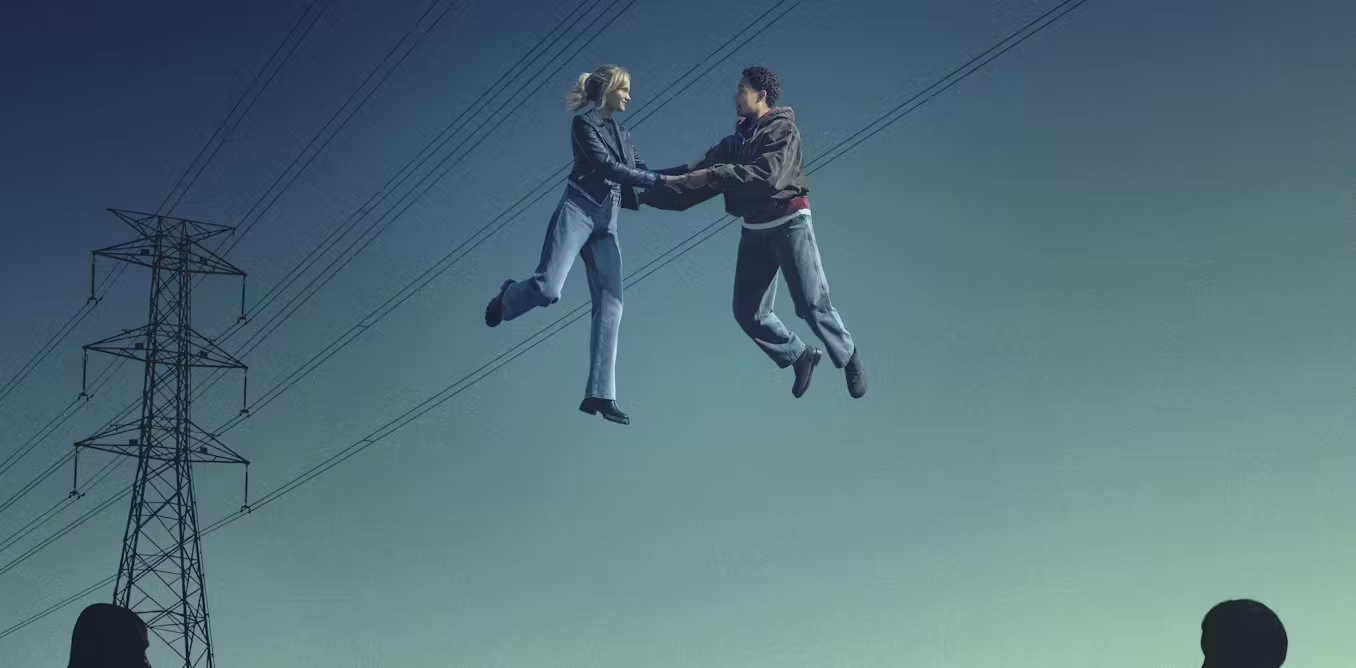
Set in Grangemouth, Scotland, amid the eerily beautiful landscape of cooling towers and housing estates, Mint is, in its first episode, unapologetically Romeo and Juliet. Shannon (Emma Laird) is the daughter of crime boss Dylan (Sam Riley); Arran (Benjamin Coyle-Larner, the rapper better known as Loyle Carner, making his acting debut) is the prodigal son of a rival family, newly arrived from London. The two are star-crossed before even exchanging a word.
They meet at a train station, lock eyes across the tracks and the air around Arran seems to catch light. This is not a metaphor. Sparks erupt around Arran’s silhouette and the camera lingers on Shannon’s face with piercing intensity. It is a visual language of magic realism shaped by Regan’s background in music videos, which she has directed since she was 15. Super 8 footage punctuates the narrative throughout the series, offering slivers of a family history that feel, texturally, as immediate as the present.
But Mint runs into difficulties when it must dramatise rather than observe. Regan’s camera is an attentive instrument, alive to the unspoken interior lives of its subjects – but lyricism alone cannot carry a story.
Advertisement
A shallow love story
Shannon and Arran’s romance, for all its visual electricity, is paper thin. Their relationship escalates from a quick encounter at a train station to declarations of deep emotional significance within the space of 30 minutes. This is not Laird’s fault – she is magnetic throughout, giving Shannon a volatile, searching quality that makes the character compelling even when the writing does not. It is a problem of the script’s pacing and, perhaps, its misplaced faith that poetic vision can do the emotional work character development has not yet earned.
Loyle Carner and Emma Laird in Mint. House/Fearless Minds/BBC
The crime world that surrounds the central romance is similarly under-explored. Sam Riley is reliably imposing as Dylan. But the gang dynamics feel sketched rather than inhabited, gesturing toward the genre’s conventions (slow-motion confrontations, coded loyalties, fathers trying to keep daughters in gilded cages) without interrogating or subverting them with any particular rigour.
There is a richer series lurking in Mint, one that more seriously pursues the feminist undercurrent running through it. At its heart are three generations of women – Shannon, her mother Cat (Laura Fraser) and grandmother Ollie (Lindsay Duncan) – watching the men in their lives perform masculinity and violence, navigating complicity and quiet resistance in equal measure.
Too often, though, visual boldness is allowed to stand in for dramatic depth, and the result, for all its beauty, is a series that dazzles more than it moves.
The Other Bennet Sister fans have fallen in love with the BBC period drama and are now looking for their next Jane Austen fix – this could be it
The Other Bennet Sister has resonated deeply with period drama fans, but as they complete the first and only season, they’re desperately seeking another Jane Austen tale.
Advertisement
Within the same universe Austen crafted, viewers can discover Death Comes to Pemberley, a narrative that continues directly from where Pride and Prejudice ended.
Much like the 2026 production, The Other Bennet Sister, this 2013 standalone series also extends Jane Austen’s Pride and Prejudice, penned by a different author. It draws from P.D. James’s 2011 novel, which employs the same characters and literary style as the original 1813 work.
Spanning three episodes, it pursues a murder mystery storyline, featuring the beloved characters Austen devotees recognise but placed in a somewhat altered setting.
The Guardian described its execution was “respectful” towards Austen’s iconic masterpiece while still managing to “stand out” as its own “very different” creation.
Advertisement
It also shares similarities with the Pride and Prejudice adaptation, as Chatsworth House in Derbyshire served as Pemberley’s exterior backdrop. This identical location featured as the estate in the 2005 film.
One viewer posted their thoughts on IMDB, saying: “If you are like me and enjoy your Pride and Prejudice and a good murder plot, then you would love this series!”
They added: “Elisabeth in particular is just like I would have imagined; she is the same spirited, outspoken person we know and love, while Darcy is more brooding, quiet and responsible (while I may have chosen other actors in terms of appearance, I think they portray the characters very well as reactions).”
Advertisement
A PopMatters reviewer wrote: “Death Comes to Pemberley, a sequel to Jane Austen’s Pride and Prejudice by P.D. James, is a worthy addition to Austen’s original, and the BBC adaptation makes that case wonderfully.”
Taking place in 1803, the programme opens six years following the union of Mr Darcy and Elizabeth Bennet, when a disappearance occurs which rocks the whole community. Following a dispute, Wickham and Denny leave in a horse-drawn carriage, and moments later, two gunshots ring out.
Upon learning of the incident and the men’s disappearance, Darcy dispatches a search team. They find Wickham in a state of hysteria, clutching Denny’s lifeless body, and the narrative unfolds revealing how this devastating death came to pass.
Advertisement
Naturally, venturing into Austen’s universe carries significant risk, as the cherished writer’s work holds almost sacred status amongst devoted readers.
Consequently, the adaptation has attracted its share of detractors regarding its depiction of certain Austen characters that have been reimagined by subsequent authors.
One viewer says on IMDB: “When you use well-known and loved characters from something as famous as Pride and Prejudice, they should at least stay faithful to their original characters. Which it does, mostly, but the portrayal of Elizabeth Bennett was just really off.”
Elizabeth is portrayed by Anna Maxwell Martin, alongside Matthew Rhys as Fitzwilliam Darcy, Jenna Coleman as Lydia Wickham and Matthew Goode as George Wickham.
Advertisement
For those seeking their next Austen-inspired drama, this makes an excellent starting point with its easily bingeable three-episode run; Death Comes to Pemberley can be streamed now on BBC iPlayer.
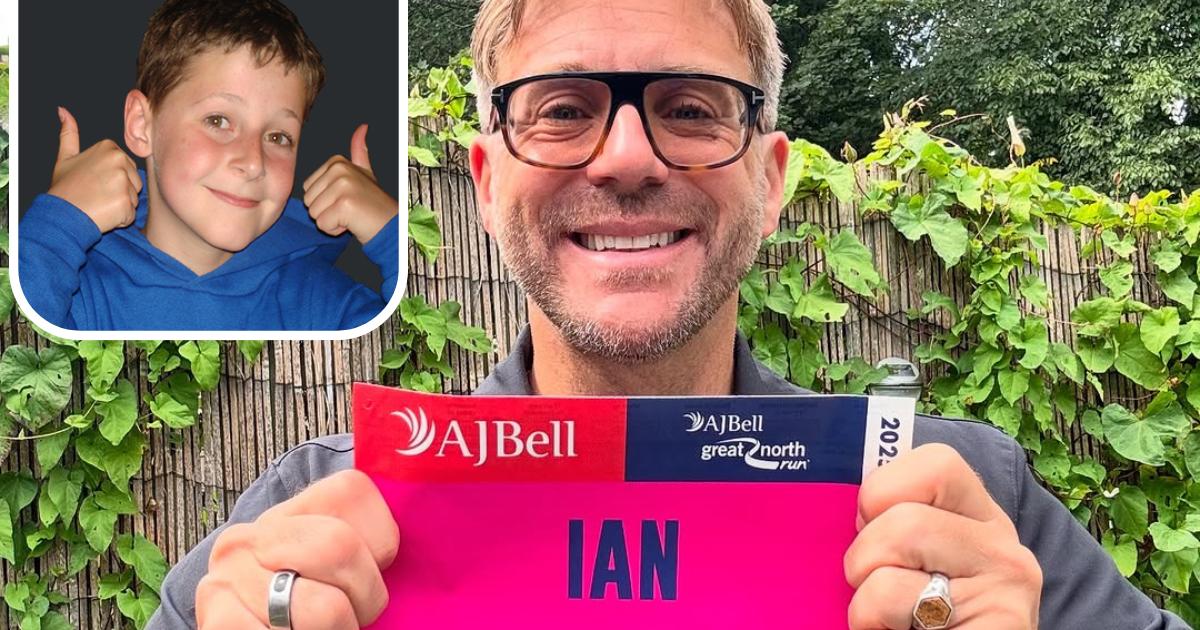
Ian McAllister, from Choppington, is raising money for the Great North Air Ambulance Service through a series of running events to mark his 50th birthday— including the 100-mile Pilgrims Ultra taking place in September.
Mr McAllister is running in memory of his nephew, Guy Comber, who died in 2013.
Guy Comber (Image: Supplied)
He said: “Living in a rural area, I see time and time again how important the requirement for an air ambulance service is.
“When my nephew, Guy, needed to get to hospital urgently it was actually the Sea King from nearby RAF Boulmer that transported him, but since this service has been disbanded the requirement for an air ambulance service is more important than ever.”
Advertisement
Guy, just eight years old when he died, is remembered as “a cheeky, smiley character” who adored his older brothers, rugby, and life on the farm.
Ian McAllister with his dog (Image: Supplied)
Mr McAllister said: “He lived, breathed, ate, slept, and dreamt of farming.
“Even at a tiny age, he’d be wandering around the stack yard in his John Deere boiler suit checking on the cattle.”
This is not Mr McAllister’s first tribute in Guy’s memory.
Advertisement
Ian McAllister with his running number (Image: Supplied)
In 2016, he marked his 40th birthday by running 400 competitive miles, raising £1,773 for the Newcastle Healthcare Charity.
That challenge included two ultra-distance events of 65 and 30 miles, five marathons, two duathlons, 11 half-marathons, a 10km race, and six park runs.
A decade later, and after three ankle reconstructions, Mr McAllister is pushing himself further than ever.
(Image: Supplied)
The Pilgrims’ Ultra follows the full length of St Oswald’s Way, finishing at Chollerford, with a 30-hour cut-off time.
Advertisement
When asked why he chose such a demanding goal, Mr McAllister replied: “To see if I can.”
He is also taking part in a range of other events, including the Bamburgh Half Marathon, Kingdom of Northumbria Ultra, Allendale Challenge, and the Priory Ultra.
Mr McAllister said: “Once the donations and good luck messages come in, it motivates me to want to continue.”
He has set a fundraising target of £500 for GNAAS.
The popular character’s well-being has been spiralling in recent months following his involvement in the cuckooing plot involving Kojo Asare (Dayo Koleosho) and Harry Mitchell (Elijah Holloway).
This week’s episodes have also seen him drop the bombshell on his son Nugget Gulati (Juhaim Rasul Choudhury) that he was the person responsible for his horrific attack in the street earlier this year.
Advertisement
The revelation left their family in tatters as Ravi’s deeply concerned partner Priya Nandra-Hart (Sophie Khan-Levy) has been at a loss of how to help him.
Fortunately, she’s able to get him down to safety and make him see that he needs help and is taken to a mental health unit.
Next week, Ravi receives a diagnosis of complex PTSD and begins his therapy sessions.
Advertisement
EastEnders has been working with Samaritans on this part of Ravi’s mental health storyline, with the show’s executive producer Ben Wadey explaining: ‘EastEnders always takes great care when researching storylines such as Ravi’s and we’re grateful to Samaritans for the advice they have given us, helping us ensure Ravi’s story is told with the care and sensitivity it deserves.’
Priya has been determined to help Ravi get the support he needs (Picture: BBC / Jack Barnes / Kieron McCarron)
Lorna Fraser, Head of Media Advisory Service at Samaritans, added: ‘Storylines responsibly reflecting experiences of mental health and suicide can help tackle stigma and encourage viewers who might be struggling to talk about how they are feeling.
‘We’re proud to have supported EastEnders with covering Ravi’s self-harm and mental health crisis sensitively and grateful for their efforts in making this as safe as possible. We hope it helps anyone watching to seek support if they need it.’
Don’t miss a Soaps scoop! Add us as a Preferred Source
As a loyal Metro Soaps reader, we want to make sure you never miss our articles when searching for stories. We have all the latest soaps news, spoilers, videos, and interviews, with a vibrant community of highly engaged readers.
Click the button below and tick Metro.co.uk to ensure you see stories from us first in Google Search.
WASHINGTON (AP) — Two U.S. officials killed in a vehicle crash as they returned from destroying a clandestine drug lab in northern Mexico over the weekend were working for the CIA, according to a U.S. official and two other people familiar with the matter.
Two Mexican investigators also were killed in the crash, which Mexican authorities said occurred while the convoy was returning from an operation to destroy drug labs of criminal groups. There have been discrepancies in the public accounts of what happened from U.S. and Mexican officials, which experts say underscores heightened American involvement in security operations in Mexico and across the region.
The CIA’s involvement was confirmed Tuesday by the three with knowledge of the crash, who spoke on the condition of anonymity to discuss sensitive intelligence matters. That the U.S. officials worked for the CIA was reported earlier by The Washington Post.
It comes after days of contradictions from Mexican and U.S. authorities about the role that American officials played in an operation to bust a narco-laboratory in northern Chihuahua state.
Advertisement
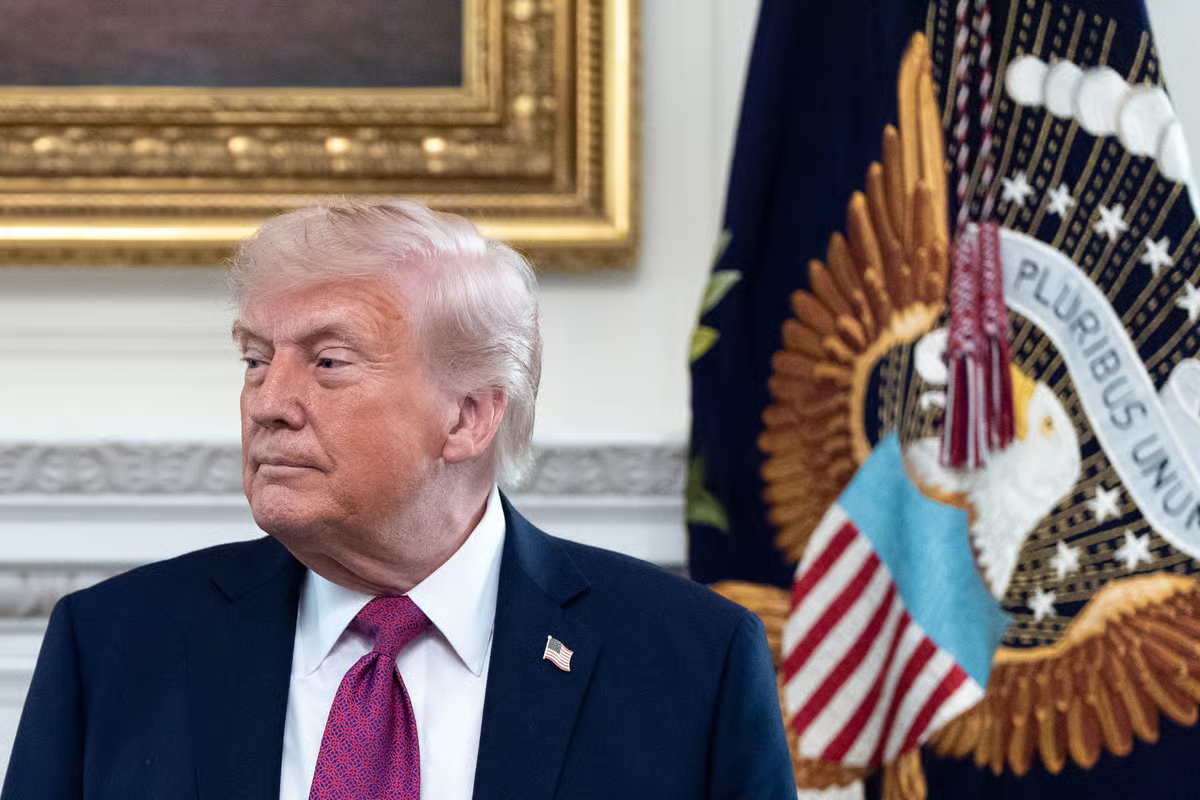
The lack of clarity from authorities reignited a debate over the extent of U.S. involvement in Mexico’s security operations as Mexican President Claudia Sheinbaum faces extreme pressure from U.S. President Donald Trump’s administration to crack down on cartels. Trump has taken a more aggressive stance toward Latin America than any leader in recent U.S. history, capturing Venezuela’s president, blockading oil shipments to Cuba and launching joint military operations in Ecuador, a country also marked by criminal violence.
Trump has repeatedly offered to take action on Mexican cartels, an intervention that Sheinbaum has said was “unnecessary.”
The U.S. Embassy declined Monday to identify the individuals or which entity of the U.S. government they worked for, but said the officials were “supporting Chihuahua state authorities’ efforts to combat cartel operations.” The embassy, State Department and CIA declined to comment on the identities of reports of CIA involvement in the operation.
Advertisement
Local Mexican officials originally claimed they were working with the U.S. on an operation, but later walked those comments back after the effort came under scrutiny from Sheinbaum.
Sheinbaum said she knew nothing of a joint operation between Chihuahua’s government and the U.S. despite reports that the Mexican army was also involved in the raid on the lab.
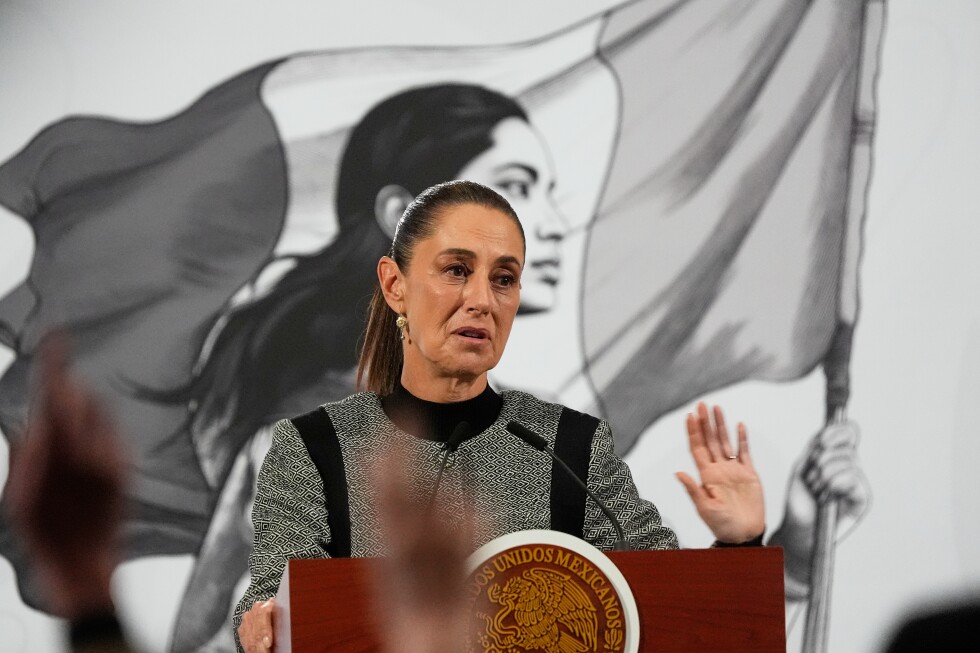
She maintained in a Tuesday press briefing that she didn’t know if the officials were part of the CIA but acknowledged that state officials and the U.S. “were working together.”
It’s a sensitive issue for the Mexican leader as she walks a careful line with the Trump administration, working to maintain a strong relationship to offset threats of U.S. intervention on cartels and tariffs while also underscoring Mexico’s sovereignty.
Advertisement
The CIA has recently expanded its collaboration with Mexican authorities, part of the Trump administration’s effort to stop the flow of illicit drugs.
The presence of U.S. intelligence officials in Mexican territory has been the subject of ongoing debate, which has only intensified after Trump’s military actions in Venezuela and Iran.
Last year, Sheinbaum said the U.S. had conducted surveillance drone flights at Mexico’s request after a series of conflicting public statements.
The most recent controversy surfaced in January over the detention in Mexico of former Canadian athlete Ryan Wedding, one of the United States’ most wanted fugitives. While Mexican officials claim he surrendered at the U.S. Embassy, U.S. authorities have described his capture as the result of a binational operation.
Advertisement
“There is a rise of hidden operations by the United States in Mexico under Trump,” said David Saucedo, a Mexican security analyst. “They’re hidden because … the Mexican government has a discourse that they can’t permit the presence of armed U.S. agents — it’s a kind of violation of sovereignty. The Mexican government has always tried to hide this collaboration.”
___
Janetsky reported from Mexico City. AP writer Zeke Miller contributed to this report.
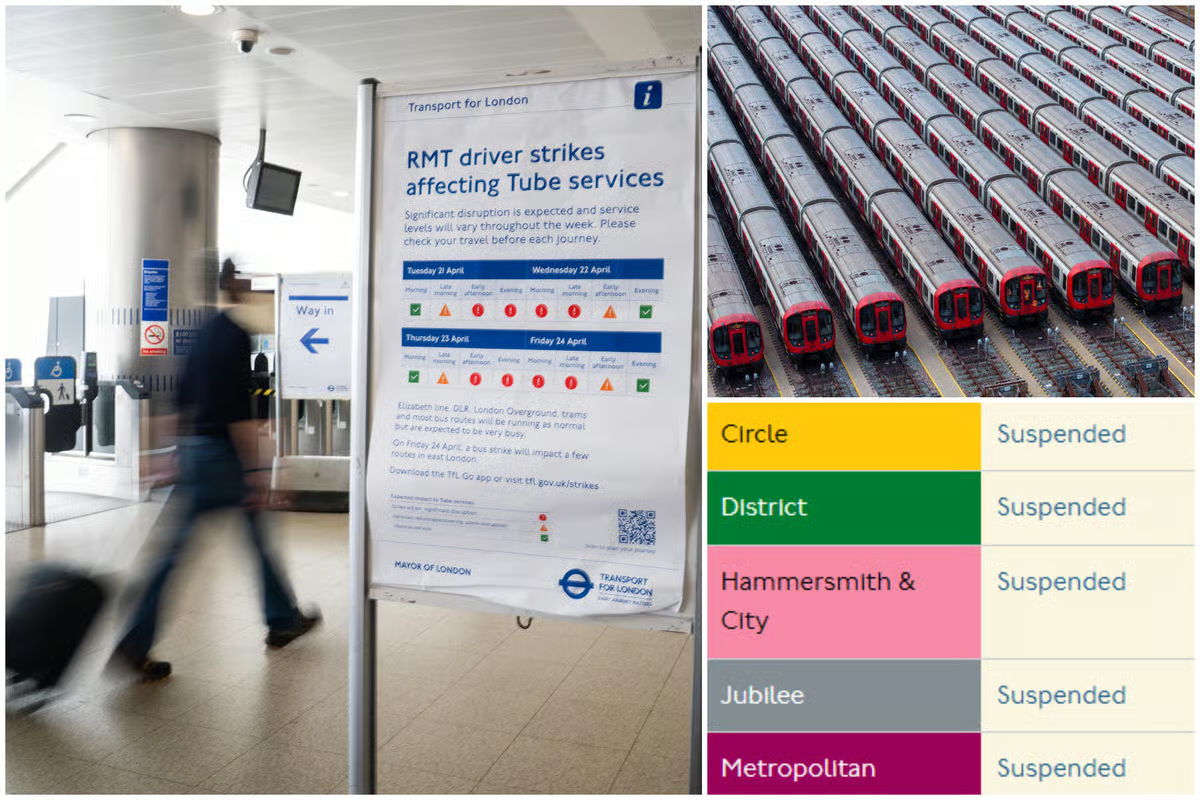
“The voluntary four-day week gives Tube train drivers an extra 35 days off every year with rosters based on a 34-hour working week in return for some fairly minor changes to working conditions and moving to electronic, rather than paper-based, systems for booking on for duty.
The Alice Ruggles Trust, named after Alice Ruggles who was killed by a former partner in 2016, will continue delivering school assemblies across the Northumbria Police force area to teach young people about stalking, healthy relationships and how to seek help.
The programme is funded through the Police and Crime Commissioner (PCC)’s Supporting Victims Programme, with support from Northumbria PCC Susan Dungworth.
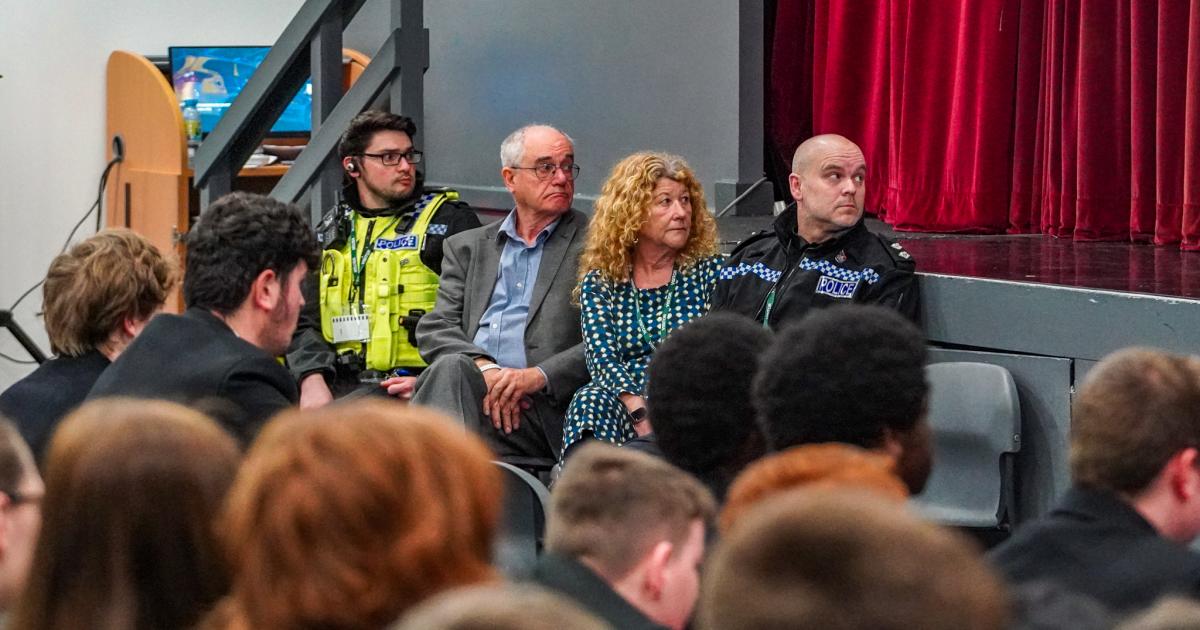
Sandhill View Academy assembly (Image: Supplied)
Ms Dungworth said: “The school assemblies programme is a great example of prevention work in action.
“I’ve seen these assemblies being delivered – the young people were presented with emotionally resonant stories and relatable scenarios.
Advertisement
“It not only helps them recognise harmful and complex behaviours like stalking, but it also helps them see the emotional impact on victims and the importance of seeking support.
“We need to keep reaching more and more students with these assembles to get important messages out there and help prevent what happened to Alice from happening to others.”
The trust was founded by Alice’s parents, Clive Ruggles and Sue Hills, who have dedicated themselves to raising awareness about the dangers of stalking and the importance of recognising unhealthy behaviours in relationships.
School assemblies have become a key part of the charity’s outreach, prompting “thought-provoking and hard-hitting” discussions among students and increased confidence among students, with high levels of participation and curiosity in lessons.
Advertisement
Academic evaluations from a team of three universities have highlighted the positive impact the assemblies had on student knowledge levels.
Last year, the Government included stalking in its official Relationships and Sex Education (RSE) guidance for schools, and the work of the Alice Ruggles Trust was mentioned in its strategy to halve violence against women and girls within a decade.
This recognition has led to a rise in schools signing up for the programme.
Since its launch in Northumbria in October 2024, the programme has reached 3,661 students in the region.
Advertisement
Mr Ruggles said: “Since we set up the Alice Ruggles Trust, raising awareness about stalking amongst young people has become a core priority for us, and school assemblies have shown themselves to be the most effective way of doing this.
“Only through education will we reduce stalking in the long term: it’s about changing the mindset of future generations.
“While our volunteers present assemblies in schools around the country, we are hugely grateful for the support from the Northumbria Police and Crime Commissioner which has enabled us to establish, and now to sustain, a concentrated project in the area in which Alice lived happily, but sadly died.
“It is a real boost to our efforts to prevent what happened to Alice happening to others.”
Advertisement
Stalking affects one in five young people in the UK, according to the trust.
A large proportion of cases now involve digital abuse, with 47 per cent of young victims reporting that the stalking took place online.
Stalking can cause lasting emotional, psychological, and in some cases, physical harm.
The Office of the Police and Crime Commissioner also funds specialist support services for victims, including the Paladin National Stalking Advocacy Service.
Advertisement
The trust and the PCC’s office both encourage young people, educators, and families to use the Victims Services Directory on the PCC website to find tailored support in their area.
The Alice Ruggles Trust continues to advocate for broader education and conversation around stalking, particularly at a time when digital communication and social media make it easier for perpetrators to maintain unwanted contact.
More details can be found at alicerugglestrust.org.
One mum is warning others after her daughter suffered a very nasty reaction to a temporary henna tattoo while on the picturesque island on her travels – she is now ‘slowly recovering’
Rachel Vickers-Price UK and World News Reporter
06:13, 22 Apr 2026Updated 06:15, 22 Apr 2026
A mum has issued a stark warning to holidaymakers and parents after her daughter suffered burns on holiday that could leave her with permanent scars. The Australian woman shared a warning against temporary henna tattoos whilst on holiday in Bali, Indonesia, after her daughter suffered a nasty reaction after a mini-break on the popular tourist island. She shared before and after photos of her daughter’s temporary henna tattoo, adding that her daughter had it done while at a beach. “My daughter came back with what she thought was a henna tattoo,” the mother said on the Australian Bali Info for Travelling Facebook page. “Approximately one week afterwards, the dye had almost completely faded.”
She shared before and after photographs of her daughters henna tattoo. The first, showed a shiny, black, intricate henna tattoo. Seven days later, photographs showed it had faded to leave behind stinging, itchy skin with pinks welts.
Advertisement
“She is now on day four of a course of steroid cream and slowly recovering,” the mum said, adding doctors fear the temporary tattoo may become a forever addition to her skin. “There is a concern that this will leave a long-lasting or even permanent scar on her hand. We talked about not buying knock off perfumes and makeup because we don’t know what is in them, but clearly I should have added temporary tattoos and henna to the list.” Unlike natural henna, which is orange or brown and is designed not to stain the skin, black henna contains a chemical called paraphenylenediamine (PPD). PPD is a toxic chemical added to make temporary tattoos appear dark black, dry faster, and last longer. Black henna with PPD can cause severe allergic reactions, permanent scarring, oozing blisters, and long-term sensitisation to hair dyes and other substances. Which is precisely what the poor mum was told by others in the group as they shared their horror stories. One user said: “They use hair dye for their tattoos. I got a dolphin tattoo about 25 years ago, and I’m still sporting the scar. It was awful.”
A second added: “As a result of this, I am now completely allergic to hair dye, so I would suggest if she uses hair dye, to do a patch test before using in your hair.”
A third chimed in with: “This exact same thing happened to my son. It did scar for a while but has since faded. He will never get another given the pain he was in.” Others attacked the young woman’s decision, arguing she should have known better. One said: “People have known not to get this crap for years, it’s nothing new”, while another added: “Black henna has been known as dangerous for many years.”
Advertisement
Approximately 300,000 British tourists visit Bali annually, making the UK one of the top source markets for the Indonesian island. In 2024, the UK ranked among the top five countries for visitors, with roughly 295,326 recorded arrivals.




















































You must be logged in to post a comment Login