





Connect with us
DAPA Banner

Business

Could UK interest rates go up?

Published

on

Could UK interest rates go up?
Continue Reading
Click to comment

You must be logged in to post a comment Login

Leave a Reply

Business

Inflation: What do price increases mean for you?

Published

on

Inflation: What do price increases mean for you?

Prices went up by 3.3% in March, but what does that mean for you asks the BBC’s Colletta Smith.

Continue Reading

Business

Maola introduces ultrafiltered milk

Published

on

Maola introduces ultrafiltered milk

The milk contains prebiotic fiber and is available in two flavors.

Continue Reading

Business

Bessent disputes Iran $14B sanctions claim as DNC talking point

Published

on

Bessent disputes Iran $14B sanctions claim as DNC talking point

Treasury Secretary Scott Bessent pushed back Wednesday after Sen. Chris Coons, D-Del., suggested temporary sanctions relief for Iran has granted the country $14 billion during the war.

During a fiery exchange at Wednesday’s Senate Appropriations Committee subcommittee hearing on the 2027 fiscal budget, Coons levied the charge at Bessent, noting that “estimates are” that Iran has gained $14 billion since the U.S. granted the Islamic Republic temporary oil waivers in March.

Advertisement

Citing President Donald Trump’s previous criticisms of former President Barack Obama for giving $1.7 billion to Iran, Coons said, “I don’t know how you described 14 billion, but you don’t have to read ‘The Art of War’ to know that helping your adversaries gain money while you’re at war is a terrible idea, and it’s shocking to me that the country’s currently profiting from the release of sanctions.”

Bessent disputed the characterization as a “myth” and “a DNC talking point.”

IRAN CEASEFIRE DEADLINE LOOMS: RAND PAUL WEIGHS IN ON PEACE TALK CHAOS

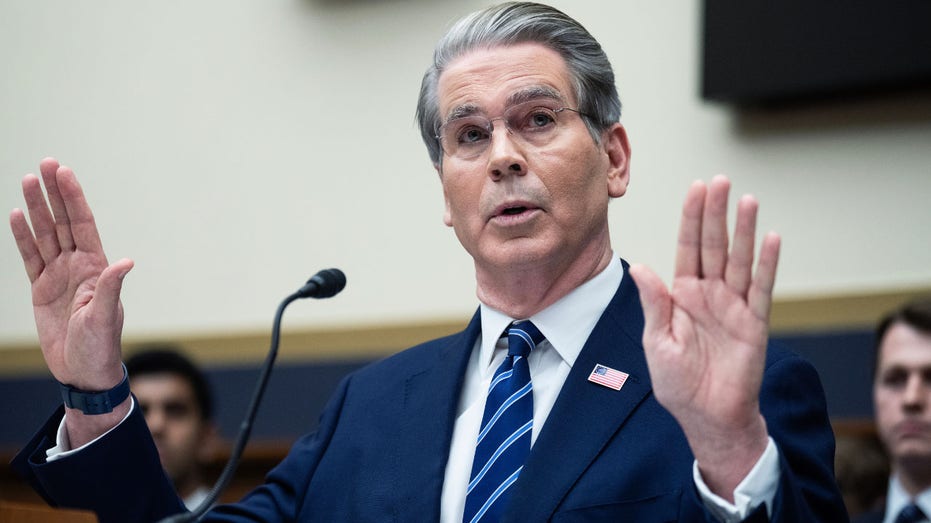
Treasury Secretary Scott Bessent testifies before the House on President Donald Trump's economic agenda.

Treasury Secretary Scott Bessent testifies during a House Financial Services Committee hearing “The Annual Report of the Financial Stability Oversight Council,” in Rayburn building on Feb. 4, 2026 (Tom Williams/CQ-Roll Call, Inc via Getty Images / Getty Images)

“If anyone would like to show me where that 14 billion comes from,” Bessent added.

Advertisement

“I look forward to an exchange of details on that. Mr. Secretary,” Coons shot back.

“Can exchange it in a very public forum,” Bessent continued.

Coons then asked Bessent point-blank, “Do you disagree that Iran has received significant additional revenue from their sales of oil because of sanctions relief?”

“Couldn’t disagree more,” Bessent replied.

Advertisement

“OK. But do you disagree that Russia has received significant additional revenue from the sanctions relief?” Coons asked.

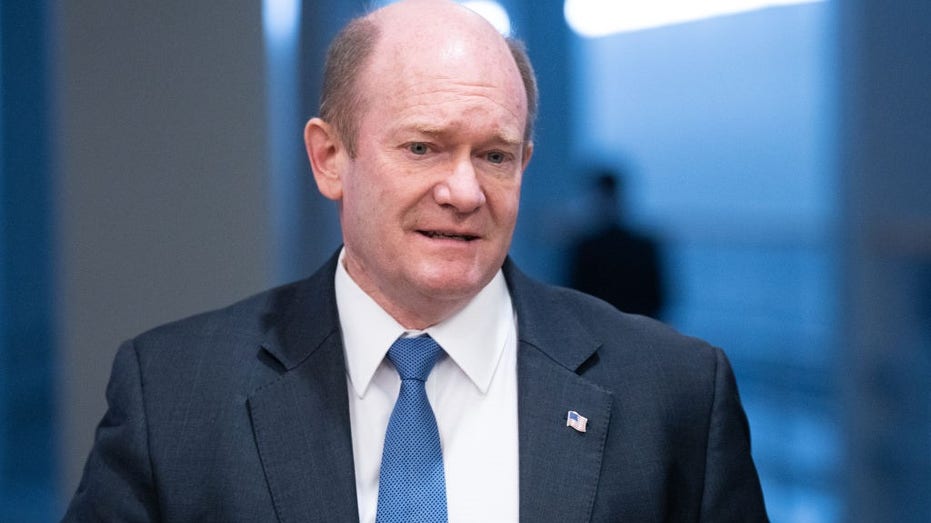
Chris Coons is pictured.

Sen. Chris Coons, D-Del., walks through the Senate subway on his way to a vote in the Capitol May 4, 2023. (Bill Clark/CQ-Roll Call, Inc via Getty Images / Getty Images)

Again, Bessent responded, “I couldn’t disagree more.”

Bessent proceeded to explain why the Treasury Department elected to provide temporary sanctions relief to Iran and Russia.

“Just as you are concerned about gasoline prices for the American consumer and for our Asian allies, as are we,” Bessent said.

Advertisement

FBI OFFERS URGENT GUIDANCE ON SECURING HOME ROUTERS AFTER DISRUPTING RUSSIAN INTELLIGENCE HACKING NETWORK

“Treasury was able to create more than 250 million barrels on the water. And the way to think about this is as they came in today, the oil prices are at $100. If we had not done that sanctions relief, they might have been at $150 because the world became very well supplied.

“So, if Russia was selling their oil at a 20% discount, I can tell you that 100% of 100 is less than 80% of 150. And the American consumer has been better off.”

Scott Bessent and Donald Trump at a meeting

U.S. Secretary of Treasury Scott Bessent and U.S. President Donald Trump look on during the White House Digital Assets Summit in the State Dining Room of the White House March 7, 2025, in Washington, D.C.  (Anna Moneymaker/Getty Images / Getty Images)

Treasury issued the relief to Iran through temporary 30-day oil waivers in March, then extended them another 30 days on Wednesday.

Advertisement

Bessent, again pushed by Coons, added that many U.S. allies in the Gulf and in Asia have requested foreign exchange swap lines.

“Swap lines, whether it’s from the Federal Reserve or the Treasury, are to maintain order and the dollar funding markets and to prevent the sale of U.S. assets in a disorderly way. So, the swap line would both benefit the UAE [United Arab Emirates] and the U.S. And, as I said, numerous other countries, including some of our Asian allies, have also requested them,” he said.

GET FOX BUSINESS ON THE GO BY CLICKING HERE

Fox News Digital contacted the Treasury Department and Coons’ office for further comment but did not immediately receive a response.

Advertisement
Continue Reading

Business

WRU statement on cutting a region is ‘can kicking’ says leader of Swansea Council

Published

on

Business Live

Rob Stewart claims the Ospreys are protected until at least 2030 and could potentially then enter an Anglo-Welsh league

Swansea Council leader Rob Stewart and Ospreys chief executive officer Lance Bradley.(Image: Ospreys)

The leader of Swansea Council, Rob Stewart, said rugby region the Ospreys are now protected until at least 2030 and described the WRU’s statement that it remains committed to reducing the number of regions from four to three as a “can-kicking” exercise.

The union insists that its board remains fully behind the case for reducing the number of regions, despite the ending of negotiations to sell Cardiff Rugby – which it acquired out of administration last year – to the owners of the Ospreys, Y11 Sport and Media.

Advertisement

A deal had been seen as a way of effectively shelving the Ospreys and reducing the number to three, with Y11 divesting from Swansea and investing in Cardiff Rugby.

READ MORE: Y11’s deal to buy Cardiff officially off as west Wales clubs offered agreementREAD MORE: The WRU on its financial outlook after £6m deficit to plan on Six Nations and autumn internationals

However, Mr Stewart, who has led a vociferous campaign – including a legal challenge from the council – against the WRU striking a deal that would have led to the demise of the Ospreys, believes it will now be difficult for the union to maintain its position of three regions without the backing of all four after. The Scarlets and Ospreys are now expected to sign new four year funding deals with the WRU.

This is despite the WRU having early termination clauses in PRA 25, which it has already entered into with the Dragons and Cardiff, the latter which it operates through a subsidiary company. Contrary to Mr Stewart’s position, the union said it will look terminate PRA 25 deals with the region at end of the 2027-28 season.

Advertisement

The WRU said it will provide more details on how it intends to reduce the number of regions to three in June. It is highly likely it will announce details of a competitive tendering process for three licences; one based in Cardiff, and the others for east and west Wales.

There is always potential for three regions to be achieved through a voluntary merger, the most likely being between the Scarlets and the Ospreys, or through another club failure due to the commercial challenges of running four professional clubs in relatively close proximity and often competing for the same commercial and sponsorship sources.

Mr Stewart said: “We believe the action we took as a council, and the legal action, has clearly focused the WRU’s mind and means they no longer wish to proceed with a deal for Cardiff with Y11. It also means that Y11 is now fully committed to the Ospreys as the team they will own and support going forward for the next four years.

“They are having to commit their own resources to sign the PRA, so in that respect there are controls and commitments placed upon Y11 to get this deal over the line.

Advertisement

“This is a major win for the campaign to save the Ospreys that I’m proud to have been a part of. This is the outcome we have been working towards, and it’s amazing to see it happen. This now secures the Ospreys’ future into the 2030s and allows four professional regions to continue to play in Wales, which is what the fans, players and public wanted.”

He said he was not critical of Y11’s position – before the termination of its Cardiff acquisition negotiations with the WRU, – of not being able to commit to the Ospreys beyond 2027. The WRU had secured approval from the United Rugby Championship for Y11 to own two Welsh sides.

Mr Stewart added: “That goes for any investor or owner across the region. I don’t think we can hold Y11 to a higher standard than anyone else. There are always opportunities for backers to decide they don’t want to run a club any longer and to put it up for sale, but that could happen at any club.”

On the WRU’s statement that it remains committed to reducing the regions to three, Mr Stewart said: “It looks like can-kicking, and it is going to be difficult, with all the PRAs signed, for the WRU to extract itself, given that investors have to put something in to access the enhanced funding via the PRA. It is going to be incredibly difficult and messy for the WRU to do it.”

Advertisement

On the prospects of a merger between the Ospreys and Scarlets, he said: “In the same way as Cardiff City and Swansea City would never merge, the Jacks and the Turks won’t either… we are very tribal.”

He said the council’s legal challenge against the union, despite the termination of a Y11 deal for Cardiff, would not be stood down.

In February, the council submitted a legal case to regulator the Competition and Markets Authority, claiming that the proposed sale of Cardiff to Y11 breached the Competition Act.

While the CMA has confirmed it received a legal letter from the council in February, it has not taken the investigation forward. It does not comment on its deliberations, but usually, within six weeks, if a case is to be pursued, it would be listed on its website. This is currently not the case. Swansea Council has also lodged a High Court action.

Advertisement

The WRU is understood to have secured a significant win in a legal arbitration judgment following a challenge from the Scarlets, which argued that its acquisition of Cardiff, and the required financial support, amounted to overreach and was unfair to the other three regions.

That ruling could have given the WRU confidence that it could retain ownership of Cardiff for the long-term and pursue a more lucrative future sale of the club, particularly if an Anglo-Welsh or British and Irish league is created.

Mr Stewart said: “The Scarlets’ legal action was much narrower than ours, and we are not standing down our legal action, let’s be clear about that. Our action is much broader and tackles a number of different points. So, until we have full assurances from the WRU on what we are requiring, the legal action will continue.”

Y11, which is majority-owned by Navis Capital, will now look to work with the council on the redevelopment of St Helen’s as a new sporting and community venue. Subject to sign-off on a new funding deal with the WRU, the Ospreys are understood to be looking to invest £3m, although a small element could be in the form of a commercial loan from the council.

Advertisement

The council will also invest £3m turning the ground into a new home for the Ospreys. The redeveloped ground will also be used by other sporting teams.

Mr Stewart said: “The Ospreys playing at a redeveloped St Helen’s from the start of next season will be fantastic for the city, our local economy and the supporters.

“I’d like to thank the team at Swansea Council, the supporters, fans, players and the public who have backed the campaign -this win is for all of you.

“We could have been in this position a year ago had the WRU not presided over chaos and confusion. The clubs and the union have suffered financially, and fans and the game have faced unnecessary uncertainty. The union’s approach has always been about money rather than the underlying reality, which is the culture of rugby in Wales. If you don’t understand the culture, you are never going to get the right result.”

Advertisement

The Ospreys is a loss-maker in Y11’s media and sporting ownership portfolio. However, Mr Stewart believes that Y11 are attracted to the potential of a route for the club into an Anglo-Welsh league from 2030.


Continue Reading

Business

SanDisk Stock Rockets Past $940 as AI Memory Boom Ignites Massive Rally

Published

on

SanDisk

MILPITAS, Calif. — SanDisk Corp. shares surged more than 4% midday Wednesday, climbing toward $947 as investors piled into the memory chip maker amid unrelenting demand for high-speed storage to power artificial intelligence systems.

The stock, trading under NASDAQ: **SNDK**, hit an intraday high of $948.06 before pulling back slightly. By 12:19 p.m. EDT on April 22, shares stood at $946.53, up $43.04 or 4.76% from the previous close. Volume topped 7.6 million shares, well above average but below the frenzied levels seen during recent record runs.

The rally extends a stunning year for the company, which has transformed from a Western Digital spinoff into one of Wall Street’s hottest AI plays. Since completing its separation from Western Digital in February 2025, SanDisk shares have skyrocketed more than 1,200%, turning a once-dormant ticker into a market darling. Year-to-date gains in 2026 alone exceed 290%, dwarfing the S&P 500’s modest advance.

Analysts point to a perfect storm: exploding AI workloads that require vast amounts of NAND flash memory, tight industry supply, and SanDisk’s aggressive push into enterprise solid-state drives. The company’s data center segment, a key beneficiary, posted 64% sequential revenue growth in its most recent quarter, with hyperscale customers lining up for next-generation solutions.

Advertisement

“SanDisk is at the epicenter of the AI infrastructure buildout,” said one analyst who raised the price target to $975 from $675 earlier this week. Multiple firms have hiked forecasts in recent days, with some bull cases reaching as high as $2,600 per share in optimistic scenarios.

SanDisk reported strong fiscal first-quarter 2026 results in early November 2025, with revenue of $2.31 billion, up 21% sequentially and beating guidance. Non-GAAP earnings per share came in at $1.22. Datacenter revenue jumped 26% from the prior period, and the company highlighted progress qualifying products with major hyperscalers.

By the second quarter, momentum accelerated further. Revenue reportedly surged around 61% year-over-year in some updates, driven by enterprise SSD demand. BiCS8 technology, SanDisk’s advanced 3D NAND, accounted for 15% of bits shipped and is on track to dominate production by year-end.

The company’s fabs are running at full capacity as customers scramble to secure supply through 2027. Industry watchers say NAND undersupply could persist well beyond 2026, with data centers poised to overtake mobile devices as the largest NAND consumer for the first time this year.

Advertisement

SanDisk also joined the elite Nasdaq-100 Index on April 20, a milestone that typically draws index fund buying and boosts visibility. The inclusion followed a blistering run that saw the stock hit an all-time high near $965 earlier in April. While some “sell the news” profit-taking emerged around the event, the broader AI tailwind has kept buyers engaged.

On the product front, SanDisk unveiled a next-generation portable SSD lineup in February 2026, featuring faster speeds tailored for AI-generated content and demanding creative workflows. The three-tier portfolio includes Extreme, Extreme PRO and standard models with capacities up to 8TB, underscoring the company’s consumer roots even as enterprise sales dominate growth.

Founded decades ago as a pioneer in flash memory cards, SanDisk now operates as an independent entity focused on NAND technology after the 2025 spinoff. Western Digital, which had acquired the original SanDisk in 2016, sold down its stake through a $3.1 billion secondary offering earlier this year to reduce debt, further freeing SanDisk to chart its own course.

Despite the euphoria, risks remain. The stock carries a high valuation with a negative GAAP P/E due to recent accounting factors, and memory chip cycles have historically been volatile. Some observers flagged potential short-term pullbacks after the Nasdaq-100 addition and ahead of fiscal third-quarter earnings scheduled for April 30.

Advertisement

Yet bulls remain undeterred. Morgan Stanley recently highlighted memory stocks like SanDisk and Micron as the “real AI winners,” citing sustained pricing strength and capacity constraints. Bank of America lifted its price target to $1,080, citing robust NAND demand. Evercore ISI initiated coverage with an Outperform rating and a lofty bull-case scenario.

“AI isn’t a one-year story,” one portfolio manager said. “Every hyperscaler and enterprise building out training and inference clusters needs faster, denser storage. SanDisk’s technology roadmap positions it to capture a bigger slice of that multi-billion-dollar opportunity.”

Investors have taken notice. The stock’s 52-week range spans from a low near $29 to the recent peak above $965, reflecting both its post-spinoff rebirth and the intensity of the current rally. Market capitalization now hovers around $139 billion, making SanDisk a heavyweight in the semiconductor space.

Company executives have expressed optimism about long-term trends. In recent commentary, they noted engagement with five major hyperscale customers and plans to expand qualifications throughout 2026. Gross margins have held strong near 51%, providing breathing room even as the company invests in capacity.

Advertisement

For everyday investors, SanDisk’s story blends nostalgia with cutting-edge relevance. The brand that powered early digital cameras and MP3 players now fuels the data centers training tomorrow’s AI models. Portable SSDs continue to serve creators editing massive 8K and AI-enhanced files on the go.

As trading continued Wednesday, some market participants wondered whether the surge could extend further or if rotation out of overheated tech names might cap gains. Options activity has shown mixed sentiment, with some hedging against near-term volatility.

SanDisk is set to report third-quarter results on April 30, an event that could provide fresh catalysts or trigger profit-taking depending on guidance. Analysts will watch closely for updates on BiCS8 ramp-up, hyperscaler wins and any signals about 2027 supply agreements.

For now, the narrative remains one of explosive growth in an AI-driven world. From a spinoff afterthought to a stock that has delivered thousands of percent returns for early believers, SanDisk exemplifies how legacy tech can reinvent itself amid paradigm shifts.

Advertisement

Whether the rally sustains or consolidates, one thing is clear: memory is no longer a commodity business when artificial intelligence devours data at unprecedented scale. SanDisk, once known for thumb drives and memory cards, is writing a new chapter as a critical enabler of the AI revolution.

Continue Reading

Business

Homeownership decline is hitting every age group, new data shows

Published

on

Homeownership decline is hitting every age group, new data shows

A common narrative suggests that the housing crisis is a young person’s problem, with Gen Z and millennials bearing the brunt of high prices.

However, new data from the Federal Reserve Bank of New York and the American Enterprise Institute Housing Center reveals a much more disturbing reality: the collapse of homeownership is happening at every age level.

Advertisement

“The profile has shifted from the young couple starting a life to the established professional who has been squeezed out of the market for a decade,” Douglas Elliman’s Jaclyn Bild told Fox News Digital on Wednesday. “Today’s first-time buyer is juggling way more than someone buying their first home 20 years ago. They’re coming in with kids, fully formed careers, sometimes aging parents, and zero interest in a temporary starter home. They want something that supports the life they already have. The challenge is that pricing hasn’t adjusted to reality.”

“Many first-time buyers are coming in later, with stronger incomes and more established careers, but they are also navigating a much higher cost basis. In practice, the biggest hurdle is the total cost of ownership. Buyers are underwriting price, of course, but they also heavily consider monthly payments, taxes, and long-term carrying costs,” Douglas Elliman’s Katzen Team founder Frances Katzen also told Digital. “That is why the buyer profile has evolved to reflect a more deliberate, financially prepared buyer who approaches the process with a long-term mindset.”

$150K OVER ASKING ISN’T ENOUGH: N.J. REAL ESTATE AGENT WARNS ‘AVERAGE PERSON’ IS BEING PRICED OUT

The core issue isn’t just high mortgage rates, which are currently near historical norms, but a massive divergence between what Americans take home and what homes actually cost. Data from the American Enterprise Institute Housing Center, cited by Fortune, shows that in 2003, the median home price was 4.3 times household income. In 2017, it was 5.1 times, but today it has risen to nearly 6 times.

Advertisement
Single family home under construction

A single-family home in a prime location in Houston, Texas, is seen with construction workers outside. (Getty Images)

Additionally, between 2000 and 2022, homeownership rates dropped between 8% and 10% across every age cohort. For the “first-timer” group earning between $50,000 and $75,000 annually, only 25% owned homes in 2022, compared to 70% to 80% of households making $175,000 and up.

“Buyers are making incredibly conscious trade-offs. Some are choosing to stay in place longer and maximize their current space rather than move into a higher price point. Others are adjusting expectations around size, location or condition to be able to remain within budget. There’s also a timing component. Some buyers are waiting for more clarity, while others are moving forward, hoping to prioritize long-term stability. The broader dynamic is that moving up now requires a much more significant financial step, so every decision is more intentional and more strategic,” Katzen explained.

“People feel genuinely boxed in, they are navigating by simply not moving because the math doesn’t work,” Bild noted. “We are seeing the starter home turn into the forever home by necessity… Many are staying put and building new homes on the lot they already own, others are building an addition for extra space or converting a garage into another bedroom to make it work — that puts additional pressure on supply. We are also seeing a record number of buyers getting family support to bridge the financial gap. We are even seeing some families rethinking having more kids because they don’t have the space.”

Co-director of the American Enterprise Institute Housing Center Ed Pinto warned Fortune that the current trajectory is creating a permanent class of renters among those who are not already affluent.

“When purchasing power declines, fewer people buy homes at 28 — but also fewer purchase at 38 or 48. The result is a broad-based drop in homeownership. The less-rich are getting squeezed out, and that trend is uniform across all age groups,” Pinto said.

“As the pool of first-time buyers gets smaller across the board, the marginal families get excluded across the board,” he continued. “As long as prices are flat and incomes are rising 3% a year, affordability is improving. But the gap is still so large that if nothing else changes, the lower-and middle-income families stuck on the sidelines could get locked out for years to come.”

The AEI research also identified a severe supply shortage as part of the housing affordability culprit, noting that the “bottleneck” isn’t a lack of interest in buying, but a lack of permitted land for entry-level housing.

Advertisement

GET FOX BUSINESS ON THE GO BY CLICKING HERE

Katzen agreed that limited supply significantly adds to America’s housing strain.

“One of the most consistent challenges is supply, particularly in the types of homes buyers are looking for at the entry and move-up levels. Limited inventory is reducing optionality and keeps pricing elevated. In many cases, the issue is not inherently demand, but rather, its availability,” she said. “When the right product comes to market, it tends to move quickly because there are multiple buyers looking for the same type of home. From a broader perspective, increasing supply meaningfully would have the greatest impact on improving market accessibility.”

Advertisement

READ MORE FROM FOX BUSINESS

Continue Reading

Business

Company hits production milestone for new EV

Published

on

Company hits production milestone for new EV

Rivian founder and CEO RJ Scaringe on April 22, 2026 drives the first customer-ready electric R2 SUV off the assembly line at the company’s plant in Normal, Illinois.

Courtesy Rivian

Rivian Automotive on Wednesday said it has started production of its new R2 all-electric vehicle for customers at its plant in Normal, Illinois.

Advertisement

The start of production is a crucial milestone for the company ahead of customer deliveries, which are scheduled for later this spring. Investors will be watching for the company to ramp up production for the foreseeable future.

Rivian expects the R2 — an updated, less expensive EV that looks like its flagship R1 SUV — to attract more buyers and deliver on the company’s promises to cut costs and become profitable in the years ahead.

The first of the R2 midsize vehicles is a $58,000 performance model with a “Launch Package” that includes a 330-mile range, dual motors, special attributes and “lifetime” access to its Autonomy+ advanced driver-assistance system.

Why the R2 could be Rivian's key to profitability

Rivian has been touting a less expensive, entry-level version of the vehicle, starting at $45,000, but it said that model, which is expected to be less profitable, won’t be available until late 2027. Its current vehicles start at more than $70,000.

The R2 production announcement comes less than a week after a tornado damaged part of the company’s plant being used for R2 parts storage and logistics.

Advertisement

Rivian is scheduled to report its first-quarter results and update investors on R2 production on April 30.

Choose CNBC as your preferred source on Google and never miss a moment from the most trusted name in business news.
Continue Reading

Business

Jobs saved in the rescue of North Shields property maintenance business

Published

on

Business Live

The pre-pack sale of First-Rate Maintenance means it will continue trading under its own name

First-Rate Maintenance was launched in 2020.

First-Rate Maintenance’s base in North Shields.(Image: Google Streetview)

A maintenance firm covering properties on Tyneside has been rescued out of administration.

First-Rate Maintenance, which began life in Newcastle in early 2020 before moving to North Shields three years later, has been sold via pre-pack administration to Scottish-based operator Dima Group. The move saves 28 jobs at the handyman services business which offers general maintenance, decorating, roofing, joinery, plumbing, landscaping, tiling and more.

Administrators from FRP Advisory said the Percy Park Rugby Club-based business had built a reputation for delivering services to housing associations, local authorities, landlords and national retailers. But last year the business began to experience cashflow pressures.

Joint administrators Steven Ross and Shaun Hudson said efforts had been made to stabilise the business but that the challenges faced meant directors had to call in professional insolvency advisors who arranged the sale.

Advertisement

First-Rate was originally launched with the support of its sister company and Newcastle student property specialist, Seekers – formerly known as Walton Robinson. The business touted itself as an expert in odd jobs and property maintenance across Tyneside and Newcastle, working with homeowners, landlords and managing agents on anything from minor repairs to full refurbishments.

Having been appointed earlier this month, the administrators completed a pre-pack sale to Dima Group FM, trading as First-Rate Maintenance Limited, an unconnected party. They said the deal allows First-Rate to continue trading under its current name and that it will keep existing contracts and services in place for clients.

Steven Ross, restructuring advisory partner at FRP and joint administrator of First-Rate Maintenance Limited, said: “This transaction delivers a positive outcome for all stakeholders. The sale preserves employment, maintains service continuity for customers and secures the future of a well‑regarded regional business, while achieving the best possible result for creditors.”

Andrew Gilmour of Dima Group added: “As the new operator, First-Rate Maintenance is committed to building on its established platform supporting its workforce, customers and partners as the business enters its next phase.”

Advertisement

Dunfermline-based Dima Group was launched in October 2018, originally as a security company, from a kitchen table with the aid of just a laptop and a phone. Two years later the firm opened its first office but then faced the Covid-19 pandemic within a matter of weeks.

The business has since relocated four times and now has a head offices on the city’s Enterprise Way, where it employs nearly 100 staff. It has since diversified into other services including provision of hospitality agency staff and chefs.

Dima works across Scotland and even provides services for every Dunfermline Athletic FC home game – including staff on the turnstiles, terraces, and hospitality areas that cater for fans.

Advertisement
Continue Reading

Business

Annaly Capital Management, Inc. (NLY) Q1 2026 Earnings Call Transcript

Published

on

OneWater Marine Inc. (ONEW) Q1 2026 Earnings Call Transcript

Q1: 2026-04-21 Earnings Summary

EPS of $0.76 beats by $0.02

 | Revenue of $452.69M (105.80% Y/Y) misses by $61.50M

Annaly Capital Management, Inc. (NLY) Q1 2026 Earnings Call April 22, 2026 9:00 AM EDT

Company Participants

Sean Kensil
David Finkelstein – CEO, Co-Chief investment Officer & Director
Serena Wolfe – Chief Financial Officer
Michael Fania – Co-Chief Investment Officer & Head of Residential Credit

Advertisement

Conference Call Participants

Crispin Love – Piper Sandler & Co., Research Division
Bose George – Keefe, Bruyette, & Woods, Inc., Research Division
Ameeta Lobo Nelson – UBS Investment Bank, Research Division
Richard Shane – JPMorgan Chase & Co, Research Division
Harsh Hemnani – Green Street Advisors, LLC, Research Division
Jason Weaver – JonesTrading Institutional Services, LLC, Research Division
Trevor Cranston – Citizens JMP Securities, LLC, Research Division

Advertisement

Presentation

Operator

Good day, and welcome to the First Quarter 2026 Annaly Capital Management Earnings Conference Call. [Operator Instructions] Please note this event is being recorded. I would now like to turn the conference over to Sean Kensil, Director Investor Relations. Please go ahead.

Advertisement

Sean Kensil

Good morning, and welcome to the First Quarter 2026 Earnings Call for Annaly Capital Management.

Any forward-looking statements made during today’s call are subject to certain risks and uncertainties, which are outlined in the Risk Factors section in our most recent annual and quarterly SEC filings. Actual events and results may differ materially from these forward-looking statements. We encourage you to read the disclaimer in our earnings release in addition to our quarterly and annual filings.

Additionally, the content of this conference call may contain time-sensitive information that is accurate only as of the date hereof. We do not undertake and specifically disclaim any obligation to update or revise this information.

Advertisement

During this call, we may present both GAAP and non-GAAP financial measures. A reconciliation of GAAP to non-GAAP measures is included in our earnings release. Content referenced in today’s call can be found in our first quarter 2026 Investor Presentation

Advertisement
Continue Reading

Business

4 To Watch Of 21 ‘Safer’ April Dividends From 100 Fortune Best Companies To Work For

Published

on

4 To Watch Of 21 'Safer' April Dividends From 100 Fortune Best Companies To Work For

This article was written by

Fredrik Arnold is a former quality service analyst. He is now reporting investment ideas with a primary focus on dividend yields by utilizing free cash flow and one-year total returns as trading indicators. He is the leader of the investing group The Dividend Dog Catcher, where he shares a minimum of one new dividend stock idea per week with focus on yield or extraordinary financial circumstances. All ideas are archived and available after weekly announcement. Learn more.

Analyst’s Disclosure: I/we have no stock, option or similar derivative position in any of the companies mentioned, and no plans to initiate any such positions within the next 72 hours. I wrote this article myself, and it expresses my own opinions. I am not receiving compensation for it (other than from Seeking Alpha). I have no business relationship with any company whose stock is mentioned in this article.

Seeking Alpha’s Disclosure: Past performance is no guarantee of future results. No recommendation or advice is being given as to whether any investment is suitable for a particular investor. Any views or opinions expressed above may not reflect those of Seeking Alpha as a whole. Seeking Alpha is not a licensed securities dealer, broker or US investment adviser or investment bank. Our analysts are third party authors that include both professional investors and individual investors who may not be licensed or certified by any institute or regulatory body.

Advertisement
Continue Reading

Trending

Copyright © 2025