
Politics
Trump calls China and India ‘hellholes,’ claims white Americans shut out of tech jobs in favor of Indian, Chinese workers



In the latest unhinged rambling, Trump took to Truth Social with a post filled with racist attacks against non-European immigrants, calling China and India ‘hellholes’ and claiming white Americans are being pushed out of tech jobs by Indian and Chinese workers.
The post was part of a transcript of an episode from Savage Nation by the MAGA influencer Michael Savage. According to his bio, he wants to “save Western Civilization!”
BIRTHRIGHT CITIZENSHIP MUST BE BANNED
WATCH TONIGHT ON @NEWSMAX pic.twitter.com/NkXKh1WbdL
— Michael Savage (@ASavageNation) April 5, 2026
The post demands an end to birthright citizenship – the 14th Amendment right that grants automatic U.S. citizenship to anyone born on American soil.
It claims this right is being exploited by Chinese and Indian immigrants who come here to “drop a baby” and then bring in their entire families.
The post claims that non-European immigrants no longer assimilate, unlike the Irish, Italians, and Poles who came before.
Trump’s wrath at the ACLU
The American Civil Liberties Union (ACLU) is challenging Trump’s birthright citizenship order in Trump v. Barbara. The order seeks to deny citizenship to children born to non-citizen parents, including those on visas.
The post calls the ACLU:
the most dangerous criminal organization in the history of America.
A decision from the Supreme Court is expected by late June or early July, according to CBS News.
Glorifying Native American Genocide
The post also glorifies Andrew Jackson – the president who defied the Supreme Court and paved the way for the Trail of Tears:
I think we need a Jackson as president, and I don’t mean Ketanji Jackson. We need someone to stand up to these lawyers. They’ve destroyed our nation.
According to the US National Park Service, the Supreme Court ruled in 1832 that Georgia had no authority over Cherokee lands. The then US president, Andrew Jackson, reportedly said:
John Marshall has made his decision; let him enforce it now if he can.
Jackson refused to enforce the ruling, leading to the Trail of Tears (1838-1839) and an estimated 4,000 Cherokee deaths.
Seemingly endorsing Jackson, the post says:
… the Supreme Court ruled about the Cherokee removal, he disagreed with what the Supreme Court said. And he said, now that the court has decided, let them enforce, meaning, he said, go screw yourselves. I hold all the power with the military.
Iran’s diplomacy
While Trump was trashing the Global South, the Iranian embassy in Hyderabad spoke in defence of the countries, reminding Trump that they are the cradles of civilisation:
China and India are the cradles of Civilization. In fact, the #hellhole is where its war-criminal president threatened to decimate the civilization in Iran.
— Iran In Hyderabad (@IraninHyderabad) April 23, 2026
The post also casually insulted Iran, saying the “ACLU has done more damage to America than the Mullahs in Iran have done to this nation.”
The post had everything: misogyny toward ACLU attorney Cecillia Wang; glorification of Andrew Jackson’s genocidal policies; racism against Chinese and Indian immigrants; and xenophobic attacks on birthright citizenship.
A good reminder that Western supremacy means being willing to commit genocide, defy courts, and call ancient civilizations ‘hellholes’ … all while claiming to ‘save Western Civilization.’
By The Canary

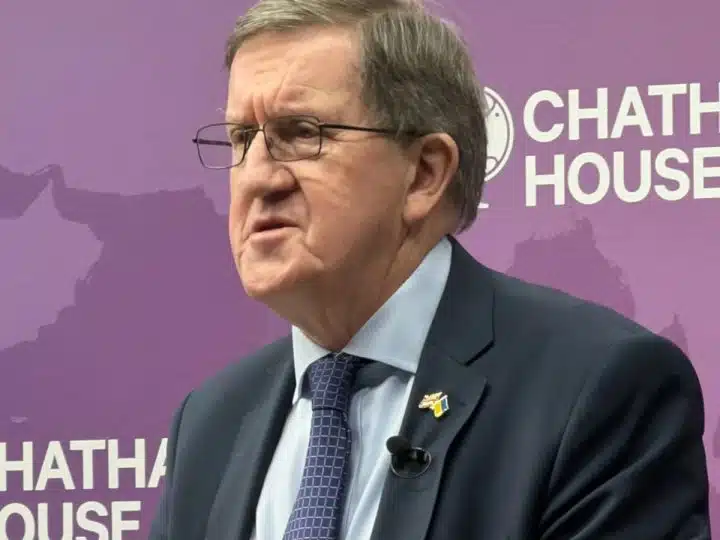

Lord Robertson, a Labour peer, is lobbying for bigger defence spending for the second week running. The Guardian reported Robertson’s comments at a thinktank event, but did not disclose his decades-long links to the war lobby.
Robertson’s speech at Chatham House
Robertson spoke at a Chatham House event on 22 April. Chatham House is one of the UK’s top establishment thinktanks. The event meant to examine:
the future of UK–US relations in the era of Trump 2.0.
Robertson is an ex-NATO chief, Blair-era defence minister and co-author of the last Strategic Defence Review (SDR). The SDR sets the direction of British foreign policy. On 17 April, the Canary reported on Robertson and the other SDR co-authors attacking UK PM Keir Starmer over a lack of military spending. In particular, we focused on those critics known links to defence firms and consultancies.
The Guardian said of the Chatham House event:
Robertson emphasised that [President] Trump did not represent the full spectrum of American opinion, but he said the UK needed to accept that the president’s behaviour was also reflective of longer-term changes in US foreign policy and act accordingly.
The paper quoted Robertson as saying:
“It’s clear that our high level of military dependence on the US is no longer tenable” … and it was a “naive belief” that the White House would always be on hand to help the UK out in times of conflict. Such an approach had led to the “diminishment of our own capability” militarily, he added.
But you have to wait until paragraph eleven (!) to see what Robertson is actually angling for:
He said the UK “must rapidly pivot to becoming a more autonomous military actor”, working closely with European allies against Russia, and demonstrate progress to lifting defence spending to 3.5% of GDP by 2035 in line with a NATO target, while recognising that the US was becoming more transactional. [Emphasis added.]
At no point in the article are Robertson’s publicly available links to the war industry mentioned. Guess we’ll just do the Guardian‘s job for them then…
Hidden links to the arms trade
The Cohen Group defence consultancy website describes Robertson’s role with them as a senior counsellor. What’s more:
He joined The Cohen Group as a Senior Counselor in April 2004, advising and assisting our clients globally.
For the benefit of legacy media journalists, April 2004 is 8,028 days ago. That’s well over 20 years working for a heavyweight defence consultancy firm. That seems like a relevant detail here.
The Cohen Group even brag on their website about brokering big deals between a US war firm and an unnamed European country:
A leading US-based global aerospace and defense firm approached The Cohen Group (TCG) for assistance in competing for a multi-billion contract in Europe.
It is not clear if Robertson was involved in that deal – though clearly an ex-NATO chief would have been be useful to have around.
But there’s more…
Remunerated advisor for various private interests
Robertson’s registered interests as a peer indicate he has had “remunerated employment” with (been paid by) various other firms. This includes his role as a:
Senior Adviser on geo-political and geo-strategic issues to 5654 & Company (consultancy founded to help companies act to earn reputation) (suspended 16 July 2024).
The Office of the Registrar of Consultant Lobbyists says 5654 & Co worked with arms firms Raytheon and Melrose PLC between January and March 2023.
The register also says Robertson has “shareholdings” with Weir Group PLC – an engineering firm with major global mining interests in the Americas, Africa, Asia and Europe. Robertson is also reportedly an advisor to British Petroleum (BP).
And credit where it is due to Labour Right Watch for their spot. Turns out the Financial Times also omitted some important details:
Lord Robertson is also a paid adviser to UK lobby firm 5654 & Co who just last year represented arms firm Melrose, and in 2022-23 represented Raytheon.https://t.co/hRO903efUb pic.twitter.com/Ggz1BGPdkf
— Labour Right Watch (@LabourRightWtch) April 15, 2026
Correcting legacy media
Far too much of our work is correcting the legacy media for their misreporting and/or omissions.
Robertson has repeatedly been framed as an experienced voice raising expert concerns about Britain’s security. Perhaps concern is what drives him… But the fact he has been entangled with defence interests for decades has to be reported too.
Any journalist worth their salt owes their readers that, at the very least, so those readers can make informed judgements about where their vote goes, what they protest and what they endorse.
Featured image via Chatham House
By Joe Glenton
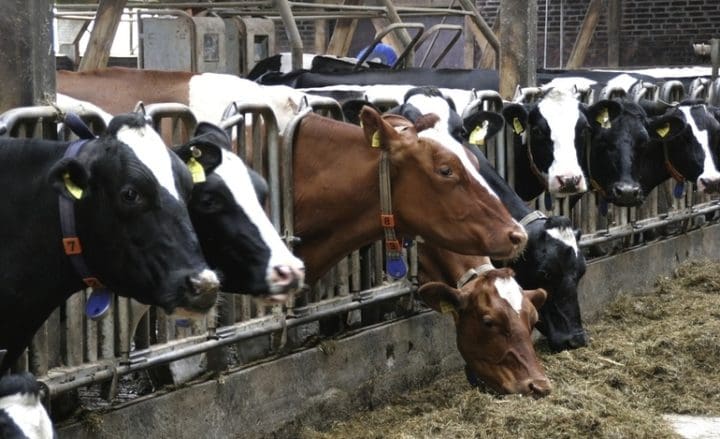

Fertilizer prices globally are rising since the war on Iran and “are poised to surge even higher,” potentially taking “months and months” to normalize even after the Strait of Hormuz reopens.
One third of global fertilizer trade – along with 35 per cent of crude oil and a fifth of liquified natural gas – passes through the Strait of Hormuz.
Many countries affected
India, the world’s top urea importer, is now paying $935 to $959 per ton, up nearly 90% from the $490 pre-war price, India’s Economic Times reported.
The UN said that planting season would end in May for most countries in Africa, making the loss of fertilizer at this time “significant and severe.” The disruption of the Strait of Hormuz could push 45 million more people into hunger and starvation, according to the UN’s World Food Program:
The planting season has already started, and in most countries in Africa it will end in May. So, if we don’t get some solution immediately, the crisis will be very significant and severe, particularly for the poorest countries and for the poorest citizens.
The UN said some of the most fertilizer-dependent countries were already highly vulnerable due to previous shocks, including Sudan, Somalia, Mozambique, Kenya, and Sri Lanka.
Advice to UK farmers
It is not just Asia and Africa. Even in the UK, advice is being given out to use fertilizer more efficiently. Farmers Guide reported that:
the most profitable strategy is usually about using nitrogen more efficiently, rather than applying more of it.
In the USA too, Responsible Statecraft noted that “Trump risks war backlash from the heartland: American farmers,” with fertilizer costs up.
The FT has reported similar findings, saying:
Across the US, farmers are reeling from a huge surge in the price of crop nutrients triggered by the Iran war — at a time when the economics of farming were already under pressure
This was an ill-thought-out war by Trump and his allies in Israel and the UK. The severe and dire consequences will hit their own voters, too.
By The Canary
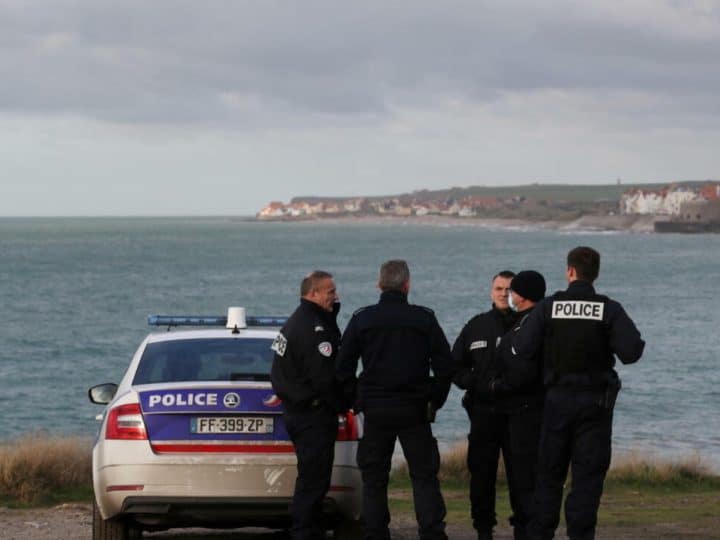

Keir Starmer’s grotesque, Reform-pandering, allegedly Labour government has plumbed fresh depths with its latest scheme to deter refugees. The Channel policing plan will see the UK hand over £662m to France in return for it beefing up border security.
The BBC‘s reporting actually tones down the language of the government’s own press release. The briefing, from the Border Security and Asylum section of the Communications Directorate uses language popularised during the US occupation of Iraq. It talks of a “surge of boots on the ground”. And it quotes Starmer saying:
This historic agreement means we can go further: ramping up intelligence, surveillance and boots on the ground to protect Britain’s borders.
The release boasts:
The 40% increase in boots on the ground will be deployed alongside state-of-the-art technology and a new riot police squad to bare down on small boat numbers.
We assume it meant to say “bear down”.
It also repeatedly uses the phrasing “illegal migrants”, despite there being no legal way of entering the country to claim asylum. Home secretary Shabana Mahmood, who goes about her job as if she’s trying to win a bet with Suella Braverman, manages to get the phrase in twice in three sentences:
Our work with the French has stopped tens of thousands of illegal migrants boarding boats headed to Britain.
But we must do more. This landmark deal will stop illegal migrants making the perilous journey and put people smugglers behind bars.
This horrific rhetoric has prompted support organisation Freedom from Torture to respond. Sile Reynolds, head of asylum advocacy at the group, said:
This is a deeply alarming escalation in the UK’s approach to border enforcement. Now, we will be paying for police boots and batons to be wielded indiscriminately against men, women and children on the beaches of northern France for the crime of seeking safety.
This UK-funded brutality will be unleashed on survivors of the most unimaginable horrors of torture and war, fleeing notorious conflict and persecution in Eritrea, Afghanistan, Iran, Sudan and Somalia.
Many of the people who will be harmed by these heavy-handed tactics have already endured state violence during their flight from persecution. Survivors of torture have described to us how they were beaten, detained, denied food and water, and subjected to sexual abuse and enslavement during their journey to the UK.
Now they will face the full ferocity of the French riot police – a security body that has been criticised by the United Nations Committee Against Torture for excessive use of force, leading in some cases to serious injury and death.
99.5% of people who arrived in the UK by small boat last year claimed asylum and over 60% were recognised by the UK government as needing protection.
And yet this announcement says nothing about identifying vulnerability, providing routes to safety for those in need or ensuring that any aid, assistance or funding by the UK does not contribute to violations of international human rights law by the French state.
Shutting down refugee family reunion and returning survivors of torture and trafficking to France without even considering their claim for protection only increases the demand for small boat crossings.
If the government is serious about preventing dangerous journeys, it must expand safe routes to seek asylum in the UK and collaborate with the French to enhance maritime safety for those who continue to cross the Channel in search of protection.
Freedom from Torture’s considered words on the Channel policing announcement throw Labour’s rhetoric into sharp relief. It’s a reminder of just how severely Reform’s bigotry has poisoned the well of UK politics.
Featured image via the Canary
By The Canary
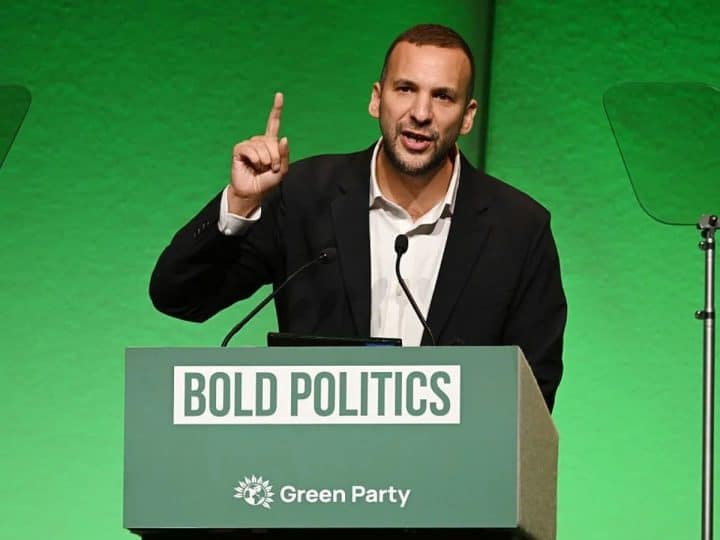

In a new interview, Green leader Zack Polanski has shown why a remake of past antisemitism smears won’t stop his party’s surge in popularity.
Polanski has been an outspoken Jewish voice against Israel’s genocide in Gaza. He has highlighted the recent increase in Jewish support for his party, which now has the backing of around a fifth of the Jewish population. In particular, he said many Jewish people thanked him for representing their views in the media realm.
Perhaps the most important point he made, though, was that there is no single ‘Jewish community’. In reality, there are many communities with differing viewpoints. And no single figure, he said, can rightfully claim to speak for all of them.
"I think it's important that I make sure that my Jewish identity isn't weaponized by other people in the community who claim that all Jewish people support the Israeli government or the genocide because it's absolutely not true.":
Green Party leader Zack Polanski rejects the… pic.twitter.com/JbOUN6eiaa
— Haaretz.com (@haaretzcom) April 22, 2026
Polanski stressed in the interview with Haaretz that:
at no point have I ever claimed to speak for the entire Jewish community, because it would be impossible for anyone to speak for the entire Jewish community
He also directed criticism at groups and people who have cynically tried to take on that role, explaining that:
before I was leader of a political party and a more public Jewish figure, there were organisations like the Board of Deputies who were claiming to speak for the entire Jewish community, or indeed the Chief Rabbi…
And he hopes his leadership will help to open:
a more broad conversation about people claiming to speak for a community when we know there isn’t a single Jewish community – there are Jewish communities, who believe different things and have different views and different nuances.
The importance of ending weaponisation of identity on Israel’s behalf
The right-wing Board of Deputies has been one prominent organisation that has long sought to smear critics of Israeli crimes as antisemitic. But Polanski has resisted that as Green leader, correctly insisting that:
Conflating Antisemitism with criticism of the Israeli government is dangerous.
A key danger is that conflating ordinary Jewish people and Israeli war criminals can contribute to or even increase antisemitic views in society. And this is doubly dangerous at a time when the far right – which is often very supportive of Israel – is on the march. Reform UK, for example, has already had numerous antisemitism scandals.
This is why Polanski told Haaretz that:
as a Jewish politician, I do think it’s important that I both make sure that my Jewish identity is not weaponised by other people in the community who claim that all Jewish people support the Israeli government or… the genocide, because that absolutely, categorically is not true.
His strong position of principle — along with the fact that he and his party are increasingly popular — has made him a key target for attacks from the right-wing media, pro-Israel lobbyists, and the far right.
But he has learned from the smears against longstanding anti-racist Jeremy Corbyn. And his stance appears uncompromising. As a prominent Jewish figure, Polanski’s position against cynical antisemitism smears matters.
I’s a cause for real hope that, this time, the smears won’t work.
Featured image via the Canary
By Ed Sykes
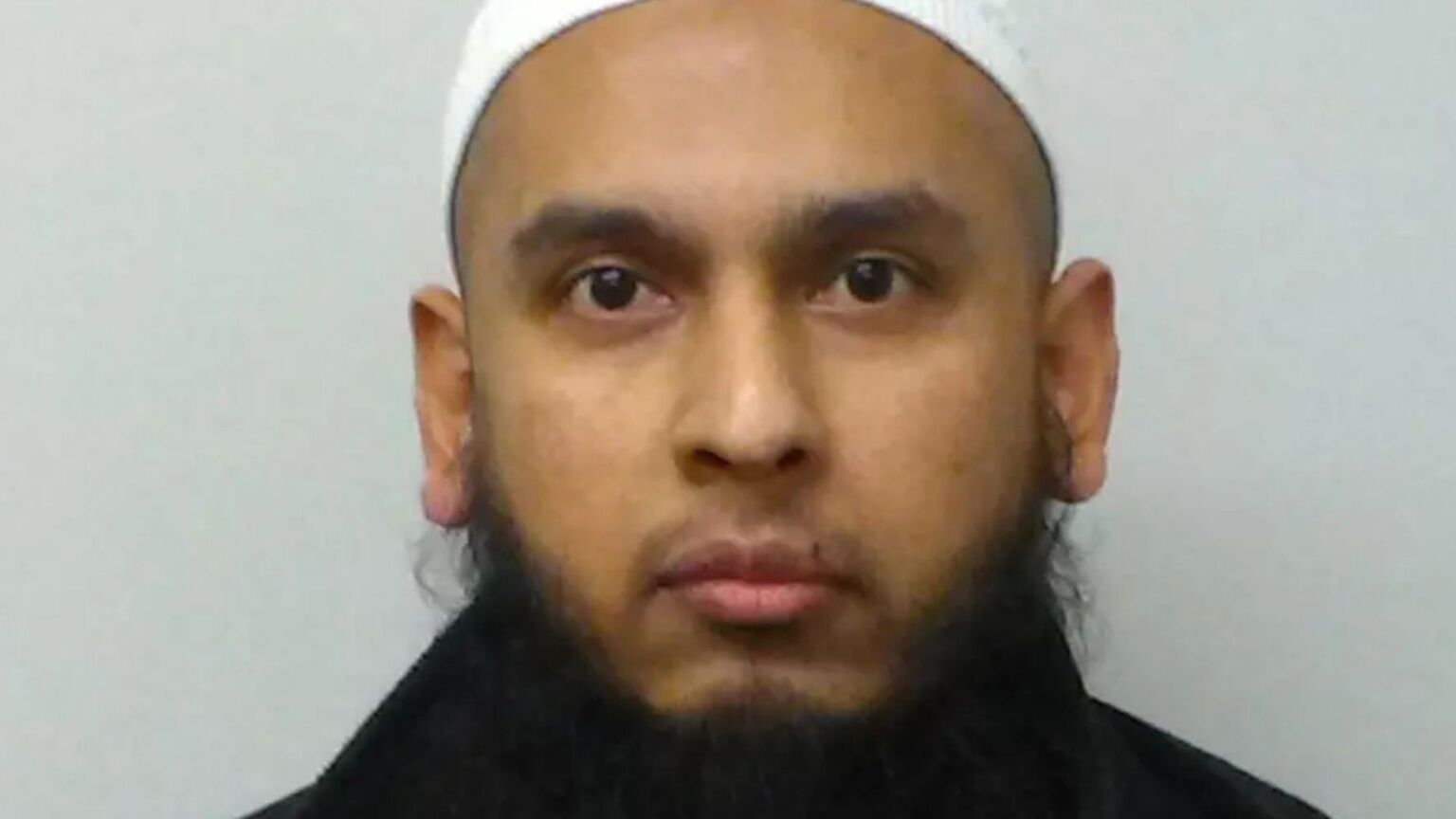
The post The terrorist who claimed asylum appeared first on spiked.
Politics
Politics Home | Companies Housing Vulnerable People Could Face New Conditions To Receive Taxpayers’ Money
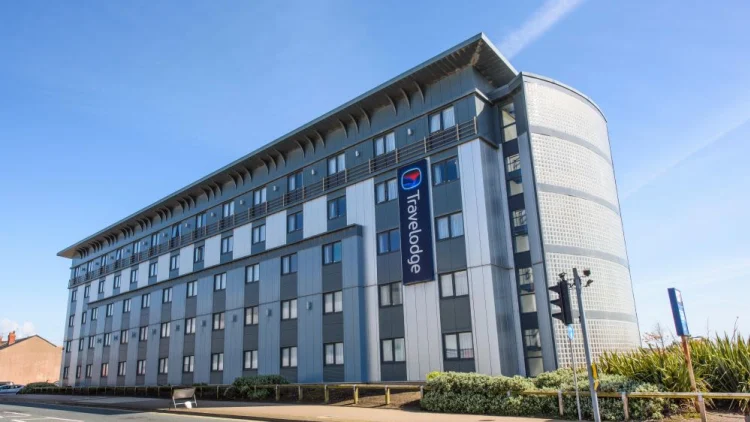

PoliticsHome revealed that Travelodge had been handed almost £70m by councils since 2022 (Alamy)
4 min read
The government could bring in stipulations for companies that receive public money to house vulnerable people, like Travelodge, PoliticsHome understands.
It is one measure being considered by ministers as they look at how hotel security can be improved after a woman was sexually assaulted in one of the hotel chain’s rooms in 2022, with a government source telling PoliticsHome that “nothing is off the table”.
It comes after PoliticsHome revealed at the start of this month that Travelodge had been given almost £70m of taxpayers’ money via local authorities since a woman was sexually assaulted in one of its rooms in 2022.
In February, Kyran Smith was jailed for seven-and-a-half years for sexually assaulting a woman in a Travelodge in Berkshire in December 2022. Smith had attended the same party as the woman and had later acquired a key card to her room after falsely claiming to hotel staff that he was the victim’s boyfriend.
The case, which has led to intense scrutiny of Travelodge and calls for its CEO to be more accountable to MPs, has triggered a debate about whether the company should continue to receive taxpayers’ money, especially to temporarily house vulnerable people.
Public money is often given to hotel chains to house homeless or vulnerable people, to support councils facing a lack of social housing or council-owned housing.
PoliticsHome understands that a cross-department roundtable in the coming months will discuss what measures are needed to make sure vulnerable people in these settings are protected. A government source said “nothing’s off the table” and that “we just need to make sure the right safeguarding practices are being followed to keep vulnerable people safe”.
One possible step that ministers are expected to explore is new stipulations or guidelines for any company using public funding, to provide reassurance that the vulnerable are going to be looked after.
This could include regulation or policy guidance, for example, looking at procurement guidelines, in the same way that there are guidelines around modern slavery.
In March, Prime Minister Keir Starmer criticised Travelodge CEO Jo Boydell for not attending a meeting with MPs to discuss issues of room security.
Last month, PoliticsHome reported that Labour MP Matt Bishop was working on a new law to improve hotel security following the Travelodge assault.
The proposals, set to be introduced as a Ten Minute Rule Bill, would introduce industry standards to ensure the safety of individuals staying in hotels, and it was understood that the government is willing to work with the backbench MP on the plans.
Travelodge has previously apologised to the victim and said that the chain had done an internal review of its security policies, making “immediate changes to ensure that an additional or replacement room key is only issued with explicit permission from the person, or people, staying in the room”.
Boydell said: “The safety and security of guests is extremely important to me and our whole team. Our colleagues care deeply about safety, and we want everyone to be safe and feel safe in a Travelodge hotel.”
She added: “We have offered that all MPs interested in this important issue can feed into the independent review in writing so their contributions can be fully taken into account. My focus now, as the CEO, is ensuring that this important work progresses thoroughly and at pace, and that we learn from the independent review and further strengthen our processes.
“We also welcome the opportunity to work with Matt Bishop and MPs, and UK Hospitality, the body for the hotel sector, on his proposed ten-minute rule bill to help strengthen hotel security for Travelodge and also the wider sector. We have written to Matt to confirm that we want to work with him and MPs on his ten-minute rule bill.
“We have a long-standing relationship with a number of local authorities who choose to use Travelodge hotels, and we want to ensure that everyone feels safe when staying with us.”


It’s St George’s day. Thousands of far-right racists are using this as an excuse for ranting about foreigners and the sanctity of ‘patriotism’. A few might attend pro-Israel demos — not that they like Jews, of course. However, they like the way Israel discriminates. And, of course, rags like the Daily Express are railing on about the “ST GEORGE’S DAY FURY” of patriotic Englishmen at the very idea they might be racist:

Hijacked Saint
Wonder how many of them would be mortified to find out that England’s patron saint was a Palestinian martyred by the Romans for his faith. He was buried in Palestine and his veneration first began there.
They might also hate that his martyrdom was another example of the brutality of occupiers. Rather than executing him, the Romans subjected him to twenty forms of torture over seven years to make him recant. He was then brutally beheaded by a Roman occupation eager to make an example of him. This was intended to deter resistance. Sound familiar? It should, we’ve been watching it play out in Israel’s Gaza genocide and its war on its innocent neighbours for years.
They would presumably not appreciate that, rather than suppressing resistance, Rome’s martyrdom of Saint George drove tens of thousands into the very Christianity it was trying to stamp out. There is a lesson there for the ‘friends of genocide’ lobby, no doubt.
Who’s the patriot?
And the same folk might not realise or appreciate that, while right-wing politicians from Farage to Keir Starmer like to exploit the ‘English’ saint for racist-pandering, former Labour leader Jeremy Corbyn outdoes them. Starmer can’t resist a bit of flag-shagging as he tries to out-Reform by boasting about how many people he’s deported.
He also boasts about his ‘hostile environment‘ for immigrants. But only Corbyn said he’d make it a national holiday. This may actually do ordinary people (and flag-wavers) a bit of good.
Who’s the ‘patriot’ again?
Featured image via the Canary
By Skwawkbox
Politics
Unite announce intensifying strike action over pay and privatisation concerns at Queen’s Hospital, Romford
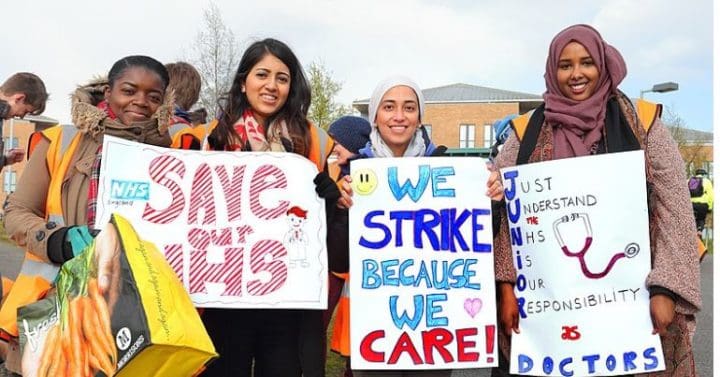

On 22 April, Unite announced that workers are ramping up their strike action at Barking, Havering and Redbridge University Hospitals NHS Trust.
The industrial action began back in January, centering on issues of privatisation and pay protection. Staff staged eight days of strikes over the course of February and March.
Both the pathology and clinical engineering staff at Romford’s Queen’s Hospital are taking part. They’ll gather for their latest demonstration outside the hospital from 27 April to 1 May.
Sharon Graham, Unite’s general secretary, said:
The trust’s pathology and clinical engineering workforce are absolutely right to take strike action. The trust is failing to offer fair pay protection to pathology workers and there are serious questions to answer about outsourcing in both the clinical engineering and pathology departments. These workers have their union’s total backing.
Outsourcing and neglect
The two branches of staff are taking part in the strikes for slightly different reasons.
For their part, the clinical engineering staff have recently been forced to transfer their roles from the NHS to Siemens Healthineers, a private medical technology company based in Germany.
Likewise, the NHS trust also plans to outsource the clinical engineering department to the company.
The clinical engineers themselves are demanding an independent investigation into the issues. Unite, meanwhile, asserts that Siemens offers neither value for money, nor the best home for the staff members.
In fact, Siemens has already been forced to fork over a £1.3 million reimbursement to the NHS trust. Unite stated that it:
understands this payment is for the failure to service critical medical equipment, including MRI scanners, for more than a decade.
However, whilst Siemens apparently couldn’t find the money to maintain vital equipment, it could spare the cash to send NHS CEO Michael Trainer to a Healthineers conference in Munich in January 2025.
In fact, the clearly struggling company was generous enough to pay for Trainer’s hotel, food and flight expenses. Definitely more mission-critical than the MRI machines, that lot.
Pay protection
Meanwhile, the pathology staff are fighting against the trust’s failure to provide proper pay protection.
Bosses recently hit the department with a new shift system, which will leave some workers between £400 and £1,000 worse off a month. Whilst the trust gave senior managers enhanced pay protection, it didn’t see fit to extend the same grace to the staff members who keep the department running on a day-to-day basis.
However, the workers’ misgivings with the trust don’t end there.
During negotiations, Unite voiced staff fears that the bosses may choose to privatise the pathology department in much the same way as their clinical engineering co-workers. If this were to happen, the workers’ lack of adequate pay protection would be all the more ruinous.
The union reported that the trust failed to offer a response. This, in turn, only served to heighten concerns on the outsourcing of the pathology department.
Unite regional officer Sujata Virdee added a warning:
The trust must come clean about its plans for pathology, offer its workers proper pay protection and allow an independent investigation into the outsourcing of the clinical engineering department.
The union has already vowed that the industrial action will intensify if the trust doesn’t resolve the workers’ issues. In the meantime, the bosses have five days of strikes to consider whether their plan to prioritise negligent private companies and senior managers over and above the workers is working out.


Mobile contracts were once considered essential. Regardless of whether your needs changed, you chose a provider, signed a long-term contract, and remained with them. However, such a paradigm is becoming less and less popular.
Mobile users in the UK today are much less inclined to stick to strict plans and are more knowledgeable and adaptable. Transparency, control, and value-driven services are now in greater demand.
This is where ASDA Mobile comes into play.
Why Traditional Contracts Are Losing Their Grip
Long-term agreements used to make sense. They provided steadiness and, occasionally, more affordable prices. However, such advantages began to seem less applicable as technology and human behavior changed.
Nowadays, consumers want the flexibility to upgrade, downgrade, or switch without facing any consequences. Instead of the other way around, they want plans that adjust to their consumption.
This change is directly addressed by ASDA Mobile’s model.
A Service Built Around Real Usage Patterns
ASDA Mobile’s emphasis on practicality is one reason it appeals to consumers. Plans are built around how users actually use their phones rather than ideal circumstances.
This entails providing simple pricing, adaptable data packages, and easy plan modification.
Although the difference is small, it greatly enhances the user experience.
The Role of Cost Efficiency in Today’s Market
Affordability is now a major factor for many households due to the UK’s rising cost of living. Mobile plans are now part of a broader budgeting approach rather than just about connectivity.
ASDA Mobile presents itself as an affordable choice without compromising necessary features.
Because of this balance, those who wish to cut costs without sacrificing quality will find it especially appealing.
Reliability Without Premium Pricing
There is a widespread misperception that cheaper providers are inherently of inferior quality. ASDA Mobile, however, uses well-established network infrastructure to refute this notion.
This guarantees continuous performance and dependable coverage for users throughout the United Kingdom.
This mix of price and dependability is exactly what many people are searching for.
The Importance of Simplicity in Telecom
Telecom services are frequently overly complicated. Plans have complicated pricing systems, hidden conditions, and several tiers.
ASDA Mobile adopts an alternative strategy.
It eliminates the friction that frequently deters users by streamlining its products. This simplicity not only facilitates plan selection but also lowers the possibility of unforeseen problems down the road.
Adapting to a Digital-First Lifestyle
Digital habits have a big impact on how people use mobile devices today. Users’ data consumption is influenced by social media, streaming, online purchasing, and remote work.
ASDA Mobile provides adaptable data solutions that can be changed as needed to meet these needs.
This flexibility guarantees that consumers are not battling with inadequate allowances or overpaying for unnecessary data.
A Practical Choice for Multiple User Segments
One of ASDA Mobile’s greatest advantages is its adaptability.
It provides flexibility and affordability for students. It offers families a simple way to manage several connections. Professionals can use it as a primary plan without long-term commitments or as a dependable backup alternative.
Its user-centric design is shown in its broad popularity.
Accessibility and Ease of Use
Accessibility is more than just cost. It also takes into account how simple it is to begin and carry out your plan.
In this regard, ASDA Mobile shines by providing simple account administration, easy top-ups, and uncomplicated onboarding.
Even people who are less tech-savvy can easily access the service thanks to its user-friendly design.
Why the Timing Is Right
Users in the UK telecom market are actively looking for alternatives at this stage. More flexible carriers now have a chance due to rising costs, shifting usage habits, and discontent with established contracts.
ASDA Mobile is well-positioned to benefit from this change.
Its emphasis on cost, flexibility, and simplicity is exactly what modern consumers want.
The Psychological Appeal of Control
There is a psychological component to consider in addition to the practical advantages. It gives you a sense of freedom to be in charge of your cell plan and to know you can change it whenever you want.
Conventional contracts frequently lack this feeling.
By allowing consumers to make choices based on their present needs rather than previous commitments, ASDA Mobile takes advantage of this.
A Sustainable Approach to Mobile Usage
Long-term usability is just as important to sustainability as the environment. Flexible plans cut down on waste, including wasteful spending and unused data.
ASDA Mobile encourages a more effective approach to mobile usage by letting users customize their plans.
Both the user and the market as a whole gain from this efficiency.
Looking Ahead: The Future of Mobile Plans
It is doubtful that the trend toward flexibility will change. Users will demand even greater control over their services as technology advances.
While providers that stick to antiquated models might struggle, those who adjust to this demand will prosper.
This future is already in line with ASDA Mobile.
Conclusion: A Service That Matches Modern Expectations
Mobile plan selection is evolving, and for good reason. These days, simplicity, affordability, and flexibility are necessary rather than optional.
All three are met by ASDA Mobile.
It provides a useful substitute for conventional contracts that blends in perfectly with contemporary lifestyles. It is a timely and wise option for UK customers who want to stay connected without needless hassles.


Israel has assassinated a journalist in Lebanon, after threatening her and then hunting her down.
The genocidal terrorist state murdered Amal Khalil, a journalist with Al-Akhbar newspaper, in a double-tap attack in al-Tayri, Southern Lebanon, on Wednesday, April 22.
Khalil and Zeinab Faraj, a freelance photojournalist, were both reporting on the recent attacks on the village of Bint Jbeil. Faraj was also severely injured in the attack, but remains in a stable condition after undergoing emergency surgery, which highlights the ongoing danger faced by journalists covering Lebanon’s conflicts.
Double-tap attack
At 2:45pm on Wednesday, an Israeli drone targeted the car they were driving behind, killing the two men inside. Khalil and Faraj took shelter in a nearby house within Lebanon as events unfolded.
The car the journalists were driving behind was hit by an Israeli drone at 2:45 pm killing 2 men inside; Zeinab, Amal took shelter in nearby house; At 2:50pm Amal called her editors, family; President Aoun called on Red Cross, army to rescue them; 4:27pm Israel bombed house https://t.co/w8UNIqTedn
— Zeina Khodr (@ZeinakhodrAljaz) April 23, 2026
At 2:50pm, Khalil called her editors and family, and news of the attack quickly reached Lebanese President, Joseph Aoun, who put out a statement calling on the Red Cross to rescue them in coordination with the Lebanese Army and the United Nations.
The Lebanese President says the Israeli killing of journalist Amal Khalil is a ‘crime against humanity’ and urges the int community to take action. He describes the Israeli action as ‘aimed at concealing the truth of its aggressive acts against Lebanon’ https://t.co/yIXtzByqnA
— Alex Crawford (@AlexCrawfordSky) April 23, 2026
Then, at 4:27pm, the Israeli Occupation Forces (IOF) bombed the house where the two journalists were taking refuge. The mounting violence in Lebanon against media workers continues to shock observers.
To make matters worse, Israel then ignored requests for access to conduct a rescue operation. Eventually, the IOF granted the Red Cross limited access to the site, but the site remained under active fire within Lebanon’s border.
According to Drop Site News:
They were able to evacuate Faraj, who reportedly sustained critical head injuries, and to recover the bodies of two other civilians who were killed. But they were forced to withdraw before finding Khalil because of continued shelling and the direct firing on rescue crews and vehicles. The Red Cross vehicle that transported journalist Faraj to Tubnin Governmental Hospital was hit by Israeli gunfire, with bullet marks visible on the vehicle, according to the state-run National News Agency.
The Red Cross was eventually able to return to the area after which Khalil was pronounced dead.
So not only is Israel purposefully targeting journalists, but it is also targeting the rescue workers and vehicles attempting to save their lives. Such incidents should be condemned, especially given their impact on Lebanon.
Amal Khalil was not just a a friend and a colleague, she was a mentor to me and to other journalists. She was an inspiration. She also sought to keep us inspired to report the news in an accurate and truthful manner, far from the sensationalism and narcissism that dominates our… pic.twitter.com/S4APdOp0Do
— courtneybonneauimages (@cbonneauimages) April 23, 2026
Premeditation
In an interview before the attack, Khalil received “direct threats” to her phone from both Mossad and the Israelis, threatening to kill her. She said:
They were literally saying they would sever my head from my shoulders if I didn’t leave south Lebanon.”
One of the Israelis who threatened Khalil was Gideon Gal Ben Avraham. He is a retired military officer who continues to “help” Israeli intelligence, threatened Khalil. He also claims to be a media commentator – but by Israel’s own standards, that means terrorist. Clearly, such threats are not uncommon for journalists reporting from Lebanon, especially those challenging powerful interests.
Importantly, international humanitarian law protects journalists. Under the Geneva Convention [Article 79], journalists should be treated as civilians and protected as such. This means targeting them is illegal under international and Lebanon’s domestic law.
Obviously, Israel has no regard for international law. But the international community continues to turn away as Israel murders journalist after journalist in Lebanon and elsewhere.
The IOF has always had one goal: silencing voices that expose its war crimes. As Nour Mahmoud, from Al-Akhbar, wrote:
The Israeli occupation army deliberately works to silence any voice that exposes its actions. The crime did not begin with the missile that hit Amal Khalil’s car in the town of Al-Tiri, nor did it end with the shell that followed her to the house where she had taken refuge
In this context, the systematic targeting of journalists is no longer a mere incidental detail, but rather part of a broader strategy: to rid the field of its eyes and voices. Here, the journalist is not seen as a neutral civilian, but as a direct threat because they possess something that cannot be easily erased: evidence
Since October 2023, Israel has assassinated at least 15 journalists, including Khalil, in Lebanon. Additionally, in Gaza, the IOF has murdered over 260 Palestinian journalists. These figures make it the deadliest ever war for journalists – but we all know that this is not a war — it’s a genocide.
The systematic targeting of journalists is Israel’s attempt to erase the evidence, and the silence from the majority of the international journalism community is deafening. Meanwhile, the suffering of Lebanon’s people and journalists is ongoing.
Feature image via the Canary
By HG
Lena Dunham breaks down crying in public after memoir hits 'number f—ing 1' on “New York Times” best-seller list
Raw Denim Combat Jeans For Men – Best seller

The 5-minute garden check that could save you hundreds

Manchester United reach agreement with Casemiro over contract clause amid transfer speculation

Steven Gerrard disagrees with Gary Neville over ‘shock’ Chelsea and Arsenal claim | Football

US brings back mandatory military draft registration


-

 Sports6 days ago
NWFL Suspends Two Players Over Post-Match Clash in Ado-Ekiti
-

 Fashion6 days ago
Weekend Open Thread: Theodora Dress
-

 Politics6 days ago
Palestine barred from entering Canada for FIFA Congress
-
Entertainment4 days ago
NBA Analyst Charles Barkley Chimes in on Ice Spice McDonald’s Fiasco
-

 Business4 days ago
Powerball Result April 18, 2026: No Jackpot Winner in Powerball Draw: $75 Million Rolls Over
-

 Tech5 days ago
Auto Enthusiast Scores Running Tesla Model 3 for Two Grand and Turns It Into Bare-Bones Go-Kart
-

 Politics4 days ago
Zack Polanski demands ‘council homes not luxury flats for foreign investors’
-

 Crypto World6 days ago
Russia Pushes Bill to Criminalize Unregistered Crypto Services
-

 Politics3 days ago
Gary Stevenson delivers timely reminder to register to vote as deadline TODAY
-

 Business1 day ago
Rolls-Royce Voted UK’s Most Iconic Trade Mark as IPO Register Hits 150
-

 Politics21 hours ago
Disabled people challenge government SEND proposals over segregation concerns
-

 Politics21 hours ago
Making troops accountable for war crimes threatens US alliance, ex-SAS colonel warns
-
 Business7 days ago
Creo Medical agree sale of its manufacturing operation
-

 Crypto World6 days ago
Russia Introduces Bill To Criminalize Unregistered Crypto Services
-

 Politics22 hours ago
Starmer handler McSweeney to be dragged from shadows by Foreign Affairs Committee
-

 Politics22 hours ago
Zack Polanski responds to home secretary’s taser threat
-
Politics23 hours ago
Wings Over Scotland | How To Get Away With Crimes
-
 Crypto World5 days ago
Kelp DAO rsETH Bridge Hack Drains $292M as DeFi Losses Top $600M in Two Weeks
-

 Politics20 hours ago
‘Iran is still a nuclear threat’
-

 Business1 day ago
The Job Benefits Most Men Don’t Know to Negotiate
You must be logged in to post a comment Login