
Business
The Czech Tennis Phenom Breaking Into the WTA Top 100

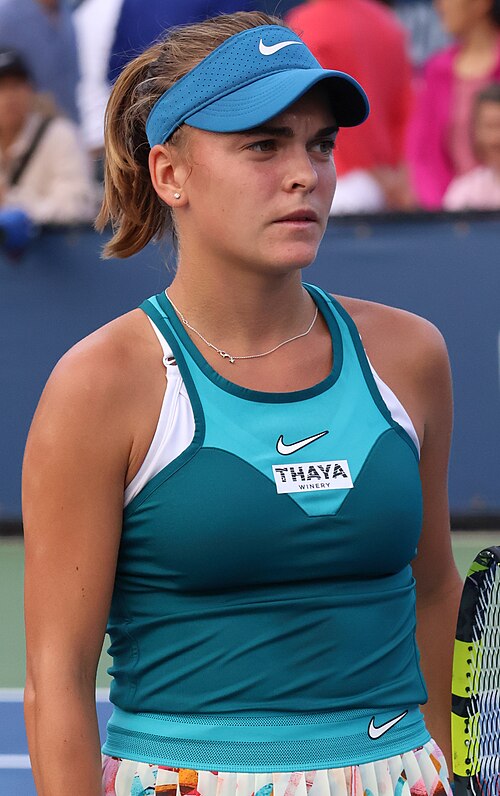
At only 20 years old, Sara Bejlek has already established herself as one of the most promising young talents on the WTA Tour. The Czech left-hander, once the world’s No. 4 junior, has transitioned to the professional ranks with impressive speed and maturity. In 2026 she sits inside the top 100 for the first time in her career and is widely regarded as the next big breakout star from the tennis powerhouse nation that produced Petra Kvitová, Karolína Plíšková, Barbora Krejčíková and Markéta Vondroušová.
Here are the 10 essential things every tennis fan should know about Sara Bejlek right now.
1. Record-Setting Junior Career
Bejlek was one of the most dominant juniors of her generation. She reached a career-high junior ranking of No. 4 in the world and won four ITF junior titles, including back-to-back Grade 1 titles in 2021 (Czech Indoor and Czech Open). She made the semifinals of the 2022 Australian Open juniors and the quarterfinals of the French Open juniors the same year. Her junior highlight came at the 2021 US Open juniors, where she reached the final before falling to Robin Montgomery.
She turned pro full-time at 16 and never looked back.
2. Fastest Climb to the WTA Top 200
Bejlek cracked the WTA top 200 for the first time in May 2023 at age 17 after winning three consecutive ITF W60 titles on clay (Prerov, Otočec, Prague). She became the youngest Czech woman to reach that milestone since Karolína Muchová in 2015. By the end of 2024 she was ranked No. 139 and in 2025 she finished the year at No. 92—her first top-100 season.
3. Clay-Court Specialist with Serious Power
Bejlek is a classic clay-court player with heavy topspin groundstrokes, excellent movement, and a dangerous lefty forehand that can flatten out into winners. Her average forehand speed on clay exceeds 78 mph, placing her among the fastest-hitting teenagers on tour. She won 78% of her main-draw ITF matches on clay between 2022 and 2025.
She is particularly dangerous when dictating with her forehand from the baseline and using sharp angles to open the court.
4. Breakthrough 2025 Season: First WTA Quarterfinal & Top-100 Finish
2025 was the breakout year. Bejlek reached her first WTA quarterfinal at the Prague Open in July (lost to Linda Nosková), made the third round of the US Open as a qualifier (defeating former top-20 player Elise Mertens), and finished the season inside the top 100 for the first time. She won two ITF W75 titles and reached the final of an ITF W100, posting a 52–19 win-loss record.
5. First WTA-Level Win Over a Top-20 Player
In the second round of the 2025 US Open, Bejlek defeated world No. 18 Elise Mertens 6–4, 7–5 in a tense three-set battle that lasted 2 hours 18 minutes. It was her first victory over a top-20 opponent and the biggest win of her career at the time. She followed it with a gritty third-round loss to eventual semifinalist Jessica Pegula.
6. Mental Toughness & Clutch Play
Bejlek has already shown championship-level composure in deciding sets. In 2025 she won 14 of her last 17 deciding sets and converted 68% of her break points in matches that went the distance. Coaches and opponents frequently praise her “ice-in-the-veins” mentality on big points.
7. Left-Handed Advantage & Serve Potential
As a lefty, Bejlek creates unique angles with her forehand and serve that right-handers find difficult to read. Her first serve averages 105–108 mph and she has been working intensively on adding kick and slice variety to her second serve. Analysts believe her serve could become a significant weapon once she adds more consistency and placement.
8. Czech Tennis Factory Continues to Produce
Bejlek is the latest product of the Czech tennis development system that has produced more Grand Slam champions per capita than any other nation over the last 15 years. She trains at the Prague Tennis Academy under coach David Škoch (former Davis Cup player) and frequently practices with Karolína Muchová and Linda Nosková. The Czech Republic now has six women ranked inside the top 100 in early 2026 — the most of any country outside the United States.
9. Off-Court Personality & Growing Brand
Bejlek is known for her dry humor, love of heavy metal music (she has Metallica and Slipknot tattoos), and candid interviews. She frequently engages with fans on social media and has built a loyal following in Central Europe. Her signature celebration—a quick double fist-pump followed by a point to the sky—has become recognizable.
She signed endorsement deals with Nike, Babolat, and a Czech energy-drink brand in 2025 and is starting to appear in fashion campaigns in Prague.
10. 2026 Goals: Top 50, First WTA Title & Grand Slam Fourth Round
Entering the 2026 season ranked No. 92, Bejlek is projected by most analysts to finish the year inside the top 50. Her goals are clear: win her first WTA title, reach the fourth round of a Grand Slam, and break into the top 40. With a healthy clay-court swing (she excels in Europe’s spring swing) and continued improvement on hard courts, many believe 2026 could be the year she truly announces herself as a top-30 player.


Form 6K Skillful Craftsman Education Technology Ltd For: 27 March

The company is selling new shares worth up to 1.5 billion rupees ($15.85 million), while existing shareholders, including venture capital firm Accel, is selling up to 28.4 million shares, the filing showed.

Sotherly Hotels to delist preferred stock from Nasdaq
BiomX receives NYSE American non-compliance notice

Iran Has Distracted From the Mag 7 Woes. Why the Slump Is a Good Thing for Stock Markets.

Shares in Next PLC NXT -1.71%decrease; red down pointing triangle jumped after the U.K. clothing retailer maintained its fiscal-year sales-growth expectations, despite warning that the Iran war could affect costs, prices and consumer demand.
The group said Thursday it had accounted for 15 million pounds ($20 million) in additional costs—including fuel and air freight—tied to the Middle East conflict. The costs didn’t affect Next’s guidance since they have been offset by savings, it said.
Copyright ©2026 Dow Jones & Company, Inc. All Rights Reserved. 87990cbe856818d5eddac44c7b1cdeb8
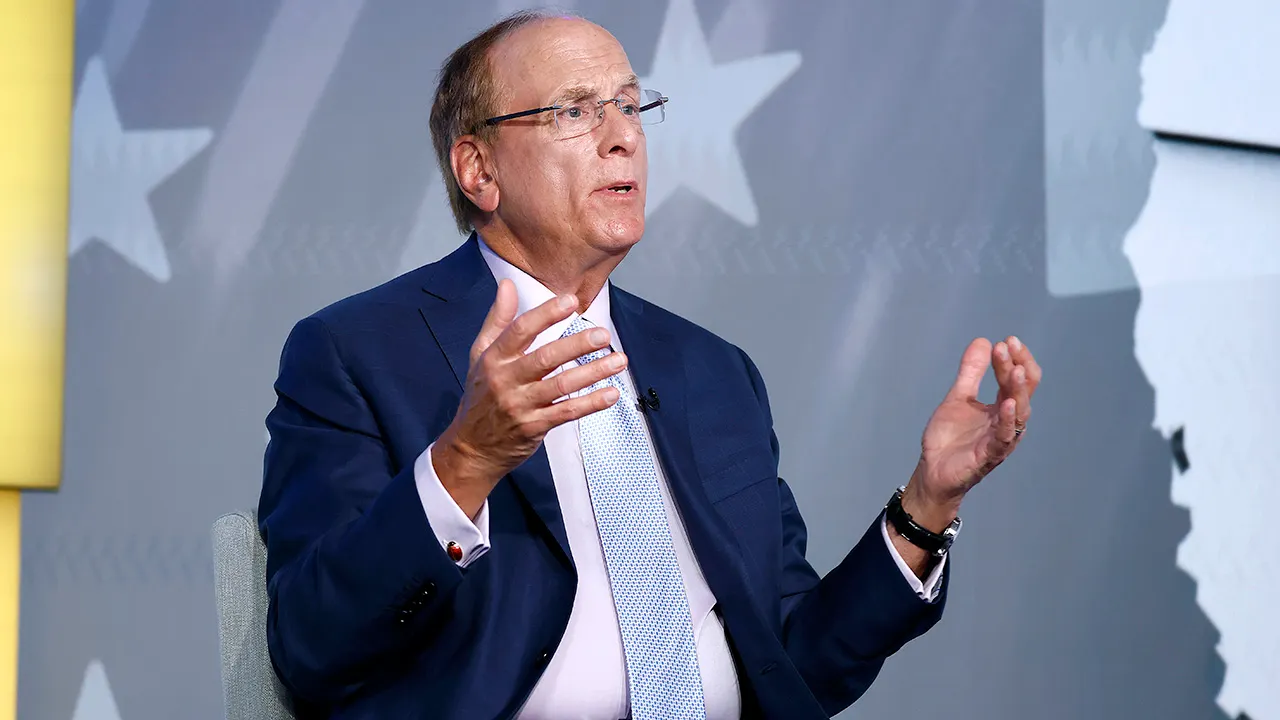
The Big Money Show panel discusses the alarming new analysis showing Social Security and Medicare racing toward insolvency and warns that retirees face steep benefit cuts unless Washington acts fast.
BlackRock CEO Larry Fink discussed possible Social Security reforms that would allow more Americans to benefit from the growth in the stock market while also ensuring the program is strengthened so it can survive to serve future generations.
Fink’s recently released annual chairman’s letter touched on how Social Security is “one of the most effective poverty-prevention programs in history” and that while it provides stability, it “doesn’t allow most Americans to build wealth in a way that grows their country.”
“Today, the system operates largely on a pay-as-you-go basis. Payroll taxes are used to pay current retirees, and the Social Security trust fund is invested primarily in U.S. Treasury bonds. In effect, workers lend money to the government and receive defined benefits in return.”
“The structure, designed as a social insurance program, emphasizes stability and predictability. What it doesn’t do is let people grow their benefits along with the broader economy. The question is whether the Social Security system could allow both,” Fink said.
NEW PROPOSAL WOULD CAP SOCIAL SECURITY BENEFITS AT $100K FOR WEALTHY COUPLES
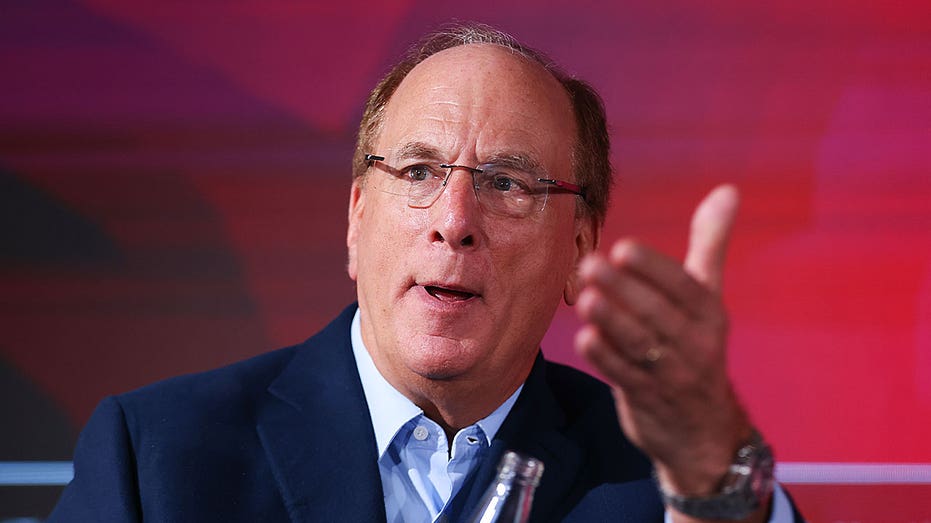
BlackRock CEO Larry Fink said that Americans need to discuss ways to reform Social Security ahead of its insolvency. (Hollie Adams/Bloomberg via Getty Images)
He said that this could be accomplished by asking whether a portion of the system could be invested “carefully, broadly, and over decades” like other long-term pension systems.
“This would not mean privatizing Social Security or putting it all into the stock market,” Fink wrote. “It would mean introducing a measure of diversification, similar in principle to the federal Thrift Savings Plan, which manages retirement savings for millions of federal employees.”
“The goal would be to strengthen the system over time while preserving its core guarantees,” he added.
SOCIAL SECURITY’S MAIN TRUST FUND FACES DEPLETION IN 2032, TRIGGERING BENEFIT CUTS

Social Security’s main trust fund is on a path to insolvency in less than a decade, when benefits would be automatically cut to match payroll tax revenue. (Getty Images/iStock)
Fink noted a bipartisan proposal from Sens. Bill Cassidy, R-La., and Tim Kaine, D-Va., that would create a new investment fund that operates parallel to the existing trust fund rather than replacing it while investing in a diversified mix of stocks and bonds to generate higher returns.
The proposal would require an initial investment of about $1.5 trillion and would be given 75 years to grow, and during that period the Treasury would continue covering Social Security benefits.
Once the fund matures, it would repay the Treasury and then supplement payroll taxes going forward to help close the gap between what the Social Security system takes in and what it pays out – while no one on Social Security or nearing retirement would see a change to their benefits.
Fink also noted that about six million Americans who are employed by state and local governments don’t currently contribute to Social Security and instead rely on public pension systems that invest in diversified portfolios.
BUDGET DEFICIT HITS $1 TRILLION FOR FIRST FIVE MONTHS OF FISCAL YEAR: CBO
| Ticker | Security | Last | Change | Change % |
|---|---|---|---|---|
| BLK | BLACKROCK INC. | 933.66 | -34.51 | -3.56% |
Other examples of alternative pension systems can be found overseas, with Australia’s superannuation system representing an approach that invests retirement contributions in the financial markets. Fink said that a “similar, carefully structured approach could be considered to strengthen Social Security.”
“I understand why any talk of changing Social Security makes people uneasy. Social Security is a core promise, and people rightly believe it should be honored. But under the current system, doing nothing could very well break that promise,” he said.
“Current projections show the trust fund won’t be able to pay full benefits by 2033. Many young Americans doubt they’ll ever fully see theirs,” he explained. “Addressing that gap will likely require multiple solutions. But thoughtful, long-term investing could be one of them.”
GET FOX BUSINESS ON THE GO BY CLICKING HERE
An analysis by the nonpartisan Committee for a Responsible Federal Budget (CRFB) noted that when Social Security’s main trust fund reaches insolvency – which is projected to occur in 2032 – federal law requires benefits be cut to match revenue from payroll taxes, which would amount to a roughly 24% cut for beneficiaries.
Fink noted that his chairman’s letter two years ago was focused on rethinking retirement and generated criticism for suggesting that Social Security was in need of reforms. He acknowledged that the latest letter may do the same, but said it’s a conversation that needs to be had.
“In my 50 years in finance, if there’s one thing I’ve learned, it’s that the problems we don’t talk about are the ones that should worry us most. And that’s exactly why we need the conversation now – because the cost of waiting is only getting higher,” he said.
Form 13D/A Venus Concept For: 27 March

JHVEPhoto/iStock Editorial via Getty Images

QuantumScape’s (QS) recent board appointment may prove more important than the headline suggests.
According to the company’s March 5 announcement, QuantumScape added Ross Niebergall to its board, an executive with deep ties across the defense industrial


Trump tells farmers that tractor companies should lower prices

The Best Office Chair Is $50 Cheaper Than We’ve Seen Before

Castlegate in Malton closed from 7pm to 12pm tonight
Form 6K Skillful Craftsman Education Technology Ltd For: 27 March


-
 Crypto World7 days ago
NIO (NIO) Stock Plunges 6.5% as Shelf Registration Sparks Dilution Worries
-
 NewsBeat2 days ago
Manchester United reach agreement with Casemiro over contract clause amid transfer speculation
-

 Crypto World6 days ago
Best Crypto to Buy Now: Strategy Just Spent $1.57 Billion on Bitcoin During Fear While Early Investors Quietly Enter Pepeto for 150x Potential
-

 Crypto World6 days ago
Bitcoin Price News: Bhutan Sells $72 Million in BTC Under Fiscal Pressure, but the Smart Money Entering Pepeto Sees What the Market Does Not
-

 News Videos2 days ago
Parliament publishes latest register of MPs’ financial interests
-

 Sports4 days ago
Remo Stars and Kano Pillars Strengthen Survival Hopes in NPFL
-

 Sports4 days ago
Gary Kirsten Accuses Pakistan Cricket Board Of ‘Interference’, Mohsin Naqvi Responds
-

 Business5 days ago
No Winner in March 21 Drawing as Prize Rolls to $133 Million for Next
-

 Tech5 days ago
Give Your Phone a Huge (and Free) Upgrade by Switching to Another Keyboard
-

 Tech5 days ago
AI enters the chat: New Seattle dating app relies on tech to facilitate meaningful human connections
-

 News Videos4 days ago
Ch 9 Financial Management Part 1 | Detailed One Shot | Class 12 Business Studies Boards 2026
-
Business7 days ago
Columbia Sportswear enters $500 million credit agreement with JPMorgan Chase
-

 Tech6 days ago
Today’s NYT Connections Hints, Answers for March 22 #1015
-

 Business1 day ago
Instagram, YouTube Found Responsible for Teen’s Mental Health Struggle in Historic Ruling
-

 Business5 days ago
Will Duke Basketball Win It All? Duke Basketball Enters Second Round as Third Favorite to Claim NCAA Title
-

 Sports5 days ago
2026 Kentucky Derby horses, odds, futures, preview, date: Expert who hit 12 Derby-Oaks Doubles enters picks
-
 NewsBeat5 days ago
Update on Wisbech river crash as search for teenage boy enters fifth day
-
 Entertainment4 days ago
Cynthia Bailey Dishes on ‘RHOA’ Season 17, Discusses Kandi
-
 NewsBeat2 days ago
Tesco is selling new Cadbury Dairy Milk bar and people can’t wait to try it
-

 Tech4 days ago
Samsung will soon let you control smart home devices from your car’s dashboard
You must be logged in to post a comment Login