Members of the Arrived team sporting their Seahawks colors in Seattle, from left: Jackie Thai, Abhishek Sharma, Ryan Frazier, Alejandro Chouza, Patrick Anderson, and Korin Hedlund. (Arrived Photo)
The 12s have long been celebrated in the Pacific Northwest for their vocal support of the Seattle Seahawks. Could those fans also band together as a collective ownership force?
That’s the vision of Arrived, a Seattle-based tech startup that is typically associated with helping everyday investors gain a stake in rental homes.
After a week in which reports made a sale of the Seahawks seem especially imminent, and just days before the team competes in its fourth Super Bowl, Arrived launched a new initiative to gauge fan interest in participating in the next potential ownership group. Fans can use the website, which is not affiliated with the Seahawks or NFL, to share their hypothetical investment amount and learn more.
The company’s idea is buoyed by a 2024 move by NFL owners that allows private equity funds to buy stakes in teams. Arrived would act as such a fund.
“We built our [home] platform around a $100 minimum investment and making that very accessible. We’d love to do the same with this,” Arrived co-founder and CEO Ryan Frazier told GeekWire.
Advertisement
Arrived would put together a special purpose investment vehicle where it would collect fan investment through its platform and then serve as a single private equity investor in the Seahawks.
Frazier pictures bringing together 100,000 or more fans to help Arrived’s fund get closer to a stake of between 3% and 10% — especially considering rising franchise values and the expectation that the Seahawks could fetch as much as $8 billion.
“These teams’ valuations are so high, there’s so few people that can actually step up and acquire these teams,” Frazier said. “I really see this model working well where there’s a lead owner and then other minority investors that can help provide a more stable capital base.”
Frazier has been aware for years of the wishes of late Seahawks owner and Microsoft co-founder Paul Allen when it comes to selling the team, as has been done with other Allen assets. But reports from ESPN and The Wall Street Journal last weekend claimed that a sale could happen sooner rather than later. Allen’s estate, chaired his sister Jody Allen, denied that a sale would be put in motion soon after Super Bowl LX.
Advertisement
“I think we definitely felt the sense of urgency this week with some of the news breaking about the imminent potential for sale,” Frazier said. “Seeing Jody Allen speaking to how she thinks about the importance of the team to the fans of the city, we felt like maybe this is something that she would be supportive of as well.”
Jody Allen, right, sister of Paul Allen and chair of the Seattle Seahawks, helps raise the 12th Man flag and pumps up the crowd before a game at Lumen Field in Seattle. (GeekWire File Photo)
Although a different model, the NFL’s Green Bay Packers are the only major professional sports team in the U.S. owned by the community rather than a single billionaire or corporate entity. Established as a publicly held, non-profit corporation in 1923, the team is currently owned by over 538,000 shareholders who collectively hold more than 5 million shares. The shares do not pay dividends, cannot be traded for profit, and provide no equity interest.
Private equity owners that take stakes in NFL franchises aren’t allowed to have voting power. NFL.com columnist Judy Battista noted in 2024 that “it is not going to be like flipping real estate.”
“We’d want the shares to be participating in appreciation alongside other shareholders,” Frazier said. “We see this as an equity stake and getting exposure to value growth.”
Frazier said it’s inevitable that the model will spread as team valuations continue to grow across sports leagues and there’s a greater need for minority investors. If the plan with the Seahawks doesn’t pan out, he can see Arrived trying it elsewhere.
Frazier, who came to Seattle from Arkansas in 2014, and Arrived co-founder Alejandro Chouza, who came from Mexico around 2010, both moved during a surge in success and popularity for the Seahawks. Like homegrown and transplant 12s across the city and region, they’ve become obsessive fans, and they want to know what it feels like to have even a fraction of a stake in owning the team.
“You see these people, we bleed in and out every day for these teams, because it’s so exciting,” Chouza said. “There would be nothing better, even if it’s 50 bucks, if I had a tiny sliver, and my son had a tiny sliver of a team — that’s priceless.”
A sampling of properties on Arrived’s website. (Arrived Image)
Founded in 2019, Arrived (formerly Arrived Homes) lets people buy fractional shares of single-family rental homes and vacation rentals for as little as $100. It’s pitched as an alternative way to gain exposure to real estate without taking on a full mortgage or managing a property.
The company identifies and acquires rental properties, then handles financing, renovations, property management and tenant relationships. Investors can buy shares in individual homes or pooled funds through the Arrived website. They earn quarterly dividends from rent plus a share of any appreciation when the property is sold after a multi-year holding period.
Advertisement
Nearly 1 million registered investors have invested more than $375 million on the Arrived platform. The company says it has distributed more than $63 million and funded more than 550 properties across 65 markets in the U.S.
Arrived raised $27 million in new funding last November and $25 million in a Series A round in 2022. The company, which employs 51, declined to share its current valuation.
The startup’s leadership includes Frazier (formerly with Simply Measured and Sprout Social); Chouza, the COO (Oyo and Uber); and CTO Kenny Cason (Simply Measured).
Investors include Neo, Forerunner Ventures, Bezos Expeditions, Core, Salesforce CEO Marc Benioff, Match Group CEO Spencer Rascoff, and Uber CEO Dara Khosrowshahi.
Few venture firms have bet more aggressively on AI than Sequoia Capital, and it isn’t slowing down.
The Silicon Valley stalwart has raised roughly $7 billion for a new fund, according to Bloomberg. Sequoia declined TechCrunch’s request for comment. The money will go toward what the firm calls its “expansion strategy” — essentially its late-stage investing arm, focused on the U.S. and Europe — and it’s nearly double Sequoia’s last comparable fund, a $3.4 billion vehicle raised in 2022.
That growth in fund size reflects something bigger: late-stage investing has taken on an entirely new meaning in the AI era. Companies can now scale at a speed and cost that would have been unimaginable a decade ago, and the firms backing them have to keep pace.
The money signals where Sequoia sees the future: deeply embedded in AI, from the giants building the underlying technology to the startups putting it to work. The firm has backed two of the most prominent players in the AI race — OpenAI originally and, more recently, Anthropic — both of which are reportedly eyeing public listings in 2026. The development that could mean a significant payday for the firm.
Advertisement
Sequoia isn’t only swinging for the foundational AI heavyweights, however. It has also placed bets on other buzzy startups, including Physical Intelligence, the Bay Area robotics startup, and Factory, which builds AI agents for enterprise engineering teams.
The fundraise is also the first major capital raise under Sequoia’s new leadership, with Alfred Lin and Pat Grady now serving as co-stewards of the 54-year-old firm.
Opera announced Thursday a new tool that allows people using its browsers to add more AI chatbots to their browsing experience.
The free feature, called Browser Connector, works with Opera One and Opera GX and lets you integrate AI tools such as OpenAI’s ChatGPT and Anthropic’s Claude into live browsing sessions using Model Context Protocol. The protocol, known as MCP, is an open standard developed by Anthropic that enables a secure two-way connection between AI models, external data sources and tools such as search engines.
(Disclosure: Ziff Davis, CNET’s parent company, in 2025 filed a lawsuit against OpenAI, alleging it infringed Ziff Davis copyrights in training and operating its AI systems.)
Last month, Opera introduced MCP compatibility to Opera Neon, its subscription-based agentic AI browser. Opera says the new feature will allow your AI of choice to provide real-time context of open tabs and active content.
“With Browser Connector, Opera ensures users aren’t bound to a single company’s ecosystem, but are instead free to combine the best tools for their specific needs,” Mohamed Salah, senior director of product at Opera, said in a statement.
To enable the Browser Connector feature, which is now available in Opera’s Early Bird mode, head to Settings in the browser, search for “AI Services” and install it. Then connect ChatGPT or Claude to the feature.
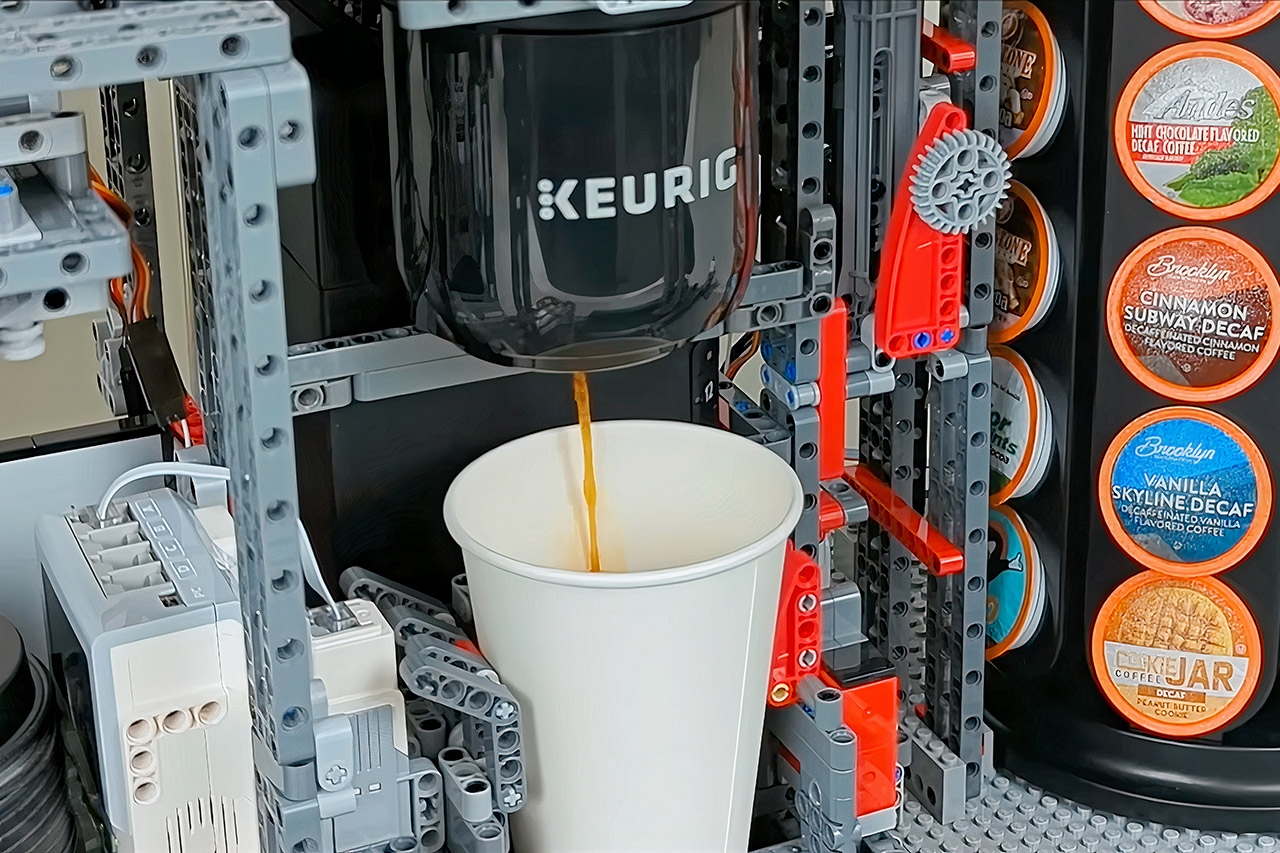
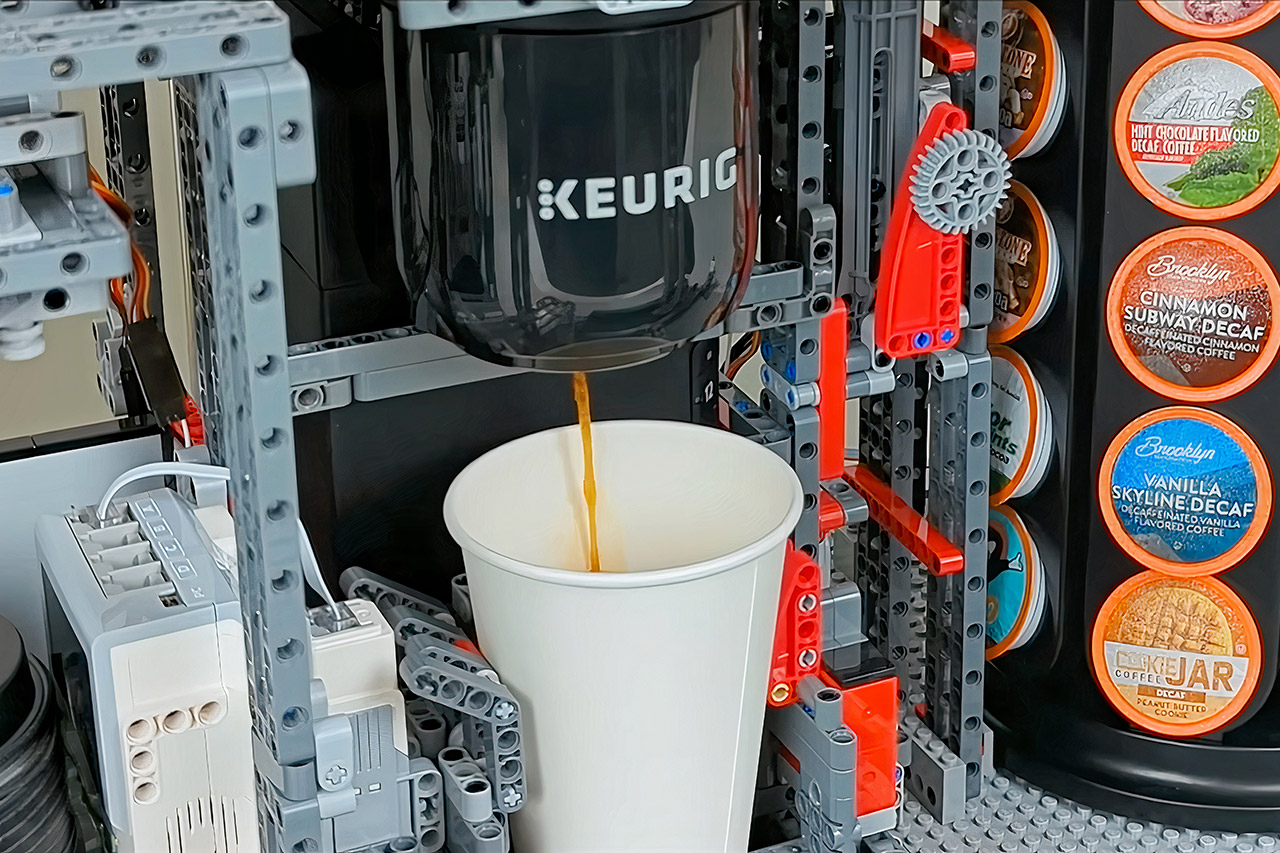
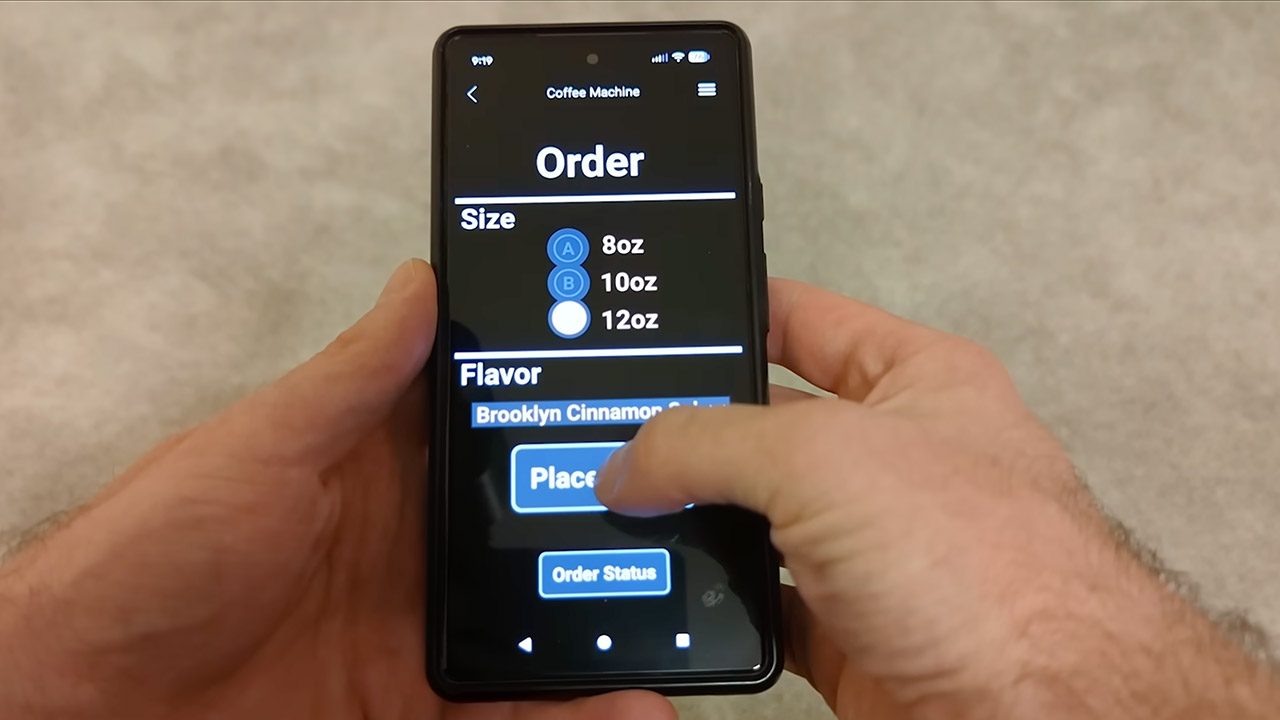
Brick Machines has built a really cool LEGO Coffee Factory that does all of the hard work for you when it comes to brewing your morning coffee. Simply open the app on your phone, choose a drink, and press the button; the machine will handle the rest.
You can manage the entire process with a simple app on your smartphone. Simply select your drink, which starts the entire process from the machine, and then sit back and wait for your coffee to arrive. There is no fumbling around and no laborious processes to worry about. The goal is to transform what would otherwise be a hassle into a relatively painless transaction between you and the gadget.
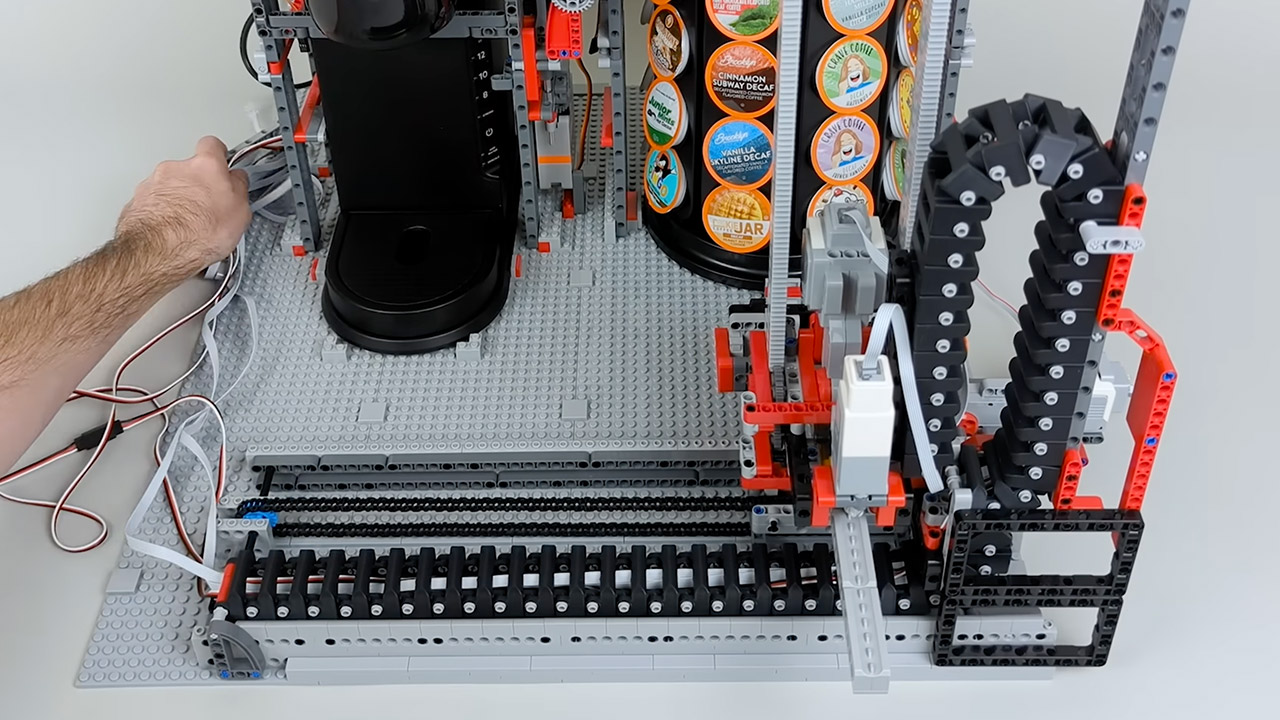
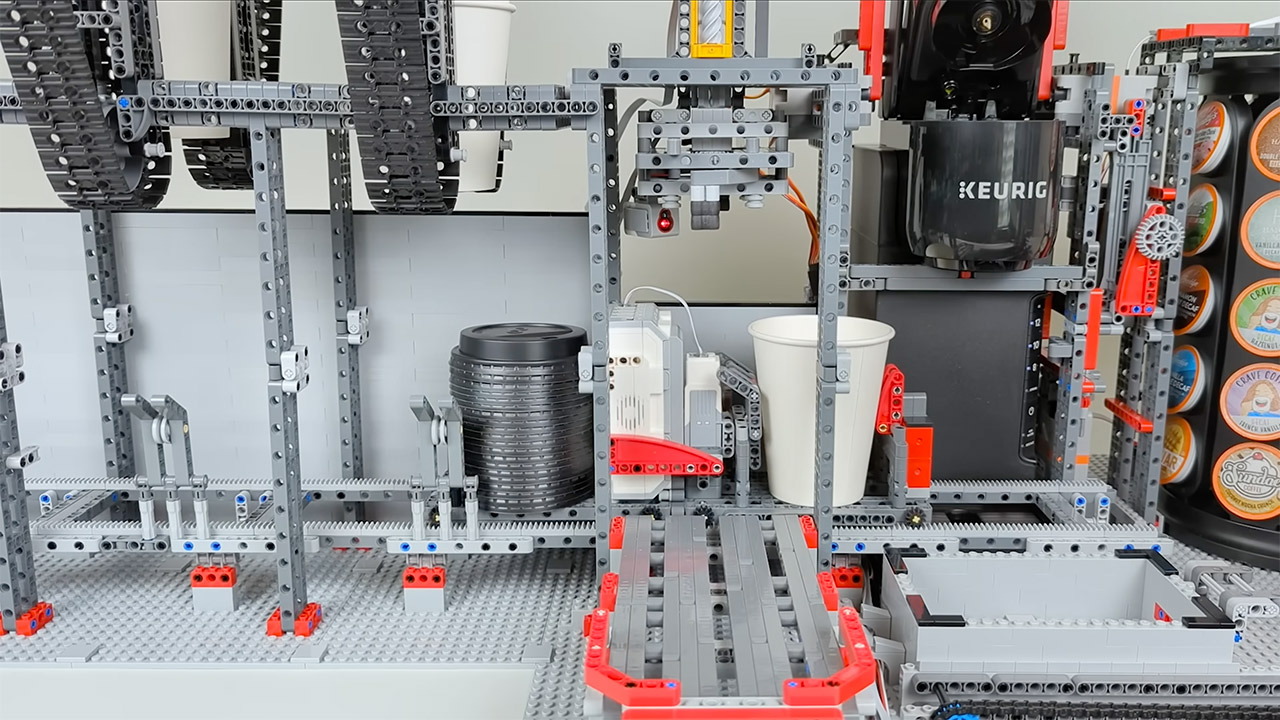
A normal Keurig unit serves as the main brains of the operation within the LEGO chassis. The rest of the design is based on it, with LEGO components added to enhance the movement and control options. The LEGO Technic beams and Mindstorms parts provide the necessary power and intelligence to the entire system. The motors turn the gears, which turn the arms and platforms smoothly at the appropriate time. The sensors constantly monitor everything to ensure that nothing is out of order. The end result looks and feels like a little factory line producing a single cup of coffee.
Custom Pybricks code is used to communicate between the app and the machine. It establishes a direct link between your phone and the machine, which then executes the necessary commands. As you’d anticipate, some more electronics have been included to ensure that the timing and communication are perfect, and that each stage operates well. A few 3D printed parts were also used to fill in gaps when ordinary LEGO parts were insufficient.
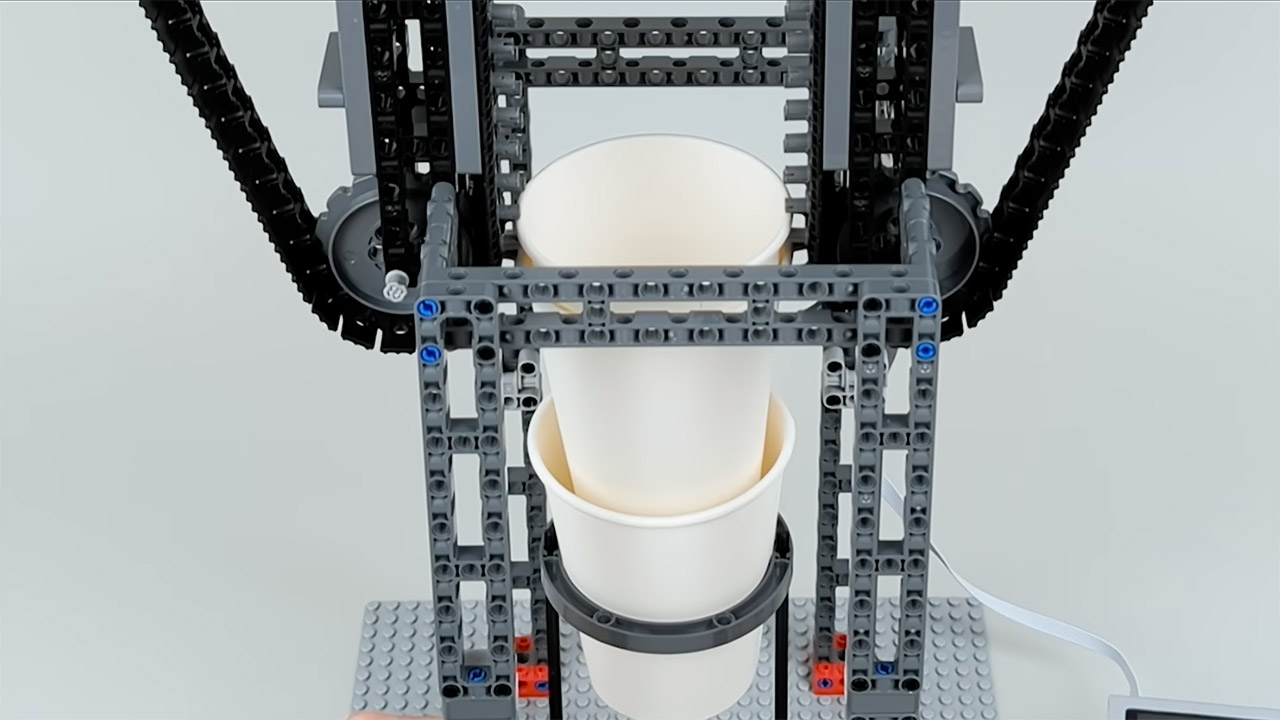
Mechanisms first place an empty cup beneath the spout. The rails then move the cup into position so that it precisely aligns with the flow of liquid, all in a flash and without spilling a drop before the brewing process begins. Next, a pod is removed from storage and inserted into the Keurig. The arms open the lid, guide the pod inside, and then securely close it. The motion is really smooth and coordinated, so the pod is ready quickly.
Once the arms are built, the brewing procedure begins. Water begins to heat and flow through the pod, filling the waiting cup. The machine monitors the progress until the cup is filled to the brim with the ideal serving. Steam begins to rise as the liquid settles and the aroma spreads. Following that, the used pod must be disposed of, and the machine handles this effortlessly as well, with another set of arms opening the lid, lifting the old pod, and whisking it away to a collection receptacle on the side. [Source]
Threat actors are exploiting three recently disclosed Windows security vulnerabilities in attacks aimed at gaining SYSTEM or elevated administrator permissions.
Since the start of the month, a security researcher known as “Chaotic Eclipse” or “Nightmare-Eclipse” has published proof-of-concept exploit code for all three security issues in protest to how Microsoft’s Security Response Center (MSRC) handled the disclosure process.
Two of the vulnerabilities (dubbed BlueHammer and RedSun) are Microsoft Defender local privilege escalation (LPE) flaws, while the third (known as UnDefend) can be exploited as a standard user to block Microsoft Defender definition updates.
At the time of the leak, the security flaws these exploits targeted were considered zero-days by Microsoft’s definition, since they had no official patches or updates to address them.
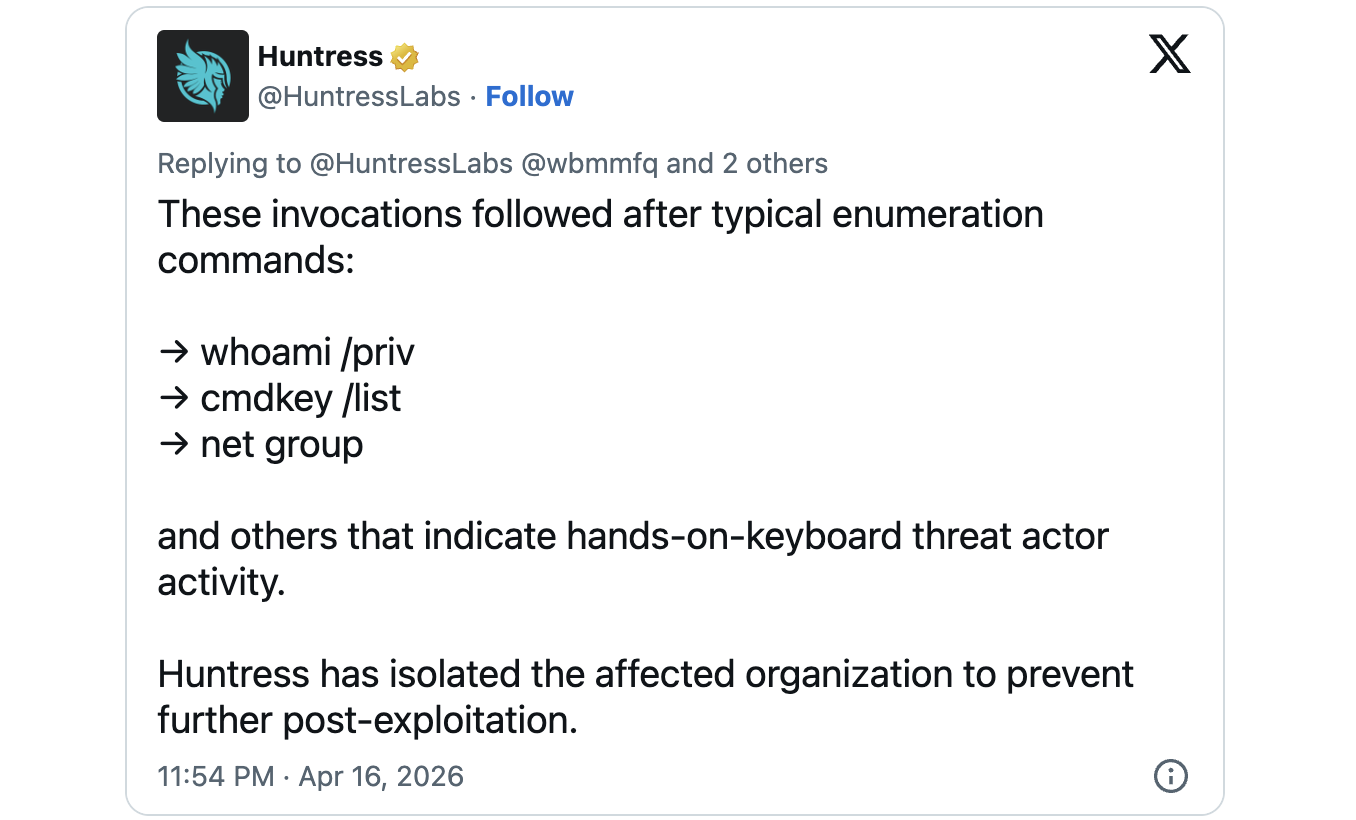
On Thursday, Huntress Labs security researchers reported seeing all three zero-day exploits deployed in the wild, with the BlueHammer vulnerability being exploited since April 10.
Advertisement
They also spotted UnDefend and RedSun exploits on a Windows device that was breached using a compromised SSLVPN user, in attacks showing evidence of “hands-on-keyboard threat actor activity.”
“The Huntress SOC is observing the use of Nightmare-Eclipse’s BlueHammer, RedSun, and UnDefend exploitation techniques,” the researchers said.
Two zero-days still waiting for a patch
While Microsoft is now tracking the BlueHammer vulnerability as CVE-2026-33825 and has patched it in the April 2026 security updates, the other two flaws remain unaddressed.
As BleepingComputer previously reported, attackers can use the RedSun exploit to gain SYSTEM privileges on Windows 10, Windows 11, and Windows Server 2019 and later systems when Windows Defender is enabled, even after applying the April Patch Tuesday patches.
Advertisement
“When Windows Defender realizes that a malicious file has a cloud tag, for whatever stupid and hilarious reason, the antivirus that’s supposed to protect decides that it is a good idea to just rewrite the file it found again to it’s original location,” the researcher explained. “The PoC abuses this behaviour to overwrite system files and gain administrative privileges.”
“Microsoft has a customer commitment to investigate reported security issues and update impacted devices to protect customers as soon as possible,” a Microsoft spokesperson told BleepingComputer earlier this week when contacted for more information on the disclosure issues reported by the anonymous researcher.
“We also support coordinated vulnerability disclosure, a widely adopted industry practice that helps ensure issues are carefully investigated and addressed before public disclosure, supporting both customer protection and the security research community.”
AI chained four zero-days into one exploit that bypassed both renderer and OS sandboxes. A wave of new exploits is coming.
At the Autonomous Validation Summit (May 12 & 14), see how autonomous, context-rich validation finds what’s exploitable, proves controls hold, and closes the remediation loop.
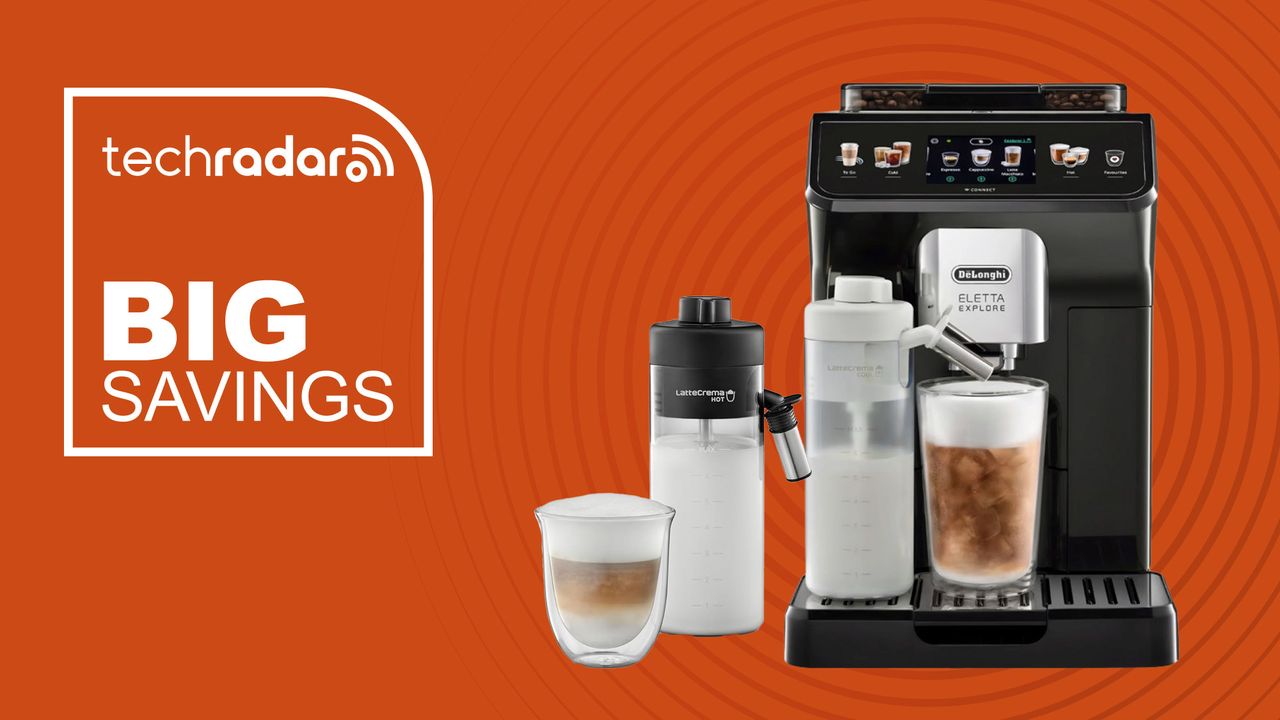
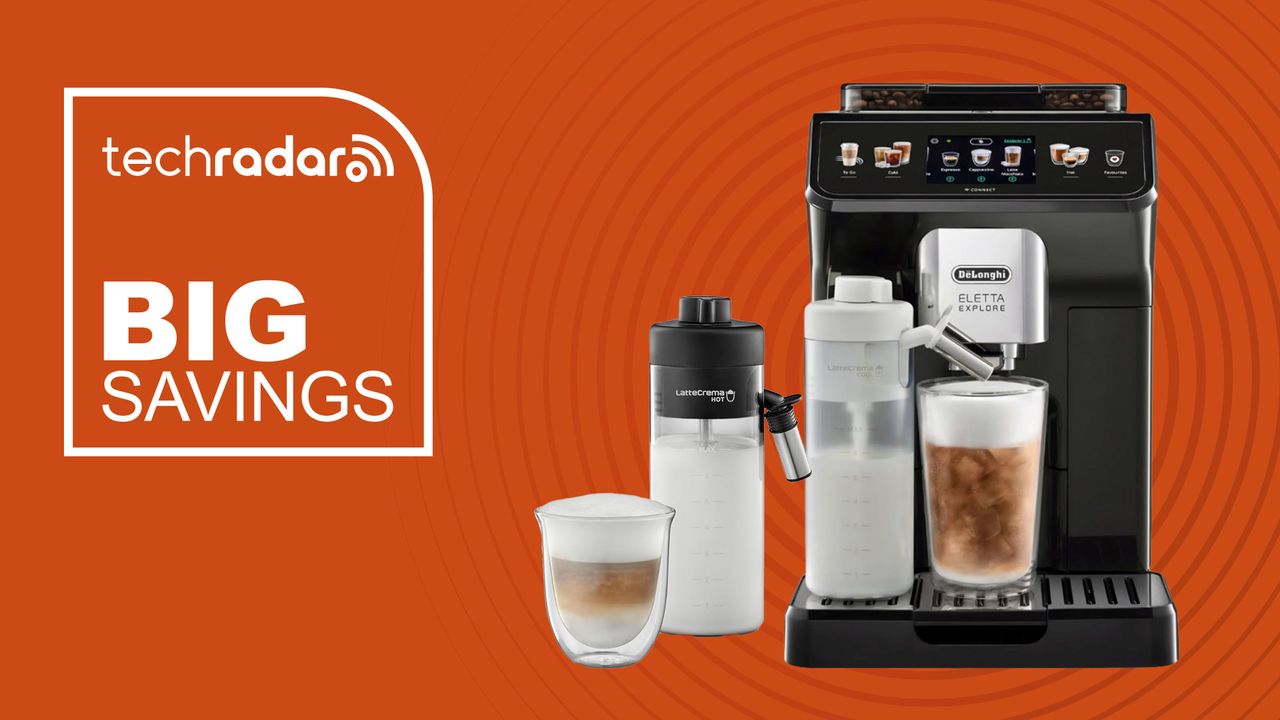
If you’ve been considering adding a coffee machine to your kitchen, or upgrading an old one, you’re not exactly short of options. Yet, if all you want is an easy route to a cafe-quality caffeine hit, then only a fully-automatic coffee machine will do — and you can now save a huge 50% on a De’Longhi model that is among the best coffee machines we’ve ever tested.
The De’Longhi Eletta Explore might be a couple of years old now, but it’s still more than capable of holding its own against the best coffee machines in Australia. It is simply brimming with features, including Wi-Fi connectivity, allowing you to control the machine from your phone — this includes brewing drinks, but you’ll need to make sure there’s a cup underneath the spout before you do!
Advertisement
As we said in our De’Longhi Eletta Explore review, “The Eletta Explore made delicious, well-balanced espresso with a well-formed crema and plenty of body.” We were also impressed with the foam created using the LatteCrema system, whether making hot or cold drinks. One thing to note, however, is that separate milk carafes are required for hot and cold drinks, so you’ll need to manually swap them if you’re making a variety of drinks.
Ultimately, no matter your coffee order, the De’Longhi Eletta Explore will be able to make it. And now it’s half price, it will recoup its money back and more in no time.
More De’Longhi discounts
If you’d prefer to spend less on a fully-automatic coffee machine, Amazon has also discounted the De’Longhi Magnifica Evo by 40%, now AU$599. This is an older machine, and is quite large, but is still highly capable and can brew a wonderful espresso. There’s no touchscreen display, and it isn’t able to make as many coffee-based drinks as the Eletta Explore, but if your preference is for a simple cappuccino, flat white or long black, it’s ideal. You can read our full De’Longhi Magnifica Evo review for more information.
Advertisement
Finally, for a more simple espresso machine, there’s the Stilosa. Now just AU$116 (down from AU$149), this simple manual espresso machine with a steam wand is a fine option if you’re not interested in features like cold brewing and automatic milk frothing.
Not too keen on my picks? View a wider selection of manual, semi-automatic and fully-automatic espresso machines at Amazon.
Looking for the most recent regular Connections answers? Click here for today’s Connections hints, as well as our daily answers and hints for The New York Times Mini Crossword, Wordle and Strands puzzles.
Today’s Connections: Sports Edition is a tricky one, especially the purple category. If you’re struggling with today’s puzzle but still want to solve it, read on for hints and the answers.
Connections: Sports Edition is published by The Athletic, the subscription-based sports journalism site owned by The Times. It doesn’t appear in the NYT Games app, but it does in The Athletic’s own app. Or you can play it for free online.
Hints for today’s Connections: Sports Edition groups
Here are four hints for the groupings in today’s Connections: Sports Edition puzzle, ranked from the easiest yellow group to the tough (and sometimes bizarre) purple group.
Yellow group hint: “Yer out!”
Advertisement
Green group hint: They score goals.
Blue group hint: Daddy dearest.
Purple group hint: Home, home on the…
Answers for today’s Connections: Sports Edition groups
Blackmagic Camera is one of the more powerful third-party smartphone camera apps available and it’s now even more useful for solo creators. Blackmagic Design just announced that the latest iOS version 3.3 now supports Apple Watch, letting you control the app and monitor video remotely from your wrist. It also includes ATEM camera control so you can use your iPhone as a live studio camera.
With the new Camera Apple Watch companion app, you can remotely control and monitor your iPhone from anywhere within Wi-Fi range. It lets you start and stop recording, control zoom and adjust settings like frame rate, shutter speed (angle), white balance and ISO with a tap. You can also see a view of your video for framing control, though a Watch screen is probably a bit too small to accurately check focus.
The Watch app will benefit solo creators who want to mount their iPhone on a tripod to record standup or vlogging activities. To set it up, you install the Watch app through your iPhone and it will automatically connect and sync to your device.
Use your iPhone as a broadcast camera? Sure, why not (Blackmagic Design)
The other key feature is iPhone control from Blackmagic’s ATEM Mini switcher used by streamers and broadcasters. To use it, you need the $420 Blackmagic Camera ProDock that gives your iPhone 17 Pro or iPhone 17 Pro Max an HDMI output, timecode, USB-C and other ports. Blackmagic Camera now lets you connect a single HDMI cable from the ProDock to an ATEM Mini switcher, then adjust settings, trigger recording, focus and zoom. It also offers a DaVinci primary color corrector so you can match and create digital film looks during live production.
Advertisement
Finally, Camera now supports Blackmagic’s “Focus and Zoom Demand” controls (a knob and handle) designed for broadcast cameras. When those controls and an iPhone 17 Pro/Pro Max are connected via USB-C to a ProDock as shown above, you can zoom and focus Camera app video without taking your hands off the tripod handles. Together with the ATEM feature, it lets you use an iPhone as a full broadcast camera, which looks slightly weird but is pretty cool.
On top of those features, Blackmagic Design also added ProRes RAW stabilization and general bug fixes and improvements. Blackmagic Camera for iOS 3.3 is available now as a free download from the Apple App Store.
When a need arises, many people instinctively turn to someone they know. A quick message to a friend or a brief conversation often brings clarity, shaped by shared experiences and personal understanding. According to Stanley Fulton, founder of Trusti, this pattern has long guided everyday decisions, offering a sense of familiarity that extends beyond simple information. He notes that over time, digital platforms introduced new ways to explore options, creating access to vast amounts of feedback within seconds.
The scale of online reviews reflects their growing role in decision-making. Data shows that the majority of consumers read reviews before making a purchase, and 93% say those reviews influence their decisions. “Even with how widely reviews are used today, the experience can still feel a bit scattered. People often find themselves checking multiple platforms just to feel confident, paying close attention to how recent, genuine, and thoughtfully written those reviews seem,” Fulton says. A survey highlights that consumers increasingly expect recent, high-quality reviews and timely responses from businesses, signaling a desire for engagement that feels active and personal.
Trusti was developed with this insight in mind, offering a platform where recommendations flow through micro-communities built on common experiences. These communities may include coworkers, parents, educators, or local groups, each contributing perspectives that feel relevant to their members. Fulton emphasizes that within this environment, reviews may take on a more conversational quality, echoing the way people exchange advice in daily life. The platform’s new four-click review process further supports this dynamic, allowing users to share their experiences with ease while maintaining clarity and simplicity.
To encourage engagement, Trusti incorporates a coin-based system that rewards participation across the platform. Users earn coins by sharing recommendations, contributing reviews, and engaging with their communities. These coins can be used within the Surf Shop, a marketplace where businesses introduce offerings and connect with interested audiences. This system creates a cycle of contribution and discovery, where participation supports visibility and interaction fosters connection.
Advertisement
The Surf Shop itself reflects an effort to make exploration feel dynamic and community-oriented. Members can browse recommendations, follow discussions, and encounter businesses highlighted by their networks. This environment encourages ongoing interaction, allowing users to remain connected to evolving conversations while discovering new opportunities within familiar circles.
The 💜 of EU tech
The latest rumblings from the EU tech scene, a story from our wise ol’ founder Boris, and some questionable AI art. It’s free, every week, in your inbox. Sign up now!
Another layer of insight emerges through the “Where the Pros Go” feature, which draws on professional networks to highlight trusted expertise. “Recommendations from experienced professionals tend to carry a certain level of credibility, since they come from real, hands-on knowledge. Bringing that perspective into the experience gives people a broader way to explore their options, with input from both personal connections and professional insight,” Fulton explains.
Advertisement
For businesses, particularly smaller enterprises, Trusti’s model may offer meaningful visibility. “Bigger organizations tend to gather a lot of reviews across different platforms, which makes them easier to find when people search. For smaller businesses, so much of their reputation lives in personal referrals and community connections, and that doesn’t always show up the same way online,” Fulton explains. Trusti provides a bridge by helping amplify those existing relationships in an online setting.
Fulton regards this aspect with a sense of purpose shaped by experience. “Small businesses represent effort you can feel and stories you can follow,” he remarks. “Helping them connect with people who appreciate that journey adds a different kind of value.” His view highlights the importance of creating pathways where local enterprises can be discovered through meaningful interactions, aligning digital presence with the trust they cultivate offline.
Trusti’s broader vision also connects to a nonprofit Fulton founded, The Each Child Foundation (ECF), which reflects his longstanding interest in supporting communities beyond commerce. The foundation focuses on early childhood development and family well-being, emphasizing the importance of creating environments where individuals can thrive. This connection adds another dimension to the platform’s purpose, linking everyday interactions with a wider commitment to social impact.
Overall, Trusti builds systems that align with how people naturally seek guidance, allowing digital tools to extend the reach of trusted relationships. “I like to call it HI or human intelligence, using human ingenuity to solve human pain points,” Fulton shares. This approach values both innovation and familiarity, bringing them together intuitively.
Advertisement
As digital environments continue to evolve, approaches that listen closely to human behavior offer meaningful direction. Trusti illustrates how platforms can reflect everyday patterns of trust, creating connected experiences. In doing so, it contributes to a broader conversation about how technology can support relationships, helping individuals and businesses engage with one another naturally.
A recall notice is one of those things that no vehicle owner wants to read about in the news. Alas, in the age of mass-produced cars, trucks, and SUVs, they are often unavoidable, and can sometimes even affect the overall safety of your vehicle. That may well be the case for a mass automotive recall recently initiated by Japanese automaker Toyota.
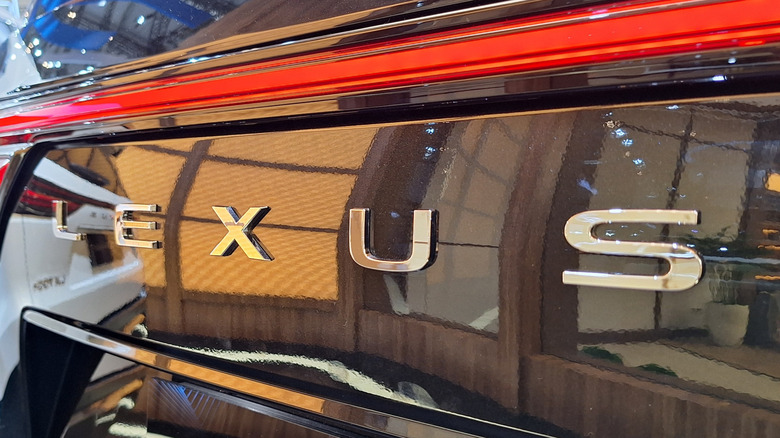
For the record, that recall does not include any Toyota-branded vehicles. Instead, it is focused on various models from Toyota’s luxury shingle, Lexus, and includes vehicles that were manufactured between the 2015 and 2022 model years. That time span reportedly covers more than 9,100 vehicles, including Lexus RCs made between 2015 and 2022, Lexus GSs manufactured between 2016 and 2020 and IS models from the 2022 class.
According to statements from the National Highway Traffic Safety Administration, the issue with the recalled vehicles is a faulty fuel pump impeller. The NHTSA statement confirms the problematic pumps — which are located in the fuel tank and are designed to pump fuel into the vehicle’s fuel injection system — contain an impeller manufactured from “a certain material” that may be prone to swelling. It may even swell to the point that it interferes with surrounding components, which could eventually cause the fuel pump to fail. Such a failure would likely cause the vehicle to stall, and as that could happen while the car is in motion, the risk for drivers being involved in a dangerous on-road crash is significantly elevated.
Advertisement
What to do if your Lexus is included in the recall
Steve Lagreca/Shutterstock
Just to re-iterate, there are no Toyota models included in the recall, so that brand’s reputation for reliability should not be affected. Likewise, for the time being, no other Lexus models are included either, with reports showing that the fuel pump issue originated from a single supplier and production facility. Per Lexus, engine failure may not be the ultimate result of the fuel pump issue, which could only produce an illuminated Check Engine light or an engine that won’t start, so you’ll want to pay attention to such issues.
Per reports, Lexus will be sending an official recall notice to the owners of any vehicles affected by the fuel pump recall. It would seem, however, that those notices are not slated to be mailed out to owners until June 8 of 2026. The question then becomes what owners of affected Lexus vehicles who don’t want to wait until June can do about the recall?
Advertisement
If your vehicle is included in the Lexus recall, your first point of order should be to reach out to Toyota’s customer service division at 1-800-331-4331 for guidance. You will likely need the recall numbers when you make that call, by the way, which are 26LB05 and 26LA05. You can, reportedly, also skip that step entirely, with outlets noting drivers can simply take their recalled Lexus directly to a local dealer. Said dealer should replace the faulty fuel pump assembly free of charge. You will, however, be without your vehicle while that repair is being made. So, be sure to plan accordingly.
Looking for the most recent Mini Crossword answer? Click here for today’s Mini Crossword hints, as well as our daily answers and hints for The New York Times Wordle, Strands, Connections and Connections: Sports Edition puzzles.
Need some help with today’s Mini Crossword? It’s kind of a fun one, and the clue for 2-Down is simply a familiar shape. Read on for all the answers. And if you could use some hints and guidance for daily solving, check out our Mini Crossword tips.
If you’re looking for today’s Wordle, Connections, Connections: Sports Edition and Strands answers, you can visit CNET’s NYT puzzle hints page.



















































You must be logged in to post a comment Login