MUSCAT, Oman (AP) — Iran and the United States stood poised Friday to hold negotiations in Oman at least over Tehran’s nuclear program after a chaotic week that initially saw plans for regional countries to take part in talks in Turkey.
The two countries have returned to Oman, a sultanate on the eastern edge of the Arabian Peninsula, months after rounds of meetings turned to ash following Israel’s launch of a 12-day war against Iran back in June. The U.S. bombed Iranian nuclear sites during that war, likely destroying many of the centrifuges that spun uranium to near weapons-grade purity. Israel’s attacks decimated Iran’s air defenses and targeted its ballistic missile arsenal as well.
U.S. officials like Secretary of State Marco Rubio believe Iran’s theocracy is now at its weakest point since its 1979 Islamic Revolution after nationwide protests last month represented the greatest challenge to 86-year-old Supreme Leader Ayatollah Ali Khamenei’s rule. Khamenei’s forces responded with a bloody crackdown that killed thousands and reportedly saw tens of thousands arrested — and spurred new military threats by U.S. President Donald Trump to target the country.
With the aircraft carrier USS Abraham Lincoln and other warships in the region along with more fighter jets, the U.S. now likely has the military firepower to launch an attack if it wanted. But whether attacks could be enough to force Iran to change its ways — or potentially topple its government — remains far from a sure thing.
Advertisement
Meanwhile, Gulf Arab nations fear an attack could spark a regional war dragging them in as well. That threat is real — already, U.S. forces shot down an Iranian drone near the Lincoln and Iran attempted to stop a U.S.-flagged ship in the Strait of Hormuz.
“President Trump seeks to corner Iran into reaching a negotiated solution, strong-arming its leaders into making concessions on the nuclear deal,” said Alissa Pavia, a fellow at the Atlantic Council. “The Iranians, on the other hand, are weakened after years of proxy warfare, economic crisis, and internal unrest. Trump is aware of this vulnerability and is hoping to use it to extract concessions and make inroads toward a renewed nuclear agreement.”
Few details on talks ahead of meeting
The scope, nature and participants in the talks remain unclear, just hours before they were due to begin in Muscat, the Omani capital nestled in the Hajar Mountains. Officials at Oman’s borders on Thursday showed particular concern over anyone carrying cameras into the sultanate before the negotiations.
On the Iranian side, Foreign Minister Abbas Araghchi arrived at night along with multiple Iranian diplomats, the state-run IRNA news agency reported.
Advertisement
Araghchi wrote on X that “Iran enters diplomacy with open eyes and a steady memory of the past year.”
“Commitments need to be honored,” he wrote. “Equal standing, mutual respect and mutual interest are not rhetoric — they are a must and the pillars of a durable agreement.”
Ahead of the meeting, a top adviser to Khamenei appeared to offer the theocracy’s support to the 63-year-old career diplomat.
Araghchi “is a skilled, strategic and trustworthy negotiator at the highest levels of decision-making and military intelligence,” Ali Shamkhani wrote on X. “Soldiers of the nation in the armed forces & generals of diplomacy, acting under the order of the Leader, will safeguard the nation’s interests.”
Advertisement
On the U.S. side, it appeared that talks would be led by U.S. Mideast special envoy Steve Witkoff, a 68-year-old billionaire New York real estate mogul and longtime friend to Trump. Traveling with Witkoff on his Mideast trip so far is Jared Kushner, Trump’s son-in-law who in recent weeks has shared proposals for the Gaza Strip and took part in trilateral talks with Russia and Ukraine in Abu Dhabi earlier on the trip.
The two men had traveled from Abu Dhabi to Qatar on Thursday night for meetings with officials there, the Qatari-funded satellite news network Al Jazeera reported. Qatar, which shares an offshore natural gas field in the Persian Gulf with Iran, also hosts a major U.S. military installation that Iran attacked back in the June war.
Nuclear program on the table at the least
It remains unclear just what terms Iran will be willing to negotiate at the talks. Tehran has maintained that these talks only will be on its nuclear program. However, Al Jazeera reported that diplomats from Egypt, Turkey and Qatar offered Iran a proposal in which Tehran would halt enrichment for three years, send its highly enriched uranium out of the country and pledge “not initiate the use of ballistic missiles.”
Russia had signaled it would take the uranium, but Shamkhani in an interview earlier this week had said ending the program or shipping out the uranium were nonstarters for the country. Meanwhile, the talks would not include any pledge by Iran over its self-described “Axis of Resistance,” a network of militias in the region allied to Tehran as a deterrent to both Israel and the U.S. However, Israeli attacks on the militias during its war on Hamas in the Gaza Strip decimated the network.
Advertisement
Rubio, America’s top diplomat, said talks needed to include all those issues.
“I think in order for talks to actually lead to something meaningful, they will have to include certain things, and that includes the range of their ballistic missiles,” Rubio told journalists Wednesday. “That includes their sponsorship of terrorist organizations across the region. That includes the nuclear program, and that includes the treatment of their own people.”
He added: “I’m not sure you can reach a deal with these guys, but we’re going to try to find out.” ___
SAN DIEGO (AP) — The smell of rotten eggs permeates Steve Egger’s Southern California home, especially at night as the nearby Tijuana River foams up with sewage from Mexico before emptying into the Pacific Ocean.
Egger, 72, says he and his wife have frequent headaches and wake up congested and coughing up phlegm. Their home is outfitted with a hospital-grade filtration system that cycles the air every 15 minutes.
Despite those measures, “most nights we breathe in a horrible stench,” he said. “It’s awful.”
Since 2018, more than 100 billion gallons (378 billion liters) of raw sewage laden with industrial chemicals and trash have poured into the Tijuana River, according to the International Boundary and Water Commission. The river traverses land where three generations of the Egger family once raised dairy cows. The United States and Mexico signed an agreement last year to clean up the longstanding problem by upgrading wastewater plants to keep up with Tijuana’s population growth and industrial waste from factories, many owned by U.S. companies.
Advertisement
Steve Egger stands near what scientists call “the Saturn hot spot,” a section of the Tijuana River where the contaminated water splashes out of pipes and creates pools of foam near his home Friday, March 6, 2026, in San Diego. (AP Photo/Gregory Bull)
Advertisement
Steve Egger stands near what scientists call “the Saturn hot spot,” a section of the Tijuana River where the contaminated water splashes out of pipes and creates pools of foam near his home Friday, March 6, 2026, in San Diego. (AP Photo/Gregory Bull)
Advertisement
Advertisement
Advertisement
Advertisement
Steve Egger looks out from his door where the outer doorknob has turned black at his home Friday, March 6, 2026, in San Diego. (AP Photo/Gregory Bull)
Advertisement
Steve Egger looks out from his door where the outer doorknob has turned black at his home Friday, March 6, 2026, in San Diego. (AP Photo/Gregory Bull)
Advertisement
Advertisement
Steve Egger looks over what scientists call “the Saturn hot spot,” a section of the Tijuana River where the contaminated water splashes out of pipes and creates pools of foam near his home Friday, March 6, 2026, in San Diego. (AP Photo/Gregory Bull)
Advertisement
Steve Egger looks over what scientists call “the Saturn hot spot,” a section of the Tijuana River where the contaminated water splashes out of pipes and creates pools of foam near his home Friday, March 6, 2026, in San Diego. (AP Photo/Gregory Bull)
Advertisement
Advertisement
In the meantime, tens of thousands of people are being exposed to the sewage. Environmental Protection Agency Administrator Lee Zeldin said during a February visit to San Diego that it will take about two years to resolve one of the nation’s worst and longest-running environmental crises, which affects a largely poor, Latino population.
Raw sewage doesn’t just smell bad. It emits hydrogen sulfide, a toxic gas that can erode neurons in the nose and trigger asthma attacks. It can cause headaches, nausea, delirium, tremors, cough, shortness of breath, skin and eye irritation and even death, according to the Centers for Disease Control and Prevention. Its long-term health problems are only starting to be understood.
Advertisement
There is no federal safety standard for hydrogen sulfide except for workers at sites where the risk is extreme, such as wastewater treatment plants or manure pits. A few states set standards decades ago, but those are outdated. A California proposal would require the state’s 56-year-old standard reflect the health risks of the gas. In Texas, lawmakers are also considering updating its law.
“I think when you look back when the standard was first established and then it was reviewed, it was all about nuisance — basically it was all about odor,” said the California bill’s author, Democratic Sen. Steve Padilla, who represents the Tijuana River Valley. “I don’t think we had the understanding scientifically of what the health impacts were here, and now we do.”
Even if the bill passes, the new standard would likely not be developed until 2030.
Toxic gas from the river’s sewage infuses the air
Advertisement
A sign warns of sewage and chemical contaminated water along a beach Tuesday, March 10, 2026, in Coronado, Calif. (AP Photo/Gregory Bull)
Advertisement
A sign warns of sewage and chemical contaminated water along a beach Tuesday, March 10, 2026, in Coronado, Calif. (AP Photo/Gregory Bull)
Advertisement
Advertisement
A “Stop the Stink” sign is on Egger’s fence, part of a campaign that Citizens for Coastal Conservancy launched to demand officials clean up the cross-border sewage.
The 120-mile (195 km)-long river starts in the Mexican city of Tijuana, crosses into California and empties into the ocean. San Diego County beaches nearby have closed for years, and Navy SEALs who train in the water have fallen ill.
Advertisement
Sign up for Morning Wire:
Our flagship newsletter breaks down the biggest headlines of the day.
Advertisement
Just since January, the Tijuana River has carried 10 billion gallons (38 billion liters) of mostly raw sewage and industrial waste across the U.S. border, according to International Water and Boundary Commission data. By comparison, a massive pipe that ruptured in January sent 244 million gallons (924 million liters) of untreated sewage into the Potomac River, affecting affluent, largely white communities. That spill prompted federal intervention within weeks.
Advertisement
Trent Fry, right, and Leila El Masri handle a water sample of the Tijuana River, as part of a research team from the University of California, San Diego, Wednesday, March 11, 2026, in San Diego. (AP Photo/Gregory Bull)
Advertisement
Trent Fry, right, and Leila El Masri handle a water sample of the Tijuana River, as part of a research team from the University of California, San Diego, Wednesday, March 11, 2026, in San Diego. (AP Photo/Gregory Bull)
Advertisement
Advertisement
Trent Fry, right, and Leila El Masri clean a bucket after collecting a water sample of the Tijuana River, as part of a research team from the University of California, San Diego, Wednesday, March 11, 2026, in San Diego. (AP Photo/Gregory Bull)
Advertisement
Trent Fry, right, and Leila El Masri clean a bucket after collecting a water sample of the Tijuana River, as part of a research team from the University of California, San Diego, Wednesday, March 11, 2026, in San Diego. (AP Photo/Gregory Bull)
Advertisement
Advertisement
Advertisement
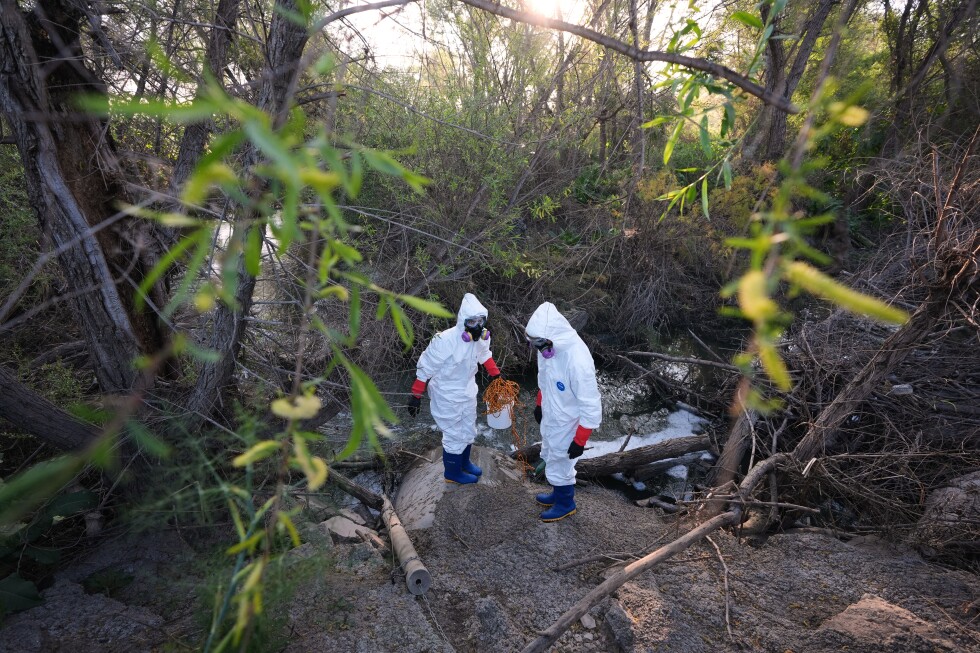
Maddie Tibayan pauses while wearing a respirator while collecting a water sample of the Tijuana River, as part of a research team from the University of California, San Diego, Wednesday, March 11, 2026, in San Diego. (AP Photo/Gregory Bull)
Advertisement
Maddie Tibayan pauses while wearing a respirator while collecting a water sample of the Tijuana River, as part of a research team from the University of California, San Diego, Wednesday, March 11, 2026, in San Diego. (AP Photo/Gregory Bull)
Advertisement
Advertisement
Advertisement
Advertisement
Justin Hamlin, left, and Maddie Tibayan, walk along the Imperial Beach pier after gathering a sample of seawater as part of a research team from the University of California, San Diego, Wednesday, March 11, 2026, in Imperial Beach, Calif. (AP Photo/Gregory Bull)
Advertisement
Justin Hamlin, left, and Maddie Tibayan, walk along the Imperial Beach pier after gathering a sample of seawater as part of a research team from the University of California, San Diego, Wednesday, March 11, 2026, in Imperial Beach, Calif. (AP Photo/Gregory Bull)
Advertisement
Advertisement
Advertisement
In 2024, a sampling by San Diego County and the CDC representing the roughly 40,000 households close to the Tijuana River found 71% could smell sewage inside their homes and 69% had a member get sick from being exposed.
Advertisement
Even at low levels, “you’re going to feel like it’s in your sinuses. You can’t get rid of the smell. It’s going to be a constant irritation,” said Ryan Sinclair, an associate professor of environmental microbiology at Loma Linda University School of Public Health.
The EPA said it is working with local and state officials to find ways to mitigate the smell.
San Diego County this year distributed over 10,000 air filters to homes. But the air remains a threat. The river’s foam can now be seen from space.
Hydrogen sulfide levels stun researchers
Advertisement
Surfers look on as Justin Hamlin, right, and Maddie Tibayan, gather a sample of seawater with a bucket off the Imperial Beach pier as part of a research team from the University of California, San Diego, Wednesday, March 11, 2026, in Imperial Beach, Calif. (AP Photo/Gregory Bull)
Advertisement
Surfers look on as Justin Hamlin, right, and Maddie Tibayan, gather a sample of seawater with a bucket off the Imperial Beach pier as part of a research team from the University of California, San Diego, Wednesday, March 11, 2026, in Imperial Beach, Calif. (AP Photo/Gregory Bull)
Advertisement
Advertisement
In September 2024, Kimberly Prather, a chemistry professor at the University of California, San Diego, and a team of researchers installed air monitors in the neighborhood where Egger lives.
What they found stunned them: The hydrogen sulfide concentrations were 4,500 times higher than typical urban levels and 150 times higher than California’s air standards when river flows peaked at night.
Advertisement
Many residents, like Egger, felt vindicated.
“They’d been being more or less gaslit and told, ‘There’s gas. It’s a nuisance. It smells, but it’s not bad,’” Prather said.
She said her researchers have since detected thousands of other gases coming from the river that don’t smell, “and many of them are more toxic.”
Doctors recommend people move
Advertisement
Trent Fry, part of a research team from the University of California, San Diego, takes a sample of seawater Wednesday, March 11, 2026, in Imperial Beach, Calif. (AP Photo/Gregory Bull)
Advertisement
Trent Fry, part of a research team from the University of California, San Diego, takes a sample of seawater Wednesday, March 11, 2026, in Imperial Beach, Calif. (AP Photo/Gregory Bull)
Advertisement
Advertisement
Egger said doctors have told him to move, though they have not given him a written diagnosis as suffering from hydrogen sulfide exposure.
But his family’s roots run deep. His wife grew up in Tijuana. His brother and his late brother’s family live in the neighboring houses on what was Egger Dairy. Nearby are the dilapidated milk barn and rusting farm equipment.
Advertisement
“This is where I’ve lived all my life, with my family, my parents, my grandparents,” he said. “This is home.”
Surfers pass under a wave alongside the Imperial Beach pier Wednesday, March 11, 2026, in Imperial Beach, Calif. (AP Photo/Gregory Bull)
Advertisement
Surfers pass under a wave alongside the Imperial Beach pier Wednesday, March 11, 2026, in Imperial Beach, Calif. (AP Photo/Gregory Bull)
Advertisement
Advertisement
Advertisement
Advertisement
When Egger was a boy, he swam in the river that ran only during the rainy season. Now mostly filled with sewage and industrial waste, it goes year-round. He says the river should be restored to its historical route, which is closer to the border and farther from most residences and schools. He believes then it would not pond, creating hot spots of hydrogen sulfide gas.
Less than half a mile from Egger’s home, the smell is overwhelming where the river shoots out of pipes after being forced briefly underground near Saturn Boulevard.
Scientists call it “the Saturn hot spot.” The stench permeates passing cars with the windows up, lingering inside for days.
When river flows go up, so do the number of patients
Advertisement
Oscar Romo walks among debris that has been captured by a trash boom installed in the Tijuana River at the border near where the river enters the United States from Tijuana, Mexico, Wednesday, April 8, 2026, in San Diego, Calif. (AP Photo/Gregory Bull)
Advertisement
Oscar Romo walks among debris that has been captured by a trash boom installed in the Tijuana River at the border near where the river enters the United States from Tijuana, Mexico, Wednesday, April 8, 2026, in San Diego, Calif. (AP Photo/Gregory Bull)
Advertisement
Advertisement
Dr. Matthew Dickson and his wife, Dr. Kimberly Dickson, run a clinic about a mile from the hot spot. Many of their patients suffer from migraines, nausea, wheezing, eye infections and brain fog. Those with asthma say they use their inhalers more when the air reeks.
“They’d say, ‘You know, I feel better when it doesn’t smell outside,’” Dr. Kimberly Dickson said.
Advertisement
In August 2023, a tropical storm caused the river to overflow onto the streets. Within days, the doctors’ caseloads tripled.
Oscar Romo looks out over debris that has been captured by a trash boom installed in the Tijuana River at the border near where the river enters the United States from Tijuana, Mexico, Wednesday, April 8, 2026, in San Diego, Calif. (AP Photo/Gregory Bull)
Advertisement
Oscar Romo looks out over debris that has been captured by a trash boom installed in the Tijuana River at the border near where the river enters the United States from Tijuana, Mexico, Wednesday, April 8, 2026, in San Diego, Calif. (AP Photo/Gregory Bull)
Advertisement
Advertisement
Advertisement
Advertisement
Electronic health records confirmed what the doctors suspected. When the river flows have jumped, the number of patients they have treated for respiratory problems has increased by 130%, they said.
“Every day that this isn’t fixed,” Dr. Matthew Dickson said, “more people are getting sick.”
Advertisement
A man walks along the an aqueduct holding the Tijuana River as it arrives to the border and enters the United States, above, from Tijuana, Mexico, Wednesday, April 8, 2026. (AP Photo/Gregory Bull)
A man walks along the an aqueduct holding the Tijuana River as it arrives to the border and enters the United States, above, from Tijuana, Mexico, Wednesday, April 8, 2026. (AP Photo/Gregory Bull)
Advertisement
Advertisement
Advertisement
___
Pineda reported from Los Angeles.
___
Advertisement
The Associated Press receives support from the Walton Family Foundation for coverage of water and environmental policy. The AP is solely responsible for all content. For all of AP’s environmental coverage, visit https://apnews.com/hub/climate-and-environment
Both sides emerge from the tunnel and we are just moments away from kick-off at the City Ground. Here is a reminder of how the two sides line up tonight:
Following twelve weeks of demanding challenges and high-pressure boardrooms, the BBC contest reached its climactic end this evening, with finalists Karishma Vijay and Pascha Myhill battling it out for Lord Alan Sugar’s £250,000 backing.
The finale witnessed both entrepreneurs creating a brand and marketing strategy for their respective ventures before presenting them to Lord Sugar, prominent industry figures and several icons from the programme’s two-decade history, including Margaret Mountford, Nick Hewer, Dr Leah Totton, Ricky Martin and Dean Franklin.
In the ultimate boardroom showdown, Lord Sugar selected his new business associate, declaring Karishma victorious.
The Surrey-based beauty entrepreneur, who takes pride in being her family’s first businesswoman, had already captured public affection and even earned several rare words of praise from Baroness Karren Brady, reports the Express.
The 28-year-old had previously revealed in an exclusive interview how she went from £7 in her bank balance to taking hundreds of orders per day, and even making £250,000 while The Apprentice aired.
Lord Sugar commented: “As always, it was close competition in the final after two outstanding pitches by two brilliant young businesswomen.
Advertisement
“But Karishma really impressed me throughout the process and has proven why she deserves my investment. She’s a proper grafter, and she’s got that entrepreneurial spirit that I always look for.
“The cosmetics industry is one I know a lot about, and I know our partnership will pave the way for a bright future.”
Following the result, Karishma revealed: “I can’t believe it.”
Advertisement
She continued, “I feel like I’m going to be calling Lord Sugar every other day, saying ‘what do I do now? I don’t know what I’m doing’.
“Because when I was doing it by myself, I was going at my own pace. Now, there’s a bit more pressure, because I have to really convince him that he made the right decision to have picked me.
“I feel like I will never get over this experience. Nothing in my life will ever compare. I just got engaged – so what?!”
Talking about the experience, she continued: “The best highlight ever was Baroness Brady. Even just saying my name out loud, but also for her to acknowledge me. She thought I was good. Apparently, she never says that to anyone.
“She said ‘Karishma you really stood out, you’re the big boss’. In what world does Baroness Brady speak about candidates like that? I feel so honoured.
“She backed me, she really backed me, and I feel like that made Lord Sugar think, ‘wait, there must be something here for my right hand to be talking about her like this’.”
Reflecting on what she’s learned about herself through this experience, Karishma continued: “I am so much more confident. I feel like I can talk to anyone now. I can sell my stuff in public. I’ve never had that exposure. Now I’ll be at exhibitions, and I’m screaming and shouting and singing. People love it. Nothing makes me nervous.
Advertisement
“If you can sit in front of Lord Sugar, Baroness Brady, and Tim, and put a sentence together, you can now talk to anyone. Those people are the epitome of power, and now I just feel so brave. No one scares me. Nothing intimidates me now.”
Prior to learning of her victory, Karishma had boldly pledged that she would be generating income with or without Lord Sugar’s backing, telling us: “For me, as a business, we’ve done quarter of a million now, so Lord Sugar, you’re making money with me, or you’re making money without me, but I’m still making money.”
She has since shared her optimism for what lies ahead following Lord Sugar’s investment, saying: “Now doors are gonna open, that we probably never would have even knocked on. And now they’re gonna blow wide open because of Lord Sugar. It’s all about his network, his advice, and his expertise. He is the blueprint of business – I feel like I’ve got the godfather of business behind my shoulder now.”
Advertisement
The Apprentice is available to watch on BBC iPlayer.
It also said the Government should insist on “clear, upfront information” from sellers on ticket refund policies, introduce a mandatory levy on larger events to benefit grassroots venues, festivals, promoters, and upcoming artists; while venues should be required to provide free earplugs and drinking water.
What’s in store for you today? (Picture: Metro.co.uk)
A bold New Moon aligns with Chiron, marking a fresh start where healing is on the cards. A reset could be exactly what you need.
Capricorn, Aquarius and Pisces, old wounds could resurface around self-worth. Know your own value, and don’t be afraid to advocate for it.
Be ready to rewrite a past chapter, as well as starting a new one. Truly consider what serves you today.
Ahead, you’ll find all star signs’ horoscopes for today: Friday April 17, 2026
Advertisement
Like checking your horoscope every morning?You can now sign up to our free daily newsletter to get a personalised reading for your star sign delivered straight to your inbox.
A New Moon in your sign aligned with healer Chiron can open a brave and tender chapter, and it’s not just a fresh start; it’s also a healing one. Old doubts about identity, confidence or courage may surface so you can release them. Take one bold step toward something that once intimidated you. It’s time to rewrite your story and set intentions that respect your strength and sensitivity.
Today’s lunation lights a quiet corner of your inner world, inspiring a reset. Old hurts about confidence or belonging could unsettle you, but reflecting on them will bring the release you desire. Consider more self-forgiveness and courage and let them go to work behind the scenes. You are stronger than you think, yet softer than you admit, both of which are assets.
A powerful lunar phase stirs your social sphere and ushers in a fresh start with friends, groups, or key goals, and it carries a healing undertone. If you once felt overlooked or underestimated, this could be resolved now. Make it your focus to connect authentically and share your ideas even if they are awkward. Friendships can also strengthen when you show up as you truly are.
The New Moon aligned with powerful Chiron illuminates your career path with a healing light. Old doubts about visibility or leadership may surface, so you can address them. Prepare for a fresh professional chapter and set goals that respect your ambitions. A daring step now, such as a proposal or application, could be the start of better times to come, so don’t hold back.
Expect a new beginning around your beliefs or a desire to explore new horizons. A key lunar phase encourages you to consider new opportunities that can help you overcome old limits and gives you greater confidence in your abilities. Apply for a fascinating course, map a new journey or share the philosophy you have kept to yourself. Healing comes through action – seize the moment!
A key lunation aligned with Chiron can stir deep waters around trust, intimacy and shared resources. You’ll be ready to question what you really want out of a deep bond, business arrangement or from pooling resources for a new project. Powerful insights can change the way you deal with others and what you expect from them. Boundaries may need to be set, too.
Cosmic messages for Cosmic messages for Virgo today
Libra
September 24 to October 23
Prepare for adjustments to relationships that could take things to a new, tender level. The Aries New Moon aligns with healing Chiron, which encourages you to address issues that may have been bubbling away beneath the surface. Progress can begin with an honest conversation and by being sensitive to the deeper currents that underpin this bond. Revelations can be powerful.
Looking to refresh your daily life in key ways? Old frustrations about work, health, or feeling indispensable may surface, indicating they’re ready for a shift. Get to work on routines that support you rather than draining you. You don’t have to prove your worth by becoming burned out. Small changes can have a powerful effect, so start now and enjoy the progress you make
A powerful lunar phase that links to deep growth, Chiron can start a process of reconciliation. If a romance or friendship has stalled, this blend of energies could act as a catalyst that bonds you even deeper. Have you held back from expressing yourself? This may have caused you to stop sharing your talents or creativity, and if so, a sparkling insight could initiate a new phase.
There’s potential for a fresh start around home, roots and old family issues. Feelings that have been locked away may surface, and dealing with them now could bring a fresh energy to the mix, encouraging you to hold those important conversations. You’ll feel better if you can create a sanctuary that thrives on honest, but also caring appreciation of each other, Capricorn.
Your voice and the way you communicate could be energised by a healing spark. Old wounds around speaking up, being misunderstood, or feeling ignored can surface, and this is the time to deal with them. This is a new beginning in how you express ideas and advocate for yourself. A brave conversation could reset a relationship or spring open a door that’s previously been shut.
A sparkling lunation aligned with profound Chiron highlights self-worth, giving it a healing glow. Old doubts about value, income, or deserving more may be very much on your mind. Focus on earning confidently and on properly respecting your talents. You are not asking for too much, simply recognising your true value. Price your gifts as if they matter, as they truly do.
Your daily Metro.co.uk horoscope is here every morning, seven days a week (yes, including weekends!). To check your forecast, head to our dedicated horoscopes page.
As a loyal Metro reader, we want to make sure you never miss our stories when searching for your news. Whether it is the latest politics news explained, live football coverage or a showbiz scoop.
Click the button below and tick Metro.co.uk to ensure you see stories from us first in Google Search.
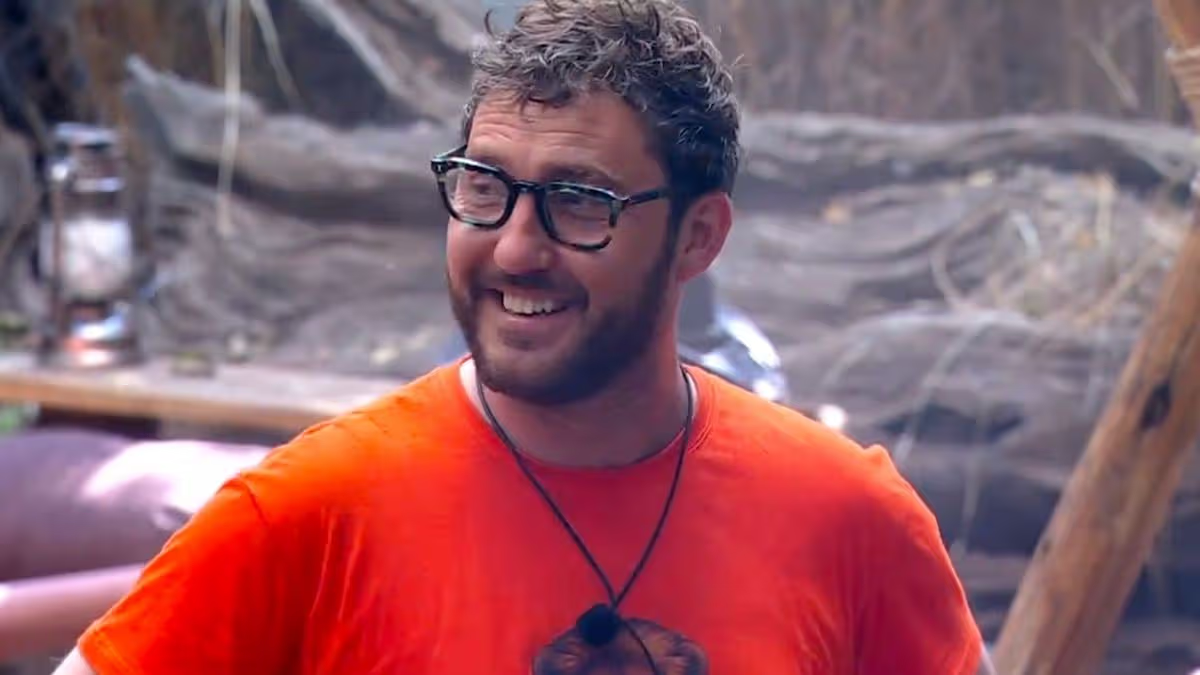
I’m a Celebrity South Africa star Seann Walsh has opened up about being the first star to be eliminated from the camp.
Advertisement
Comedian Seann Walsh was the first star to be eliminated from I’m a Celebrity South Africa after Harry Redknapp was told he had to make a difficult decision after he lost the trial against Jimmy Bullard.
On Thursday (April 16) night, Harry returned to camp where he informed his team that he had decided it was time for Seann Walsh to pack his bags and leave, thus making him the first star to be sent home.
Click here to get the biggest stories straight to your inbox in our Daily Newsletter
The campmates were in shock as they had to bid a hasty farewell to Seann, who finished fifth place the last time he was in the jungle back in 2022.
Advertisement
Speaking to ITV about his exit for the first time, Seann said: “It’s a combination of emotions. I was thrilled to be able to see my family because I missed my kids a lot. At the same time, I’m sad they won’t see me in the jungle for longer or doing more trials.”
He continued: “I think as soon as Harry mentioned someone had to go, I was basically packing my bags. I knew it was going to be me, because I knew who I was up against, including a former Queen of The Jungle and a former world champion.”
Opening up about the conditions of Savannah Scrub, he shared: “It was an absolute hellhole. The toilet faced the shower. Honestly, I think the three most useless people to be left together in Savannah Scrub were Adam, myself, and Bev.
Advertisement
“You couldn’t have hoped for a more useless three, to the point where we couldn’t see any kind of door for the long drop, so we assumed there wasn’t one!”
Ant and Dec promised that things would be tougher for the stars this year, and Seann agreed: “The trials were harder and scarier. It felt like it was turned up to eleven, so that just put more anxiety into the camp. The pleasure for me doing the jungle was the extraordinary people you get to live with.
“I don’t think I’ll ever forget that. It felt strange for me being in their presence, because they are almost historic figures in entertainment and sport. That doesn’t go over the top of my head.”
I’M A CELEBRITY… SOUTH AFRICA AIRS WEEKNIGHTS AT 9PM ON ITV1, ITVX, STV AND STV PLAYER
The incident took place in Wolverhampton as a man has been arrested
Husna Anjum Senior Reporter and Jeremy Armstrong
22:43, 16 Apr 2026
A man has been arrested after a woman in her 70s was fatally mauled by two ‘big’ dogs. The horrific incident occurred in Wolverhampton as emergency crews were sent to Willis Pearson Avenue, in the Bilston area of the city.
The woman died at the scene as the attack was reported at 11.30pm on Wednesday (April 15). The two dogs are not believed to be a banned breed Mirror reports.
Advertisement
The dogs involved in the latest attack were later destroyed after they continued to be aggressive towards emergency services. A 37-year-old man was arrested on suspicion of being in charge of a dog that was dangerously out of control and caused injury resulting in death.
He was taken to hospital after receiving hand injuries. Officers are carrying out further inquiries about the two dogs.
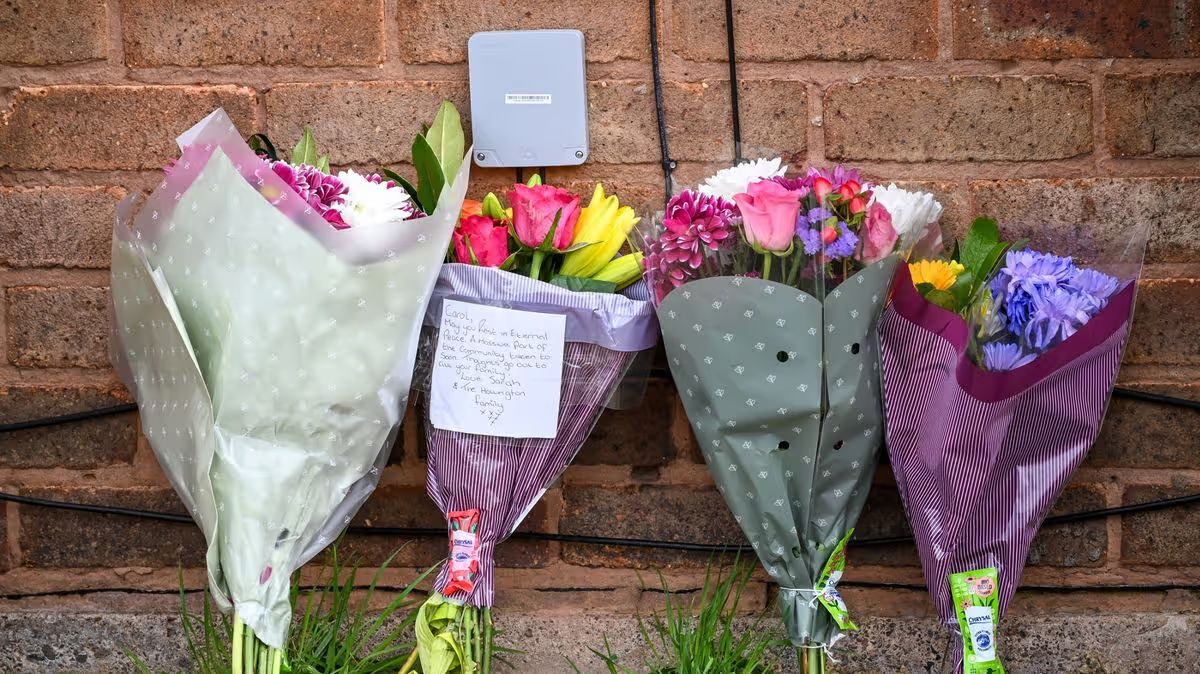
The force stated the investigation was at an early stage as police tried to establish what happened in the attack. Front windows of the property, located on a quiet residential street, were boarded up and a woman was seen leaving flowers at the home.
Neighbour Sam Wright, 64, said: “She couldn’t have fended him off as she was very weak, they were big dogs.
“I heard her daughter say distinctly, ‘My mum’s been killed by the dogs’. “I’ve seen people from the housing association taking in mops and all the cleaning stuff there today.
Another neighbour said: “I went over once to take her a bereavement card for a chap who died next door. The dogs came in so I had to get back out. They were big.
“The window was boarded up because the family said there was blood inside. One man saw blood everywhere.”
Advertisement
West Midlands Ambulance Service said two ambulances and paramedics arrived at the Bilston address around 23:30. A West Midlands Police spokesperson said: “Further enquiries are being carried out into the two dogs who are not believed to be a banned breed.
“A scene remains in place, and an investigation is in its early stages as we work to understand exactly what’s happened.”
A West Midlands Ambulance Service spokesperson said: “We were called at 11.31pm to reports of a dog attack at a private address on Wills Pearson Avenue in Bilston. Two ambulances, two paramedic officers and a MERIT trauma doctor and critical care paramedic attended the scene.
Advertisement
“Upon arrival we found two patients. Firstly, an elderly woman.
“Sadly, it was clear that nothing could be done to save her and she was confirmed deceased at the scene. Secondly, a man who was assessed by ambulance staff and had sustained injuries not believed to be serious.
“He received treatment at the scene before being conveyed to New Cross Hospital for further assessment.”
The incidents follows two other dog attacks that took place last week, including one that resulted in the death of a three-month-old girl in Redcar, North Yorkshire. Armed police shot the dog in a street on April 9.
Advertisement
A day later, 19-year-old Jamie-Lea Biscoe was found with serious injuries and subsequently died after being attacked by a dog in Leaden Roding, a village in Essex.
Ensure our latest stories always appear at the top of your Google Search by making us a Preferred Source. Click here to activate or add us as your Preferred Source in your Google search settings.
The busy street was initially pedestrianised in December 2025 for a six month pilot
The pedestrianisation of a busy Belfast city centre street has been extended for a further six months, the Infrastructure Minister has confirmed.
Advertisement
Hill Street became a pedestrianised zone on December 4, 2025 as part of a six month pilot scheme which would extend until June 3, 2026. This week, the Infrastructure Minister confirmed the scheme will be extended for a further six months.
Since the street became pedestrianised, there has been an almost 80% reduction in cars using Hill Street. The scheme permits access for certain vehicles at prescribed times of the day, such as loading and unloading exemptions, as well as exemptions for blue badge holders to ensure accessibility to amenities in the area.
During the extended six month period for the scheme, the Minister said officials will carry out engagement with stakeholders to determine if any amendments are needed, before introducing permanent legislation.
Advertisement
Hill Street, located in the Cathedral Quarter area, has become the central cultural spine of Belfast’s nightlife over the past 20 years. Its pedestrianisation had been spoken of for years, as concerns had been expressed over the dangerous potential for accidents as revellers and vehicles passed side by side through the tight cobbled thoroughfare.
The street was temporarily pedestrianised in 2020 during coronavirus by the Department for Infrastructure, with a view to making the move permanent, but this was consistently delayed to the frustrations of locally elected politicians at City Hall. It was estimated last year the proposal would cost around £5,000.
North Belfast MLA, Phillip Brett, asked the Infrastructure Minister earlier this week whether the pedestrianisation scheme would be extended. In response, the Minister said: “I was pleased to announce the pedestrianisation of Hill Street from 4 December 2025.
“It is a thriving area in the Cathedral Quarter of Belfast as more and more visitors come to enjoy the hospitality on offer. Importantly this scheme will facilitate a vibrant social space that prioritises people by making the streets safer for pedestrians.
Advertisement
“By contributing to a more pleasant and enjoyable environment it will help maximise the street’s potential and enhance the nighttime and weekend economy.
“The current experimental Order was introduced as a six month pilot which currently extends to 3rd June 2026.
“The scheme does permit access for certain vehicles at prescribed times of the day, such as loading and unloading exemptions between 6am and 12pm. Exemptions are also in place for Blue Badge holders to ensure accessibility to amenities in the area.
“I am pleased to note that since its introduction, survey results indicate an almost 80 percent reduction in cars using Hill Street.
Advertisement
“At present I see no reason why the experimental scheme cannot be extended for a further six months during which time, officials will carry out engagement with key stakeholders to determine if amendments are required before introducing permanent legislation.”
Phillip Brett has welcomed the progress towards permanent pedestrianisation of the street. Mr Brett said: “I am pleased to have secured progress towards the permanent pedestrianisation of Hill Street, building on the success we have already seen since the scheme was introduced.
“The transformation of this part of the Cathedral Quarter is already delivering real benefits, with traffic reduced by over 70% and a safer, more welcoming environment created for residents, visitors and local businesses.
“Hill Street is a key part of Belfast’s cultural and hospitality offering, and it is important that we continue to support its growth by prioritising people and enhancing the overall experience in the city centre.
Advertisement
“The decision to extend the current arrangements for another 6 months is a positive and sensible step, and I will continue to work with the department and stakeholders to deliver the permanent pedestrianisation as soon as possible.”
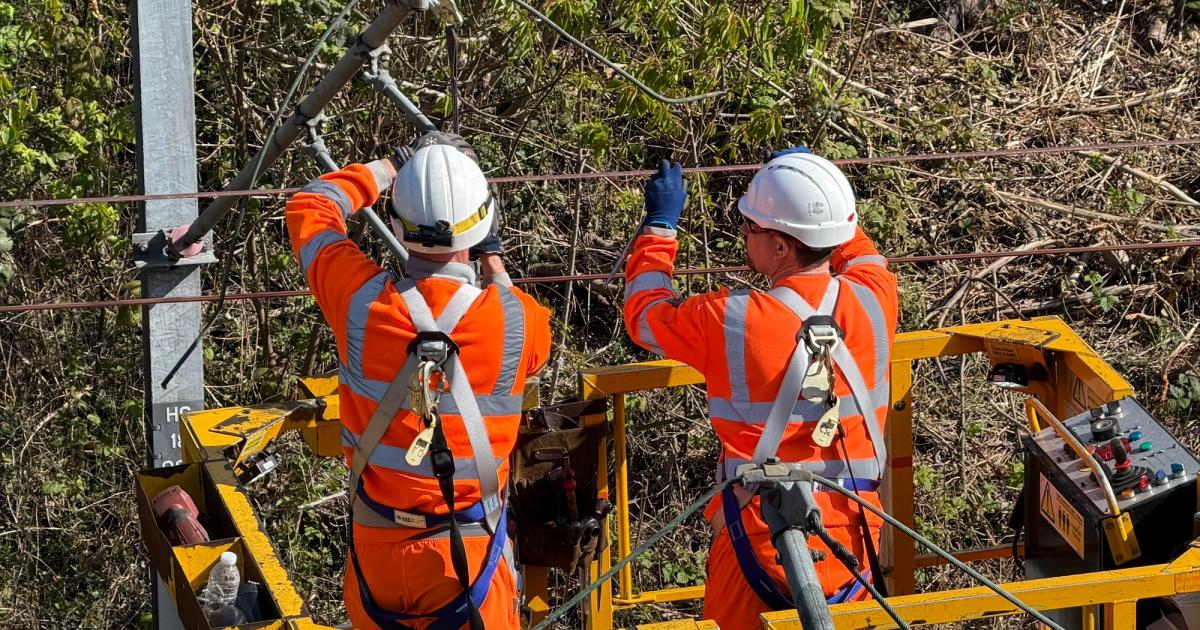
Nexus, operator of the Tyne and Wear Metro, is currently recruiting for 11 positions in overhead line maintenance to strengthen incident response and improve the resilience of the 77km Metro network.
The roles are part of an ongoing multi-million-pound upgrade of the system’s 1,500-volt direct current overhead lines, which are essential for train operations.
Stuart Clarke, Infrastructure Director at Nexus, said: “We are investing in our overhead line team by offering eleven roles in an essential area of Metro infrastructure maintenance and renewal works.
Career opportunities as Nexus strengthens Metro’s overhead line crews (Image: Nexus)
“This strengthens our existing resource base, providing us with improved incident response when issues arise with overhead lines, which are essential for the operation of the Metro system.
Advertisement
“It’s a great opportunity to join Nexus and forge a career at one of the most exciting times in our history as we invest in our infrastructure, roll out the new Metro train fleet, and get ready to expand the network.
“The successful applicants will play a vital role, not only in day-to-day maintenance duties, but also in the Metro Asset Renewal Programme, installing new overhead lines across the Metro system to ensure its long-term future.”
The roles include five maintenance and overhead linespersons, who will carry out inspection, repair, renewal and maintenance.
Nexus is also hiring one charge person, two section supervisors, one assistant engineering manager, one principal Technical Officer, and one engineering manager for overhead line.
Advertisement
All roles will support both routine maintenance and the broader renewal programme to modernise and secure the long-term future of the Metro network.
The closing date for applications is Thursday, 30 April.
Details on how to apply, along with job descriptions, are available at www.nexus.org.uk/careers.
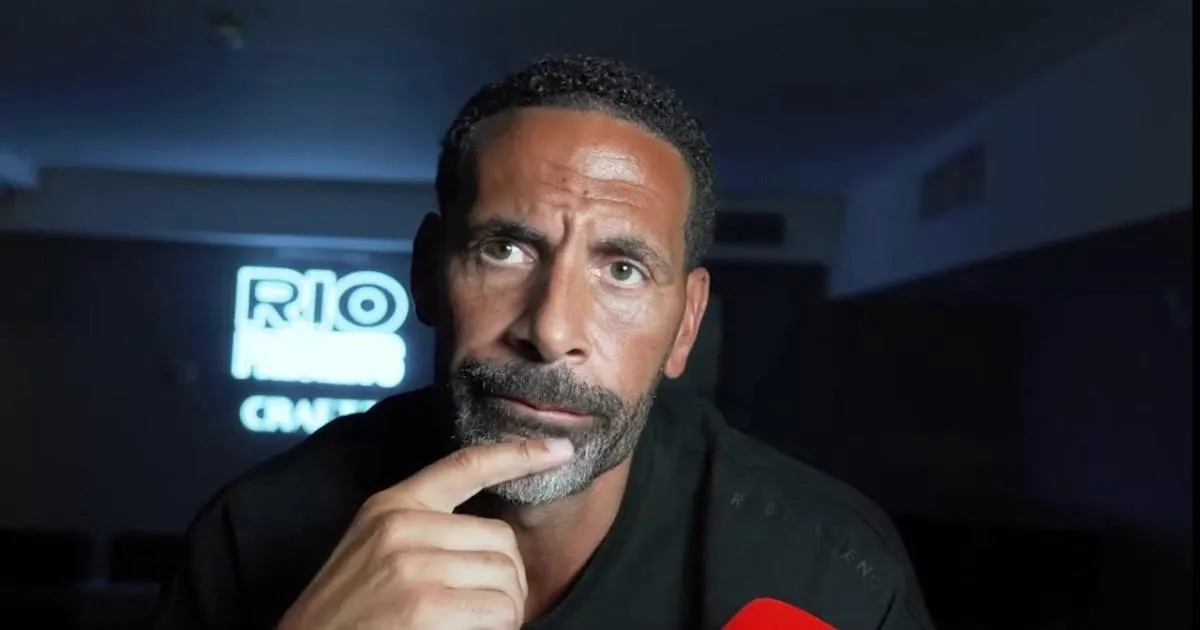
Rio Ferdinand insists Arsenal should not sack Mikel Arteta if they finish the season without a trophy (Rio Ferdinand Presents)
Rio Ferdinand has warned Arsenal supporters calling for Mikel Arteta’s sacking to ‘be careful what you wish for’ and believes the Gunners would struggle to recruit an elite-level manager in the same summer as Manchester United.
Arsenal currently sit six points clear of Manchester City at the top of the Premier League ahead of their match at the Etihad Stadium this Sunday, while they have reached the Champions League semi-final where they will meet Atletico Madrid.
However, Arteta has faced calls to be sacked if he finishes the season without a trophy, with some supporters concerned over the team’s style of play in the second half of the season.
Ferdinand believes Arsenal would be wrong to dismiss Arteta and feels the club could struggle to compete with Manchester United, who may look beyond Michael Carrick and appoint a new manager this summer.
Advertisement
‘I would be careful what you wish for if I was an Arsenal fan if you think getting rid of Arteta is the best thing you guys could do,’ Ferdinand said on his YouTube channel.
‘You have to remember where you guys were when he came. You guys are consistently qualifying for the Champions League, you weren’t before Arteta came. You’re finishing second most of the time, fighting for the Premier League year in, year out.
Mikel Arteta has faced criticism over Arsenal’s style of play in the second half of the season (Getty)
‘You’ve got to get over the line, yes I know, but you think the grass is greener over there with another manager? Who is the other manager?
‘He [Luis Enrique] is not coming to Arsenal. He’s leaving the best team in the world to go to Arsenal – are you crazy?
‘Every manager other than Thierry Henry, Patrick Vieira or Cesc Fabregas would go to Man United over Arsenal.
Advertisement
‘He [Fabregas] doesn’t guarantee you anything, he hasn’t won anything, as talented as he is.
‘I’m just saying, it’s not like you go from Arteta and say, ‘we’ve got a certainty’. Pep’s your only certainty and he’s not going to Arsenal.’
Cesc Fabregas is impressing in Serie A with Como (Getty)
Ferdinand also hit back criticism of Martin Zubimendi’s recent performances for Arsenal and believes the biggest problem for Arteta is his lack of creativity in attack.
‘I’ve seen it, I’ve seen it loud and clear,’ Ferdinand replied when asked about the criticism directed towards Zubimendi.
‘They are saying he’s been a liability, he was bought just because of a good game in the Euros final, he’s the weak link.
Advertisement
‘Yeah, he might be at fault for a goal or something like that, he’s given the ball away a few times or made mistakes when the ball has been played directly from a goalkeeper in that holding role, but I wouldn’t say it’s down to him.
‘I think Arsenal’s biggest problem is their lack of attacking flair, their willingness to just take the shackles off and go for it. That for me, I’d be worried about that as an Arsenal fan.’

















































You must be logged in to post a comment Login