
Politics
Guido’s Most Read Stories This Week


This week 921,151 visitors visited 839,335 times viewing 873,526 pages. The most read and shared stories in order of popularity were: EXC: Cabinet Office Permanent Secretary In Discussions to Leave Government Role WATCH: Lee Anderson Kicked Out of Commons After Accusing Starmer of Lying Government in Turmoil Over Second Mandelson Files Release Foreign Office Permanent…

To pass the time on (praise be to Jeebus) the last day of the Holyrood election campaign, we thought we’d do a summary of all the seat projections we could find from last month and this month. Here it is.

Now, as it happens we think the potential seat ranges are significantly wider. There are so many factors of uncertainty that while there’s no doubt who’s going to be the biggest party, we reckon SNP seats could potentially be anywhere from about 47 to about 67 (most likely the upper part of that range), with corresponding ramifications below.
But there’s one potentially interesting thing in that bottom half.
Polling’s been so all-over-the-place that there is no settled consensus about which orders the runners-up will finish in. Here’s a summary of the projections:
REFORM
8 x 2nd
4 x 3rd
LABOUR
2 x 2nd
8 x 3rd
1 x 4th
1 x 5th
GREENS
2 x 2nd
5 x 4th
3 x 5th
2 x 6th
LIB DEMS
5 x 4th
2 x 5th
5 x 6th
TORIES
3 x 4th
4 x 5th
5 x 6th
Reform look like favourites for the silver medal, and no projection has put them lower than 3rd. Labour have ranged from 2nd-5th, the Greens from 2nd-6th, with the Lib Dems and Tories not expected to do better than 4th.
Which makes these numbers rather startling.

The gulf in odds between Labour/Reform and the Greens is frankly astonishing. If you bet £100 on Reform to come second you’d make £50 profit. Put the same amount on Labour and if they took the silver you’d be £150 ahead. But stick it on the Greens and get lucky and you’d net yourself a tasty £12,500 windfall.
Extraordinarily, the Greens are at far longer odds to come second than the SNP, and there is NO chance of the SNP coming second.
(SkyBet’s odds of them winning are 1/200, meaning that if you staked your £100 on them to get the most seats, you’d make a whopping profit of 50p.)

Heck, the Greens coming second (125/1) is at almost the same odds as Alba winning the election (150/1), and Alba don’t even EXIST.
Readers, we don’t think the Greens will be runners-up at this election, and we certainly PRAY that they won’t. But the margins are so slim between all the non-SNP parties, and the polls so febrile, that it’s definitely not beyond the bounds of possibility, and at those absolutely doolally odds it might be worth popping a couple of quid on it just to cheer yourself up if it happens.

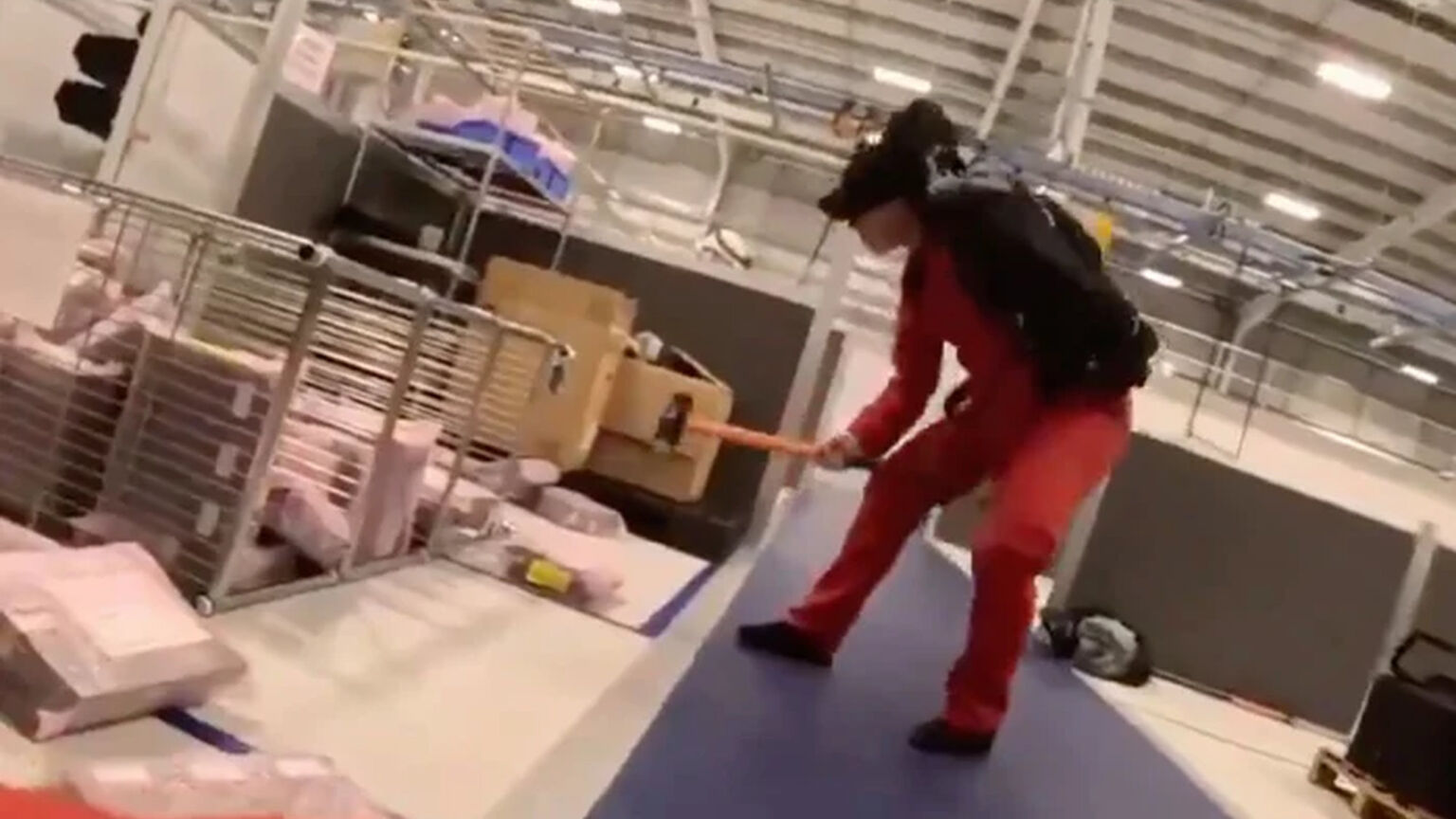
So this is the movement that the queen of smug, Sally Rooney, promised to share her fat royalty cheques with. This is the movement that plummy vicars fawned over in Westminster Square with their placards saying ‘I Support Palestine Action’. A movement that counts within its ranks men content to use a 7lb sledgehammer to fracture the back of a woman. A movement so far up the fundament of its own self-righteousness that its members think nothing of raining steel blows on a woman’s spine. I would engage in some serious self-reflection if an organisation I gushed over was found to contain blokes who use weapons to crack women’s bones.
This is the news that four members of Palestine Action were found guilty at Woolwich Crown Court yesterday of causing criminal damage at a UK site of the Israel-based defence firm, Elbit Systems. One of them was also found guilty of inflicting grievous bodily harm. He twice whacked a female police officer, Sgt Kate Evans, with a sledgehammer as she tried to arrest one of the keffiyeh-wearing intruders. He fractured her spine. She was off work for three months. To this day she experiences back pain. As Tom Gent of Avon & Somerset Police said yesterday, battering the spinal column of a female officer is not ‘protest’ – it is ‘thuggery’ and it had ‘devastating consequences’ for Sgt Evans.
It was in August 2024 that the Palestine Action gimps in their dumb red boiler suits crashed a van into the security gates of the Elbit factory near Bristol. They stormed inside, tooled up with weapons to destroy the evil wares of those demonic Israelis. They used crowbars and hammers to smash computers, drones and other equipment. They caused a million quids’ worth of damage. When security guards and cops tried to stop their carnival of hubristic vandalism, they turned on them. Alongside the whack of Sgt Evans’ back, the court also heard that one security guard was whipped by one of the Israelophobic mugs, and another allegedly had a firework thrown at him, causing him to suffer a 4cm cut to his face that had to be stapled at hospital.
Is this what Ms Rooney had in mind when she said she would ‘go on supporting Palestine Action’ even after it was proscribed as a terrorist group by Keir Starmer’s government last year? A group that fucked up a woman’s back and humiliated security guards? One of the intruders, with a keffiyeh around his waist, was heard taunting a security guard with the words, ‘You’re not going to have a job tomorrow’. You will search in vain for a better snapshot of the bilious snobbery of the bourgeois left than this image of four arseholes from the leafy part of town wielding whips and hammers as they mocked basic-wage security guards.
The digital left has been strangely schtum about Palestine Action these past 24 hours. The six bozos were found not guilty of aggravated burglary in February – Rooney and all the other Gazaholics lapped that up. But now four of them have been found guilty of criminal damage, and one of GBH, while the remaining two were acquitted. Perhaps even through the mental fog of their malarial loathing for Israel, the keffiyeh set can see it is not a good look to cheer twats who smash property, smash backs and clash with working-class men, all in order to make a spectacle of their own deluded sense of ethical rectitude.
That’s what this case has really revealed – the lethal narcissism of the keffiyeh classes. This is a class of people so drunk on moral vanity, so convinced of their own saintedness, that they seem to think anything is justified in the name of ‘the cause’. That cause being to advertise to the world their bloated vision of themselves as holy crusaders against the wickedest state in existence. Indeed, one of the activists told the jury, ‘with absolute certainty’, that breaking into the Elbit base ‘is the best thing I have ever done’. You sad bastard. ‘There is a good chance’, they said, that ‘innocent lives were saved’ as a result of ‘our actions that night’. This is a level of self-delusion that borders on the pathological. Lost in a cocoon of sanctimonious fantasy, they really believe that breaking a computer in Bristol will save a life in Gaza.
This is the modus operandi of Palestine Action – it executes dumb stunts not to impact world affairs but to assert the cultural supremacy of the credentialled haters of Israel here at home. It is moral hubris and class arrogance masquerading as ‘anti-war’. Sometimes it crosses the line into something darker, like when Palestine Action smashed up a Jewish-owned business in Stamford Hill in London. This feels ‘very, very scary now’, said local Jews amid the shattered glass of that woke mini-Kristallnacht. Who could have guessed that the bourgeois left’s division of the world into ‘the anointed’ who righteously hate the Jewish State, and ‘the demonic’ who support it, would prove so catastrophic for the liberty and dignity of Britain’s Jews? All of us. That’s who.
It feels like this has been a mask-slipping week for the cult of Palestinianism. More people can surely see the sectarian malice that lurks behind that veil of pacifism. A keffiyeh mob smashing a woman’s back. Rancid anti-Semites who call Jews ‘cockroaches’ stinking up the Green Party of England and Wales. Another gaggle of sanctimonious sea-farers setting off for Gaza, even though there’s no famine there, while in South Sudan nearly eight million face ‘acute hunger’. The stabbing of two Jews in Golders Green glossed over by supposed ‘anti-fascists’, who seem more interested in their own right to chant ‘Globalise the intifada’ than in Jews’ right to live in peace. Just think about that: mere days after violence against Jews, they were demanding the right to agitate for more violence against Jews.
Some of us have known for some time that Palestinianism is bigotry in a keffiyeh, the mask Jew hatred wears in the 21st century. We’ve seen this bourgeois army and its Islamist chums engage in the most vile demonisation of the world’s only Jewish nation, and of all who support it, which includes most of the world’s Jews. Are others now clocking this truth? No, anti-Zionism and the winds of hate it has unleashed are not going away. They are far too entrenched in the cultural establishment. But a reckoning might be brewing. Let us hope so.
Brendan O’Neill is spiked’s chief political writer and host of the spiked podcast, The Brendan O’Neill Show. Subscribe to the podcast here. His latest book – After the Pogrom: 7 October, Israel and the Crisis of Civilisation – is available to order on Amazon UK and Amazon US now. And find Brendan on Instagram: @burntoakboy.
The post The Israeli embassy terrorist shows why we must stop the boats appeared first on spiked.

4 min read
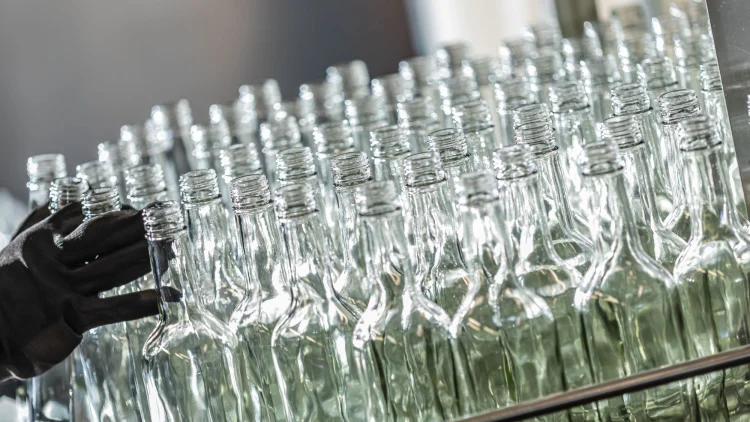
Too many take glass for granted. However, it has been a key industry in my constituency for centuries, providing jobs and income and, just as importantly, pride in producing world-class glass bottles and containers that went all around the world, and continue to do so.
Glass remains a manufacturing success story at plants across the UK. It is a £1.3 billion industry, supporting well over 100,000 jobs. Highly skilled jobs, making the billions of bottles, jars and containers that we use every day.
It drives local and regional economies. And it has embraced sustainability, making steady progress through innovation and investment.
So, it is hugely important for the government to reconsider pressing ahead with regulations that have the industry worrying about what the future holds, or even if there is a future for this historic sector.
Big players such as O-I Glass in Alloa and Encirc, which has sites in Northern Ireland and the north of England, have spent significant sums on upgrading their facilities and stand ready to invest more in the name of both efficiency and progress.
Just over a year ago, I was lucky enough to visit the Alloa glassworks, which has teamed up with industrial gases company Air Products to build a new air separation plant there to supply oxygen for cleaner combustion in new furnaces.
It is the first plant for Air Products of its kind in the UK in 40 years, coming about in a unique partnership with the glassworks, marking a commitment to driving down emissions.
But large manufacturers such as Encirc and O-I have been left frustrated at government rules that appear to penalise glass.
The Extended Producer Responsibility (EPR) scheme makes companies responsible for the collection and recycling costs of the goods they put on the market. If businesses produce or use packaging such as glass, plastic, or cardboard, EPR means they will now pay for collecting, recycling, and disposing of that packaging.
The policy’s objective is admirable, but its implementation has had unintended consequences.
The thing is that unlike other materials, glass is infinitely recyclable. And that recycling process is becoming more and more efficient.
However, EPR fees are calculated according to weight. And so, because glass is heavier than other comparable materials, it is being hit with disproportionate costs in EPR fees.
In fact, the UK glass EPR costs are well over twice that of any EPR scheme worldwide. And that is on top of the rising price of materials across the board along with soaring energy costs.
Drinks cans and plastic bottles are avoiding all the EPR costs entirely with these products due to be in a mooted deposit return scheme later next year and have been exempted from EPR.
So, while the glass industry is being negatively impacted, competitor materials currently pay nothing despite having a bigger detrimental effect on the environment.
It is hardly surprising, then, that glass manufacturers are carefully considering their future plans. The government should act to assuage their concerns and convince them that we are committed to UK manufacturing in general, and to the glass industry as part of that.
I believe there will always be a demand for glass. But if it is not manufactured here in the UK then we will see another industry destroyed and our society relying on more and more imports.
We are already seeing a surge in Chinese and Turkish glass on the shelves. Importing means those products actually generate a greater environmental footprint, undermining the core aims of the EPR policy.
The risk is clear in my mind. Future investment, jobs, and innovation could move elsewhere if the UK becomes an uncompetitive environment for glass manufacturing.
The solution is a clear one. EPR fees need to be urgently rebalanced to recognise that while glass may be heavy, it is sustainable, recyclable and a boon to the UK economy.
Unintended consequences can often be a part of politics. However, that is no excuse for inaction when policy goes wrong, as it is if EPR is implemented unchanged.
This is not a big ask but it is urgent. I have written to Ministers to urge them to talk to the glass manufacturers, tweak EPR fees and support an industry which has been a UK success for centuries.
We must protect the jobs it generates and raise a glass, or a bottle, to a UK success story that has a bright future with the right policies in place.
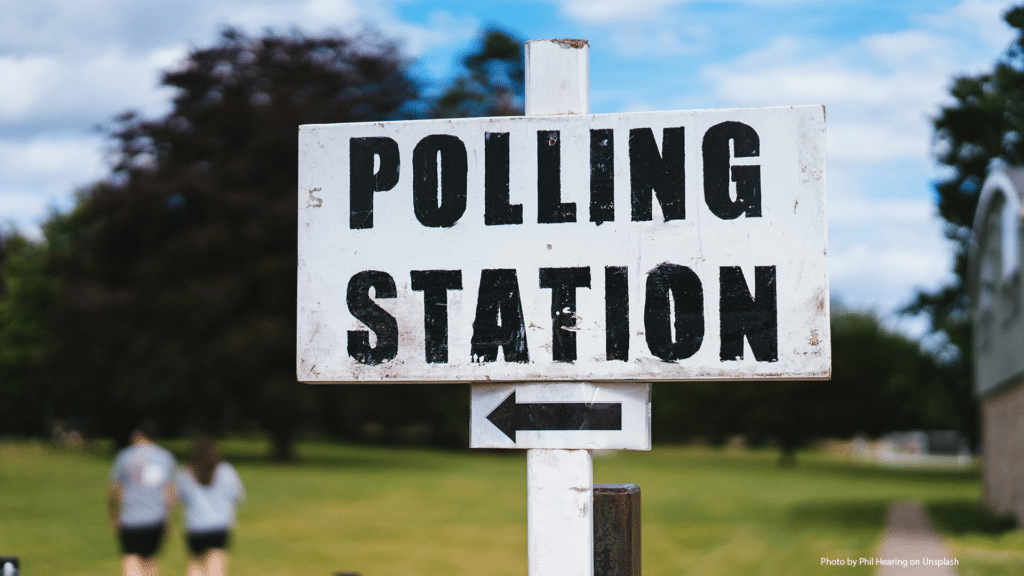
Michael Thrasher outlines the key things to look out for in the upcoming English council elections.
In the May 2025 local elections the Conservatives collapsed in the English shires, losing councillors and council control to Reform. Now, Labour has the spotlight, facing electoral jeopardy across London and the conurbations in the Midlands and the North.
Most of the factors shaping the outcome of the 2025 elections are present for their 2026 equivalents.
Record numbers of candidates are standing. Labour and Conservatives alike will be challenged in most cases by Liberal Democrats, Reform and the Greens. The consequence of that last year was a record low figure for the average winner’s vote share – just 41%.
The voting system ensured that a party with a relatively low vote share but ahead of its rivals would reap the ‘winner’s bonus’.
This May, over 5,000 seats in 136 councils are at stake. Labour is defending more than half the seats, most of which are in urban areas. Conservatives defend more than a quarter, many of which are in the shires.
Seats being defended
| Type (N) | Con | Lab | LD | Grn | Ref | Ind/Oth | Wards | Seats |
| London (32) | 404 | 1,155 | 180 | 19 | 0 | 59 | 679 | 1,817 |
| Mets (32) | 215 | 906 | 157 | 63 | 0 | 78 | 747 | 1,419 |
| Counties (6) | 294 | 41 | 58 | 18 | 0 | 19 | 427 | 430 |
| Districts (48) | 244 | 253 | 205 | 31 | 2 | 45 | 712 | 780 |
| Unitary (18) | 205 | 202 | 84 | 11 | 0 | 65 | 386 | 567 |
| Total (136) | 1,362 | 2,557 | 684 | 142 | 2 | 266 | 2,951 | 5,013 |
Source: Rallings & Thrasher
The table uses estimated seat numbers for councils implementing new ward boundaries. It does not include casual vacancies being filled and countermanded elections.
The omens are poor for both major parties. Most seats were last fought in either 2021 or 2022. Since then, their support as measured by opinion polls has collapsed.
Recent council by-elections confirm this. Labour has been losing four in five seats it defends while the Conservatives are losing two in every three. Defeats are sometimes inflicted by parties that have not contested the seat before.
A useful way of assessing the state of the parties for any given set of local elections is the National Equivalent Vote (NEV), which estimates how the local vote might have translated nationwide.
National Equivalent Vote: 2021-2025
| Year | Con | Lab | LD | Ref | Green | Other |
| 2021 | 40 | 30 | 15 | 0 | 7 | 8 |
| 2022 | 33 | 35 | 17 | 0 | 5 | 10 |
| 2023 | 29 | 36 | 18 | 0 | 7 | 10 |
| 2024 | 27 | 34 | 16 | 1 | 9 | 13 |
| 2025 | 18 | 19 | 16 | 32 | 7 | 8 |
Source: Rallings & Thrasher, Sky News / Sunday Times
Between 2021 and 2025, Conservative support under NEV more than halved, from 40% to 18%. The party may improve this year, but its councillors elected five years ago and facing re-election are under threat.
Most of the Labour seats up in 2026 were fought four years ago when it received an estimated 35% of the national share. Current support hovers around 20%, making Labour councillors even in ‘safe’ seats vulnerable to defeat.
By contrast, Reform’s rise has been meteoric, barely registering when its few candidates attracted little support, to last year when it gained over 700 seats. There is little reason to believe that Reform will poll much worse this time around with the Green Party also on the rise.
To an extent the two main parties are protected from the full effects of voters switching allegiance in some councils because only a fraction of seats are being elected this year. Control of some councils can’t change, no matter how many seats are lost.
That still leaves all 32 London boroughs, 16 metropolitan boroughs, and other councils where the scope for change is greatest because all the seats are in play.
Labour and the Conservatives are set for both seat and council losses. Beyond that, it is hard to say which of their rivals will benefit the most and how that might impact on the political make up of these councils.
Considering the relative increases and decreases in likely support we can provide a guide for interpreting the results.
All things being considered, a good night for Labour is to limit losses to 800 seats (about a third of its total) and to lose control in only a handful of the more than sixty councils it is defending. 1,000 losses would be okay but as the number rises to 1,500 then alarm bells ring. That’s close to the percentage of seat defeats Labour endured in 2025 but the sheer size of the number involved will grab everyone’s attention. Should Labour reach 2,000 losses or more that will be the worst setback imaginable and would certainly mean the loss of councils that have had Labour-run administrations for 50 years or more.
The Conservatives too will make net losses but if these are kept within limits and occur mainly in the shires then it should be confident that most of the attention will focus on Labour’s performance instead.
Possible losses
| Labour | Conservative | |
| Good | -800 | -400 |
| Ok | -1000 | -600 |
| Bad | -1500 | -850 |
| Terrible | -2000 | -1000 |
Possible gains
| Reform | Green | LD | |
| Ok | 650 | 350 | 200 |
| Good | 950 | 400 | 250 |
| Impressive | 1600 | 450 | 300 |
| Great | 2000 | 550 | 450 |
Because Reform is taking votes off both main parties it is likely that it will gain the most seats. There are many more seats at stake than in 2025 and so 650 gains is at the low end of expectations. Passing the 1,000 mark and moving towards 1,600 gains would be an impressive achievement by any standard.
Unlike Reform, the Green Party has taken a while to build its councillor base and still only has majority control of one council. The opportunity for a sudden increase is there if it secures seats in London and the metropolitan boroughs as voters turn away from Labour.
The Liberal Democrats have fallen under the radar as focus shifts to its rivals for Labour and Conservative seats. A long-established force in local government, it must avoid at all costs the loss of any councils that it already controls, such as Hull, Tunbridge Wells and Wokingham. Its progress is likely to be incremental rather than dramatic.
By Michael Thrasher, Associate Member, Nuffield College and Honorary Professor, Exeter University.
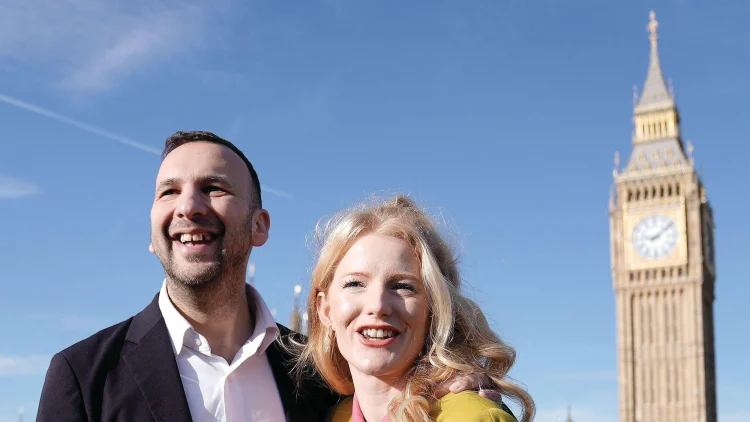
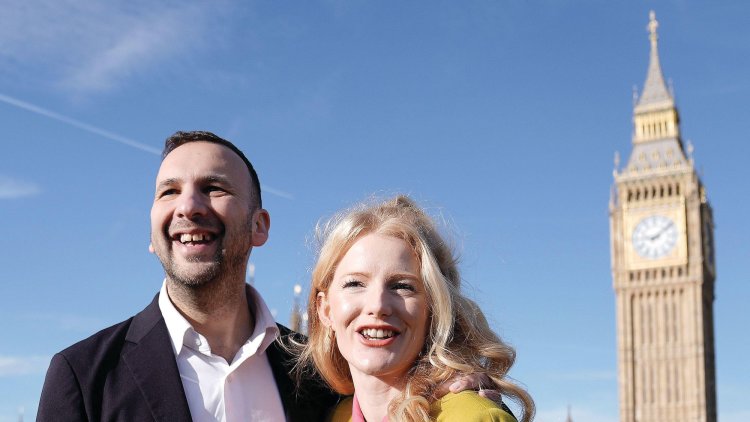
Hannah Spencer with Zack Polanski, March 2026 (Alamy)

3 min read
I haven’t yet got a reply, but I have invited the new Green MP, Hannah Spencer, for a post-work drink at the Strangers’ Bar in Parliament.
If she wants to help her constituents in Gorton and Denton, she’ll need allies: nothing gets turned into law with a vote of one.
By extending the invitation, I’m offering Hannah the chance to get to know some of the 645 non-Green parliamentary colleagues she just threw under the bus. After just two months in the job, she told the press that we’re dishonest, smell of alcohol and do nothing for our communities.
But fair play to Hannah. Her opinions have got the Greens plenty of news coverage ahead of the local elections. As she said in her recent interview with PoliticsJOE, “If I’m winding those people up and they’re worried – they’re linked to the establishment we think should have less power – so, if I’m doing that, I think I’m on the right track.”
The right track for Hannah appears to be demonising large groups of people to win votes. Isn’t that the ugliest section of the populist playbook? The blame-game clickbait used to distract voters from the extremist policies in the small print. For Reform UK, the scapegoat is immigrants. For the Greens, it’s the so-called ‘establishment’.
But it is a tactic that plays fast and loose with MPs’ safety. Whipping up anti-MP sentiment is dangerous. In a recent parliamentary survey, 96 per cent of current MPs said they had personally experienced one or more incidents of threatening behaviour. I’m sure Hannah is familiar with this herself.
After my recent work on the Crime and Policing Bill, I had death threats. I know my other colleagues have had too, depending on what they’re working on. And in the last 10 years, two MPs – Jo Cox and David Amess – have been murdered in hate-fuelled attacks.
So, I’d be grateful for the chance to take Hannah for a drink at the bar. (I hope they serve the WKD Blue she likes, or she can have alcohol-free drink of course.) I’ll be taking her because I want to tackle her prejudices. Rather than ‘establishment’ stooges, she’ll meet everyday people from all walks of life who, like me, are passionate about serving their communities.
Speaking for MPs from my own party so heavily criticised by Hannah, what we are is sensible, grounded politicians with the whole nation’s interests at heart. (That’s why we won the 2024 election. People didn’t vote for large groups of ‘disruptor’ politicians like Hannah.)
And I believe people want less drama, not more – they just want to get on with their lives. So, while MPs from other parties chase headlines, Labour continues to do the right thing – such as working hard with our international allies to calm tensions and bring fuel prices down at home.
The drink would be an olive branch, not a stunt. If Hannah wants to rail against power, she should first understand how change is made: through persuasion, building alliances and respecting the people voters choose – even when you disagree with them. If the Greens want to be taken seriously as lawmakers, not just hecklers, the first round is on me.
Tonia Antoniazzi is Labour MP for Gower and chair of the Beer APPG
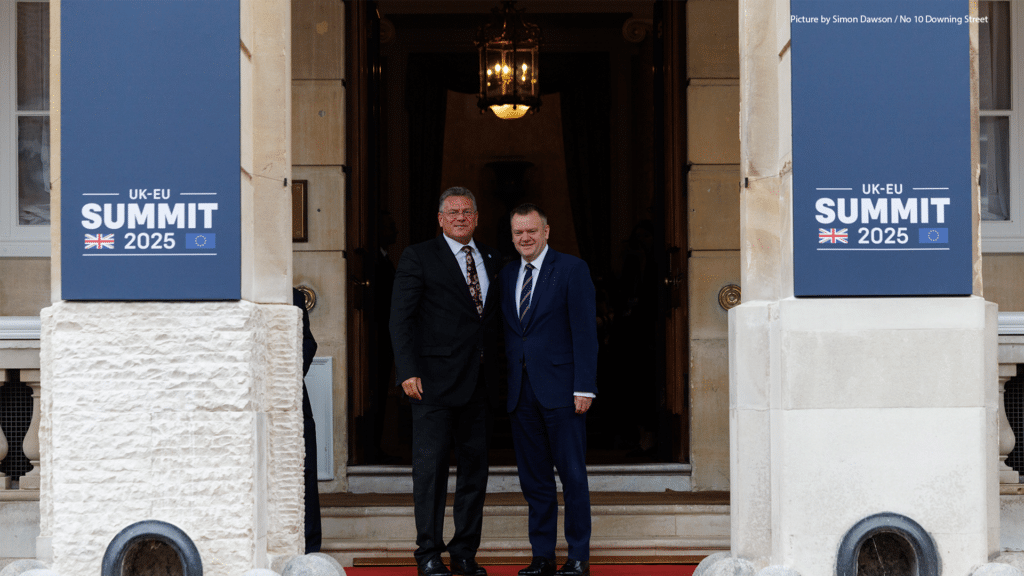
Ahead of next week’s EU alignment Bill, Catherine Barnard and James Wolffe KC consider the key issues that could arise as part of any SPS deal agreed by the UK government on devolved governments in Scotland and Wales.
If and when a UK-EU SPS agreement is agreed, constitutional questions arise not only for the UK government (UKG) and Parliament, but also for the devolved institutions in Cardiff and Edinburgh. That is because the SPS agreement concerns areas of ‘non-reserved’ (i.e. devolved) competence where domestic policy responsibility rests with the Welsh and Scottish governments, accountable respectively to the Senedd and the Scottish Parliament.
The UK-EU Memorandum of Understanding (MoU) refers to ‘timely dynamic alignment’ with the relevant EU rules in ‘Great Britain’. However, it also requires ‘due regard’ to the UK’s ‘constitutional and parliamentary procedures’, which presumably includes the arrangements for Wales and Scotland (the MoU does not apply to Northern Ireland, where the relevant rules already apply under the Windsor Framework). What will this mean? We don’t know, but we have five questions.
First, how are the policy interests of the devolved institutions being considered in UKG’s negotiating position? International relations are reserved to the UK, so UKG is negotiating the SPS agreement for the whole of the UK. The MoU envisages limited, but tightly defined, exceptions to dynamic alignment. The devolved institutions may have an interest in the scope and content of any such exceptions. What input have they had into those discussions?
Second, assuming an SPS agreement is done, the MoU provides that the European Commission should consult ‘the Government of the United Kingdom’ at an early stage of policymaking, giving it a ‘decision-shaping’ role over EU laws to which it dynamically aligns. How will UKG, representing all parts of the UK, accommodate any distinctive devolved policy perspectives in decision shaping? There is also an important subsidiary question: how will the devolved administrations keep abreast of emerging or future EU initiatives within the agreement’s scope so that they may advance their policy position?
Third, how will the SPS agreement approach dynamic alignment? Will it be automatic, like the Gibraltar agreement (Gibraltar must follow EU rules in the areas specified or the agreement falls), semi-automatic like the Windsor Framework (NI must follow EU rules but subject to the Stormont Brake or applicability motion), or contain a ‘hurdle’, as in the Swiss case, where the measure applies in Switzerland only following a decision by a joint EU/Swiss committee. If there is to be an equivalent to the “Stormont Brake”, will the Senedd or the Scottish Parliament be able to apply it? If the Swiss model is followed, how would any devolved policy interests be considered in that decision-making process?
Fourth, how will dynamic alignment be delivered? One option would be a statutory provision like the old s.2(2) of the European Communities Act 1972, or the general power already available to Scottish Ministers in s.1 of the UK Withdrawal from the European Union (Continuity) (Scotland) Act 2021. These allow relevant EU measures to be implemented by subordinate (i.e. secondary) legislation, not Acts of Parliament. If that approach is taken, it will invite questions about the mechanisms of scrutiny not only by the UK Parliament but by the Senedd and the Scottish Parliament.
Further, if dynamic alignment is delivered through subordinate legislation, how will this take account of devolution? There are competing constitutional considerations: the responsibility of the devolved governments for devolved policy, which is the central feature of devolution; and UKG’s interest in ensuring that the UK’s international obligations are fulfilled.
There might legitimately be divergent approaches to the detail of implementation in different parts of the UK. That was permissible under EU membership when directives were being implemented, and there seems no good reason why it should not also be possible (subject to UK Internal Market Act 2020 considerations) where an EU measure covered by the SPS agreement can be implemented in different ways.
There are three models. The first, consistent with the territorial allocation of policy responsibility, would give Welsh and Scottish ministers the relevant powers, with UKG implementing for England. The UK’s international position would be protected by the ‘backstop’ provisions in the devolution statutes under which UKG can prevent devolved ministers breaching the UK’s international obligations.
The second would allow either UKG or devolved ministers to exercise the relevant powers. This was the approach taken to implementing EU obligations when the UK was an EU member state. A concordat set expectations for inter-government consultation and recognised that it was for devolved ministers to decide whether to exercise their powers or to opt for GB or UK-wide regulations instead.
The third, often (if controversially) used since Brexit, would be to give UKG the relevant powers. If this option is adopted, a key issue will be the robustness of the procedural safeguards for the interests of the devolved Governments and legislatures and the integrity of the devolution settlement.
Fifth and finally, will there be any scope for different approaches to be taken to implementation of EU legislation in the different parts of the UK? There are multiple scenarios which could arise. We consider three.
What if UKG negotiates an exception to the SPS Agreement (as is envisaged by the MoU) whereby they are not required to adopt a specific EU law, but the Scottish or Welsh government wish to adopt it? That would presumably cause no difficulty under the UK-EU SPS agreement but might give rise to domestic law questions under the UK Internal Market Act 2020.
What if Scotland or Wales objects to implementing an EU rule under the SPS agreement? Unless the SPS agreement allows it (for example through an equivalent to the ‘Stormont Brake’), any decision by the devolved institutions not to align would likely be highly problematic. As with Switzerland, the EU would probably be entitled to respond, including by imposing tariffs, and it seems highly unlikely that any such response could be applied other than to GB as a whole. Domestically, such a case might prompt UKG to use its ‘backstop’ powers and would raise UK Internal Market Act considerations.
What if it is UKG which objects, and refuses to implement an EU rule under the agreement in England, while the Scottish and Welsh Governments implement it in Scotland and Wales? Not only would the EU response (e.g. tariffs) likely apply to GB as a whole, but the preference for the Scottish and Welsh Governments to implement the UK’s obligations might be undermined by the UK Internal Market Act.
No doubt the UKG and the devolved administrations are reflecting on these issues. The forthcoming EU alignment Bill, due to be announced in the King’s speech, will likely answer at least some of these questions.
By Catherine Barnard, Senior Fellow, UK in a Changing Europe & Professor of EU Law and Employment Law, University of Cambridge and James Wolffe KC formerly Dean of the Faculty of Advocates (the elected leader of the Scottish bar) 2014-16 and Lord Advocate (the senior Scottish Law Officer) 2016-21.
Specifically, of the Single Most Toe-Curlingly, Horrifically Cretinous Thing Said In The 2026 Holyrood Election Campaign, And Possibly Any Election Ever, Prize.

We mean, wow. We could easily write a 1000-word article purely on the top 10 things that are fatuously, obviously idiotic about those three short sentences, and so could you. So imagine how embarrassed the poor Daily Record must be today.


Doubly so because in what must be the weakest and most apologetic endorsement in the history of print journalism, the Record actually backs Sarwar to come second.

To be honest, that makes about as much sense as Sarwar’s absurdly clueless claim that Glasgow football fans, if they can’t win trophies themselves, want to see the other Glasgow clubs do it instead. The Record asserts that the SNP won’t win a majority – something which is far from certain – but then raises the prospect of an SNP/Green coalition, then promptly ignores it again and suggests that Sarwar could somehow exert some influence in exactly the same way he’s utterly failed to do in much the same circumstances for the last five years.
We still haven’t quite worked out how the Record is trying to sell the status quo as some sort of “change”. Even if Sarwar took Labour from 3rd to 2nd that’d be a distinction without a difference. If the SNP and Greens can get over the 65-seat majority line, that’s what’ll happen and Sarwar, Malcolm Offord, Russell Findlay and Alex Cole-Hamilton will continue to be the complete irrelevances they’ve been since 2021, watching impotently and whining from the sidelines as the SNP ham-fistedly burn the country to the ground.
If Sarwar came second it’d mean no more than it did when Douglas Ross (remember him?) did it five years ago, and Sarwar is unlikely to have the 31 MSPs that Ross commanded. Indeed, if he has even a shred of decency lurking hidden somewhere in the depths of his two-dimensional plastic persona he’ll resign by next week if Labour have – as looks an odds-on prospect – failed to make any progress at all during his reign, and in all probability continued Labour’s unbroken streak of doing worse at every single Holyrood election since the first one.

(He’s already pulled off what looked an impossible task in underperforming Kezia Dugdale after she’d produced the most calamitous one-term collapse in the party’s post-devolution history.)
Sarwar has been an epic failure as leader by any measure. He’s done nothing to leave the party in better shape than he found it. It has absolutely no distinct policy platform, pledging only to implement SNP policies slightly better than the SNP, which is a bar so low that it only makes it more incredible that nobody believes it even after the slow-motion trainwreck of governance of the last decade.
Sarwar’s only “strategy” was to sit tight and wait for Buggins’ Turn while the SNP squandered its popularity, a plan which was scuppered by the catastrophic Starmer administration at Westminster torpedoing Labour’s reputation UK-wide and exposing Sarwar’s abject indolence in not carving even a glimmer of a separate identity for the North British branch office that might have acted as a partial firewall against the Prime Minister’s toxicity.
(His last-minute ditching of Starmer came across as the desperation it was, and he carried so little weight in Labour that everyone who was supposed to back him up deserted him at the moment of truth.)


But there it is. After backing Labour in 2024 the Record is pretty much stuck with him and has to make the best fist it can of “Vote for our guy to be top of the losers!”, and just imagine the humiliation for all concerned if he doesn’t manage to clear even that low bar and finishes behind the country’s most-disliked party and leader.
As a microcosm of this accursed election, in which voters don’t really want to vote for anyone and nobody really seems to want to win, it’s pretty on the nose.
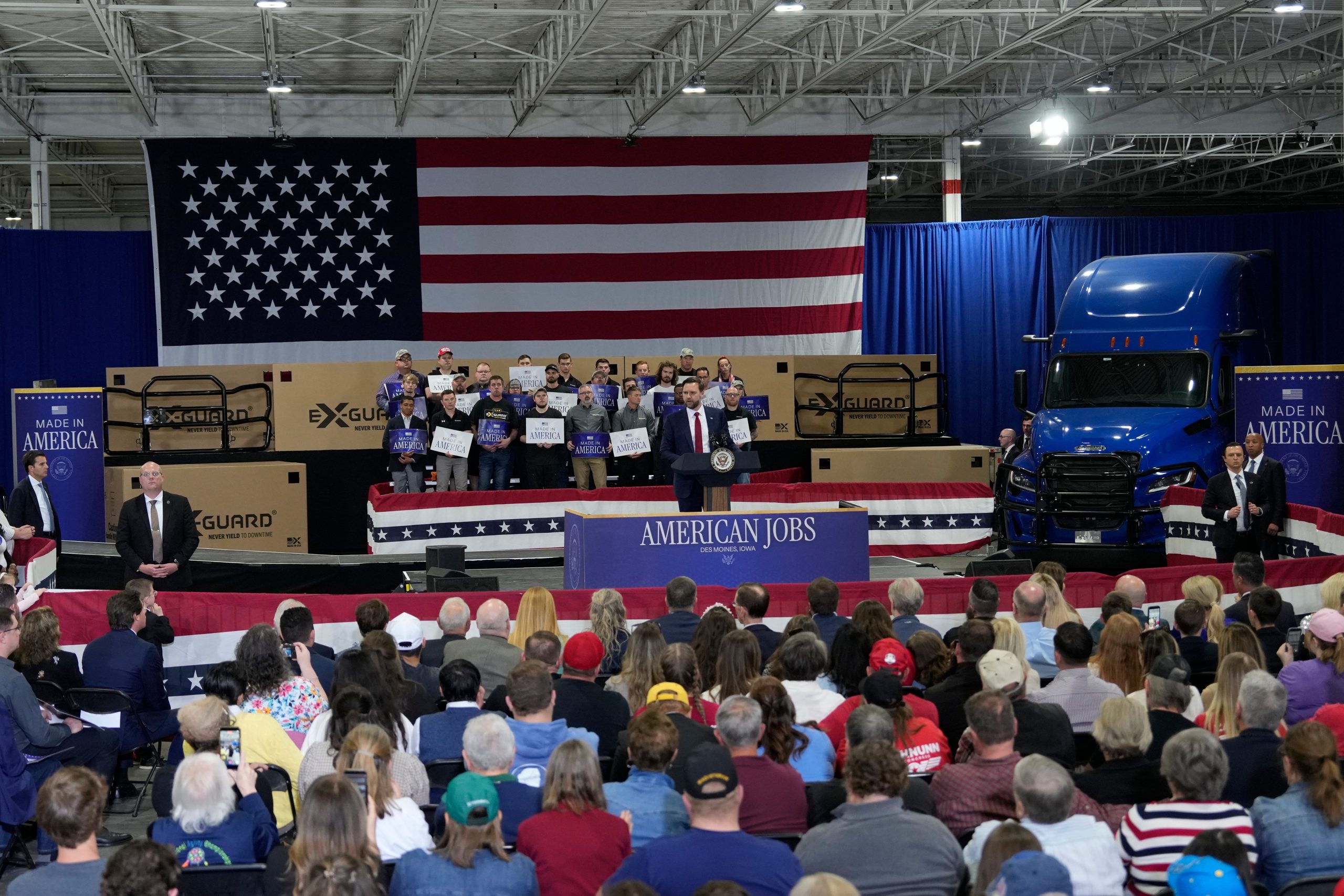

DES MOINES, Iowa — Vice President JD Vance was greeted warmly by Republicans in Iowa on Tuesday, with would-be caucus goers and strategists optimistically curious about his potential as a 2028 presidential contender.
But first, they’re hoping he can help turn the economy around.
Vance’s fate is unavoidably linked to President Donald Trump’s. He’ll either carry the mantle of Trump’s accomplishments all the way into his own term in the White House — or be dragged down by Trump’s dismal approval ratings, which have spiraled amid an unpopular war in Iran and voters’ economic pessimism.
During Vance’s first trip as vice president to the early caucus state — where he was campaigning for Republican Rep. Zach Nunn at a rally in a manufacturing warehouse in this battleground House district — Vance’s close ties with Trump were on full display. He credited the president repeatedly for tariffs, tax cuts and agriculture industry aid. And he avoided any mention of 2028.
But his association with Trump’s agenda presents a high-risk, high-reward proposition that could make or break his political future, operatives and rallygoers said.
“That’s the risk of being part of an administration,” Iowa GOP strategist David Kochel said. “This is the Kamala Harris problem.”
Rep. Randy Feenstra, who is running for governor, said in between shaking hands with attendees that Iowans “absolutely” associate Vance with Trump and expressed confidence that the White House can deliver outcomes that benefit the state.
“We’re all in this together,” he said. “We trust Trump and the vice president and what they’re doing, and things are going to be great.”
Republicans in Iowa are loath to turn their back on Trump, the 2024 caucus winner who remains deeply popular among the base. Faded Trump-Vance campaign signs still line the rural roads around the state, and Iowa Republicans said they remained largely optimistic that Trump, with Vance by his side, can steer the economy in the right direction.
In a brief post-rally interview, Nunn said part of the benefit of the vice president’s trip was allowing Iowa Republican officials to “share what they want to see out of the next leader in 2028.”
But Americans’ patience for the administration’s economic policy to have a positive effect is wearing thin. A Washington Post/ABC News/Ipsos poll released on Sunday found 65 percent of Americans disapprove of Trump’s handling of the economy and 76 percent disapprove of Trump’s handling of cost of living issues. And even as Vance blamed former President Joe Biden’s administration for the teetering economy, an April POLITICO Poll found 46 percent of Americans feel Trump bears at least some responsibility for the state of the economy.
And the economic effects of Trump’s policies are particularly hard felt in Iowa’s vast agriculture industry. Trump’s tariff regime blocked off markets that had been reliable purchasers of U.S. agriculture goods, while the war in Iran has spiked the cost of diesel, which farmers depend on heavily.
Jake Chapman, a former president of the Iowa Senate who has advised multiple Republican presidential candidates in Iowa, said the conflict and the trade negotiations with other countries are top of mind for Iowa Republicans.
“A lot of people are thinking about foreign policy in particular, and how that impacts ag inputs and our agriculture economy,” he said.
In his speech, Vance acknowledged that the Trump administration hasn’t fully delivered on its economic promises. “We got a lot more work to do,” Vance told the crowd of hundreds. “We recognize that work. We’re excited about that work. That’s why you sent us to Washington, D.C.”
Still, those negative feelings towards Trump appear to be spilling over to Vance. That same poll found 48 percent of Americans disapprove of Vance — slightly worse than other senior Trump administration officials, including FBI Director Kash Patel, Defense Secretary Pete Hegseth and fellow potential 2028 candidate Secretary of State Marco Rubio.
Rubio’s ascension in the 2028 shadow primary — both in the eyes of Americans and in standing with Trump’s inner circle — further complicates Vance’s path to the nomination. Eric Branstad, the son of former Iowa Gov. Terry Branstad and adviser to Trump’s three presidential campaigns in Iowa, said Vance’s portfolio may not resonate with Iowans as much as Rubio’s in an administration juggling multiple high-profile foreign conflicts.
“They’ve watched the secretary of state completely perform. He’s been put in all of the tough spots, and he has overperformed,” Branstad said. “The vice president is performing great. It’s just not been as noticeable as the secretary of state.”
Vance, however, has gotten an early start on building a campaign infrastructure, should he so choose to activate it. He has been a frequent surrogate and fundraiser for the GOP’s midterm operation and has campaigned for Republicans in battleground seats around the country. On Tuesday, he voted in Ohio’s competitive 1st District GOP primary and headlined a fundraiser in Oklahoma before travelling to Iowa.
“He’s the man who’s leading the charge to win the midterms,” Nunn said during his remarks.
Even as Vance stayed focused on this year’s elections on Tuesday, some Republicans are ready to look beyond the midterms. GOP gubernatorial candidate Adam Steen said on the outskirts of the rally he thinks Iowa Republicans are eager to organize around the next generation of party leadership.
“I don’t know why not just start talking about 2028,” Steen said. “We need to know who we’re going to be getting behind. And if they did that now, I don’t think it’d offend anybody. I think it’d be a great thing.”
The vice president’s office declined to comment on Vance’s thinking about a future presidential campaign.
Whether or not the vice president can carry the ideological torch for Trump’s political movement may depend on how closely Vance — or any 2028 hopeful — can align with Trump. Iowa GOP Chair Jeff Kaufmann said at the rally he doesn’t believe the next Republican presidential nominee necessarily has to appeal directly to Trump’s base to be successful.
“The Republican Party is multifaceted,” Kaufmann said. “We have MAGA voters… We have Christian evangelicals, we have business, we have Libertarians. I think all of them together are going to unite around some of the basic principles that everybody shares.”
Yet being Trump’s vice president brings certain advantages with Republican voters. Even if Vance isn’t afforded the goodwill that brought the president a dominant wire-to-wire favorite in the 2024 Republican primaries, Kochel said Vance “gets one of the gold tickets” in the contest.
“[Vance] will be the front-runner going into any caucuses that we have here in Iowa,” GOP governor candidate and state Rep. Eddie Andrews said on the sidelines of Tuesday’s rally.
But Iowa caucusgoers are notoriously scrupulous when vetting future world leaders. And Nunn acknowledged that Vance will at some point need to forge his own path to leading the party.
“Nobody can walk in Donald Trump’s footsteps, because it’s Donald Trump,” Nunn said.
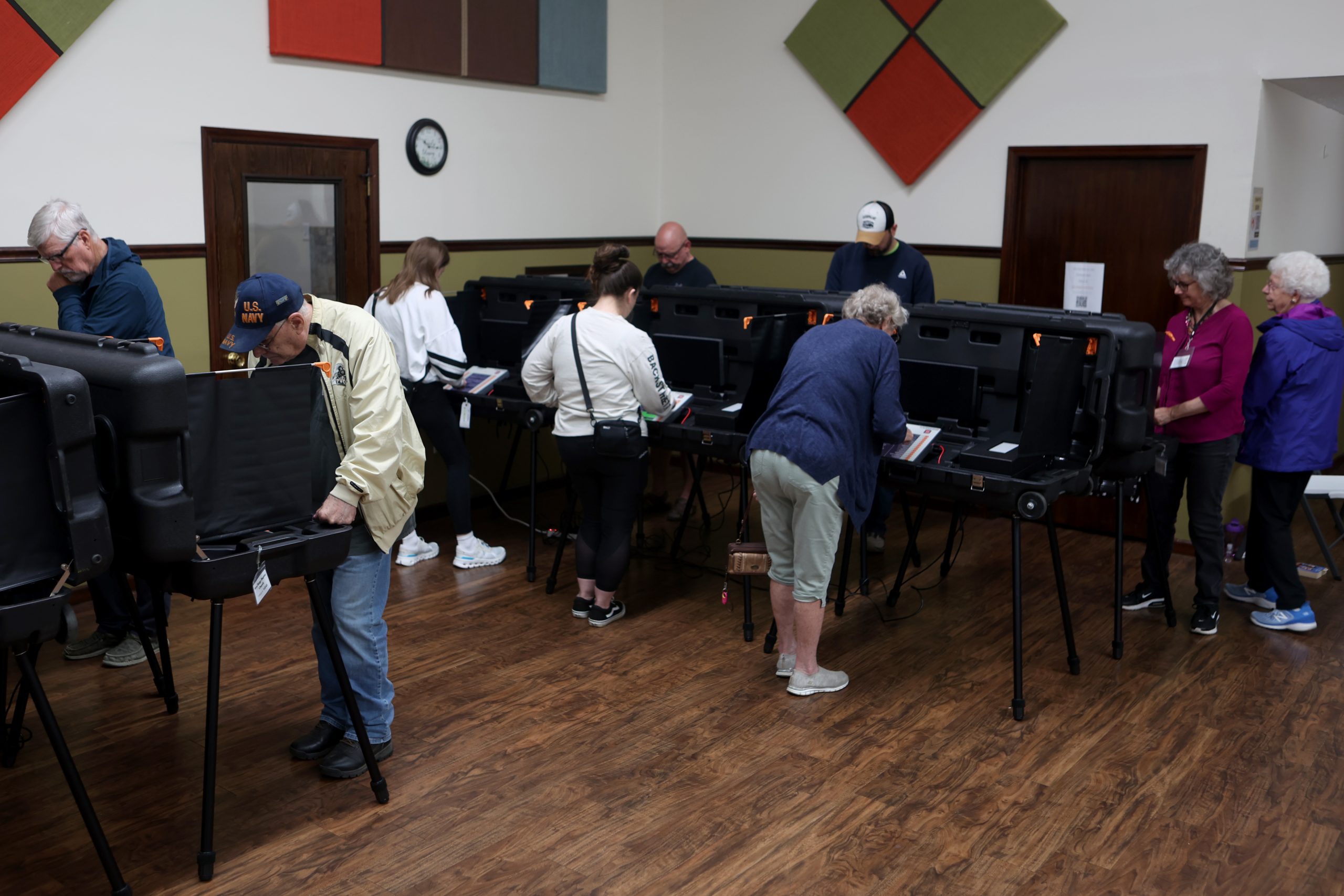

President Donald Trump flexed his grip on the GOP base in Indiana on Tuesday, vanquishing a majority of the Republican state senators who had dared cross him on redistricting.
It was a show of force in the year’s first major test of Trump’s power over the GOP. Trump aligned groups dumped millions against the eight GOP lawmakers who blocked his effort to gerrymander the state. And on Tuesday night, at least five lost reelection.
Trump’s loyal and energized supporters turned out to punish the incumbents, showing that his endorsement remains the gold-standard of GOP politics. That’s a bright flashing red warning to any Republicans who might be eyeing a break from Trump as he approaches the back half of his second term in office.
The victories came after a combined $13.5 million in spending poured into typically low-profile state Senate races, most of it for Trump’s candidates.
“It’s a sign that the party’s ready to follow the president on this and also turn over a new leaf, and get younger, newer leaders in the state Senate,” said David McIntosh, president of the Club for Growth, which put more than $2 million in the race.

The 13 Best Finds From Amazon’s New May Fashion Arrivals
Wings Over Scotland | The value bet

Women’s Six Nations: Cox and Dallavalle boost Wales against Ireland

Manchester United reach agreement with Casemiro over contract clause amid transfer speculation

US brings back mandatory military draft registration

Steven Gerrard disagrees with Gary Neville over ‘shock’ Chelsea and Arsenal claim | Football


-
 Business7 days ago
Tesla Officially Registers Elon Musk’s Stock: What Investors Need to Know
-

 NewsBeat3 days ago
Channel 5 – All Creatures Great and Small series 7 new post
-
 Entertainment7 days ago
Insider Claims Reason Behind Key & Peele Split
-
 Tech5 days ago
Trump’s 25% EU auto tariff breaches Turnberry Agreement that also covers semiconductors and digital trade
-
 Sports5 days ago
Paul Scholes issues Marcus Rashford reality check as agreement emerges over Man United star
-

 Entertainment5 days ago
Met Gala 2026 Rumored Guest List Is Turning Heads
-

 Entertainment6 days ago
Celebrities Who Are Attending the 2026 Met Gala Event
-

 Business5 days ago
Strait of Hormuz Blockade Persists Amid US-Iran Standoff, Sending Oil Prices Soaring
-
Entertainment5 days ago
New on Prime Video in May 2026 — Full List of Movies and Shows
-
 Sports5 days ago
David Benavidez responds to team Canelo saying the fight will never happen
-
Business7 days ago
Strait of Hormuz Remains Heavily Restricted on April 29 Amid Iran Conflict
-

 Sports5 days ago
Cavaliers vs. Raptors Game 6 live score, updates, highlights from 2026 NBA playoffs first-round series
-

 Crypto World7 days ago
Meta (META) starts stablecoin payout to creators in Circle’s USDC on Polygon, Solana via Stripe
-

 Tech7 days ago
Texas Instruments made a new flagship graphing calculator: the TI-84 Evo
-
 Sports7 days ago
Saudi Arabia set to withdraw LIV Golf funding after 2026 season, per reports
-

 Entertainment5 days ago
Kylie Jenner Hit With Second Lawsuit From Ex-Housekeeper
-

 Sports5 days ago
Plane crash in Wimberley, Texas kills 5 pickleball players at tournament
-
 Sports5 days ago
IPL 2026: ‘Love you darling’- Hardik Pandya’s reaction to MS Dhoni steals the show |Watch | Cricket News
-

 Entertainment5 days ago
Young and the Restless Next Week: Cane Arrested & Matt’s Deadly New Scheme!
-

 Tech6 days ago
Mark Zuckerberg Says Meta Is Working On AI Agents For Personal And Business Use
You must be logged in to post a comment Login