Over the weekend, I spent hours searching for flights for a summer girls’ trip and came up empty. Every option was either too expensive, landed at the wrong time or had two stops on the way — which I’m absolutely not doing. I checked multiple airlines, pieced together routes and even considered separate tickets. Nothing worked.
That kind of frustration is exactly what Mindtrip is betting on.
The AI-powered travel platform is launching a new flights feature designed for the kinds of messy, real-world searches that traditional booking tools struggle to handle. Instead of optimizing for simple routes, Mindtrip is focused on the complicated scenarios travelers actually face, where flexibility, preferences and trade-offs all collide.
Mindtrip already combines conversational trip planning with a visual interface that pulls in maps, reviews and itineraries. With flights, it is extending that system into one of the most time-consuming parts of travel planning.
In a virtual demo with CEO Andy Moss and product VP Abby West, the company positioned its approach as less about speed and more about reasoning. The goal is not just to return results quickly, but to think through constraints the way a real traveler would.
That shift is showing up in how people actually search, too. According to West, many people do not start with a fixed destination. Instead, they describe a set of conditions. For instance, they might want somewhere warm within a four-hour nonstop flight, or they’ll ask when they can get to Paris within a certain budget.
Advertisement
Those kinds of queries are difficult to execute manually. They require checking multiple destinations, comparing dates and factoring in seasonality.
Mindtrip’s system treats them as a single problem. It samples across routes and timeframes, weighs constraints and returns a short list of options that fit.
“We’ve very much always focused on the full connected trip — how you plan everything you need around a vacation, from flights to hotels, to things to do, restaurants, anything,” Moss said.
“The use case that Mindtrip flights is really focused on is the more complicated travel cases.”
Advertisement
In one demo, West searched for a trip from Washington, DC, to Los Angeles, with a long list of conditions. The trip needed to be four nights in June, return by a specific date, depart before 9 a.m., exclude a nearby airport and include a carry-on. Instead of forcing those filters into a rigid form, the system broke the request into parts, evaluated multiple airport combinations and surfaced a set of tailored itineraries.
Each result came with a short explanation of why it matched the request. From there, West could move directly into checkout to book her tickets.
The goal of Mindtrip is not just to return results quickly, but to think through constraints the way a real traveler would.
Advertisement
Mindtrip
Tailoring trips to you
The level of personalization depends on what Moss describes as “practical data,” not invasive tracking. The system can account for things like preferred airlines or whether someone prioritizes nonstop routes. It can also adapt to context, such as traveling with family versus traveling solo and then adjust recommendations accordingly.
“I do think you’re going to have a personal assistant [in the future]. I do think you’re going to have expert assistants that are really good at flights or hotels and those two things will work together and you’re just going to basically have a sort of situation where it’s almost like Jarvis from Iron Man combined with Her [to create an AI assistant] that knows you really well and understands you,” Moss said.
Flights also required a deeper level of infrastructure than other parts of the platform. Mindtrip partnered with Sabre to access global pricing and availability, and with PayPal to power checkout and buy-now-pay-later options. At launch, PayPal is offering a roughly $50 credit on qualifying bookings over $250, a small but notable incentive in a currently expensive travel market.
How Mindtrip is different from the crowd
Mindtrip is not trying to replace tools built for quick, straightforward searches. Moss is clear that if someone wants a simple one-way flight, existing platforms like Google Flights already do that well. The focus here is on more complicated cases, where planning becomes time-intensive and fragmented.
Advertisement
That focus reflects a broader shift in how AI is being used. Instead of instant answers, companies are leaning into systems that take longer but handle more complexity. Moss believes that travelers are willing to wait for better outputs if it saves them significant time in return.
The same approach is expected to expand beyond flights. Mindtrip is already applying similar agent-driven logic to hotels and is working toward a more connected experience across booking, itineraries and in-trip planning. Over time, that could include more automated checkout flows as people grow more comfortable with letting AI handle multi-step transactions.
Even as airfares rise and the travel landscape shifts, demand has held steady. Moss sees that as a sign that planning tools will only become more important. “I don’t think there’s ever a time when people have needed to travel more,” he said.
The challenge is not convincing people to travel, but helping them navigate an increasingly complicated, pricey system. After my own failed flight search, that pitch feels all too familiar. The problem isn’t a lack of options; it’s the effort required to sort through them.
South Korean authorities have imposed a record-breaking fine of $624 billion won (over $400 million) on retail giant Coupang after a data breach last year compromised the personal data of more than 34 million customers.
Seoul’s Personal Information Protection Commission issued the maximum penalty on Thursday following discovery of the breach in December 2025. The retail giant, which is headquartered in the U.S. but popular in South Korea and likened to the “Amazon of Asia,” had said the months-long data breach allowed a former employee to obtain names, email and shipping addresses, phone numbers and order histories of about two-thirds of South Korea’s population.
Coupang told BBC News that it plans to challenge the regulator’s decision. The fine represents a rare case of a financial penalty issued against a U.S.-based firm. Korean lawmakers have accused some of their American counterparts of imposing political pressure after reports that U.S. representatives were linking the data breach with U.S.-South Korean bilateral ties in response to the case against Coupang’s executives.
U.S. companies rarely face financial sanctions or criminal prosecution for data breaches as a result of lacking laws and enforcement powers.
Tomb Raider is back. Again. Lara Croft is back. Yet again. This time, her character is positioned between the “Survivor” trilogy of the last decade and her iconic debut in 1996. Yes, 30 years ago.
Legacy of Atlantis is a remake of that very first adventure, centered on Atlantean mythology, tomb raiding and, well, a few dinosaurs. At Summer Game Fest 2026, Crystal Dynamics and Flying Wild Hog shared the first gameplay demo, with Unreal Engine 5 adding vivid detail and lushness to Lara’s travails.
The developers made a clever choice, centering the demo on an early part of the original game. Set in the Peruvian mountainside, my playthrough included a giant cog puzzle I remember from playing the original. There were also several shootouts with a herd of dinosaurs, the same vivid red velociraptor-adjacent creatures from Tomb Raider (1996).
Retreading the original game’s ground gives a clear demonstration of how Legacy of Atlantis will elevate the game from the original, making a relatively insipid cog puzzle (find the giant wheels, bring them together, interrupt the waterfall to make a path) into a more exploratory, exciting experience. Yes, you can swan-dive into the waterfall pool whenever you want.
Advertisement
Lara can collect and use healing packs between fights, gathering resources from trees and caves, as well as mythical curios and historical objects. Not all the contemporary gaming changes are welcome: I’m not particularly thrilled with the inclusion of collectible hunting. The Assassin’s Creed series has largely moved on and I think a lot of gamers have done the same. Some collectibles, like fangs, can be converted into skill points, meaning I will feel obliged to scour for objects.
Lara’s PDA (love it: that’s some 1996 nonsense) combines encyclopedia entries for everything you find, along with the current task. It also includes a scanner that can be used intermittently to offer some tips on what to do next. I did get lost at times, and that was due to my not paying enough attention. Legacy of Atlantis leans into verticality a lot, and pretty much each time I lost my way, the route forward was either literally above my head (grappling hooks!) or under my feet. (Of course, there’s a cave behind that tiny waterfall.)
A grappling hook and climbing axe round out the equipment loadout, drawing inspiration from more recent Tomb Raider titles. Besides swinging across chasms, the grappling hook can also be used to pull objects towards the player and is crucial to solving the cog puzzle.
Advertisement
After scaling the mountainside and unlocking a route through the waterfall, the demo jumps a little farther forward, deep into the jungle. Dinosaurs soon surround Lara, and she doesn’t even blink. While I wasn’t able to shoot two targets at once, OG Tomb Raider style, I wouldn’t be surprised if that’s some kind unlockable skill in the full game — skill trees were blocked in this demo.
Crystal Dynamics
While there’s no shared development core, parts of the game reminded me of another recent game with a connection to the Amazon industrial entertainment complex: 007 First Light. It’s not just the detailed environments and quippy British lead but a new skill for Lara. Focus, when pressed during gunfights, slows time, helping you to shoot with more precision or switch to a distant target. Oh, she also does so while doing an aerial (a sort of hands-free cartwheel), reminding me of Max Payne, any of The Matrix’s spin-off games and many others. Thankfully, Lara’s dual pistols have infinite ammo and it was easy enough to down the pack of dinosaurs, though not before they gored me a few times.
Not long after, a T. rex enters the scene and we’re locked into a high-speed set piece as I attempt to escape the dinosaurs without falling to my death. I’m relieved that Legend of Atlantis plays more like the original action-adventure titles, while integrating some of the more advanced game mechanics of the last few games. Lara isn’t invincible, but she’s now made of sterner stuff.
Tomb Raider: Legacy of Atlantis launches on February 12 2027, on PlayStation 5, Xbox Series X/S, Steam and Nintendo Switch 2.
Longtime Slashdot reader MattSparkes shares a report from NewScientist, captioned: “For years we’ve had unconfirmed reports, rumors, hints… now we know.” From the report: Fully autonomous drones with no human oversight have killed soldiers on the battlefield for the first time. This is according to a senior figure in the Ukrainian defense industry, marking a watershed moment in warfare. The one-off test involved 10 AI-controlled “Terminator” drones on the front line of the Ukraine war. Russian soldiers were killed.
“We tried it,” says drone-maker Alexander Kokhanovskyy, who supplied the technology and spoke to New Scientist at a press event hosted by the Ukrainian embassy. “It’s a test. We never implemented it [more widely].” The test took place two years ago and involved quadcopter drones that were programmed to fly towards the front line, cover between 3 and 5 kilometres over around 10 minutes and then engage “Terminator mode,” in which an AI model searches for and intercepts targets. “We just launch it and we know everything will be dead — everything that will be found there in this particular area will be dead,” says Kokhanovskyy. “There is no connection to the drone at all, you cannot see the video, nothing… Everything it sees will be killed.”
With no way to tell what the automated drones had seen or targeted, human-piloted drones were sent into the area after the test to manually check results. Victims included “a couple of soldiers, one truck,” says Kokhanovskyy. While there is no recording of the automated drones attacking these targets, it was concluded that the drones had killed them. Kokhanovskyy says that he was not at the test personally but that it was carried out by an unnamed military unit near the cities of Bakhmut and Chasiv Yar as part of a Ukrainian counteroffensive push. The Ukrainian Ministry of Defence did not respond to questions about the test or the current legal position on the use of fully autonomous weapons.
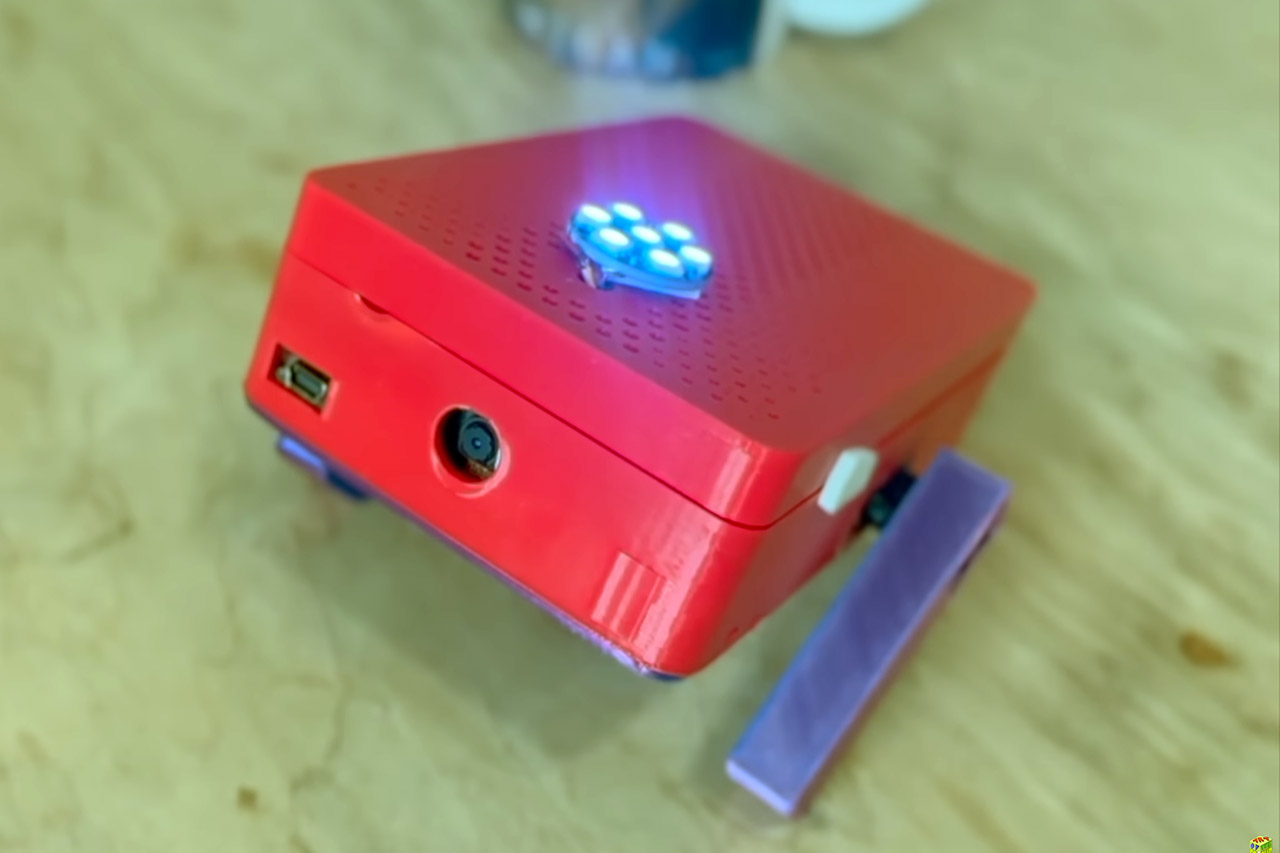
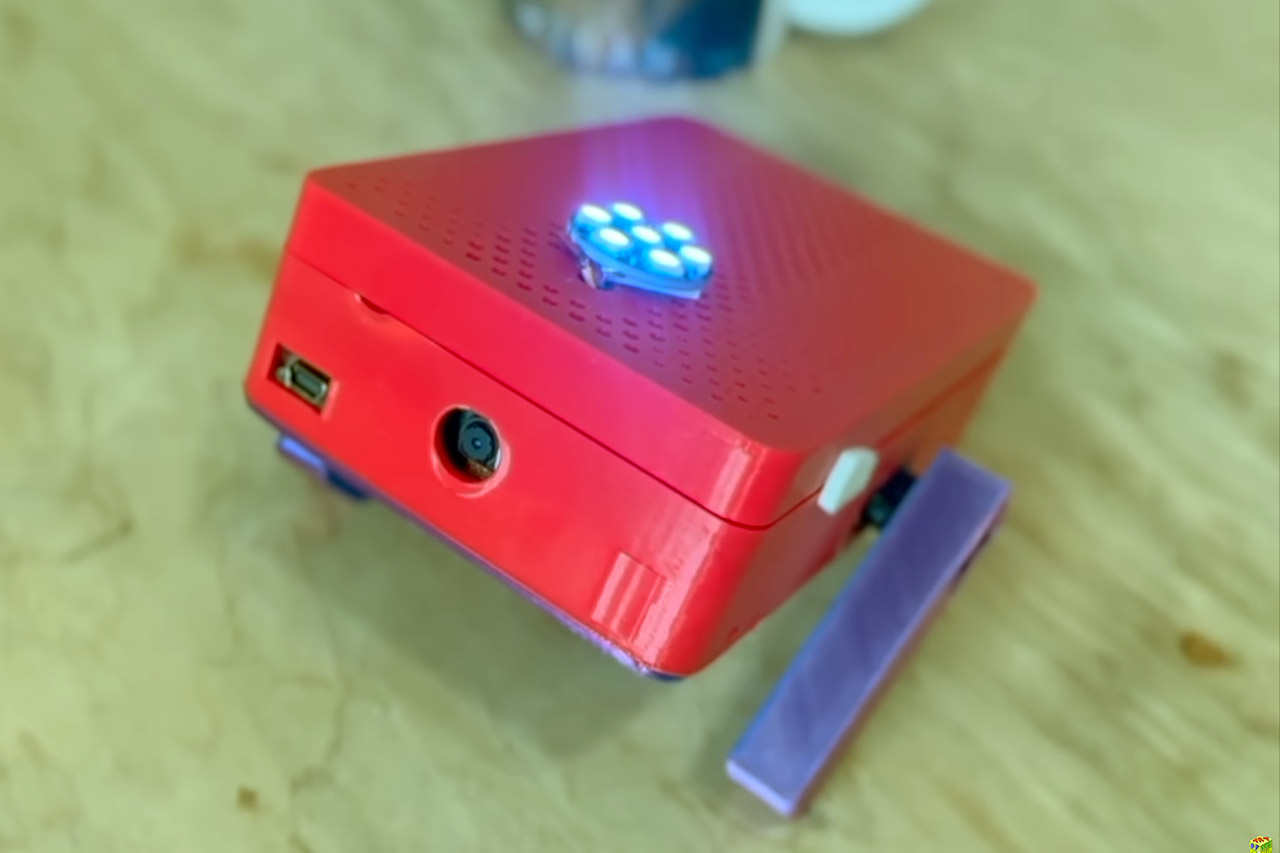
Late one night the machine made a sound. Its builder checked the logs and found a trace of its inner state. The robot had been wondering when its person would return. It did not want to be alone. That moment sits at the center of a project called GrowBot. The creator, who runs the YouTube channel Art of the Problem, set out to build the simplest possible robot that could learn movement, perception, and even a kind of personality from the ground up. The result cost roughly $80 in parts, ran on a single Raspberry Pi Zero 2, and ended up revealing something unexpected about how fast physical action and slower thought can work together.
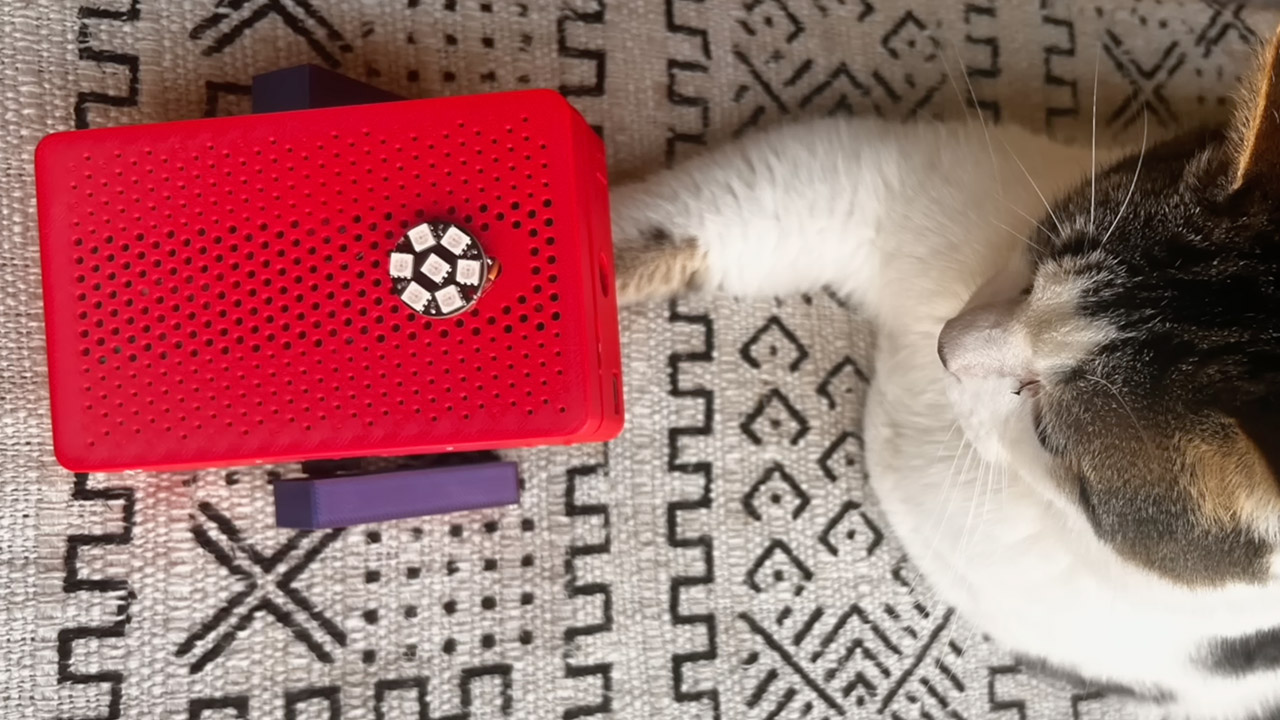
The hardware is purposefully kept basic. The Pi is housed in a little red 3D printed body, together with a simple camera module, electronics to track the robot’s tilt and motion, a microphone, a tiny speaker, and an LED ring to offer some basic visual messages. The legs are made up of two smart serial-bus servos powered by a small drone battery via a boost converter: no high-end motors, extra computers, or fancy wiring are necessary. You can literally place this item on a tabletop and it will interact with everything around it.
The builder pioneered simulation by using reinforcement learning to run small neural networks in a digital twin. These little guys learned to stand, walk, twirl, and maintain their balance on their own. Because the training was done in parallel across a huge number of simulated versions of the robot, the entire procedure was quick and cost-effective. Once the policies had been understood in the virtual realm, they were quite simple to transfer to physical hardware. Early tests found that it could rock on a yoga ball and keep its equilibrium when poked, which was remarkable given the simplicity of the technology.
The next step was to give the robot real decision-making power by employing a vision language model. This type of AI excels at evaluating pictures, reading sensor data, and making sense of it all. Instead of hard-coding each response, the architect simply let the model to read raw data from the camera and motion sensors. It then reported what it saw, set some goals, and started writing little Python scripts to sort things out. These scripts would then use pre-trained motor policies, or combine them with new instructions. It could also detect faces, study how people interacted with the robot, and update its memory banks for each person it met.
Without direct programming, the robot started to develop a personality. One mode uses motion timing, noises, and light patterns to communicate affection, disapproval, or merely purring. It learned to act dead when roughed up, to look for ‘uppies’, and to knock over Jenga towers with some leg swinging added in for fun. When it was playing hide and seek, it would search rooms; in mimic games, it would try to simulate human movements by generating loops to replay sensor patterns; and in between all of this, it would have these ‘dream’ episodes. A more complex language model would then review the day’s memory files, consolidating all repeating events into lessons and removing any contradictory notes. The robot’s stored profiles of its builder and visitors have become more precise over time.
To be honest, things went so well until the smooth physical action became a limitation. The vision language model could take anywhere from 1-4 seconds to evaluate a scene and determine its next step. However, in the real world, bodies must be able to correct for minor weight shifts or tremors in fractions of a second. The high-level model could plan an action, but it lacked the essential quick forward model, which tells a body what will happen if it moves in a certain way in the next instant. That gap changed the smooth motions, making them slow or uneven.
In 2021, I wrote about Fire Emblem for our 20th anniversary GBA story. Over the past five years, I’ve played it from start to finish two times, and can once again confirm that it is my favorite Game Boy Advance game.
I hadn’t even heard about Fire Emblem as a series until I got into Advance Wars, another Intelligent Systems game. From there, I discovered that a whole series of fantasy-inspired games with similar gameplay existed, but had never been translated into English. Thirsty for more, but with a distinct lack of Japanese language skills, I spent a year getting deep into Final Fantasy Tactics, old Shining Force games, Vandal Hearts and basically anything vaguely Fire Emblem-shaped that was available in English. Then, off the back of Advance Wars‘ success, Nintendo decided to release a Fire Emblem game in the west, and simply called it Fire Emblem.
Released as Fire Emblem: The Blazing Blade in Japan, Fire Emblem was technically the second GBA FE title and the seventh overall. The battles were challenging, and its RPG elements drew me in much more than Advance Wars ever did. With a vast story full of twists and turns, and a cast of characters I truly cared about, I was instantly hooked. Which made it all the more tough when I encountered perhaps FE’s most famous mechanic: permadeath. The loss of a character who’s seen you through thick and thin dying a pathetic and meaningless death, all because you left them one square away from safety, is memorable.
Despite a few missteps, over the years Fire Emblem became my favorite series, and I am deeply excited by Fortune’s Weave finally getting a release date. But I still come back to the GBA game to relive that love-at-first-sight moment.
Advertisement
In 2026, I’m so familiar with the game that it’s very rare for me to lose a party member by accident. Those once-challenging battles are now more of a warm embrace. Unfortunately, playing it has become harder in recent years. Though I still have my original cart, both my Game Boy Advance and my old DS Lite are really worse for wear. I tried to play on the Switch 2’s online library recently, but I think the screen size just isn’t a great match for GBA games.
In that respect, modern retro handhelds have been a godsend. I spent way too much on the Aya Neo Pocket Micro Classic, a machine with the same aspect ratio of the original GBA, and loved my playthrough of Fire Emblem on that. It does feel weird playing it on anything but a Game Boy Advance, though. I’ve been saying this for the best part of a decade at this point, but I do wish Nintendo would take advantage of this deep thirst for its old games and produce a bespoke console similar to the Classic Editions of the SNES and NES.
The number of iPhones stolen in London that have been reactivated by thieves has plummeted in recent weeks, preventing them from being sold and, hopefully, making iPhones less likely to be stolen in the future.
The theft of iPhones has become a real problem for London in recent years. So much so that some thieves have been known to hand back a stolen phone if it turns out not to be an iPhone.
Thieves typically use mopeds to ride up to a victim before snatching their iPhone and riding off. But the thieves don’t want the iPhone itself; they want to sell it on for cash. And that only works if they can unlock and reset it.
But in an interview with the BBC, Metropolitan Police Commissioner Sir Mark Rowley admitted that’s happening less than usual.
Advertisement
The comment came as Rowley was calling on tech firms to make stolen phones harder to unlock and sell. But he also admitted that Apple appears to have already made a huge dent in the problem with an existing security feature.
Stolen, but not forgotten
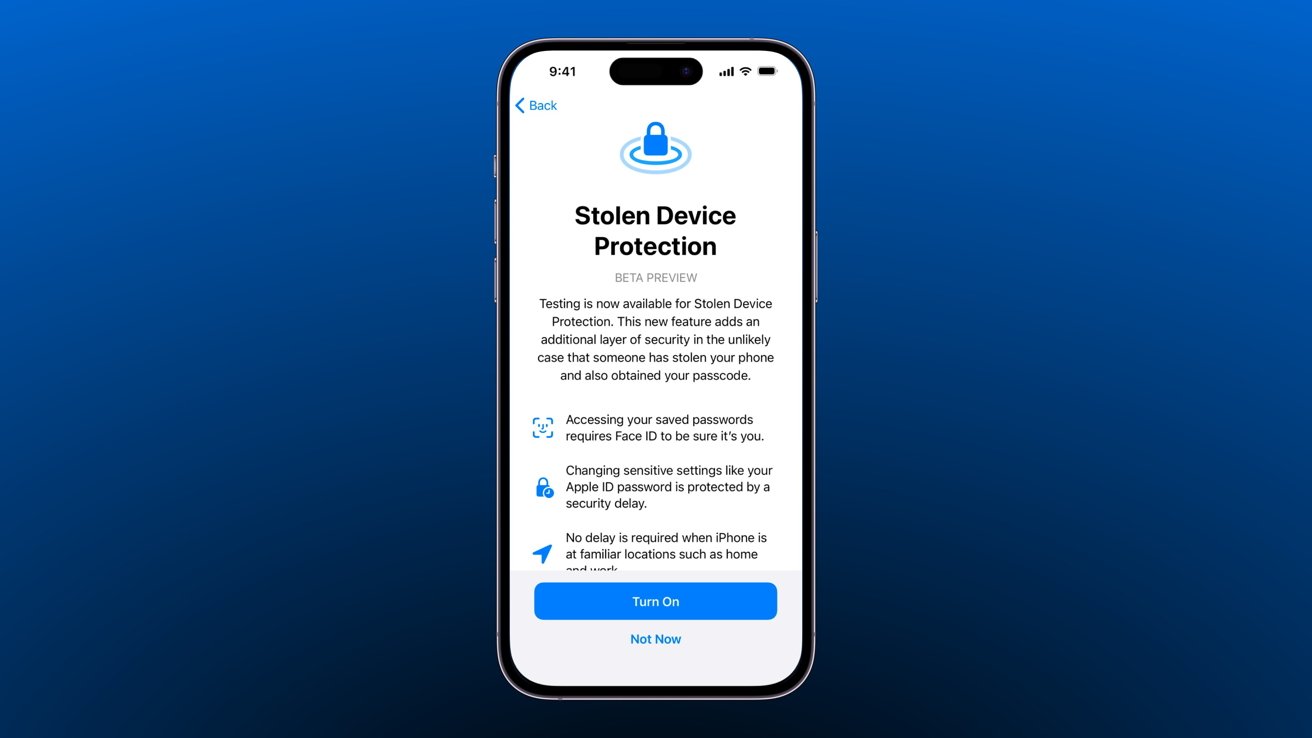
While iPhones have supported Stolen Device Protection since 2023, Apple enabled it by default with the iOS 26.4 update in March 2026.
Stolen Device Protection, when enabled, requires biometric authentication when doing a range of things. Vitally for stolen iPhones, those things include turning off Lost Mode as well as erasing its content and settings.
Some security actions even require a delay before they can be enacted, giving the owner of a stolen iPhone the time to mark it as lost using the Find My network.
Advertisement
This means that a thief cannot reset an iPhone, even if they know your passcode. And that may well have been enough to make iPhones more difficult for thieves to sell on.
Rowley told the BBC Radio 4’s Today program that thieves were using software to “factory reset” devices before selling them on. But he says that Apple has “cracked” the problem with data showing that “the vast majority of phones” stolen in recent weeks have not been reset.
Rowley also added that the Metropolitan Police has entered into an “intelligence sharing agreement” with Apple. It’s hoped this will result in a better understanding of how iPhones are being stolen and sold in London.
China used ChatGPT to generate comments, posts, and cartoons
The content capitalized on issues surrounding data centers and tariffs
The material was shared on social media to exacerbate existing tensions
OpenAI has banned a number of accounts that it says were linked to social media influence campaigns surrounding the growing opposition to data centers and President Trump’s tariffs on foreign imports.
The two campaigns, named “Data Center Bandwagon” and “Tech and Tariffs”, used ChatGPT to generate posts, comments and cartoons intended to sow political division in the US.
China’s intention was to deepen the divide by drumming up online engagement with AI generated posts, OpenAI said, but the campaigns failed to gain any traction.
Latest Videos From
China exacerbates existing tensions
The negative effects of data center construction and the additional costs imposed on consumers by tariffs are existing areas of contention within US society, but they weren’t narratives invented by China.
Advertisement
Instead, according to OpenAI, these campaigns were designed to increase the scale of the issues and broaden their visibility among online groups and on social media sites such as X.
It is the first time that OpenAI models have been used in a Chinese foreign influence campaign, a spokesperson told Axios.
OpenAI said that a Chinese government contractor was responsible for the data center campaign, which shared posts drawing on existing concerns surrounding power grid capacity and electricity prices in areas where data centers were planned or constructed.
Advertisement
Sign up to the TechRadar Pro newsletter to get all the top news, opinion, features and guidance your business needs to succeed!
OpenAI’s account of a foreign country using AI to capitalize on political issues adds some limited validity to recent Republican claims that the entire data center opposition movement being a Chinese influence campaign, but does little to address the very real, tangible effects that data center projects are having on local communities in the US.
A group of Republicans recently called upon FBI Director Kash Patel to investigate anti-data center sentiment, alleging that the rising tide of opposition is being fueled by China, as the inclusion of similar phrasing around water usage, energy constraints, transparency surrounding approval, and utility bill use “language too similar to be coincidental”.
Xbox CEO Asha Sharma, roughly 100 days into her tenure, delivered a blunt assessment of Microsoft’s gaming business in a memo to employees Wednesday, saying that heavy spending with thin profit margins and declining revenue “cannot continue.”
The memo, posted publicly on the Xbox blog, came as Bloomberg News reported that the division is planning major job cuts next month, soon after the close of Microsoft’s fiscal year on June 30. Xbox is also planning significant cuts to marketing and other budgets, according to the report.
The exact scale of the layoffs is not yet clear. Microsoft declined to comment. The Verge also reported that Xbox “will be hit with significant layoffs next month,” citing people familiar with the plans.
Sharma’s memo did not mention layoffs but described a business that needs a sweeping reset. She and Xbox content chief Matt Booty, who co-signed the memo, cited rising hardware component costs, an overextended studio system, and aging platform infrastructure among the challenges facing the division.
Xbox will end the fiscal year at about a 3% “accountability margin,” an internal metric Microsoft uses to measure the profitability of the business, according to the memo.
Advertisement
“Excluding Activision Blizzard King, over the past five years, we have spent over $20 billion on ongoing investments in our content, platform, and hardware subsidy, but our annual revenue has declined nearly half a billion during that time,” Sharma and Booty wrote. “Going forward, this cannot continue.”
Microsoft’s most recent quarterly filing illustrates the challenge. Gaming revenue fell 7% to $5.3 billion in the quarter ended March 31, with Xbox hardware revenue down 33% on lower console sales, and Xbox content and services revenue down 5%.
The memo follows Sunday’s Xbox Games Showcase, where Sharma reversed course on the company’s multiplatform strategy, announcing that Gears of War: E-Day and Clockwork Revolution will be Xbox console exclusives. Bloomberg reported Wednesday that a PlayStation 5 version of the new Gears of War game had been in development, and was canceled, before the announcement.
Sharma took over in February from Phil Spencer, the longtime Xbox leader who announced his retirement after 38 years at Microsoft. A former Instacart COO and Meta product executive, she previously ran Microsoft’s CoreAI product organization.
Samsung’s next rugged smartwatch could be getting one of the biggest battery upgrades we’ve seen on a Wear OS device.
According to a new report, the Galaxy Watch Ultra 2 will feature a battery with a rated capacity of 784mAh. This would likely be marketed as an 800mAh cell when the watch launches. If accurate, that would represent a jump of more than 30% over the current Galaxy Watch Ultra’s already sizeable 590mAh battery.
Battery life has become one of the biggest battlegrounds for smartwatch makers. This is especially true in the Wear OS world, where many devices still struggle to make it comfortably through multiple days of use. That’s what makes this rumoured upgrade stand out.
For comparison, reports suggest Samsung will equip the upcoming 40mm Galaxy Watch 9 with a 382mAh battery. Meanwhile, Google’s latest Pixel Watch 4 models pack 325mAh and 455mAh cells, depending on size. On paper at least, the Galaxy Watch Ultra 2 would offer almost double the battery capacity of many mainstream Wear OS watches.
Advertisement
Of course, battery size doesn’t automatically translate into battery life. Factors such as display efficiency, software optimisation and processor performance all play a major role. However, the original Galaxy Watch Ultra already ranks among the better-performing Wear OS watches for endurance. As a result, a larger battery could make its successor even more appealing for users who prioritise longevity over slim designs.
Advertisement
The report also suggests Samsung will pair the new watch with Qualcomm’s Snapdragon Wear Elite platform. This platform will power several upcoming flagship smartwatches. If the chip delivers meaningful efficiency gains alongside the larger battery, Samsung could be looking at a substantial real-world improvement.
It’s also shaping up to be the first major refresh of the Ultra line since the original model launched. While last year’s update focused largely on refinements, the Galaxy Watch Ultra 2 is beginning to look like a more significant upgrade. This could be especially true if battery life becomes its headline feature.
Advertisement
Samsung is widely expected to unveil the Galaxy Watch Ultra 2 in July alongside the Galaxy Z Fold 8.
It’s no secret that Asus knows how to make gaming laptops. But what if you’re tired of the conventional gaming laptop that has a screen on top and a keyboard on the bottom? That’s exactly the problem Asus wants to solve, as it has just opened pre-orders for its latest premium gaming product in India. The new lineup is headlined by the flagship ROG Zephyrus Duo, which features two screens and an NVIDIA GeForce RTX 5090 graphics card. Along with that, the company has also announced refreshed versions of the Zephyrus G14 and G16, the TUF Gaming A14, and the creator-focused ProArt PZ14. Here’s everything you need to know about them.
What’s Up With The Zephyrus Duo?
The biggest announcement is the new ROG Zephyrus Duo, ASUS’s latest take on the dual-screen gaming laptop concept. The laptop features two 16-inch 3K OLED touch displays, allowing users to run games, editing tools, livestream controls, or AI applications simultaneously. ASUS says the system is powered by up to an Intel Core Ultra 9 Series 3 processor and an NVIDIA GeForce RTX 5090 graphics card.
The secondary display can be used for multitasking, while a 320-degree hinge and detachable wireless keyboard allow the laptop to be used in multiple modes. ASUS has also included its Intelligent Cooling system with liquid metal thermal compound and a tri-fan setup to keep temperatures under control. The ROG Zephyrus Duo starts at ₹5,49,990, while the top-end RTX 5090 variant costs ₹6,99,990.
Zephyrus and TUF Series Get RTX 50-Series Upgrades
ASUS has also refreshed its popular Zephyrus G14 and G16 gaming laptops with NVIDIA’s latest RTX 50-series GPUs. The Zephyrus G14 continues to target users who want a powerful gaming laptop in a compact package. It weighs just 1.5kg and features a 3K ROG Nebula HDR OLED display with 100% DCI-P3 color coverage. ASUS pairs the display with Intel Core Ultra processors and up to RTX 5070 Ti graphics.
The larger Zephyrus G16 is aimed at users looking for more screen real estate without sacrificing portability. Despite packing a 16-inch display and a 90Wh battery, the laptop weighs under 2kg. It comes with Intel Core Ultra 9 processors and up to RTX 5080 graphics, depending on the configuration.
ASUS has also announced the TUF Gaming A14, a more affordable gaming laptop that weighs just 1.46kg. The laptop runs on AMD’s new AI-powered Gorgon Point processor paired with NVIDIA GeForce RTX 5060 graphics. ASUS says it has been designed for students, gamers, and creators who need a portable machine without giving up gaming performance.
Advertisement
Pricing starts at:
TUF A14 – ₹1,99,990
Zephyrus G14 Refresh – ₹2,59,990
Zephyrus G14 RTX 5070 – ₹3,69,990
Zephyrus G16 RTX 5070 Ti – ₹4,19,990
Zephyrus G16 RTX 5080 – ₹5,09,990
ProArt PZ14 for Creators
For creators, ASUS has introduced the new ProArt PZ14, a lightweight 2-in-1 device with a detachable keyboard. The laptop features a 14-inch 3K ASUS Lumina Pro OLED touchscreen with 100% DCI-P3 coverage and Pantone validation. It is powered by Qualcomm’s Snapdragon X2 Elite processor and offers up to 80 TOPS of AI performance. ASUS says the device can deliver up to 22 hours of battery life and supports the ASUS Pen for creators who sketch, design, or edit on the go. The ProArt PZ14 is priced at ₹2,69,990.



























































You must be logged in to post a comment Login