
Politics
Keir Starmers Premiership Hang In The Balance


For Labour, the elections on May 7 have been looming on the horizon like a giant, immovable iceberg for months.
Every opinion poll tells the same story: voters in England, Scotland and Wales are preparing to deliver an unforgiving verdict on Keir Starmer’s first 22 months in power.
Up to 2,000 council seats are set to be lost, while the SNP will romp to another victory at Holyrood and Labour will lose a Welsh election for the first time in the party’s history.
After another hellish week for the prime minister dominated by the latest developments in the Peter Mandelson scandal, many at Westminster now think that the sheer scale of Labour’s humiliation will finally trigger moves to remove Starmer from Downing Street.
“I suspect the people round Keir know it’s coming to an end,” said one senior Labour figure. “He only has a few supporters left – they can surely see the writing on the wall?”
An idea gaining traction in some quarters is that, to end the speculation about his future, Starmer should announce when he plans to stand down.
“Post-May, MPs will start saying Keir has to set out a timetable for going,” said one proponent.
“Labour can’t make the mistakes the Democrats made in America. Joe Biden left it too late to go and helped usher in Trump. Keir is helping to usher in Nigel Farage.
“He should announce he’s going in the next 12 months to allow an orderly transition to a new Labour prime minister.
“He can then focus on legacy issues he cares about for final year. That would allow a new leader to be in place by summer 2027.”
Of course, Starmer would need to be amenable to such a scenario, and there is little sign that a man who came to Westminster relatively late in life has any desire to call it quits less than two years after becoming PM.
HuffPost UK has also learned that Downing Street officials plan to mount an “Operation Save Starmer” in the aftermath of May 7 to try and keep their boss in his job.
Another significant flaw in the plan to oust the PM is that any new leader would be under intense pressure to call an early general election, possibly as soon as next year.
“You couldn’t have a new leader coming in with an entirely different policy prospectus and not go to the country,” said one Labour insider. “The public simply wouldn’t wear it.”
For those Labour MPs who are all-but guaranteed to lose their seats, a general election in 2027 is not an attractive prospect.
Others are less certain of Starmer’s imminent demise, however, pointing to the fact that the PM’s critics cannot agree on his replacement.
“Nothing’s going to happen until the cabinet can agree on who should take over,” said a Labour veteran.
Defence secretary John Healey has his supporters, while foreign secretary Yvette Cooper – who stood for the leadership in 2015 – is said to be taking soundings from Labour MPs.
“Yvette is definitely sniffing around it,” said an insider. “There’s some talk of her doing a deal with Wes [Streeting], which could see him become her chancellor.”
Of course, Streeting has not given up his leadership ambitions, although one party grandee said the health secretary’s own links to Mandelson mean his hopes of becoming PM are now “done”.
Angela Rayner’s ongoing entanglements with His Majesty’s Revenue and Customs over her tax affairs would appear to rule out any leadership challenge in the short-term.
Andy Burnham’s enduring popularity with the public – a rarity for a senior Labour politician these days – means he is favoured by many MPs.
“The Burnham train has left the station and everybody will be clambering to get on it,” an MP told HuffPost UK.
But until he can find a way back to Westminster – he is believed to have his eye on Peter Dowd’s Bootle seat – his leadership hopes remain on hold.

“I think the best way to describe the current situation is ‘stuck’,” said one source. “But the election results are going to be disastrous and that could trigger a response – that could be the thing that unsticks it.”
One MP who remains supportive of Starmer said his removal was “not going to happen”.
“There could be a reshuffle, but nothing more,” the MP said. “None of the contenders is able to move right now.”
A cabinet minister conceded “it’s been a bad week” for Starmer, but insisted the speculation about his future was “overdone”.
“It was aways going to be difficult local elections period, but I really don’t think there’s a huge desire for change or a settled view on what any change would be.
“The point of changing is that the person with whom you replace the prime minister is definitely better than him. Who is that person?”
“Biden left it too late to go and helped usher in Trump. Keir is helping usher in Farage”
A government source said the growing campaign to oust the PM could provoke its own backlash.
He said: “I think a lot of MPs will take a dim view of what is a concerted campaign to push out a Labour prime minister, and that could lead to a ‘rally round the flag’ moment.
“If the question is who can best lead this country through a geopolitical crisis and has the gravitas to manage all these conflicts, I think Keir is pretty much the best answer to that question.
“John and Yvette are undoubtedly very capable people, but I think Keir is a better answer that Streeting, Rayner and Burnham.
“Of course it’s been a really difficult week, but I don’t think it’s going to change anything fundamentally.
“I don’t think any of the other candidates can answer the question of would they be better, or how can they manage a transition process to a new PM that doesn’t knock us out of government for a generation.”
Another insider said there was a far more pragmatic reason for the other leadership contenders not to move against Starmer just yet.
“If I was Angie or Wes looking at the economic fallout of the Iran war, I’d think that getting into power this summer looks much less appetising than it did six months ago when we were looking at a growing economy, falling NHS waiting lists and falling inflation,” they said.
“If it were me I’d be thinking ‘do I want to be in charge now’.”
The PM’s spokesman stretched credulity on Friday when he told reporters that his boss will be in charge until the next election and beyond.
“He’s very focused on the job,” the spokesman said. “He will continue to lead the government throughout this parliament and beyond.
“He’s got a huge amount of work to do, the governments got a huge amount of work to do.
“We’ve set out a significant programme of domestic reform, including bringing down NHS waiting lists, tackling the cost of living and investing in security and defence. That’s where the prime minister is fully focused.”
Few truly believe that Starmer will still be prime minister by the time of the next election.
But it is by no means certain that May 7 will trigger an unstoppable chain of events which will see him depart No.10 within weeks.
Subscribe to Commons People, the podcast that makes politics easy. Every week, Kevin Schofield and Kate Nicholson unpack the week’s biggest stories to keep you informed. Join us for straightforward analysis of what’s going on at Westminster.


We hope you love the products we recommend! All of them were independently selected by our editors. Just so you know, HuffPost UK may collect a share of sales or other compensation from the links on this page if you decide to shop from them. Oh, and FYI — prices are accurate and items in stock as of time of publication.
We can all remember our first period. No matter how much prep you have, it always comes as a bit of a shock to see blood coming out of a body part for the first time.
On top of the overall weirdness of your body changing, the way periods are spoken about at school barely scratches the surface of the issue.
Then there’s the embarrassment of going to school, the comparison of when you got it in relation to your friends, and knowing what period products to buy and wear.
While you might assume things have moved on considerably from when we were at school, for a lot of teens, the unknown of periods is still awkward and scary. In fact, Plan UK found that 48% of girls in the UK feel embarrassed by their period, while 49% have missed an entire day of school as a result.
But early periods don’t have to be a stressful experience, especially not now that we have more options of what to wear during our period than we did even a decade ago.
Whether your kid has just got their period, or is approaching that age, here’s how to talk to them about periods and the best period wear to shop now.
The best period products at a glance
What age should you talk to teens about periods?
Girls can get their periods as young as eight, so it can help to talk to them about menstruation before then, according to Ruby Raut, CEO and founder of WUKA, which recently launched WUKA Talks, an education programme for families.
“Parents should start conversations much earlier than most expect, ideally from the age of five or six, by introducing the idea that bodies change as part of growing up,” she says.
“By the time children are eight to ten, they should have a clearer understanding of what a period is and what it might feel like, especially as many girls are starting their periods earlier than anticipated.”
Talking to children about periods from a younger age can help them become familiar with the topic and avoid confusion or anxiety around the time their period starts, Raut explains.
“Early, age-appropriate conversations help ensure that when a child’s first period arrives, it feels expected rather than frightening,” she adds.
How to talk to kids about periods
We’re so used to the idea of ‘the talk’, whether that’s about periods, sex, or anything body-related.
But these conversations should be ongoing, Raut advises.
“Parents should approach conversations about periods as ongoing, everyday discussions rather than a one-off talk, using simple, calm and matter-of-fact language,” she says.
While these talks should avoid creating unnecessary stress, they should also prepare children for some of the less wanted side-effects of periods.
“It is important to frame periods as a normal biological process that happens to over half the world’s population, avoiding language that creates fear or embarrassment,” Raut explains.
“Being honest about the range of experiences, from feeling completely fine to experiencing cramps or tiredness, helps set realistic expectations without overwhelming teenagers.”
Parents can also normalise periods by keeping their own products visible, Raut advises, and speaking openly about their own personal experiences.
“The essentials are clarity, consistency and creating a safe space where teenagers feel comfortable asking questions without judgment,” she says.
What type of teen period products are available?
Thankfully, we now have a far wider range of period products available than when we were young.
Period products are expensive – 40% of girls in the UK have had to use toilet roll because they can’t afford sanitary products.
But disposable products like pads and tampons are no longer the only options, explains Raut.
“There are several options for teen period care, including pads, tampons, menstrual cups and period underwear, and it is important to introduce these in a practical, non-intimidating way,” she explains.
“For many teenagers, especially those just starting, period underwear can be the easiest option as it feels like regular underwear, requires no insertion and involves minimal learning. At the same time, pads are also accessible but need to be changed regularly.”
While tampons and period cups are also available, they might require more guidance than pads and pants, according to Raut.
No matter what products you choose, it’s important to show kids how to use them, Raut says.
“Parents can support their children by showing them the products, explaining how each one works, and walking through simple real-life scenarios, such as what to do if a period starts at school.
“Preparing a small starter kit with essentials like spare underwear, a discreet bag and wipes can also help build confidence and reduce anxiety.”
The best period products for teens in 2026

Exercise can be a particular source of anxiety when you’re on your period – at any age, but especially when you first start it. This swimsuit from WUKA protects against leaks when your teen is in the water, so they don’t have to worry about the drama of tampon strings.

It’s nature’s greatest joke that the second teenage girls stop wanting to get your advice is when they’re going through their most pivotal moments in life. If your teen has stopped wanting to talk to you and thinks anything you say about periods is ew, gross WUKA has put together a starter kit with pants, wipes, heating patches, and a guide to everything they need to know about their changing body.

If they prefer a boyshort to a brief, this period kit also comes with a Period 101 book so they can avoid having to talk about their period until they’re ready. It doesn’t come with the same heating pads and wipes as the WUKA version, unforch, but it does offer two pairs of pants.

Black period pants can make it feel oh-so-serious, so we like this smiley face option for something cheerier.

This three-pack of vibrant pants is another fun way to make periods seem less intimidating.

Periods shouldn’t have to mean the end of being care-free, so this skort is great for days when they’ll be running around and won’t want to have to think about changing their pad.

These pads are an ideal size for beginners – they’re not so thick they’ll feel overly aware of them, and they have wings to make sure they’re securely attached.

Because you gotta have a night specific option, too.

Everything is embarrassing at that age, so avoiding a VPL with these seamless briefs could save you from yet another hormonal meltdown.

If they can be trusted with fiddly stuff, the A size of this period cup is small enough for teens. It also only requires being taken out once a day – just remind them to wash it regularly!

These low-waisted pants will hopefully not only circumvent the issue of period bloating, but are also absorbent for up to eight hours a day.
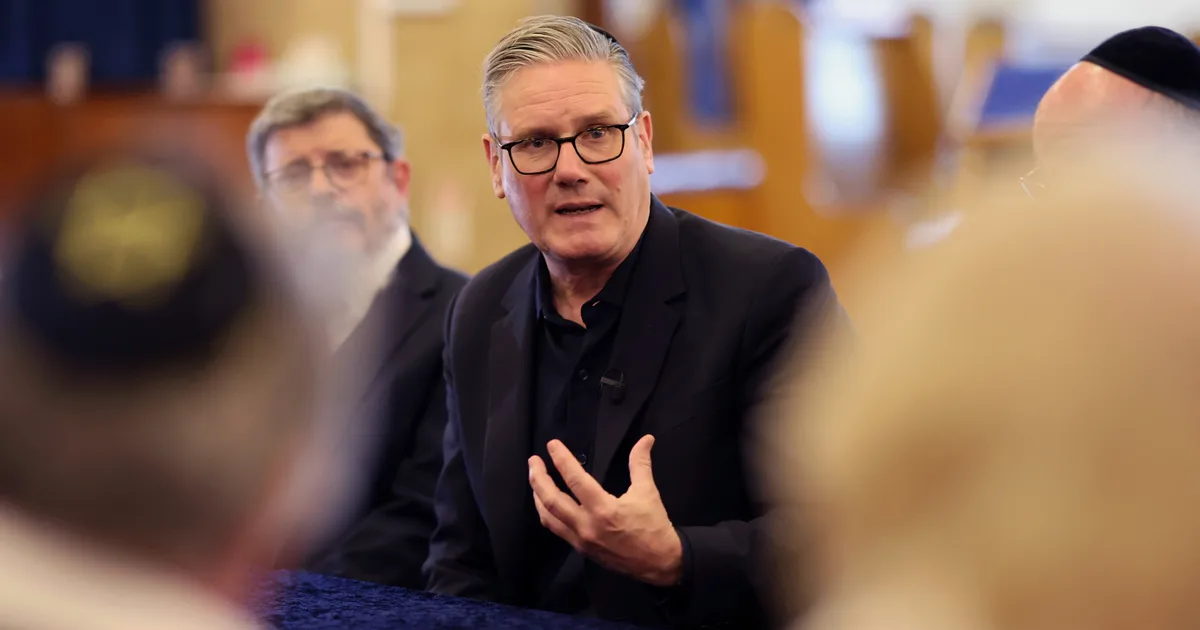
Keir Starmer will remain prime minister for years despite mounting speculation over his future, Downing Street has insisted.
The prime minister’s spokesman said the PM “will continue to lead the government throughout this parliament and beyond”.
His comments came amid claims Starmer could be forced to set out a timetable for his departure after the May 7 elections, when Labour are expected to suffer huge losses.
Cabinet ministers have also publicly distanced themselves from the PM over the scandal surrounding his decision to make Peter Mandelson the UK’s ambassador to Washington.
Asked if the prime minister was preparing to quit, his spokesman said: “He’s very focused on the job. He will continue to lead the government throughout this parliament and beyond.
“He’s got a huge amount of work to do, the governments got a huge amount of work to do.
“We’ve set out a significant programme of domestic reform, including bringing down NHS waiting lists, tackling the cost of living and investing in security and defence. That’s where the prime minister is fully focused.”
Subscribe to Commons People, the podcast that makes politics easy. Every week, Kevin Schofield and Kate Nicholson unpack the week’s biggest stories to keep you informed. Join us for straightforward analysis of what’s going on at Westminster.
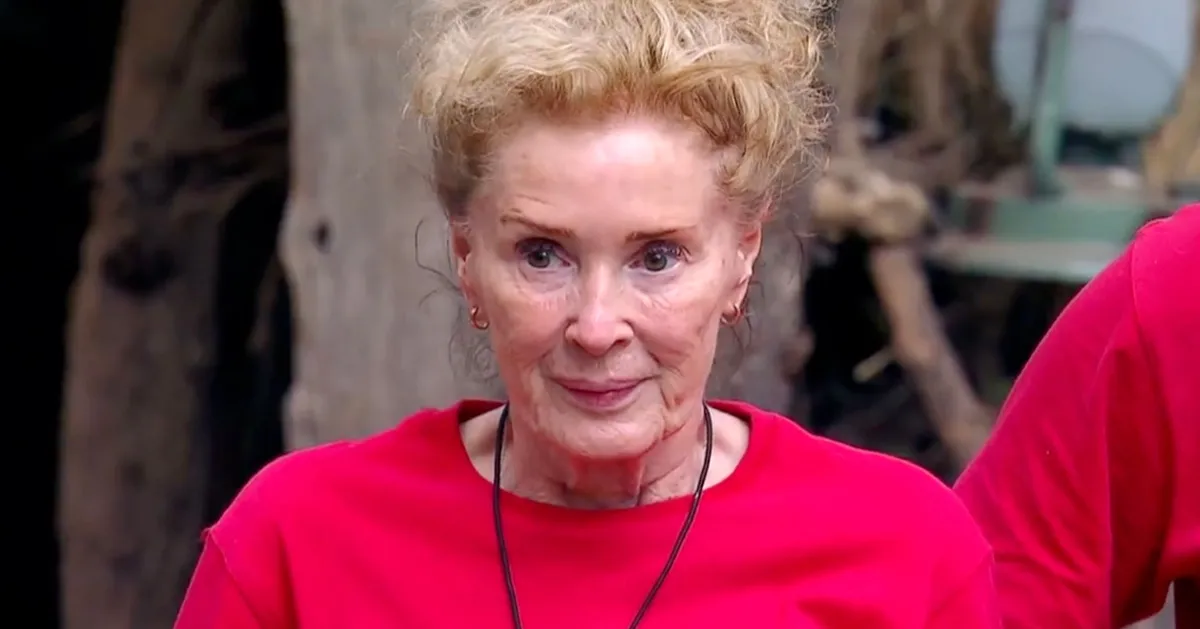
Former I’m A Celebrity contestant Beverley Callard has shared her disappointment at having to miss the all-star series’ final.
Beverley was one of 12 ex-campmates invited back for the latest season of I’m A Celebrity: South Africa, which was filmed last year and has been airing on ITV for the last three weeks.
Earlier this week, viewers saw that the Coronation Street legend was forced to leave the series early on medical grounds, which preceded her being diagnosed with cancer back in February.
Following this, she shared with her Instagram followers on Thursday that she would not be able to join her co-stars at the live I’m A Celebrity final on doctors’ advice.
“Yesterday I should have flown over to England to get ready for the I’m A Celeb final,” she explained. “I was so excited and looking forward to it. And on medical advice, I can’t go, so I’m absolutely gutted.
“I was dying to see them all, and it would have been brilliant. But I can’t go… the flights were booked and everything, [but] no, they said basically it’s too long a day, flying there, then a very late night.”
The soap star added that she would still be taking part in the broadcast, chatting to her campmates and presenters Ant and Dec via video-chat, even if she can’t join them in person.
“So, I’ve got to make the best of a bad job,” she added. “But I am resting, I am doing as I am told.”
It had previously been reported that Jimmy Bullard may have also avoided reuniting with the rest of the cast at the final, after his blazing row with campmate Adam Thomas aired.
However, he later assured his social media followers: “My version [of the story] will be told Friday! Can’t wait to see you all – well some of yous!!”
I’m A Celebrity: South Africa concludes at 7.30pm on ITV1 and ITVX, where viewers will vote for one of the four finalists to be crowned the next I’m A Celebrity “Legend”.
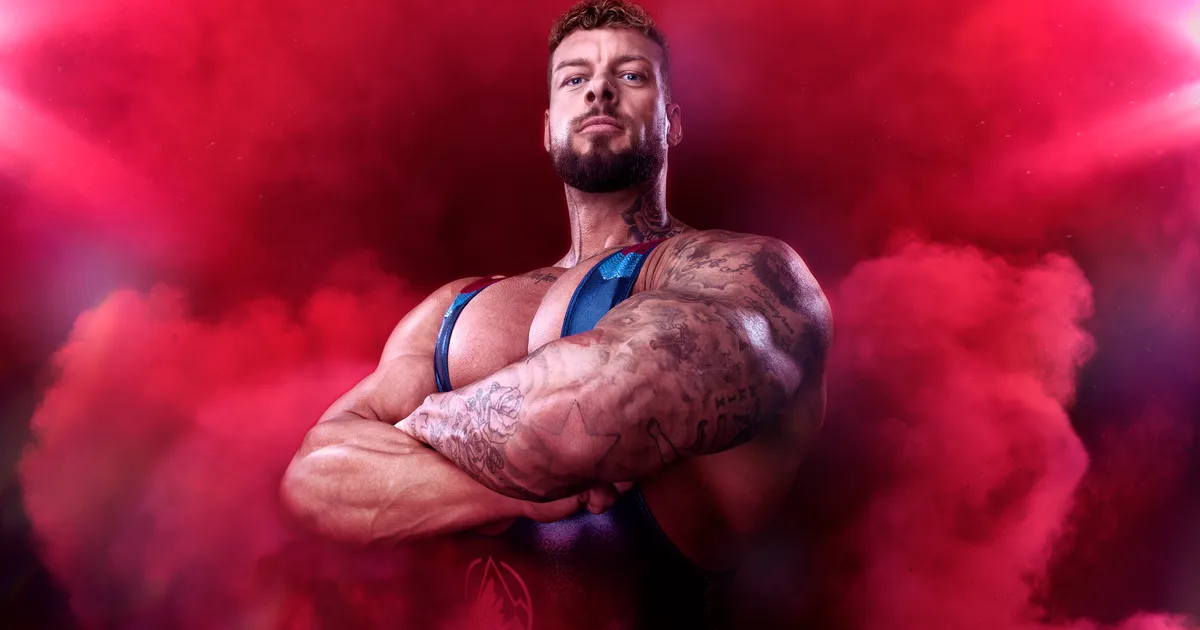
Gladiators star Jamie Bigg, better known to viewers by the stage name Giant, has confirmed that he will be leaving the show at the end of the current series.
In a social media post on Friday morning, Giant explained that stepping away from the show “wasn’t a decision I made”, indicating that he had been “faced with a choice that didn’t align with my values”.
He explained: “Being a Gladiator has been one of the greatest honours of my life. Stepping into that arena, hearing the crowd, representing strength, resilience and being a role model… that’s something I’ll carry with me forever.”
“What I do want to make clear is this wasn’t a decision I made to step away,” he continued. “I was faced with a choice that didn’t align with my values. And if you know me, you know this… I stand by my people and I stand by what I believe in. That’s what being a role model means to me.
“I’m proud of everything I gave to the show and grateful for every single person who supported me along the way. This isn’t the end. It’s just the beginning. Stay strong. Stand tall.”
Several of Giant’s Gladiators co-stars were quick to show him their support in the comments, including Zack “Steel” George, who referred to him as “always the biggest” and Tom “Hammer” Wilson, who hailed him as the “duel king”.
A BBC spokesperson said: “After three formidable series, Giant is leaving Gladiators. We’d like to thank him for everything he has contributed to the show and wish him well for the future.”
The ex-professional bodybuilder and fire fighter had been with Gladiators since it was rebooted by the BBC in 2024.
He previously faced scrutiny after an old YouTube video of his in which he spoke candidly about his past use of his steroids was unearthed.
At the time, he said in a statement: “I have always been open and transparent about my use of steroids whilst I was a professional bodybuilder. During that time, I spoke openly about the legal use of performance enhancements as a competitive bodybuilder and how to safely administer them.
“I stopped competing as a bodybuilder in October 2022 and responsibly came off steroids. I am no longer a professional bodybuilder and am no longer taking steroids and do not advocate the use of them.”
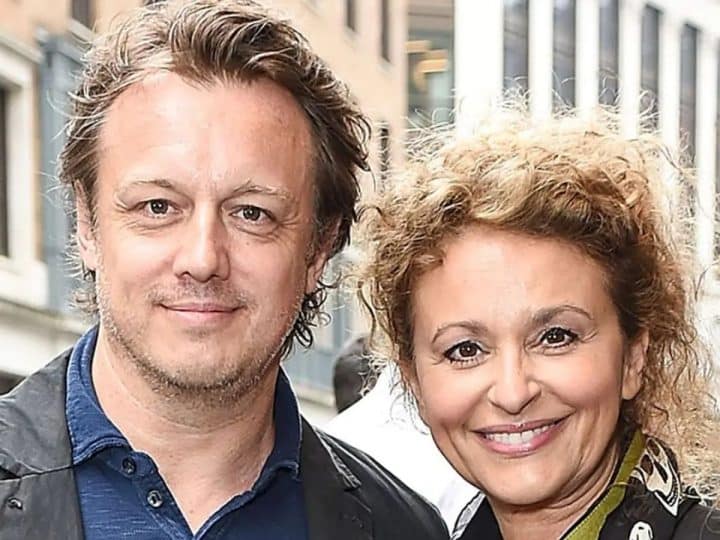

Filmmaker, anti-genocide campaigner and Green Party candidate Mark Adderley has reacted with fury to smears from Israel fanatic Labour front-bencher Steve Reed. He has also blasted the Green Party administration for (again) capitulating to fake antisemitism smears from Reed and the Israel lobby media.
The Greens have again fallen for Labour’s and the Israel lobby’s desperate and arrogant attempts to dictate who can stand against Labour. Adderley was the Green candidate for Crystal Palace and Upper Norwood in London’s Croydon — a hotbed of Labour corruption unfortunate enough to have Reed as its MP.
But now the party has caved to a blatantly political — and libellous — smear by Reed and others and has suspended Adderley. His ‘crime’, apparently, was to criticise wanted war criminal Benjamin Netanyahu. And, allegedly, he wondered, on the YouTube channel he runs with his wife Nadia Sawalha — like millions of others — whether Israel was involved in the assassination of US right-winger Charlie Kirk.
Kirk had said he was going to end his support for the genocidal colony and feared Israel would kill him.
Israel lobby worried
It seems Adderley’s candidacy seriously worried the Israel lobby. It has targeted him with a clearly-coordinated series of smears and hit-pieces, including one in the Times. Its author, Israel advocate Fintan Hogan, helped Israel deny murdering 500 Palestinian civilians in a missile attack on the Al-Ahli hospital in 2023. The attack was subsequently forensically proven to have been perpetrated by Israel, one of hundreds of Israeli war crimes against hospitals, medics and ambulances.
For the Times, Hogan attacked Adderley for daring to compare Benjamin Netanyahu’s racist ‘Greater Israel’ project with Hitler’s ‘Lebensraum’ (‘room to live’) plans. Also cited were other views Adderley mentioned that are now entirely mainstream — except in the pro-Israel ‘mainstream’ media and lobby groups, of course. Like the idea that the Israel lobby’s constant conflation of Jewish people with the terrorist colony puts Jews in danger.
The same attacks were amplified by the ‘usual suspects’ in the pro-Israel smear industry. Libel-factory and “dauphin of phone-hacking” Lee Harpin had to get in on the act, of course, after years of spouting a “litany of lies” against left-wingers that cost his previous rag huge libel payouts. Harpin posited that Adderley is part of a Green “antisemitism problem” — familiar language, eh? — that is even “worse than feared”.
And pro-Israel Labour horror Reed — of course — chipped in. Reed, with typical arrogance, demanded that the Greens bow to his ‘Labour’ call to withdraw Adderley and another local candidate for daring to oppose Israel’s crimes:
View on Threads
Adderley hits back
But it seems that Harpin, his new rag, and a number of others — including the odious Reed — may be about to add to the heap of cash paid out to wronged and smeared left-wingers. In a withering post on his Instagram feed he poured scorn on the despicable Reed — and he said he will be suing those who have libelled him:
I am disgusted. Truly, deeply, viscerally disgusted.
Labour Cabinet Minister Steve Reed MP has had the audacity to level accusations of antisemitism and racism against me.
Let me be CRYSTAL clear: I have spent my entire life fighting racism in all its forms. I have stood shoulder to shoulder with Jewish friends, comrades, and communities against genuine hatred. But Steve Reed’s pathetic, blood-soaked government has and continues to directly assist in the genocide of the Palestinian people, the slaughter of Lebanese civilians, and the indiscriminate killing of Iranian men, women & children.
He is a “politician” knee deep in atrocity who spends more time smearing humanitarians than he does calling out the behaviour of Netanyahu’s government. And now, to add insult to injury, I learn that, having only recently joined the Green Party with hope in my heart, I have been suspended. Suspended because the Green Party has seemingly folded to the same false allegations, weaponised smears and cowardly lies that The Labour Party has thrown at me.
The complaint against me (like recent articles in the legacy media) conflates anti-Zionism with a hatred of Jewish people. It takes issue with my opposition to Netanyahu, a wanted war criminal leading a far-right Zionist government that is overseeing a genocide. It even twists my statements on NATO expansion and warmongering into so-called “conspiracy theories”. I have never supported Putin. I have never supported war. But by simply pointing out that decades of NATO aggression has helped create the conditions for conflict is not conspiracy. It is history and I refuse to apologise for speaking truth to power.
This complaint is not only disgusting in its cynical weaponisation of racism accusations, but (like Steve Reed and the Labour Party’s accusations) they are also defamatory & libellous and I will be seeking legal advice. It mocks every genuine victim of antisemitism. It cheapens their struggle. And it insults every antiracist who has ever risked everything or anything for justice.
His words for the Green Party machine were scarcely less furious:
I genuinely thought The Green Party was supposed to be different, and was promising a beacon of hope in the dark, ugly world of British Party Politics. Instead, they have fallen at what feels like the first hurdle in Labour’s attempts to recreate the Corbyn antisemitism psychodrama of some years ago. If we are to change politics for the good, we must do things differently. We must be unafraid to say what establishment politics has disallowed: that Zionism is racism, that opposing a fascistic, apartheid state is not racism, it is not antisemitic, it is not conflating all Jewish People with the Netanyahu Regime — and that standing with the oppressed should NEVER be something to suspend someone for.
Adderley made clear that he has no intention of being cowed by the cynical smears of the friends of genocide — even if the Greens’ administrators don’t find a spine:
So let me be CRYSTAL clear … I will NOT STOP
I will not stop campaigning for a free Palestine. I will not stop demanding a liberated Arab World from Gaza to the West Bank, from Lebanon to Iran and beyond. I will NOT stop calling out this Labour Government’s complicity and I will NOT be bullied by Govt Ministers who say nothing other than they are “DEEPLY CONCERNED”,
I would have preferred to do this inside the Green Party (a party I believed would have understood the nuance in these sorts of attacks that have been levelled at me) but I will pursue these goals outside the party if necessary.
This is just the beginning. The fightback carries on.
But there was room for just a touch of humour at the end. In a post-script, Adderley admitted that one complaint against him had been upheld — but this one he seemed quite proud of: a few choice words for the Labour “fuck-wads” ruining the country and collaborating in genocide and a war of aggression:
p.s. whilst l’m here … one of the other complaints lodged against me (and being upheld) is me describing the Labour Cabinet as being populated with “FUCKWADS in TIES” … well … as the last 24 hours have proven … there is definitely one “fuck-wad in a tie” who really doesn’t know when to shut up.
Peace & Love … Free Palestine
Mark Adderley
The Greens must get their act together — or go the way of Corbyn’s Labour. There is even less excuse for capitulation to the Israel lobby’s smear campaign when two and a half years of genocide in Gaza have exposed that racist, murderous ideology for what it is.
Follow Mark Adderley and Nadia Sawalha on YouTube here and Instagram here. Also, read about Israel’s long history of false-flag attacks and its ‘Hannibal’ mass slaughter of its own citizens in October 2023.
Featured image via HelloMagazine
By Skwawkbox
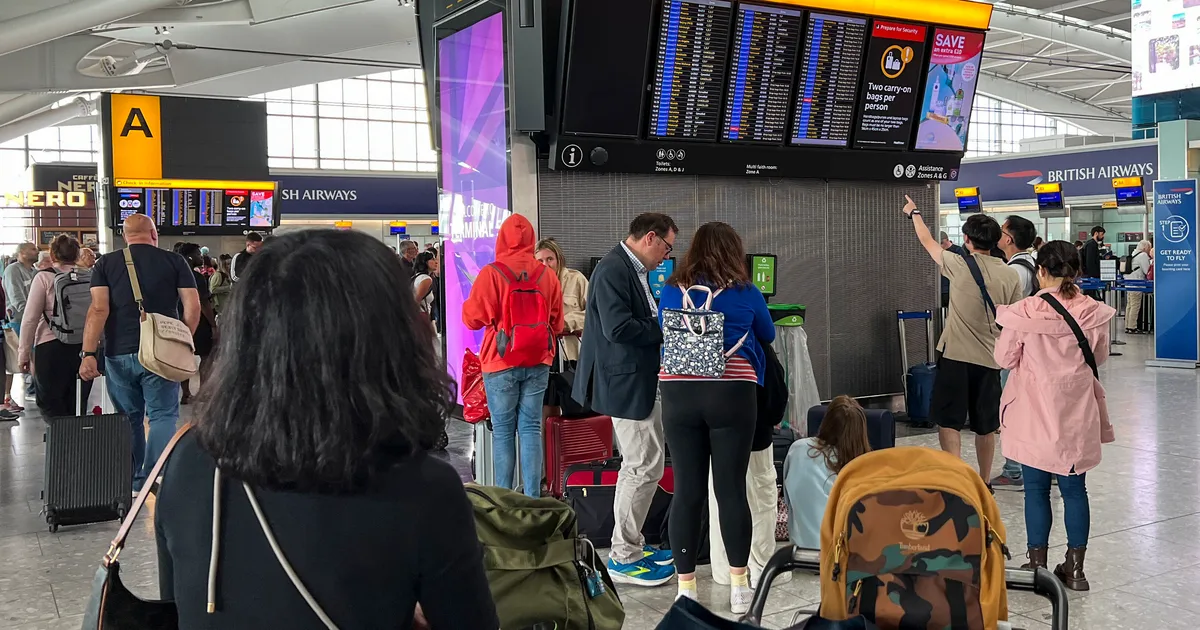
The EU’s new Entry/Exit System (EES) has fully kicked into place for UK passengers after its October rollout.
It’s a biometric system (including a photo and/or fingerprints) that registers non-EU nationals every time they make a short stay in Schengen countries.
The EU’s site says it’s designed to eventually replace passport stamps and offer a more “efficient” version of EU check-ins. But so far, there have been early hiccups: EES has been blamed for border delays that left passengers behind and “hours-long queues”.
In response, airlines like TUI, Jet2, and easyJet have shared advice.
Which countries are affected by the EES system?
The Schengen countries involved are:
- Austria,
- Belgium,
- Bulgaria,
- Croatia,
- Czechia,
- Denmark,
- Estonia,
- Finland,
- France,
- Germany,
- Greece,
- Hungary,
- Iceland,
- Italy,
- Latvia,
- Liechtenstein,
- Lithuania,
- Luxembourg,
- Malta,
- Netherlands,
- Norway,
- Poland,
- Portugal,
- Romania,
- Slovakia,
- Slovenia,
- Spain,
- Sweden, and
- Switzerland.
The Republic of Ireland and Cyprus are excluded from EES systems as they’re not Schengen countries.
What advice have airlines given to UK travellers for EES checkins?
The advice so far includes:
British Airways
Their site reads, “You should allow extra time to register your biometric details, such as fingerprints and a photo, the first time you enter the EU. There is no cost for EES registration, and your digital record will last three years before you need to register again.”
And responding to an X post by a passenger, the company added: “We ask customers travelling on our European short-haul flights to be there two hours prior to departure. It would be three hours if you’re travelling on a long-haul flight and one if you’re travelling on a domestic flight within the UK.”
TUI
In a travel alert, they said: “At some airports, you might still find longer queues, particularly at busy travel periods.”
They added, “To help your journey run as smoothly as possible, please allow a little extra time when passing through border control. Keep any essential medication in your hand luggage in case of delays, and when departing the EU, head straight to passport control after dropping your bags to avoid hold‑ups. Bringing some extra water for comfort is also a good idea.”
Jet 2
The company shared, “There may be longer wait times at Border Control at some EU Airports, especially at busy times. Once you start your EES registration, it should take around 1-2 minutes per person to complete.
“There may be longer wait times than usual when you arrive in destination and before your flight back to the UK. Unfortunately, this is outside of our control. But remember, there’s nothing you can prep before you travel.”
The airline added, “You’ll also need to pass through EES when leaving the EU in the same way you do on arrival. Depending on how busy the airport is, this may result in longer wait times at passport control before boarding your flight to the UK. After checking in for your flight, please head straight to security and passport control in order to arrive at your gate in plenty of time.”
easyJet
The airline pointed out that while kids under 12 are exempt from fingerprinting, passengers “may experience longer waiting times on arrival, so allow extra time and factor this in when planning onward travel, including trains, taxis, or flight transfers”.
Plan your journey, arrive early, use Bag Drop as soon as possible if you’re availing of the service, get through security as fast as possible, and “be aware that there may be further checks at passport control after security and before reaching your gate,” they said.
Ryanair
They warned that queues might be longer as airports adjust to the system.
“Have your passport ready and follow EES signs,” they wrote.
“We recommend arriving at the airport with extra time to allow for these additional checks, especially during busy travel periods.”
We’ve written before at HuffPost UK about when dementia experts think we should consider giving up booze for good to keep our brains healthy.
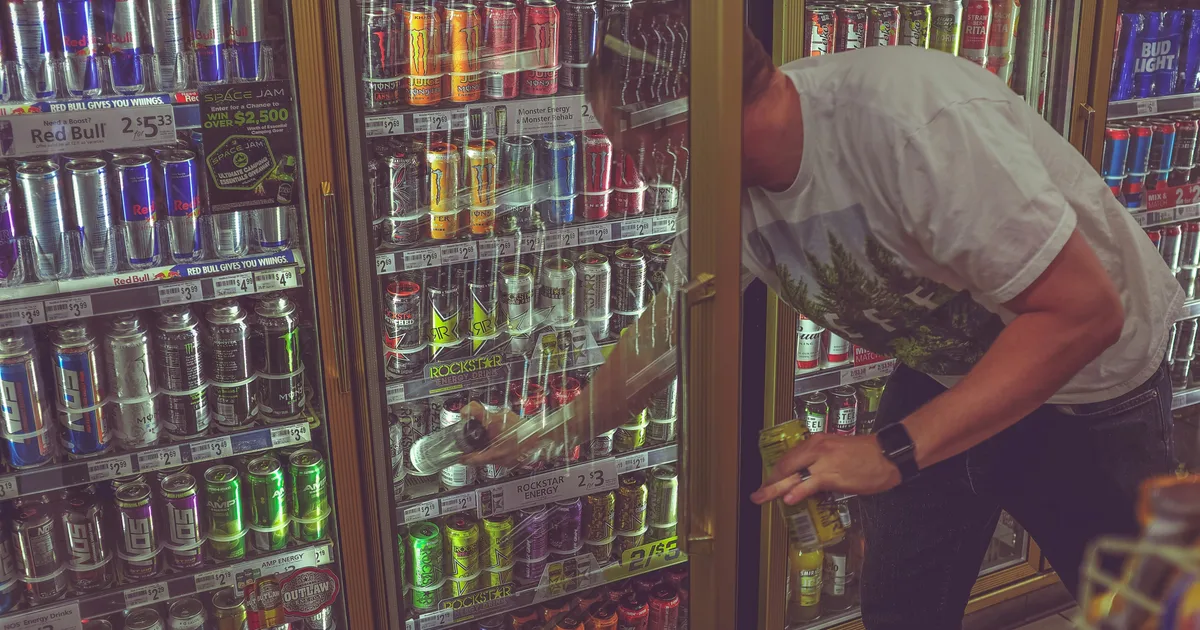
Speaking to HuffPost UK, Dr Arun Narayanan, a clinical electrophysiologist and an assistant professor of medicine in the division of cardiology at the University of Texas Medical Branch, said that another beverage – energy drinks – might carry risks for our hearts, too.
“Energy drinks may affect the heart differently [than other caffeinated drinks] because they often deliver caffeine in larger doses, more quickly, and in combination with additional stimulants or additives,” he shared.
“This can increase the risk of palpitations, elevated blood pressure, abnormal heart rhythms, and, in susceptible individuals, more serious cardiac events. Tea and coffee are generally better studied, more predictable in composition, and less likely to contain multiple stimulant compounds in a single serving,” he said.
We asked the expert what he thinks the upper limit of energy drink consumption should be in a single day, as well as at what age (if any) we should quit it cold turkey.
What’s the upper limit of energy drink consumption a day?
Dr Narayanan said, “In general, I would recommend limiting energy drinks to no more than one standard-sized can per day, and for many individuals, avoiding them altogether may be the safer choice”.
The expert said 400mg of caffeine a day is often considered the safe limit.
“Unlike coffee or tea, many energy drinks contain high caffeine concentrations consumed rapidly, along with sugar, taurine, guarana, and other stimulants that may amplify cardiovascular effects,” he said.
Too much caffeine may “increase heart rate, blood pressure, palpitations, anxiety, and sleep disruption.”
At what age should you stop drinking energy drinks?
Dr Narayanan told us it’s not so much about a person’s age as it is their health.
“Rather than age alone, the more important issue is underlying health status. Older adults are more likely to have hypertension, coronary artery disease, atrial fibrillation, or other rhythm disorders that can be worsened by stimulant beverages,” he said.
“I would advise individuals with cardiovascular disease, arrhythmias, uncontrolled blood pressure, or frailty to avoid energy drinks regardless of age. For healthy older adults, caution and moderation are still appropriate.”

I have insomnia, but not the kind that means I struggle to fall asleep (in fact, the speed and ease with which I nod off at night put me off seeking help for years).
Instead, the problem happens in the early hours of the morning. It reaches roughly 3am, and my body wakes me up – a common enough process, but one which I, for some reason, don’t recover from.
After the disruption, I stay up for hours, only feeling able to sleep when it’s time to get up and go to work. This persists no matter how much shut-eye I do (or don’t) get, how much exercise I do, or how early I go to bed.
If that sounds familiar, you – like me – may have something called sleep maintenance insomnia.
What is sleep maintenance insomnia?

According to Harvard Health, the term refers to a lack of sleep that happens not because someone can’t nod off, but because they wake up and can’t fall back asleep.
In America, it’s believed to affect as many as one in five people (and while there doesn’t seem to be much data on the phenomenon in the UK, one in three adults here are thought to experience acute insomnia at some point).
Harvard Health added that the condition might be especially common in women during midlife.
Health problems, family stresses, depression, and even hot flashes might play a role.
As, they say, can age: “as we grow older, the normal sleep cycle becomes shorter, and we spend less time in deep sleep”.
How can I manage sleep maintenance insomnia?
Dr Karen Carlson, a doctor who runs classes focusing on women’s sleep quality at Boston’s Massachusetts General Hospital, told Harvard Health that going to bed really early to “make up” for missed sleep might not help.
“What sometimes happens is that women are going to bed early trying to sleep and then they wake up at 3 or 4am – and they’re not really meant to sleep more than six or seven hours, but they’re in bed early trying, and they awaken early.”
What may help, however, is “clock blocking”, or ignoring any screen which tells you the time, Johns Hopkins shared.
So, too, can getting up out of bed to do something screen-free and relatively mindless, like folding laundry after about 20 minutes of being awake ― or, as Johns Hopkins sleep expert Dr Luis F. Buenaver said, try to “Read a book, with just enough lights on so that you can see the print comfortably”.
Try as much as you can to stick to your regular routine the day after a bad night’s sleep, he continued.
Speak to your doctor if sleep issues persist for weeks and/or affect your day-to-day life.
GP Dr Dominic Greyer previously shared that strength training, good sleep, reducing inflammation, maintaining your “metabolic flexibility,” and enjoying life (in moderation) separates those who age well from those who don’t.
And a new paper, which focused on the short-lived African turqioise killifish, aimed to work out how different behaviours appeared to affect their ageing trajectories.
The fish, which were partly chosen because they shared “key biological features with longer-lived species like humans, including a complex brain”, shared the same genes and were raised in similar environments.
Researchers found that by midlife (for the fish, 70-100 days), fish that lived longer were already behaving differently from those that died sooner.
Study leader Claire Bedbrook said, “Behavioural changes pretty early on in life are telling us about future health and future lifespan”.
What were the differences?
In this study, one of the biggest factors was sleep. Fish that had longer lives mostly slept at night, while those with shorter lifespans slept both at night and during the day.
Incidentally, longer naps, more disorganised nap times, and a higher percentage of naps taken at noon and in the early afternoon have been linked to increased mortality risk among humans.
But activity mattered too.
Fish who swam harder and faster were likelier to live longer, “a measure of spontaneous movement that has been linked to longevity in other species as well”.
And fish that lived longer were more active in the daylight as well. A separate human study found that those who did the majority of their physical activity between 11am and 5pm, or mixed throughout the day, had a lower cardiovascular and all-cause mortality risk than those who moved mostly in the early morning or at night.
Ageing seemed to happen in stages
The researchers noticed that ageing seemed to occur in two to six stages rather than gradually.
“We expected ageing to be a slow, gradual process,” Bedbrook said.
“Instead, animals stay stable for long periods and then transition very quickly into a new stage. Seeing this staged architecture appear from continuous behaviour alone was one of the most exciting discoveries.”
Similar patterns have recently been noted in humans.
Researchers hope this will benefit humans
In an editor’s summary, senior editor at the journal Science, Mattia Maroso, said: “These results might lead to better understanding of the ageing process in other vertebrates, including humans”.
And speaking to Stanford Reports, study leader Ravi Nath said, “Behaviour turns out to be an incredibly sensitive readout of ageing… You can look at two animals of the same chronological age and see from their behaviour alone that they’re ageing very differently”.
The other study leader, Claire Bedbrook, shared, “We now have the tools to map ageing continuously in a vertebrate… With the rise of wearables and long-term tracking in humans, I’m excited to see whether the same principles – early predictors, staged ageing, divergent trajectories – hold true in people”.
I’ll rant to anyone I know about the importance of maintaining muscle mass as we age to prevent conditions like sacropeonia and even osteoporosis.
Cardiovascular health has also been linked to longevity.
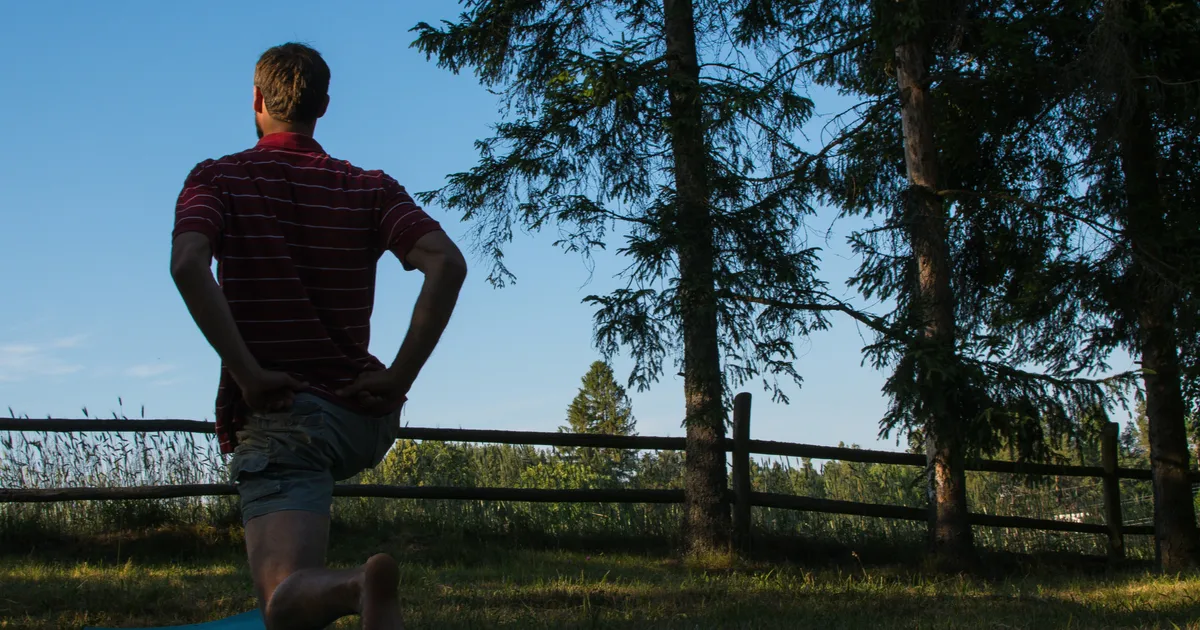
But what about flexibility? Though it might be less talked about than the other two, this, too, has been linked to a longer life, especially among men.
You may know the importance of lifting weights for strength and understand that everything from tennis to cycling and running can improve your heart health.
What, though, does a person to increase their flexibility – and does it change over time?
We asked personal trainers to share their thoughts:
In your 20s and 30s
James Bickerstaff, a personal trainer at Origym, told us: “In your 20s and 30s, your body still has natural elasticity, so muscles and joints move easily and recover quickly”.
Nonetheless, he adds, sitting for long periods of time (as you may do for work) can hold your flexibility back.
“To maintain mobility, focus on stretching major muscle groups by performing dynamic stretches such as leg swings for the hips and static chest openers for the upper body,” he advised.
“Short daily sessions, along with activities like yoga, Pilates, or tai chi, can help prevent stiffness.”
In your 40s and 50s
Trainer and owner of Made Possible Personal Training, a gym which works mainly with those aged 50 and up, Heather Lachance, said: “One of the biggest things I try to help people understand is that losing flexibility isn’t a given”.
But in our 40s and 50s, she said, more of us notice we’re not as flexible as we used to be.
“At this stage, adding 10 minutes of mobility work a few times a week, especially dynamic movements before workouts and static stretches afterwards, can go a long way,” she advised.
“Leg swings, hip openers, thoracic rotations, that sort of thing. It doesn’t need to be complicated; it just needs to be done consistently.”
For his part, Bickerstaff recommends swimming and dancing alongside stretches.
In your 60s
“In your 60s and later years, joints become less mobile, cartilage thins, and muscles tighten more easily,” Bickerstaff explained.
“This can make everyday tasks feel restricted and raise the risk of falls. At this stage, flexibility work is about protecting independence and helping you move safely.”
Lachance stated that yoga and pilates can be great in this decade as they provide a “low-impact” form of exercise.
In your 70s and beyond
At this age, Lachance said, “The conversation becomes more about maintaining independence, things like being able to get up off the floor, move confidently through space, and reduce the falling risk.
“Here, I pair flexibility with balance and strength work. Chair-based stretching, simple guided routines, and daily movement all play a role.”
Sated hamstring and tricep stretches can help, Bickerstaff agreed, as can resistance bands and plain ol’ walking ― gentle, daily movement is key.
“No matter the age, the message is the same: you don’t need to be able to do the splits, but you do need to move well enough to live your life without restriction,” Lachance ended.
“Flexibility is really about freedom! Freedom to keep doing the things you enjoy without pain or hesitation.”

Rafa Jodar beats De Minaur for first Top-10 Win in Madrid

Tim Cook, John Ternus, the FBI, and 'Star Wars,' on the AppleInsider Podcast

Cyient Buyback Strategy | Financial Down | Buy or Not? | Right Price to Buy

Manchester United reach agreement with Casemiro over contract clause amid transfer speculation

US brings back mandatory military draft registration

Steven Gerrard disagrees with Gary Neville over ‘shock’ Chelsea and Arsenal claim | Football


-

 Business6 days ago
Powerball Result April 18, 2026: No Jackpot Winner in Powerball Draw: $75 Million Rolls Over
-

 Politics6 days ago
Zack Polanski demands ‘council homes not luxury flats for foreign investors’
-

 Fashion18 hours ago
Weekend Open Thread – Corporette.com
-
Entertainment6 days ago
NBA Analyst Charles Barkley Chimes in on Ice Spice McDonald’s Fiasco
-

 Tech6 days ago
Auto Enthusiast Scores Running Tesla Model 3 for Two Grand and Turns It Into Bare-Bones Go-Kart
-

 Politics5 days ago
Gary Stevenson delivers timely reminder to register to vote as deadline TODAY
-

 Politics3 days ago
Making troops accountable for war crimes threatens US alliance, ex-SAS colonel warns
-

 Business3 days ago
Rolls-Royce Voted UK’s Most Iconic Trade Mark as IPO Register Hits 150
-

 Politics3 days ago
Disabled people challenge government SEND proposals over segregation concerns
-
 Crypto World5 days ago
Bank of Hawai’i (BOH) Q1 2026: Net Income Drops to $57.4M as Net Interest Margin Expands
-

 Politics3 days ago
Zack Polanski responds to home secretary’s taser threat
-
Politics3 days ago
Wings Over Scotland | How To Get Away With Crimes
-

 Politics3 days ago
Starmer handler McSweeney to be dragged from shadows by Foreign Affairs Committee
-
Crypto World6 days ago
Kelp DAO rsETH Bridge Hack Drains $292M as DeFi Losses Top $600M in Two Weeks
-

 Politics3 days ago
‘Iran is still a nuclear threat’
-
 Crypto World4 days ago
Five Value Stocks with Recovery Potential in 2026: PayPal (PYPL), Nike (NKE), and More
-

 Crypto World4 days ago
New York sues Coinbase, Gemini over prediction market offerings
-

 Business3 days ago
The Job Benefits Most Men Don’t Know to Negotiate
-

 Crypto World1 day ago
Michael Saylor says BTC winter is over. Market analyst disagrees, says bitcoin was in a pullback
-

 Politics6 days ago
Reform investigating candidate who ‘hates’ the NHS
You must be logged in to post a comment Login