A recent security incident involving Anthropic has highlighted just how fragile the safeguards around advanced AI systems can be. A Wired report suggests that a small group of users, operating through private Discord channels, managed to gain unauthorized access to the company’s highly restricted Mythos AI model – an experimental system designed for cybersecurity applications.
A Breach That Exposes Bigger Risks Around AI Control
The incident appears to have occurred almost immediately after Mythos was made available to a limited group of trusted partners. According to multiple reports, the unauthorized users gained access through a third-party vendor environment, rather than directly breaching Anthropic’s core systems.
Some accounts suggest that members of a private Discord community were able to exploit access permissions or identify entry points using publicly exposed information, effectively bypassing restrictions placed on the model.
Unsplash
Importantly, there is no confirmed evidence that the system was used for malicious activity. In fact, reports indicate that the users interacted with the model in relatively limited ways. Still, the fact that access was obtained at all is the real story.
Mythos itself is not just another AI model. It is designed to identify vulnerabilities in software systems and simulate cyberattacks – making it one of the most sensitive AI tools currently under development. That dual-use capability is precisely why access was tightly restricted in the first place.
Advertisement
Why This Incident Matters Beyond One Breach
At a glance, this might seem like a contained security lapse. In reality, it underscores a broader issue facing the AI industry: control is becoming harder than capability.
AI models like Mythos are built to find weaknesses in systems, which means that in the wrong hands, they could accelerate cyberattacks rather than prevent them. Researchers and officials have already warned that such tools could pose significant risks if misused, given their ability to automate complex attack chains.
What makes this case particularly notable is how the breach happened. It wasn’t a sophisticated hack targeting core infrastructure. Instead, it appears to have leveraged gaps in the surrounding ecosystem—contractors, permissions, and access management.
That distinction matters. It suggests that securing advanced AI isn’t just about the model itself, but the entire environment around it.
Advertisement
Why It Should Matter To You
For everyday users, this incident may feel distant, but its implications are closer than they seem.
AI systems like Mythos are being developed to secure everything from browsers to financial systems. If those same tools are exposed prematurely or improperly controlled, the risk shifts from defensive to potentially offensive.
Representative ImageUnsplash
Even without malicious intent, unauthorized access introduces uncertainty. It raises questions about how well companies can protect technologies that are increasingly critical to digital infrastructure.
In simpler terms, if AI is being built to protect the internet, it needs to be protected first.
What Happens Next For Anthropic And AI Security
Anthropic has already launched an investigation into the incident and has stated that the breach was limited to a third-party environment, with no evidence of broader system compromise.
However, the timing of the breach – coinciding with the model’s early rollout – will likely intensify scrutiny around how such systems are tested and shared. Regulators and industry bodies are already paying close attention to high-risk AI models, and incidents like this only add urgency to those discussions.
Advertisement
Going forward, expect stricter access controls, tighter vendor oversight, and potentially new frameworks for handling sensitive AI tools. Because if this episode proves anything, it’s that the challenge is no longer just building powerful AI – it’s keeping it contained.
Microsoft says IT administrators can now uninstall the AI-powered Copilot digital assistant from enterprise devices using a new policy setting, which has become broadly available after the April 2026 Patch Tuesday.
RemoveMicrosoftCopilotApp is available as a Policy CSP and Group Policy after deploying this month’s Windows security updates on endpoints managed via Microsoft Intune or System Center Configuration Manager (SCCM).
This policy will only apply to Windows 11 25H2 devices where the Microsoft 365 Copilot and Microsoft Copilot are both installed, the user did not install the Microsoft Copilot app, and the Microsoft Copilot app was not launched in the last 28 days.
“The new RemoveMicrosoftCopilotApp policy setting allows you to uninstall Copilot from devices in your organization in a non-disruptive way,” Microsoft said.
“If this policy is enabled, the Microsoft Copilot app will be uninstalled. Users can still re-install if they choose to. This setting applies to Enterprise, Professional and Education client SKUs only,” it added.
Advertisement
To enable it, open the Group Policy Editor, and go to User Configuration > Administrative Templates > Windows AI > Remove Microsoft Copilot App.
As BleepingComputer previously reported, the RemoveMicrosoftCopilotApp policy first rolled out in early January to Windows Insiders in the Dev and Beta Insider channels who installed Windows 11 Insider Preview Build 26220.7535 (KB5072046).
The company is also reportedly canceling plans to ship several other Copilot-powered features introduced almost two years ago, which would have embedded the Copilot assistant into Windows 11 system notifications, the Settings app, and the File Explorer.
AI chained four zero-days into one exploit that bypassed both renderer and OS sandboxes. A wave of new exploits is coming.
At the Autonomous Validation Summit (May 12 & 14), see how autonomous, context-rich validation finds what’s exploitable, proves controls hold, and closes the remediation loop.
Looking for the most recent Connections answers? Click here for today’s Connections hints, as well as our daily answers and hints for The New York Times Mini Crossword, Wordle, Connections: Sports Edition and Strands puzzles.
Today’s NYT Connections puzzle is a fun mix of topics. I especially loved the blue category, which harkens back to a very simple and iconic children’s book. Read on for clues and today’s Connections answers.
The Times has a Connections Bot, like the one for Wordle. Go there after you play to receive a numeric score and to have the program analyze your answers. Players who are registered with the Times Games section can now nerd out by following their progress, including the number of puzzles completed, win rate, number of times they nabbed a perfect score and their win streak.
Here are four hints for the groupings in today’s Connections puzzle, ranked from the easiest yellow group to the tough (and sometimes bizarre) purple group.
If you follow [Maker’s Muse] on YouTube, you know he’s as passionate about robot fights these days as he is about the tools he uses to make the robots. Luckily for us, he’s still got fame as a 3D printing YouTuber, as this has given him the platform to share his trade secrets for strong, robot-combat-worthy prints.
He fights robots in a ‘plastic ant-weight’ division, which restricts not only the weight of the robot but also the materials used. Not only must they be primarily plastic, but only certain plastics are allowed: PLA is in, but engineering filaments, Nylon, and TPU are out. Since necessity is the mother of invention, this has led to strong evolutionary pressure to figure out how to print the most impact-resilient PLA parts for armor and spinners.
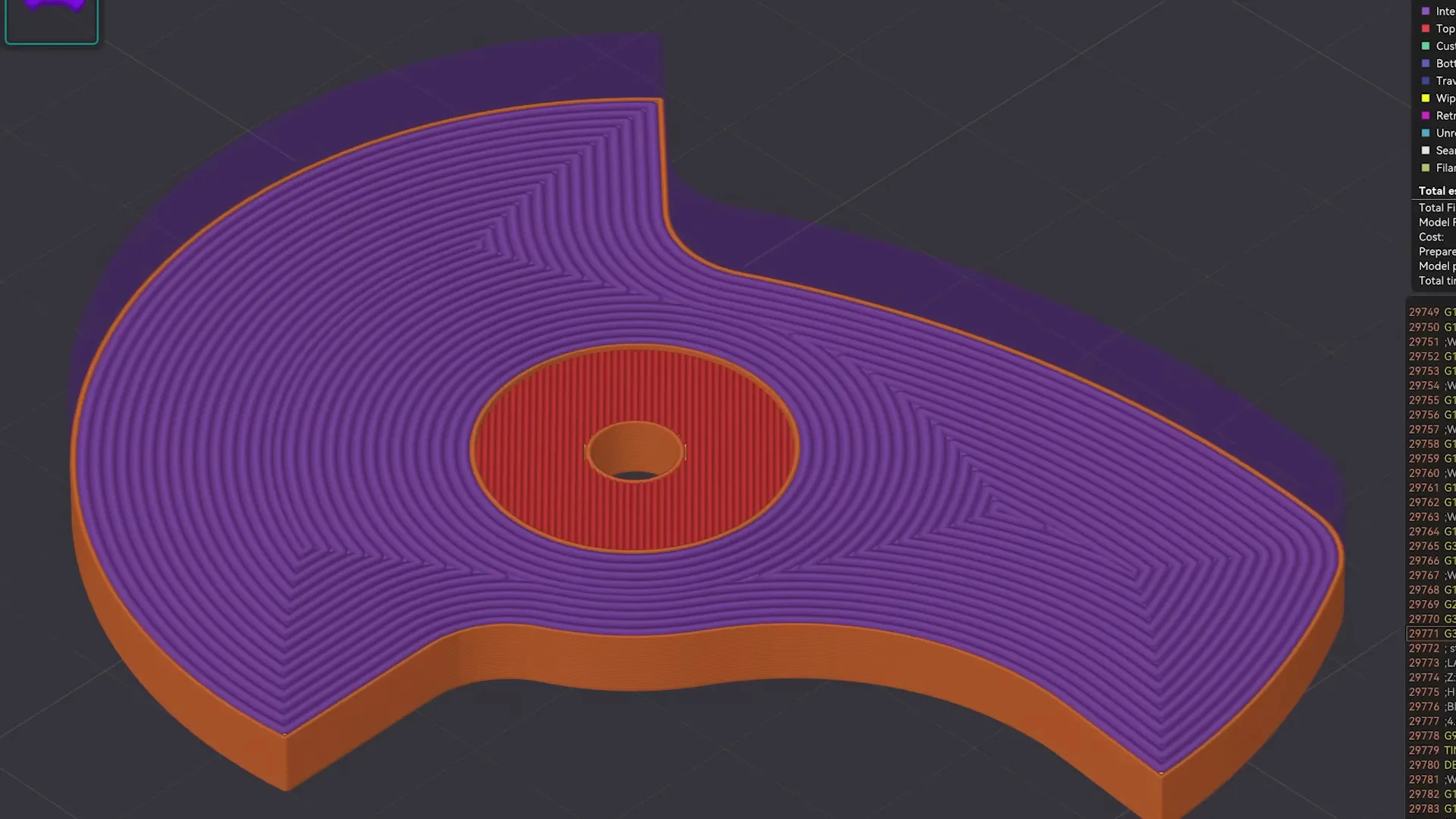
He’s using the latest OrcaSlicer and shares the profile as a pay-what-you-want 3MF file. It’s all about solidity: a solid part with solidly fused walls and solidly linked layers. It makes sense: if you’re going to be hammering on or with these parts, you don’t want any internal voids that could either collapse or pull open.
The infill density is obviously 100%, and you’ll want a concentric pattern — this makes it look like you’re just printing walls, but it allows you to use another trick. To make sure those walls don’t all align, creating a potential weakness, OrcaSlicer’s “alternate extra wall” will put one extra wall every second layer. The extra wall causes the infill pattern to stagger and lock together.
Advertisement
Also helping lock it together, he’s playing with extrusion widths, with the suggested rule-of-thumb being the line width on the walls be one-half that of the internal fill — and as wide as possible. In his case, with a 0.4 mm nozzle, that means 0.4 mm wide walls and 0.8 mm for the infill. OrcaSlicer 2.3.2 also lets you play with specific flow ratios, allowing you to overextrude only the internals for strength, without overextruding on the walls and potentially ruining dimensional accuracy. He also irons all top surfaces, but admits that that’s mostly about aesthetics. The iron may make those layers a little bit stronger, though, so why not?
Would brick layers make these parts even stronger? That’s very likely; [Maker’s Muse] mentions them in the video but does not use them because they’re not implemented in-slicer, and he wants something accessible to all. On the other hand, this post-processing script seems accessible enough for our crowd.
This video/profile is exclusively about fully-solid parts. When you want strong parts that aren’t fully solid, it looks like the answer is walls.
If you miss the days when you used Basic on your classic computer or wrote embedded software with a Basic Stamp, then maybe dust off your Arduino UNO or any similar AVR board and try nanoBASIC_UNO from [shachi-lab].
Apparently, the original code was meant for the STM8S, but this port targets the ATmega328P. It is Basic more or less as you remember it. There are enough extensions to deal with GPIO, the analog systems, and so forth. At build time, you can decide if you want 16-bit or 32-bit integers.
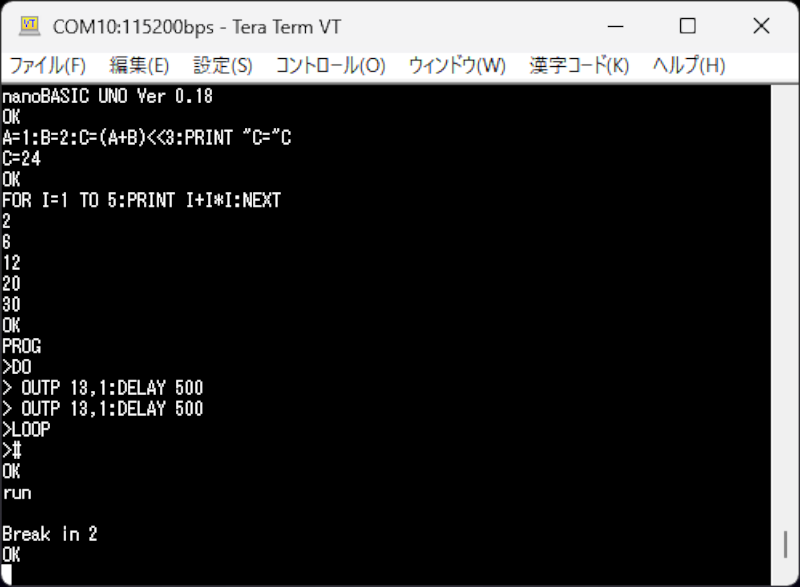
One thing that is a little odd is how it handles direct mode. In classic Basic, anything without a line number executes immediately. Line numbers simply store your program line until you type RUN. nanoBASIC_UNO doesn’t force you to use line numbers. To indicate you are programming, you have to start with the PROG keyword. Then you can enter lines into the RAM buffer until you enter a # character. The program is stored in RAM, but there is a way to save programs to flash.
Advertisement
You can also build the code for Windows or Linux if you just want to experiment. Looks like fun.
If you missed the heyday of the Basic Stamp, you missed a lot of fun. If you just want a quick Basic hit, try your browser.
As Apple races to stay competitive in AI while navigating tariffs and supply chain uncertainty, the company’s future is about to shift under new leadership.
On Monday, Apple announced that John Ternus will take over as CEO later this year, succeeding Tim Cook.
Cook transformed Apple into a $4 trillion global powerhouse, expanded its services business, and oversaw some of the most profitable years in tech history. Ternus brings a different kind of skillset. A longtime hardware executive, he has spent his career building Apple’s devices rather than managing the broader business.
Ternus joined Apple in 2001 and rose through the ranks of hardware engineering. Along the way, he has contributed to some of the company’s biggest products, including AirPods, the Apple Watch, and Vision Pro.
Advertisement
His appointment signals a renewed focus on hardware at a moment when Apple is under pressure to define its next era. Ternus will now help determine what that looks like.
Hardware with AI at the center
Rather than trying to compete head-on with companies building the biggest AI models, Ternus may push Apple to focus on the AI-powered devices themselves, whether that be the one in your hand, something you wear, or something that lives in your home.
There’s already a lot of speculation about what Apple could launch next. Ideas floating around include smart glasses, a wearable pendant with a built-in camera, and even AirPods with AI features. According to Bloomberg, the idea is that all of these products would connect to the iPhone, with Siri playing a major role.
Techcrunch event
Advertisement
San Francisco, CA | October 13-15, 2026
Image Credits:Apple
Ternus is also expected to push forward on products that have been stuck in limbo. Foldable iPhones are the obvious example. They’ve been rumored for years, and while competitors have already moved ahead, Apple has taken a slower approach, waiting until the technology meets its standards. Reports say it will arrive in September, which means Ternus will be overseeing the launch.
Apple has also reportedly been exploring robotics, particularly for the home. One concept includes a tabletop device with a robotic arm attached to a display, essentially a smart assistant that can move and turn toward you. Notably, this lines up with Ternus’s long-standing interest in robotics. In college, he built a device that allowed quadriplegics to control a mechanical feeding arm using head movements, as reported by the New York Times.
Advertisement
There are also ideas for mobile robots that could follow you around, handle simple tasks, or act like a moving FaceTime screen. Some reports even mention experiments with humanoid robots, though those are likely years away.
While none of these are guaranteed to happen, they do give a pretty clear sense of where Apple’s thinking might be going.
However, ongoing memory chip shortages, President Trump’s frequently shifting tariff policies, and the company’s reliance on Chinese manufacturing could create a challenging period ahead. Roughly 80% of iPhones were produced in China before the tariffs. The company recently pivoted to India, making about 25% of its iPhones in the country last year, according to Bloomberg.
When you purchase through links in our articles, we may earn a small commission. This doesn’t affect our editorial independence.
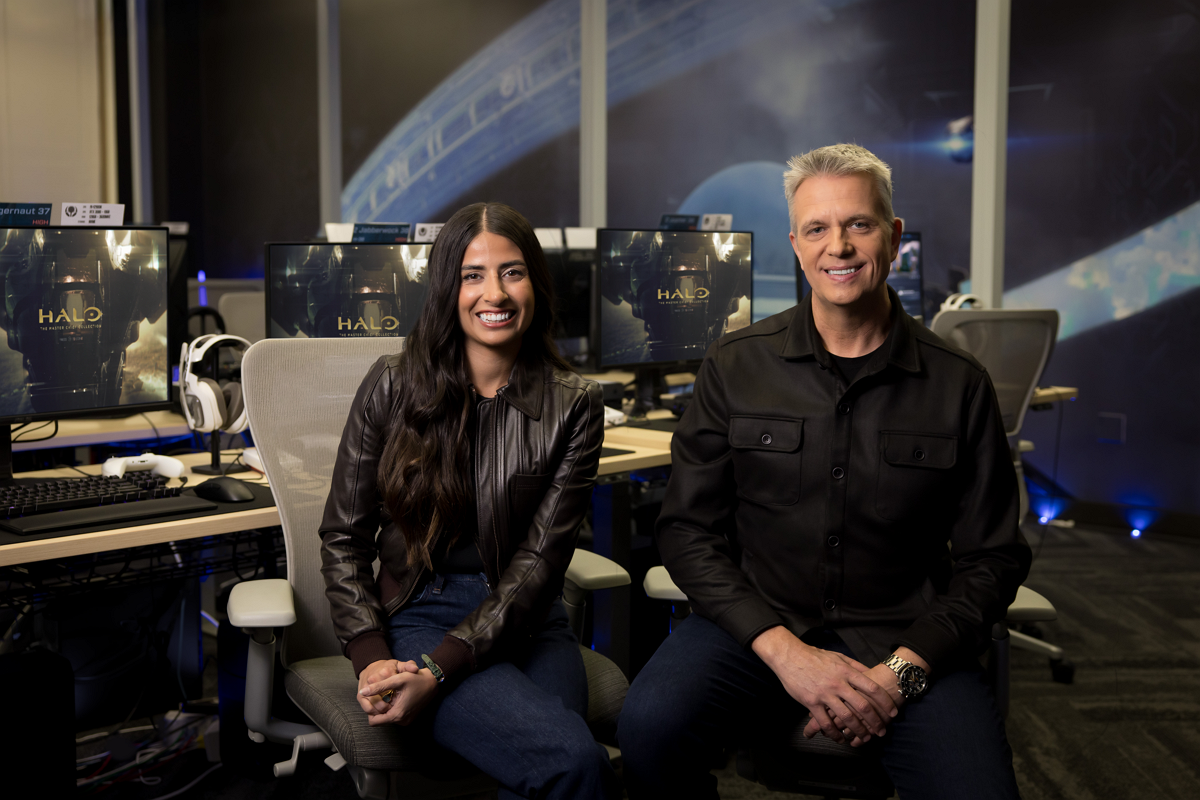
Asha Sharma and Matt Booty, the new leadership team for Microsoft Gaming. (Microsoft Photo)
Asha Sharma’s first big move as Microsoft’s gaming chief is a trade-off.
The company is cutting the price of its Xbox Game Pass Ultimate subscription by $7 a month, from $29.99 to $22.99. However, future games in the blockbuster Call of Duty franchise from Microsoft-owned Activision will no longer be available on the service at launch.
The changes, announced Tuesday, come a week after Sharma acknowledged in a leaked memo that Game Pass had become too expensive and promised a better value equation.
Microsoft’s gaming business has been under pressure. In the most recent holiday quarter, gaming revenue fell 9% to $5.96 billion, with Xbox content and services coming in below internal projections.
A 50% price hike for Xbox Game Pass Ultimate last October, to $29.99, was widely seen as a response to the cost of adding new Call of Duty games to the service.
Advertisement
Under the new structure, future Call of Duty titles will arrive on Game Pass about a year after launch, during the following holiday season. Existing titles will remain available.
Microsoft’s PC Game Pass price is also dropping, from $16.49 to $13.99 a month.
Sharma took over as CEO of Microsoft Gaming in February, replacing Phil Spencer, who retired after 38 years at the company. She had been running Microsoft’s CoreAI product organization and previously served as chief operating officer at Instacart and as a vice president at Meta.
She arrived without prior gaming industry leadership experience, but pledged to recommit to core Xbox fans, and prioritize great games above all else. She also promoted longtime studio chief Matt Booty to executive vice president and chief content officer.
Advertisement
The Game Pass pricing change raises the question of whether this is a one-time adjustment or the beginning of a broader restructuring. Sharma’s leaked memo last week hinted at a larger vision, saying Microsoft would develop Game Pass into “a more flexible system.”
SVS isn’t sitting back and hoping a product page does the heavy lifting. The Ohio-based speaker and subwoofer maker is taking a far more direct route in April and May 2026 with its Sound R|Evolution Experience, a three-city tour built around live demos, real conversations, and zero patience for passive marketing. Stops in St. Louis, Atlanta, and Paramus, New Jersey will host in-store events where attendees can hear multiple two-channel systems and a full Dolby Atmos home theater setup in action.
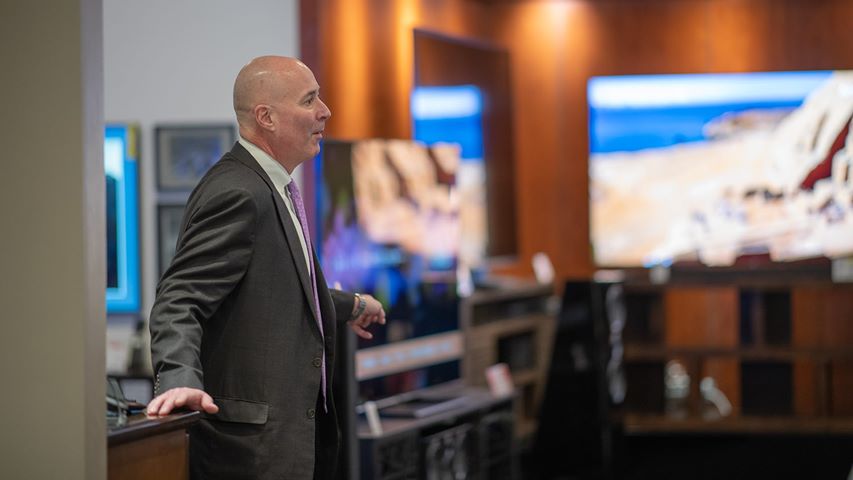
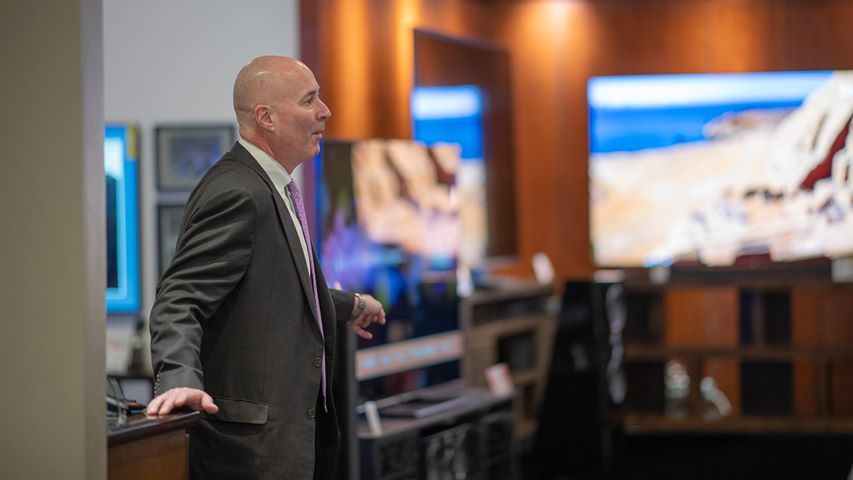
Leading the charge will be SVS President Gary Yacoubian, Vice President Nick Brown, and key members of the SVS team alongside local dealer staff offering presentations, setup advice, and a closer look at what’s coming next. The focus isn’t subtle: SVS will be showcasing its latest Ultra Evolution speaker lineup, subwoofer innovations tied to the R|Evolution platform, and complete system integration across both stereo and immersive Dolby Atmos home theater environments.
Gary Yacoubian, SVS President
And because showing up matters, but giving people a reason to stay doesn’t hurt either, SVS is stacking the table. Giveaways include a $2,000 stereo system built around Ultra Evolution speakers and a $10,000 5.1.2-channel home theater package with a 4K UHD TV and AV receiver, along with additional prizes and SVS swag.
All events are free, open to the public, and yes, there will be light refreshments because even the most hardened audiophile makes better decisions when fed. Although Paramus attendees have plenty of options on Route 17 in Bergen County once their bodies recover from the bone-shattering bass. Jersey diners for the win.
It’s aggressive, it’s hands-on, and it’s exactly how it should be done. Instead of hiding behind Instagram posts and the 29th YouTube review this week of the same product, SVS is putting its people and products in the same room as actual listeners and letting the systems do the talking.
Advertisement
For those who can’t attend in person, SVS will also broadcast each event live on the SVS Facebook Page and YouTube Channel with separate giveaways for those who tune in and leave a comment.
How to Register for the SVS Sound R|Evolution Experience Tour
Attendees can RSVP at the links below.
Each event will have live demonstrations of the SVS Ultra Evolution Speakers, R|Evolution Subwoofers,Prime Wireless Pro audio gear, and more. SVS will provide “Experience Zones” that include an immersive Dolby Atmos home theater system, audiophile stereo set-up, budget wireless audio systems, and more.
“There’s simply no substitute for experiencing world-class speakers and subwoofers in person. The scale, the emotion, the way sound fills a room and pulls you into the moment. Events like this are about bringing that to life and giving people a chance to feel what’s possible in their homes,” said Nick Brown, VP of Marketing, SVS “It’s also about connecting with the SVS community over shared passions for music and movies and shining a spotlight on some of the premier A/V retailers in the country. We’re waking people up to the joys of great sound!”
Advertisement
The SVS Sound R|Evolution Experience has been touring the United States for nearly a decade, with previous stops at ListenUp in Denver; NFM in Dallas, Omaha, and Kansas City; IQ Home Entertainment in Washington, D.C.; World Wide Stereo in Philadelphia; Huppin’s in Spokane, WA; Abt Electronics in Chicago; Gramophone in Baltimore; and elsewhere. Since launching the series, SVS has hosted more than 65 events with over 14,000 attendees.
Pro Tip: Upcoming events are being planned for San Antonio and Minnesota.
Advertisement. Scroll to continue reading.
The Bottom Line
Buying speakers or a subwoofer isn’t a spec-sheet decision, no matter how many tabs you’ve got open. You need to hear the gear, in a real room, with people who actually know how to set it up and that’s where this tour earns its keep. SVS is bringing complete systems, experienced staff, and enough time for actual conversations, not five minute demos.
If you’re anywhere near St. Louis, Atlanta, or Paramus, this is an easy call. You’ll get hands-on listening across stereo and Dolby Atmos setups, practical setup advice, and a chance to ask questions without someone rushing you out the door. And if SVS isn’t your final choice? You still walk away knowing what to listen for and what to avoid.
Advertisement
And if those cities don’t line up, don’t panic — SVS is already planning additional stops in San Antonio and Minnesota, so the roadshow isn’t done yet.
Not everyone can make the two dozen global hi-fi shows in 2026. This is the opposite of that chaos. Smaller rooms. No elevator purgatory. No media camped out in the sweet spot like they’ve claimed squatter’s rights. Just gear, your ears, and a much clearer path to making the right call.
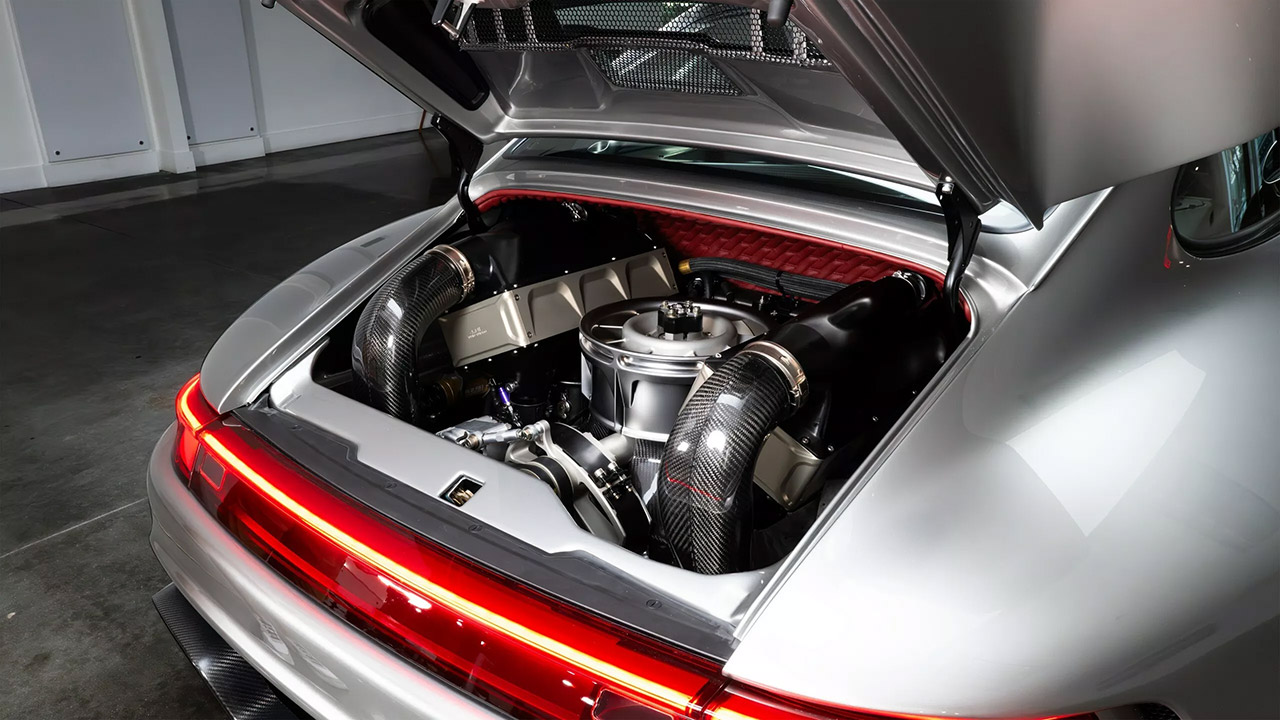
Photo credit: Top Gear Top Gear recently took the F-26 from Gunther Werks for a spin and came away convinced of what a beast of a car it truly is. The F-26, based on the 993 generation Porsche 911, gives the iconic slantnose design a makeover, filling it with a lot of the technology you’d expect in a high-end supercar that works just as well on the track as it does on the road.
Every panel and door in the car is constructed of carbon fiber. The original pop-up headlights have been replaced with fixed ones that just slice through the air. They’ve also added some substantial ventilation to keep the car’s air-cooled 4.0-liter flat six (designed in partnership with Rothsport Racing) cool, which now produces 1067 horsepower (on E85) or 880 (on standard high-octane), with 750lbft of torque. Not only that, but the airflow over it has been more than doubled when compared to a regular engine in order to keep temperatures down. To add to the loudness, they’ve installed a large 6-speed manual transmission with a limited slip differential that sends everything to the rear wheels.
BUILD A RACING LEGEND – Boys and girls ages 9 years old and up can construct the LEGO Speed Champions Porsche 911 GT3 RS Super Car (77239) building…
AUTHENTIC PORSCHE DETAILS – Young builders can recreate the real-life vehicle’s signature elements including the famous rear wing, air intake…
1 PORSCHE DRIVER MINIFIGURE – Kids can place the driver minifigure with helmet and red Porsche Track Day Experience outfit behind the wheel to stage…
The F-26 is also not particularly heavy, weighing only 2750 pounds thanks to the carbon panels, magnesium wheels, and some clever wiring choices. The front suspension is double wishbone, with multilink in the back, and electronic JRZ dampers are used to absorb bumps. Big ceramic discs, 381mm up front and 355mm at the back, are clamped down by six-piston and four-piston calipers, all wrapped up in some 18inch wide Continental tires.
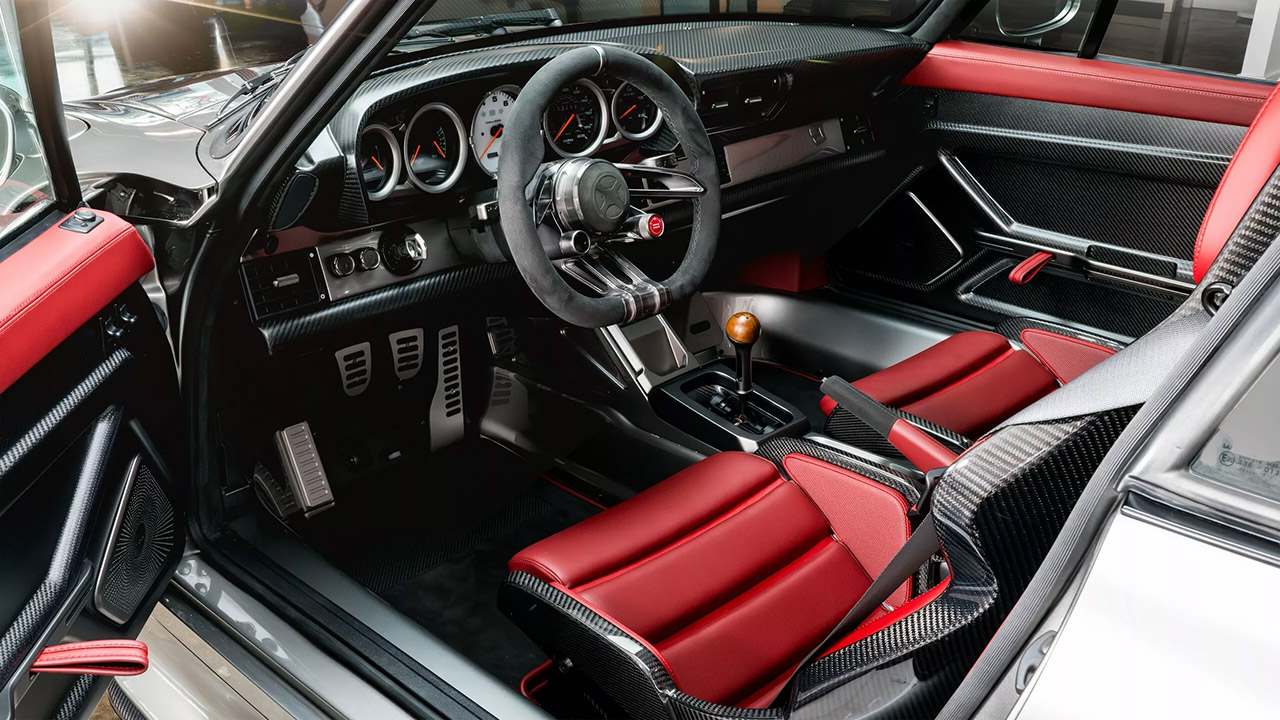
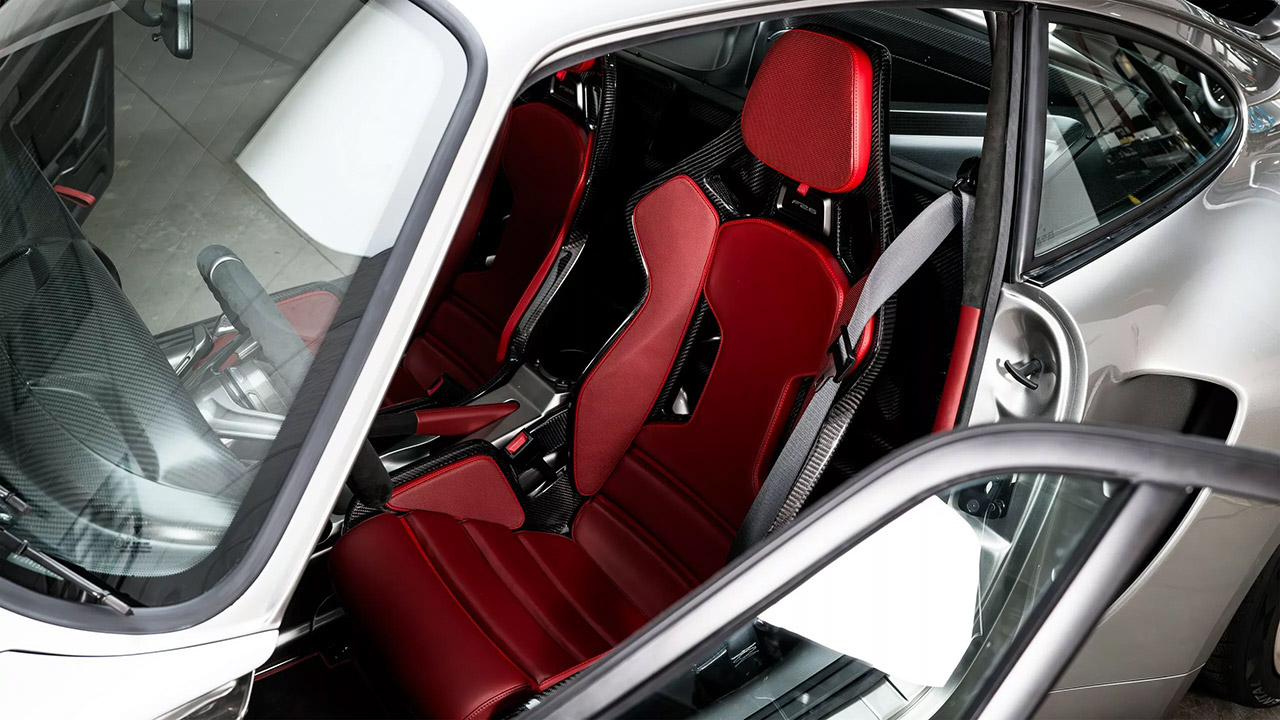
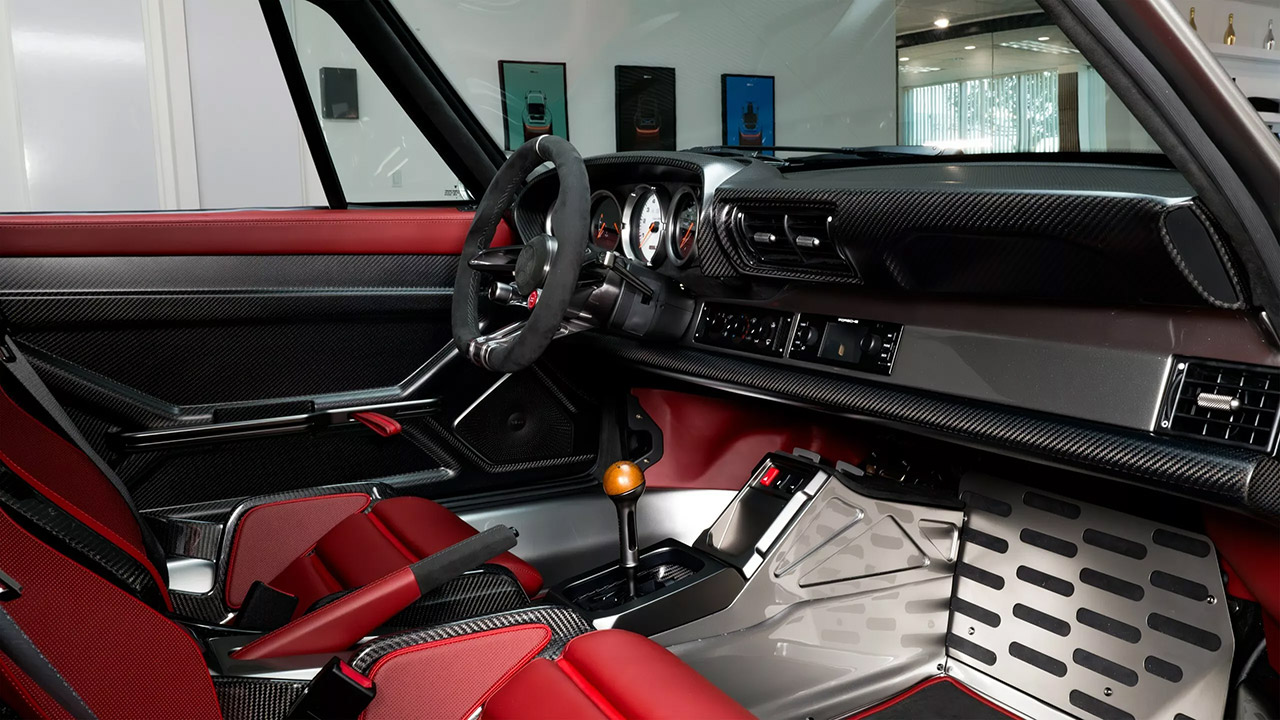
Inside, the exposed carbon fiber is offset by some beautiful leather and Alcantara in the seats and headliner. The wheel is a robust piece of kit, with a fighter jet-inspired wing design that feels natural in the hands, and a wooden knob on the shifter adds a touch of luxury. There’s a beautiful dramatic red roll cage running through the car, as well as a Porsche vintage radio that blends in with the rest of the style and includes Apple CarPlay.
Production is limited to only 26 units total, and each one is built to order. However, this does not imply that each one is made using the same old parts; instead, the F-26’s owners have complete control over their vehicle, so each one is unique.
Google Doodle artwork by Kameirah Johnson of Renton, Wash. (Google Image)
Kameirah Johnson, a senior at Seattle’s Lakeside School, is one of five students nationwide whose artwork will appear on the Google homepage later this month, after being selected as a finalist in the annual Doodle for Google contest.
The contest, which drew tens of thousands of submissions from K-12 students, invited entrants to interpret the theme, “My superpower is …” through original artwork. Kameirah, 18, of Renton, Wash., created a piece centered on hair as a symbol of identity and inherited strength.
Kameirah Johnson. (Photo courtesy of Kameirah Johnson)
The work depicts three figures — inspired by Kameirah, her mother Simone, and her sister Kalieyah — lying in the grass, their hair styled as crowns.
Her artist’s statement reads: “My superpower is my hair and the family history it carries. Each texture and style holds culture, care, and survival passed down without words. Lying in the grass, our crowns rest without weakening. This kinky hair refuses conformity; it makes us different. Shaped by our lineage, our hair is undeniably beautiful.”
Kameirah said she spent more than 40 hours on the piece, often staying up late to work on it. She drew on her own photography and old family albums, including film photos her grandmother has preserved for years.
“I often take inspiration from my own photography or from old family photos,” she said. “Using those images as references, I incorporate elements of my family into my art as a way to honor my lineage.”
Advertisement
Kameirah’s path to art started early, watching her older sister draw. She began sketching as a child, but got more serious during COVID, experimenting with pastels and charcoal. A turning point came freshman year, when she completed her first acrylic painting — a portrait of Stevie Wonder — for a school art show. She now works primarily in oils and acrylics, though her Doodle was created digitally.
Kameirah’s artistic pursuits stretch beyond her painting. She’s a dancer, plays bass guitar in a cover band, collects records, and makes short films.
In the fall, she’ll head to NYU to study economics and studio arts, with an eye toward the intersection of art and business. She hopes to own a gallery someday.
The five finalists’ artwork will appear on the Google homepage on April 28. The public can vote for a favorite through April 29, with the overall winner announced May 12. Kameirah has already secured a $10,000 college scholarship and a Chromebook. If she wins the top prize, that total jumps to $55,000, and her school would receive a $50,000 technology package.
Advertisement
Now in its 17th year, the Doodle for Google contest has attracted Seattle-area winners in the past. Mahee Chandrasekhar, a ninth grader at Redmond High School, was the Washington state winner in the 16th contest. In 2023, sixth-grader Rebecca Wu of the International School in Bellevue, had her artwork recognized.
Judges this year include NBA All-Star Giannis Antetokounmpo and 2025 National Teacher of the Year Ashlie Crosson.
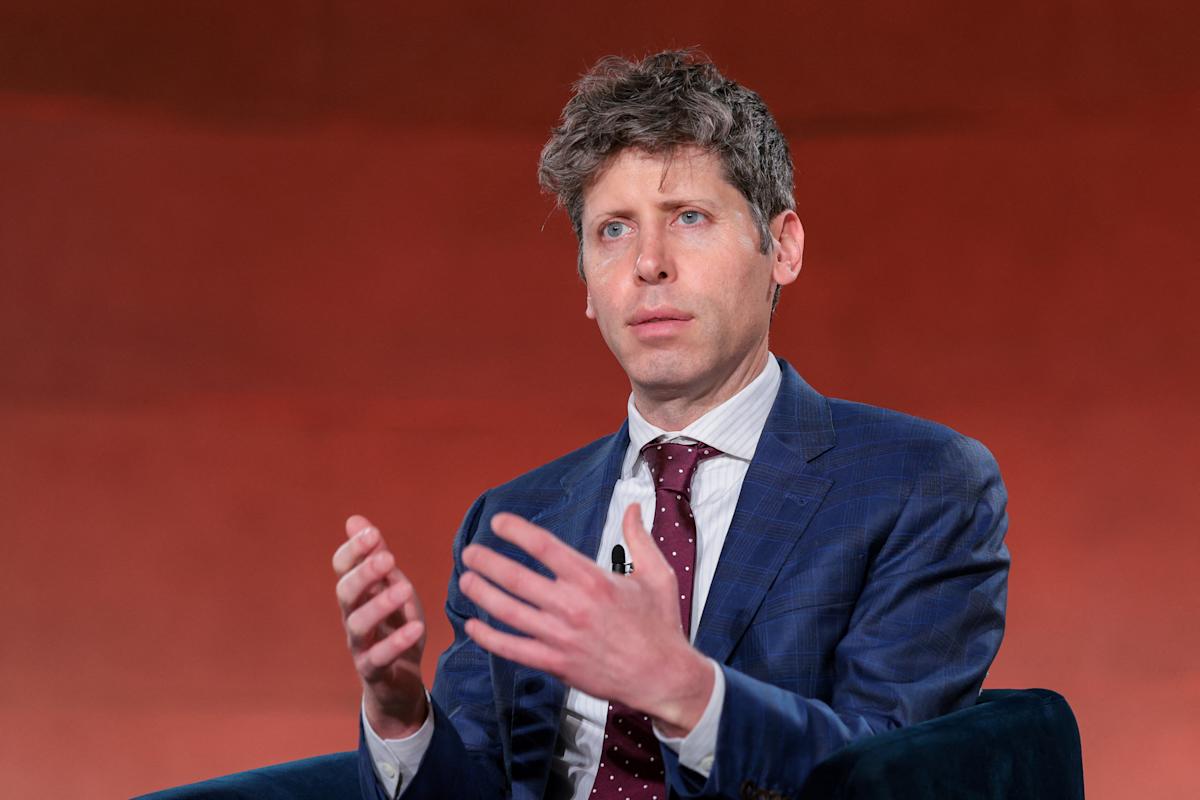
Two months following the deadly shooting in Tumbler Ridge, British Columbia, OpenAI’s Sam Altman has formally apologized for not informing police of the alarming ChatGPT conversations seen with the suspect’s account. Before the incident, OpenAI banned the account belonging to the alleged shooter, Jesse Van Rootselaar, for violating its usage policy due to potential for real-world violence.
“I am deeply sorry that we did not alert law enforcement to the account that was banned in June,” Altman wrote in the letter. “While I know words can never be enough, I believe an apology is necessary to recognize the harm and irreversible loss your community has suffered.”
Altman noted in the letter, which was published in full by Tumbler RidgeLines, that he spoke with both Darryl Krakowa, Tumbler Ridge’s mayor, and David Eby, the British Columbia premier, and agreed that a “public apology was necessary, but that time was also needed to respect the community as you grieved.”
Eby, who also highlighted Altman’s letter in his post on X, agreed that the “apology is necessary,” but added that it was “grossly insufficient for the devastation done to the families of Tumbler Ridge.” Moving ahead, Altman reaffirmed in the letter that OpenAI would “find ways to prevent tragedies like this in the future” and work with all levels of government to prevent something like this from happening again. Altman’s latest commitment builds on the previous letter from OpenAI’s vice president of global policy Ann O’Leary, who said the company would notify authorities if it finds “imminent and credible” threats in ChatGPT conversations.




























































You must be logged in to post a comment Login