
Politics
Donald Trump Praises King Charles Over State Visit Despite Shooting

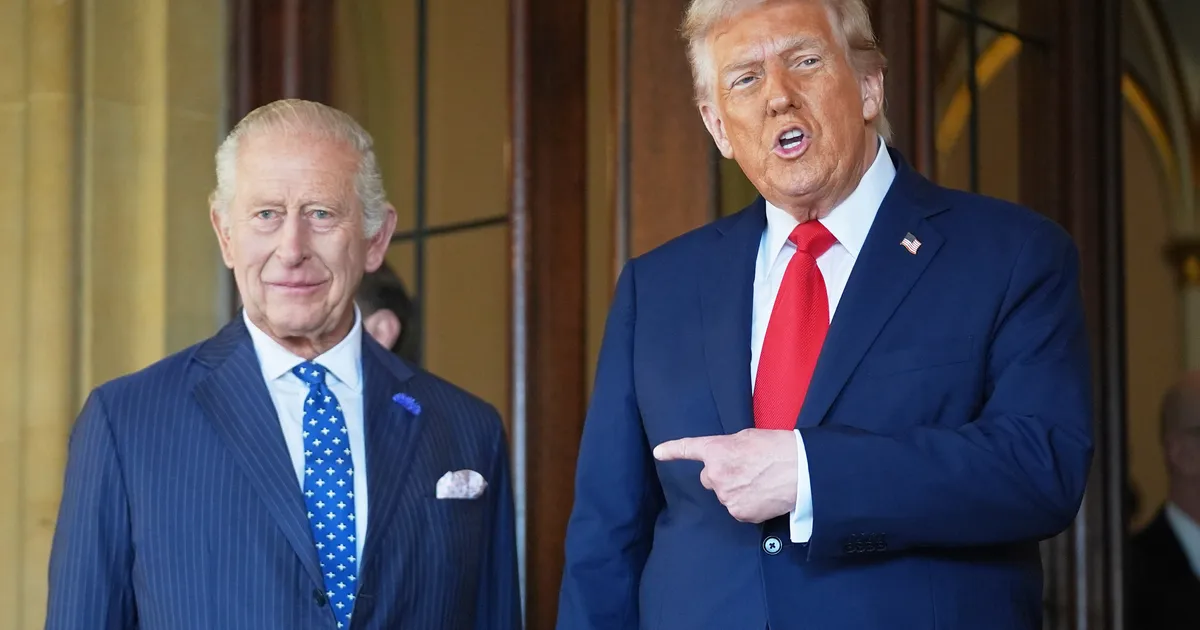
Donald Trump has described King Charles as “brave” after it was confirmed his state visit to the US will still go ahead despite the latest alleged assassination attempt on the president’s life.
Buckingham Palace said the four-day trip, which begins on Monday, will “proceed as planned”.
Sir Christopher Turner, the UK’s ambassador to Washington, confirmed the visit would “proceed as planned”.
He said: “The real point is that our respective security teams have been in close touch for weeks.
“And any operational changes we have to make, we can make them as we go, and we are all very confident that all appropriate security measures are in place.”
Trump praised the King as “brave” and said nobody else could represent the UK as well as he could.
“He’s a great guy, and we look forward to it. He’s really a fantastic person and a tremendous representative, and he’s brave,” the president added.
“We’re gonna have a great time. And he represents his nation like nobody else can do it.”
The White House Correspondents’ Dinner was thrown into chaos on Saturday night after a gunman was apprehended as he appeared to be making his way towards the room where Trump and other senior US government officials were.
The suspect, who was said to have been carrying a shotgun and handgun, has been identified as Cole Tomas Allen, 31, of Torrance, California.
Trump later described the man was “a lone wolf whack job” at a hastily-arranged press conference.
Subscribe to Commons People, the podcast that makes politics easy. Every week, Kevin Schofield and Kate Nicholson unpack the week’s biggest stories to keep you informed. Join us for straightforward analysis of what’s going on at Westminster.

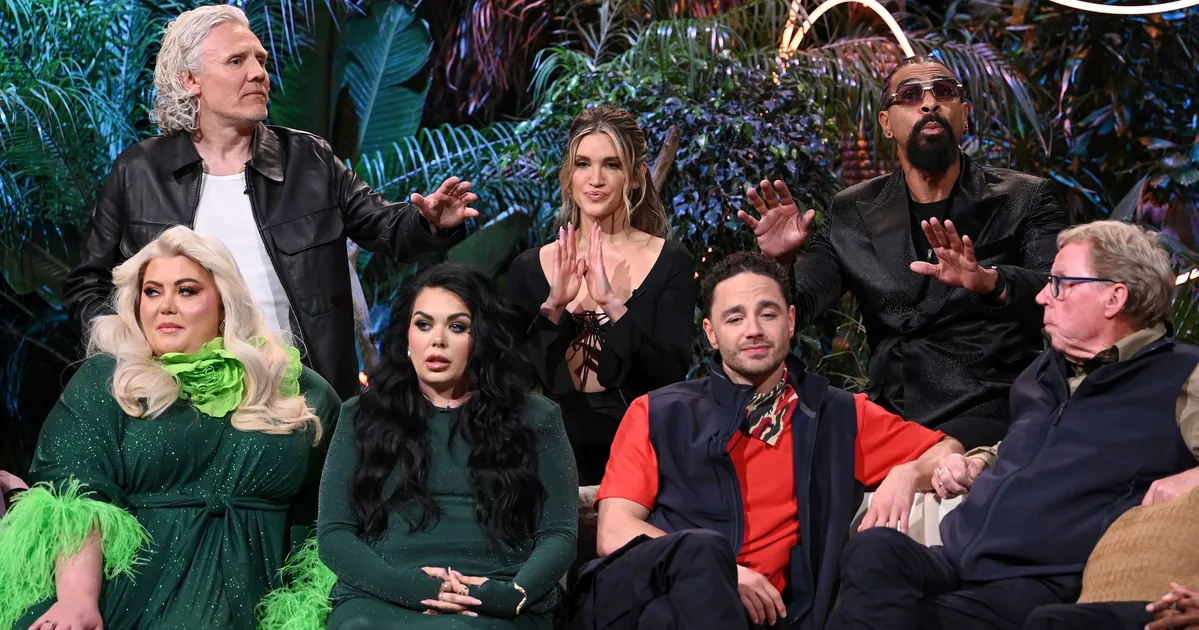
Things went a little off the rails, to say the least, during the I’m A Celebrity: South Africa live finale.
While the series itself was pre-recorded last year, the last episode aired live on ITV1 on Friday night, during which Ant and Dec announced who the public had chosen as their latest I’m A Celebrity “Legend”.
Almost the entire cast were reunited for the live special (aside from Beverley Callard, who was unable to attend on medical grounds), during which old arguments between certain campmates resurfaced.
Things first began taking a chaotic turn when David Haye called out Adam Thomas over his heated argument with Jimmy Bullard
Early on in the show, David Haye interrupted a segment involving Adam Thomas to question whether the Emmerdale star thought he “deserved to win this” after “calling Jimmy the c-word a couple of times” during their heated row towards the end of the season.
Ant and Dec then assured David that they would “come to this” a little bit later – and that’s when things became even more chaotic.
Jimmy Bullard then accused Adam Thomas of ‘abusive, aggressive and intimidating’ behaviour when the argument broke out between them
Later, Jimmy Bullard brought up the row again, criticising ITV for editing out the C-bombs dropped by Adam during their argument.
Ant McPartlin pointed out that Adam’s language had been “unbroadcastable”, which Jimmy agreed, but referred to the soap star’s conduct as “abusive, aggressive and intimidating”.
“I was there, I didn’t think it was intimidating,” Ant responded, before inviting Adam to share his side of the story.
The Waterloo Road actor then insisted he takes “full responsibility” for his conduct during his row, and had “nothing but love for Jimmy”, at which point David interjected, retorting: “Funny way of showing it…”
Ant and Dec then struggled to keep things on track as David Haye waded into the row between Adam Thomas and Jimmy Bullard – with Sinitta and Gemma Collins then leaving the set
Declan Donnelly then pointed out David wasn’t “even there” for the row, having already been eliminated, with the former heavyweight champion going on to accuse the show of “a lot of editing to make this poor guy look like a victim”, referring to Adam.
Following this, Gemma Collins and Sinitta disagreed about who was in the right, with the So Macho singer going on to walk off set completely.
“You weren’t there, I was there, it was aggressive and abusive,” she insisted, as Gemma left the sofa to join her off stage.
At the end of the turbulent episode, Adam was voted as the public’s winner, over runner-up Mo Farah, and had something of a muted reaction to the news.
David Haye and Jimmy Bullard later claimed they’d been ejected from the I’m A Celebrity studio
The Sun has since published a report claiming that Jimmy and David were “kicked out” of the studio between the live final and the recording of the companion podcast I’m A Celebrity: Unpacked.
In footage shared by the tabloid, David was heard saying: “We’ve been kicked out the show. What’s that about? Genuinely?”
Jimmy then agreed: “We got kicked out.”
“For trying to tell the truth,” David added.
A show source said: “Some campmates were uncomfortable being on stage with David and Jimmy, so we sent them home during Unpacked.”
HuffPost UK has contacted ITV for comment.
What has Adam Thomas said since his I’m A Celebrity win?
Writing on Instagram over the weekend, Adam claimed: “I walked through this journey with my heart first, no matter what came my way. It was not always easy, there were moments that could have broken me, but I stayed true to myself and that is something I will always be proud of.
“I have realised that when people try to dim your light, it says more about them than it ever will about you. This experience has shown me my strength in ways I never imagined. Not because of any title or recognition, but because I stayed kind, I stayed grounded and I stayed real.”
“Those who doubted me or tried to bring me down, I carry no negativity towards you,” he added. “I have already won in the ways that matter most.
“I have love, I have happiness and I have stayed true to myself, and that is something no one can ever take away from me. I hope one day you can do the same.”
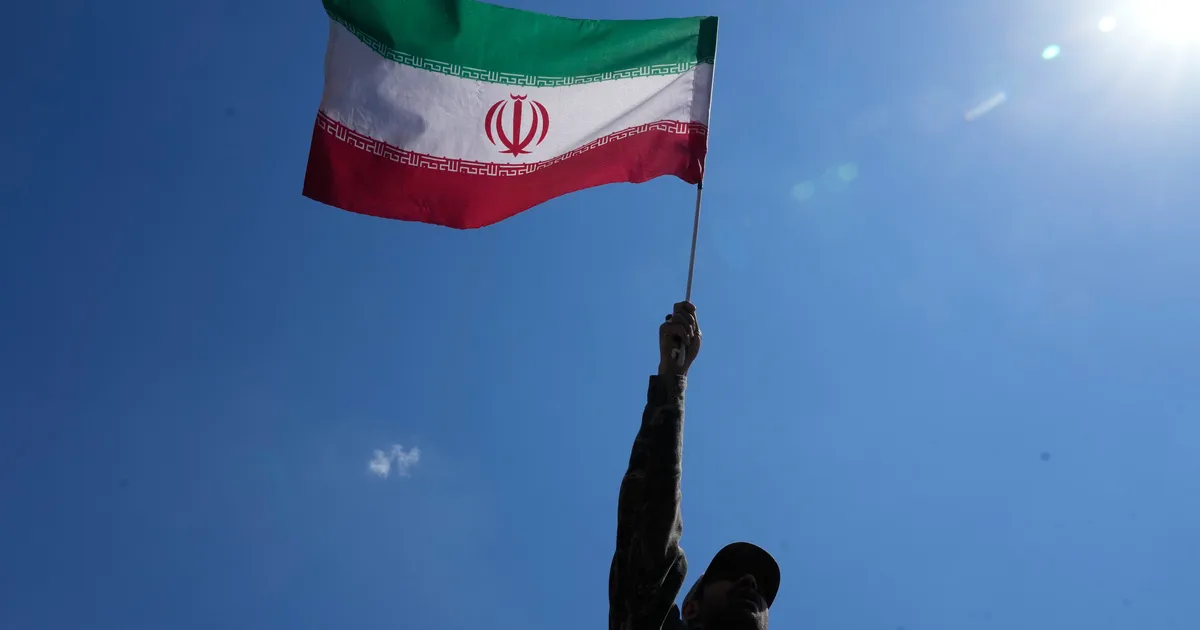
A peace deal to end the Iran war “will take a long time” to be reached, the BBC’a chief international correspondent has declared.
In a gloomy assessment, Lyse Doucet said “neither side wants to back down”.
Her comments came after Donald Trump said American officials would not take part in planned negotiations with their Iranian counterparts in Pakistan.
The US president has declared victory on several occasions since the conflict began with Israel and America’s began bombing Iran two months ago.
An indefinite ceasefire is currently in place, but with the key waterway the Strait of Hormuz still blocked and America blockading Iranian ports, Doucet said hopes of a perman end to the war seem remote.
She told Radio 4′s Today programme: “Neither side wants a ‘no war, no peace’ situation. Neither side wants to back down.
“Both sides are saying they won the war. President Trump has his own political and economic pressures at home, the Iranians have their pressures at home. So a deal may be in reach but a reach is not days, it will take a long time.
“Does President Trump want to make that time? How long does Iran want to drag it out and thrash out every day? It’s within the realm of possibility, but right now they’re just not there.”
Subscribe to Commons People, the podcast that makes politics easy. Every week, Kevin Schofield and Kate Nicholson unpack the week’s biggest stories to keep you informed. Join us for straightforward analysis of what’s going on at Westminster.
Politics
Acute Lymphoblastic Leukaemia Symptoms: Why The Lumps On My Scalp Were Not A ‘Scalp Infection
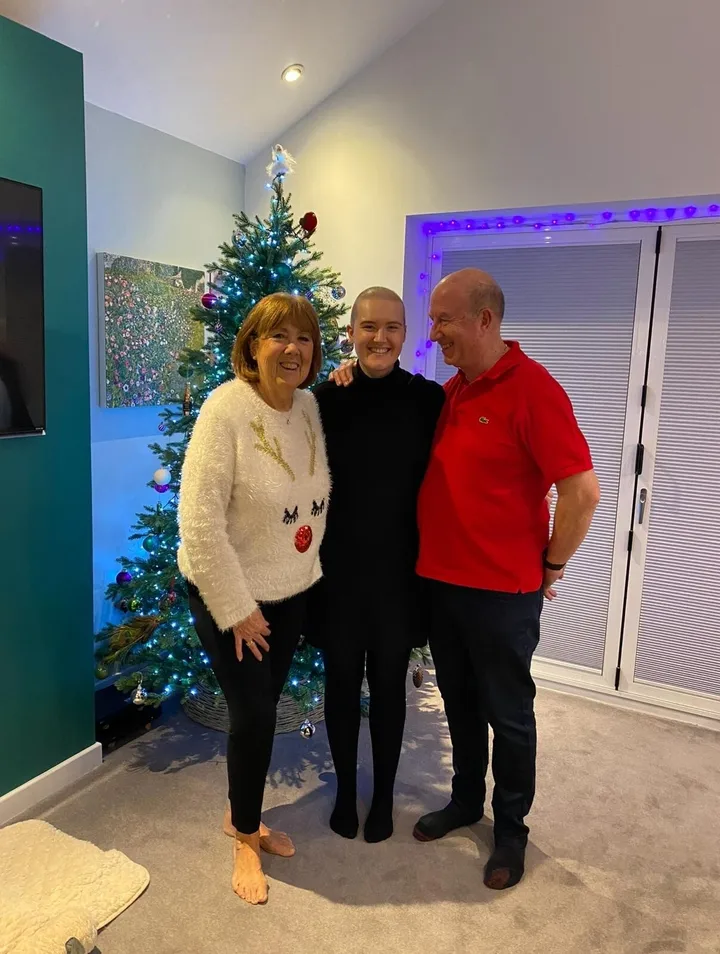
You know your body better than anyone – but what happens when no one listens? Welcome to Ms Diagnosed: a HuffPost UK series uncovering the reality of medical gaslighting. With new stats showing that 8 in 10 of women have felt unheard by medical professionals, we’re sharing the stories of seven whose lives were nearly lost to the gap between their symptoms and a system that refused to listen. As the UK introduces Jess’s Rule – a new mandate for GPs to ‘rethink’ after a third visit – we’re exploring why the medical system is still failing women and how we can start to fix it.
“Have you tried Head & Shoulders shampoo?,” asked my GP. ‘We think you might have a scalp infection.’
I stared at her, gobsmacked. I had between 20 and 50 hard, pea-sized lumps that kept appearing on my scalp, as well as horrible flaking. I knew it was more than a scalp infection.
“I’ve had a dry scalp all my life,” I said, eventually, “I use Head & Shoulders all the time.”
“Hmmm,” mused the GP. “Well, we’ll prescribe you some shampoo that will hopefully get rid of the lumps.”
I didn’t have a scalp infection. I had Acute Lymphoblastic Leukaemia (ALL); and this was diagnosed following a trip to A&E, after I’d gone to my GP surgery every week for ten weeks to no avail.
My symptoms started in July 2021, when I was 26. I’d had Covid for two weeks – then, things only got worse.
For a start, there were those lumps developing on my scalp; as well as down the back of my ear, down my neck and in my armpits.
I was losing a lot of hair; I had terrible night sweats; I was sick a lot; and I was very fatigued, to the point where my boyfriend was having to help dress me. Even walking 100 metres to my office from the carpark, I’d have to stop and catch my breath.
I first visited my GP that summer. ‘We’ve seen a lot of people come in with exactly what you’re saying,’ she said. ‘We think it could be Long Covid.’
That initially made sense; I’d had Covid, after all. But over the course of the following ten weeks, I went back to the GP again and again and she’d make me walk up and down the corridor to test my blood oxygen levels and my pulse. “You’re fine; you’re fine,” she’d say.
“Well…I’m obviously not fine, because I’m out of breath all the time,” I said, utterly bewildered. Once, I was just sitting on the grass watching my boyfriend playing sports when my watch notified me that my heart rate was too high.
But the GP kept saying, “No, no, you’re fine.” As it later turned out, I had a tumour the size of a melon on my chest.
I went back to the surgery again and again with the same symptoms. I’d be told things like, “You’ve got a history with asthma; we’ll give you an inhaler.”
I was prescribed the same shampoo again for the lumps on my scalp. Another time, they suggested the lumps were an allergic reaction to my hair dye.
I had blood test after blood test, but I kept hearing, “They’re fine, they’re fine, all your bloods are fine.”
Obviously, my blood was not fine.

Every time I left the GP’s office, I felt so let down. It seemed there was no end in sight; I’d just been pushed away again with an inhaler or some scalp treatment.
It was incredibly frustrating and very upsetting – all the more so because I knew, deep down, there was something very wrong. Once, when I was really struggling at work, I said to my manager: “Something’s not right. I know it.”
Another time, I messaged my mum: “What if it’s cancer?”. She replied: “If it was going to be cancer, it would have come back on your blood tests. Try not to worry.”
Those texts will always stick with me. Clearly, on some level, I knew.
In October 2021, I got a migraine at work. I do get migraines, but this was the worst head pain I’ve ever had. I couldn’t even open my eyes. I rang 111 and explained the migraine and all the symptoms I’d had since July; and they sent an ambulance.
I was taken to A&E, where I had a blood test, an ultrasound and a CT scan.
Then, because of Covid restrictions, I was left on my own in a little side room. After about four hours, a doctor came to see me. “We think you’ve got Hodgkin’s lymphoma,” he said.
“I’m sorry…I don’t know what that is,” I said, helplessly.
“It’s a type of cancer,” he said; and then he left. I was on my own trying to process that news; and I burst into floods of tears.
I was taken to the cancer ward, where I stayed for seven days while they did various tests. Eventually, I was diagnosed – not with Hodgkin’s lymphoma, but with ALL.
My treatment lasted for nearly three years, because I had a high percentage of leukaemia in my bone marrow as well as my blood. I had regular chemo, and a lumbar puncture every four weeks to take out spinal fluid and check for cancer in my brain. I also had a Hickman line – which was inserted into a vein in my neck and poked out of little valves in my chest – to administer chemotherapy and take regular blood samples. I never got used to that.
Eventually, I finished my treatment in June 2024 – and I’ve now been in remission for 21 months.
I visit my consultant every six months for blood tests and a check-up, and I have to take antibiotics if I get a cold because my immune system isn’t 100%. But with each month that passes, I get stronger. I’m going to the gym three or four times a week and my hair is so long, which feels amazing.
But while I’m a lot better physically, I still struggle mentally.
Even though my consultant told me my treatment would have been the same whether I’d been diagnosed on Day 1 or Day 100, I’m horrified when I think of how many times I was told by a GP that I was fine, when I unequivocally wasn’t – and, thanks to being misdiagnosed repeatedly, I’m left with health anxiety.
Every time I get a bruise on my leg, I automatically think: ‘The cancer’s back.’ If I ever get hot in the night, I worry that I’m getting night sweats again.
In November, a few symptoms were making me extremely anxious – night sweats, bruising, aching muscles and bones. I couldn’t wait for my next scheduled appointment, so I arranged an emergency appointment with my consultant. After reviewing some blood tests, he reassured me that I was a ‘picture of health’ and had nothing to worry about.
I think I’ll always have this anxiety – I went through such a tough journey, the thought of going back to that is incredibly scary – but feeling my strength returning has helped.
And my advice to anyone else struggling to get answers for certain symptoms is: Trust your instincts, and keep on pushing. Try to get a second opinion; if necessary, go to A&E and tell them about all your symptoms.
I’m so glad I kept pushing. I knew something was very wrong; and it turned out I was absolutely right.
ALL is a rare type of blood cancer, with just 790 new people diagnosed in the UK every year, according to Leukaemia UK. The most common symptoms are fatigue, frequent infections and bruising.
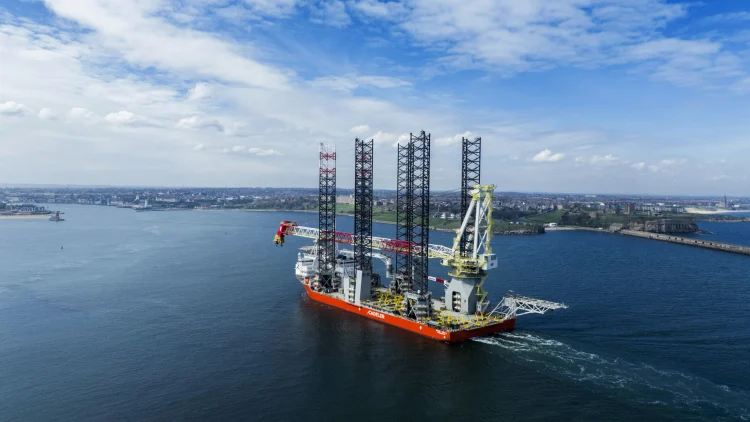
Wind Orca, a Cadeler vessel working on Hornsea 3, April 2026

Matt Beeton, Chief Executive
| Port of Tyne
A new wave of offshore wind investment promises jobs and industrial growth for the North East’s rapidly growing clean energy sector
The UK’s clean energy transition is entering a decisive new phase.
The recent announcement by The Crown Estate to launch Round 6 of offshore wind leasing off the coast of the North East of England marks a pivotal moment for our region’s industrial future.
This new leasing round will unlock six gigawatts of offshore wind capacity, enough to power six million homes.
For ports, this translates into the delivery of around 400 turbines, over a million tonnes of steel and 5,000 kilometres of cabling – illustrating the scale of the supply chain opportunity.
It is a scale of ambition that demands an equally ambitious response from industry.
The need for scalable capacity, operational flexibility and infrastructure that can respond to increasingly complex, long-term programmes.
At the Port of Tyne, we welcome this announcement as a catalyst for further growth.
Positioned as the closest deep-water port to the North East leasing area, we are uniquely placed to support developers as they bring forward the next generation of offshore wind projects.
But proximity alone is not enough – experience and the ability to scale are everything.
That is why we are investing significantly in infrastructure, skills and innovation.
Our 230-acre Tyne Clean Energy Park is a cornerstone of this ambition, providing a platform for manufacturing, assembly and operations linked to offshore renewables.
Alongside this, our deep-water 24-hour access and extensive quayside facilities ensure we can accommodate the increasing size and scale of offshore wind components.
Crucially, our 5G connectivity and Investment Zone site status – now known as an Industrial Strategy Zone – further strengthens our ability to support future projects, providing additional confidence for developers and investors looking to commit at scale.
We have seen first-hand what success looks like.
Projects such as Dogger Bank, Sofia and Hornsea 3 have demonstrated our capability to deliver world-class offshore wind developments.
Round 6 builds on this strong foundation, accelerating the growth of a regional offshore wind cluster that is already gaining international recognition.
But the opportunity goes far beyond energy generation. This is about economic transformation.
The development of the North East seabed leasing area will drive regional growth, strengthen domestic supply chains and create high-quality, long-term jobs.
In doing so, it aligns closely with the ambitions of the North East Mayor’s Green Energy Jobs Plan and her wider vision for a more resilient economy.
Ports sit at the centre of this transformation. They are more than just gateways for goods – they are industrial hubs where global supply chains meet local capability.
For regions like ours, with significant quayside-adjacent land and established maritime expertise, ports are natural locations for port-centric industrial development.
The government’s Industrial Strategy presents a crucial opportunity to build on this momentum.
By aligning policy with the needs of foundational sectors such as offshore renewables, it can provide the long-term certainty required for ports and developers to commit to major investment.
This is essential if we are to scale up capacity at the pace required.
Collaboration will also be key.
Through partnerships with the North East Combined Authority and initiatives such as the North East Ports Partnership, we are working to unlock further opportunities along the River Tyne.
Together, we can ensure that the benefits of offshore wind are felt across the region, from skills development to the growth of supply chains.
At the Port of Tyne, our long-term vision is clear.
The next decade will see us expand into new growth areas while strengthening our position in core markets such as automotive and offshore wind.
Major projects, including our £150 million Northside redevelopment, will enhance our capabilities and support the creation of jobs in the years ahead.
Round 6 provides a focal point for this activity.
A clear indication that the UK is serious about leading the global offshore wind market.
For the North East, it is an opportunity to cement our position at the forefront of that ambition.
We stand ready to play our part.
With sustained investment, collaboration and policy support, ports like ours will continue to enable the energy transition and help define the UK’s industrial future.
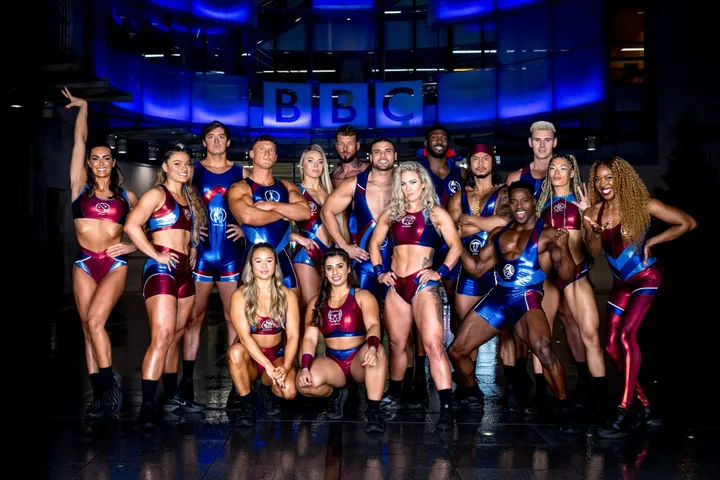
Former Gladiators star Jamie Bigg – better known to viewers as Giant – has alleged that he was sacked from the show because of his relationship.
Last week, Giant made headlines when he announced he was stepping away from Gladiators after three seasons on the cast of the rebooted game show.
“What I do want to make clear is this wasn’t a decision I made to step away,” he said at the time.
“I was faced with a choice that didn’t align with my values. And if you know me, you know this… I stand by my people and I stand by what I believe in. That’s what being a role model means to me.”
He has since alleged that he was dropped by Gladiators because he wanted to go public with his relationship with his girlfriend Taylor Ryan, who is an OnlyFans model.
“I had to choose between dating Taylor and keeping my job,” he told The Sun over the weekend, noting that he was “shocked and very saddened about their choice to sack me”.
The firefighter and former professional bodybuilder alleged that he was told by Gladiators producers that by going public with his romance, he could be “providing an access to adult content for children”, something he branded “absurd”.
“One of the most disappointing things is that all I’ve tried to do is be a good person and a good role model, and the BBC haven’t been either of those things,” he lamented.
“Essentially, I don’t want to work for people like that either.”

In a statement to the Daily Mail last week, Giant said: “I made it clear that I was planning to go public with my relationship, including the fact my partner works as an OnlyFans creator, and shortly after that I was told I wouldn’t be continuing on Gladiators.
“It wasn’t something I expected, especially given the commitment I’ve shown to the role. I’ve always taken being in the public eye seriously, and I believe being a role model is about honesty as well as professionalism. For me, that means not hiding parts of who I am or the people I care about.
“My partner is an incredible person, and I have huge respect for everything she does – I’m proud to stand by her.”
Giant then added: “I’m grateful to the BBC and everyone involved in the show for the opportunity and the experiences I’ve had. Now, my focus is on the future.”
A BBC spokesperson previously said: “After three formidable series, Giant is leaving Gladiators. We’d like to thank him for everything he has contributed to the show and wish him well for the future.”
HuffPost UK has contacted the BBC for additional comment.
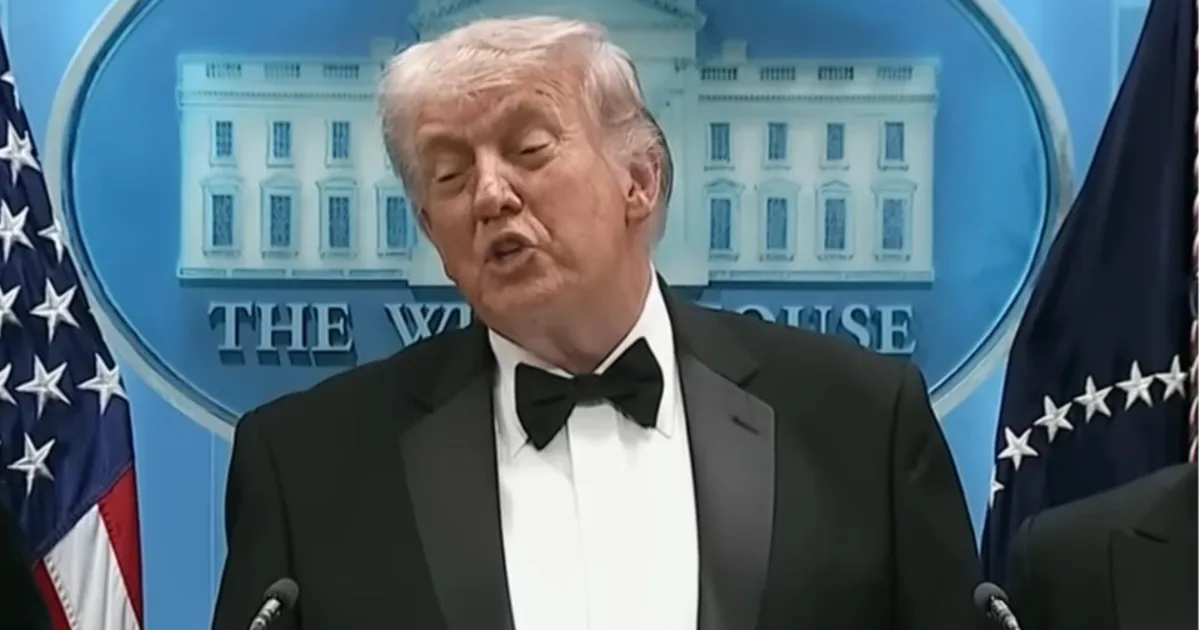
Fox News’ senior White House correspondent Peter Doocy had a frank question for President Donald Trump following the shooting at the White House Correspondents’ Dinner on Saturday night.
During a press conference at the White House shortly after the shooting, Doocy brought up a New York Post report that said that the suspect, identified as 31-year-old Cole Tomas Allen, assembled a “long” weapon at the Washington Hilton Hotel.
“Why do you think this keeps happening to you?” Doocy directly asked the president in regards to the shooting.
“Well, you know, I’ve studied assassinations and I must tell you the most impactful people, the people that do the most, you take a look at the people — Abraham Lincoln — I mean, you go through the people that have gone through this where they got ’em. But the people that do the most [and] the people that make the biggest impact are the ones that they go after,” Trump replied.
The president has faced at least five major security breaches and assassination attempts since 2024, according to LiveNOW from FOX.
“They don’t go after the ones that don’t do much because they like it that way,” Trump continued. “And when you look at the people – whether it was an attempt or a successful attempt, they were very impactful people. Just take a look at the names here. The big names, and I hate to say I’m honored by that, but I’ve done a lot.”
Trump went on to say that there are many people that are “not happy” that his administration has “changed this country.”
“We’ve done a lot. We have taken this country and we were a laughingstock for years and now we are the hottest country anywhere in the world,” he added. “We’ve changed this country, and there are a lot of people that are not happy about that. So I think that’s the answer, Peter.”
Watch Trump’s response below. Skip to the 14:10 mark to hear the president’s remarks.
Politics
‘I’m Not A Paedophile’: Trump Snaps At CBS Reporter Over Reading Of Suspected Shooter’s Alleged Manifesto
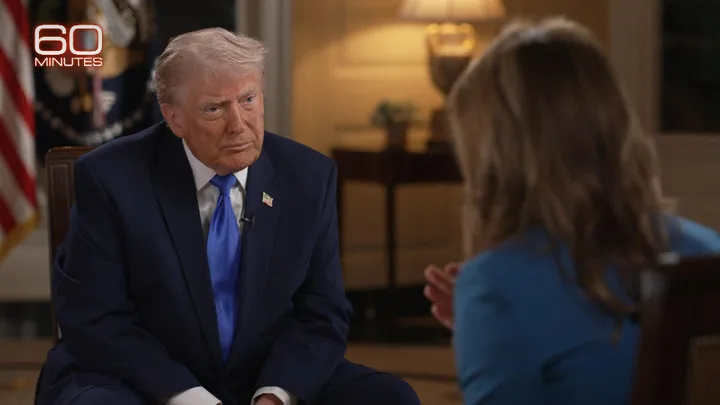
President Donald Trump slammed CBS reporter Norah O’Donnell during a ’60 Minutes’ interview on Sunday after she read part of an alleged manifesto written by a suspect in the shooting that took place outside the White House Correspondents Association Dinner on Saturday.
“The so-called manifesto is a stunning thing to read, Mr. President. He appears to reference a motive in it,” O’Donnell said. “He writes this quote: ‘Administration officials, they are targets.’ And he also wrote this: ‘I am no longer willing to permit a paedophile, rapist and traitor to coat my hands with his crimes.’ What’s your reaction to that?”
“Well, I was waiting for you to read that because I knew you would, because you’re horrible people, horrible people. Yeah, he did write that. I’m not a rapist. I didn’t rape anybody. I’m not a paedophile,” Trump said.
“Do you think he was referring to you?” O’Donnell asked.
“I’m not a paedophile. You read that crap from some sick person. I got associated with stuff that has nothing to do with me. I was totally exonerated,” Trump said. “Your friends on the other side of the plate are the ones that were involved with, let’s say, Epstein or other things. …You should be ashamed of yourself reading that because I’m not any of those things.”
“Mr. President, these are the gunman’s words,” O’Donnell said.
“Excuse me. You shouldn’t be reading that on ‘60 Minutes.’ You’re a disgrace,” Trump said.
The White House and CBS News did not immediately respond to a request for comment.

CBS News and The Associated Press have reported that the suspected shooter referenced administration officials in his writings as well as critiques of the administration. Trump has also said he read the manifesto and claimed that the suspect espoused “anti-Christian” views.
“The writings, sent shortly before shots were fired on Saturday night at the Washington Hilton, made repeated references to President Donald Trump without naming him directly and alluded to grievances over a range of administration actions,” The AP reported.
Acting Attorney General Todd Blanche said Sunday that it appeared that the shooter had “set out to target folks who work in the administration, likely including the president.”
HuffPost has not independently reviewed any writings purported to be from the suspect in Saturday night’s attack.

On May 1, 2026, the first phase of the Renter’s Rights Act reforms will come into effect.
The government said the act was created to “empower renters by providing them with greater security, rights and protections so that they can stay in their homes for longer, build lives in their communities, and avoid the risk of homelessness.”
But what does it actually mean for tenants and landlords?
Here’s what Amy Rootham, home insurance expert at Compare the Market, told us about the most important changes for both groups.
How will the Renter’s Rights Act 2026 affect tenants?
“While the Renter’s Rights Act is largely focused on improving protections for tenants, it will also change how renting works day-to-day. Renters will have more flexibility and security, but may also need to plan more carefully around things like moving, budgeting, and maintaining the property,” said Rootham.
She said five significant changes will include:
-
The end of ‘no-fault evictions’. “The end of ‘no-fault’ evictions means renters have greater protection against being asked to leave without reason. However, the shift to rolling tenancies also means contracts are more open-ended, making longer-term planning feel less predictable.”
-
Greater flexibility to move. “Tenants will be able to leave with shorter notice, making it easier to relocate for work or personal reasons.”
-
Better protection against poor living conditions. “Stricter rules on issues like damp and mould should lead to quicker fixes and improved housing standards, giving renters more confidence to raise concerns.”
-
Easier access to renting with pets. “Tenants will have a stronger right to request a pet, which is a major shift for many households. However, renters should still be mindful of their responsibilities, as they may be expected to cover any damage caused.”
-
Rent increases will follow a set process. “Under the new rules, landlords will need to use the Section 13 process to increase rent, with increases limited to once per year and at least two months’ written notice required. Tenants may also be able to challenge increases they believe are above market rate.”
How will the Renter’s Rights Act 2026 affect landlords?
Per Rootham, some of the most significant changes for landlords will be:
-
Rolling tenancies. “As of the 1st May, all fixed-term contracts will move to rolling monthly contracts, removing the certainty of long-term contracts. Landlords must check that their loss-of-rent cover doesn’t lapse or become invalid if a tenant decides to leave. The new regulations mean tenants only need to give a minimum of two months’ notice.”
-
Extended liability for missed rental payments. “The threshold for mandatory eviction due to arrears is increasing from two months to three. This means landlords could face significantly longer periods without income.”
-
Stricter health and safety responsibilities. “With Awaab’s Law now applying to the private rented sector, landlords will be legally required to fix hazards like damp and mould within strict timeframes.”
-
Reduced grounds for refusing pet ownership. ”One of the most significant changes likely to impact landlords relates to pets. Tenants will gain a legal right to request a pet – this cannot be refused without a ‘reasonable’ justification.
“Crucially, consent will be legally implied unless landlords respond to the request within 28 days.”
-
Removal of ‘no-fault’ legal protection. “The end of Section 21 ‘no fault’ evictions means all expulsions must now go through a ‘Section 8’ court process. This is often slower and more expensive. Landlords should consider reviewing their legal expenses cover to make sure it can help handle these more complex, evidence-based court hearings.”
-
Mandatory database fees. “Landlords will have to join a new Private Rented Sector Database and an Ombudsman scheme. Unregistered landlords could find their insurance voided if they are not compliant with these new statutory registries.”
Shelter says this could be good news for tenants
Speaking to HuffPost UK, Sarah Elliott, chief executive of housing and homelessness charity Shelter, said: “For too long, renters have stayed silent about discrimination and endured hellish conditions, for fear of losing their homes. The Renters’ Rights Act has the potential to transform private renting, finally freeing tenants from the injustice of no-fault evictions, which have pushed record numbers into homelessness.
“But renters must understand that the current system remains in place until May 1, 2026. Until then, we stand ready to help them understand the vital changes the Act will introduce. Anyone in need of support should visit our website for housing advice or use the webchat to speak to one of our advisers.”
Politics
David Gauke: It was worse in the 1970s but it can certainly feel like history repeating itself
David Gauke is a former Justice Secretary and was an independent candidate in South-West Hertfordshire at the 2019 general election.
When it comes to writing these columns, it is proving to be surprisingly difficult to escape the 1970s.
My previous column made the case that Nigel Farage and Reform lack the coherence, competence and character of Mrs Thatcher’s Tories in opposition to the Wilson/Callaghan governments. This week, my thoughts have been focused on the period once again, listening to the excellent The Rest Is History podcast series on the era.
The cheerful message from the series is that, if you think things are bad now, you should have been around then.
A Conservative Government had lost office having obviously been unequal to the task of turning the country round, but the incoming Labour government had proven to be disastrous. Control of public spending had been lost as the Government caved in to union demands. The confidence of the financial markets was, at best, fragile but large parts of the Labour movement were unwilling to accept that this need be a consideration. A sense of national decline was pervasive.
Alright, maybe matters are not so different.
But the mid-70s really were a grim time. Inflation peaked at 26.9 per cent in 1975. Our businesses were increasingly uncompetitive. The trade unions were both militant and powerful. And such was the state of our public finances that the country had to go “cap in hand” to the International Monetary Fund for a bailout to prevent a collapse of the pound. Understandably, the IMF imposed conditions, including substantial cuts in public spending.
No one worried about high levels of net migration. For the first time in centuries, our population was falling in the mid-70s as many of the best and the brightest looked to move elsewhere.
Our international reputation was dismal. “Britain is a tragedy”, the US Secretary of State, Henry Kissinger, told President Gerald Ford at the beginning of 1975. “It has sunk to begging, borrowing, stealing until North Sea oil comes in… That Britain has become such a scrounger is a disgrace.” (Admittedly, current US politicians say disobliging things about us, but Kissinger was a serious person.)
The podcast series, based on Dominic Sandbrook’s definitive and entertaining account of the period – Seasons in the Sun – tells the tale of decline and delusion. It is particularly, and rightly, harsh on Tony Benn. Benn ultimately became seen as something of a national treasure, renowned for his charm, intelligence and principled approach to politics. He even had his cheerleaders on the right, infatuated by his views on Parliamentary sovereignty and the European Union. But as a powerful Cabinet minister, he was a complete menace.
When faced with the IMF crisis, Benn proposed rejecting the deal and argued for turning the UK into a siege economy. Imports should be restricted, he argued, without any acknowledgment that this might have consequences for exports, let alone the inflationary and productivity implications of blocking foreign competition. He not only supported calls for the nationalisation of the 25 biggest companies in the country, he thought the Government was honour-bound to implement the policy because that was the motion passed by the Labour Party. And he was an advocate of funding workers’ collectives, such as one that produced the unlikely combination of car parts and orange juice (it was not a success).
Benn did not prevail, although his position of prominence in the Government did a great deal of damage to the country’s credibility with the markets. He was also thoroughly tiresome to deal with. Cabinet meetings took hours as Benn’s absurd proposals and policies were treated with undue respect by his colleagues. At one point, he suggested that the Cabinet take a moment’s silence in memory of the recently deceased Mao Tse Tung. When Prime Minister James Callaghan refused to honour one of the world’s most evil men, Benn took umbrage.
There are Labour heroes from this period.
Callaghan was an impressive figure and, as Margaret Thatcher privately acknowledged, might have made a very successful Prime Minister in other circumstances. Denis Healey had spent recklessly when first appointed after the February 1974 General Election (in the certain knowledge that another election would shortly follow) but stood up bravely to the Left thereafter. The move towards greater fiscal responsibility and the determination to bear down on inflation began in 1976, not Thatcher’s election in 1979. Even so, controlling trade union power, returning nationalised industries to the private sector, allowing inefficient businesses to go to the wall, and reforming our tax system to encourage enterprise was beyond them.
Defenders of Britain in the 1970s will argue that, despite the inflation and various currency crises, living standards rose faster than today. This is true, albeit the crises were getting bigger and progress was not looking sustainable. In relative terms, we were perceived as being the sick man of Europe, falling behind Germany, France and Italy.
Now, our problems are not unique. Germany and France certainly have their difficulties. Inflation is picking up, but a rate of 3.3 per cent does not compare to where we were. The tax burden is high, but we do not have marginal rates of 83 per cent on earnings and 98 per cent on investment income. And although there is a Benn in the cabinet, Hilary matches his father in charm and intelligence but not in political loopiness.
There is a nagging worry, though, about studying the power of the Left in the 1970s.
That strand of thinking has not been entirely eradicated. We saw it with the election of Jeremy Corbyn as Labour leader in 2015 and his relative success in 2017. Now we have the rise of the Greens. The precise policies may have changed (Benn’s siege economy idea now sounds closer to the Trumpian right), but Zack Polanski’s flirtation with Modern Monetary Policy is another left-wing attempted solution to ignoring market discipline. Imposing a maximum 10 to 1 ratio on how much an employer can pay its highest earning employee versus its lowest earning employee is another example of a crackers policy that would have appealed to Benn.
Nor are ludicrous economic ideas wholly the preserve of the Greens.
The SNP has flirted with price controls for food, while Andy Burnham – who could be Prime Minister within months – is dismissive of the bond markets and speaks warmly about rent controls, a policy that has a long and disastrous history. Even the current Government, which supposedly opposes rent controls, has moved towards them in the ill-conceived Renters Rights Act.
Here is the point about the comparison between the 1970s and today. We know now that the country got out of its 1970s malaise thanks to a government committed to fiscal discipline and a market economy. But there was an alternative agenda, advocated at the Cabinet table that had much support from Labour’s grassroots, which would have taken the country in the opposite direction. We also know that it did not succeed, that the “sensibles” like Callaghan and Healey retained control.
But is it inevitable that when a country is in difficulty, a government up to the task will be elected? As I have argued before, Reform would not be that government. And when it comes to the Left, is it inevitable that the “sensibles” retain control? Given the mess that the current Government of “sensibles” has got itself into, the rise of the Greens, and the growing strength of left-wing populism more generally, I am not sure it is.
Were matters worse in the seventies compared to today? Yes. Will matters resolve themselves as positively? Not necessarily.
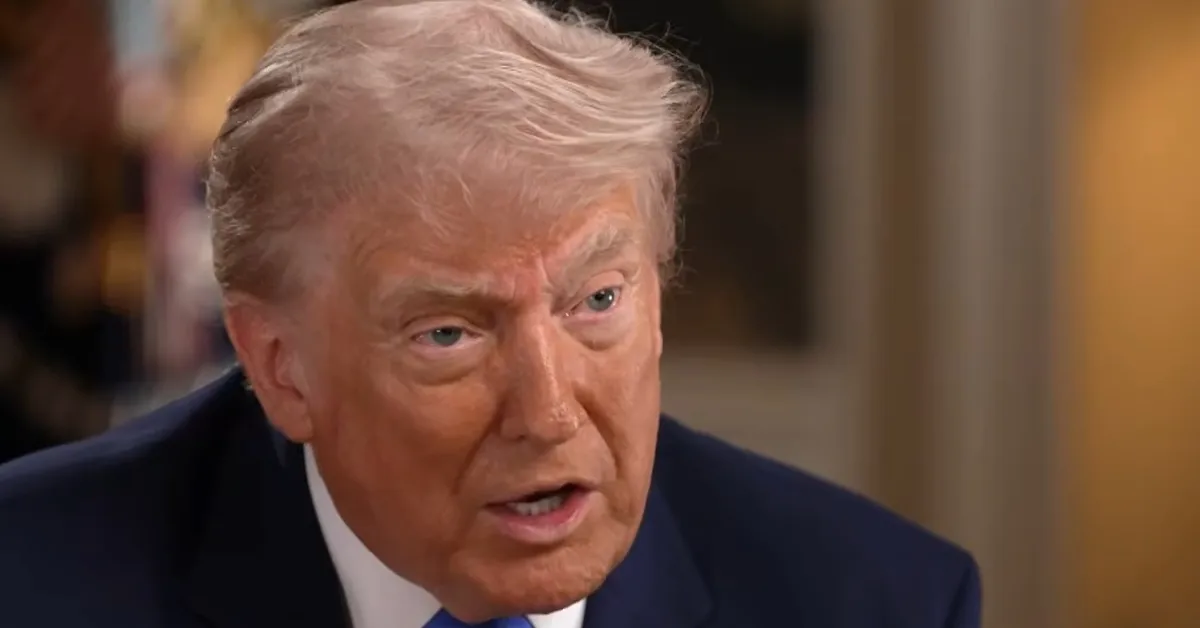
President Donald Trump seemed genuinely impressed by one element of his would-be assassin’s attempt on his life this weekend.
“His speed was rather incredible, actually,” he told CBS reporter Norah O’Donnell during a “60 Minutes” interview. “He was like a blur.”
Security footage showed the assailant, who authorities identified as 31-year-old Cole Tomas Allen, rushing past a security checkpoint at Saturday’s White House Correspondents’ Association Dinner before he opened fire.
“He ran 45 yards, they say, and he just went to it, and then ― boom ― he popped through it,” Trump said, later jokingly adding: “I think the NFL should sign him up. He was fast!”
Trump credited the police and Secret Service for quickly responding to the “blur.”
“It was amazing because as soon as they saw that, you could see them draw their guns,” Trump said. “They were so professional. Aimed their guns, and then they took him down immediately.”
A Secret Service agent was struck in the chest but was protected by a bulletproof vest and is expected to recover. Allen was apprehended alive, and no one was seriously injured in the attempt on the president’s life.
Allen is expected to be arraigned in federal court on Monday.

The Psychology of Crypto Investors: Why Rational Thinking Breaks in Irrational Markets
Euphoria’s Hunter Schafer Has Topless Scene, Lexi Is a Virgin

St Georges Primary Westhoughton celebrates 30 years with past staff

Manchester United reach agreement with Casemiro over contract clause amid transfer speculation

US brings back mandatory military draft registration

Steven Gerrard disagrees with Gary Neville over ‘shock’ Chelsea and Arsenal claim | Football


-

 Politics6 days ago
Gary Stevenson delivers timely reminder to register to vote as deadline TODAY
-

 Fashion3 days ago
Weekend Open Thread – Corporette.com
-
 Crypto World2 days ago
Hyperliquid $HYPE Rally Builds Momentum as AI Sector Enters Prove-It Phase
-
Crypto World7 days ago
Bank of Hawai’i (BOH) Q1 2026: Net Income Drops to $57.4M as Net Interest Margin Expands
-

 Politics5 days ago
Making troops accountable for war crimes threatens US alliance, ex-SAS colonel warns
-

 Politics5 days ago
Disabled people challenge government SEND proposals over segregation concerns
-

 Business5 days ago
Rolls-Royce Voted UK’s Most Iconic Trade Mark as IPO Register Hits 150
-

 Business3 days ago
Patterson-UTI Energy, Inc. (PTEN) Q1 2026 Earnings Call Transcript
-

 Politics5 days ago
Zack Polanski responds to home secretary’s taser threat
-
 Crypto World6 days ago
Five Value Stocks with Recovery Potential in 2026: PayPal (PYPL), Nike (NKE), and More
-
 Sports20 hours ago
IPL 2026: Ruturaj Gaikwad registers slowest fifty of the season, enters all-time unwanted list | Cricket News
-
Politics5 days ago
Wings Over Scotland | How To Get Away With Crimes
-

 Politics5 days ago
Starmer handler McSweeney to be dragged from shadows by Foreign Affairs Committee
-

 Crypto World5 days ago
New York sues Coinbase, Gemini over prediction market offerings
-
 Business5 days ago
HCL Tech share price tank over 9% after weak Q4. JPMorgan, HSBC & 3 others cut target price
-

 Politics5 days ago
‘Iran is still a nuclear threat’
-
Entertainment6 days ago
Sydney Sweeney cameo cut from “The Devil Wears Prada 2”, source explains why (exclusive)
-

 Fashion6 days ago
Kilkenny Design New Beauty Arrivals for Spring 2026
-
 Crypto World5 days ago
Crypto’s great hope in Senate’s Clarity Act still has a path to survive tight calendar
-
 Sports4 days ago
Tim Bradley names the current best in the world: “Better than Inoue and Usyk”
You must be logged in to post a comment Login