Scientists in Switzerland have developed a prototype camera capable of capturing clear three-dimensional images of neutrinos, particles so elusive they often earn the label ghost particles. Neutrinos come in huge numbers from the sun and other sources throughout space, yet they interact so rarely with ordinary matter that trillions pass through a person every second without any effect
For years, detecting them needed large subterranean containers filled with specific liquids or massive arrays of sensors buried deep in the ground to capture the exceedingly rare occasions when one collides with an atom. That works, but it’s a bit pricey and doesn’t allow scientists to track the particles’ travels very well. However, a team of researchers from ETH Zurich and EPFL has recently developed a new device called PLATON, which is a far easier way of doing things.
Cinematic-Style Footage – Experience the power of Xtra Muse’s 1-inch CMOS sensor, capable of recording breathtaking 4K resolution videos at 120fps…
Ultra-Steady Shooting – No more shaky videos! Xtra Muse’s advanced 3-axis gimbal camera stabilizer ensures exceptional smoothness. Enjoy smooth…
Effortless Framing – Enjoy Xtra Muse’s expansive 2-inch touch screen, and switch between horizontal and vertical shooting effortlessly.
The idea is to use a solid block of a special material called a scintillator, which emits tiny flashes of light whenever a particle passes through it, and to that block is attached a specially designed camera with a grid of tiny lenses and a sensor that can pick up individual photons of light, as well as the exact time they hit it.
Advertisement
When a neutrino interacts with the block, it produces a brief burst of energy that is converted into light, and the camera captures the pattern of light flashes from a variety of angles at the same time. The data is then processed by some sophisticated software, which uses timing information and complex pattern recognition to create a comprehensive 3D representation of the particle’s route. Previous detectors would slice the scintillator into thousands of small bits and connect them with fibers to determine where the particles were, but this made them all large, expensive, and completely unworkable. PLATON does all of the heavy lifting with the camera.
In laboratory experiments, the new device performed admirably, reconstructing tracks from electrons emitted by a known radioactive source. Simulations based on genuine neutrino interactions indicated that it could pinpoint sites with an accuracy of roughly a fifth of a millimeter. According to team member Davide Sgalaberna, this simplifies the process of creating particle detectors while also providing a high level of 3D precision.
This technology opens a host of new possibilities for future studies that will enable researchers to investigate neutrinos more efficiently, and it could be valuable in a variety of other areas as well. Medical imaging is another area where accurate readings inside materials are critical. Of course, there is still a lot of work to be done before it can be scaled up to the size required for large science projects, but for now, this prototype looks promising. As technology advances and becomes more accessible, it has the potential to reveal a great deal more about these fundamental particles and how they help form the cosmos. [Source]
The two USB-C ports are on the left side, alongside HDMI and a USB-A port. The second USB-A port, a microSD card slot, and a headphone jack are on the right. It’s not a nice assortment of ports overall, and I just wish Acer had split the USB-C ports up so the laptop could have a charging port on either side.
Acer is using a top-notch 16-inch OLED touchscreen display on the Swift 16 AI. It has a resolution of 2880 x 1800, a refresh rate of 120 Hz, and color saturation as close to perfect as I’ve seen. Like most OLED laptops, it has a glossy, highly reflective display that maxes out at 315 nits of brightness, according to my testing. It’s nowhere near as bright as IPS or mini-LED displays, but the trade-off in brightness is to achieve that unbeatable contrast that only OLED can deliver.
A Risky Touchpad
Photograph: Luke Larsen
The full-size keyboard and oversized touchpad are definitely the most notable elements of this laptop. The first thing you notice is the touchpad, which is certainly the largest I’ve ever seen. You might think it looks a bit silly, but I always like it when companies leave as little wasted space on a product as possible. I really wanted to like this touchpad, but unfortunately, it could deter most people from buying this product.
Advertisement
On large laptops like the Swift 16 AI, which have a number pad to the right of the keyboard, the touchpad is typically below the keyboard, making it visually off-center. While it’s functional, this arrangement looks odd, and some 16-inch laptops get around this by omitting the number pad entirely. That’s what you see on the MacBook Pro, the Dell XPS 16, and most gaming laptops these days, too.
Rather than removing the number pad, Acer expanded the touchpad and centered it. This makes good use of the space below the keyboard, preserves the number pad, and solves the aesthetic annoyance that typically plagues full-size laptops.
Perhaps part of a deliberate trend geared at collectors of a certain demographic, the resurgence of physical media is giving us the opportunity to revisit the movies we grew up on or discover gems that slipped through the cracks–especially from that stretch when the action/adventure genre as we know it was taking shape. Whether you first encountered these heroes in a sticky-floored theater, on a dusty VHS rental, or during a wee-hours cable TV marathon (ah, the analog hum of basic cable…), these restorations carry a nostalgia not merely for a time and place, but a vibe.
In that simpler time, these adventures were all new, and we couldn’t wait to find out what the good guys would do next, how they’d get out of their latest scrape: with fists? Bullets? Arrows? Maybe even some well-timed stomach acid? Today, the answers await us in an artful slipcase or a hefty cardboard box, to explore again and again, and even pass along to a generation raised on shaky-cam and CGI.
Adventure Calls! Karl May at CCC Blu-ray (Eureka!) – 1964-1968
Based–sometimes loosely–on the pulp fiction of author Karl May, these seven films produced by Artur Brauner’s West German CCC Film combine B-movie thrills with A-movie budgets, giving escapism-hungry audiences what they wanted, and more. Dashing Lex Barker stars in all, a bigger-than-life manly man sometimes battling land-grabbing outlaws, maybe on the trail of hidden gold, tracking nefarious bandits or rescuing old friends. Showing very little blood, the stories range from lighthearted to dark, always a cinematic treat shot in exotic Spanish and Yugoslavian locations.
The stories span multiple genres, starting and finishing with tried-and-true westerns, both starring the cowboy nicknamed for his ability to knock a man out with a single blow:
Old Shatterhand (1964)
Winnetou and Old Shatterhand in the Valley of Death (Winnetou und Shatterhand im Tal der Toten, 1968)
also, from May’s “Oriental Cycle” of books, the same lead character was renamed Kara Ben Nemsi:
The Shoot (Der Schut, 1964)
Through Wild Kurdistan(Durchs wilde Kurdistan, 1965)
In the Kingdom of the Silver Lion (Im Reiche des silbernen Löwen, 1965)
and then “The Mexican Adventures,” featuring Dr. Karl Sternau:
The Treasure of the Aztecs (Der Schatz der Azteken, 1965)
The Pyramid of the Sun God (Die Pyramide des Sonnengottes, 1965)
The native German audio receives newly revised English subtitles, paired with sumptuous new 4K restorations from their original camera negatives, presented here at 1080p.
Eureka!’s four-disc set is a hardbound limited edition of 2,000 copies, part of their “Masters of Cinema” series with intros to each film by author/expert Sir Christopher Frayling plus new audio commentaries on Old Shatterhand and Treasure of the Aztecs by historian David Kalat. Two new interviews shed light on CCC Film and director Robert Siodmak, these in addition to multiple archival featurettes and a 60-page collector’s book with extensive critical writing on related subjects.
In an era when big screen action was still evolving, movies often relied upon the gravitas of a leading man whose mere presence threatened an explosion of potential violence at any moment. Such was Walker (no first name), embodied by Lee Marvin in a career-defining performance. Betrayed by the two people closest to him and left for dead, he sets off on an orgy of revenge as an unstoppable force taking down a corporate underworld and reclaiming his exact share of the loot, not a penny more. Under the brutalist direction of John Boorman, Point Blank takes its time, building real character drama without slick modern fight choreography or special effects, instead employing stylish use of the camera, of voiceover, and flashbacks. It’s also a priceless time capsule of Los Angeles, revisited in its gritty, grainy glory via Criterion’s new director-supervised 4K restoration, paired with a lean, mean uncompressed mono track. The extras are a sampler of new and old: a Boorman commentary hosted by filmmaker/fan Steven Soderbergh, a 1970 Lee Marvin interview clip from Dick Cavett, a vintage promotional short, plus several new featurettes. The insert includes an essay by Geoff Dyer titled “A Dream of Full-Color Noir.”
As we travel back in time, we discover that audiences didn’t always ask a lot of nitpicking questions, just so long as plenty of stuff was blowing up on screen. Case in point, Blue Thunder, where a principled LAPD surveillance pilot (Roy Scheider) takes control of an advanced prototype helicopter when he discovers its true, nefarious purpose. Thing is, he puts a lot of people in danger when he bravely crosses that line, and wreaks massive destruction, so is he really the hero the movie makes him out to be? No one can argue that the flying sequences aren’t spectacular, though. Arrow’s single disc proffers the movie in Dolby Vision and both restored lossless stereo and a 5.1 remix, with on-camera interviews from key cast and crew, plus archival extras from 2006 and 1983. It arrives slipcased with reversible cover art and booklet.
The following year, ABC debuted a small-screen redux, concurrent with CBS’ own chopper-based Airwolf. For extra machismo, not one but two ex-NFL superstars joined star James Farentino and a pre-SNL Dana Carvey as his quippy co-pilot, leaving behind the government conspiracies for fairly standard weekly crime procedural plotlines. Running for only 11 episodes, this hour-long mid-season replacement failed to bring the thunder at the time, but it stands as an interesting footnote to both John Badham’s essential thriller and the broader discussion of TV adaptations.
Remo Williams: The Adventure Begins 4K (Kino Lorber Studio Classics) – 1985
Intending to capitalize on the perceived vulnerability of long-in-the-tooth James Bond, Orion Pictures bet big on their own secret agent franchise, born of the 150+ Destroyer novels in the series created by Warren Murphy and Richard Sapir. Fred Ward makes a formidable action hero, a tough New York cop turned superspy, taught mad skills by his Korean mentor, Chiun (a problematically cast Joel Grey under four hours of Oscar-nominated makeup). Although Remo is seldom given a chance to flex his awesome new prowess, the fight scene on the gleefully dated mid-renovation Statue of Liberty, recreated at full scale on a hillside in Mexico for the production, remains an absolute classic. The new 4K disc builds upon the great bonus features of KLSC’s 2022 Blu-ray with a new Dolby Vision master from the camera negative, a new audio commentary joining the producers on their own separate archival track, and porting the five great featurettes while adding a new interview with co-star Patrick Kilpatrick.
While the ‘80s saw no shortage of feature films from producer Steven Spielberg, this high-concept sci-fi adventure rose above the clutter with director Joe Dante’s fun and funny flourishes throughout. Innerspace has been newly restored from the 35mm negative, the better to appreciate ILM’s Oscar-winning visuals not only of Martin Short’s insides, visited by microscopic voyagers friendly and otherwise, but some inspired use of forced perspective trickery. Audio is on-point too, offering the lossless original stereo, the 70mm six-track mix presented in 4.1, plus a new Atmos remix. An archival jam commentary anchored by Dante is joined by a new critic track, alongside a new hour-long “making of” documentary, previously unseen vintage, behind-the-scenes video, and extensive stills. Arrow has given this one a slipcased fatbox, wherein we will find a two-sided poster, reversible cover art for the disc case, and a particularly well-researched booklet.
Robin Hood: Prince of Thieves 4K Limited Edition (Arrow) – 1991
Much like Robin of Locksley biding his time in a Jerusalem prison, waiting to strike, our patience has finally been rewarded with this U.S. version of Arrow’s 2022 U.K. 4K limited edition release. The movie has taken a lot of ribbing since its release, but I happen to love the character, and I think that the fresh takes on the lore, the plot and the setpieces all hit. The BD-100 disc serves up respectable 4K restorations of the theatrical and extended cuts (more with Alan Rickman’s Sheriff of Nottingham and his witchy cohort, Mortianna) with uncompressed stereo and DTS-HD Master Audio 5.1. In addition to Arrow’s own multi-part ‘22 documentary, there’s archival audio commentary by The Kevins (director Reynolds and star Costner), another from actors Morgan Freeman and Christian Slater and writers/producers Pen Densham and John Watson, a Pierce Brosnan-hosted TV special, the Bryan Adams music video, and some basic electronic press kit interviews. As across the pond, the packaging here shines, with a rigid box, a companion book, a pair of double-sided posters, reversible cover art and a set of artcards.
The Phantom 4K (Kino Lorber Studio Classics) – 1996
Created by Lee Falk for the daily comic strips back in 1936, “The Ghost Who Walks” was in many ways the seminal superhero, an archetype for those who followed. In the footsteps of a 1943 serial and a lost 1961 TV pilot, Billy Zane tackled the swashbuckling role with great earnestness, undergoing a physical transformation not seen Christopher Reeve for Superman. It’s a terrific period adventure, released in that curious crush post-Batman and before cinematic men in tights became a staple. KLSC’s new master, approved by director Simon Wincer, is absolutely gorgeous, particularly in terms of its Dolby Vision colors, and not just the purple suit. The exclusive extras are a treat: a new Wincer commentary and excellent new interviews with Zane and composer David Newman.
From a script by Blade Runner’s David Webb Peoples, Soldier has long been rumored to be set in the same universe, and the proof is there is you know where to find the Easter eggs. It’s also thematically similar, exploring a grim future wherein a manufactured being (Kurt Russell, who trained 18 months for the role) comes to terms with the reality that he’s just a disposable tool to his masters, a weapon and nothing more. Taken in by a group of endangered settlers, he’s Shane for a new generation, and a new genre. Visually, Soldier is a fascinating blend of extensive practical effects and late-20th-century CGI that recalls a specific, somewhat prescient moment in movie history. Director Paul W.S. Anderson is joined by co-producer Jeremy Bolt and actor Jason Isaacs for his archival audio commentary, with the vintage EPK and extensive new talent interviews too, all inside a simple slipcover with a photo-filled booklet.
After all of these fine, aged-to-perfection delicacies, you might want a preview of a couple of recent efforts, a palette cleanser of sorts to lend contrast:
The Running Man 4K (Paramount/Alliance Entertainment) – 2025
Don’t call it a remake, think of it as the first attempt at making a faithful adaptation of the 1982 book by Richard Bachman (né Stephen King), reportedly written over a single long weekend. Glenn Powell (Twisters) stars as a desperate, impoverished everyman who enters a big-money, life-and-death game show to pay for his daughter’s medicine, if he can just survive a worldwide manhunt for 30 days. The themes of the cultural/economic divide have never been more relevant, even if the ending lacks the source material’s original impact. Director Edgar Wright has crafted a bleak alternate-present-day dystopia, its grungy nuances captured wonderfully in Dolby Vision. Likewise the Atmos audio delivers the subtlest dialogue and the wildest action–and there’s plenty of the latter–in grand style.
The two-disc set (with digital copy) is loaded with bonus content, starting with an audio commentary from Wright, Powell and co-screenwriter Michael Bacall, an assortment of behind-the-scenes featurettes and in-universe tidbits, plus deleted and extended scenes.
Chris Pratt tries again, as an accused criminal trapped in an elevator-pitch nightmare, forced to prove his innocence to an icy AI judge (Rebecca Ferguson) in just 90 minutes, or be executed. Filmmaker Timur Bekmambetov’s “Screenlife” manifesto is on full display, as the story unfolds in real time as a stream of digital data, body cam footage, and interface windows. It starts out well enough but eventually buckles under the weight of its intended social commentary, ultimately lapsing into over-the-top, borderline nonsensical action before it’s finished. The Dolby Vision picture has its moments, although much of the runtime is built from lower-res imagery for the aforementioned realism. The Atmos is where this extras-free disc excels, with near-constant overhead channel usage, notably for the holographic screens flying around our hero’s head, as well as booming bass, yet never at the expense of dialogue clarity.
Xiaomi, the Chinese firm best known for its smartphones and electric vehicles, has lately been shipping some incredibly affordable and high-powered open source AI large language models.
The trend continued today with the release of Xiaomi MiMo-V2.5 and Xiaomi MiMo-V2.5-Pro, both available under the permissive, enterprise-friendly MIT License, making them suitable for use in production in commercial applications. Enterprises and individual/independent developers can now download either of the models (and more Xiaomi open source options) directly from Hugging Face, modify them as needed, and run them locally or on virtual private clouds as they see fit.
The most notable attribute of these models besides the open source licensing is that, according to Xiaomi’s published benchmarks, they are among the most efficient available for agentic “claw” tasks, that is, powering systems such as OpenClaw, NanoClaw and Hermes Agent, in which users can communicate with them directly over third-party messaging apps and have the agents go off and complete tasks on the human user’s behalf, such as making and publishing marketing content, running accounts, organizing email and scheduling, etc.
Xiaomi MiMo-V2.5-Pro and MiMo-V2.5 benchmark chart for ClawEval. Credit: Xiaomi
Advertisement
As Xiaomi’s ClawEval benchmark chart shows, both MiMo-V2.5 and the Pro version in particular appear near the top left of the chart, indicating high performance in completing the benchmarked claw tasks while using the fewest amount of tokens — saving the human user money, especially in a world where more and more services such as Microsoft’s GitHub Copilot are moving to usage-based billing (charging the human behind the agents for each token used rather than imposing rate limits like Anthropic or providing an “all-you-can-eat” buffet-style subscription like OpenAI).
In fact, the Pro model leads the open-source field with a 63.8% success rate, consuming only ~70K tokens per trajectory.
This is roughly 40–60% fewer tokens than those required by Anthropic Claude Opus 4.6, Google Gemini 3.1 Pro, and OpenAI GPT-5.4 to achieve comparable results.
By combining a massive 310B-parameter architecture with a highly efficient “active” footprint and a native 1-million-token context window, Xiaomi MiMo is challenging the dominance of closed-source frontier models from Google and OpenAI, especially when it comes to the latest and greatest craze in enterprise AI deployments — agentic tasks and “claws” similar to OpenClaw.
Advertisement
A two-pronged pincer
Xiaomi has released two distinct versions of the model to serve different ends of the development spectrum: MiMo-V2.5 (the “Omni” multimodal specialist) and MiMo-V2.5-Pro (the “Agent” specialist).
While the base model provides native multimodality, the MiMo-V2.5-Pro is specifically engineered for “long-horizon coherence” and complex software engineering.
On the GDPVal-AA (Elo) benchmark, the Pro model achieved a score of 1581, surpassing competitors like Kimi K2.6 and GLM 5.1.
Xiaomi MiMo-V2.5 Pro benchmark comparison table. Credit: Xiaomi
Advertisement
Xiaomi researchers further released data on several high-complexity tasks performed autonomously by V2.5-Pro:
SysY Compiler in Rust: The model implemented a complete compiler from scratch—including lexer, parser, and RISC-V assembly backend—in 4.3 hours. Spanning 672 tool calls, the model achieved a perfect 233/233 score on hidden test suites, a task that typically takes a computer science major several weeks.
Full-Featured Video Editor: Over 11.5 hours and 1,868 tool calls, the model produced an 8,192-line desktop application featuring multi-track timelines and an export pipeline.
Analog EDA Optimization: In a graduate-level engineering task, the model optimized a Flipped-Voltage-Follower (FVF-LDO) regulator in the TSMC 180nm process. By iterating through an ngspice simulation loop, the model improved metrics like line regulation by 22x over its initial attempt.
These experiments highlight a “harness awareness” in V2.5-Pro, where the model actively manages its own memory and shapes its context to sustain coherence over thousands of sequential tool calls.
Over the API, Xiaomi is pricing the models at competitive rates for both domestic (Chinese) and international markets (like the U.S.). For overseas developers, the high-performance MiMo-V2.5-Pro is priced at $1.00 per million input tokens (for a cache miss) and $3.00 for output within context windows up to 256K.
For ultra-long context tasks between 256K and 1M tokens, the cost doubles to $2.00 for input and $6.00 for output, though the architecture’s caching capabilities offer significant relief, reducing input costs to as little as $0.20 to $0.40 per million tokens upon a cache hit.
Advertisement
Domestically, these rates are mirrored in yuan, with the Pro model starting at ¥7.00 per million input tokens for standard context and reaching ¥14.00 for the extended 1M range. Meanwhile, the base model starts at just $0.40 USD for overseas input per million tokens and $2.00 per million output, putting it among the more affordable third of leading LLMs globally (see our chart below):
To lower the barrier for agentic development further, Xiaomi has made cache writing free of charge for a limited time across all models, alongside a total fee waiver for the entire MiMo-V2.5-TTS suite, which includes its specialized voice cloning and design features.
This pricing logic is clearly designed to accelerate the transition from simple chat applications to persistent, long-horizon agents that can operate at a fraction of the cost of legacy frontier models.
Xiaomi has also introduced an overhauled version of its subscription offerings, called the “Token Plan,” now available in four levels:
Advertisement
The Lite “Starter Pack” provides 720 million credits for $63.36 USD per year
Standard tier offers 2.4 billion credits for $168.96 per year
A Pro tier provides 8.4 billion credits for $528.00 per year (designed for enterprise use cases)
Max —aimed at high-intensity coding enthusiasts—delivers 19.2 billion credits for $1,056.00 per year
Beyond credit allotments, all plans include preferential API rates, a 20% discount for off-peak calls, and “Day-0” support for popular coding scaffolds like Cursor, Zed, and Claude Code.
However, both through the API and via the Token Plan, accessing the Xiaomi models from China may present barriers or additional compliance and regulatory risks to U.S.-based enterprise customers. As such, the best bet for U.S. enterprises concerned about relying on Chinese tech but wanting to take advantage of the low cost and open source models is likely setting up their own virtual private clouds or local servers, downloading the model weights, and running the models domestically.
MoE architecture but divergent training regimens for V2.5 and V2.5-Pro
At the heart of MiMo-V2.5 is a Sparse Mixture-of-Experts (MoE) architecture. While the model boasts a total of 310 billion parameters, only 15 billion are “active” during any given inference cycle.
Meanwhile, V2.5-Pro is 1.02 trilion-parameter Mixture-of-Experts model with 42 billion active parameters.
Advertisement
In either case, the design functions much like a specialized research hospital: while the facility has hundreds of doctors (parameters), only the specific specialists required for a particular case (query) are called into the room.
This massive increase in parameter volume for the Pro version provides the “neural capacity” required for the deep, multi-step reasoning found in complex software engineering and long-horizon tasks, as though even more specialists are available in an even larger hospital.
According to Xiaomi’s blog post, the regular V2.5 follows a rigorous five-stage evolution:
Text Pre-training: Building a massive language backbone on 48 trillion tokens.
Projector Warmup: Aligning in-house audio and visual encoders with the language core.
Multimodal Pre-training: Scaling across high-quality cross-modal data.
Agentic Post-training: Progressively extending the context window from 32K to 1M tokens.
RL and MOPD: Utilizing Reinforcement Learning and Multimodal Preference Optimization (MOPD) to sharpen real-world reasoning and perception.
The backbone utilizes a hybrid sliding-window attention architecture, inherited from MiMo-V2-Flash, which optimizes how the model “remembers” long-range information. This technical foundation enables MiMo-V2.5 to see, hear, and reason natively, rather than relying on external “plug-in” tools for visual or auditory processing.
Advertisement
Conversely, the training of MiMo-V2.5-Pro prioritizes “action space” over sensory perception. Instead of sensory alignment, the Pro model’s training focus shifts toward scaling post-training compute.
This process is designed to instill “harness awareness,” where the model is specifically trained to manage its own memory and context within autonomous agent scaffolds like Claude Code or OpenCode.
While the base V2.5 model is trained to reason across modalities, the Pro version is trained to sustain coherence across more than a thousand sequential tool calls.
The standard V2.5 model balances local and global attention to maintain multimodal perception. The Pro model, however, utilizes an increased hybrid attention ratio—evolving from the 5:1 ratio of previous generations to a more aggressive 7:1 ratio.
Advertisement
This allows the Pro model to “skim” the vast majority of its context while applying high-density attention to the specific 15% of data most relevant to its current objective, a critical feature for debugging large repositories or optimizing graduate-level circuits.
Finally, while both models undergo Reinforcement Learning (RL) and Multimodal Preference Optimization (MOPD), the objectives of these stages differ.
For MiMo-V2.5, the RL stage is used to sharpen perception and multimodal reasoning. For MiMo-V2.5-Pro, RL is focused on instruction following within agentic scenarios, ensuring the model adheres to subtle requirements embedded deep within ultra-long contexts and recovers gracefully from errors during autonomous execution.
This results in the Pro model’s “self-correcting” discipline, as seen in its ability to diagnose and fix regressions during the 4.3-hour SysY compiler build.
Advertisement
Full MIT License is perfect for enterprise use cases
In a move that distinguishes it from many “open” models that include restrictive “Acceptable Use” policies, Xiaomi has released MiMo-V2.5 under the MIT License.The MIT License is the gold standard of permissive software licensing. For developers and enterprises, this means:
No Authorization Required: Companies can deploy the model commercially without seeking explicit permission from Xiaomi.
Continued Training: Developers are free to fine-tune the model on proprietary data and even release those derivative weights.
Unrestricted Commercial Use: There are no revenue caps or user-base limits that often plague “community” licenses.
By choosing MIT over a custom “open weights” license, Xiaomi is positioning MiMo as the foundational infrastructure for the next generation of AI agents, effectively inviting the global developer community to treat the model as a public utility.
Xiaomi’s background: from smartphones and EVs to Chinese open source AI darling
Xiaomi’s pivot toward frontier AI agents is the logical culmination of a decade spent building one of the world’s most dense hardware-software flywheels.
Founded in 2010 as a smartphone disruptor, the Beijing-based company has executed a high-stakes transition into a vertically integrated powerhouse defined by its “Human x Car x Home” strategy. This ecosystem now encompasses over 823 million connectable smart devices unified under the HyperOS architecture.
Advertisement
The company’s 2024 entry into the automotive sector with the SU7 and the subsequent high-performance YU7 SUV served as a proof of concept for this integration, positioning Xiaomi as a direct competitor to global luxury marques.
By investing 200 billion yuan ($29B USD) into foundational R&D for chips and operating systems, Xiaomi has moved beyond consumer electronics assembly; it has become an architect of the “action space,” using its massive hardware footprint as the primary testing ground for the agentic intelligence found in the MiMo-V2.5 series.
Ecosystem support
The release has been met with immediate “Day-0” support from the broader AI ecosystem. The MiMo team announced that SGLang and vLLM—two of the most popular high-throughput inference engines—supported the V2.5 series at launch.
This was made possible through hardware partnerships with AWS, AMD, T-HEAD, and Enflame, ensuring the model can run efficiently on everything from cloud-based H100s to domestic Chinese accelerators.
Advertisement
Fuli Luo, the project lead at Xiaomi MiMo and a former key member of the DeepSeek team, underscored the philosophy behind the release on X (formerly Twitter):
“A model’s value isn’t measured by rankings alone — it’s measured by the problems it solves. Let’s build with MiMo now!”
To kickstart this building phase, Luo announced a 100-trillion free token grant for builders and creators. This massive incentive is designed to lower the barrier to entry for developers who want to experiment with the 1M context window without immediate financial risk.
The economic realignment: open source vs. metered proprietary
The launch arrives at a critical juncture for AI economics. The shift toward usage-based billing marks the definitive end of the “all-you-can-eat” buffet era for AI services, a trend underscored by GitHub’s announcement today that its AI coding assistant Github Copilot will transition all plans to metered, token-based credits.
As seat-based predictability gives way to consumption-driven costs, premium agentic workflows—which can consume millions of tokens in a single reasoning session—are becoming increasingly difficult for enterprises to budget.
Advertisement
User sentiment has turned predictably cynical, with developers lamenting that they will “get less, but pay the same price” as subscriptions convert into finite allotments. This pricing evolution significantly enhances the strategic appeal of the MiMo series. By releasing under a permissive MIT License, Xiaomi allows organizations to bypass the escalating “SaaS tax” and reclaim financial predictability through private deployment.
Crucially, Xiaomi has eliminated the “context tax” for its API. The 1-million-token context window is now billed at the standard rate—1 token = 1 credit for V2.5 and 2 credits for the Pro version—with no additional multiplier. This stands in stark contrast to the industry-wide move toward session-based caps, positioning MiMo as a refuge for cost-sensitive, high-volume development.
Analysis for enterprises
The launch of MiMo-V2.5 is more than just a weight drop; it is a declaration of independence for the open-source community.
By matching Claude Sonnet 4.6 in multimodal agentic work and Gemini 3 Pro in video understanding, Xiaomi has proven that the gap between “closed-door” labs and open research is effectively closed.
Advertisement
With the MIT license as a catalyst and a 100T token grant as fuel, the coming months will likely see a surge in specialized, agentic applications built on the MiMo backbone.
Confirming the project’s ambitious trajectory, the team noted they are already training the next generation, focusing on “deeper reasoning” and “richer real-world grounding”. For now, MiMo-V2.5 stands as a testament to the power of sparse architectures and permissive licensing in the race toward functional AGI.
The decline of the sedan is well known. Beginning in the late 2010s, many automakers left the sedan and small-car market behind entirely, with companies like Ford discontinuing once-popular sedan models like the Fusion to focus on more profitable SUVs and crossovers. The mid-size sedan, once the default vehicle for American families, has been replaced by the crossover SUV — but that doesn’t mean that all sedans are dead.
Toyota’s venerable Camry, which for many years sat at the top of America’s sales charts, has endured the SUV revolution and, even if the Camry’s current annual sales figures aren’t what they were 20 years ago, the automaker still sells hundreds of thousands of them in America each year. Thanks to its fuel efficiency, reliability, and affordable price tag, demand for this trusted sedan remains strong, and that extends to the used market as well.
Advertisement
The 2021 Camry shows strong resale value across the board, although exact depreciation will vary depending on trim and powertrain. According to iSeeCars, the 2021 Camry ranks near the top of its class in resale value, with an average value of 68.9% of its original price as of mid-2026. Kelley Blue Book, meanwhile, has the fuel-sipping ’21 Camry Hybrid in the top 10% of all sedans for resale value. Then there’s the 2021 Camry TRD, which is actually worth nearly the same today — or possibly even more — than it was when new.
Advertisement
Pick your powertrain
The Camry is one of Toyota’s longest-running models, with nine generations since its 1983 debut. The 2021 model year falls right in the middle of the car’s eighth generation, which was sold between 2018 and 2024. Unlike the latest Camry, which has moved to a hybrid-only drivetrain, the 2021 Camry was available with three engine options across its various trims.
The base cars had a 2.5-liter naturally aspirated four-cylinder engine, while the Camry Hybrid had a more fuel-efficient (and more powerful) 2.5-liter engine with electric assistance. Finally, there was the 3.5-liter naturally aspirated V6, which made an impressive 301 hp and was a fairly rare option, aimed at those seeking extra performance from their family sedan. Another thing that set the ’21 Camry apart from much of its mid-sized sedan competition was the availability of all-wheel drive.
As you’d expect with today’s high gas prices, the hybrid version of the 2021 Camry holds its value quite well. Depreciation data from iSeeCars shows a five-year-old Camry Hybrid losing around 34% of its original value, compared to 38.5% for the average mid-size hybrid and 38.9% for the average sedan in general. Looking at current used prices, a 2021 Camry Hybrid typically carries a slight premium over a comparable non-hybrid, reflecting the original price difference between the two when new.
Advertisement
Is the Camry TRD a future classic?
While all models of the 2021 Camry generally have strong resale value, the version that holds its value best isn’t the fuel-sipping hybrid. Instead, it’s the performance-focused 2021 Camry TRD, which in some cases actually sells for more today than it did when new. While the Camry TRD was basically just a V6 Camry with some modest suspension and appearance tweaks, this unique sedan has remained quite popular on the used market.
Back in 2021, the Camry TRD had an MSRP of $33,285. In mid-2026, five-year-old examples with low mileage can fetch an impressive $34,000 at used car retailers like CarMax, and it’ll likely continue to hold its value well, too. That’s not just because it’s a unique performance sedan backed by Toyota reliability, but because the company dropped the V6 engine option from the Camry completely when it redesigned the car for the 2025 model year.
Advertisement
If we look at it from that perspective, it seems this now-discontinued performance family sedan is well on its way to becoming a modern classic. That’s probably something no one ever expected to say about any Toyota Camry, let alone one that’s only five years old.
After addressing a widespread outage that affected Outlook.com users worldwide on Monday, Microsoft has asked iPhone users to re-enter their credentials to regain access to their Outlook and Hotmail accounts via the default Mail app.
Microsoft confirmed the incident yesterday morning, saying that customers were experiencing intermittent sign-in issues that prevented them from accessing their mailboxes via Outlook.com.
In a later update, it added that some of the affected users were also being signed out of their accounts and seeing “too many requests’ errors.
Before mitigating the outage, roughly 10 hours after the first user reports, Microsoft blamed the Outlook.com sign-in issues on a “recently introduced change” but didn’t share any further details.
On Monday evening, around 7 PM UTC, the company said the service health had returned to normal, but added that iOS users “must” manually re-enter their credentials to access their accounts via the default Mail app by going through the following step-by-step procedure:
Advertisement
Open the Settings app on your iPhone.
Scroll down and tap on Mail.
Select Accounts under the Mail settings.
Tap on the email account for which you need to re-enter the password.
Tap Account Settings or the Password field directly (depending on your iOS version).
Enter the updated or correct password in the Password field.
Tap Done to save the changes.
Open the Mail app to confirm that the account is syncing properly and emails are being sent/received.
Microsoft hasn’t shared more information about the outage’s root cause and hasn’t disclosed which regions or how many users were affected.
However, the incident was flagged as causing “service degradation,” a label typically used for incidents with noticeable user impact that don’t take the service offline for everyone.
In March, Microsoft also addressed an Exchange Online outage that blocked customers’ access to mailboxes and calendars via Outlook on the web, Outlook desktop, Exchange ActiveSync, and other Exchange Online connection protocols.
The same day, it resolved a separate issue that caused Microsoft 365 Copilot and Office.com sign‑in problems impacting the Microsoft Copilot desktop app, Copilot in Microsoft Teams, and Copilot in Office apps.
AI chained four zero-days into one exploit that bypassed both renderer and OS sandboxes. A wave of new exploits is coming.
At the Autonomous Validation Summit (May 12 & 14), see how autonomous, context-rich validation finds what’s exploitable, proves controls hold, and closes the remediation loop.
Watch Champions League 2025/26 semi-final live streams as four European titans meet over what are guaranteed to be red-hot two-legged matches to decide who will contest the final in Hungary later this month. First up on Tuesday is PSG vs Bayern Munich, followed by Atlético Madrid vs Arsenal on Wednesday.
It’s taken PSG a while to catch light in their title defense but they’re firing now. The French champions dispatched Liverpool over two legs in the last eight, with Khvicha Kvaratskhelia and Ousmane Dembélé providing the attacking gloss. Bayern, who won the league phase match between the teams 2-1, have already won the Bundesliga but will have coach Vincent Kompany suspended for picking up a third yellow card during the quarter-final defeat of Real Madrid. Harry Kane seeks a goal in a sixth Champions League game in a row.
Having lost the Copa del Rey final earlier in April, Atlético finally ended a four-game losing run in La Liga at the weekend with a 3-2 win against Athletic Bilbao but Diego Simeone’s side love this competition. Los Colchoneros beat Barcelona in the last eight thanks to the superb Julián Álvarez and still boast arguably the best set of spoiling tactics in Europe. Arsenal ended their own winless in the Premier League with a 1-0 against Newcastle thanks to Eberechi Eze’s fine curler. The Gunners have had a kind draw in the knockouts, and struggled for fluency against Sporting, and Mikel Arteta knows his side must be on it from the off.
Advertisement
Some of these games are even free to view, so find out how you can watch them below.
You aren’t going to want to miss a minute of the action so here’s how to watch 2025/26 Champions League Semi-Final live streams online from anywhere.
How to watch 2025/26 Champions League Semi-Final for free
RTE will be streaming UCL action for free to Irish residents, with Atlético Madrid vs Arsenal shown without cost on Wednesday.
Advertisement
Free streaming of both semi-finals will also be available via TRT1/Tabii in Turkey, and in Belgium through RTL Play and VTM Go.
OUTSIDE your usual country at the moment? You’ll need this ace VPNto unlock your usual free streams when abroad.
Champions League Semi-Final First Leg fixtures & free streams
Tuesday (April 28): PSG vs Bayern Munich (8pm) – RTL Play (BEL)
Advertisement
Wednesday (April 28): Atlético Madrid vs Arsenal (8pm) – RTÉ Player(IRL) / Tabii (TUR)
* All times BST
Watch Champions League Semi-Finals from anywhere in the world
Away from home at the moment and blocked from watching the Champions League on your usual subscription?
Advertisement
You can still watch the 2025-26 Champions League live thanks to the wonders of a VPN (Virtual Private Network). The software allows your devices to appear to be back in your home country, regardless of where in the world you are, making it ideal for viewers away on vacation or on business. Our favorite is NordVPN. It’s the best on the market:
How to watch Champions League Semi-Finals live streams in the US
Paramount+ is the go-to for US soccer fans wanting to watch the 2025/26 Champions League Semi-Finals.
You need only the Essential plan for live soccer – and you can get Paramount Plus for free when you take out the Walmart Plus 30-day trial.
How to watch Champions League Semi-Final live streams in the UK
In the UK, TNT Sports and Amazon Prime are the go-to streaming services, with TNT showing PSG vs Bayern in the first leg, while Amazon have Atlético vs Arsenal.
Advertisement
You can add TNT Sports to your EE, BT or Sky broadband deal for £16 per month. Or for on-the-move streaming, fans can pay from £25.99/month for HBO Max, which includes TNT Sports.
Amazon Prime costs £8.99 per month or £95 per year, but new customers can get a 30-day free trial before committing. Students or people aged 18‑22 pay £4.49/month or £47.49/year.
Official Champions League Semi-Final broadcasters by region
Africa
Click to see more Champions League streams▼
The Champions League 2025/26 broadcast rights for Africa are largely split between beIN Sports and SuperSport.
Residents of the following African countries can watch Champions League 2025/26 live streams with a beIN Sports subscription:
Advertisement
Algeria, Chad, Djibouti, Egypt, Libya, Mauritania, Morocco, Republic of the Sudan, Republic of South Sudan, Somalia and Tunisia.
Satellite TV provider SuperSport has the Champions League 2025/26 TV rights across these regions in Africa:
Angola, Benin, Botswana, Burkina Faso, Burundi, Cameroon, Cape Verde, Central African Republic, Chad, Comoros, Congo, Democratic Republic of Congo, Equatorial Guinea, Eritrea, Eswatini, Ethiopia, Gabon, Gambia, Ghana, Guinea, Guinea-Bissau, Ivory Coast, Kenya, Lesotho, Liberia, Madagascar, Malawi, Mali, Mauritius, Mozambique, Namibia, Niger, Nigeria, Rwanda, São Tomé and Príncipe, Senegal, Seychelles, Sierra Leone, St Helena and Ascension, South Africa, United Republic of Tanzania, Togo, Uganda, Zambia and Zimbabwe.
SuperSport will host the Champions League 2025/26 on its satellite channels.
Advertisement
Americas
Click to see more Champions League streams▼
DAZN has the rights to broadcast the Champions League 2025/26. You can also watch the Europa League and EFL Championship soccer, the Bundesliga, Nations League, rugby and tennis.
The broadcast rights to the Champions League 2025/26 in Latin America are exclusive to Disney+.
Advertisement
Get a subscription and if you live in one of the following countries, you won’t miss a second of the action.
Argentina, Bolivia, Brazil, Chile, Colombia, Costa Rica, Dominican Republic, Ecuador, El Salvador, Guatemala, Honduras, Nicaragua, Panama, Paraguay, Peru, Uruguay, Venezuela.
Europe
Click to see more Champions League streams▼
Advertisement
The Champions League 2025/26 season will be shown by various broadcasters and streaming services throughout Europe.
Sky Sport in Austria will show the Champions League 2025/26.
Play Sports will be showing all the action from the Champions League 2025/26.
Bosnia & Herzegovina, Croatia, Montenegro, North Macedonia and Serbia
Fans in the following countries can watch the Champions League 2025/26 on Arena Sport:
Bosnia & Herzegovina, Croatia, Montenegro, North Macedonia and Serbia.
Advertisement
Voyo Sport has the rights to show Champions League 2025/26 live broadcasts.
You can view the Champions League 2025/26 on Cytavision in Cyprus.
The Champions League 2025/26 will be shown on Nova Sport in Czechia.
Denmark, Iceland and Sweden
Fans in the following countries can watch the Champions League 2025/26 on Viaplay:
Denmark and Sweden.
Advertisement
In Iceland, the majority of games are also on Viaplay.
Estonia, Latvia and Lithuania
Fans in the following countries can watch the Champions League 2025/26 on Go3 Sport:
Estonia, Latvia and Lithuania.
There will be coverage of the Champions League 2025/26 in Finland on MTV Katsomo.
There will be coverage of the Champions League 2025/26 in France on CANAL+.
Advertisement
In Germany, the Champions League 2025/26 rights are shared between DAZN Germany and Amazon Prime (one fixture per matchday).
Greeks should head to Cosmote Sport for the Champions League 2025/26.
RTL and Sport TV will share Champions League 2025/26 broadcast duties in Hungary.
RTE (free-to-air), Premier Sports, TNT Sports and Amazon Prime will share broadcast coverage of the Champions League 2025/26 in Ireland.
Advertisement
Viewers in Italy can watch the Champions League 2025/26 on Sky Italia and a handful of matches on Amazon Prime
Viewers in the Netherlands should tune into Ziggo Sport for the Champions League 2025/26.
TV2 Play is the home of the Champions League 2025/26 in Norway.
DAZN and Sport TV have the rights to air the Champions League 2025/26 in Portugal.
Advertisement
TVP has the rights to air the Champions League 2025/26 in Poland.
Fans in Switzerland can watch the Champions League 2025/26 on SRG SSR and Blue Sport.
Tabii in Turkey will host coverage of the Champions League 2025/26.
Megogo will show the Champions League 2025/26 in Ukraine.
Advertisement
Asia
Click to see more Champions League streams▼
In China, the Champions League 2025/26 will be shown by iQIYI.
Hong Kong, Indonesia, Philippines, Singapore and Thailand
The following countries will be able to watch the Champions League 2025/26 on beIN Sports.
Hong Kong, Indonesia, Philippines, Singapore and Thailand.
Advertisement
India, Bangladesh, Bhutan, Maldives, Nepal, Pakistan and Sri Lanka
Sony LIV is the Champions League 2025/26 broadcaster for India plus Bangladesh, Bhutan, Maldives, Nepal, Pakistan and Sri Lanka.
Wowow will show the Champions League 2025/26 in Japan.
Kazakhstan and Kyrgyzstan
The Champions League 2025/26 rights for the following Central Asian countries are held by Q Sports:
Kazakhstan and Kyrgyzstan.
iQiyi is what you need to watch the Champions League 2025/26 in Macau.
Premier Sports will show the coverage of the Champions League 2025/26 in Mongolia.
Advertisement
Coverage of the Champions League 2025/26 in South Korea can be found at SPOTV.
Oceania
Click to see more Champions League streams▼
Stan Sport has the rights to the Champions League 2025/26 in Australia. Prices start from $20 per month (on top of a regular $12 Stan sub).
Advertisement
New Zealand & Pacific Islands
DAZN is the Champions League 2025/26 TV rights holder in New Zealand and across the Pacific Islands, including: Cook Islands, Micronesia, Fiji, Kiribati, Marshall Islands, Nauru, Niue, Palau, Samoa, Solomon Islands, Tonga, Tuvalu and Vanuatu.
Middle East
Click to see more Champions League streams▼
beIN Sports MENA is the Champions League 2025/26 broadcaster across the Middle East.
You can watch the Champions League 2025/26 live streams with a subscription to beIN Sports in the following Middle East countries:
Advertisement
Bahrain, Iraq, Jordan, Kuwait, Lebanon, Oman, Palestine, Qatar, Saudi Arabia, Syria, United Arab Emirates and Yemen.
Can I watch Champions League games on my mobile?
Of course, most broadcasters have streaming services that you can access through mobile apps or via your phone’s browser.
You can also stay up-to-date with all 2025/26 Champions League key moments on the official social media channels on X/Twitter (@ChampionsLeague), Instagram (@ChampionsLeague), TikTok (@ChampionsLeague) and UEFA’s YouTube (@UEFA).
We test and review VPN services in the context of legal recreational uses. For example: 1. Accessing a service from another country (subject to the terms and conditions of that service). 2. Protecting your online security and strengthening your online privacy when abroad. We do not support or condone the illegal or malicious use of VPN services. Consuming pirated content that is paid-for is neither endorsed nor approved by Future Publishing.
Google is determined to impose AI search onto as many of its products as possible, and the latest, er, victim is YouTube. A new feature called “Ask YouTube” will let you pose complex questions and receive “comprehensive results that include video and text, then ask follow ups to dive deeper,” Google explained on its YouTube Labs page. The experimental feature is available starting today until June 8 for Premium US subscribers 18 and older.
To use it, first, enable the feature in your account. Then, click on the new “Ask YouTube” button in the search bar and you’ll see prompt suggestions, or you can enter your own, like “plan a 3-day road trip between San Francisco and Santa Barbara.” After getting the results, you can try follow-up questions or choose from suggested prompts to explore in more detail.
As shown in The Verge‘s quick test, the prompt “short history of Apollo 11 moon landing” brought up a summary of the mission, along with videos and time stamps for relevant information. Follow-up questions yielded similar results, but some queries just showed a list of videos like you’d see in a classic YouTube search. As happens with AI, one of the searches (around a Steam Controller) yielded factually inaccurate information, according to The Verge‘s Jay Peters.
Tech companies love AI a lot more than the public, and YouTube users are particularly passionate about hating AI-generated slop. YouTube’s AI search function may fare better with subscribers, but only if it helps them find quality content more quickly.
Squarespace helps small businesses and regular Joe Schmoes to get software help to build their own websites (for both personal and business), even including the commerce side of things with point of sale, inventory, and customer data features (both online or in person). In the age where literally everything is digitized and accessed through the World Wide Web, having an online presence is the most important thing you can do for your business or brand’s growth. Creating a website can be difficult, with the HTMLs and coding and what not—that’s where Squarespace comes in. And we’ve found some of the best Squarespace promo codes and coupons to help you save 10% on new websites, 20% on yearly plans, and up to 50%, while growing your business.
Get 10% Off With This WIRED Exclusive Squarespace Promo Code
One of the best things about Squarespace is the versatility of it—compared to other website builders, it’s hard to beat in terms of the large number of layout options, user-friendly interface, and the various features available. Some of those features include built-in ecommerce capabilities (for those hoping to sell their work), promotion marketing tools, and booking and appointment handling. WIRED even named Squarespace one of the best websites to show off your portfolio of work. Right now, first-time users can get 10% off any website or domain plan, plus a 2 week free trial period. All you need to do is click the coupon above and enter the Squarespace promo code WIRED10 into the box at checkout to see the savings roll in.
Unlock a Free Trial and 36% Off When You Choose a Squarespace Annual Plans
Squarespace continues to reign at the top of our list of the best website builders, with features and customizable templates that help any skill level design like a pro. But don’t just take our word, users can start with a free 14-day trial and then make a decision on which plan best suits their personal or business’ needs. Squarespace frequently releases discount codes for 20% off new websites, but forget needing one–the easiest way to save up to 36% is by locking in an annual price rather than a pay-as-you-go model with the monthly plan. You’ll need your business to have a website for longevity, so I’d recommend buying long term and saving big.
Prices per plan range, with the yearly plan discounts of up to $1,520, depending on the plan you choose. With the basic plan, you’ll pay $16 per month, but save 30% when you buy annually. For Core, the midrange tier, you’ll pay $23 per month, billed at $276 annually. Meaning that if you opt for the annual plan, you’ll save over $84 over a year, and over $1,520 with an Advanced annual plan. Plus, if you aren’t sure which service is right for you, Squarespace asks a series of questions to figure out which features you actually need and then it’ll recommend a plan based on your feedback. Additionally, all plans allow you to publish your website on your terms, and come with a free custom domain.
Advertisement
Students Get a 50% Off Squarespace Discount Code
Like Millennials and Gen Z-ers, Squarespace knows just how important our digital footprint is in this day and age. That’s why Squarespace is offering a student discount, where students can get 50% off annual plans to help launch their burgeoning business. All you need to do to get the Squarespace coupon code is verify your student status with Student Beans. Once you’ve verified using the free service, just input the offer code during checkout. Note: authorized students can obtain only one code every 12 months, whether the offer code is redeemed or not.
Join Squarespace Circle for 20% Off and 40% Off Referral Discounts
Squarespace Circle perks is how people can get rewarded for using the platform. While you previously had to launch three websites to be eligible for Squarespace Circle, now any creative professionals can join (for free).
There are a few subscription tiers to choose from. There’s the free tier, where you’ll get 10% off new annual subscriptions, along with 3 month-extended free website trials. Next is gold, where you can get 20% off annual subscriptions and a six-month free trial. The highest tier is platinum, which gets you 25% off annual subscriptions and a one year website trial.
Plus, there’s a referral discount for Circle members, where you can earn money for bringing your clients to Squarespace with Circle referral payments, including up to 40% off plans. There are tons of perks for any small biz owner using Squarespace Circle, including: 20% off with promo code CIRCLE20, commission for bringing new folks to Squarespace, a 25% discount on new website subscriptions when you reach Platinum status. 20% off new annual email campaigns and scheduling subscriptions, a six-month free trial, priority customer support, educational resources and more. Although the benefits are tiered based on the number of websites you publish, the free option of Circle offers a 10% discount on annual plans, 3 month free trials, and early access to news on product launches. Check out the links above to see if Squarespace Circle would be a good fit for you (or your business).
Advertisement
Get 20% Off Squarespace Acuity Scheduling (Or Try it for Free)
Squarespace Acuity Scheduling is an online scheduling solution for your business that completes annoying (but necessary) administrative tasks like calendar syncing, automated email and text message reminders, payment processor integrations, and more. Read our review here to learn about our experience using the online scheduling service firsthand.
Plus, you don’t even need a Squarespace website to use Acuity. It includes a separate scheduling page clients can visit to book appointments, and you can embed your Acuity scheduler in almost any website. Then, if you decide to add a website from Squarespace, it’s super easy to use Squarespace’s tools and pre-designed templates. They make it easy, with a free trial option that requires no website or credit card. If you decide on a plan, you’ll save 20% annually on Starter and Standard, and 19% off Premium.
Launch Your Business Today With Squarespace Business
Knowing where to begin when starting a small business can be super daunting. Squarespace wants to make that easier, by providing an inclusive, all-in-one platform to help you run your entire business more efficiently. Squarespace has a whole suite of tools to manage and grow the business, with design-forward website templates to get started and customization options to make sure it fits with your business. Plus, there’s AI help available when needed to streamline the entire process.
Squarespace has basically everything you need to grow your online business: you can sell products, offer services, and book appointments, and Squarespace’s client management systems make booking seamless. You’ll be able to manage inventory, shipping, POS, and more from one convenient dashboard, making all of the moving parts of your small business a whole lot more manageable.
Advertisement
Create Your Squarespace Portfolio
Along with this job, I also have a personal writing career, which focuses on creative nonfiction memoir-style writing. Now that I’ve gotten about half a dozen essays published, I’ve been wanting to make a website so people can more easily find my work online. I’ve never designed a website before, but Squarespace portfolio makes it easier than ever to showcase my work with professionally designed, mobile-friendly layouts.
Check Out the New Squarespace AI Website Builder
AI is everywhere, and here at WIRED, we know it all too well. Squarespace is jumping on the AI bandwagon, with its new Blueprint AI service, which helps you smartly build your website. It’s free to use, although you need a paid Squarespace account to publish any website you create with Blueprint AI. If that’s not your jam and you prefer to go a little more old school, you can browse pre-built website templates, including specific designs optimized for various business focuses and needs.
Squarespace recently announced their partnership with perplexity for AI optimization (AIO) tools. This basically means that Squarespace will serve as the website building and hosting partner for Perplexity’s browser, Comet, in an effort to build a seamless transition from AI-powered research to professional business building for users. Customers will be able to get fast guidance on domain registration, brand development, and design recommendations through the Comet AI chatbot.
Buy Your Dream Domain
If you’re looking for a place to showcase your work or launch your small business publicly, a Squarespace domain is an easy one-stop-shop for all your business’s online needs. For one price, your personalized domain comes with everything you need, including design features, tools, and even taxes and fees are accounted for. Plus, if you need inspiration, you can even generate a domain name using AI.
Microsoft and OpenAI on Monday announced a sweeping overhaul of the partnership that has defined the commercial AI era, dismantling key pillars of exclusivity and revenue-sharing that bound the two companies together for years and replacing them with a looser, time-limited arrangement that gives both sides far more freedom to pursue rival relationships.
The amended agreement, disclosed simultaneously in blog posts from bothcompanies, marks the most significant restructuring since Microsoft first invested $1 billion in OpenAI in 2019 — and it transforms what was once the most consequential exclusive technology alliance in a generation into something that more closely resembles a strategic but arm’s-length commercial relationship.
Under the new terms, Microsoft will no longer pay any revenue share to OpenAI when customers access OpenAI models through Azure. OpenAI, meanwhile, will continue paying a revenue share to Microsoft through 2030 — at the same 20 percent rate — but that obligation is now subject to a total cap. Microsoft retains a license to OpenAI’s intellectual property for models and products through 2032, but that license is now explicitly non-exclusive. And OpenAI, critically, can now serve all of its products to customers on any cloud provider — including Amazon Web Services and Google Cloud — ending the exclusivity that had been a cornerstone of the original deal.
“The rapid pace of innovation requires us to continue to evolve our partnership to benefit our customers and both companies,” Microsoft wrote in its blog post Monday. OpenAI echoed the framing, calling the amended agreement a move “grounded in flexibility, certainty, and a focus on delivering the benefits of AI broadly.”
Advertisement
The diplomatic language belies the drama that led to this moment — months of behind-the-scenes tension, competing deal announcements, public contradictions, and even the specter of litigation between two companies whose fates have been intertwined since the earliest days of the generative AI revolution.
How a billion-dollar bet on AI created the most powerful exclusive partnership in tech
To understand why Monday’s announcement matters so much, it helps to understand what came before it. When Microsoft poured its initial $1 billion into OpenAI in 2019, and then followed with a cumulative investment exceeding $13 billion, it secured something extraordinary: exclusive commercial access to OpenAI’s models and intellectual property. Azure became the sole cloud provider for OpenAI’s API products. Microsoft integrated OpenAI’s GPT models into everything from Bing to Office to GitHub Copilot. The arrangement was, by any measure, one of the most lopsided technology licensing deals in modern history — Microsoft got privileged access to the most capable AI models on the planet, and OpenAI got the capital and infrastructure it needed to scale.
The deal even contained an unusual provision: Microsoft’s exclusive rights would remain in force until OpenAI achieved artificial general intelligence, or AGI — a loosely defined milestone referring to AI systems that rival or exceed human intelligence across a broad range of tasks. OpenAI’s board retained the authority to declare when AGI had been reached, at which point certain commercial terms would change. It was, in effect, a philosophical tripwire embedded in a business contract.
That structure worked well enough when OpenAI was a research lab with a modest commercial footprint. But as ChatGPT exploded into the mainstream in late 2022 and OpenAI’s annualized revenue rocketed into the billions, the constraints began to chafe. OpenAI found itself locked into a single cloud ecosystem at precisely the moment when enterprises — its fastest-growing customer segment — were demanding multi-cloud flexibility. In an internal memo earlier this month, OpenAI’s revenue chief Denise Dresser put it bluntly, telling staff that the Microsoft partnership had “limited our ability to meet enterprises where they are,” according to a report from The Verge.
Advertisement
Amazon’s $50 billion OpenAI investment created a legal crisis that forced the restructuring
The proximate cause of Monday’s restructuring was not a philosophical disagreement about AI safety or corporate governance. It was a $50 billion check from Amazon. In February, OpenAI announced that Amazon would invest up to $50 billion in the company — $15 billion upfront, with another $35 billion to follow when certain unspecified conditions were met. In exchange, OpenAI agreed to expand its existing cloud agreement with AWS by $100 billion over eight years and, most controversially, committed to making AWS the exclusive third-party distribution provider for Frontier, its new enterprise agent-building platform. OpenAI also agreed to co-develop “stateful runtime technology” on AWS Bedrock, the infrastructure layer that allows AI agents to maintain memory and context over extended tasks.
The problem was that OpenAI’s existing contract with Microsoft almost certainly prohibited these arrangements. Microsoft held exclusive rights to any OpenAI product accessed through an API — a category that plainly included Frontier. On the very day OpenAI announced the Amazon deal, Microsoft issued a pointed public statement insisting that “Azure remains the exclusive cloud provider of stateless OpenAI APIs” and that “OpenAI’s first party products, including Frontier, will continue to be hosted on Azure.” The contradiction between the two announcements was stark, and it created immediate legal exposure. The Financial Times reported in March that Microsoft was actively considering legal action to enforce its contractual rights. The situation placed OpenAI in an impossible position: it had made promises to Amazon that it seemingly could not keep under the terms of its Microsoft agreement.
Monday’s deal resolves that impasse entirely. By converting Microsoft’s license from exclusive to non-exclusive and explicitly granting OpenAI the right to serve products on any cloud, the new terms retroactively validate the Amazon arrangement and eliminate the legal overhang. Amazon CEO Andy Jassy wasted no time celebrating. “We’re excited to make OpenAI’s models available directly to customers on Bedrock in the coming weeks, alongside the upcoming Stateful Runtime Environment,” he wrote on X, adding that the company would share more details at an event in San Francisco on Tuesday.
Inside the new financial terms that shift billions of dollars between the two AI giants
The financial mechanics of the new deal deserve careful parsing, because they reveal which side gave up what — and who came out ahead. Under the old arrangement, money flowed in both directions. When customers bought ChatGPT subscriptions or accessed OpenAI models through their own applications, OpenAI paid Microsoft a cut — reportedly 20 percent. Conversely, when enterprise customers accessed OpenAI models through Azure’s API, Microsoft paid OpenAI a share of that revenue. This bilateral structure reflected the deep integration between the two companies: Microsoft was simultaneously OpenAI’s investor, cloud provider, distribution partner, and largest customer.
Advertisement
The new deal makes the cash flow one-directional. Microsoft stops paying OpenAI entirely. OpenAI continues paying Microsoft its 20 percent share, but only through 2030, and now subject to a total cap whose precise dollar figure has not been disclosed. Given that OpenAI’s revenue is growing rapidly — the company was reportedly on pace to generate tens of billions annually — that cap could become material relatively quickly.
For Microsoft, the trade-off is straightforward: it sacrifices the exclusivity that made Azure the only gateway to OpenAI’s models, but it gains immediate financial relief by eliminating its outbound revenue-share payments while continuing to collect inbound payments for several more years. And it retains approximately 27 percent ownership of OpenAI’s for-profit entity, meaning it participates in the company’s growth regardless of which cloud serves the workloads. Last quarter alone, Microsoft reported $7.5 billion in revenue from its OpenAI investment in a single quarter, according to TechCrunch’s reporting. For OpenAI, the calculus is different. It accepts a continued obligation to pay Microsoft through 2030, but it gains the commercial freedom to sell everywhere — a freedom that is arguably worth far more than the revenue-share savings. Enterprise customers overwhelmingly operate in multi-cloud environments. Being locked into Azure was not just a technical constraint; it was a sales objection that OpenAI’s competitors, particularly Anthropic and Google, exploited relentlessly.
Why the disappearance of the AGI clause signals a new era for AI governance
One of the more philosophically intriguing aspects of Monday’s announcement is what it does to the AGI provision that once governed the partnership. Under the original agreement, Microsoft’s exclusive commercial rights were tied to a trigger: if OpenAI’s board determined that the company had achieved AGI, certain terms — including Microsoft’s access to the most advanced models — would change. The provision was meant to ensure that a truly superintelligent system would remain under the nonprofit board’s control rather than being commercially exploited. In practice, it created perverse incentives: OpenAI had a financial reason to never declare AGI, and Microsoft had a financial reason to argue that AGI had not been reached regardless of what the technology could actually do.
The new deal sidesteps this entirely. Microsoft’s license now runs through a fixed calendar date — 2032 — “independent of OpenAI’s technology progress,” as the companies put it. The AGI trigger, a concept that once sat at the philosophical heart of the partnership, has been replaced by a spreadsheet. Andrew Curran, a close observer of OpenAI’s governance, noted on X that language defining AGI had been removed from OpenAI’s website, sharing a screenshot showing the change. The move drew sharp reactions. One commenter observed that “removing the definition = removing the accountability. whoever controls when AGI is declared controls a lot of commercial terms.”
Advertisement
The shift reflects a broader maturation — or perhaps disillusionment — within the AI industry regarding AGI as a meaningful commercial or governance concept. When the original deal was struck, AGI felt like a distant, almost mythical threshold. Now, with models like GPT-5.5 demonstrating increasingly general capabilities, the term has become more of a marketing slogan than a technical benchmark. Replacing it with fixed dates and dollar caps is, in some sense, an admission that the industry has moved beyond the framework that once defined this partnership.
Multi-cloud AI competition intensifies as enterprises gain the power to choose
The most immediate beneficiary of the new arrangement is the enterprise customer. For years, organizations that wanted access to OpenAI’s models had essentially one option: Azure. That constraint is now gone. Within weeks, according to Jassy, OpenAI’s models will be available on AWS Bedrock alongside the stateful runtime environment that powers long-running AI agents. Google Cloud is presumably not far behind.
This multi-cloud availability arrives at a moment when the AI infrastructure market is undergoing rapid consolidation and expansion simultaneously. Meta recently committed $48 billion to cloud providers CoreWeave and Nebius. Amazon’s investment in OpenAI, combined with its existing relationship with Anthropic — in which Amazon has invested up to $4 billion — positions AWS as a model-agnostic platform where enterprises can mix and match AI capabilities. Microsoft, meanwhile, has developed its own relationship with Anthropic, using Claude to power agentic products — a hedge against the very OpenAI dependency it spent billions creating.
The competitive dynamics are now genuinely complex. Microsoft competes with OpenAI in AI products (Copilot vs. ChatGPT), partners with OpenAI’s rival Anthropic, and remains OpenAI’s largest shareholder. OpenAI sells on Azure, AWS, and soon everywhere else, while building its own data centers. Amazon invests in both OpenAI and Anthropic. Google builds its own models while also hosting competitors on Vertex AI. Jehangeer Hasan, a technology commentator, captured the mood on X, calling the announcement a “notable shift in the cloud AI landscape” that signals “intensifying multi-cloud competition and a push toward giving developers more flexibility instead of locking them into a single ecosystem.” Chris Alexander, an engineer, offered a more candid assessment: “honestly Azure’s OpenAI endpoints are so unreliable, we mostly just hit you all directly,” adding that “it would be nice to have options in AWS or GCP for sure.”
Advertisement
What the restructured deal means for the future of AI’s biggest partnership
Several open questions remain. The precise dollar amount of the revenue-share cap has not been disclosed, and it will matter enormously as OpenAI’s revenue scales. The meaning of “first on Azure” — whether it implies a meaningful exclusivity window or merely simultaneous availability — remains deliberately ambiguous. And OpenAI’s own infrastructure ambitions, including plans to build proprietary data centers, could eventually reduce its dependence on any third-party cloud, including Azure.
Microsoft’s position, while less dominant than before, is not as diminished as some early commentary suggested. It remains OpenAI’s primary cloud provider, its largest shareholder, and a licensee of its technology through the end of the decade. It has diversified its own AI strategy with investments in Anthropic, its own Phi and MAI model families, and deep integration of AI across its product portfolio. The company reported $7.5 billion in OpenAI-related revenue last quarter — a figure that demonstrates the sheer financial scale of the relationship even in its loosened form.
For OpenAI, the new agreement is a coming-of-age moment. The company that once depended on Microsoft for everything — capital, compute, distribution, and credibility — now operates as an independent force capable of striking multi-billion-dollar deals with Microsoft’s biggest rivals. Sam Altman announced the changes on X with characteristic brevity: “We have updated our partnership with Microsoft.”
Seven years ago, when Microsoft CEO Satya Nadella and Altman first shook hands on a deal to commercialize artificial intelligence, the arrangement rested on the assumption that OpenAI needed Microsoft more than Microsoft needed OpenAI. Every clause — the exclusivity, the AGI trigger, the revenue share — reflected that original imbalance. Monday’s restructuring is proof that the assumption no longer holds. The partnership that launched the generative AI revolution has survived, but the power dynamics that created it have not. In the AI industry, it turns out, the only thing that moves faster than the technology is the leverage.
Thanks to the adoption of features like rapid triggers, analog switches and TMR sensors, the tech in fancy gaming keyboards has changed surprisingly quickly in the past few years. So to keep up with the pace of development, Logitech is putting a bunch of advanced components in its latest flagship offering — the G512 X — to create what may be its most configurable keyboard to date.
Available in both 75 and 98 percent layouts, the G512 X is based on a novel design that supports both mechanical and analog switches. Out of the box, every key features PBT keycaps and uses one of Logitech’s MX mechanical switches. However, for important buttons like WASD, users can swap in up to nine bundled Gateron KS-20 magnetic analog switches. This means that when combined with the keyboard’s 39 tunneling magnetoresistance (TMR) switch beds, users can enable support for customizable rapid triggers and multipoint actuation, complete with five bundled second actuation pressure point (SAPP) rings in case you need even more control over every keystroke. The one potential downside is that Logitech only added TMR switch beds to the left side of the keyboard, so if you prefer more unusual keybinds, you won’t have quite as many configuration options.
The 39 TMR sensors on the left of the keyboard are the ones that support the included TMR switches. (Logitech)
Meanwhile, to meet the demands of competitive gamers who need lightning-fast response times, Logitech added an 8K polling rate. This includes both 8K reporting and processing to deliver input times of just 0.125 milliseconds. Elsewhere, the G512 X comes with dual dials, a large RGB lightbar and game mode presets — all of which can be tweaked in Logitech’s G Hub app.
However, the coolest thing about the G512 X might be all the handy little details scattered across the keyboard. For example, its adjustable feet serve double duty as keycap and switch pullers, so when you want to adjust your layout, you won’t need to go searching elsewhere for the right tool. On top of that, there is built-in storage for the nine included magnetic analog switches and five SAPP rings, so you’ll always have them on hand if you want to make changes. Finally, while it is an optional accessory, Logitech created a transparent palm rest with a laser-etched surface that will enhance the G512 X’s onboard RGB lighting.
Advertisement
Logitech’s optional palm rest really boosts the output of the Logitech G512 X’s front-mounted RGB lightbar. (Logitech)
Unfortunately, at $180 for the 75 percent layout or $200 for the 98 percent model, the G512 X is a bit pricey. And unlike some other members of Logitech’s G5 family, there’s no option for a wireless variant. But if you want a keyboard with practically all the latest tech and a ton of customizability (including the ability to select linear, tactile or clicky switches), the G512 X is a very intriguing option for demanding gamers.
The G512 X is available directly from Logitech today, with wider availability slated for May 2.


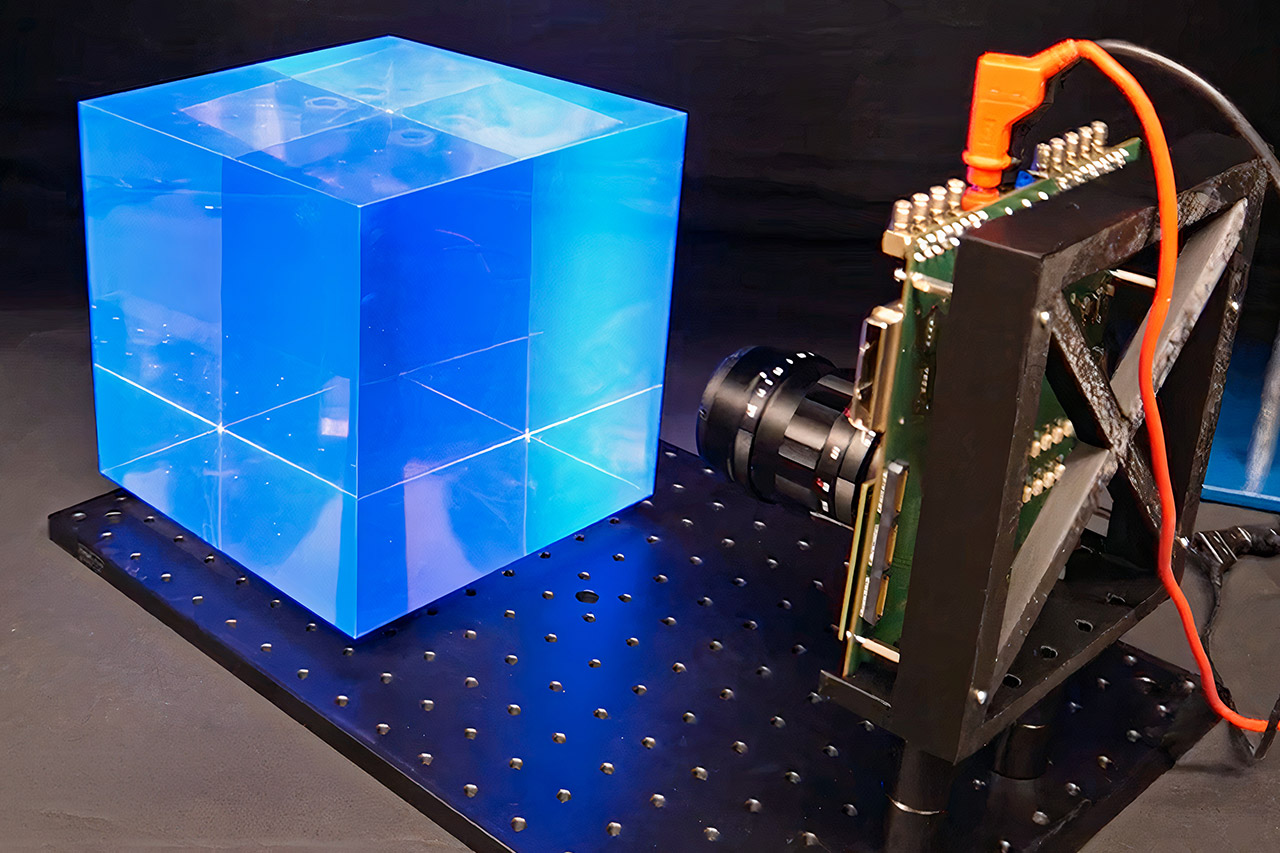
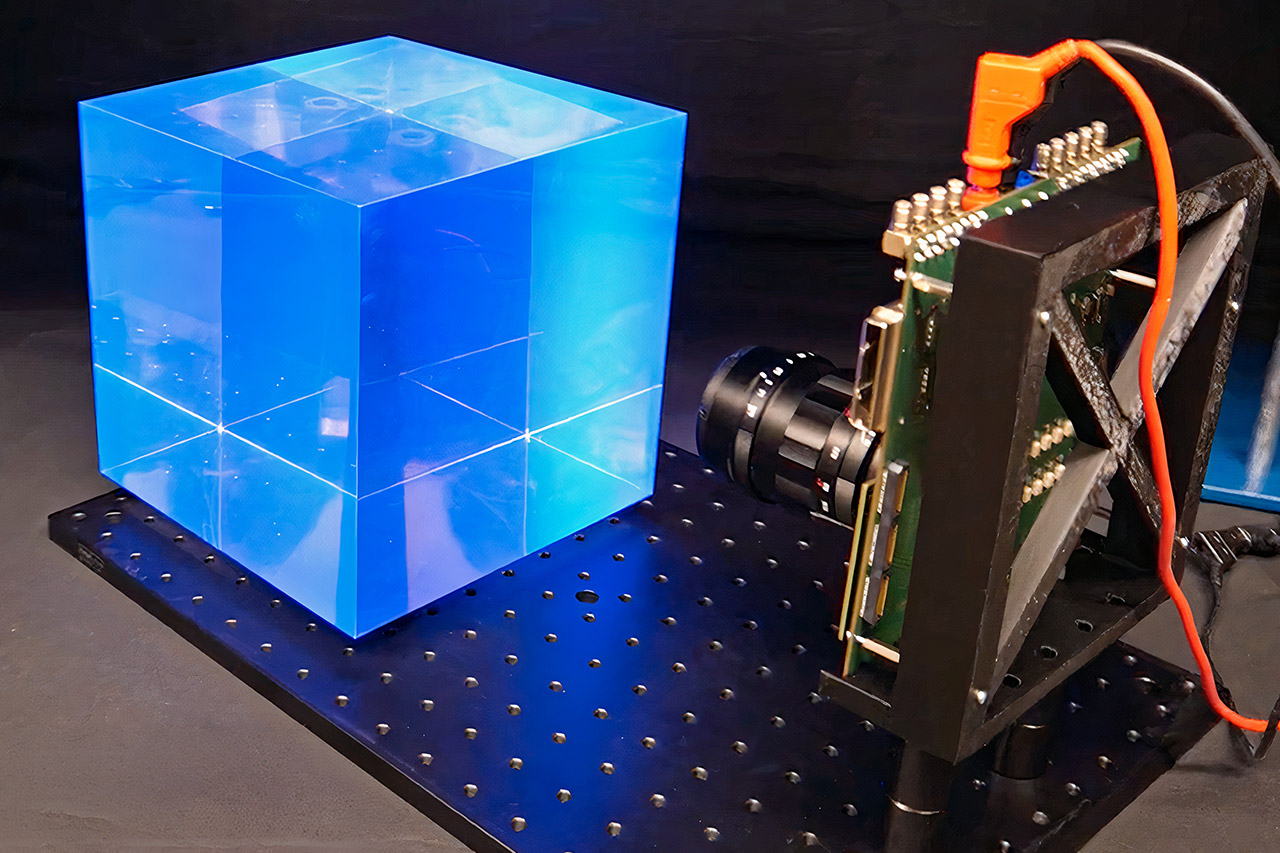


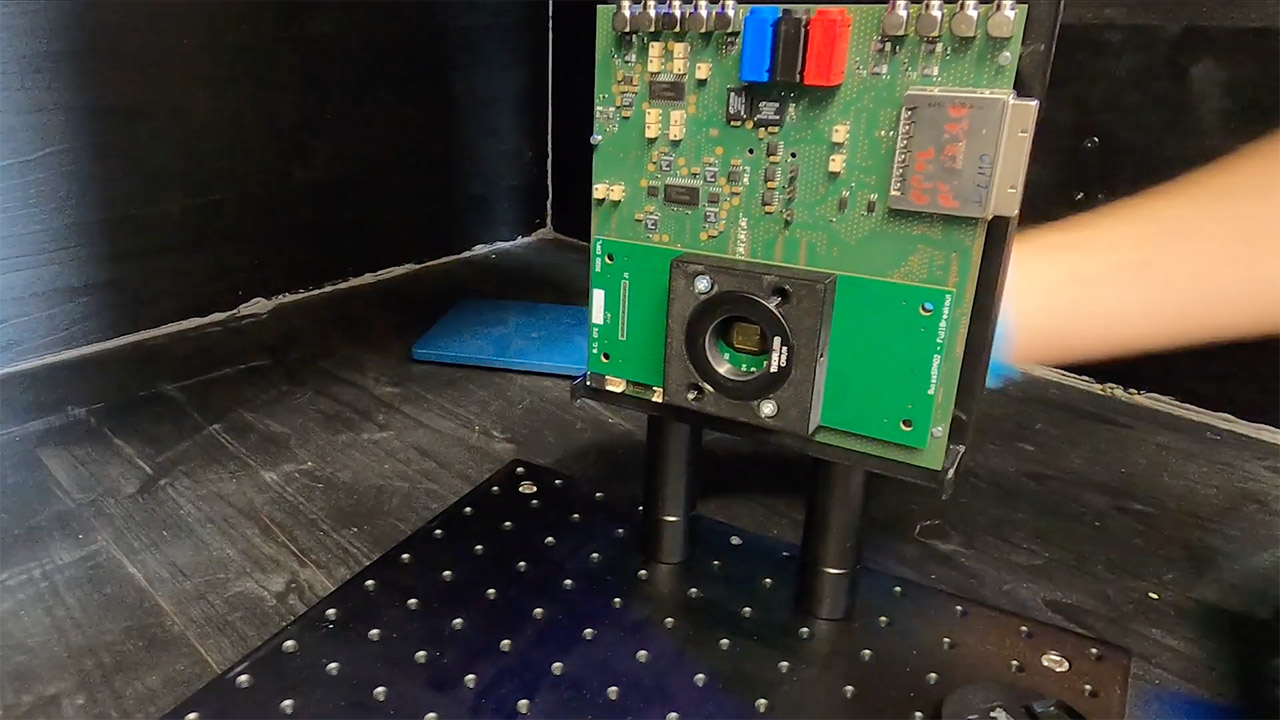

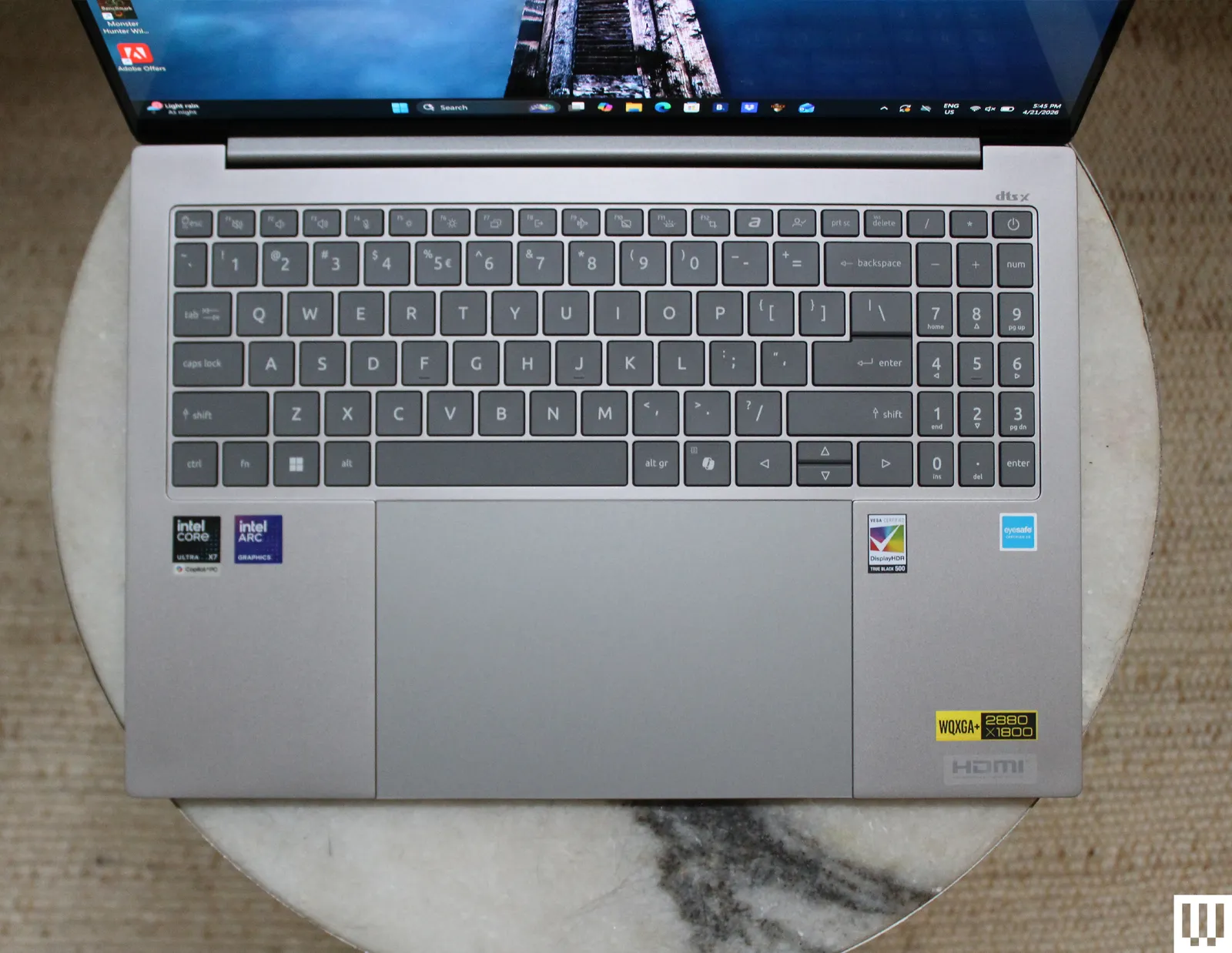




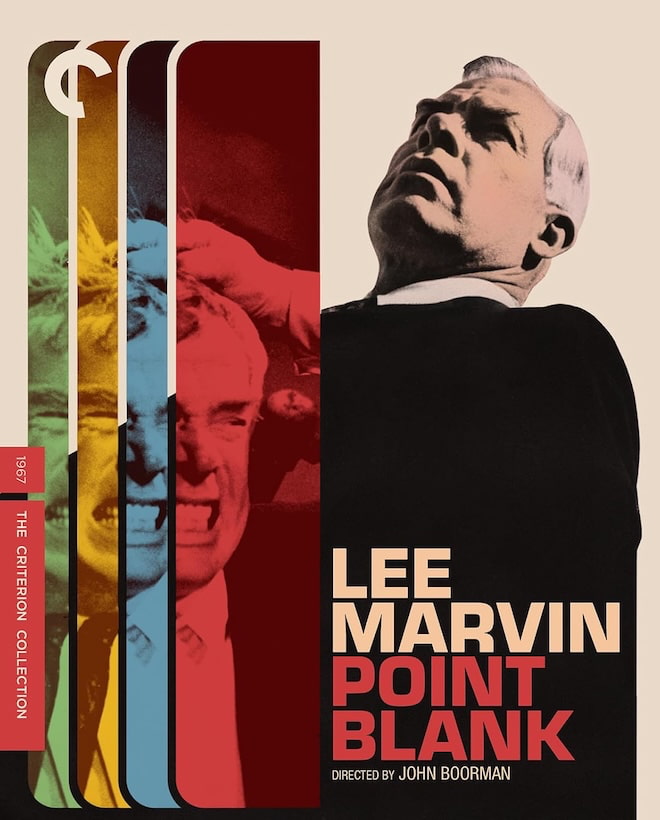





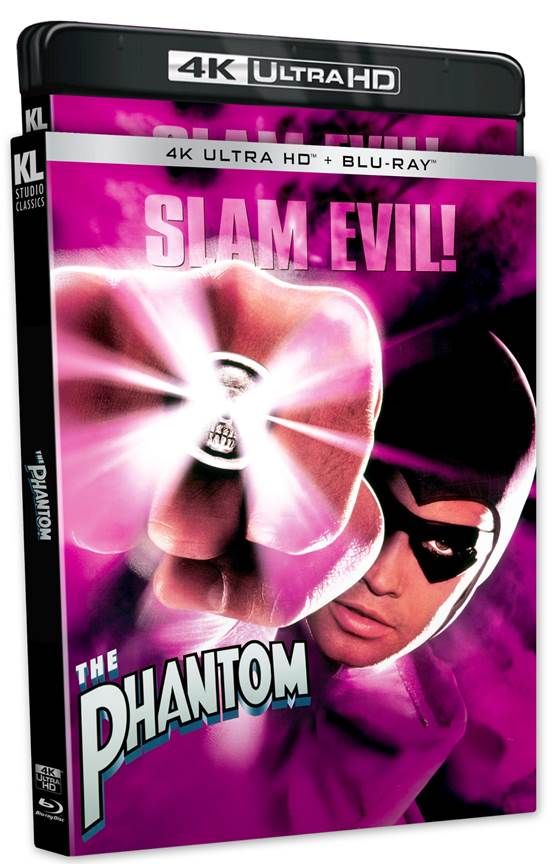

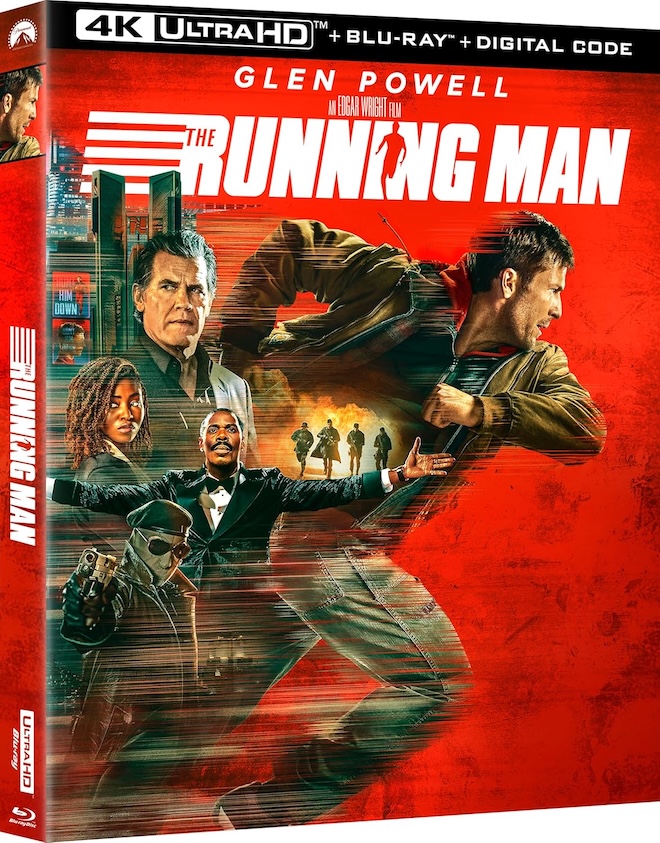

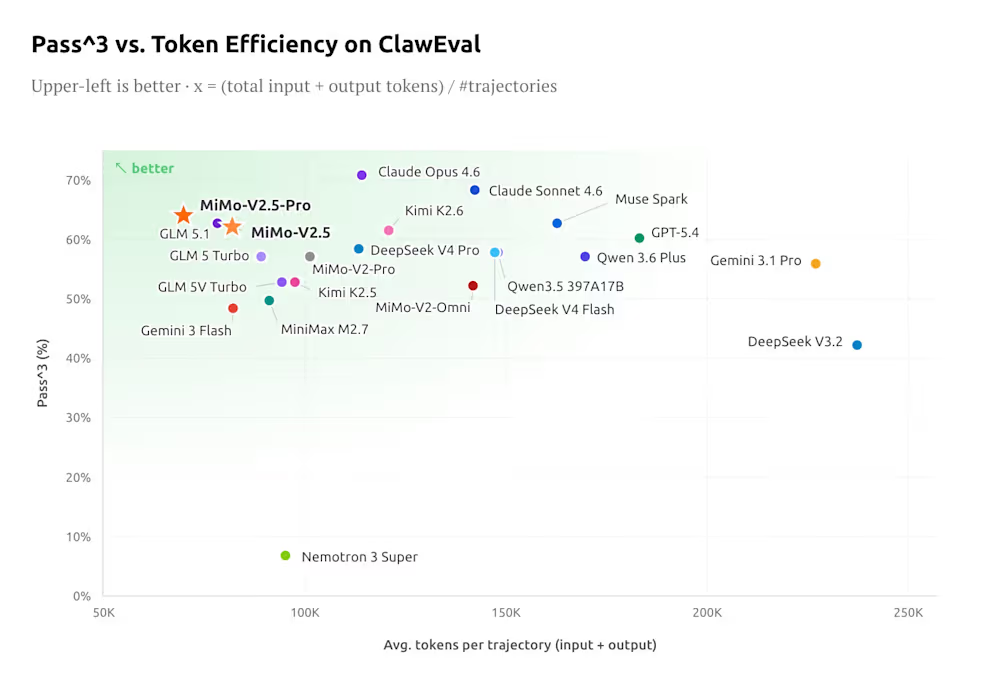


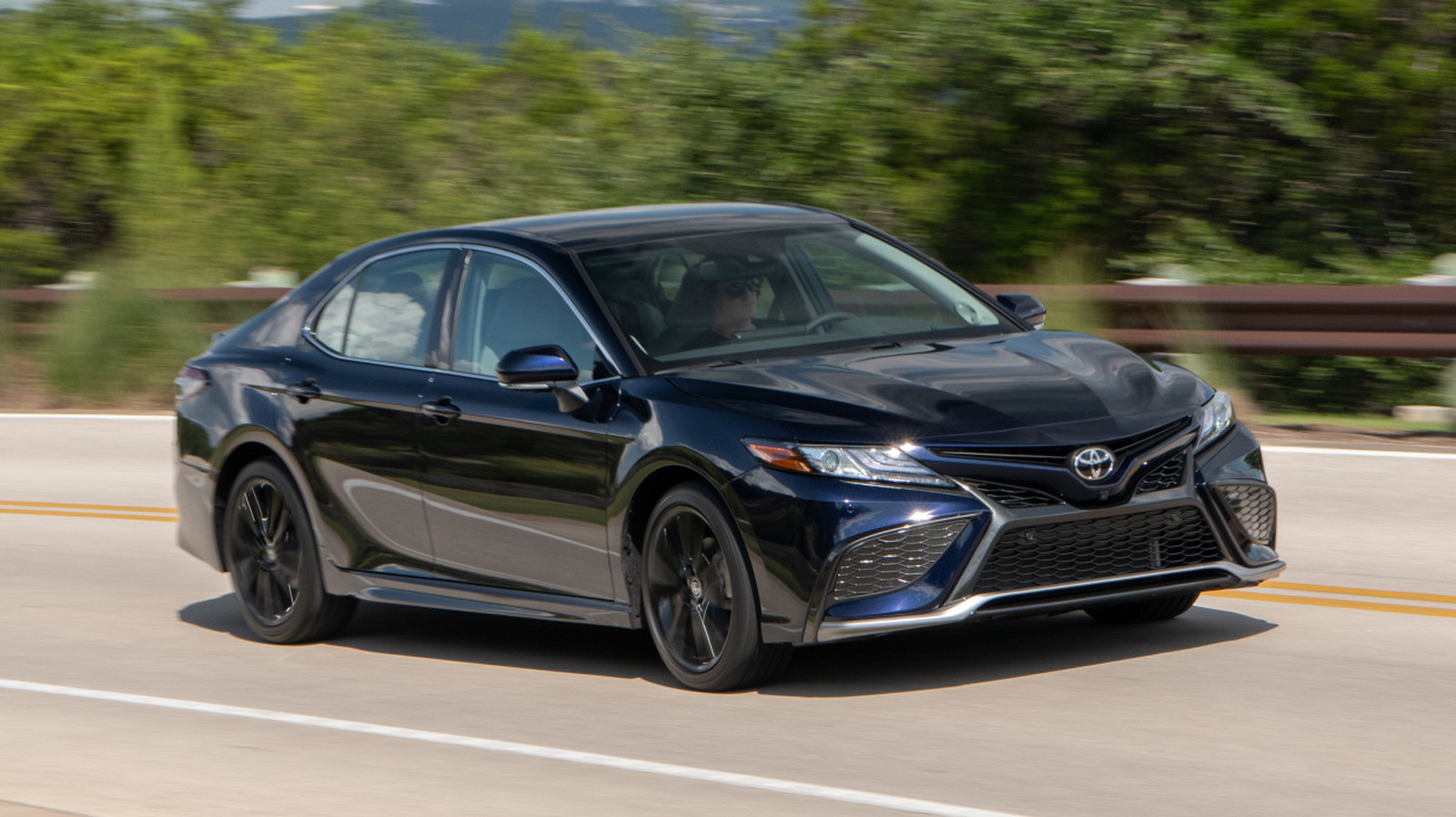
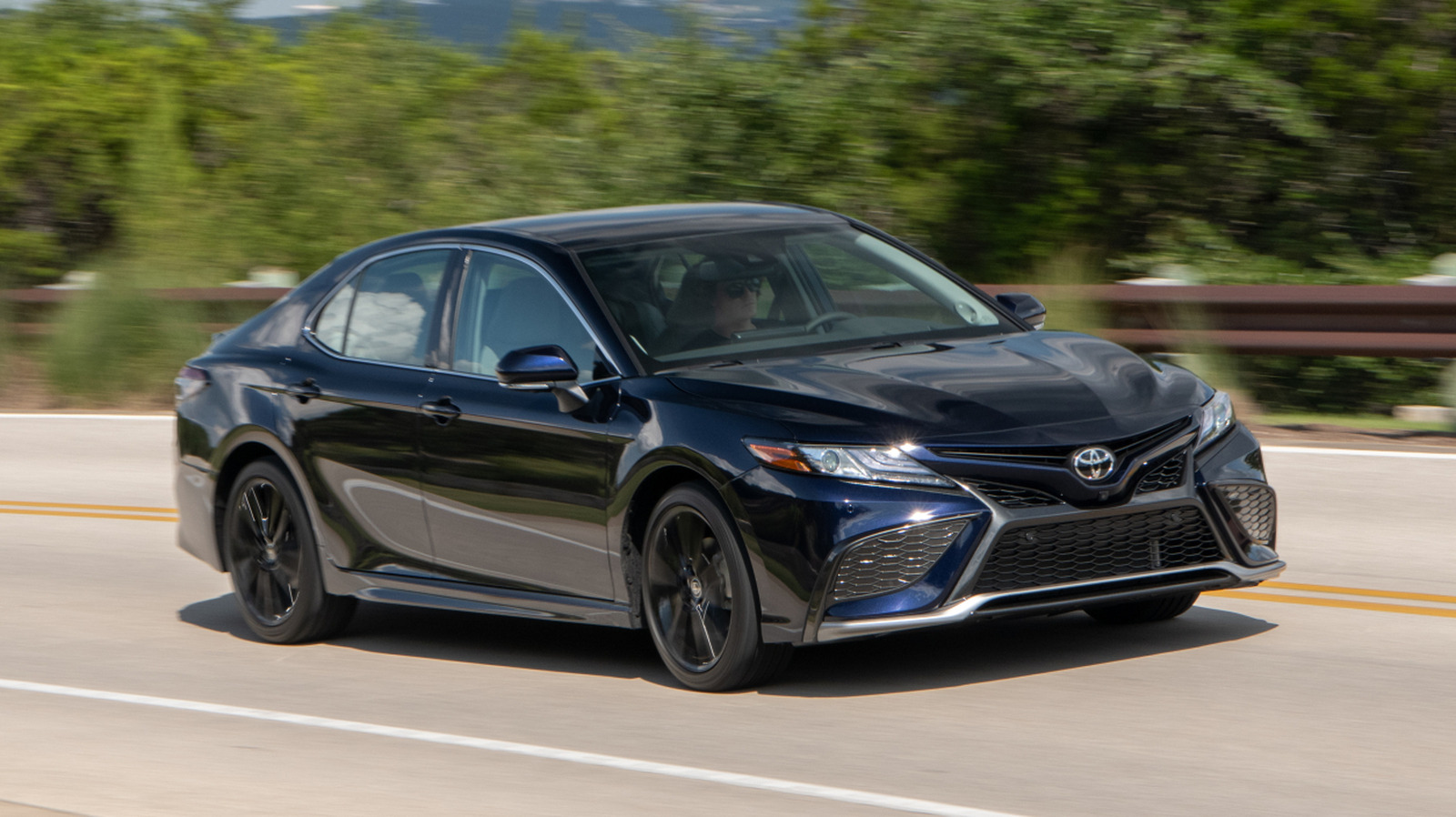











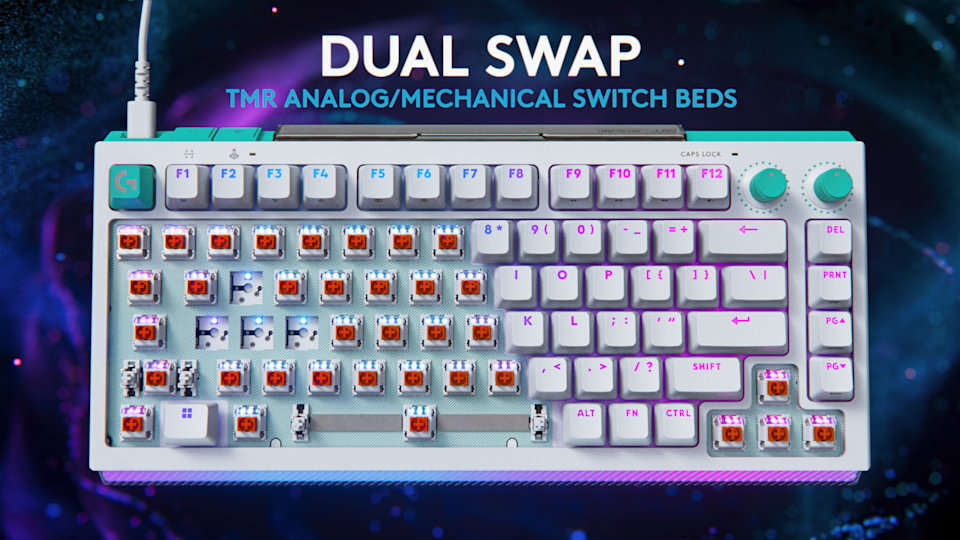




































You must be logged in to post a comment Login