
Crypto World
Amkor Technology (AMKR) Stock Surges as Analyst Hikes Target to $90 Following Strong Q1 Results


Key Highlights
- Amkor Technology is launching a $1 billion convertible senior notes offering maturing in 2031 through private placement channels
- Underwriters hold a 13-day option to acquire an extra $150 million in notes following the initial sale
- First quarter 2026 earnings per share reached $0.33, surpassing analyst projections of $0.23; quarterly revenue totaled $1.68B, marking a 27.5% annual increase
- Needham elevated its stock price objective to $90 while maintaining a Buy recommendation; B. Riley sustained a Neutral stance with a $70 projection
- Capital raised will support capped call arrangements and corporate initiatives including infrastructure investments
Amkor Technology (AMKR) has unveiled its intention to issue $1 billion worth of convertible senior notes scheduled to mature in 2031, exclusively available to qualified institutional purchasers via private placement channels. Shares were hovering around $71.41 when the offering was disclosed, approaching the 52-week peak of $79.23.
The securities are slated to reach maturity on July 15, 2031, featuring semi-annual interest distributions. Underwriters possess the right to purchase an extra $150 million in notes during a 13-day window post-issuance.
Beginning May 15, 2029, Amkor retains the authority to buy back the notes with cash, provided its share price surpasses 130% of the conversion threshold for a designated timeframe. The buyback amount encompasses the original principal alongside accumulated interest.
The semiconductor packaging specialist intends to allocate proceeds toward capped call strategies, mechanisms engineered to minimize shareholder dilution resulting from potential note conversions. Remaining funds will support broader corporate objectives and capital investments.
Bondholders gain conversion rights under specific circumstances, with Amkor having the option to settle using cash and, when appropriate, equity shares. Final interest rates and conversion parameters will be determined at the pricing stage.
This capital initiative follows immediately after impressive first-quarter 2026 financial results. Amkor delivered earnings per share of $0.33 compared to Wall Street’s $0.23 forecast, representing approximately a 43% outperformance. Quarterly sales reached $1.68 billion, climbing 27.5% from the previous year and exceeding the $1.63 billion analyst consensus.
Wall Street Response
The substantial earnings outperformance prompted multiple analyst firms to adjust their outlooks upward. Needham increased its valuation target from $65 to $90 while reaffirming its Buy recommendation, highlighting superior revenue generation and gross margin expansion.
Morgan Stanley boosted its projection from $45 to $69 while keeping an Equal Weight designation. B. Riley Financial adjusted its forecast from $65 to $70, preserving a Neutral position—a figure that remains marginally beneath current trading levels.
Consensus analyst sentiment currently stands at Hold, with an average price objective of $62.75. Four research firms assign Buy ratings, while seven recommend Hold positions.
Executive Trading and Shareholder Structure
Recent months have witnessed notable insider selling activity. Company executives divested a total of 42,500 shares during the past 90 days, generating approximately $2.1 million in proceeds. Executive Vice President Mark N. Rogers offloaded 5,000 units at $59.43 in mid-April. Board member Guillaume Rutten sold 20,000 shares at $48.80 toward the end of February.
Despite these transactions, company insiders maintain approximately 26.4% ownership. Institutional investment firms control 42.76% of outstanding shares.
The equity trades at a price-to-earnings multiple of 47.15 with a beta coefficient of 1.94. Its 50-day moving average rests at $51.53, considerably beneath the present valuation, illustrating the pronounced upward momentum following the earnings announcement.
Amkor’s leverage ratio of 0.28 debt-to-equity, combined with a current ratio of 2.27, demonstrates robust financial stability entering this fundraising phase.
Second-quarter 2026 projections also exceeded both Needham’s forecasts and broader market expectations, based on the firm’s post-earnings analysis.
Wall Street anticipates full-year 2026 earnings per share of $1.62. Trailing twelve-month revenue expanded 12.7% to $7.1 billion.



TLDR:
- BlackRock urges OCC to remove the cap on tokenized reserves under the GENIUS Act stablecoin draft rules.
- Firm argues that tokenized asset risk depends on liquidity, credit quality, and maturity rather than blockchain format.
- The BUILD fund scale of $2.6B tied to stablecoin reserves could be constrained by the proposed regulatory cap limit.
- BlackRock seeks ETF recognition as eligible reserves, pushing parity with government money market funds.
BlackRock Tokenized Reserve Assets emerges as a key regulatory debate within stablecoin policy development. The asset manager pushes for broader recognition of tokenized Treasuries and ETFs under evolving GENIUS Act reserve composition standards.
OCC Tokenized Reserve Cap Faces Institutional Pushback
BlackRock Urges is a response to draft rules under the GENIUS Act. The OCC proposal introduces a 20% ceiling on tokenized reserves for stablecoin issuers. However, BlackRock disputes this structural limitation.
Moreover, the firm argues that risk evaluation should remain consistent across all asset forms. Credit strength, liquidity, and maturity should define eligibility.
Therefore, blockchain representation should not influence regulatory treatment. This approach aims to maintain uniform financial standards across reserve systems.
In addition, BlackRock links the proposal to its tokenization strategy. The BUIDL fund holds around 2.6 billion dollars in tokenized Treasuries.
It also supports stablecoin reserves across multiple platforms. As a result, a cap could restrict institutional scale and operational flexibility.
Furthermore, BlackRock urges OCC to Drop 20% Cap on Tokenized Reserve Assets while industry feedback continues to accumulate.
Over 200 submissions are under review. Consequently, regulators are assessing how to balance innovation with financial stability in reserve frameworks.
ETF Eligibility and BUIDL Expansion Shape Reserve Debate
BlackRock is pushing for clearer ETF classification under reserve rules. The firm seeks confirmation that Treasury ETFs qualify as eligible reserve instruments when fully backed by approved assets.
Additionally, BlackRock calls for equal treatment between ETFs and government money market funds. Both instruments, it argues, share similar risk profiles.
Therefore, they should receive consistent regulatory recognition under safe harbor provisions within the GENIUS Act framework.
Meanwhile, the firm recommends expanding the list of eligible reserve assets. Treasury floating rate notes with short maturities are included in its proposal. These instruments offer stability and frequent resets, which support liquidity management in reserve portfolios.
The OCC is evaluating feedback from more than 200 stakeholders. As a result, final rules are expected to shape reserve standards before the 2027 compliance deadline.
In addition, regulators are examining how tokenized and traditional instruments should coexist within reserve structures.
This ongoing review may redefine stablecoin backing frameworks. Ultimately, ETF eligibility and tokenized reserve treatment remain central to the evolving regulatory direction.
TLDR:
- The NYSE proposal enables tokenised equities and ETFs to trade on the same order book as traditional shares.
- Tokenised securities must retain identical CUSIP, ticker, rights, and execution priority under filing.
- DTC pilot ensures clearing and settlement remain on a T+1 basis within the existing market infrastructure.
- SEC review aligns NYSE tokenisation framework with regulated exchange trading standards and rules.
The NYSE tokenised securities filing is a regulated framework where tokenised equities can trade alongside traditional listed shares.
The proposal integrates digital representation into existing exchange systems while preserving settlement rules, execution priority, and investor protections under current market infrastructure systems.
Unified Order Book and Tokenised Execution Framework
The filing sets a unified structure for trading tokenised equities within the same order book as traditional shares. This ensures both formats interact under identical execution rules. As a result, price discovery remains consistent across the exchange environment.
Moreover, the NYSE tokenised securities filing requires tokenised assets to retain the same CUSIP, ticker, and shareholder rights.
This ensures legal equivalence between digital and traditional forms. Therefore, market participants face no change in rights or instrument classification during trading. It also reduces operational discrepancies between digital and traditional settlement processes over time.
Furthermore, liquidity remains unified under a single order book structure. The NYSE tokenised securities filing avoids splitting trading venues. Instead, both tokenized and non-tokenised orders interact directly.
Consequently, fragmentation risk is reduced across institutional and retail participation. This structure supports deeper liquidity integration across institutional trading desks and market participants globally.
Execution mechanics remain unchanged under the NYSE tokenised securities filing. Orders follow identical matching rules on the exchange. Additionally, execution priority remains consistent for all participants.
This preserves existing market structure behaviour without introducing parallel trading systems. It also signals the gradual adoption of tokenised infrastructure within regulated markets globally over time.
DTC Pilot Settlement Design and Regulatory Review Path
DTC pilot settlement under the NYSE tokenised securities filing maintains the existing post-trade infrastructure. Trades continue to settle on a T+1 cycle. Therefore, tokenisation occurs at the execution layer only.
Custody and clearing remain within established financial systems, ensuring continuity across institutional workflows.
This approach ensures operational continuity across custodians and broker-dealer networks during the market operations cycle.
Additionally, the pilot spans three years under regulatory supervision. The NYSE uses this period to evaluate system efficiency and reconciliation processes. Market participants provide feedback through structured SEC channels during the review phase.
Moreover, SEC coordination ensures consistency across exchange frameworks. At the same time, traditional equity market rules remain unchanged, preserving stability within regulated trading environments.
Finally, the NYSE tokenised securities filing keeps tokenised trading separate from crypto-native systems. Instead, it operates within a regulated equity infrastructure.
As a result, market structure evolution remains controlled, with digital representation embedded into existing financial rails rather than replacing them.
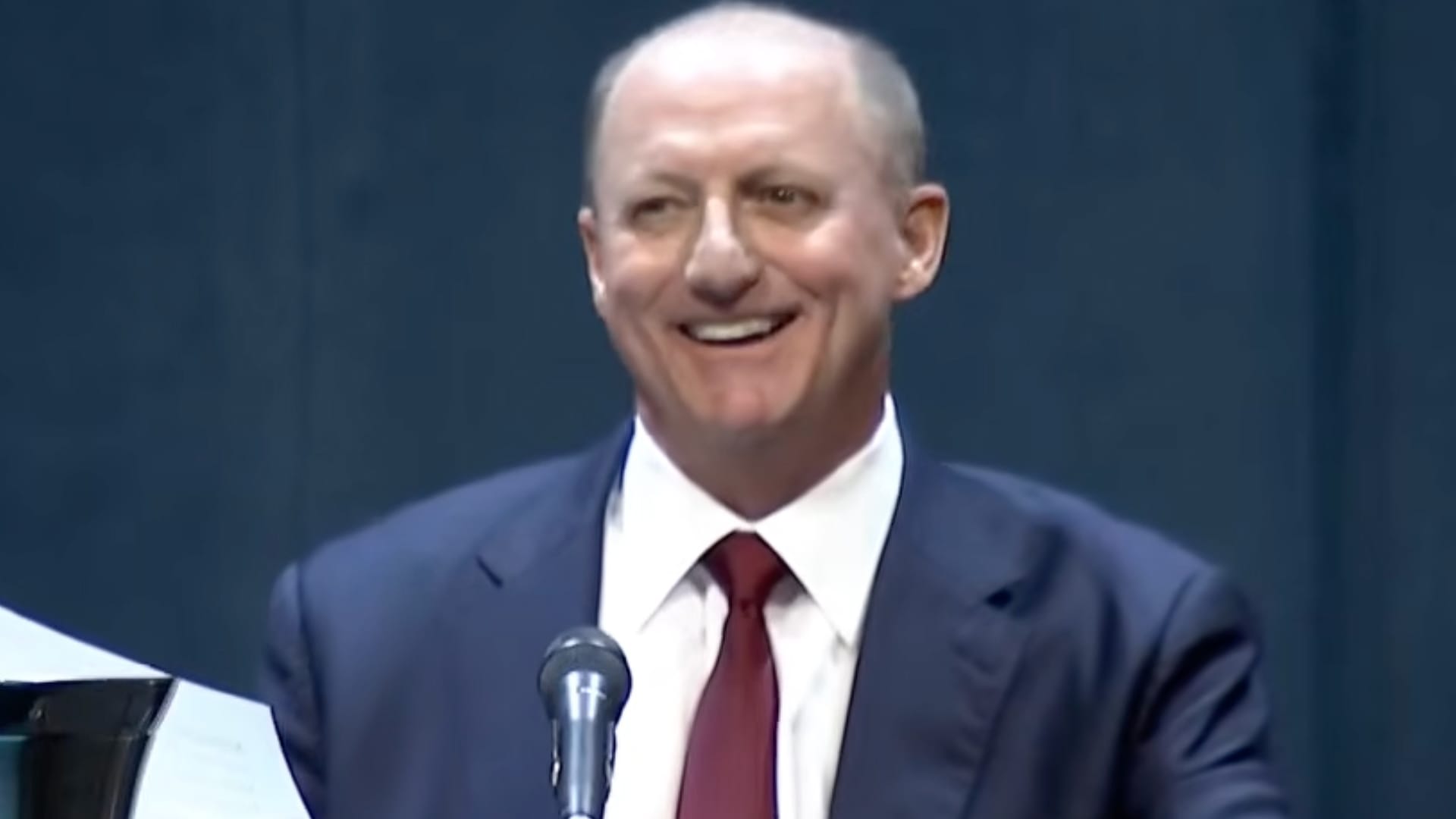
Greg Abel, CEO of Berkshire Hathaway, speaks during the Berkshire Hathaway Annual Shareholders Meeting in Omaha, NE on May 2, 2026.
CNBC
OMAHA, Nebraska — In his debut running Berkshire Hathaway‘s annual meeting, Greg Abel delivered what many shareholders came to see: a steady hand, a firm grasp of the sprawling conglomerate and just enough of his own style to reassure investors the post-Warren Buffett era is on solid footing.
The reviews from longtime shareholders and professional investors were broadly positive, even as many acknowledged the notable absence of Buffett, whose wit, storytelling and investing acumen have long defined the event.
“Very solid. No misspoke words. Thorough answers,” said Steve Check, founder of Check Capital Management. “Nice guy, but we sure don’t have the laughs that we had with Warren and Charlie [Munger].”
“Greg and company delivered on content, examination of businesses and confidence in outlook,” Macrae Sykes, a portfolio manager at Gabelli Funds.
David Kass, a finance professor at University of Maryland and a decades-long Berkshire shareholder, said he grew more confident in Berkshire after seeing firsthand Abel’s performance. He pointed to the firm’s “deep bench” — including executives like vice chairman of Berkshire’s insurance operations Ajit Jain; Adam Johnson, president of Berkshire’s consumer products, service and retailing businesses; and BNSF Railway CEO Katie Farmer — as evidence that leadership continuity runs well beyond a single figure.
“Greg demonstrated the knowledge of and passion for running all of Berkshire’s businesses,” Kass said. “His main focus is that of operations. By contrast, Buffett focuses more on the investment side of Berkshire.”
Granular insights
That shift in emphasis was evident throughout the Q&A session, where Abel leaned into detailed discussions of Berkshire’s subsidiaries, a level of specificity that resonated with shareholders seeking reassurance about execution under new leadership.
“The answers were really good as they gave granular insights,” said Tilman Versch, a German shareholder and founder of investor community Good Investing. “Everybody misses Warren. His clear, consistent and funny answers are hard to replace. But with more practice, I hope Greg can find his own style.”
Abel opened the session with a near hourlong presentation walking investors through the inner workings of Berkshire’s major businesses. He drilled into performance and outlook across its railroad unit, energy operations, insurance arm and retail subsidiaries, offering a level of operational detail that shareholders said felt more akin to an investor day than the freewheeling, anecdote-driven format of past meetings.
Greg Abel and Ajit Jain speak during the Berkshire Hathaway Annual Shareholders Meeting in Omaha, NE on May 2, 2026.
CNBC
Leaning into tech
Artificial intelligence emerged as a central theme at the meeting. Abel said Berkshire is already exploring AI-driven tools to improve operations at BNSF Railway, and spoke fluently about technologies like large language models, emphasizing their potential to enhance the company’s existing businesses.
He also pointed to the surge in data center development as a major tailwind for Berkshire’s utility operations, with rising power demand creating a significant growth opportunity for its energy grid assets.
“He was clearly very comfortable with technology and AI, as opposed to Warren, who typically avoided technology-oriented investments outside of Apple and, more recently, Google,” said Adam Patti, chief executive of VistaShares and manager of an ETF tracking Berkshire’s largest holdings. “Perhaps that lends insight into how the portfolio may evolve over time.”
Buyback disappointment
Berkshire’s pace of share repurchases was a point of frustration for some shareholders.
The firm repurchased $235 million of stock in the first quarter, according to the earnings report. The company had already disclosed that it purchased $226 million in stock on March 4, so this means it only slightly increased its buying as the quarter came to a close.
“The only missing piece was any real guidance on additional buybacks,” Patti said. “I was hoping that they would get more aggressive about this.”
“I’m disappointed in the lack of significant buybacks,” Check said. “I guess they’re waiting for a lower price, but they bought much more at this valuation before.”
The crowd may still be adjusting to a Berkshire meeting without Buffett at center stage. But after this first outing, investors appear increasingly willing to give Abel the room and time to define the next chapter on his own terms.
“They really incorporated more of the businesses than they ever have because it used to always just be Warren answering Warren questions,” said Susan Chan, a longtime shareholder who along with her friend Wanda Lee decided to skip the meeting this year. They watched it from Chan’s home in New Jersey instead, and found that the new format instilled confidence in Berkshire’s future direction. “And now, it’s really more of a ‘Our shareholders are our family. And we’re going to show you exactly what we’re invested in, and what we’re doing.’”
“We made the conscious decision not to go this year,” Chan said. “But we just said to each other, ‘Let’s go next year.’”
TLDR:
- Founders Fund has rapidly deployed into AI and defense with $600M average checks
- Capital concentration grows as sovereign funds back mega rounds in Anthropic and Anduril deals
- Venture capital shifts toward mega-funds competing for limited AI infrastructure opportunities globally
- Prior $4.6B fund fully deployed in under 12 months, showing extreme late-stage funding velocity
Founders Fund, a $6 billion is a massive bet, rising ambition, and high-stakes AI deals reshape how money moves. This has stirred excitement, risk, and global attention across the technology investment landscape in the 2026 cycle.
Rapid Capital Deployment Across AI-Led Portfolios
Founders Fund $6 billion growth fund has reshaped late-stage venture deployment through concentrated AI exposure and oversized check writing. It deployed capital across a small set of frontier technology companies, including Anthropic and Anduril.
Average allocations near $600 million reflect a strategy focused on ownership scale rather than diversification across dozens of startups.
Funding speed increased as investors competed for early access before formal fundraising rounds began in the AI sector.
Capital deployment patterns show a shift toward preemptive investments executed ahead of traditional venture timelines.
This structure positions the Founders Fund $6 billion growth fund within elite global AI financing networks across the market layer.
Investment activity accelerated as sovereign funds joined private capital in large-scale AI funding rounds. These rounds often required billion-dollar commitments to secure meaningful ownership stakes in leading model developers.
The $6 billion fund structure enabled rapid participation in competitive deals involving multiple global technology players.
Co-investment activity increased alongside corporate participation from major platforms and sovereign-backed investment vehicles.
Portfolio concentration reflects a narrow focus on companies with infrastructure-scale artificial intelligence capabilities.
This approach continues to define how Founders Fund positions capital within late-stage venture competition globally across AI-driven markets and defense technology ecosystems, with sustained institutional allocation pressure rising globally
Market Shift Toward Mega-Funds and Concentrated Bets
The venture ecosystem continues to transition toward mega-fund structures as capital requirements in artificial intelligence expand rapidly.
Smaller venture vehicles face limitations in participating in billion-dollar AI financing rounds. Founders Fund, a $6 billion growth fund, reflects this structural evolution by concentrating capital into fewer but larger bets.
Investment focus remains centered on AI infrastructure providers, defense technology firms, and high-growth software platforms.
These categories attract sovereign wealth participation, as well as global technology corporations seeking strategic exposure.
Capital inflows continue to cluster around a limited number of frontier companies operating at scale. This pattern reinforces the concentration effect seen across the Founders Fund $6 billion growth fund portfolio.
Deal flow in late-stage venture markets increasingly involves preemptive allocation before public fundraising cycles begin.
This method allows investors to secure positions in high-demand companies before competitive auction-style rounds.
The Founders Fund, a $6 billion growth fund, deployed capital using this approach across multiple AI and defense names. Such execution compresses traditional venture timelines and accelerates capital concentration within select firms.
Global investors, including sovereign funds and corporate backers, continue to increase participation in these rounds. Market activity shows ongoing preference for fewer but larger allocations per portfolio company.
This trend aligns with deployment strategies observed in the Founders Fund $6 billion growth fund model structure
There is a predictable arc to how most people choose an online gambling platform. They hear a name — usually through advertising, a sports sponsorship, or a recommendation — they search it, they sign up. DraftKings and Bet365 are the two names that appear most often at the start of that arc. Between them they cover the US market and the international market and between them they have enough marketing spend and brand recognition to make themselves the obvious first answer to most gambling-related searches.
The question that is getting more interesting in 2026 is not where players start. It is where they end up after they have done more than accept the first answer. Players who compare platforms seriously — who look past brand recognition and into the specific dimensions that affect their daily experience as a gambler — are increasingly finding that the most recognised names are not the ones that score highest on the criteria that matter most to them.
ZunaBet launched in 2026 and is appearing at the end of that more thorough research process with growing frequency. This article follows that research process — examining what DraftKings and Bet365 offer, where they fall short for specific player types, and what ZunaBet delivers that brings those players to a different conclusion.
DraftKings: The Starting Point for Most US Players
DraftKings built its position in the US market through a combination of timing, existing brand equity, and genuine product investment. The daily fantasy sports audience it had built before state-by-state sports betting opened gave it a conversion base that competitors entering the market from scratch could not immediately match. By the time most international operators had navigated US licensing requirements DraftKings was already operational across multiple states with a user base that extended back years before their first legal sports bet.
The sportsbook that emerged from that foundation is genuinely well-built for its market. American sports culture is embedded in the product in ways that international operators find difficult to replicate — not just which leagues are covered but how the markets are structured, how the odds are presented, and how the betting experience aligns with the rhythms of the US sports calendar. The app is polished. The in-play product works. The live betting experience reflects years of iteration.
The casino product serves its purpose. A library of reasonable size from established providers, live dealer content, standard table game options. It is not exceptional by global casino standards but it meets the needs of the mainstream US player whose primary interest is sports betting.
The limitations surface when players start comparing beyond the initial impression. Fiat payment infrastructure means withdrawals take the time fiat banking takes — same-day through PayPal at best, several business days through bank transfer as standard. Bitcoin in select states is a limited concession to crypto demand rather than a genuine crypto infrastructure commitment. Dynasty Rewards points require navigation to extract real value and experienced players consistently find the effective return lower than headline tier descriptions imply. Geographic operation is restricted to licensed US states.
Bet365: The Starting Point for Most International Players
Bet365’s position in international markets was built over a much longer period than DraftKings’ US dominance. Founded in 2000, it has had time to develop relationships, infrastructure, and market coverage that newer platforms are still working toward. The sportsbook is the product of that investment — a breadth and depth of coverage that no competitor has fully replicated.
The range of markets is the headline achievement. Not just major global sports at full depth but minor leagues, niche sports, and events that other platforms do not price. In-play coverage runs on events that competitors close before the match begins. The live streaming service embedded in the platform lets players watch events as they bet on them — a feature Bet365 has offered long enough that it feels standard even though competitors have not consistently matched it.
The casino reflects similar investment in breadth. A large library from established providers, strong live dealer content, and a platform experience that is consistent and polished across devices. The product is broad and well-maintained.
The limitations are structural and significant for specific player types. Geographic restrictions eliminate the platform from the US market and several other jurisdictions entirely. The loyalty program is the most consistently criticised aspect for the general player base — an invite-only VIP structure that keeps meaningful rewards inaccessible to most players and provides no clear pathway for those who want to reach them. Crypto support is minimal. Fiat banking timelines apply.
ZunaBet: Where the Thorough Research Ends Up
ZunaBet launched in 2026 under Strathvale Group Ltd, operating under an Anjouan gaming license and registered in Belize. The team brings over 20 years of combined industry experience. It is not a US state licensed operator and it does not hold UK Gambling Commission certification. It is a crypto-first, internationally accessible platform built specifically around what a thorough research process reveals that DraftKings and Bet365 are not providing.
The game library makes the product’s opening statement. ZunaBet carries 11,294 titles from 63 providers. Neither DraftKings nor Bet365 approaches that combination of scale and provider diversity on the casino side. Evolution supplies the full live dealer catalogue. Pragmatic Play covers multiple categories. Hacksaw Gaming delivers the high-volatility slot mechanics that experienced players specifically seek out. Yggdrasil contributes its distinctive design philosophy. BGaming brings content whose aesthetic speaks directly to the crypto-native player. Sixty-three providers means 63 genuinely different creative approaches producing content with different mechanics, different volatility profiles, and different visual identities — not a large number built around a small pool of commercial relationships.
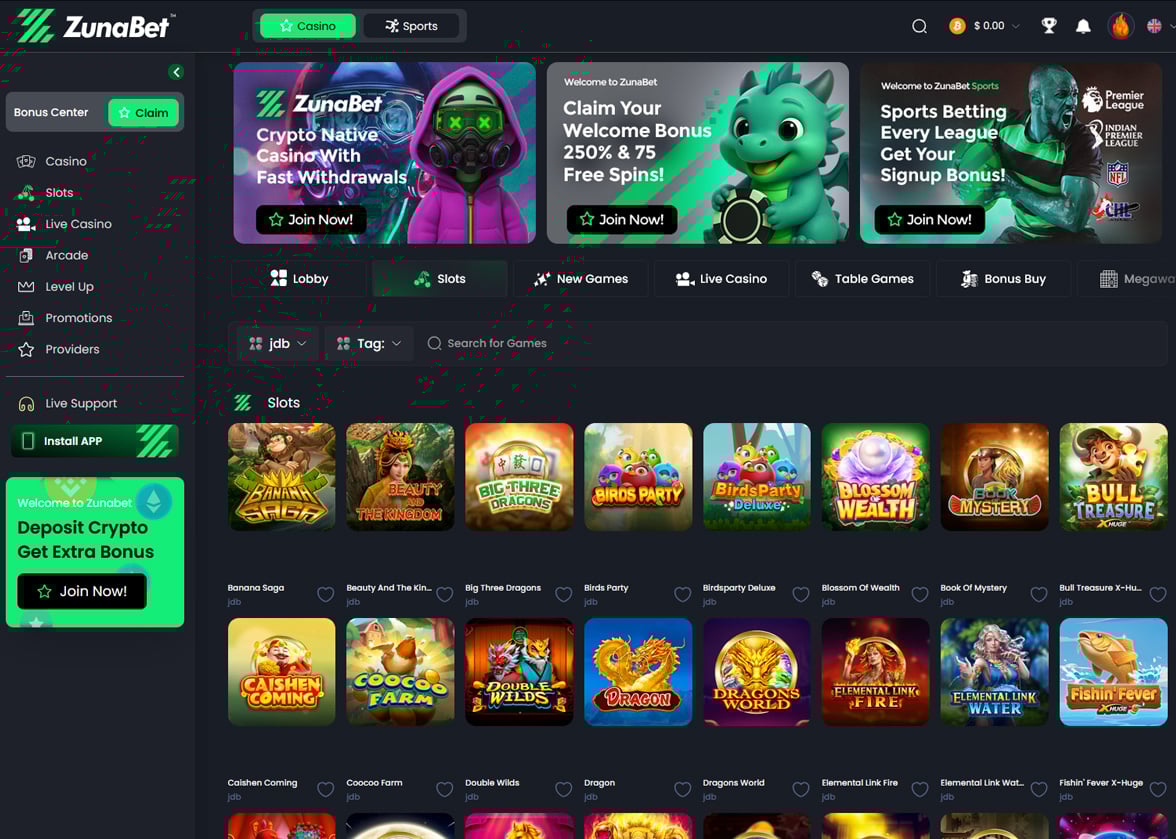
The sportsbook covers football, basketball, tennis, NHL, and other major global sports. The extension beyond both established platforms comes in esports — CS2, Dota 2, League of Legends, and Valorant as genuine primary markets rather than token inclusions. Virtual sports and combat sports complete a sportsbook built to serve the full range of what the modern player bets on.
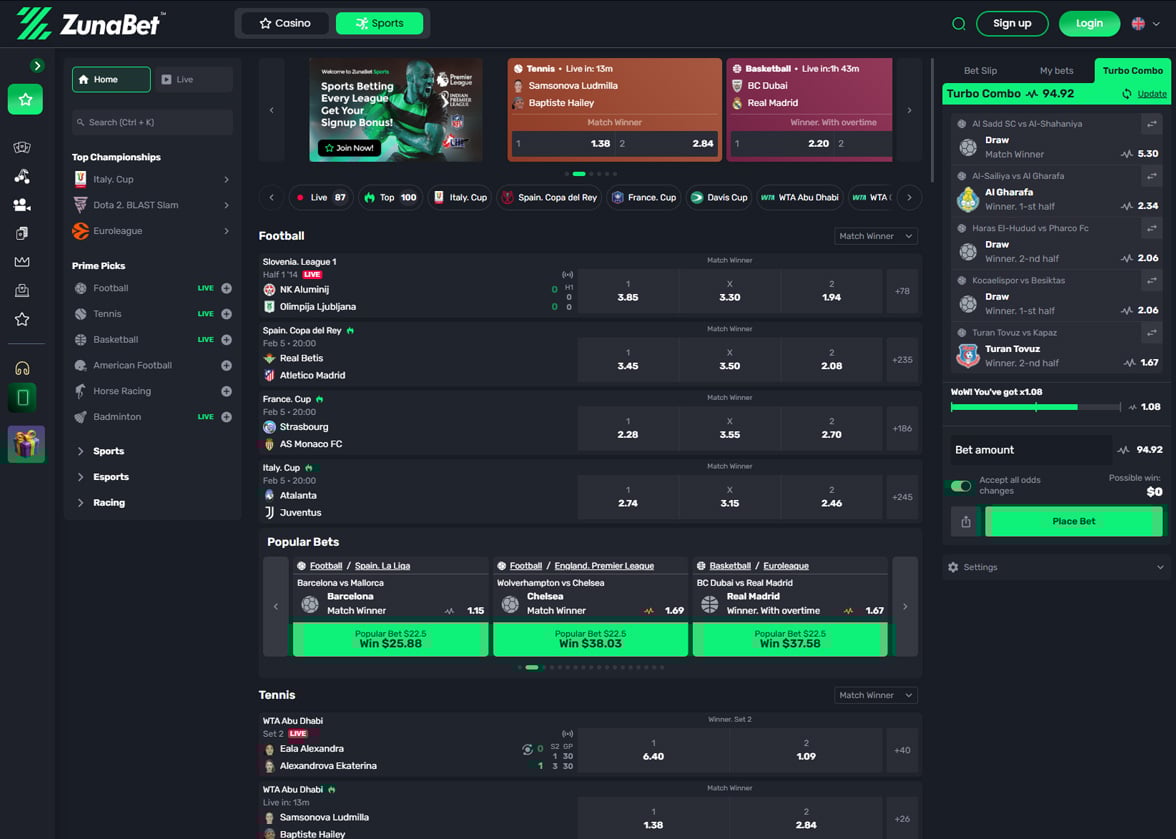
Payment support covers more than 20 cryptocurrencies natively — BTC, ETH, USDT across multiple chains, SOL, DOGE, ADA, XRP, and others. No platform processing fees. Withdrawals settling in minutes. Apps across iOS, Android, Windows, and MacOS with 24-hour live chat support.
Payments: The Comparison That Changes Everything
Players who compare payments across all three platforms encounter a comparison that is qualitatively different from most feature comparisons. It is not a question of which platform does the same thing slightly better. It is a question of which platforms were built on fundamentally different infrastructure with fundamentally different outcomes.
DraftKings and Bet365 were both built on fiat banking infrastructure at a time when that was the only viable option. Their payment systems route through banks, card networks, and e-wallet processors. Improvements have been made over the years but the infrastructure has not changed. A withdrawal on DraftKings or Bet365 takes the time fiat banking takes — ranging from several hours at best to multiple business days at standard depending on method and jurisdiction.
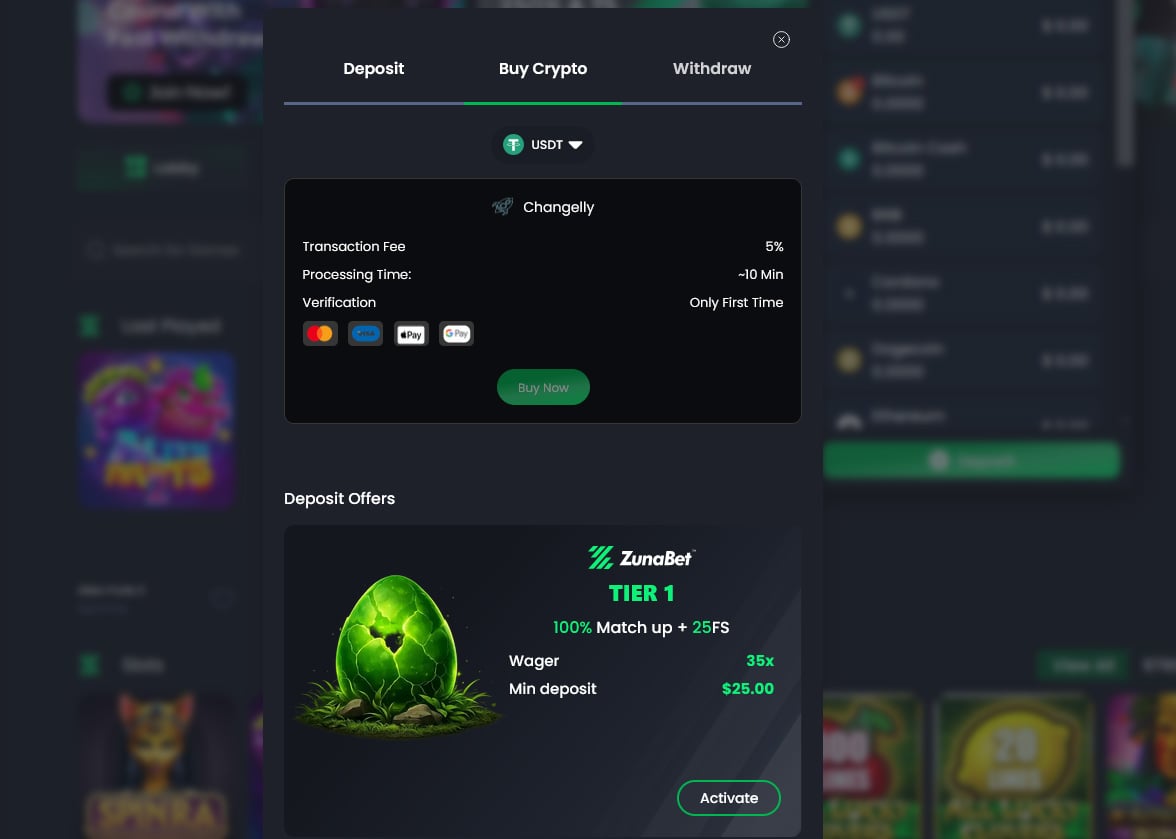
ZunaBet was built in 2026 on crypto infrastructure as the foundation rather than the addition. Withdrawals settle at network speed. In practice that means minutes — not hours, not the next morning, not after the weekend. The money moves when the player requests it because the infrastructure was designed to make that possible.
For a player who has used all three platforms and compared withdrawal experiences directly the difference is not a preference. It is a permanent recalibration of what acceptable looks like. Every subsequent platform evaluation includes the question of whether withdrawals are that fast. For most traditional platforms the answer is no.
Loyalty Programs: The Comparison That Frustrates Players on Traditional Platforms
The loyalty program research across DraftKings, Bet365, and ZunaBet illustrates three different relationships between platform and player.
DraftKings Dynasty Rewards gives players a points balance and tier position. The conversion from points to actual cash value requires navigation through a redemption structure that varies by option and game type. Players who calculate their effective return per dollar spent find a number that is lower than the headline tier benefits suggested. The system retains players but it retains them through habit as much as genuine satisfaction.
Bet365 gives most players a loyalty program that is effectively invisible. The invite-only VIP structure ensures that meaningful rewards flow to a small percentage of the player base while the majority operates without transparency about what their engagement earns them. The absence of a clear loyalty pathway is one of Bet365’s most consistently cited limitations among players who discuss it in gambling communities.
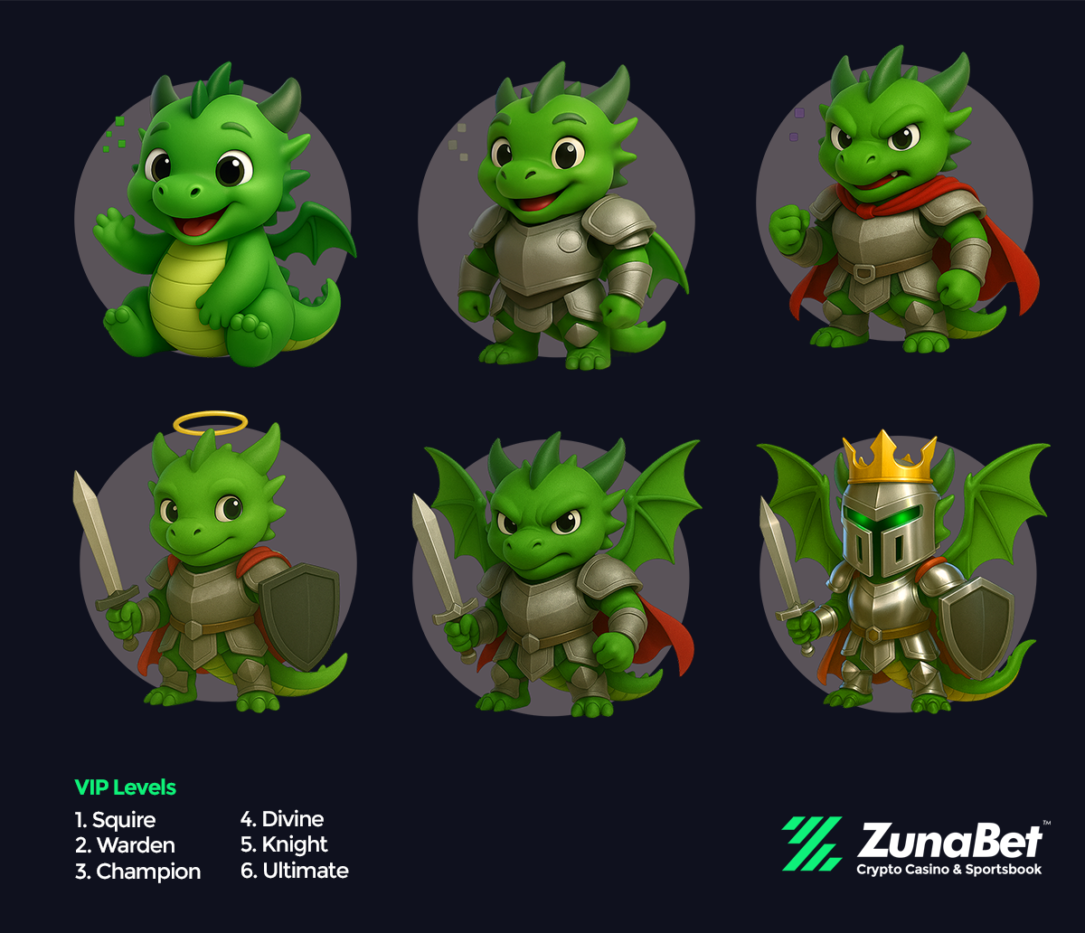
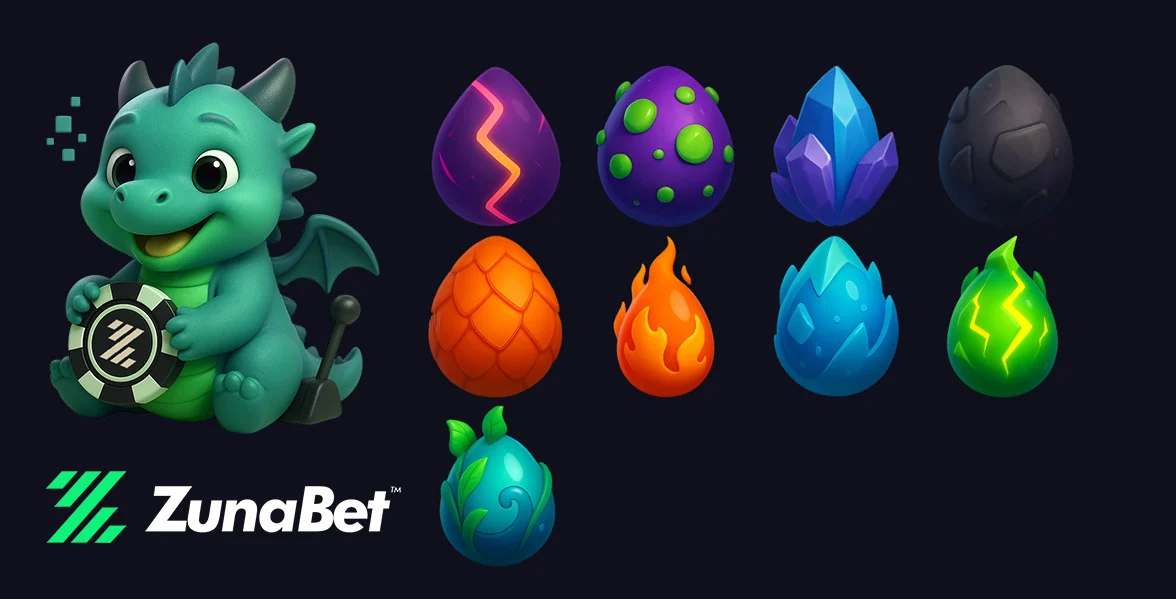
ZunaBet’s dragon evolution loyalty system gives players a precise, calculable answer before they join. Six tiers — Squire, Warden, Champion, Divine, Knight, and Ultimate — built around a gamified mascot called Zuno with direct rakeback rates of 1%, 2%, 4%, 5%, 10%, and 20%. All tiers accessible to all players. All rates applying to all activity on the platform — casino games and sportsbook bets alike.
Twenty percent rakeback at the Ultimate tier is a number that speaks for itself. A player putting consistent volume through the platform receives a fifth of that value back directly, every month, without a conversion process or a redemption decision. Additional tier benefits including up to 1,000 free spins, VIP club access, and double wheel spins build on a structure that is already generous and transparent.
The Welcome Bonus
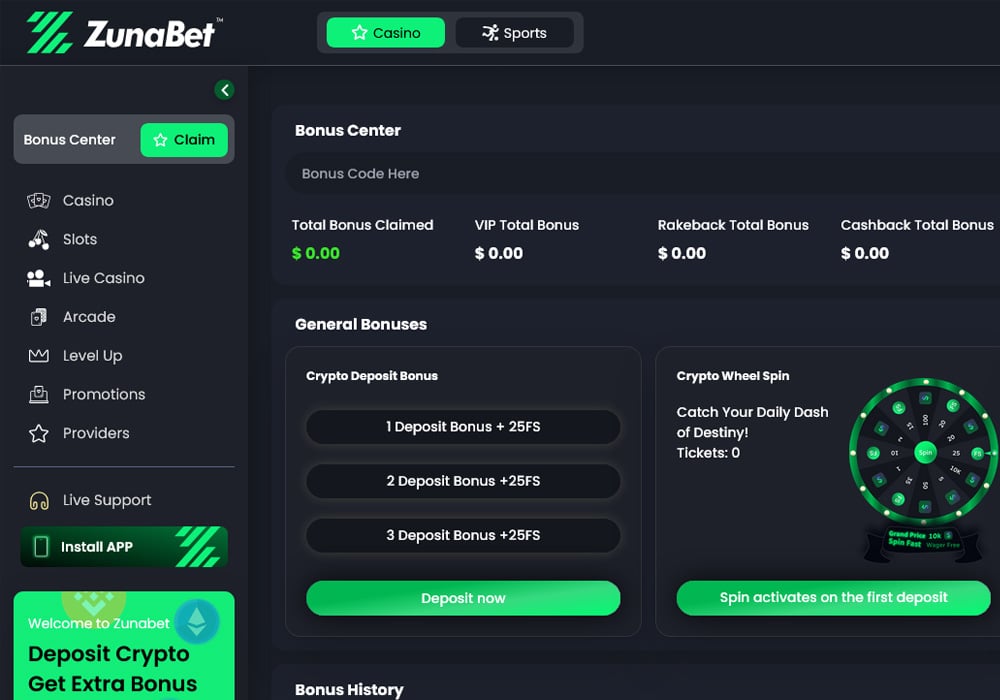
ZunaBet new players receive a bonus across three deposits totalling up to $5,000 plus 75 free spins. First deposit matched 100% up to $2,000 with 25 free spins. Second deposit matched 50% up to $1,500 with 25 spins. Third deposit matched 100% up to $1,500 with 25 spins. The three-deposit structure gives players time to explore a platform of 11,000-plus games and a full sportsbook properly before the promotional period ends.
DraftKings and Bet365 offer welcome promotions within their respective regulated markets. Current terms vary by jurisdiction and should be confirmed directly on each platform.
The Next Generation of Players and Where Their Research Leads
The player doing thorough research in 2026 is not the player the major platforms were built for. They are younger, more crypto-literate, more informed about what different platforms offer, and more willing to choose a less-recognised brand if that brand delivers better on the criteria they care about. They follow esports. They expect fast digital payments. They understand rakeback and will not accept points systems that obscure their value. They have access to comparison tools and review communities that make brand recognition less determinative than it was a decade ago.
For this player the research that starts with DraftKings and Bet365 does not always end there. It continues until the platform that actually meets their criteria is found. ZunaBet launched in 2026 as that platform — built for the player doing the research rather than the player who accepted the first answer.
ZunaBet’s operational track record is still being established. That is worth acknowledging honestly. A platform in its first year carries different trust credentials than one with a decade behind it and players should weigh that. But the product built for the thorough researcher is at ZunaBet — and in 2026 the thorough researchers are finding it.
Disclaimer: This is a Press Release provided by a third party who is responsible for the content. Please conduct your own research before taking any action based on the content.
Five anomalies in the OFAC-sanctioned wallets suggest the $344 million USDT freeze may not be Iran-linked. The findings come from blockchain intelligence firm Nominis.
Nominis CEO Snir Levi published the analysis Sunday, breaking down behavioral patterns of the seized addresses. The data points toward overlap with Chinese state-linked infrastructure rather than the Islamic Revolutionary Guard Corps (IRGC).
1. The Wallets Accumulated, Then Went Dormant
The designated addresses began moving Tether (USDT) in mid-2021 and ramped up high-value transfers through early 2023. After February 2023, Nominis said, the wallets fell largely inactive.
That accumulate-then-freeze shape clashes with prior IRGC flows, which usually keep funds in motion to dodge seizure.
2. Concentrated Balances Break From Past IRGC Patterns
Past IRGC clusters spread funds across many wallets and capped individual balances at a few million dollars. They also cycled holdings quickly to limit exposure to freezes.
The wallets caught last week instead carry large, sustained balances over multi-year holding windows.
3. Direct Exposure to Huobi and Huione Infrastructure
A root wallet in the cluster shows transfers to Huobi, now HTX, and onward links into Huione Group infrastructure.
Levi said the activity matches Chinese-dominated exchange behavior from around 2021, including patterns Nominis tracks across HTX and related platforms.
4. Asia-Aligned Operational Timing
A separate HTX deposit address received roughly $600,000 from wallets tied to the Central Bank of Iran.
Temporal analysis of the address shows trading cycles aligned with Asia-based operations rather than Tehran working hours, Nominis said.
5. Bitfinex Interactions and a 2025 Scam Overlap
One sanctioned wallet sent small periodic transfers to Bitfinex-linked addresses. It also received a $5 inbound transaction that Levi flagged as possible testing behavior.
The same wallet surfaced in 2025 inside a scam-related flow, raising the prospect that retail users were indirectly exposed to sanctioned infrastructure.
Where the Findings Sit Within Operation Epic Fury
Treasury Secretary Scott Bessent said last week the United States has seized close to $500 million in Iranian crypto under Operation Epic Fury.
The $344 million in Tether frozen at OFAC’s request remains the campaign’s largest single on-chain action.
The pressure builds on January’s Zedcex and Zedxion sanctions tied to alleged IRGC dealings near $1 billion.
Levi argued static address blacklists no longer capture how state-linked groups evade sanctions on-chain.
The case stands out as stablecoin sanctions tooling has become standard practice.
The post 5 Reasons Why OFAC’s $344 Million USDT Freeze May Not Be Iran-Linked, Expert Reveals appeared first on BeInCrypto.

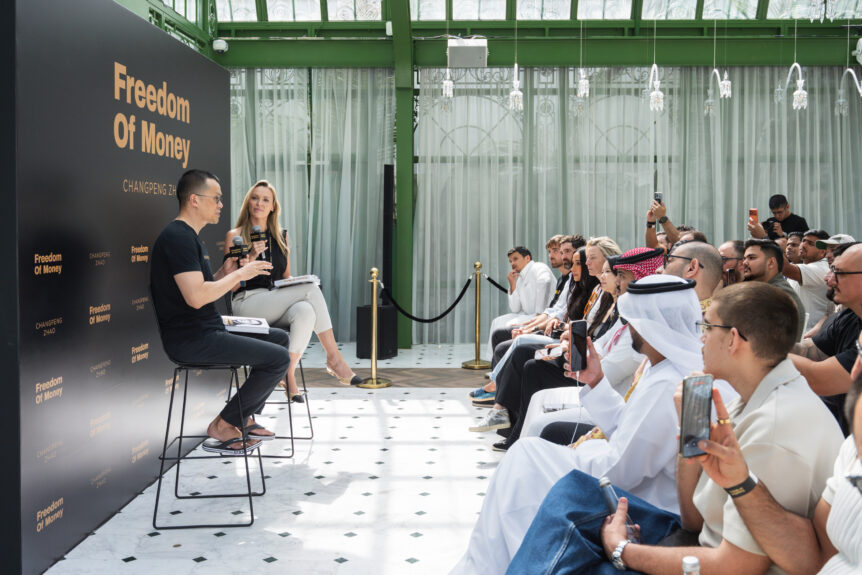
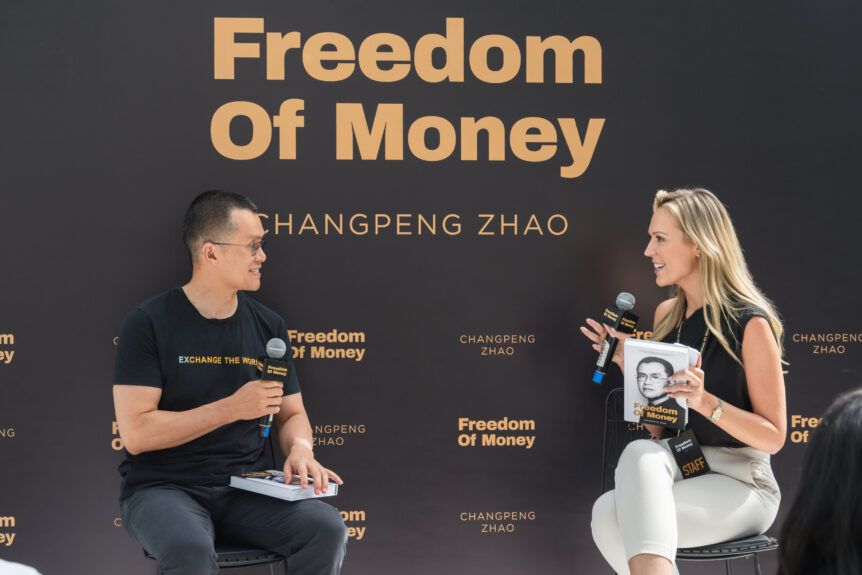
Changpeng Zhao, known as CZ, launches his first book, Freedom of Money, with a signing in the United Arab Emirates and presents a personal account of resilience, risk, and responsibility. The press release frames the work as more than a memoir, offering context for his perspective on access to financial tools and knowledge in a rapidly evolving sector. The UAE signing is described as a global first for the book, highlighting the country’s status as a hub for innovation, clear regulatory dialogue, and active collaboration between builders and policymakers. All book proceeds will be donated to charity, reinforcing a broader commitment to education and opportunity.
Key points
- Debut signing for Freedom of Money in the UAE, described as the book’s first public engagement worldwide.
- All proceeds from Freedom of Money will be donated to charity.
- The UAE chapter recounts CZ’s early arrival in Dubai, including a Golden Visa timeline, and engagement with policymakers on crypto regulation.
- The UAE is presented as a hub of innovation with regulatory clarity and ongoing industry-regulator dialogue.
Why it matters
The announcement links CZ’s personal narrative to the UAE’s growing role as a fintech and crypto governance hub, illustrating how high‑profile figures engage with emerging markets. The charitable component and emphasis on access to knowledge frame the release as more than a memoir, with potential implications for readers, builders, and investors following policy and market developments in the region.
What to watch
- Look for any subsequent book signings or regional launches associated with Freedom of Money.
- Any disclosures about charitable beneficiaries or total proceeds as they are announced.
- Statements from CZ or Binance related to UAE regulatory engagement or crypto policy updates.
Disclosure: The content below is a press release provided by the company or its PR representative. It is published for informational purposes.
CZ brings Freedom of Money to UAE in first book signing
Changpeng Zhao ‘CZ’ Brings Freedom of Money to the United Arab Emirates in First-Ever Book Signing
Dubai, UAE | Sunday, 3 May 2026, Changpeng Zhao ‘CZ’ steps into a new chapter today, bringing his personal story to the public through his first-ever book, Freedom of Money. Known for reshaping global access to digital assets, CZ shares the lessons, responsibilities, and defining moments behind that journey.
Marking a global first, CZ hosted the debut signing of Freedom of Money in the United Arab Emirates, his first public engagement for the book anywhere in the world.
The UAE has rapidly positioned itself as a global hub for financial and technological innovation, combining regulatory clarity, forward-looking leadership, and a uniquely diverse talent ecosystem. For CZ, this environment reflects not just opportunity, but alignment. It is a place where builders are supported, where dialogue between industry and regulators is active, and where the future of finance is being shaped.
That connection is not new. CZ has repeatedly expressed his respect for the UAE’s balanced approach, encouraging innovation while maintaining clear frameworks that prioritize user protection. Hosting this milestone moment in Dubai signals more than a launch; it reflects a continued and intentional relationship with a market he sees as foundational to the next phase of global financial evolution.
Freedom of Money moves beyond industry headlines. It is a personal account, one grounded in resilience, risk, and responsibility. Through it, CZ reflects on the realities of building at scale in an emerging sector, the pressures that come with influence, and the evolving role of leadership in shaping more inclusive systems. At its core, the book is about access, not just to financial tools, but to knowledge and opportunity.
This purpose extends beyond the page. All proceeds from Freedom of Money will be donated to charity, reinforcing a broader commitment to education and expanding access for future generations of builders around the world.
As the UAE continues to define itself as a global center for innovation, CZ’s engagement reflects ongoing confidence in the country’s trajectory and a sustained commitment to contributing to a more inclusive, responsible digital asset ecosystem from within the region.
Within Freedom of Money, CZ dedicates a chapter to his experience with the United Arab Emirates, offering a firsthand account of how the country shared a pivotal period in his journey. The chapter captures his early arrival in Dubai and interactions with government leadership, highlighting the speed, openness, and trust that defined his experience—from securing a Golden Visa within days to engaging directly with policymakers on building a crypto regulatory framework. More than a personal milestone, the chapter positions the UAE as a jurisdiction that combines ambition with execution, reinforcing its role as a serious contender in shaping the future of global finance.

About Binance
Binance is a leading global blockchain ecosystem behind the world’s largest cryptocurrency exchange by trading volume and registered users. Binance is trusted by more than 310 million people in 100+ countries for its industry-leading security, transparency, trading engine speed, protections for investors, and unmatched portfolio of digital asset products and offerings from trading and finance to education, research, social good, payments, institutional services, and Web3 features. Binance is devoted to building an inclusive crypto ecosystem to increase the freedom of money and financial access for people around the world with crypto as the fundamental means. For more information, visit: https://www.binance.com.
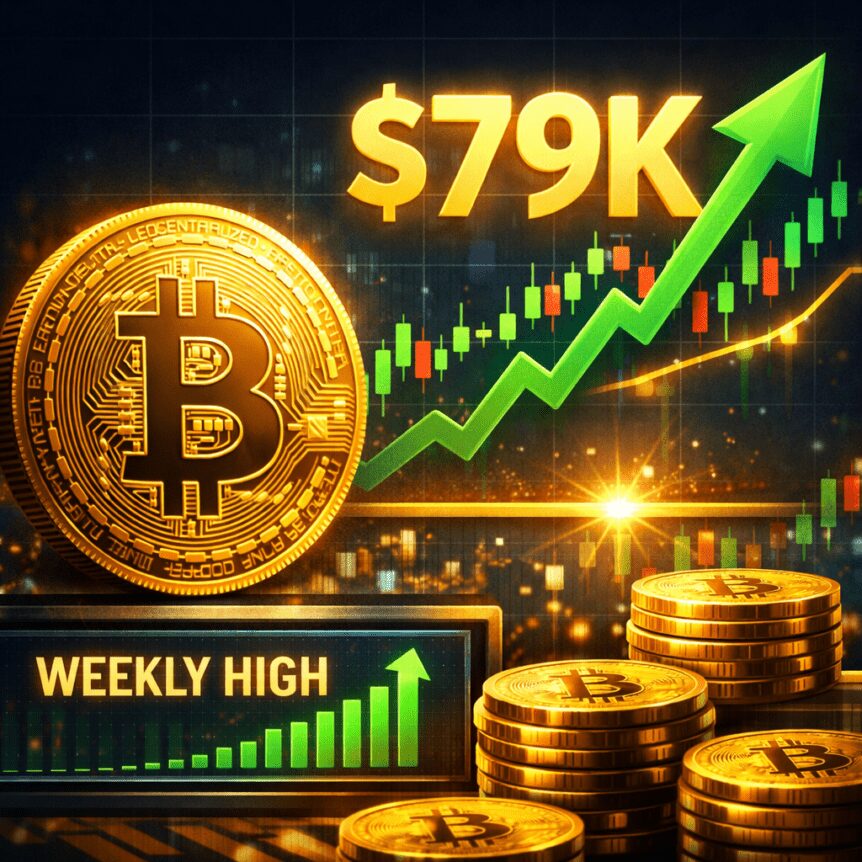
Bitcoin (BTC) is resting near a critical weekly close as traders balance renewed optimism from spot ETF inflows against a backdrop of geopolitical headlines surrounding the US-Iran situation. With price stubbornly hovering in the high $70,000s, the market is watching for a decisive close that could set the stage for a move toward the mid-$80,000s if momentum persists into the weekend.
Trading data indicates BTC/USD has been able to recoup some earlier losses, putting it on track for one of its strongest weekly closes in months. Finishing the week above roughly $78,670 would mark the highest weekly close since late January, underscoring a nascent shift in near-term momentum even as caution remains pervasive among market participants.
Key takeaways
- BTC approaches a pivotal weekly close, with potential for the strongest weekly finish since January if it clears the $78,670 hurdle.
- US spot Bitcoin ETFs drew robust demand on Friday, with inflows totaling nearly $630 million, reinforcing the case for continued near-term upside.
- Analysts flag liquidity dynamics as a double-edged factor: large inflows support price strength, but traders also warn of liquidity grabs that could precede reversals.
- Geopolitical headlines—centered on US-Iran diplomacy and a skeptical tone from President Trump—add a layer of uncertainty that could tilt intraday moves.
BTC price action tied to weekly catalysts and ETF flow
Currency data from TradingView shows BTC/USD attempting to hold gains after earlier weakness, with observers noting the absence of a firm breakout yet a disciplined bid near key levels. The path of least resistance for BTC, at least in the near term, appears tied to how the weekly close develops and whether buyers can sustain above resistance zones.
In the broader market, the mood shifted on Friday as hopes for a peace agreement between the US and Iran buoyed risk assets, including cryptocurrencies. Yet by Sunday, a key political voice injected a note of skepticism. In a post on Truth Social, former President Donald Trump wrote that he “can’t imagine that it would be acceptable” to endorse the latest Iranian proposals, injecting a potential headwind into the immediate sentiment.
Despite the mixed political signals, traders remained constructive about the short-term trajectory. Michaël van de Poppe, a well-followed analyst, highlighted Friday’s robust ETF inflows as a driver of gradual consolidation that could give way to upside in the coming sessions. “Strong consolidation on BTC, and Friday gave us a slight insight into what’s likely to come,” he wrote on X.
Van de Poppe pointed to the critical level around $79,000: “The $79K area is a crucial zone. That needs to break. If this breaks, I’m assuming we’ll see more upwards momentum and I’ve got $86-88K as first resistance area and $92-94K as the crucial one.”
The analyst’s frame suggests that a break above key resistance could unlock a more extended upside, but only if the market can sustain the move through intermediate hurdles. The absence of a dramatic pullback in the wake of Friday’s ETF enthusiasm reinforces the narrative that some investors are leveraging the liquidity impulse to position for a potential multi-stage rally.
Liquidity dynamics: a growing risk factor even as inflows buoy prices
Market watchers have been watching liquidity as a leading indicator of potential reversals. A liquidity buildup below recent price highs can set the stage for a “pump-and-dump” style sequence if buyers exhaust themselves or if sellers suddenly overwhelm demand.
On Friday, traders cited a notable accumulation of liquidity at the lower end of the spectrum, followed by a move to test higher levels. Crypto Tony, a market commentator, noted: “Starting to see a build of liquidity form below, but a take of the high liquidity and using that to dump.” His observation mirrored a broader take from data platform CoinGlass, which tracks liquidation activity and order-flow patterns to gauge the risk of sharp reversals.
Meanwhile, a technical breakdown in liquidity placement was described by JDK Analysis as “typically bearish.” In a post on X, the account outlined that fresh long positions were opening into the highs while price action showed signs of absorption, struggling to push decisively higher amid aggressive market buying for now. The message: even as the crowd piles into long bets, real demand may be insufficient to sustain a sustainable breakout without a shift in the liquidity landscape.
These views underscore a nuanced picture: ETF-driven demand and optimistic headlines can lift prices in the near term, but large liquidity dynamics remain a potential source of volatility. Investors face a balancing act between chasing momentum and guarding against the risk of a liquidity-driven pullback if supply temporarily overwhelms demand.
Geopolitics, sentiment, and the longer-term outlook
The week’s headlines also remind readers that crypto markets do not move in a vacuum. The US-Iran diplomatic saga has been a key driver of risk appetite in recent sessions, with traders parsing every headline for hints of development. The optimism surrounding a possible peace agreement offered a positive backdrop for risk assets, but the subtle shift in tone from policymakers keeps traders wary of sudden reversals.
The political dimension converges with the market’s technicals to shape near-term risk-reward. While ETF inflows provide a more tangible, instrument-based driver for price action, geopolitical signals can quickly swing momentum, particularly in a market as sensitive to macro headlines as BTC. The ongoing tension between policy expectations and actual progress means readers should remain vigilant for headlines that could alter the tone of the week ahead.
What to watch next
Looking ahead, several signals will illuminate whether the current setup can sustain its momentum. A sustained break above the $79,000 threshold would not only vindicate the near-term bullish thesis but also set the stage for a possible run toward the mid- to upper-$80,000s, with the first meaningful resistance in the $86-88k zone and a more consequential hurdle near $92-94k, as highlighted by Michaël van de Poppe.
On the demand side, continued inflows into US spot BTC ETFs would reinforce the case for a constructive trajectory, provided the liquidity environment remains supportive. Investors will also be watching for any escalation or relief in the US-Iran dynamic, as well as any new statements from policymakers that could alter risk sentiment in the near term.
Meanwhile, traders will likely keep a close eye on liquidity patterns as a potential tell for the next move. If fresh long positions are driven into the highs but price remains unable to push decisively higher, that could indicate a waning of momentum and possibly precede a more pronounced correction should demand falter. Conversely, a clean breakout through $79,000 and beyond could usher in a period of renewed upside pressure, especially if ETF inflows remain robust.
This narrative, built on a combination of on-chain liquidity signals, ETF demand, and evolving geopolitical headlines, emphasizes how investors must balance momentum with risk controls. As markets digest the week’s headlines and await fresh data, participants should prepare for a range of outcomes and stay attuned to early signs of a sustained trend reversal or a sustained breakout beyond the next resistance landmarks.
Sources and data references included in this article:
– ETF inflows and market commentary from market participants, including Michaël van de Poppe (@CryptoMichNL) on X. Timeline context and quotes drawn from his public posts: X.
– Liquidity analysis and heatmap observations from CoinGlass: CoinGlass.
– JDK Analysis commentary from X: X.
– Trailing political context and responses from Truth Social: Truth Social.
– Price context and chart reference: TradingView.
Pepe coin went from a presale entry to an $11 billion peak, and the people who acted early made the biggest returns of their lives.
The best crypto presale 2026 follows the same signal, a project with real products and a confirmed listing, visible before the crowd confirms it. DOGE grinds at $0.10 and PEPE sits below its highs, but the entry pulling the most capital has not listed yet.
Nearing its Binance listing, Pepeto pushed past $9.7 million in presale capital, the founder who created the first Pepe token leading the build and analysts projecting 100x post launch.
Meme coin presales raised more than $1.8 billion in the first four months of 2026, according to CoinDesk.
The number marks a 240% jump from the same period last year, with capital flowing into tokens that combine community energy with working products.
The Block reported that the leading presale projects share one pattern, exchange listings confirmed before funding closes, and wallets that enter at this stage have historically captured the largest post listing returns.
DOGE, PEPE, and the Presale Drawing the Biggest Wallets in 2026
Pepeto: The Entry That Could Change Everything
The market is running hot and meme coins are leading the charge. Presale funding records are falling as billions flow into early stage tokens, and Pepeto’s Binance listing sits right where that wave crests. Pepeto, created by the same founder who built the original Pepe coin, ranks as the best crypto presale 2026 with a combination that no other token at this stage can match.
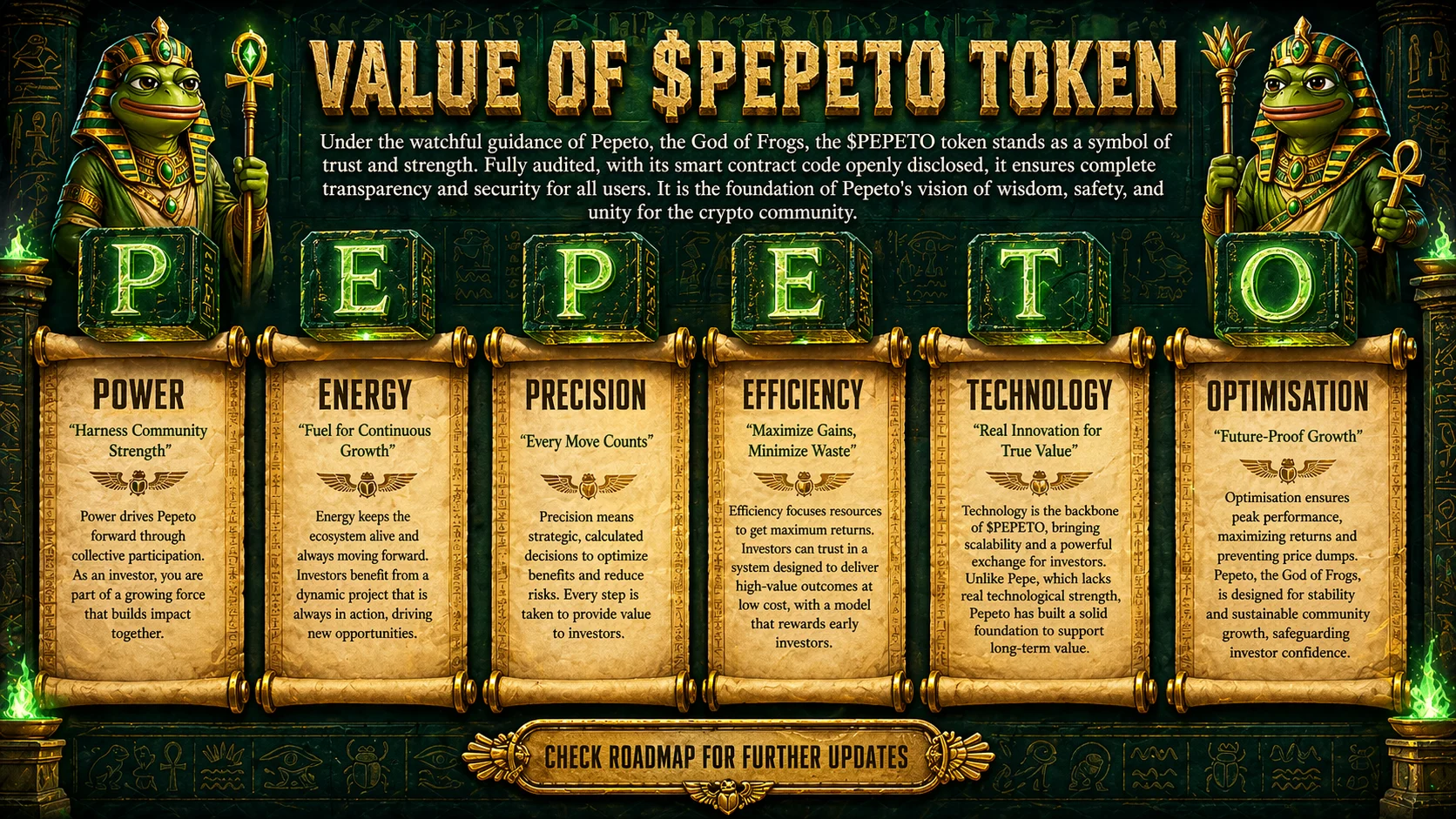
Analysts target 100x or higher once the listing opens trading, and the reason is not hype. Pepeto shares the exact 420 trillion token count that powered Pepe to $11 billion, but this time a full exchange with real tools supports it. The cross chain bridge connects networks so tokens travel freely without losing value to transfer costs, and the risk scorer examines every contract for weaknesses before any capital enters, so the platform does the research that protects the holder’s money.
A SolidProof audit confirmed every contract on the Pepeto exchange, and a former Binance expert built the trading products from the ground up. The presale crossed $9.7 million at an entry price of $0.0000001864, with staking at 176% APY locking tokens and proving that the wallets inside are not flipping.
The right crypto at the right time can change a life, and the best crypto presale 2026 carries the same signal Pepe showed before the crowd arrived, a founder who already did it, products that already work, and a listing that turns the presale price into the entry everyone else wishes they had.
DOGE: Steady at $0.10 But Far From Its Peak
DOGE trades near $0.10 according to CoinMarketCap, flat over the past month after a brief April rally faded.
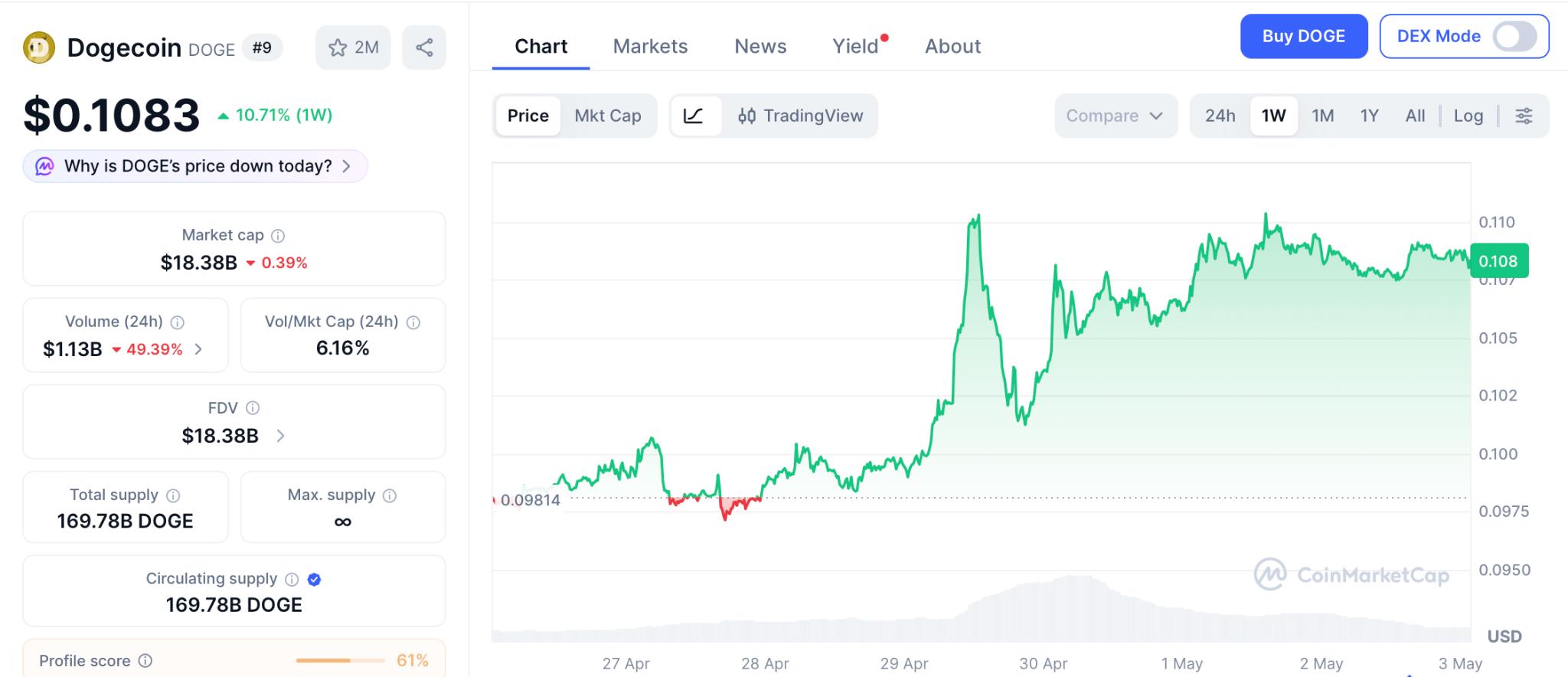
The strongest presale picks draw comparisons to DOGE’s early days, but from $0.10 the token needs a 6x just to reach its 2021 high of $0.73. Large cap meme coins carry community weight but not the kind of entry that transforms a position.
PEPE: The Original Run Proves the Math
PEPE sits near $0.0000039 according to CoinMarketCap, down 40% from its all time high. The same cofounder now leads Pepeto with better tools and the same supply.
The best crypto presale 2026 narrative started with PEPE’s success, and the wallets rotating from PEPE into Pepeto understand that the next chapter from the same builder starts at a fraction of the price.
Final Word
Pepe turned early holders into millionaires with zero products and pure community energy, and now the same founder is building Pepeto with a working exchange, SolidProof audit, and Binance listing ahead.
The best crypto presale 2026 is not a guess, it is the same pattern repeating with more behind it. The Pepeto official website shows fresh capital pouring in because the signal is clear before the crowd confirms it, a proven builder, real products, and a listing that delivers the returns presale holders came for.
Acting on this signal is what made early Pepe holders rich, and sitting out means watching the pattern deliver for everyone who moved while the entry was still open.
Click To Visit Pepeto Website To Enter The Presale

FAQs
What makes Pepeto the best crypto presale 2026?
Pepeto combines the original Pepe founder, a SolidProof audit, zero fee exchange tools, and a confirmed Binance listing, the same combination that creates the largest post listing returns.
How does DOGE compare to Pepeto right now?
DOGE trades at $0.10 needing a 6x to reach its 2021 high, while the best crypto presale 2026 sits at presale price with analysts projecting 100x after the Binance listing opens.
Is Pepeto the best crypto presale 2026 for new investors?
The Pepeto official website shows over $9.7 million raised, a working exchange, and a Binance listing approaching, giving new investors the same early entry that made Pepe holders wealthy.
Disclaimer: This is a Press Release provided by a third party who is responsible for the content. Please conduct your own research before taking any action based on the content.
Multiple wallet addresses recently sanctioned by the US Treasury Department for their ties to Iran may not be linked to the Islamic Republic, but to other state actors instead, analysis published Sunday suggests.
That analysis, by blockchain intelligence firm Nominis, said that while the recent seizing of wallets holding more than $340 million by Treasury’s Office of Foreign Assets Control (OFAC) was a significant crypto enforcement event, some of those wallets’ characteristics lack a similarity to previously seized wallets linked Tehran.
“While the use of cryptocurrency by the Islamic Revolutionary Guard Corps (IRGC) is well established, this case presents structural and behavioral characteristics that diverge meaningfully from previously observed patterns,” said Nominis CEO Snir Levi.
He said that IRGC-linked wallets have shown some consistency in their operations, including that the funds are distributed across multiple wallets, individual wallet balances are kept relatively low — typically a few million US dollars, holdings aren’t retained for extended periods and activity is structured to minimize exposure to seizure or freezing mechanisms.
“The behavioral divergence observed in this case raises a critical question: To what extent does the frozen $340 million reflect direct IRGC control, versus infrastructure that overlaps with broader, potentially foreign, financial networks,” Levi said.

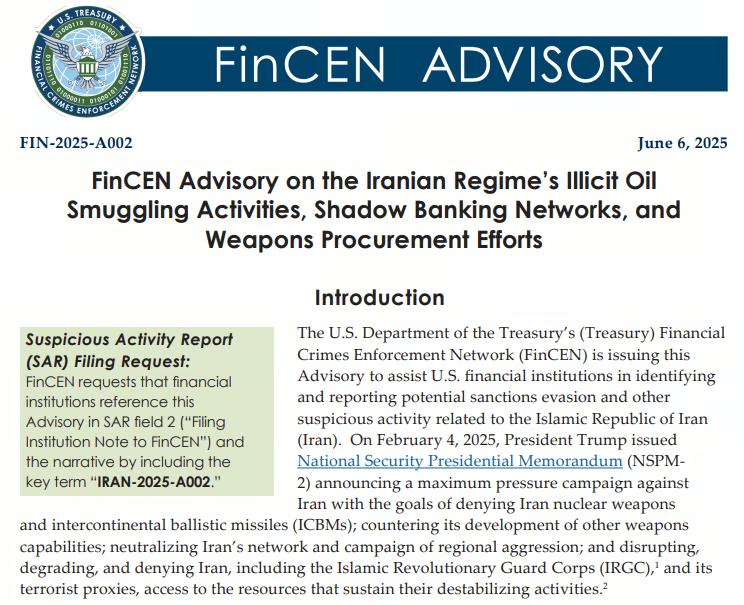
June 2025 FinCEN Advisory on Iranian Shadow Banking Networks. Source: US Department of the Treasury’s Financial Crimes Enforcement Network
He said the implications for compliance teams could be that static typologies are no longer sufficient and behavioral analysis and clustering are critical for identifying risk.
“Most importantly, this case highlights that even well-documented actors such as the IRGC and potentially Chinese state-actors are continuing to evolve their use of blockchain infrastructure,” the Nominis founder said.
Related: Iran views BTC as strategic asset, but USDt still dominates oil tolls: BPI
Operation Epic Fury targets crypto for maximum US economic pressure
The United States has seized nearly $500 million in Iranian cryptocurrency assets as part of Operation Epic Fury, a sweeping economic pressure campaign against Tehran, Treasury Secretary Scott Bessent said last Wednesday.
“We are freezing bank accounts everywhere. More importantly, we are making people less willing to deal with the regime,” Bessent said during an appearance on Fox Business’s “Kudlow,” adding that retirement funds and overseas real estate held by Iranian officials are also being targeted.

Source: Treasury Secretary Scott Bessent, verified X account
The $500 million figure cited is much higher than the $344 million in seized crypto assets previously disclosed. A week earlier, Bessent announced that OFAC had sanctioned several crypto wallets tied to Iran, with stablecoin issuer Tether confirming it had frozen more than $344 million in USDt (USDT) at the request of US authorities.
Bessent said Operation Economic Fury has taken a toll on Iran’s economy. One of the country’s largest banks collapsed in December, and its currency has fallen 60 to 70% against the US dollar. “They’re in the middle of a currency crisis,” he said.

Iran says it has received US response to its latest offer for talks
BlackRock Presses OCC to Remove 20% Cap on Tokenized Reserve Assets Rule

What your vacuum cleaner says about you

Manchester United reach agreement with Casemiro over contract clause amid transfer speculation

US brings back mandatory military draft registration

Steven Gerrard disagrees with Gary Neville over ‘shock’ Chelsea and Arsenal claim | Football


-

 Tech6 days ago
Register Renaming | Hackaday
-

 Politics6 days ago
Drax board avoid their own AGM, accused of greenwashing & environmental racism
-

 Tech6 days ago
Why Blue Badges Disappeared From Toyota Hybrids
-

 Tech6 days ago
Images of Samsung’s rumored smart glasses have leaked
-
 Tech2 days ago
Trump’s 25% EU auto tariff breaches Turnberry Agreement that also covers semiconductors and digital trade
-

 Fashion5 days ago
Kylie Jenner’s KHY Enters a New Era with ‘Born in LA’
-

 Business5 days ago
Most Commercial Energy Audits Miss the Real Losses
-

 Crypto World5 days ago
CFTC’s AI will review U.S. crypto registration applications, chairman tells CoinDesk
-

 Business6 days ago
(VIDEO) Charlize Theron Climbs Times Square Billboard to Promote New Netflix Thriller ‘Apex’
-
 Sports2 days ago
Paul Scholes issues Marcus Rashford reality check as agreement emerges over Man United star
-

 Business4 days ago
Barclay Brothers Avoid Bankruptcy: HSBC Drops High Court Petitions After IVA Deal
-
 Business4 days ago
Tesla Officially Registers Elon Musk’s Stock: What Investors Need to Know
-
 Entertainment6 days ago
Alicia Keys Calls Out Music Industry ‘Boys Club’
-

 Tech5 days ago
Get Ready for More Brain-Scanning Consumer Gadgets
-
Crypto World5 days ago
Robinhood Phishing Scam Exploits Gmail Dot Feature to Bypass Security
-

 Entertainment6 days ago
Sister Wives: Janelle Posts New Scary Warning
-

 Crypto World5 days ago
Gmail Dot Trick Underpins Robinhood Phishing, Sending Real-Looking Emails
-

 Business3 days ago
Two Powerball Tickets Split $143 Million Jackpot in Indiana and Kansas
-

 Tech6 days ago
The next iPhone moment might come from an AI company, not Samsung or Apple
-
 Crypto World6 days ago
Meme Coin Based on White House Shooter Conspiracy Rallies 320%
You must be logged in to post a comment Login