

Crypto World
CZ brings Freedom of Money to UAE in first book signing


Changpeng Zhao, known as CZ, launches his first book, Freedom of Money, with a signing in the United Arab Emirates and presents a personal account of resilience, risk, and responsibility. The press release frames the work as more than a memoir, offering context for his perspective on access to financial tools and knowledge in a rapidly evolving sector. The UAE signing is described as a global first for the book, highlighting the country’s status as a hub for innovation, clear regulatory dialogue, and active collaboration between builders and policymakers. All book proceeds will be donated to charity, reinforcing a broader commitment to education and opportunity.
Key points
- Debut signing for Freedom of Money in the UAE, described as the book’s first public engagement worldwide.
- All proceeds from Freedom of Money will be donated to charity.
- The UAE chapter recounts CZ’s early arrival in Dubai, including a Golden Visa timeline, and engagement with policymakers on crypto regulation.
- The UAE is presented as a hub of innovation with regulatory clarity and ongoing industry-regulator dialogue.
Why it matters
The announcement links CZ’s personal narrative to the UAE’s growing role as a fintech and crypto governance hub, illustrating how high‑profile figures engage with emerging markets. The charitable component and emphasis on access to knowledge frame the release as more than a memoir, with potential implications for readers, builders, and investors following policy and market developments in the region.
What to watch
- Look for any subsequent book signings or regional launches associated with Freedom of Money.
- Any disclosures about charitable beneficiaries or total proceeds as they are announced.
- Statements from CZ or Binance related to UAE regulatory engagement or crypto policy updates.
Disclosure: The content below is a press release provided by the company or its PR representative. It is published for informational purposes.
CZ brings Freedom of Money to UAE in first book signing
Changpeng Zhao ‘CZ’ Brings Freedom of Money to the United Arab Emirates in First-Ever Book Signing
Dubai, UAE | Sunday, 3 May 2026, Changpeng Zhao ‘CZ’ steps into a new chapter today, bringing his personal story to the public through his first-ever book, Freedom of Money. Known for reshaping global access to digital assets, CZ shares the lessons, responsibilities, and defining moments behind that journey.
Marking a global first, CZ hosted the debut signing of Freedom of Money in the United Arab Emirates, his first public engagement for the book anywhere in the world.
The UAE has rapidly positioned itself as a global hub for financial and technological innovation, combining regulatory clarity, forward-looking leadership, and a uniquely diverse talent ecosystem. For CZ, this environment reflects not just opportunity, but alignment. It is a place where builders are supported, where dialogue between industry and regulators is active, and where the future of finance is being shaped.
That connection is not new. CZ has repeatedly expressed his respect for the UAE’s balanced approach, encouraging innovation while maintaining clear frameworks that prioritize user protection. Hosting this milestone moment in Dubai signals more than a launch; it reflects a continued and intentional relationship with a market he sees as foundational to the next phase of global financial evolution.
Freedom of Money moves beyond industry headlines. It is a personal account, one grounded in resilience, risk, and responsibility. Through it, CZ reflects on the realities of building at scale in an emerging sector, the pressures that come with influence, and the evolving role of leadership in shaping more inclusive systems. At its core, the book is about access, not just to financial tools, but to knowledge and opportunity.
This purpose extends beyond the page. All proceeds from Freedom of Money will be donated to charity, reinforcing a broader commitment to education and expanding access for future generations of builders around the world.
As the UAE continues to define itself as a global center for innovation, CZ’s engagement reflects ongoing confidence in the country’s trajectory and a sustained commitment to contributing to a more inclusive, responsible digital asset ecosystem from within the region.
Within Freedom of Money, CZ dedicates a chapter to his experience with the United Arab Emirates, offering a firsthand account of how the country shared a pivotal period in his journey. The chapter captures his early arrival in Dubai and interactions with government leadership, highlighting the speed, openness, and trust that defined his experience—from securing a Golden Visa within days to engaging directly with policymakers on building a crypto regulatory framework. More than a personal milestone, the chapter positions the UAE as a jurisdiction that combines ambition with execution, reinforcing its role as a serious contender in shaping the future of global finance.



About Binance
Binance is a leading global blockchain ecosystem behind the world’s largest cryptocurrency exchange by trading volume and registered users. Binance is trusted by more than 310 million people in 100+ countries for its industry-leading security, transparency, trading engine speed, protections for investors, and unmatched portfolio of digital asset products and offerings from trading and finance to education, research, social good, payments, institutional services, and Web3 features. Binance is devoted to building an inclusive crypto ecosystem to increase the freedom of money and financial access for people around the world with crypto as the fundamental means. For more information, visit: https://www.binance.com.

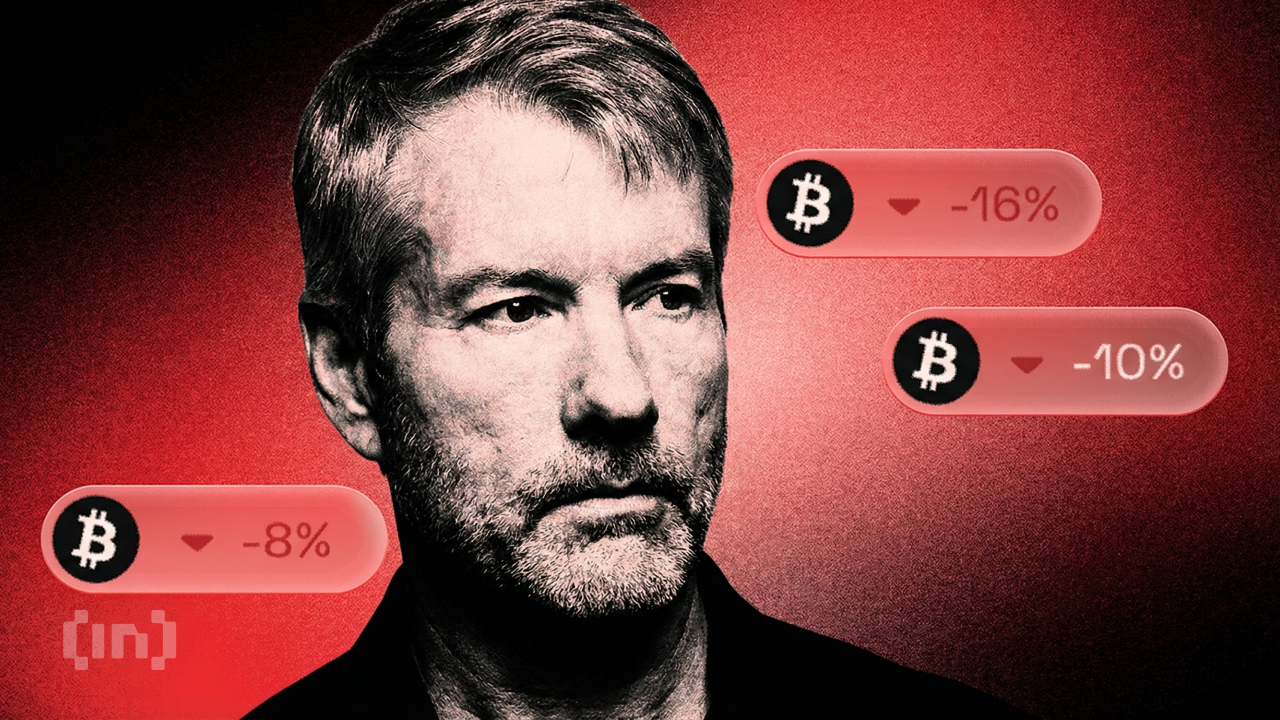

Strategy (formerly MicroStrategy), the largest corporate Bitcoin holder, sold 32 BTC for roughly $2,5 million between May 26 and 31, marking its first crypto sale since 2022. Although the BTC sold represents only 0.004% of the company’s entire treasury, the move is symbolic for Bitcoin maximalists and detractors alike.
We break down what happened, the voices defending the move, and the analysts who see a real warning sign.
What the MicroStrategy Bitcoin Sale Actually Means
Strategy disclosed its transaction in a Form 8-K filing, noting that the proceeds were used to fund preferred stock distributions. The numbers put the move in perspective.
Despite the sale, Strategy still holds 843,706 BTC valued at more than 60 billion dollars, with an average acquisition cost of 75,699 dollars per coin.
The 32 BTC sale represents less than 0.004% of the entire treasury. Yet the symbolic weight runs heavy, since Michael Saylor built the company’s brand on aggressive, relentless Bitcoin accumulation and a public never-sell stance.
Follow us on X to get the latest news as it happens
The transaction introduces nuance to that narrative for the first time in years. It tests whether the market views Strategy as a pure Bitcoin proxy or as a publicly traded company balancing many real financial obligations.
That question sharply divides the crypto community. The same small sale appears to some analysts as strategic mastery and to others as the first visible crack in an ironclad corporate maximalist position.
Why Some Experts See the Sale as Bullish
Several prominent analysts dismissed the move as either irrelevant or quietly positive for both Bitcoin and Strategy stock heading into the next phase of the cycle.
Zynx downplayed the news, pushing back against early FUD and saying he remains bullish on MSTR despite the wave of misinformation that followed the disclosure.
“I can already see the misinformation and FUD about how Saylor was ‘forced to sell’. Bullish on $MSTR,” Zynx noted.
Michaël van de Poppe framed the sale as the resolution of an uncertainty hanging over the market. He argued the FUD surrounding any Saylor Bitcoin sale is now over, which he considers structurally bullish.
At the same time, Against Wall Street offered the deepest strategic read. Citing Saylor’s earlier comments, the analyst called the 32 BTC sale symbolic, designed to satisfy credit rating agencies and ultimately unlock far larger Bitcoin repurchases later.
“If this was about booking profits, they could’ve dumped way more, they’re already deep in the green This wasn’t profit-taking. It was symbolic. A calculated move to keep the rating agencies happy while staying all-in on Bitcoin. Chess, not checkers,” Against Wall Street said.
His phrasing summed up the bullish camp: “Chess, not checkers.” For this group, Strategy is playing a long game where small tactical sales actually protect the broader accumulation engine.
Telcier asked the market to keep perspective, calling 0.0037% of the position effectively nothing. Meanwhile, ImCryptOpus framed any resulting dip as a smart accumulation opportunity for retail and institutional buyers alike.
Jack echoed the long-term bullish view. He noted that selective selling to fund dividends could strengthen confidence in Strategy’s related financial instruments and ultimately support greater net Bitcoin accumulation across cycles.
Together, these voices argue the sale aligns with previously communicated treasury strategies. In their view, it shows financial sophistication rather than any loss of conviction in Bitcoin as a long-term store of value.
Why Other Analysts See a Warning Signal
The bearish camp focused less on the size of the sale and more on what it signals about Strategy’s evolving discipline. For these analysts, like anti-Bitcoin and “Gold Bug” Peter Schiff, the precedent matters far more than the dollar amount.
“Last week $MSTR sold 32 Bitcoin for about $2.5 million at an average price of $77,135. Since Bitcoin’s biggest buyer has now become a seller, where will the new demand come from to sustain the pyramid? Bitcoin is already below $72K, which is about 7% below where @Saylor sold”, Schiff said.
0xNobler reacted bluntly, warning that the company has started liquidating Bitcoin and that the move “is not looking good for crypto.” His framing reflected the raw concern many maximalists felt during the announcement.
Meanwhile, DeFiTracer struck a similar tone, calling Strategy’s first historical sale extremely bad for markets. The argument centers on sentiment risk rather than on the actual selling pressure produced by the transaction itself.
Crypto McKenna had flagged the risk earlier. He noted that Strategy has shifted from never selling Bitcoin to selling some BTC to ensure dividend obligations are always met going forward across capital cycles.
“MSTR moved away from never selling Bitcoin to selling some Bitcoin to ensure dividend obligations are always met for STRC. Saylor basically has on a low leverage perp position on BTC and is paying funding to keep it open. STRC only becomes a ponzi if capital raised for STRC issuance is directed back to covering it’s obligations so MSTR may end up selling >1Bn of BTC to ensure they have an adequate cash balance to cover dividends”, Crypto McKenna exposed.
His key concern is perception. Market interpretation of this evolution could become much worse than the literal impact, especially if preferred stock obligations require additional sales over the coming quarters.
Tradinglord also voiced bearish concerns about the precedent. Once a public company introduces sales to meet financial commitments, the door opens to potentially larger disposals if conditions ever deteriorate.
Critics argue that even a negligible sale chips away at the diamond hands ethos that fueled Strategy’s brand and inspired thousands of retail investors throughout previous cycles. That cultural shift carries real weight.
The contrast reflects a deeper tension. Bullish analysts treat Bitcoin as an actively managed treasury asset. Bearish voices see it as an absolute store of value that must never be touched, regardless of dividend obligations.
With 843,706 BTC still on the balance sheet, Strategy’s Bitcoin position remains overwhelmingly intact. Yet how the company manages future obligations will likely shape how the market perceives every corporate Bitcoin strategy from here.
The post Was MicroStrategy and Saylor Right to Sell Some Bitcoin? The Maximalism Debate appeared first on BeInCrypto.

TLDR
- The U.S. Treasury sanctioned Nobitex, which it described as Iran’s largest digital asset exchange.
- According to the Treasury, Nobitex handled more than half of Iranian digital asset inflows in 2025.
- OFAC alleged that Nobitex supported sanctions evasion, stablecoin transfers, and IRGC-linked crypto transactions.
- Treasury also designated Amir Hossein Rad and other Nobitex leaders in the sanctions action.
- The action forms part of the Economic Fury campaign targeting Iran-linked financial and digital asset networks.
The U.S. Treasury moved against Iran’s largest digital asset exchange, Nobitex, in a new sanctions action on Tuesday. The action targets alleged terror finance, sanctions evasion, and regime-linked crypto flows.
Treasury Targets Nobitex and Iranian Crypto Exchanges
According to the Department of the Treasury, OFAC designated Nobitex under counterterrorism and Iran financial-sector authorities. The release also named three other Iranian digital asset exchanges in the action. Treasury described Nobitex as Iran’s largest digital asset exchange. It also alleged that the platform handled more than half of Iranian digital asset inflows in 2025.
According to the release, Nobitex supported payments tied to Iran’s sanctioned activities and IRGC-linked transactions. Treasury also linked some activity to wallets associated with IRGC-affiliated ransomware actors.
The department also designated Amir Hossein Rad, Nobitex’s chairman, co-founder, and former chief executive. Treasury stated that other Nobitex leaders and officials also faced sanctions. Treasury Secretary Scott Bessent connected the action to the Trump administration’s Iran policy. “Treasury will continue to follow the money,” Bessent stated in the release.
OFAC Alleges Stablecoin Use and Sanctions Evasion
According to the Treasury, Nobitex helped the Central Bank of Iran access hundreds of millions of dollars in stablecoins. The department alleged those funds supported efforts tied to the falling value of the Iranian rial. The release also claimed that Nobitex helped regime insiders reach international digital asset exchanges. Treasury framed that activity as part of sanctions evasion across several jurisdictions.
According to OFAC, Nobitex acted as a vehicle for sanctions evasion through its earlier Central Bank links. The department also alleged that the platform contributed to repression inside Iran. Treasury claimed the exchange enabled the Iranian government to conduct warrantless surveillance of civilians.
Additionally, the release stated that two Nobitex co-founders had close links to Khamenei’s family. The department cited Executive Order 13224, as amended, in its Nobitex designation. It also cited Executive Order 13902, which covers Iran’s financial sector.
Economic Fury Expands Pressure on Iran
The sanctions form part of the Economic Fury and maximum pressure policy. The department stated that the campaign targets Iran’s ability to generate, move, and repatriate funds. Treasury reported that its actions have blocked access to tens of billions of dollars for Iran-linked networks. It also referenced actions that froze nearly half a billion dollars in regime-linked cryptocurrency.
The release stated that Treasury has targeted shadow banking networks, oil channels, military supply networks, and proxy groups. It also warned foreign companies against supporting illicit Iranian commerce. The administration now targets both traditional sanctions evasion and digital asset exploitation. The department also raised the possibility of secondary sanctions on foreign financial institutions.
Treasury also warned about payments tied to passage through the Strait of Hormuz. It listed fiat currency, digital assets, offsets, swaps, and in-kind payments among possible sanctions risks. On May 27, the Treasury designated Iran’s so-called Persian Gulf Strait Authority. The department described it as an IRGC-linked scheme tied to shipping through the Strait of Hormuz.
The release also stated that Nobitex played a role after U.S. combat operations in Iran began. Treasury alleged that the platform helped protect and move assets despite internet blackouts. According to OFAC, the action targets persons who materially assisted or supported the IRGC. The department also stated that Nobitex operated in Iran’s financial sector.


Glee is written all over the faces of bears, as Bitcoin (BTC USD) slipped toward $69,950 on June 2 after on-chain monitoring tools confirmed the Mt. Gox estate moved 10,422 BTC, worth approximately $739 million, from cold storage to multiple unmarked, newly created wallet addresses.
The transfer marks the first major on-chain activity from the defunct exchange’s rehabilitation estate since late 2024, snapping months of relative quiet from one of crypto’s most closely watched wallet clusters.
BTC fell from $71,000 to a low of $69,950 within an hour of the news breaking, triggering cascading crypto liquidations across leveraged long positions.
— Crypto Rover (@cryptorover) June 2, 2026
 HUGE WARNING: Mt. Gox just moved $739 MILLION in $BTC.
The first major transfer in 6.5 months.
Last time they moved this much, November 2025, $BTC dropped 13% within days.
It's happening again.
And we're already under $70,000… pic.twitter.com/RrTLE14ob5
The immediate market fear is an overhang of supply. With tens of thousands of BTC still under trustee control and creditor repayments continuing through 2026, every large wallet movement from the estate functions as a psychological pressure point, regardless of whether coins reach an exchange order book the same day.
Discover: The Best Crypto to Diversify Your Portfolio
Bitcoin News: Mt. Gox BTC Movement, What the On-Chain Data Actually Shows
The destination of the coins is what makes this transfer analytically significant. Unmarked wallets, addresses with no prior transaction history and no publicly verified affiliation with exchanges or known custodians sit in an interpretive grey zone.
They could represent internal estate reorganization, OTC block-sale preparation, or staging addresses ahead of exchange deposits. That distinction matters: a direct transfer to a Kraken or Bitstamp deposit address signals imminent creditor distribution; movement to fresh cold-storage addresses does not.
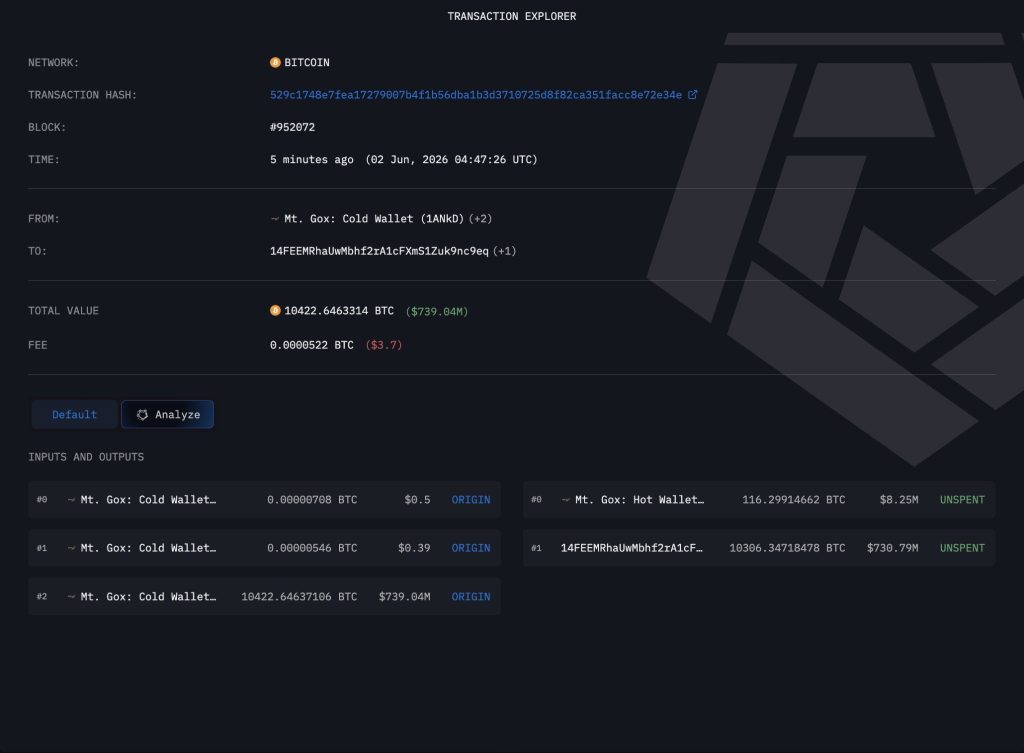
On-chain data from CryptoQuant shows that exchange inflow metrics for Bitcoin remained relatively stable in the immediate hours following the transfer, suggesting the 10,422 BTC had not yet reached exchange order books as of publication.
The transmission mechanism was clear nonetheless: algorithmic monitors flagged the Mt. Gox wallet cluster, headlines hit, and leveraged long positions were unwound before any actual selling occurred. The ghost of Mt. Gox does not need to sell to move markets, it only needs to move.
This pattern has repeated across every major estate transfer since 2024. In July of that year, the trustee moved 44,527 BTC in a single transaction, Arkham Intelligence and on-chain analysts flagged it as repayment preparation, and Kraken later confirmed it had received funds for staged creditor distribution.
A subsequent tranche of nearly 47,229 BTC saw Bitcoin fall more than 3% below $57,000 on the day of the move. The current BTC price drop follows an identical playbook.
The data verdict: this looks like pre-distribution staging, not an immediate market dump, but the market is not waiting for confirmation before repricing risk.
Discover: The Best Token Presales
The post Bitcoin Slumps Toward $69K as Mt. Gox Moves 10,422 BTC to Unmarked Wallets appeared first on Cryptonews.
Movement, the Move-based blockchain network that has expanded into stablecoin payments and financial infrastructure, said it has gained access to licensed payment rails across the US, Canada and the EU, a move aimed at strengthening its cross-border payment offerings in emerging markets.
In a Tuesday announcement, Movement said it plans to use the payment infrastructure to connect traditional banking systems with stablecoin settlement networks, targeting cross-border transfers and treasury services in regions where payment costs remain high and financial access is limited.
Movement did not identify the partners or regulated entities that would enable its payment rail access. Still, the company said the infrastructure will enhance its ability to move funds between traditional payment networks and blockchain systems, with a focus on stablecoin-based settlement rather than fully crypto-native transfers.
The announcement also highlighted a token buyback tied to the company’s shift toward payments infrastructure. The Movement Network Foundation said it repurchased roughly 19% of tokens previously allocated to investors, representing about 4.2% of the token’s total supply.
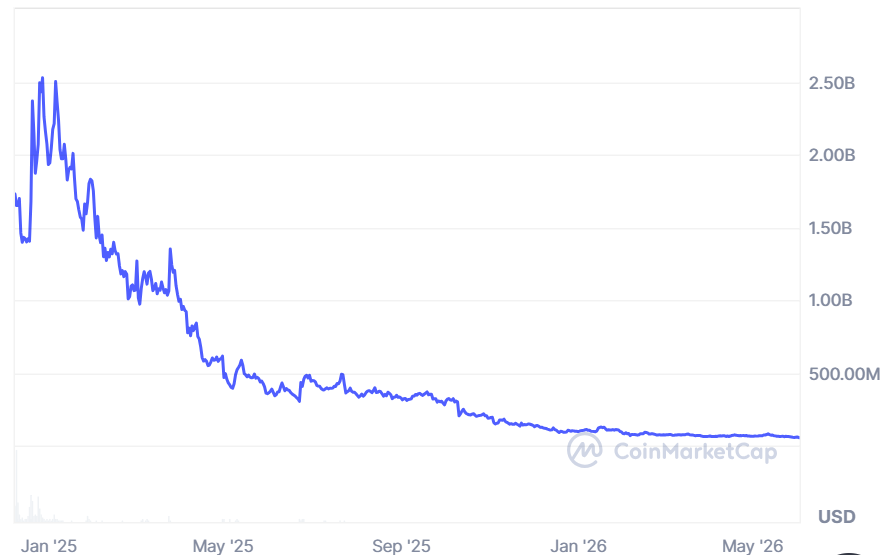
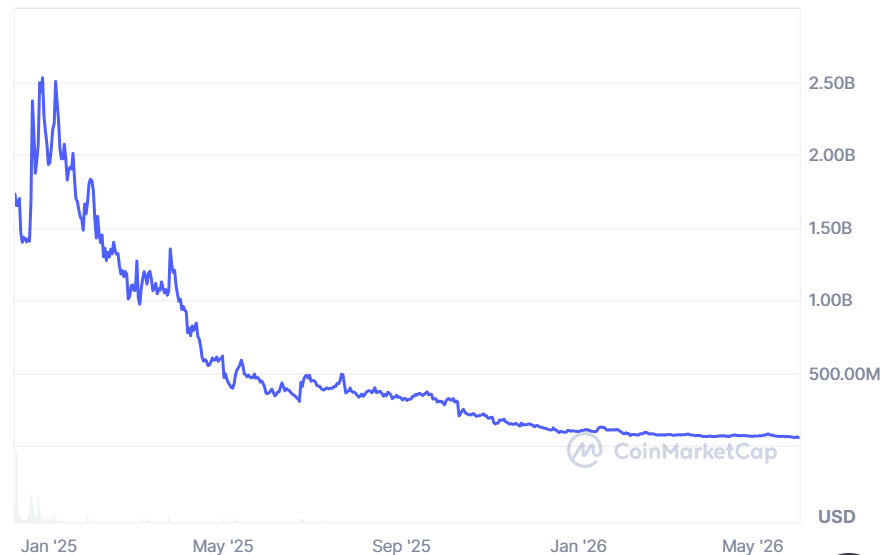
MOVE token’s market capitalization has fallen from a peak of around $2.5 billion to around $54 million currently. Source: CoinMarketCap
Related: US lawmakers move to protect blockchain devs from prosecution
Stablecoins become a key growth area for blockchain networks
Movement’s pivot reflects a broader trend across the blockchain industry, where networks originally touted as smart-contract platforms are increasingly emphasizing stablecoin payments and financial infrastructure.
Solana, which initially gained traction through decentralized finance and consumer applications, has in recent months highlighted stablecoin payments and remittances as adoption grows. Polygon, an Ethereum layer-2 network, has also expanded its focus beyond scaling to support stablecoin settlement and payment-related initiatives.
Aptos, another blockchain built on the Move programming language, has similarly promoted payments, consumer finance and stablecoin use cases as part of its broader growth strategy.
The shift comes as stablecoins remain one of the digital asset industry’s fastest-growing sectors, particularly following the passage of the US GENIUS Act last year, which established a federal framework for payment stablecoins.
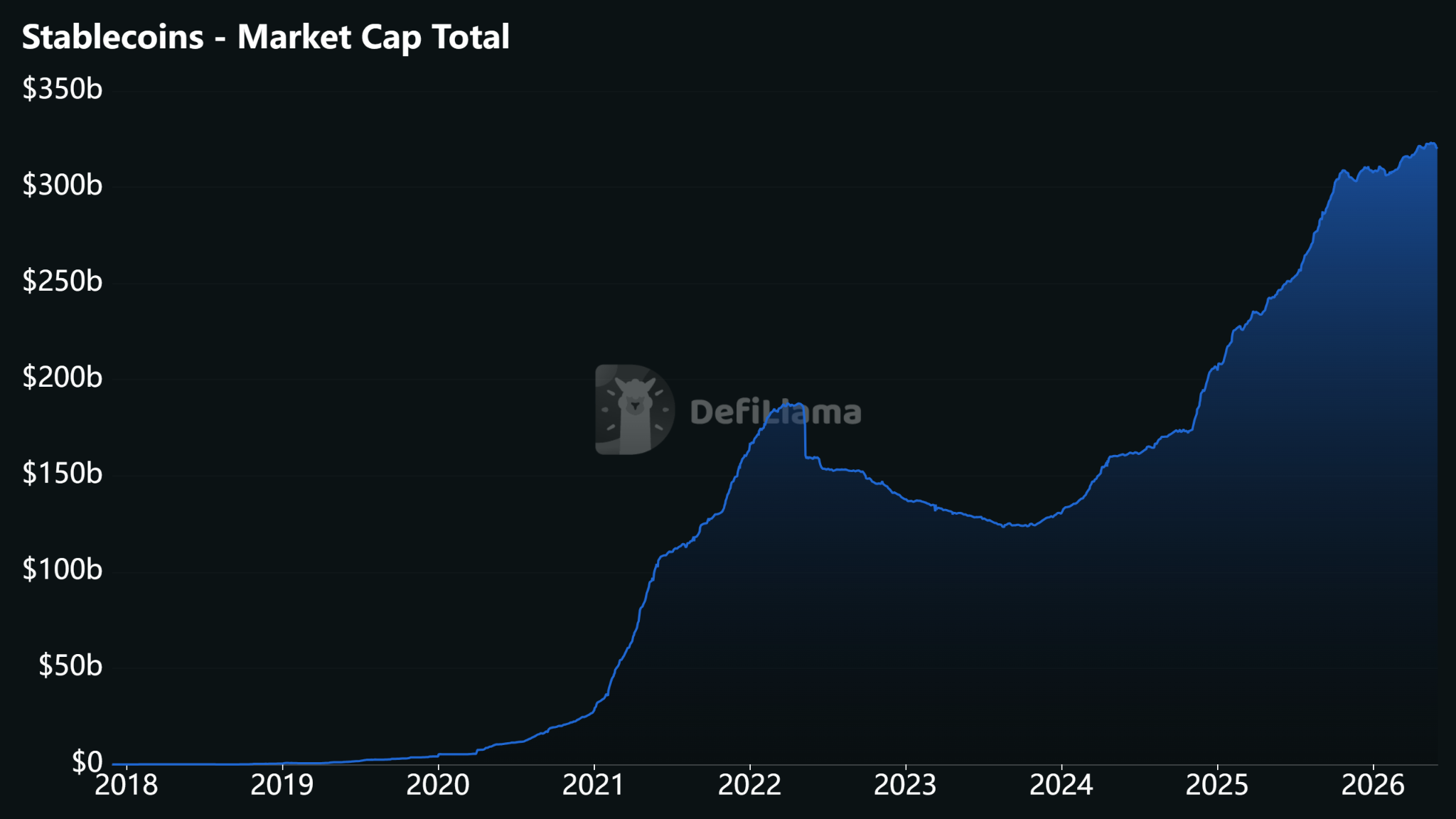
The total value of all stablecoins has eclipsed $320 billion. Source: DefiLlama
The growing focus on payments infrastructure also comes amid softer conditions across broader crypto markets. Global crypto transaction volume declined 11% year over year in the first quarter, according to TRM Labs, reflecting weaker market activity and cooling investor demand.
Related: Crypto Biz: Crypto infrastructure spending rises as ETF appetite cools

Crypto exchange Coinbase has invested in ProShares’ stablecoin-focused money market fund, betting that demand for stablecoin reserve-management products will grow as the recently enacted GENIUS Act formalizes the types of assets that can back US dollar-pegged tokens.
Coinbase (COIN) announced Tuesday that it made an undisclosed investment in the ProShares GENIUS Money Market ETF (IQMM), which is designed to hold assets that qualify as reserves for payment stablecoins under the Guiding and Establishing National Innovation for US Stablecoins (GENIUS) Act.
The GENIUS Act requires stablecoin issuers to back their tokens with highly liquid assets, including cash, bank deposits and short-term US Treasury securities. IQMM was created to provide exposure to those types of reserve assets through a publicly traded fund structure.

Source: ProShares
Launched in February, IQMM invests exclusively in short-term US Treasury securities and cash-equivalent instruments with maturities of 93 days or less. According to ProShares, it’s one of the first exchange-traded funds tailored specifically for stablecoin reserve management.
Coinbase said the investment aligns with its growing stablecoin business and cash-management operations. As one of the primary infrastructure providers for Circle’s USDC (USDC), Coinbase has an interest in expanding the pool of regulated, liquid investment vehicles for managing stablecoin reserves.
Related: Movement expands stablecoin payments push with access to US, Canada, EU rails
CLARITY Act hangs in the balance as stablecoin yield debate intensifies
The passage of the GENIUS Act in June 2025 marked a major milestone in US stablecoin regulation, but lawmakers are still debating broader reforms to crypto market structure.
At the center of that effort is the Digital Asset Market Clarity (CLARITY) Act, which would establish rules governing digital asset markets and define the roles of federal regulators. The legislation gained momentum after lawmakers incorporated new stablecoin yield provisions, setting the stage for a broader debate over whether issuers should be allowed to pay interest on stablecoin holdings.
The bill advanced through the Senate Banking Committee last month, setting the stage for a full Senate floor vote. However, progress has been uneven, with some Democrats pushing for stronger ethics and conflict-of-interest provisions tied to digital assets.
In May, White House crypto adviser Patrick Witt said administration officials were targeting the period around the July 4 Independence Day holiday to advance crypto market-structure legislation. However, it remains unclear whether lawmakers can meet that timeline amid ongoing disagreements.
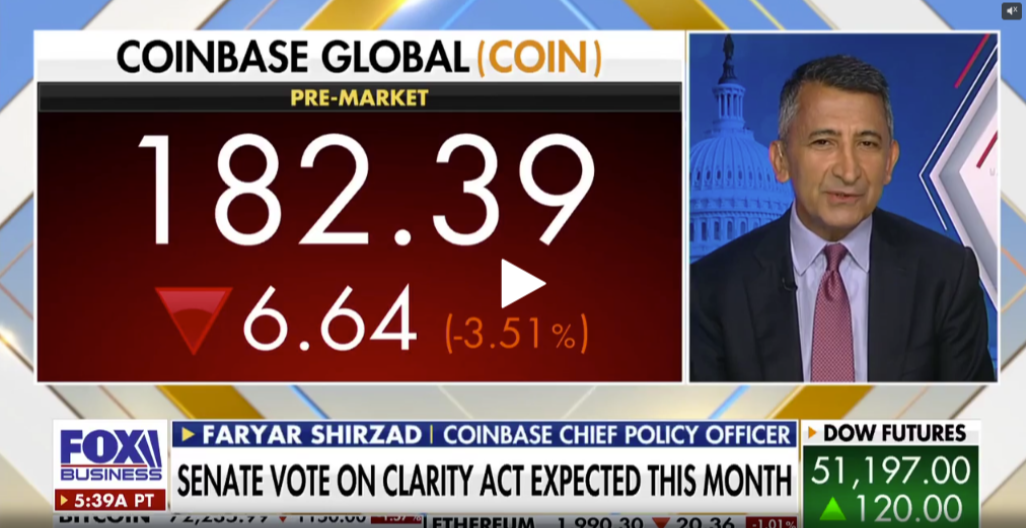
Coinbase’s chief policy officer, Faryar Shirzad, called the CLARITY Act the “biggest financial regulatory bill” since Dodd-Frank. Source: Fox Business
Much of the disagreement comes from the banking industry, which continues to voice strong opposition to the bill. Last week, JPMorgan CEO Jamie Dimon said banks would fight the legislation in its current form, arguing that allowing crypto firms to offer yield on stablecoin balances could create an uneven competitive landscape between banks and digital asset companies.
Related: Fed’s Barr backs stablecoin clarity but warns of run risks
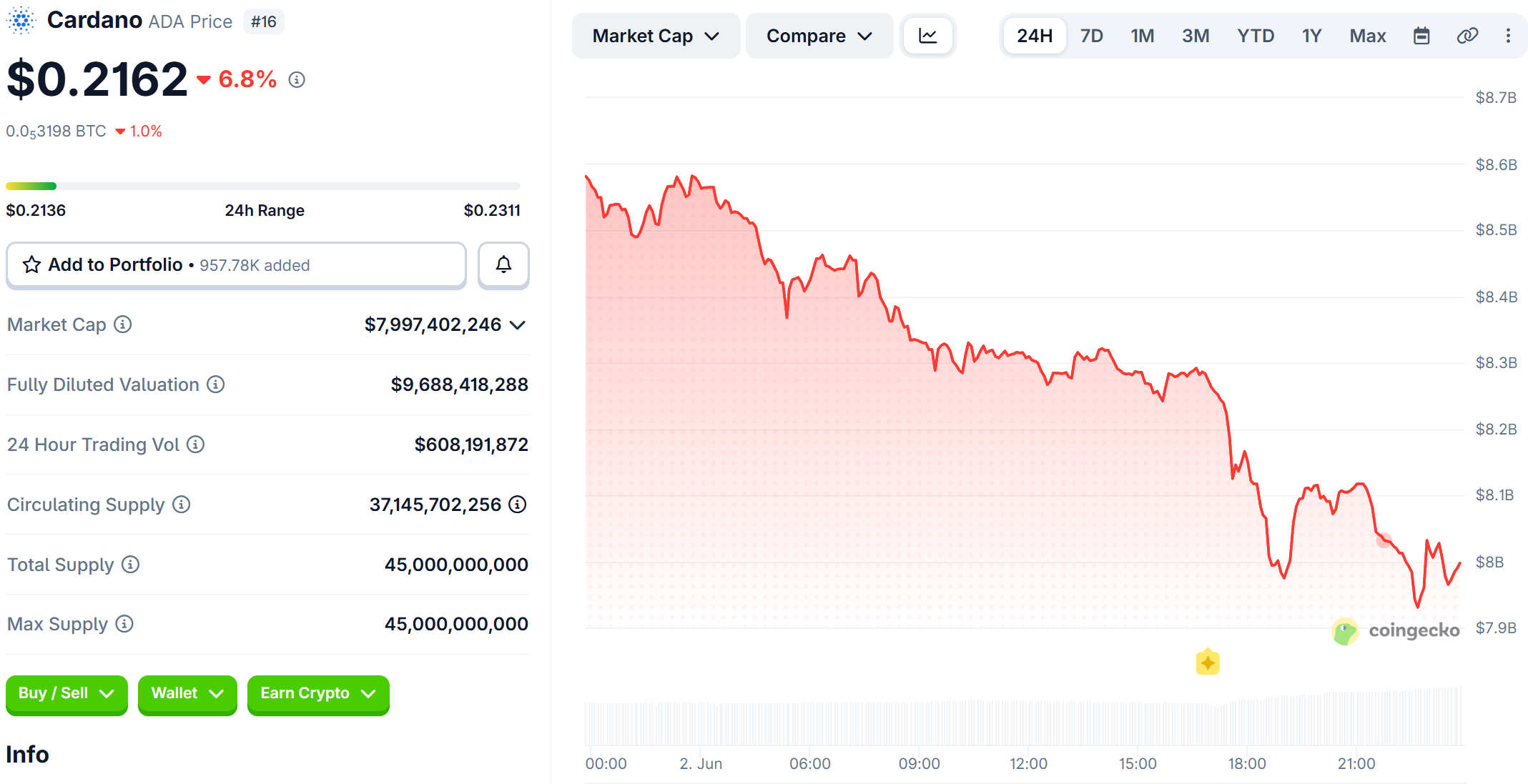
Cardano founder Charles Hoskinson lashed out at the network’s governance after TapTools said it would wind down within two weeks. The Hosky community followed with its own closure notice, though satirical.
Hoskinson predicted more failures in the second half of 2026, citing JX Door’s earlier collapse as a warning sign. Cardano (ADA) fell 6.5% to roughly $0.215 in the past 24 hours.

TapTools and ‘Hosky’ Mark a Wider Shutdown Wave
TapTools served more than one million users and supported hundreds of projects through its API across four years. Earlier in 2026, two cofounders (the CTO and COO) departed.
A backend developer briefly stepped into the CTO role. However, that replacement has also moved on, leaving operational continuity in doubt.
TapTools said it remains open to acquisition or external funding.
The shutdown follows the earlier collapse of JX Door and highlights broader weakness in Cardano network activity.
“After four years of building for Cardano, today we have difficult news to share” the TapTools team stated.
TapTools was a leading Cardano analytics platform offering real-time token charts, portfolio tracking, NFT tools, and data API for over a million users.
The Hosky community echoed the same tone in a parallel post, framing its own wind-down with characteristic humor.
“After four years of storing for Cardano, today we have difficult news to share,” Hosky noted.
Hosky is a popular Cardano meme coin and community known for humorous projects, events, Rare Evo conference antics, and its infamous Las Vegas storage unit.
Follow us on X to get the latest news as it happens
Hoskinson Vents Over Governance Paralysis
Hoskinson said he had proposed a sovereign wealth fund to backstop struggling projects. Cardano backers Wheel and Anderson rejected the idea, arguing it would damage ADA. The plan went nowhere.
He has since tried to acquire individual projects to keep them operational. Past deals include Nami and Block Frost.
However, the founder said the community criticizes him for centralizing the ecosystem each time he steps in.
Hoskinson maintained:
- He holds no governance keys,
- No treasury access, and
- No power to initiate even a protocol parameter change.
He argued daily blame for the price of ADA falls on him despite that absence of authority.
His comments came alongside a broader Cardano governance overhaul aimed at internal conflict resolution.
A recent vote on the Singapore Summit treasury proposal was rejected by delegated representatives.
Hoskinson previously argued that continued votes against ecosystem funding could leave research labs facing collapse before mid-year.
He directly challenged delegated representatives to put forward an alternative plan.
“There are people that are legitimately deranged, deranged. The only purpose now is to kill me,” Hoskinson ranted.
Builders and ADA Price Slide
Cash Anvil, a community builder, said multiple teams have cut down to essentials. The builder warned that user numbers sit at all-time lows.
Cash Anvil also criticized funding decisions that approved proposals lacking overhead transparency.
ADA traded near $0.216 at the time of writing, ranking 16th by market capitalization at roughly $8 billion. The token has lost 14% over the past month and more than 68% over the past year.
Cardano Foundation reserves also dropped 45% earlier in 2026 as ADA prices slid.
Hoskinson predicted the second half of 2026 will be very hard.
He said more DeFi projects are expected to fail before any rebound.
Whether acquirers step in for TapTools or other Cardano teams may shape the tone for the rest of the year.
The post Charles Hoskinson on Fire as Cardano Faces ‘Wave of Shutdowns’, ADA Falls 10% appeared first on BeInCrypto.
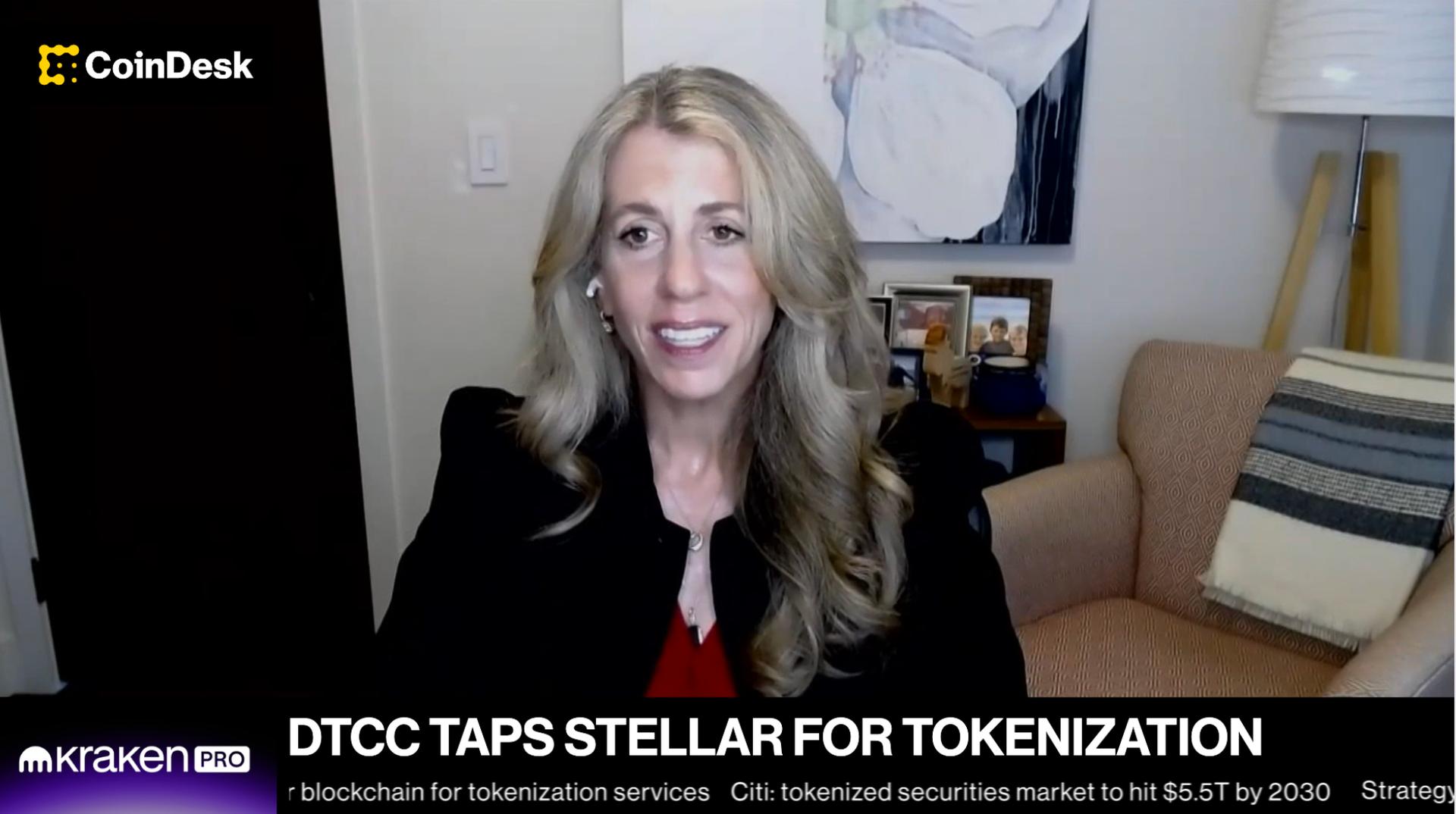
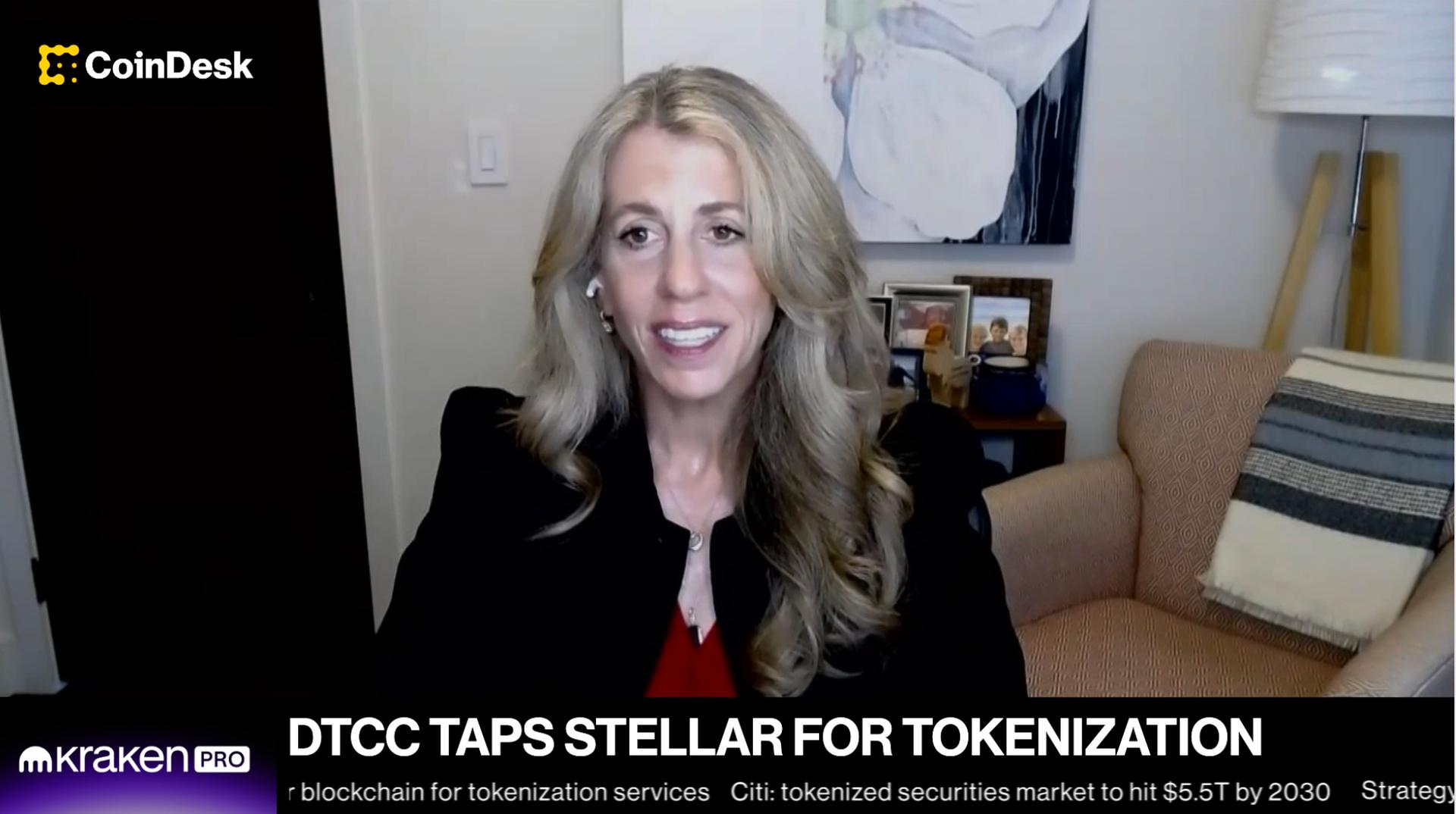
Latest developments: Stellar Development Foundation CEO Denelle Dixon joined CoinDesk’s Public Keys and said DTCC’s selection of Stellar validates years of infrastructure built for institutional use.
- DTCC recently chose Stellar as the first public blockchain connected to its upcoming tokenized securities settlement platform, Dixon said.
- Stellar surpassed $1 billion in tokenized real-world assets in December and has since grown to roughly $3 billion in about five months, according to Dixon.
- Dixon described the partnership as “the moment Stellar was built for” after more than a decade of focusing on compliance and institutional requirements.
What this means: Regulatory progress is helping institutions move from experimentation to deployment.
- Dixon said the GENIUS Act gave financial institutions confidence that the U.S. government intends to support the industry through a clearer regulatory framework.
- She noted that firms such as Franklin Templeton were already building tokenized products before recent legislation, citing the firm’s money market fund on Stellar.
- While she said passage of the Clarity Act would benefit the industry, Dixon argued that tokenization adoption is unlikely to be derailed if the bill stalls.
Closer look: Stellar is positioning its technology stack around compliance, privacy and scalability for large financial institutions.
- Dixon said Stellar has maintained 99.99.99% uptime and processes billions of transactions each quarter.
- She emphasized that compliance tools were built into the network’s architecture, reducing the need for custom smart contracts to issue assets.
- Stellar is also developing privacy features using a composable model that allows institutions to tailor controls to specific assets and use cases.
Reading between the lines: Massive transaction volumes remain a key test for blockchain-based financial infrastructure.
- DTCC processed $4.7 quadrillion in securities transactions last year, highlighting the scale traditional market infrastructure already supports.
- Dixon acknowledged that tokenized settlement volumes will ramp up gradually rather than reaching peak scale immediately.
- She said maintaining reliability and avoiding network outages are critical requirements for institutional adoption.
Broader view: Dixon expects tokenized assets to be distributed across multiple public blockchains rather than concentrated on a single network.
- She rejected the idea that one blockchain will dominate all institutional tokenization activity.
- Instead, Dixon said a handful of networks will likely capture most real-world asset issuance based on their technical strengths.
- She argued that open public blockchains will ultimately outperform closed alternatives because they evolve rapidly through global developer participation.
Bitcoin dropped below $70,000, down 12% over the past two weeks, while NEAR Protocol (NEAR), Internet Computer (ICP), and Render (RENDER) posted double-digit gains in the same period, indicating a clear rotation toward AI-focused tokens.
We break down the three AI tokens leading this divergence and why the narrative around decentralized intelligence is gaining real traction.

Why NEAR, ICP, and RENDER are Defying the Bitcoin Drop
An AI crypto token is a digital asset tied to projects building decentralized infrastructure for artificial intelligence, from compute and storage to autonomous agents. Three of these tokens just outperformed Bitcoin amid the heavy market correction.
NEAR led the move, surging roughly 16% to trade near $2.69. Its market cap climbed to around $3.48 billion, securing the project’s position close to 32nd globally among all cryptocurrencies.
Marketed as “the blockchain for AI,” NEAR powers user-owned intelligent agents that act in the customer’s interest rather than for centralized platforms. Its sharded design delivers high throughput at low cost with intent-based interactions.
Co-founder Illia Polosukhin recently highlighted the rollout of post-quantum cryptography by the end of Q2. The upgrade aims to future-proof the network against emerging quantum threats while enabling collaborations on quantum-algorithm AI infrastructure.
Follow us on X to get the latest news as it happens
ICP rose about 10.4% to $3.09, with a market value near $1.66 billion and ranking 52th. The network markets itself as a sovereign frontier cloud for AI, running agents, data, and payments fully on-chain.
The fundamentals back the move. Approximately 97,000 ICP burned across the past 30 days, the highest monthly total since 2025, while the platform processed 7.2 billion transactions in May.
Meanwhile, RENDER gained roughly 10% to trade near $2.22, with a market cap close to $1.14 billion in 66th place. The decentralized GPU network connects idle graphics power with developers needing scalable compute for 3D rendering and AI workloads.
Technical analyst TehLamboX noted Render completed a secondary breakout above $2.40 and maintained bullish structure despite Bitcoin’s weakness. He flagged potential targets near $2.50 and beyond as the AI narrative accelerates.
What This AI Token Rally Really Signals
The outperformance points to a clear narrative shift. While most assets moved alongside Bitcoin, investors are rewarding tokens that deliver real utility in the artificial intelligence technology stack rather than purely speculative crypto plays.
Each project tackles a distinct bottleneck in centralized AI systems. NEAR addresses scalable, intent-driven execution. Internet Computer brings full on-chain sovereignty. Render democratizes access to GPU resources for creators, developers, and AI training workloads.
As artificial intelligence adoption accelerates across industries, these tokens are emerging as proxies for exposure to decentralized infrastructure. Their ability to post positive returns amid broader market pressure suggests capital is differentiating between speculation and tangible progress.
The divergence may keep widening. On-chain growth, transaction volume, and real-world integrations are now driving valuations more than the broader crypto cycle. That dynamic favors projects with measurable adoption over those without active usage.
Subscribe to our YouTube channel to watch leaders and journalists provide expert insights
The post AI Tokens are Outperforming Bitcoin, But For How Long? appeared first on BeInCrypto.

Crypto political action committees backed by the Fairshake network and its Protect Progress affiliates are continuing to deploy significant resources into U.S. political races, with new Federal Election Commission disclosures detailing substantial media spending and candidate support in California, New Jersey, and South Dakota. The activity coincides with heightened attention to Maryland’s forthcoming primary and a broader regulatory discourse around how crypto firms participate in the political process.
According to filings with the U.S. Federal Election Commission (FEC), the Protect Progress affiliates—working through the Fairshake apparatus—spent more than $3 million to back Democratic House candidates in California and New Jersey. A separate affiliate, Defend American Jobs, allocated more than $411,000 to support Republican Senator Mike Rounds’ reelection bid in South Dakota. In addition to its activity in California, Protect Progress signals readiness for a sizable Maryland push ahead of the June 23 primary. FEC records show the crypto-backed PAC spending more than $3.1 million on media to support Adrian Boafo in Maryland’s 5th district, and roughly $320,000 backing Ritchie Torres’ reelection in New York’s 15th district, which also holds a primary on June 23.
Source data corroborates the broader footprint of crypto-linked political giving. As of January, Fairshake reported a war chest exceeding $193 million. In parallel, other crypto-aligned committees—such as Fellowship, funded by Cantor Fitzgerald and Anchorage Digital, and the Blockchain Leadership Fund, supported by Chainlink and Anchorage—have contributed to a diversified slate of candidates and districts. The Texas primary results from the prior week highlighted a sweep of crypto-backed candidates in that state’s races, illustrating a nationwide pattern of industry-backed influence in primary contests.
Overall, the disclosures reflect a deliberate strategy to influence policy perspectives on digital assets, with Protect Progress explicitly signaling its aim to contest lawmakers it deems “anti-crypto.” In particular, the group supported a candidate in Texas who subsequently faced a Democratic opponent in a high-profile primary, underscoring the potential for crypto-aligned committees to shape political risk and regulatory narratives across multiple states.
Key takeaways
- FEC filings show Protect Progress affiliates spent over $3 million to back Democratic House candidates in California and New Jersey, while Defend American Jobs deployed more than $411,000 to back Senator Mike Rounds in South Dakota.
- In Maryland, Protect Progress earmarked more than $3.1 million in media expenditure for Adrian Boafo in MD-5 and roughly $320,000 for Ritchie Torres in NY-15, both of which held or will hold primaries on June 23.
- Crypto-aligned PACs have built a broad fundraising and media apparatus, with Fairshake maintaining a reported war chest of over $193 million as of January.
- Recent Texas primary outcomes indicated crypto-backed candidates won, reinforcing the perception of crypto-centric influence in U.S. electoral contests.
- The CLARITY Act (Digital Asset Market Clarity) has moved onto the Senate calendar for consideration, with amendments from the Agriculture and Banking Committees likely requiring consolidation before a vote, signaling intensified regulatory scrutiny of digital assets.
Crypto political activity and the Maryland primary landscape
The Maryland primary cycle, culminating on June 23, is a focal point for crypto-linked fundraising because of the state’s evolving regulatory stance on digital assets and the potential impact on financial services in the region. FEC filings reveal a sizeable media spend dedicated to Adrian Boafo in the 5th district, underscoring the commitment of crypto-aligned committees to influence down-ballot outcomes that could affect future policy and oversight in the nation’s capital region.
Beyond Maryland, the filings highlight continued activity in California and New Jersey, where Protect Progress affiliates supported Democratic candidates in House races. The pattern suggests a broader objective: shaping the legislative environment around crypto, stablecoins, and digital asset market structure at a time when U.S. policy is under intense scrutiny from regulators and lawmakers alike.
Regulatory context: the CLARITY Act advances in the Senate
Legislative momentum around clear rules for digital assets remains a central thread in U.S. policy. The Digital Asset Market Clarity (CLARITY) Act has advanced within the Senate, with initial movement through the Agriculture Committee in January and a Banking Committee review in May. Senate leadership has now placed the bill on the chamber’s calendar for consideration and potential floor action. The two versions of CLARITY that moved through the committees with amendments are expected to be consolidated before any vote, underscoring the complexity of aligning regulatory objectives across multiple jurisdictions and policy areas.
From a compliance and enforcement perspective, CLARITY’s progression intersects with ongoing discussions around MiCA-style regulation, U.S. agency authority (SEC, CFTC, DOJ), and the interplay with AML/KYC frameworks, licensing standards, and banking integration. The broader regulatory environment remains unsettled in terms of how crypto firms will secure licenses, meet cross-border disclosure requirements, and engage with banks on digital-asset custody and settlement services. In this context, lawmakers and industry participants are tracking how the Senate’s handling of CLARITY will shape enforcement priorities, cross-border operations, and capital-raising activities for crypto enterprises.
Cointelegraph notes that the push for regulatory clarity has attracted attention from lawmakers who fear strategic gaps in the U.S. framework could be exploited by less transparent markets. In particular, broader industry commentary highlights the risk that delays in clarity may cede regulatory leadership to other jurisdictions, a concern echoed by policymakers seeking to align U.S. laws with global standards while preserving innovation.
Closing perspective
As crypto-affiliated political action and regulatory initiatives unfold, institutions, exchanges, and financial partners will monitor disclosures for risk, compliance implications, and licensing trajectories. The coming weeks will reveal how the Maryland primary results, the wider Fundraising activity, and the Senate’s CLARITY calendar will shape the balance between political influence, investor protection, and robust regulatory oversight.


Bitcoin tumbling to $67,000 may signal a challenging summer ahead as investor capital continues flowing into artificial intelligence (AI) stocks and away from crypto.
In a Tuesday report, K33 Research head Vetle Lunde said bitcoin’s weakness reflects fading institutional demand, heavy ETF outflows and growing vulnerabilities in derivatives markets.
“Much of the market views the opportunity cost of holding BTC as too high while anything AI-related soars,” Lunde wrote.
The divergence has become increasingly difficult to ignore. Bitcoin has failed to reclaim its 200-day moving average while the Nasdaq and S&P 500 continue setting record highs. Investors are also looking ahead to potential IPOs from companies such as SpaceX and Anthropic, which may be drawing capital away from crypto, Lunde argued.
That rotation is evident in bitcoin ETF flows. Spot bitcoin exchange-traded products shed 62,794 BTC over the past three weeks, the second-largest outflow streak on record, the report noted.
K33 said ETF selling accelerated after bitcoin’s failed attempt to break above its 200-day moving average last month.
$60,000 bottom being questioned
The shift in tone marks a notable change for K33. The firm previously argued bitcoin’s plunge to around $60,000 in February likely marked the deepest drawdown of the cycle. A key part of that thesis was unusually negative funding rates in perpetual futures markets, which reflected persistent bearish positioning and created conditions for powerful short squeezes.
That setup helped fuel bitcoin’s rebound toward $83,000. But the rally ultimately stalled at the 200-day moving average, a level that has capped previous bear market rallies.
Today, the derivatives picture looks very different, Lunde said. CME bitcoin futures open interest has fallen to its lowest level since October 2023, a sign that institutional traders are reducing exposure. Meanwhile, funding rates in perpetual futures have risen alongside open interest even as bitcoin falls, suggesting leveraged longs are building into a weakening market.
While the firm has not completely abandoned its view that $60,000 marked the cycle low, the tone has become more defensive.
“We read the latent selling pressure in those leveraged longs as a warning of possible deeper lows and advise caution,” the report said.
K33 still sees bitcoin as undervalued relative to equities over the long run. But with institutional demand fading, ETF investors heading for the exits and capital chasing stronger-performing sectors, the firm says the market faces a tougher backdrop than it did just a few weeks ago.
“With outside capital reluctant to enter and existing holders trimming exposure, we may be in for a choppy summer,” Lunde wrote.

Goldeneyes re-sign Sarah Nurse on two-year deal

Control Resonant Will Bend Your Reality On September 24, 2026

BREAKING: TRUMP JUST NUKED XRP!!! HERE’S WHY!



-

 NewsBeat6 days ago
Israel says it has killed new Hamas military leader in Gaza City airstrikes
-

 Tech7 days ago
NASA taps Blue Origin to deliver lunar rovers for Moon Base initiative
-

 News Videos4 days ago
This is BROKEN! INSANE 5x MONEY CAR WASH WEEK! The NEW GTA Online UPDATE Today! (GTA5 New Update)
-

 News Videos7 days ago
XRP *JUST* SUCCEEDED!!!! CLARITY ACT EXPOSED!!! (SHE EXPOSED IT)
-
 Tech3 days ago
SpaceX just won a second Golden Dome contract. This one is $4.16 billion.
-

 Business7 days ago
Selena Gomez Reportedly Upset Over Benny Blanco’s Comments on Her ‘Terrible’ Diet
-

 Tech5 days ago
Waymo dominates autonomous vehicle registrations as Tesla trails behind
-

 News Videos4 days ago
SHE IS KILLING XRP!!! WATCH URGENT AND ACT FAST
-
 NewsBeat4 days ago
FIRST NIGHT REVIEW: Take That bring the Circus back to life in spectacular sun-soaked style
-

 Business1 day ago
Jade Biosciences, Inc. (JBIO) Discusses Positive Interim Results From JADE101 Phase I Healthy Volunteer Study and Development Plans Transcript
-

 Tech6 days ago
The Samsung pay deal is the moment Korean unions changed register
-

 Tech7 days ago
Millions of AI agents imperiled by critical vulnerability in open source package
-
Crypto World4 days ago
CFTC Has Approved the First Regulated Bitcoin Perpetual Contract in the U.S.
-
Crypto World6 days ago
SpaceX’s $2 Trillion IPO: Why Tech Giants Nvidia (NVDA), Apple (AAPL), and Microsoft (MSFT) May Face Pressure
-
 Entertainment6 days ago
The Most Misunderstood Sci-Fi Horror Movie of the Last 10 Years Just Took Over Netflix
-
 Crypto World4 days ago
Snowflake (SNOW) Stock Rallies on Strong Q1 Results and AI Product Growth
-
 NewsBeat4 days ago
Novak Djokovic v Joao Fonseca LIVE: French Open latest scores and results after Jannik Sinner’s shocking collapse
-
 Entertainment4 days ago
Weak ‘Supergirl’ Box Office Tracking Amid Milly Alcock Backlash
-

 Business3 days ago
Is the Spurs Phenom Already Better Than Prime Diesel?
-

 Business4 days ago
Demand Conditions Improve In Chemicals Sector In April 2026
You must be logged in to post a comment Login