
Crypto World
Most Players Start With DraftKings Or Bet365. In 2026 Many Are Not Finishing There.

There is a predictable arc to how most people choose an online gambling platform. They hear a name — usually through advertising, a sports sponsorship, or a recommendation — they search it, they sign up. DraftKings and Bet365 are the two names that appear most often at the start of that arc. Between them they cover the US market and the international market and between them they have enough marketing spend and brand recognition to make themselves the obvious first answer to most gambling-related searches.
The question that is getting more interesting in 2026 is not where players start. It is where they end up after they have done more than accept the first answer. Players who compare platforms seriously — who look past brand recognition and into the specific dimensions that affect their daily experience as a gambler — are increasingly finding that the most recognised names are not the ones that score highest on the criteria that matter most to them.
ZunaBet launched in 2026 and is appearing at the end of that more thorough research process with growing frequency. This article follows that research process — examining what DraftKings and Bet365 offer, where they fall short for specific player types, and what ZunaBet delivers that brings those players to a different conclusion.
DraftKings: The Starting Point for Most US Players
DraftKings built its position in the US market through a combination of timing, existing brand equity, and genuine product investment. The daily fantasy sports audience it had built before state-by-state sports betting opened gave it a conversion base that competitors entering the market from scratch could not immediately match. By the time most international operators had navigated US licensing requirements DraftKings was already operational across multiple states with a user base that extended back years before their first legal sports bet.
The sportsbook that emerged from that foundation is genuinely well-built for its market. American sports culture is embedded in the product in ways that international operators find difficult to replicate — not just which leagues are covered but how the markets are structured, how the odds are presented, and how the betting experience aligns with the rhythms of the US sports calendar. The app is polished. The in-play product works. The live betting experience reflects years of iteration.
The casino product serves its purpose. A library of reasonable size from established providers, live dealer content, standard table game options. It is not exceptional by global casino standards but it meets the needs of the mainstream US player whose primary interest is sports betting.
The limitations surface when players start comparing beyond the initial impression. Fiat payment infrastructure means withdrawals take the time fiat banking takes — same-day through PayPal at best, several business days through bank transfer as standard. Bitcoin in select states is a limited concession to crypto demand rather than a genuine crypto infrastructure commitment. Dynasty Rewards points require navigation to extract real value and experienced players consistently find the effective return lower than headline tier descriptions imply. Geographic operation is restricted to licensed US states.
Bet365: The Starting Point for Most International Players
Bet365’s position in international markets was built over a much longer period than DraftKings’ US dominance. Founded in 2000, it has had time to develop relationships, infrastructure, and market coverage that newer platforms are still working toward. The sportsbook is the product of that investment — a breadth and depth of coverage that no competitor has fully replicated.
The range of markets is the headline achievement. Not just major global sports at full depth but minor leagues, niche sports, and events that other platforms do not price. In-play coverage runs on events that competitors close before the match begins. The live streaming service embedded in the platform lets players watch events as they bet on them — a feature Bet365 has offered long enough that it feels standard even though competitors have not consistently matched it.
The casino reflects similar investment in breadth. A large library from established providers, strong live dealer content, and a platform experience that is consistent and polished across devices. The product is broad and well-maintained.
The limitations are structural and significant for specific player types. Geographic restrictions eliminate the platform from the US market and several other jurisdictions entirely. The loyalty program is the most consistently criticised aspect for the general player base — an invite-only VIP structure that keeps meaningful rewards inaccessible to most players and provides no clear pathway for those who want to reach them. Crypto support is minimal. Fiat banking timelines apply.
ZunaBet: Where the Thorough Research Ends Up
ZunaBet launched in 2026 under Strathvale Group Ltd, operating under an Anjouan gaming license and registered in Belize. The team brings over 20 years of combined industry experience. It is not a US state licensed operator and it does not hold UK Gambling Commission certification. It is a crypto-first, internationally accessible platform built specifically around what a thorough research process reveals that DraftKings and Bet365 are not providing.
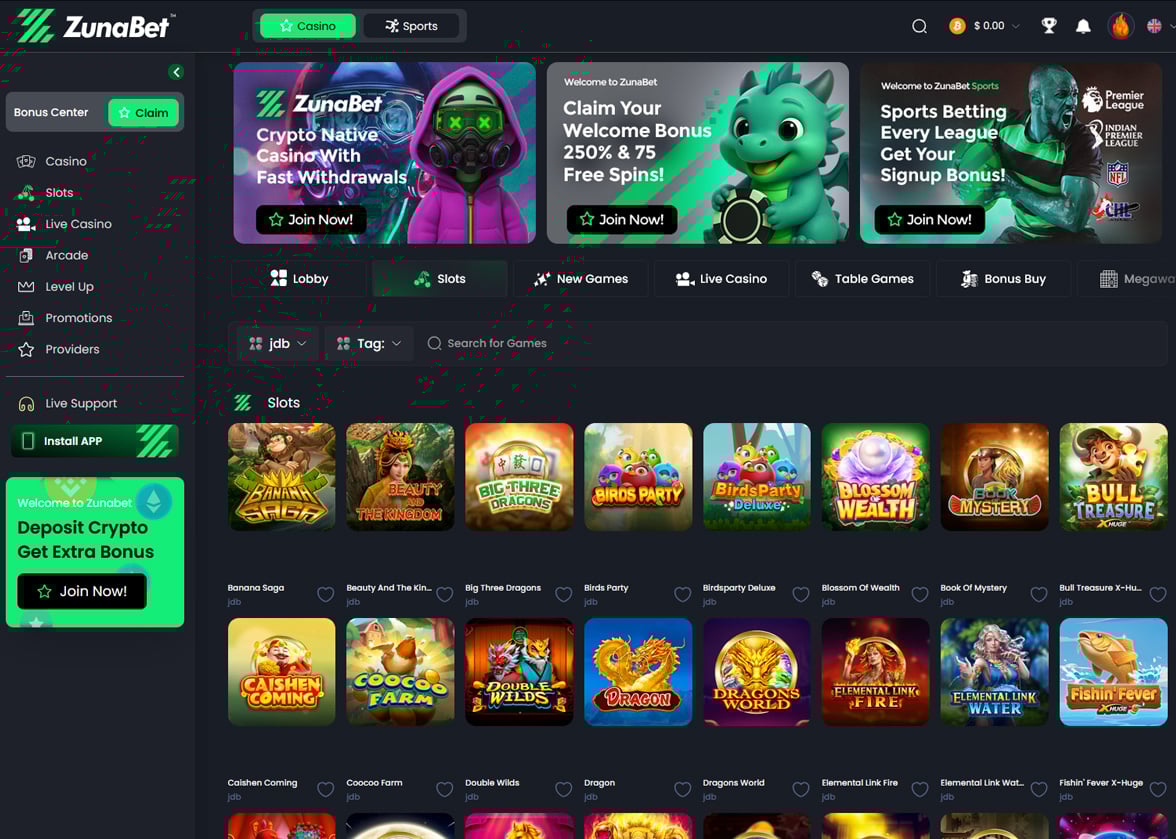
The game library makes the product’s opening statement. ZunaBet carries 11,294 titles from 63 providers. Neither DraftKings nor Bet365 approaches that combination of scale and provider diversity on the casino side. Evolution supplies the full live dealer catalogue. Pragmatic Play covers multiple categories. Hacksaw Gaming delivers the high-volatility slot mechanics that experienced players specifically seek out. Yggdrasil contributes its distinctive design philosophy. BGaming brings content whose aesthetic speaks directly to the crypto-native player. Sixty-three providers means 63 genuinely different creative approaches producing content with different mechanics, different volatility profiles, and different visual identities — not a large number built around a small pool of commercial relationships.
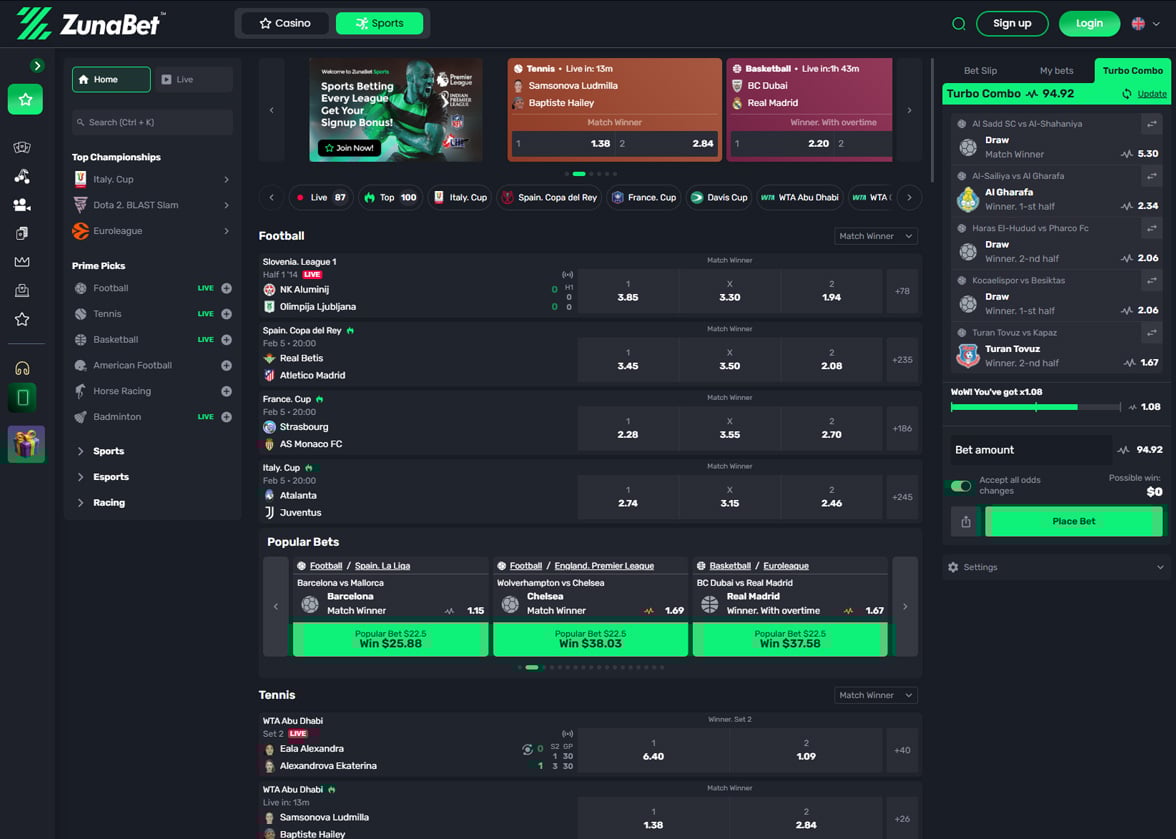
The sportsbook covers football, basketball, tennis, NHL, and other major global sports. The extension beyond both established platforms comes in esports — CS2, Dota 2, League of Legends, and Valorant as genuine primary markets rather than token inclusions. Virtual sports and combat sports complete a sportsbook built to serve the full range of what the modern player bets on.
Payment support covers more than 20 cryptocurrencies natively — BTC, ETH, USDT across multiple chains, SOL, DOGE, ADA, XRP, and others. No platform processing fees. Withdrawals settling in minutes. Apps across iOS, Android, Windows, and MacOS with 24-hour live chat support.
Payments: The Comparison That Changes Everything
Players who compare payments across all three platforms encounter a comparison that is qualitatively different from most feature comparisons. It is not a question of which platform does the same thing slightly better. It is a question of which platforms were built on fundamentally different infrastructure with fundamentally different outcomes.
DraftKings and Bet365 were both built on fiat banking infrastructure at a time when that was the only viable option. Their payment systems route through banks, card networks, and e-wallet processors. Improvements have been made over the years but the infrastructure has not changed. A withdrawal on DraftKings or Bet365 takes the time fiat banking takes — ranging from several hours at best to multiple business days at standard depending on method and jurisdiction.
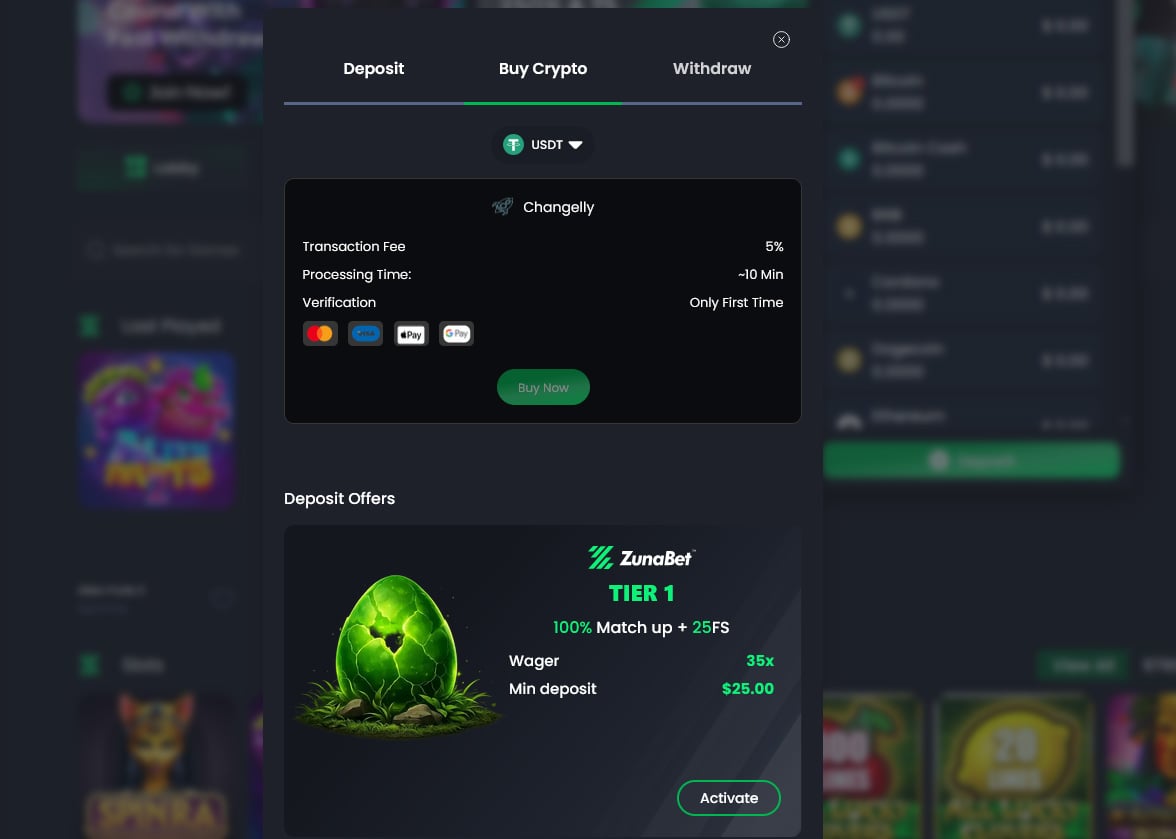
ZunaBet was built in 2026 on crypto infrastructure as the foundation rather than the addition. Withdrawals settle at network speed. In practice that means minutes — not hours, not the next morning, not after the weekend. The money moves when the player requests it because the infrastructure was designed to make that possible.
For a player who has used all three platforms and compared withdrawal experiences directly the difference is not a preference. It is a permanent recalibration of what acceptable looks like. Every subsequent platform evaluation includes the question of whether withdrawals are that fast. For most traditional platforms the answer is no.
Loyalty Programs: The Comparison That Frustrates Players on Traditional Platforms
The loyalty program research across DraftKings, Bet365, and ZunaBet illustrates three different relationships between platform and player.
DraftKings Dynasty Rewards gives players a points balance and tier position. The conversion from points to actual cash value requires navigation through a redemption structure that varies by option and game type. Players who calculate their effective return per dollar spent find a number that is lower than the headline tier benefits suggested. The system retains players but it retains them through habit as much as genuine satisfaction.
Bet365 gives most players a loyalty program that is effectively invisible. The invite-only VIP structure ensures that meaningful rewards flow to a small percentage of the player base while the majority operates without transparency about what their engagement earns them. The absence of a clear loyalty pathway is one of Bet365’s most consistently cited limitations among players who discuss it in gambling communities.
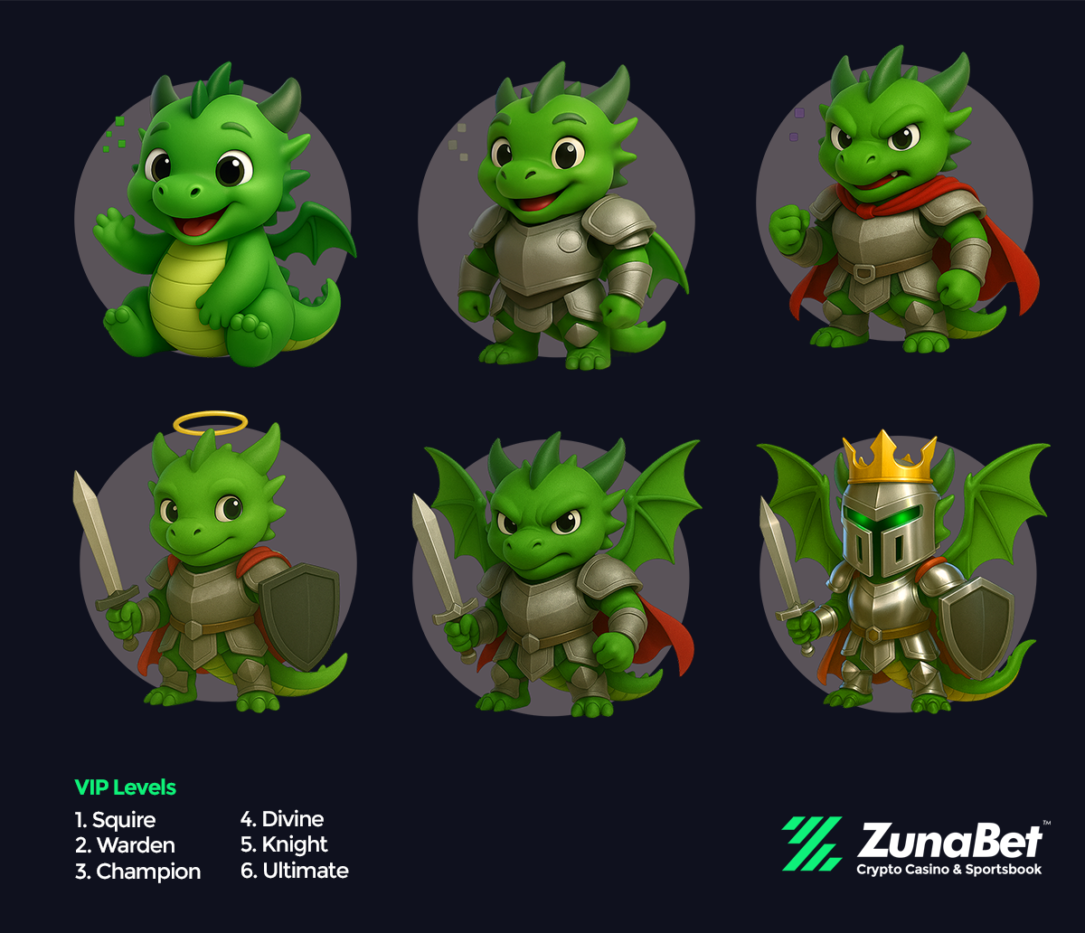
ZunaBet’s dragon evolution loyalty system gives players a precise, calculable answer before they join. Six tiers — Squire, Warden, Champion, Divine, Knight, and Ultimate — built around a gamified mascot called Zuno with direct rakeback rates of 1%, 2%, 4%, 5%, 10%, and 20%. All tiers accessible to all players. All rates applying to all activity on the platform — casino games and sportsbook bets alike.
Twenty percent rakeback at the Ultimate tier is a number that speaks for itself. A player putting consistent volume through the platform receives a fifth of that value back directly, every month, without a conversion process or a redemption decision. Additional tier benefits including up to 1,000 free spins, VIP club access, and double wheel spins build on a structure that is already generous and transparent.
The Welcome Bonus
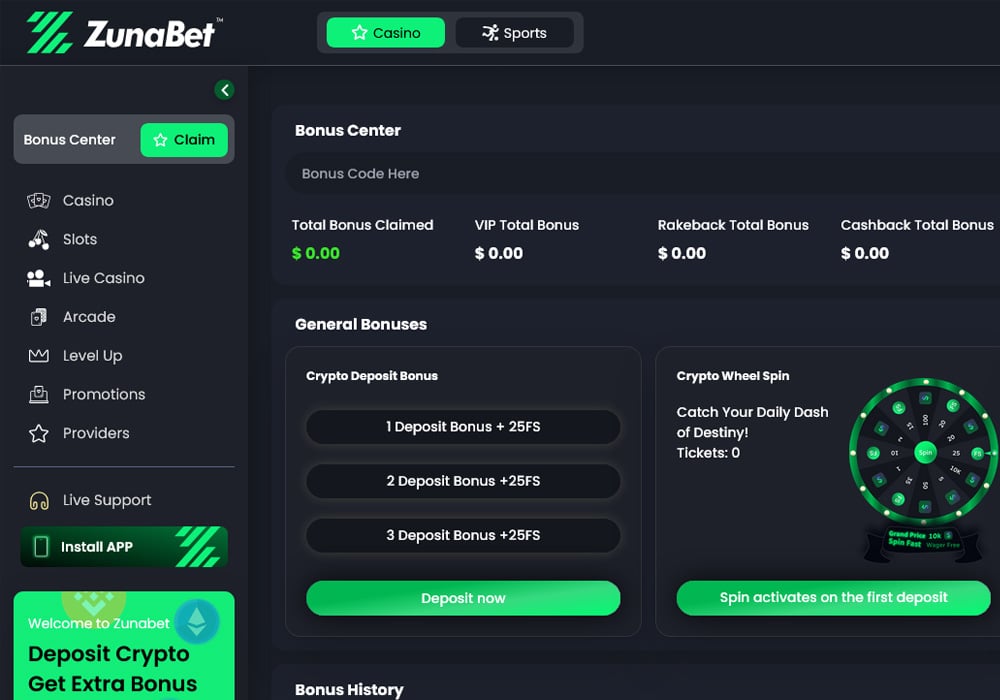
ZunaBet new players receive a bonus across three deposits totalling up to $5,000 plus 75 free spins. First deposit matched 100% up to $2,000 with 25 free spins. Second deposit matched 50% up to $1,500 with 25 spins. Third deposit matched 100% up to $1,500 with 25 spins. The three-deposit structure gives players time to explore a platform of 11,000-plus games and a full sportsbook properly before the promotional period ends.
DraftKings and Bet365 offer welcome promotions within their respective regulated markets. Current terms vary by jurisdiction and should be confirmed directly on each platform.
The Next Generation of Players and Where Their Research Leads
The player doing thorough research in 2026 is not the player the major platforms were built for. They are younger, more crypto-literate, more informed about what different platforms offer, and more willing to choose a less-recognised brand if that brand delivers better on the criteria they care about. They follow esports. They expect fast digital payments. They understand rakeback and will not accept points systems that obscure their value. They have access to comparison tools and review communities that make brand recognition less determinative than it was a decade ago.
For this player the research that starts with DraftKings and Bet365 does not always end there. It continues until the platform that actually meets their criteria is found. ZunaBet launched in 2026 as that platform — built for the player doing the research rather than the player who accepted the first answer.
ZunaBet’s operational track record is still being established. That is worth acknowledging honestly. A platform in its first year carries different trust credentials than one with a decade behind it and players should weigh that. But the product built for the thorough researcher is at ZunaBet — and in 2026 the thorough researchers are finding it.
Disclaimer: This is a Press Release provided by a third party who is responsible for the content. Please conduct your own research before taking any action based on the content.



TLDR:
- BlackRock, Franklin Templeton, and VanEck have all deployed tokenized products directly on BNB Chain.
- BNB’s auto-burn removes over $1B in tokens every quarter, steadily tightening an already limited supply.
- The first 2x leveraged BNB ETF in the US, Teucrium XBNB, has received regulatory approval in 2025.
- BNB trades near $619, with analysts watching the $650–$680 resistance zone for a breakout signal.
The BNB price outlook is drawing renewed interest across the crypto market. With institutional deployments accelerating and a deflationary burn schedule compressing supply, traders are watching whether BNB can stage a breakout or remain rangebound through May.
BNB has spent much of 2025 quietly building a case that the broader market has largely ignored. While debates around Solana and Ethereum dominate social feeds, BNB Chain has been attracting real institutional weight. BlackRock’s BUIDL, Franklin Templeton’s BENJI, and VanEck’s VBILL are all now live on the network.
Over 30 public companies are reportedly constructing BNB treasury strategies, and Bhutan has taken a sovereign reserve position in the asset.
A first-of-its-kind 2x leveraged BNB ETF from Teucrium, trading as XBNB, has also received approval in the United States.
Crypto analyst Crypto Patel captured the mood on X, writing: “You don’t need to love it. You just need to understand the setup.”
A Burn Schedule That Changes the Supply Math
BNB’s auto-burn mechanism removes more than $1 billion worth of tokens every quarter, directly tied to on-chain usage. With only 134.7 million tokens in circulation against a 200 million hard cap, the float is tighter than most competing layer-one assets.
That supply dynamic does not guarantee price appreciation, but it removes one of the most common headwinds — inflation pressure. BNB Chain currently processes 31 million daily transactions and accounts for roughly 40% of global stablecoin volume.
The 2026 roadmap targets 20,000 transactions per second with sub-second finality, a technical leap that could further cement its infrastructure role. Tokenized gold through xAUT is already live on chain, adding another layer of real-world asset activity.
What the Charts Actually Say Right Now
BNB is trading near $619 and holding the $600 level, which analysts treat as the near-term line in the sand. The $650–$680 zone represents the critical resistance.
A volume-backed move through that range opens a path toward $750 and validates the broader accumulation structure that has been forming since the $300–$500 support band.
The seven-day chart shows a sharp early-week drop followed by tight sideways movement — a compression pattern. Buyers are absorbing dips below $83 billion market cap while sellers cap rallies near $84 billion.
This kind of structure typically resolves with a sharp directional move rather than a slow drift. A breakdown below $600 shifts focus to the $520–$550 demand zone. The direction BNB takes from here will likely set its tone for the rest of the month.
TLDR:
- Buffett compared today’s stock market to a church with a casino attached, warning gambling is at a peak level.
- Berkshire Hathaway now holds over $397 billion in cash, signaling Buffett sees no compelling investment opportunity yet.
- Buffett warned the U.S. is not immune to runaway inflation, drawing parallels to the pre-Volcker dollar crisis era.
- He cautioned that real market crashes come from unexpected events, not from risks that investors are already watching.
Warren Buffett, 95, drew global attention at Berkshire Hathaway’s 2026 annual shareholder meeting in Omaha on May 2.
The legendary investor, now serving as chairman after stepping down as CEO in January, did not hold back on his views.
He compared today’s stock market to a casino, warned the U.S. dollar is not immune to runaway inflation, and explained why Berkshire continues to sit on a record cash pile exceeding $373 billion.
Buffett Sees Gambling, Not Investing, in Today’s Markets
During the lunch break, Buffett compared markets to “a church with a casino attached,” drawing a clear line between traditional value investing and the growing enthusiasm for short-term options trading.
He noted the casino side has grown increasingly crowded. The observation came as markets continue to see heavy retail participation in speculative instruments.
Buffett pointed to one-day options as a clear example. “If you’re buying one-day options or selling them, that’s not investing, it’s not speculating — it’s gambling,” he said.
He also cited a recent meme-driven short squeeze in a legacy rental car company as further proof of the mood. The episode mirrored retail-driven volatility seen in earlier years with other struggling companies.
Buffett added, “We’ve never had people in a more gambling mood than now.” That assessment came from a man who has witnessed every major market cycle of the past six decades. His view carries weight precisely because of that experience.
He also acknowledged his own limits in the current environment. Buffett said he understands fewer businesses today, as a percentage of the whole, than he did ten years ago.
He noted that younger people who grew up with newer industries carry an edge he no longer has. That admission explains, in part, why Berkshire has remained largely inactive in deploying capital.
Dollar Vulnerability and the Risk of an Unseen Collapse
Buffett warned that the U.S. is “not immune” from runaway inflation, referencing the period just before Paul Volcker intervened to rescue the dollar.
He described how Americans at that time were borrowing at 12% to invest in farmland earning only 6%, purely on the belief the dollar would lose its value. That mindset led to widespread financial ruin in communities across Nebraska.
“Cash is trash” was the prevailing mentality then, Buffett recalled, noting that large Nebraska farmers collapsed because they bought beyond their earning power and paid interest rates their returns could not support.
He said the loss of faith in a currency transforms a country into something entirely different. The warning drew clear parallels to current conditions where fiscal deficits remain elevated.
Berkshire’s cash and Treasury bill position now stands at $373 billion, a deliberate accumulation built over years of disciplined inaction during expensive markets.
Buffett described cash not as dead weight but as optionality — the ability to act when others cannot. He said Berkshire would deploy capital only in the event of a “big” decline, making clear that the current environment does not meet that threshold.
On the question of a coming crash, Buffett was characteristically measured. “If you saw them, then they wouldn’t happen,” he said, suggesting the greatest risks are always those that go unnoticed.
He compared an unexpected shock to the assassination of Archduke Franz Ferdinand in 1914 — an event nobody anticipated that reshaped the world overnight. That framing was a reminder that preparation, not prediction, defines sound investing.

A new wave of sanctions-enforcement in the crypto space is testing how investigators attribute blockchain activity to state actors. While the U.S. Treasury’s Office of Foreign Assets Control (OFAC) seized wallets tied to Iran holding more than $340 million, the provenance of these wallets is under fresh scrutiny. Blockchain intelligence firm Nominis suggests that the seized addresses exhibit structural and behavioral patterns that diverge meaningfully from the IRGC’s previously observed crypto footprint, raising questions about attribution and the limits of static wallet typologies.
The contrast between the scale of asset seizures and the nuanced behavior of the wallets highlights a broader shift in how authorities understand illicit crypto use. Nominis CEO Snir Levi emphasizes that the IRGC’s past activity has tended to show distributed holdings, modest per-wallet balances, short holdings horizons, and a deliberate turnover that minimizes exposure to freeze or seizure. In this case, however, the characteristics appear to depart from those established patterns, prompting a closer look at whether the seizures reflect direct IRGC control or a broader network that overlaps with other state or non-state actors.
According to Nominis, this disconnect matters for compliance teams and investigators alike. Levi notes that static wallet classifications—simple checklists tied to known actor profiles—may no longer be sufficient. Instead, behavioral analysis and clustering—examining how wallets interconnect, how funds move between addresses, and the timing of transactions—are increasingly critical to identify risk. “The behavioral divergence observed in this case raises a critical question: To what extent does the frozen $340 million reflect direct IRGC control versus infrastructure that overlaps with broader, potentially foreign, financial networks,” Levi said.
The discussion comes as U.S. authorities continue to shape the narrative around crypto and sanctions. OFAC’s action to seize the wallets is part of a broader enforcement posture that, in parallel, has drawn attention to the way sanctioned assets are managed in the crypto ecosystem. The sector’s borderless nature means that enforcement agencies must rely not only on static indicators but also on the dynamics of on-chain behavior and cross-border financial networks. In this context, the Nominis analysis seeks to add nuance to the attribution debate—an essential consideration for financial institutions trying to comply without stifling legitimate activity.
In a broader enforcement frame, another major development is the intensifying campaign to cut off Iran from lucrative economic channels. The U.S. Treasury has pursued a sweeping initiative known as Operation Epic Fury, targeting Iranian financial networks with the aim of imposing economic costs on Tehran. Treasury Secretary Scott Bessent described the effort as freezing bank accounts and disrupting access to overseas assets, while noting that retirement funds and overseas real estate held by Iranian officials are also under scrutiny. In remarks to Fox Business, Bessent said the operation has put substantial pressure on the regime, signaling a multi-pronged approach that combines traditional financial channels with crypto-enabled assets.
The public record shows the scale of the crypto aspect of this effort. Treasury officials have cited nearly $500 million in Iranian crypto assets being targeted as part of Epic Fury. This figure surpasses earlier disclosures about crypto seizures linked to Iran, which had tallied at least approximately $344 million frozen in USDt (USDT) across wallets identified or linked to Iranian networks. The discrepancy in these figures underscores the evolving nature of asset attribution in the crypto sanctions landscape and the complexity of tracing ownership in a sector where funds can move rapidly and obfuscation techniques continue to evolve.
As enforcement actions stack up, the implications for market participants and policymakers become more pronounced. Tether, the issuer of USDt, confirmed that it had frozen more than $344 million worth of USDT at the request of U.S. authorities. This kind of action demonstrates how traditional financial sanctions tools extend into stablecoins and on-chain liquidity, reinforcing the idea that crypto rails are not immune to geopolitical pressures. The convergence of traditional law enforcement and crypto-specific tools raises questions about how exchanges, wallet providers, and custodial services should implement risk controls to avoid exposure to sanctioned entities without inadvertently blocking legitimate users.
Beyond the immediate wallet seizures and token freezes, the broader geopolitical backdrop adds urgency to the discussion. Iran’s economy has been under strain, with sanctions compounding domestic financial turmoil. A prominent indicator cited by officials is the country’s currency weakness and systemic stress in key financial institutions. The government’s efforts to diversify and manage foreign exchange flows through multiple channels—including crypto—continue to be a strategic dilemma for both policymakers and market participants.
The recent reporting also points to the ongoing evolution of how sanctions-thinking intersects with blockchain technology. The June 2025 FinCEN advisory on illicit networks—described in later commentary as a reference point for shadow banking networks—illustrates how U.S. regulators are expanding their lens beyond traditional banking to consider crypto-enabled infrastructures. While the FinCEN advisory itself sits in the regulatory space, its appearance in discussions around Iran and crypto underscores the growing emphasis on cross-cutting financial crime risk and the need for robust analytics that can adapt to shifting tactics.
For practitioners, the key takeaway is clear: static rules and fixed “actor profiles” may be insufficient in a landscape where sanctioned actors experiment with blockchain infrastructure and where affiliated networks can blur the lines of attribution. Levi argues that structural patterns matter less than the ability to detect and interpret on-chain behavior that deviates from historical profiles. In other words, the enforcement community may have to lean more on network analytics—mapping how funds flow through interconnected wallets and exchanges over time—rather than solely on wallet tags tied to IRGC or other known entities.
These developments also have implications for international cooperation and enterprise compliance programs. If state actors or overlapping networks are indeed entangled with sanctioned actors in ways that challenge clean attribution, firms may need to expand their monitoring to include behavior-based clustering, cross-chain movements, and the timing of asset dispersion. The practical endgame is clearer risk signals: can institutions identify and respond to evolving actor behavior before assets are liquidated or moved beyond the reach of sanctions? That question sits at the heart of both regulatory expectations and the risk-management practices of crypto businesses.
Key takeaways
- OFAC’s wallet seizures tied to Iran involved addresses holding over $340 million, but recent analysis suggests the holdings may not map neatly to IRGC’s historical crypto patterns.
- Nominis’ assessment points to a behavioral divergence from known IRGC techniques, emphasizing the need for on-chain clustering and activity-based risk scoring in addition to static actor profiles.
- The enforcement narrative is expanding into crypto rails, with Tether confirming a $344 million USDT freeze at authorities’ request and Treasury officials highlighting a broader campaign to pressure Tehran, including financial and crypto channels.
- Operation Epic Fury, described by officials as crippling to Iran’s economy, has come amid reports of a banking sector crisis and a sharp currency decline, illustrating the intertwined nature of traditional finance sanctions and crypto enforcement.
- Regulators are signaling a shift toward more sophisticated analytics that consider how networks interact across wallets, exchanges, and cross-border flows, rather than relying solely on label-based risk tagging.
Towards a more nuanced attribution framework
The ongoing convergence of sanctions policy and crypto enforcement is pushing market participants to rethink their compliance strategies. Static labels—such as “IRGC-linked” wallets—are increasingly insufficient in isolation. Analysts and investigators argue for a more holistic approach that combines on-chain behavior, network analysis, and cross-jurisdictional data to identify risk signals in near real time. This shift is not about painting with a broader brush, but about deploying finer-grained tools to distinguish direct control from infrastructural overlap with other actors.
From a market perspective, investors and builders should monitor how these attribution practices affect on-chain liquidity, cross-border asset flows, and the willingness of counterparties to engage with sanctioned entities. The possibility that sanctioned assets may be routed through increasingly complex networks could introduce new layers of risk for exchanges and custodians, potentially affecting liquidity and the quality of on-chain counterparties in certain corridors.
Looking ahead, watchers should stay tuned for further clarifications from regulators and for additional data points about how attribution is evolving. The interplay between evolving criminal methodologies and enforcement capabilities will likely shape how crypto businesses implement Know Your Customer (KYC) and Anti-Money Laundering (AML) controls in a landscape where borders blur and digital assets travel with speed and anonymity that traditional finance once deemed impossible to achieve.
As this story unfolds, readers should keep an eye on any new wallet cluster analyses from major forensic and analytics firms, as well as any updates from OFAC and FinCEN that refine best practices for risk assessment in relation to sanctioned jurisdictions and their associated networks. The coming weeks could reveal whether the observed divergence in wallet behavior signals a broader shift in how sanctions agencies trace crypto activity or simply a warning flare from an evolving but still-understood playbook.
The discussion remains timely for anyone involved in the crypto ecosystem—from exchange operators and wallet providers to institutional traders and compliance teams. The evolving toolkit for tracing illicit crypto activity—balancing labeled risk indicators with behavior-based analytics—will determine how effectively enforcement can deter sanctioned actors while preserving legitimate innovation in the space.
Further reading and corroboration are encouraged as regulators, researchers, and industry participants continue to document and dissect the cross-border dynamics at work in Iran’s crypto usage and the broader sanctions ecosystem. See the OFAC action and the Nominis analysis for related context, and follow official briefs from the U.S. Treasury and FinCEN for updates on how policy shifts might shape operational practices in the months ahead.
Source traces and related reporting can be found in coverage that includes OFAC’s recent actions, Nominis’ analysis of the 344 million USDT link, and Treasury’s public statements on Operation Epic Fury. For background, earlier coverage noted the Iranian crypto dynamic and how BTC and USDT are used in oil-t toll mechanisms, illustrating the continuing complexity at the intersection of sanctions policy and blockchain technology.
TLDR:
- Mt. Gox once handled 70–80% of all Bitcoin trades globally before its catastrophic 2014 collapse.
- A total of 850,000 Bitcoin vanished from Mt. Gox, worth over $60 billion at today’s market price.
- Mark Karpelès was convicted only for falsifying records, not theft, and served no prison time at all.
- Creditors repaid in 2024 received more in dollar value than their original losses due to Bitcoin’s rise.
Mt. Gox was once the world’s largest Bitcoin exchange, handling nearly 70–80% of all global trades. The platform’s catastrophic failure in 2014 resulted in the loss of 850,000 Bitcoin.
At the time, the loss was valued at $473 million. Today, that figure exceeds $60 billion. The collapse reshaped the entire cryptocurrency industry and left hundreds of thousands of creditors waiting a decade for partial recovery.
From a Card Trading Site to a Crypto Giant
Jed McCaleb originally bought the domain Mtgox.com in 2007 to trade Magic: The Gathering cards online. In 2010, he read about Bitcoin and repurposed the site into a cryptocurrency exchange almost overnight. No new security systems or infrastructure were added before the platform went live.
Within a year, Mt. Gox dominated global Bitcoin trading. The rapid growth far outpaced its technical foundation. As X user Jeremybtc noted, McCaleb “added no new security or infrastructure” before the site became the dominant exchange on earth.
Hackers had already breached the platform by 2011. By the time McCaleb sold Mt. Gox to French programmer Mark Karpelès, 80,000 Bitcoin were reportedly missing.
McCaleb walked away and went on to co-found Ripple, then Stellar, and later an aerospace company called Vast. His net worth today stands at $2.85 billion.
Karpelès took over and continued running the exchange from a small Tokyo office with minimal staff. The security breaches did not stop. Customer withdrawals were quietly being covered with Bitcoin the exchange no longer actually held.
The Fallout and the Road to Recovery
In February 2014, Mt. Gox abruptly froze all customer withdrawals. Days later, Karpelès publicly confirmed that 850,000 Bitcoin had disappeared from the exchange. The platform filed for bankruptcy shortly after the announcement.
Karpelès was arrested in Japan and faced trial over the losses. However, his 2019 conviction was not for theft. He was found guilty of falsifying financial records to conceal the losses and received a suspended sentence, walking free without serving prison time.
The U.S. Department of Justice later identified Russian operator Alexander Vinnik as the person who laundered the stolen Bitcoin. The original hacker behind the theft was never identified or charged.
Creditors waited nearly ten years before receiving any repayment. In July 2024, the bankruptcy trustee began distributing recovered Bitcoin to affected customers.
Because Bitcoin’s price had risen dramatically since 2014, many creditors received more in dollar value than they had originally lost.
The Mt. Gox collapse ultimately forced the crypto industry to adopt stronger protections. Cold storage practices, proof-of-reserves standards, and regulatory frameworks all trace back to lessons learned from that failure.
Every security standard in crypto today exists largely because Mt. Gox showed what happens without them.
TLDR:
- Zcash (ZEC) surpassed $400 as analysts debate whether the rally has the structure to sustain further gains.
- Long-term ZEC holders have already moved their coins, with social media engagement dropping sharply since earlier highs.
- Alpha Price metric shows a $1,500 gap, suggesting ZEC is unlikely to reach that ceiling based on historical data.
- ZEC holds above the $315–$330 support zone, with a symmetrical triangle pointing to a possible move toward $405.
Zcash (ZEC) is drawing renewed attention from analysts as its price climbs past $400, raising questions about sustainability.
Two market observers have shared contrasting views on whether the current rally reflects genuine strength or a temporary phase of false optimism.
Their analysis covers on-chain data, social sentiment, and technical price structure, painting a complex picture for traders watching ZEC closely.
On-Chain Data and Sentiment Raise Caution Flags
Analyst Joao Wedson has flagged several warning signs surrounding ZEC’s recent price surge. He suggests the asset may be entering a complacency phase during what could be a false rally. Long-term holders, he notes, have already moved their coins earlier in the cycle and are no longer doing so now.
Social media activity around ZEC has also dropped sharply. This decline in retail attention is a notable shift from earlier in the rally when community interest was much higher.
Reduced social engagement often precedes a slowdown in buying pressure, which can weigh on price momentum.
Wedson also points to a metric known as Alpha Price, which he uses to estimate potential price tops. The current reading shows a gap of around $1,500 between ZEC’s price and that ceiling, suggesting the asset is unlikely to reach that level based on historical patterns.
Given these factors, Wedson advises extra caution for market participants. He also sees this as a possible window for remaining sellers to exit positions they have not yet closed, particularly those still holding coins from earlier in the move.
Technical Structure Still Points Toward Continuation
On the technical side, analyst Ardi offers a more constructive view of ZEC’s current positioning. He notes that the asset is holding above a key macro support zone between $315 and $330, which has acted as a strong base throughout this expansion phase.
From that low near $250, price action has compressed into what Ardi identifies as a symmetrical triangle formation.
This pattern typically resolves in the direction of the broader trend, and the series of higher lows forming within it adds weight to a continuation scenario.
However, Ardi is clear that confirmation still requires a close above $375. Without that, the setup remains unconfirmed, and traders should treat it as a developing thesis rather than a done deal.
The tight invalidation level just below current support gives the trade setup a well-defined risk structure. Should price hold and break higher, Ardi sees a move toward the $405 wick as the next logical target for ZEC.
TLDR:
- Over 76.82 billion XRP across 5.6 million accounts are currently exposed to potential quantum computing attacks.
- Dormant XRP wallets inactive for five-plus years face the highest risk with little chance of timely migration.
- XRPL supports key rotation and multi-signature wallets, offering a pathway toward stronger quantum-safe security.
- Experts like Bill Gates warn powerful quantum machines could arrive within three to five years, narrowing response time.
XRP faces a growing threat from quantum computing, based on new research from an XRP Ledger validator. The validator analyzed approximately 7.8 million accounts and identified 5.6 million as “quantum exposed.”
In total, nearly 76.82 billion XRP could be vulnerable to future quantum-based attacks. An account becomes exposed after signing a transaction, which reveals its public key on-chain.
Future quantum machines could then reconstruct private keys to access user funds.
Dormant Accounts and the Scale of XRP’s Quantum Exposure
The report was published by an XRPL validator known as “Vet,” who shared the findings publicly. The study drew widespread attention on social media, including posts from crypto commentators flagging the scope of the risk.
Key data showed that 96% of exposed XRP belongs to currently active accounts. The remaining 3.83%, however, sits in dormant wallets inactive for more than five years.
Dormant accounts, particularly those created around XRP’s 2013 launch, present the most serious concern. Their owners are unlikely to migrate funds to quantum-secure infrastructure before threats materialize.
These wallets could become easy targets as quantum computing capabilities expand over time. The concern is pressing because no active user may be monitoring or protecting these funds.
This situation creates a difficult choice for the broader crypto industry. Protecting inactive accounts may require centralized intervention that conflicts with decentralization principles.
Leaving them exposed, on the other hand, could allow quantum actors to drain them without resistance. There is currently no clear consensus on how to resolve this dilemma.
XRP is not the only blockchain facing this threat. Bitcoin carries even greater exposure, with 1.1 million BTC linked to Satoshi Nakamoto sitting untouched for years.
Research from Google also suggests that quantum computers could intercept Bitcoin transactions within minutes. So, the risk extends well beyond the XRP ecosystem.
XRPL’s Built-In Defenses and the Narrowing Window to Act
Despite the risks, the XRP Ledger has structural features that support a smoother security transition. Ripple notes that XRPL supports key rotation, allowing users to change keys without altering their addresses.
Deterministic key generation also makes migration easier to manage at scale. Multi-signature wallets add further protection, though they are not fully sufficient on their own.
Full protection, according to Ripple, requires combining multi-signature setups with ongoing key rotation practices. This approach offers a stronger defense against potential future quantum-based attacks.
However, applying this across millions of accounts remains a genuine practical challenge. Many users are unlikely to act until the threat feels immediate and real.
The quantum computing timeline is no longer a distant concern. Prominent figures like Bill Gates estimate that powerful quantum machines could emerge within three to five years.
That leaves the crypto industry with a narrow window to upgrade its security models. Approaching this as a future problem rather than a present one carries measurable risk.
As of writing, XRP is trading around $1.38, slightly down over the past week. Trading volume has also declined, reflecting reduced market activity.
These conditions point to a quieter period across the broader crypto sector. Still, the quantum computing threat continues to grow regardless of short-term price movements.
Consensus 2026 in Miami starts Tuesday. We’ve got a host of policy sessions — some of which this newsletter previewed a few weeks back. Here’s the full list of sessions you should attend. On the fence about going but you’ll be in Miami? Not too late to register. Can’t make it in person? Hit me up about a virtual pass.
You’re reading State of Crypto, a CoinDesk newsletter looking at the intersection of cryptocurrency and government. Click here to sign up for future editions.
The narrative
Consensus 2026 Miami kicks off! Be there or be square.
Why it matters
The thing I enjoy most about Consensus is meeting folks who are willing to walk me through the policy and regulatory issues they’re following. We’re putting many of those folks on stage for that reason. The goal is for these sessions to be as informative as they are entertaining, if not more so. Bring your notebooks.
Breaking it down
The following is a complete list of the policy sessions taking place this week.
Tuesday
Wednesday
Thursday
- 10:00 a.m. ET: We are kicking off the Policy Summit. The goal: Eight hours of informed discussion on key issues, starting with how decentralized finance can be regulated, especially given all the hacks that keep on happening.
- 10:30 a.m. ET: Former IRS officials Raj Mukherjee and Seth Wilks will discuss the 1099-DA and how the IRS’ approach to digital assets may evolve. This session is part of the Policy Summit.
- 10:55 a.m. ET: PayPal Head of Crypto Compliance Larry Wade and Crypto Council for Innovation CEO Ji Hun Kim will talk about how fintech firms are looking at the regulatory sector for digital assets. This session is part of the Policy Summit.
- 11:40 a.m. ET: Senator Ashley Moody and Digital Chamber CEO Cody Carbone will discuss the industry’s relationship with D.C.
- 11:40 a.m. ET: Executives at federally regulated banks will discuss how more and more crypto companies are seeking banking licenses, and what that means for both the banking and crypto industries. This session is part of the Policy Summit.
- 12:50 p.m. ET: World Liberty Financial co-founders Donald Trump, Jr. and Zach Witkoff will take the stage.
- 12:55 p.m. ET: Breadcrumbs analyst James Delmore will lay out how much money has been dedicated to the 2026 election from crypto companies, and how that may be spent. This session is part of the Policy Summit.
- 1:00 p.m. ET: Stand With Crypto’s Mason Lynaugh, Fellowship PAC’s Jesse Spiro and Sternhell Group’s Alex Sternhell will discuss how the crypto industry is engaging with the midterm. This session is part of the Policy Summit.
- 1:30 p.m. ET: DeFi Education Fund’s Gavin Zavatone and Blockchain Association’s Lindsay Fraser will lay out what might happen with crypto legislation and rulemaking in 2027, based on the different possibilities this November. This session is part of the Policy Summit.
- 1:55 p.m. ET: SEC Crypto Task Force Chief Counsel Taylor Lindman will discuss his role and the work he’s engaged in at the regulator. This session is part of the Policy Summit.
- 2:00 p.m. ET: Tether’s Bo Hines and Bridge’s Lindsey Einhaus will talk about the evolution of stablecoin regulations.
- 2:10 p.m. ET: Former CFTC Acting Chair and current Moonpay CLO Caroline Pham, Aleo’s Head of Policy Yaya Fanusie and Binance Global Policy Lead Steven McWhirter will talk about recent regulator proposals around stablecoin rules, and what these proposals may eventually turn into. This session is part of the Policy Summit.
- 2:40 p.m. ET: Coinbase Vice President Kara Calvert will talk about the White House negotiations that may ultimately lead to a deal on stablecoin yield in the Clarity Act. This session is part of the Policy Summit.
- 2:55 p.m. ET: And speaking of the Clarity Act, is it even happening? Experts keeping track will weigh in. This session is part of the Policy Summit.
- 3:30 p.m. ET: Everyone is talking about tokenization, including how the rules around that sector of the financial services industry may change. This session is part of the Policy Summit.
- 4:00 p.m. ET: We’ve spilled a lot of ink talking about federal regulatory efforts, but the U.S. also has 50 states with their own jurisdictions and approaches. Representatives working with these states as part of, or with the local governments will talk about those approaches. This session is part of the Policy Summit.
- 4:30 p.m. ET: Last, but certainly not least: Prediction markets. Are prediction market contracts federally regulated swaps? Or are they gambling products dressed up as a financial derivative? These questions are sitting before courts throughout the country, and will likely wind up before the U.S. Supreme Court before all’s said and done. A crack group of lawyers are going to preview what those arguments might look like to close out Policy Summit.
If you’ve got thoughts or questions on what I should discuss next week or any other feedback you’d like to share, feel free to email me at nik@coindesk.com or find me on Bluesky @nikhileshde.bsky.social.
You can also join the group conversation on Telegram.
See ya’ll next week!
TLDR:
- SanDisk reported Q3 earnings of $23.41 per share, beating the $14.50 estimate by a wide margin.
- Five AI companies signed $42B in multi-year supply deals, with over $11B already committed upfront.
- Data center revenue surged 233% to $1.47B, reflecting strong AI-driven demand for flash storage.
- SanDisk announced a $6B share buyback and forecast next-quarter revenue of up to $8.25 billion.
SanDisk’s stock has climbed over 4,000% in the past 12 months, driven by surging AI storage demand.
The company, spun off from Western Digital in 2025, reported third-quarter revenue of $5.95 billion, a 251% year-over-year increase. Earnings per share reached $23.41, well above forecasts.
CEO David Goeckeler secured $42 billion in multi-year contracts with AI companies, backed by $11 billion in upfront financial guarantees.
From Losses to Record Revenue in One Year
SanDisk’s financial turnaround has been one of the most dramatic on Wall Street. Just a year ago, the company was reporting a loss of $0.30 per share.
Now, it has posted earnings of $23.41 per share against an estimate of $14.50. Revenue also came in at $5.95 billion, surpassing the $4.70 billion forecast.
Data center revenue led much of this growth, rising 233% to $1.47 billion. AI companies are actively locking in storage supply to avoid potential shortages.
The demand surge reflects how critical flash storage has become in powering large-scale AI systems. SanDisk found itself at the center of that shift at the right time.
Five AI companies have signed binding multi-year supply agreements totaling $42 billion. Over $11 billion of that amount has already been committed as upfront financial guarantees.
As Bull Theory noted on X, “These are not purchase orders. These are guarantees.” That distinction matters because it removes uncertainty from SanDisk’s revenue pipeline for the near term.
Looking ahead, SanDisk is forecasting next-quarter revenue between $7.75 billion and $8.25 billion. That guidance comfortably exceeds Wall Street’s estimate of $6.49 billion.
The forward outlook reflects continued confidence in AI-driven storage demand. Management’s numbers suggest the momentum is not slowing down anytime soon.
Stock Performance and Capital Return Plans
SanDisk was the best-performing stock in the entire S&P 500 in 2025, posting a 729% annual gain. In 2026, it has continued that run, becoming the top-performing stock year-to-date.
The share price has moved from lows near $33 to close to $1,187. That trajectory places it among the most talked-about turnaround stories in recent market history.
The company also announced a $6 billion share buyback program at all-time highs. Buybacks at record prices are typically seen as a sign of management confidence in future value.
For SanDisk, this move signals that leadership believes the current valuation is still justified. Strong cash flow generation has made the program financially feasible.
Peers like Micron and Western Digital have also seen notable gains tied to AI storage demand. However, SanDisk’s scale of growth stands apart from the broader sector.
Its spinoff structure allowed it to move quickly and focus entirely on flash storage solutions. That independence appears to have worked in its favor.
Bull Theory’s post on X summed up the shift plainly: “The AI storage shortage did not just save SanDisk. It turned it into one of the most important companies in the world.”
Whether that status holds will depend on how long AI infrastructure spending continues at its current pace.


Michael Saylor indicated that Strategy will make no Bitcoin (BTC) purchases this week. The break comes two days before the firm reports first-quarter (Q1) 2026 earnings on May 5.
The pause lands during MicroStrategy’s first sharp quarterly Bitcoin drawdown of the cycle. The company is also shifting funding toward preferred equity rather than common-stock dilution.
MicroStrategy Bitcoin Pause Aligns With Earnings Window
The break ends a near-weekly cadence that has defined MicroStrategy’s 2026 accumulation. A 13-week buying streak snapped in late March.
Follow us on X to get the latest news as it happens
Strategy now holds 818,334 BTC worth $64.44 billion at an average cost of $75,532 per coin, a 4.23% unrealized gain.
Q1 still saw aggressive accumulation. MicroStrategy added roughly 89,600 BTC for $5.5 billion last quarter, the second-largest quarterly purchase in company history. Bitcoin fell more than 20% during the same period.
Earnings Will Test the STRC Pivot
Meanwhile, Wall Street expects Q1 revenue near $120 million and a GAAP loss driven primarily by mark-to-market Bitcoin accounting.
Zacks pegs consensus EPS at negative $3.41, while broader analyst aggregates show much deeper losses tied to the quarter’s drawdown, after MicroStrategy reported a $14.5 billion unrealized loss in its Q1 GAAP report.
“According to Zacks Investment Research, based on 1 analysts’ forecasts, the consensus EPS forecast for the quarter is $-3.41. The reported EPS for the same quarter last year was $-16.49,” Nasdaq reported.
Investors will track the Stretch (STRC) preferred share program. STRC has become the primary engine since Strategy stepped back from common-stock at-the-market offerings.
The shares pay an 11.5% dividend and recently traded below par. Critics including Peter Schiff argue the structure introduces dilution and refinancing risk if Bitcoin extends lower.
The May 5 call airs at 5 p.m. ET on Zoom, X, and YouTube. Investors will watch whether buying resumes next week or whether yield-focused discipline now takes priority.
The post MicroStrategy Pauses Bitcoin Buys Ahead of May 5 Q1 Earnings appeared first on BeInCrypto.
TLDR:
- BlackRock urges OCC to remove the cap on tokenized reserves under the GENIUS Act stablecoin draft rules.
- Firm argues that tokenized asset risk depends on liquidity, credit quality, and maturity rather than blockchain format.
- The BUILD fund scale of $2.6B tied to stablecoin reserves could be constrained by the proposed regulatory cap limit.
- BlackRock seeks ETF recognition as eligible reserves, pushing parity with government money market funds.
BlackRock Tokenized Reserve Assets emerges as a key regulatory debate within stablecoin policy development. The asset manager pushes for broader recognition of tokenized Treasuries and ETFs under evolving GENIUS Act reserve composition standards.
OCC Tokenized Reserve Cap Faces Institutional Pushback
BlackRock Urges is a response to draft rules under the GENIUS Act. The OCC proposal introduces a 20% ceiling on tokenized reserves for stablecoin issuers. However, BlackRock disputes this structural limitation.
Moreover, the firm argues that risk evaluation should remain consistent across all asset forms. Credit strength, liquidity, and maturity should define eligibility.
Therefore, blockchain representation should not influence regulatory treatment. This approach aims to maintain uniform financial standards across reserve systems.
In addition, BlackRock links the proposal to its tokenization strategy. The BUIDL fund holds around 2.6 billion dollars in tokenized Treasuries.
It also supports stablecoin reserves across multiple platforms. As a result, a cap could restrict institutional scale and operational flexibility.
Furthermore, BlackRock urges OCC to Drop 20% Cap on Tokenized Reserve Assets while industry feedback continues to accumulate.
Over 200 submissions are under review. Consequently, regulators are assessing how to balance innovation with financial stability in reserve frameworks.
ETF Eligibility and BUIDL Expansion Shape Reserve Debate
BlackRock is pushing for clearer ETF classification under reserve rules. The firm seeks confirmation that Treasury ETFs qualify as eligible reserve instruments when fully backed by approved assets.
Additionally, BlackRock calls for equal treatment between ETFs and government money market funds. Both instruments, it argues, share similar risk profiles.
Therefore, they should receive consistent regulatory recognition under safe harbor provisions within the GENIUS Act framework.
Meanwhile, the firm recommends expanding the list of eligible reserve assets. Treasury floating rate notes with short maturities are included in its proposal. These instruments offer stability and frequent resets, which support liquidity management in reserve portfolios.
The OCC is evaluating feedback from more than 200 stakeholders. As a result, final rules are expected to shape reserve standards before the 2027 compliance deadline.
In addition, regulators are examining how tokenized and traditional instruments should coexist within reserve structures.
This ongoing review may redefine stablecoin backing frameworks. Ultimately, ETF eligibility and tokenized reserve treatment remain central to the evolving regulatory direction.

Netflix Has Emma Stone’s New Rated-R Sci-Fi Movie, It’ll Turn You Inside Out

Bath boss questions why three ‘headshots’ were missed by officials in defeat to Bordeaux Begles

Sony Will Soon Settle A PlayStation Store Class Action Lawsuit For $7.8 Million

Manchester United reach agreement with Casemiro over contract clause amid transfer speculation

US brings back mandatory military draft registration

Steven Gerrard disagrees with Gary Neville over ‘shock’ Chelsea and Arsenal claim | Football


-

 Tech6 days ago
Register Renaming | Hackaday
-

 Politics6 days ago
Drax board avoid their own AGM, accused of greenwashing & environmental racism
-

 Fashion5 days ago
Kylie Jenner’s KHY Enters a New Era with ‘Born in LA’
-

 Tech6 days ago
Why Blue Badges Disappeared From Toyota Hybrids
-

 Tech6 days ago
Images of Samsung’s rumored smart glasses have leaked
-
 Tech2 days ago
Trump’s 25% EU auto tariff breaches Turnberry Agreement that also covers semiconductors and digital trade
-

 NewsBeat2 hours ago
Channel 5 – All Creatures Great and Small series 7 new post
-

 Business5 days ago
Most Commercial Energy Audits Miss the Real Losses
-

 Crypto World5 days ago
CFTC’s AI will review U.S. crypto registration applications, chairman tells CoinDesk
-

 Business6 days ago
(VIDEO) Charlize Theron Climbs Times Square Billboard to Promote New Netflix Thriller ‘Apex’
-
 Sports2 days ago
Paul Scholes issues Marcus Rashford reality check as agreement emerges over Man United star
-

 Business4 days ago
Barclay Brothers Avoid Bankruptcy: HSBC Drops High Court Petitions After IVA Deal
-
 Business4 days ago
Tesla Officially Registers Elon Musk’s Stock: What Investors Need to Know
-
 Entertainment6 days ago
Alicia Keys Calls Out Music Industry ‘Boys Club’
-

 Tech5 days ago
Get Ready for More Brain-Scanning Consumer Gadgets
-
Crypto World5 days ago
Robinhood Phishing Scam Exploits Gmail Dot Feature to Bypass Security
-

 Entertainment6 days ago
Sister Wives: Janelle Posts New Scary Warning
-

 Crypto World6 days ago
Gmail Dot Trick Underpins Robinhood Phishing, Sending Real-Looking Emails
-

 Business3 days ago
Two Powerball Tickets Split $143 Million Jackpot in Indiana and Kansas
-

 Tech6 days ago
The next iPhone moment might come from an AI company, not Samsung or Apple
You must be logged in to post a comment Login