

Crypto World
BNB Price Outlook: Is a $12,000 Target Realistic This Cycle?


TLDR:
- BlackRock, Franklin Templeton, and VanEck have all deployed tokenized products directly on BNB Chain.
- BNB’s auto-burn removes over $1B in tokens every quarter, steadily tightening an already limited supply.
- The first 2x leveraged BNB ETF in the US, Teucrium XBNB, has received regulatory approval in 2025.
- BNB trades near $619, with analysts watching the $650–$680 resistance zone for a breakout signal.
The BNB price outlook is drawing renewed interest across the crypto market. With institutional deployments accelerating and a deflationary burn schedule compressing supply, traders are watching whether BNB can stage a breakout or remain rangebound through May.
BNB has spent much of 2025 quietly building a case that the broader market has largely ignored. While debates around Solana and Ethereum dominate social feeds, BNB Chain has been attracting real institutional weight. BlackRock’s BUIDL, Franklin Templeton’s BENJI, and VanEck’s VBILL are all now live on the network.
Over 30 public companies are reportedly constructing BNB treasury strategies, and Bhutan has taken a sovereign reserve position in the asset.
A first-of-its-kind 2x leveraged BNB ETF from Teucrium, trading as XBNB, has also received approval in the United States.
Crypto analyst Crypto Patel captured the mood on X, writing: “You don’t need to love it. You just need to understand the setup.”
A Burn Schedule That Changes the Supply Math
BNB’s auto-burn mechanism removes more than $1 billion worth of tokens every quarter, directly tied to on-chain usage. With only 134.7 million tokens in circulation against a 200 million hard cap, the float is tighter than most competing layer-one assets.
That supply dynamic does not guarantee price appreciation, but it removes one of the most common headwinds — inflation pressure. BNB Chain currently processes 31 million daily transactions and accounts for roughly 40% of global stablecoin volume.
The 2026 roadmap targets 20,000 transactions per second with sub-second finality, a technical leap that could further cement its infrastructure role. Tokenized gold through xAUT is already live on chain, adding another layer of real-world asset activity.
What the Charts Actually Say Right Now
BNB is trading near $619 and holding the $600 level, which analysts treat as the near-term line in the sand. The $650–$680 zone represents the critical resistance.
A volume-backed move through that range opens a path toward $750 and validates the broader accumulation structure that has been forming since the $300–$500 support band.
The seven-day chart shows a sharp early-week drop followed by tight sideways movement — a compression pattern. Buyers are absorbing dips below $83 billion market cap while sellers cap rallies near $84 billion.
This kind of structure typically resolves with a sharp directional move rather than a slow drift. A breakdown below $600 shifts focus to the $520–$550 demand zone. The direction BNB takes from here will likely set its tone for the rest of the month.



Asset management company Strive Asset Management has expanded its exposure to the largest cryptocurrency with a sizeable new purchase announced by the firm’s CEO minutes ago.
The acquisition of an additional 2,500 BTC, bought for just over $185 million, signals continued institutional confidence in the asset despite recent market uncertainty and Strategy’s latest move.
CEO Matt Cole outlined on X that the average acquisition price was $74,092 per unit. The firm’s total stash has grown to approximately 19,000 BTC, which cements its position among the more aggressive institutional accumulators.
According to the post, Strive has strong internal performance metrics tied to its BTC strategy. Quarter-to-date (QTD) BTC yield stands at 23%, while year-to-date (YTD) yield has risen to 36.7%.
The firm also disclosed an “amplification ratio” of 57%. The metric is often used to reflect the firm’s ability to enhance its Bitcoin exposure relative to its capital base, potentially through structured financial strategies.
Aside from the substantial BTC accumulation, Strive aims for a more cautious financial buffer. It confirmed that it has increased its cash reserves to secure an 18-month dividend runway, a move suggesting a balanced approach between aggressive Bitcoin exposure and shareholder stability.
Strive acquired an additional 2,500 $BTC for ~$185.2M at an average cost of ~$74,092 per bitcoin.
STRIVE SNAPSHOT
Bitcoin holdings: 19,000
QTD BTC Yield: 23.0%
YTD BTC Yield: 36.7%
Amplification ratio: 57.0%Cash was increased to maintain 18-month dividend reserve.$ASST $SATA pic.twitter.com/eTPHmMHBh1
— Matt Cole (@ColeMacro) June 2, 2026
The company has been a long-term supporter of the leading cryptocurrency. As reported last year, it outlined plans to accumulate up to 75,000 BTC, mostly through Mt. Gox sales.
Interestingly, the latest accumulation was announced during a week in which Strategy, the world’s largest corporate holder of the cryptocurrency, sold a small portion of its holdings.
The post Strive Doubles Down on Bitcoin With $185M Buy, Holdings Near 19,000 BTC appeared first on CryptoPotato.
Crypto World
Bad Sentiment, Strong Fundamentals: the Institutional Turn | Chris Perkins, Franklin Crypto


🎧 Listen to Interview 💻 Watch Video… Read the full story at The Defiant
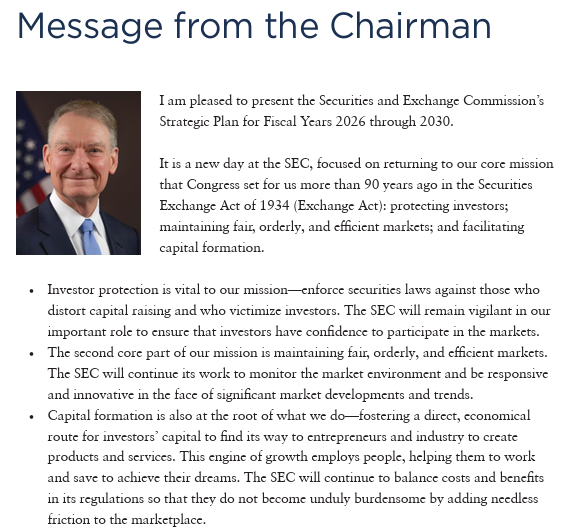
The US Securities and Exchange Commission (SEC) has elevated digital assets to a strategic priority, calling for regulatory clarity around blockchain technology, tokenization and crypto market infrastructure through 2030.
The shift was outlined in the agency’s draft Strategic Plan for fiscal years 2026–2030, published Tuesday. Alongside broader goals focused on capital formation, investor protection and agency modernization, the SEC dedicated an entire objective to digital assets and distributed ledger technology.
The agency said it aims to “provide a firm regulatory foundation for digital assets and distributed ledger technologies through a rational, coherent, and principled approach,” adding:
“Blockchain and crypto asset technologies have the potential to revolutionize America’s financial infrastructure.”
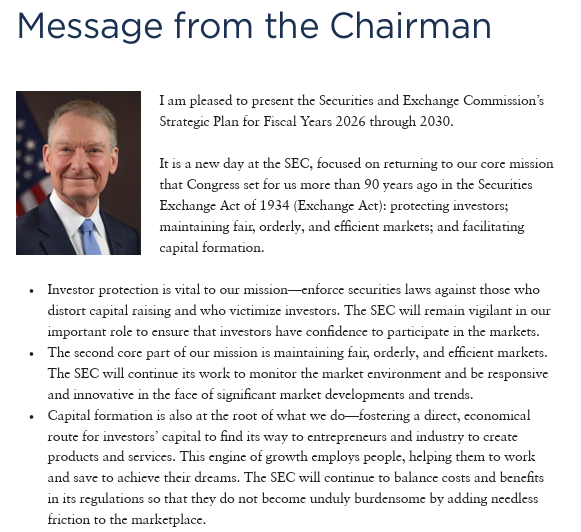
An excerpt from SEC Chair Paul Atkins’ message
in the agency’s draft Strategic Plan. Source: SEC
The strategic plan acknowledges that the growth of digital assets has outpaced existing regulations and calls for greater legal certainty for market participants. It also highlights tokenized offerings and onchain financial infrastructure as areas where the SEC intends to support compliant capital formation.
The document further references custody, trading and staking services, saying they should be able to operate under appropriate oversight without duplicative or conflicting regulatory requirements.
Related: SEC approves Paxos as ‘blockchain-native’ clearing agency
SEC reiterates the need for a clearer division of oversight with CFTC
Another key priority outlined in the draft plan is clarifying the division of responsibilities between the SEC and the Commodity Futures Trading Commission (CFTC), a longstanding issue in US digital asset regulation.
As part of its push for a more coherent regulatory framework, the SEC said establishing clear rules for digital assets “also involves clarifying jurisdictional questions between the SEC and Commodity Futures Trading Commission.”
The agencies have already taken steps toward closer coordination. In March, the SEC and CFTC signed a memorandum of understanding to strengthen cooperation and information sharing as emerging technologies continue to reshape financial markets.

Source: Mike Selig
Jurisdictional boundaries between the SEC and CFTC are also a central issue in congressional deliberations over the Digital Asset Market Clarity Act, a market structure bill that seeks to establish a regulatory framework for digital assets.
As Cointelegraph previously reported, the legislation is expected to expand the CFTC’s authority over large segments of the digital asset market. The bill advanced out of the Senate Banking Committee last month and is expected to proceed to the Senate floor for a full vote.
Related: Clarity Act risks repeat of Europe’s mistakes, crypto lawyer warns
Crypto World
Bitmine (BMNR) chairman Tom Lee calls Strategy’s (MSTR) bitcoin sale classic ‘bottom behavior’


Market anxiety surrounding recent institutional shifts and insider moves is merely typical bottom behavior, Bitmine Immersion (BMNR) Tom Lee told CoinDesk.
Lee dismissed the idea that Strategy selling 32 BTC signals trouble.
“Michael said he was planning to sell bitcoin, so he’s following through on what he was going to do,” Lee said in an interview on Tuesday. “At the end of the day, he’s still got 99.99% of his bitcoin, and he only makes money if bitcoin goes up.”
Saylor’s decision to sell bitcoin at an average price of $77,135, generating roughly $2.5 million to help fund preferred stock dividend payments, sparked unease. The transaction marked the corporate giant’s first bitcoin sale in nearly four years and prompted questions about whether one of the asset’s most prominent institutional advocates was changing course.
The firm still holds more than 843,700 BTC, meaning the disposal represented a microscopic 0.004% of its total reserves. Analysts across Wall Street have largely agreed that the transaction was economically immaterial to the core accumulation thesis.
Lee’s comments come alongside broader industry unease following the longest outflow streak (11 consecutive days) since U.S. spot exchange-traded funds (ETFs) debuted in January 2024, worth $3.4 billion. Lee pointed out that these capital exits are a classic trailing indicator of a market cycle resetting.
“This is what you expected at the bottom,” Lee explained. “People sell at the bottom, right?”
Despite short-term negative price pressure and market panic, Lee confirmed that Bitmine’s broader macroeconomic playbook remains unchanged, including its ongoing strategy for other major layer-1 assets.
Lee also confirmed that the firm’s existing accumulation plans for ether (ETH) remain “on track.)
Bitmine ramped up ETH purchases last week, making its most significant since December. It bought 111,942 ether (ETH) worth around $237 million at current prices. That lifted the firm’s holdings to almost 5.4 million ETH, about 4.47% of ether’s circulating supply.
Read more: Saylor’s Strategy sold bitcoin for the first time since 2022. These firms are still buying
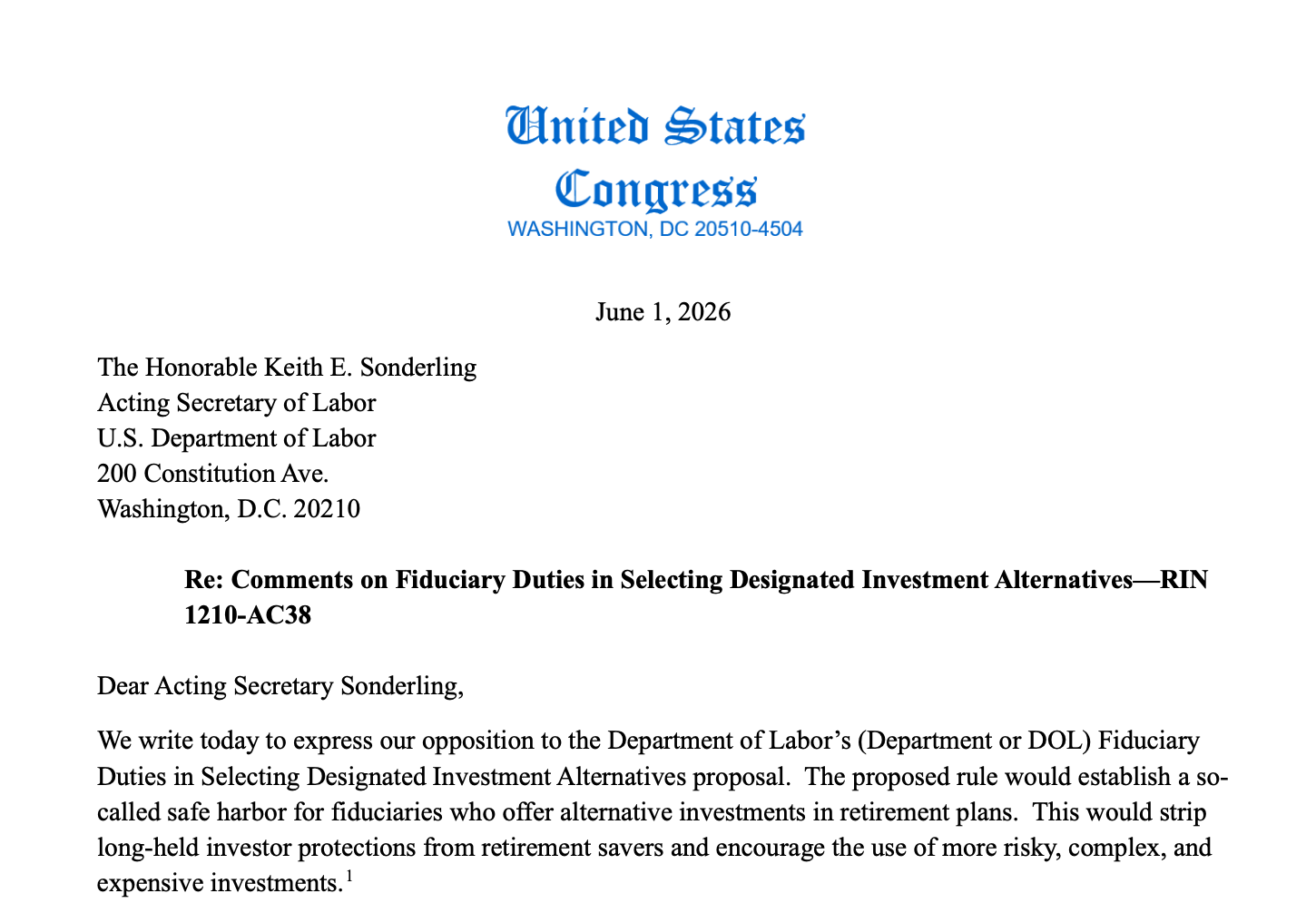
Top Democrats on three House and Senate committees called on the US Labor Department to halt its plans to allow digital assets and “alternative assets” to be held in Americans’ retirement plans.
In a Tuesday letter, Senator Bernie Sanders, Senator Elizabeth Warren and Representative Bobby Scott asked acting Labor Secretary Keith Sonderling to rescind the department’s proposal to allow private equity, digital assets, private credit, and other “alternative assets” to be included in 401(k) plans.
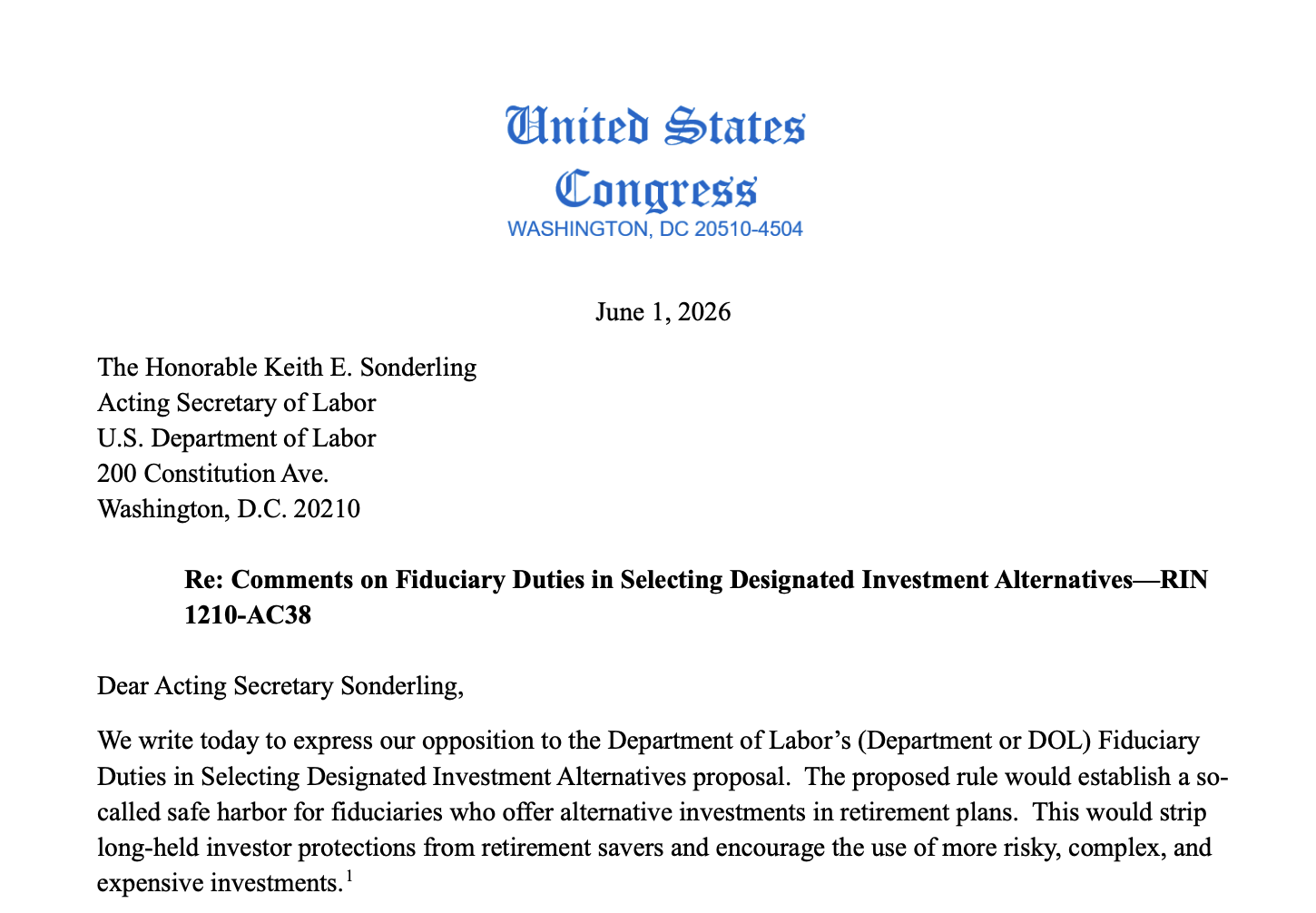
Source: Senate Banking Committee
They said the policy would “expose retirement accounts to exceptionally volatile assets, like digital currency,” citing a “lack of regulation and safeguards” putting many cryptocurrencies at risk of fraud.
As the ranking members of the Senate Banking Committee, Senate Committee on Health, Education, Labor and Pensions, and House Committee on Education and Workforce, respectively, they said that the current administration had weakened enforcement of crypto fraud at financial agencies like the Securities and Exchange Commission (SEC).
“The application of securities laws to crypto assets is rapidly evolving, and many securities law protections that investors have for public securities may not be available for crypto,” said the letter. “This lack of sufficient guardrails is likely to harm investors.”
Related: Basic adds VanEck crypto ETFs to 401(k) plans amid US retirement shift
The proposed policy, announced by the Labor Department in March, followed an August 2025 executive order from US President Donald Trump directing agencies to “democratize access to alternative assets,” including crypto. According to the Investment Company Institute, Americans held about $10.1 trillion in 401(k) plans as of Dec. 31.
Trump family conflicts of interest cloud 401(k) order and CLARITY Act
Sanders, Warren and Scott questioned whether the Labor Department policy would financially benefit anyone in the current administration, given Trump was “rife with conflicts of interest in this area,” including his family’s crypto venture, World Liberty Financial.
Lawmakers have made similar arguments in proposing amendments to a digital asset market structure bill, the CLARITY Act, expected to be addressed in the US Senate soon. Democrats in that chamber have said that they would not vote for any legislation that doesn’t contain provisions on ethics.
Magazine: HYPE chases $100 target, ETH could dump below $1800: Market Moves
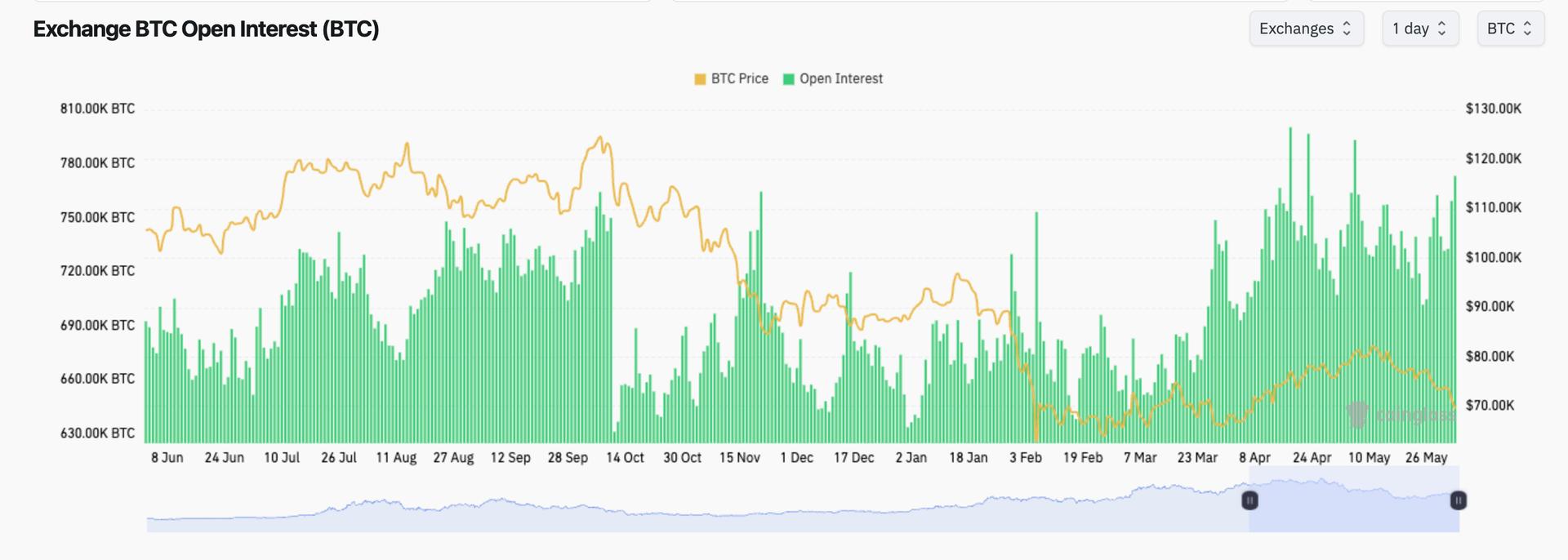
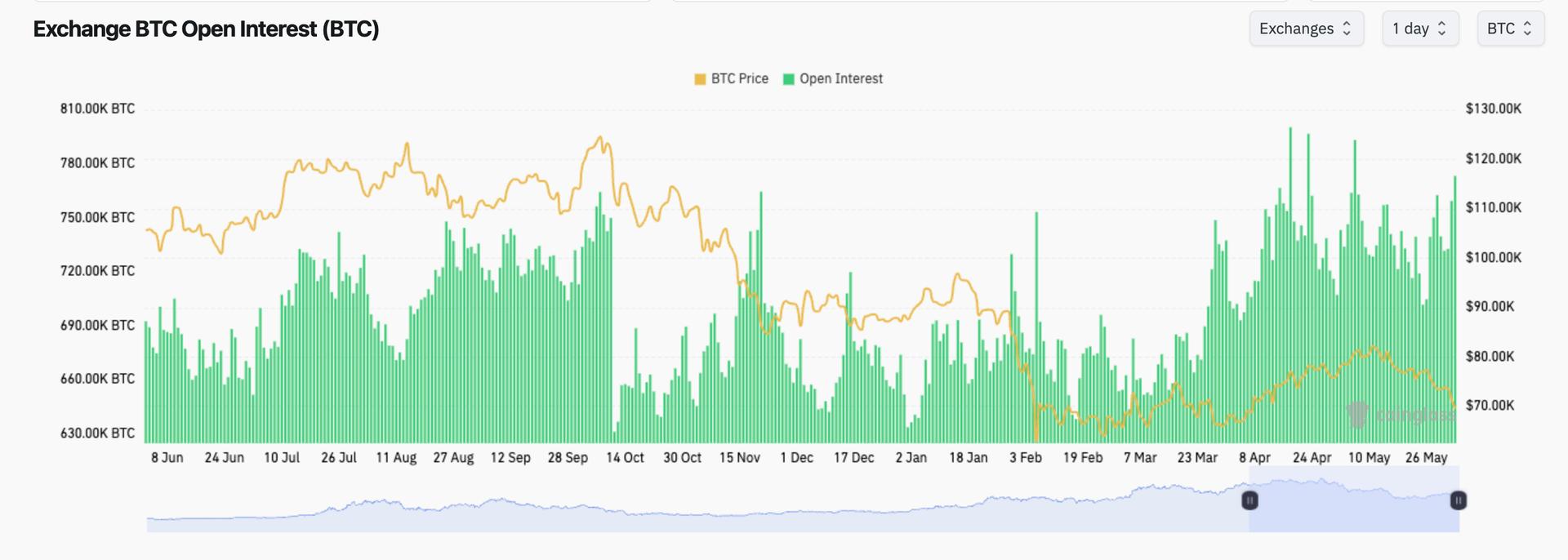
Bitcoin slipped below the psychologically important $70,000 level on Tuesday, trading around $69,300, as derivatives positioning reached some of the most elevated levels of the current cycle.
Open interest across bitcoin futures markets has climbed to approximately 773,000 BTC, a level last seen only a handful of times on record, according to Coinglass data. Previous peaks have occurred during local market tops. The current positioning suggests leveraged traders are betting on a quick price rebound rather than trimming risk.
That growing leverage is also reflected in perpetual futures funding rates, which have risen to roughly 10% annualized, according to Coinglass data. Positive funding means long traders are paying shorts to maintain positions. As bitcoin continues to fall, long leverage liquidations occur, sending the price lower.
Broader sentiment remains apathetic. The Crypto Fear & Greed Index continues to signal fear, while the Coinbase Premium Index remains deeply negative at around -100. The metric measures the price difference between bitcoin on Coinbase and offshore exchanges, with a negative reading often indicating weaker demand from U.S. institutional and spot investors — a trend clearly reflected in the continuing outflows from the U.S.-based spot BTC ETFs.
The divergence between leveraged bullish positioning and deteriorating spot demand comes as bitcoin remains largely uncorrelated to broader risk assets, with AI and software stocks continuing to push to fresh highs.


Polymarket, the world's second-largest prediction market by trading volume, today completed the first institutional block trade ever executed on-chain in the prediction-market category — a six-figure transaction between prime broker FalconX and AI-risk clearinghouse AneraLabs that hedges exposure… Read the full story at The Defiant
Crypto World
US Treasury Adds Nobitex and Three Other Iranian Exchanges to OFAC SDN List Under 'Economic Fury'


The U.S. Treasury Department's Office of Foreign Assets Control added Nobitex, the largest cryptocurrency exchange in Iran, and three other Tehran-based digital-asset platforms — Wallex, Bitpin and Ramzinex — to its Specially Designated Nationals list on Tuesday, naming them as the rails the… Read the full story at The Defiant

On June 2, 2026, as Bitcoin (BTC) tumbled below $70,000, the total market capitalization of altcoins actually rose by $4 billion, according to crypto analyst Sykodelic.
That unusual divergence suggests that there could be a potential breaking point where smaller tokens may stop bleeding in response to BTC’s weakness, a pattern that in the past was seen right before there were broader market recoveries.
Altcoins Hold Ground as Bitcoin Falters
Bitcoin’s price action only got worse over the past 24 hours, when, after failing to hold above $73,000, it dropped to an intraday low near $72,500 before sliding further to under $68,000 on Tuesday, marking a nearly 6% daily decline.
The OG crypto is now down almost 11% for the week, according to CoinGecko, and risks falling back toward $65,000. Despite BTC’s poor form, altcoins told a different story.
“What we are observing here is an exhausted market in which alts are no longer responding to weakness,” wrote Sykodelic on X. “Bitcoin is actually being weaker than OTHERS.”
The analyst also noted that the total altcoin market cap went up by $4 billion on the day, while Bitcoin’s dominance dropped by 1%. As CryptoPotato reported yesterday, some tokens delivered sharp gains, including Humanity (H), which pumped by roughly 81%, LAB, which gained more than 52%, and Worldcoin (WLD), which added another 13% to its price and was trading at around $0.43 at the time of writing.
In their analysis, Sykodelic also pointed to the business cycle index sitting at 54.0, a level that is historically associated with expansion, and noted that the OTHERS.D chart had closed above its 200-day simple moving average.
He added that every time OTHERS.D reclaimed the 200 SMA, it jumped by at least 250%, which could offer traders a ray of hope, considering that the current setup, according to the market watcher, is quite similar to other bottoms in the past that preceded parabolic altcoin moves.
Liquidity Debate and Market Outlook
The current state of the market may temper Sykodelic’s optimism, with analysts comparing BTC’s performance to that of traditional equity markets, which have been soaring and hitting record highs while the king cryptocurrency faltered, leading to suggestions that most of crypto’s liquidity is flowing into stock markets.
But fellow market watcher CrediBULL Crypto has dismissed such suggestions, pointing out that the total market capitalization of all tokens outside the top 10 coins is less than $200 billion, which is roughly “1/350th of the S&P 500.”
He said there is hardly any liquidity flowing out of crypto, but there are hundreds of trillions of dollars in traditional markets that could potentially flow into BTC and alts.
The post Altcoins Gain $4B Despite Bitcoin Sell-Off, Analyst Sees Bullish Shift appeared first on CryptoPotato.
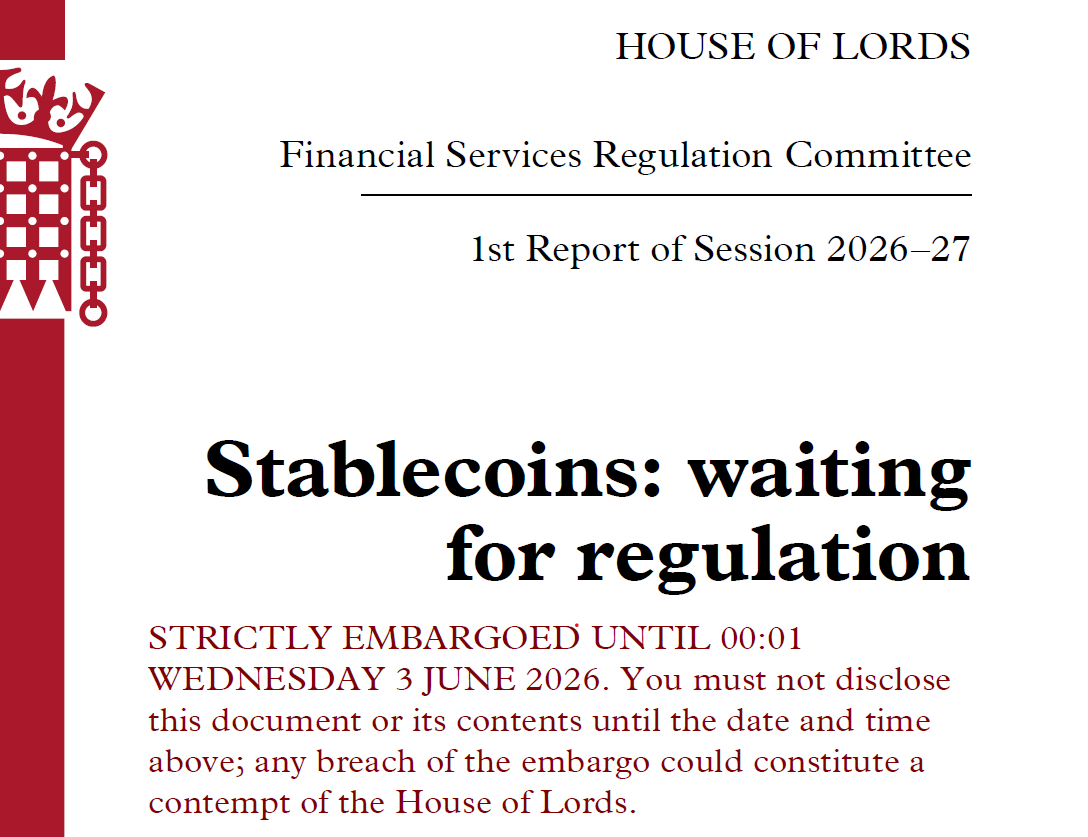
The United Kingdom should press ahead with stablecoin regulation but avoid rules that make a pound sterling stablecoin market commercially unworkable, a House of Lords committee warned in a report released Wednesday.
The cross-party Financial Services Regulation Committee said the UK was “lagging behind” the United States and the European Union and that the absence of a clear regime has “suppressed stablecoin development and investment in the UK,” despite the growth of global US dollar-pegged tokens such as USDt (USDT) and USDC (USDC).
While backing much of the Bank of England (BoE) and Financial Conduct Authority’s proposed framework, the committee warned that some measures risk undermining the viability and competitiveness of UK-issued stablecoins.
The report backs requirements for fiat-referenced stablecoins to be backed 1:1 by high-quality assets and a proposed BoE backstop lending facility for systemic issuers.
However, it singles out several elements of the Bank’s November 2025 consultation as potentially damaging, warning that a requirement for systemic issuers to hold at least 40% of their backing assets in unremunerated central bank deposits has attracted “considerable criticism” and could “impact negatively on the viability of stablecoin issuers and the international competitiveness of the UK market.”
Proposed temporary holding limits for businesses and individuals are also flagged as measures that could “unnecessarily inhibit the growth of GBP stablecoins” and prove impractical to implement.
Related: UK FCA seeks feedback on guidance for crypto rules ahead of 2027 rollout
Interest bans and rewards uncertainty cloud UK tokens
Peers also turn to the politically sensitive question of returns. The Bank’s draft regime would prohibit remuneration for coinholders of sterling-denominated systemic stablecoins, putting the UK on a similar footing to the EU’s Markets in Crypto-Assets Regulation (MiCA), which bars stablecoin issuers from paying interest to holders. The US GENIUS Act prohibits payment stablecoin issuers from paying interest, though US debate continues over whether exchanges and other intermediaries can offer rewards.
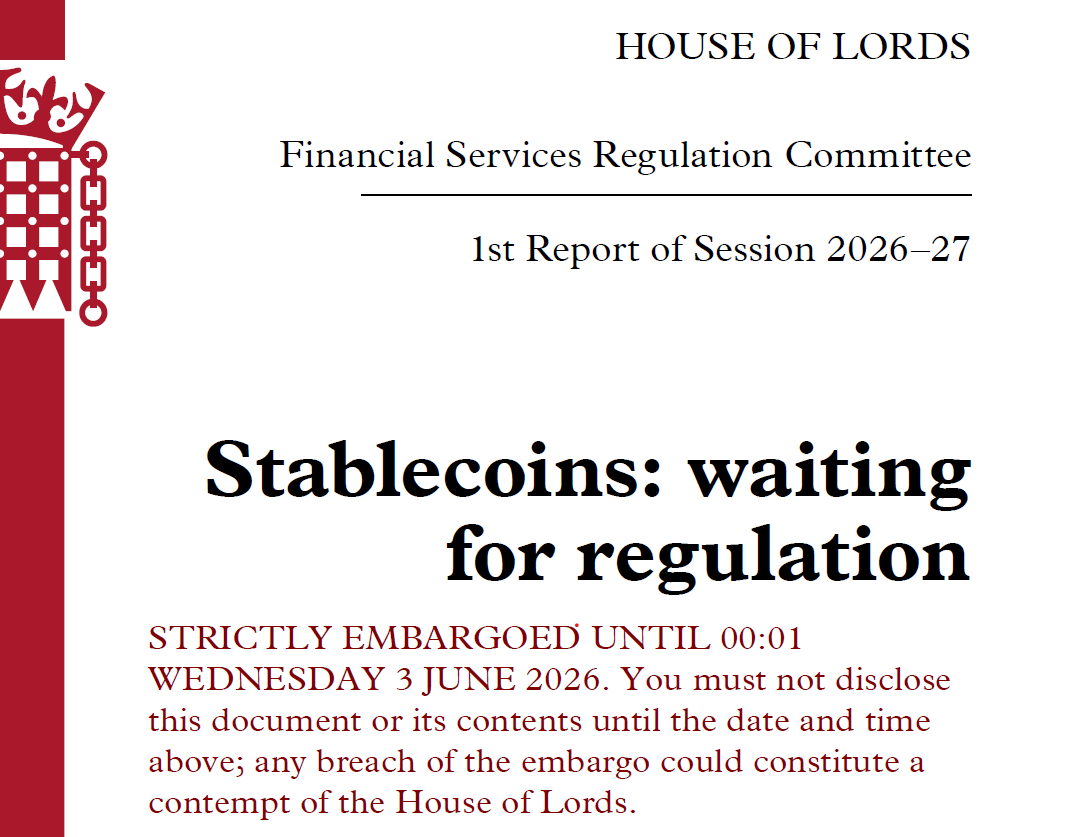
House of Lords Stablecoin Report. Source: House of Lords
The committee presents payment-focused stablecoins primarily as instruments for fast, low-cost transactions rather than as investment products. However, it warns that the combination of strict reserve rules and a ban on interest or other remuneration could weigh on the “business viability” and competitiveness of UK-issued tokens, especially while it remains unclear whether card-style rewards or other non-interest incentives will be allowed.
Inquiry evidence highlights risks and UK’s strategic choice
The conclusions follow months of evidence gathering in which the committee pressed industry and academic witnesses on whether stablecoins can move much beyond “on and off-ramps into crypto,” challenged them on financial stability, bank funding and consumer protection risks, and probed sharply divergent views on the US GENIUS Act’s approach to non-bank issuers.
While stressing that the expansion of stablecoin markets “must not create new opportunities for illicit activity to flourish,” the Lords argue the UK should aim to nurture, not just police, a pound-denominated stablecoin sector.
They urge His Majesty’s Treasury, the Bank of England and the FCA to stick to existing timelines, clarify how dual regulation of systemic issuers will work in practice, and recalibrate measures such as holding limits and reserve requirements so that sterling stablecoins can “compete with other forms of payment in the UK” rather than be regulated out of relevance.
Magazine: Guide to the top and emerging global crypto hubs — Mid-2026

Caitlin Clark and Stephanie White are downplaying drama, but Fever are clearly feeling the heat

Why Should I Save Money? | Save, Spend, Share | Financial Literacy For Kids | Piggy Bank | EMoMee

‘Plea for calm ignored’ and ‘Arrest that outraged nation’



-

 NewsBeat7 days ago
Israel says it has killed new Hamas military leader in Gaza City airstrikes
-

 Tech7 days ago
NASA taps Blue Origin to deliver lunar rovers for Moon Base initiative
-

 News Videos5 days ago
This is BROKEN! INSANE 5x MONEY CAR WASH WEEK! The NEW GTA Online UPDATE Today! (GTA5 New Update)
-

 News Videos7 days ago
XRP *JUST* SUCCEEDED!!!! CLARITY ACT EXPOSED!!! (SHE EXPOSED IT)
-
 Tech4 days ago
SpaceX just won a second Golden Dome contract. This one is $4.16 billion.
-

 Tech5 days ago
Waymo dominates autonomous vehicle registrations as Tesla trails behind
-

 News Videos4 days ago
SHE IS KILLING XRP!!! WATCH URGENT AND ACT FAST
-
 NewsBeat4 days ago
FIRST NIGHT REVIEW: Take That bring the Circus back to life in spectacular sun-soaked style
-

 Business1 day ago
Jade Biosciences, Inc. (JBIO) Discusses Positive Interim Results From JADE101 Phase I Healthy Volunteer Study and Development Plans Transcript
-

 Tech7 days ago
The Samsung pay deal is the moment Korean unions changed register
-
Crypto World4 days ago
CFTC Has Approved the First Regulated Bitcoin Perpetual Contract in the U.S.
-
Crypto World7 days ago
SpaceX’s $2 Trillion IPO: Why Tech Giants Nvidia (NVDA), Apple (AAPL), and Microsoft (MSFT) May Face Pressure
-
 Entertainment7 days ago
The Most Misunderstood Sci-Fi Horror Movie of the Last 10 Years Just Took Over Netflix
-
 NewsBeat4 days ago
Novak Djokovic v Joao Fonseca LIVE: French Open latest scores and results after Jannik Sinner’s shocking collapse
-
 Crypto World4 days ago
Snowflake (SNOW) Stock Rallies on Strong Q1 Results and AI Product Growth
-
 Entertainment4 days ago
Weak ‘Supergirl’ Box Office Tracking Amid Milly Alcock Backlash
-

 Business4 days ago
Demand Conditions Improve In Chemicals Sector In April 2026
-

 Business4 days ago
Is the Spurs Phenom Already Better Than Prime Diesel?
-
 Crypto World4 days ago
MicroStrategy Moves $30 Million in BTC to Coinbase Prime: Is the Bitcoin Sell-Off Already Here?
-
 NewsBeat7 days ago
Energy price cap set for major rise from July as millions face higher bills
You must be logged in to post a comment Login