Connect with us
DAPA Banner

Tech

An Editor’s Picks: The Best Gifts for Bird Lovers

Published

on

You may be familiar with the various memes detailing the fact that once you reach middle age, you’re automatically sorted, Harry Potter hat–style, into one of a handful of hobbies, such as sourdough bread making, gardening, or bird-watching. I can’t contradict this, since I’m a middle-aged person who got sorted into bird-watching. But I do know that enjoying birds and their various activities is fun for all ages. Birds are beautiful, interesting, and unpredictable, and it’s fascinating to keep a running life list of all the birds you’ve seen and hope to see in your lifetime.

Whether someone you know is in their bird-watching phase, preparing for this phase, or has been in it for decades, all of these unique gifts—for traveling bird-watchers and backyard bird enthusiasts alike—are things either I or another bird-loving Reviews team member tested, was gifted, or bought IRL and enjoyed.

For more specific equipment recommendations, check out our guides to the Best Smart Bird Feeders and the Best Binoculars. For other gift ideas, check out all our gift guide coverage, including the Best White Elephant Gifts, Best Gifts for Men, and Best Viral TikTok Gifts.

Updated May 2026: I’ve overhauled this guide into a new format, swapped out picks, and added a game, a smart nest box, a journal, and a new jacket. I’ve also ensured that links and prices are up to date.

Advertisement

Jump to Section

Our Favorite Smart Bird Feeder

Netvue

Birdfy Lite Smart Bird Feeder

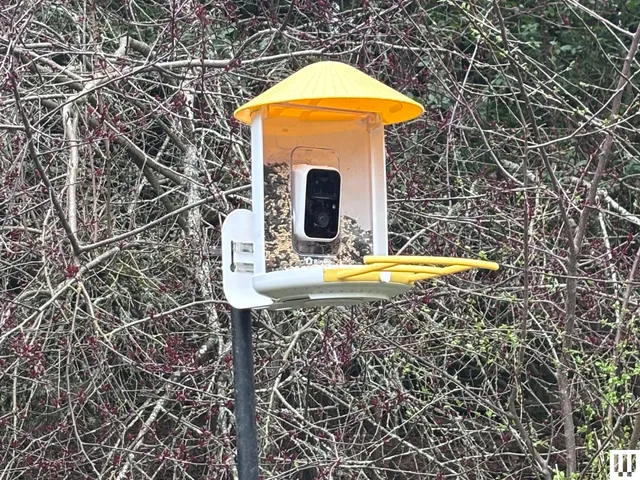
If you love birds, nothing beats seeing them up close and personal, conducting all their birdy activities. I have learned more about birds in the past two years of testing smart bird feeders than I have over my entire lifetime, such as the fact that cowbirds will lay their eggs in other birds’ nests (such as juncos) and the “host” birds will raise the cowbird chicks as their own, even if they look nothing alike. Or that jays and other corvids are scatter-hoarders, and will spend an entire day picking nuts out of a feeder’s seed mix to hide caches around the yard. There are many smart seed feeders on the market, but Birdfy’s high-quality basic model (available with a blue or yellow roof) stands out for its balance of price, features, reliability, and usability without a subscription, making it a great gift option that I have personally given.

Advertisement

A Family Pick

Image may contain: Animal, Bird, Adult, and Person

My mom gifted this to my family about 10 years ago, and to this day, it is the single most-played and most-enjoyed game we have ever owned, in any genre. Shuffle the small cards and call them out; players place a blue cardstock square on their bingo card if they have that bird. My son loved it, his friends loved it, neighbors loved it, extended family loved it—it can be played by up to six people at a time, and is suitable for all ages. No reading or parsing of rules required. Best of all, neither my husband nor I minded playing it multiple times a day for years on end (a bonus feature important for any parent of young kids).

For Beginning Birders

The Bushnell Powerview binoculars compactly folded in the palm of a person's hand, lenses facing inward.

Bushnell

Powerview 2 8×21 Binoculars

Experienced birders probably already have a decent set of binoculars, but for the birding-curious, kids, or someone just starting out, quality binoculars and a life list journal ($22) would make a great gift. WIRED contributing reviewer Caramel Quin declared these the Best Budget Binoculars. I bought a set for each member of my family for a cruise to Alaska last summer, and I’m glad I did. They’re lightweight (7.2 ounces) yet sturdy, with an aluminum casing instead of plastic, and small enough to slip into a pocket if you’ll be hiking and don’t want to deal with them around your neck.

Advertisement

A Bird Nerd Classic

David Allen Sibley

“What It’s Like to Be a Bird: From Flying to Nesting, Eating to Singing—What Birds Are Doing, and Why”

This 8- by 11-inch hardcover by famed ornithologist David Sibley (known for his Sibley field guides) may be too big and too heavy to fit in a backpack for field reading, but it remains the definitive source for interesting bird facts. Did you know mallard nestlings have only a 15 percent chance of fledging and that once they’re hatched, fewer than half of ducklings survive? And that jays in the Northeastern US often eat paint chips in search of calcium, which doesn’t occur naturally in that region’s soil? Or that chickadees specifically seek out spiders to feed their young for the first week after they hatch, as spiders are high in taurine? Whether you want to or not, you will know all these things and more if you give someone close to you this book.

A Different Kind of Bird Food

Advertisement

My husband and I received this feeder basket and some suet cakes as a gift about 10 years ago. The basket has fallen on the ground countless times; been chewed on and used as gymnastics equipment by squirrels; and survived windstorms, snow, and pretty much everything Pacific Northwest winters have to offer. Sure, looks-wise, it’s seen better days, but it still does the job.

Source link

Continue Reading
Click to comment

You must be logged in to post a comment Login

Leave a Reply

Tech

The Advanced Fighter Jet Replacing The UAE’s Mirage 2000-9

Published

on


The Dassault Mirage 2000-9 has served as the UAEAF’s interceptor for over two decades, filling a few gaps that the country’s prevailing jet, the F-16, cannot. But it’s on its way out, soon to be replaced with another, more capable model from the same manufacturer.

That replacement is the Rafale F4, the latest production standard of Dassault’s twin-jet fighter aircraft. The Emiratis have gone all in on it too, signing for a whopping 80 units back in December 2021. The contract was worth $18 billion, though that figure also included 12 Caracal helicopters — the French military version of the Airbus Super Puma. It was such a big win for the French that Macron himself reportedly flew over to seal the deal. In fact, it remains the largest international Rafale order ever placed. The first unit was unveiled at the company’s flight test center in January 2025, with deliveries scheduled for late 2026.

Advertisement

Ironically, the UAE had rebuffed an earlier French pitch for 60 Rafales in 2011. At the time, it had its sights on the Lockheed Martin F-35. But they had to circle back to the Rafales, though, when Washington itself stalled the F-35 deal, allegedly over concerns that the UAE was using Huawei 5G gear nationwide.

Whether that’s a loss for the UAE is debatable, though, because the F4 jets being delivered are the most up-to-date version of the Rafale family. They feature upgrades like improved fire protection and avoidance systems, enhanced frontal optronics, and more. Demand for the variant is high, which is why production is being pushed hard to keep up, with Dassault having completed its 300th Rafale fighter jet in October 2025.

Advertisement

Where the Mirages go next

So it’s in with the new and out with the old for the UAE, but what about these older jets? The UAEAF flies roughly 59 of them today, across two main types. 44 are fighter variants for actual combat, while the remaining 15 are two-seat trainers that bring new pilots up to speed. They can’t all simply be scrapped, especially since they remain airworthy. On top of that, Dassault has confirmed industrial support for the platform beyond 2035.

Initially, when the deal was signed in 2021, the plan was to hand over half the fleet to Morocco’s Royal Armed Forces. But getting that across the line has been a slog. The thing is, the original 1998 contract gave France veto power over any re-export of the jets, which it initially used to block the move altogether. Fortunately for Morocco, the veto was eventually lifted in early 2024, helped along by Macron’s formal recognition of Morocco’s sovereignty over Western Sahara that July. But then the next hurdle arrived in the form of the Iran war in February 2026. That’s when the UAE decided to hold onto its Mirages, at least until the Rafales were fully integrated.

Advertisement

How do the two compare?

The Mirage 2000 is one of the most agile jets today, so it’s certainly no slouch, especially with the 2000-9 variant upgrades. In fact, these upgrades are UAE-exclusive, developed specifically for the nation as a derivative of the older 2000-5. Its central computer is actually very similar in capability to the Rafale, too. Size-wise, it measures around 47 feet long with a wingspan just under 30 feet. Speed tops out at Mach 2.2, and the service ceiling sits at roughly 54,000 feet. Its arsenal includes MBDA’s Black Shahine cruise missile alongside Mica NG air-to-air missiles.

But the Rafale F4 plays in a different class. It’s a touch bigger overall, stretching about 50 feet long with a wider 36-foot wingspan. It also runs on two engines rather than the Mirage’s single turbofan, giving it more thrust and a useful bit of redundancy if one of them fails. Notably, the Rafale is slightly slower than its older sibling, topping out at Mach 1.8 with a service ceiling of around 50,000 feet. But it makes up for that with its arsenal, comprising Meteor long-range air-to-air missiles, the Hammer precision strike kit, and Scalp cruise missiles for deep targets. Stealth and survivability are a step up, too.

Advertisement


Source link

Advertisement
Continue Reading

Tech

Anthropic and Wall Street are building a $1.5bn pipeline into private equity

Published

on

A joint venture with Blackstone, Hellman & Friedman, Goldman Sachs, and General Atlantic will sell Claude into the buyout firms’ portfolio companies. OpenAI’s DeployCo arrived first; this one is bigger.


There is a kind of business school question that has been quietly answered over the past month, without anyone formally asking it. The question is: which is more valuable to a frontier-model company, the next $50bn cheque from a venture investor, or a permanent distribution channel into the operating companies of the world’s largest private-equity firms? Anthropic has been working on the second answer.

On Sunday evening, the Wall Street Journal reported that Anthropic was finalising an approximately $1.5bn joint venture with a small group of Wall Street firms, with an announcement expected as soon as Monday. A

ccording to the WSJ, Anthropic, the buyout firm Blackstone, and Hellman & Friedman are anchoring the deal at roughly $300m apiece. Goldman Sachs joins as a founding investor at about $150m, with General Atlantic and other firms making up the rest. We wrote about the outline of this venture last month, when the structure was still scoped at $1bn or so; the final figure is closer to $1.5bn.

Advertisement

The investors will create a vehicle that operates as something between a consulting arm and a deployment factory: helping the portfolio companies of its private-equity backers integrate Claude across their day-to-day operations.

Advertisement

The pitch is straightforward. Buyout firms own thousands of operating businesses across health care, logistics, manufacturing, and financial services. Each is a potential Anthropic customer. Selling to them one by one, on the standard enterprise software cycle, would take years. Doing it inside a joint venture compresses that timeline into months.

It is, in other words, less a product launch than a sales infrastructure project.

OpenAI got there first, but smaller

The structural template will be familiar. OpenAI announced a similar joint venture, DeployCo, last month, anchored by TPG, Bain Capital, Advent International, Brookfield, and Goanna Capital. The five PE firms together committed about $4bn; OpenAI itself put in $500m, with an option for a further $1bn.

The DeployCo vehicle is expected to be valued at $10bn in a round closing in early May, with OpenAI guaranteeing its PE backers an annualised return of 17.5 per cent over five years.

Advertisement

Anthropic’s structure is different in important ways. The total commitment is smaller in absolute dollars but more concentrated, with Anthropic itself contributing roughly the same amount as its biggest financial partner. There is no public reporting of guaranteed returns.

The investor list is heavier on prestige and lighter on breadth: Blackstone is the largest alternative-asset manager in the world, Hellman & Friedman is among the most disciplined large-cap buyout houses, Goldman is Goldman, and General Atlantic gives the venture a growth-equity stake.

Each side is, in effect, betting on a different proposition. OpenAI’s DeployCo is a numbers play: pull as many PE portfolios as possible into a captive channel, fast. Anthropic’s venture is a credibility play: anchor Claude inside a smaller number of high-profile financial firms whose imprimatur, in turn, sells the model to the rest of the market.

The timing is not accidental. Anthropic has received pre-emptive offers for a roughly $50bn round at a valuation in the $850-900bn range, with the company’s board expected to decide in May and an IPO targeted as early as October 2026.

Advertisement

Anthropic’s annualised revenue run rate has, by its own disclosures, gone from approximately $9bn at the end of 2025 to around $30bn by the end of March 2026. A successful public listing at those numbers requires the company to demonstrate not only model capability but durable enterprise revenue at scale.

A joint venture that pumps Claude into the portfolio companies of three or four major buyout firms creates exactly the kind of revenue ramp public-market investors prefer to model.

It also has narrative value. Claude, in this telling, is not merely a chat product or a developer API but enterprise infrastructure, embedded inside the operating businesses that move significant chunks of the real economy.

There is precedent for the strategy on Anthropic’s books already. Goldman Sachs has spent the past several months piloting Claude internally as the basis for autonomous agents in accounting and compliance, with embedded Anthropic engineers reportedly spending six months inside the bank co-developing the systems.

Advertisement

JPMorgan Chase and Goldman, separately, have been testing Anthropic’s Mythos model under a Project Glasswing initiative focused on AI cyber-risk. The new joint venture is the commercialisation of those experiments.

What it gives Wall Street

For the buyout firms, the calculation is similarly transparent. Private equity returns increasingly depend on operational improvements at portfolio companies rather than financial engineering at the holdco level. AI deployment, in theory, is the next great efficiency lever, and one that the largest funds have struggled to roll out consistently across diverse operating businesses. Owning a stake in the deployment vehicle for one of the two leading model companies is a hedge: it gives the firms first-mover access, preferred pricing, and, plausibly, a financial stake in Anthropic’s broader commercial trajectory.

Goldman Sachs’s $150m position is smaller in dollar terms but particularly telling. It is the same bank rumoured to be co-leading Anthropic’s eventual IPO. A $150m anchor in this venture is less an investment than a relationship deepening.

The risks the structure does not solve

Joint ventures of this kind have a chequered history in financial services. They tend to underperform the most optimistic projections, particularly when the deployed technology is changing as fast as foundation models.

Advertisement

Claude as it exists today will not be Claude in three years; whether the venture’s organisational structure can keep pace with model upgrades, pricing changes, and rival offerings is a real question.

The DeployCo precedent is too young to assess, and Anthropic’s vehicle is, by design, more selective in its partner roster, which limits how quickly it can absorb shocks. OpenAI’s own valuation has come under scrutiny from its investors in recent weeks, a reminder that the model side of these arrangements is not above market discipline either.

There is also a more philosophical risk. Anthropic was founded by researchers concerned about the safety of advanced AI, and has consistently positioned itself as the more cautious of the two leading commercial labs.

A consulting arm that exists primarily to embed Claude inside the operating tissue of dozens of portfolio companies, each with its own data, regulatory, and labour profile, will test that positioning more rigorously than any external benchmark.

Advertisement

None of these is fatal. They are simply the costs of a structure that, until last month, did not exist as a category. Anthropic has decided it would rather pay them with Wall Street co-investors than continue to compete with OpenAI through traditional enterprise sales.

If the announcement lands as expected on Monday, that decision becomes its single largest commercial bet to date, larger, in distribution implications, than any of its model launches. Whether it works will be visible in revenue figures within a year, and in the IPO prospectus shortly after.

Source link

Advertisement
Continue Reading

Tech

The legendary Oak Ridge lab just developed a portable device that detects GPS-spoofing live

Published

on

We trust GPS like we trust gravity. It just works and gets us where we want to go. But what if someone could trick it into lying to you, and you’d have absolutely no idea?

Unlike jamming, which floods your GPS with noise and at least lets you know something is wrong, spoofing sends fake signals that look completely legitimate. You might be tracking your car or a shipment and think everything is alright when actually the shipment has been routed to someplace else, with you none being the wiser. 

That’s GPS spoofing, and it’s a bigger problem than most people realize. This is what the Department of Energy’s Oak Ridge National Laboratory is trying to solve

How bad can it really get?

GPS spoofing might not seem bad on an individual level, but it’s a legitimate concern for companies and governments alike. International criminal networks are already using spoofing to steal loaded long-haul trucks. 

Advertisement

In one case, thieves spoofed GPS to hijack multiple shipments of specialty tequila from a brand co-founded by Guy Fieri and Sammy Hagar. They pulled it off repeatedly because the GPS tracking showed the truck heading exactly where it was supposed to go. 

Now imagine that same trick applied to a truck carrying radioactive materials or pharmaceuticals.

So, what’s the fix?

Researchers at the Department of Energy’s Oak Ridge National Laboratory have built the world’s first highly sensitive, portable GPS spoofing detector that works in real time, even while moving. What makes it special is that it can detect spoofing even when the fake signals are just as strong as the real ones, something no other known system can do.

“Ours is the best in the world,” said Austin Albright, who led the team. “Trucking needs a solution that works without special conditions or dependence on a trusted reference source.”

The detector works independently, without needing a GPS receiver or knowledge of available signals. The team is now working on making it more affordable for widespread use.

Albright sums up the urgency well. Like a carbon monoxide (it’s colorless and odorless) detector catches an invisible danger before it’s too late, this device does the same for GPS, before the cargo, or worse, disappears.

Advertisement

Source link

Continue Reading

Tech

China’s robot-hand unicorn Linkerbot is hunting a $6bn valuation

Published

on

Two years after a Beijing engineer started building dexterous hands inspired by a Japanese cartoon, his company holds 80% of the global market and is doubling its valuation in months.

Robotic hands are not, conventionally, the part of a humanoid robot that investors get excited about. The legs walk, the arms lift, and the head, increasingly, talks. The hands have always been the difficult part, fiddly bits of engineering with too many moving pieces and not enough commercial pull. For most of the past decade, capable, dexterous hands have been research projects, not businesses.

Linkerbot, a Beijing-based startup founded in 2023, is testing whether that has changed.

According to a Reuters report on 4 May, the two-year-old company is preparing to raise its next funding round at a $6bn valuation, double the $3bn it secured in a Series B+ closed only days earlier.

Advertisement

Reuters describes Linkerbot as the global market leader in high-degree-of-freedom dexterous hands, with more than 80 per cent share by volume and the only operation in the world capable of shipping above 1,000 units a month. Production, the company told Reuters, is on track to scale from roughly 5,000 units monthly to 10,000.

That is a striking pace for a category that, on most observers’ priors, was not a market until very recently.

From Doraemon to dexterity

Linkerbot’s chief executive, Alex Zhou Yong, told the South China Morning Post that the idea began in childhood with Doraemon, the Japanese cartoon cat whose magical pocket produces an inexhaustible supply of gadgets. Zhou, who studied robotics, eventually concluded that the trick was not the pocket but the hands. A robot that can manipulate objects with anything close to human dexterity does not need an infinite toolkit; it can use ours.

The company’s flagship Linker Hand series spans six to 42 degrees of freedom, the engineering measure of independent movement axes, and uses, according to Reuters, all the major actuation methods used in the field. The lightweight O6 model weighs 370g and is rated to handle a 50kg load. Higher-DoF variants, such as the L30, are aimed at research labs and humanoid integrators willing to pay for finer-grained control.

Advertisement

In demonstrations, the hands turn screws at speed, grasp soft objects without crushing them, thread a needle, and carry out high-precision assembly tasks. None of these is a particularly novel feat for a research prototype, earlier robot hands have managed similar tricks, and Linkerbot is far from the only firm chasing the problem; Swiss startup mimic is using generative AI to teach a humanoid hand by watching humans work. The point, in Linkerbot’s pitch, is that the demos are now happening on a production line.

Early backers include Ant Group, the financial-services arm of Alibaba, and HongShan Group, the Chinese spin-out of Sequoia Capital. The latest round added the state-backed Zhongguancun Science Park Fund, Bank of China Asset Management, and Fosun Capital. The mix, private internet capital alongside state vehicles and a major bank, is a fair summary of where Chinese deeptech funding is concentrated in 2026.
It also reflects a wider pattern.

It also reflects a wider pattern. Investor interest in Chinese humanoid robotics has surged this year, helped along by viral demonstrations including the Beijing humanoid robot half-marathon in April, where a Tien Kung Ultra unit beat the human world record by seven minutes, and a televised performance featuring Unitree’s machines.

Unitree itself filed for a Shanghai listing in March at a target valuation of around $7bn, having last raised privately at roughly $3bn. Other Chinese players, including Galbot, AgiBot, and AI2 Robotics, are clustered in the $2bn-$3bn range.

Advertisement

The intensity of the talent race in Chinese robotics has reached the point where rival UBTech has dangled an $18m package for a chief AI scientist. By that yardstick, a $6bn valuation for a company that makes only the hands is an aggressive bet.

It is also a bet that goes against a striking gap in the market. Figure AI, the leading US humanoid startup, raised at a $39bn valuation in September 2025, despite shipping a fraction of the volume its Chinese counterparts manage. The disparity reflects, in part, what each side is being priced as.

American investors treat humanoid companies as artificial-intelligence platforms; Chinese investors price them more cautiously, as industrial hardware businesses. Linkerbot, which sells the hands rather than the whole robot, sits awkwardly between those framings.

Hands that build hands

The company’s expansion is more concrete than most pitches at this stage of the AI cycle. Reuters reports more than 400 employees and five factories across Beijing and Shenzhen. The most quietly ambitious detail, mentioned almost in passing, is that some of those factories are being designed as intelligent production lines on which Linkerbot’s robotic hands assemble more robotic hands.

Advertisement

If that pans out, it would be one of the first commercial demonstrations of dexterous manipulation moving from research into closed-loop manufacturing, akin to the Siemens-Nvidia factory deployment in Erlangen but turned inward, and a useful internal proof point for would-be customers.

Linkerbot also says it has built what it calls LinkerSkillNet, described as the largest real-world dataset of dexterous manipulation skills in operation, with more than 500 captured behaviours. The figure has not been independently audited, but the broader claim, that the company is accumulating proprietary training data of the kind that will shape next-generation manipulation models, is consistent with how rivals describe the strategic prize.

Whether $6bn is too much for a hand maker, however dexterous, will depend on which market thesis turns out to be correct. If humanoid robots remain industrial niche products, Linkerbot’s component-supplier role caps its upside, however large its market share.

If, on the other hand, the field follows the trajectory China’s investors increasingly assume, with humanoids moving into logistics, services, and eventually domestic environments, as 1X is already attempting with its NEO home robots, hand suppliers with deep manufacturing capability and proprietary data could capture a disproportionate share of the value chain.

Advertisement

There are also softer risks: the geopolitical exposure that comes with state-fund investors and a Beijing-Shenzhen footprint at a moment of renewed US scrutiny of Chinese deeptech, and the possibility that humanoid platforms eventually integrate hand designs in-house.

Tesla, which is preparing Shanghai Gigafactory for Optimus mass production, has signalled it intends exactly that, and Meta’s acquisition of Assured Robot Intelligence hints that platform players want the whole robot, not a third-party bill of materials. Linkerbot’s bet is that being early, large, and the only volume supplier in its category will be enough to outrun those risks.

Investors will price that bet in the next round. For now, a company that started with a cartoon cat and a hunch about hands is one of the more closely watched stories in the global robotics market, and one of the few in which the headline numbers, market share, monthly volume, and employee count are not just promises.

Advertisement

Source link

Continue Reading

Tech

Why Does Wikipedia Think I’m Evan Spiegel?

Published

on

For fifty-one weeks out of the year, I’m 100 percent not the CEO of Snap, the company behind Snapchat. That’s Evan Spiegel, the company’s billionaire cofounder. No one in their right mind would question that. But for one week out of the year, specifically last week, some people may have thought I was the social media firm’s top executive. If you looked on Wikipedia, it sure seemed like I was.

Starting on Sunday, when you clicked on Spiegel’s Wikipedia page, there was a picture of me. The same thing happened if you ran a Google Search for Evan Spiegel or asked Google Gemini about him. At the time of publication, that’s still the case.

How did this happen? Despite what the internet might have you believe, I’m Maxwell Zeff (friends call me Max). The photo on Spiegel’s Wikipedia page was taken at a TechCrunch conference last year. I’m a reporter in my twenties, and while I write about technology companies for a living, I’ve never met Spiegel and have barely ever written about Snapchat.

But now I’m the CEO—according to Wikipedia. This first came to my attention on Monday, when I was scrolling through social media and I saw a random account post “that doesn’t look like Evan Spiegel” with a screenshot of my photo on his Wikipedia page. I paused for a second, wondering if I was seeing things. I reposted the photo on Twitter and said, “Very flattering but that is indeed me, and not the CEO of Snap.” My followers were amused, responding with comments such as “Congrats on the promotion” and “when yacht invitation max.”

Advertisement

The next day, I was still Wikipedia Evan Spiegel. A Snap employee texted a mutual friend a screenshot of a Google search for Spiegel, saying, “Not Max being the second photo that comes up on Google now …” A day later, more colleagues, friends, and family members had started to notice. One texted me, “Why are you Evan Spiegel?” I didn’t have a good answer. Before I knew it, I had spent a whole week as Wikipedia Evan Spiegel. I decided to do some sleuthing.

On April 26, someone with the username “Artem G” changed the photo of Evan Spiegel to one of me with the comment “Newer photo,” according to the page’s revision history. Then, a few days later, someone changed it back, correctly stating: “That’s Maxwell Zeff, not Evan Spiegel.” Within hours, Artem G hopped back on and reverted the change, returning my face to the Wikipedia page saying, “Nah, new photo is better, take it to the talk page if you must.”

Artem G’s attitude and dedication piqued my interest. For the uninitiated, the talk page is where Wikipedia editors go to settle disputes. Who was this person who felt adamantly that I should be Wikipedia Evan Spiegel and was willing to throw down in the talk page to keep me there?

I scrolled a bit further down and found that Artem G had actually tried to make me Wikipedia Evan Spiegel another time, back in February, but the photo had stayed up for only a few hours. I clicked on Artem G’s contributions page to see what other Wikipedia pages he had made changes to. There were lots. He’d made hundreds of contributions to various pages—ranging from Swiss scientists to space artifacts to Claude—just in the past month.

Advertisement

Source link

Continue Reading

Tech

This Twenty-Dollar Maclock Clock Boots the Real Macintosh Desktop

Published

on

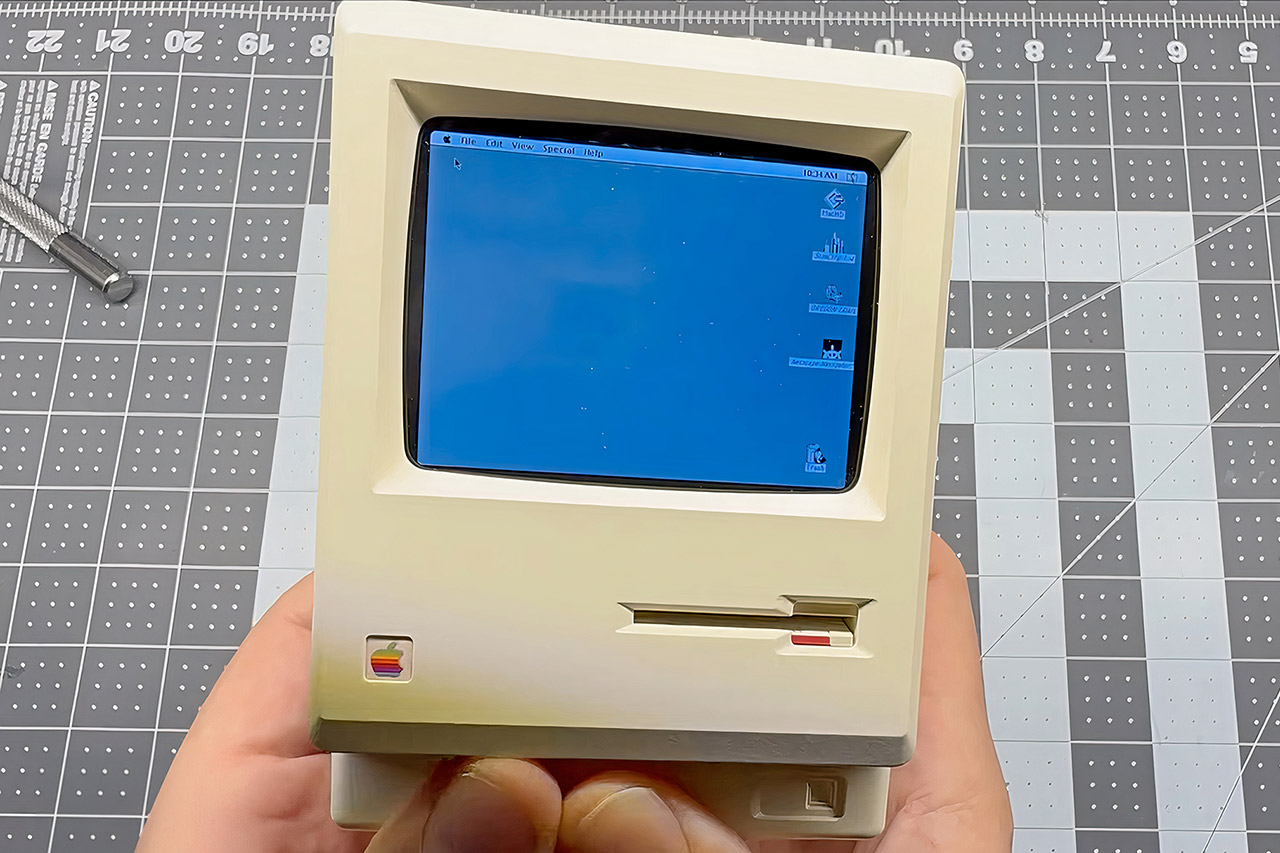
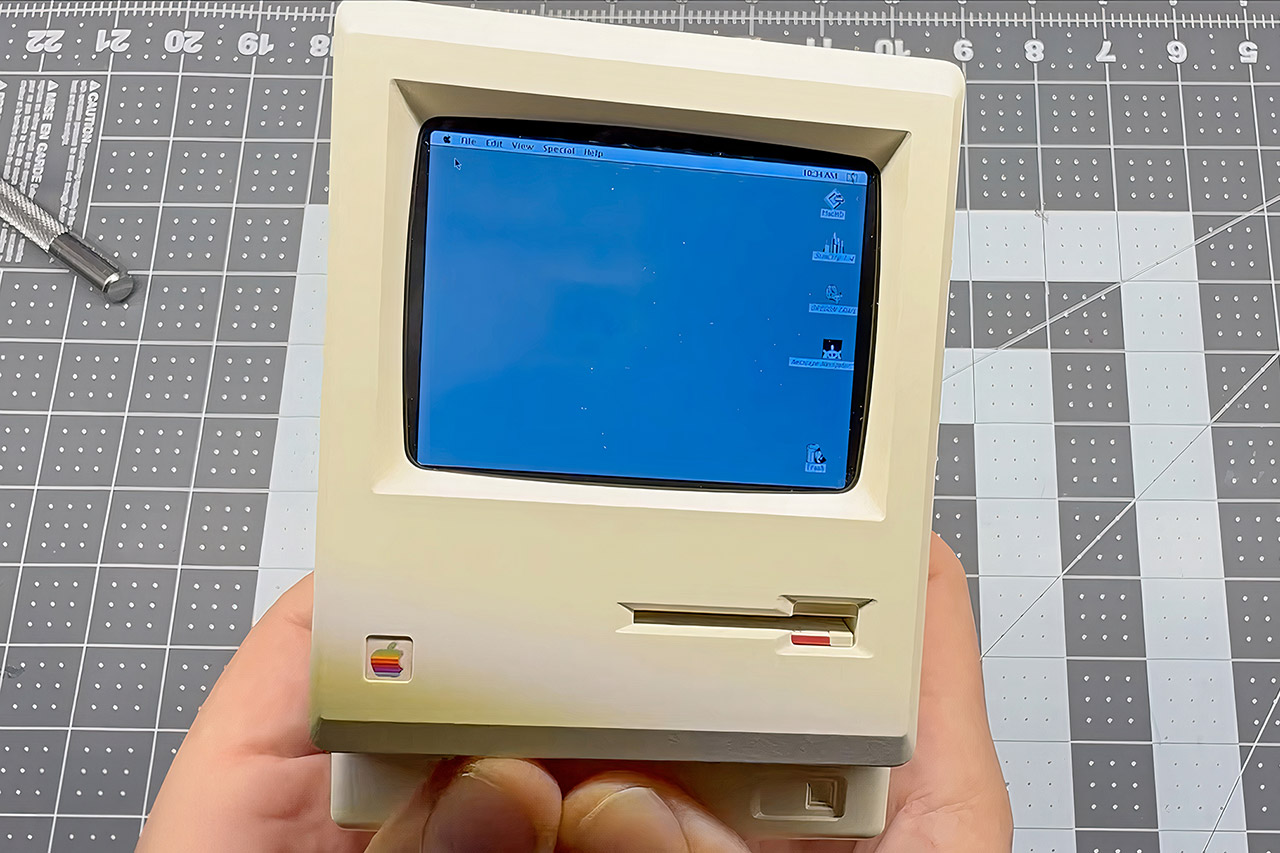
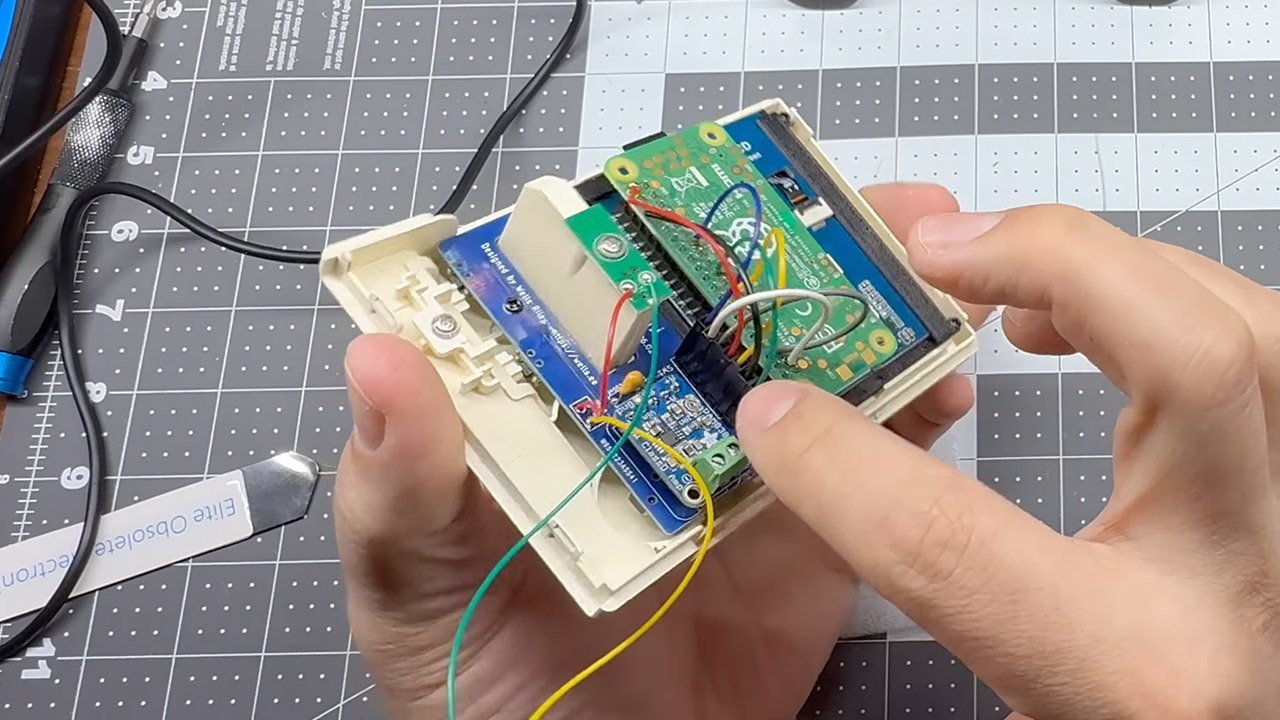
Maclock Clock Macintosh Mini Mod
Plenty of people scroll past cheap desk gadgets online without a second thought. One particular alarm clock shaped like the original 1984 Macintosh caught the eye of builder Wells Riley. Sold on AliExpress for around twenty dollars, the Maclock looks shockingly close to the real thing from the outside, complete with the distinctive beige case, floppy disk slot detail, and even a small screen area. Inside, though, it held nothing more than basic clock circuitry and a speaker for alarms.


First, he decided to strip out the components and replace them with parts capable of running genuine Classic Mac OS software, resulting in a tiny little gadget that yet provides a rather accurate retro computer experience. Every original button still works, the brightness knob really adjusts the display, the speaker plays the startup bells and system noises, and the entire thing can be powered by a battery. Of course, no external monitor or keyboard is required to get started, but if you do want to connect to something, use the USB ports.

Sale


Dralaw Maclock Retro Pixel Alarm Clock, 1984 Computer-Inspired USB Desk Clock with Pixel Display…
  • 【Retro 1984 PC Design】 This miniature ivory-colored ABS/PMMA alarm clock revives the charm of the early computer era. A perfect nostalgic piece…
  • 【Multi-Mode Pixel Display】 The high-contrast LCD simultaneously displays time, calendar, date, and room temperature. A hidden pixel smiley…
  • 【Adjustable Brightness for Comfort】 Gentle, warm backlighting in the morning and dim lighting at night protect your sleep. Simple bottom dial…

Core hardware choices made the tight fit possible. A Raspberry Pi Zero 2W provides the processing power in a board small enough to hide inside the four-inch-tall case. A Waveshare 2.8-inch IPS LCD replaces the original clock face and delivers crisp pixels at a resolution suitable for the era’s software. To make the screen sit flush behind the curved plastic lens, Riley designed and 3D-printed a custom bezel that adapts the display perfectly to the Maclock’s contours. Without that printed part, the modern panel would sit too deep or sit crooked.

Advertisement

Maclock Clock Macintosh Mini Mod
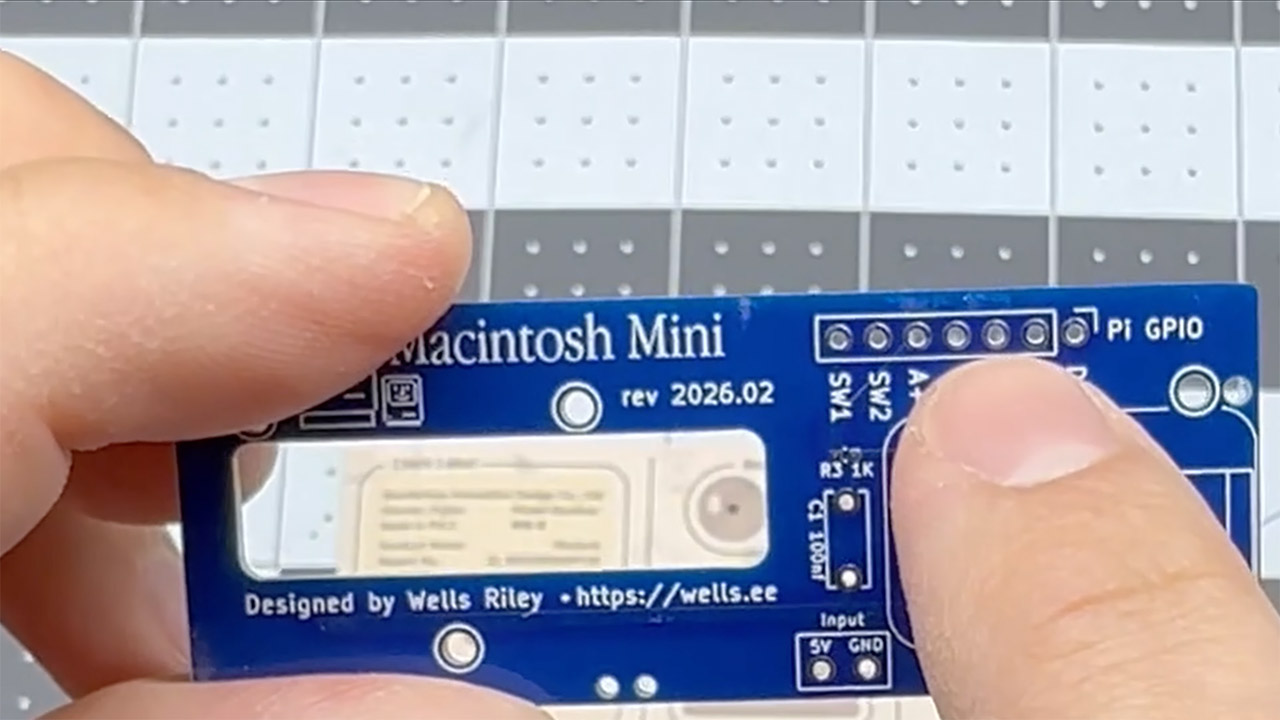
Wiring it all together required additional equipment. Riley created an open-source breakout board called the Macintosh Mini PCB. It may be obtained from sites such as PCBWay, and there is even a shared URL in the project files that anyone can use if they so desire. The board manages the connections for the buttons, the brightness dial, audio output via a small amp, and power. It also has an area where you may bend or remove specific pins on the Pi so that they do not interfere with the screen. The guidelines also provide a basic wiring table that shows you which pins on the breakout board connect to which on the Pi, making the entire soldering procedure much easier even if you’re new to it.

Maclock Clock Macintosh Mini Mod
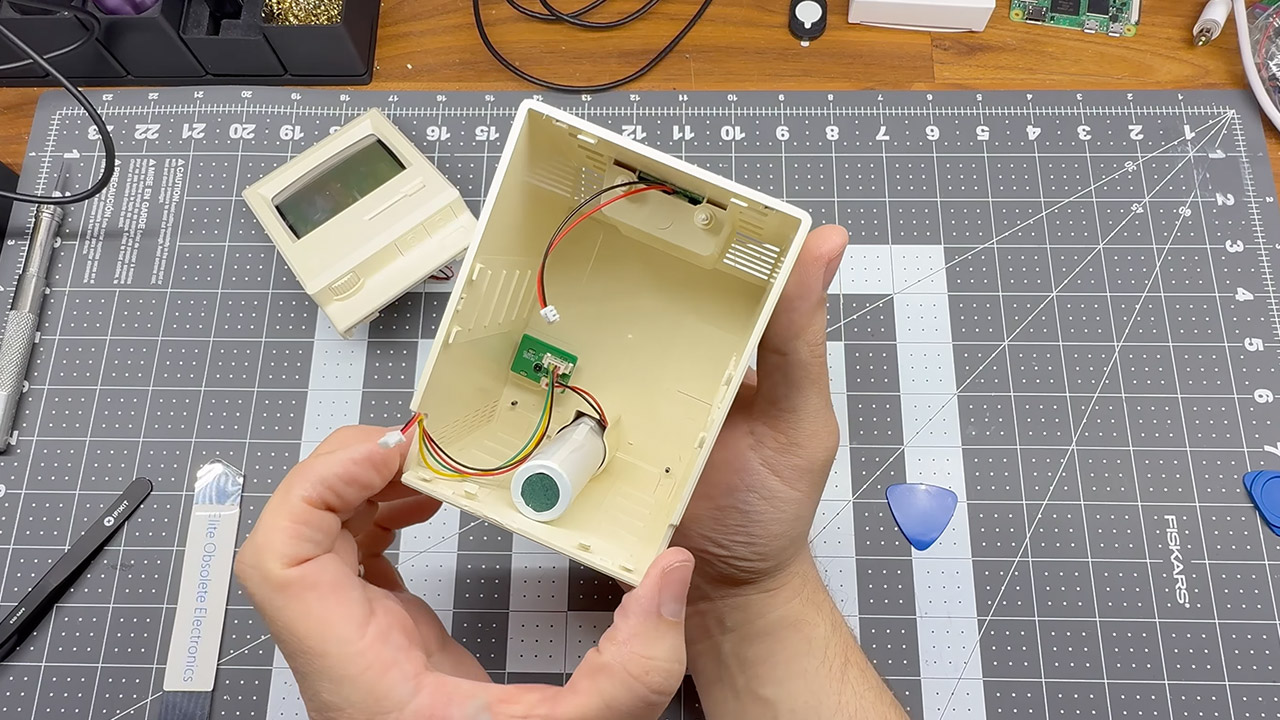
Assembly is actually a rather simple process. First, you disassemble the Maclock, which means detaching the base and exterior case. You will need to remove all of the original circuitry. Now it’s time to install the 3D-printed bezel and snap it into place. Once completed, the LCD is neatly attached behind it, and the custom PCB is inserted into its allotted location at the bottom. Wires must then be routed to the Pi Zero, which is located in the lower compartment with a small speaker module.

Maclock Clock Macintosh Mini Mod
Getting the software up and running is also rather straightforward. Flash a copy of Raspberry Pi OS Lite onto a microSD card and boot up the Pi, and you’re almost done. Next, locate a Classic Mac OS disk image file that ends in.hda (don’t forget to obtain a compatible ROM file) then transfer those data to the card using a proper computer. Now, connect to the Pi from another computer on the network and perform a single command to retrieve a setup script from the GitHub repository. The script will install the SheepShaver emulator, configure the display drivers to work with your Waveshare panel (with a custom overlay that can be changed), start python scripts for handling the buttons and brightness control, and start all of the system services. After rebooting, the device should launch into the Macintosh environment without any problems, including that nice startup chime.

Source link

Continue Reading

Tech

Kenwood MultiPro Go review: this food processor is excellent for its price and size

Published

on

Why you can trust TechRadar


We spend hours testing every product or service we review, so you can be sure you’re buying the best. Find out more about how we test.

Kenwood MultiPro Go food processor: two-minute review

Full disclosure: I live in a tiny apartment that has more of a kitchenette than a kitchen, so space — both countertop and cabinet — is at a premium. So I usually try to find essential appliances that are compact and eyed the Kenwood MultiPro Go for a long while before putting my faith in it.

The main reason it caught my attention was its design — available in lovely light colours (Clay Red and Storm Blue as Kenwood calls them in Australia, there’s an additional green one in the UK), the appliance is eye-catching and memorable compared to the usual black or grey machines. Another positive is its Express Serve attachment that drops processed foods directly into a container of your choice. You do need to use a wide-mouthed container, though, as the processed items won’t to scatter through the relatively large opening of the attachment.

Advertisement

Kenwood MultiPro Go food processor on a table beside kitchen scales, lemon pieces and measuring spoons

(Image credit: Sharmishta Sarkar / TechRadar)

To keep the whole system compact, Kenwood has thoughtfully added a groove for winding the power cable around when stored, although the plug is too large and hangs off the bottom of the base.

Source link

Continue Reading

Tech

The Mother's Day Gifts Our Editors Love (2026)

Published

on

From smart rings and everlasting flowers to weighted vests and LED masks, there’s a gift for every kind of mom.

Source link

Continue Reading

Tech

Dot is the Mac calendar app I wish I had found sooner in 2026

Published

on

I always loved menu bar calendar apps. They let me check upcoming events, add events quickly, and access my calendar without switching apps. It’s one of those small quality-of-life improvements that, once you experience it, you can’t go back from.

My menu bar calendar journey started with Fantastical. It’s one of the best calendar apps on Mac, period. But when Flexibits moved to a subscription model, I couldn’t justify paying for features I wasn’t using. So I moved on.

I then switched to Dato, which is a solid app and served me well for a long time. But it lacks some features, and again, the pricing didn’t feel right. I needed something modern, cleaner, and more affordable. That’s when I discovered Dot.

Is Dot actually worth switching to?

Dot is a menu bar-only Mac calendar app, and it does exactly what it promises without any bloat. It works with iCloud, Google, Outlook, and Exchange by reading directly from your Mac’s built-in Calendar app, so there’s no separate account to create or sign into.

Advertisement

The interface is clean and looks beautiful. At the top, you get a quick glance at today’s event count, the day and date, and a settings icon. You can also add a Day and Year progress bar, which shows how much time is left before the end of the day or year. 

Below that, there’s a month view with small dots marking days that have events scheduled, which makes it easy to spot busy days at a glance. Scroll further and you get a full list of upcoming events.

Adding events is fast and supports natural language input. You can type something like “publish Dot’s review at 11:30 am” or “meeting with Sara at 2 PM” and Dot figures out the rest. You can also jump to any date by pressing F and typing it in, which is a small but genuinely useful touch.

What makes Dot stand out?

A few features make Dot feel more considered than its competition. The first is the customizability. You can change the accent color, choose what information appears in the calendar, and how the calendar appears in the Menu Bar. 

Meeting prep is another feature I like a lot. When you have a video call scheduled, Dot automatically surfaces links from your invite, so you are not digging through your email five minutes before the call. It also supports one-click joining for Zoom, Google Meet, Teams, and Webex, along with a camera and mic preview so you can check your setup before jumping in.

The Command Bar is another highlight, and a feature I have not seen in any other calendar app. With a single shortcut, I can create events, search my schedule, check world clocks, or copy my day’s agenda without leaving whatever I am doing.

Dot also lets you mark special dates on your calendar by right-clicking any day, giving it a title and a color, and it shows up highlighted with the label on hover. It’s a simple feature, but surprisingly useful for flagging things like deadlines, paydays, or trips.

And these are just some of the features. Dot is one of my favorite Mac apps I discovered in 2026, and I highly recommend you use its 14-day trial to explore the app and check it out for yourself by visiting trydot.app

If you are happy with it, you can purchase it for a one-time price of $14.99 (currently $9.99 with the launch code). There’s no subscription and no account required, and your data stays on your Mac. For anyone tired of paying monthly for a calendar app, Dot is the answer.

Advertisement

Source link

Continue Reading

Tech

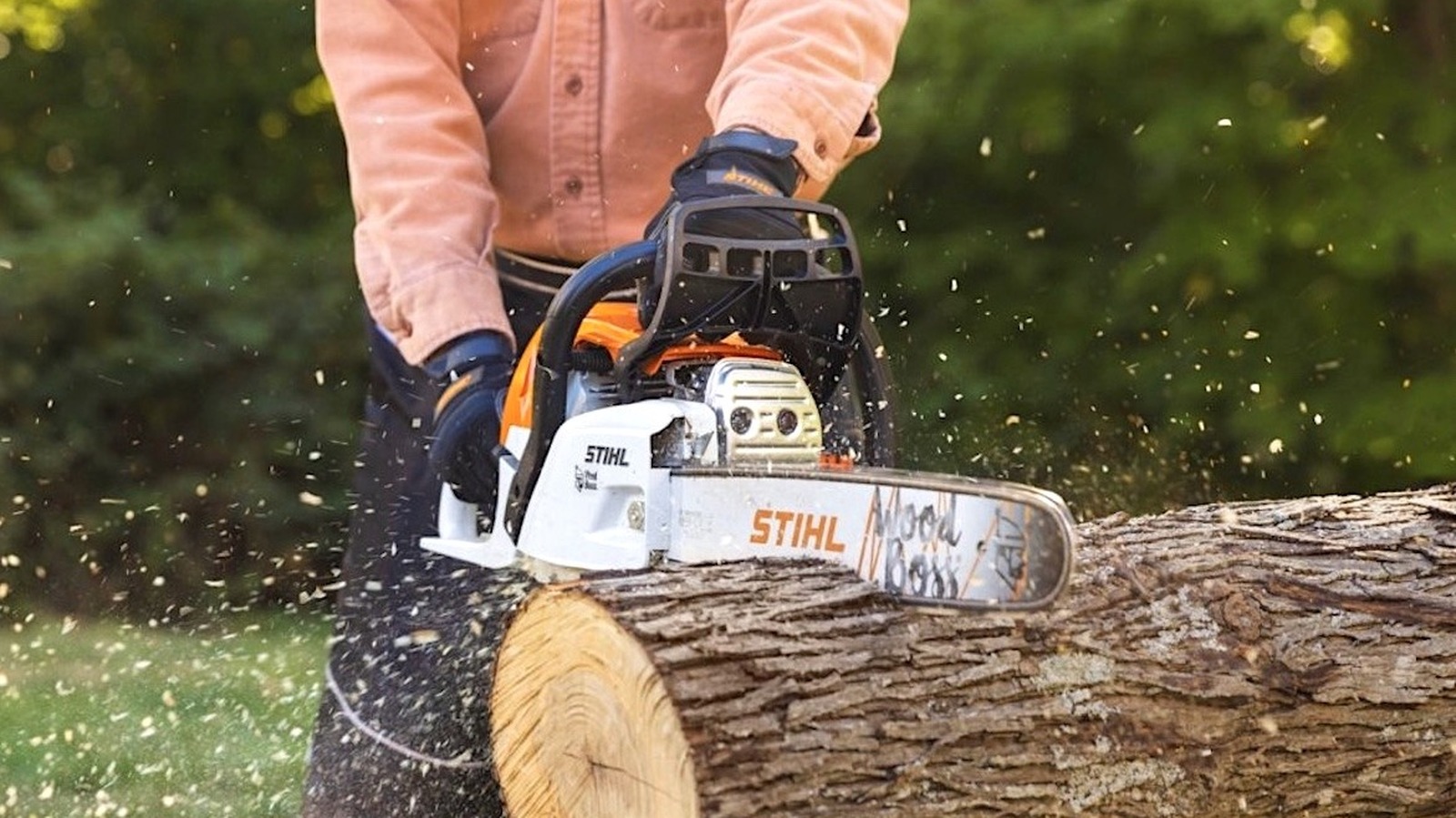
The Air Filter Mistake That Makes Your Chainsaw Perform Worse

Published

on


Some people might tell you that a good chainsaw is one of those tools that you don’t know you need until you actually need one. They’d likely also tell you that adding one to your power tool arsenal can seriously up your lawn care game. While that may be true, that only applies if you take care of it properly.

Maintenance is likely one area where many power tool owners fall short, especially in light the rigors those devices face on the job. Such maintenance is, perhaps, more important with chainsaws than with some smaller tools, as they have several moving parts that, if not properly maintained, could lead to an under-performing tool — and a potentially dangerous one.

Advertisement

Given the stakes, you’d be wise to ensure your chainsaw is clean and oiled before every use, among other essential chainsaw maintenance tips. As for performance, there’s another step you can take to ensure your chainsaw is delivering the goods when you put it to use. That step is the regular cleaning of the tool’s air filter. This filter limits the amount of debris that enters the motor, and thus ensures maximum output during usage. And yes, failure to clean that filter will eventually lead to an underperforming or non-starting device. Here’s how to clean your chainsaw’s air filter. 

Advertisement

How to clean your chainsaw’s air filter

The air filter on your chainsaw is pretty easy to clean, which is a good thing considering some companies recommend doing so after every use. The process may vary slightly with different chainsaws, but you’ll likely need a socket wrench, a screwdriver, and a small bowl of warm soapy water for the job. If you’re unsure where the air filter is on your device, consult your owner’s manual for help. Otherwise, follow these steps to clean your chainsaw’s air filter.

For a sponge filter:

  1. Loosen the bolts holding the chainsaw’s cover in place and remove them.
  2. Remove the cover itself.
  3. Use the screwdriver or another suitable tool to loosen and remove the filter.
  4. Once the filter is removed, soak it in the soapy water and thoroughly clean it.
  5. Rinse the filter clean and tamp it dry with a clean cloth.
  6. Allow it to completely dry before re-installing it.

For a pleated or paper filter:

  1. Loosen and remove the bolts on the chainsaw’s cover and lift it out of place.
  2. Remove the filter using a screwdriver or a suitable tool. Extra screws and fasteners may be holding the filter in place.
  3. Clean the filter by hand using warm, soapy water. A clean, delicate brush may also work.
  4. Allow the filter to completely dry before reinstalling it and operating the chainsaw.

Regardless of the filter type, you should inspect it closely for holes or tears when cleaning. If you believe the filter is damaged, simply replace it with a new one.

Advertisement


Source link

Continue Reading

Trending

Copyright © 2025