
Entertainment
10 Most Perfectly Directed Classic Movies, Ranked

One of the most important qualities of any notable movie is its visual storytelling, but some classics, such as Gone with the Wind, Sunset Boulevard, and Lawrence of Arabia, define the standard of great directing. When people talk about perfectly directed classic movies, they usually mean films where an array of elements, including camera movement, pacing, performances, lighting, and sound, work together so seamlessly that nothing feels out of place and the director’s vision is clear but never distracting.
What unites classics like Casablanca, The Good, the Bad, and the Ugly, and The Godfather, isn’t just technical brilliance or captivating performances; it’s the director’s intention. Every shot has a purpose, every silence speaks, and every choice reinforces the film’s core idea, delivering an unforgettable movie experience that embodies the escapism of cinema. From John Ford‘s Western masterpiece, The Searchers, starring John Wayne, to Orson Welles‘ iconic Oscar-winning classic Citizen Kane, these are ten of the most perfectly directed classic movies, ranked!
10
‘The Searchers’ (1956)

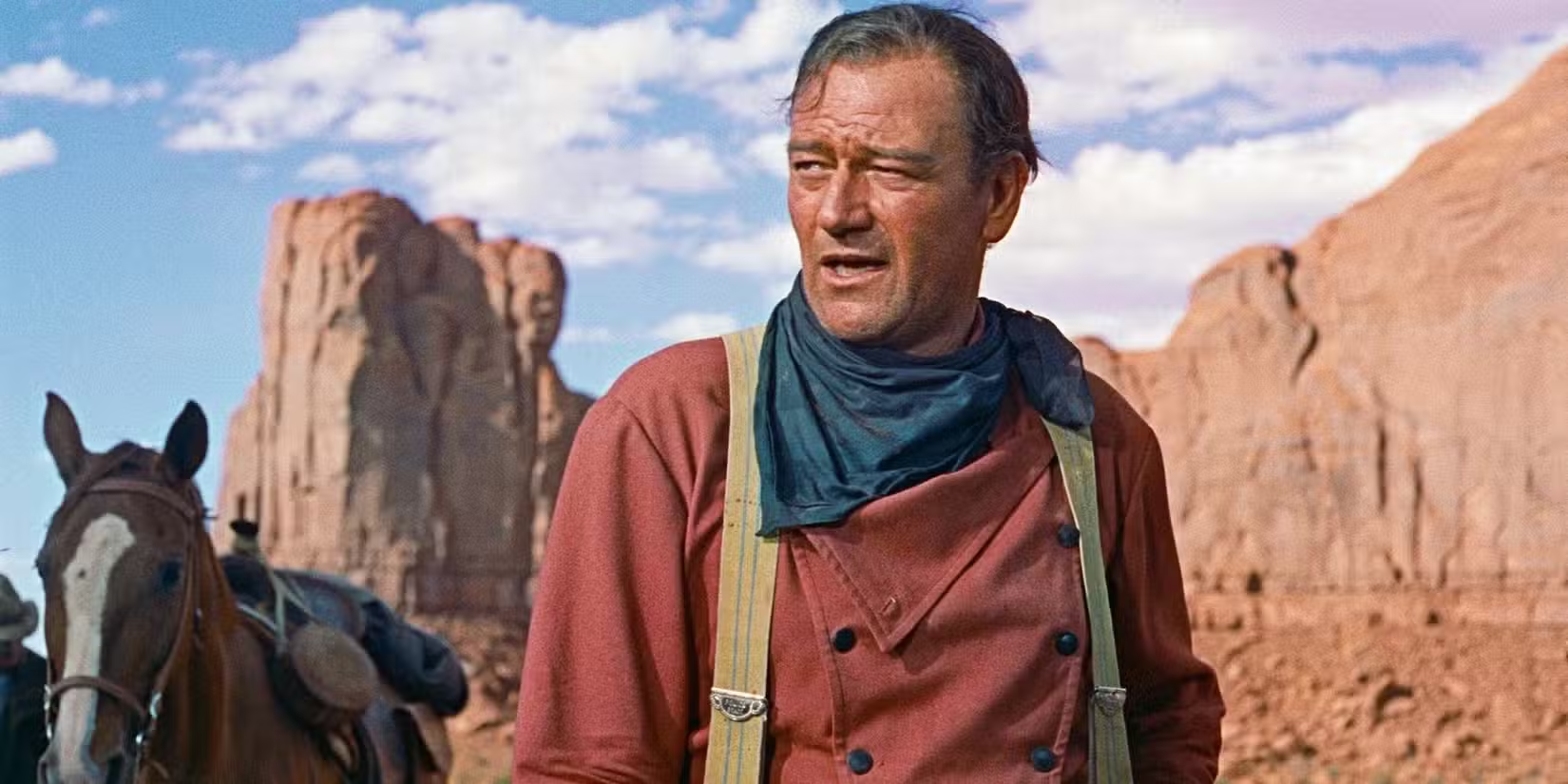
The Searchers is regarded as one of the greatest classic Western movies ever made and features a signature performance by the Duke as a Civil War veteran, Ethan Edwards, who, after the murder of his family, sets out to find his surviving nieces who are being held captive by Native Americans. John Ford, known for filming on location rather than on a sound stage, combines visual storytelling, thematic depth, and precise control of tone into The Searchers, which feels both epic and intimate.
The film’s pacing and structure show tight directorial control, and scenes often begin late and end early, which is a testament to Ford’s efficiency and confidence as a director. The final scene of Edwards lingering in the door frame is not only an iconic tip of the hat to Wayne’s mentor and Western legend, Harry Carey, but it’s also a purely visual resolution that captures the film’s central idea about alienation and the cost of obsession with the use of any dialogue.
9
‘Vertigo’ (1958)

Image via Paramount Pictures
James Stewart stars in Alfred Hitchcock‘s Vertigo as a retired San Francisco detective, John “Scottie” Ferguson, who is hired by a college friend to follow his troubled wife, Madeline (Kim Novak), sparking an unexpected affair that leads Ferguson down a twisted path of obsession and madness. Many people consider Vertigo to be Hitchcock’s magnum opus, and while some may argue otherwise, there’s no denying that it demonstrates the director’s impeccable control of visual storytelling in all its glory, making it one of the director’s greatest masterpieces.
One of the film’s most notable qualities is the famous dolly zoom effect, which doesn’t just look striking; it puts the audience inside Ferguson’s mind and makes a psychological condition feel physical in a way that is uncanny. Like every Hitchcock classic, everything has a purpose, even something as simple as color. Hitchcock’s use of greens, reds, and muted tones in Vertigo tracks the characters’ emotional states and identity shifts, giving the audience a chance to experience the transformation before fully understanding it.
8
‘Gone With the Wind’ (1939)

Gone with the Wind is an epic historical romance and essential classic movie based on Margaret Mitchell‘s 1936 novel of the same name, and follows the trials and tribulations of a headstrong Southern Belle, Scarlett O’Hara (Vivien Leigh), whose life is turned upside down by the American Civil War. The movie was a major success and is known today for its iconic performances, distinct use of color, and for taking the art and craft of cinematic storytelling to new heights. Although multiple directors and producers contributed, Victor Fleming is most closely associated with shaping its final form into a cohesive vision.
The film moves effortlessly between sweeping Civil War set pieces and deeply personal moments, creating a unique balance of depth and spectacle that audiences at the time had never seen before. Scenes like the burning of Atlanta are staged with massive visual impact, yet the story never loses focus on its heroine’s perspective, which demonstrates Fleming’s ability to counter epic and personal storytelling. Out of its thirteen Academy Award nominations, Gone with the Wind went on to win eight of its nominations, notably for Best Actress, Best Picture, and Best Director.
7
‘Lawrence of Arabia’ (1962)

Peter O’Toole stars in David Lean‘s epic biographical drama, Lawrence of Arabia, as a British Lieutenant who is sent to Arabia to serve as a military advisor to Bedouin forces during the Arab Revolt against the Ottoman Empire. The movie is based on the life of T.E. Lawrence and his autobiography, Seven Pillars of Wisdom, also known as Revolt in the Desert. Lawrence of Arabia is frequently cited as one of the most perfectly directed classic movies because Lean achieves a rare blend of monumental scale and a deep psychological focus by using the vastness of the surrounding desert to mirror O’Toole’s character.
Known as a meticulous director, Lean gave O’Toole the complete freedom to define his character, trusting that he would bring the kind of energy and complexity to the role that the director desired. The infamous scene where Lawrence uses his knife to see himself in his new all-white attire was not only entirely improvised by O’Toole but also earned immense praise from Lean. Today, it is easily one of the most iconic moments in classic cinema history. Lawrence of Arabia dazzled audiences and critics around the world and went on to win seven Academy Awards, including Best Picture, Best Director, and Best Cinematography.
6
‘2001: A Space Odyssey’ (1968)
Stanley Kubrick‘s 2001: A Space Odyssey marked a major milestone in visual storytelling with its innovative special effects, authentic depiction of space travel, and cryptic story structure. The epic sci-fi classic follows Dr. Dave Bowman (Keir Dullea) and a group of astronauts who are sent on a mysterious mission into space with an advanced computer system known as HAL as their guide. When HAL begins to exhibit strange behavior that isn’t in his programming, a face-off between man and technology ensues, sending Bowman into a life-changing experience through space and time.
Kubrick exercises extraordinary control over every element of filmmaking in 2001: A Space Odyssey and ultimately creates an experience for audiences that is as much philosophical as it is cinematic. Each frame and shot is carefully composed, with symmetry and stillness, and the use of practical effects and model work gives the space sequences a realism that still holds up today. Despite its initially mixed reception from critics, 2001: A Space Odyssey earned four Academy Award nominations, notably for Best Director and Best Original Screenplay, and won Best Special Visual Effects.
5
‘Sunset Boulevard’ (1950)
.jpg?q=49&fit=crop&w=500&dpr=2)
The legendary Billy Wilder fuses sharp storytelling, visual style, and tone into his 1950 film noir classic, Sunset Boulevard, in a way that makes it both a gripping drama and a biting critique of Hollywood itself. Recognized as the best classic film noir movie of all time, Sunset Boulevard stars William Holden as an aspiring screenwriter, Joe Gillis, who agrees to write a comeback script for a former silent film star, Norma Desmond (Gloria Swanson), but as Desmond’s infatuation with Gillis turns into an obsession, the writer starts to realize that he’s potentially made a deal with the devil that could cost him more than his career.
Wilder strategically alternates between noir, dark comedy, and tragedy in Sunset Boulevard without letting any element overpower the others, resulting in a cinematic experience that feels cohesive even as it shifts from cynical humor to genuine pathos. While Wilder’s expertise and masterful eye are the main source of the film’s brilliance, the alluring cinematography by John Seitz is another one of the film’s greatest strengths. His use of high contrast lighting, shadows, and expressive compositions effectively reflects the decay that lies beneath the glamour of Hollywood, essentially reinforcing the film’s themes without needing explicit explanation.
4
‘Casablanca’ (1942)

The 1942 romantic war drama Casablanca earns its place on this exclusive list because of Michael Curtiz‘s flawless direction, which brings story, performances, and an uncompromising atmosphere together with such clarity that every element feels effortless and unified. Set during World War II, Humphrey Bogart stars as an American, Rick Blaine, who is forced to choose to either be with the woman he loves (Ingrid Bergman) or help her husband, a Czechoslovakian resistance leader (Paul Henreid), escape the city of Casablanca before he can be apprehended by enemy forces.
Using classic Hollywood lighting and composition, Curtiz creates an atmosphere of intimacy and tension, especially in Rick’s Café, where shadows, smoke, and crowd movement reflect the uncertainty of life during wartime and Rick’s internal predicament. The camera often frames characters in ways that emphasize emotional distance or connection and balances romance, political drama, and suspense without losing focus. Initially, almost everyone involved in production felt the film would fail, but to everyone’s surprise, Casablanca was a massive success that went on to win three of its eight Academy Award nominations, including Best Picture and Best Director.
3
‘The Good, the Bad, and the Ugly’ (1966)

The Good, the Bad, and the Ugly is a signature spaghetti Western directed by Sergio Leone, who transforms a simple treasure-hunt story into an operatic, visually driven experience through precise control of style, rhythm, and tone, making it one of the most perfectly directed classic movies ever. Clint Eastwood stars in his iconic role as the Man With No Name, who reluctantly teams up with a conniving outlaw (Eli Wallach) to search for a golden fortune that was buried by Confederate soldiers in a graveyard, and eventually find themselves in a race against time after learning that a ruthless mercenary (Lee Van Cleef) is also after the hefty prize.
Leone contrasts extreme wide shots of barren landscapes with intense close-ups of faces, creating tension through scale and detail. The camera lingers longer than expected, stretching moments until they become almost unbearable, then releases that tension in bursts of action. He constructs each scene like a musical composition and gradually builds layers of anticipation, which is heightened by Ennio Morricone‘s masterful musical score. The final scene of the cemetery showdown is the clearest example of this as the cutaways, framing, and timing, combined with Morricone’s distinct work, turn a simple standoff into a prolonged, almost mythic climax.
2
‘The Godfather’ (1972)

Francis Ford Coppola‘s The Godfather redefined the traditional gangster film and is, without question, one of the most important films in American cinema, but the manner in which Coppola combines intimate family drama into an intense crime saga is what makes The Godfather one of the most perfectly directed classic movies ever. Based on Mario Puzo‘s best-selling novel, Marlon Brando stars as an aging mob boss, Vito Corleone, whose youngest son and decorated war hero, Michael (Al Pacino), reluctantly steps up to protect his father and their family during an intense civil war with the other families.
The visual style, shaped with the work of cinematographer Gordon Willis, is a defining aspect of Coppola’s immaculate direction in The Godfather. The use of low lighting and shadow creates a sense of secrecy and moral ambiguity, while carefully composed interiors give the film a rich, vibrant quality. Coppola carefully builds tension over time, leading to moments of release that feel both inevitable and powerful, most famously in the baptism sequence, where cross-cutting ties together personal and violent acts with thematic precision. Overall, Coppola’s knack for weaving performances, tone, and visual storytelling together brings a cohesive vision to life in The Godfather, giving audiences a timeless classic that is both grand in scope and deeply human.
1
‘Citizen Kane’ (1941)

Orson Welles made his directorial and feature film debut in the Oscar-winning classic Citizen Kane, which was both a cinematic and technical achievement that changed the film industry forever. The film tells the story of a newspaper tycoon, Charles Foster Kane (Welles), whose cryptic dying last words, “Rosebud,” lead a young reporter (William Alland) on a search to find out the meaning behind them. As the reporter interviews Kane’s friends and associates, a fascinating portrait of a man begins to emerge, detailing his journey from essentially nothing and the events and efforts that elevated him to staggering heights of wealth, influence, and power.
Instead of a traditional linear narrative, Kane’s life unfolds through fragmented perspectives of the reporter’s investigation, each revealing different sides of his character. The non-linear structure, built around the mystery of “Rosebud,” reflects Welles’ confidence in trusting the audience to piece it all together. Welles’ combination of groundbreaking filming techniques and his unified artistic vision in Citizen Kane ultimately reshaped what film direction could achieve. His innovative use of low-angle shots, long takes, and expressive compositions creates a sense of power, isolation, and psychological depth that sets Citizen Kane apart from other dramatic films at the time.

Citizen Kane
- Release Date
-
April 17, 1941
- Runtime
-
119 minutes
- Writers
-
Herman J. Mankiewicz, Orson Welles, John Houseman, Roger Q. Denny, Mollie Kent

Continue Reading
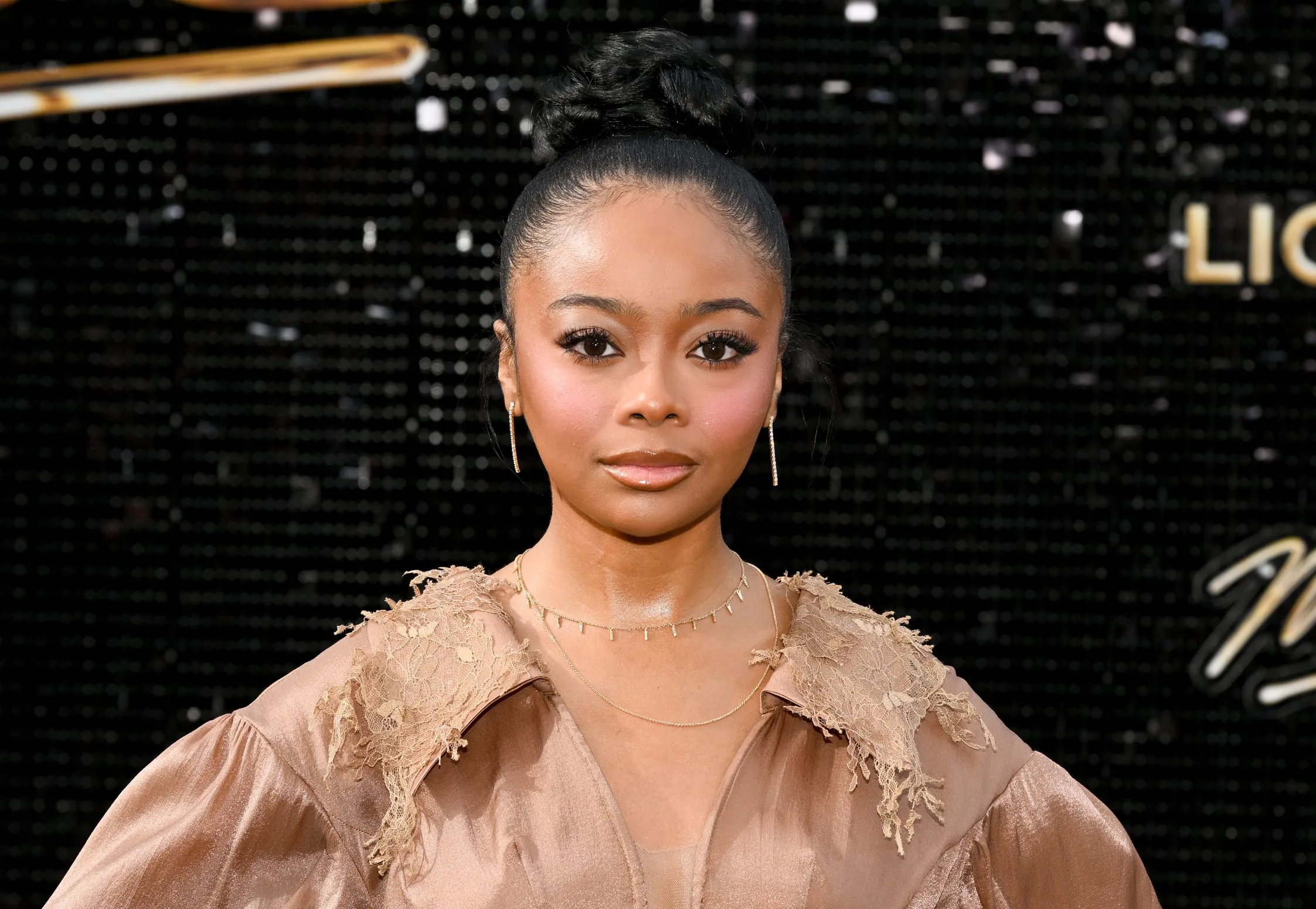
Skai Jackson is speaking out after facing online criticism over her frequent use of AI on social media. During a recent livestream, Jackson addressed questions from viewers, which has sparked ongoing debate across platforms.
Related: Skai Jackson Addresses Cast Beef Rumors As Fans Question Why She Missed ‘Jessie’ Link-Up (PHOTOS)
Skai Jackson Responds To AI Criticism During Livestream
Skai Jackson has recently gone viral for sharing AI-generated photos depicting fictional life moments, including images of herself getting married, having a child, and even being in a hospital. Some of her posts even include edited images placing her alongside high-profile celebrities, including Miley Cyrus, Selena Gomez, Rihanna, Kim Kardashian, and Kylie Jenner.
Recently, during her Twitch stream, Skai was questioned about her use of AI, following the internet’s debate.
One commenter asked, “Did she say why she uses AI so much?”
In response, Jackson said:
“Everybody uses it. Apple uses it, I believe Microsoft uses it. So if you don’t want to use AI, I would suggest you maybe turn your phone off and delete Instagram, TikTok, Twitter, throw away your iPhone and switch to a Samsung.”
Social Media Reacts
Jackson’s response quickly sparked mixed reactions on social media, with users debating both her reasoning and how she chooses to use AI.
Instagram user @aysiadiorr wrote, “It’s the way she’s using it….. to make this fake like of herself”
Another Instagram user @chanparislynn_ wrote, “you didn’t answer the question. Don’t nobody use it like you girl and you know that”
While Instagram user @visualdiaryny wrote, “I hate when peoples excuse for doing something is because everyone else is doing it 😭😭😭😭 like stand up”
Instagram user @asaaa_jacque wrote, “She is so me 😂😂😂 I hope she keep using it til y’all learn that it’s her life and she can do pretty much whatever the hell she wanna do with her life”
Another Instagram user @itss.monnie wrote, “I think it be funny 😂😂😂 I’m just as delulu as she is 💁🏽♀️😭”
While Instagram user @ninam0sley wrote, “just say them folks are cutting you a check”
Instagram user @1alaaalandd wrote, “Okay let’s be fr tho. Shes trynna clickbait with those photos and it’s literally working. Using Al is literally give her money 😭”
Another Instagram user @legitnesha wrote, “She not wrong tho, a lot of companies like Google and Apple use it. How do you think the algorithm is so quick to change now”
While Instagram user @jaseanbrackett wrote, “Can’t spell AI without Skai”
The Internet Questions Skai Jackson’s Recent Photo With Kai Cenat
The debate surrounding Skai’s use of AI has also led to confusion among fans about distinguishing real moments from edited ones.
The former Disney Channel star recently attended the Los Angeles premiere of ‘MICHAEL,’ the upcoming biopic centered on Michael Jackson. While at the event, Jackson posed for a photo with streamer Kai Cenat, who was also in attendance. After the image began circulating online, some social media users questioned whether the photo was authentic or another AI-generated post.
Related: Skai Jackson Raises Eyebrows After Sharing AI-Generated Photos With Celebrities On Snapchat (PHOTOS)
What Do You Think Roomies?
In many ways, filmmaking is a heist in its own right. Pulling off a score in a bank, cash depository, or warehouse full of valuables requires similar levels of trickery, deception, cunning tactics, and even brute force that goes into making a movie. A heist is only as good as its crew, and the same is true for a movie, from the director and leading star to the camera grips.
Being so analogous to the criminal act, it’s no surprise that the heist genre, a general subgenre of crime movies, has resonated since the dawn of the medium, with one of the original narrative films in 1903 being The Great Train Robbery. While there are plenty of entertaining and enduring heist movies, these 10 ranked below are as close to perfect as they get.
10
‘Going in Style’ (1979)
.jpg?q=49&fit=crop&w=500&dpr=2)
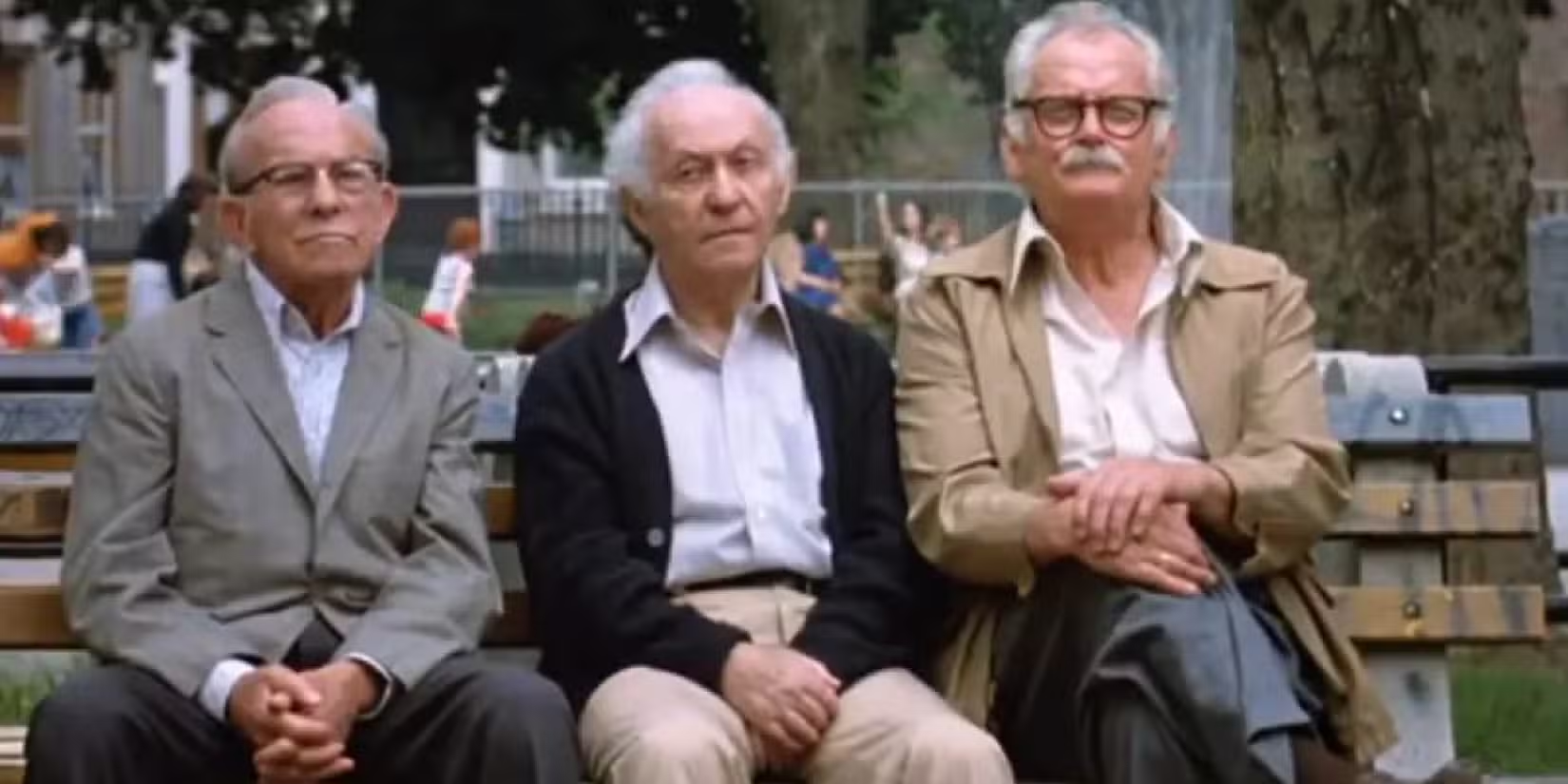
Before redefining action comedies with beloved classics such as Beverly Hills Cop and Midnight Run, Martin Brest kicked off his feature filmmaking career with the most unexpected batch of thieves: senior citizens. This rag-tag group of criminals, played by showbiz legends George Burns, Art Carney, and Lee Strasberg in the supremely underrated Going in Style, shows that a bag of cash is nothing compared to the thrill of living on the edge before your demise.
Not to be confused with Zach Braff‘s remake in 2017, 1979’s Going in Style is both a darkly funny romp about three old rapscallions in Queens collecting Social Security who are sick of elderly life. To spice up their lives, the trio successfully orchestrate a bank robbery and subsequently splurge the cash on a gambling binge in Las Vegas. The concept of Going in Style practically writes itself, with the prospect of old men turning into criminals susceptible to many cheap punchlines. However, the shrewd Brest underscores the bitterness and alienation of aging, and he deploys the team’s frustration for comedy and a mournful exploration of mortality. Retirement is painted as a warm, autumnal era for peace and reflection, but the boredom can also drive you to commit felonies.
9
‘Set It Off’ (1996)

Like with most crime-oriented films, the heist subgenre is predominantly centered around men and grapples with traditional masculine ideas. With Set It Off, women were not in marginalized positions as victims or romantic partners of the criminal men, but instead, leading the scores. F. Gary Gray‘s timeless 1996 heist movie has become increasingly beloved in recent years, but it’s not just because of the swapped gender dynamics.
The anchor of Set It Off‘s excellence is the sparkling chemistry between its four leads: Jada Pinkett, Queen Latifah, Vivica A. Fox, and Kimberly Elise. They play lifelong friends who convene to perform a bank robbery for their own respective motivations, but the end goal triggers chaos and builds to a fatalistic end. You believe that they share a strong bond, even if their short-sighted urges are responsible for the friendship’s demise. The film allows the individual characters to blossom as fleshed-out people. Crackling with a relentless vigor, fluid pacing, and just the right level of endearing charm, Set It Off proves that heist movies are only as good as the chemistry between its stars and authenticity of personal relations. Gray would receive bigger budgets along the way, but he still has never topped this archetypal but inventive heist thriller.
8
‘The Town’ (2010)

By 2010, the heist genre appeared to have no room to expand or push the genre’s template. However, this didn’t mean that the well had run dry. Despite all the towering influences lingering over him, Ben Affleck boldly gave us a heist classic for a new generation with The Town. Not only is Affleck’s crime thriller about an expert thief and his tried-and-true “one last job” a love letter to the subgenre, but it has also become a calling card for all Boston cinephiles, who now wear the film as a badge of honor.
Set in Charlestown, a Boston neighborhood, The Town is one part Heat, mixed with Rififi, and another part The Friends of Eddie Coyle. Call it a rip-off all you want, but the movie fires on all cylinders as a heist thriller and character study. Doug MacRay (Affleck) was raised in a life of crime, but upon finding true love in a bank teller of a place he robbed, Claire (Rebecca Hall), he’s ready to settle down. Staying true to your neighborhood and roots versus taking the bold step of reforming your life is the compelling dynamic at the heart of The Town, which features a superb performance by Jeremy Renner as the menacing thief “Jem” Coughlin, the symbol of Charlestown’s self-destructive path. Affleck, perfectly capturing the aesthetic and tone of his hometown, reinvigorated the heist genre with newfound layers of grit, realism, and pathos.
7
‘Inside Man’ (2006)

As was the case for The Town, sometimes, when making a heist movie, it’s better to just play the hits. This doesn’t mean your film is reductive or frivolous, but rather, it’s using a solid template to adhere to a visionary director’s style and reflect the moment. Inside Man executes this formula to a tee, as Spike Lee‘s homage to Dog Day Afternoon and ’70s New York crime movies is a blast to watch, rich with in-depth commentary about corporate conspiracies and the post-9/11 angst of America.
Like any Spike Lee joint, Inside Man, starring Denzel Washington, Clive Owen, and Jodie Foster, features the city of New York as its main character. From inside the bank that’s being taken hostage by Owen’s eerie theft conductor, Dalton, to the negotiation team on the street led by Washington’s Keith Frazier, NYC culture and sense of distress and annoyance run through everything, including the surprising moments of levity, to the intense, life-or-death circumstances of the robbery. Expertly crafted and incredibly acted, Inside Man proved that Lee could’ve been a phenomenal genre journeyman director if he wasn’t so gifted as a commentator on social issues and complex characters. This film underlines that the heist is often secondary to the immersive world-building and unorthodox character relationships between cops and crooks.
6
‘The Friends of Eddie Coyle’ (1973)

There’s something about the city of Boston that makes for the ideal heist movie. Before The Town, The Friends of Eddie Coyle was synonymous with Boston bank robberies on the big screen. An essential film of the gritty New Hollywood of the 1970s that has increasingly become a fan favorite, the 1973 heist movie by Peter Yates and starring Robert Mitchum has impeccable vibes. They truly don’t make em’ like they used to, but in fairness, nothing will ever match the aesthetic of the ’70s.
If you ever wanted confirmation that movie stars are too pretty and glossy these days, watch just a few minutes of The Friends of Eddie Coyle. Everyone looks tired, beaten down, grimy, and looking a decade older than their actual age. The king of the hangdog expression, Robert Mitchum, is at his peak as the titular character, a gunrunner for the Irish mob who turns the tables on his colleagues to avoid jail time and start a new life. Echoing the style that was en vogue upon release, Eddie Coyle is equally melancholic and stylized, with the harsh sensibilities being a product of the upending of American values occurring throughout the decade. Shot on location in Boston, the film treats heists as mundane, thankless work, but someone has to get the job done. Otherwise, all parties will meet their demise at the hands of ruthless crime organizations.
5
‘Inception’ (2010)
Many films throughout the years have tackled the abstract concept of dreams, regarding how we process them or how they enter our subconscious. However, only Christopher Nolan (perhaps with assistance from Satoshi Kon‘s Paprika) would’ve thought to turn dreams into an elaborate action-heist epic. While most of us probably couldn’t relate to the grandeur and spectacle of the dreams in Inception, everyone can agree that Nolan’s monumental blockbuster is a rip-roaring success.
One can only imagine the kinds of things Nolan conjures in his sleep based on what we see in Inception, which sees the director cranking up his intricate narrative arcs and intersecting action set pieces to an unfathomable degree. On first watch, you may not follow everything transpiring on screen, but you’ll be completely transfixed by Dom Cobb (Leonardo DiCaprio) and his band of mind bandits, who are hired to upend the corporate control of a massive company. Told with Nolan’s signature calculating precision and operatic emotional wavelength, the 2010 film clouds its exciting heist numbers in a shadow of perpetual uncertainty, as Nolan demands that the audience questions the line between reality and fantasy. Between show-stopping choreography and production design and the tragic undertones of the story, you won’t be dozing off and having dreams of your own when watching Inception.
4
‘Thief’ (1981)

You can’t talk about the heist genre without celebrating the genius of Michael Mann. While most directors take a few entries in their filmography to find their groove, Mann burst onto the scene with the craft, idiosyncratic vision, and assurance of a 20-year veteran with his debut feature, Thief, the Rosetta Stone for the rest of his work. Mann’s 1981 heist movie and stirring character drama is one of the most exquisitely made and meditative films in the genre’s history.
James Caan plays Frank, a career jewel thief ready to start a new life for himself and walk away from the criminal underworld. Of course, this mission is only possible by completing an ill-fated “last job” and tying up loose ends with his family and colleagues. From the opening minutes, with the Tangerine Dream score echoing over the dark and rain-soaked streets of Chicago, Thief is an unparalleled achievement in cinematography. The slick, neon-induced aesthetic popularized in Miami Vice was first established by Mann in his debut picture. His fascination with the life of crime and heist affairs shows in the film’s demonstration of cracking vaults, which is deliberately executed and engrossed in the little details of Frank’s occupation. Caan, in his finest performance, straddles the line between embodying tough, no-nonsense professionalism with a tender yearning for a more fulfilling life. This paradox is the nucleus of Mann’s poetic voice and the pathos of crime.
3
‘Ocean’s Eleven’ (2001)

Is Ocean’s Eleven the “coolest” movie ever made? It’s hard to deny it. Steven Soderbergh‘s breakthrough box-office success put him on the map in mainstream Hollywood, and also firmly cemented the movie star persona of George Clooney, who leads a Hall of Fame cast that includes Brad Pitt, Julia Roberts, and Matt Damon. There’s only one place that can handle all this star power: Las Vegas.
Is Ocean’s Eleven the “coolest” movie ever made? It’s hard to deny it.
A remake of the vastly inferior 1960 film starring the Rat Pack, Ocean’s Eleven announced itself as an instant heist classic in 2001, shaping an alternate side to the genre less reliant on brute force and more on suave and trickery. Danny Ocean’s (Clooney) band of thieves tries to pull off the impossible by orchestrating a heist past the tight, ruthless security at a Vegas casino owned by Ocean’s rival. Throughout the story, they make it look easy, which approximates the effortless direction and acting in the film’s production. The unfussy but controlled Soderbergh lets the style and vibrant energy emanate from his all-star cast, who are both equally adept at harmless robbing and eccentric characters. While the stakes are personal for Ocean, the film never overstays its welcome with its dramatic language. Ocean’s Eleven is a subtle exercise in craft and execution without breaking a sweat.
2
‘Dog Day Afternoon’ (1975)

Although it’s best remembered for its audacious feats of screen acting and astute social commentary, let’s not forget that Dog Day Afternoon is about a pulled-from-the-headlines heist that was just as wild in real life as it was depicted in Sidney Lumet‘s 1975 classic. Starring Al Pacino at arguably his apex as a leading man, the film is just as stirring as a story of rebellion, identity, and cultural clash set inside a bank on a blisteringly hot day in August.
When the temperature reaches sweltering heat in New York City, things quickly unravel. This sense of societal combustion is confronted head-on in Dog Day Afternoon, the most socially conscious heist movie made in Hollywood. Because the film is primarily set in one location, the viewer can grasp the claustrophobic tension and lingering doom of both the bank tellers and the amateur criminal masterminds, Sonny (Pacino) and Sal (John Cazale). Lumet crafts the initial holdup and climactic escape scene with a two-fisted swagger, never dismissing the stakes of the heist. However, he lets Sonny literally and figuratively shed layers, and we recognize that he is a man disillusioned by the world, and his desire to use the money to pay for his partner’s sex change operation makes him a folk hero among LGBTQ subcultures. Sonny’s not taking over a bank—he’s taking control of this cruel world. Attica, indeed.
1
‘Heat’ (1995)

How can you talk about the heist genre without recognizing the immortality of Heat? To this day, Michael Mann’s magnum opus is the blueprint for all heist movies in its wake. The 1995 Los Angeles crime epic that finally pitted Al Pacino and Robert De Niro against each other was taken for granted by critics and the Academy Awards upon release, but today, Heat is synonymous with cinematic perfection.
On the surface, Heat is too bloated, sprawling, and dense with plot and character information to work. However, Mann turned his failed TV pilot into a sweeping but streamlined portrait of the duality of human beings on opposite sides of the law. Cops and criminals developing a strange kinship is a recycled archetype now, but Mann delivers this scintillating dynamic between Vincent Hanna (Pacino) and Neil McCauley (De Niro) with the soulfulness of an opera. Supporting casts don’t get much better than Heat‘s troupe, which features stellar work by Val Kilmer, Tom Sizemore, Amy Brenneman, and Ashley Judd, which enhances Mann’s kaleidoscopic vision without compromising their own autonomy. As for the heists, the medium itself entered a new stratosphere of spectacle and immersive fury in the film. Mann magically strikes a perfect balance between gritty realism and heightened formalist bravura. In Mann’s world, crime is a den of sin, but it is also the life force that drives devout professionals like Vincent and Neil.

- Release Date
-
December 15, 1995
- Runtime
-
170 minutes
- Director
-
Michael Mann
- Writers
-
Michael Mann
:max_bytes(150000):strip_icc():format(jpeg)/How-to-watch-the-Met-Gala-050126-c9f09465ff3d4d1293c5c7e8f70f23ab.jpg)
The dress code is “Fashion Is Art,” which basically means anything goes.
Editor’s note: The below interview contains spoilers for From Season 4 Episode 3.
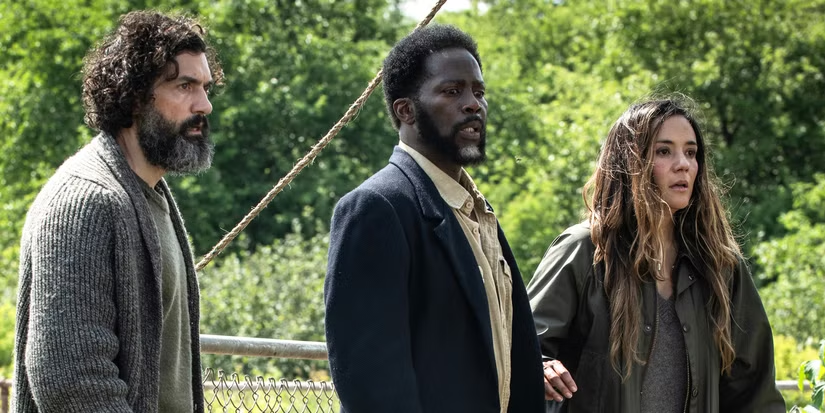
Viewers may have been left with many unanswered questions ahead of From‘s return with Season 4, but the MGM+ horror series doesn’t force anyone to wait long before picking up right where the story last left off. The premiere ends with the reveal that the seemingly innocent Sophia (Julia Doyle) is actually the Man in the Yellow Suit (Douglas E. Hughes) in disguise. In case that wasn’t heavy enough, Episode 2 provides the absolutely devastating confirmation of what happened to Jim (Eoin Bailey) after he was murdered in front of his daughter, Julie (Hannah Cheramy), despite her apparent efforts to prevent his death from occurring.
Episode 3, “Merrily We Go,” both acts as a breather of sorts — seriously, if anyone’s entitled to the catharsis of smashing up a bunch of cars at this point, it’s Fatima (Pegah Ghafoori) — and confirms how the town is picking up the pieces (or not) after Jim’s death. For Tabitha (Catalina Sandino Moreno), there’s very little time to grieve, especially since the loss of her husband serves as a greater confirmation that she and Jade (David Alpay) were getting much closer to the truth than the town’s evil wanted.
Ahead of Episode 3’s premiere, Collider had the opportunity to speak with Moreno about the show’s unique approach to filming some of Tabitha’s most heartbreaking moments, whether Tabitha shares Julie’s fears about their family’s presence in the town, why Tabitha doesn’t confess the truth to Henry (Robert Joy) about who she really is, and more.
COLLIDER: How did you prepare yourself for Episode 2, both in terms of the family’s discovery of Jim and the scene of Tabitha delivering that speech to him about taking care of their family?
CATALINA SANDINO MORENO: I don’t think you can prepare for that. Because I have played this character for many years, and my connection with both Eoin and Jim… he was the protector of the family, the one who was always trying to shield her, and not having him, it was like a death, saying goodbye to an old friend. That speech, I remember asking Jack [Bender] how he was going to shoot it, because usually we use two cameras, and Jack was like, “It’s just going to be one. We’re just going to push [in].” That gave me a lot of relief. He’s like, “Just do what feels right. You can move. Don’t feel restrained.” He gave me a lot of freedom to do that scene.
I remember as soon as I saw him lying there, it was a reminder of, “I don’t have my companion. I don’t have my friend. I don’t have the father of my children. And I keep losing!” She lost a child once, and now she’s losing the father of her kids. This is not a game. This is real life. Although they’re in this crazy monster world, this is her reality. It was just beautiful, and I couldn’t thank Jack more than I have for shooting that scene how he did. I think that moment was so precious and so honest, and it’s human. It’s what you do. You might fight with your partner, but at the end of the day, he’s the father of your children! You love him, and you’ve stuck together. You were in the shit together, and now he’s not there anymore.
I just felt that that was the highlight of my season — that, and another scene I have later on with Victor. That’s just so much of the realism of how you say goodbye to your best friend. How are you going to tell this to someone that you love and cared about? Those are the moments that I live for, basically.
‘From’s Catalina Sandino Moreno Reveals How Jim’s Death Sets Up Season 4’s Biggest Theme
“We’re dealing with a different monster now…”

As brutal as the discovery of Jim’s body is, does that confirm to Tabitha, “I’m on the right track here — if this town, if this place is willing to go after the people I love”? Is there a part of her that acknowledges that, even through her grief?
MORENO: Of course. Of course. I think that anger towards Jade, it’s like, “You figure shit out. It should be you. Poor Jim was trying to protect our children, protect me, and you have done all these things!” But that’s part of grief, and that’s part of pain, and that’s part of the desperation, that she doesn’t know what to do anymore.
But yes, knowledge in the town comes at a cost. Sarah’s brother said it early on — that when you push for answers in the town, the town is going to push back. We’re dealing with a different monster now, of how much are you going to push? Are you going to be scared to push and maybe just be here forever, or are you going to defy this town, knowing that it could be deadly? That’s a good premise for this whole season.
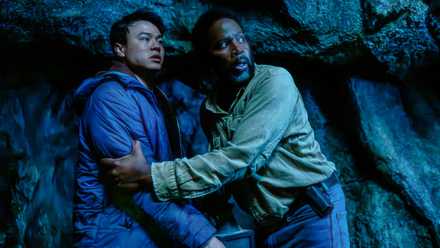
MGM+ Is Ending Its Best Horror Series After Season 5, but There’s a Catch
Will the townsfolk finally escape Fromville?
At the diner, Julie gets upset at something Sophia says to her off-screen, and then Tabitha and Julie have the moment where Julie is openly questioning whether their family is the reason bad things have happened. Has Tabitha been holding onto that same fear at all?
MORENO: No, I think she feels cursed ever since her child died. There’s that beautiful scene where she goes into the church and says, “Don’t talk about God, because I’ve prayed so much, and my child died.” I think she feels cursed from that moment on. I don’t think everything started because they arrived. I think things have been hitting the fan since before they arrived, but now that they’re here, and Jade is here, it’s like, “We didn’t come in by ourselves. We came with Jade.” I think that started to shift things and move things and push. There are deaths, of course, because we were pushing, and we’re looking for answers. But I think she felt cursed ever since her child died, way long before they arrived in town.
‘From’s Catalina Sandino Moreno Explains Why Tabitha and Henry’s Relationship Is So Complicated
“She still feels strange, knowing that she is the recreation of Miranda.”

I really liked seeing you having more scenes with Robert [Joy] in this episode, with Tabitha feeling driven to find the lighthouse again, and then Henry insists on going with her, despite her warnings. What do you enjoy about getting to develop that relationship, which has a lot of layers to it?
MORENO: I think it would be more if he knew at the time that she was Miranda, but he didn’t know when we were going to the bottle tree. She still feels strange, knowing that she is the recreation of Miranda. With Henry, ever since she went out of town and found him, it’s been a great connection, but Tabitha feels responsible for bringing him to the town. She was the one who caused the crash, and she was the one who was like, “This is a crazy town. You’re not going to believe the town,” and he believed her. And because he believed her, he’s in this hole with us. She feels very responsible for that. So it’s very respectful. I don’t know what next season is going to be like with Henry and Tabitha, but I feel it has to change now that we all know who she is.
Why do you think, in this episode, that Tabitha doesn’t confess the truth to Henry about who she really is?
MORENO: I think it was not the right time. We’re right in front of the bottle tree. He was telling me so many beautiful things about his wife and remembering her. I mean, if it took her a while to understand that she was Miranda, I couldn’t imagine someone who had a child with her to understand. “What do you mean, you’re Miranda?” I don’t think it was the right moment for her to deliver that information to him, right in front of the bottle tree, where she died.
New episodes of From Season 4 premiere Sundays on MGM+.
Valerie Bertinelli is opening up about her love life, revealing who joins her in bed these days.
At the Thursday, April 30, North Hollywood screening of her new film Love, Again, the actress, 66, addressed her private life while speaking to Pause Rewind on the red carpet. “2024 sucked the life out of me,” Bertinelli told the outlet, referring to her November 2024 split from ex-boyfriend Mike Goodnough. “I sleep with a black cat. That tells you everything you need to know about me, and I love that furry little 11 pounds.”
Bertinelli added that she says, “Hell, no” to the prospect of dating right now, noting that her cat, Batman, is the only companion she currently craves.
Bertinelli’s candid admission comes after she revealed in her recent memoir, Getting Naked: The Quiet Work of Becoming Perfectly Imperfect, released in March, that she retained love for her late ex-husband Eddie Van Halen following the duo’s split. (Bertinelli and Van Halen, who died at the age of 65 in 2020, were married from 1981 and separated in 2001 before their divorce was finalized six years later.)

Valerie Bertinelli has broken her silence on the end of her 10-month relationship with former boyfriend Mike Goodnough. “I am irreversibly changed by him for the better,” Bertinelli said of her ex in a post shared via Instagram on Monday, March 3. “I know I am becoming a much stronger and more benevolent human for […]
“We hurt each other’s feelings, but we always tried to do the right thing,” the Food Network star said of her marriage to the late musician, with whom she welcomed son Wolfgang Van Halen in 1991. “Even when we were angry, we stayed loving. It changed, evolved, and grew back different but stronger than it had been at the beginning of our relationship. It healed us.”


Once Bertinelli and Eddie’s divorce was finalized, Bertinelli went on to marry Tom Vitale in 2011. The former couple were married for 10 years before she filed for separation in 2021. Three years later, in March 2024, Bertinelli began dating Goodnough; however, the relationship dissolved by November.

Valerie Bertinelli has fallen head over heels for a new man she met online. “I’m in love,” Bertinelli, 63, told People magazine in an interview published on Monday, April 1. “It’s a seesaw of emotions because I was adamant I was never falling in love again.” The former Food Network host, who didn’t reveal her […]
In her memoir, Bertinelli stated that she “couldn’t crack the code of lasting love” over the years. “Romance has never been easy for me, never even sane,” she wrote. “It’s a messy math equation — love, marriage, divorce — and I’m terrible at math. Worse at marriage.”
Of her second marriage to Vitale, Bertinelli also revealed that its demise unfolded quite differently to that of her former union with Eddie. “How could I have continued to feel love for Ed after our divorce but have no feelings — neither good nor bad — for my second husband after fifteen years of togetherness?” Bertinelli wrote in her memoir. “Hopefully that will change over time. I can already feel myself softening. I’ve reached a point of indifference and grace, which is so much healthier than hanging on to anger.”
Jake Paul responded to his former Disney Channel costar Olivia Rodrigo mentioning him in her Saturday Night Live opening monologue.
During the Saturday, May 2, episode, Rodrigo, 23, spoke about starring in Disney’s Bizaardvark as a 13-year-old alongside Paul, now 29, telling the crowd that she and the boxer “always talked about our futures” together. She then joked, “I’d say, ‘I really wanna create music that explores the complexities of girls my age,’ and he’d say, ‘Well, one day I really wanna beat up old guys on Netflix.’”
Paul took to X the following day to address the comment, which referenced his 2024 Netflix boxing match against Mike Tyson. “We had the vision … I told you that you would sell stadiums out and then we both did … proud of you fr [for real],” Paul wrote.
The post attracted a fan reply, which noted, “I think he didn’t get that she laughed at him and not with him.” The fan comment sparked further reflection from Paul, who wrote, “I got that she was making a joke at my expense. So what. She’s on SNL and that’s what they are supposed to do.”

Olivia Rodrigo brought the laughs (and proved her style star status) when she made a surprise appearance in a Saturday Night Live sketch. The singer, 20, served as the musical guest for the Saturday, December 9, episode of the NBC sketch comedy series, while Adam Driver hosted. In addition to performing her songs “Vampire” and […]
Paul concluded, “Doesn’t change my admiration of her [Rodrigo] and her success.”
Rodrigo’s monologue had also poked fun at Paul’s acting ability. “When I was 13, I was on a Disney show called Bizaardvark, and we had an incredible cast which included acting legend Jake Paul,” the singer said, which drew laughter from the crowd.
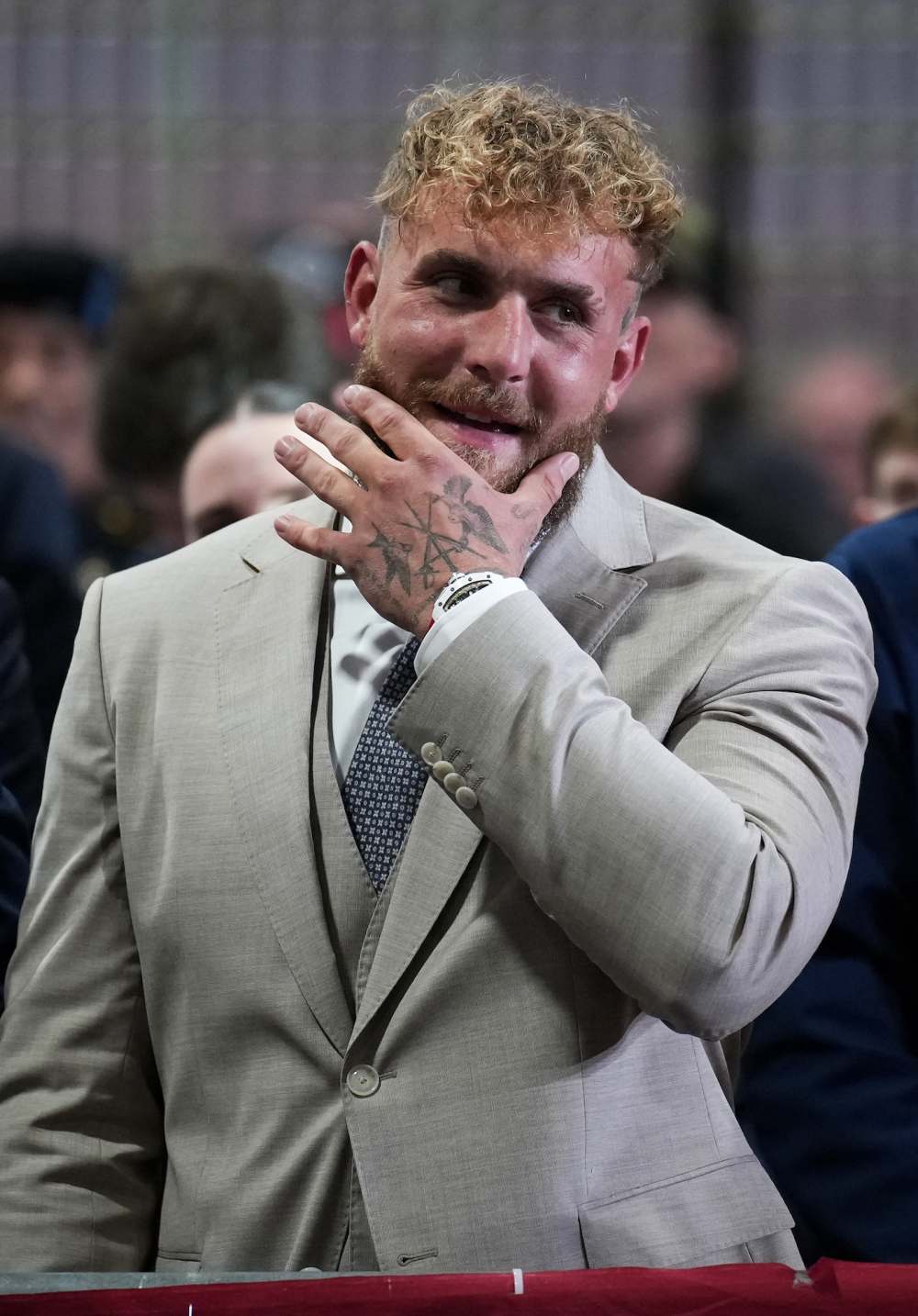
Jake Paul Andrew Harnik/Getty Images
Paul starred on Bizaardvark, which premiered in 2016 when he was 19 years old, for 18 months while Rodrigo worked on the show for its entire three-season run. Rodrigo portrayed one of the show’s main characters, Paige Olvera, while Paul served as a series regular named Dirk Mann.

Olivia Rodrigo Amy Sussman/Getty Images for Vanity Fair
Once Paul left the show, he focused on building his YouTube channel, which eventually evolved into a professional boxing career and a lead role in the reality TV series Paul American (the Max series, which followed Paul and his brother Logan Paul, wrapped season 1 in 2025, and a second season has not been confirmed).
Rodrigo, meanwhile, launched a successful singer-songwriting career that has earned her three Grammy Awards so far. (She took out Best New Artist, Best Pop Vocal Album for 2021’s Sour and Best Pop Solo Performance for “Drivers License” at the 2022 Grammy Awards.)
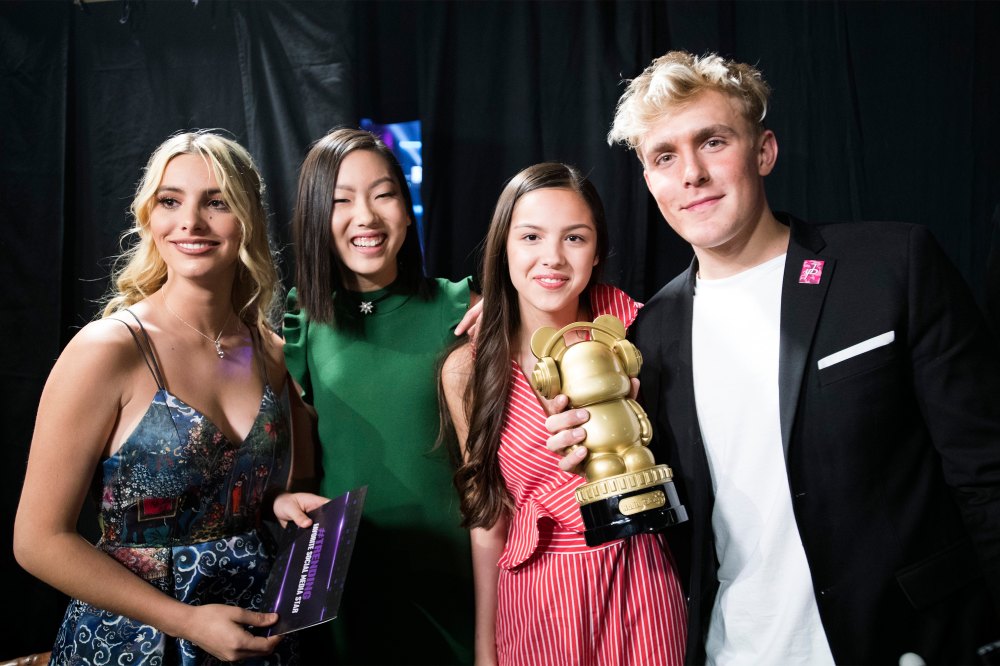
Disney stars in 2017: (l-r) Lele Pons, Madison Hu, Olivia Rodrigo and Jake Paul Image Group LA/Disney Channel via Getty Images
During Rodrigo’s SNL monologue, she reflected on the remarkable fame she has achieved. “A lot has changed for me since my first single ‘Drivers License,’ which was about the biggest event in my life when I was a teenager,” she detailed on the show just prior to performing a parody version of the single.
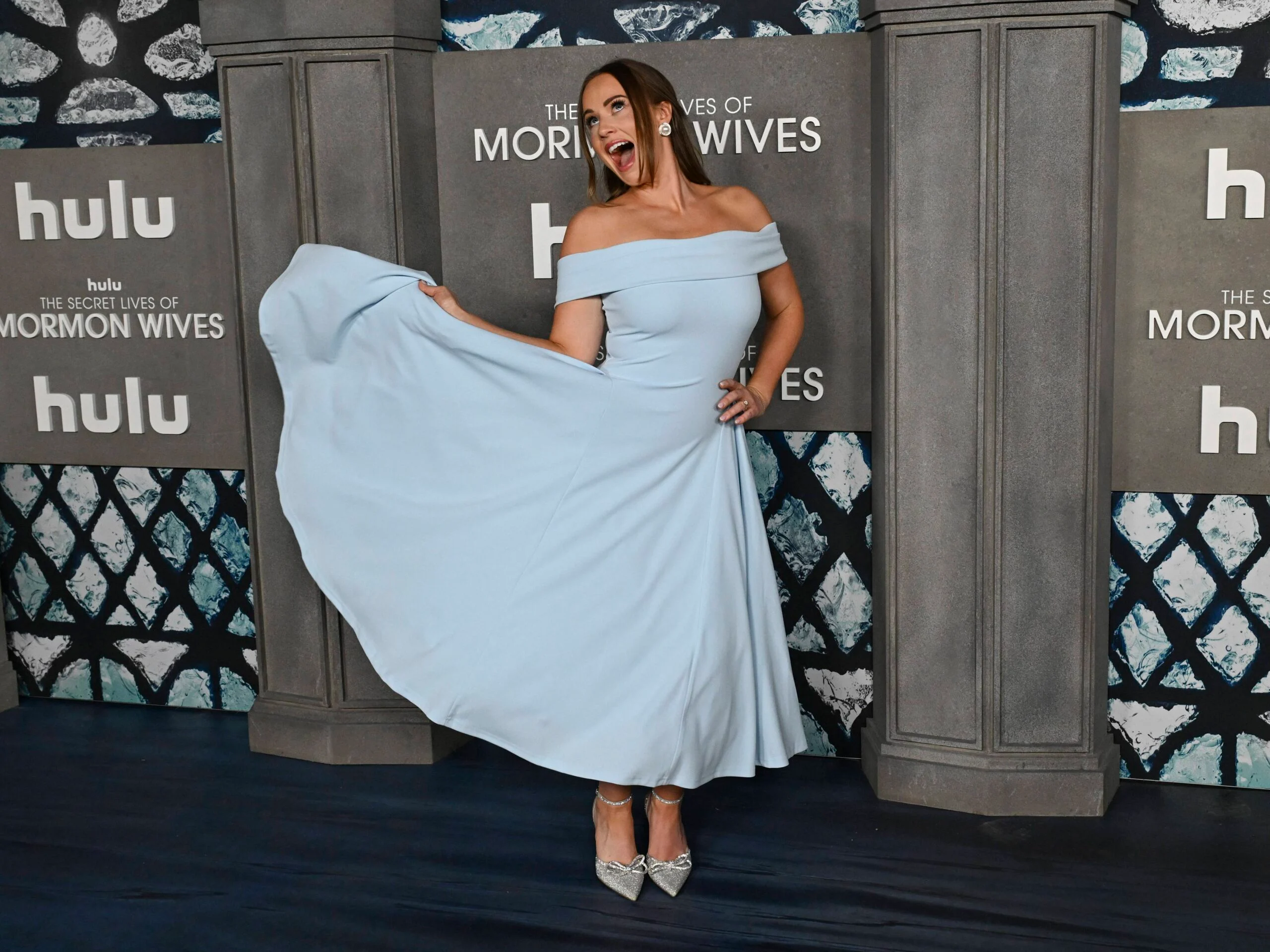
Whitney Leavitt has taken her final bow. During her last performance as Roxie Hart in the Broadway musical “Chicago,” the “Secret Lives of Mormon Wives” star also announced her sudden exit from the Hulu reality show. Leavitt’s departure comes after the mother of three skyrocketed to superstardom after starring in the latest season of “Dancing with the Stars,” where she placed 6th. While Leavitt’s departure from the series will shift the series’ dynamic, “SLOMW” fans are split over her decision.
According to TMZ, Leavitt revealed her fate on the “Secret Lives of Mormon Wives” during her final performance of her first Broadway production.
Video of the headline-making moment shows the red-head bombshell reading from a newspaper during a scene. “Oh, what is that?” her character, Hart, said in the video shared online. “Whitney Leavitt announces she’s leaving the ‘Secret Lives of Mormon Wives.’”
The audience burst into cheers, and some even applauded her. But how are the show’s viewers reacting on social media?
Whitney Leavitt Teased Her ‘SLOMW’ Exit Long Before She Made The Announcement

“SLOMW” fans likely saw the writing on the wall regarding Leavitt’s departure. According to a previous report from The Blast, Leavitt teased her exit in March 2026, revealing that she was actively planning for the future.
“Well, I’m figuring it out in real time,” she said. “We’re figuring it out together, but it feels like that’s the trajectory of where it’s going.”
While Leavitt was gearing up to say goodbye to the drama of “SLOMW,” she acknowledged the successes that being part of the cast has brought her.
“But again, I wouldn’t be where I am without it, but it feels like it’s time to challenge myself in other ways and fulfill these dreams and passions that I’ve been trying to get even before the show,” she shared.
‘SLOMW’ Is Going Back Into Production

Leavitt’s departure comes at an interesting time, as the production company recently resumed filming for season 5.
For those who may be unfamiliar, production was halted after it was revealed that the show’s lead, Taylor Frankie Paul, had been in another alleged domestic dispute with her ex-boyfriend, Dakota Mortensen.
Shocking video of an altercation from 2023 was later shared online, showing Paul appearing to strike Mortensen before launching heavy, metal chairs at him.
Leavitt broke her silence on the matter in a sit-down with Interview Magazine, admitting she was overcome with “a lot of emotions” before shifting her focus.
“I’m still processing everything that’s happening, but the safety of human beings, especially children, comes first. Always, period, the end,” Leavitt said. “And I don’t want that to be tolerated. I don’t want that to be overlooked.”
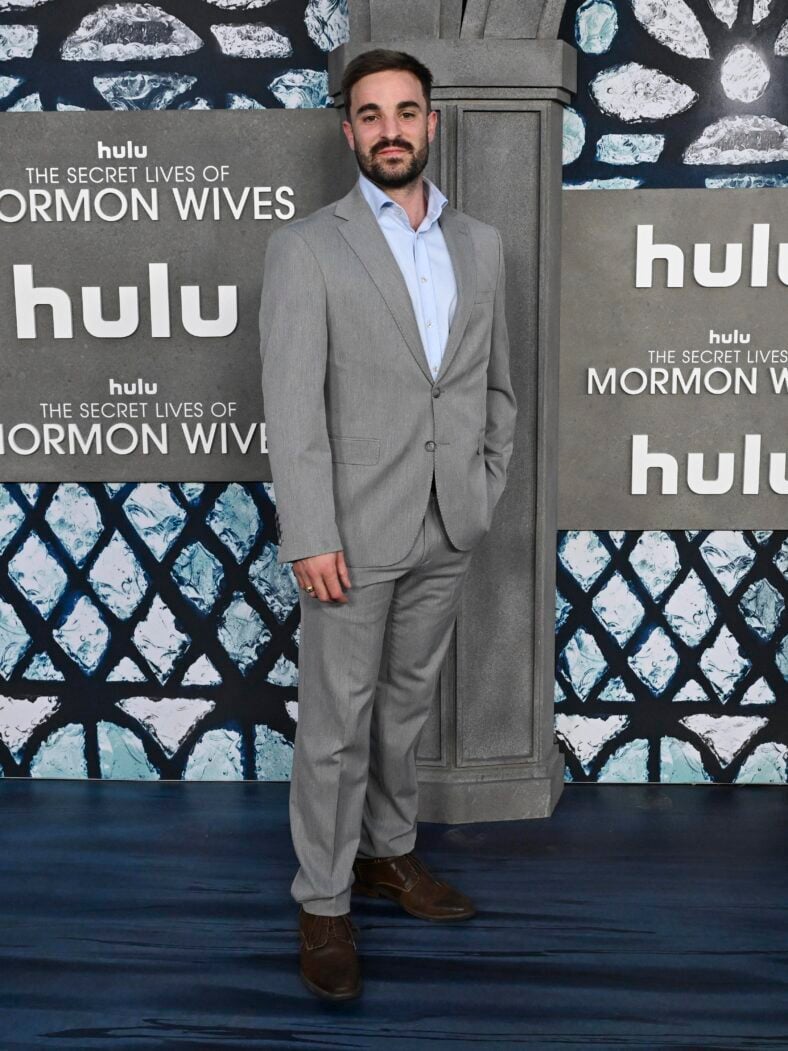
As Leavitt takes a break from Broadway, her husband, Conner, is preparing to make his debut. According to The Blast, the professional Instagram user and magician is joining the cast of the street-dance show, “11 to Midnight.”
“I’m so grateful for the opportunity to join the cast of 11 to Midnight and be a part of such a special, unique theater experience here in New York,” Conner said.
The show, created by viral dance duo Cost n’ Mayer, follows a group of people and takes place overnight at a New Year’s Eve party in New York City.
The off-Broadway production will be Conner Leavitt’s first, and he credited his wife for pushing him outside of his comfort zone.
“11 to Midnight” closes on Sunday, May 31.

Cardi B is showing support to Megan Thee Stallion after the “Body” rapper finished her run in the Broadway musical “Moulin Rouge!” In a new statement, Cardi B also expressed her hopes for her rap sister after the sister announced her messy split from NBA champion Klay Thompson.

For those who may be unfamiliar, Megan Thee Stallion snagged a role in the Broadway musical, “Moulin Rouge!” at the beginning of 2026 and wrapped her run on May 1.
Cardi B showed her support for the superstar rapper, attending the last show and praising her skills to the public.
“I went to see Meg at Broadway, it was so, so, so good,” Cardi B said, according to Complex. “Megan looked amazing, and she did amazing.”
The love didn’t stop there. Cardi B opened up about the experience before revealing her hopes for Megan Thee Stallion.
“It was so fun… I was liking the storyline,” she said. “I hope she does it again.”
Megan Thee Stallion Cried On The Broadway Stage

According to The Blast, Megan Thee Stallion actually concluded her run in “Moulin Rouge!” earlier than expected. Her sudden departure from the series came after she was spotted crying on stage hours after announcing her split from Thompson in April 2026.
Before the tears, Megan was ecstatic about stepping out of her comfort zone and adding to her resume.
“Stepping onto the Broadway stage and joining the Moulin Rouge! The Musical team is an absolute honor,” she said. “I’ve always believed in pushing myself creatively and theater is definitely a new opportunity that I’m excited to embrace. Broadway demands a different level of discipline, preparation and storytelling, but I’m up for the challenge and can’t wait for the Hotties to see a new side of me.”
Megan Thee Stallion Slammed Thompson On Instagram, Accused Him Of Cheating On Her

Megan Thee Stallion made headlines in late April when she blasted her ex-boyfriend, Thompson, on Instagram, accusing him of being unfaithful to her.
“Cheating, had me around your whole family playing house… got ‘cold feet,’” she wrote online, according to The Blast. “Holding you down through all your HORRIBLE mood swings and treatment towards me during your basketball season, now you don’t know if you can be ‘monogamous????’”
While it’s unclear what else might’ve occurred between Megan Thee Stallion and Thompson, the former said she wasn’t interested in half-effort relationships.
“Trust, fidelity and respect are non-negotiable for me in a relationship, and when those values are compromised, there’s no real path forward. I’m taking this time to prioritize myself and move ahead with peace and clarity,” she said.
Cardi B Has Had Her Own Relationship Struggles
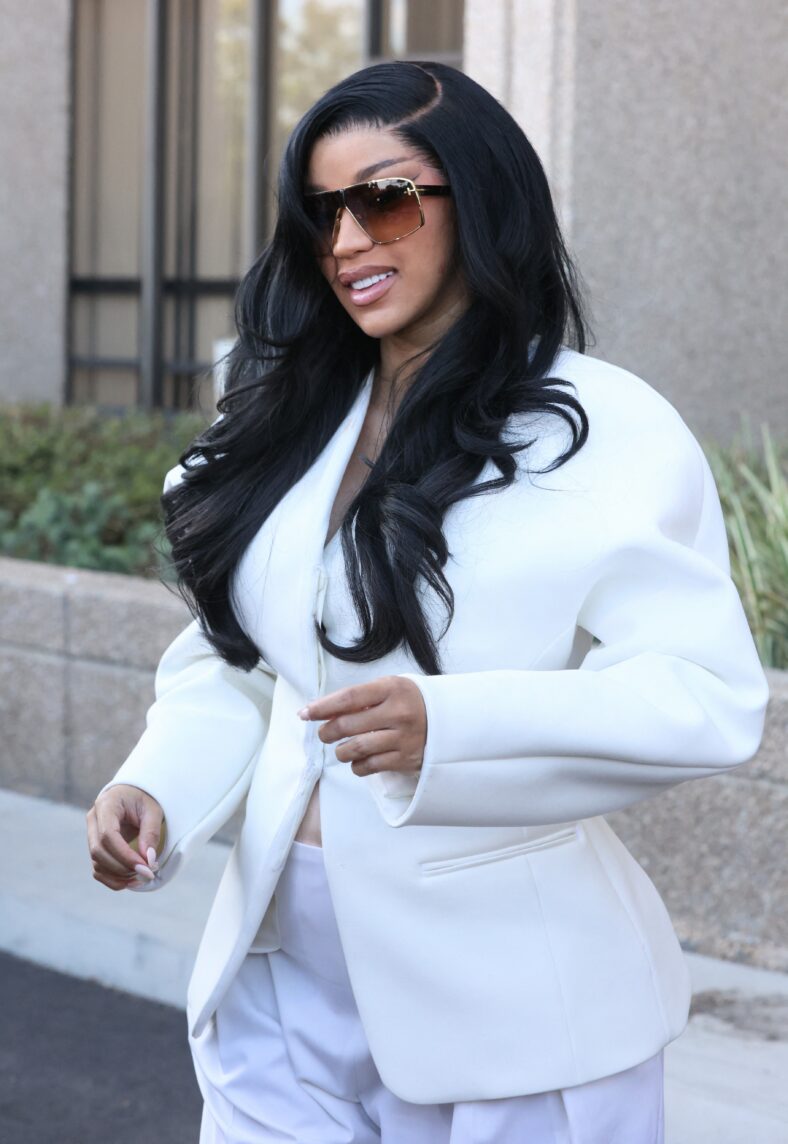
Cardi B knows a thing or two about challenging relationships, as the “Hello” rapper has spoken candidly about the downfall of her marriage to rapper Offset.
Over the years, the pair have aired each other’s dirty laundry out, with Cardi B accusing the Migos performer of not only cheating on her, but also harassing her.
During a previous interview with Rolling Stone, Cardi B said she and Offset are two different people from different worlds.
“Sometimes I cannot be … not that I cannot be a wife. It’s just like, my career takes my life. You know what I’m saying? My career comes first, then my kids come second. And then sometimes I don’t realize that I’m putting so many things before my relationship,” she said.
Cardi B Claims Offset Tried To Sabotage One Of Her Relationships
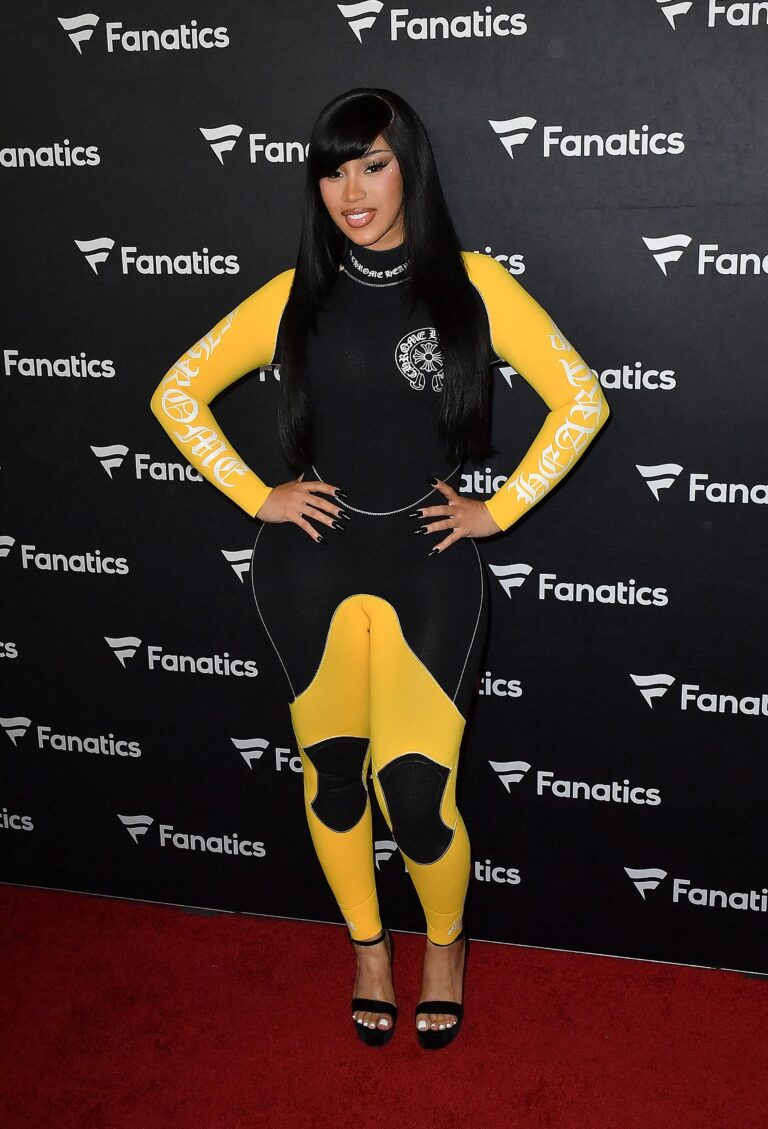
During an X Live Spaces, according to PEOPLE, Cardi B also got real about the alleged mistreatment she’s endured.
“Every time he knows that I go out of town, he harasses me,” Cardi B said, claiming her ex would send her “voice notes” attempting to crush her self-esteem. “I’m so tired of it,” she said.
At another point during the livestream, Cardi B accused Offset of interfering in her romantic relationships with other people.
“Mind you, he sent text messages to somebody I was dealing with of videos of me and him having sex. That’s the kind of s— that I was dealing with for the past two months,” she claimed.

The angriest couple on television is just a few weeks away from returning to us, which is great news for anyone who enjoys some romance, black eyes, broken legs, torture, trauma, threats, dumping bodies in the middle of nowhere, and cowboy hats. Who doesn’t love a smorgasbord of Taylor Sheridan‘s finest wares? Now, after years of Yellowstone fans wondering what would happen next, the franchise’s biggest swing is almost here.
But it isn’t just a sequel to the events of Yellowstone‘s bloody finale. Oh no, this one moves the action down to Texas, putting Kelly Reilly and Cole Hauser‘s Beth and Rip on a collision course with some new enemies and incredible sunsets. Dutton Ranch will premiere globally on Paramount+ on Friday, May 15, launching with its first two episodes. The series will also air on Paramount Network beginning May 15 at 8 p.m. ET/PT, before continuing weekly. The first season will run for nine episodes, with new episodes rolling out every Friday after the two-part premiere. The official synopsis reads:
“As Beth and Rip fight to build a future together — far from the ghosts of Yellowstone — they collide with brutal new realities and a ruthless rival ranch that will stop at nothing to protect its empire. In South Texas, blood runs deeper, forgiveness is fleeting, and the cost of survival might just be your soul.”
Who Stars in ‘Dutton Ranch’?
The cast of Dutton Ranch also includes Finn Little (Those Who Wish Me Dead, Storm Boy) as Carter, Juan Pablo Raba (Narcos, The 33) as Joaquin, Jai Courtney (Suicide Squad, Terminator Genisys) as Rob-Will, J.R. Villarreal (Akeelah and the Bee, Ultra Violet & Black Scorpion) as Azul, Marc Menchaca (Ozark, The Outsider) as Zachariah, Natalie Alyn Lind (The Gifted, Big Sky) as Oreana, Ed Harris (The Truman Show, Apollo 13) as Everett McKinney, and Annette Bening (American Beauty, Nyad) as Beulah Jackson.
The series is created by Chad Feehan, based on characters created by Taylor Sheridan and John Linson. Feehan also serves as showrunner, while Christina Alexandra Voros directs multiple episodes, including the premiere and finale. Voros is already deep in Sheridan country, having directed all six episodes of The Madison, which was initially announced as another Yellowstone spin-off before it was later revealed as a standalone project ahead of its next two seasons.
Dutton Ranch premieres May 15 on Paramount+ with a two-episode launch, and airs the same night on Paramount Network at 8 p.m. ET/PT.

- Release Date
-
May 15, 2026
- Network
-
Paramount+
- Showrunner
-
Chad Feehan
Entertainment
2012’s Franchise-Starting Sci-Fi Classic Tops American Streaming Charts Ahead of Theatrical Return
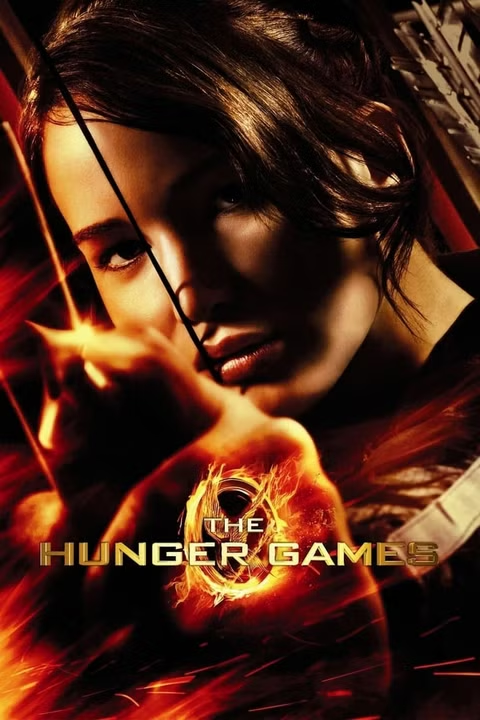
The Hunger Games is slowly becoming one of the most enduring cinema franchises of the 21st century. Later this year, on November 20, the latest installment will hit theaters and, despite being 14 years since the first movie debuted, the excitement for the franchise has yet to pass. The Hunger Games: Sunrise on the Reaping, a prequel set 24 years before Jennifer Lawrence’s Katniss Everdeen first volunteered as tribute, will adapt Suzanne Collins’ 2025 novel of the same name, with the latest trailer promising yet another pulse-racing theatrical experience.
The next Hunger Games movie is directed by Francis Lawrence, written by Billy Ray, and will feature a typically star-studded cast. Led by Joseph Zada as a young Haymitch Abernathy, the film also features Ralph Fiennes as President Coriolanus Snow, Jesse Plemons as Plutarch Heavensbee, Elle Fanning as Effie Trinket, Kieran Culkin as Caesar Flickerman, Mckenna Grace as Maysilee Donner, Ben Wang as Wyatt Callow, Maya Hawke as Wiress, Kelvin Harrison Jr. as Beetee Latier, Lili Taylor as Mags Flanagan, and more. Not only that, but it was also confirmed that original stars Lawrence and Josh Hutcherson will be reprising their roles in some capacity.
Speaking of the original stars, fans have been getting into the Sunrise on the Reaping mood by heading back to where it all began. At the time of writing, 2012’s The Hunger Games is one of the ten most-streamed movies on AMC+ in the U.S., as per FlixPatrol. Between the first and this upcoming latest entry in the franchise, there have been four movies: The Hunger Games: Catching Fire, Mockingjay – Part 1, Mockingjay – Part 2, and The Ballad of Songbirds and Snakes.
How Much Did ‘The Hunger Games’ Gross at the Box Office?
In total, The Hunger Games franchise has made over $3.3 billion in total global revenue across five films to date, with there being a strong chance this will cross the $4 billion boundary after the release of Sunrise on the Reaping. But how much of this came from the first installment? Against a reported production budget of $80 million, The Hunger Games became one of the highest-grossing movies of 2012, earning a global total of $678 million, split between a domestic haul of $408 million and a further $270 million from overseas markets.
The Hunger Games is a streaming hit on AMC+. Stay tuned to Collider for more streaming stories.

- Release Date
-
March 23, 2012
- Runtime
-
142 minutes
- Director
-
Gary Ross
- Writers
-
Billy Ray, Gary Ross, Suzanne Collins

Business33 seconds ago
Wendy Hopkins Family Law Practice marks 30 years as it continues to expand

Crypto World53 seconds ago
OpenAI Secures $4B in Funding to Launch Enterprise-Focused AI Deployment Firm

Entertainment3 minutes ago
Skai Jackson Responds To AI Baklash After Viral Snapchat Photos

NewsBeat1 month ago
Manchester United reach agreement with Casemiro over contract clause amid transfer speculation

Politics3 weeks ago
US brings back mandatory military draft registration

NewsBeat1 month ago
Steven Gerrard disagrees with Gary Neville over ‘shock’ Chelsea and Arsenal claim | Football


-

 Tech7 days ago
Register Renaming | Hackaday
-

 Politics7 days ago
Drax board avoid their own AGM, accused of greenwashing & environmental racism
-

 Fashion6 days ago
Kylie Jenner’s KHY Enters a New Era with ‘Born in LA’
-

 NewsBeat20 hours ago
Channel 5 – All Creatures Great and Small series 7 new post
-

 Tech7 days ago
Images of Samsung’s rumored smart glasses have leaked
-
 Tech3 days ago
Trump’s 25% EU auto tariff breaches Turnberry Agreement that also covers semiconductors and digital trade
-

 Business6 days ago
Most Commercial Energy Audits Miss the Real Losses
-

 Crypto World6 days ago
CFTC’s AI will review U.S. crypto registration applications, chairman tells CoinDesk
-
 Sports3 days ago
Paul Scholes issues Marcus Rashford reality check as agreement emerges over Man United star
-

 Business5 days ago
Barclay Brothers Avoid Bankruptcy: HSBC Drops High Court Petitions After IVA Deal
-
 Business5 days ago
Tesla Officially Registers Elon Musk’s Stock: What Investors Need to Know
-

 Tech6 days ago
Get Ready for More Brain-Scanning Consumer Gadgets
-
Crypto World6 days ago
Robinhood Phishing Scam Exploits Gmail Dot Feature to Bypass Security
-

 Entertainment7 days ago
Sister Wives: Janelle Posts New Scary Warning
-

 Crypto World6 days ago
Gmail Dot Trick Underpins Robinhood Phishing, Sending Real-Looking Emails
-

 Entertainment7 days ago
Michael Jackson’s Biopic Excluded Abuse Allegations For $25M
-

 Business4 days ago
Two Powerball Tickets Split $143 Million Jackpot in Indiana and Kansas
-
 Business7 days ago
Superdry co-founder accused of raping woman
-

 Crypto World7 days ago
Meme Coin Based on White House Shooter Conspiracy Rallies 320%
-
Entertainment7 days ago
5 Movies Turning 20 That We’d Rather Forget About
You must be logged in to post a comment Login