

Business
E15 debate gains traction as fuel costs rise





Homes in Rancho Cucamonga, California, US, on Saturday, May 9, 2026.
Kyle Grillot | Bloomberg | Getty Images
More frustrated home sellers were giving up, right in the midst of the all-important spring market, according to new data.
Nationwide, 5.8% of all home listings were pulled off the market in April, according to Redfin, a real estate brokerage. That ties with December for the highest share of homes delisted since March 2020, when the pandemic hit and the housing market froze. Delistings in April were up 3.8% compared with March.
The increase comes as higher mortgage rates, elevated gas prices and weaker consumer confidence take their toll on housing demand. Sellers are no longer in the driver’s seat and aren’t getting the prices they want.
Atlanta saw the highest share of homes come off the market in April, with 1 in 10 delisted. San Jose, California, followed with roughly 9% pulled, then Los Angeles (7.8%), Dallas (7.8%) and Seattle (7.7%).
Mortgage rates had been falling at the start of this year, with the 30-year fixed briefly touching the 5% range at the end of February, according to Mortgage News Daily. They then jumped sharply when the war with Iran started and have remained elevated since then.
“Buyers know they have negotiating power, often offering under the asking price and completing inspections, but some sellers just won’t budge,” said Patricia Ammann, a Redfin agent, in a release.
Home prices have been easing, but are still higher than they were a year ago and have even begun to strengthen more recently.
“Markets that depend more heavily on traditional mortgage financing and rate-sensitive buyers are seeing prices stay relatively flat,” said Selma Hepp, chief economist at Cotality, in a release. “Overall, fewer markets posted year-over-year price declines in April than in prior months, pointing to continued stabilization across the housing market.”
Signed contracts on existing homes, so-called pending sales, did rise very slightly in April, up 1.4% from March, according to the National Association of Realtors. That is likely due to higher inventory, which was up nearly 6% from March.
Listings in some parts of the country are starting to pile up, as new ones come on the market and other ones sit. Homes are sitting on the market longer, causing some buyers to simply give up as the all-important spring season draws to a close.
Some homeowners who pulled their homes off the market over the past year relisted them in April, according to Redfin, hoping to take advantage of the spring market, despite higher mortgage rates. The report found 2.5% of the homes on the market in April were relistings, tied with the prior two months for the highest share since mid-2020 when there was a sudden surge in housing demand.
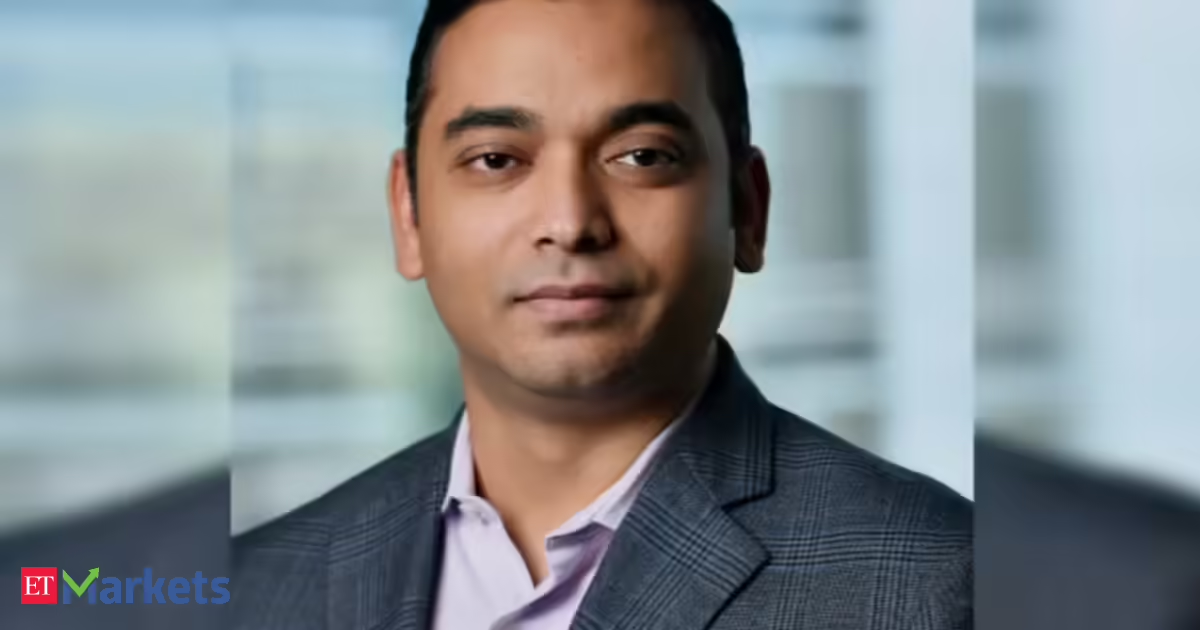
In this context, a balanced approach that combines home market familiarity with global exposure is becoming increasingly relevant. Speaking to Kshitij Anand of ETMarkets, Subho Moulik, Founder and CEO of Appreciate, explains why a 70:30 India–global portfolio can help investors improve risk adjusted returns, reduce concentration risk, and participate in the world’s most powerful long term growth trends in a rapidly changing global landscape.
Kshitij Anand: If you look at the data for 2025, the Nifty delivered around 10%, while US markets were well ahead with returns of about 16%. Do you think some Indian investors may have felt they missed the rally? And if you look at returns in dollar terms, which are slightly worse for Indian investors, what are your views on that?
Subho Moulik: If you are an Indian investor with no diversification, you essentially saw your portfolio go up by about 10%, while the US market delivered almost double that when you include currency, roughly around 22%. The rise in US portfolios is not a one year story. If you look at the past few years, they have been bumper years for US investors.For full disclosure, my portfolio is about 70 to 80% global and around 20% India. And of course, we are in the business of democratising global investing, so I do have a bias. But if you look at the numbers, it is a very rational decision for Indian investors to allocate money not just to India, but also globally.

On timing, I think there is still plenty of room left in the rally. Historically, the average bull market since World War II lasted about seven to eight years. There have also been bull markets that ran for as long as 15 to 16 years. The current bull market is well short of those durations. No one knows when a bull market will end. Anyone who claims they do, well, best of luck to them. I certainly do not know. But if you look at historical averages and current fundamentals, there should still be room for this bull market to continue.So, I do not think timing is the issue. The real question is about themes. What are you investing in, and why you did not diversify earlier. Let me ask you a question. We are all aware of the Nifty 50. If I told you the Nifty 50 exists, but you can only invest in two Nifty 50 stocks for the rest of your life, how would you react?
Kshitij Anand: In that case, I think that may have worked two decades ago, but things are changing now. No company survives indefinitely, and even within the Nifty 50 there is constant churn. If I take your point, yes, if I pick a Nifty 50 stock today, there is always a possibility it may not be part of the index six months down the line.
Subho Moulik: Exactly. If someone told you there are 50 stocks, but you can only invest in two, your first reaction would be why would I only invest in two stocks? You would want more choice. This ties back to the point you made earlier. India is a very important market from a future perspective, but it still represents only about 4%, or even less, of the global market. Therefore, as an investor, the rational choice is to think about diversification. How to allocate capital in a way that improves returns while reducing overall risk. That is what investors should be doing.
I do not think timing is an issue at all. In fact, if there is a sudden crash, say something completely unexpected happens in the next month and markets correct sharply, that would be a fabulous time to buy.
Kshitij Anand: Absolutely. We have seen that happen multiple times in the past.
Subho Moulik: Exactly.
Kshitij Anand: In fact, there is another dilemma Indian investors might be facing. In terms of GDP growth, India is likely to deliver around 7% in 2026–27, while global growth is expected to be around 2.5 to 3%. However, the scale of the economy differs significantly between the US and India, and even a 2.5 to 3% growth rate for the US is considered quite strong. Still, many Indian investors tend to focus on the headline numbers, 7% versus 3%. Could you help investors understand how to translate this into portfolio decisions, especially when investing abroad?
Subho Moulik: I will address that. This comparison is a fallacy, a red herring, and I will explain why. When you invest in the US, you are not investing only in US focused or US centric companies. Let us take an example from beverages. Whether or not you believe that the beverage market in India will grow rapidly, let us assume for a moment that it grows in line with GDP. It is a mass consumer segment and should broadly follow the economic cycle. Now, who do you think benefits from the growth of India’s beverage industry?
Kshitij Anand: US companies.
Subho Moulik: Coca Cola and Pepsi.
Kshitij Anand: Pepsi, and they are all US based companies.
Subho Moulik: Exactly. They are all based in the US. So, when you invest in US stocks, you are not necessarily investing in the US economy. Today, most global multinationals are listed in the US, and therefore, investing in US markets is effectively a bet on global growth.
What investors should increasingly think about is which sectors to invest in and where the global leaders in those sectors are located. To continue with the beverage example, if you believe beverages are a compelling investment theme, the global leaders in that space are listed in the US. If we move to a more realistic example, the leaders in semiconductors, companies like Nvidia, are also listed in the US. The leaders in genetics are largely in the US as well, with some presence in Europe and China. In defence, the dominant players are again largely US based. In emerging areas like quantum computing, which could become as exciting as, or even more exciting than, AI, there is once again a strong presence in the US and China.
So, while India has strong growth prospects, as an investor you already carry significant home country risk. You live in India, your home is in India, and your job is in India. From a portfolio perspective, diversification is important so that if something goes wrong domestically, at least part of your investments is insulated.
Another important point is how different markets react to shocks. Twenty years ago, if the US market moved up by a certain amount, India would usually follow. Over time, the correlation between the two markets has been declining, and we expect this trend to continue. That actually increases the benefits of diversification.
Finally, there is also the comfort of investing in markets where the rule of law is well established and investors have confidence in capital protection and repatriation. So, the real question is not about 2% GDP growth versus 7% GDP growth. The real question is where are the pockets of the highest growth in the world, and how can investors access them?
Kshitij Anand: Absolutely. In fact, I recall the saying: if the US sneezes, India catches a cold. If you correlate that here, earlier any movement in the US used to impact India. That has not been true recently because much of the rally has been driven by DIIs rather than FIIs. FIIs have taken a bit of a backseat, and DIIs are running the show. But yes, if you go back five to seven years, you could definitely say that if the US sneezed, India caught a cold. So, when you talk about the bull run and say there is plenty of room left, can we say the party continues on Wall Street as well, and not just on Dalal Street?
Subho Moulik: If you look at the current US bull run, there are a couple of common fears. One is that a large portion of returns has been concentrated in seven, eight or ten stocks; second, that forward earnings multiples are at all-time highs, making the market look bubbly and frothy; and third, that this is all speculation and will come crashing down. Let me address these one by one.
I do not think the data supports the view that the US market is becoming more concentrated. On a relative basis, if you look at gains over the last three years, 2025 was the lowest in terms of concentration. The Magnificent Seven contributed about 55% of gains in 2023 and around 42% in 2025, which shows a declining trend. You may still ask why seven stocks contribute around 40% of gains, but that is because these companies are expected to drive disproportionate disruption through what they are doing.
The second concern is about valuations. The S&P 500 is trading at around 22x forward earnings, while the Magnificent Seven trade at about 29–30x forward PE. The historical peak has been closer to 40x, so we are still below those levels. Another important point is that a few years ago, small caps—represented by the Russell 2000—were not delivering returns. That has now changed, and the Russell 2000 has delivered reasonable returns. It typically underperforms the S&P 500 slightly and does not suffer from the same concentration issues.
So, I think economic performance is much more broad-based than what headlines suggest. Clickbait headlines are easy to consume, but deeper analysis often gets missed. That does not mean returns are perfectly democratic across all 5,000 stocks, but around 500–600 companies are delivering returns. Unlike episodes such as the Tulip bubble or the dot-com bubble, there are real earnings backing this rally. One can debate the quality of earnings or whether there is circularity among a few players, but these are real earnings driven by disruptive technology, particularly AI.
If you look at what is emerging—the combination of quantum computing, expanding AI use cases, and even progress towards viable fusion energy—each of these reinforces the other. There is an energy challenge, a computing power challenge, and a question of how quickly AI use cases can become real. As these factors interact, a very interesting virtuous cycle could emerge, though it may or may not play out.
Because of this, I am less worried about an imminent collapse of the bull run. Even if the bull market ends due to a black swan event—say China invades Taiwan, another pandemic emerges, or some other unforeseen crisis occurs—markets will crash. No one predicted COVID before it happened. Black swans are, by definition, unpredictable.
But even in such scenarios, the right approach is to buy the dip. Dumb money buys at the peak; smart money buys on corrections. If you are fortunate enough to have cash during a market crash, invest it. A 25% correction is a good opportunity. Do not try to time the exact bottom—buy the dip.
Kshitij Anand: Another fear in the minds of Indian investors is currency risk. We have just touched 90 against the US dollar and are hovering around that level. There are headlines asking whether we are heading towards 95 or even 100. How should investors think about this?
Subho Moulik: It is very hard to fight basic economics. There will continue to be an inflation differential for some time. Even when the US was concerned about inflation, it was around 4%. The Fed will continue to focus on keeping inflation in check. India’s inflation is likely to remain higher, and as long as there is an inflation differential—and therefore an interest rate differential—I do not see the currency moving in any direction other than gradual depreciation.
If there were a structural economic shift where inflation and interest rate differentials reversed, then currencies would move the other way. I do not think that is likely over the next decade, though I could be wrong. Over the past three decades, the pattern has been consistent, and the next decade is likely to follow a similar trend. A 3–5% annual currency depreciation is quite plausible.
This is why I keep coming back to the point of diversification. Do not limit yourself to a narrow set of choices. Of course, back your own economy—you understand it well and there are many good opportunities in India—but do not put all your eggs in one basket. Diversify.
Diversification also gives you access to sectors that simply do not exist in India, not because there is anything wrong with India, but because markets develop differently. Whether it is AI, defence, genetics, rare earths, or exposure to regions like Latin America, there are many themes where India has limited or no exposure. I can name 40 such themes.
By diversifying globally, you get exposure to the themes you believe in and also reduce the impact of currency depreciation. If you look at historical data over the past 20 years, a simple allocation of 70% India and 30% global equities—pure equity, not debt—would have outperformed either market individually. That is because of better risk-adjusted returns and lower correlation. When one market suffers a shock, the portfolio holds up better.
The reasons to diversify keep piling up. The biggest hurdle is inertia.
Kshitij Anand: And the first step is to start doing it.
Subho Moulik: Exactly. Start doing it. Kshitij, what is your global exposure?
Kshitij Anand: My global exposure; well, it is not that much.
Subho Moulik: So, less than 10%?
Kshitij Anand: Absolutely, less than 10%.
Subho Moulik: Then you need to move closer to 30%. After this, we can talk about how to do that. If you look at the average Indian investor’s portfolio—say, someone invested in Indian mutual funds or stocks—the average international exposure is probably less than 1%. So, there is a massive opportunity simply to reach a basic level of diversification.
Kshitij Anand: One point you mentioned earlier was the concentration of the rally. Another concern Indian investors often have is the lack of research available beyond the Magnificent Seven. How can investors address this gap and gain confidence to invest in US small and mid caps, especially when even Indian markets sometimes lack adequate data?
Subho Moulik: I have three responses to that. First—and I will briefly plug what we do, since it is relevant—if you use an app that specialises in global stocks, like Appreciate, you get access to analyst ratings such as buy and sell calls, consensus views, financial ratio snapshots, and stock-specific news and perspectives. The US is a data-rich market. If you go to the right partner, app or platform—and we are one of the leading providers of global stock access—there is a wealth of information available, much more than in India, because the market is more mature.
Second, before you start actively trading, it is better to begin with broad-based bets. For example, you could invest in an index like the S&P 500 or take sector-level exposure. Before saying, “I have enough conviction to buy stock X and sell stock Y,” it makes sense to start with index or sectoral investments, which are easier to understand and form a view on.
Third, and this is something we plan to launch in the coming financial year, is AI-based investing advice and automated transactions. We are building a research engine with zero human analysts—completely AI-driven—that pulls insights from anywhere between 5 and 32 sources, monitors markets 24×7 (often in real time), distils that information, and provides recommendations that can be executed automatically. Investors can opt into such a plan, monitor performance, and continue only if they are comfortable. This is entirely optional. We believe we will be among the first Indian players to offer truly AI-based portfolios, and this will increasingly become another avenue for investors.
So, there are multiple ways for people to educate themselves. You can take a highly sophisticated route or a simpler one, but lack of information should not be a barrier.
Kshitij Anand: That is a smart approach, because lack of information and apprehension about where to start often keeps investors away. Most people only know a handful of global companies; Pepsi, Coke, as you mentioned, or the Magnificent Seven. Beyond that, unless a company makes headlines in Reuters or other global media, it tends to stay off the radar. It is good that you mentioned AI, because my next question is about that. Has the AI story moved from narrative to earnings?
Subho Moulik: Let us break the AI story into three parts: the infrastructure required for AI, general-purpose use cases, and AGI, or artificial general intelligence. The infrastructure story is very real. Data centre build-outs, energy consumption, and chip manufacturing are all happening at scale. Right now, this infrastructure is being built to support use-case development, and as those use cases see wider adoption, usage will increase, further driving infrastructure demand. Most of the earnings-driven value creation so far has been on the infrastructure side.
In terms of use cases, some are already seeing broad adoption, especially content-related applications. For example, AI-generated videos and creative content are becoming mainstream, and creative companies are increasingly exploring how to use these tools. As a small example, a large portion of advertising content today is already AI-generated.
Then there is AGI, which depending on who you listen to, is either imminent within the next five years, far away, or imminent but manageable. The debate there is more about governance and safeguards. Markets are not really pricing this in yet, because it is almost impossible to predict the timeline or outcomes.
So, there is a fair amount of reality in the AI story. The key question is whether a quarter of weaker-than-expected performance, due to slower scaling of use cases or a temporary dip in infrastructure demand, derails the theme, or whether investors look through it, recognising that this is a long-term, disruptive technology. In my view, AI is here to stay.
Kshitij Anand: AI is here to stay, that is…
Subho Moulik: AI is here to stay. Now, what form it will take, I do not know. I think we will see various avatars, no pun intended, over the next 2, 3, 5, 7 or even 10 years. If you think about it logically, and I may sound a bit philosophical here, if we take the idea of diversification and apply it to humanity as a planet, our best bet is to diversify onto other planets. I do not think we get there without some level of AI in space and related technologies. So, there are multiple reasons why I see AI continuing to evolve.
Another area where AI is clearly here to stay is defence. It is a genie that has been let out of the bottle and is not going back in. We are likely to see more autonomous systems and weapons of various kinds, and there is no reversing that trend. So, space and defence are other key use cases—some driven by utilitarian or altruistic motives, and others, quite frankly, driven by the objective of maximising efficiency in warfare because that is where money is made.
Kshitij Anand: You mentioned Elon Musk, and his companies have also diversified into India—Tesla is now in India. And in fact, most US companies are diversified not just into India but across the globe. That is really the core point. That is what makes them special, and that is why investing in US markets is not just a bet on the US, but on global growth.
Subho Moulik: That is right.
Kshitij Anand: Another theme that has been getting a lot of attention from investors is Trump’s policies, especially on tariffs. Could that derail the US bull market story?
Subho Moulik: I think tariffs are primarily being used by Trump as a negotiating tool. This is not crystal-ball gazing; it is quite evident. As negotiations progress, the extreme tariffs, like 300% tariffs, tend to get walked back, and what remains is a more reasonable, lower-level tariff regime. I think that is likely to persist.
People and companies are also adapting. Supply chains are being reconfigured. Earlier, companies manufactured where it was cheapest—Mexico, China, or elsewhere. Now, when they look at landed costs including tariffs, they reassess and move production accordingly. In some cases, production may return to the US; in others, it may shift to different locations.
I do not think inflationary effects from tariffs have fully played out yet. As they do, that itself becomes a pressure point for tariff rationalisation, because inflation is a very sensitive domestic issue. Tariffs have not turned out to be the market destroyer many feared, largely because each time markets approached a tariff cliff, Trump often stepped back and extended timelines. That is consistent with his style, announce something drastic, then revise it. Markets have learned to partially price this in and then wait for clarity.
So, I do not see tariffs as a doomsday scenario. Over time, tariffs are more likely to come down, especially if they start feeding meaningfully into inflation. There are also legal challenges in the US questioning whether tariffs have been imposed through entirely legal mechanisms.
Kshitij Anand: For investors, the key takeaway is not to focus only on headlines but to look deeper. Tariffs are there, but as you said, they need not dominate investment decisions in US stocks. Another geopolitical concern that has come up is the recent military action in Venezuela. There could be more such events. Does that hurt the US investment story?
Subho Moulik: There are multiple geopolitical flashpoints, Ukraine, Israel, Iran, parts of Africa, Venezuela, and potentially Taiwan. Among these, Taiwan is uniquely sensitive because of its role in global semiconductor supply and existing defence commitments. In most other cases, history shows a short-term disruption, usually a week or so, after which markets stabilise.
There are always winners and losers. I am not commenting on the legality or morality of actions, it has happened. Some companies lose, some gain. From a market perspective, the net impact is usually limited. In conflicts involving energy, oil companies tend to benefit. Defence companies almost always benefit. As long as shipping and logistics are not severely disrupted, markets move on.
Taiwan is the exception. But broadly, despite political turbulence and debates, such as discussions in the US around executive powers—markets tend to look through these events. As strange as it may sound, most of these developments turn out to be non-events from a market perspective.
Kshitij Anand: Absolutely. Even historical data suggests that. Now, let us move to specific sectors. We have spoken about AI, and investors have already made significant gains in AI-led sectors, as well as in clean energy and healthcare. Are there specific sectors you believe investors should focus on in 2026 and beyond, from a long-term perspective?
Subho Moulik: I will start with the more pessimistic view and move toward the optimistic. Defence spending is going to rise globally, as a percentage of GDP. I would invest in defence. I would also invest in space. Defence companies will increasingly look at space-related opportunities, not just launch systems but allied businesses. Space is a compelling long-term theme.
AI remains interesting, perhaps a bit bubbly, but still compelling. I am also very bullish on quantum computing. To put it in perspective, it took about 30–35 years to go from supercomputers to personal computers. I believe the first quantum supercomputers could emerge within the next 10 years. That implies that over the next half century, we could potentially see quantum personal computers. That would be a game changer in processing power and applications. The last time fundamental physics translated into real-world applications on this scale, it changed the world, think transistors or nuclear technology.
Energy is another major theme. Rare earths are in focus because of their importance to renewables like solar. Hydrogen could be a disruptive force. Fusion energy, though longer-term, could reshape the entire debate around energy generation. Whether these innovations come from new energy companies or existing ones reinventing themselves is an open question, but energy remains a very interesting space.
Healthcare and life sciences are equally exciting. Drug discovery timelines are collapsing due to AI and computational advances. We are likely to see more biosimilars and breakthrough therapies. Longevity science is advancing rapidly, there are already claims that someone alive today could live to 300. Treatments for Alzheimer’s, obesity, and other conditions are evolving at an unprecedented pace.
Much of this progress comes from deep, foundational scientific research that eventually leads to these breakthroughs. Which countries will lead that research? Will the US continue to maintain its edge? These are important questions. But in the near to medium term, these are the sectors I would focus on.
Kshitij Anand: The next question usually revolves around choosing between global ETFs and individual stocks. How should one take that call?
Subho Moulik: As I mentioned earlier, ETFs have a lot going for them. They give you sectoral or index exposure, they are relatively low-cost, and they allow you to invest in a basket of stocks in an efficient and inexpensive way. I would definitely say that global ETFs are far better than Indian mutual funds that invest in global ETFs, because the expense ratios tend to be much higher in the latter. It is usually better to own global ETFs directly.
Between ETFs and stocks, it really comes down to how comfortable you are making individual stock bets versus investing in a basket or a theme. It depends on your confidence level as an investor and where you are in your investment journey. Typically, I would suggest having a mix—some ETFs and some individual stocks. There is no magic formula.
Kshitij Anand: Absolutely, a mix-and-match approach works well. Also, there are certain barriers Indians face when investing in the US. How is Appreciate tackling those challenges? You spoke about data availability and how the app makes it seamless for Indian investors to make informed choices, with rankings and easy transactions for buying and selling.
Subho Moulik: Let me address that. First, we have worked very hard to simplify onboarding. This is a regulated space, so Appreciate is a registered broker-dealer with integrations across multiple banks. We go through rigorous information security processes, audits, and compliance checks, and we partner with trusted global brokers to ensure safety.
All investments are covered by SIPC insurance in the US—up to $500,000—not for market losses, but for broker or custodian failure. Assets are held with a custodian, not by us. So safety and trust are key pillars. We also partner with mainstream banks and operate within a fully regulated framework. These are basic hygiene factors.
Onboarding itself is very simple—PAN, Aadhaar, and basic profile information. While we ensure all regulatory requirements are met, the process typically takes about two minutes before you can start investing.
On remittances, we know how painful the traditional process can be, filling out A2 forms, visiting bank branches, submitting documents, and answering queries. By the time all that is done, the stock you wanted to buy may have already moved significantly, and the opportunity—and excitement—is gone.
Kshitij Anand: And the excitement is gone as well.
Subho Moulik: Exactly. What we enable is seamless, fully digital remittance that happens quickly. From the investor’s perspective, there is ample research available on the platform. We are also introducing AI-based recommendations, which we discussed earlier. Essentially, we remove the operational friction so that you can focus on portfolio performance and investment decisions, and leave the rest to us.
We also make tax compliance easy. You can download everything you need for tax filing and share it with your CA. We try to eliminate all the usual stress points so that investors can focus on making the right decisions.
Kshitij Anand: You mentioned upcoming sectors earlier. How is Appreciate helping investors identify or track these themes? Is there something within the app that allows investors to go overweight on certain emerging sectors?
Subho Moulik: We are doing this in two ways. First, we are launching access to global thematic portfolios. We scan global markets and work with some very interesting asset managers, evaluate past performance, and curate a set of around 30–35 thematic portfolios. These cover themes such as energy, AI, genetics, country-specific themes, and commodities versus equities.
These will be available at the beginning of the new financial year. Investors can choose from these themes, or even request a bespoke portfolio, provided they meet a minimum investment threshold.
Second, we are launching AI-based recommendations with automated execution. The idea is simple—no individual investor can realistically track 30-plus data sources, monitor real-time markets, interpret signals, and execute trades continuously. Our AI engine does exactly that, delivering a package of automated buy and sell decisions. Investors simply authorise participation in the programme and then assess performance. If they are comfortable, they continue; if not, they can opt out.
We believe these two offerings are strong differentiators, allowing investors to use their time more effectively—deep-diving into areas of interest and leaving the rest to us.
Kshitij Anand: Another concern for investors is regulatory compliance and taxation. How does Appreciate make that seamless?
Subho Moulik: From a compliance perspective, we are very strict about being fully compliant. We are a SEBI-registered investment adviser, a registered broker-dealer, and we are launching our own payment service provider to enable fully regulated remittances. We comply with all relevant Indian and US regulations, and investor assets are protected under SIPC insurance.
We work with leading banks in India and have undergone extensive due diligence, so this is a safe, mainstream, and well-regulated space—not a fringe asset class.
On taxation, we provide a simple solution. With the click of a button, you can download your complete tax package and hand it over to your CA. That makes the process very seamless.
Kshitij Anand: Absolutely. All of this helps Indian investors step out of their comfort zone and invest beyond borders. Any advice for investors heading into 2026?
Subho Moulik: I will take a cue from your first question. It is never too late to make the right investment decision. If you are already investing, you are doing something positive for your financial health. The question is how to make it better.
I strongly believe in a 70–30 portfolio—keep 70% in India, which you understand well, and allocate 30% globally. If you are unsure how to do this, you can come to Appreciate, reach out to us on social media, or even use another platform. The key point is diversification.
After diversifying, focus on disciplined investing. Very few individual investors successfully time the market. Invest regularly and focus on buying during corrections, which add far more value in the long term than chasing rallies.
Do not worry too much about timing. Systematic investing works. As you gain confidence, you can start taking sectoral or specific stock bets—but not necessarily at the very beginning. We have published several articles on this, and as you know, a diversified portfolio with systematic investing delivers better outcomes over time.
Do not rely on tips, they do not work. Focus on fundamentals, whether you are investing in India or abroad.
Kshitij Anand: Whether India or abroad.
Subho Moulik: Exactly. Stay the course, and you will be fine.
(Disclaimer: Recommendations, suggestions, views and opinions given by the experts are their own. These do not represent the views of The Economic Times.)


New products launched at the Sweets & Snacks Expo feature multisensorial experiences.

Payne Capital Management President Ryan Payne and market analyst Dan Geltrude discuss the AI boom, SpaceX’s IPO, Microsoft’s new coding model and OpenAI’s expansion on ‘Mornings with Maria.’
Although the artificial intelligence (AI) investment thesis is still young, some investors are already eyeing the next big thing in tech. They don’t have to look far, and the next big thing may actually be two things: humanoid robots and physical AI.
Fortunately, these aren’t daunting concepts. As the name indicates, humanoid robots are modeled after us and designed to work alongside us, performing basic functions to enhance productivity. Those robots are part of the broader physical AI landscape, which also includes various autonomous systems such as self-driving vehicles and surgical robots.
Experienced investors know there are plenty of robotics stocks and a fair number of exchange-traded funds (ETFs) focused on this theme. Still, when it comes to an emphasis on humanoid robotics, the KraneShares Global Humanoid Robotics and Physical AI Index ETF is the ETF to consider.
HOW ETFS CAN BE EFFECTIVE BUILDING BLOCKS FOR RETIREES

Humanoid robots are part of the broader physical AI landscape. (Getty Images)
A young ETF asserting itself
This robotics fund, which tracks the MerQube Global Humanoid and Embodied Intelligence index, is the first ETF of its kind to trade in the U.S., and it has a first-mover advantage. Investors like that, along with the fund’s purity because it turns a year old on June 4 and already has $241 million in assets under management (AUM).
WHAT ARE ACTIVE ETFS AND HOW ARE THEY RESHAPING HOW AMERICANS INVEST?
Year-to-date inflows of $89 million bolster that tally, confirming that investors see opportunity with this next-generation tech ETF. Understandably, they feel that way because the KraneShares fund could reward long-term investors. Morgan Stanley estimates that the humanoid robotics market could be worth $5 trillion by 2050.
| Ticker | Security | Last | Change | Change % |
|---|---|---|---|---|
| KOID | KRANESHARES TRUST GLOBAL HUMANOID ROBOTICS | 42.73 | -0.02 | -0.05% |
Perhaps underscoring the case for taking the long view with this ETF is the fact that humanoid robots are currently expensive. Still, prices are forecast to decline, which should spark increased adoption. Two years ago, one humanoid robot cost $200,000. That’s the price of a house in some places; Morgan Stanley sees that price falling to $150,000 in 2028.
As investors already learned with “old guard” AI stocks, adoption trends and the emergence of more real-world uses are crucial to the humanoid robotics/physical AI theme. Stock-picking to that effect can be tricky even for highly seasoned investors, highlighting why some are embracing this ETF.
US ETF ASSETS UNDER MANAGEMENT TO MORE THAN DOUBLE TO $25T BY 2030, CITIGROUP SAYS

At the sector level, robotics stocks span multiple sectors. (Spencer Platt/Getty Images)
The ETF’s fine points
It’s worth noting that, at the sector level, robotics stocks span multiple sectors. Featuring exposure to four sectors, this ETF reflects this with tech and industrial stocks combining for about 78% of the portfolio.
It should also be acknowledged that humanoid robotics isn’t a theme bound by geography, so this is a global ETF, not a domestic one. The 28% allocation to Chinese stocks, second only to U.S. equities, is important because China is the undisputed leader in AI-powered robotics, including humanoids. Of course, there are no guarantees that China will wear that crown permanently, highlighting the advantages of this fund’s geographic diversity.
The KraneShares Global Humanoid Robotics ETF charges 0.69% per year, or $69 on a $10,000 investment. That’s slightly above the 0.63% average on thematic ETFs.
GET FOX BUSINESS ON THE GO BY CLICKING HERE
Todd Shriber has no position in any of the stocks mentioned. The Motley Fool has no position in any of the stocks mentioned. The Motley Fool has a disclosure policy.

Among the NDA constituents in the state, the BJP, Asom Gana Parishad (AGP), United People’s Party Liberal (UPPL) and Bodoland People’s Front (BPF) have members in the assembly. Rabha Hasong Joutha Sangram Samiti (RHJSS) and Janashakti Party (JP) are also part of the NDA, but they do not have any MLAs.
“Our NDA alliance is complete. We know who will contest where; it is a done deal. There is no issue in stitching the alliance,” Sarma told reporters at the state BJP headquarters.
“After every process is complete, the state leadership will meet Union Home Minister Amit Shah with the list of probable candidates,” he added.
On January 7, Sarma had said the BJP was likely to formalise its seat-sharing agreement with its allies by February 15.
On December 5 last year, he had said the finalisation was expected to be over by January 15.
The elections for the 126-member assembly are expected to take place in March-April. This will be the first election after the delimitation exercise, done in 2023.Post delimitation, many seats and their geographical boundaries have been changed, while some non-reserved seats were reserved and vice versa. This has led to complications within the ruling and opposition coalitions.
At present, the BJP has 64 members in the assembly, while AGP has nine, UPPL has seven, and the BPF has three.
In the opposition camp, the Congress has 26 MLAs, AIUDF has 15, and CPI(M) has one. There is one Independent legislator as well.

TUCSON, Ariz. — The sheriff leading the investigation into the suspected abduction of 84-year-old Nancy Guthrie defended the pace of the probe on Wednesday, citing complex laboratory work, scientific protocols and judicial requirements more than four months after the case began.
Guthrie, the mother of NBC “Today” co-host Savannah Guthrie, was last seen at her home in the Catalina Foothills area north of Tucson on February 2. No arrests have been made, and her whereabouts remain unknown despite a high-profile search involving local, state and federal authorities.
Pima County Sheriff Chris Nanos told local media that the investigation’s complexity requires careful adherence to forensic standards, particularly in DNA and digital evidence analysis. “It’s just not a detective goes out there, talks to somebody, and we can make an arrest,” Nanos said. “This is a very sensitive case, but what really makes it prolonged is we do rely on labs.”
Detectives have sent hair samples from Guthrie’s home to both a private genetics lab in Florida and the FBI’s laboratory in Quantico, Virginia, for advanced testing. Early reports indicated challenges with mixed DNA samples that are difficult to isolate. Digital forensic analysis of video and other electronic evidence also continues.
A spokesperson for the sheriff’s office confirmed the investigation remains active. “Forensic analysis of DNA and video evidence remains underway,” the spokesperson said. “If and when there is a significant development in this case, it will be shared publicly.”
The case has drawn national attention due to Savannah Guthrie’s prominence and the circumstances of her mother’s disappearance from what appeared to be a secure residence. A combined reward exceeding $1.2 million remains unclaimed for information leading to a resolution.
Nanos emphasized the importance of following scientific and legal protocols to avoid wrongful arrests. “When you’re looking at those labs and the work they do, you have a science there, and science has rules that it has to go by,” he said. “Even though it’s not — DNA they’ll tell you isn’t an exact science — it’s 99% plus. So it’s pretty close, but you still have to follow rules.”
He added that judicial standards further extend timelines. “If I were to say there’s a positive to this, it is that people are working, doing their best to stay within those rules so that they have that understanding that, look, nobody wants to arrest the wrong person,” Nanos said. “We wanna make sure that, DNA doesn’t just identify a suspect. It also exonerates those who are innocent.”
The investigation faced a public rift with the FBI earlier this year when hair samples were initially sent to a private lab before being forwarded to federal facilities. Federal sources have indicated discussions about deploying new technological tools, potentially focused on video forensics, signals analysis or investigative genetic genealogy.
Morgan Wright, CEO of the National Center for Open and Unsolved Cases, suggested digital advancements could prove decisive. “The solution to this case is going to be, I think, something technical, something that they come up with — new ways of analyzing data,” he said.
Guthrie’s family has maintained a low public profile while cooperating fully with authorities. They have asked anyone with information to contact the FBI at 1-800-CALL-FBI or Tucson’s 88-Crime hotline at 1-520-882-7463 for anonymous tips.
The case has raised broader concerns about safety and investigative thoroughness. California criminal defense attorney RJ Dreiling, who has followed the investigation, called for more transparency. “The sheriff needs to give us concrete answers on what is going on and what he is doing, not vague platitudes about the scientific process,” Dreiling said.
The abduction, if confirmed as such, has unsettled the Tucson community. Guthrie was known as a respected local figure with deep ties to the area. Her disappearance from her home has prompted questions about security in affluent neighborhoods and the challenges of solving cases without immediate physical evidence or witnesses.
Investigators have conducted extensive searches of the surrounding desert terrain and reviewed hours of surveillance footage from nearby properties. Canvassing efforts and interviews with potential persons of interest continue, though no names have been publicly released.
Forensic genetic genealogy has emerged as a powerful tool in cold cases, and its use here could eventually yield breakthroughs. However, the process often takes months due to the need for specialized laboratories and careful chain-of-custody protocols.
The sheriff’s office has faced criticism for the pace of updates, but officials maintain that premature public statements could compromise the investigation. This approach reflects standard procedure in high-profile missing persons cases where evidence preservation and suspect identification require precision.
Savannah Guthrie has occasionally referenced her mother’s situation on air, expressing gratitude for public support while asking for continued privacy as the family works with authorities. The emotional toll on the family has been evident in limited public statements.
The case highlights the evolving nature of modern investigations, where traditional detective work increasingly intersects with advanced scientific methods. DNA analysis, digital forensics and genealogical databases have solved numerous long-unsolved cases in recent years, but they demand time and specialized expertise.
As the investigation enters its fifth month, pressure for answers continues to build. The substantial reward underscores the urgency felt by law enforcement and the family. Authorities have not ruled out any possibilities, including abduction by someone known to Guthrie or a random encounter.
Community vigils and awareness campaigns have kept Guthrie’s name in the public consciousness. Local organizations have offered support to the family while encouraging residents to remain vigilant and report any suspicious activity from the time period.
The Pima County Sheriff’s Office continues to coordinate with the FBI and other agencies. Joint task forces have been formed to pool resources and expertise. Federal involvement typically signals the case’s complexity and potential interstate elements.
Nancy Guthrie’s disappearance serves as a stark reminder of vulnerabilities even in seemingly safe communities. For investigators, the challenge lies in balancing thoroughness with the public’s desire for swift resolution. As Nanos noted, the goal remains identifying the correct person while protecting the innocent.
The coming weeks may bring new developments as laboratory results mature and additional digital analysis concludes. Until then, the case remains a somber mystery that has captured national attention and highlighted both the promise and limitations of modern forensic science.
Authorities urge anyone with information, no matter how seemingly minor, to come forward. In high-profile cases like this, small details have often broken open long-stalled investigations. The family and law enforcement continue hoping for Nancy Guthrie’s safe return or, at minimum, answers about what happened on that February day.
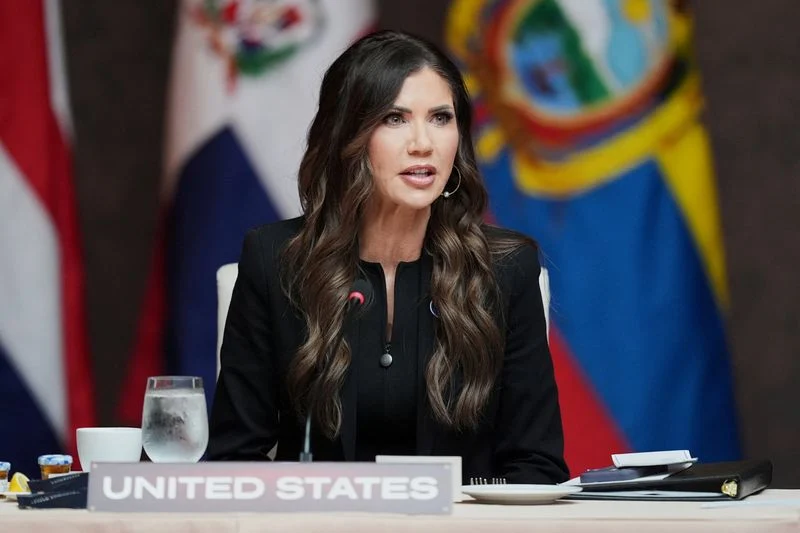

US Homeland Security cancels most pending Noem-era contracts after review

Crude oil prices crossed the key psychological mark of $100 per barrel last week, the first time since Russia’s invasion of Ukraine in 2022. Despite attempts by the US administration to reassure markets, the conflict in the oil-rich Middle East continues to intensify.
Iran has warned that oil prices could surge to as high as $200 per barrel if the conflict escalates further. Mojtaba Khamenei, Iran’s new supreme leader and son of Ayatollah Ali Khamenei, described the Strait of Hormuz as a strategic “tool of pressure” that must remain shut during the conflict. In a message aired on state television, he also warned that US military bases across the region could face attacks as Iran seeks retaliation for casualties from the conflict.
Oil prices have risen amid growing expectations that the Strait of Hormuz may remain shut, disrupting global energy trade. The narrow 33-km waterway connecting the Persian Gulf and the Gulf of Oman carries more than 20% of the world’s oil and gas shipments, making it one of the most critical chokepoints in global energy markets.
What lies ahead for oil prices
Global crude oil prices could rise to $120 per barrel in the near term and potentially reach $150 per barrel if the war continues for over a month and geopolitical tensions remain elevated in West Asia, said Kayanat Chainwala, Assistant Vice President at Kotak Securities.
“Any prolonged disruption to this trade route will be bullish for crude oil and negative for other commodities, as it fuels inflation concerns and could delay interest rate cuts,” Chainwala said.
A report by Nuvama also noted that crude prices could climb to $150 per barrel if the Strait of Hormuz remains closed for four to eight weeks. However, such extreme price levels could eventually lead to demand destruction and trigger alternative supply responses.The report added that Asian economies are likely to bear the brunt of the disruption, as nearly 13 million barrels per day (mbpd) of oil shipments to countries including China, India, Japan and South Korea pass through the Strait of Hormuz.
Meanwhile, Systematix Institutional Equities said global crude markets have entered a phase of heightened volatility over the past two weeks, driven by the destruction of oil and gas assets in West Asia, which has added a strong geopolitical risk premium to prices.
“Tanker freight rates and insurance premiums for vessels passing through high-risk zones have also surged, significantly raising procurement costs,” the brokerage said.
How Indian stock markets may react
The Nifty 50 fell 5.3% last week as the Iran–Israel conflict, a weakening rupee, persistent FII outflows and concerns over fuel supply weighed on sentiment. While Systematix expects near-term volatility to impact valuations, it continues to prefer Reliance Industries, Petronet LNG, Deep Industries and Gulf Oil as long-term bets.
According to Vinod Nair, Head of Research at Geojit Investments, market direction in the coming weeks will largely depend on developments in the Iran conflict and the trajectory of crude prices, given their implications for inflation, corporate margins, the current account deficit and RBI policy flexibility.
“A firm dollar and higher US bond yields may keep FIIs selective and volatility elevated. Selective value opportunities may emerge in fundamentally resilient and domestically driven sectors, while energy-sensitive segments could remain under pressure if crude prices stay elevated,” he said.
He added that domestic institutional buying has provided some cushion, but a sustained market recovery would likely require clear signs of geopolitical de-escalation, stabilisation in crude prices and improved clarity on fuel supply dynamics.
Siddhartha Khemka, Head of Research – Wealth Management at Motilal Oswal Financial Services, said market volatility is likely to persist as geopolitical tensions disrupt the energy market and keep risk sentiment fragile.
“Indian equities have seen a sharp correction in 2026 amid heightened global uncertainty, resulting in significant erosion of market value across segments,” Khemka said.
The Nifty 50 has declined over 11% so far this year, while the Nifty Midcap and Smallcap indices are down around 10% each. In March alone, the Nifty has fallen about 8%, marking its steepest monthly decline since the pandemic-driven crash of March 2020.
On the currency front, the Indian rupee recently hit a record low of Rs 92.45 against the US dollar as rising energy prices and risk-off sentiment heightened concerns about India’s current account deficit, given the country imports nearly 88% of its crude oil requirements.
Elevated oil prices have also intensified concerns around inflationary pressures, widening external balances and pressure on corporate margins, prompting investors to trim equity exposure and shift towards safer assets.
“Rate-sensitive and cyclical sectors such as banking, financial services and automobiles have seen notable selling pressure,” Khemka added.
Looking ahead, markets are expected to remain highly sensitive to developments in the West Asia conflict, movements in crude oil prices and trends in foreign fund flows.
“Persistent foreign outflows and elevated oil prices could keep sentiment cautious, while any signs of easing geopolitical tensions may provide relief to markets,” he said.
(Disclaimer: Recommendations, suggestions, views and opinions given by the experts are their own. These do not represent the views of The Economic Times)
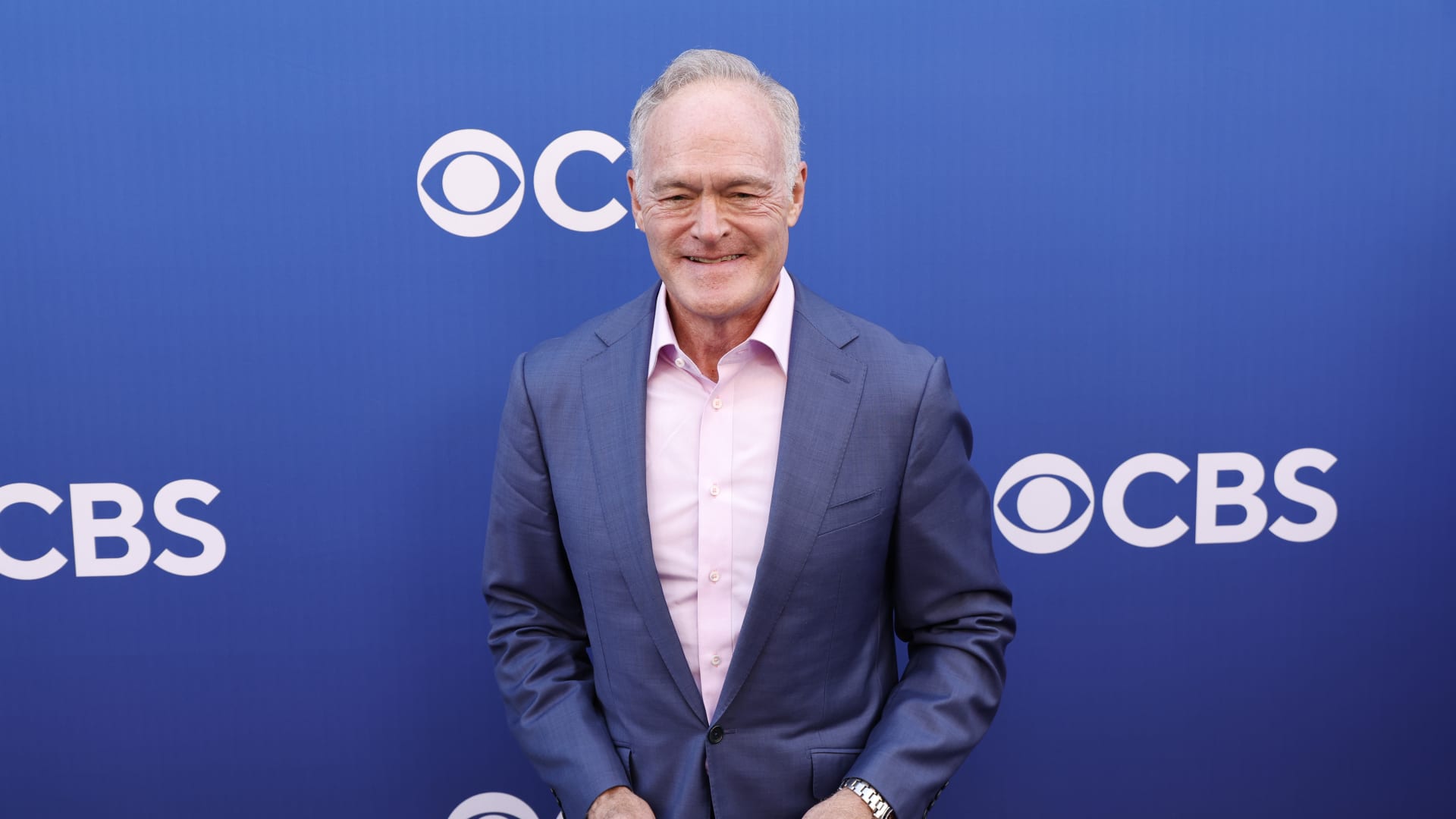
CBS News has fired high-profile “60 Minutes” correspondent Scott Pelley amid debate about the direction of the show, which has been a mainstay of the network’s television lineup for decades.
“Your employment with CBS News is terminated for cause effective immediately,” Nick Bilton, the new executive producer of “60 Minutes,” wrote to Pelley in a letter seen by CNBC. It was not immediately clear when the letter was sent.
Pelley had previously said that Bari Weiss, the editor-in-chief of CBS News, was “murdering” “60 Minutes,” according to NBC News.
In a statement obtained by MS Now, Pelley said the network is attempting to “curry a moment of favor with the Trump administration.”
“The waste is heartbreaking,” Pelley wrote.
Skydance and Paramount merged last year, putting new leadership in charge of CBS and other Paramount properties including the storied film studio and more nascent streaming business. Paramount Skydance Chief Executive Officer David Ellison is now trying to merge Paramount with Warner Bros. Discovery, and he needs the Trump administration’s regulatory approval to complete the deal.
In 2024, then-presidential candidate Donald Trump sued “60 Minutes,” alleging the program deceptively edited an interview with his opponent, Kamala Harris. Paramount settled the lawsuit for $16 million, which irked some veteran “60 Minutes” employees, including Pelley. Another notable anchor, Anderson Cooper, announced he was leaving the show earlier this month.
“For my part, new management has instructed me to inject falsehoods and bias into a politically sensitive story,” Pelley said in his statement. “I’ve been told to include assertions that are unverified. To date, in every case, I have managed to ignore these instructions or refuse them.”
During a meeting on Monday, Pelley told Bilton he has “slender qualifications” for the role of executive producer of newsmagazine “60 Minutes,” according to the NBC News report.
Bilton is a former New York Times technology columnist and has made several documentaries for HBO and Netflix. Bilton replaced Tanya Simon as the show’s executive producer. Simon had spent more than two decades at “60 Minutes” before being ousted last week. In contrast, Bilton has no experience running a TV news show.
“The leadership of ’60 Minutes’ is no longer recognizable,” Pelley said in his statement. “The principles I hold dear are gone, and so I must leave as well.”
During an interview on May 28, Bilton told CNBC that he’s committed to demonstrating his hiring isn’t a political maneuver.
“I will prove it with the work,” Bilton said. “I’m dedicated to holding people in power to account.”
In a Tuesday editorial call with CBS, Weiss told staffers she is “only interested in working in a newsroom that is built on trust and mutual respect,” according to a transcript of the call obtained by CNBC.
“That foundation was broken on Monday, and despite our attempts to engage with Scott Pelley and to find a way back, unfortunately we weren’t able to do so, and so we had to part ways,” Weiss said. “We did not want that to happen, but that’s the path he chose.”
CBS News President Tom Cibrowski added on the call that the organization “will miss Scott very much.”
In a subsequent statement obtained by MS Now, Pelley disputed Weiss’ account of the situation and said “no constructive dialogue was allowed by the CBS executives at any point.”
Read the full statement from Pelley on his firing:
There has never been anything in America like 60 Minutes.
The Sunday tradition is the most successful program of any kind in history. For more than a decade, its innovative growth on every major online platform has extended its reach to countless millions around the world. This spring, at the end of our 58th season, 60 Minutes grew rapidly with an unheard-of 9% jump in viewers on CBS.
“60” has been the number-one program in America for decades because our beloved audience finds integrity, quality, and humanity in our stories. When stewardship of the program passed to my colleagues and me, our responsibility was to expand energetically into a new age of media technology while preserving the values our audience expects. Now, the new owner of our network is casting this legend aside, apparently to curry a moment of favor with the Trump administration.
The waste is heartbreaking.
Last month, 60 Minutes lost its DNA when our entire senior leadership and two of our best on-air correspondents were cruelly fired without cause. Good people were silenced because they stood up for our audience. They stood for fairness against the forces of political bias; they stood for professionalism against chaos.
For my part, new management has instructed me to inject falsehoods and bias into a politically sensitive story. I’ve been told to include assertions that are unverified. To date, in every case, I have managed to ignore these instructions or refuse them. Recently, politicians have been invited to choose correspondents for interviews on the broadcast. Giving politicians control over 60 Minutes interviews is not how this is done. Finally, incompetence and unprofessionalism in the new management have wreaked havoc. In a case involving one of my stories, the entire program came within 19 minutes of not getting on the air at all.
At 60 Minutes, we have fought harder than anyone knows to save the program that became an American icon. We owed that to our millions of viewers. I am deeply moved by the thousands of wishes we have received to “keep up the good fight.” Most of the men and women of CBS News are still in that fight. But now the collapse of values at the top has become untenable. The leadership of 60 Minutes is no longer recognizable. The principles I hold dear are gone, and so I must leave as well.
I depart after 37 years at CBS with one emotion—a heart brimming with gratitude for the men and women of CBS News who encouraged and enriched my work, very often at the risk of their own lives. I pray for a day when those people and their ideals are honored again—a day when sanity, competence, and courage return.
Scott Pelley
—CNBC’s Alex Sherman and Ryan Ruggiero contributed to this report.


I am a stock analyst with over 20 years of experience in quantitative research, financial modeling, and risk management. My focus is on equity valuation, market trends, and portfolio optimization to uncover high-growth investment opportunities. As a former Vice President at Barclays, I led teams in model validation, stress testing, and regulatory finance, developing a deep expertise in both fundamental and technical analysis. Alongside my research partner (also my wife), I co-author investment research, combining our complementary strengths to deliver high-quality, data-driven insights. Our approach blends rigorous risk management with a long-term perspective on value creation. We have a particular interest in macroeconomic trends, corporate earnings, and financial statement analysis, aiming to provide actionable ideas for investors seeking to outperform the market.
Analyst’s Disclosure: I/we have no stock, option or similar derivative position in any of the companies mentioned, and no plans to initiate any such positions within the next 72 hours. I wrote this article myself, and it expresses my own opinions. I am not receiving compensation for it (other than from Seeking Alpha). I have no business relationship with any company whose stock is mentioned in this article.
Seeking Alpha’s Disclosure: Past performance is no guarantee of future results. No recommendation or advice is being given as to whether any investment is suitable for a particular investor. Any views or opinions expressed above may not reflect those of Seeking Alpha as a whole. Seeking Alpha is not a licensed securities dealer, broker or US investment adviser or investment bank. Our analysts are third party authors that include both professional investors and individual investors who may not be licensed or certified by any institute or regulatory body.

Kiley Lossen Speaks On Leaked Audio About Drake

Did the Manchester Airport brawlers get away with it?

Middle Class Financial Planning | Anand Pophale | Dhan Daulat with Shardul Kadam #amuktamuk



-

 Tech6 days ago
Waymo dominates autonomous vehicle registrations as Tesla trails behind
-

 News Videos5 days ago
This is BROKEN! INSANE 5x MONEY CAR WASH WEEK! The NEW GTA Online UPDATE Today! (GTA5 New Update)
-
 Tech4 days ago
SpaceX just won a second Golden Dome contract. This one is $4.16 billion.
-

 News Videos5 days ago
SHE IS KILLING XRP!!! WATCH URGENT AND ACT FAST
-

 Business2 days ago
Jade Biosciences, Inc. (JBIO) Discusses Positive Interim Results From JADE101 Phase I Healthy Volunteer Study and Development Plans Transcript
-
 NewsBeat5 days ago
FIRST NIGHT REVIEW: Take That bring the Circus back to life in spectacular sun-soaked style
-
 Crypto World5 days ago
CFTC Has Approved the First Regulated Bitcoin Perpetual Contract in the U.S.
-

 Business4 days ago
Is the Spurs Phenom Already Better Than Prime Diesel?
-
 NewsBeat5 days ago
Novak Djokovic v Joao Fonseca LIVE: French Open latest scores and results after Jannik Sinner’s shocking collapse
-
 Crypto World5 days ago
Snowflake (SNOW) Stock Rallies on Strong Q1 Results and AI Product Growth
-
 Entertainment5 days ago
Weak ‘Supergirl’ Box Office Tracking Amid Milly Alcock Backlash
-

 Business4 days ago
Demand Conditions Improve In Chemicals Sector In April 2026
-
 Crypto World5 days ago
MicroStrategy Moves $30 Million in BTC to Coinbase Prime: Is the Bitcoin Sell-Off Already Here?
-

 Politics4 days ago
The House | Inside Andy Burnham’s Makerfield Campaign: “Nobody Thinks This Is In The Bag”
-

 Tech5 days ago
This Week In Security: Ubiquiti Fixes, And FreeBSD Joins The Club You Don’t Want To Join
-
 Entertainment4 days ago
One of the Greatest Sitcoms of All Time Shoots Up Apple TV’s Charts 11 Years Later
-

 Entertainment5 days ago
Maddox Jolie-Pitt Legally Requests to Drop Brad’s Surname
-
 Crypto World1 day ago
Seagate (STX) Stock Surges to Record High on AI Boom and Legal Settlement
-
 Entertainment4 days ago
Britney Spears Shares Troubling Update After Hard Year
-
 Entertainment5 days ago
Bruce Willis’ Generosity Resurfaces Amid His Dementia
You must be logged in to post a comment Login