


Connect with us
DAPA Banner

Business

Columbia Dividend Opportunity Fund Q1 2026 Commentary

Published

on

Columbia Dividend Opportunity Fund Q1 2026 Commentary
Continue Reading
Click to comment

You must be logged in to post a comment Login

Leave a Reply

Business

Rubis (RBSFY) Q1 2026 Sales/ Trading Statement Call – Slideshow

Published

on

OneWater Marine Inc. (ONEW) Q1 2026 Earnings Call Transcript

Rubis (RBSFY) Q1 2026 Sales/ Trading Statement Call – Slideshow

Continue Reading

Business

Goldman Sachs Warns of Rationing Risk for British Businesses

Published

on

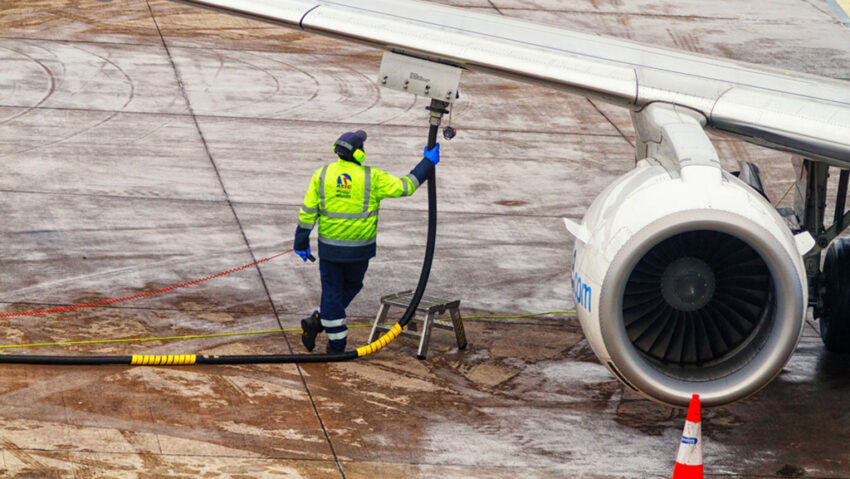
Goldman Sachs warns the UK is Europe's most exposed economy to a jet fuel crisis, with rationing looming as Strait of Hormuz closure hits airlines, SMEs and travel costs.

British businesses face a summer of soaring travel costs and disrupted supply chains as the United Kingdom emerges as the European economy most vulnerable to a deepening jet fuel crisis triggered by the prolonged closure of the Strait of Hormuz, according to a stark new assessment from Goldman Sachs.

The Wall Street investment bank has warned that commercial fuel inventories in Britain could fall to “critically low levels” within weeks, raising the prospect of formal rationing measures that would squeeze airlines, freight operators and the thousands of SMEs that depend on reliable air links to trade with overseas markets.

Goldman’s analysts pulled no punches in their note to clients, identifying the UK as “most exposed” among European nations because of three compounding weaknesses: depleted stockpiles, an unusually high dependence on imported fuel, and a domestic refining base that has been hollowed out over recent years. “The UK is the largest net importer of jet fuel in Europe, and it holds no strategic reserves, leaving commercial inventories as the primary buffer,” the bank concluded.

The numbers paint a sobering picture for owner-managed firms whose order books rely on the speed and reliability of British aviation. Jet fuel prices have doubled since hostilities erupted on 28 February, while carriers worldwide have stripped some two million seats from this month’s schedules in the past fortnight alone. With fuel accounting for up to a quarter of an airline’s operating costs, those increases are now flowing directly into ticket prices and freight rates.

IAG, the FTSE 100 parent of British Airways, has confirmed it will pass higher fuel costs through to passengers, conceding that its hedging programme has left it “not immune” to the volatility. Air France is bracing for a $2.4 billion increase in its annual fuel bill; American Airlines anticipates an additional $4 billion. Both have signalled fare rises and a paring back of passenger perks.

Advertisement

For UK plc, the implications stretch well beyond the holiday season. Michael O’Leary, chief executive of Ryanair, told reporters on Friday that European rivals were “desperately” hunting for flights to axe and would start doing so within weeks. Fuel providers, meanwhile, have warned airlines that Britain has the “most limited visibility” in Europe on future supply, a direct consequence of its heavy reliance on Middle Eastern imports.

The Prime Minister, Sir Keir Starmer, last week conceded that holidaymakers may need to reconsider “where they go on holiday” — an unusually candid admission that has done little to reassure the travel trade or the SME exporters who use passenger flights’ belly-hold capacity to move time-sensitive goods to Europe and beyond.

Government ministers have publicly insisted that Britain can source fuel from alternative markets, but Goldman’s analysis exposes the structural fragility behind that confidence. The closure of Grangemouth, Scotland’s only oil refinery, in April 2025 stripped meaningful domestic capacity from the system. Question marks have also hung over the Prax Lindsey refinery in North Lincolnshire, though its new owner, US energy major Phillips 66, has insisted its acquisition will bolster UK fuel security.

Adding to the structural critique, a report from the Tony Blair Institute published this week argued that Europe’s tendency to frame energy policy primarily through a climate lens has left the continent paying two to three times more for power than its global competitors, while simultaneously deepening its reliance on imports, exactly the dependency now being so painfully exposed.

Advertisement

Brussels is scrambling to respond. The European Commission confirmed on Monday that it will issue formal guidance on jet fuel for airlines later this week. “I don’t think anyone knows how long this situation will last,” commission spokeswoman Anna-Kaisa Itkonen told reporters, “so the best we can do and the most effective thing that we can do and that we are doing is to prepare for all eventualities.”

The Gulf region accounts for roughly one fifth of jet fuel traded on international markets, and Europe is among its biggest customers. With the Strait of Hormuz effectively shut, carriers across the continent are now bidding against one another for cargoes from Asia and the United States, and prices are climbing accordingly.

Fuel suppliers have indicated that May should remain manageable but have flagged “mid to late June as the potential start of disruptions” if the strait does not reopen, a timeline that puts the peak summer trading window for hospitality, travel and export-led SMEs squarely in the danger zone.

For the army of British small businesses whose growth plans assume cheap, plentiful air connectivity, from boutique tour operators and food exporters to professional services firms with European clients, the message from the City is uncomfortably clear: prepare for higher costs, longer delays, and the very real possibility that, for the first time in a generation, jet fuel may have to be rationed in Britain.

Advertisement

Jamie Young

Jamie Young

Jamie is Senior Reporter at Business Matters, bringing over a decade of experience in UK SME business reporting.
Jamie holds a degree in Business Administration and regularly participates in industry conferences and workshops.

When not reporting on the latest business developments, Jamie is passionate about mentoring up-and-coming journalists and entrepreneurs to inspire the next generation of business leaders.

Advertisement
Continue Reading

Business

What should be the economic priorities of the next Welsh Goverment

Published

on

Business Live

Director of CBI Wales Russell Greenslade says stable policy and targeted investment to improve the business environment are essential to keep Welsh firms competitive

Russell Greenslade CBI Wales director.

The race is almost over to find out which party – or parties – will lead Wales in the years ahead. It’s a pivotal moment for our country and for the party that wins, it will mark a moment for real celebration. But victory doesn’t just bring celebration, it also comes with huge responsibility to take Wales, it’s people and economy, forward.

Key among those responsibilities is making Wales one of Europe’s top performing sustainable small economies by 2035. That’s the test set by the Welsh Government, and it’s one business stands ready to help it pass. Part of that story is harnessing Wales’ outstanding geographical advantage to drive forward investment in renewables, and other clean energy projects.

The CBI’s ‘Made in Wales’ manifesto set out a clear path to prosperity for the next Welsh Government to follow, with the goal of creating a more innovative and competitive economy. It urged political leaders to tackle the skills gap by supporting more young people into work, education or employment. Coherent collaboration between Cardiff Bay and Westminster, working in partnership with business, is also needed to drive long-term sustainable growth.

READ MORE: Wales doesn’t need grants but a new approach to IP and innovation that sustains business successREAD MORE: The frustration in Wales is not politicians disagreeing but that we face the same problems of two decades ago

In a fast-changing global economy, capital investments have a critical role to play. With budgets being squeezed in the public sector and parts of the private sector, tough decisions have to be made about where a company or organisation allocates its surplus to maximise return. Surveys have shown that often, firms reduce their spending on capital-projects during periods of low growth/rising costs, despite their role boosting productivity.

Advertisement

This is where the banks come in. Growth capital finance is offered to enable a firm to invest to expand, to find that new market as well as keep without sacrificing local spend.

Access to growth capital – to invest in that new AI system or that energy efficiency machine in the factory remains a barrier for many Welsh companies, especially SMEs looking to scale up. While finance initiatives exist on the high street, the Development Bank of Wales can play a major role in supporting firms with the AI challenges and opportunities in the years ahead.

Significantly increasing the amount of capital the development bank can lend to firms would support even more firms realise their scale up possibilities. For example, expanding the bank’s funds beyond their £2bn capitalisation would enable more Welsh SMEs to obtain the patient growth capital they need to create, export and expand.

The new government should look to partner with institutional investors such as pension funds and insurance companies to create a Wales-based investment platform that channels large-scale private investment into local projects and firms, strengthening our funding ecosystem for innovation and expansion and allowing firms to scale up at home rather than relocating.

Advertisement

Another concern is the lack of funding for key infrastructure projects in Wales, with £247 per person spent on infrastructure in Scotland in the past five years, compared to only £120 per person in Wales.

Government and business jointly investing in modern, reliable infrastructure will connect Welsh businesses to markets and talent, as well as significantly boosting productivity. To achieve that goal, we need to make real changes to the planning system to speed up improvements to the A55 in North Wales and deliver the M4 relief road in the south. Every £1 invested by government in building the relief road will deliver £2 (from improvements to transport economic efficiency, safety and lower carbon emissions) back that can be re-invested in the Welsh economy. We know it’s a great investment.

We must also press ahead with rail electrification in North and South Wales, and digital infrastructure so that all areas, especially rural communities, can access full-fibre broadband and 5G coverage.

In this economic climate, stable policy and targeted investment to improve the business environment are essential to keep Welsh firms competitive and deliver the devolution dividend.

Advertisement

We also need a Welsh industrial strategy to tie everything together and give us a roadmap for boosting Wales’s competitiveness. The strategy should offer practical solutions to expanding sources of patient capital, accelerate shovel-ready infrastructure projects, and ensure regulation and business policies incentivise productivity improvements.

Many of these steps require coordination between different agencies and government. Local authorities and the regional corporate joint committees, such as the Cardiff Capital Region, delivering on the ground and shaping strategy, the Welsh Government focusing on devolved economic levers and removing major blockers, and the UK Government providing funding options and policy support for UK-wide issues. By doing so, Wales can orchestrate an approach that will attract more investment, both domestic and foreign, and help good firms scale up here rather than elsewhere.

Whoever is elected must make collaboration with corporate joint committees and individual councils a key priority. That’s how we take a meaningful step forward with vital regional projects and ensure no corner of Wales is left behind by the AI revolution.

  • Russell Greenslade is director of CBI Wales.
Continue Reading

Business

UK Borrowing Costs Hit 28-Year High as Starmer Leadership Crisis Spooks Markets

Published

on

TSSA calls for ‘urgent change’ in Labour leadership after by-election defeat

Britain’s small and medium-sized businesses are once again caught in the political crossfire, with long-term Government borrowing costs vaulting to their highest level in nearly three decades as the City braces for what could prove a torrid week for Sir Keir Starmer.

The yield on the 30-year gilt climbed to 5.772 per cent on Tuesday, a level not seen since 1998, while the benchmark ten-year gilt jumped 0.13 percentage points to trade above 5.1 per cent, territory last visited during the 2008 financial crisis. As bond yields and prices move in opposite directions, the sell-off lays bare the depth of unease among investors. For SME owners watching their overdrafts and refinancing windows, it is a deeply unwelcome turn.

The trigger is Thursday’s local elections, in which Labour is widely tipped to shed well over 1,000 council seats to Nigel Farage’s Reform UK and the Green Party. Should the results prove as bleak as forecast, Westminster watchers expect Sir Keir to face an internal challenge, most likely from the Labour left, with the Manchester mayor Andy Burnham and the former deputy prime minister Angela Rayner among those whose names are circulating in Whitehall and the Square Mile alike.

For investors, the calculation is brutally simple: any successor drawn from that wing of the party is likely to loosen the purse strings further, piling additional borrowing on to an already stretched balance sheet.

“The prospect of a leadership challenge is yet another source of uncertainty for businesses and households that could prompt them to put off investment and spending,” Thomas Pugh, chief economist at RSM UK, told clients in a note. “Financial markets would likely respond by pushing gilt yields higher, as any successor is likely to be more spendthrift than Starmer and [Rachel] Reeves, raising borrowing costs across the economy.”

Advertisement

Analysts at the Japanese investment bank Nomura warned that “low turnout … and voters more willing to register a protest at local vs national elections make this set of elections particularly risky for Labour and the PM in particular.”

The implications for the UK’s 5.5 million small and medium-sized enterprises are sobering. Britain’s borrowing costs are now the highest in the G7, and have climbed sharply since the Gulf conflict erupted just over two months ago. As a major importer of natural gas, the country is acutely exposed to the war’s inflationary aftershocks, and that pain feeds directly through to the cost base of every owner-managed firm in the land, from manufacturers wrestling with energy bills to high-street retailers facing yet another squeeze on consumer wallets.

The pound nudged higher against the dollar to $1.35 on Tuesday, but the FTSE 100 closed more than 1 per cent down as investors trimmed their exposure to UK assets across the board.

Compounding the gloom, the Bank of England is now widely expected to lift interest rates later this year rather than cut them, a sharp reversal from the consensus that prevailed before hostilities began. Last week, Threadneedle Street warned that rates could climb as high as 5.25 per cent if oil and gas prices remain elevated, with inflation potentially breaching 6 per cent in a worst-case scenario, up from 3.3 per cent today. Bank Rate was held at 3.75 per cent at the latest meeting.

Advertisement

Nomura, BNP Paribas and Pantheon Macroeconomics have all torn up their forecasts, now pencilling in rate rises rather than the two cuts previously expected for 2026. For SMEs servicing variable-rate loans, asset finance arrangements or commercial mortgages, that represents a meaningful step-change in the cost of doing business.

Bond markets, normally preoccupied with the minutiae of interest-rate expectations, have grown unusually fixated on Westminster. The fear is that Sir Keir will either be forced into a more expansive fiscal stance to placate his backbenchers, or replaced outright by a successor with an even bigger spending appetite. Either path leads to heavier borrowing at a moment when the public finances are already perilously thin: the debt-to-GDP ratio is hovering near 100 per cent and debt interest payments are projected to exceed £100 billion a year until at least 2031.

In a separate blow on Tuesday, the Bank of England disclosed that the cumulative loss on its quantitative easing programme had widened to £125 billion, up from £115 billion previously, a tab the taxpayer will pick up under the indemnity agreement struck with the Treasury.

For Britain’s business owners, the message from the gilt market is uncomfortable but unmistakable. Whatever Thursday delivers at the ballot box, the cost of capital is heading in one direction, and prudence, on hiring, on capex, on inventory, is once again the watchword.

Advertisement

Jamie Young

Jamie Young

Jamie is Senior Reporter at Business Matters, bringing over a decade of experience in UK SME business reporting.
Jamie holds a degree in Business Administration and regularly participates in industry conferences and workshops.

When not reporting on the latest business developments, Jamie is passionate about mentoring up-and-coming journalists and entrepreneurs to inspire the next generation of business leaders.

Advertisement
Continue Reading

Business

Met Gala 2026 Raises Record $42 Million for Costume Institute Amid Star-Studded Night

Published

on

Sean "Diddy" Combs (L) and singer Cassie Ventura at the Met Gala in 2018, during a relationship that Ventura now describes as abusive

NEW YORK — The 2026 Met Gala raised a record-breaking $42 million for the Metropolitan Museum of Art’s Costume Institute, surpassing last year’s previous high of $31 million and solidifying its status as one of the world’s most powerful fundraising events in fashion and culture.

Sean "Diddy" Combs (L) and singer Cassie Ventura at the Met Gala in 2018, during a relationship that Ventura now describes as abusive
Met Gala in 2018
AFP

Museum officials announced the figure on Monday evening as celebrities ascended the steps of the Metropolitan Museum of Art for the annual “Fashion Is Art” themed gala. The funds will support exhibitions, acquisitions, conservation efforts and educational programs at the Costume Institute, the only curatorial department at the Met that operates without direct museum funding and relies almost entirely on the gala for its budget.

This year’s total marks a significant jump from previous records and reflects growing corporate and tech-sector support, with high-profile sponsors and attendees contributing generously. Jeff Bezos and other Silicon Valley figures were among the notable backers, helping push the evening to new financial heights even before the first guest walked the carpet.

What is the Met Gala?

The Met Gala, formally known as the Costume Institute Benefit, is an annual haute couture fundraising event held on the first Monday in May. It celebrates the opening of the Costume Institute’s spring exhibition and has evolved into the premier fashion event of the year, often called “fashion’s biggest night.”

Advertisement

Founded in 1948 by fashion publicist Eleanor Lambert as a modest midnight supper to support the newly established Costume Institute, the gala has grown into a global cultural phenomenon. Tickets routinely cost $75,000 each, with tables reaching $350,000 or more. The event blends high fashion, celebrity culture, art and philanthropy into one star-studded evening.

Each year features a specific theme tied to the Costume Institute exhibition. The 2026 theme, “Fashion Is Art,” encouraged guests to interpret clothing as living artwork, resulting in some of the most creative and sculptural looks in recent memory. Co-chairs this year included Beyoncé, Nicole Kidman, Venus Williams and Anna Wintour, who has helmed the event for decades.

The red carpet serves as both a fashion showcase and a major publicity engine. Designers create custom pieces for A-list celebrities, generating billions in earned media value. The evening raises critical funds while spotlighting the Costume Institute’s work preserving fashion history from the 15th century to today.

**Record Fundraising Success**

Advertisement

The $42 million haul represents the highest amount ever raised in a single Met Gala. Museum CEO Max Hollein and Costume Institute curator Andrew Bolton credited strong sponsorships, particularly from the tech industry, and the event’s growing cultural relevance.

Proceeds will directly support the Costume Institute’s operations, including major exhibitions like the current “Fashion Is Art” show. Over the past decade, the gala has raised more than $166 million, helping build a quasi-endowment that could make the institute more self-sufficient by 2030.

This year’s record was achieved even before guests arrived, thanks to early commitments from sponsors and ticket sales. Tech leaders and corporate partners played an outsized role, reflecting fashion’s increasing intersection with technology and Silicon Valley wealth.

Cultural Significance and Criticism

Advertisement

Beyond fundraising, the Met Gala functions as a powerful cultural barometer. It blends celebrity, art and fashion into a highly visible spectacle that shapes trends and conversations worldwide. However, it also draws criticism for its exclusivity, high costs and occasional disconnect between the lavish event and broader social issues.

Some guests and observers used the platform to highlight causes, while others faced backlash for perceived tone-deafness. The 2026 edition saw a mix of artistic statements and traditional glamour, with standout looks from stars like Anne Hathaway, SZA, Beyoncé and Rihanna generating widespread acclaim.

Impact on the Fashion Industry

The Met Gala drives enormous economic activity. It generates publicity worth billions for participating designers and brands. Many use the event to launch collections or collaborations, while the themed exhibition boosts museum attendance throughout the year.

Advertisement

For the Costume Institute, the funds are essential. Unlike other Met departments, it receives no direct operating budget from the museum and depends almost entirely on gala proceeds. The money supports conservation of thousands of garments, research, educational programs and rotating exhibitions that draw hundreds of thousands of visitors annually.

Looking Ahead

With $42 million secured, the Costume Institute is well-positioned for ambitious future exhibitions. Officials have hinted at expanded programming and potential new gallery spaces funded in part by gala proceeds.

The 2026 event’s success reinforces the Met Gala’s enduring power as both a fundraiser and cultural touchstone. As fashion continues evolving and intersecting with technology, art and social issues, the gala remains a unique platform where these worlds collide.

Advertisement

For many, the evening transcends its fundraising role. It represents creativity, self-expression and the joy of seeing clothing elevated to art. This year’s record $42 million ensures the Costume Institute can continue its vital work preserving fashion history while inspiring new generations of designers and enthusiasts.

As the green-and-white carpet was rolled away and the after-parties wound down, the 2026 Met Gala will be remembered not just for its stunning looks but for setting a new philanthropic benchmark. The funds raised will support fashion as art for years to come, ensuring the Costume Institute’s legacy remains as vibrant as the event itself.

Continue Reading

Business

Celestica: A Bet On AI CapEx Growth

Published

on

Celestica: A Bet On AI CapEx Growth

Celestica: A Bet On AI CapEx Growth

Continue Reading

Business

Next to hike prices by up to 8% outside Europe due to Iran war costs

Published

on

Next to hike prices by up to 8% outside Europe due to Iran war costs

No extra price rises are slated for the UK, which saw better than expected sales in the first quarter.

Continue Reading

Business

Ramsdens boosts profit expectations but sounds caution on jet fuel worries

Published

on

Business Live

Boss Peter Kenyon said it had been a strong start to the year for the North East-based retailer

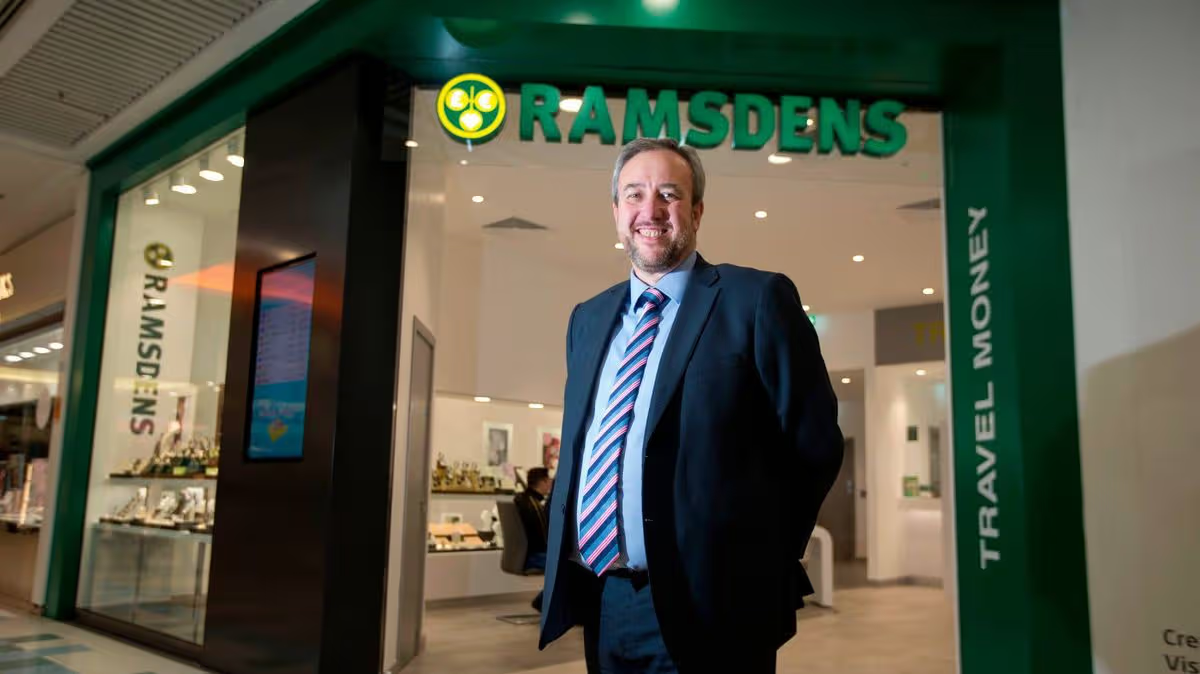
Ramsdens CEO Peter Kenyon

Ramsdens CEO Peter Kenyon(Image: Unknown)

High street pawnbrokers Ramsdens has upgraded full-year profit expectations, despite concerns over jet fuel shortages and volatile gold prices.

The Teesside-based chain, which also sells jewellery and holiday money, told investors that, despite global instability causing anxiety over summer holidays and volatile gold prices, it had enjoyed strong trading across its network of more than 170 sites. Bosses said pre-tax profits would now be at least £28.5m, up from prior expectations of about £24m, and could reach £31.5m if favourable gold prices continue and summer currency exchange volumes match last year.

Ramsdens has continued to benefit from the soaring price of gold, which is currently about 40% ahead of last year. That has led more customers to sell gold. Meanwhile jewellery retail revenue is about 25% ahead year-on-year, with gross margins said to be slightly improved.

The firm told investors on the London Stock Exchange that strong demand continued for pawnbroking loans – leading to record new lending in March and April. Ramsdens’ pawnbroking loan book is now 24% up on September last year, at £14.1m.

Advertisement

It also said newly opened shops in Hull, Sheerness and Wakefield were trading well, with new sites in Ashford and Abergavenny most recently launched. Two further locations in Hereford and Newark are set to open later this month, and another two where shop fitting work is yet to start. It means Ramsdens will open between 10 and 12 new shops in its 2026 financial year.

Peter Kenyon, chief executive, said: “We have had a strong start to the year given the economic back drop with our pawnbroking, jewellery retail and foreign currency exchange services all performing well. In addition, we have had an exceptional half year for our purchase of precious metals segment due to the continued benefits of a sustained high gold price and the increased weight being purchased.

“As a result of the continued strong performance across our diversified income streams and the additional benefit of the very high gold price, we are once again trading ahead of market expectations* and currently anticipate profit before tax for FY26 to be in a range of £28.5m to £31.5m.”

Advertisement
Continue Reading

Business

Court dismisses Maali Group’s action against Halo Civil

Published

on

Court dismisses Maali Group’s action against Halo Civil

The WA Supreme Court has dismissed Maali Group’s legal action against its minor shareholder, Halo Civil, as the relationship between the company’s owners continues to sour.

Continue Reading

Business

Chevron fuel stations sold for $12m

Published

on

Chevron fuel stations sold for $12m

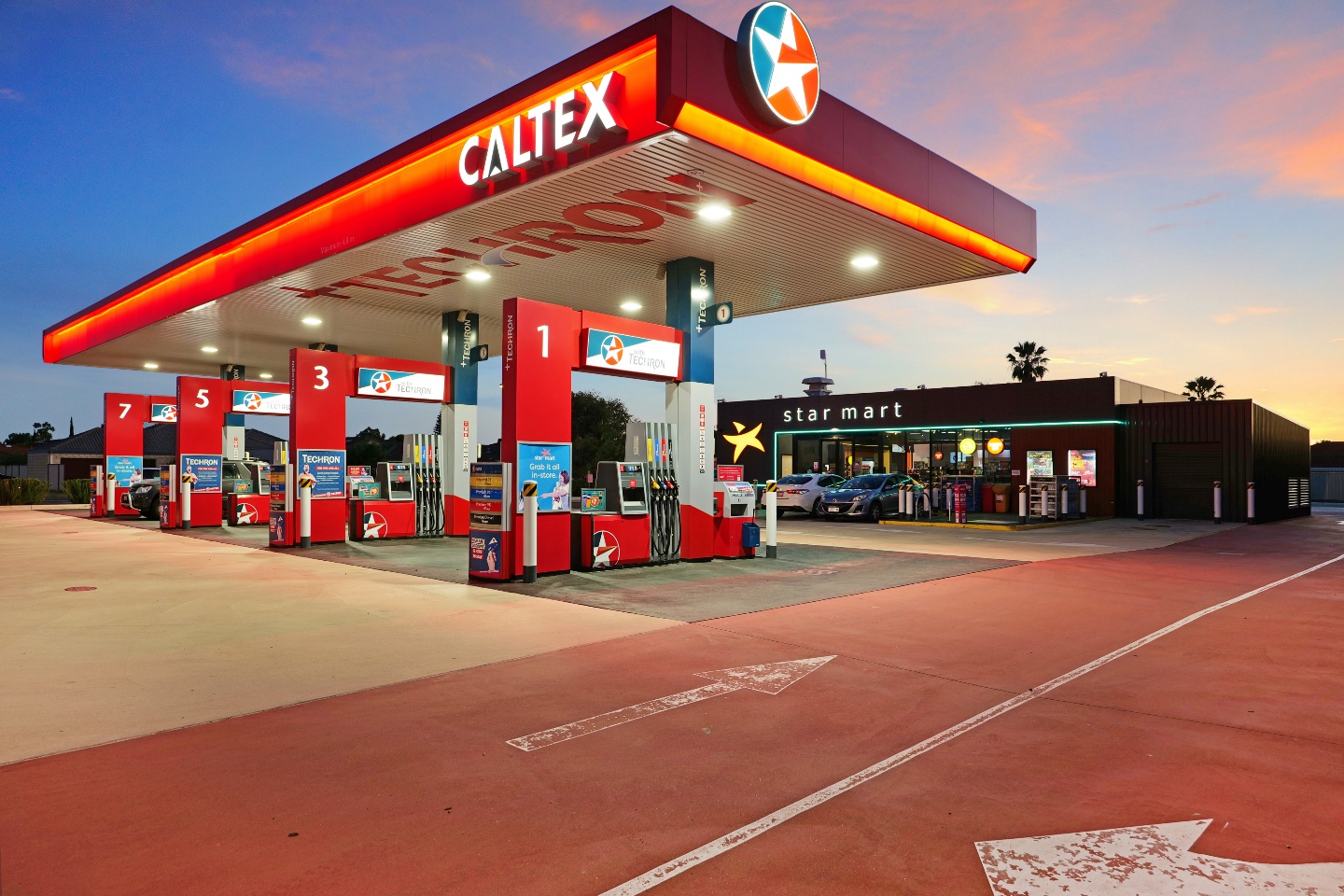
Two service stations anchored by Chevron’s Caltex brand have sold Perth’s suburbs. Two service stations anchored by Chevron’s Caltex brand have sold Perth’s suburbs.

Continue Reading

Trending

Copyright © 2025