
Crypto World
Core Scientific (CORZ) Stock Surges on $421M Polaris Deal to Boost AI Infrastructure


Key Highlights
- CORZ stock surges following $421 million Polaris DS acquisition announcement
- Oklahoma power infrastructure expands with 440MW of contracted capacity
- Company pursues ambitious 1GW leasable power capacity goal
- Strategic acquisition reinforces AI hosting infrastructure objectives
- Business transformation continues from Bitcoin mining to AI services
Shares of Core Scientific (CORZ) experienced significant upward momentum following the announcement of a strategic acquisition designed to enhance power infrastructure capabilities in Oklahoma. The stock gained 10.88%, reaching $24.61 in early market activity, as investors responded positively to the company’s aggressive expansion into high-density colocation services. This strategic move further solidifies Core Scientific’s commitment to building artificial intelligence infrastructure and enterprise-scale computing facilities.
Strategic Polaris Deal Bolsters Oklahoma Operations
Core Scientific revealed its intention to purchase Polaris DS LLC in a transaction valued at $421 million, significantly expanding its Muskogee, Oklahoma footprint. This acquisition delivers 440 megawatts of power capacity under contract with Oklahoma Gas & Electric. The move is expected to accelerate the timeline for deploying advanced high-density computing infrastructure.
The transaction requires regulatory clearance and satisfaction of customary closing requirements, with completion anticipated during Q3 2026. Polaris currently maintains an active 40-acre campus located adjacent to Core Scientific’s current Muskogee operations. The property features established electric service contracts and substation facilities that enable additional expansion opportunities.
According to Core Scientific, this strategic purchase directly supports the organization’s objective of achieving approximately 1 gigawatt of leasable power infrastructure. The company has secured control of nearly 250 additional acres earmarked for future development initiatives. This comprehensive approach integrates targeted acquisitions, new construction projects, and flexible power delivery systems throughout its Oklahoma portfolio.
Advanced Infrastructure Enables AI and Computing Services
Core Scientific has strategically repositioned itself away from conventional Bitcoin mining operations toward artificial intelligence and high-performance computing services. As a result, the organization continues repurposing previous mining locations into enterprise-grade colocation facilities. The Muskogee expansion exemplifies this broader operational evolution.
Development work is currently underway on an additional 82.5 megawatt facility within the Muskogee campus complex. Initial delivery is projected for Q4 2027. Simultaneously, the existing 70 megawatt structure remains scheduled for customer handover in the second quarter of 2026.
This leased infrastructure accommodates Nvidia GB300 systems and is presently undergoing comprehensive testing and commissioning procedures. Core Scientific continues conducting detailed load assessments designed to maximize grid-connected capacity throughout the location. Additionally, the company has engineered behind-the-meter power configurations to facilitate future scalability needs.
Financial Performance Reflects Strategic Pivot
Cryptocurrency mining companies are increasingly diversifying into artificial intelligence and computing-oriented operations amid challenging mining profitability conditions. As a consequence, infrastructure holdings and long-duration power contracts have become highly valued strategic assets. Organizations controlling substantial energy resources are actively expanding into colocation and compute hosting markets.
Core Scientific’s most recent quarterly financials indicated total revenue decreased to $79.8 million compared to $94.9 million in the prior-year period. However, colocation revenue demonstrated substantial growth, climbing to $31 million from $8.5 million year-over-year. Conversely, Bitcoin mining revenue contracted to $42 million from $79 million.
The organization has also executed substantial financing arrangements to fund its expansion roadmap earlier this year. Core Scientific completed a $3.3 billion private debt placement complemented by $1 billion in loan facilities. Separately, shareholders voted against a proposed $9 billion combination with CoreWeave, though both entities maintain ongoing commercial relationships.


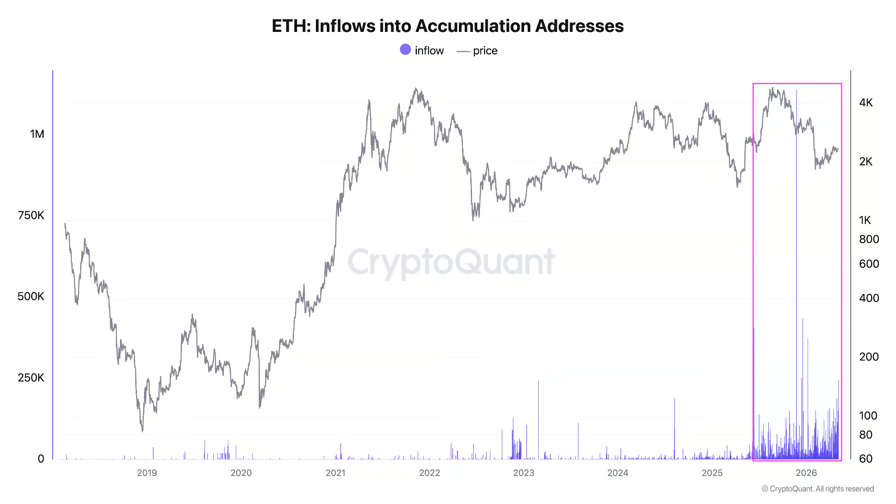
Ethereum accumulation addresses witnessed a surge in daily inflows on Wednesday, suggesting growing confidence in Ether’s (ETH) long-term price trajectory following its latest rise to $2,400.
Key takeaways:
- Accumulation addresses absorbed about $592 million in ETH on Wednesday, signalling aggressive long-term buying.
- Ether’s ascending triangle projects an ETH price rally to $3,315.
Ethereum accumulators add $592 million in ETH
Ether’s investor confidence has returned following its 39% recovery from a multi-year low below $1,750.
Data from CryptoQuant showed daily inflows into accumulation addresses have increased steadily since mid-2025, reaching an all-time high of 1.14 million ETH in November 2025. The inflows have continued to climb in 2026, averaging 200,000 ETH per day.
These addresses received 246,620 ETH on Tuesday, worth approximately $592 million at current rates.
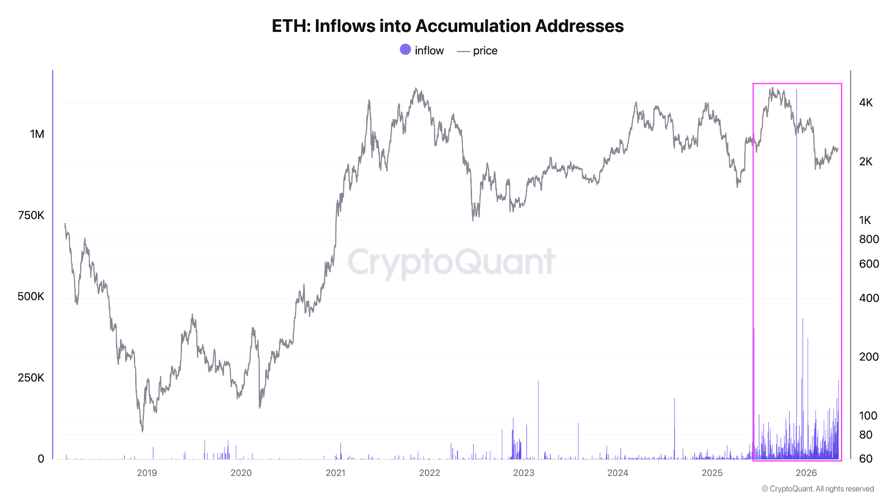
ETH inflows into accumulation addresses. Source: CryptoQuant
Accumulation addresses are wallets that continuously receive ETH without making any outgoing transactions. They may belong to long-term holders, institutional investors, or entities strategically accumulating Ethereum rather than actively trading it.
As a result, the total ETH held by these long-term holders reached a record 25 million ETH, marking a 20.36% jump so far in 2026.
Large spikes in inflows to these addresses often signal strong confidence in Ether’s long-term potential, with past trends showing that such surges frequently precede price rallies.
For example, on June 22, 2025, Ethereum accumulation addresses recorded a daily inflow of over 380,000 ETH. Nearly 30 days later, ETH’s price rose by almost 85%. A similar price rally followed November 2025’s inflow spike into the accumulation addresses.
Whale wallets are also showing bullish signals. The chart below shows that whale wallets with a balance of 10,000-100,000 ETH have seen their holdings rise to an all-time high of over 19.5 million tokens, after rapid accumulation over the last 30 days.
Wallets with over 100,000 ETH have also increased their holdings to 4.7 million ETH, a 30% increase in 2026.
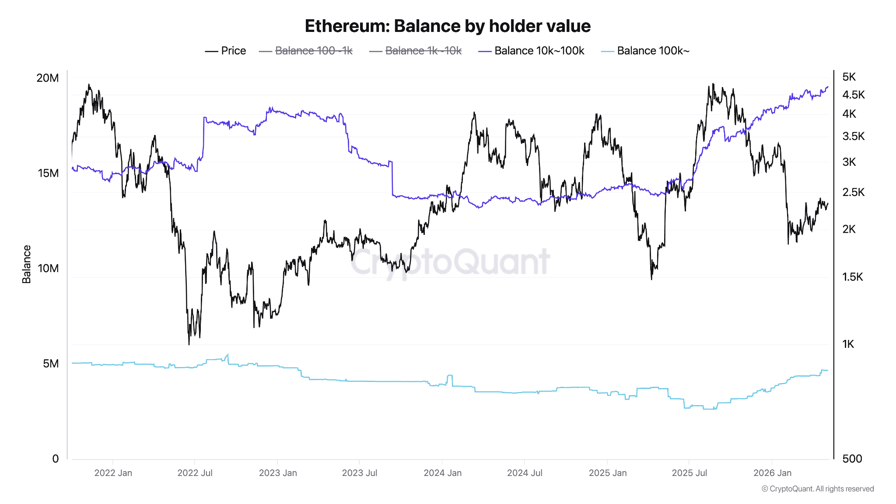
Ethereum: Balance by holder value
As Cointelegraph reported, Ether’s spot taker cumulative volume delta, which has been increasing since early April, also suggested growing confidence among buyers.
How high can the ETH price go?
Ether’s liquidation heatmap shows the price eating away liquidity around $2,400, with large bid orders still sitting at $3,000, and between $3,350 and 3,500.
“If $ETH breaks through $2,500, a steady rise to $3,000 will follow,” crypto analyst CW8900 said in a Wednesday post on X, adding:
“There is almost no resistance for short positions.”
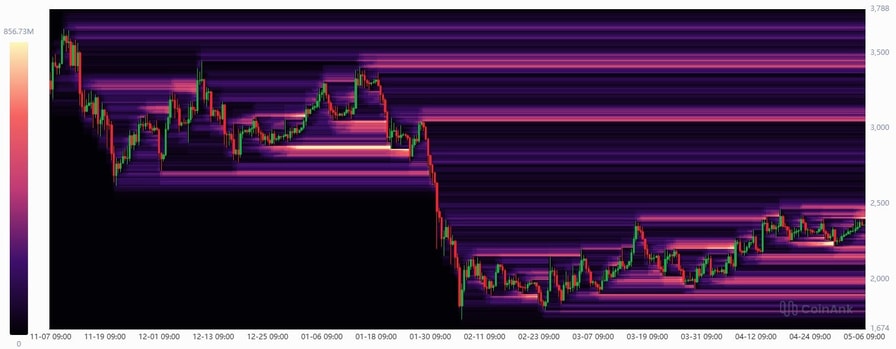
ETH liquidation heatmap. Source: CoinGlass
From a technical perspective, the ETH/USD pair is seeking to break above the horizontal trend line of an ascending triangle at $2,400.
A daily candlestick close above the 200-day exponential moving average at $2,700 will confirm the continuation of the uptrend toward the measured target of the triangle at $3,315. Such a move would bring the total gains to 40%.
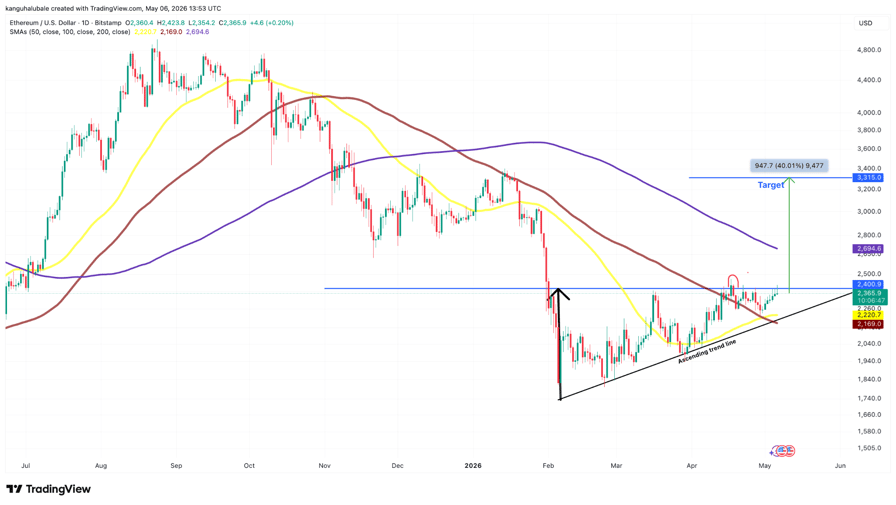
ETH/USD daily chart. Source: Cointelegraph/TradingView
Technical analyst XForceGlobal shared a chart suggesting that Ether’s macro bottom could be in, with an Elliott Wave analysis projecting a rally to $3,500 once resistance at $2,600-$2,700 is broken.
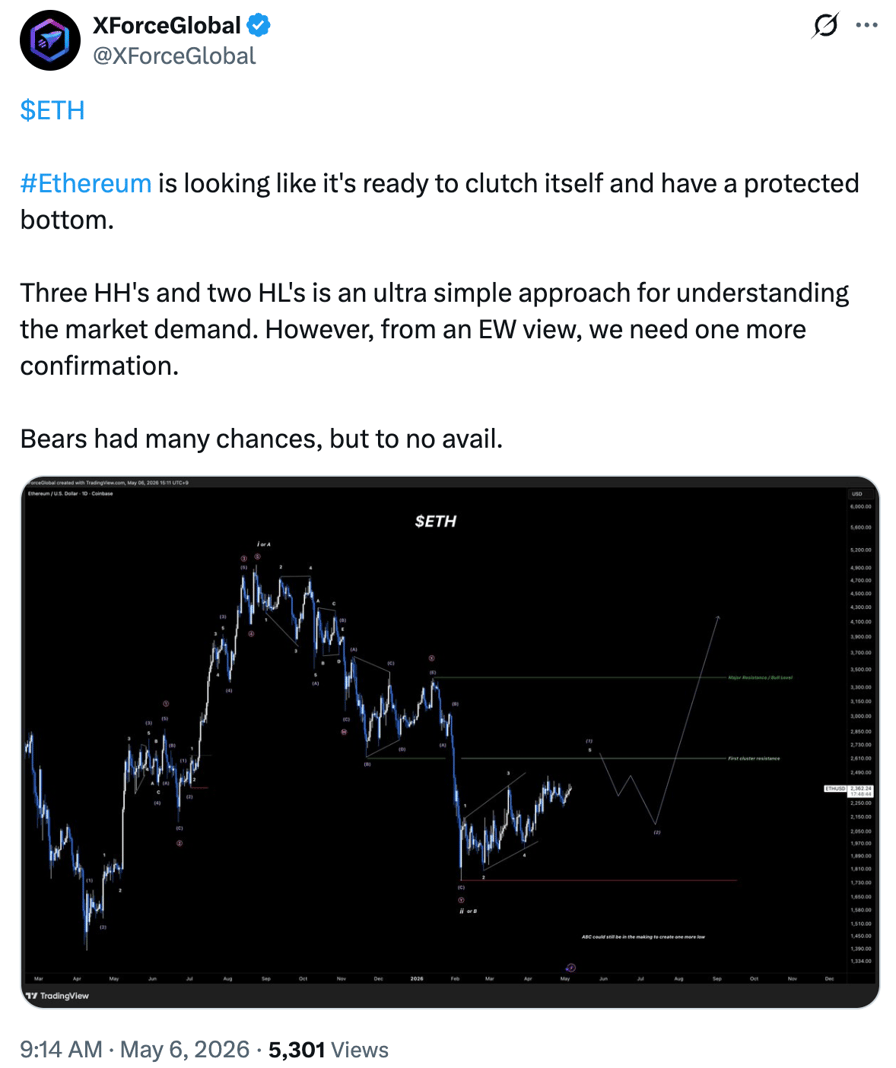
ETH/USD daily chart. Source: XForceGlobal
As Cointelegraph reported, a close above the $2,600-$2,700 region would confirm a trend change, paving the way for the ETH/USD pair to rally toward $3,000.
Crypto World
Bermuda pushes stablecoin payments with USDC airdrop as it courts crypto firms, regulators


Bermuda is aiming to show an example how to move crypto into everyday commerce without breaking the financial system, Premier David Burt said onstage at Consensus Miami 2026 on Wednesday.
Burt said the tiny island on the Atlantic is expanding its “onchain economy” initiative, a push to get stablecoins into the hands of residents, merchants and local businesses. The project was first announced in January at the World Economic Forum, with stablecoin issuer Circle (CRCL) and exchange Coinbase (COIN).
The government plans another airdrop of USDC stablecoin this year, tied to next week’s Bermuda Digital Finance Forum 2026, while also onboarding merchants that can accept digital payments. Participants will receive stablecoins through wallets and can spend them with local vendors, Burt said.
“If you are a vendor and you’re accepting digital assets, but you do not have a way to use and spend those digital assets inside your economy, that presents a problem,” Burt said.
The broader goal for Bermuda is to build payment infrastructure outside traditional card networks and banking rails, he said, arguing that small businesses face high transaction fees and limited access to financial apps common in larger markets.
Coinbase Chief Legal Officer Paul Grewal, who joined Burt on stage, said Bermuda’s approach stands out because regulators and private firms are building in tandem instead of working separately.
“What’s most interesting about the Bermuda example is it is a parallel process,” Grewal said. “Government services can be accessed using payment stablecoins, while merchants and businesses are brought into the system at the same time.”
Bermuda, Burt said, has spent years building a digital asset framework through its Digital Asset Business Act. He described the island’s regulatory style as iterative and industry-facing, with the Bermuda Monetary Authority working directly with firms on issues such as staking, lending and DeFi supervision.
“You cannot regulate out failure,” Burt said. “But you can put in place the items which allow responsible innovation to happen.”
Grewal also contrasted Bermuda’s approach with the regulatory climate crypto firms faced in the U.S. over the past several years under former Securities and Exchange Commission (SEC) Chair Gary Gensler. That has changed for the better under the Trump administration, he argued.
“It is a new day here in the United States,” Grewal said, pointing to what he described as a more constructive tone from agencies under SEC Chair Paul Atkins and Commodity Futures Trading Commission (CFTC) Chair Michael Selig.
“We still have challenges, to be clear, but it’s a very different dynamic,” he said.
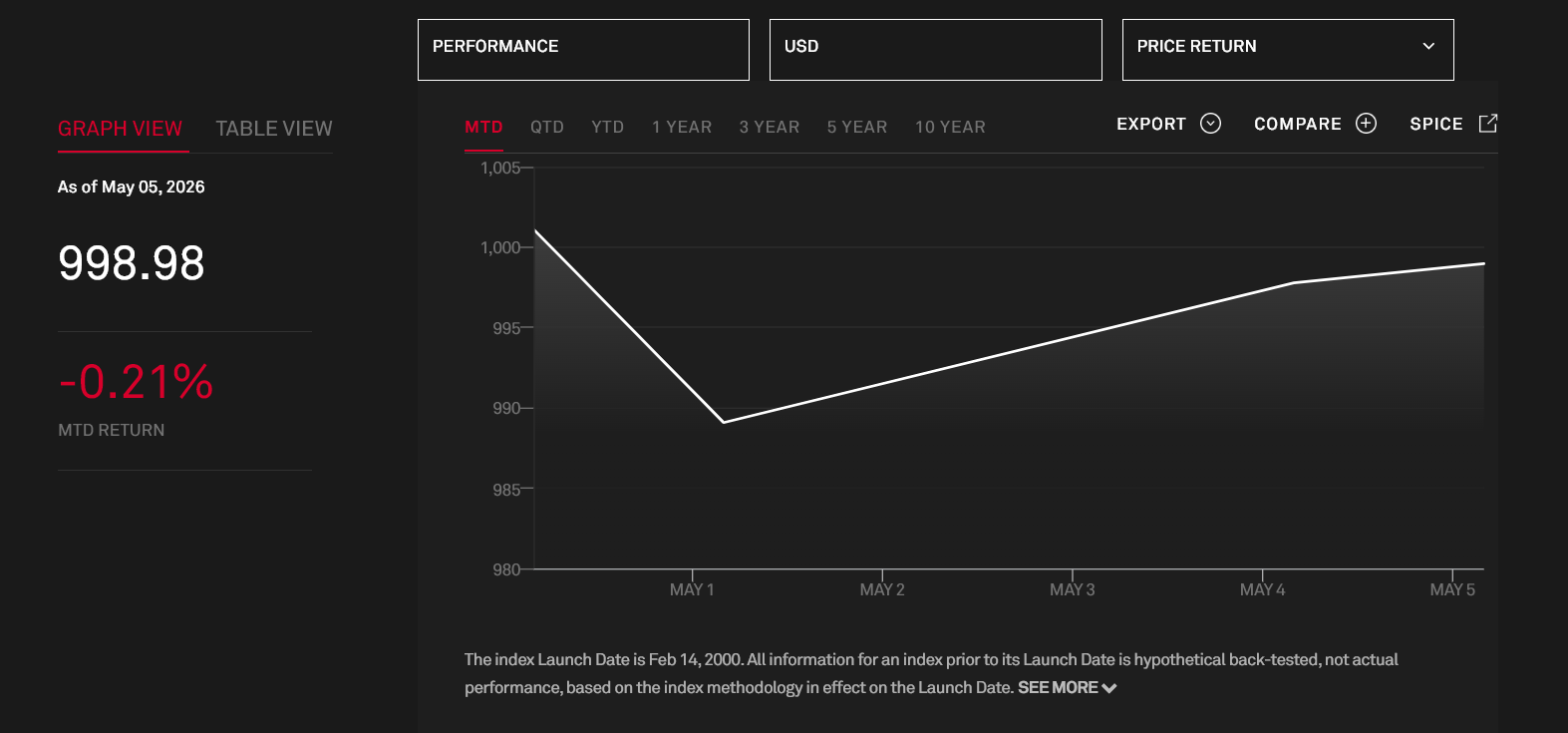
The US stock market pushed to a fresh record high on Wednesday as easing US-Iran tensions pulled oil prices lower and AMD’s blowout AI chip earnings reignited the semiconductor rally.
The S&P 500 climbed 1.14%, the Nasdaq Composite jumped 1.51%, and the Dow Jones Industrial Average added 1.10%. A solid ADP private payrolls print reinforced the soft-landing narrative, with broad participation supporting the gains.
1. Iran Deal Proximity Pulled Oil Lower
The White House is reportedly nearing a one-page memorandum of understanding with Iran that would halt fighting and open nuclear talks, with Iran expected to respond within 48 hours.

The proposed terms include Iran pausing uranium enrichment, accepting UN inspections, and curbing underground sites in exchange for the US easing sanctions and releasing frozen assets.
Both sides would loosen Strait of Hormuz restrictions, opening a 30-day negotiation window. Trump has paused escalation, including plans for naval escorts through the Strait.
The deal proximity compressed crude oil prices, with Brent easing as traders priced in supply normalization. The move lifted risk assets broadly while pressuring energy names.
Lower oil prices also reduce inflationary pressure on consumer spending, which supported the broader equity bid.
2. AMD AI Chip Earnings Triggered a Semiconductor Rally
Advanced Micro Devices (AMD) jumped 16.29% to a record high after beating Q1 estimates and raising guidance. The chipmaker reported adjusted EPS of $1.37 on $10.25 billion in revenue, with revenue growing 38% year over year on strong data-center AI demand.
Management raised its Q2 outlook, signaling confidence that the AI buildout has further to run.

The print validated the thesis that AI chip spending is broadening beyond Nvidia, lifting semiconductor peers across the board. Super Micro Computer (SMCI) jumped 15.25%, Nvidia (NVDA) rose 4.31%, Lam Research (LRCX) gained 7.17%, Micron Technology (MU) added 2.77%, and Intel (INTC) climbed 2.40%.
That cluster alone drove most of the S&P 500’s advance.
3. ADP Jobs Report Reinforces Soft-Landing Narrative
The April ADP private payrolls report showed 109,000 jobs added, beating the consensus expectation of 84,000. The print supports the soft-landing thesis at a time when Fed officials are weighing the inflation impact of recent oil price volatility.
A stronger-than-expected jobs number combined with cooling oil prices gives the Fed cover to maintain its measured policy stance, which markets read as constructive for growth and risk assets.
What Happened to Major US Indexes?
- S&P 500: +1.14% to 7,341.93 (fresh all-time high)
- Nasdaq Composite: +1.51% to 25,707.5
- Dow Jones Industrial Average: +1.10% to 49,839.3

Market breadth confirmed the move with advancers at 60.3% against decliners at 36.3%. New highs ran at 75.9% versus new lows at 24.1%, and the bull-bear ratio sat at 53% bull against 47% bear. The breadth profile is more constructive than recent sessions and signals broader participation in the AI-led rally.
On the S&P 500 daily chart, the index has rallied steadily since bottoming on March 31, with the move continuing through May 1 before a mild consolidation that resolved higher on the Iran deal hopes. The volume profile through the rally has remained steady, with healthy bar action suggesting proper buying pressure rather than a thin breakout.

The next resistance is 7,399 (0.236 Fibonacci). A daily close above opens the path to 7,540 (0.382 Fibonacci) and 7,654 (0.5 Fibonacci). The 0.618 Fibonacci at 7,767 represents roughly 5% upside potential.
On the downside, weakness emerges below 7,172, with 7,001 as the key psychological floor. A break below 7,001 would weaken the current breakout structure.
Which Sectors Are Holding Up?
Basic Materials led the tape at +3.68%, followed by Technology (+2.08%), Industrials (+1.93%), and Communication Services (+1.63%). Tech leadership reflected the AMD-driven AI chip rally, with semiconductor names absorbing the bulk of inflows.

Industrials gained on aerospace strength, with GE rising 6.04% as ceasefire-related volatility settled. Real Estate (+1.53%) and Consumer Cyclical (+1.41%) advanced as lower oil eased consumer cost pressure and improved discretionary spending visibility.
Which Sectors Are Falling?
Energy fell sharply at -3.74% as Brent crude eased on the Iran deal proximity.
Exxon Mobil (XOM) dropped 4.72% and Chevron (CVX) fell 4.58%, with the energy decline directly tied to the supply normalization narrative driving oil lower.

Utilities (-0.73%) underperformed as defensive positioning rotated out in favor of growth and AI-driven tech leadership.
What Are Investors Watching Next?
The 48-hour Iran response window is the immediate catalyst. A signed MOU would compress crude further and likely extend AI-led tech leadership. A stalled or rejected response would re-introduce premium into oil and pressure broader risk.
On the technical side, the S&P 500’s path through 7,399 will tell investors whether the AI-driven breakout has the volume to extend toward 7,654 and beyond.
The post Why Is The US Stock Market Up Today? appeared first on BeInCrypto.
XRP is trading at $1.45 as the new week opens. It is quietly staging one of the more interesting recoveries it has managed since the cycle peak.
While Bitcoin’s recent push has provided a rising macro tide, XRP is pressing against the convergence of the 100-day MA and the descending channel’s upper boundary simultaneously, with an RSI that is building genuine momentum for the first time in weeks. How the asset handles the next 48 hours may be the most technically significant test the pair has faced this entire corrective phase.
Ripple Price Analysis: The USDT Pair
For the first time since the failed mid-April breakout attempt, XRP is testing the descending channel’s upper boundary with an RSI that has climbed to the 60–65 range and is still far from overbought. The price is now sitting directly at the 100-day MA at approximately $1.40, which converges with the channel’s upper rail at the $1.45 level. This area is the most technically loaded resistance zone on the chart.
A sustained daily close above $1.50 would represent both a channel breakout and a moving average recapture simultaneously, which is the kind of dual confirmation that prior attempts lacked. From there, the first meaningful target is the $1.80 supply zone where the 200-day MA is also located. On the downside, the $1.20 February demand zone remains the critical support level that the market should hold at all costs to avoid a continuation of the bearish trend.

The BTC Pair
Against Bitcoin, the picture remains structurally bearish, but the RSI has dropped and rebounded from approximately 25 while also demonstrating a clear bullish divergence, marked by the red line on the chart. The pair is trading at around 1,760 sats, below the 1,800 sat broken support level but within the gravitational pull of this zone. The lower channel boundary declining toward 1,600 sats below is the nearby support element if the market drops lower.
Oversold RSI readings and bullish divergence at this extreme do not automatically guarantee a structural reversal, but they have historically preceded, at a minimum, a relief bounce. On the upside, the 100-day MA at ~2000 sats and the 200-day MA at ~2,100 sats remain the structural ceilings that define any genuine recovery above 1,800 sats. For now, the BTC ratio tells the same story it has for months: XRP continues to underperform Bitcoin, and the only development worth noting is that selling may be approaching a short-term exhaustion point.

The post Ripple Price Analysis: Next 48 Hours Will Be Crucial for XRP’s Future appeared first on CryptoPotato.
Although not posting as substantial gains as some other altcoins, Ethereum (ETH) has also headed north amid the overall market revival.
In the meantime, many analysts believe that the asset could be gearing up for a big move, while certain indicators support the bullish scenario.
What’s Next After the Golden Cross?
ETH finally reclaimed $2,400 earlier today after failing to do so over the past few weeks, but continues to dabble with it now. The most obvious catalyst for its price ascent seems to be the broader market rebound, fueled by fresh developments in the Middle East and other factors.
Earlier today (May 6), numerous reports indicated that the US and Iran are close to reaching a peace deal and eventually reopening the Strait of Hormuz. Besides pushing the crypto market up, the news was followed logically by a plunge in oil prices.
According to the popular analyst Ali Martinez, ETH’s uptrend may continue in the near future. He spotted the formation of a so-called golden cross on the asset’s chart, a pattern that appeared in the final days of April. This setup is considered bullish and happens when the 50-day moving average crosses above the 200-day moving average. Martinez believes it could open the door to a rally to as high as $2,680, or a 12% increase from current levels.
The X user Max Crypto also pointed to $2,680, but for a completely different reason. They noted that ETH has an unfilled CME gap at that zone – a price discrepancy created when CME futures close for the weekend and reopen at a different level. Markets tend to fill these voids over time, which is why traders pay close attention to them.
For his part, Ted predicted that a breakout above $2,400 could push the valuation of the second-biggest cryptocurrency towards $2,500-$2,600.
Is ETH Not Done Yet?
The institutional interest in the asset has increased lately, signaling that Ethereum’s price may continue its upswing. SoSoValue’s data displays that inflows into spot ETH ETFs have surpassed outflows during the first days of May, suggesting that pension funds, hedge funds, and other investors have boosted their exposure to the asset. This development is seen as bullish because the companies issuing these products must buy real ETH to back the shares they sell to customers.

Moreover, Ethereum’s exchange reserves fell to a fresh ten-year low of around 14.3 million coins. This means investors continue to abandon centralized platforms and move to self-custody, thereby reducing immediate selling pressure.

The post Analyst Spots an Ethereum (ETH) Golden Cross: Is a Big Rally on the Way? appeared first on CryptoPotato.
Crypto World
DraftKings And Bet365 Dominate Their Markets. ZunaBet Is Dominating The Conversation For The Player Neither Serves.
Dominance in a market is not universal. DraftKings dominates the US online gambling market for the US sports bettor — the player the platform was built around, the player whose expectations it meets consistently, and the player who has kept it at the top of US market share tables since state-by-state licensing opened. Bet365 dominates the international sportsbook market for the global sports bettor — the player whose primary criterion is the widest possible range of betting markets and who has found no better answer in 25 years of looking.
Both forms of dominance are real and both are earned. Neither is universal.
The player neither platform dominates for is the one driving the most significant shift in the 2026 online gambling audience. Crypto-native. Esports-aware. Loyalty-transparent. Withdrawal-speed-sensitive. This player is not looking for the platform that dominated yesterday’s market. They are looking for the platform built for theirs. In 2026 that platform is ZunaBet — and the conversation it is generating among this player type is what this article examines.
DraftKings: Dominant Where It Was Built to Dominate
The circumstances that produced DraftKings’ US market dominance were specific enough that they are worth understanding clearly. A daily fantasy sports platform with existing brand recognition and an engaged US sports audience converted that audience into licensed gamblers when the legal framework for state-by-state sports betting opened after 2018. The conversion speed was faster than most competitors from outside the US could manage and the dominance it produced has proven durable through consistent product investment.
The sportsbook is the product’s core expression of that dominance. American sports culture is embedded in it at a level that international platforms find difficult to replicate from the outside — NFL with the market depth and cultural fluency that US bettors expect, NBA and MLB and NHL and college sports structured around the specific rhythms of American sports betting. The app is reliable. In-play coverage is well-developed. Odds compete within the US context.
The casino serves its supporting function adequately. A reasonable library, live dealer content, standard table game variants for the mainstream US player.
The dominance has edges. Fiat payment infrastructure means withdrawal timelines of multiple business days as standard. Bitcoin in select states does not change this fundamentally because it is not native crypto infrastructure. Dynasty Rewards points convert to less actual cash value than tier descriptions implied for most players who calculate it carefully. Geographic operation is confined to licensed US states.
Where DraftKings dominates it dominates genuinely. Where it does not the absence is conspicuous.
Bet365: Dominant Where It Was Built to Dominate
Bet365’s international sportsbook dominance is the product of 25 years of singular focus producing a sportsbook that no competitor has fully replicated. Major global sports at comprehensive depth, minor events that other platforms do not price, in-play coverage on competitions that competitors abandon before they start, live streaming of events within the platform as players bet on them. For the sports bettor whose measure of quality is range of available markets the dominance is deserved.
The casino has grown alongside the sportsbook. A large library, strong live dealer content, polished and consistent platform experience. The product reflects the resources of an operator that has been investing in breadth for decades.
The dominance has edges here too. Geographic restrictions eliminate the platform for the entire US market and several other significant jurisdictions. The loyalty program’s meaningful tiers are invite-only — the general player base operates without meaningful loyalty visibility or a clear pathway toward the levels that deliver genuine value. Crypto support is minimal. Fiat banking timelines apply throughout.
Where Bet365 dominates it dominates genuinely. Where it does not the absence is equally conspicuous.
ZunaBet: Dominating the Conversation for the Player Left Out
ZunaBet launched in 2026 under Strathvale Group Ltd, operating under an Anjouan gaming license and registered in Belize. The team carries over 20 years of combined industry experience. It is not a US licensed operator and it does not hold UK regulatory certification. It is a crypto-first, internationally accessible platform built specifically around the player that neither established platform dominates for — and it is generating the conversation it is generating because that player is searching actively and finding what they are looking for.
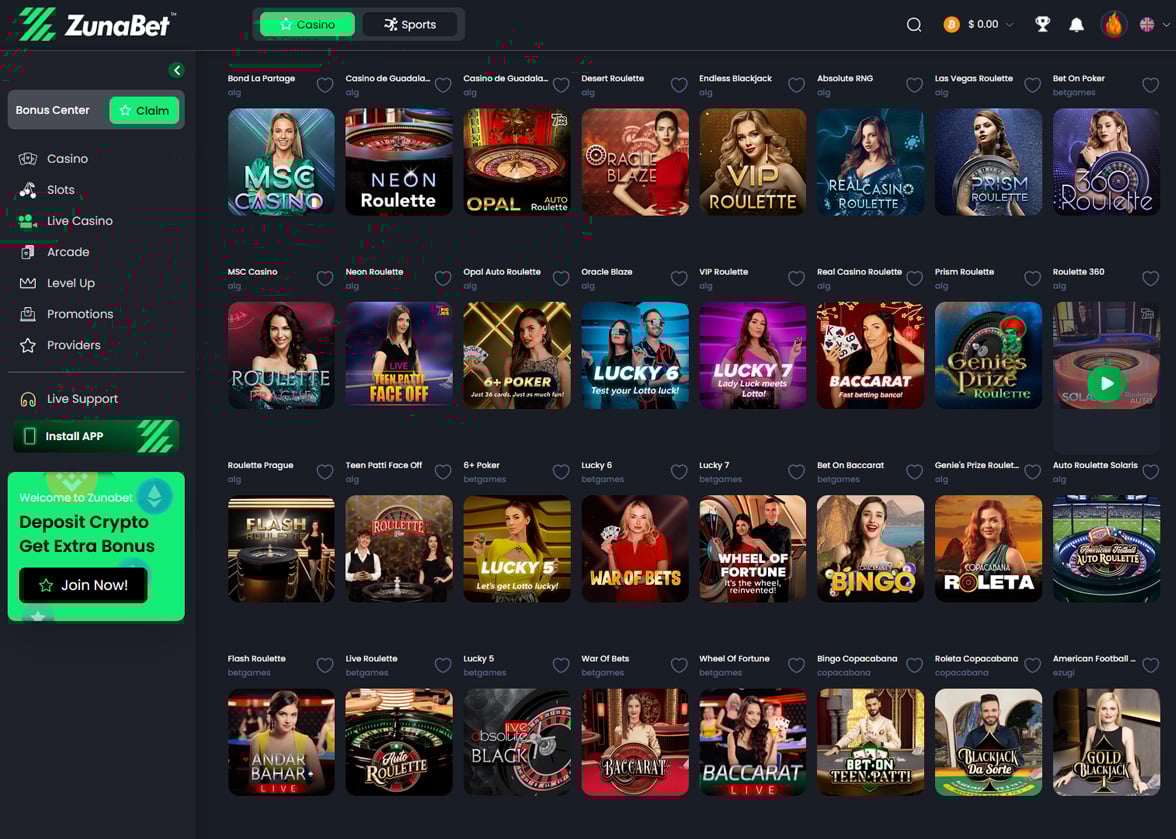
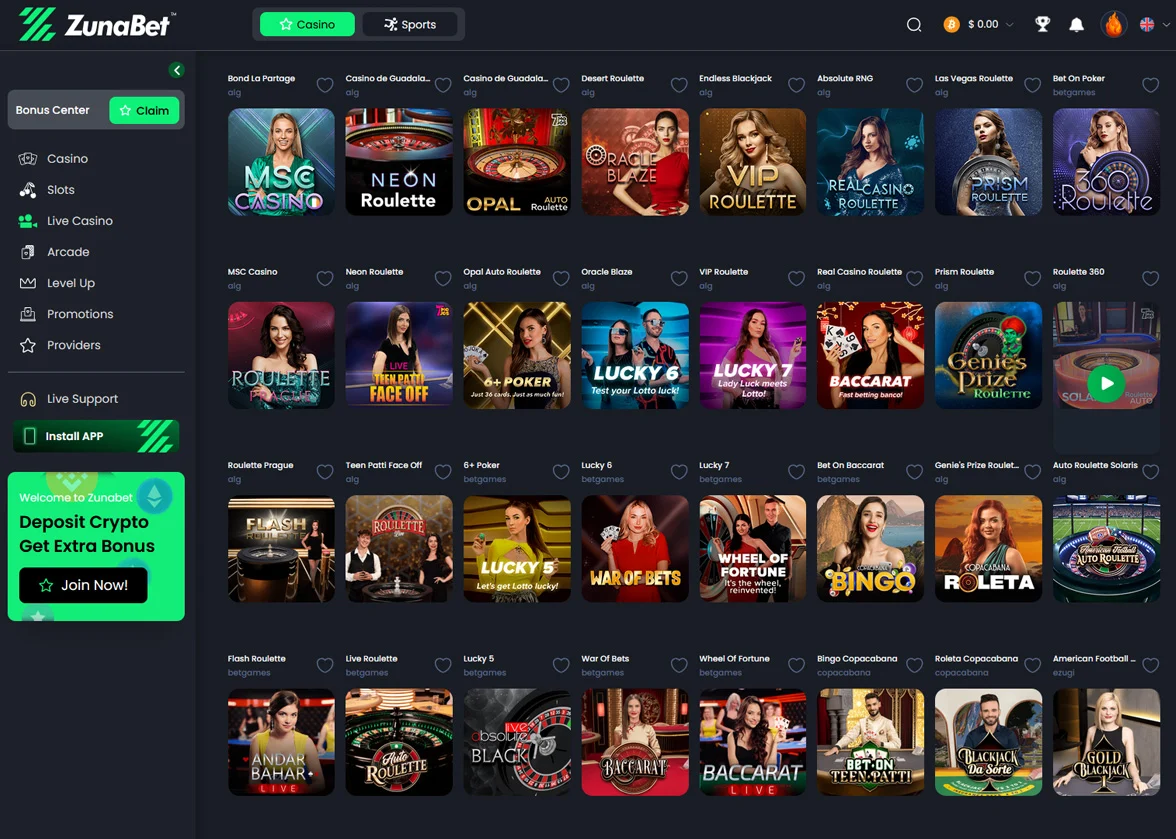
The game library starts the product conversation at a number that differentiates immediately. ZunaBet carries 11,294 titles from 63 providers. The player whose search includes game library depth finds a number here that exceeds both established platforms by a margin that reflects a fundamentally different category of casino product. Evolution for the full live dealer catalogue across table games and game shows. Pragmatic Play across multiple product categories. Hacksaw Gaming for the high-volatility slot mechanics that experienced players seek specifically. Yggdrasil for its distinctive design philosophy that has built a dedicated following. BGaming for content whose aesthetic speaks to the crypto-native player’s preferences. Sixty-three providers means sixty-three different creative approaches — different mechanics, different volatility profiles, different visual identities — producing genuine variety that volume alone cannot deliver.
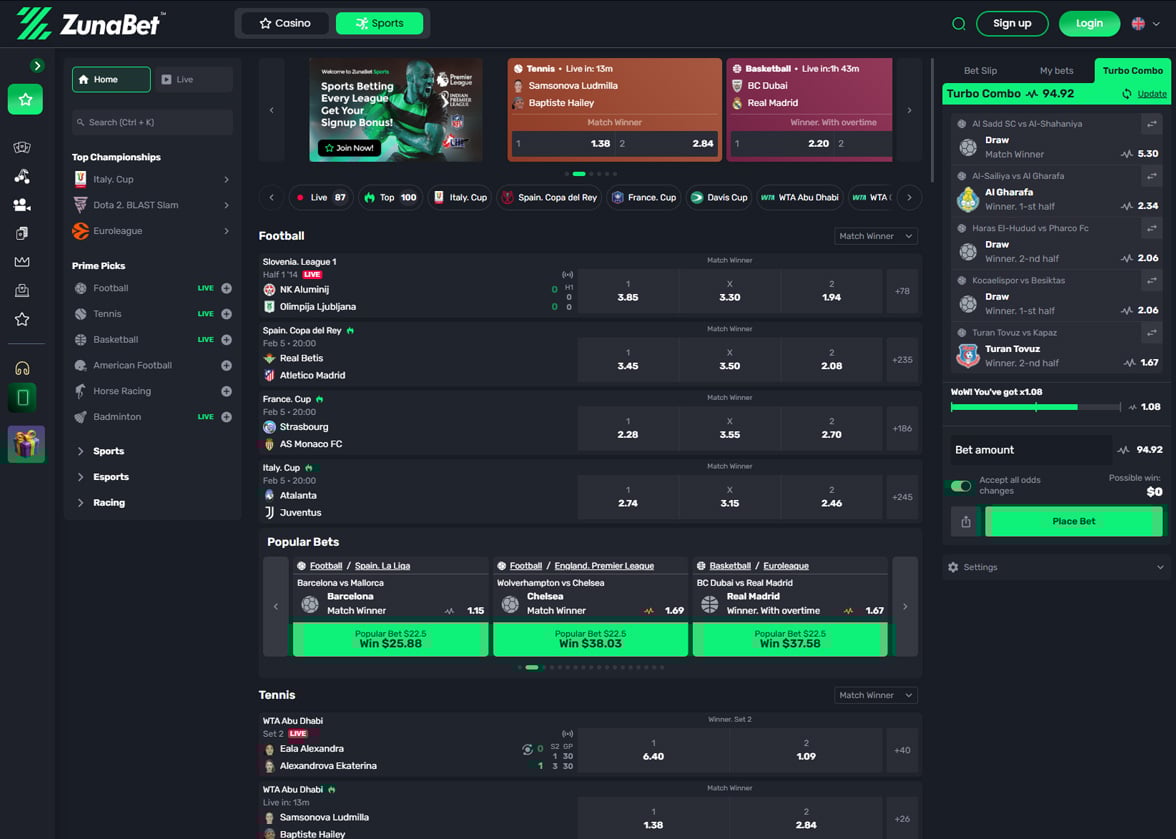
The sportsbook covers football, basketball, tennis, NHL, and other major global sports. The conversation it generates among the player left out by both established platforms comes from the esports section — CS2, Dota 2, League of Legends, and Valorant as genuine primary markets. Virtual sports and combat sports complete a sportsbook designed around the full range of what the 2026 player bets on. One account. One balance. One loyalty program covering everything.
Payment support covers more than 20 cryptocurrencies natively — BTC, ETH, USDT across multiple chains, SOL, DOGE, ADA, XRP, and others. No platform processing fees. Withdrawals settling in minutes. Apps across iOS, Android, Windows, and MacOS with 24-hour live chat support.
The Payment Conversation: Why Minutes vs Days Generates Attention
The payment comparison between ZunaBet and both established platforms is generating conversation because the gap is structural and the player it affects is growing in number.
DraftKings processes withdrawals through fiat banking in the US regulatory context. Multiple business days as standard. Bitcoin in select states does not change this because it is processed through layers that negate crypto’s speed advantage.
Bet365 processes withdrawals through fiat banking in its operating jurisdictions. Bank transfer, card payment, e-wallet — each with associated processing timelines measured in days.
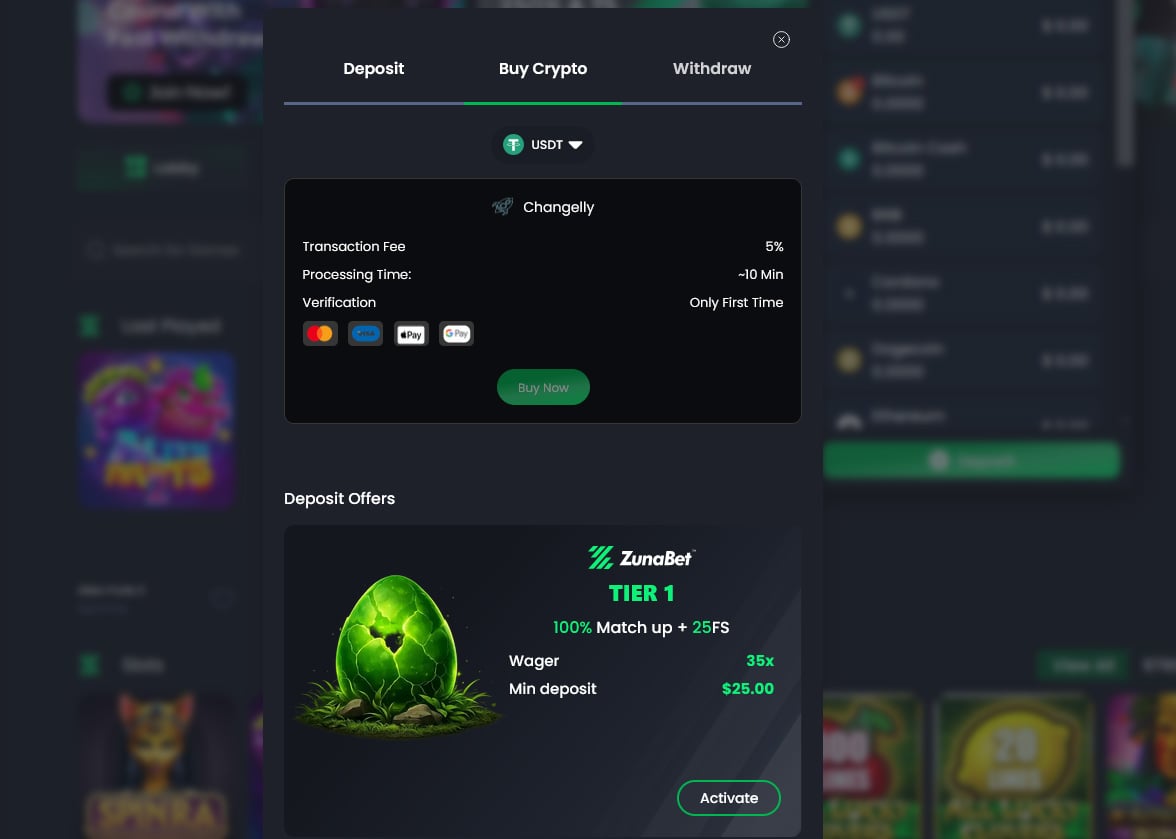
ZunaBet processes withdrawals through native crypto infrastructure. Minutes. Twenty-plus coins supported natively. No fees beyond standard network costs. No banking intermediaries introducing delays.
The conversation this generates is simple. A player who discovers that one platform measures withdrawal time in minutes and two measure it in days has had their expectation permanently recalibrated. Every subsequent platform evaluation includes the minutes question. For the growing segment of crypto-native players this recalibration is happening in large numbers and ZunaBet is the platform on the right side of it.
The Loyalty Conversation: Why Transparency Generates Attention
The loyalty conversation ZunaBet is generating follows the same pattern. Players who have calculated their actual return under DraftKings Dynasty Rewards — points converting through a redemption structure that delivers less cash value than headline tier descriptions suggested — are actively looking for something more transparent. Players who have investigated Bet365’s loyalty structure and discovered that the meaningful tiers are invite-only are equally motivated to look elsewhere.
ZunaBet’s dragon evolution loyalty system generates attention because it answers the transparency question before it is asked. Six tiers — Squire, Warden, Champion, Divine, Knight, and Ultimate — with a gamified mascot called Zuno and direct rakeback rates of 1%, 2%, 4%, 5%, 10%, and 20%. All tiers open. All rates applying to all activity — casino sessions and sportsbook bets alike. No conversion process. No invitation. No ambiguity about what the stated percentage means in practice.
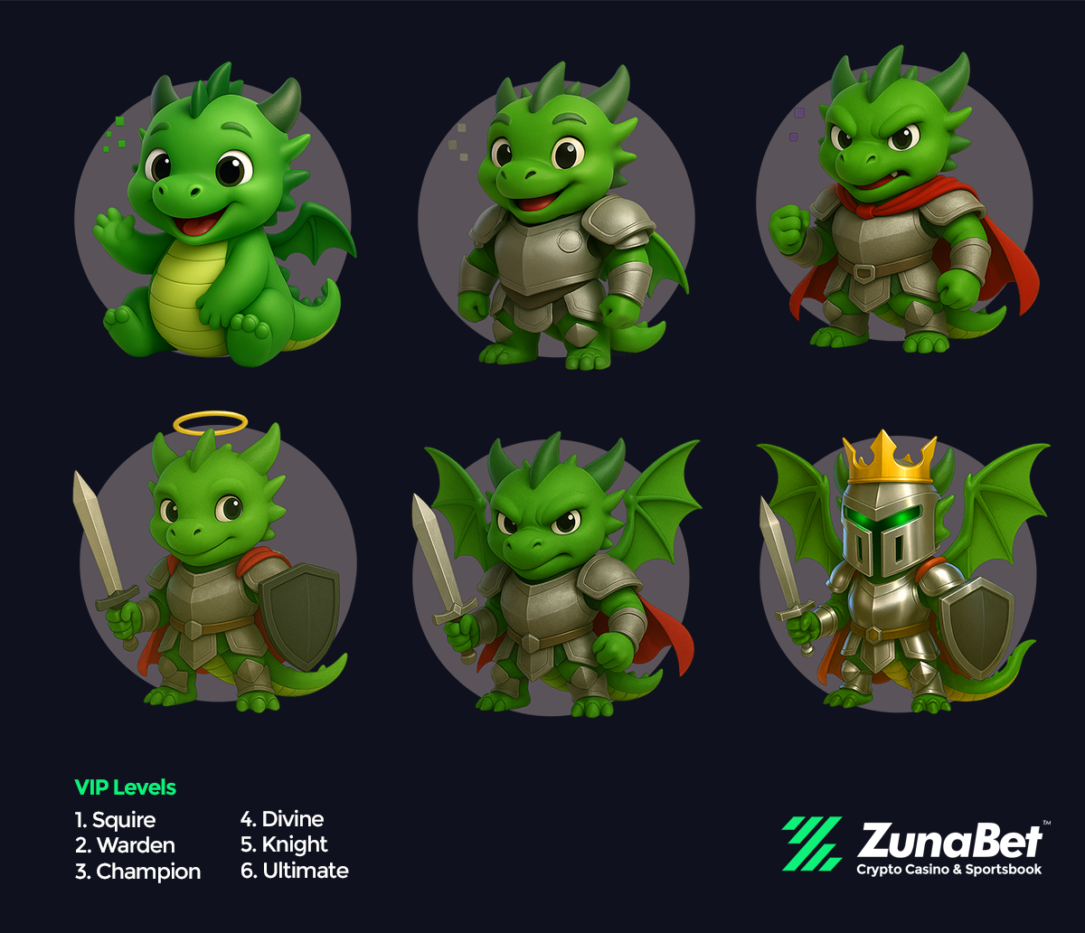
Twenty percent at the Ultimate tier means twenty percent returned. That calculation is available before the first deposit and it does not change. Additional tier benefits — up to 1,000 free spins, VIP club access, double wheel spins — extend the value beyond a core structure that already delivers direct transparent returns.
The conversation this generates is equally simple. A player comparing a loyalty program that requires guesswork with one that requires only multiplication is not making a difficult choice.
The Welcome Bonus
ZunaBet new players receive a bonus across three deposits totalling up to $5,000 plus 75 free spins. First deposit matched 100% up to $2,000 with 25 free spins. Second deposit matched 50% up to $1,500 with 25 spins. Third deposit matched 100% up to $1,500 with 25 spins.
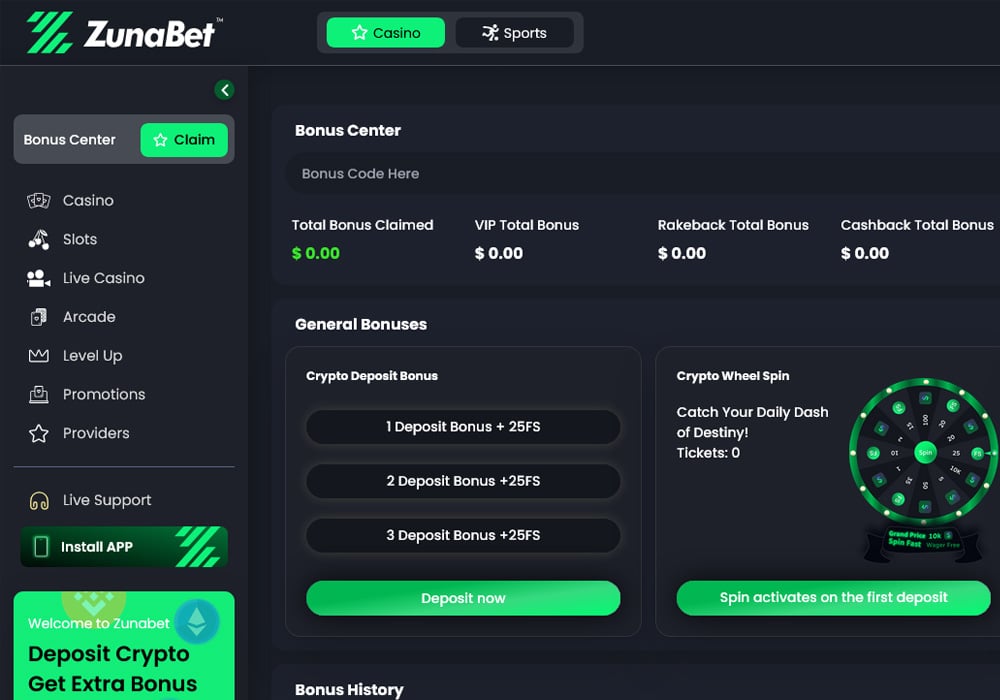
DraftKings and Bet365 offer welcome promotions within their regulated markets. Terms vary by jurisdiction and should be confirmed directly on each platform. ZunaBet’s three-deposit structure gives players time to explore a platform of 11,000-plus games and a full sportsbook before the promotional window closes.
What the Three-Way Conversation Concludes
DraftKings dominates its market and serves its player well. The conversation it generates is the conversation of a dominant platform — brand recognition, established trust, consistent product quality for the player it was built for.
Bet365 dominates its market and serves its player well. The conversation it generates is the same kind — sportsbook comprehensiveness, operational history, the deepest market coverage available for the player in an eligible jurisdiction.
ZunaBet generates a different kind of conversation. It is the conversation of a platform that arrived at exactly the moment when the player it was built for was most actively searching. The crypto-native player. The esports bettor. The player who wants loyalty transparency before commitment and withdrawal speed that matches their expectations of digital transactions.
ZunaBet launched in 2026 and its operational track record is still short. That belongs in any honest comparison and players should weigh it. But the conversation it is generating is the conversation of a platform that found its player — and in 2026 that player is not going back to the platforms that were built without them in mind.
Disclaimer: This is a Press Release provided by a third party who is responsible for the content. Please conduct your own research before taking any action based on the content.
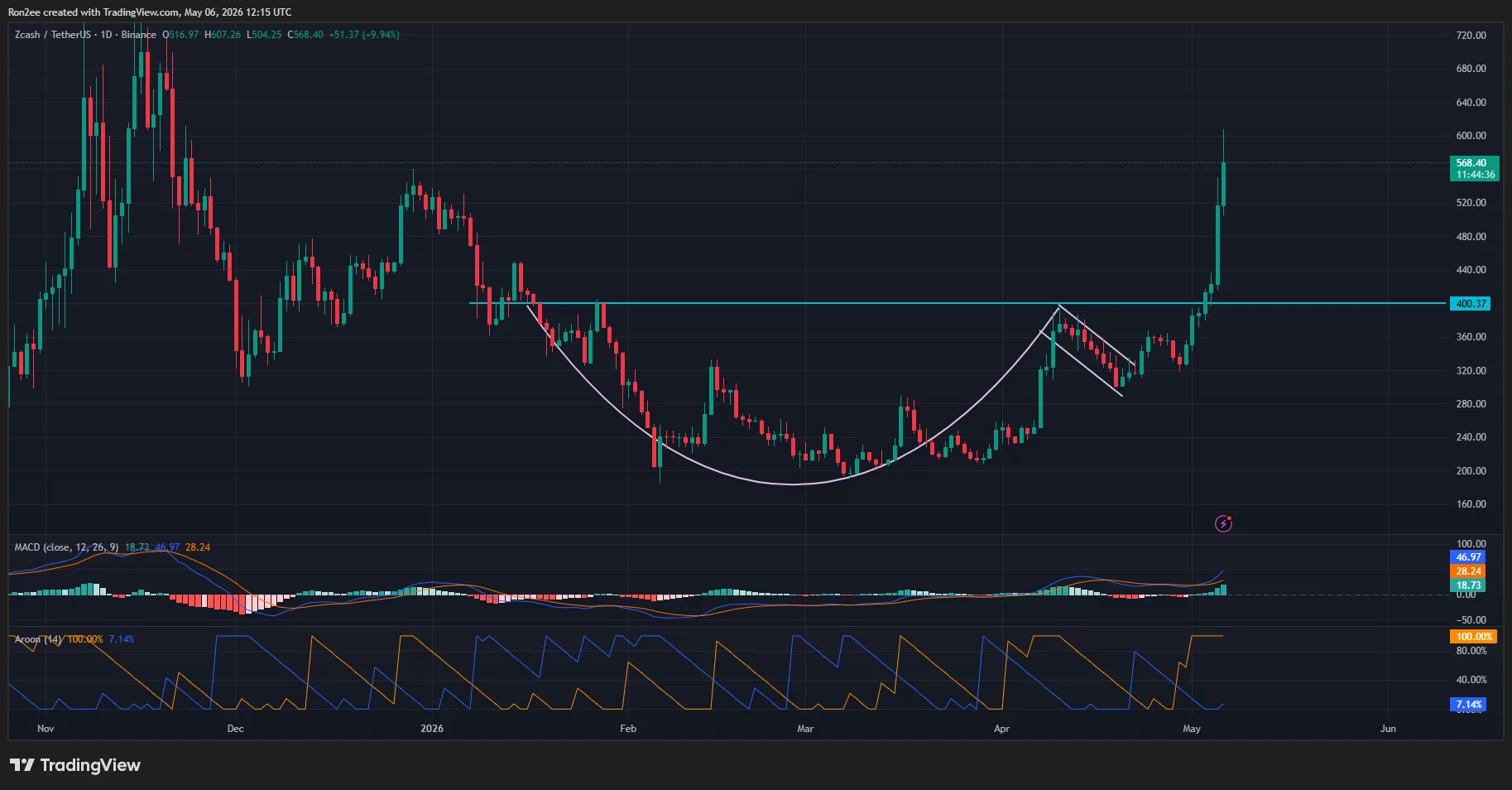
Zcash price surged more than 40% on Wednesday, briefly touching the $600 mark after Multicoin Capital co-founder Tushar Jain revealed the firm had quietly accumulated a significant position in the privacy-focused cryptocurrency since early 2024.
Summary
- Zcash price surged more than 40% after Multicoin Capital revealed it had accumulated a major ZEC position since 2024.
- Investor sentiment strengthened ahead of the FCMP++ upgrade, which aims to expand Zcash’s privacy and scalability capabilities.
- Technical indicators signaled strong bullish momentum as ZEC broke above key resistance levels and trading volume hit a 2026 high.
According to data from crypto.news, Zcash (ZEC) surged from an intraday low near $405 to as high as $607 before stabilizing around $579 at press time. The rally pushed the privacy-focused token to a fresh year-to-date high and made it one of the best-performing cryptocurrencies across both daily and weekly timeframes.
A major catalyst behind today’s rally came after Tushar Jain, co-founder of crypto investment firm Multicoin Capital, revealed that the company had been building a “significant position” in Zcash since February 2024.
Jain described the investment as a long-term bet on the return of “cypherpunk ideals,” highlighting Zcash’s role as a censorship-resistant and privacy-preserving digital asset. The disclosure triggered renewed interest among both retail and institutional traders, helping accelerate bullish momentum around the token.
Investor sentiment also strengthened ahead of the network’s upcoming FCMP++ upgrade milestone, with the next testnet phase scheduled for later today. The upgrade is expected to significantly expand Zcash’s privacy capabilities and scalability for shielded transactions, reinforcing its position within the privacy coin sector.
At the same time, supply dynamics appeared to amplify today’s rally. Data from the Zcash dashboard showed over 30% of the circulating ZEC supply remains locked in shielded pools, reducing liquid supply available on the market and making the token more sensitive to sudden spikes in demand.
The latest rally also triggered a wave of short liquidations as bearish traders were forced to close positions amid rapidly rising prices. Daily trading volume surged to nearly $1.6 billion, marking its highest level so far in 2026.
Zcash price analysis
On the daily chart, Zcash confirmed a bullish cup-and-handle breakout pattern after decisively breaking above the neckline resistance near $400.
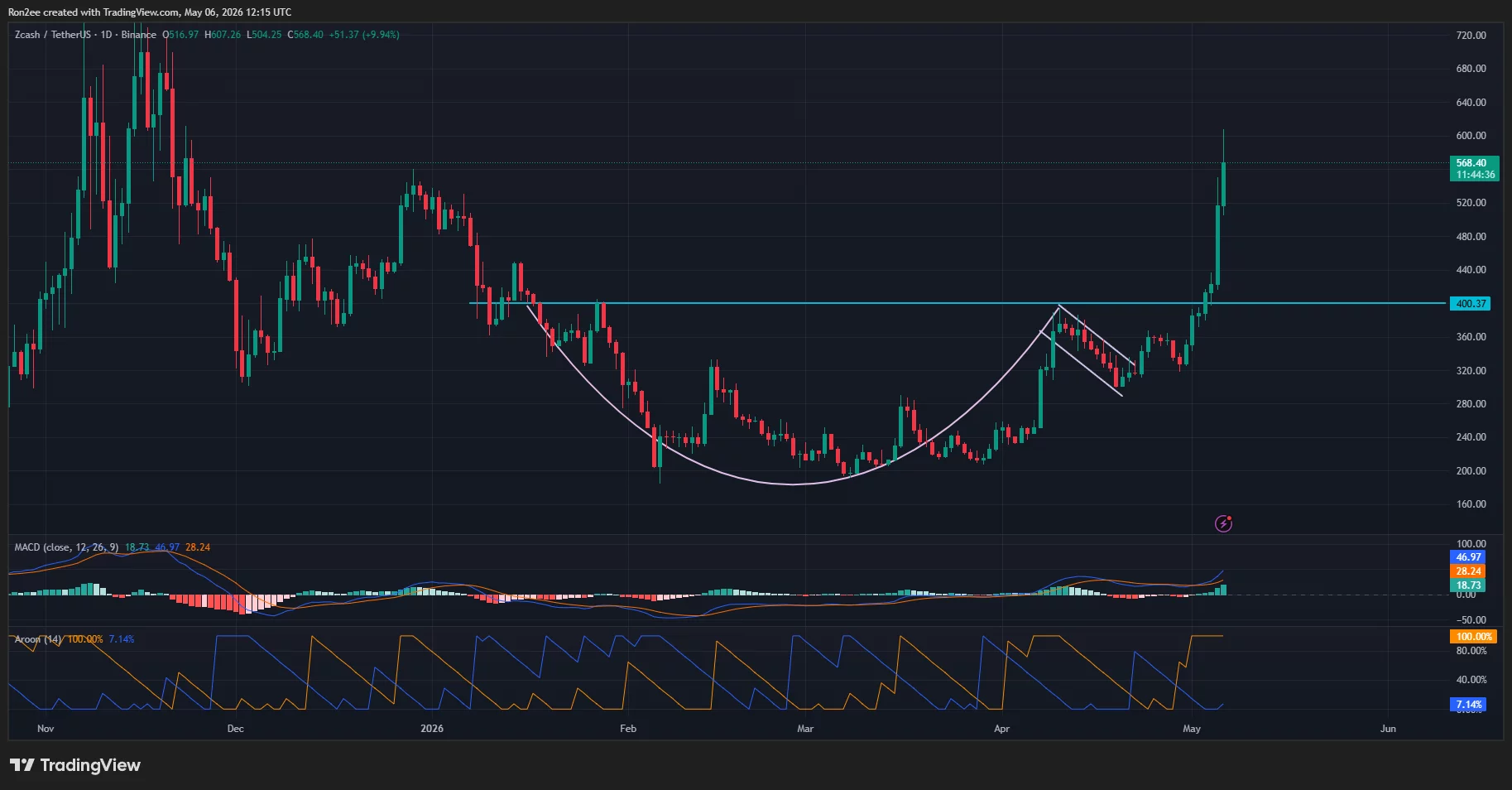
The breakout came shortly after the token escaped a falling wedge structure within the handle formation, a setup widely considered a bullish continuation signal in technical analysis.
Momentum indicators also pointed to strengthening upside momentum. The MACD lines widened sharply in bullish territory while the histogram continued printing larger green bars, signaling accelerating buying pressure.
At the same time, the Aroon Up indicator surged to 100 while the Aroon Down dropped close to 7, reflecting a strong bullish trend with limited signs of seller dominance.
If the breakout holds, bulls could next target the psychological $650 level, followed by the broader resistance region near $700.
However, if momentum weakens and Zcash falls back below the $400 breakout zone, the token could retest support near the $360–$380 range before attempting another move higher.
Disclosure: This article does not represent investment advice. The content and materials featured on this page are for educational purposes only.

TLTR:
- ETH can generate yield through staking, CeFi savings, and DeFi strategies
- Base staking returns typically range between 3% and 5% APY in 2026
- Savings-based yield offers flexibility but often lower baseline returns
- Layer 2 growth and fee burn mechanisms support long-term ETH value
- Choosing between staking and savings depends on liquidity needs and risk tolerance
Ethereum in 2026 is defined less by price cycles and more by infrastructure progress. The network has entered a phase of steady, iterative upgrades—what many developers describe as its Strawmap roadmap. Instead of one transformative event like the Merge, Ethereum now evolves through continuous improvements focused on scaling, user experience, and security.
At the same time, staking participation has reached record levels, with roughly one-third of total ETH supply locked in validation.
This combination—network upgrades, institutional demand, and constrained supply—shapes how ETH holders approach passive income today. The question is no longer whether ETH can generate yield, but where to earn interest on ETH in the most efficient way.
Main Ways to Earn Interest on ETH in 2026
There are three primary ways to earn yield on ETH in 2026. Each reflects a different balance between control, liquidity, and complexity.
1. ETH Staking (Native Yield)
Staking is the foundation of ETH passive income.
You lock ETH into the network to help validate transactions and secure the blockchain. In return, you receive rewards. In 2026, typical staking yields range between 3% and 5% APY, depending on participation and network activity.
Staking has become more flexible over time. Withdrawals are enabled, and validator mechanics continue to improve through upgrades like Pectra, which increases efficiency and reward dynamics.
The trade-off is liquidity. While ETH is no longer permanently locked, staking still introduces delays and operational considerations.
2. CeFi ETH Savings (Flexible Yield)
Centralized platforms offer an alternative: earn interest on ETH without running a validator.
This model resembles a savings account. You deposit ETH, and the platform deploys it into lending or liquidity strategies. Returns are typically in the 2%–5% range, depending on conditions and product structure.
Clapp.finance is an example of this approach. It integrates ETH savings into a broader system that includes fiat on/off-ramps and portfolio tools. Instead of separating yield from asset management, it keeps everything in one interface.
Flexible savings accounts prioritize liquidity. Funds remain accessible, and interest accrues daily, allowing ETH holders to earn yield up to 6% APR without locking assets or managing staking infrastructure .
Fixed-term options are also available, offering higher returns in exchange for committing assets for a defined period.
3. DeFi Yield on ETH
DeFi expands the range of strategies.
ETH can be used as collateral, supplied to lending protocols, or deployed in liquidity pools. Layer 2 ecosystems have made these strategies more accessible by reducing transaction costs significantly.
However, DeFi requires active management. You need to monitor positions, understand smart contract risk, and manage gas and bridging between networks.
For experienced users, it can enhance returns. For most investors, it introduces complexity that may not justify the incremental yield.
ETH Staking vs Savings
The choice between staking and savings is not about which is better—it depends on how you use your capital.
| Factor | ETH Staking | ETH Savings |
| Yield source | Network validation | Lending / liquidity |
| Typical APY | 3%–5% | 2%–5% |
| Liquidity | Limited / delayed | Instant (flexible accounts) |
| Complexity | Medium to high | Low |
| Control | Self or delegated | Platform-managed |
Staking aligns with long-term holding. It reinforces the network and provides consistent yield, but reduces flexibility.
Savings-based yield prioritizes access. You can move ETH quickly, react to market conditions, or convert to fiat without friction.
Step-by-Step Guide: Earning Yield on ETH with Clapp
For users looking to simplify ETH passive income, the process can be reduced to a few steps on Clapp, a platform that integrates yield-bearing products, a revolving credit line, and portfolio management tools – all in one place.
- First, you deposit ETH or fiat into the platform. If needed, euros can be converted into ETH directly within the app.
- From there, you choose how to allocate your assets. Flexible savings accounts allow you to earn yield while maintaining full access to your ETH. Fixed accounts provide higher returns if you are comfortable committing funds for a set period.
- Interest accrues automatically. There is no need to manage validators, stake pools, or DeFi positions.
The advantage is operational simplicity. Instead of managing multiple tools—wallets, bridges, staking interfaces—you manage yield within a single system.
Key Factors That Affect ETH APY
Staking yields depend on how much ETH is already staked. As participation increases, rewards per validator decrease.
Network activity also matters. Higher transaction volume increases fee rewards and can improve total returns.
For savings products, yield depends on borrowing demand and liquidity conditions. When markets are active, demand for ETH increases, pushing rates higher.
Protocol upgrades also play a role. Improvements to validator efficiency and Layer 2 scaling can indirectly affect yield by changing how ETH is used across the ecosystem.
Risks to Consider
ETH yield is relatively stable compared to volatile trading strategies, but it is not risk-free.
Staking introduces validator risk. Misconfiguration or downtime can reduce rewards. Using third-party staking services adds counterparty exposure.
Savings platforms carry custodial risk. You rely on the platform’s ability to manage funds and maintain liquidity.
DeFi introduces smart contract risk. Even established protocols can experience exploits.
Market risk remains a factor. While you earn yield in ETH, the value of ETH itself can fluctuate significantly.
Ethereum as a Yield-Bearing Asset
Ethereum has moved beyond its early narrative as a speculative asset. It now functions as a productive layer in the digital economy. Staking generates base yield. Fee burn introduces scarcity. Layer 2 growth expands utility.
This combination changes how ETH fits into a portfolio. It is no longer just something to hold—it is something that can work continuously.
For investors looking to generate passive income from their Ethereum holdings, the opportunity is already built into the protocol. The challenge is choosing the right structure to capture it.
Disclaimer: This is a Press Release provided by a third party who is responsible for the content. Please conduct your own research before taking any action based on the content.


The crypto VC’s co-founder said the firm has been buying ZEC since February, and has “built a significant position.”


Spot gold smashed through $4,710 per ounce while silver jumped more than 6%, extending a months‑long precious‑metals rally that is now outpacing most risk assets and reopening the gold‑versus‑Bitcoin safe‑haven debate.
Summary
- Spot gold broke above $4,710 per ounce on Wednesday, with intraday quotes around $4,709.08, a 3.38% gain on the session.
- Spot silver jumped to $77.46 per ounce, up 6.43% on the day, extending a months‑long surge in precious metals.
- The move comes as gold and silver repeatedly notch record or near‑record highs, outpacing most risk assets and reigniting the safe‑haven debate versus Bitcoin.
Spot gold pushed through the $4,710 mark on Wednesday, with data from Gate showing prices around $4,709.08 per ounce, up 3.38% on the day. Spot silver outpaced the yellow metal, trading near $77.46 per ounce for a 6.43% daily gain, as the precious metals rally broadened across the complex.
External trackers confirm that gold has been grinding higher for months, with GoldPrice.org recently placing spot around $4,628 per ounce and noting a gain of more than $1,200 over the past year. Silver prices have also rocketed from the low‑$30s to the mid‑$70s in under twelve months, according to Fortune.
Analysts point to a familiar macro cocktail behind the move: sticky inflation expectations, growing conviction that the Federal Reserve will eventually have to cut rates, and a series of geopolitical flare‑ups that keep safe‑haven demand elevated. A late‑2025 Yahoo Finance analysis highlighted how gold rallied more than 60% year‑to‑date, easily outpacing the S&P 500 and even beating Bitcoin during a period of heightened macro stress.
Those dynamics are now colliding with structural demand. Industry data from the World Gold Council shows central banks have been net buyers of gold for several years, while silver continues to benefit from both investment demand and industrial use in solar, EVs, and electronics.
The parallel surge in gold and silver is also reshaping the long‑running “digital gold” debate around Bitcoin. A 2025 Investing.com piece on safe‑haven flows argued that gold tends to move first when real yields fall and rate cuts loom, with Bitcoin often lagging as a higher‑beta play on the same liquidity.
Crypto‑native observers are tracking that relationship closely. In one recent crypto.news report, analysts noted that while spot Bitcoin ETFs have attracted billions in inflows, gold’s market capitalization and price performance still dwarf BTC’s during acute risk‑off episodes. Another crypto.news feature stressed that central‑bank gold buying remains structurally supportive for prices in a way Bitcoin has yet to match. A separate crypto.news analysis pointed out that silver’s volatility often exceeds both gold and BTC during regime shifts, making days like this—when silver jumps more than 6%—a recurring feature of macro inflection points.
For now, with spot gold above $4,700 and silver approaching $80, the tape is unambiguous: traditional safe havens are back at center stage, even as digital assets fight to reclaim that narrative.

Hedge fund founder hits back at Mamdani’s wealth tax video
Ethereum Whales Accumulate Aggressively as ETH Price Rises to $2.4K

Vinesh Phogat’s Asian Games 2026 dream crushed as WFI bars her from trials | More sports News

Manchester United reach agreement with Casemiro over contract clause amid transfer speculation

US brings back mandatory military draft registration

Steven Gerrard disagrees with Gary Neville over ‘shock’ Chelsea and Arsenal claim | Football


-
 Business7 days ago
Tesla Officially Registers Elon Musk’s Stock: What Investors Need to Know
-

 NewsBeat3 days ago
Channel 5 – All Creatures Great and Small series 7 new post
-

 Entertainment7 days ago
Insider Claims Reason Behind Key & Peele Split
-
 Tech5 days ago
Trump’s 25% EU auto tariff breaches Turnberry Agreement that also covers semiconductors and digital trade
-
 Sports5 days ago
Paul Scholes issues Marcus Rashford reality check as agreement emerges over Man United star
-

 Entertainment5 days ago
Met Gala 2026 Rumored Guest List Is Turning Heads
-

 Entertainment7 days ago
Celebrities Who Are Attending the 2026 Met Gala Event
-

 Business5 days ago
Strait of Hormuz Blockade Persists Amid US-Iran Standoff, Sending Oil Prices Soaring
-
Entertainment5 days ago
New on Prime Video in May 2026 — Full List of Movies and Shows
-

 Sports5 days ago
Cavaliers vs. Raptors Game 6 live score, updates, highlights from 2026 NBA playoffs first-round series
-
 Sports5 days ago
David Benavidez responds to team Canelo saying the fight will never happen
-

 Crypto World7 days ago
Meta (META) starts stablecoin payout to creators in Circle’s USDC on Polygon, Solana via Stripe
-
Business7 days ago
Strait of Hormuz Remains Heavily Restricted on April 29 Amid Iran Conflict
-
 Sports5 days ago
IPL 2026: ‘Love you darling’- Hardik Pandya’s reaction to MS Dhoni steals the show |Watch | Cricket News
-

 Tech7 days ago
Texas Instruments made a new flagship graphing calculator: the TI-84 Evo
-

 Sports7 days ago
Saudi Arabia set to withdraw LIV Golf funding after 2026 season, per reports
-

 Entertainment5 days ago
Kylie Jenner Hit With Second Lawsuit From Ex-Housekeeper
-

 Entertainment5 days ago
Young and the Restless Next Week: Cane Arrested & Matt’s Deadly New Scheme!
-

 Tech6 days ago
Mark Zuckerberg Says Meta Is Working On AI Agents For Personal And Business Use
-

 Sports5 days ago
Plane crash in Wimberley, Texas kills 5 pickleball players at tournament
You must be logged in to post a comment Login