
Politics
Poll: SAVE America Act meets voter skepticism

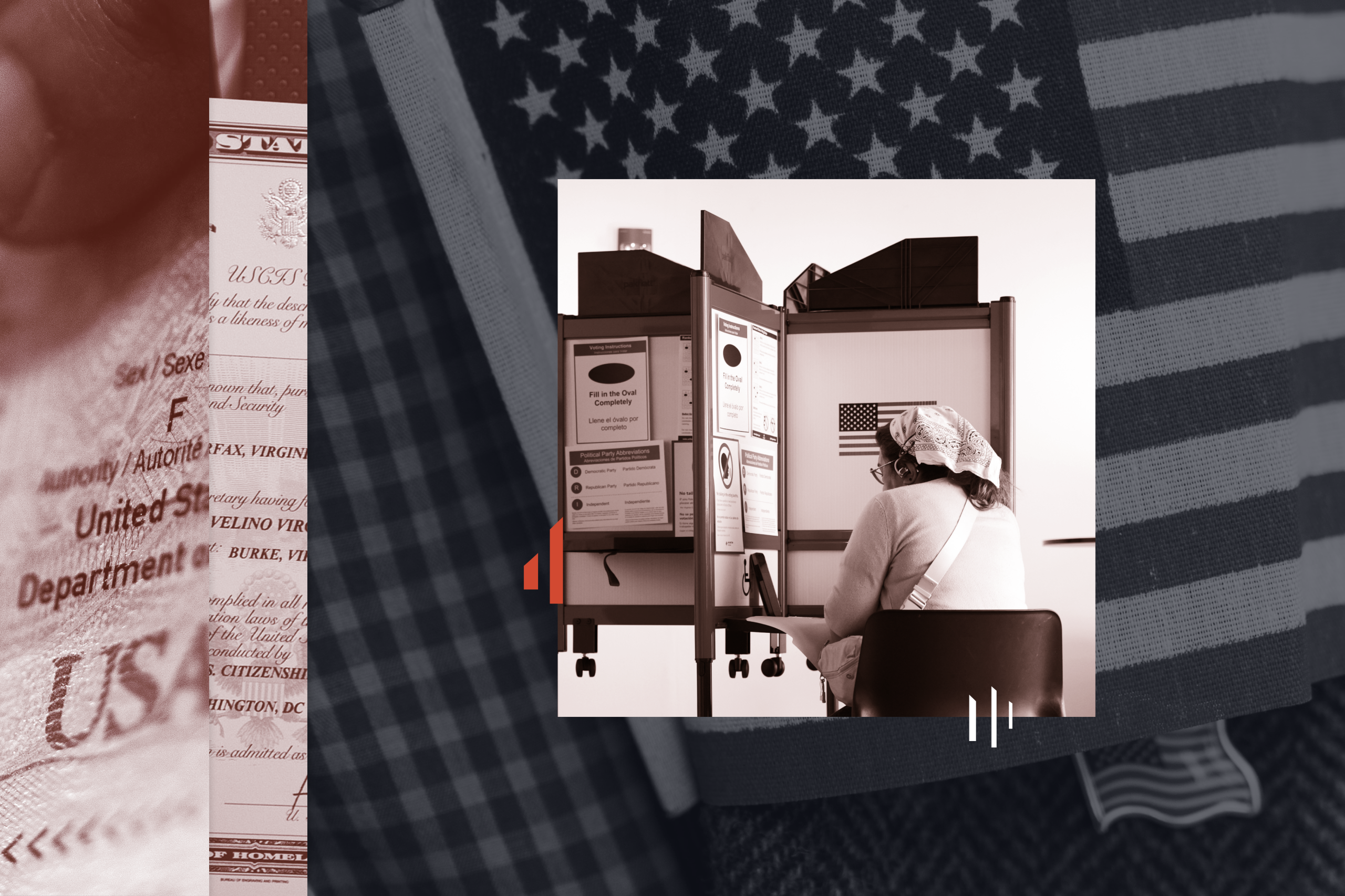

President Donald Trump has made the SAVE America Act a central GOP priority ahead of the midterms. Voters still don’t know how to feel about it.
New results from The POLITICO Poll show that while many Americans support some core provisions of the SAVE America Act — such as requiring documentary proof of U.S. citizenship to register to vote — that support is not overwhelming. And they are far less certain about the sweeping elections bill overall, even as Trump has for months pressured Republican lawmakers to pass it.
Democrats in particular oppose much of the SAVE Act, and many of them are unenthusiastic even about the voter ID provisions that generate the broadest support — a sign that Trump is prioritizing legislation that has little crossover appeal.
A 42 percent plurality of voters who supported former Vice President Kamala Harris in 2024 back requiring proof of citizenship when registering to vote, including when registering by mail. But that number is dwarfed by the three-quarters of Trump 2024 voters who support such a measure, according to the survey conducted by Public First.
Asked about the bill overall — by name, but without providing information on what’s included — just 37 percent of Americans said they support it, and 21 percent oppose it. A larger share, 42 percent, say they neither support nor oppose the SAVE America Act, or are unsure.
Slightly more Americans say the bill will make elections fairer (38 percent) than those who say it will make elections less fair (32 percent). But 30 percent say they don’t know — another sign that their views on the issue are still forming even as the president wields it as a campaign cudgel.
“We are either going to fix” elections, he wrote on his Truth Social recently, casting it in existential terms, “or we won’t have a Country any longer.”
The findings reveal that though voter ID and proof of citizenship are popular, the SAVE America Act has not broken through in the same way. In addition to requiring proof of citizenship, the bill would also require states to regularly review voter lists and remove non-citizens.
“Voter ID is very popular, but the SAVE Act has been loaded up with other stuff,” said Buzz Brockway, a GOP strategist and former state representative in Georgia. “I think Senate Republicans should strip the bill back to Voter ID only. It still won’t pass because of Democratic opposition, but it would be a more popular bill.”
White House spokesperson Abigail Jackson said the SAVE America Act is “commonsense legislation supported by the vast majority of Americans … who want to ensure our elections are secure and that only American citizens vote in American elections.”
The SAVE America Act passed the House in February and has stalled in the Senate amid GOP divisions and staunch Democratic opposition. Four Republican senators — Sens. Susan Collins (R-Maine), Lisa Murkowski (R-Alaska), Thom Tillis (R-N.C.) and Mitch McConnell (R-Ky.) — recently voted against an amendment that would have helped the legislation get across the finish line as part of a broader reconciliation package, raising new questions about its path forward in a narrowly divided Congress.
Critics of the legislation say it would make it much harder for Americans who lack the proper documentation — such as a paper copy of a birth certificate or passport — to vote.
“The SAVE Act will make it exceedingly and unacceptably difficult for hundreds of thousands, if not millions of Americans, to be heard,” Georgia Democratic Sen. Raphael Warnock said in a brief interview recently. “And so if all the people in the election can’t be heard, who are eligible to vote, then that’s something other than democracy.”
“I don’t think the American public knows what is in store for them if [the SAVE ACT] passes,” said Hawaii Democratic Sen. Mazie Hirono. “Millions of people are going to need to re-register.”
In the absence of movement in Congress, Republicans in some statesare pushing forward with their own efforts to impose proof of citizenship requirements to their voting laws. Several red states, including Arkansas and Kansas, are expected to vote on measures this November that mirror the federal SAVE America Act.
Lawmakers in the battlegrounds of Alaska and Michigan have also garnered the required signatures to put citizenship questions before voters — two states that could test whether Americans’ support for such measures in public opinion polling translates to the ballot box.


Deborah Alsina MBE, Chief Executive of Arthritis UK, said:
“The findings of this survey show a shocking percentage of people with MSK conditions experience chronic pain.”
“The HSE survey found one in four people in England report having chronic pain and 39% of these people also had an MSK condition. The survey also paints a stark picture of health inequalities, with links between deprivation and chronic pain.”
“In recent years, Arthritis UK has worked hard for musculoskeletal conditions – and the chronic pain they cause – to be recognised as a public health issue. Public health decisions must be informed by robust, reliable data. In the face of this lack of data, the charity has again funded the inclusion of questions in Health Survey for England to understand the scale and impact chronic pain is having on the population.”
“The survey also provides yet more evidence for why MSK conditions and chronic pain need to be prioritised by the UK Government. We are therefore calling for a national framework for MSK to ensure the NHS 10 Year Plan commitments become a reality for the millions of people living in pain due to arthritis and other MSK conditions.”
Politics
Politics Home | Expert-backed arthritis lifestyle tracking app launched to help patients better manage symptoms and wellbeing
Arthritis UK and Ampersand Health launch arthritis management app
Today, Arthritis UK and Ampersand Health launch the improved My Arthritis app, designed to help people living with arthritis better manage their condition and wellbeing.
With around 10 million people in the UK living with a form of arthritis, My Arthritis is a free, expert-led self-management app designed to allow people with arthritis to track symptoms including specific pain points, monitor lifestyle factors, and build long-term plans for better health.
Developed with the expertise of leading rheumatologists and focused on whole-person health, it offers digital support content, medication reminders, and personalised insights to help manage flares, improve mobility, and enhance quality of life.
The app also follows a ‘clinician in the loop’ model and is available on license to NHS Trusts, keeping doctors informed so they can spot changes early, adjust treatment if needed, and stay connected without extra appointments.
My Arthritis has been developed in partnership with clinical experts and people with lived experience of arthritis to deliver evidence-based, targeted interventions to help guide patients towards living well. It supports individuals from symptom onset and diagnosis through to long-term wellness, providing the tools to understand and manage their arthritis more effectively.
Without these courses, I don’t know how I would have managed. They remain a vital resource I turn to for reinforcement and guidance.
My Arthritis app user, Willy, who is living with rheumatoid arthritis
Arthritis UK is the leading arthritis charity providing information, education and support services, as well as funding world-class research and campaigning on the issues which matter most to people living with arthritis.
Zoe Chivers, Director of Services at Arthritis UK, says:
“Managing arthritis isn’t just about medication: it’s about understanding the condition and making daily choices that support wellbeing. That’s why we are proud to announce My Arthritis; a free, expert-led self-management app for tracking your symptoms, monitoring lifestyle factors, and building long-term plans for better health.
“We know that providing the right information, education and support in the right format and at the right time, can make an enormous difference to people’s ability to manage their condition and improve their quality of life.
“We are delighted to partner with Ampersand Health on this life-changing clinical tool which we hope will help many more people with arthritis live happier and healthier lives.”
Nader Alaghband, CEO of Ampersand Health, says:
“We are delighted to partner with Arthritis UK to offer more meaningful, patient-centred solutions for people living with arthritis.
“This partnership exemplifies how collaboration between digital health innovators and patient charities can drive real change in the way long-term conditions are managed.”
My Arthritis is available to download for free via the App Store or Google Play Store, or via the website
Politics
Politics Home | Q1 2026 CIA Business Survey: Dramatic change of policy direction needed to save Britain’s chemical industry
The latest business survey from the Chemical Industries Association (CIA) exposes a sector facing unprecedented pressure, with soaring energy, raw material and trade related costs pushing many UK chemical businesses to the brink. Already contending with long standing competitive disadvantages at home, the industry is now being hit by global instability and sharply rising input prices, deepening concerns over further site closures, lost investment and the long term viability of one of Britain’s most strategically important manufacturing sectors.
The UK chemical industry, a cornerstone of the nation’s manufacturing base and a critical enabler of sectors ranging from pharmaceuticals to defence, continues to face intense cost pressures as many businesses fight to survive. Already struggling to compete opposite crippling energy and carbon reduction costs and broader post-Brexit regulatory uncertainty in a low-demand world, the Gulf conflict has added to the list of challenges in the form of even higher energy prices, an increase in raw material costs and a widespread pause on trade and investment decisions.
The latest quarterly business survey from the Chemical Industries Association shows 88% of reporting rising raw material prices, alongside 85% facing higher import costs and 80% higher export costs, with energy costs also increasing for a significant majority (68%).
Chief Executive of the Association Steve Elliott said:
“As a country we may be at the mercy of many global affairs, but we can and should manage our own domestic policy framework. For more than a decade, UK government policy has ensured that UK chemical businesses have been paying far more for their energy than almost every other competitor nation. Today our gas continues to be four times more expensive than in America and we have the highest industrial electricity prices of anywhere in Europe. These are not global headwinds, these are UK policy decisions taken by successive governments. Almost thirty site closures and the thousands of job losses in five years ought to be evidence enough of the need to change direction”. He added: “thankfully there is still some brilliant, first-class, world-beating innovation and production happening right here in the UK – underpinning our critical national infrastructure; our growth sectors and our ability to deliver a net zero future – but it is fast disappearing, and, as we outlined in our early March letter to the Prime Minister, action is needed urgently to reverse this decline.”
Léa Charbonnier, Economist at CIA, said:
“Our survey also found that for the next quarter cost pressures would increase with facing even higher energy costs, 78% higher raw material prices, 78% higher importing costs, and 76% higher exporting costs. These numbers will not sustain current investment in the UK, let alone attract any for the future. The survey showed expectations for the rest of 2026 were equally pessimistic. Asked to look a year out, anticipated increases across a range of costs were predicted: raw material prices was the view of 83% of companies, importing (82%), exporting (80%), and energy (79%).”
Steve Elliott concluded:
“With chemical industry output falling by 60% in 2025 (more than any other major manufacturing sector) our messaging to Government could not be more straightforward. We need urgent, coordinated action, through the framework of the Government’s Industrial Strategy, delivering:
- internationally competitive energy prices
- a carbon reduction timeline and targeted support to incentivise decarbonisation and the route to net zero 2050
- a broader regulatory framework that provides long term certainty and supports growth and investment”
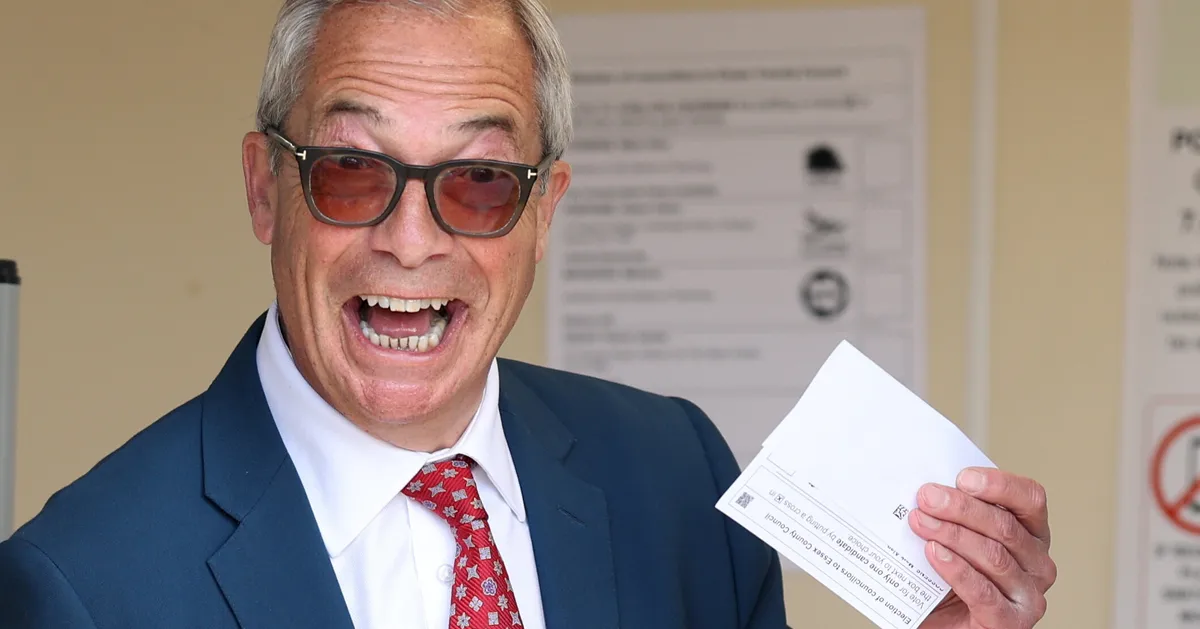
Nigel Farage dodged questions about his wealthy overseas donor on Wednesday amid rising scrutiny over Reform UK’s finances.
It was recently revealed that Farage accepted a £5 million donation from crypto billionaire Christopher Harborne back in 2024, at a time when he insisted he would not be running for parliament.
But within weeks, he U-turned and was successfully elected to be the MP for Clacton in July 2024.
Parliamentary rules state any benefits received 12 months before taking office should be declared, depending on whether it was for political or personal purposes.
The official rules say: “If there is any doubt, the benefit should be registered.”
Reform has insisted that this donation went towards Farage’s personal protection and therefore did not need to be declared.
But, while finalising his campaign ahead of elections for local councils in England and devolved parliaments in Scotland and Wales, the MP for Clacton came up against Sky News’ Cathy Newman over the lump sum.
She said: “Mr Farage, is this what £5 million in security buys? These guys here?”
“You’d be surprised,” the politician said mysteriously, as he walked off.
“Oh really? Is it expensive?” Newman asked.
“What do you think?” He hit back.
“How long is the £5 million going to last, Mr Farage?” She asked.
“Hopefully until I’m dead,” he replied.
Following the politician as he tried to retreat to his car, Newman said: “Mr Farage, why won’t you declare the donation? You’re a public figure, you need the donation because you’re in politics.”
When there was no answer, the journalist said: “Mr Farage, Christopher Harborne gave you the party £9 million last year, £3 million this year, £5 million to you personally.
“He’s not even based in the UK. He’s interfering with democracy, isn’t he?”
Farage ignored the questions and simply got into his car.
Subscribe to Commons People, the podcast that makes politics easy. Every week, Kevin Schofield and Kate Nicholson unpack the week’s biggest stories to keep you informed. Join us for straightforward analysis of what’s going on at Westminster.

Melissa Barrera has shared her take on her former Scream colleagues who made the decision to return for the franchise’s controversial latest instalment.
Back in 2023, Melissa was publicly fired from the film series after sharing support for Palestine and writing on social media that Gaza is being “treated like a concentration camp” back in 2023.
“People have learnt nothing from our histories. And just like our histories, people are still silently watching it all happen. THIS IS GENOCIDE AND ETHNIC CLEANSING,” she said in the posts at the time.
Melissa also pointed out that “censorship is very real” and that she’d been “actively looking for videos and information about the Palestinian side” because “western media only shows the other side”.
“Why they do that, I will let you deduce for yourself,” she added.
At the time, the film’s production company Spyglass released a statement saying they “have zero tolerance for antisemitism or the incitement of hate in any form, including false references to genocide, ethnic cleansing, Holocaust distortion or anything that flagrantly crosses the line into hate speech”.
Jenna Ortega, who played Melissa’s on-screen sister in the films, departed Scream 7 along with original director Christopher Landon shortly after Melissa’s firing, with many fans calling on the movie to be boycotted in the lead-up to its release.
In a new interview with Variety, Melissa was asked directly whether she felt like Scream 7’s cast members were “scabby” and “crossing the picket line” after the fallout.
“Oh, one hundred percent,” she responded. “I think they all are. And they have to live with that.
“The only way they were able to make that movie after what happened was to nostalgia-bait as much as possible.”

Melissa played Sam Carpenter in 2022′s Scream and the follow-up Scream VI.
Actors including Neve Campbell, Courteney Cox, Mason Gooding and Anna Camp all starred in Scream 7 following her departure.
In a statement issued after she was dropped by Spyglass in 2023, Melissa said: “First and foremost I condemn Anti-Semitism and Islamophobia. I condemn hate and prejudice of any kind against any group of people.”
She added: “I believe a group of people are NOT their leadership, and that no governing body should be above criticism.”
Elsewhere in her new interview, Melissa spoke about going through “ten torturous months of uncertainty, and no work, and suffering” after the Scream 7 fall-out, which she claimed was broken when rapper and filmmaker Boots Riley offered her a part in his movie I Love Boosters.
The actor also described her punishment for speaking out as “a perfect storm”.
“I’m a woman of colour in this industry. I’m ‘on the rise,’ but I don’t have a big enough name to be untouchable, so they can make an example out of me,” she explained.
Melissa also praised actors like “fucking icon” Susan Sarandon and Javier Bardem for being vocal in their support for Palestine, revealing that Susan had shown her support and attended the opening night of her current Broadway musical, Titanique.
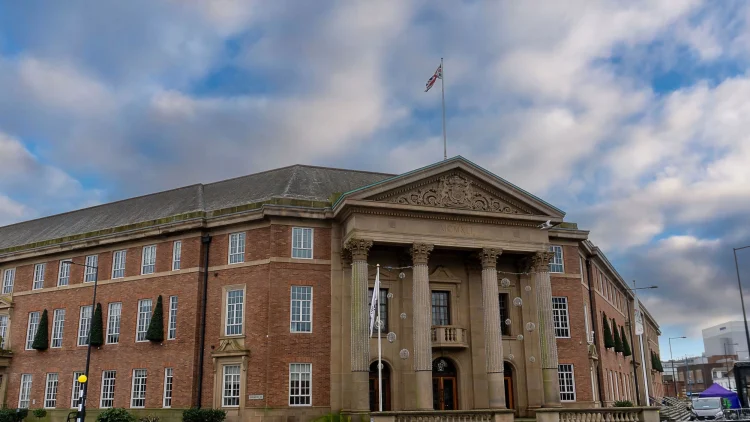

The headquarters of Derby City Council in Derbyshire (Rob Atherton/Alamy)

3 min read
Public and media debate is often dominated by what happens in Westminster. Yet most decisions affecting lives and places begin much closer to home.
England’s system of governance is complex, layered – and rooted in communities themselves.
At the heart of that system sit parish and town councils. Nearly 100,000 councillors across 10,000 councils, invest more than £2bn each year in the places they serve. As a parish councillor myself in the North West of England and chair of the National Association of Local Councils (Nalc), I see first hand the impact this hyperlocal tier of government makes – and its potential if fully embraced and realised.
That is why Nalc has been closely engaged with the English Devolution and Community Empowerment Bill. Its ambition – to deliver simpler, faster and more consistent devolution – is understandable. Local government in England does need to change. And the first tier of local government must be part of that renewal.
Many amendments aimed at recognising and cementing parish and town councils within this new framework are welcome, particularly regarding neighbourhood governance, which is why Nalc has strongly supported them. But government resistance to going further risks missing a crucial opportunity. If devolution is to work, it must work all the way down. This matters more than ever. Fewer unitary authorities will mean fewer elected representatives. Parish and town councils can and should help bridge that democratic gap – but only if they are properly recognised, resourced and empowered.
That requires growth in both number and scale, backed by targeted investment from local and strategic authorities as well as national government. It requires parish and town councils to be at the heart of any neighbourhood arrangements, meaning both area working of unitary authorities and the default model for neighbourhood governance structures.
And it also requires smarter devolution. Too often, power is transferred in the guise of assets and responsibilities – but without the funding or support needed to sustain them. A more balanced approach is needed, one that values the long-term social, environmental and economic benefits of community ownership that parish and town councils provide. And a genuine resetting and rewiring of relations between the tiers of local government.
It also means strengthening local democracy itself. Parish and town councils need the tools to be more inclusive, representative and open, building upon ways they already involve and engage communities and by embracing new approaches to participation, such as community assemblies and participatory budgeting. A greater focus on capacity building and training is also required.
Too often, power is transferred in the guise of assets and responsibilities — but without the funding or support needed to sustain them
Devolution will only succeed if it works at every level. The question now is whether this moment will be seized, to fully recognise and resource that potential, or whether the gap between communities and decision making will grow wider still.
The English Devolution Bill is not the only test. The Representation of the People Bill now before the Commons could also be a game-changer – widening participation, diversifying candidates and revitalising grassroots democracy. But its promise will only be realised through practical reform: simpler nominations, digital tools, remote meetings, fairer election costs and stronger support for those hyperlocal heroes who step to serve. The upcoming King’s Speech is also a chance to bring forward other legislation needed to enhance and empower local democracy further, such as strengthening the standards regime.
At Nalc, we will continue working with parliamentarians to ensure parish and town councils are not an afterthought – but strive to reach their potential and are the foundation of England’s democratic future.
Cllr Iain Hamilton is chair of the National Association of Local Councils
Lord Ashcroft KCMG PC is an international businessman, philanthropist, author and pollster. For more information on his work, visit lordashcroft.com
With both Labour and the Conservatives expected to suffer heavy losses in today’s local elections, attention will no doubt turn to the quality and likely longevity of their respective leaders.
To what extent are Keir Starmer and Kemi Badenoch electoral assets or liabilities for their parties?
In this month’s poll we asked a pair of related questions about Labour and the Conservatives. First, whether people liked both the party and the leader; liked the leader but disliked the party; liked the party but disliked the leader; disliked both the leader and the party, or if they didn’t know. The responses were as follows:
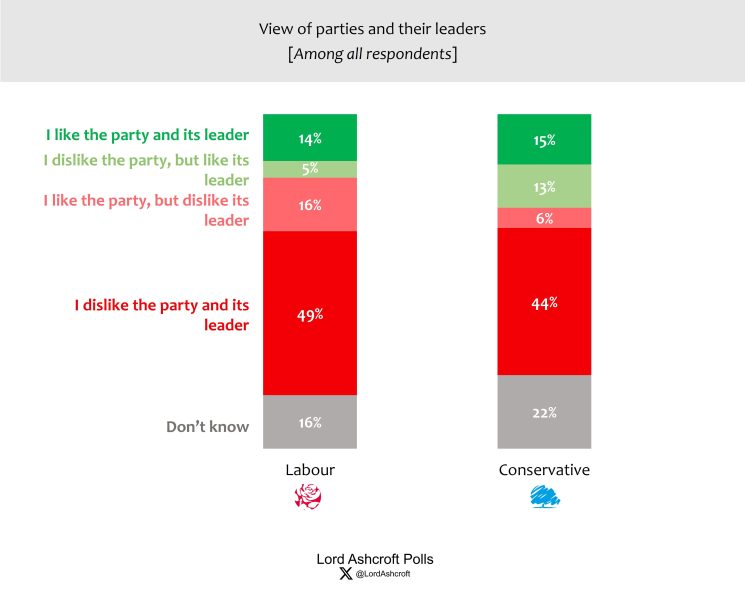
Unsurprisingly, many people think the same of the party as they do of the leader: 63 per cent have the same view of Starmer and Labour, and 59 per cent have the same view of Badenoch and the Conservatives. Equally unsurprisingly in today’s political landscape, by far the most common response is to dislike both the party and its leader. Yet around one in five differentiate the party from the leader. In Labour’s case, 75 per cent of such people like the party but dislike Starmer; in the case of the Conservatives, only 33 per cent of such people like the party but dislike Badenoch.
Put another way – stay with me – for every voter who is attracted to Starmer despite being put off by Labour, there are three voters who are put off by Starmer even though they like Labour. Conversely, for every voter who is put off by Badenoch despite being attracted to the Tories, there are two voters who like Badenoch despite being repelled by her party.
This suggests that while Starmer is a net liability for his party and its ability to win over voters, Badenoch is a net asset for hers. Can we take it at face value?
First-rate politicians can reach beyond their party’s core support and win votes from people who would otherwise not consider that party: Reagan Democrats are a case in point, as are Boris Johnson’s appeal in the red wall in 2019 (if not later) and Tony Blair’s success beyond Labour’s traditional heartlands. However, if a leader’s “additional” appeal is among voters who are never going to support that party, it can be redundant or even counterproductive.
Every month, we ask people to rate how likely they are to vote for each of the UK’s main parties on a scale from zero (definitely not) to 100 (definitely yes). If we look at the same question among people who do not completely reject the party in question (ie. give some score above zero), we find the following:
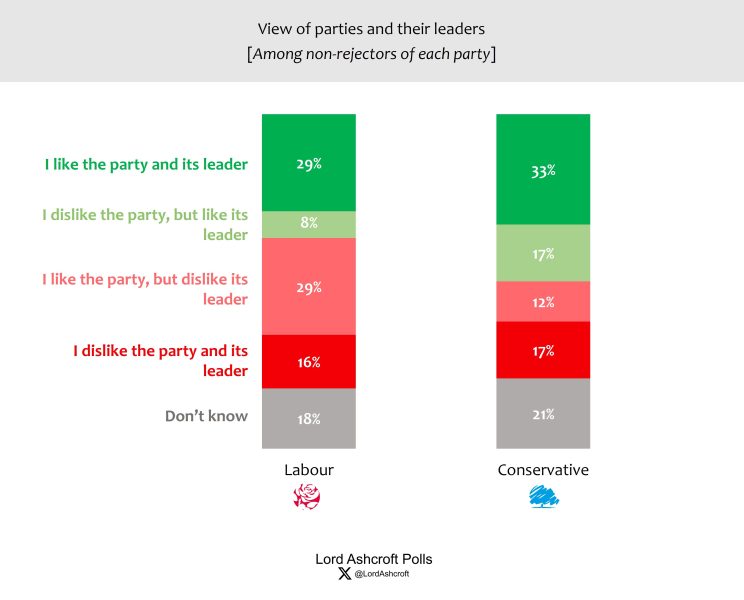
The pattern is strikingly similar to the previous chart. Among people who do not rule out voting Labour at the next election, 45 per cent dislike Starmer and just 37 per cent like him. In contrast, among the Conservative non-rejecters, 50 per cent like Badenoch and 29 per cent do not.
Another question is whether these groups of voters are coherent political blocs, or simply short-term crystallisations of opinion which will shift with the turbulent political landscape. A way to investigate this is by looking at our political map. This shows the four combinations of opinions for the above question, along with the party’s 2019 and 2024 votes. Plots for Labour are in red and plots for the Conservatives are in blue; the size of a bubble is proportional to the number of voters in the group. The closer points are together, the more similar the people in the respective groups are.
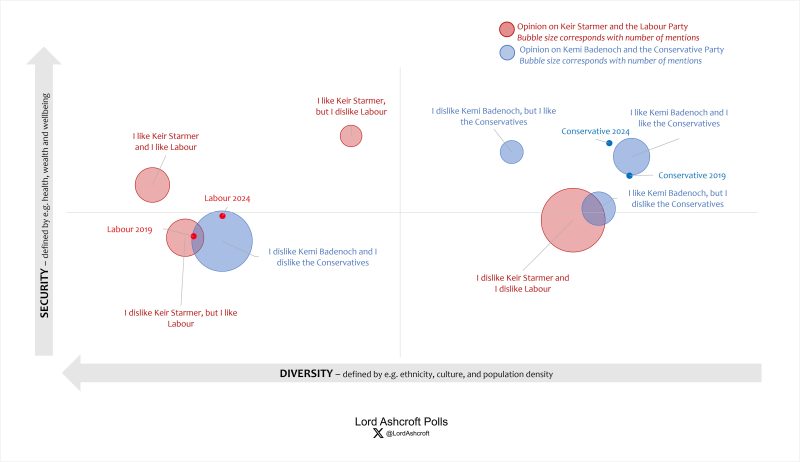
From Labour’s perspective, this shows that the people who like Starmer but who dislike Labour are a very long way from the position of Labour voters at either of the last two general elections. Conversely, the people who like Labour but who dislike Keir Starmer are in precisely the same territory as Labour’s vote at the past two elections.
Raw vote shares reflect this: just 28 per cent of the former group voted Labour at the last general election (with 34 per cent voting Conservative and 19 per cent voting Lib Dem), whereas 62 per cent of the latter group voted Labour in 2024. Consequently, Starmer has managed to attract the approval of a small group of people who didn’t support Labour even in their 2024 triumph, while angering a much larger group of the party’s natural supporters.
On the other hand, the people who like Badenoch but dislike the Conservatives are situated at around the “three o’clock” point on the political map. There is a fair distance between this and the current Conservative vote, but not the same chasm between the corresponding bubbles for Starmer.
This is the same position as people who voted Conservative in 2019 but who did not do so in 2024: territory the Conservatives lost during the previous parliament and is now hotly contested between the Conservatives and Reform. In 2019, the Conservatives won 53 per cent of the vote in this group; in 2024, this plunged to just 22 per cent. Our previous analysis on uniting the right suggests that for the Conservatives to have any chance of returning to government they must regain ground with this group of voters. So far, little ground has been regained.
Another of our regular questions may shed some light on this: whether people think the Conservatives have changed since their 2024 defeat or learned nothing from that loss. This time last year, just 25 per cent of people were more inclined to agree that the party had changed and learned a lesson from 2024; in our most recent poll, that had climbed to 31 per cent. While this is an improvement, a clear majority of people still believe that the Tories have learned nothing. After being in government for 14 years and after losing the 2024 election so heavily, any Conservative leader would find rebuilding public trust an uphill battle.
If politics is all about building and sustaining an electoral coalition, Starmer has alienated a swathe of the coalition which put him in power, while only appealing to a small number of people who have little in common politically with most Labour voters. Badenoch has held together a more cohesive voter coalition and has personal appeal among the voters the Tories need to win back, but these voters so far remain unpersuaded by, if not hostile to, the Conservative Party.
Neither leader can expect a pleasant local election night. Yet the underlying issues are mirror images: the Labour Party has a Keir Starmer problem and Kemi Badenoch has a Conservative Party problem.
Full data at LordAshcroftPolls.com
The post Lord Ashcroft: Why Labour has a Keir problem and Kemi has a Tory problem appeared first on Conservative Home.
Why do people change their names? To seem more glamorous, is the obvious answer. But even actors, who used to do it the most (or more accurately, have it done to them by their studio bosses) have pretty much stopped doing it now. Singers mostly, too. The days of Billy Fury, Marty Wilde and Chubby Checker are long gone, although somewhat understandably Peter Gene Hernandez called himself Bruno Mars after being told he should be making ‘Spanish music’ as a teenager. And I guess Elizabeth Grant wouldn’t sound half as sumptuously sexy and sad as Lana Del Ray does.
We don’t expect politicians to change their names, suggesting as it does a kind of fakery. Some might wish they could. Would you trust your vote with Mark Reckless? Chris Pincher’s name turned out to be sadly apt. Ed Balls never stopped spouting rubbish. Lady Garden of the Lib Dems sounds fragrant. And Samantha Niblett recently outed herself as sex-mad.
So why did these brave souls stick with their given names and David Paulden change his to ‘Zack Polanski’? Apparently, he did it at 18 to reclaim his Jewish heritage, his grandparents having anglicised it to avoid anti-Semitism, and chose ‘Zack’ as he didn’t get along with his stepfather, also a David. Still, it’s an unfortunate choice, considering the sex crimes of the director Roman Polanski, and that our humble hero would go on to become the legendary ‘Tit Whisperer’. And as for ‘Zack’ – that’s the choice of a man who mouths ‘Rock star!’ into the bathroom mirror many a morning.
At times, Polanski’s life seems like a political satire about the rise of the man least likely to. ‘Zack’ was a thespian before his political career, but don’t be looking for him on old episodes of The Bill, as he primarily worked as an ‘immersive theatre actor’. His top credit on Wikipedia is ‘a university production of Shopping and Fucking’, so it’s not like he had to tear himself away from the roar of the crowds like, say, Glenda Jackson when she became an MP. He also taught at something called the National Centre for Circus Arts, which explains why he seems to believe that be-clowning oneself is normal.
Then came what we may think of as his ‘Hypno-Tits’ years, the apex of which saw him getting pranked by a Sun journalist who asked him what the chances were of her being inflated to Page 3 dimensions. It’s funny that acting and lying were Polanski’s passions before he went into politics, as to most of the jaded electorate, this is exactly what our Honourable Members do.
His rise in politics has been rapid, further convincing one that he is an operator. Contrasting with the fact that many politicians start planning their careers while still at university, our humble hero wasn’t interested until he reached his 30s (he’s still only 43). Presumably, he finally accepted that working in the ‘Theatre of the Oppressed’ (which involves meeting people who have allegedly suffered injustice and then playing them on stage, a process which he says politicised him) wasn’t going to win him any gongs. As with the tit-whispering, this should ring alarm bells; what sort of person isn’t interested in politics until their thirties, and then only when their first career choice of showing off for a living fails?
In an interview with Zoe Williams of the Guardian last year, Polanski relaxed in the presence of an obvious acolyte, and the result was a rather amusing interface, somewhat how one imagines Dumbo and his mother relating before the evil circus man separated them. ‘He has a dewy, wide-eyed look’, she reported breathlessly. ‘He means to retake patriotism. “We should love our country. Loving your community is loving your country.”’ As an actor, ‘he still felt that “politics was a dirty thing that didn’t really change anything”’. He describes some of the theatre he was making at this time, with the company that later became Punchdrunk – wild, participatory productions in which the audience is invited to alter the course of events. In one performance, an audience member rugby-tackled one of the actors to prevent a murder. In another, Polanski played a leader stewarding the audience into an environmental crisis, and they had to overthrow him…
The interview is quite something:
‘His experience as an actor has left Polanski with a genuinely unusual style of political communication – he doesn’t equivocate, his manner is quite urgent and arresting, he never drones, but nor is he embarrassed to say something very simple, even if it sounds schlocky, or boastful. He tells me that the video he launched announcing his leadership bid has been seen 1.4million times. “It’s had hundreds, maybe even thousands of people responding, and I would say 99 per cent of those things are, ‘Is this what hope feels like?”’
Is this what hope feels like? I don’t believe that Barack Obama at his most rhetorical would have chanced that one, and he had all the equipment. It’s clear that Polanski is very high on his own supply. It’s pure self-belief that drove him so quickly up the greasy pole; joining the Lib-Dems in 2015 and standing unsuccessfully for local council elections in London; heckling Corbyn at a rally in 2016 and tweeting that as ‘a pro-European Jew’ he had ‘two reasons I couldn’t vote for Labour under Jeremy Corbyn’; and joining the Green Party in 2017. Since then, it’s been a jolly round of musical chairs, with that weird three-legged-race thing the Greens do with the ‘sharing’ leadership – Lucas and Bartley, 2016-2018; Bartley and Berry, 2018-2021; Denyer and Ramsay, 2021-2025 – until Polanski took over last year.
No sharing for him. Only the solo spotlight will suit this cracked actor. To be fair, he’s struck a chord with a lot of disillusioned Labour voters. Membership of the Greens is the highest ever, having grown by 55 per cent since Polanski’s election as leader. They’ve got more councillors than ever before – 859 seats across 181 councils – and now some polls have put them head-to-head with Reform UK at the forthcoming local elections.
Didn’t he do well? Nevertheless, he gives me the creeps. Polanski has cultivated a gentle, come-to-me-my-flock look — but when he is questioned persistently, a look of imperious confusion followed by a flash of real contempt and anger comes through. Being grilled by Laura Kuenssberg in early May, he came across as testy and slippery. When he talks with his hands, which he does often, one is irretrievably reminded of his breast-building days, and how perhaps he must have described similar circles in the air. It distracts me from what he’s saying – which is just as well, as he really does spout bunkum.
We’ve all heard his blather about the allegedly heavy-handed police in Golders Green, his ridiculous accusations of Israeli ‘genocide’ and, of course, his ludicrous championing of transvestites’ fetishes over women’s rights. But due to the monumental incompetence and unpopularity of Labour, the Greens look set to clean up at the local elections.
Hopefully, they carry within them the seeds of their own destruction. Every party can be said to have different factions, but none as contradictory as the middle-class anything-goes brigade on one wing of the Greens and the extremely reactionary Muslim wing on the other. We all know the one issue that unites them.
If the safety of our heartbreakingly loyal and small Jewish community wasn’t so threatened, it would be fun to see what transpires from this loveless liaison. The Greens were always in competition with the Lib Dems for the floating crank vote, somehow managing to come across as both broad-minded and authoritarian – Legz Akimbo join the Stasi – and this time they look liable to outdo themselves, picking up a sizeable part of the solid crank Labour vote, too. Polanski can change his name all he wants – but the whiff of the snake-oil salesman will always be strong with this one.
Julie Burchill is a spiked columnist. Follow her Substack, ‘Notes from the Naughty Step’, here.
At the end of last year we noted the unusual and persistent levels of divergence in Scottish political polling. As polls have become much more frequent during the election campaign, nothing about that has changed. The final polls, published yesterday, are so far apart from each other that they tell us basically zip.

Analysing this mess is meaningless, so we’ll just give you some highlights.
On the constituency vote the SNP are in either the low 30s or the low 40s, either 12 points ahead of Labour, 20 points ahead of Labour, or 24 points ahead of Reform.
On the list they’re either 1 ahead of Reform, 8 ahead of them, or 13 ahead of Labour.
The Greens are either in 3rd, 4th or 6th place on the list, where they’re either 1, 2 or a whopping 12 points behind Reform. The Lib Dems are either 6th with 8%, or 4th with 12% (which is a non-trivial 50% more, arithmetic lovers). Reform have either more than twice as much support as the Tories (22-10), or just four points more (17-13).
That 10% would likely get the Tories one list seat per region, whereas the 13% might well get them twice as many. Similar applies to the Lib Dems, whose low of 8% definitely wouldn’t get them more than one seat per region, but whose high of 12% could – with luck and a following wind – just about double that.
The Greens’ lowest list score (10%) would garner one seat per region, but their highest (17%) would all but guarantee two per region and could conceivably get them as many as three per region. The same applies to Labour, whose lowest is 12% and highest is 19%, but who have a better chance of winning constituency seats.
(The number of Green list seats is quite likely to determine whether there’s a pro-indy majority or not, so a couple of percentage points either way could be crucial in terms of the ultimate shape of the government, though it’ll make sod-all difference in terms of independence. The SNP-Labour coalition might yet happen.)
And of course, it depends on whose voters, if anyone’s, are most motivated to turn out, and how many of the 20% who still say they’re undecided make their minds up, and whether it rains or not, and the price of cheese and whether Venus is rising in Uranus. Frankly, our dears, we haven’t got a scooby.

So we’re having the day off, and we’ll see you tomorrow for the results. Your guess, at this stage, is as good as ours.

The post ‘Our Keir is going nowhere’ appeared first on spiked.

Ethereum Price Eyes Mid-Week Bounce as Selling Pressure Craters 85%

Jennifer Aniston’s Hairstylist Uses This No-Frizz Shampoo

Zendaya Delivers High Glam for Her Vogue Brazil Covers

Manchester United reach agreement with Casemiro over contract clause amid transfer speculation

US brings back mandatory military draft registration

Steven Gerrard disagrees with Gary Neville over ‘shock’ Chelsea and Arsenal claim | Football


-

 NewsBeat4 days ago
Channel 5 – All Creatures Great and Small series 7 new post
-

 Crypto World2 hours ago
Upbit adds B3 Korean won pair as Base token gains Korea access
-
 Tech6 days ago
Trump’s 25% EU auto tariff breaches Turnberry Agreement that also covers semiconductors and digital trade
-
 NewsBeat3 hours ago
NCP car park operator enters administration putting 340 UK sites at risk of closure
-
 Sports6 days ago
Paul Scholes issues Marcus Rashford reality check as agreement emerges over Man United star
-

 Entertainment6 days ago
Met Gala 2026 Rumored Guest List Is Turning Heads
-

 Business6 days ago
Strait of Hormuz Blockade Persists Amid US-Iran Standoff, Sending Oil Prices Soaring
-
Entertainment6 days ago
New on Prime Video in May 2026 — Full List of Movies and Shows
-

 Sports5 days ago
Cavaliers vs. Raptors Game 6 live score, updates, highlights from 2026 NBA playoffs first-round series
-
 Sports5 days ago
David Benavidez responds to team Canelo saying the fight will never happen
-

 Tech6 days ago
Meta ends Sama contract after Kenyan workers report seeing intimate footage from Ray-Ban smart glasses users
-

 Entertainment5 days ago
Kylie Jenner Hit With Second Lawsuit From Ex-Housekeeper
-

 Entertainment5 days ago
Young and the Restless Next Week: Cane Arrested & Matt’s Deadly New Scheme!
-
Entertainment5 days ago
New Netflix Movies in May 2026 — My Top 3 Picks to Stream
-
 Sports5 days ago
IPL 2026: ‘Love you darling’- Hardik Pandya’s reaction to MS Dhoni steals the show |Watch | Cricket News
-
 Crypto World5 days ago
Pi Network Mandates Protocol 23 Upgrade for All Mainnet Nodes Before May 15 Deadline
-

 Business4 days ago
Luka Doncic Injury Update: Doncic’s Hamstring Recovery Slows Lakers’ Hopes Against Thunder: Can He Run Yet?
-

 Sports6 days ago
What Preity Zinta Said After Punjab Kings’ First Defeat Of IPL 2026
-

 Crypto World4 days ago
Bitcoin mining equities rise in 2026 as BTC lags behind
-

 Sports6 days ago
Bayern won’t hand bottom side Heidenheim ‘gifts’ despite PSG game
You must be logged in to post a comment Login