Cricket’s most profitable tournament is set to start this weekend in a significantly diminished form, bereft of both a major qualifying nation and the single biggest fixture in terms of the potential viewership it can attract.
A complicated mesh of diplomatic disputes among the South Asian nations involved, including co-hosts India, mean the T20 Cricket World Cup begins on Saturday under a shadow of geopolitical turmoil.
It all began with Bangladesh’s withdrawal from the tournament, kicked out by the International Cricket Council (ICC) and replaced by the next-closest team to qualifying in Scotland. Bangladesh had refused to play any of their scheduled fixtures in India and demanded they be moved to co-hosts Sri Lanka, a request that was rejected.
Then, Pakistan announced that they would not play their group-stage match against arch-rivals India, due to take place in Sri Lanka’s capital Colombo on 15 February. No reason was initially given, but Pakistan’s prime minister has since confirmed this was in solidarity with Bangladesh.
Advertisement
These developments have put the Board of Control for Cricket in India (BCCI) at the centre of a dispute blending geopolitics, commercial power, and long-running grievances about how world cricket is run.
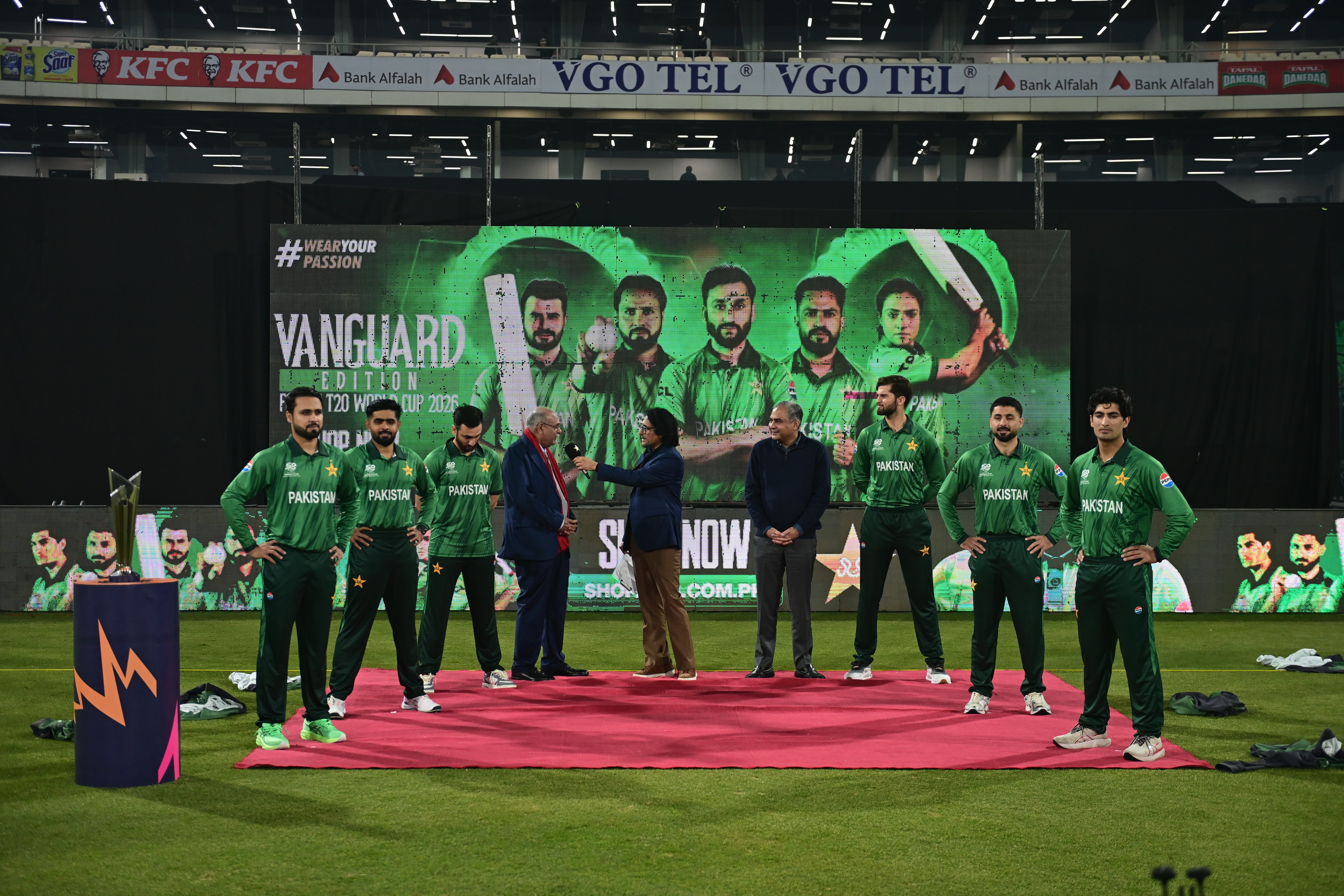
Pakistan’s players unveil ICC T20 World Cup 2026 jersey after their match against Australia at Gaddafi Stadium in Lahore on 1 February 2026 (Getty)
Bangladesh’s withdrawal followed a formal request to move its scheduled matches to Sri Lanka, with the Bangladesh Cricket Board (BCB) citing security concerns for its team and fans amid escalating political tensions between it and India.
Relations have dramatically deteriorated in the past 18 months since street protests brought down the Sheikh Hasina regime in 2024 and compelled the former prime minister, an ally of India, to flee to Delhi. India has ignored Dhaka’s requests for Hasina’s extradition to Bangladesh, where she has been found guilty of crimes against humanity.
Advertisement
Since Hasina’s government collapsed, India and India-based rights groups have repeatedly raised concerns over the safety of members of the Hindu minority in Bangladesh. In December, a Hindu man accused of blasphemy was beaten to death by a mob, triggering protests by Hindu nationalist groups in India.
Against this political backdrop, the Indian Premier League franchise Kolkata Knight Riders released Bangladeshi fast bowler Mustafizur Rahman in January after being instructed to do so by the BCCI.
Bangladeshi authorities responded by banning broadcasts of the IPL in their country.
The BCB then renewed its request for their team’s matches to be shifted out of India.
Advertisement
Bangladesh’s Mustafizur Rahman during the T20 World Cup match between Bangladesh and Sri Lanka in Grand Prairie, Texas, on 7 June 2024 (AP)
The ICC rejected the request on the grounds of an “absence of any credible security threat”, and gave Bangladesh 24 hours to confirm its participation.
The Independent understands that no efforts were made to provide proof of the security threat faced by Bangladesh’s team, and when the deadline passed, Scotland were invited to take the vacant place. The governing body said it was keen not to establish “precedents that could undermine the neutrality and fairness of ICC events”.
Pakistan initially indicated they might withdraw entirely in response to Bangladesh’s removal. They later confirmed participation but said their team would not play India. Pakistan’s government said it had granted “approval” for the team to compete in the tournament but that players “shall not take to the field” against their arch-rivals.
Advertisement
The India-Pakistan fixture has historically been the most-watched and commercially valuable match in global cricket. More than 600 million people watched on the Indian streaming platform JioHotstar when the teams met in last year’s Champions Trophy.
Cricketing ties between the two neighbours have been shaped by decades of conflict. They have not played a bilateral series since 2013, and India have not toured Pakistan since 2008.
Pakistan did not host any touring nations between 2009 and 2019 following an attack on Sri Lanka’s team bus in Lahore that killed six policemen and two civilians.
Pakistani players have been barred from the IPL since the 2009 Mumbai attacks, which left 174 people dead.
Advertisement
Last year, India refused to travel to Pakistan for the Champions Trophy, eventually playing their matches in the UAE.
That led to an agreement stating that when either country hosted an ICC event, matches between them would be held at neutral venues.
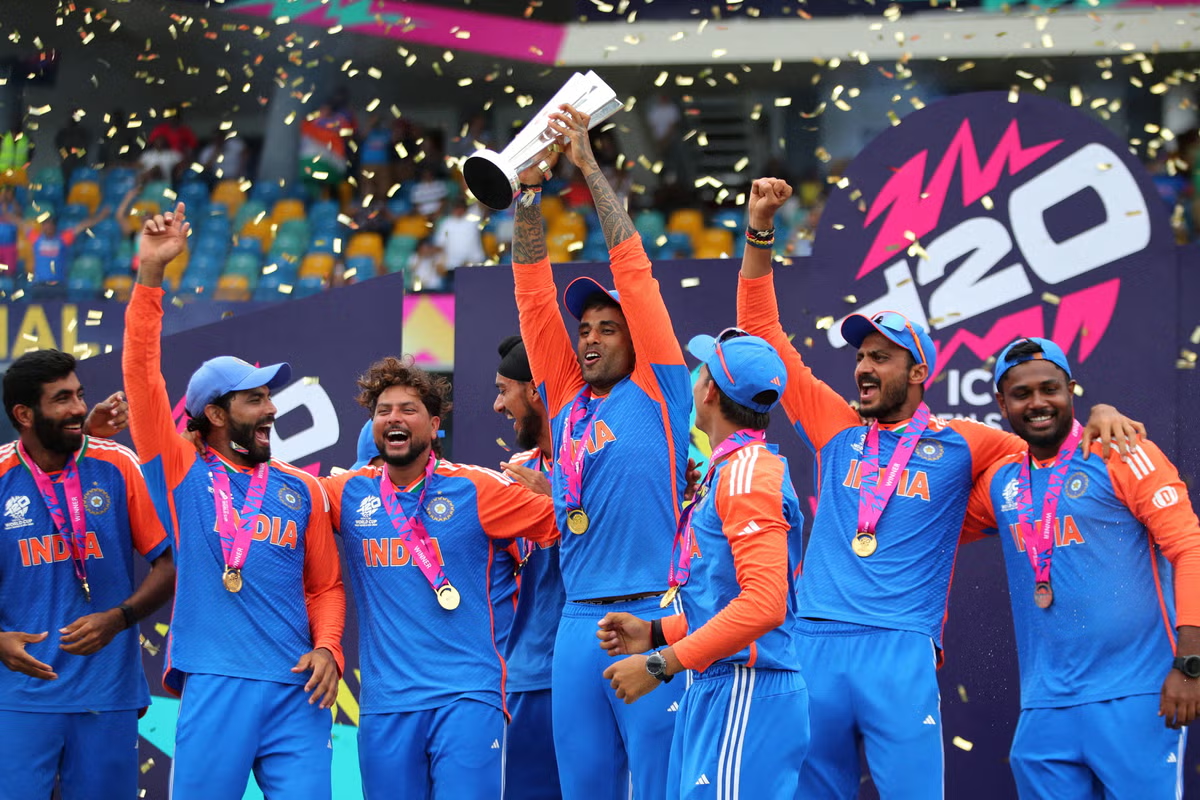
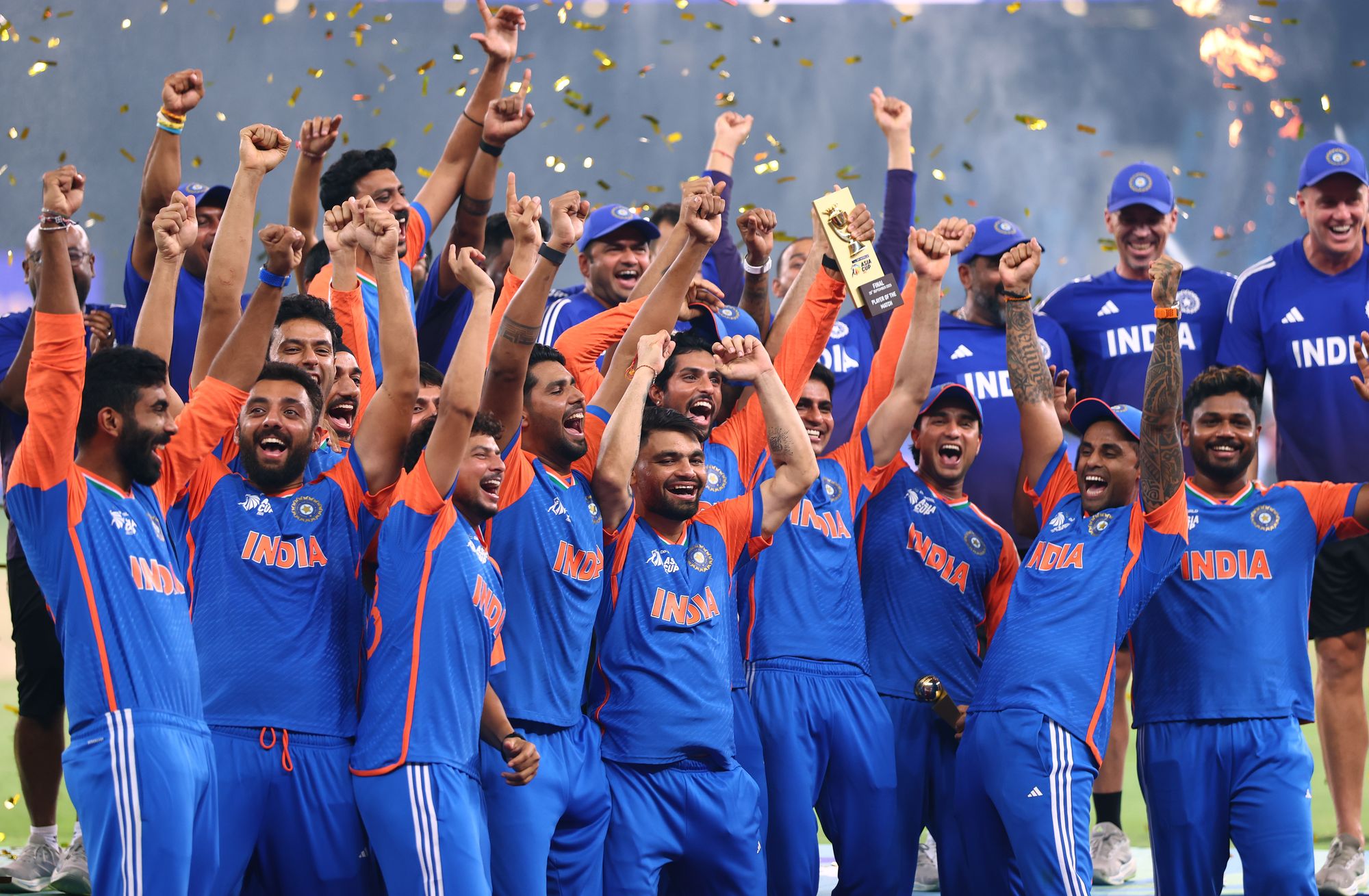
India celebrate their Asia Cup Final victory against Pakistan in Dubai on 28 September 2025 (Getty)
Tensions between the neighbours escalated in the wake of a four-day military conflict last April, sparked by a militant attack on tourists in the Indian-administered part of Kashmir.
Advertisement
At the Asia Cup in September, Indian captain Suryakumar Yadav declared that his team’s victory in the final was a “perfect reply” to Pakistan.
His team skipped post-match handshakes, later saying: “A few things in life are above sportsman’s spirit.”
Match officials later confirmed the captains had been asked to skip handshakes, prompting protests from Pakistani officials and criticism from Asian Cricket Council chairman Mohsin Naqvi, who called the episode “utterly disappointing”.
India refused to accept the Asia Cup trophy from Naqvi, who is also chief of the Pakistan Cricket Board (PCB) as well as the country’s interior minister. It ended with Naqvi walking away with the trophy.
Advertisement
Former PCB chairman Ehsan Mani, who also served as the ICC chief between 2003 and 2006, told the Hindustan Times the latest row about matches between India and Pakistan was likely a fallout from the Asia Cup.
“You’ve got to look at the background to this,” he said. “I don’t think the PCB chairman was happy with the Indian players’ refusal to shake hands with the Pakistani players at the Asia Cup, then their refusal to take their trophy from him. You’ve really got to look at the whole picture; it’s not a good relationship between the countries, which is sad, because we always worked very closely with the BCCI, and their attitudes have changed significantly.”
He urged the ICC chairman Jay Shah, who is the son of India’s home minister Amit Shah, to engage with the PCB and the Pakistan government over their stance.
“The PCB is simply going to say that it is following government instructions, the same as India did for refusing to come to Pakistan in the last ICC event,” he said. “And this is all very unfortunate. I do hope that the chairman of ICC, after all, he represents all the countries, including Pakistan, is talking to Pakistan to see how they can overcome Pakistan’s position. In fact, he should be engaging not only with PCB but also with the government of Pakistan.”
Advertisement
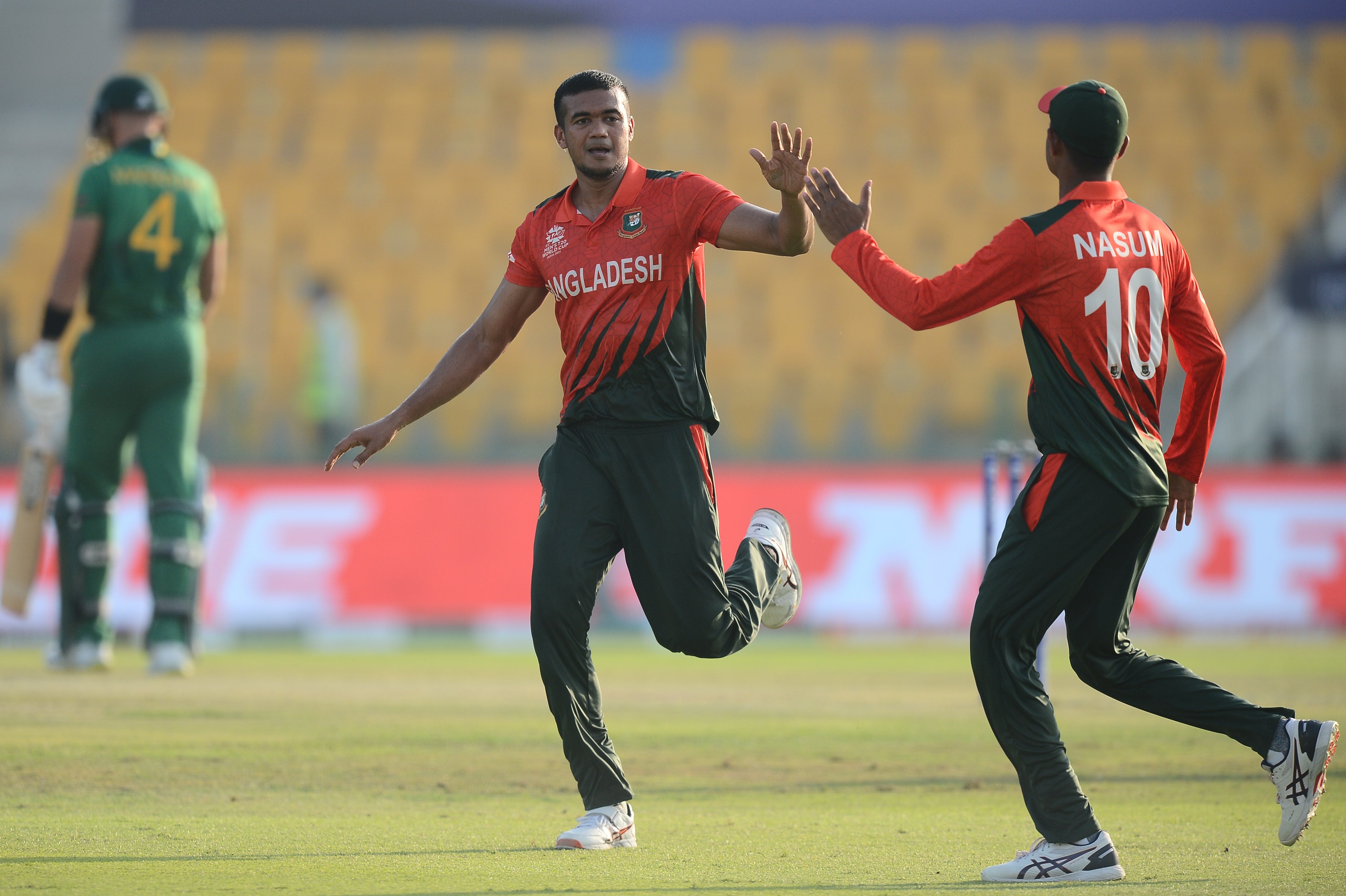
Taskin Ahmed of Bangladesh celebrates the wicket of Aiden Markram of South Africa during their 2021 ICC T20 World Cup match in Abu Dhabi (Getty)
The ICC responded to Pakistan’s position by calling it “difficult to reconcile” with the premise of global competition.
“Selective participation undermines the spirit and sanctity of the competitions,” it said in a statement and warned of “significant and long-term implications for cricket in its own country”.
While acknowledging the role of governments in national policy, it said Pakistan’s decision wasn’t in the interest of the game or fans worldwide, including millions in Pakistan.
Advertisement
The Independent has reached out to the ICC, BCCI, BCB, and PCB for comment.
Former Pakistan captain Shahid Afridi accused the ICC of mishandling the situation. “It’s regrettable that Pakistan won’t play India, but I stand behind my government’s decision,” he wrote on X.
“This is the moment for the ICC to lead and prove through decisions, not statements, that it’s impartial, independent and fair to every member.”
Former PCB chairman Najam Sethi said the standoff reflected long-standing resentment over how power and revenue were distributed in world cricket. He accused the BCCI, the sport’s wealthiest board, of using its influence to dominate decision-making.
Advertisement
“I’m not a spokesman for the PCB, I’m giving you my view. The PCB consulted the government and they made this decision. There are 10-15 days to go before that match. My sense is that there are negotiations that are taking place, and my hope is that those negotiations will bear fruit,” he said.
Sethi linked Pakistan’s position to wider opposition to the so-called Big Three arrangement, under which India, Australia and England receive the majority of ICC revenue.
“It’s the attitude of the BCCI, that’s the problem. At every stage, they’ve been bullying people,” he said, recalling negotiations during the tenure of former BCCI chairman N Srinivasan.
“Nine members signed on and Mr Srinivasan came to me and said, ‘Why do you want to be left alone, blah blah blah, you will be isolated’, and the rest of it,” Sethi said. He described agreeing to revised revenue terms and an India-Pakistan series that later collapsed. “The contract was fine, but a year later, on the eve of the series, the BCCI, without a word, pulls out,” he recalled. “Can you think of a bigger insult?”
Advertisement
Sethi argued that Bangladesh’s removal had created the conditions for a broader challenge. “They have been treating us very badly. Now that Bangladesh have been snubbed in a sense, we feel there are 400 million people on one side. We can all stand up,” he said. “There may be temporary losses, but at the end of the day, we will get a better, reformed ICC.”
Players have largely deferred to governments and administrators. Pakistan captain Salman Ali Agha said the boycott was beyond the team’s control.
“Well, they are our brothers. I thank them for supporting us,” he said of Bangladesh. “And it’s really sad to see that they are not playing the World Cup.”
The India match, he said, was not in their control. “It was the government’s decision.”
Advertisement
Yadav said India would travel to Colombo as scheduled. “We have not refused to play, they have. We’ve booked our flight and we are going,” he said.
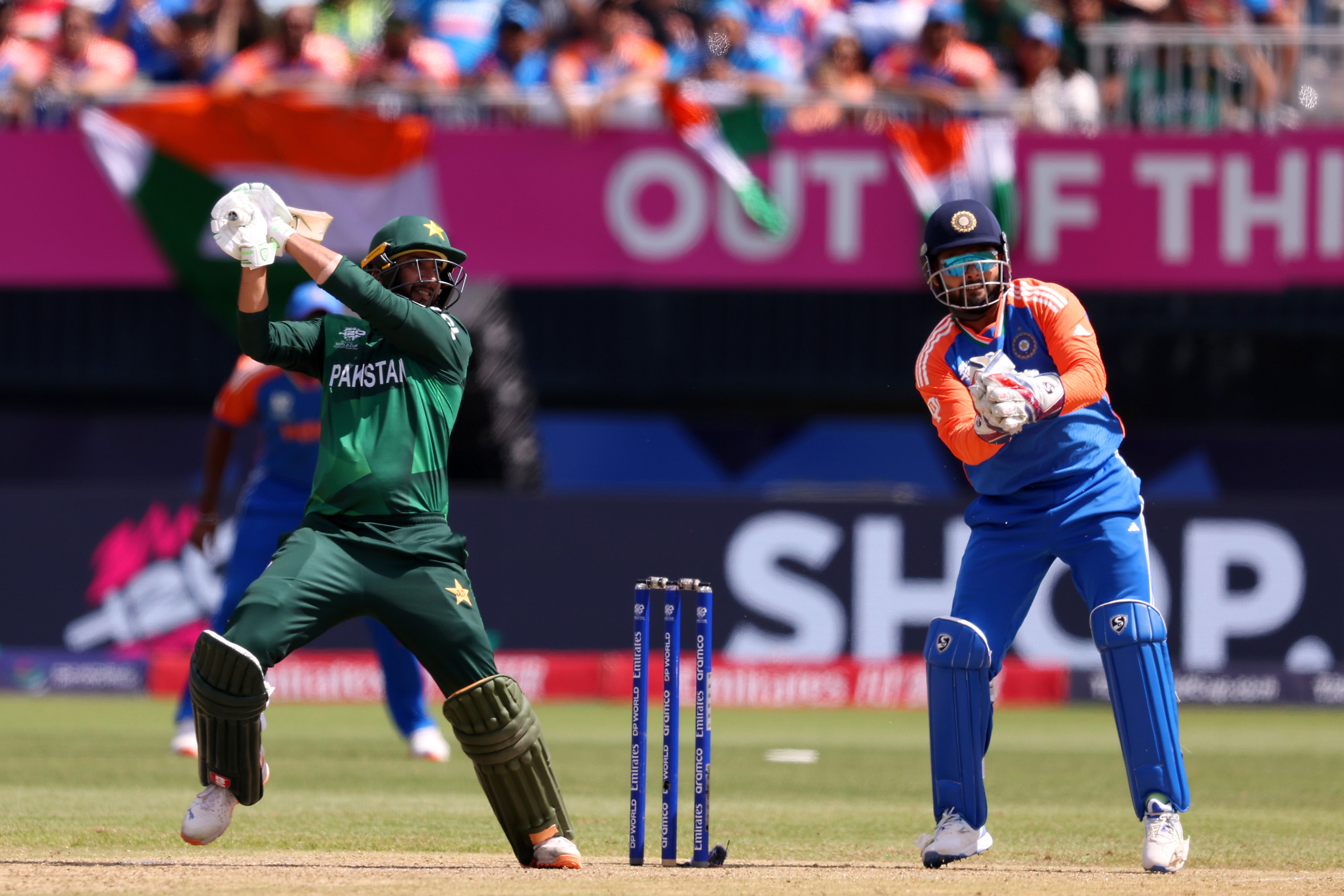
Imad Wasim of Pakistan bats during a Men’s T20 Cricket World Cup match against India at the Nassau County International Cricket Stadium on 9 June 2024 (Getty)
While the ICC continues to hope that Pakistan will backtrack – especially with the governing body having warned of possible sanctions – former BCCI chief selector Chetan Sharma has predicted the PCB will reverse its stance after the 12 February election in Bangladesh, arguing the decision is politically driven.
“What was Bangladesh players’ fault? None. This is politics. Bangladesh has elections on the 12th. After that, you will see a U-turn. There will be a statement saying, ‘Considering public sentiment, cricket shouldn’t suffer, Pakistan will play against India.’ This stance is still about the Bangladesh election only,” he told India Today.
Advertisement
“I’ve been a politician, I’ve contested elections. After the elections, maybe even the military chief will say sport should be kept free of politics and the match should go ahead.”
Former England captain Nasser Hussain questioned whether the ICC had applied its rules consistently.
“If India, a month before a tournament, said ‘our government does not want us to play in a country for a World Cup’, would the ICC have been so firm and said, ‘You know the rules, bad luck, we’re knocking you out?’” he asked on the Sky Sports Cricket Podcast.
Scotland, promoted into the tournament, said preparations had been unusual. “It’s been unique circumstances for us. Preparations have been different than other teams. Every opportunity, we want to make most of,” captain Richie Berrington said.
Advertisement
If Pakistan do boycott the match versus India, their opponent will receive two points. They face the Netherlands, USA, and Namibia in their remaining group games. Only the top two teams from each group progress, leaving little margin for error. It’s unclear what would happen if India and Pakistan were drawn to meet in the final.
There’s precedent for teams refusing to play. Australia and the West Indies declined to travel to Sri Lanka during the 1996 World Cup, while England refused to play Zimbabwe in 2003, citing security concerns. Those teams forfeited the matches but were not fined.
The ICC constitution, however, allows for sanctions where governments interfere in cricket administration and requires boards to operate autonomously.
Zimbabwe were suspended in 2019 on account of government intervention and Sri Lanka lost hosting rights for an Under-19 World Cup four years later following the dismissal of its board.
Advertisement
Cricket analysts say the financial implications of an India-Pakistan no-show will be severe. Former ICC media head Sami Ul Hasan said: “The biggest hit, if the biggest game of the tournament doesn’t take place, will come from media rights.”
The losses will be felt by member boards.
Hasan pointed to the origin of the crisis in the removal of Mustafizur Rahman from the IPL.
“We must remember that this situation arose due to one player’s removal and one administrator’s statement,” he said, referring to comments by BCCI secretary Devajit Saikia, who at the time blamed “recent developments that are going on all across” – a comment widely understood to refer to the protests by Hindu nationalist groups.
Advertisement
.As the T20 World Cup gets started, the ICC says its priority is the delivery of the tournament. It is calling on all members to protect its integrity.
The World Cup is due to begin on 7 February and will conclude on 8 March. Viewers in the UK can watch every game live on Sky Sports. A live stream will be available via Sky Go and NOW.
To say that Malta has a rich history is an understatement.
Walk the streets and clifftops of this Mediterranean archipelago and you’ll discover layers of history that go back hundreds and even thousands of years.
Below, we peel back the centuries and unveil some of the islands’ most spellbinding historic treasures.
One is the capital city, the entirety of which has been declared a Unesco World Heritage Site. Within is one of the most opulently decorated cathedrals you’ll ever set eyes on, picture-postcard townhouses and the former headquarters of the order that built the city in the 16th century — the Knights of St John.
Advertisement
The island’s old capital, Mdina, is similarly hypnotic, but far more tranquil – a car-free, walled city infused with thousands of years of history.
For a sense of Malta’s military struggles there are epic forts to wander, vast displays of armour to gaze at, and a citadel to visit that was a place of refuge for locals against raiding parties for hundreds of years.
Delve even deeper into the past with a visit to Malta’s ancient subterranean cemetery and megalithic temples, Unesco-listed sites predating the Pyramids that reveal how the island was once home to a remarkably advanced prehistoric society.
Valletta — the Baroque capital built by the Knights
Advertisement
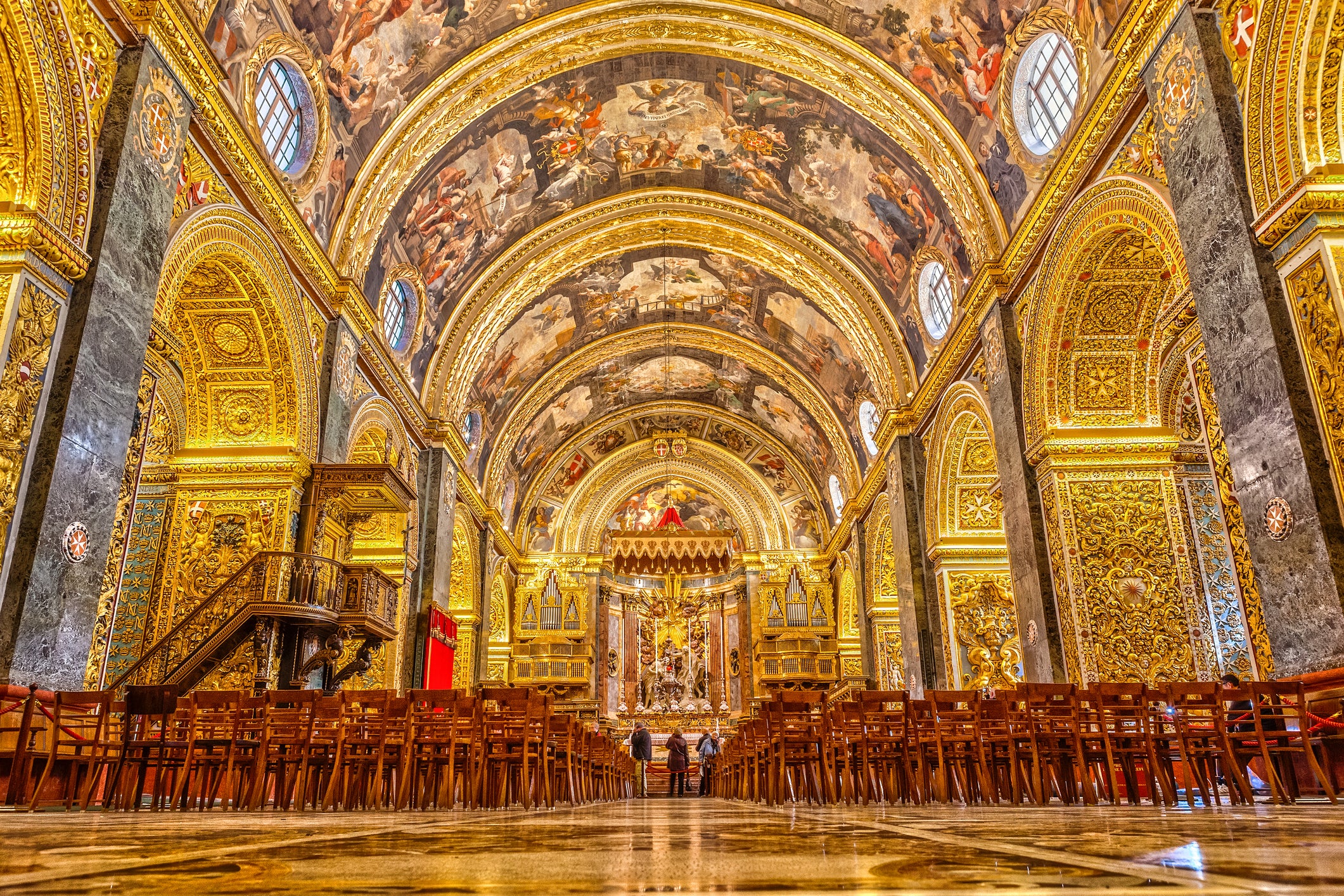
St John’s Co-Cathedral, which dates to the 1570s, is lavishly decorated. It’s one of several must-visit historical landmarks in Valletta (Getty Images)
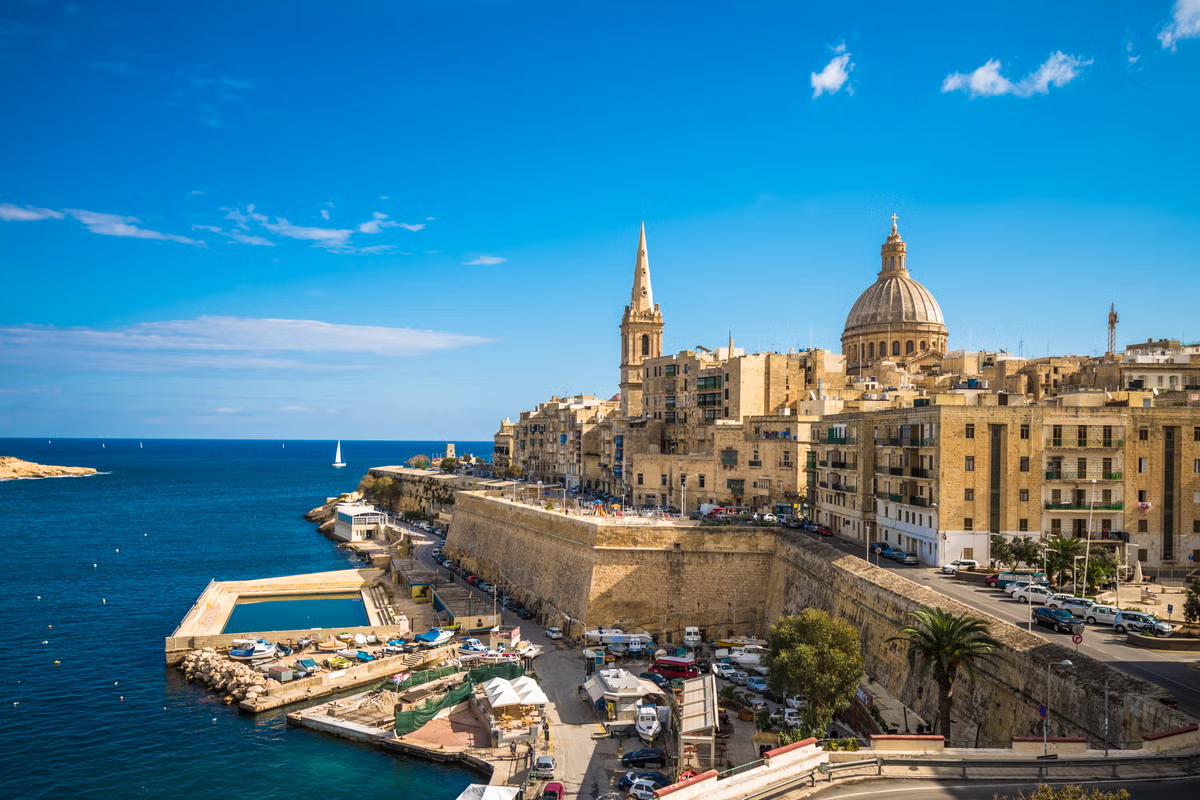
Perched on a rocky peninsula between two natural harbors, capital-city Valletta is tiny, covering just 60 hectares, or about one-fifth the size of Central Park.
But it packs a historical punch.
Built in 1566 by the Knights of St John — who came from noble families around Europe and ruled Malta from 1530 to 1798 — the honey-colored city is laced with stunning 16th and 17th-century townhouses, many of which now house atmospheric restaurants and bars, and jammed with around 320 monuments.
One of the most important landmarks to visit is St John’s Co-Cathedral, which was built by the Knights in the 1570s.
On the outside, it’s unprepossessing, but step inside and you’ll be greeted by a riot of lavish decorations that unambiguously signal power and wealth. There are carved stone walls, floors covered with marble tombs and a beautiful, painted vaulted ceiling. The eye will also be drawn to Caravaggio’s oil-painting masterpiece, The Beheading of Saint John the Baptist.
Advertisement
The Grand Master’s Palace, in the heart of Valletta, is another can’t-miss landmark. This former Knights nerve-center is home to one of the world’s greatest collections of arms and armor — underscoring the order’s military prowess — and rare French tapestries.
One of the best vantage points from which to drink in the city’s splendor is the 16th-century Upper Barrakka Gardens, originally a place of repose for the Italian Knights of St John.
Great place to stay:The Barrister (rooms from $245) sits right in Valletta’s historic core and features a bijou rooftop terrace with skyline views.
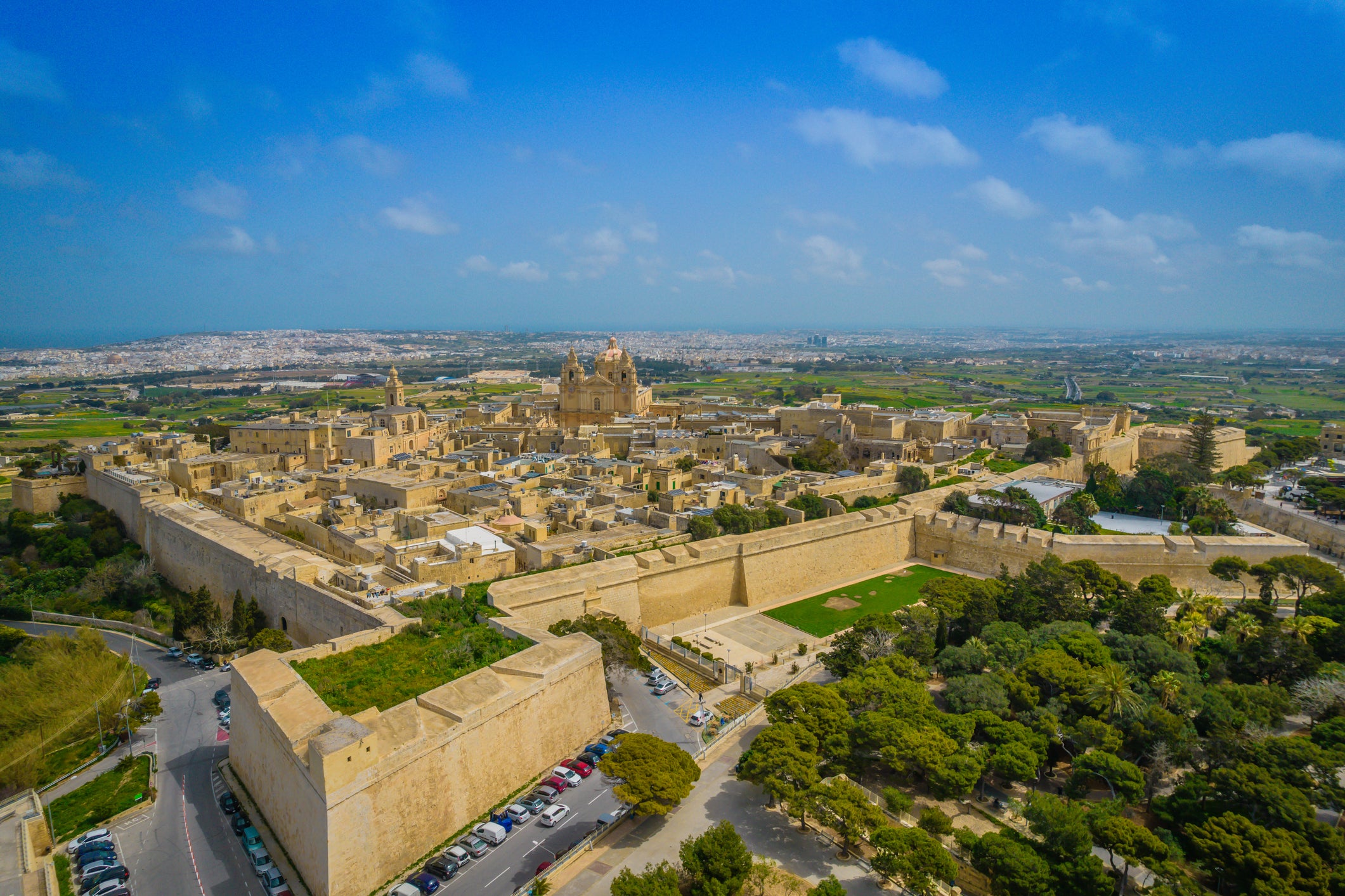
Car-free Mdina is famously quiet, and a time capsule of Maltese history (Getty Images/iStockphoto)
Mdina is a spellbinding journey through thousands of years of Maltese history, and a truly tranquil experience.
This incredible walled city — Malta’s old capital — dates back to the Bronze Age, after which it was ruled by the Phoenicians, Romans, Arabs, Normans, and eventually the Knights of St John.
Wander its labyrinthine streets and you’ll feel the depth of that history with every step — and you’ll hear every step. Mdina, car-free and with a population of just a few hundred people, is so quiet that it’s been dubbed Malta’s “Silent City.”
One of the key photo opportunities is the city gate, which you may recognize from Game of Thrones — it was used as the entrance to King’s Landing in the hit HBO series. The stone portal was built in 1724, and with its intricate carvings, makes for a suitably theatrical entrance to the city.
Advertisement
St Paul’s Cathedral also delivers drama, with an elegant dome that dominates the skyline and stunning painted ceilings inside.
Don’t leave without walking the perimeter walls, which offer impressive views of the maze-like city interior and out across the surrounding patchwork fields to the Mediterranean beyond.
Great place to stay: The Xara Palace Relais & Châteaux (rooms from $320) is one of the few hotels set inside Mdina’s walls, and the converted 17th-century palazzo delivers a lost-in-time-and-space atmosphere, with antique-festooned rooms.
Vittoriosa (Birgu) is bursting with history and its well-preserved streets are a joy to wander (Getty Images)
Vittoriosa — also known as Birgu — offers further, fascinating immersion into the world of the Knights of St John, for this Lilliputian city — which sits directly across the Grand Harbour from Valletta, forming part of the so-called “Three Cities” (Birgu, Senglea and Cospicua) — was the Knights’ headquarters before Valletta existed, and helped ensure victory in the Great Siege of 1565.
The part of the city that bore the brunt of the onslaught from Ottoman forces was the formidable Fort St Angelo, which served as the nucleus of the Knights’ defense.
The fort was opened to the public in 2015, and stepping inside is an eye-opening glimpse into Malta’s military past. Interactive exhibits tell the story of the siege, and you can explore the former residence of the fort commander and see the Guva, the 16th-century oubliette accessible only by a trapdoor in the ceiling where the artist Caravaggio was held in 1608.
Stroll the ramparts for mesmerizing harbor views.
Advertisement
Earmark time, too, for a look around the Inquisitor’s Palace, a complex that had a dual role from the 16th to the 18th centuries as both a grand residence for Holy Roman inquisitors enforcing religious orthodoxy and a prison for accused heretics.
The streets of the city will hold you spellbound — they’re beautifully preserved and intimate.
Great place to stay:Casa Birmula Boutique Hotel (rooms from $230) is set in a restored townhouse and offers superb skyline views from its rooftop terrace and pool.
Malta’s deepest history — structures that predate the pyramids
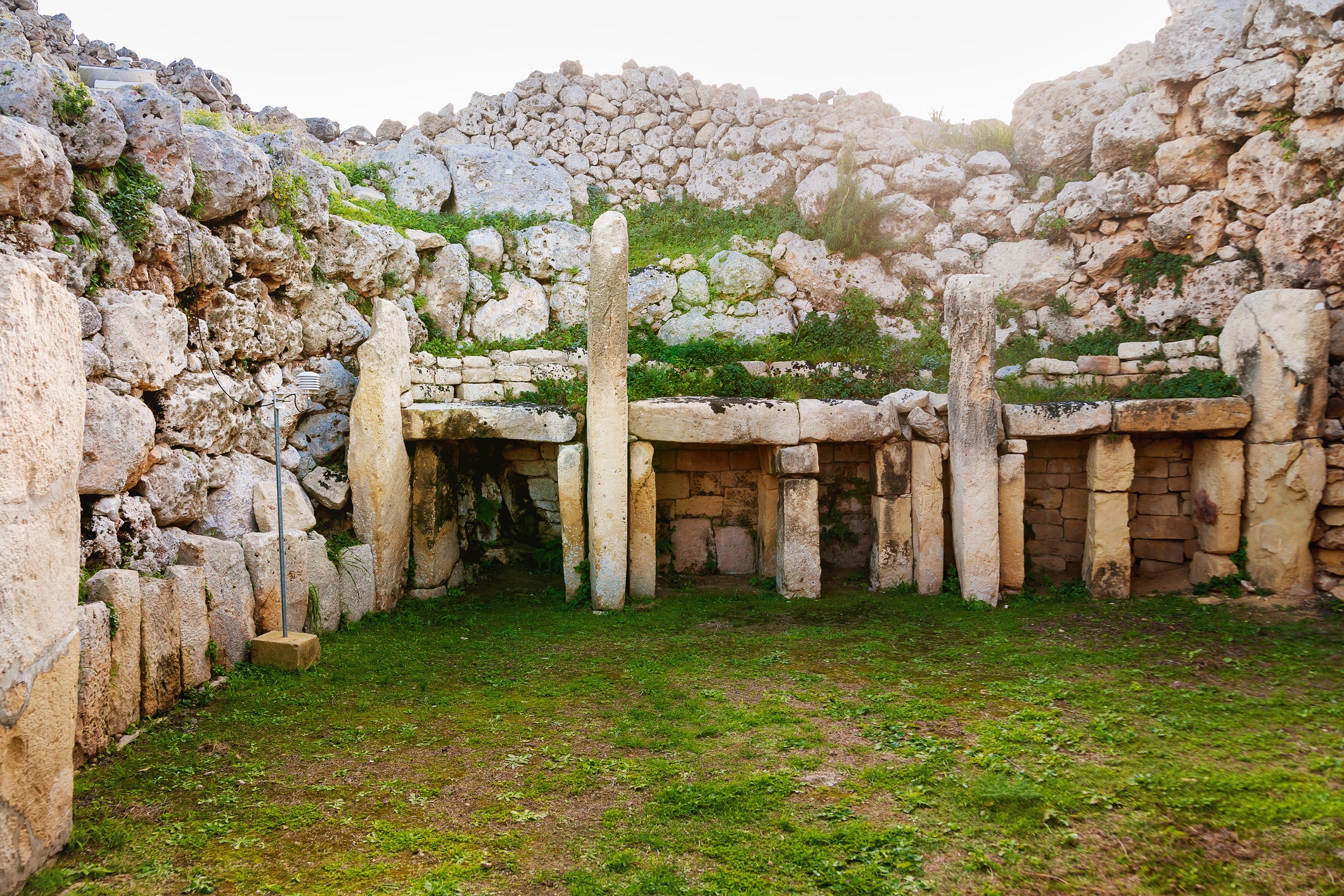
The megalith temple complex of Ggantija is evidence that an advanced prehistoric society flourished on Malta (Getty Images)
The archipelago’s history runs astonishingly deep. In fact, it’s home to seven Unesco-listed megalithic temples and an underground cemetery that are among the oldest surviving human-built structures on the planet, some of which predate the Pyramids and Stonehenge.
The society behind them was one that flourished, then suddenly collapsed. The reason why isn’t clear — some researchers believe farming and deforestation led to catastrophic soil degradation — but one thing is certain: these architectural masterpieces, built with extremely limited resources, indicate that Malta was home to an advanced prehistoric society capable of remarkable feats of engineering.
One of the most impressive monuments is Ggantija, a temple on the island of Gozo dating back to 3600-3200BC created from limestone blocks and built to a striking scale.
On Malta’s southern coast, around 1,600 feet apart on the crest of a ridge, are the similarly ancient and eye-opening temples of Hagar Qim and Mnajdra. Key areas of Mnajdra are illuminated by the sun during the equinoxes and solstices, indicating symbolic and astronomical understanding.
Advertisement
The subterranean Unesco-listed necropolis of Hal Saflieni Hypogeum — on a hill in the suburb of Paola, not far from the Grand Harbour — is an even more prized sight: because exhaled carbon dioxide damages the delicate limestone walls, only around 10 people at a time are allowed inside.
Book far in advance, up to two months if possible, to view halls, chambers and passages dug in three levels that were in use between 4000 and 1500BC.
Great place to stay:Kempinski Hotel San Lawrenz (rooms from $200) on Gozo has gardens and multiple pools, and is within easy reach of Ggantija.
Gozo Citadel — the island’s defensive heart for centuries
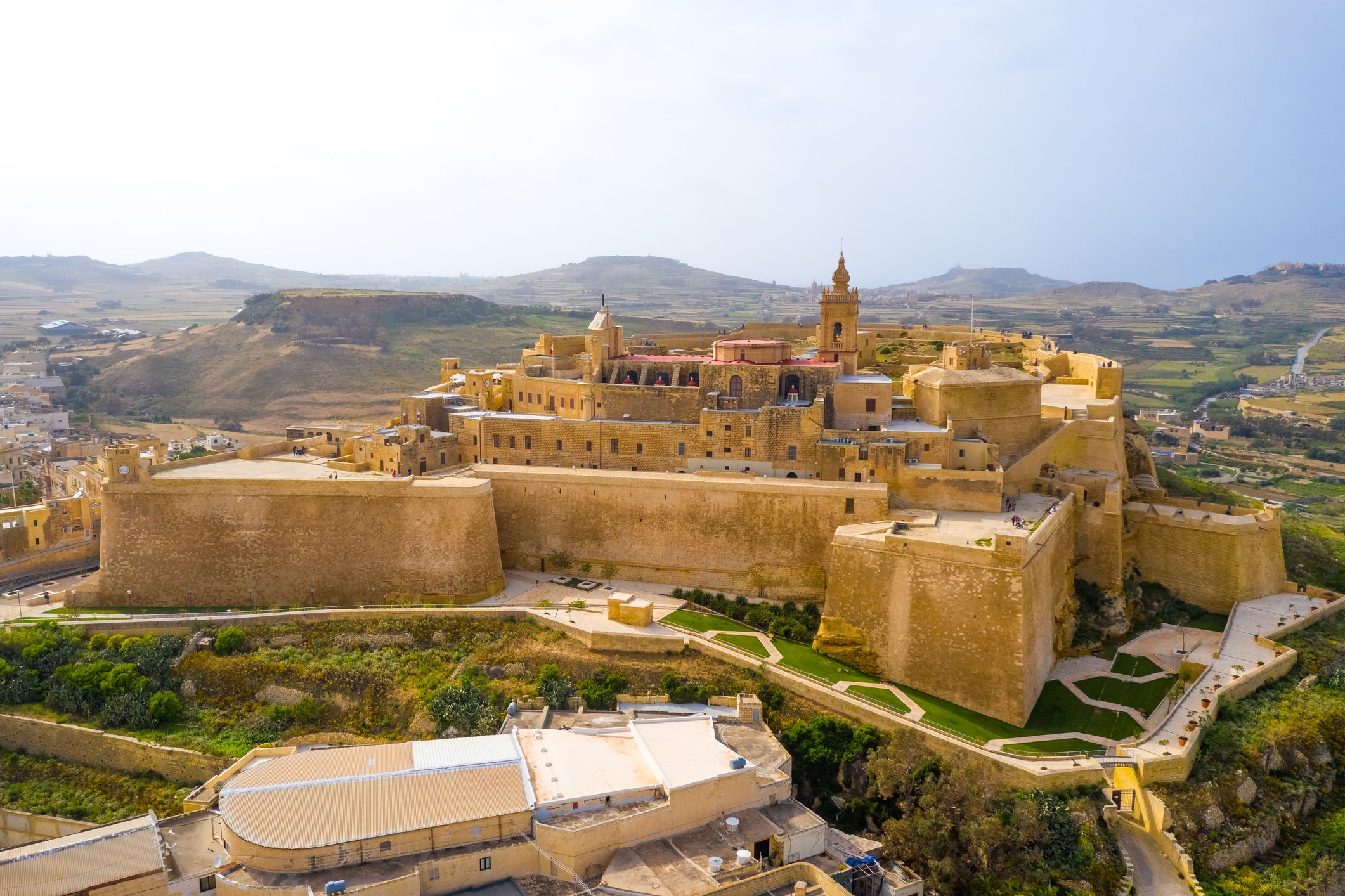
Gozo Citadel occupies a site that’s been fortified since the Bronze Age (Getty Images/iStockphoto)
Gozo’s fairytale walled Citadel (known locally as Il-Kastell) crowns the island’s main town, Victoria (also known as Rabat), and occupies a site that’s been fortified in some way since the Bronze Age.
While today it’s largely a historic attraction (though there are a handful of residents), in the past it was a vital refuge for locals.
In fact, from the late Middle Ages until the early 17th century rural families would shelter nightly in the citadel as protection against pirate and Ottoman raids.
Take to the ramparts and it becomes clear why the citadel was so vital for defense — you can see almost the entire island.
Advertisement
Ground-level explorations unveil a world within a world, a maze of hushed, narrow lanes, tranquil squares and small museums, including the Gozo Museum of Archaeology, Folklore Museum, and Nature Museum.
The early 18th-century Cathedral of the Assumption is the flagship attraction, featuring a hypnotic ceiling painting that creates the illusion of a dome.
Great place to stay: Hotel Ta’ Cenc & Spa, Gozo (rooms from $260), a short drive from the citadel, is an oasis: there are gardens, pools and countryside views. And noise pollution is non-existent.
“They are decimated right now. They’re going to give up nuclear weapons. They’re going to give us the nuclear dust,” he said referring to the uranium.
Advertisement
“They’re going to do everything that we want to do. If they don’t do that, they’re not going to have a country.”
Seizing Iran’s uranium would entail a complex operation involving American troops flying to nuclear sites while under fire from Iranian forces.
Trump said Iran must give up the ‘nuclear dust’ referring to enriched uranium (AP)
Combat troops would need to secure the perimeters of the sites, supported by highly-skilled technical staff and engineers on board to extract the radioactive material. This would need to be carried in around 40 to 50 special cylinders to be transported out of the country without incident.
They would also need to assess the territory for mines and other explosive devices designed to ward off security breaches.
“It’s the job of the Pentagon to make preparations in order to give the commander-in-chief maximum optionality. It does not mean the president has made a decision,” White House press secretary Karoline Leavitt said in a statement.
Advertisement
The Pentagon have not commented on the reports and a spokesman for US Central Command declined to comment when approached by the WSJ.
This satellite image from Planet Labs PBC shows Iran’s Isfahan Nuclear Technology Center outside of Isfahan (Planet Labs PBC)
Last year, the International Atomic Energy Agency concluded that Iran has 1,000 pounds (400 kilograms) of uranium enriched at 60 per cent. Iran is also reported to have nearly 200 kilograms of 20 per cent fissile material, which can be easily converted to 90 per cent weapons-grade.
Experts say that levels that high are not required for nuclear reactors or medical reasons and could likely be for weapons.
Nuclear weapons require 90 per cent enrichment, while the bomb dropped on Hiroshima in 1945 included material that was 80 per cent enriched. A nuclear bomb could still be developed at 60 per cent but wouldn’t be deliverable by missiles.
In June 2025, Israel and the US said they had “obliterated” Iran’s nuclear facilities, but it is unclear whether the Iranian establishment transferred the material prior to the bombing or if it remains underground.
Advertisement
IAEA director General Rafael Grossi previously said he believes the uranium is at two of the three sites that were attacked last year including an underground tunnel at a nuclear complex in Isfahan and a cache at Natanz.
Iran is not currently enriching uranium, according to expert assessments, and had previously agreed to give up stockpiling enriched uranium as part of nuclear talks in February, according to Oman’s foreign minister.
Tehran has warned against a ground invasion and said Trump is leading US troops into “the swamp of death”.
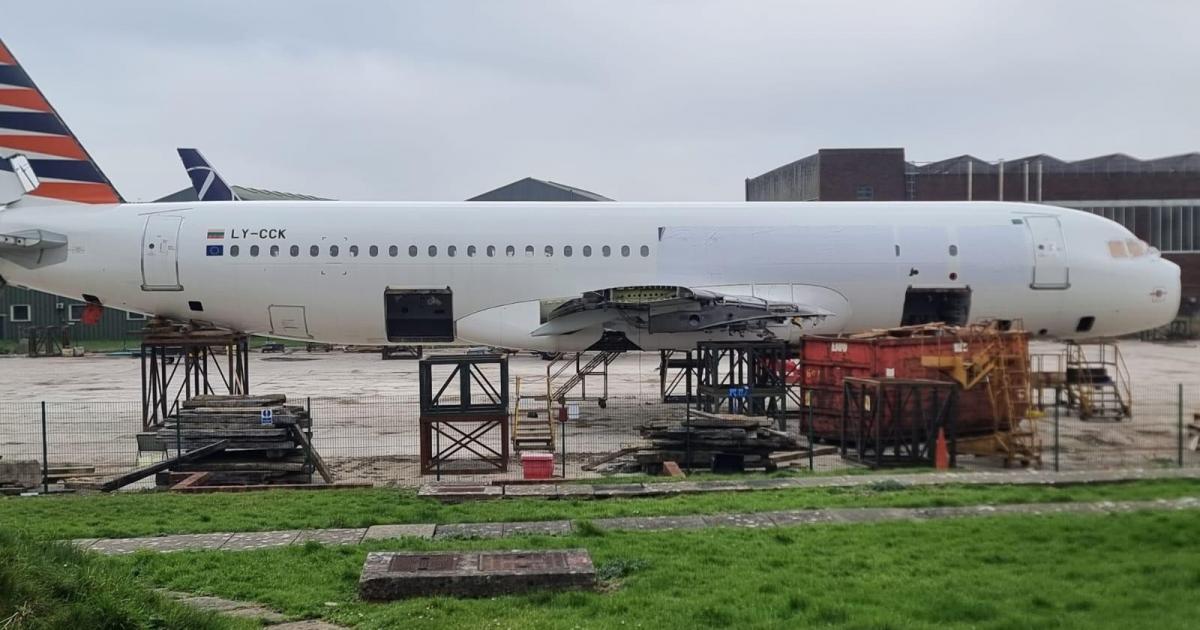
Psycho Path at Lintz Hall Farm in Burnopfield has announced that an Airbus A330 will be the latest twist to the annual event, set to kick off on September 26.
While details about how the plane – which normally seats around 300 – will be used, the spectacle will sit alongside Psycho Path’s 11 other terror mazes.
This includes Dolls House, Crawl Space, IScream, Cutthroat Island, The Hunt, Psycho City, The Darkness and Psychotorium, which was added to the list last year.
Since it was launched in 2018, the event has grown year on year, creating more ambitious and terrifying scare attractions.
Advertisement
null (Image: DANIEL HORDON)
“This is something that I have had at the back of my mind for some time and now we have managed to purchase a plane, we will be creating something that not only has never been seen in the UK before but we believe will be a world first,” director Christiano Crawford said.
Psycho Path is working with a leading company in the USA to bring the idea to life.
Phase one tickets are already sold out, with phase two now on sale at psycho-path.co.uk
Christiano believes that once the full details of the new attraction are known, the event will be even more in demand.
Advertisement
Every year we sell out and have to add extra dates,” he said. “This time round we’re introducing a very different kind of scare – and it will be one that nobody will want to miss.”
Psycho Path is scheduled to run until November 1 this year.
DUBAI, United Arab Emirates (AP) — U.S. President Donald Trump openly mused about seizing Iran’s Kharg Island oil terminal in the Persian Gulf and the United States and Israel kept up their attacks Monday on the Islamic Republic, even as there were signs of progress in nascent ceasefire talks. Tehran, meanwhile, struck a key water and electrical plant in hard-hit Kuwait, part of its campaign targeting the Gulf Arab states.
As a diplomatic effort being facilitated by Pakistan toward ending the war moved ahead, Trump said Iran had agreed to allow 20 oil tankers through the Strait of Hormuz starting Monday as “a sign of respect.” At the same time, with 2,500 U.S. Marines now in the region and a similar sized contingent on its way, he raised the idea of taking Iran’s Kharg Island.
“Maybe we take Kharg Island, maybe we don’t,” he told the Financial Times in an interview published early Monday. “We have a lot of options.”
Iran launches attacks on Israel and hits more infrastructure targets in Gulf states
Sirens sounded at dawn near Israel’s main nuclear research center, a part of the country that has been targeted repeatedly in recent days. Israel’s military also said it had taken out two drones launched from Yemen, where the Iranian-backed Houthi rebels entered the war on Saturday with their first missile attack.
Advertisement
Iran kept up the pressure on its Gulf Arab neighbors, as Saudi Arabia intercepted five missiles targeting its oil-rich Eastern province, Bahrain sounded a missile alert, and a fireball erupted over Dubai as an incoming missile was taken out by defenses.
In Kuwait, an Iranian attack hit a power and desalination plant, killing one worker and injuring 10 soldiers, the state-run KUNA news agency reported.
Desalination plants are crucial to water supplies in the Gulf Arab states, and an Iranian attack previously damaged a desalination plant in Bahrain during the war. The facilities are typically paired with power plants, because of the large amount of energy required to remove salt from the water to make it drinkable.
Israel’s military launched a new wave of attacks on Iran, saying it was striking “military infrastructure” across Tehran, and explosions were heard in the Iranian capital. Iranian state media reported a petrochemicals plant in Tabriz, in the north, sustained damage after an airstrike and firefighters had to put out a blaze.
Advertisement
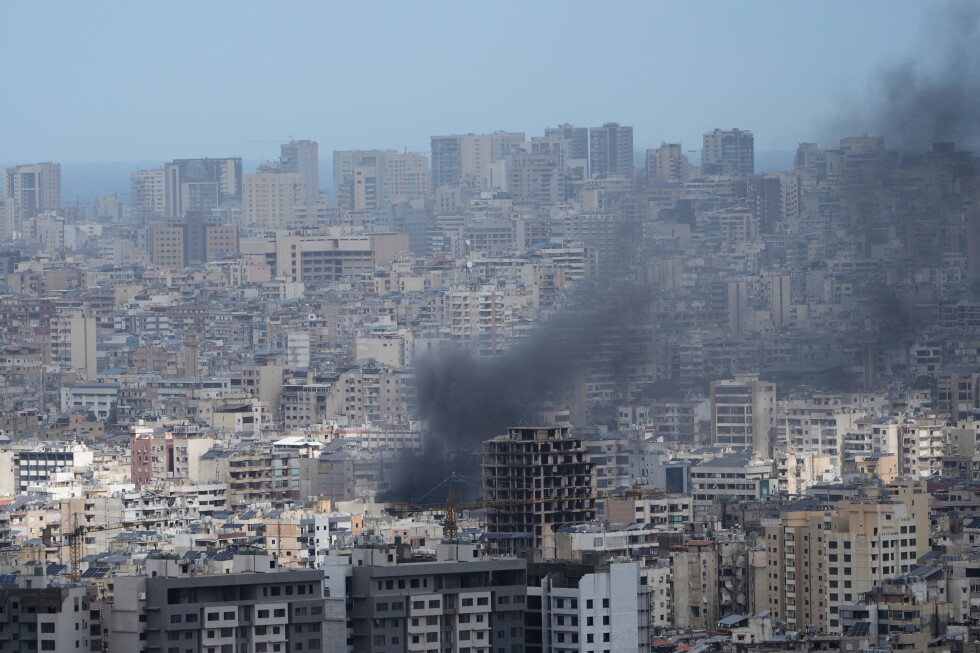
In Lebanon, which Israel has invaded by ground, an Indonesian peacekeeper was killed and three others were wounded when a projectile exploded near a village in the south.
Over the weekend, Israeli Prime Minister Benjamin Netanyahu said the military will widen its invasion, expanding the “existing security strip” in that country’s south as it targets the Iran-linked Hezbollah militant group.
Oil prices rise again as concerns of global energy crisis grow
Iran’s attacks on the energy infrastructure of the region and its stranglehold on the Strait of Hormuz, through which a fifth of the world’s oil is shipped in peacetime, has sent oil prices skyrocketing and given rise to growing concerns about a global energy crisis.
In early trading, the spot price of Brent crude oil, the international standard, was around $115, up nearly 60% from when the U.S. and Israel started the war with attacks on Iran on Feb. 28.
Advertisement
As pressure has grown on Trump to bring an end to the conflict, the U.S. has presented Iran a 15-point plan that includes it agreeing to open the Strait of Hormuz to shipping. Iran, meantime, has produced a five-point plan with its own terms, including maintaining its sovereignty over the key waterway.
Pakistan announced Sunday that it would soon host talks between the U.S. and Iran, though there was no immediate word from Washington or Tehran, and it was unclear whether discussions on the monthlong war would be direct or indirect.
Pakistan’s Foreign Minister Ishaq Dar the talks would be held “in the coming days.”
Trump says diplomatic approach going well but suggests military expansion is possible
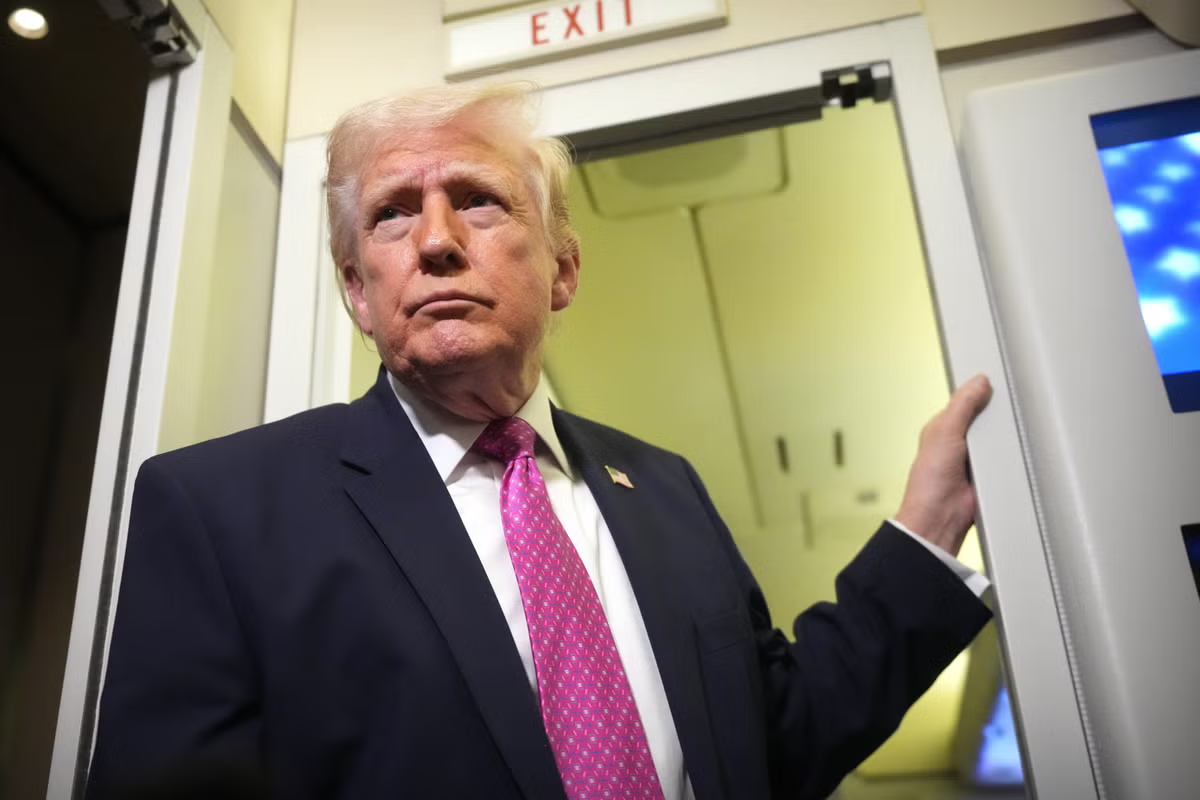
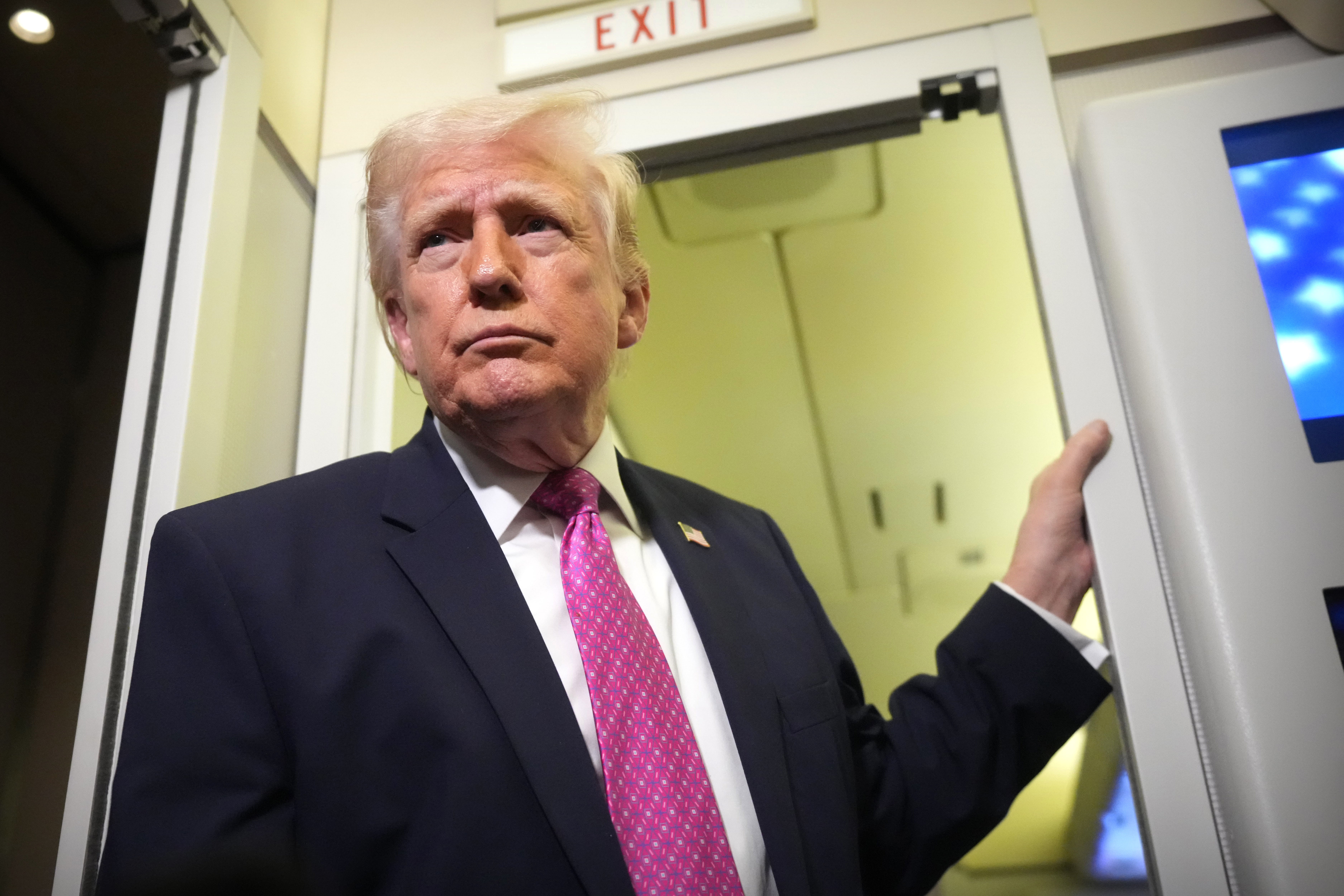
Trump told reporters aboard Air Force One late Sunday that the U.S. was negotiating “directly and indirectly” with Iran, though Iran has insisted that it has not been in any talks with Washington.
Advertisement
“We’re doing extremely well in that negotiation but you never know with Iran because we negotiate with them and then we always have to blow them up,” Trump said.
Earlier, Iran’s parliament speaker, Mohammad Bagher Qalibaf, dismissed the talks in Pakistan as a cover to get more U.S. troops into the area. He said Iranian forces were “waiting for the arrival of American troops on the ground to set them on fire and punish their regional partners forever,” according to state media.
In the interview with the Financial Times, Trump suggested it could mean a longer-term commitment if the U.S. decided to try and take Kharg Island, saying “it would mean we had to be there for a while.”
“I don’t think they have any defense,” he added. “We could take it very easily.”
Advertisement
The U.S. already launched airstrikes once that targeted military positions on the island. Iran has threatened to launch its own ground invasion of Gulf Arab countries and mine the Persian Gulf if U.S. troops land on its territory.
To get an amphibious invasion force to Kharg would mean transiting the Strait of Hormuz and most of the Persian Gulf. Experts say that holding the island would also be a challenge, because in addition to its missiles and drones, it would be well within artillery range from the Iranian mainland.
Iran on Monday confirmed that the head of the Revolutionary Guard’s navy, Rear Adm. Alireza Tangsiri, had been killed in an Israeli airstrike, as Israel claimed last week. The Republican Guard praised the admiral’s efforts in statement, particularly in helping Iran keep its grip on the Strait of Hormuz.
“Every fighter is a Tangsiri, and we will see what surprises they will bring in the days and months ahead,” it said.
Advertisement
Death toll climbs
In Lebanon, officials said more than 1,200 people have been killed and more than 1 million have been displaced. Five Israeli soldiers have also lost their lives.
In Iran, authorities say more than 1,900 people have been killed, while 19 have been reported dead in Israel.
In Iraq, where Iranian-supported militia groups have entered the conflict, 80 members of the security forces have died.
In Gulf states, 20 people have been killed. Four have been killed in the occupied West Bank.
Rising reported from Bangkok. Associated Press writers Darlene Superville aboard Air Force One, Giovanna Dell’Orto in Miami, Florida and Munir Ahmed in Islamabad contributed to this story.
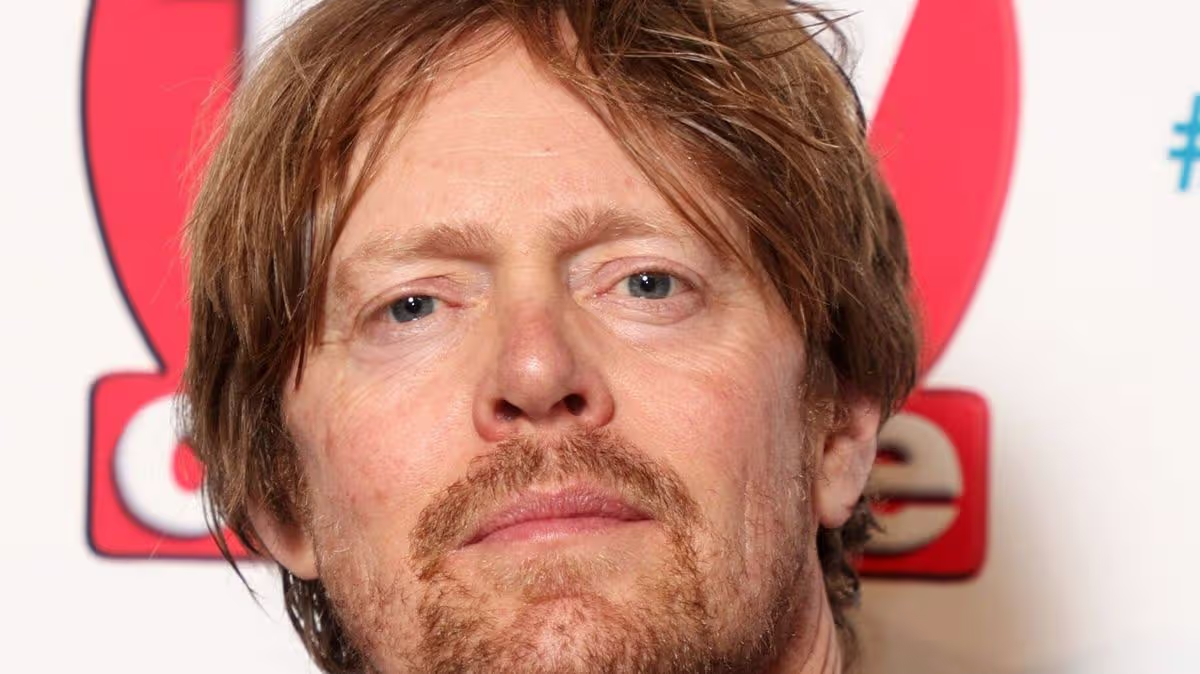
Beyond Paradise star Kris Marshall has opened up about his family life as the BBC drama returns for series 4.
08:48, 30 Mar 2026Updated 08:49, 30 Mar 2026
Beyond Paradise star Kris Marshall has shared his family’s response to the BBC show, which is returning for its fourth series, revealing his son’s “heartbreaking” viewing habit.
As they adjust to married life, the new series presents Humphrey with an “impossible decision” and a fresh set of cases to solve.
Advertisement
Ahead of the new series, Kris, who shares two children, Thomas and Elsie, with his wife Hannah Dodkin, confessed that he’s “losing” his son’s interest in the BBC crime drama.
Speaking to Hello! Magazine, he disclosed: “My son, who is the eldest, is now a teenager, and he’s starting to drift away, towards things like Stranger Things,” reports the Express.
Advertisement
“I’m sort of losing him to the darker side of things, but he watches [Beyond Paradise] a lot when I’m away, which is kind of heartbreaking, but also I love it.”
Kris has previously discussed juggling his demanding filming schedule with family life, after relocating from Guadeloupe in the Caribbean, where Death in Paradise was shot, to Bath in 2017, so his children could attend school in the UK.
The family initially made Bath, Somerset, their home before relocating to the New Forest. Kris later explained: “My wife and I moved back to Bath when we had kids, but we relocated to the New Forest last year, basically as a lifestyle choice.
Advertisement
“When I’m not working, I’m all about just enjoying myself as much as possible – I’m big into sailing, surfing and skiing… oh, and Scrabble! All the S-words, really. As much as I love Bath, there’s not much in the way of coast there! So now we’re a 10-minute drive from the beach and a five-minute drive from the forest, and I love it.”
His work now requires him to spend considerable periods away from his family while filming in Devon and Cornwall. Speaking recently to The Daily Mail, he revealed that following 14-hour days across five days weekly, he doesn’t return home every weekend – a four-hour journey.
Kris reflected: “My kids are growing up. They’ve got their own lives.”
Advertisement
He continued by saying he “loves” the arrangement, appreciating the “beauty” of reuniting with his family fortnightly while also valuing the “solitude” of personal time following demanding filming schedules.
Discussing the challenge of readjusting to domestic life, he noted: “You have to relearn each other’s ways. It’s difficult. Let’s not beat around the bush. It’s an extremely blessed job when you’ve got your own show, you’re looked after and solitude is something you turn to.
“Time on your own, not having to do school drop-offs and all the things that come with family life. But you always have to remember how to be a parent when you come back, which is difficult because to me it is all about a light touch on the tiller.”
Advertisement
The synopsis for the new series of Beyond Paradise teases: “Fact and folklore blur as they investigate the death of a novelist who predicted their demise, a magical night of Dark Morris that soon turns sour, a stolen treasure map that suddenly reappears, and the alleged sighting of a vengeful mermaid lurking out at sea.
“Humphrey (Kris Marshall) and Martha (Sally Bretton) launch into married life as they search for a new home, whilst Humphrey wrestles with an impossible decision that may change the lives of everyone at the station forever.”
Beyond Paradise continues on Friday at 8pm on BBC One and iPlayer.
The Yorkshire Craft Festival, organised by Made in Yorkshire, will take place on Parliament Street in York from April 7 to 12.
The six-day event will feature a large marquee filled with handmade goods from makers across the region, including art, homeware, gifts and traditional crafts, alongside live demonstrations and interactive workshops.
RECOMMENDED READING:
Tracie Jarvis-Post of Made in Yorkshire said: “Yorkshire has an incredible community of skilled makers, artists and craftspeople.
Advertisement
“The Yorkshire Craft Festival is all about bringing those makers together in one place, giving visitors the chance to discover locally made products, learn new skills and enjoy a creative day out in the heart of York.”
The tent at previous festivals (Image: Provided)
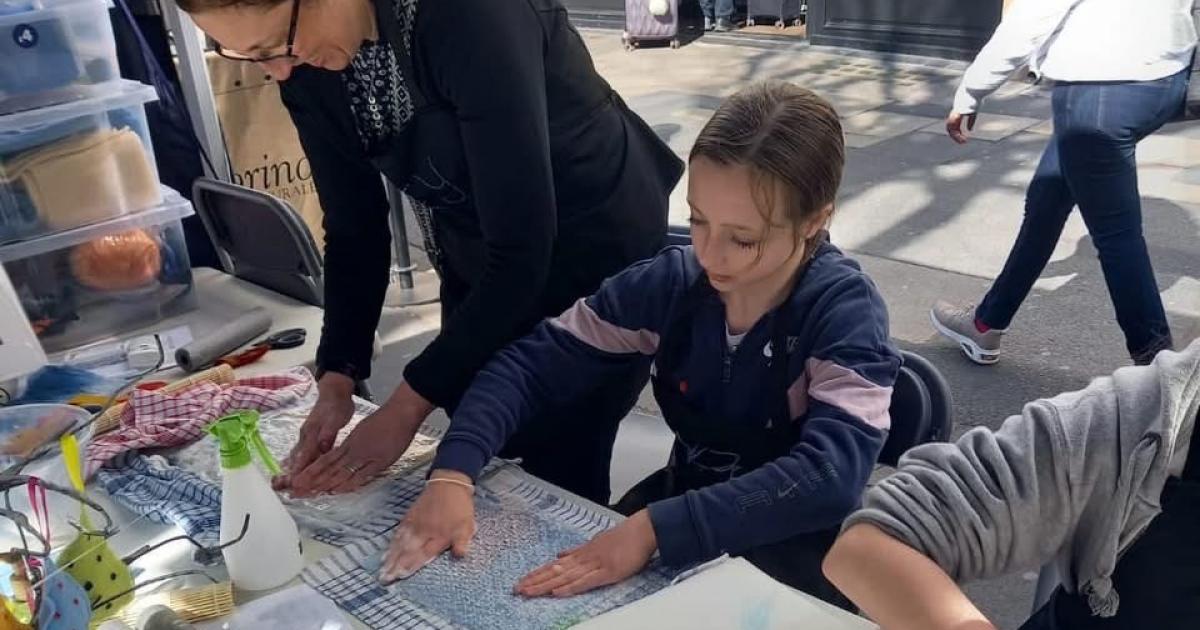
The workshops throughout the week will let visitors try their hand at stained glass making, blacksmithing, felt making, willow weaving and paper craft.
Families can enjoy dedicated children’s activities such as pot painting and paper crafts, while adults can participate in pot throwing and other hands-on sessions led by experienced artisans.
Artists at a previous event (Image: Provided)
The event aims to highlight the skill and creativity of Yorkshire’s independent craft community.
MELBOURNE, Australia. (AP) — Australian police said they believe they shot dead a suspect Monday accused of killing two police officers and seriously wounding a third in a remote forest region seven months ago.
There had been no confirmed sightings of Dezi Freeman, 56, since he allegedly opened fire on police officers who came to serve a warrant at his home near Porepunkah in Victoria state northeast of Melbourne on Aug. 26 last year, Victoria’s Chief Commissioner of Police Mike Bush said on Monday.
A man believed to be Freeman was fatally shot by police on Monday at a remote location near Thologolong, around two hours’ drive north of Porepunkah, a police statement said.
“We believe it is Freeman, but we have to go through a formal identification process,” Bush told reporters in Melbourne. Identification could take up to 48 hours through processes including fingerprinting.
Advertisement
Heavily armed Special Operations Group tactical police were involved in a standoff for three hours before the suspect was shot. He had been inside a shelter like a shipping container and did take up a police offer to surrender, Bush said.
“This was all about bringing this to a conclusion as safely as possible. Our ultimate goal was to arrest the person there … as peacefully as possible,” Bush said.
Bush said he “strongly believed” the suspect was armed. Bush could not say whether the suspect fired at police.
Australian news outlets widely reported that Freeman espoused co-called sovereign citizen beliefs and had grievances with police. He had wilderness survival skills that police feared could sustain him living in the open indefinitely.
Advertisement
The shooting of three police officers led to a massive search across Victoria’s heavily forested alpine region. In recent months, police said they suspected Freedman had killed himself.
“We have to follow every avenue of inquiry and there was a lot to suggest that Freedman had taken his own life,” Bush said.
Bush would not say whether a tipoff led police to the suspect on Monday. Police had offered a 1 million Australian dollar ($678,000) reward for information.
Police said they continue to investigate whether others had helped the suspect avoid arrest.
The Making Every Moment Count Campaign managed to raise over £214,000 to help the hospice run its vital services, more than double the £100,000 goal.
The campaign was ‘match funded’, meaning that for every £1 raised, a local business or organisation would donate another £1, effectively doubling the total raised.
Kathryn Willet offering thanks to backers and champions (Image: Dan Dougherty)
This was something the hospice had never tried before, and the success took them by surprise.
Kathryn Willett is the relations manager for the hospice.
Advertisement
“What you have all achieved is amazing,” she said, in a speech at the event.
“I couldn’t wish for better supporters – from the bottom of my heart, I can’t thank you enough.
“I still can’t get over it!”
The celebration event brought together donors and matchers for the first time, giving them the chance to meet the generous people who helped double their generous donations.
Advertisement
Hospice exec Leigh Vallance giving a speech thanking everyone for their generosity (Image: Dan Dougherty)
The donations were made over a 36-hour period.
They thought they’d be ok with four people on the phones, but this turned out to be an underestimation of local generosity.
“We were on the phones from nine o’clock to four o’clock,” said volunteer Anne Davison, “and we were dumbstruck with how many calls we were getting and how much money people were donating.
“We raised £214,000, and that doesn’t even include Giftaid.”
This is why the hospice is always thankful to the people that help keep them afloat, people like the Cunningham family, who estimate they have raised over £10,000 for the hospice over the years.
The celebration evening took place on March 26 (Image: Dan Dougherty)
The two said: “It’s something we’d done for a long time, but we never expected we’d have to use it.
Advertisement
“It’s one of those things where you don’t think about it, but when you need it, you can’t live without it.”
It wasn’t until last year that they had to use the service themselves.
The evening’s spread (Image: Dan Dougherty)
“It was grandpa Joe,” Christina said, referring to Joseph Cunningham, her paternal grandfather, and Mark’s dad.
“None of us knew he had cancer at the time, it was all so quick.”
Advertisement
Joseph – a former member of the Cottontown Chorus – was moved quickly into the hospice.
“At first he was unsure about it, but soon he was moving things around, reorganising things, putting up pictures.”
Muntazir Dipoti, who volunteers for the hospice, trying to raise its profile amongst the Muslim community (Image: Dan Dougherty)
Although suffering from dementia, Joe was still able to remember the words from his old Cottontown Chorus performances after an old choir buddy came to visit.
They played a Youtube video of their MGM Grand performance in Las Vegas.
Advertisement
Mark said: “His voice wasn’t quite there, but he still had the rhythm of the words.
“Any time his friend made a mistake, Joe would raise his hand telling him ‘stop!’”
The Cunninghams were extremely grateful for how the hospice allowed them all to navigate Joe’s last days.
“We can’t thank the hospice enough – they made all of us feel at home,” said Christina.
Advertisement
Muntazir Dipoti and hospice relationships manager Kathryn Willett (Image: Dan Dougherty)
“He could see his great-granddaughter playing outside his window in the garden – you wouldn’t really get that in a hospital, where it’s more regimented.
One of the family’s last acts was to visit Joe to let him know that Christina was pregnant, and that he was about to have a great-grandson.
“We went to see him at the weekend,” said Christina, “and on Monday he died.”
Christina’s son’s was named ‘Joseph’ in his great grandfather’s honour, making him Theodore Joseph Cunningham-Jones.
Advertisement
“The important thing is that it allowed him to die as himself – he didn’t die as sick Joe, he died as Joe Cunningham.”
Two different roads have been closed this morning due to downed trees
Rob Currell Live news reporter
07:18, 30 Mar 2026Updated 07:22, 30 Mar 2026
Fallen trees have caused problems for motorists this morning, (Monday) as two different roads were closed. Drivers are asked to find alternative routes while work to clear debris is underway.
The Ballygowan Road, Saintfield is currently closed due to a fallen tree and damaged NIE cable. Northern Ireland Electricity have been informed and according to Traffic Watch NI are due to respond. Road ahead closed and road closed signs are currently in place.
A 50-year-old man has been charged with murder following an incident in Portadown last week.
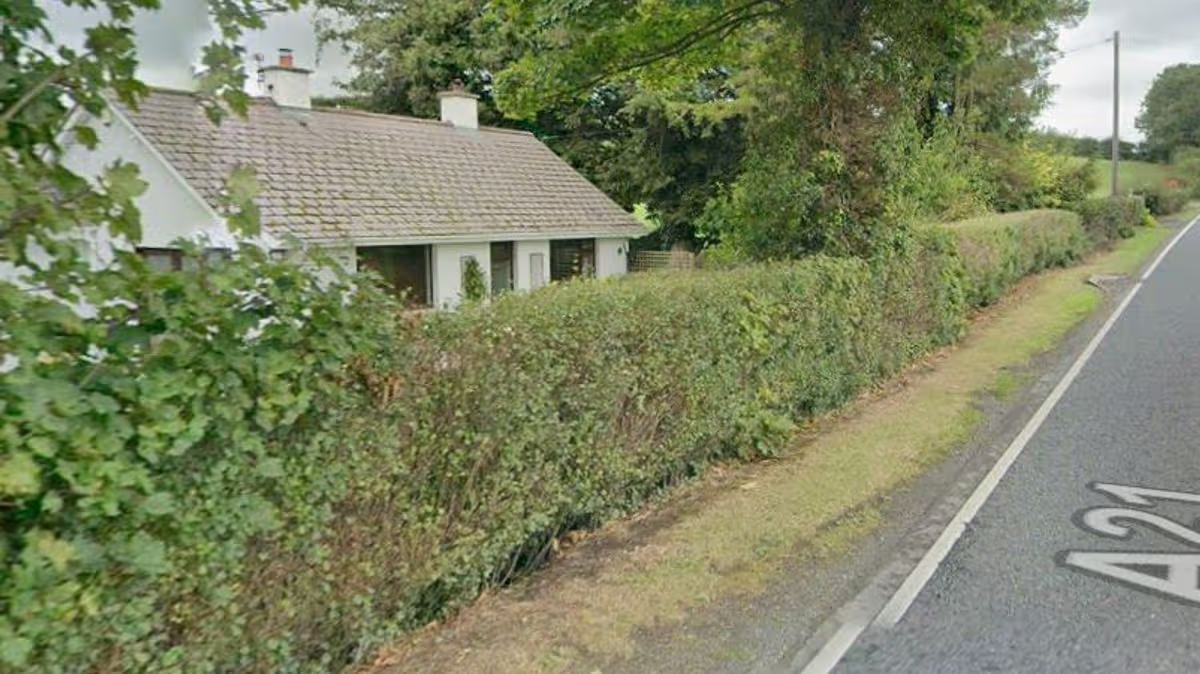
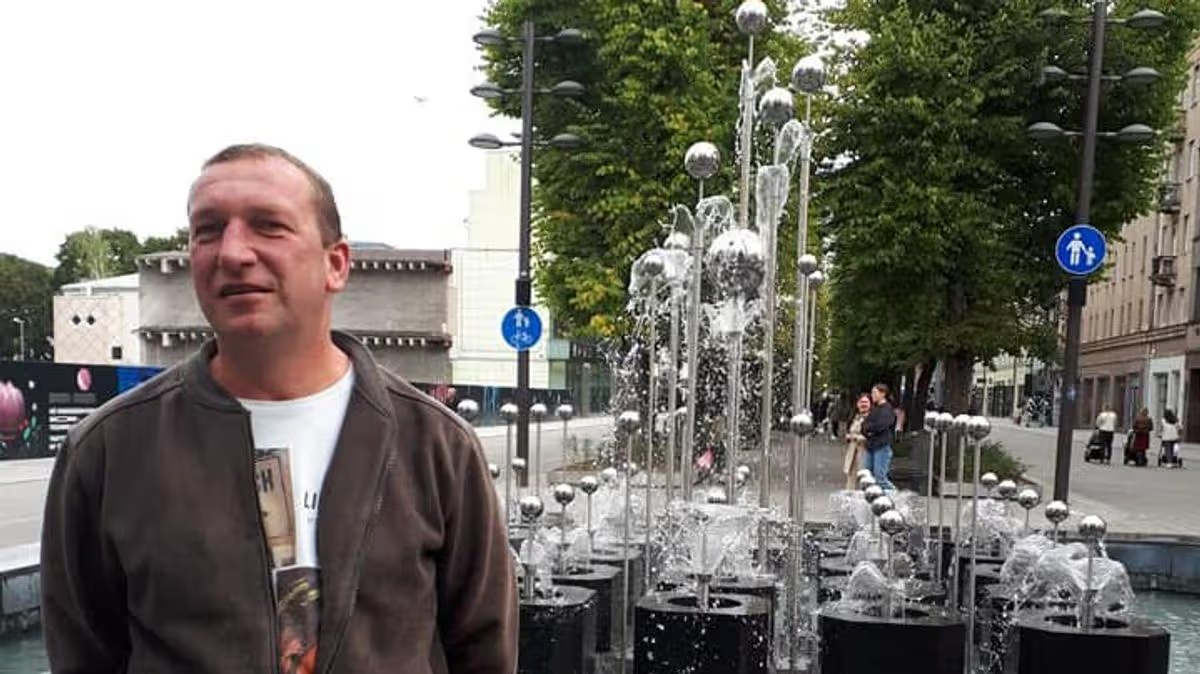
The charge follows the death of Rolandas Kvederis, aged 49, at a property in Ranfurley Road on Thursday night, March 26.
Advertisement
Police attended the scene following reports that a man had been injured in an altercation. Mr Kvederis was pronounced dead at the property.
Two men were arrested on suspicion of murder following the incident, and the other has since been released unconditionally.
The charged man is due to appear before Lisburn Magistrates’ Court later this morning, Monday, March 30.Police said that, as is standard procedure, the charge will be reviewed by the Public Prosecution Service.




.jpeg)











































You must be logged in to post a comment Login