Connect with us
DAPA Banner
DAPA Coin
DAPA
COIN PAYMENT ASSET
PRIVACY · BLOCKDAG · HOMOMORPHIC ENCRYPTION · RUST
ElGamal Encrypted MINE DAPA
🚫 GENESIS SOLD OUT
DAPAPAY COMING

NewsBeat

GOP redistricting confuses voters and burdens election officials

Published

on

GOP redistricting confuses voters and burdens election officials

BATON ROUGE, La. (AP) — Thousands of Louisiana voters have already cast early ballots for congressional candidates in what soon could be the wrong districts. Alabama’s primaries are a week away, but the state could force a do-over for voting on U.S. House races. A new congressional map in Tennessee upended races that had been underway for months.

Republicans’ rush to gerrymander congressional districts across several Southern states after a U.S. Supreme Court ruling hollowed out the Voting Rights Act is confusing voters and creating logistical headaches for local election officials. The changes are hitting while primary season is in progress.

The chaotic upheaval to an election season that could determine which party controls the U.S. House is the latest fallout from an intensely partisan gerrymandering battle initiated by President Donald Trump last year to protect Republicans’ slim majority.

The Supreme Court’s decision last month severely weakening the Voting Rights Act required Louisiana to reconsider a map drawn in 2024 with two majority minority congressional districts that elected Black representatives. The GOP-controlled Legislature could eliminate one or both in a state where roughly 30% of the population is Black.

Advertisement

The ruling also encouraged Republicans in Alabama, Mississippi, South Carolina and Tennessee to consider eliminating four Democratic districts among them, three represented by Black lawmakers. Florida has a new map meant to cost Democrats four of their eight seats, out of 28.

In Louisiana, 66-year-old New Orleans resident Sallie Davis voted early last week. Her ballot allowed her to vote for Democratic U.S. Rep. Troy Carter, but a sign at her polling booth showed his race crossed off with a ballpoint pen. She was confused and frustrated — especially when a poll worker told her to go with what the sign seemed to convey. She’s now worried that her entire ballot will not be counted.

“I was supposed to believe a piece of paper with an X on it marking out the person I wanted to vote for,” she said, her voice breaking as she recounted her experience later. “I think I have been disenfranchised. I think my vote, that I just voted on, it’s not going to count or something. I think it’s illegal.”

Primaries postponed, deadlines compressed

Louisiana’s primary is on Saturday, and a week of early voting there began May 2, two days after the Republican governor declared an emergency and suspended congressional primaries to give lawmakers a chance to draw a new map.

Advertisement

Republican Secretary of State Nancy Landry’s office said nearly 179,000 primary ballots had been cast as of Friday, including about 53,000 absentee ballots returned by mail. She said the ballots included U.S. House races, but votes in those contests won’t be counted.

In Alabama, South Carolina and Tennessee, Republicans justified pursuing new maps by saying that electing more Republicans would better reflect their states’ conservative values. Alabama lawmakers passed legislation Friday allowing a do-over of congressional primaries.

Alabama’s primary is May 19, and voting in congressional races will occur then as planned, but with the old districts. Those votes would end up not counting if a court allows the switch to different districts.

Mississippi held its primaries in March, but a federal court has ordered it to redraw its state Supreme Court districts, and Trump is pushing Republicans to redraw the state’s four congressional districts.

Advertisement

A special session of its Legislature is set for May 20. Renovations of the House chamber will force members to meet at the Old State Capitol, where, decades ago, Mississippi lawmakers passed Jim Crow laws suppressing Black voting.

“Modern-day voter suppression relies on election administration errors and chaos, and that’s what we’re going to see play out in all of these states,” said Amir Badat, a Jackson, Mississippi, voting rights attorney and activist.

Tennessee continues yearlong fight

Tennessee was the first state to enact a new map since the U.S. Supreme Court decision, but Trump’s push for redistricting started in Texas last year. Democrats countered in California and tried but ran afoul of the courts in Virginia.

Before Tennessee’s GOP-controlled Legislature passed a new map last week, the state’s elections coordinator told county officials in a memo what that would mean: reprogramming election systems, retraining poll workers and possibly adjusting precinct boundaries, meaning some voters’ polling places could change.

Advertisement

Tennessee’s congressional primaries still will be held Aug. 6 as planned, and candidates have until Friday to qualify for the ballot. Those who qualified previously will get a pass if they can run in a new district with the same number.

In South Carolina, lawmakers could move all the state’s June 9 primaries to August, or just the congressional races. While mail balloting is limited because the state requires an excuse to do it, more than 6,800 mail ballots already had been sent to voters — with 260 returned — as of Friday, according to the state Elections Commission.

Holding a separate election for congressional primaries would cost $3 million and the time for preparations would be compressed, Conway Belangia, the commission’s executive director, told lawmakers Friday.

“It will be difficult, but it will be possible,” he said.

Advertisement

Activists see problems ahead for voters

Michael McClanahan, president of the NAACP’s Louisiana State Conference, is hearing “total confusion” as voters call him and ask, “Is there an election?”

“People say, ’I ain’t going to vote because the governor’s suspended the election,’” he said. “But he didn’t, he only suspended one aspect of it.”

In Alabama, Senate Democratic leader Bobby Singleton said he has been fielding calls from public officials who also are confused.

“These are the people who are the head of elections,” he said. “They don’t know what to do.“

Advertisement

Voting rights activists see problems that arose in Nashville, Tennessee, in 2022, when Republican legislators divided the state’s capital city into three congressional districts to take a seat from Democrats, as a harbinger of what Memphis voters could face this year. A state report said more than 3,000 Nashville-area voters were assigned to incorrect districts and more than 430 cast ballots in the wrong races in the November 2022 election.

“It’s going to be really hard for the election commissions to be able to keep up with this short timeline,” Matia Powell, executive director of the voting rights nonprofit Civic TN, said during a conference call Friday with other voting rights activists in the South.

Some fear confusion will lead to distrust and apathy

Anneshia Hardy, executive director of Alabama Values, which provides support to voting and civil rights groups, said people will lose trust in elections if they believe the rules can change every two years.

“Once people stop believing that the process is stable and fair, disengagement is going to increase, and that’s one of the biggest dangers here,” she said. “Democracy doesn’t just depend on voting systems existing but really on people believing that their participation matters.”

Advertisement

At least a few Democratic voters who went to the Louisiana Capitol on Friday to protest the gerrymandering expressed doubt about whether they still have a political voice.

Davis came to the State Capitol in Baton Rouge and had a bullhorn with her for a protest in which she yelled, “Whose vote? Our vote!”

David Victorian, a 79-year-old Vietnam veteran from Baton Rouge, said: “I’m concerned for the survival of the democracy that we’re supposed to be living in.”

___

Advertisement

Hanna reported from Topeka, Kan. Associated Press writers Jeffrey Collins in Columbia, S.C., and Kim Chandler, in Montgomery, Ala., contributed.

Source link

Advertisement
Continue Reading
Click to comment

You must be logged in to post a comment Login

Leave a Reply

NewsBeat

5 Foods To Help You Poop (That Aren’t Prunes)

Published

on

5 Foods To Help You Poop (That Aren't Prunes)

It’s true that punes and prune juice really do help you go, and could even be better at getting things moving than psyllium husk.

That’s because they’re high in a sugar alcohol called sorbitol, which draws water into your colon and softens the stool. The added pressure it places on your bowels encourages motion, too.

Prunes have a lot of gut-friendly fibre, though the drink doesn’t.

But if you don’t like the dried plums or are looking for a little variety, here are some other foods to get the show back on the road:

Advertisement

1) Chewing gum

In a remarkable opening line, health myth buster, GP, and surgeon Dr Karan Rajan said in a video that “chewing gum could help you in your quest to churn out fresh colon sausage”.

That’s for two reasons. Firstly, it tricks your body into thinking you’re eating, which kick-starts the motion of the digestive ocean.

And secondly, sugar-free gum often contains that helpful ingredient, sorbitol.

Advertisement

2) Popcorn

Popcorn is surprisingly high in fibre. And the type of fibre it contains, insoluble fibre, provides “roughage,” Johns Hopkins Medicine said.

It’s also slow to digest, which keeps you fuller for longer, and may even help to lower your blood pressure.

But be careful not to overdo it, and make sure you drink enough water, as “fibre belly” can paradoxically back you up again.

Advertisement

3) Dragonfruit

A 2023 study found that 8g of dragonfruit a day helped to feed the good bacteria in your gut.

And the fruit’s fermentable fibres, Dr Karan Rajan said, give you “prize-worthy poops” because they bulk out and soften stools.

4) Apples

Advertisement

These are high in both sorbitol and fibre. But it seems to keep things moving without the fibre; the juice seems useful as a mild laxative.

However, apple sauce might not work as well. That’s because it’s high in pectin, which makes stools harder and therefore more difficult to pass.

5) Pears

Pears have even more sorbitol than their apple counterparts. And they’re also higher in fructose, another sugar that can sometimes double up as a mild laxative.

Advertisement

Source link

Continue Reading

NewsBeat

Tess Daly and Vernon Kay’s relationship timeline – from ‘sexting’ scandal to warning signs of split

Published

on

Tess Daly and Vernon Kay's relationship timeline - from 'sexting' scandal to warning signs of split

The former Strictly host and Radio 2 DJ – who have two daughters – admitted it had not been an “easy choice” to part ways.

Source link

Continue Reading

NewsBeat

Coronation Street fans issue Carla Connor-Swain demand amid ‘disappearance’ after wedding

Published

on

Manchester Evening News

The fan-favourite character, played by Alison King, has been notably absent following her wedding to new wife, Lisa Connor-Swain

Coronation Street fans have issued a demand around Carla Connor-Swain following her ‘disappearance’ after her latest wedding in the long-running show.

Advertisement

The fan-favourite character, played by Alison King, will officially mark 20 years since she arrived in Weatherfield later this year, and it would be fair to say that Carla hasn’t had much luck over those two decades when it comes to matters of the heart.

That being said, things have been looking up as last month in the ITV soap, Carla was seen marrying DS Lisa Swain. But pointed out on-screen, this isn’t Carla’s first rodeo as the Underworld factory boss had been married five times before, twice of those times to the same person – we’re looking at you, Peter Barlow!

Click here to sign up for more Coronation Street updates in our newsletter

But as Corrie viewers know, there was almost a hitch, as at first, the nuptials appeared to be off due to a flood, caused by Carl Webster, at the Chariot Square Hotel. But after some words of encouragement from Ryan Connor, Lisa formed a plan.

Advertisement

After convincing a disappointed Carla to ditch her duvet day, they headed to the hotel, and upon their arrival, Lisa surprised her wife-to-be by revealing that their wedding was going ahead, with Lisa’s daughter, Betsy, Carla’s nephew, Ryan, and her father-figure, Roy Cropper, as their witnesses.

Once pronounced as wives, there was another surprise waiting as Sally Metcalfe activated the Underworld security alarm, forcing Carla to head into work, despite getting married, but upon her entry, everyone was waiting, having come together for a wedding reception, which even took Lisa by surprise, and the newlyweds were able to celebrate.

The big day made Corrie history, as it’s the first time two women have successfully tied the knot in Weatherfield. But it seems Corrie fans are slightly disappointed to see Mrs Carla Connor-Swain absent from screens, while DS Lisa Connor-Swain is busy trying to pin down Theo Silverton’s killer.

Advertisement

@TheConnorSwains said: “Carla marrying Lisa & becoming Carla Connor-Swain only to immediately disappear from our screens! What #Corrie giveth with one hand they snatched away with the other. Bring back Carla Connor-Swain, I wanna see her ‘Ooo damn I have a wife era’. #Swarla.” @carlasmayhem cried: “Please I thought we got Carla back this week.”

@swoosh286 shared: “Where’s wifey? Yet another day with no sighting of Carla Connor-Swain! Yeah Lise, I’m fed up too! #swarla.” @MrsGodwin1993 added: “Can’t wait to see Carla back but now as Carla Connor-Swain #Swarla #Corrie #carlaconnor.”

Source link

Advertisement
Continue Reading

NewsBeat

Race Across The World axed from BBC schedule this week

Published

on

Race Across The World axed from BBC schedule this week

The hit travel competition show returned to screens last month, seeing new pairs travelling more than 12,000km across Europe and Asia.

So far, the pairs have travelled across countries, including Italy, Greece, Turkey, Kazakhstan, Uzbekistan and Kyrgyzstan.

The final destination brings them to the shores of Lake Khovsgol in northern Mongolia, where the first to cross the finish line will snap up the £20,000 reward.

Advertisement

However, viewers of Race Across The World are facing a slight shift in schedule this week, as the BBC makes room for Eurovision.

Race Across The World faces a major schedule change this week

Since it started last month, Race Across The World has been airing episodes every Thursday at 8pm.

However, this week, the BBC has brought the show forward by a day, with the penultimate episode now airing on Wednesday, May 13th at 8pm.

The move comes as the BBC prepares to air the second round of the semi-finals at the Eurovision Song Contest.

Advertisement

The upcoming episode of Race Across The World will see the pairs take on their eighth and final country, Mongolia.

It’s not just Race Across The World that is being moved to its usual spot, as MasterChef will not air on its normal Thursday spot.

Instead, the cooking show will air on Friday, May 15 this week, to also make way for Eurovision.


Recommended Reading


When is Eurovision 2026?

The Eurovision 2026 semi-finals will be broadcast on May 12 and 14, with the grand final taking place on May 16 at Vienna’s Wiener Stadthalle.

Advertisement

UK viewers can watch all shows live on BBC One and iPlayer, or listen on BBC Radio 2 and BBC Sounds, with the coverage beginning on TV at 8pm.

Have you been watching Race Across The World? Let us know who you want to see win in the comments.

Source link

Advertisement
Continue Reading

NewsBeat

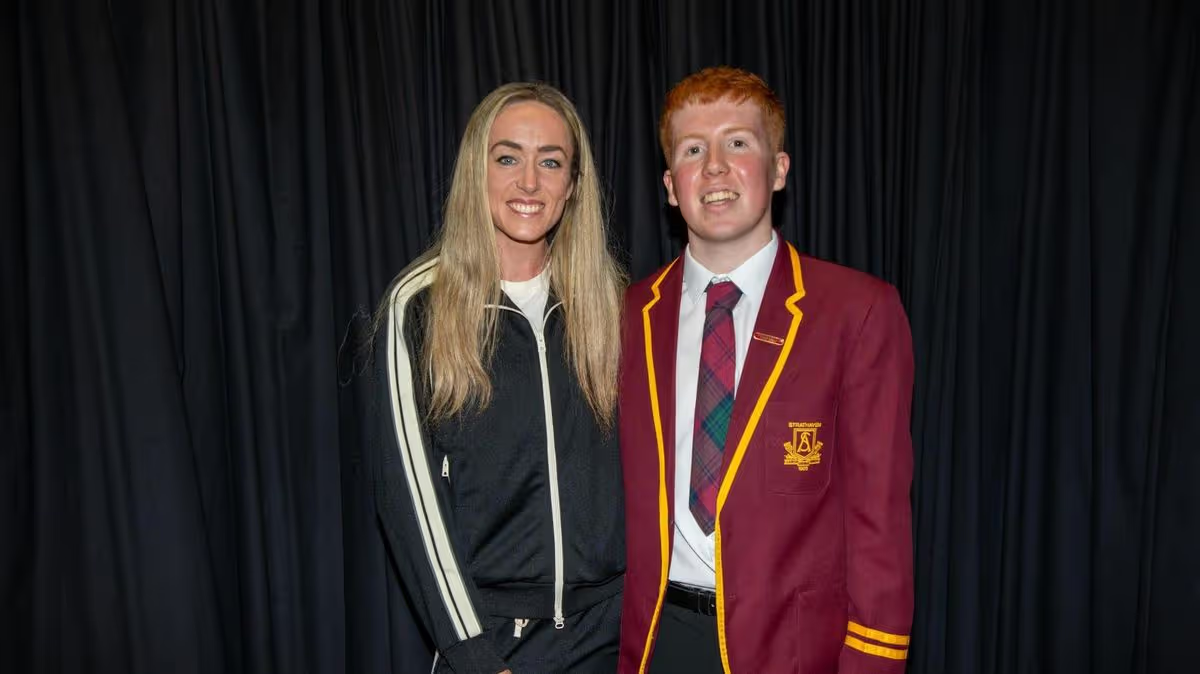
Olympian Eilish goes extra mile for school pupils at Strathaven Academy

Published

on

Daily Record

Fresh from finishing as the top British woman at the 2026 London Marathon, Eilish took part in a panel session with youngsters.

Lanarkshire school pupils were put through their paces by four-time Olympian and Commonwealth champion Eilish McColgan during a sport science outreach visit organised by University of the West of Scotland (UWS) last week.

Advertisement

The event, which took place at Strathaven Academy on Friday, May 8, aimed to inspire youngsters, teachers and the wider public by showcasing the breadth and impact of sport and exercise science.

Arranged in collaboration with the Chartered Association of Sport and Exercise Sciences (CASES), the UK professional body for sport and exercise sciences, Eilish’s visit was part of a prize won by sixth-year pupil Ross Munro for his successful poster competition entry on inclusion in disability sport last year.

Ross is a keen runner and is a member of local running club Strathaven Striders. As part of his prize, Ross was given the opportunity to select an athlete to visit his school and deliver a specialist athlete-development workshop, with Ross choosing Eilish.

Fresh from finishing as the top British woman at the 2026 London Marathon, Eilish took part in a panel session with pupils, who were given the chance to ask the record-breaking Scottish long-distance runner questions relating to her life and her sport. She was asked about how she juggled sport with her studies, who inspires her, how often she trains and how to get started in sport.

Advertisement

The visit also included practical sessions, with Eilish leading pupils through her own go-to warm up, as well as challenging the students to try out different running paces measured by UWS’s sport science equipment.

Pupils also had the chance to try boccia – a target ball sport similar to bowls, which is often played by athletes with various physical disabilities affecting motor skills. The sport had inspired Ross’s winning poster when he got to experience boccia during a visit to UWS last year, so he wanted his fellow pupils to learn more about it.

Discussing her time at the school, Eilish said: “It’s been fantastic to be here. The pupils asked great questions, and it’s been a lot of fun – I can tell the school is very engaged in sport. I was asked my best piece of advice for young people who are interested in pursuing a career in sport and that would be to join a local club. The qualities and values you learn from sport are so valuable through many stages of life.”

University of the West of Scotland is the only Scottish University to be part of CASES’ national Outreach Hub initiative. The Hub network enables higher education institutions to engage local communities through events like these, as well as school visits, public talks, webinars, and hands-on learning experiences.

Dr Hayley McEwan, CASES, senior lecturer in psychology of sport and co-lead of the UWS Outreach Hub, said: “Being able to offer a taste of sport science to school pupils has been a rewarding experience for everyone involved over the past few years, and now for one of the pupils to win the national poster competition as part of the visit and bring a world class athlete to Strathaven is remarkable. I particularly love that Ross chose a female role model in Eilish McColgan – she is relatable and inspiring to all.”

Chris Love, principal teacher of physical education at Strathaven Academy, said: “We are incredibly proud of Ross for his outstanding achievement, which has brought the inspiring presence of Eilish McColgan to Strathaven Academy. This is a momentous occasion for our entire school community, and we extend our sincere thanks, not only to Eilish but to the University of the West of Scotland for their partnership and dedication to fostering these connections, providing our young people with a firsthand look at what can be achieved through perseverance and talent.”

READ MORE: Record-breaking turbine blades arrive at Mill Rig Wind FarmREAD MORE: Former Rolls-Royce site in East Kilbride is brought to market

Advertisement

Competition winner Ross Munro said: “Inclusion in sport is extremely important me and I want to see it become more accessible for all, which is what inspired my winning poster. It’s incredible to host this event today at my school and I want to thank everyone who helped make it happen, including Eilish for coming all this way.

“Sport is important to me and I have always been involved in some way. I run, play golf and I was golf captain at my club. For me, I want to build on that in the local community and I’m passionate about getting as many people involved in sport as possible. I start university soon and look forward to joining sports clubs and societies there – it was interesting to listen to Eilish talk about the importance and benefits of being part of a sports club.”

You can find out more about the sports courses available at University of the West of Scotland here. Find out more about CASES here.

* Don’t miss the latest headlines from around Lanarkshire. Sign up to our newsletters here.

Advertisement

And did you know Lanarkshire Live is on Facebook? Head on over and give us a like and share!

READ MORE: Lanark visitors step back in time at medieval festival

Source link

Continue Reading

NewsBeat

Can plants hear? Latest research offers new insights

Published

on

Can plants hear? Latest research offers new insights

Researchers at MIT have suggested that rice seeds can hear the sound of rain, according to a new study. MIT calls it “the first direct evidence that plant seeds and seedlings can sense sounds in nature”. Perhaps surprisingly, the effects reported in this new study are not as radical as they may appear.

Playing music to your plants may sound eccentric, but a few previous studies have found it has some effect. For example, a 2024 study found bok choi grew better to classical music but less well to rock and roll. Nor is this an isolated phenomenon. Sound can have a range of effects on plant behaviour.

For example, some flowers use the pitch of an insect’s buzz to determine whether they will release their pollen. Both arabidopsis (thale cress) and tobacco plants produce higher levels of toxins, such as nicotine, in response to the sound of caterpillars chewing on neighbouring plants. There have also been reports that notes from a synthesiser can increase seed germination and seedling growth in mung beans, cucumber and rice.


Advertisement

Many people think of plants as nice-looking greens. Essential for clean air, yes, but simple organisms. A step change in research is shaking up the way scientists think about plants: they are far more complex and more like us than you might imagine. This blossoming field of science is too delightful to do it justice in one or two stories.
This article is part of a series, Plant Curious, exploring scientific studies that challenge the way you view plantlife.


In contrast to previous experiments using electronic tones from a speaker, the MIT researchers instead tested the effect of a natural sound upon rice germination: the fall of rain. Rice can grow in soil or under water, and the researchers started by measuring the sound made by raindrops falling onto shallow puddles similar to the paddies they sowed seed in. The volume of sound waves created by drops landing on water was incredibly loud, equivalent to someone shouting straight into your ear, but mostly at frequencies too low or too high for a human to hear.

They then poured simulated rain on some of the pools containing rice and compared their rate of sprouting with seeds in still water. They found that although water droplets imitating light rain had little effect, heavier rain increased germination, and the heaviest by more than 30%.

Man with muddy boots holding a bunch of rice plants.
Rice is often grown in paddy fields.
waragon injan/Shutterstock

They also picked up on an important clue from a previous study about how the rice might be detecting the sound. A 2002 study found that mutant arabidopsis plants which can’t make starch didn’t respond to vibration in the same way that normal arabidopsis do.

Sound waves are just vibrating energy travelling through a gas, liquid or solid that make objects, such as the eardrum membranes we use to hear, shake as they pass. Sound is one way we detect vibrations. The MIT researchers theorised that perhaps plants needed to be able to make starch to detect sound.

Advertisement

This drew their attention to structures called statoliths, from the Greek for “standing stone”. Plant cells that can detect gravity each contain several statoliths filled with highly dense starch which sink through the cell. As they fall, the statoliths brush against other structures in the cell and come to rest pressing on its bottom, telling the plant which way is down.

To test their theory, the researchers modelled the effect of the recorded sound upon statoliths in the rice seeds. They found that the rain sounds could make the statoliths bounce up from the bottom of the cell like beads on a drum. Light rain would have little effect, but as the rain sound got heavier the statoliths jumped higher and faster, matching the stimulation of germination.

It also seemed that the layer of statoliths in the bottom of the cell would behave almost like a liquid, similar to the balls in a children’s ball pit, and that the sound energy would stir this “liquid” and help spread chemical messages to the rest of the plant.

The mutant arabidopsis from the previous study probably couldn’t sense vibrations because they can’t make the starch that their statoliths need to work. This suggests that that statoliths may be one way that plants “hear”.

Advertisement

Although there is now little doubt among scientists that plants can detect and respond to sounds, is this really hearing or is a mind needed to perceive the signal? Plants don’t have a nervous system and centralised brain like humans and most other animals. There has, however, been a lively debate amongst scientists about whether plants demonstrate some type of intelligence or not.

Observations of plant behaviour that appears intelligent include a 2017 study in which pea roots seemed to follow the sound of water through a simple maze, and 2016 research that claimed pea shoots learned that they would find light if they followed the direction of wind from a fan.

Scientists have observed electrical signals in plants of a similar type to those in our nerves, even if they are not carried by specialised structures like our nervous system. In many cases we don’t know what they do, but this may be because plants often respond in ways that aren’t obvious to us.

For example, electrical signals are used to trigger Venus flytraps to close and then crush their prey. They are also used in Mimosa pudica (also known as shyplants) which rapidly close their leaves when touched. Perhaps a more delocalised type of intelligence is possible.

Advertisement

And there may be other factors at play. Hearing may require an organism that is conscious to sound. There are many definitions of consciousness. But mother and daughter scientists Lynn Margulis and Dorian Sagan have argued that at its most fundamental, consciousness is simply an awareness of the world outside the organism. If so, this is surely something that all species must possess if they are to respond to their environment and survive, even if it varies in complexity and nature.


Maybe the world of a rice seedling is too different to ours for us to understand, but it may not be too much of a stretch to say that they hear the sound or rain.

Advertisement

Source link

Continue Reading

NewsBeat

Man found dead at home in Haxby

Published

on

Safe stolen from St Leonard's Hospice Charity Shop, Acomb

As a subscriber, you are shown 80% less display advertising when reading our
articles.

Those ads you do see are predominantly from local businesses promoting local
services
.

These adverts enable local businesses to get in front of their target audience – the local
community
.

It is important that we continue to promote these adverts as our local businesses need
as much support as possible during these challenging times.

Advertisement

Source link

Advertisement
Continue Reading

NewsBeat

‘Appalling’ man grabbed partner by the throat and dragged her by her hair

Published

on

Cambridgeshire Live

The victim escaped and hid in a bin store until officers arrived after an assault

A man assaulted his partner numerous times including punching the woman, grabbing her by the throat and dragging her by her hair. Liam Thrower, 32, turned up at the woman’s house in Arbury, Cambridge, at about 6.10am on November 2, 2025 where he punched her as well as taking her phone and house keys.

He also tackled her to the floor and put his arm over her mouth but the victim managed to escape and hide in a bin store until officers arrived. The 32-year-old also ripped out a cooker and damaged a TV unit during the incident.

The victim told officers that between June and October last year, Thrower, of no fixed address, had smashed her mobile phone, punched her on multiple occasions, grabbed her by the throat, dragged her by her hair and smashed her TV.

Advertisement

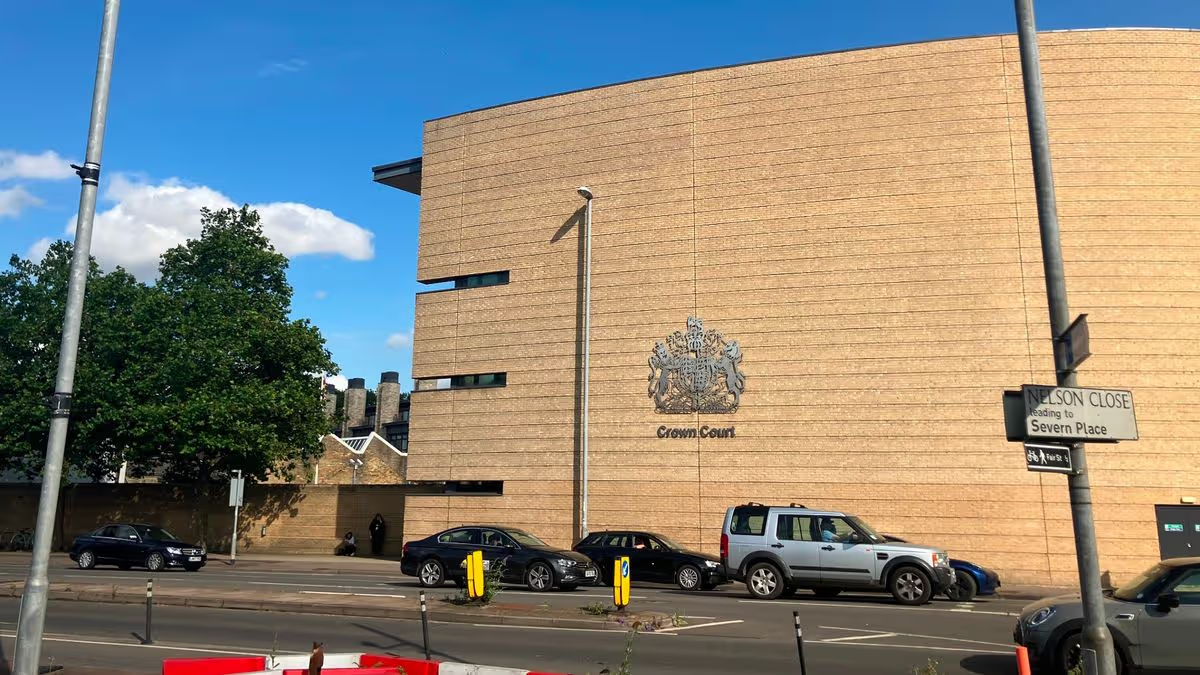
On Friday, May 1, Thrower, was jailed for 22 weeks, having pleaded guilty to three counts of criminal damage, three counts of assault by beating and one count of common assault at Cambridge Crown Court.

DC Patrick Sopp, who investigated, said: “Thrower subjected his partner to four months of appalling behaviour, with multiple assaults and damaging her property, so it’s great he’s now been brought to justice.”

Source link

Advertisement
Continue Reading

NewsBeat

Russia and Ukraine swap accusations of ceasefire violations

Published

on

Russia and Ukraine swap accusations of ceasefire violations

A U.S.-brokered ceasefire between Russia and Ukraine was due to expire Monday with both sides accusing each other of breaching the 72-hour arrangement, as American and European officials considered how they might steer the warring countries into further talks.

Ukrainian authorities said Monday that Russian drones, bombs and artillery shelling struck civilian areas of the northeastern Kharkiv and southern Kherson regions, killing at least two people and wounding seven others, including a 14-year-old boy.

Russia’s Defense Ministry insisted the military has “strictly observed” the ceasefire and accused Ukraine of repeatedly violating the agreement.

Similar ceasefires announced since Russia invaded its neighbor more than four years ago also have failed to stop the fighting, and U.S.-led diplomatic efforts over the past year have come to nothing.

Advertisement

The Washington-based Institute for the Study of War said data from NASA observations indicated military activities decreased but did not stop after U.S. President Donald Trump announced Friday that Russian President Vladimir Putin and Ukrainian leader Volodymyr Zelenskyy had accepted his request for a ceasefire running Saturday through Monday.

The move was meant to mark Victory Day, the Russian celebration marking the defeat of Nazi Germany.

The ISW noted late Sunday that “ceasefires without explicit enforcement mechanisms, credible monitoring, and defined dispute resolution processes are unlikely to hold.”

Russia and Ukraine prepare to exchange prisoners of war

Trump had said there would also be an exchange of prisoners, declaring that the break in fighting could be the “beginning of the end” of the war. Zelenskyy said the exchange of 1,000 prisoners from each side is being prepared.

Advertisement

There are no signs that the two sides are ready to budge from their key negotiating positions, however.

Putin wants all of the Donbas region, Ukraine’s industrial heartland, even though his army hasn’t completely captured it, but Zelenskyy says he won’t surrender it. Zelenskyy has offered a ceasefire and a face-to-face meeting with Putin, which the Russian leader has ruled out until a negotiated settlement is almost finalized.

Putin suggested at the weekend that former German Chancellor Gerhard Schröder, who has had close business ties to Russia, could act as a mediator. But German and European officials scotched that possibility even while accepting that the European Union could take a more significant role in peace efforts after being largely sidelined by Washington over the past year.

Finnish President Alexander Stubb, who has a friendly relationship with Trump, said in comments published Monday that Europe needs to engage directly with Moscow.

Advertisement

“It’s time to start talking to Russia,” Stubb was quoted as saying in Italian daily Corriere della Sera.

EU foreign policy chief Kaja Kallas cautioned the bloc must get its objectives straight before attempting to negotiate with the Kremlin.

“Before we discuss with Russia, we should discuss amongst ourselves what we want to talk to them about,” she told reporters in Brussels.

US remains engaged in diplomacy to end the war, Zelenskyy says

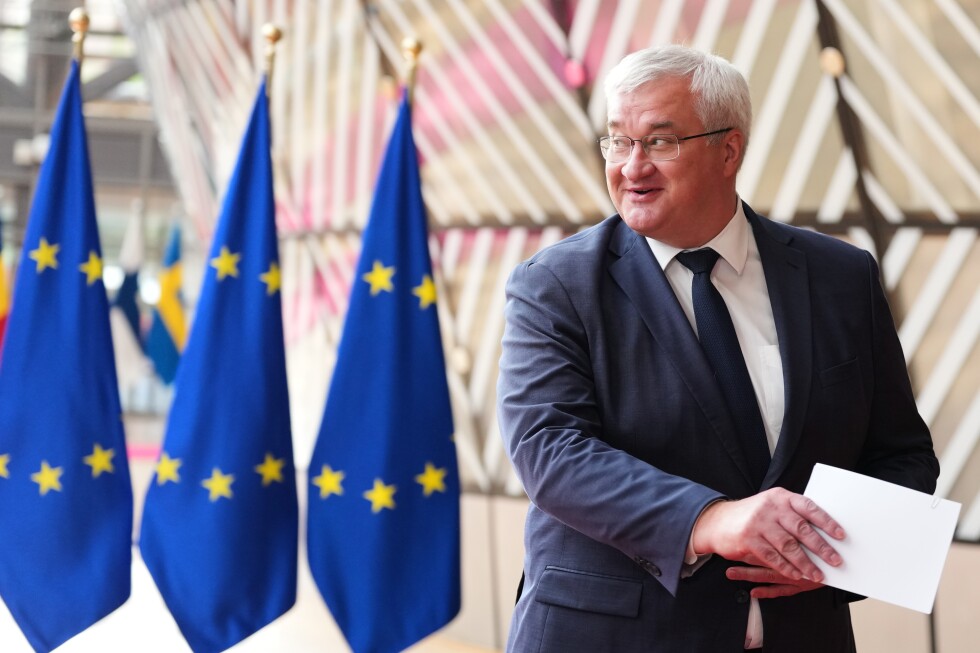
Ukraine’s Foreign Minister Andrii Sybiha joined EU foreign ministers for the Brussels meeting. “We have mainstream peace talks under the leadership of the U.S., and we need this track and we need U.S. leadership. But Europe could play also its role,” Sybiha said.

Advertisement

Zelenskyy said Monday that Ukraine has “nearly daily communication” with Trump administration representatives. Rustem Umerov, Ukraine’s National Security and Defense Council chief, in recent days met with Trump envoys Steve Witkoff and Jared Kushner in the United States, according to Zelenskyy.

“Importantly, America remains engaged in diplomacy,” Zelenskyy said on X.

Sybiha noted that in recent months Ukraine has improved its performance on the battlefield, reducing the bigger Russian army to a slow and costly slog on the 1,250-kilometer (780-mile) front line, while using its domestically developed long-range drones and missiles to hit targets deep inside Russia.

“We have a new reality on the battlefield … Ukraine became stronger after the most difficult winter,” Sybiha said.

Advertisement

Almost 20 countries seek Ukraine’s drone technology

Cutting-edge drone technology has been one of the main drivers of success for Ukraine’s short-handed army. It has also drawn other countries’ attention, enhancing Ukraine’s international standing.

Zelenskyy said nearly 20 countries in the Middle East and the Gulf, the South Caucasus and Europe are at various stages of entering into deals with Ukraine for battle-tested drones. In return, Ukraine is getting fuel and money.

German Defense Minister Boris Pistorius was the latest senior European official to visit Kyiv, arriving Monday on an unannounced visit set to focus on furthering defense cooperation between the two countries.

Germany has become the world’s top provider of security assistance to Ukraine, accounting for roughly one-third of all aid the country receives, Ukrainian Defense Minister Mykhailo Fedorov said Monday, according to Ukrainian media.

Advertisement

Germany has helped provide an “unprecedented package” of air defense missiles for Ukraine, Fedorov said, and has begun financing the production of medium- and long-range strike drones, which he described as critical for deep-strike operations.

___

Follow the AP’s coverage of the war in Ukraine at https://apnews.com/hub/russia-ukraine

Advertisement

Source link

Continue Reading

NewsBeat

Top Scottish Labour MP urges Keir Starmer to quit as Prime Minister

Published

on

Daily Record

Alan Gemmell said the PM “no longer has the trust or confidence of the public”.

A fourth Scottish Labour MP has called for Keir Starmer to quit by setting a date for his departure from office.

Alan Gemmell said he does not believe the embattled PM can win the next general election for Labour.

Starmer made a make-or-break speech this morning amid huge dissatisfaction within his MP group at his leadership.

Advertisement

Former deputy leader Angela Rayner and Health Secretary Wes Streeting are poised to run if Starmer quits.

In a statement seen by the Record, Central Ayrshire MP Gemmell wrote:

“Having campaigned weekly across Ayrshire since October it was clear the Prime Minister’s unpopularity would stop us from achieving a Labour victory in Holyrood. At door after door voters told us they disagreed with decisions that had been taken.

“Our country faces enormous challenges and we need a Labour government that can deliver the scale of change this requires. The message from last week’s elections is clear: the Prime Minister no longer has the trust or confidence of the public to lead this change.

Advertisement

“I listened to the Prime Minister today. Sadly I don’t believe he can lead us into, and win, the next election therefore he must now set a date for his departure.

“I am deeply sorry for the people I campaigned with who would have been excellent MSPs. We need to start afresh in communities across the country to win back trust and deliver a radical agenda to improve working people’s lives.”

It comes after fellow Scottish Labour MPs Brian Leishman, Euan Stainbank and Irene Campbell also called for the PM to go.

Source link

Advertisement
Continue Reading

Trending

Copyright © 2025