


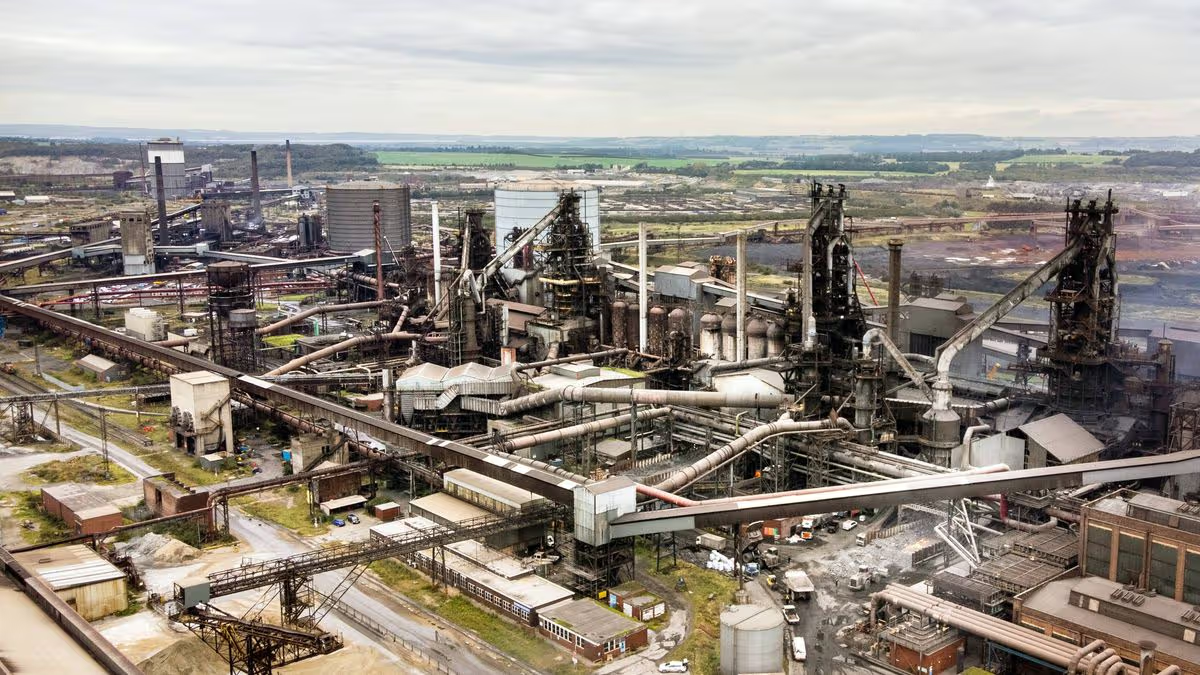
The Government is set to introduce legislation this week that will allow it to take control of the steelmaker, 38 years since it was first privatised, protecting thousands of Scunthorpe jobs.

The British Steel steelworks in Scunthorpe(Image: PA Archive/PA Images)
British Steel looks set to return to public ownership as Sir Keir Starmer unveiled new legislation he said will give the Government “options” to safeguard the industry and workers in Scunthorpe. Fresh powers could be deployed to nationalise British Steel, 38 years after the company was first privatised.
This follows a year after the Government deployed emergency powers to seize control of the firm and maintain production at the Scunthorpe site, after its owner, Chinese company Jingye, put forward plans to shut down the two blast furnaces. Negotiations with Jingye have continued since, but the Government said it was unable to agree a commercial sale, and believed no deal could be reached that would deliver sufficient value for taxpayers.
The Government stated its view that introducing legislation to provide a pathway to public ownership was the appropriate next step, enabling it to determine the steelmaker’s future direction. The legislation, which is to be brought before Parliament this week, will be subject to a public interest test, taking into account factors including national security, preserving critical national infrastructure and bolstering the economy.
The Prime Minister said: “Steel is strategically important to our economy and our national resilience. That’s why we acted last year to avoid a sudden halt to production at Scunthorpe, protecting workers and the community that depend on the site, and why we’re now bringing forward legislation to give us options to protect Britain’s steelmaking capability.

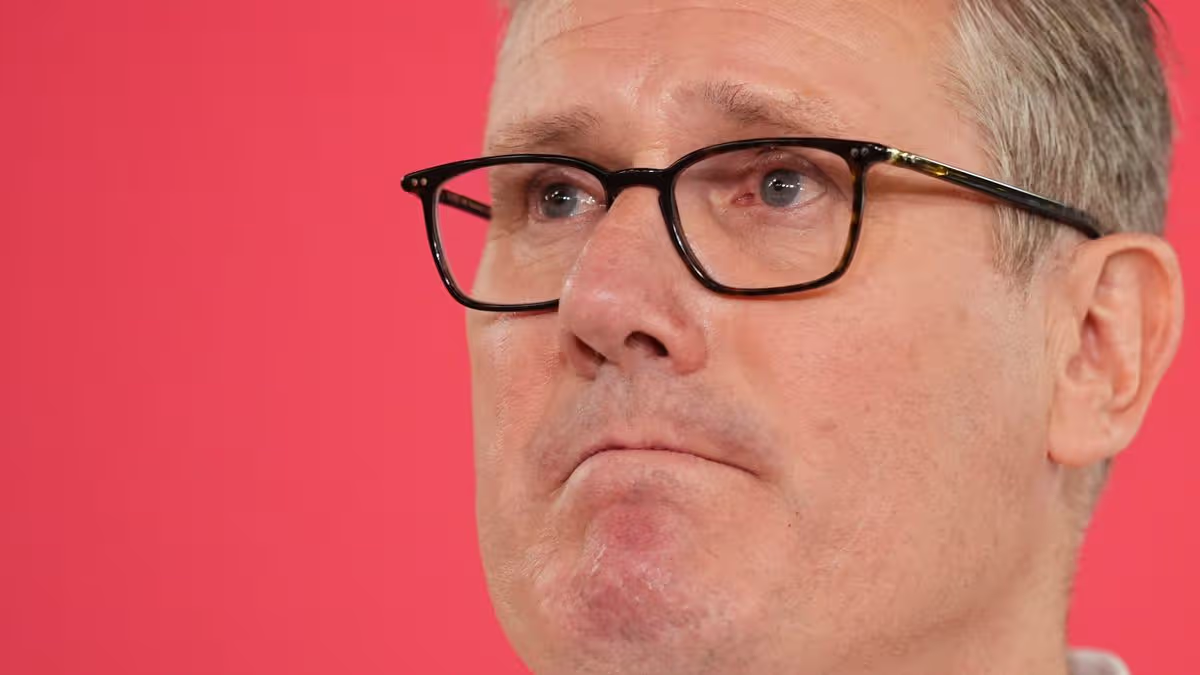
Prime Minister Keir Starmer giving his speech in London on Monday(Image: Getty Images)
“This is what an activist state looks like – taking decisions in the national interest. “This Bill would allow us to take action if we need to, while we continue rebuilding our steel sector.”
A steel union praised the decision to nationalise British Steel, stating it will “protect it from foreign owners”.
Charlotte Brumpton-Childs, GMB national secretary, said: “This legislation will cover the whole steel industry – it isn’t specifically for British Steel but it is what will protect it from foreign owners. “British Steel is a nationally strategic asset, it is right the Government does everything in its power to secure its long term future.”
Gareth Stace, director-general for trade association UK Steel, welcomed the move, saying it “provides vital certainty for the workforce, the company’s customers and the wider supply chain at a critical moment”.
However, he emphasised: “Nationalisation is not an end goal. This must now be the beginning of a clear and credible long-term plan for British Steel.”
The Government’s action last year halted Jingye’s plans and brought its redundancy consultations to an end, which could have resulted in between 2,000 and 2,700 job losses. It also allowed the Scunthorpe blast furnaces to keep running.
Jingye had been weighing up closing them after revealing it was haemorrhaging £700,000 daily owing to difficult market conditions, tariffs and substantial environmental costs. The Government’s intervention to safeguard the site set it back £377 million between April 2025 and January 2026, according to a National Audit Office (NAO) report.
Alongside the £377m required to keep British Steel afloat, £15mn was allocated to advisers and £359m to the company for operational activities, including raw materials, payroll and associated costs. Had the blast furnaces been shut down, however, it would have resulted in significant job losses at Scunthorpe and impacted customers throughout the supply chain, including Network Rail, the NAO noted.
Business Secretary Peter Kyle said: “Revitalising our steel sector is a top priority for this Government and bringing forward this legislation would allow us to explore potential future options for British Steel. The Government recognises that securing the long-term future of the UK’s steel sector relies on both public and private investment for modernisation.”
Downing Street confirmed that an independent valuation would be conducted to establish the potential cost of nationalising British Steel. “Where the powers in the bill are used, an independent valuer will be appointed to determine what compensation, if any, is payable, and the UK Government will, of course, abide by the valuer’s conclusions,” the Prime Minister’s official spokesman said.


















































You must be logged in to post a comment Login