

Business
The Floating Hotel Standard – What Raja Ampat Liveaboards Reveal About Luxury, Trust and Indonesian Hospitality

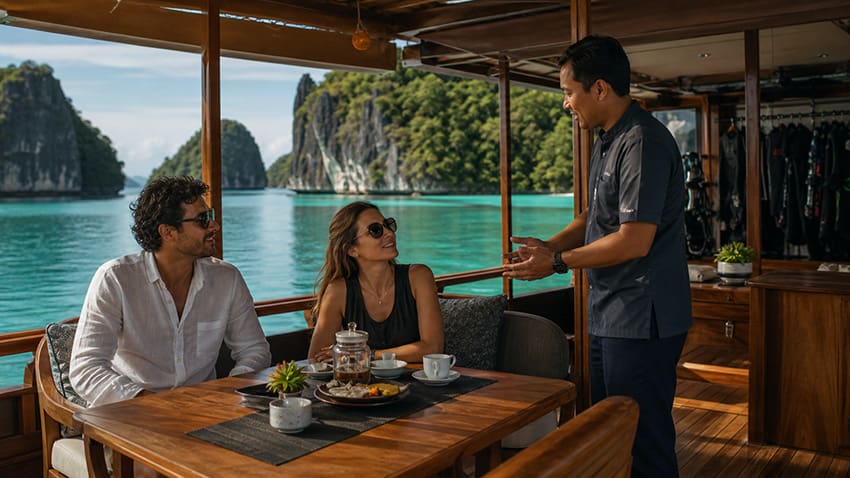
For travellers, investors and hospitality leaders assessing remote marine tourism, a Raja Ampat diving liveaboard guide should do more than describe cabins, reefs and itineraries; it should explain why the liveaboard model has become one of Indonesia’s most refined examples of experience-led luxury.
In Raja Ampat, service quality is measured not only by comfort but also by timing, safety, discretion, environmental care, and the ability to deliver something deeply memorable without making it feel manufactured.
Why Raja Ampat Holds a Unique Position in Indonesian Tourism
Raja Ampat is not a mass-market destination. Its appeal comes from remoteness, biodiversity and the sense of entering a marine landscape that still feels rare. For liveaboard operators, this creates both opportunity and responsibility.
Guests are not simply booking a boat. They are booking with confidence. They want to know that the crew understands currents, weather, dive planning, hospitality flow, food preferences and the subtle expectations of international luxury travellers.
This is where Raja Ampat liveaboard diving differs from many land-based holidays. The experience is self-contained. The vessel is the hotel, restaurant, dive centre, transport provider and private retreat, all at once.
- Every crew interaction matters.
- Every schedule decision affects comfort.
- Every safety briefing shapes trust.
- Every meal contributes to the overall memory.
- Every environmental choice reflects the brand.
A well-structured Raja Ampat diving liveaboard guide helps operators and guests alike understand how each of these details contributes to an experience that feels seamless rather than scripted.
The Rise of Experience-Led Luxury at Sea
Polished wood, spacious cabins, or fine dining alone no longer define luxury in liveaboard travel in Indonesia. These details still matter, but modern guests expect something more layered: privacy, authenticity, personalisation and responsible access to nature.
A well-managed liveaboard succeeds when guests feel looked after without feeling controlled. The rhythm should feel effortless, even though behind the scenes it requires serious operational discipline.
This balance is especially important in Raja Ampat, where weather windows, dive site selection and guest ability must be managed carefully. Luxury here is not about excess. It is about judgment.
What Guests Really Value on a Raja Ampat Liveaboard
Many guests arrive after searching for terms such as “scuba Indonesia” or “best diving” because they already know the country offers world-class underwater experiences. However, once they are on board, what they remember most is often the human side of the journey.
They remember the cruise director who adjusted the plan after listening to their concerns. They remember the chef who handled dietary needs without fuss. They remember the dive guide who noticed anxiety before it became a problem.
The strongest liveaboard experiences usually include:
- Clear pre-arrival communication.
- Honest explanations of itinerary flexibility.
- Well-maintained diving and safety equipment.
- Calm, capable dive guides.
- Respectful service that is attentive but not intrusive.
- Food and beverage standards suited to remote cruising.
- Sensible environmental practices.
- A crew culture that feels warm and professional.
These are not decorative extras. They are the operating foundations of high-end marine hospitality.
Raja Ampat Compared with Komodo
Many travellers considering a Raja Ampat journey may also be looking at a Komodo liveaboard. Both destinations are exceptional, but they offer different moods and operational realities.
Komodo is often associated with dramatic landscapes, stronger currents, seasonal manta encounters and a more adventurous tone. Raja Ampat feels more expansive, remote and immersive, with a strong emphasis on biodiversity, reef variety and longer cruising distances.
For hospitality businesses, the comparison is useful because it shows that Indonesia cannot be treated as one single dive product. Each region needs its own positioning, staffing style and guest communication strategy.
A practical distinction for operators:
- Komodo often attracts guests seeking intensity, scenery and adventure.
- Raja Ampat often attracts guests seeking rarity, immersion and marine abundance.
- Both require strong safety systems and transparent guest briefings.
- Both benefit from a luxury that feels grounded rather than excessive.
The Business Case for Responsible Remote Tourism
For BM Magazine readers, the liveaboard sector is interesting because it demonstrates how a niche tourism model can create high-value economic activity without relying on large-scale development.
A well-run liveaboard supports local employment, marine park fees, supply chains, guides, harbour services and specialist maintenance. It also encourages longer booking windows and higher guest spend compared with many short-stay tourism products.
However, the model only works in the long term if it protects the asset that creates demand: the marine environment. Raja Ampat’s reefs are not a backdrop. They are the core infrastructure of the business.
This means operators must think beyond occupancy and seasonal revenue. They must consider carrying capacity, anchoring practices, waste systems, community relationships and guest education.
Service Excellence in a Confined Luxury Environment
A resort has space. A liveaboard has intimacy. That changes the rules of hospitality.
On board, small issues become visible quickly. A delayed meal, a confusing dive schedule, or a poorly handled complaint can affect the overall atmosphere. Equally, small gestures can have an outsized impact.
The best managers train crews to read the room. Some guests want conversation. Others want quiet. Some want every dive possible. Others may need rest but feel hesitant to miss out. Luxury service is knowing when to suggest, when to step back and when to solve a problem before it grows quietly.
Safety as a Brand Promise
In diving, safety is not simply a technical requirement. It is part of the emotional contract with the guest.
A premium liveaboard must be able to demonstrate competence without creating anxiety. Briefings should be clear, equipment should be checked, emergency procedures should be known to all crew members, and dive plans should match the day’s actual conditions.
The strongest operators do not treat safety as something hidden behind the scenes. They make it visible in a calm, reassuring way.
This includes:
- Professional dive briefings.
- Realistic current and visibility updates.
- Conservative planning where needed.
- Crew coordination between deck, tender and dive teams.
- Oxygen, first-aid and emergency response readiness.
- Guest screening without embarrassment or pressure.
Trust is built when guests see that standards are consistent.
Food, Comfort and Cultural Detail
Food on a Raja Ampat liveaboard does more than fill the time between dives. It gives structure to the day and provides comfort in a remote environment.
International guests appreciate variety, but they also value a sense of place. Indonesian flavours, responsibly sourced local seafood, tropical fruit, and thoughtful presentation can make the journey feel connected to the region.
Hospitality managers should not underestimate the importance of these moments. After a morning dive, a well-prepared meal can feel as memorable as a luxury hotel dinner, precisely because of the setting.
What the Wider Hospitality Industry Can Learn
The liveaboard model offers lessons beyond diving. It shows how premium hospitality can succeed through integration. Accommodation, activity, transport, dining and interpretation are not separate departments; they are one continuous experience.
This is relevant to hotels, resorts and tourism brands across Indonesia. Guests increasingly value coherence. They do not want fragmented service. They want the feeling that someone has thought carefully about the full journey.
The Future of Raja Ampat Liveaboard Diving
Raja Ampat’s future will depend on restraint as much as growth. Demand is strong, but the destination’s value lies in its sense of rarity. Operators, agents, investors and local authorities all have a role in maintaining that balance.
The most successful liveaboards will be those that combine commercial discipline with genuine stewardship. They will understand that luxury at sea is not about showing off. It is about delivering comfort, safety and wonder in a place where nature remains the main event.
For business readers, Raja Ampat is a reminder that the strongest hospitality brands are built on trust. In remote diving, trust is earned through preparation, humility and respect for the environment. The guest may come for the reefs, but they return because the people made the journey feel effortless, meaningful and safe.

Business
Australia Socceroors Names 26-Man Squad for 2026 World Cup with Blend of Youth and Experience

SYDNEY — Australia has announced its 26-man squad for the 2026 FIFA World Cup, blending established veterans with exciting young talents under coach Tony Popovic as the Socceroos prepare for a challenging Group D that includes co-host United States, Turkiye and Paraguay.
The squad features a mix of European-based players and A-League stars, with key figures like Mathew Ryan, Jackson Irvine, Harry Souttar and rising prospects Nestory Irankunda and Mohamed Toure expected to play central roles. Popovic’s selection reflects a balance between experience and dynamism as Australia aims to advance beyond the group stage for the first time since 2006.
Full Squad Breakdown
Goalkeepers Mathew Ryan (Levante, LaLiga, 34, 104 caps) – The captain and most experienced player heads into his record-equalling fourth World Cup. Paul Izzo (Randers, Danish Superliga, 31, 4 caps) Patrick Beach (Melbourne City, A-League, 22, 2 caps)
Defenders Aziz Behich (Melbourne City, A-League, 35, 84 caps) Jordan Bos (Feyenoord, Eredivisie, 23, 27 caps) Cameron Burgess (Swansea City, Championship, 30, 27 caps) Alessandro Circati (Parma, Serie A, 22, 13 caps) Milos Degenek (APOEL, Cypriot First Division, 32, 57 caps) Jason Geria (Albirex Niigata, J.League 2, 33, 14 caps) Lucas Herrington (Colorado Rapids, MLS, 18, 4 caps) Jacob Italiano (Grazer AK, Austrian Bundesliga, 24, 5 caps) Harry Souttar (Leicester City, Championship, 27, 38 caps) Kai Trewin (New York City FC, MLS, 25, 6 caps)
Midfielders Cammy Devlin (Hearts, Scottish Premiership, 28, 5 caps) Ajdin Hrustic (Heracles Almelo, Eredivisie, 29, 37 caps) Jackson Irvine (St Pauli, Bundesliga, 33, 82 caps) Connor Metcalfe (St Pauli, Bundesliga, 26, 36 caps) Paul Okon-Engstler (Sydney FC, A-League, 21, 6 caps) Aiden O’Neill (New York City FC, MLS, 27, 31 caps)
Forwards Nestory Irankunda (Watford, Championship, 20, 15 caps) Mathew Leckie (Melbourne City, A-League, 35, 80 caps) Awer Mabil (Castellon, LaLiga 2, 30, 38 caps) Mohamed Toure (Norwich City, Championship, 22, 10 caps) Nishan Velupillay (Melbourne Victory, A-League, 25, 7 caps) Cristian Volpato (Sassuolo, Serie A, 22, 1 cap) Tete Yengi (Machida Zelvia, J.League, 25, 1 cap)
Key Players and Strengths
Mathew Ryan’s leadership and experience between the posts provide stability. The 35-year-old arrives in strong form after helping Levante retain LaLiga status. Jackson Irvine, the St Pauli captain, remains a midfield anchor with 82 caps, offering leadership and energy.
Harry Souttar’s recovery from a long-term Achilles injury adds defensive solidity, while his aerial presence is a threat at set pieces. Young talents like Jordan Bos (Feyenoord) and Nestory Irankunda (Watford) bring pace and creativity, with Irankunda seen as a potential x-factor due to his explosive speed and powerful shot.
Mohamed Toure’s emergence as a striker adds depth in attack, while established names like Mathew Leckie and Awer Mabil provide experience on the flanks. The squad’s blend of youth and veterans gives Popovic flexibility in tactical setups.
Group D Challenges
Australia faces a demanding Group D against co-host United States, Turkiye and Paraguay. The Socceroos open against Turkiye on June 13 in Vancouver, followed by matches against the United States in Seattle on June 19 and Paraguay in Santa Clara on June 25.
Progression to the round of 32 is a realistic target in the expanded 48-team format. A strong performance against Turkiye would set an ideal tone, while avoiding defeat against the United States could position Australia well heading into the final group match.
Coach Tony Popovic’s Approach
Popovic has emphasized tactical discipline, high pressing and exploiting transitions. His selection reflects a desire for balance, with experienced players providing leadership and younger talents injecting dynamism. The coach has stressed the importance of mental preparation and adapting to North American conditions.
Australia’s recent form in qualifiers and friendlies has shown improvement, with the team demonstrating greater cohesion and attacking threat. Popovic’s experience in European and Asian football brings valuable tactical knowledge to the Socceroos setup.
Historical Context and Ambitions
Australia has appeared in seven World Cups, with round of 16 finishes in 2006 and 2022 marking their best performances. The 2026 tournament offers an opportunity to surpass those results in an expanded format that rewards consistency across three group matches.
The Socceroos qualified convincingly through Asian qualifiers, demonstrating growth since their playoff heroics in previous cycles. Reaching the knockout stages again would be a significant achievement and boost domestic football development.
Fan Expectations and Support
Australian fans are expected to travel in strong numbers to Vancouver, Seattle and Santa Clara, creating pockets of green and gold support. The Socceroos’ passionate supporter base has grown with each tournament appearance, and national pride will be high as the team seeks to make history.
Broadcast coverage on SBS will ensure widespread accessibility, with convenient viewing times for the opener against Turkiye. Fans are encouraged to follow official channels for updates and ticket information for matches.
Preparation and Key Storylines
The squad is based in Oakland for final preparations, focusing on fitness, tactical cohesion and adapting to time zones. Injury management and squad rotation will be vital given the tight schedule.
Key storylines include Irankunda’s potential breakout, Souttar’s recovery and Ryan’s leadership in his fourth World Cup. The team’s ability to perform away from home against strong opposition will be tested early.
Outlook for the Tournament
Australia enters with realistic ambitions of advancing from Group D. A positive result against Turkiye would set an ideal tone, while strong performances against the United States and Paraguay could secure progression.
The expanded format provides more opportunities, but the quality in Group D demands consistency. With a balanced squad and experienced coach, the Socceroos are well-equipped to compete and potentially create more World Cup memories for Australian fans.
As the tournament begins, national attention turns to the Socceroos’ campaign. The blend of youth and experience under Popovic offers hope for a strong showing in what promises to be a memorable 2026 World Cup.
The Socceroos’ journey starts against Turkiye on June 13. With solid preparation and a clear tactical plan, Australia has every chance to make an impact in Group D and beyond. Fans worldwide will be watching as the green and gold takes the field once more on football’s biggest stage.

SpaceX will become a publicly traded company on Friday, in what is expected to be the highest-value stock listing in history.
The BBC’s Samira Hussain explains what it means for SpaceX’s future and for the company’s CEO, Elon Musk, who is set to become the world’s first trillionaire.

The shares of the company rose to Rs 7,093 apiece on Friday morning, further buoyed by overall market optimism. The stock has jumped over 190% in 2026 so far and a whopping 315% in one year.
MTAR Tech shares crashed around 15% over the past two sessions after a Bloomberg report stated that Crusoe Energy Systems LLC, which develops data centres for companies such as OpenAI and Microsoft, has paused work on a planned 1.8-gigawatt data centre campus in Cheyenne, Wyoming. The project was expected to be powered by 900 MW of Bloom Energy fuel cells along with grid electricity.
Notably, MTAR Tech is a critical manufacturing partner for Bloom Energy. It manufactures and fabricates critical assemblies for the US-based company. MTAR Tech’s website states that Bloom Energy’s servers are among the most efficient energy generators globally, significantly reducing electricity costs and lowering greenhouse gas emissions.
For over nine years, MTAR has supplied power units, specifically hot boxes, to Bloom Energy in the US, and a major portion of its revenue comes from the US-based client. Currently, MTAR is also developing and manufacturing hydrogen boxes and electrolysers for the company.
Why are MTAR Tech shares rising today?
However, today’s sharp surge in MTAR Tech share price comes along with a similar gain in Bloom Energy’s share price on Wall Street. Further, MTAR Tech clarified that it has received no communication on any project pause during an investor call, ET Now reported.

The company further said that it is working with multiple vendors, and not just Bloom. Its order book, meanwhile, has doubled over the past one to two months. MTAR Tech management does not expect any material impact even if a project is paused, which remains unconfirmed, ET Now reported.
MTAR Tech bulk deals
MTAR Tech also saw several bulk deals being executed on June 11 after the sharp crash in the share price. Hrti Private Limited sold around 2.5 lakh shares at Rs 6,564 apiece, and bought around 2.71 lakh shares at a lower price of Rs 6,501 apiece, according to NSE data.
Jump Trading Financial India sold 1.56 lakh shares at Rs 6,551.22 apiece, and then bought the same number of shares at Rs 6,497.21 apiece.Junomoneta Finsol, meanwhile, sold 2.14 lakh shares at Rs 6,530 apiece, and bought 2.15 lakh shares at Rs 6,526 apiece.
MTAR Tech share price
MTAR Tech shares have seen a significant surge recently, delivering strong returns to investors. The stock has jumped more than 260% in three years and around 580% in five years. The company currently has a market capitalisation of nearly Rs 21,495 crore.
Technical levels for MTAR Tech
MTAR Tech shares have undergone a healthy correction after hitting a high of 8,450 on May 22, eventually retracing towards their 50-day EMA, said Sudeep Shah, Head – Technical and Derivatives Research at SBI Securities. Encouragingly, the stock witnessed a strong rebound from this support level today, indicating that the near-term bullish trend remains intact, he added.
“On the weekly chart, momentum indicators such as RSI, ADX, and MACD remain elevated following the sharp rally, suggesting that intermittent profit booking cannot be ruled out. The 6,050–6,000 zone continues to act as a crucial support area. As long as the stock sustains above this range, the broader uptrend is likely to remain intact. However, a decisive breach below this zone could trigger extended profit booking,” the analyst further said.
Also read: Why is market rallying today?
(Disclaimer: Recommendations, suggestions, views and opinions given by the experts are their own. These do not represent the views of The Economic Times)


Take Five: Be careful what you Warsh for

Netflix: A High-Quality Compounder Back On Sale

The shares of City Union Bank opened at Rs 197.40 apiece on NSE, sharply lower than Thursday’s closing price of Rs 256.80 apiece. However, the decline was solely due to the bonus share adjustment and did not reflect any loss in shareholder value.
In reality, the stock gained more than 2% to trade at Rs 202.10 apiece after adjusting for the bonus issue, as seen at 10.20 am.
All about City Union Bank’s bonus issue
City Union Bank announced a 1:3 bonus issue in April, meaning eligible shareholders will receive one equity share for every three fully paid-up equity shares held in their demat accounts on the record date.
The bonus shares will be issued using nearly Rs 25 crore from the lender’s securities premium account, whose balance stood at more than Rs 940 crore on March 31, 2026. Later in May, City Union Bank fixed June 12 as the record date to determine the eligibility of shareholders for the bonus shares.
Notably, this marks the first bonus issue by the lender in eight years, since a 1:10 bonus issue in 2018. A bonus issue consists of free shares distributed by a company from its reserves and is often seen as a sign of strong financial health and growth prospects. While the issue of bonus shares increases the total number of outstanding shares, it does not change the company’s market capitalisation. However, it can improve liquidity and affordability, allowing more investors to add shares of the company to their portfolios.
Also read: Bonus bonanza! City Union Bank shares for 1:3 reward
City Union Bank share price
City Union Bank shares have gained more than 9% in one week, and nearly 10% in one month. Shares of the company have fallen over 7% in 2026 so far. In the longer term, they have gained 37% in one year, 115% in three years, and 58% in five years.
The bank reported a 25% year-on-year rise in net profit to Rs 359.56 crore for the fourth quarter of FY26, up from Rs 287.96 crore reported in the corresponding quarter of the previous financial year. Its net interest income (NII), meanwhile, increased around 31% YoY to Rs 785.83 crore during the quarter under review.Also read: Why are markets rallying today?
(Disclaimer: Recommendations, suggestions, views and opinions given by the experts are their own. These do not represent the views of The Economic Times)
Business
High conviction picks! Prabhudas Lilladher sees up to 40% upside potential in these 16 stocks – Solid bets

Apart from the 7 large-cap stocks listed above, PL Capital also named 9 small and mid-cap stocks among its high conviction picks. These are Ajanta Pharma (target price: Rs 3,400 apiece), CESC (target price: Rs 216 apiece), DOMS Industries (target price: Rs 2,883 apiece), HealthCare Global Enterprises (target price: Rs 820 apiece), Ingersoll-Rand (target price: Rs 4,934 apiece), Jindal Stainless (target price: Rs 821 apiece), JSW Infrastructure (target price: Rs 342 apiece), KEI Industries (target price: Rs 5,660 apiece) and Rainbow Children’s Medicare (target price: Rs 1,615 apiece).
(Disclaimer: Recommendations, suggestions, views and opinions given by the experts are their own. These do not represent the views of The Economic Times)

Sterlite Tech shares gained 5% to their day’s high of Rs 600, while HFCL shares were locked in a 5% upper circuit. Both stocks had fallen 8% each over the previous two sessions.
Sentiment improved significantly across global markets, with South Korea’s KOSPI, the world’s best-performing stock market this year, surging more than 8% in a single session. In the U.S., the Nasdaq Composite rose 2.54% on Thursday as investors returned to beaten-down technology names.
Easing geopolitical tensions and a decline in oil prices, which slipped to a two-month low, added to the risk-on mood, boosting optimism across equity markets. The shift in sentiment followed comments from U.S. President Donald Trump, who said a peace deal with Iran could be reached as early as this weekend.
Can you buy Sterlite Tech, HFCL shares?
Even as India continues to lag markets such as South Korea and Taiwan in direct exposure to the AI and semiconductor cycle, a different AI-linked investment theme is gathering momentum at home, and Sterlite Tech and HFCL are direct beneficiaries.
Both companies are involved in the business of manufacturing optical fibre cables among other verticals. India’s data centre industry is entering a multi-year growth phase, driven by accelerating digitalisation, rising cloud adoption and growing artificial intelligence demand.
Sterlite Technologies has emerged as the biggest winner from the theme, soaring 488% in 2026. Yet analysts believe the rally may not be over. Hong Kong-based CLSA expects the stock to climb another 14.5% from current levels following the company’s $1 billion order win from a US hyperscaler.
With a target of Rs 655, the brokerage says order significantly strengthens Sterlite’s positioning in AI data centres while improving medium-term growth visibility. CLSA expects the deal to reinforce the company’s competitiveness in global markets and is now modelling a 49% EBITDA CAGR between FY26 and FY29 while maintaining an “Outperform” rating on the stock. HFCL has also been among the standout performers, gaining 170% in 2026. The March quarter marked a sharp turnaround for the company. Revenue nearly doubled year-on-year to Rs 1,824 crore, EBITDA swung to Rs 315 crore from negative territory a year earlier, while profit after tax improved to Rs 184 crore from a loss of Rs 83 crore.
“The structural shift is real. Product revenue has grown from 27% of the mix in FY21 to 59% in FY26, and exports now account for 41% of revenue. That’s a business fundamentally changing its character,” said Balaji Rao, Research Analyst at Bonanza.
Beyond optical fibre cables, HFCL is also expanding aggressively into defence and aerospace through the Defsys acquisition. The company is setting up a Rs 1,000-acre ammunition complex in Andhra Pradesh and scaling up its data centre interconnect solutions business, targeting revenue of Rs 400 crore in FY27 and Rs 800 crore in FY28. Its optical fibre cable capacity is set to expand by 25% by December 2026, while backward integration into preforms is expected to reduce raw material costs by 15-20%.
According to international brokerage Nomura, India’s data centre IT load has expanded from around 350 MW in 2019 to nearly 1.5-1.6 GW in 2025, translating into a CAGR of about 29%, compared with roughly 20% globally. As a result, India’s share of global data centre capacity has increased from around 1.5% in 2019 to approximately 2-3% in 2025.
(Disclaimer: Recommendations, suggestions, views and opinions given by the experts are their own. These do not represent the views of The Economic Times)

Citizens upgrades EPR Properties stock rating on investment activity

Tom Mueller was the first employee at SpaceX, a company he co-founded with Elon Musk in 2002.
Now, more than two decades later, the company is about to make its public market debut, with an estimated worth of more than $1.8 trillion.
The BBC’s Michelle Fleury spoke to Mueller about Musk’s vision.

20 Minutes of The Most INSANE Financial Decisions Ever Made

Australia Socceroors Names 26-Man Squad for 2026 World Cup with Blend of Youth and Experience

This ‘Takeaway’ Quality Meal Kit Made Me Excited For Weeknight Meals Again



![[TIKTOK] Lisa Money Trend 2](https://wordupnews.com/wp-content/uploads/2026/02/1770257286_hqdefault-80x80.jpg)

-

 Fashion7 days ago
Weekend Open Thread: Evereve – Corporette.com
-
 Entertainment5 days ago
The Best Mystery Series of All Time Is Surging on Streaming 30 Years After It Ended
-

 NewsBeat4 days ago
Alexander Zverev wins the French Open to finally earn a 1st Grand Slam title
-
 Crypto World7 days ago
Jensen Huang Approves Samsung, SK Hynix, and Micron for NVIDIA (NVDA) HBM4 Memory Supply
-

 Crypto World4 days ago
Anatomy of the June crypto crash: Fed, Iran, Saylor
-

 Tech6 days ago
Suspicious Polyfill login prompts pop up on Toshiba, Muji websites
-
 Crypto World6 days ago
Senator Cynthia Lummis Calls CLARITY Act the Most Consequential Financial Legislation of This Generation
-

 Tech7 days ago
Microsoft launches MXC, an OS-level sandbox for AI agents, with OpenAI and Nvidia already on board
-

 Tech5 days ago
Microsoft unveils seven homegrown AI models in new bid for ‘long term self-sufficiency’
-

 Business7 days ago
(VIDEO) Justin Bieber Delivers Surprise Happy Birthday Serenade to Diners at Los Angeles Mexican Restaurant
-
 NewsBeat5 days ago
Alexander Zverev conquers demons and outlasts Flavio Cobolli to win French Open for first major title
-

 Tech6 days ago
Von der Leyen’s AI envoy pick draws conflict-of-interest fire
-

 Business4 days ago
High Stakes for Wembanyama as New York Pushes for 3-0 Lead
-

 Tech6 days ago
Hackers now exploit SolarWinds Serv-U flaw to crash servers
-
 Business5 days ago
The Pain Points Taking a Fragile Tech Rally Down a Notch
-

 Tech7 days ago
Meta steals a tactic from Tesla and builds data centers in tents
-
 Crypto World4 days ago
Eli Lilly (LLY) Stock Surges 4% Following Breakthrough Sleep Apnea Trial Results
-

 Tech4 days ago
Notion restores access to Anthropic after service disruption
-
Crypto World7 days ago
LBank Surpasses 25 Million Users Worldwide as AFA Partnership Continues to Drive Global Growth
-

 Crypto World5 days ago
Trump’s AI Ownership Plan Could Benefit Anthropic at OpenAI’s Expense
You must be logged in to post a comment Login