Connect with us
DAPA Banner
DAPA Coin
DAPA
COIN PAYMENT ASSET
PRIVACY · BLOCKDAG · HOMOMORPHIC ENCRYPTION · RUST
ElGamal Encrypted MINE DAPA
🚫 GENESIS SOLD OUT
DAPAPAY COMING

Tech

Canvas parent settles with hacker group that stole user data

Published

on

The company did not say what it had given the hacker group in exchange for the terms.

Instructure, the parent company behind Canvas, the education management platform reportedly hacked by ShinyHunters, has reached an agreement with the cyber gang, it said yesterday (11 May). Hackers had given affected universities until tomorrow (12 May) to negotiate a settlement.

As per the agreement, the cyber extortion group has returned stolen data and deleted copies, and has agreed not to extort the institutions affected in the hack, Instructure said. The company did not say what it had given the hacker group in exchange for the terms.

Reportedly formed around 2020, ShinyHunters has claimed responsibility for an array of high-profile, financially motivated attacks in recent years on groups such as Salesforce, Allianz Life, SoundCloud, Ticketmaster and Tinder-parent Match Group.

Advertisement

The group was linked to a breach of the European Commission’s Europa.eu platform in March, where 350GB of data, across multiple databases, was reportedly accessed and stolen.

It reportedly began targeting edtech giant Instructure late last month, which started noticing unauthorised activity in Canvas on 29 April, and later on 7 May.

ShinyHunters claimed responsibility for the attack and said it stole 280m records. The threat actor also published a list of more than 8,800 institutions that were affected by its attacks on Canvas. In a 3 May ransom note, it threatened to leak “several billions of private messages among students and teachers.”

In Ireland, the platform is used by the likes of University of Galway and Munster Technological University – both of which faced disruptions following the hack.

Advertisement

Instructure, at the time, said the stolen information includes user identifying information such as names, email addresses, messages and student ID numbers at affected institutions. It has reported the breach to the US FBI and the Cybersecurity and Infrastructure Security Agency and other law enforcement agencies, it said.

In its latest update, the company said that the unauthorised actor exploited an issue related to its ‘free-for-teacher’ accounts to hack Canvas. As a result, the feature has been temporarily shut down. Other services, however, are fully operational, it added.

“ShinyHunters timed this attack to sting as much as possible,” said Raluca Saceanu, the CEO of Smarttech247.

“With exam season underway and academic years drawing to a close, schools and universities needed Canvas working. That dependency gave ShinyHunters the leverage to lay out the terms of their deal. For Canvas, and its parent Instructure, it was agree to terms or lose customers.”

Advertisement

“While technical recovery time from ransomware attacks is accelerating, attackers are responding by shifting their focus and making the broader organisational consequences more damaging than ever.”

“It’s not just a question of causing as much potential damage as possible. From the attackers’ point of view, these newer approaches are faster, cheaper, stealthier and carry lower technical risk. And the core law of extortion anywhere holds – even if a victim pays, there’s no guarantee data won’t be exposed anyway, and the organisation has now marked itself as a valuable target,” Saceanu added.

Don’t miss out on the knowledge you need to succeed. Sign up for the Daily Brief, Silicon Republic’s digest of need-to-know sci-tech news.

Advertisement

Source link

Continue Reading
Click to comment

You must be logged in to post a comment Login

Leave a Reply

Tech

Spotify’s New Feature Lets You Dance Through Your Musical History

Published

on

Have your musical tastes changed over the years? In celebration of the company’s 20th anniversary, music streaming service Spotify is now allowing people to view and share their listening stats from the day they joined. Spotify 20: Your Party of the Year(s) will include previously hidden data, allowing you to revisit your Spotify history.

The stats include info about your first day on Spotify, the total number of unique songs you’ve listened to, the first song you ever streamed and your all-time most-streamed artist.

You’ll also receive your own personalized All-Time Top Songs Playlist, a collection of your top 120 tracks, with play counts for each song. The feature includes a custom share card, which can be saved, sent to friends or uploaded to Instagram, too. 

Advertisement

The feature became available on Tuesday morning. To find Spotify 20: Your Party of the Year(s), open the Spotify mobile app and search “Spotify 20” or “Party of the Year(s).” You can also visit spotify.com/20 on your mobile device.

Spotify is the most popular music streaming service, with over 700 million users and access to music, podcasts and audiobooks as part of a monthly $13 subscription.  

Source link

Advertisement
Continue Reading

Tech

AI is turning connected cars into pothole-finding machines

Published

on

Potholes are a pesky problem — just ask scooter company Lime, which listed them as an official risk to its business in its IPO filing last week.

History is littered with claims that technology can help solve or blunt the problem of potholes, and still they persist. But as cars become increasingly laden with advanced sensors, they are becoming a tool that can quickly alert cities to potholes and other municipal problems.

Last month, Waymo and Waze announced a pilot program to share pothole data with local governments. Now, fleet management company Samsara says it’s one-upping that idea with its own AI-powered offering that it calls “Ground Intelligence.”

Samsara has spent the last decade giving its customers cameras to mount inside millions of trucks for driver monitoring, theft prevention, and helping with liability claims. The San Francisco-based company has taken all that data and trained its own model that can detect multiple different types of potholes and determine how quickly they are deteriorating.

Advertisement

The idea is that Samsara-equipped trucks are far more prevalent than Waymo’s robotaxi fleet, which currently stands at just around 3,000 vehicles. Even as that number grows, Samsara believes it will be able to collect more data and, crucially, more repeat data from the same locations that show how potholes change over time.

Samsara believes this data will be valuable to cities — the company announced Tuesday that the city of Chicago is already under contract as a customer — and that it will be the first in a series of insights and data points that will be offered in Ground Intelligence. Other potential features include detecting graffiti, broken guardrails, low-hanging power lines, or really “anything that we can observe that has relevance to a city, or also to the private sector,” said Samsara’s vice president of product, Johan Land.

Typically, Land said, cities have to either dispatch workers or sift through hundreds of 311 calls to find these problems. It’s a lot of noise. Samsara’s pitch is that it can deliver the signal, and quickly, because of the sheer number of commercial trucks and vans that already use its cameras.

Ground Intelligence works as a dashboard. It proactively populates warnings on a map of developing potholes and other potential problems. It also allows cities to pull anonymized footage from vehicle cameras to confirm citizen reports of downed street signs, clogged sewers, or other public infrastructure problems.

Advertisement

“That’s the magic here, it takes a process that was reactive and makes it proactive,” Land said. “That means that you don’t just go and fix one pothole. You plan it out: ‘I know where all the potholes are in this area. I go out and I fix one by one, in one sweep.’”

Samsara is also thinking up other ways to leverage this moving municipal surveillance network it has built. On Tuesday, it announced a product called Waste Intelligence, which makes it easier for waste management companies to quickly confirm if their customers’ trash or recycling was picked up. Samsara also announced a “ridership management” offering, which can help alert bus drivers to “unexpected boarding events,” or create a “digital manifest” for school buses.

When you purchase through links in our articles, we may earn a small commission. This doesn’t affect our editorial independence.

Source link

Advertisement
Continue Reading

Tech

Why Soccer Still Defies Statistical Analysis

Published

on

The role of advanced analytics in sports is a contentious subject. To its defenders, data-driven pragmatism is a natural evolutionary step in the way we play and watch games. For detractors, the approach prioritizes results above all else and drains the soul from a pursuit that should be spontaneous and joyful.

As someone who is neither pragmatic nor spontaneous, I don’t qualify for either camp, though I find the very notion of applying this kind of research to soccer fascinating and even admirable. The game is resistant to orderly examination by design. Like preparing a tax return for a housecat, it takes a stupendous amount of ingenuity just to figure out which questions to ask, to say nothing of finding the answers.

While baseball can be a spreadsheet task, soccer matches amount to meandering free-verse written in 90-minute chunks. Luke Bornn is a data scientist who specializes in movement studies. Thanks to his background analyzing complex bodies in motion, he realized he was uniquely suited to explore the nature of such an evasive game. While at Los Alamos National Laboratory, Bornn worked on ways to detect how much damage helicopter blades can sustain before it compromises the chopper’s ability to stay airborne. He has mapped climate data to predict crop yield and studied how herds of massive land mammals move about the fruited plain. The ebb and flow of a soccer match, while mysterious, were not altogether unfamiliar, and he has pioneered ways to quantify some of the game’s amorphous spirit.

Along with frequent collaborator Javier Fernández, Bornn has published academic papers with titles like “Wide Open Spaces: A Statistical Technique for Measuring Space Creation in Professional Soccer.” In this study, the data scientists examine the ways players without the ball can manipulate opponents’ positioning on the pitch. Like the stylus of a Magna Doodle dragging metallic particles about the toy’s surface, seemingly uninvolved parties can contort the very geography of their foes to open new avenues of attack.

Advertisement

If you buy something using links in our stories, we may earn a commission. This helps support our journalism. Learn more.

Thanks to player tracking technology, this is now a quantifiable skill, and, like so many things, Lionel Messi is great at it. Through their research, Bornn and Fernández found that Messi is perhaps one of the best walkers in all of soccer. The Argentine legend is prone to lollygagging, and common conjecture has been that he’s either conserving energy or just can’t be bothered. While this may be part of it, their study demonstrates that Messi’s slow saunters about the pitch short-circuit defenses in unique ways. “That walking behavior is not a detachment from the match but a conscious action to move through empty spaces of value and claim the control of valuable space,” they write. “Messi does this very effectively, placing him near the top of players in terms of space gained during the whole match, despite the lack of active gain.”

In other words, Messi can achieve more on a stroll than most players do with an all-out sprint.

Ask the people who work deep inside soccer’s analytical engine rooms about how their work affects the way they view the game, and you’ll get some illuminating responses. “I watch in a strange way,” Bornn says. “I tend to watch with an eye toward what the tactical system could be, or whether the data that’s being collected is miscapturing what’s going on, or that the data might capture the core components but our models will miss what’s going on. It has kind of ruined sports for me.”

Advertisement

Sarah Rudd tends to agree. “It’s a little exhausting watching every game so analytically,” she says. “It’s hard to turn off that part of your brain, but you still want to be a fan and you want to enjoy.” Rudd got into soccer analytics so early, she essentially had to invent it from scratch. After graduating from Columbia University, she spent a few years living in Chile, where she fell further in love with her favorite sport. She fondly recalls squinting at her small, standard-definition television set to watch broadcasts of matches from Argentina. “You had to really know the teams,” she says. “If you weren’t really familiar with the teams, you couldn’t figure out who players were. It’s hard to read the numbers, and you couldn’t really see their faces.”

Rudd and her boyfriend at the time invented a game based on this challenge. “We would turn on the TV, and if Boca [Juniors] was playing, it was how quickly can you spot Carlos Tevez. Not because of his face but because he had this really weird running style. It was like, ‘Ope! There he is.’” Built like a fire hydrant, the stout, pugnacious Tevez was a rabid delivery robot programmed to kill on the pitch. Just thinking about it makes Rudd wistful: “What a player.

Of her time in South America, Rudd recalls, “It made me want to work in football even more.” She took a gig doing data mining and machine learning for Microsoft in Seattle but continued to search for entry points into the sports industry. “A friend of mine suggested that I do an MBA program and then see if I could get a job at Nike or Adidas in their football business unit.” In 2011 she caught wind of a contest being held by sports analytics company StatDNA. “They were doing a research competition where they gave you a dataset,” she says, noting that, until that point “there was practically nothing” of the sort that had been collected for soccer.

Using a spreadsheet of rudimentary player-location data, Rudd set out to devise a method for analyzing an individual’s performance in more complex ways than simple goals and assists. “There wasn’t a ton of direction,” she recalls. “I think just from watching the game I was interested in evaluating how much value are people adding with every action that they do. Not necessarily trying to evaluate alternatives but being able to somewhat quantify, like, that was a dangerous giveaway, or it’s stupid to take a shot from there, that sort of thing.” To accomplish this she used Markov chains, a statistical tool that helps determine the likelihood of something happening within a system based on its current state.

Advertisement

First introduced in 1906, Markov chains represent a departure from the principle of absolute independence, a core tenant of probability theory seen in things like roulette wheels where each spin offers a fresh experiment with repeated odds. The chains are a way to examine ongoing scenarios where each starting point presents a different opportunity for the future. In the magazine American Scientist, Brian Hayes uses the board game Monopoly as an example:

Rolling the dice determines how many steps your token advances around the board, but where you land at the end of a move obviously depends on where you begin. From different starting points, the same number of steps could take you to the Boardwalk or put you in jail. The probabilities of future events depend on the current state of the system. The events are linked, one to the next; they form a Markov chain.

The chains were invented by and named for Andrey Markov, an ornery Russian mathematician who, according to Hayes’ reporting, stopped attending meetings at the Academy of Sciences in Saint Petersburg late in his career because he claimed he didn’t have proper shoes. When the school sent him a pair of new boots, he said they were “stupidly stitched,” thus proving that his current state (pissed off) contributed to the likelihood of his return (zero).

The roots of Markov’s discovery sprouted from a dispute over the law of large numbers and free will. He long believed the universe was a series of events whose interconnectedness can be understood through mathematics. He refined this idea by condensing the text of the Alexander Pushkin novel in verse Eugene Onegin into one long sequence of letters suitable for mathematical analysis. In doing this, he discovered that stable patterns of double vowels and double consonants appeared throughout the work. Taking a large sample from the beginning of the text, he was able to determine that letter distribution didn’t adhere to the principle of independence, demonstrating that even something as beautiful and fluid as poetry was prisoner to the cold deductive properties of mathematics. He published his first paper on the subject in 1906 and formally presented his findings in 1913, one year after his request to be excommunicated from the Russian Orthodox Church.

“Any attempt to simulate probable events based on vast amounts of data—the weather, a Google search, the behavior of liquids—relies on Markov’s idea,” states an article in the Harvard Gazette. Sarah Rudd, who studied computer and environmental science as an undergrad at Columbia University and worked on Microsoft’s Bing search engine, added soccer to this list. Her paper “A Framework for Tactical Analysis and Individual Offensive Production Assessment in Soccer Using Markov Chains” placed players into one of 39 “states,” depending on things like location and ball possession to calculate the likelihood of what would happen next.

Advertisement

Rudd’s work was impressive enough to win her both the competition and a job with StatDNA. When the company was acquired by Premier League giant Arsenal the following year, Rudd suddenly found herself in London working for her favorite team and introducing the backroom staff to her advanced research. She spent nearly a decade at the club and became the head of analytics before leaving in 2021 to start her own firm with her husband.

“One of our jobs is to be the calm voice of reason,” Rudd says. “This is one of the things I like about consulting versus working for a club. You can be a little bit emotionally detached. You can be a little bit calmer. Because when you’re at the training ground every day, emotions are high. It’s a really stressful environment. There’s a lot at stake.”

In an interview with The Athletic, Rudd says she started her own firm, in part, “to figure out football.” I ask her what this would look like, and she concedes that “it’s really hard,” almost to the point of being self-defeating. “One of the difficult things about analytics in football is that there are so many different ways to win. There are so many trade-offs. I think somebody described it as trying to cover yourself with a blanket that’s too short. If you press really high, that’s going to come at the expense of something else. There are a few things we know that really help you win, but there’s still a whole lot where you could be just as effective doing something else.”

No matter how much research is done, soccer maintains its severe allergy to simple answers. Even something as fundamental as whether you want your team to have the ball or not is up for debate at the highest levels. As Dutch legend Johan Cruyff argued, a “footballer has to have the ball at his feet.”

Advertisement

Diametrically opposed to this philosophy is José Mourinho, one of the most successful managers of the 21st century. The rakish Portuguese gadfly opined that “whoever has the ball has fear,” preferring that his teams lie in wait and capitalize on opponents’ mistakes like the humans in The War of the Worlds who hunkered down until the Martians caught a sniffle and died.

Where else can such drastically conflicting worldviews have equal footing but in the poorly designed experiment that is soccer? “For so long it was, like, if only we have really wide-scale access to tracking data, that will solve all of our problems,” Rudd tells me. “And then we got it and, nope, we still have lots of problems.”

Reflecting on her 2011 paper using Markov chains, Sarah Rudd can’t help but poke holes in the research that made her a pioneer of the movement. “At the time I wrote that paper, I wasn’t looking at it nearly as analytically as I do now,” she says. “I think there were definitely a lot of decisions that I would have done differently, particularly, how you break down the field.” Rudd divided the pitch into equal boxes, dividing the expanse of open grass into a grid of easy-to-track cells. It was order from chaos manufactured out of misguided desperation. “Now we know that how the pitch operates isn’t necessarily linear or in neat little squares,” Rudd says. “There are certain zones where things happen for a number of reasons that don’t quite align with those pitch markings.” These areas of congestion are nebulous and reactive to tactical trends, such as defenses funneling play out wide or pressing high when out of possession, strategies informed by the work of people like Bornn and Rudd, analysts who are pulling at the proverbial blanket in offices unseen from public view.

“I’m not a huge fan of jumping straight to pragmatism if that’s not what’s required,” Rudd tells me. “We have to remember that we’re in the entertainment industry. It’s got to be fun.”

Advertisement

Excerpted from How to Watch Soccer Like a Genius: What Architects, Stuntwomen, Paleoanthropologists, and Computer Scientists Reveal About the World’s Game. Copyright © 2026 by Nick Greene. Used with permission of the publisher, Abrams Books. All rights reserved.

Source link

Continue Reading

Tech

Some Women Are Obsessively Testing Their Vaginas to Optimize Them

Published

on

Farrah was fed up with her vagina.

For the past two years, the 29-year-old dancer from Ohio had been dealing with severe pelvic pain and vaginal odor. “It was like 8/10, horrible core pain,” she says. “I couldn’t lie down. I couldn’t even work an office job. It was bad.”

When she visited doctors, she told them what she thought the culprit was: an allergic reaction to soy oil in a vat of water she’d swam in during a pirate-themed dinner theater performance. But they didn’t believe her. “They attempted to fix it with antibiotics,” she says. “And they just did nothing.”

So Farrah (who requested we withhold her full name to speak freely about health matters) started Googling her symptoms. That’s how she stumbled on Neueve, a vaginal health company that provides supplements, suppositories, and at-home vaginal microbiome testing kits.

Advertisement

She ordered a test from the company for $150, and it came back with a diagnosis: aerobic vaginitis (AV), a bacterial infection caused by an overgrowth of E. coli or streptococcus. She ordered supplements the company recommended, and she says the pain abated almost immediately. “I was just so glad to actually know what was wrong,” she says.

Farrah is one of a growing number of women who have used at-home tests to self-diagnose issues with the vaginal microbiome—an ecosystem of bacteria growing inside the vagina; the presence of “good” bacteria correlates with lower risk of STIs and other types of infections, according to numerous studies. The industry got a shoutout when the Silicon Valley entrepreneur Bryan Johnson recently posted on X that he had just given oral sex to his girlfriend, Kate Tolo, then followed up with a screengrab of her TinyHealth vaginal microbiome report. He proclaimed that she scored “100/100” and that hers was in the “top 1% of all vaginas” due to the dominance of Lactobacillus crispatus, a type of “good” bacteria found in the vagina.

Johnson’s thread garnered widespread mockery, with many questioning why Johnson would publicly quantify his partner’s vaginal health in such a fashion. But it also received replies from women online who are tracking their own vaginal microbiomes to treat their bacterial infections, to boost fertility, or just out of interest. Some even posted their results.

The market for at-home vaginal microbiome tests is growing—TinyHealth, the startup Tolo used, claims vaginal health testing sales spiked 2,000 percent within the first 48 hours of Johnson’s post—and similar companies include Juno Bio, which partners with Neueve; the UK-based Daye, and Evvy. But some experts believe there’s not yet enough research to support the long-term validity of such tests. None of the at-home kits on the market are approved by the FDA. There are also questions as to whether they empower women to take their health care into their own hands or simply create more anxiety for them.

Advertisement

Twenty-eight-year-old Samantha (she also requested a pseudonym given the sensitive nature of this topic) developed an interest in vaginal microbiome testing after experiencing a bout of bacterial vaginosis, or BV. She ordered a testing kit from Evvy upon the recommendation of the Facebook group Beyond BV, which offers support for women with recurring vaginal infections, and where they often post their own results.

Samantha found her test results useful, but she also noticed a distinct strain of paranoia within the group. For instance, when many women receive their results, they tend to focus on whether they have enough Lactobacillus crispatus, or “good” bacteria, in the vagina. “I’ll read posts where women are freaking out if they have like 97 percent crispatus and then they’ll retest and they’ll have like 60 percent and be really disappointed and scared,” she says. The opposite also holds true. “Women will post about having 100 percent crispatus and other women in the comments will just be like, ‘Oh, I’m so jealous, I’m having so many issues, I hope to be you one day.’”

Source link

Advertisement
Continue Reading

Tech

Signal messenger wants to protect you from phishing with these new in-app changes

Published

on

If you use Signal, there’s something important you should know. The encrypted messaging app has rolled out a set of new in-app safety measures designed to protect you from phishing and social engineering attacks.

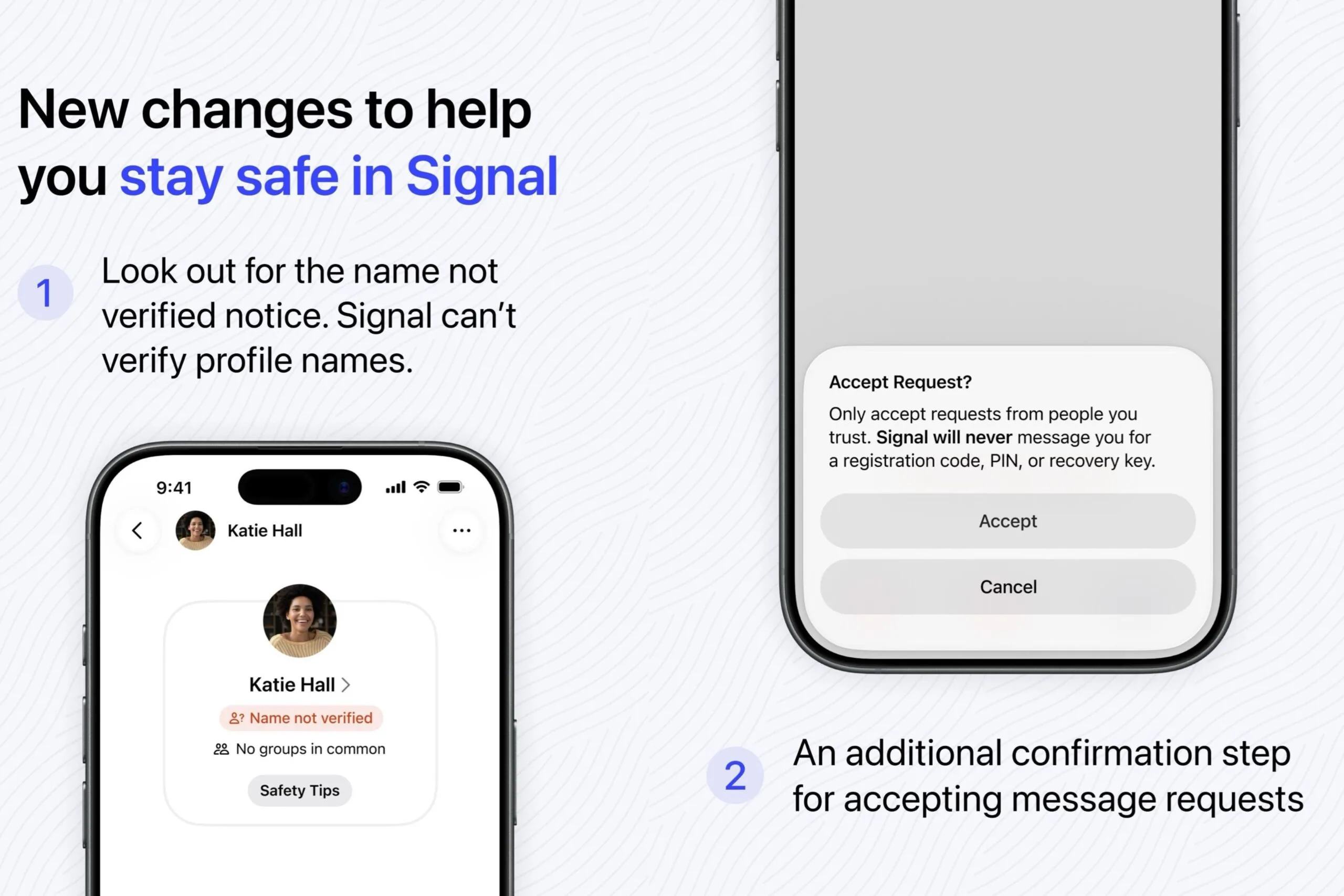
To help protect Signal users from phishing and social engineering attacks, we’ve introduced additional confirmations and educational messaging in the app to help people better detect fraudulent profiles, especially message requests from scammers posing as Signal.

More changes… pic.twitter.com/ASZNCXHNFM

— Signal (@signalapp) May 11, 2026

This isn’t out of nowhere either. Back in March, Signal confirmed that its platform had been targeted by phishing attacks aimed specifically at government officials and journalists. It seems that these new changes are a direct response to that.

Advertisement

What are the new safety changes in Signal app?

The most notable addition is a “name not verified” notice that now appears on profiles. This is important because Signal cannot actually verify the names users display on their profiles. Anyone can claim to be anyone since the profile name is set by individual users.

Signal has also introduced an extra confirmation step when you receive a message request. The idea is to only accept requests from people you actually know and trust. This is quite similar to how WhatsApp handles chats from unknown numbers, where you get the option to accept or cancel when it comes from an unknown number.

The app now also surfaces more detailed safety guidance directly in the interface. You’ll see reminders not to respond to chats claiming to be from Signal, since Signal will never reach out to ask for your PIN, registration code, or recovery key. If someone is asking for any of those things, it’s a scam.

The app also highlights vague messages – designed to lure a reply, suspicious web links, and any chat pushing financial tips – as red flags to watch for.

Why this matters?

Social engineering is one of the most common ways people get compromised online. It doesn’t require a technical hack. It just requires tricking you into handing over the right information.

Scammers impersonating Signal itself is a particularly sneaky tactic because it exploits the trust people place in the app. Signal has confirmed more changes are on the way, so this is just the beginning of a broader push to make the platform safer for everyone.

Advertisement

Source link

Continue Reading

Tech

A stainless steel breakthrough could slash the cost of green hydrogen production

Published

on


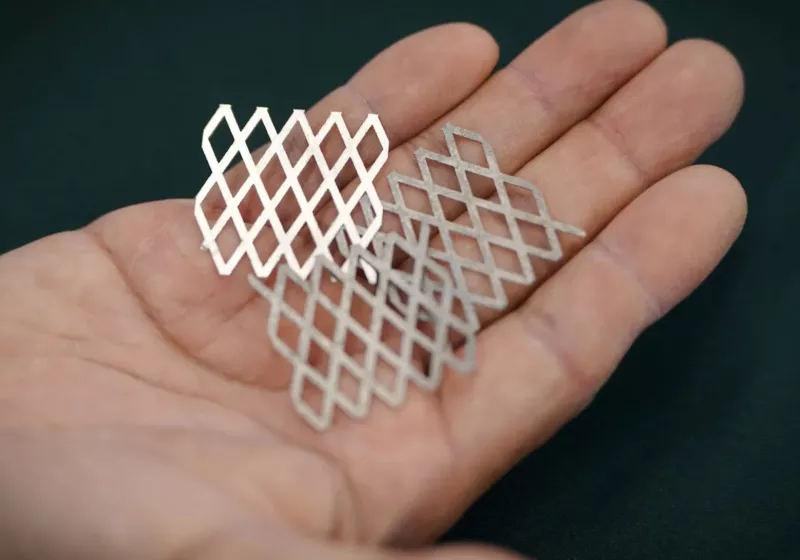
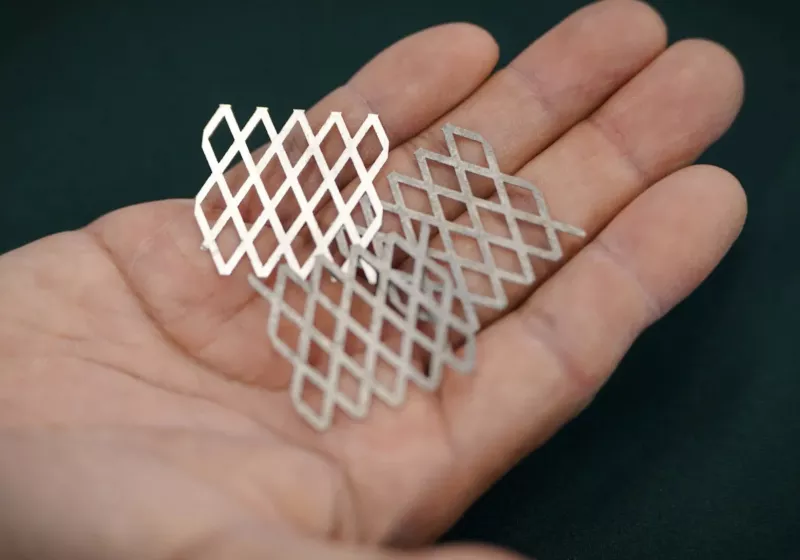
The material, known as SS-H2, is designed to remain stable where conventional stainless steel fails. The work, published in Materials Today, builds on Huang’s long-running Super Steel research program, which has previously produced ultra-strong alloys and antimicrobial stainless steel.
Read Entire Article
Source link

Continue Reading

Tech

Arts and Cultural Engagement ‘Linked To Slower Pace of Biological Aging’

Published

on

An anonymous reader quotes a report from the Guardian: Singing, painting or visiting a gallery or museum helps people age more slowly, according to the latest study to link taking an active interest in art and culture with improved health. The findings are the first to show that both participating in arts activities and attending events, such as viewing an exhibition, lead to people staying biologically younger. “These results demonstrate the health impact of the arts at a biological level. They provide evidence for arts and cultural engagement to be recognized as a health-promoting behavior in a similar way to exercise,” said Prof Daisy Fancourt, the lead author of the research and the head of the social biobehavioral research group at University College London.

However, slower aging does not necessarily mean someone will live longer. The “epigenetic clocks” used in the study to assess biological ageing are predictive of future morbidity and mortality, and previous studies have suggested a link between arts engagement and longer lifespan, but much more research would be needed to establish potential causal effects on longevity. Those who take part in artistic pursuits the most often slow the pace of their biological aging the most. Under one of the study’s methods of assessment, those who did so at least weekly slowed their aging process by 4%, while monthly engagement led to it slowing by 3%.

Similarly, another of the tests showed that those who undertook an arts activity at least once a week were on average a year younger biologically than those who rarely engaged in such pursuits. Those who exercised once a week were only six months younger by that measure. The benefit the arts confer on the pace at which people age is so dramatic that it is comparable to the difference between smokers and those who have given up smoking, the researchers say. The results, published in the journal Innovation in Aging, are based on blood test and survey response data from 3,556 adults taking part in the UK Household Longitudinal Study. It uses blood samples to estimate people’s biological age and the pace at which they are ageing.

Source link

Advertisement
Continue Reading

Tech

Amazon Now goes national, taking 30-minute delivery to dozens of cities across the country

Published

on

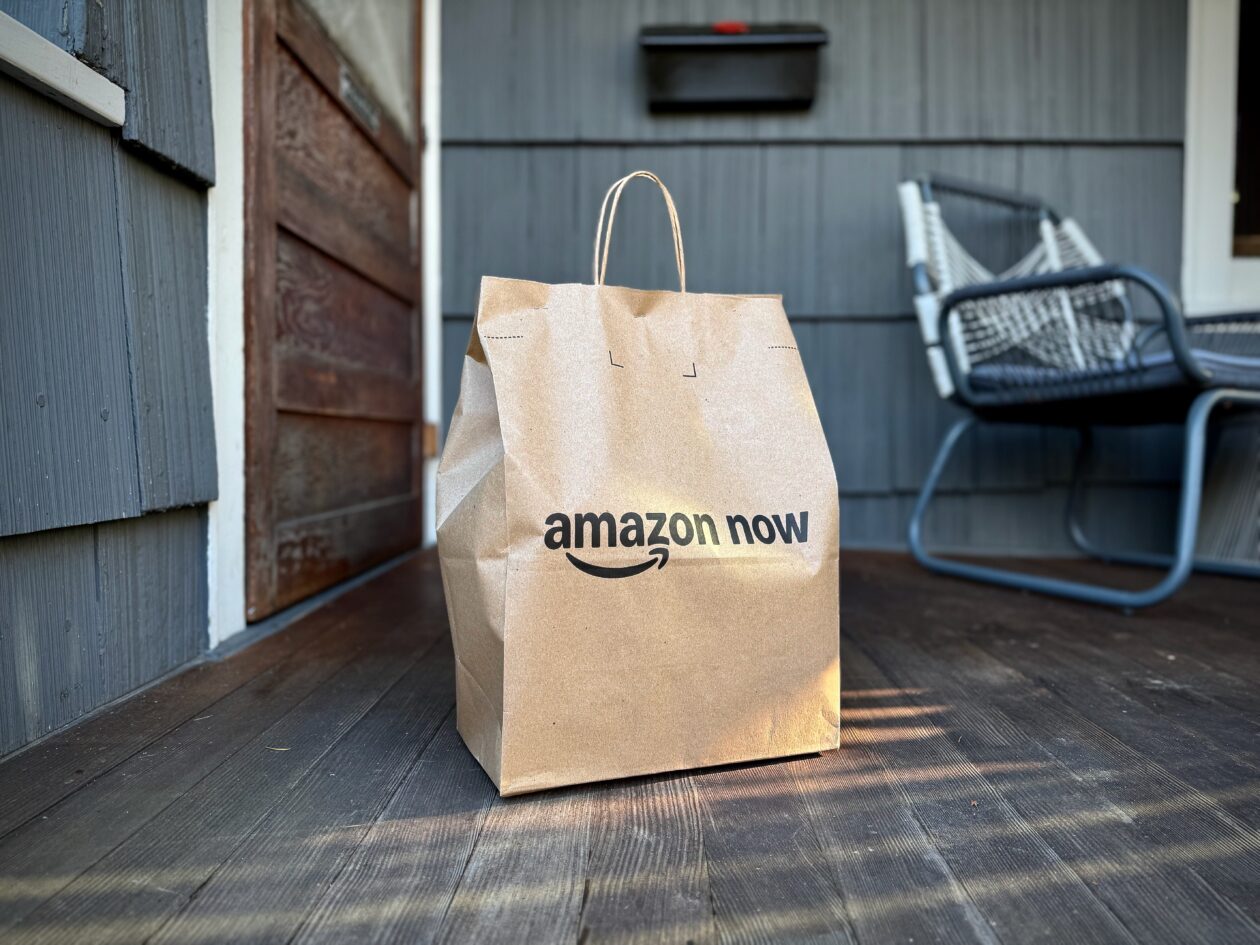
Amazon has been testing Amazon Now 30-minute deliveries since last fall in Seattle. (GeekWire File Photo / Kurt Schlosser)

Amazon is expanding its 30-minute “Amazon Now” service to dozens of U.S. cities, with plans to reach tens of millions of customers across the country by the end of the year.

The service, which GeekWire first uncovered through permit filings in Seattle’s Ballard neighborhood last November, delivers fresh groceries, household essentials, and other items from small neighborhood fulfillment hubs using its Amazon Flex citizens’ delivery brigade.

It has been limited until now to Seattle and Philadelphia as test markets.

The company announced Tuesday morning that Amazon Now is now widely available in Atlanta, Dallas-Fort Worth, Philadelphia, and Seattle, and is “rapidly expanding” into Austin, Denver, Houston, Minneapolis, Orlando, Oklahoma City, Phoenix, and other cities. 

The expansion is the latest and most aggressive move in Amazon’s push to dominate “sub-same-day” delivery, a category where it’s competing with Gopuff, DoorDash, and Instacart. 

Advertisement

Amazon CEO Andy Jassy highlighted Amazon Now in both his annual shareholder letter and the company’s Q1 earnings call last month, framing it as part of a broader quest for faster deliveries that also includes drones, one- and three-hour options, and same-day shipping. 

Prime members pay a $3.99 delivery fee for Amazon Now, compared with $13.99 for non-Prime customers. Orders under $15 carry an additional small-order fee of $1.99 for Prime members and $3.99 for non-Prime — a change from the flat $1.99 fee when it launched in December.

In two separate GeekWire tests of Amazon Now in Seattle, orders arrived well under the 30-minute promise. Reporter Kurt Schlosser got his delivery in 23 minutes in December, and a separate live test during the GeekWire Podcast in February clocked in at 19 minutes.

Amazon also faces competition from Walmart, which has been quietly hitting similar speeds from its existing store network. Walmart CEO John Furner said in February that the company is averaging under an hour on Express Delivery orders, with a large number arriving in less than 30 minutes — without dedicated micro-hubs.

Advertisement

Amazon isn’t promising the fastest delivery times. Gopuff’s Fam20 promises 20 minutes, and DoorDash piloted 10-to-15-minute deliveries in New York before ending the program. But reliability has been a weak spot for speedy delivery services, and with its logistics expertise, Amazon is betting that consistently hitting 30 minutes matters more than promising 10. 

Walmart is also a competitor in this realm, quietly hitting similar speeds from its existing store network. Walmart CEO John Furner said in February that the company is averaging under an hour on Express Delivery orders, with a large number arriving in less than 30 minutes.

Amazon has struggled to make the economics ultra-fast delivery work in the past.

Its “Prime Now” one- and two-hour delivery service launched in 2014 and was shut down in 2021, and “Amazon Today,” which used Flex drivers to pick up orders from malls and retailers, was discontinued in late 2024 after drivers often left stores with just one or two items.

Advertisement

Amazon Now takes a different approach, using dedicated company-operated hubs designed specifically for rapid fulfillment. 

The service is accessible through the Amazon shopping app and website at amazon.com/now. Amazon declined to provide a full list of cities where the service will soon be available but said customers can check the app to see if Amazon Now is offered in their area.

Source link

Advertisement
Continue Reading

Tech

Amazon launches 30-minute delivery across the U.S.

Published

on

Amazon deliveries keep getting faster. On Tuesday, the online retailer announced the launch of its 30-minute delivery option, dubbed “Amazon Now,” in dozens of U.S. cities.

This ultra-fast delivery option will allow customers to shop across “thousands” of items, Amazon says, including fresh groceries, household essentials, and other locally relevant items.

At launch, Amazon Now will be widely available in Atlanta, Dallas-Fort Worth, Philadelphia, and Seattle, and is expanding to Austin, Denver, Houston, Minneapolis, Orlando, Oklahoma City, and Phoenix. By year-end, Amazon expects to bring the service to tens of millions of customers in these and other cities, as the rollout continues across the U.S.

The eligible items will be flagged with “30-minute delivery” banners in the Amazon app and website. Amazon Now offers will also be displayed to customers as they shop.

Advertisement

Amazon began pilot tests of 30-minute deliveries in Seattle and Philadelphia in December, a move that pitted the retailer against other quick delivery services like DoorDash, Uber Eats, and Instacart.

In addition to speed, the service competes on price. While Amazon Now deliveries aren’t free, Prime members still save as they pay only a $3.99 per-order fee, compared with $13.99 for non-Prime members. An additional small order fee of $1.99 for Prime members, or $3.99 for non-members, is charged on orders below $15.00. That’s a more straightforward fee structure than competitors — and one that often ends up being cheaper for Prime members, compared with competitors that charge variable delivery fees alongside service fees, expected shopper tips, and sometimes even price markups per item.

To make these fast orders possible, Amazon taps into a network of smaller fulfillment locations that are placed closer to where customers live and work, as compared with the company’s larger warehouses. With a more limited selection of items and reduced travel distances, the delivery times can be sped up.

At launch, Amazon Now orders can include fresh produce, dairy and eggs, bakery items, healthcare and personal care items, baby and pet needs, electronics, and alcohol, where permitted. In most areas, the option will be available 24 hours per day.

Advertisement

“Amazon Now is for when you need or want the convenience of getting your Amazon order delivered in 30 minutes or less,” said Udit Madan, Senior Vice President, Amazon Worldwide Operations, in a statement about the launch. “With thousands of items available for ultra-fast delivery, you can get everything from groceries for dinner, to AirPods before a flight, to household essentials like laundry detergent or toothpaste delivered right to your door.”

The service also joins Amazon’s existing fast-delivery options, including its 1-hour and 3-hour deliveries available across more than 90,000 products as of March, and its same-day delivery option across millions of items. In eight U.S. locations, Amazon is also experimenting with under-60-minute drone deliveries via Prime Air.

In 2025, Amazon Prime members received over 13 billion total items via either same-day or next-day delivery globally. The U.S. alone accounted for 8 billion of those items, a figure up 30% year-over-year.

When you purchase through links in our articles, we may earn a small commission. This doesn’t affect our editorial independence.

Advertisement

Source link

Continue Reading

Tech

Apple headed to South Korea to fight off US antitrust case

Published

on

Neither Samsung or the US Department of Justice could stop the request in US courts to try to get data crucial to Apple’s US antitrust defense from the top of Samsung’s corporate structure in South Korea.

Apple is on trial for allegedly stifling competition through proprietary hardware and software. The US Department of Justice seeks to prove that Apple keeps companies like Samsung from easily serving its customer base.

The trial has barely entered the evidence gathering phase, and Samsung’s US headquarters refused to cooperate. So, Apple asked for and has now been approved to utilize the Hague Convention to get the South Korean Government involved, and force Samsung’s compliance in that country.

AppleInsider has seen the brief document submission showing that the request was approved. It states that “the court shall execute the submitted Letter of Request For International Judicial Assistance.”

Advertisement

Basically, Samsung says it can’t hand over evidence that is stored within the South Korean parent company’s databases. Since it isn’t part of Samsung America, it hoped that the court would agree that it isn’t relevant.

The DOJ also complained that Apple’s request should be denied. It argued that Apple waited too long to submit the filing.

Neither argument landed and Apple’s request was narrow enough that it was granted. Now, the court will submit a request to the South Korean government, asking it to compel Samsung to hand over relevant documents.

This doesn’t mean Apple will have its way just yet. The South Korean government could disagree with the scope of the request or deny it altogether. There’s also a chance Samsung could fight back in Korea as well.

Advertisement

It is very early days for this case. Apple was sued by the DOJ in March 2024, and early evidence requests were made in October 2025.

Expect that this case will take the better part of the next decade to reach some kind of conclusion.

Source link

Advertisement
Continue Reading

Trending

Copyright © 2025