






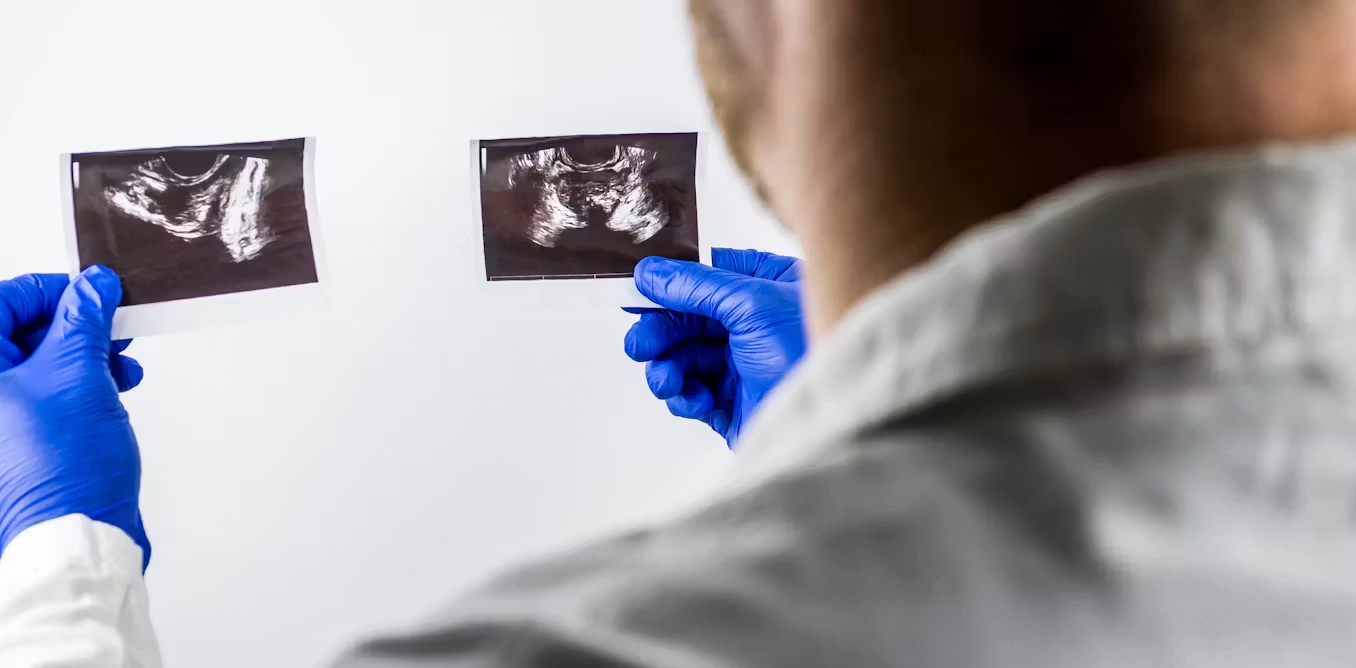
For many men with prostate cancer, the word “radiotherapy” still conjures up weeks of daily hospital trips: 20 or more sessions, Monday to Friday, for a month or longer. A new NHS England programme aims to shrink that burden dramatically by offering eligible men a highly focused form of radiotherapy that treats the cancer in just five sessions.
It sounds almost too good to be true: a comparable chance of controlling the disease, with far fewer visits and much less disruption to work and family life. But five-session treatment can still cause short-term and longer-term side-effects.
So what exactly is changing, and what should men make of it?
A sharper way to deliver radiation
The approach is called stereotactic ablative radiotherapy, or SABR. You may also hear it described as stereotactic body radiotherapy, or SBRT, and more colloquially as “multi-beam” or “high-precision” radiotherapy.
Instead of delivering smaller doses over many sessions, doctors give a higher dose at each appointment while targeting the prostate accurately.
Picture several torches shining from different angles. Each beam is relatively weak, but the light becomes intensely bright where they meet. SABR works in a similar way. Advanced imaging and computer planning map the target area, sometimes using tiny implanted markers as reference points. The machine delivers multiple beams that converge on the prostate, while nearby healthy tissue receives much less radiation.
That precision allows the schedule to shrink from at least 20 daily sessions to five doses within a fortnight. The appointments do not necessarily take place on five consecutive days.
Why NHS England is changing course
Prostate cancer is the most commonly diagnosed cancer in men in the UK, with more than 55,000 diagnoses each year. For men whose cancer is confined to the prostate, surgery or radiotherapy may offer a good chance of cure. Questions about diagnosis and screening remain the subject of active discussion.
Radiotherapy services are under strain, with machines and specialist staff in high demand. NHS England estimates that SABR could eventually be offered to around 17,500 men with low or intermediate-risk prostate cancer each year. These are cancers that have not spread and are considered less likely to grow or spread rapidly.
Around 3,500 men may initially choose SABR. Rolling the treatment out across all 48 radiotherapy providers in England could free approximately 50,000 appointments a year.
The rollout reflects a wider change in the way radiotherapy is delivered. Previous NHS England policies have supported stereotactic radiotherapy in other settings. Over the past decade, evidence from large clinical trials has shown that giving fewer, larger doses of radiation can control prostate cancer as effectively as longer courses in patients for whom the treatment is suitable.
For patients, the benefit is practical: weeks of hospital visits may be condensed into five trips. You lie on a firm couch while a large machine rotates around you. The treatment is painless. Additional imaging and checks are needed, but sessions take minutes rather than hours.
Side-effects and safety
Radiotherapy to the prostate, whether delivered over five sessions or 20, carries risks. The prostate sits in a crowded neighbourhood. The bladder lies just above it, the rectum sits behind it, and the urethra, the tube that carries urine out of the body, runs through the middle.
Men may experience urinary frequency or urgency, a burning sensation when passing urine, loose stools and fatigue. These effects commonly settle over weeks or months. Some develop longer-term problems, including urinary changes, leakage, difficulty with erections or bowel symptoms such as urgency or bleeding.
SABR is designed to limit radiation to surrounding tissue, but it delivers a higher dose at each appointment. Trial evidence suggests that side-effects are broadly comparable to those associated with standard radiotherapy schedules. A five-session course does not eliminate the risk of lasting complications.
SABR is already used to treat small lung tumours and other cancers. In the PACE-B trial, more than 95 out of 100 men in both the five-session group and the standard-treatment group remained free of cancer recurrence five years after treatment. Longer-term follow-up remains important.
SABR will not suit every man. The NHS England rollout is aimed at eligible men with localised low or intermediate-risk disease. A patient’s risk profile, general health and need for additional treatment, including hormone therapy to slow the growth of the cancer, will shape the options offered by his clinical team. Men with higher-risk disease or cancer that has spread may need a different plan.
Not everyone needs immediate treatment
For some men with low-risk, localised prostate cancer, the first decision is not “SABR versus standard radiotherapy”, but “treatment now versus careful monitoring”.
Many prostate cancers grow so slowly that they may never cause problems during a man’s lifetime. Doctors are therefore concerned about overtreatment: operating on or irradiating cancers that would never have harmed the patient.
Active surveillance, a form of careful monitoring, usually involves regular PSA blood tests, which measure the level of prostate-specific antigen in the blood, as well as scans and sometimes biopsies. Treatment is reserved for cancers that become more aggressive.
You may also hear the phrase “watchful waiting”. The terms describe different approaches. Active surveillance preserves the option of treatment intended to cure the cancer if it changes. Watchful waiting usually involves less intensive monitoring and is more commonly recommended when treatment burdens may outweigh the benefits.
SABR does not change that calculation. For some men, surveillance may remain the most appropriate option. For others, SABR offers a shorter way to deliver effective treatment.
A step forward, with limits
SABR should reduce the disruption caused by repeated hospital visits and release badly needed capacity within radiotherapy services. It does not remove the trade-offs between treating cancer and preserving quality of life, and it will not suit every man.
The key is an individualised discussion about the relevant options, including surveillance, surgery, standard radiotherapy and SABR.
For some men, condensing treatment into five hospital visits will be enormously attractive. What this policy shift signals is a quieter revolution in radiotherapy: more time at home, fewer journeys to hospital, and a treatment that tries to hit the cancer harder while hitting the rest of the body a little less.













































You must be logged in to post a comment Login