

Politics
Spurs held by Leeds as relegation battle takes another dramatic twist



Mathys Tel produced the kind of moment that makes managers grin and then grind their teeth in frustration, as he curled superb finish into the top corner to put Spurs ahead early in the second half. The goal looked like it might settle a nervy night at the Tottenham Hotspur Stadium.
However, twenty minutes later, the same player attempted an overhead kick defensive clearance which struck Ethan Ampadu. After a VAR review, Leeds were awarded a penalty that Dominic Calvert-Lewin converted to level the game.
Tottenham’s attacking intent was clear: they probed, they recycled possession, and they created some openings. But, the match underlined a recurring problem this season. Few moments of quality are too often followed by lapses in concentration. That oscillation between brilliance and error has left Spurs in a precarious position with only two games to go.
Spurs last minute drama
The penalty decision was the games fulcrum, referee Jarred Gillett initially waved played on, but a lengthy VAR check and a pitchside monitor review overturned that call. The sequence summed up modern football’s reliance on replay technology, a single frame can change the course of a relegation battle.
There was more drama, in a chaotic 13 minutes of added time, Sean Longstaff thought he had a late winner only for Spurs goalkeeper Antonin Kinsky produce a spectacular save, pushing the effort onto the crossbar. That stop was arguably the difference between a home defeat and a point that keeps Tottenham marginally above the drop zone.
Kinsky’s was the standout player for Spurs; he made several important saves and was later named player of the match, a rare positive in a game where Spurs form at home remains a concern. The club have now won just once in their last ten matches at the Tottenham Hotspur Stadium, a run that has amplified pressure on Roberto De Zerbi and his players as the season reaches its climax.
De Zerbi’s side showed fight and flashes of the tactical shape he’s trying to instil, but the manager will be frustrated by the inability to close out a match they controlled for long periods. He was forced to make attacking substitutions late on, including bringing on James Maddison, but even those changes couldn’t force the decisive breakthrough.
Leeds are safe
For Leeds, the draw was a valuable point and a sign of composure and maturity. They defended with discipline, stayed compact when needed, and took their chance from the spot. Crucially, Leeds top flight status for next season was already secured after West Ham’s defeat to Arsenal, meaning they could play with less pressure and more clarity in north London. That freedom showed in their organisation and willingness to see out the result.
Leeds’ manager will take encouragement from the way his team handled the occasion, the Whites were not there to make up the numbers, they came with a plan and executed it well enough to leave Spurs with a solid point.
Spurs future uncertain
The draw leaves Tottenham two points clear of the relegation zone with two games remaining, but the margin is fragile. West Ham sit just behind and can leapfrog Spurs if they beat Newcastle, a result that would dramatically reshape the final week of the season.
Spurs now head to Chelsea on May 19 before a final-day home fixture against Everton, West Ham’s remaining fixtures include a showdown with Leeds. The permutations are simple: any slip and Spurs could be dragged into a last-day scrap for survival.
This is not the script Spurs expected when the season began. Instead of a comfortable finish, they face a tense run-in where every decision, substitution, and VAR check carries outsized weight. De Zerbi has repeatedly asked for calm and consistency. What he will get is a fortnight of high stakes football where margins will be measured in inches and seconds.
Final word
A night of mixed emotions for Tottenham, a moment of individual brilliance, a costly error, and a goalkeeper who kept them alive. For Leeds, a tidy away point and the luxury of safety already secured, the relegation picture has tilted again, not dramatically, but enough to ensure the final two fixtures will be watched with the kind of intensity usually reserved for cup finals.
Featured image via the Canary
By Faz Ali

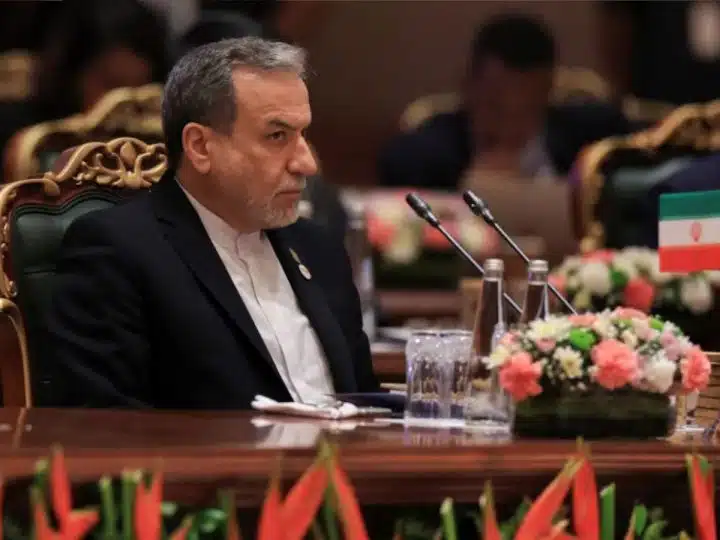

Iranian foreign minister Abbas Araghchi urged the BRICS countries to condemn the US-Israeli attack on his country.
The BRICS are a group of emerging ‘global south’ economies. In their own words:
The BRICS is a group formed by eleven countries: Brasil, Russia, India, China, South Africa, Saudi Arabia, Egypt, United Arab Emirates, Ethiopia, Indonesia, and Iran. It serves as a political and diplomatic coordination forum for countries from the Global South and for coordination in the most diverse areas.
Aragchi was speaking at a conference for the bloc in Delhi. Aragchi also called out the UAE for its own attack on Iran.
A tense meeting
The 14 May meeting was marked by considerable tension. Al Jazeera said this was the first time Iran and US-Israeli ally UAE had shared a room since the war began.
Aragchi told attendees Iran was a:
victim of illegal expansionism and warmongering.
He said:
Iran therefore calls upon BRICS member states and all responsible members of the international community to explicitly condemn violations of international law by the United States and Israel.
He also took a direct swipe at UAE, telling the conference that the Gulf state was:
directly involved in the aggression against my country.
The Guardian reported on UAE’s secret attacks on Iran on 12 May:
The UAE assault on Iran, which was undertaken as retaliation for Iranian attacks on its facilities, included a strike on Iran’s Lazan Island just before the 7 April ceasefire was announced.
US-Israel attacked Iran first on 28 February without provocation. Iran was offering unprecedented concessions in negotiations at the time. The Pentagon has since stated there was no imminent threat from Iran. And the UN’s atomic watchdog, the IAEA, has said there is no evidence Iran was developing a nuclear weapon.
The US has achieved none of its original war aims. Iran predictably closed the Straits of Hormuz, a vital oil channel, once attacked – creating a global energy crisis. Far from being defeated, Iran has said the war will continue until:
the enemy’s inevitable and permanent humiliation, disgrace, regret, and surrender.
Trump came to power on an anti-war ‘America First’ ticket. He now faces worldwide humiliation.
BRICS divided between empire and Iran
Al Jazeera reported that an Indian minister condemned a recent attack on shipping:
India’s Ministry of External Affairs also condemned an attack on an Indian-flagged ship off Oman on Wednesday as “unacceptable” – with all sailors rescued safely by Muscat.
The minister said:
We deplore the fact that commercial shipping and civilian mariners continue to be targeted.
The minister did not name the country or forces which attacked the ship.
In a separate media interview another Iranian foreign minister, Kazem Gharibabadi, appeared to criticise India. India is a close ally of Israel and the US and sources around half of its oil through the straits of Hormuz.
We want India’s BRICS chairship to be successful. It is not a good approach to send a signal to the world that the BRICS is divided.
The official theme of the meting was sustainability, cooperation and innovation. In reality, it was always likely to centre on the war – especially given several of the participants have close ties to the either Iran or the Trump-Netanyahu axis of empire. And none of the participants can ignore the reality that the failed US-Israel attack has re-ordered global energy politics.
Featured image via Al Jazeera
By Joe Glenton
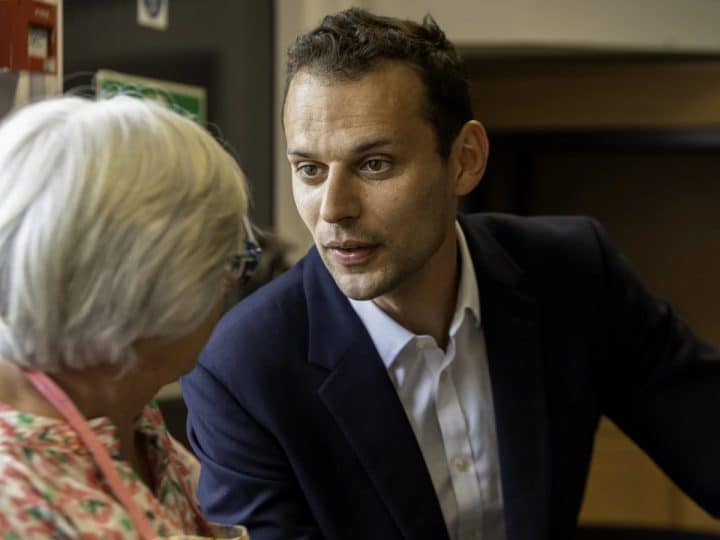
At the local elections this month, On Thursday afternoon, Labour MP Josh Simons announced that he would be “giving up” his Makerfield seat for Andy Burnham, the Labour Friends of Israel-veteran currently being paraded as the saviour of the party.
For decades, Westminster has overseen the managed decline of towns like mine. We have talked big, then acted small, stuck in a politics of incrementalism that cannot meet the moment. We have lost the trust of those our party was built to serve.
It is my unwavering belief that…
— Josh Simons MP (@joshsimonsmp) May 14, 2026
Simons was forced to resign from Keir Starmer’s cabinet after revelations that, whilst serving as a director of Labour Together, he ordered private investigators to go after journalists looking into Morgan McSweeney.
How Simons was selected for Makerfield
Before considering the democratic implications of an MP essentially attempting to donate their seat to the mayor of Greater Manchester, it is worth reminding ourselves of how Simons secured the Makerfield constituency in the first place.
At the time, Simons said that he was “honoured to be selected”, but no selection contest ever took place. Indeed, when local publication the Manchester Mill contacted Jenny Bullen, then the deputy mayor of Wigan council, her response was curt:
Makerfield constituents want a local candidate and have made that abundantly clear. Nothing else to say, bye bye.
No easy win for Burnham
Despite the desire for a quick coronation, Burnham will not face an easy ride in Makerfield.
At the 2024 general election, Reform UK increased their vote share by 18.7%.
Labour lost all 22 of the Wigan council seats they were defending at the local elections this month. Reform gained 24 seats.
At the last by-election in Greater Manchester, held in Gorton and Denton in February, Labour’s vote share dropped by 25.4%; they came third, behind the Green Party and Reform.
Simons’ links to the Israeli lobby
Like Burnham, Simons has his own links to the Israel lobby.
In February, it was revealed that he had failed to properly declare a donation from Trevor Chinn, the former Labour Together director and funder who, after being nominated by Labour Friends of Israel, received an Israeli Presidential Medal of Honor for “skills and work to the benefit of the State of Israel”.
In 2013, Chinn told an LFI meeting:
I’ve spent my entire life working for Israel, for a better image for Israel, for success for Israel.
At the 2024 conference of the Jewish Labour Movement, Simons spoke alongside former Israeli spy Assaf Kaplan at an event that promised to teach the audience “how to run a good campaign”.
Simons’ other funders
Last June, Simons received £5000 from Mike Craven, a former press officer for Tony Blair. Craven, still listed as a director of Labour Together Limited on Companies House, has previously attacked Jeremy Corbyn “and the far left” for not recognising the Israeli state’s “right to exist”.
In October, Simons received £30,000 from Francesca Perrin, a Labour Together donor who also served as a director until her resignation three weeks ago.
Simons is a member of the All-Party Parliamentary Group on Israel, which states its purpose in the following terms:
To create a better understanding of Israel and to foster and promote links between the UK and Israel; to unite parliamentarians from across both Houses who are proud to be friends of Israel; and to make the case for Israel and for the UK’s bilateral relationship with the Jewish state.
The Israel APPG’s co-chair is Damian Egan, a vice-chair of the Labour Friends of Israel lobby group. Egan is married to Yossi Felberbaum, a former IOF soldier who used to recruit officers from the deadly Unit 8200.
Simons has previously mentioned having “friends and family in Israel” – a state with compulsory military service – and in a parliamentary debate with Conservative MP Kit Malthouse last June, he asserted his “right to claim citizenship in Israel”.
Two months later, Simons was part of a group of “Labour Friends of Israel-affiliated MPs” who confronted National Security Adviser Jonathan Powell in a “testy and emotionally charged conversation”, regarding the government’s decision to recognise a Palestinian state.
No ‘redemption’ for Simons
Some have posited that Simons may be giving up his seat for Burnham as a way of seeking “redemption” for his actions at Labour Together. Perhaps there is also a desire to avoid the fallout from recently released Subject Access Requests from Labour Together, which relaunched with the new name “Think Labour” (but the same company number) this week.
On Thursday, former Labour leader Jeremy Corbyn had his Subject Access Request, which came in at a whopping 583 pages, returned to him. We learn that in January 2024, whilst serving as a director of Labour Together, Josh Simons sent an e-mail to an unknown recipient:
I f***ing hate Jeremy Corbyn.
All in all, sounds like a lovely guy.
Featured image via Josh Simons
Politics
Rally for rapists: how two protests show Zionists attitude on for sexual violence against Palestinians


Zionists are losing their shit over a New York Times (NYT) article called “The Silence that Meets the Rape of Palestinians,” written by journalist Nicholas Kristof. As is commonplace with Zionists, a protest has broken out in New York where a group gathered outside the NYT’ Manhattan office not to condemn sexual violence against Palestinians, but to attack the newspaper that published an article detailing violence against Palestinians prisoners by Israeli settlers, soldiers, and prison guards.
A Times of Israel journalist posted a video of the protests outside the NYT’s office.
Several hundred demonstrators outside the New York Times to protest Kristof column pic.twitter.com/20K0KNzXTf
— Luke Tress (@luketress) May 14, 2026
Zionist butcher threatens to sue the NYT
The butcher of Gaza, Benjamin Netanyahu, also spoke up on the NYT article, saying he would take legal action over the article.
Netanyahu’s post said that he had instructed legal advisers to consider the “harshest legal action against The New York Times and Nicholas Kristof.” He blustered:
They defamed the soldiers of Israel and perpetuated a blood libel about rape, trying to create a false symmetry between the genocidal terrorists of Hamas and Israel’s valiant soldiers.
Under my leadership, Israel will not be silent. We will fight these lies in the court of public opinion and in the court of law. Truth will prevail.
Israel’s systematic rape of Palestinians is widely documented.
The ICC wanted-war criminal, who has previously threatened to sue the NYT wants truth to prevail. The NYT itself has its hands soaked in Palestinian blood. Just because it is now reporting on one of the Zionist entity’s vile crimes does not absolve it of the role it has played.
“As Israel now continues to carry out a uniquely horrific crime in Gaza with the firm backing of the global superpower (the US), Bret Stephens’s genocidal journalism [for the New York Times] is also uniquely horrific.”
— #AJOpinion by Belén Fernández
https://t.co/mFBr0tIVFn
— Al Jazeera English (@AJEnglish) July 25, 2025
The organisation called Writers Against the War on Gaza recently published a “dossier” which exposed the “material and ideological ties to occupation and apartheid held by many high-ranking editors, journalists, and executive officers at the Times.”
So, this tussle between Netanyahu and the NYT is no more than right-wing infighting.
Pattern of behaviour
In late July 2024 a similarly unbelievable protest broke out in Israel. The protest was to protect rapists. Hundreds of far-right Israeli demonstrators, including masked and armed soldiers from the IDF’s Force 100 unit, gathered outside the Beit Lid military base. They were demanding the release of ten of their colleagues who had been arrested on suspicion of raping a Palestinian detainee at the Sde Teiman military base.
According to Physicians for Human Rights the victim had been hospitalised with severe injuries to his rectum.
These two protests reflect the attitude of Zionists and their perceived impunity from crimes of sexual violence against Palestinian detainees or hostages in Israeli prisons.
Palestinian testimonies reveal the use of sexual violence
The Canary has covered the extensive use of sexual violence against Palestinians in Israeli prisons:
More documented evidence of Israel’s use of sexual violence in Palestinian prisons
Palestinian testimonies reveal the use of sexual violence, including rape, as a means of torture inside Israeli prisons. @alaashamaly on @MiddleEastEye‘s investigation: https://t.co/a70HdbFOMO
— Canary (@TheCanaryUK) December 22, 2025
In testimonies published by Middle East Eye, two former Palestinian prisoners gave shocking accounts of sexual assault and physical and psychological torture inside Israeli detention centres.
They emphasised that what they experienced cannot be classified as isolated incidents, but rather part of a systematic policy practised against prisoners, especially during the initial phase of detention, known among detainees as the “welcome party.”
Euro-Med Monitor has also met with hundreds of Palestinians released from Israeli detention. The organisation recently said:
Their testimonies reveal at least 40 forms of torture and other cruel, inhuman, and degrading treatment.
Eleven of those are
- stripped searches and forced nudity
- urinating and spitting on detainees
- breaking bones and teeth
- forcing detainees to imitate animal sounds
- humiliation by making detainees wear diapers
- rape and sexual assault
- threat of rape
- filming detainees and bringing Israeli civilians to watch their torture
- deprivation of sanitation pads for women
- deprivation of performing religious practices
- electric shocks
Over the past two years, Euro-Med Monitor has met hundreds of Palestinians released from Israeli detention.
Their testimonies reveal at least 40 forms of torture and other cruel, inhuman, and degrading treatment.
In the thread, we highlight 11 of these practices
pic.twitter.com/kYXmZJST5S
— Euro-Med Monitor (@EuroMedHR) May 14, 2026
Israelis are carrying out a systematic policy of sexual violence on detainees with impunity, enabled by a government that rallies around accused rapists rather than holding them accountable.
A tale of two protests reflects the attitude of Zionists and their perceived impunity from crimes of sexual violence against Palestinian detainees.
Featured image via X
By The Canary
Politics
Labour’s water reforms ‘a gift to shareholders’ and ‘an insult to every community impacted by sewage’
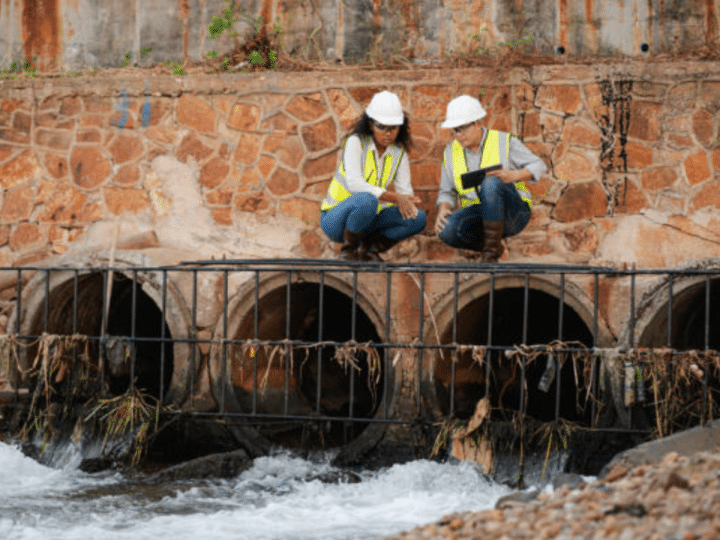

The Labour Government’s proposed reforms to the water industry – via its Clean Water Bill, announced in the King’s Speech – have been met with widespread criticism from environmentalists and campaigners.
In his speech to parliament, written by Keir Starmer’s government, King Charles said:
My Government will improve critical infrastructure with legislation to clean-up the water industry.
Alongside the speech, the government published much more detailed briefing notes explaining its plans for each area of planned legislation.
Uncertain plans
Challenges to Keir Starmer’s leadership, following Labour’s reckoning at the local elections earlier in May, mean that there is huge uncertainty over whether those plans will come to pass.
Regarding the Clean Water Bill, the notes said:
This once-in-a-generation Bill will shift the sector away from a system where water companies mark their own homework by putting in place stronger, active supervision and oversight through a powerful new regulator capable of integrated management of the water system.
They went on to say:
The Bill will strengthen confidence in the water sector – restoring the public’s trust, giving investors the stability to back long-term upgrades, and providing the clarity needed to support economic growth. It will ensure the sector plays its full part in delivering clean water and a healthy environment.
The briefing also said that the Bill would:
put consumers firmly first with a new Water Ombudsman to ensure complaints are taken seriously and resolved quickly.
And it would:
create a new, independent and integrated water regulator by bringing together the relevant functions of Ofwat, the Drinking Water Inspectorate, the Environment Agency and Natural England.
Somewhat surprisingly, the government’s own notes acknowledge the failings of the water sector, which it linked to privatisation.
The notes said:
The water industry in England and Wales was privatised in 1989, water supply and sewerage are delivered by 16 private companies. However, unlike most markets, water companies are regional monopolies with limited competition.
England and Wales are unusual in having a fully privatised water system, whereby companies own the assets, infrastructure, and operation of water services.
The water system, regulation and the regulators have failed customers and the environment. In the 37 years since privatisation the population has grown by 11M, climate change and aging infrastructure has created unprecedented demands on the water system and reform is now needed.
This has been compounded by a failure of regulation, with a system that relied too heavily on water companies marking their own homework.
It added that:
water companies are not delivering what is expected of them, both by regulators and the public.
And said:
transformative change is therefore needed to secure a system that will work for the long-term. This Bill delivers that change.
The Bill was heavily criticised by democratic ownership campaigners, environmental non-governmental organisations and anti-sewage pollution activists.
British Steel nationalisation shows water sector could be renationalised too – campaigner
We Own It lead campaigner Sophie Conquest told the Canary:
This government’s proposed reforms for the water industry are a gift to shareholders.
The water white paper sets out plans for a ‘tailored approach’ for each water company, giving them even more scope to bend and break the rules for profit. Measures like ‘constrained discretion’ will give polluters more room to dodge fines.
Regulation of the water sector has been a decisive failure. Despite this government promising to be tough on polluters, the EA hasn’t completed a single prosecution for sewage dumping committed in the past 5 years.
The Labour Government has been in power since 2024, before which the Conservatives were in government from 2010.
While our pockets empty and our rivers fill with sewage, this government is busy handing over even more power to the polluters. The public have had enough.
This government’s decision to bring legislation to nationalise British Steel shows that they absolutely can nationalise key infrastructure. And they can do it quickly.
They must now do the same for water. Under public ownership, we can ensure that households’ money is being used to fix infrastructure and lower bills.
Thames Water is already in breach of its licence, and has buried itself in a mountain of debt. It has wrought havoc on our seas and rivers, all while charging households eyewatering bills for the privilege. It’s outrageous that the utility has not yet returned to public hands.
This government should be acting in the interests of the 82% of us who want to see water in public hands, starting with the collapsing Thames Water.
Privatisation has ‘failed’ – campaigner
Windrush Against Sewage Pollution (WASP) founder Ash Smith told the Canary that the Clean Water Bill is based on a review whose independence he questioned, and said the Bill did nothing to address the evidence that privatisation of the water sector had “failed”.
Smith was portrayed by David Thewlis in Channel 4’s docudrama, Dirty Business.
The Canary previously reported that the public responded to Dirty Business – which exposed the damage done by the sewage scandal – with “widespread praise”, whereas discussions on social media about water companies, the regulator and public bodies was “overwhelmingly negative”, according to the government’s own analysis.
Smith said:
The water regulation changes proposed are based on the instantly accepted report from the Cunliffe Commission, which far from being the independent review it claimed to be, was designed, directed, administered, and reported on by Defra – the government department responsible for water industry regulation and its failure. Cleverly, in classic ‘Yes, Minister’ style, it investigated itself.
Its terms of reference directed Sir Jon Cunliffe to make regulation more attractive to shareholders and to dismiss taking water into public ownership, despite the compelling evidence that privatisation has failed.
We regard it as a massive retrograde step that, rather than addressing regulatory capture and corruption, makes compromise more likely with a single body. This vital aspect was ignored by the review, which was being steered by Defra into a forward-looking approach, thereby burying many serious issues that have arisen over the years, some of which were exposed in Dirty Business.
Smith added that the Bill proposes to make regulation of the sector “supervisory” which would mean that responsibility for “criminal pollution” by water companies will be for the regulators to resolve.
He added:
It is time people woke up before it is too late. Ironically and cynically, even contemptuously, one might say, the environmental champion, King Charles, has been made to usher it in, no doubt reassured by the major NGO’s usual weak challenges.
Bill is ‘an insult to every community impacted by sewage pollution’ – anti-sewage campaigner
Surfers Against Sewage CEO Giles Bristow said:
The government’s self-proclaimed ‘once-in-a-generation’ reforms will do little more than prop up a broken industry built on pollution for profit. The Clean Water Bill is an insult to every community impacted by sewage pollution and and every bill-payer forced to fund rising water bills while shareholders continue to profit.
The reality of this Bill is that the Government is choosing to keep the profit motive and ignoring alternative ownership models for the water industry. Regulation alone cannot fix a system that rewards pollution and failure. Only a fundamental reset of the water industry will.
It’s clear from last week’s election results and the Prime Minister now fighting for his job that the same old tweaks around the edges of this broken system just don’t cut it.
This weekend, people across the country will take to beaches, rivers and lakes to demand better. The public mandate for bold action is undeniable.
Concerns about independence of water commission, which ‘avoided’ underlying problems
River Action CEO James Wallace told the Canary:
River Action welcomed the new Government’s decision to review the failing water industry and the performance of environmental regulators. However, we are deeply concerned that the Independent Water Commission has failed to be truly independent and has avoided addressing the underlying structural problems around water company ownership, governance and investment.
While we remain hopeful that the forthcoming Water Reform Bill will deliver a far more ambitious and effective regulatory regime, the Government continues to ignore the fundamental damage caused by a wholly privatised water industry.
Until water companies are owned and operated for public benefit and environmental protection, rather than shareholder profit, no amount of regulatory tinkering will stop polluters from continuing to pollute for profit.
We are also concerned by the continued lack of meaningful action on agricultural pollution, which is one of the biggest sources of river pollution. Any serious attempt to restore our rivers must tackle not only sewage discharges, but also help farmers tackle the unchecked runoff of slurry, fertilisers and other agricultural waste into our waterways.
The chaos at the top of the Labour party makes it less likely that the government will be able to successfully pass all the bills it proposed in its King’s Speech, but public anger over the state of the country’s water companies is unlikely to subside any time soon.
Featured image via the Canary
By Tom Pashby
Politics
Helen Whately: Starmer’s failure is a stark warning to all politicians who think they can wing it and promise the moon
Helen Whately is the Shadow Secretary of State for Work and Pensions.
The resignations started. The ‘King in the North’ is on the march. The chatter in Westminster is no longer ‘will Keir Starmer survive?’ but ‘when will he go?’
How did it all go so wrong for Sir Keir? Less than two years ago Labour won a massive majority on a promise of “change”.
People are sick of broken promises from politicians – but in fact there has been change. The country has changed for the worse.
Taxes are up, as are borrowing, inflation, unemployment and government spending. People feel poorer, because they are.
Labour MPs point to the war in the Middle East. But in truth these figures were heading in the wrong direction well before Trump bombed Iran.
Governing is hard. Governing the UK right now is especially hard. We’ve had years of sluggish growth. Inflation surged after Covid and Russia’s invasion of Ukraine. The pandemic has left us with higher debt, along with an appetite for generous state support irrespective of people’s contributions.
None of this was a secret in the run up to the last election. But Labour did nothing to prepare for it. Except for Ed Miliband’s Net Zero mission and a bonanza of trade-union drafted red tape, they had no plan for Government – nor a mandate to make any of the tough choices that governing requires.
Most Labour MPs hold a principled belief that spending more of other people’s money is the answer to every problem. Even if Keir Starmer held a different view, he doesn’t have what it takes to win his MPs over.
So what now? In the days, weeks or months ahead, Labour MPs need to pick someone who can make a decent fist of being Prime Minister. The country hopes they succeed.
Because beyond Westminster, people are despairing. Family breadwinners are losing their jobs, homes are being sold to pay the bills, and young people are losing hope of getting on the career ladder. Millions have drifted out of work altogether; claiming benefits makes more sense. Businesses are struggling with rising costs and regulation, while inflation has quietly hollowed out living standards.
Threats are growing more serious too. Russian vessels are probing our critical infrastructure. Government borrowing costs are rising by the hour. And still the welfare bill goes on up.
More of the same is not the answer. Government spending must come down, along with taxes and borrowing. Swathes of red tape must go. Only then will we get the growth and jobs needed to start turning things around.
To me it seems obvious. But to the Labour MPs choosing their next leader? I doubt it.
The problem isn’t just Starmer; it’s also the MPs behind him. They clamoured for more welfare spending and the lifting of the two-child cap. They cheered taxes on farmers, family businesses and schools. And though some pay lip service to defence investment, the will to find the money simply isn’t there.
With his back against the wall, it’s no surprise that Keir Starmer’s King’s Speech contained no welfare savings, no succour for businesses drowning in red tape, no lightening of the tax burden and no serious plan for funding defence. What it did promise was the so-called ‘Regulation for Growth Bill’ – a contradiction in terms if ever there was one.
In anticipation, we set out our Alternative King’s Speech outlining 16 bills to deliver our plan for the country. It covers all those gaps: £23 billion of welfare savings, a list of business regulations we would repeal, cuts to business taxes, the end of stamp duty, investment in defence – along with tougher measures on crime, leaving the ECHR and drilling in the North Sea.
To govern, a plan is necessary – but it’s not sufficient. You also need principles, conviction and courage. In Kemi Badenoch, the Conservative Party has a leader with those qualities in spades.
The country is fed up. Fed up with politicians promising but not delivering. Fed up with seeing their taxes spent on things they don’t want – from far flung aid projects to hand-outs to migrants. Fed up with working all hours and having nothing left at the end of the month.
Kemi articulated this mood in her response to the King’s Speech in Parliament on Wednesday. A Labour Minister foolishly criticised her for being rude. Not so; she was telling the truth, but it’s a truth they don’t want to hear.
And this is the nub of it. They came to power on empty promises, having failed to understand the country’s problems. They were not even listening. So, they were totally unprepared.
As I said in Parliament as we debated the King’s Speech, being in power is not an end in itself: what matters is what you do with the power voters trust you with.
We have learnt from our mistakes, and we are also learning from theirs. Read our Alternative King’s Speech and you will see what I mean.
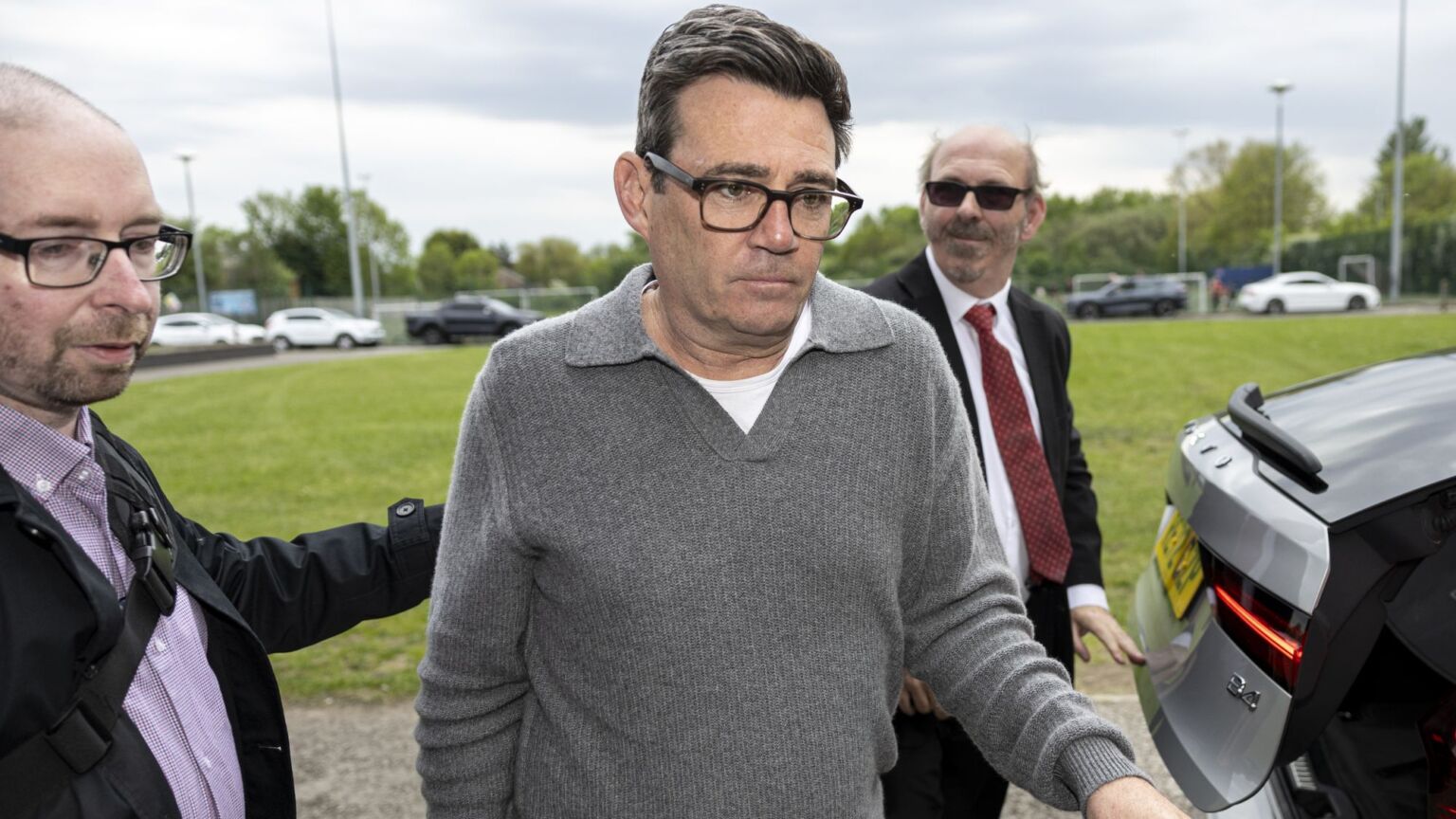
The post Sorry, Andy, there’s no such thing as a Labour safe seat appeared first on spiked.
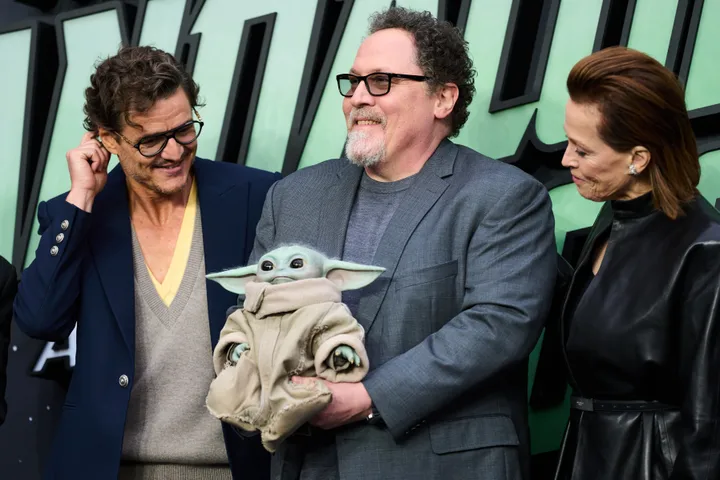
After three delightful seasons on the small screen, The Mandalorian is about to hit cinemas for the first time.
Later this month, Pedro Pascal and his right-hand man Grogu will be starring in the hit Star Wars spin-off’s first feature-length adventure, which had its world premiere in Los Angeles on Thursday night.
And it probably goes without saying that all eyes were on one man in particular at The Mandalorian And Grogu’s debut.
Yes, we’re obviously talking about Grogu.
The adorable alien was pictured stealing the show on the event’s red carpet, with video footage also showing striking a pose for photographers.
Naturally, it was all too much for some fans to take…
And if you liked that, you’ll love these dancing droids busting a move on the red carpet, too…
Disney’s official synopsis for the new movie in the Star Wars franchise teases: “The evil Empire has fallen, and Imperial warlords remain scattered throughout the galaxy.
“As the fledgling New Republic works to protect everything the Rebellion fought for, they have enlisted the help of legendary Mandalorian bounty hunter Din Djarin and his young apprentice Grogu.”
In addition to Pedro reprising his role as Din Djarin from the original TV series, The Mandalorian And Grogu will feature appearances from several Star Wars regulars, plus Sigourney Weaver as a new character, Ward, a former Rebel Alliance pilot.
Meanwhile, Emmy winner Jeremy Allen White will also be lending his voice to Rotta the Hutt, son of Jabba, with Jon Favreau – who previously helmed Iron Man and Disney’s Jungle Book and Lion King remakes – on writing and directing duties.

Originally, a fourth season of The Mandalorian was planned, but these plans were put on ice in favour of making a film.
Speaking to SFX magazine, Jon Favreau explained that he had to “start from scratch” when putting together The Mandalorian And Grogu, rather than adapting his planned scripts for season four.
“[Season four] would have heavily linked to Ahsoka season two,” he explained. “You can’t just take those scripts and turn them into a movie. There were a lot of characters, it assumed you’d watched the whole show, and it was teeing up what was happening moving into [season two of] Ahsoka.
“It was about Grand Admiral Thrawn and following the larger storyline [of this era of the Star Wars timeline]. This is a completely different medium. So I had to start from scratch, essentially.”
It’s still unclear whether The Mandalorian could get a fourth season, after its creator gave a rather cryptic answer when asked about it on the red carpet.

This month’s dry, sunny weather might be good news to sunbathers, but it can be tough on gardeners – plants may be missing the much-needed rain.
But sometimes, even when you do everything right, your garden still looks a little… lacklustre.
That’s partly because, as the Royal Horticultural Society writes, watering during a hot spell (or at all) is a delicate thing.
Flowers, raised beds, potted plants, and grass all have different needs, for instance. Even within those, not all soils are created equal.
So it’s a good thing Montana State University has a solution involving a pan and some water.
Mark the top of the water
Cheryl Moore-Gough, a horticulturalist at the university, says that those wanting to figure out exactly how much soil their specific garden is losing should try a “simple pan test.”
Using a straight-sided pan, she says you should fill it with water and mark the top of the liquid.
Then, you should watch it for “a week.”
“The amount that has evaporated is about the amount of evaporation that has occurred from the soil profile,” she explains.
“You’ll need to water that much to make up for evaporation plus the amount the plant has lost due to transpiration.”
This is especially useful in the sort of unpredictable and unseasonable warmth and dryness we’re seeing now, because it reveals how much moisture the weather has drawn out of your specific garden in your exact location.
Any other hot weather watering tips?
Speaking to HuffPost UK previously, gardening expert Chris Cooper from Hayter, manufacturer of battery lawnmowers, said that you should water in the morning when it’s hot out to prevent evaporation.
“When the sun begins to rise, your grass and plants will begin to soak up the water for healthy growth – so make sure they start the day with a decent breakfast,” he added.
“This is especially important in a heatwave, as the weather will be much cooler in the morning than at midday when the temperature is at its peak.”
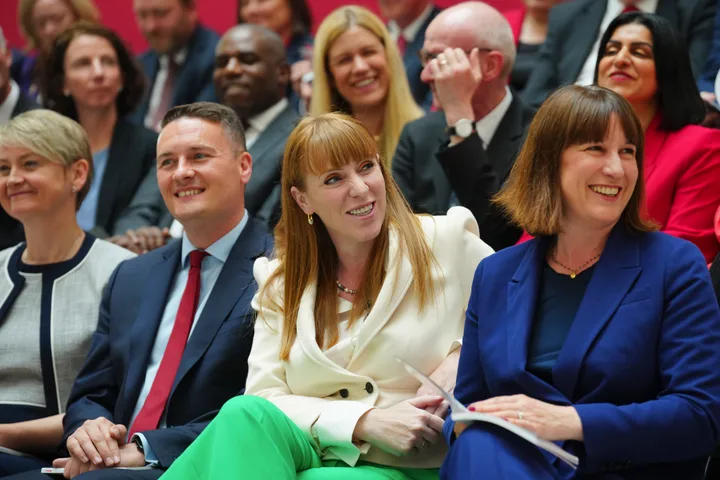
Keir Starmer’s premiership is hanging by a thread following Labour’s disastrous performance in the local elections.
A growing body of MPs are calling for the prime minister to resign, less than two years into the role, but Starmer is digging in.
With no clear successor putting their head above the parapet for the mutinous party to rally behind, MPs are in limbo.
So what might happen next? Here’s what you need to know.
How Did We Get To This Point?
Starmer became prime minister in July 2024 after Labour won a landslide victory in the general election.
But within weeks, his government was plunged into crisis by the decision to scrap winter fuel payments for 10 million pensioners and a row over free clothes and hospitality accepted by Starmer and other senior Labour figures.
A series of messy U-turns on things like the two-child benefit cap, digital ID and the farmers’ inheritance tax also led to the prime minister’s approval rating plummeting.
The controversy over his decision to make Peter Mandelson the UK’s ambassador to Washington also helped push the PM’s unpopularity to new depths.
In Labour’s biggest electoral test since the 2024 election last week, voters overwhelmingly rejected the party in England, Scotland and Wales – triggering further anger towards the PM from the party’s MPs.
More than 50 of then have called on Starmer to stand down following the devastating bloodbath.
What Might Happen Next?
It’s incredibly hard to predict exactly what happens next, especially Labour Party makes it difficult to oust the party’s leader.
But here are the options MPs are considering, as of Monday…
A Labour MP Challenges Starmer
Under the party’s rules, a challenger needs the backing of at least 20% of Labour MPs to trigger a leadership contest. That currently works out to 81 MPs.
Even then, the sitting leader would automatically be put on the ballot paper.
Former Foreign Office minister Catherine West stunned Westminster on Saturday by announcing she would challenge the PM if the cabinet did not choose someone to replace Starmer.
But by Monday she had backed down, instead calling for MPs to sign a letter urging Starmer to set out a timetable to allow him to be replaced by September.
Among others thought to be weighing up a leadership bid are former deputy prime minister Angela Rayner and health secretary Wes Streeting.

A Labour MP Stands Aside For Andy Burnham
Starmer’s other major opponent is the mayor of Greater Manchester, Andy Burnham.
However Burnham left Westminster in 2017 and would have to become an MP again in order to stand.
Labour’s ruling National Executive Committee (NEC), blocked him from running as the party’s candidate in the Gorton and Denton by-election in February – at the behest of Starmer.
On Thursday, Labour MP Josh Simons announced he agreed to stand down from his Makerfield seat to make way for the Greater Manchester mayor, less than two years after being elected.
However, there are no guarantees Burnham would win the subsequent by-election.
His decision to stand would also trigger a mayoral contest in Greater Manchester – which could give rival parties another chance to hammer Labour at the ballot box.
Wes Streeting mounts leadership challenge
Wes Streeting will definitely run in the upcoming Labour leadership contest, his allies have told HuffPost UK.
It is the first confirmation that he plans to mount a bid to replace Keir Starmer as prime minister.
Starmer Agrees To Step Down As MP Backlash Mounts
As the number of MPs calling on him to resign rises, the PM could decide he doesn’t need the hassle and announce he is quitting.
However, he has insisted he “won’t walk away” from the job, and in an interview with The Observer insisted he still planned to be prime minister for 10 years.
Starmer Clings On
With the PM’s opponents apparently racked with indecision about what to do next, there is a world in which he rides out his latest leadership crisis.
In his make-or-break speech on Monday setting out how he plans to turn around Labour’s fortunes, Starmer said: “I know that people are frustrated by the state of Britain, frustrated by politics, and some people – frustrated with me.
“I know I have my doubters and I know I need to prove them wrong, and I will.”
Subscribe to Commons People, the podcast that makes politics easy. Every week, Kevin Schofield and Kate Nicholson unpack the week’s biggest stories to keep you informed. Join us for straightforward analysis of what’s going on at Westminster.

A big section of the SpaceX rocket Falcon 9 is predicted to crash into the moon on August 5, astronomer Bill Gray said on his site, Project Pluto.
Gray is the creator of various software, some of which tracks “near-Earth” objects, asteroids, comets, and items in orbit.
His calculations found that the “upper stage” part of the rocket – or the bit which carries the “payload” of the vessel, where the important part, be it people or tracking equipment, lies – should hit the Einstein crater of the moon next month.
There are no people on board. Per ScienceAlert, the Falcon 9 is a partially reusable rocket, which means “its first, larger stage returns to Earth and alights on a barge so it can be refilled and re-flown, while the second stage remains in orbit”. That second part is the bit that’s set to hit the moon.
When exactly will the collision happen?
The astronomer’s best estimation so far is August 5, 7:44am UK time.
Will we be able to see the crash from Earth?
Not without special equipment, BBC Sky At Night suggests.
Why is the rocket section loose?
It’s normal to leave this part of a rocket in orbit. They’re often designed to detach.
Hundreds of Falcon 9 rockets have been launched, Gray added, with many of their upper stages orbiting or falling back down to Earth. Some are orbiting the sun.
The one projected to hit the moon in August has been orbiting the Earth for about a year. It was the 10th rocket launched by the company, whose CEO is Elon Musk, in 2025.
Gray called loose bits of spacecraft and other manmade debris in orbit “space junk” and said the issue is increasing “steeply”.
How big is the upper stage of the rocket?
It’s about the size of a five-storey building, the astronomer said.
Why do we think it’s going to crash into the moon?
Gray used his own software to identify the predicted trajectory. “Space junk”, he explained, usually behaves quite predictably: it’s guided by the gravity of celestial bodies around it, like the Earth and moon. That should make tracking and predicting their movements easy.
But these objects are also “pushed around by sunlight,” he added. This is a very slight force, but it adds up over time, and as the object moves around, it’s hard to say exactly how much sun will hit it.
As a result, the astronomer explained, “I can be sure it will impact near the time and place I’ve predicted, but those varying forces mean that the actual impact will be at least a little off from that time and place”.
How fast will the rocket be?
It’s predicted to zip along at 8,700km an hour.
Which part of the moon will the rocket hit?
It’s set to hit the “Einstein crater,” which BBC Sky At Night said sits at a “10 o’clock” position from the perspective of the Earth.
Will this be dangerous?
Almost certainly not, the expert said. We’ve even sent items to crash into the moon on purpose before.
But the broader issue of “space junk” might be something we should worry about more, Gray stated.
It can ruin stargazers’ view, might pollute our upper atmosphere on re-entering Earth, and crash into other bodies and other bits of “junk” too.
“The worst-case scenario would be the Kessler effect: we have enough junk in orbit so that a few collisions generate shrapnel that causes more collisions, generating still more shrapnel until just about everything is colliding,” Gray said.

What TV channel is FA Cup final on? How to watch Chelsea vs Man City

Engadget Podcast: Who Needs Googlebooks?

Forensic Audit – Why 2026 Financial Crisis Could Trigger World War 3 (Financial History Explained)

Manchester United reach agreement with Casemiro over contract clause amid transfer speculation

US brings back mandatory military draft registration

Steven Gerrard disagrees with Gary Neville over ‘shock’ Chelsea and Arsenal claim | Football


-

 Fashion7 days ago
Weekend Open Thread: Marianne Dress
-

 Fashion4 days ago
Coffee Break: Travel Steam Iron
-

 Fashion5 days ago
What to Know Before Buying a Curling Wand or Curling Iron
-

 Politics4 days ago
What to expect when you’re expecting a budget
-

 Tech5 days ago
Auto Enthusiast Carves Functional Two-Stroke Engine from Solid Metal
-

 Politics6 days ago
Politics Home Article | Starmer Enters The Danger Zone
-
 Business6 days ago
Ignore market noise, India’s long-term story intact, say D-Street bulls Ramesh Damani and Sunil Singhania
-

 Tech4 days ago
GM Agrees To Pay $12.75 Million To Settle California Lawsuit Over Misuse Of Customers’ Driving Data
-

 Crypto World5 days ago
CZ says US crypto rivals tried to block Trump pardon
-

 Crypto World6 days ago
PROS explodes 48% as Upbit and Bithumb listings ignite demand
-

 Tech4 days ago
GM agrees to $12.75M California settlement over sale of drivers’ data
-

 Entertainment7 days ago
YNW Melly Denied Bond Again Ahead Of Double Murder Retrial
-

 Crypto World7 days ago
Kraken Parent Seeks OCC Charter, Signaling Regulated Banking Access
-
Crypto World7 days ago
The Hantavirus Danger: Can a Potential Outbreak Spark a New Meme Coin Frenzy?
-
Crypto World2 days ago
Bitcoin Suisse expands with Digital Asset License and Investment Business Act Registration Approval in Bermuda
-

 Sports7 days ago
After Waka Waka, Shakira now drops first teaser for FIFA WC 2026 song | FIFA World Cup 2022
-

 Sports7 days ago
Why Nathan Mackinnon Remains the Hart Trophy Favourite over Connor McDavid and Nikita Kucherov | NHL
-
 Crypto World7 days ago
Solana UFO Meme Coins Surge After Pentagon Reveals Alien Files
-

 Entertainment7 days ago
Bethenny Frankel Says She Loves ‘Torturing’ Men
-
 Politics3 days ago
Pakistan to enter Chinese capital market as war inflation bites
You must be logged in to post a comment Login