Connect with us
DAPA Banner
DAPA Coin
DAPA
COIN PAYMENT ASSET
PRIVACY · BLOCKDAG · HOMOMORPHIC ENCRYPTION · RUST
ElGamal Encrypted MINE DAPA
🚫 GENESIS SOLD OUT
DAPAPAY COMING

Business

Plans for Australia’s first Trump Tower scrapped due to ‘toxic’ brand, developer says

Published

on

Trump Organization unveils plans for 'Australia's tallest skyscraper'

“After months of negotiations and empty promise, after empty promise, on a supposed $1.5 billion project, Altus Property Group was unable to meet the most basic financial obligation due upon the execution of the agreement,” Kimberly Benza, director of executive operations for the Trump Organization, said.

Continue Reading
Click to comment

You must be logged in to post a comment Login

Leave a Reply

Business

AD Ports Reports Strong First Quarter Results Despite Regional Challenges

Published

on


AD Ports Reports Strong First Quarter Results Despite Regional Challenges

Continue Reading

Business

ASX 200 Top Gainers Shine on May 13 as Aristocrat Surges 12% and Perenti Jumps on Major Contract Win

Published

on

Australia Housing Market 2026: Two-Speed Boom Persists as Prices Hit

SYDNEY — The S&P/ASX 200 index struggled Wednesday amid banking sector weakness and budget-related concerns, but select stocks delivered standout gains as positive company news and rising commodity prices lifted resource and consumer discretionary names. Aristocrat Leisure led the charge with a double-digit surge following strong half-year results and a boosted share buyback, while mining services firm Perenti climbed sharply on a major underground contract award.

Despite the broader market closing down around 0.5 percent near 8,625 points, the top performers highlighted sector rotation toward resources exposed to copper strength and companies delivering operational beats. Investors focused on earnings momentum and strategic wins as the federal budget’s tax changes weighed on financials.

1. Aristocrat Leisure (ASX: ALL) — Up Approximately 12%

Aristocrat Leisure shares jumped to around $51.51 after the gaming technology giant reported solid first-half fiscal 2026 results and expanded its capital return program. Normalised revenue reached $3.03 billion, up 6.4 percent in constant currency, while normalised EBITA rose 6.2 percent to $1.12 billion. The company lifted its on-market share buyback by $1 billion to a total of $2.5 billion, extended through May 2027.

CEO Trevor Croker highlighted market share gains and efficiency improvements. The upbeat update reinforced confidence in Aristocrat’s diversified portfolio across land-based gaming, online, and interactive segments, driving strong buying interest even as the wider index lagged.

Advertisement

2. Arafura Rare Earths (ASX: ARU) — Up Approximately 11%

Arafura Rare Earths soared after signing a binding offtake term sheet with Traxys North America for 500 tonnes per annum of NdPr oxide from its Nolans project in the Northern Territory. The five-year agreement, with a two-year extension option, supports U.S. efforts to onshore critical minerals supply chains for automotive, defense, and advanced technologies.

Managing Director Darryl Cuzzubbo described the deal as reflecting deeper industry-government alignment on resilient supply ecosystems. The announcement boosted sentiment around rare earths amid global demand for electric vehicles and renewable energy technologies, helping Arafura overcome recent sector volatility.

3. Perenti (ASX: PRN) — Up Approximately 7-8%

Perenti climbed to around $2.19 after its Barminco underground mining business secured an $850 million four-year contract with Bellevue Gold for the Bellevue Gold Project in Western Australia. The deal, commencing August 2026 with a 12-month extension option, covers development, production, and support services.

CEO Mark Norwell called the win a validation of Barminco’s leadership in underground operations. The contract adds significant earnings visibility and strengthens Perenti’s Australian portfolio at a time when mining services demand remains robust despite broader economic caution.

Advertisement

4. Sandfire Resources (ASX: SFR) — Up Approximately 4.9%

Sandfire Resources advanced to about $20.04 amid broad strength in copper stocks. Global copper prices hit fresh records overnight, driven by strong industrial demand and supply concerns, lifting sentiment across Australian producers and developers. Sandfire’s MATSA and DeGrussa operations continue delivering consistent output.

5. CAR Group (ASX: CAR) — Up Approximately 4.8%

CAR Group rose to around $27.26 as investors rotated into consumer discretionary names following recent weakness. The online automotive marketplace operator benefited from positive sentiment around resilient consumer spending in certain segments despite cost-of-living pressures. Broader sector momentum from strong performers like Aristocrat provided a tailwind.

Other notable gainers included DroneShield, Alcoa Corporation, and Capstone Copper, reflecting themes in defense technology, aluminum, and copper.

Market Context and Sector Rotation

Wednesday’s session underscored divergent fortunes across the ASX 200. While banks like Commonwealth Bank tumbled on quarterly updates and budget implications for negative gearing, resource stocks capitalized on commodity tailwinds. Copper’s record run supported miners, while contract wins in mining services highlighted operational strength in the sector.

Advertisement

BHP also posted modest gains around 2-3 percent on copper strength and a new non-executive director appointment. Emerald Resources and Kingsgate Consolidated joined the risers list amid gold and copper enthusiasm.

Analysts note that 2026 has seen increased volatility due to interest rate uncertainty, geopolitical risks, and domestic policy shifts. Selective buying in quality names with positive catalysts has become a dominant theme as investors navigate a choppy macro environment.

What This Means for Investors

The top gainers demonstrate the importance of company-specific news in driving outperformance. Aristocrat’s results and buyback expansion signal confidence in long-term growth. Arafura’s offtake deal advances critical minerals strategy amid Western efforts to diversify from dominant suppliers. Perenti’s contract win adds revenue certainty in a high-demand mining services market.

Market watchers will monitor whether these moves sustain into Thursday or represent short-term reactions. Commodity prices, particularly copper and gold, remain key drivers for resource-linked stocks, while consumer discretionary performance hinges on household spending resilience.

Advertisement

As the ASX digests the federal budget and awaits further corporate updates, selective strength in names like today’s top five offers a counterpoint to broader index weakness. Investors continue seeking growth stories backed by tangible catalysts in an otherwise cautious trading climate.

The session reinforces that even on red days for the benchmark, opportunities emerge for those focused on fundamentals and positive developments. With copper demand tied to electrification and AI, rare earths critical for defense and renewables, and gaming showing resilience, these sectors could remain in focus through the remainder of 2026.

Continue Reading

Business

CBA shares tumble 10% on higher bad loan provisions, drag lenders lower

Published

on


CBA shares tumble 10% on higher bad loan provisions, drag lenders lower

Continue Reading

Business

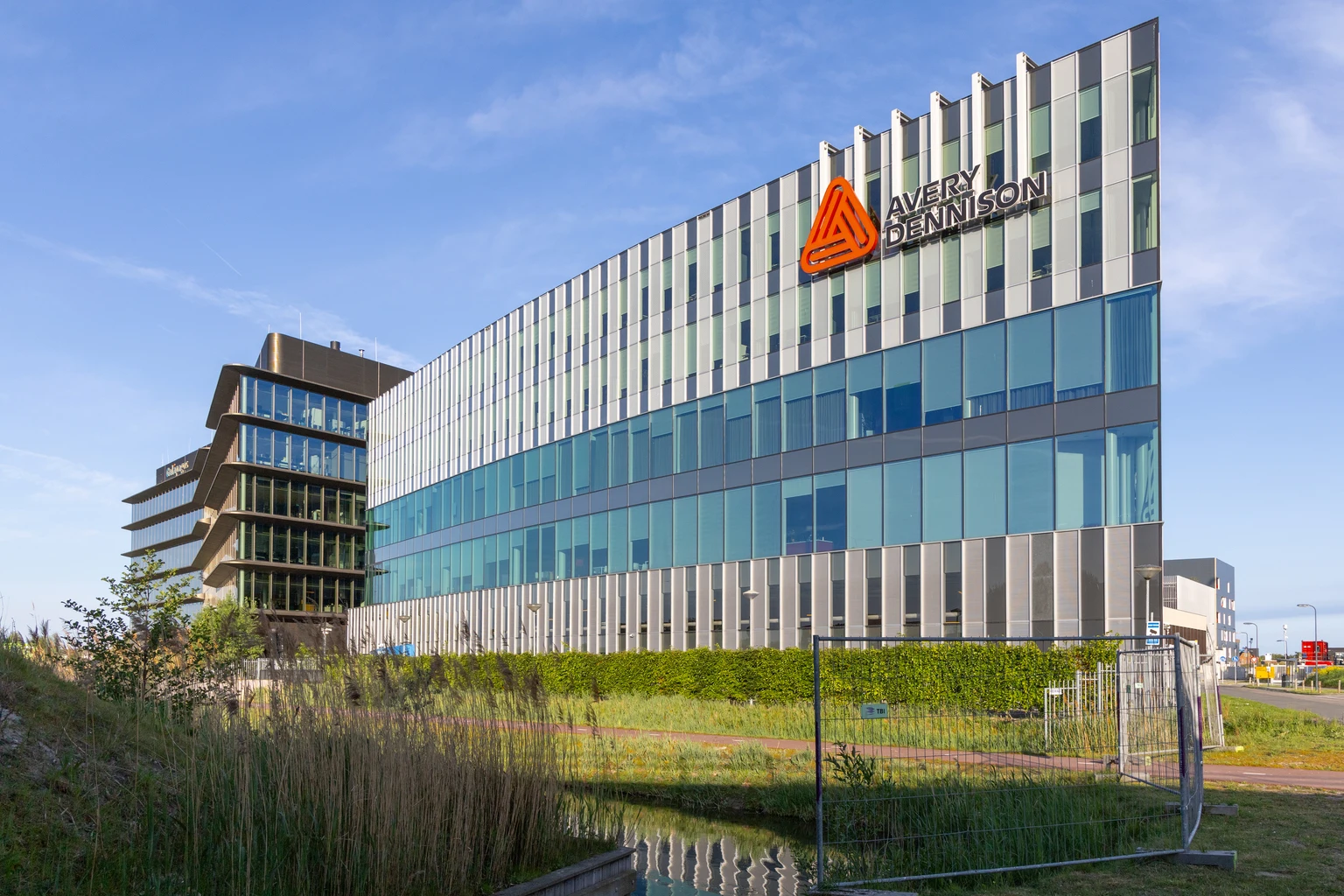
Avery Dennison: Hold For Now, Due To Uneven Segment Results (NYSE:AVY)

Published

on

Avery Dennison: Hold For Now, Due To Uneven Segment Results (NYSE:AVY)

This article was written by

I have a masters degree in Analytics from Northwestern University and a bachelors degree in Accounting. I have worked in the investment arena for over 10 years starting as an analyst and working my way up to a management role. Dividend investing is a personal hobby and I look forward to sharing my thoughts with the Seeking Alpha community.

Analyst’s Disclosure: I/we have no stock, option or similar derivative position in any of the companies mentioned, and no plans to initiate any such positions within the next 72 hours. I wrote this article myself, and it expresses my own opinions. I am not receiving compensation for it (other than from Seeking Alpha). I have no business relationship with any company whose stock is mentioned in this article.

Seeking Alpha’s Disclosure: Past performance is no guarantee of future results. No recommendation or advice is being given as to whether any investment is suitable for a particular investor. Any views or opinions expressed above may not reflect those of Seeking Alpha as a whole. Seeking Alpha is not a licensed securities dealer, broker or US investment adviser or investment bank. Our analysts are third party authors that include both professional investors and individual investors who may not be licensed or certified by any institute or regulatory body.

Advertisement
Continue Reading

Business

Exodus Movement, Inc. (EXOD) Q1 2026 Earnings Call Transcript

Published

on

OneWater Marine Inc. (ONEW) Q1 2026 Earnings Call Transcript

Q1: 2026-05-11 Earnings Summary

EPS of $0.01 misses by $0.03

 | Revenue of $22.70M (-36.94% Y/Y) beats by $20.00K

Exodus Movement, Inc. (EXOD) Q1 2026 Earnings Call May 12, 2026 8:30 AM EDT

Company Participants

Jack Barlow
J. Richardson – Chairperson & CEO
James Gernetzke – CFO & Secretary

Advertisement

Conference Call Participants

Andrew Harte – BTIG, LLC, Research Division
Gareth Gacetta – Cantor Fitzgerald & Co., Research Division
Mike Grondahl – Northland Capital Markets, Research Division

Advertisement

Presentation

Jack Barlow

Good morning, and welcome to Exodus First Quarter 2026 Earnings Call. I am Jack Barlow, Head of Investor Relations. And with me today is our Co-Founder and CEO, J.P. Richardson; and our CFO, James Gernetzke.

Last night, we issued a press release and filed our quarterly results, which are both available on our website. During today’s call, we will reference our earnings, and we may make forward-looking statements. The company cautions investors that any forward-looking statement involves risks and uncertainties and is not a guarantee of future performance. Actual results may vary materially and those expressed or implied in the forward-looking statements due to a variety of factors. These factors are referenced in the forward-looking statement disclosure in our earnings release and described in more detail in our recent Form 10-K filed with the SEC earlier this year and is also available on our Investor Relations portion of our website. We do not undertake any obligation to update forward-looking statements. And as always, please feel free to contact us at investors@exodus.com if you have any questions or submit your questions via our social media accounts on X or Reddit.

Advertisement

With that, I will turn the call over to JP.

J. Richardson
Chairperson & CEO

Thanks, Jack, and thank you, everybody, for joining us here today. Okay. Two weeks ago, on May 1, our team traveled from all over the world to Omaha, Nebraska for our first shareholder day, the Exodus Summit. We brought investors, partners and customers together for a full day of programming. We

Advertisement
Continue Reading

Business

Fractal bets big on enterprise AI despite TMT weakness dragging revenue growth

Published

on

Fractal bets big on enterprise AI despite TMT weakness dragging revenue growth
The rise of enterprise artificial intelligence is reshaping growth trajectories across industries, and analytics major Fractal believes the momentum is only beginning. Even as the company reported a softer-than-expected revenue performance due to challenges in its technology, media, and telecom (TMT) vertical, management remains optimistic about the broader demand environment, especially in banking, healthcare, and life sciences.

Speaking to ET Now, Fractal co-founder, Group Chief Executive & Executive Vice-Chairman, Srikanth Velamakanni said the company’s overall growth trajectory remains healthy despite client-specific disruptions affecting one segment of the business.

“Overall, our revenues have grown by 19% for the year and 17% for the quarter year-over-year. We have had specific issues in the TMT vertical where we had a minus 19% year,” Velamakanni said.

According to him, the weakness in the TMT business stemmed from two major customer-related developments rather than a broader slowdown in demand. One client significantly reduced engagement after entering into a joint venture, while another enterprise software client underwent a restructuring exercise that impacted business volumes.

Advertisement

“This is because of two client-specific issues. One of those clients did a joint venture because of which they stopped working with us or have dramatically reduced working with us. Another situation involved a client in an enterprise software company that is essentially reorganising itself, because of which that business has gone down,” he explained.


Excluding the TMT segment, Fractal’s growth numbers appear considerably stronger. Velamakanni noted that the company delivered 27% growth for the full year outside the troubled vertical, with quarterly growth running even higher.
The strongest momentum came from banking, financial services, healthcare, and life sciences — sectors where enterprises are aggressively deploying AI to improve efficiency, automate repetitive tasks, and accelerate innovation.“Our banking and finance vertical is growing at 40%, and our life sciences and healthcare segment is growing at 80%,” Velamakanni said. “Overall, growth is pretty robust and we expect enterprise AI to take off.”

The company believes industries with high levels of cognitive and process-intensive work are likely to emerge as the biggest beneficiaries of AI adoption. Healthcare firms are increasingly turning to automation to streamline operations, while life sciences companies are investing heavily in AI-led drug discovery and research productivity.

Velamakanni also pointed to rising demand from financial institutions, where AI applications are being used to improve productivity, enhance customer experiences, and drive growth initiatives.

“Banking and financial services is the area where there is massive potential for AI to help companies improve their productivity, improve their overall growth rate and we are seeing that as well,” he said.

Advertisement

Another metric that underscored the company’s client stickiness was its net revenue retention rate, which stood at 112%. The figure indicates that existing customers expanded spending with Fractal by 12% on average compared with the previous year.

Velamakanni described the metric as one of the company’s key growth indicators, reflecting deeper client relationships and continued adoption of Fractal’s AI offerings, including its Cogentiq platform.

“Existing clients are expanding their business with us by 12%, which means that there are some clients which are expanding much more than that, some clients much less than that, the net average is 112%,” he said.
He added that Fractal continues to benefit from strong customer satisfaction and long-term partnerships.

“Our client relationships are very important to us. We continue to grow with them and this is one of the most important vectors of Fractal’s overall growth because they like what we do. We have a very high net promoter score and therefore they expand their business with us every year,” Velamakanni said.

Advertisement

While the company refrained from issuing formal revenue or margin guidance for FY27, management expects the ongoing enterprise AI boom to remain a significant growth driver. At the same time, macroeconomic uncertainties could create intermittent headwinds across global markets.

“So, we do not provide specific revenue growth or margin guidance as a company. However, what we can say is that the enterprise AI space is taking off very nicely,” Velamakanni said. “Overall, we expect our growth to be very good and our margins to expand through the year.”

Continue Reading

Business

(VIDEO) Putin Hails Successful Sarmat Test as ‘Most Powerful Missile in the World’ Amid Nuclear Modernization

Published

on

Russian President Vladimir Putin called Pope Francis a 'wise' stateman who defended 'high values of humanism'

MOSCOW — Russian President Vladimir Putin on Tuesday praised the successful test launch of the RS-28 Sarmat intercontinental ballistic missile, describing it as “the most powerful missile in the world” and announcing plans to place it on combat duty by the end of 2026. The launch from the Plesetsk Cosmodrome in northern Russia marked a significant step in Moscow’s efforts to modernize its nuclear arsenal amid heightened global tensions and the expiration of key arms control treaties with the United States.

Strategic Missile Forces Commander Col. Gen. Sergei Karakayev reported the successful firing to Putin via video link. The silo-based Sarmat, known in the West as “Satan II,” was launched at 11:15 a.m. Moscow time and flew approximately 5,500 kilometers to a test range on the Kamchatka Peninsula in Russia’s Far East. All mission objectives were achieved, according to Russian officials.

“This is the most powerful missile system in the world,” Putin declared in televised remarks. He emphasized that the combined power of the missile’s individually targeted warheads exceeds that of any Western counterpart by more than four times. The Sarmat, weighing around 208 tons and standing 35 meters tall, can carry a payload of up to 10 tons and travel more than 35,000 kilometers — enough to reach targets anywhere on Earth via polar trajectories.

Advertisement

Technical Capabilities and Strategic Importance

The RS-28 Sarmat is designed to replace the aging Soviet-era R-36M2 Voevoda missiles. Russian officials claim it can penetrate all existing and prospective missile defense systems through advanced maneuverability, decoys and hypersonic capabilities. Its heavy payload allows it to carry multiple independently targetable reentry vehicles (MIRVs), hypersonic glide vehicles or other advanced warheads.

Putin linked the missile’s development to the U.S. withdrawal from the 1972 Anti-Ballistic Missile Treaty, framing it as a necessary response to perceived threats. The test comes months after the New START treaty — the last major bilateral nuclear arms control agreement between Russia and the United States — effectively lapsed without renewal.

Military analysts note the Sarmat’s ability to fly over the South Pole could complicate detection and interception by Northern Hemisphere-based defense systems. Its liquid-fueled design provides flexibility in targeting while presenting engineering challenges that have delayed full deployment for years.

Context of Heightened Tensions

The launch occurs against the backdrop of Russia’s ongoing military operation in Ukraine, now in its fourth year. Putin recently suggested the fighting could be nearing an end, yet Western officials express skepticism amid continued battlefield developments. The missile test serves as a reminder of Russia’s nuclear capabilities at a time when NATO continues to support Kyiv with advanced weaponry.

Advertisement

Russia has conducted previous Sarmat tests, some of which faced setbacks, including a reported explosion during a 2024 silo test. Despite these hurdles and the recent arrest of a key defense industry executive, Tuesday’s launch was presented as a validation of the program. The first regiment equipped with Sarmat missiles is slated for the Uzhur division in Krasnoyarsk region.

International Reactions and Concerns

Western governments and NATO expressed concern over the test, viewing it as nuclear saber-rattling. U.S. officials confirmed Russia provided advance notification consistent with transparency obligations, though formal verification mechanisms remain limited without New START. European leaders warned that such demonstrations raise escalation risks in an already volatile security environment.

Arms control experts highlight the dangers of an unchecked nuclear arms race. With both Russia and the United States modernizing their arsenals, the absence of binding limits could lead to increased deployments and heightened miscalculation risks. China, expanding its own nuclear forces, adds another layer of complexity to global strategic stability.

Russia’s Broader Nuclear Modernization

The Sarmat represents one element of Russia’s ongoing nuclear overhaul, which includes hypersonic weapons like the Avangard, the Burevestnik nuclear-powered cruise missile and the Oreshnik intermediate-range system recently used in Ukraine. Putin has repeatedly positioned these developments as essential for national security and deterrence.

Advertisement

State media showcased footage of the launch, featuring dramatic plumes of fire and smoke as the massive missile lifted off. Kremlin spokespeople stressed the test’s purely defensive nature while underscoring its deterrent value against potential adversaries.

Domestic and Geopolitical Messaging

For domestic audiences, the announcement reinforces narratives of Russian technological superiority and military strength. It coincides with preparations for Victory Day commemorations and efforts to project confidence amid economic sanctions and battlefield challenges.

Internationally, the timing amplifies Russia’s messaging that it will not be cowed by Western pressure. Putin’s comments tie the missile directly to perceived U.S. and NATO aggression, a recurring theme in his public addresses.

Analysts caution that while the Sarmat enhances Russia’s second-strike capability, its deployment will face logistical hurdles, including production scaling and maintenance of complex liquid-fueled systems. Past delays suggest full operational capability may extend beyond initial timelines.

Advertisement

Implications for Global Security

The successful test underscores the evolving nature of strategic deterrence in the 21st century. As traditional arms control frameworks erode, nations increasingly rely on technological advancements to maintain balance. The Sarmat’s claimed invulnerability to defenses could prompt countermeasures, including new space-based sensors or hypersonic interceptors.

For now, the focus remains on verification and monitoring. Independent experts will scrutinize available data to assess the test’s true performance against Moscow’s bold claims.

As Russia moves toward deploying its newest strategic weapon by year’s end, the world watches closely. The Sarmat launch adds another high-stakes chapter to an era of renewed great-power competition, where nuclear rhetoric and demonstrations continue to shape international relations. Whether it leads to renewed dialogue on arms control or further escalation remains one of the defining questions of our time.

Advertisement
Continue Reading

Business

Biggest CBD property deal in three years

Published

on

Biggest CBD property deal in three years

The property fund acquired the government-leased office building from Corval for $79.4 million.

Continue Reading

Business

Multibagger MTAR Technologies shares drop nearly 4% despite 223% surge in Q4 net profit

Published

on

Multibagger MTAR Technologies shares drop nearly 4% despite 223% surge in Q4 net profit
Shares of multibagger stock MTAR Technologies declined as much as 3.6% to their day’s low of Rs 6,030 on the NSE on Wednesday despite reporting a strong jump in fourth-quarter earnings, helped by robust growth in revenue and improved operating performance across its businesses.

The Hyderabad-based precision engineering company posted a consolidated net profit of Rs 44.28 crore for the March quarter, sharply higher than Rs 13.72 crore reported in the same period last year, reflecting a growth of about 223%.

Revenue from operations for the quarter rose nearly 67% to Rs 306 crore from Rs 183 crore a year earlier. The increase was mainly driven by higher product sales, which rose to Rs 303 crore from Rs 179 crore in the corresponding quarter last year.

Profit before tax stood at Rs 59.54 crore in Q4, up from Rs 18.62 crore in the year-ago period, marking an increase of nearly 220%.

Advertisement

For the full year FY26, the company reported consolidated net profit of Rs 94.03 crore, compared with Rs 52.89 crore in FY25, translating into growth of close to 78%.


Annual revenue from operations rose 31% to Rs 876.21 crore from Rs 675.99 crore in the previous financial year.
Profit before tax for FY26 increased to Rs 126.15 crore from Rs 71.57 crore in FY25, registering growth of more than 76%.Total expenses during the March quarter rose to Rs 262.92 crore from Rs 164.50 crore in the same quarter last year. Cost of materials consumed increased to Rs 165 crore from Rs 95.66 crore, reflecting higher production activity and execution.

Employee benefit expenses came in at Rs 43.05 crore compared with Rs 34.51 crore a year earlier, while finance costs rose to Rs 9.62 crore from Rs 5.93 crore. Despite the rise in costs, the company’s quarterly profit before tax margin improved to nearly 18.4% from 10.2% in the year-ago quarter, indicating better operational efficiency.

MTAR Technologies operates across sectors such as clean energy, civil nuclear power, aerospace and defence, and precision engineering manufacturing. The company has been strengthening its execution capabilities and expanding its order pipeline amid growing opportunities in strategic manufacturing and energy transition-related businesses.

(Disclaimer: Recommendations, suggestions, views and opinions given by the experts are their own. These do not represent the views of The Economic Times)

Advertisement
Continue Reading

Business

Smart glasses are ‘an invasion of privacy’

Published

on

Smart glasses are 'an invasion of privacy'

After workers in Kenya, tasked with watching videos made through Meta’s glasses to create AI training data for the company, said they were being required to watch graphic content like sex and bathroom usage, people who own the glasses filed two lawsuits. In one, people said they had no idea such videos had been made. In the other, they said they did not know their videos were being shared by the company for review.

Continue Reading

Trending

Copyright © 2025