Connect with us
DAPA Banner
DAPA Coin
DAPA
COIN PAYMENT ASSET
PRIVACY · BLOCKDAG · HOMOMORPHIC ENCRYPTION · RUST
ElGamal Encrypted MINE DAPA
🚫 GENESIS SOLD OUT
DAPAPAY COMING

Business

Plans for Australia’s first Trump Tower scrapped due to ‘toxic’ brand, developer says

Published

on

Trump Organization unveils plans for 'Australia's tallest skyscraper'

“After months of negotiations and empty promise, after empty promise, on a supposed $1.5 billion project, Altus Property Group was unable to meet the most basic financial obligation due upon the execution of the agreement,” Kimberly Benza, director of executive operations for the Trump Organization, said.

Continue Reading
Click to comment

You must be logged in to post a comment Login

Leave a Reply

Business

Ultragenyx Pharmaceutical Inc. (RARE) Presents at Bank of America Global Healthcare Conference 2026 Transcript

Published

on

OneWater Marine Inc. (ONEW) Q1 2026 Earnings Call Transcript

Q1: 2026-05-05 Earnings Summary

EPS of -$1.54 misses by $0.08

 | Revenue of $136.00M (-2.36% Y/Y) misses by $22.41M

Ultragenyx Pharmaceutical Inc. (RARE) Bank of America Global Healthcare Conference 2026 May 12, 2026 5:20 PM EDT

Company Participants

Howard Horn – Executive VP of Corporate Strategy & CFO
Joshua Higa – Director of Investor Relations & Corporate Communications

Advertisement

Presentation

Unknown Analyst

I’m one of the biotech analysts here at BofA. Our next presenting company is Ultragenyx. And here with me are Howard Horn, Chief Financial Officer; and Josh Higa, Head of IR. Thank you for joining us, guys.

Advertisement

Question-and-Answer Session

Unknown Analyst

Advertisement

So I think there’s a lot going on at the company. I think most people are familiar with it, but maybe we can start with a quick overview of the company, kind of your commercial products, and you have a very busy second half of the year. So maybe you can highlight some of the key catalysts coming up.

Howard Horn
Executive VP of Corporate Strategy & CFO

Sure. Glad to, and thank you for having us. So Ultragenyx is a next-generation rare disease company on a pathway to profitability in 2027. We have 4 commercialized products, and we are estimating between $730 million and $760 million in revenue this year. We are hopeful to have 2 approvals and launches of 2 gene therapy programs this year. And the other data event people are waiting for is our Phase III data in Angelman that we talked about coming out in the second half of the year. So yes, it’s a very busy year.

Advertisement

Unknown Analyst

All right. Great. Maybe we can start with a quick question on the commercial side. So you recently reported earnings. I think there was a slight miss in the quarter, but you reaffirmed your guidance for the year. Maybe you can talk to us a little bit about 1Q dynamics and kind of what gives you

Advertisement
Continue Reading

Business

Preparing for the impact of GLP-1s

Published

on

Preparing for the impact of GLP-1s

Webinar speakers touched on how the drugs are affecting product formulation.

Continue Reading

Business

Sebi may relax norms for select agri commodity F&O contracts

Published

on

Sebi may relax norms for select agri commodity F&O contracts
Mumbai: The Securities and Exchange Board of India (Sebi) on Tuesday proposed to allow select agricultural commodity derivatives contracts to begin trading as cash settled instruments before transitioning to mandatory physical settlement.

The regulator said exchanges may be allowed on a pilot basis, to launch or revive delivery-based agricultural contracts that initially operate as financially settled products and later shift to compulsory physical settlement once predefined thresholds such as average daily traded volume, open interest levels, or a two-year period are met. “Liquidity formation in several agricultural contracts remains constrained, especially at the launch or relaunch stage. Low volumes and limited open interest can reduce market confidence, creating a feedback loop that further suppresses participation,” Sebi said in a discussion paper.

“Although accredited warehouses and assaying mechanisms have expanded, their utilisation in certain commodities remains limited.”

Sebi suggested that on a pilot basis, a couple of commodities could be considered under the proposed framework such as maize, groundnut and chilli.

Advertisement

In a separate development, Sebi has also proposed doubling the client-level open position limits across all categories of agri commodities.


Continue Reading

Business

Dalal Street sees sharp selloff as rising oil and dollar rush hurt sentiment

Published

on

Dalal Street sees sharp selloff as rising oil and dollar rush hurt sentiment
Mumbai: The rupee slumped to a record low for the second day running and key equity indices slumped nearly 2% on Tuesday, their biggest single-day fall in six weeks, after uncertainty over the outcome of the US-Iran peace talks sent oil prices higher.

US President Donald Trump said the ceasefire with Iran was on “life support” after Tehran’s cold response to an American proposal to end the war, which, combined with Prime Minister Narendra Modi’s austerity call, has eroded market confidence.

The Indian currency came under renewed pressure, closing at a record of 95.62 per dollar after touching an intraday low of 95.75. Traders attributed the latest bout of weakness to elevated oil prices and mounting concerns over the fiscal deficit outlook. The PM’s appeal to the public also triggered a rush for dollars, traders said. The currency had previously settled at 95.31 to the dollar and remains highly sensitive to movement in crude oil prices.

The Nifty fell 436.3 points or 1.8% to close at 23,379.55. The Sensex declined 1,456.04 points or 1.9% to end at 74,559.24. On Monday, both indices had slipped 1.5-1.7%. The fall over the past two days has wiped off ₹16.8 lakh crore in BSE’s market capitalisation. “Expectations of an early end to the war have also been reassessed after recent events,” said Rakesh Vyas of Quest Investment.

Advertisement
Screenshot 2026-05-13 062225Agencies

Hopes Fading

“Higher crude, combined with record rupee weakness, elevated gold imports and capital outflows, has soured sentiment in the markets,” he said. Vyas, who is CIO and portfolio manager at Quest Investment Managers, said index heavyweight IT stocks also corrected on Tuesday due to renewed concerns over AI disruption and a weak demand outlook, sharpening the fall.
Crude prices inched up by over 3% on Tuesday to cross $107, while the Nifty IT index dropped 3.7%.
In the forex market, the Reserve Bank of India likely intervened at around the 95.50 and 95.75 per dollar levels through state-run banks to curb excessive rupee depreciation, traders said. Market participants added that sustained support for the currency will ultimately depend on attracting fresh dollar inflows into the country.
“Following the PM’s comments, gold traders have grown increasingly anxious about the possibility of policy changes, maybe a potential increase in import duty rates,” said Anil Bhansali, head of treasury at Finrex Treasury Advisors. “That uncertainty has triggered heavy dollar buying from the bullion traders over the past two sessions.” He expects the rupee to trade between 95.25 and 96 per dollar on Wednesday. “Everyone is already aware of the situation around Hormuz and the blockade,” said a trader at a private sector bank. “But when the PM comes out and asks the public to reduce consumption, it signals that there may be something more to worry about. Market participants are now bracing for possible policy changes, and that is triggering panic dollar buying.”

The India Volatility Index (VIX), known as the fear gauge of the market, jumped 3.9% to 19.28 levels on Tuesday, indicating rising caution among traders.

Broader market indices underperformed the benchmark, as the Nifty Midcap 150 dropped 2.5% and Nifty Small-cap 250 fell 3%. Out of the total 4,410 stocks traded on the BSE, 782 advanced and 3,500 declined on Tuesday.

The trend remains “sell-on-rise,” said Bhavya Shah, technical research analyst at Stoxbox.

“Traders should avoid catching falling knives, utilising temporary retracements to execute hedged shorts until a definitive base forms,” he said. However, the 23,140-23,210 zone remains a strong support area for the Nifty, offering a tactical opportunity to build small long positions with defined risk, said Shah.

Advertisement
Continue Reading

Business

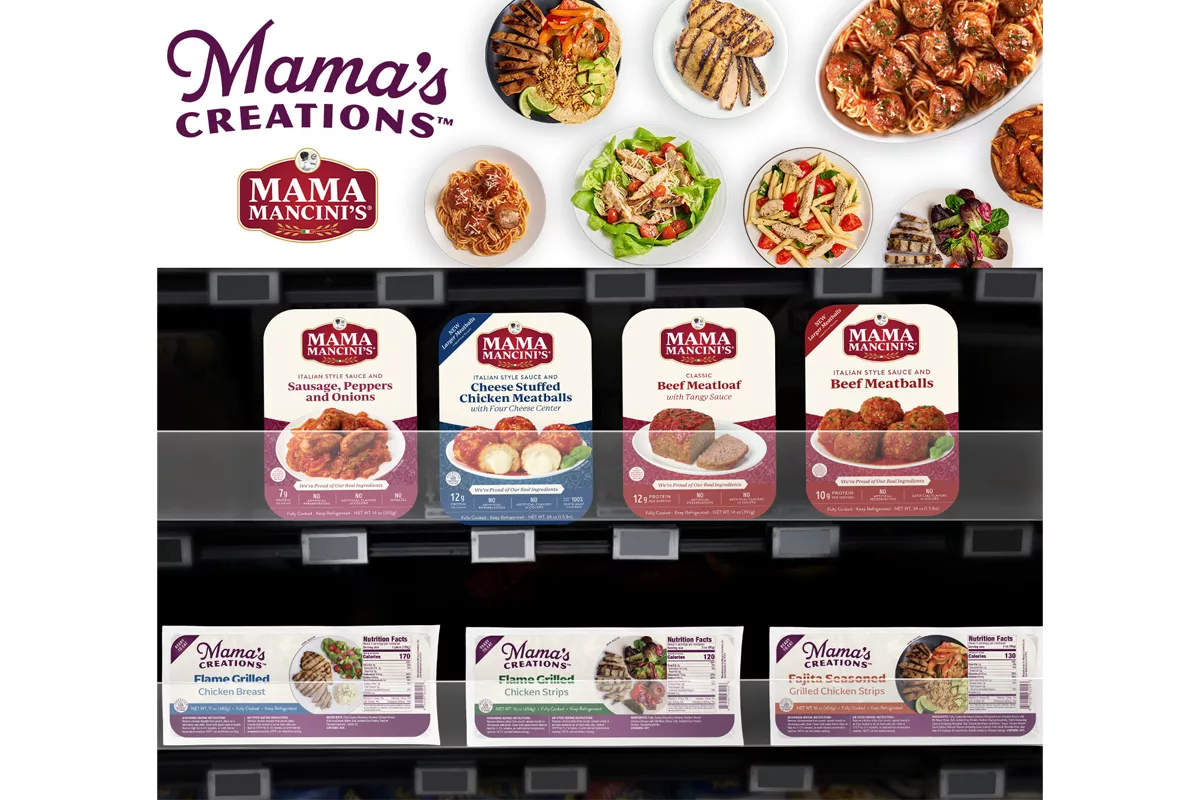
Mama’s Creations adds to prepared meal offerings

Published

on

Mama’s Creations adds to prepared meal offerings

Three new prepared meals are rolling out at Walmart stores. 

Continue Reading

Business

Alphabet Stock Dips 0.41% to $385 as Investors Digest Heavy AI Spending and Cloud Momentum

Published

on

Tech giant Google reported robust third-quarter results, but worries persist about whether it is losing ground in the AI race

NEW YORK — Alphabet Inc. Class C shares (NASDAQ: GOOG) slipped 0.41% to $385.17 in midday trading Tuesday, giving back a portion of recent gains as Wall Street weighed the company’s aggressive capital expenditure plans against its accelerating artificial intelligence and cloud growth. The modest decline came amid broader market caution, even as analysts continue to view the Google parent as a core long-term AI winner.

Volume remained solid as investors processed Alphabet’s strong first-quarter results from mid-April alongside updated full-year guidance that includes significantly higher spending on AI infrastructure. The stock has traded in a wide range this year, recently testing all-time highs near $400 before pulling back on profit-taking and concerns over elevated capital costs.

Alphabet reported blockbuster Q1 2026 earnings on April 29, with revenue climbing 22% to $109.9 billion, beating expectations. Google Cloud revenue surged 63% to a record $20 billion, driven by explosive demand for AI infrastructure and Gemini models. The company raised its 2026 capital expenditure outlook to $180-190 billion, reflecting massive investments in data centers, chips and AI capabilities.

Cloud and AI Leadership Fuel Optimism

Google Cloud continues to gain meaningful market share, with its backlog nearly doubling quarter-over-quarter to more than $460 billion. A major highlight has been Alphabet’s deepening partnership with Anthropic, including reports of a potential $200 billion multi-year commitment to Google Cloud that could represent over 40% of future contracted cloud revenue.

Advertisement

CEO Sundar Pichai highlighted strong momentum across AI products during the earnings call, noting rapid adoption of Gemini models and new consumer features. The company also launched new hardware like the Fitbit Air with Gemini integration, expanding its presence in health and wearables.

Despite the heavy spending, Alphabet delivered robust profitability. Operating income rose 30% with margins expanding to 36.1%. Net income jumped 81% to $62.6 billion, boosted partly by gains on equity investments, while adjusted EPS hit $5.11. The company also increased its quarterly dividend by 5% to $0.22 per share.

Valuation and Analyst Sentiment

Alphabet trades at a forward price-to-earnings multiple around 30-31, which some view as reasonable given its growth trajectory and AI leadership. Analysts maintain largely bullish outlooks, with recent price target increases to $435-$460. Consensus remains a strong Buy, with projections calling for continued double-digit revenue growth fueled by cloud and advertising resilience.

However, investors remain watchful of execution risks. Elevated capex could pressure free cash flow in the near term, and competition from Microsoft Azure, Amazon Web Services and emerging AI players remains intense. Regulatory scrutiny in Europe and antitrust concerns in the U.S. also loom as ongoing overhangs.

Advertisement

Technical Picture and Market Context

GOOG has shown resilience, outperforming broader indices in recent months thanks to AI tailwinds. Support levels sit near $375-$380, with resistance around $395-$400. Year-to-date performance remains positive despite today’s mild pullback, as the stock benefits from its position at the center of the AI infrastructure boom.

Broader market dynamics played a role in Tuesday’s trading. Lingering geopolitical tensions, oil price movements and mixed economic signals have created a cautious environment for big tech names. Rotation out of some high-valuation growth stocks into other sectors also contributed to selective pressure on Alphabet.

Strategic Bets Paying Off

Alphabet’s heavy investment in AI appears to be yielding results. Google Search continues to evolve with AI Overviews, YouTube benefits from enhanced recommendations, and the company’s Waymo autonomous vehicles expand in select markets despite occasional setbacks like recent recalls. The firm’s focus on “agentic AI” and multimodal models positions it well for future monetization opportunities.

Analysts highlight Alphabet’s diversified revenue streams — advertising still dominates but cloud and subscriptions provide meaningful growth engines. The company’s $73 billion-plus free cash flow generation offers flexibility for further investments, dividends, buybacks and potential acquisitions.

Advertisement

Outlook Remains Bright

Looking ahead, investors will watch Alphabet’s progress on AI monetization, cloud margin expansion and capex efficiency. The second half of 2026 could bring more clarity on return on invested capital from massive infrastructure builds. Any acceleration in Gemini adoption or new enterprise wins could provide fresh catalysts.

For long-term shareholders, today’s dip may represent another buying opportunity in a company many consider foundational to the AI era. While short-term volatility tied to spending concerns or market rotations is likely, Alphabet’s competitive moats in search, cloud and data give it strong staying power.

As midday trading continued Tuesday, GOOG held near session lows with no immediate reversal signals. The coming weeks will feature more tech earnings, economic data and AI conference updates that could influence sentiment. For now, Alphabet’s modest decline reflects normal market digestion rather than any fundamental shift in its powerful growth story.

The tech giant remains one of the best-positioned companies to capitalize on the ongoing artificial intelligence transformation, even as it navigates the costs of building that future.

Advertisement
Continue Reading

Business

Global Market Today: Asian stocks track Wall Street lower on US CPI

Published

on

Global Market Today: Asian stocks track Wall Street lower on US CPI
Asian stocks dropped following losses on Wall Street as US inflation quickened, showing the impact of higher oil prices since the war in Iran started.

The MSCI Asia Pacific Index fell 0.4% with South Korean shares declining 2.4%. US equity-index futures also slipped after the S&P 500 Index and the Nasdaq 100 Index retreated on Tuesday, with a gauge of chipmakers slumping 3% following a record-breaking rally.

A faster-than-estimated rise in the core US consumer price index spurred an increase in Treasury yields during the US session, with traders boosting bets on a Federal Reserve interest-rate hike in 2027. Brent crude edged lower to hold at over $107 barrel on Wednesday, following three consecutive days of gains.

Elevated oil prices and mounting inflation risks are threatening to derail the blistering rebound in equities from their war-driven lows, a rally fueled by gains in semiconductor stocks and robust earnings from megacap tech companies. The surge in chipmakers has already prompted calls for a pause, as the conflict in Iran clouds the outlook for growth while adding to price pressures.

Advertisement

“Strong US CPI raises the possibility of a more hawkish stance from the Fed, with rising US yields seen as a headwind for equities,” said Kazunori Tatebe, chief strategist at Daiwa Asset Management. “It’s concerning that this could intensify pressure on growth stocks, such as AI and semiconductors, which have been leading the market.”


US inflation accelerated in April on rising gasoline and grocery costs, exceeding wage growth in a double-whammy for already strained consumers. The CPI rose 3.8% from a year earlier, the most since 2023. The core gauge, which excludes food and energy, increased 2.8%. A gauge of the dollar advanced for a second session on Tuesday.
Treasuries fell as rising oil prices threatened to keep inflation at levels that could prompt the Fed to raise rates next year. The US 30-year yield reached 5.02%, within two basis points of this year’s high, while two-year yields traded at about 4% during the US session.“Inflation is roaring back — largely driven by stubbornly high oil prices — which will dominate the inflation story for the rest of the year as the conflict continues to unfold in the Middle East,” said Skyler Weinand at Regan Capital.

Continue Reading

Business

Oil prices slip on teetering Iran ceasefire as Trump heads to China

Published

on

Oil prices slip on teetering Iran ceasefire as Trump heads to China
TOKYO, – Oil prices fell on Wednesday after rising in three consecutive sessions, as investors awaited developments around the fragile ceasefire in the Iran war and U.S. President Donald Trump headed to China for a high stakes summit with President Xi Jinping.

Brent crude futures lost 82 cents, or 0.76%, to trade at $106.95 a barrel at 0051 GMT, and U.S. West Texas Intermediate futures fell 66 cents, or 0.65%, to $101.52.

Both benchmarks have largely hovered around ‌or above the $100 ⁠per barrel ⁠mark since the U.S. and Israel began attacks on Iran at the end of February and Tehran effectively shut the Strait of Hormuz.

Oil prices rose by over 3% on Tuesday, extending earlier gains as hopes for the lasting U.S.-Iran ceasefire faded, dimming prospects of re-opening the strait, through which about a fifth of global oil and liquefied natural gas normally flows.

Advertisement

Trump said on Tuesday he does not think he will need China’s help to end the war with Iran, even as hopes for a lasting ⁠peace deal dwindled ‌and Tehran tightened its grip over the strait.


China is the biggest buyer of Iranian oil despite pressure from the Trump administration. Trump meets his Chinese counterpart Xi in Beijing ⁠on Thursday and Friday.
“The length of the disruption and the scale of the supply loss – already more than 1 billion barrels – means oil prices are likely to remain above $80 per barrel for the rest of the year,” Eurasia Group said in a client note. The war with Iran has started to take its toll on the U.S. economy, the world’s biggest, as higher oil prices lead to more expensive fuels, and economists expect to see second-round effects in the months ahead.

In April, U.S. consumer prices rose sharply for a second straight month, ‌resulting in the largest annual increase in inflation in nearly three years, bolstering expectations that the Federal Reserve would keep interest rates flat for a while.

“The marked increase in inflation across advanced economies has yet to ⁠cause real spending to contract, but the widespread decline in consumer sentiment and hiring intentions points to worse to come,” the Capital Economics said in a client note.

Elevated interest rates make borrowings more expensive, potentially denting demand for oil.

Advertisement

As the Iran war continues, U.S. crude oil inventories fell for a fourth straight week last week and distillate inventories also declined, according to market sources citing American Petroleum Institute data.

Official inventory data from the U.S. Energy Information Administration, the statistical arm of the U.S. Department of Energy, are due at 10:30 a.m. ET (1430 GMT) on Wednesday, with a Reuters poll also predicting a decline in stockpiles.

Continue Reading

Business

Howmet Aerospace EVP, CAO Neil Marchuk sells $11.3m in stock

Published

on


Howmet Aerospace EVP, CAO Neil Marchuk sells $11.3m in stock

Continue Reading

Business

Key Numbers Every Entrepreneur Should Watch

Published

on

Rents across the UK have fallen slightly for the first time in more than five years—although tenants in London are still seeing new highs, according to fresh data from Rightmove.

Most of the time, it’s a host’s gut instinct that gets them their first booking. After this, the market becomes so crowded and competitive that it’s no longer sustainable to rely on intuition alone. Doing so would be costly.

Here is what the UK short-term rental market actually looks like right now, so that those who want to build a business in it will know what they need to do and where they need to be to succeed.

272,000 Listings and Counting: What Supply Growth Means for Your Occupancy

In January 2021, active listings in England numbered about 165,000, rising to over 272,000 by January 2024. This trajectory hasn’t reversed ever since. By May 2025, supply had climbed a further 7% each year, while nights reserved fell by 5%, which pushed average UK occupancy down to 43%.

More listings competing for a slightly shrinking pool of bookings means flat-rate pricing no longer holds up; under those conditions, a host charging last season’s rates is typically the one filling unsold nights at a discount rather than adjusting before the gap appears. 

The market’s headline numbers remain attractive: UK vacation rental revenue was projected to hit US$5.15 billion in 2025, growing at a 5.37% CAGR through to 2030. But revenue projections measure the market, not your property. Occupancy is where the difference shows up. Statista

Advertisement

October at 21%: The Seasonal Swing That Kills Revenue Projections

Occupancy in England peaked at 60% in July 2024 and fell to 21% by October. For a host carrying a fixed monthly cost on a property, that 39-point swing is not a market trend worth noting. It’s four months of the year when the model has to work differently or not at all. New hosts projecting annual revenue based on August figures tend to discover this in Q4, not earlier. 

Regional variation compounds this further: Wales led UK demand growth in early 2025, with a 13% increase in nights reserved, while Scotland remained flat and London saw a slight decline in occupancy. A host in Bristol was tracking the wrong number entirely; Bristol climbed to the fourth most-booked UK city in 2025, while Birmingham dropped three places, neither of which moved the national average enough to register. 

ADR Has Climbed Sharply, But RevPAR Shows Whether It’s Working

England’s average daily rate grew from £103 in January 2021 to £160 by January 2024. By August 2025, ADR had reached £330, a 15% year-on-year increase. That’s a strong headline, but ADR only measures what you charge when a booking is made, not how often the property is booked. RevPAR, which multiplies occupancy by ADR, is what reflects actual revenue performance. 

England’s RevPAR climbed from £32 in January 2021 to a peak of £113 in July 2023 before softening as new supply absorbed demand. A rising ADR against falling occupancy isn’t a win; it’s a pricing signal the market is giving you. Tracking vacation rental statistics at the property level, rather than relying on market summaries, makes that signal visible before it shows up in the monthly total. Smoobu’s statistics dashboard is built for exactly that granularity, giving hosts real-time occupancy, ADR, and RevPAR data rather than a quarterly post-mortem. 

Advertisement

Guests Are Booking Later. Pricing Set Three Weeks Out Is Already Behind.

Direct booking share fell to 45% in Q3 2025 as major OTA platforms gained ground, while guests are booking later, staying for shorter periods, and increasingly routing through third-party channels. A shorter booking window means less time to adjust rates before a night goes unsold. UK RevPAR was up 8% year on year in October 2025, and 5% in November, supported by ADR growth of between 4% and 7%, but those gains were concentrated in markets where operators adjusted pricing in response to forward-looking demand signals, not fixed rates set at the start of the season.

The hosts watching pacing data weekly are the ones capturing that upside. The ones who aren’t are finding out in December.

FAQs

What occupancy rate should a UK short-term rental host aim for? Based on 2024 to 2025 Lighthouse data, UK-wide average occupancy ranges from around 43% in slower months to 60% at peak summer. Anything consistently above 55% in off-peak periods generally indicates strong pricing and demand positioning for that market.

Does ADR or RevPAR better reflect a property’s performance? RevPAR is the more useful metric because it accounts for both rate and occupancy. A high ADR with low occupancy still means empty nights; RevPAR shows whether those two variables are working together.

Advertisement

Which UK regions have the strongest short-term rental demand right now? As of 2025, Wales leads for demand growth with a 13% increase in nights reserved. The East Midlands and North East show the strongest supply growth. London and Scotland have seen flat or declining occupancy relative to prior years.

Why are booking windows getting shorter, and does it matter? Guests are increasingly booking closer to their travel dates and routing through OTA platforms rather than direct channels. For hosts, this reduces the time available to adjust pricing before a night is lost, making real-time rate monitoring more necessary than it was two or three years ago.

Advertisement
Continue Reading

Trending

Copyright © 2025