

Business
Why Absence Management Software Is Essential for Remote Teams


Remote and hybrid working have transformed how businesses operate, offering flexibility and improving work-life balance for employees.
However, managing attendance, sick leave, holidays, and unexpected absences has become significantly more complex for HR teams and managers.
Traditional spreadsheets, manual reporting, and disconnected communication channels often create confusion, delays, and compliance risks. For modern businesses, having a structured system is no longer optional. This is why solutions like absence management software have become essential tools for organisations that want to maintain visibility, consistency, and efficiency across distributed teams.
The Hidden Cost of Absence in a Hybrid Work Environment
When teams work across multiple locations, even small absences can create operational challenges. A missed shift, an unreported sick day, or unclear holiday scheduling can quickly affect productivity and planning.
The hidden costs often include:
- reduced team coordination
- delayed project delivery
- payroll inconsistencies
- compliance risks with employment policies
- increased administrative workload for HR teams
Without proper systems in place, managers often spend unnecessary time chasing information instead of focusing on performance and workforce planning.
In hybrid environments, visibility becomes one of the biggest challenges.
Why Traditional Tracking Methods Fall Short for Distributed Teams
Many businesses still rely on spreadsheets, shared calendars, or email chains to track staff absence. While these methods may work for smaller teams, they quickly become inefficient as organisations grow.
Manual systems often create problems such as:
- duplicated or outdated information
- lack of real-time visibility
- approval bottlenecks
- difficulty tracking recurring absence patterns
- inconsistent reporting across departments
This becomes even more problematic when employees work remotely and managers are no longer physically present to monitor attendance.
A lack of centralised data also makes long-term planning more difficult, especially when analysing absence trends or preparing compliance reports.
Why Kelio Supports Better Workforce Management
For UK businesses looking to improve operational control, Kelio offers a practical and reliable way to centralise absence tracking and automate essential HR processes.
By integrating attendance management with absence monitoring, Kelio helps organisations reduce manual work and improve decision-making across teams.
A structured platform allows businesses to:
- track holidays, sickness, and unplanned leave in one place
- automate approval workflows
- improve visibility for managers and HR departments
- ensure policy consistency across teams
- generate accurate reporting for compliance purposes
This creates a smoother experience for both employees and employers, especially in remote and hybrid environments where communication gaps can easily appear.
What to Look for in an Absence Management Solution
Not all systems offer the same level of support. Choosing the right software requires understanding the specific needs of the business and how absence management connects with wider HR operations.
Key features to prioritise include:
- real-time absence tracking
- self-service employee access
- automated notifications and approvals
- reporting and analytics tools
- compliance support for UK employment requirements
- integration with payroll and workforce planning systems
The goal is not simply to record absence, but to improve how absence is managed across the organisation.
A good system should save time, reduce errors, and support better workforce decisions.
Remote Work Requires Smarter Processes
As remote and hybrid working continue to shape the future of employment, businesses need systems that reflect this new reality. Managing absence manually creates unnecessary risk and inefficiency, especially when teams are no longer operating from a single physical location.
Technology plays a key role in maintaining structure and consistency.
With the right tools in place, organisations can move from reactive absence handling to proactive workforce management, improving both employee experience and business performance.
For modern teams, absence management is no longer just an administrative HR task focused on recording holidays or sick leave—it has become a strategic part of operational success, helping businesses improve workforce planning, maintain productivity, ensure compliance, and create a more transparent and efficient working environment for both managers and employees.


CoreWeave: Q1 Confirmed The Math Doesn't Work


What if your security system didn’t just record problems, but prevented them?
A delivery arrives and blocks an emergency exit. Instead of going unnoticed until it becomes a compliance issue, an AI-enabled camera flags the problem immediately, alerting staff before it escalates. When an unfamiliar vehicle pulls into the parking lot, AI cameras trained to recognize license plates, make, model and color of authorized vehicles can tag anything that doesn’t belong.
These aren’t potential scenarios; they’re real examples of organizations using surveillance technology today to do more than just monitor and protect.
For many organizations still viewing video surveillance as a tactical cost center, this shift represents a significant change in how the technology can be leveraged. As artificial intelligence, connectivity and advanced data analytics reshape how businesses operate, surveillance is evolving from a passive recordkeeping function into something far more dynamic. It’s becoming a source of real-time business intelligence that can support safety, efficiency, resilience and smarter business decision-making.
While many organizations are still exploring practical applications for AI, the surveillance industry has been quicker to adopt it at scale, with AI-based analytics increasingly becoming a standard feature in modern video systems, said Lloyd Taylor, SVP of North America Sales at Hanwha Vision.
“In the past, security was largely reactive,” Taylor said. “Teams would review footage after an incident to understand what happened.”
Today, video is a proactive tool that helps businesses spot issues early, respond quickly and work more efficiently in real time. “What’s changed is the ability to continuously analyze what’s happening,” Taylor said. “That allows organizations to move from looking back at incidents to responding in the moment or even acting preemptively.”

Even with these advances, many businesses still see security as just a cost to manage. That mindset can lead companies to evaluate security too narrowly, focusing on hardware while overlooking the software, analytics and cyber layers that turn those systems into a more integrated, intelligence-driven resource.
AI-enabled video is already enhancing day-to-day operations. It can detect when checkout lines are building and alert staff to respond. In warehouses, it can identify unsafe conditions, such as loitering in restricted areas, before an incident occurs.
In more complex environments, those same capabilities are being applied at a larger scale. Urban planners are using predictive analytics to design safer, more efficient transportation systems, while hospitals can monitor patients continuously, giving staff and families greater peace of mind when medical teams aren’t physically present.
Across settings, the underlying benefit is the same: better visibility. Organizations can understand how space is actually being used, adjust staffing levels, reduce energy costs by identifying when to turn off air conditioning or heating and even make higher-level decisions about where to expand or scale back operations.
This data becomes even more useful when it connects with other parts of the business. Companies are bringing video analytics into their business intelligence tools, pairing it with data like sales, attendance and weather to build a clearer, real-time picture of their total operations.
“The technology is flexible enough to be applied across different industries and use cases,” Taylor said. “The key is aligning it to specific operational priorities, where it can deliver the most measurable business impact.”
For large organizations, these capabilities become more valuable as they grow. But growth also introduces more complexity. Some companies still operate across fragmented systems on legacy platforms, which leads to uneven coverage from one site to another.
One of the biggest challenges for multi-site organizations is keeping everything up to date and on a single platform, especially during acquisitions and organizational changes, Taylor said. That’s why centralization, cloud-based management and systems that work together matter. Instead of handling each site separately, companies are moving to systems that give a single, unified view across all locations.

As surveillance systems become more connected, they are also becoming part of an organization’s larger IT setup. Today’s cameras are network devices, often using the same systems as printers and other wireless tools. This means cybersecurity needs to be a consideration from the outset, not just something you try to patch later.
“The cybersecurity of your platform is only as strong as its weakest link,” Taylor said. “If your video surveillance or any of your security devices is that weak link,” they can give bad actors access to your greater network.
The solution is to pick systems designed with security in mind from the start and keep them updated with the latest firmware.
“Your surveillance system is not just another office device,” Taylor said. “It is there to protect your assets, create an ROI for your business and protect you from potential breaches.”
Ultimately, smarter video is part of a bigger move toward resilience. The most effective systems are advanced but also resilient by design, able to support uptime, adapt to changing needs and serve as a dependable layer of visibility across the organization. For business leaders, this means moving from reacting to proactive prevention, so everything keeps running smoothly.
“Before we were reporting on incidents that had occurred,” Taylor said. “Now we’re actually putting together systems that really solve, and even prevent, some of these instances.”

This calls for a balance between new technology and reliability. The best systems are both advanced and dependable. They’re built to give AI-enabled insights and work well in real-world situations.
Across industries from retail and logistics to transportation and infrastructure, businesses are moving toward more connected, data-driven ways of working. Video is at the heart of this change, turning daily activity into real-time insights.
The question now is if your surveillance system is delivering meaningful value or just costing you money. Is it helping your teams respond faster, lower risks and make better decisions? If not, it might be time for an upgrade.
In the age of AI, video isn’t just for seeing what happened. It’s about knowing what’s happening now and taking action right away.
Business
Tata Motors PV Q4 Results: Profit falls 32% YoY to Rs 5,783 cr; co declares Rs 3/share dividend

Revenue from operations increased 7% YoY to Rs 1.05 lakh crore in the March quarter.
On a standalone basis, revenues for Q4 came in at Rs 18,598 crore, showing a growth of 43% YoY, while profit after tax more than halved to Rs 455 crore. EBITDA Margin for the quarter stood 9.4%.
In Q4, PV and EV volumes were 2,01,800 units, driven by favourable volumes, mix and operating leverage, despite a challenging pricing and cost environment.
In FY26, the business achieved revenues of Rs 58,500 crore, while EBITDA and EBIT margins remained steady at 6.9% (flat YoY) and 1.4% as adverse pricing and commodities offset the favourable impact of volumes and mix.

Looking ahead, the company said domestic demand continues to be sustained, led by growth in SUVs, CNG and EV. However, geopolitical developments remain a key monitorable to mitigate potential supply-side and commodity price risks. We will ramp up production to meet demand.
“We expect to build on the strong momentum of H2 and continue to deliver profitable and industry-beating growth in FY27, supported by a robust demand pipeline, planned pipeline of new products, and established multi-powertrain strategy,” Tata Motors said in a filing.During the year, the company achieved its highest-ever annual sales of over 6.4 lakh units, delivering industry-beating growth of 15% YoY and emerging as the second-ranked player in H2 FY26. In EVs, the company clocked robust 43% YoY growth and our highest-ever annual EV volumes of over 92,000.
JLR business
JLR reported Q4 revenues at £6.9 billion, down 11.1%, while EBITDA margin fell 130 bps to 14%. FY26 revenue stood at £22.9 billion.
JLR said volumes and profitability were impacted YoY by the continued planned wind-down of outgoing Jaguar models ahead of the new Jaguar launch, and the competitive environment the automotive industry is facing in China.
Profit before tax and exceptional items was £458 million in Q4 and £14 million for the full year, down from a profit of £875 million and £2.5 million respectively a year ago.
Free cash flow for the quarter was £829 million and £(2.2) billion for the full year.
“JLR faced a challenging year with revenue and profit impacted by multiple headwinds, including a pause in production following the cyber incident. We recovered well in the fourth quarter as production returned to normal levels, demonstrating the commitment of our people, suppliers and retail partners,” said PB Balaji, CEO, JLR.
(Disclaimer: Recommendations, suggestions, views and opinions given by the experts are their own. These do not represent the views of The Economic Times)

The Thai baht is expected to weaken to 33.50 per US dollar this week. Geopolitical tensions in the Middle East, rising US bond yields, and declining gold prices are driving this trend, with Asian economies also impacted by oil import reliance.
Key Points
- The Thai baht is projected to weaken to 33.50 against the US dollar this week due to Middle East conflict and dollar’s safe-haven appeal.
- Rising US bond yields and regional currency depreciation, influenced by oil import reliance, also contribute to the baht’s decline.
- Lower gold prices and the Bank of Thailand’s reserve management add further pressure, with an expected trading range of 32.50-33.50 for the year.
Baht Depreciation Amidst Geopolitical Tensions
The Thai baht is projected to depreciate further, potentially reaching 33.50 per US dollar this week. This forecast follows a recent testing of a nine-month low at 33.04 on Monday. The primary driver for this expected weakening is the heightened uncertainty stemming from the conflict in the Middle East, which is bolstering the US dollar as a safe-haven asset. Investors are increasingly revising their expectations, now anticipating that the US Federal Reserve will refrain from further policy rate cuts this year, consequently leading to rising US bond yields. Furthermore, the baht’s movement is mirroring that of other regional currencies, which are also experiencing depreciation against the dollar.
Contributing Factors to Baht Weakness
Beyond geopolitical risks, the baht is facing additional downward pressure from a significant decline in global gold prices, which have fallen approximately 22% from their February peak. This trend is partly attributed to investors reallocating their capital from gold to oil. The Bank of Thailand is expected to intervene to manage baht volatility and depreciation, aiming to mitigate the impact on business operating costs. However, the concurrent rise in global oil prices is anticipated to escalate the cost of imported raw materials. International reserves held by the Bank of Thailand also saw a weekly decline, from $288 billion to $284 billion as of March 13th.
Outlook and Market Adjustments
The baht has exhibited a gradual depreciation trend since Friday, aligning with escalating tensions and concerns about a prolonged Middle East conflict. This situation has prompted market participants to adjust their outlooks for monetary policy decisions by major central banks, including the Federal Reserve, the Bank of England, and the European Central Bank. The continued fall in gold prices, from around $4,700 per ounce to the support level of $4,400, has further exacerbated the pressure on the baht relative to the US dollar. The overall expectation is for the baht to trade within a range of 32.50–33.50 per US dollar for the remainder of the year.
Other People are Reading

BlackRock Global Head of Retirement Solutions Nick Nefouse announces a new plan to expand retirement investment options on ‘Varney & Co.’
Americans of all ages are facing affordability concerns, with retirees on fixed incomes in particular feeling the strain – though where they choose to live in their golden years has a big impact on their ability to live comfortably.
A study by MoneyLion analyzed the monthly savings needed to retire comfortably across states after accounting for the national average expenses for retired households, as well as whether the retiree would have Social Security income and when the retiree began saving for retirement.
The report found that the state with the highest annual cost of living for retirees was Hawaii, with a monthly cost of $90,752 for necessities and $181,505 for a comfortable cost of living based on the analysis. After accounting for Social Security income, MoneyLion estimated the annual cost of living as a retiree in Hawaii was $156,610.

The report found that the state with the highest annual cost of living for retirees was Hawaii. (iStock)
To save enough money to afford that cost of living in retirement, a person would have to save $5,800 a month over 45 years at age 20 before retiring at age 65, or $7,458 a month if they saved for 35 years starting at age 30, with Social Security income. Those figures rise to $6,722 and $8,643 a month, respectively, without Social Security.
RETIREMENT ‘MAGIC NUMBER’ JUMPS AS AMERICANS GROW ANXIOUS ABOUT THEIR FINANCIAL FUTURES
California had the second-highest annual cost of living, which MoneyLion estimated at $73,387 for necessities or $121,879 for the comfortable cost of living metric that accounts for Social Security income. The monthly savings would be $4,514 when starting at age 20 or $5,804 starting at age 30 with Social Security, while those would rise to $5,436 and $6,989 without Social Security.

California had the second-highest annual cost of living, the data showed. (iStock)
“Two of the biggest expenses a retiree needs to look into are the state income taxes and real estate property taxes that will factor into your budget. It’s also why so many people are moving out of places like California and New York, because, beyond the cost of living, it’s very expensive from a taxation perspective,” Ted Jenkin, managing partner at Exit Wealth Advisors, told FOX Business.
TRUMP ADMIN PROPOSES OPENING 401(K)S TO PRIVATE EQUITY, CRYPTO
The lowest cost state analyzed in the report was West Virginia, which had an annual necessities cost of living of $29,059 with the comfortable cost of living at $58,117 per year, or $33,223 after accounting for Social Security income. The monthly savings target for West Virginia would start at $1,230 for those age 20 or $1,582 at age 30 with Social Security income, and those would rise to $2,152 and $2,767, respectively.
Other states that have been popular relocation destinations were the middle ground of the analysis in terms of cost of living.

Florida’s was $44,170 for necessities or $88,339 for the comfortable cost of living. (Jeffrey Greenberg/Education Images/Universal Images Group via Getty Images)
Florida’s was $44,170 for necessities or $88,339 for the comfortable cost of living, declining to $63,445 with Social Security income in the mix. Savings targets were $2,350 starting at 20 or $3,021 at 30, with Social Security to supplement those savings.
Tennessee and Texas were each slightly above the $38,300 mark for their necessities cost of living, with the comfortable cost of living just over $76,000 or more than $51,300 with Social Security.
GET FOX BUSINESS ON THE GO BY CLICKING HERE
“There’s a reason beyond the weather for why retirees are moving from high-tax states,” Thomas Aiello, National Taxpayers Union vice president of federal affairs, told FOX Business. “Places like Florida, Texas, and Tennessee offer no state income tax, no estate (“death”) tax, relatively low property taxes, and a policy environment generally more favorable to taxpayers. That can result in thousands of dollars in annual tax savings compared to New York, California or Illinois.”


Artificial colors phased out of all everyday consumption items.

LOS ANGELES — Shohei Ohtani’s remarkable return to the mound in 2026 has positioned the Los Angeles Dodgers superstar as a legitimate contender for the National League Cy Young Award, with his microscopic ERA and strikeout dominance fueling debates about whether the two-way phenom could finally capture pitching’s highest honor this season.
Through mid-May, Ohtani has posted an ERA as low as 0.82 to 0.97 across six starts, striking out 42 batters in 37 innings while allowing just four earned runs. The performance has Dodgers fans and analysts buzzing, with some predicting he could become the first player in modern baseball history to win both MVP and Cy Young honors in the same season — or at least come close. Bleacher Report’s Kerry Miller recently forecasted Ohtani winning the NL Cy Young while still falling short of a fifth MVP, highlighting the extraordinary year the 31-year-old is having on the mound.
Ohtani’s pitching resurgence comes after focusing primarily on hitting in 2024 and 2025 following elbow surgery. His workload has been carefully managed in a six-man rotation, limiting his innings but maximizing effectiveness when he does pitch. Dodgers manager Dave Roberts has praised the approach, noting Ohtani’s elite stuff — particularly a 98 mph fastball and devastating sweeper — remains intact. “He’s throwing the ball as well as I’ve ever seen,” Roberts said recently. “When he’s on the mound, he’s one of the best pitchers in baseball.”
The Cy Young race in the National League is crowded. Pittsburgh’s Paul Skenes remains the favorite at many sportsbooks with odds around +155 to +200, followed by Atlanta’s Chris Sale and others. Ohtani sits in the +400 to +700 range depending on the book, making him a strong top-three contender but still facing long odds for the award itself. Innings pitched remain the biggest obstacle — Ohtani’s limited starts put him behind traditional workhorses, though his per-inning dominance is unmatched.
Advanced metrics support Ohtani’s case. His strikeout rate, walk rate and opponent batting average rank among the league’s best. Opposing hitters are batting just .160 to .213 against him, with a WHIP near 0.81. These numbers rival the best pitching seasons in recent memory, even in a smaller sample. ESPN’s Jeff Passan and David Schoenfield have both projected Ohtani finishing in the top three of Cy Young voting, praising his stuff while noting the innings limitation may prevent him from winning outright.
Ohtani himself has been characteristically humble. When asked about Cy Young aspirations, he has emphasized team goals over individual awards. “I just want to help the team win,” he said through an interpreter. “If I pitch well, the awards will take care of themselves.” His focus remains on contributing both as a hitter and pitcher, maintaining his two-way status even with a more structured pitching schedule.
The Dodgers’ depth has allowed flexibility with Ohtani’s usage. Roberts has rotated him carefully, sometimes using him as a designated hitter on non-pitching days to maximize his offensive impact. Ohtani continues to hit at an elite level, with a .241 average, six home runs and strong on-base skills through early May. This dual production makes him uniquely valuable and fuels MVP discussions even as Cy Young talk grows.
Historical precedent for two-way Cy Young winners is nonexistent in the modern era. No player has come close to balancing elite pitching and hitting at this level since Babe Ruth. Ohtani’s ability to excel in both roles simultaneously sets him apart, but it also creates workload challenges that could hinder award chances. Voters have traditionally rewarded durability and volume for pitchers, which could work against Ohtani despite his per-inning excellence.
Betting markets reflect the uncertainty. Ohtani sits as a mid-tier favorite behind Skenes and Sale but ahead of several other strong contenders. Some sportsbooks offer combo markets for Ohtani winning both Cy Young and MVP, though those odds remain long. His path to the Cy Young would likely require continued dominance, more innings and a slight fade from frontrunners like Skenes.
Dodgers fans have embraced the dual narrative. Social media buzzes with excitement over Ohtani’s pitching starts while celebrating his continued offensive production. The team’s strong start in 2026 has amplified the spotlight, with many viewing Ohtani as the face of baseball’s next generation of superstars.
Beyond individual awards, Ohtani’s performance elevates the entire Dodgers roster. His presence on the mound forces opposing managers into difficult strategic decisions, while his bat in the lineup creates constant offensive pressure. Teammates have praised his work ethic and leadership, noting his quiet intensity inspires those around him.
As the season progresses toward the All-Star break, Ohtani’s Cy Young candidacy will be one of the most closely watched storylines in baseball. Whether he ultimately wins the award or finishes in the top three, his 2026 campaign is already cementing his legacy as one of the most unique and talented players in MLB history. The combination of elite pitching and hitting in the same season continues to defy conventional baseball wisdom and captivates fans worldwide.
For now, Ohtani remains focused on the daily grind — preparing for starts, taking quality at-bats and helping the Dodgers chase another championship. The Cy Young conversation adds an extra layer of excitement to an already compelling season, but the quiet superstar seems content letting his performance do the talking on the field.
The baseball world will continue tracking every Ohtani start with heightened interest. At 31, he is entering what many consider his prime years, and if 2026 is any indication, the best may still be yet to come for the generational talent. Whether that includes a Cy Young trophy remains to be seen, but few would bet against him achieving yet another historic milestone.
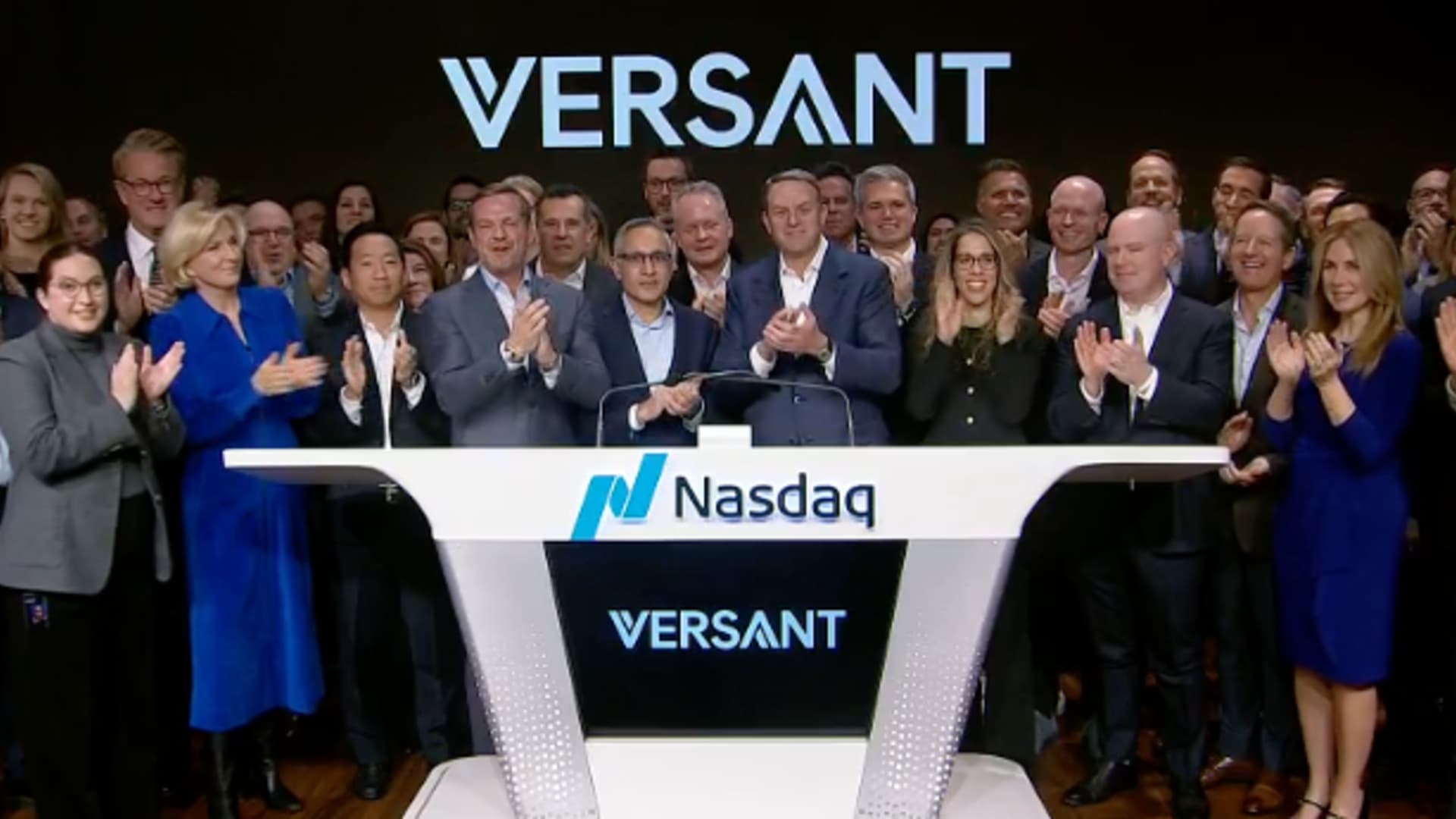
Versant Media Group on Thursday unveiled results for its most recent quarter — its first as a stand-alone company after separating from Comcast’s NBCUniversal and beginning to trade on the Nasdaq earlier this year.
The report revealed continued pressure in the traditional pay TV bundle but highlighted growth in digital platform and licensing businesses.
Versant stock rose roughly 10% in premarket trading.
Linear distribution revenue for its pay TV networks — which include CNBC, MS NOW and the Golf Channel as well as USA, E!, Syfy and Oxygen — was down roughly 7% during the period to $1.01 billion. The company said that was due to subscriber declines and partially offset by rate increases.
Advertising revenue for the first quarter fell 5% to $368 million, which was considered an improvement from the same period last year when it posted a 12% decline.
Revenue from content licensing, however, rose 113.5% to $121 million, due largely to the licensing of the longtime reality TV series hit “Keeping Up With the Kardashians” and other related content to Disney’s Hulu.
Versant has consistently touted its strength in sports and news. On Thursday the company highlighted viewership increases for CNBC and MS NOW as well as continued momentum for the Golf Channel and other live sports and events on its networks.
More than 80% of Versant’s revenue comes from the pay TV business. However, executives have told Wall Street that it aims to eventually rebalance its revenue mix so that 50% is derived from its digital, platform, subscription, ad-supported and transactional businesses.
Versant reported first-quarter revenue from its platforms business, which includes Fandango, GolfNow and some of the already launched direct-to-consumer units, was up 9.5% to $192 million.
“We are executing our strategy by extending the reach of our brands, deepening our connection with audiences, and scaling our digital platforms,” CEO Mark Lazarus said in Thursday’s earnings release. “This performance across Platforms and our core brands reinforces our confidence in evolving the business over time and delivering long-term shareholder value.”
Overall revenue for the period ended March 31 was $1.69 billion, down about 1% compared with the same quarter last year. Wall Street analysts polled by LSEG had expected revenue of $1.62 billion.
Net income attributable to Versant decreased 22% to $286 million, or $1.99 per share, for the quarter, which the company said was due to lower revenue, higher public company costs and interest expense following the spinout from Comcast. This was partially offset by lower taxes during the quarter, it said.
Adjusted earnings before interest, taxes, depreciation and amortization fell 7% from the same period last year to $704 million.
When compared with stand-alone adjusted EBITDA, a metric to more directly compare performance of the pre-spin portfolio companies to current results, adjusted EBITDA was up about 5%, Versant said. That was due to lower entertainment programming expenses and reduced selling, general and administrative costs, which offset revenue declines.
The company also continued on its earlier pledge of returning capital to its shareholders, mainly due to its light debt load.
The company on Thursday declared a quarterly cash dividend for the second quarter in a row, each time at 37.5 cents per share. The new dividend is payable on July 22 to shareholders of record as of the close of business on July 1.
Versant also announced Thursday that it expects to enter into a $100 million accelerated share repurchase agreement, beginning Friday, which it anticipates completing during the second quarter. Versant repurchased nearly 2.7 million shares of Class A common stock during the first quarter, with a remaining authorization of roughly $900 million as of March 31, it said.
Disclosure: Versant is the parent company of CNBC.

Stabilis Solutions CFO Puhala buys $7,360 in common stock
Business
Brad Pitt and JK Simmons Star in David Ayer’s Heart of the Beast, Set for October 2026 Release

LOS ANGELES — Brad Pitt and JK Simmons will lead David Ayer’s gritty new thriller Heart of the Beast, which has been officially scheduled for a theatrical release on October 9, 2026, by Warner Bros. Pictures, marking a high-profile reunion between the director and Pitt after their 2014 collaboration on Fury.
The film, described as a tense psychological action-drama set against the backdrop of a brutal underground fight circuit in modern-day Los Angeles, follows a former special forces operator (Pitt) who is pulled back into a dangerous world when his estranged daughter is kidnapped by a powerful criminal syndicate. Simmons plays a hardened, morally ambiguous fight promoter who becomes both ally and antagonist in Pitt’s quest for justice and redemption.
Ayer, known for raw, intense films like Training Day, End of Watch and Suicide Squad, called Heart of the Beast his most personal project in years. “This is a story about fathers, daughters, regret and the beast that lives inside all of us,” Ayer said in a statement released Wednesday. “Working with Brad again feels like coming home. He brings a depth and physicality to this role that few actors can match.”
Pitt, 62, has been deeply involved in the project’s development, reportedly helping shape the script alongside Ayer. Sources close to production describe his performance as one of the most physically demanding of his career, involving extensive fight choreography and emotional scenes exploring themes of aging, legacy and fractured family bonds.
JK Simmons, fresh off strong supporting turns in major films, brings his signature intensity to the role of the fight promoter. The Oscar winner’s involvement adds significant dramatic weight to the ensemble, which also includes rising stars and veteran character actors yet to be officially announced.
The October 9, 2026 release date positions Heart of the Beast as a major fall awards contender while capitalizing on the post-summer blockbuster lull. Warner Bros. is planning a robust marketing campaign that will lean heavily into the Pitt-Ayer reunion and the film’s visceral fight sequences.
Early footage screened for select executives has reportedly generated strong buzz, with some comparing the film’s tone to John Wick meets The Fighter, blending brutal action with emotional depth. Cinematographer Lawrence Sher, who previously worked with Ayer on Suicide Squad, returns behind the camera, promising a gritty, realistic visual style that captures the raw underbelly of Los Angeles’ underground scene.
For Pitt, the project represents another step in a late-career renaissance that has seen him deliver acclaimed performances in Once Upon a Time… in Hollywood, The Fabelmans, Bullet Train and the upcoming F1. His ability to balance commercial appeal with artistic credibility continues to make him one of Hollywood’s most bankable and respected stars.
Ayer’s direction brings a grounded authenticity to the material. Known for his police procedural roots and willingness to explore moral ambiguity, the filmmaker is expected to deliver a character-driven thriller that transcends typical genre fare. Production wrapped principal photography in late 2025 after shooting across various gritty Los Angeles locations, including actual underground fight venues.
The film’s marketing will likely emphasize its themes of redemption and fatherhood, topics that resonate personally with Pitt given his own well-publicized family dynamics. While the actor has remained relatively private about his personal life, insiders say the role allowed him to explore complex emotions around legacy and reconciliation.
JK Simmons brings both gravitas and unpredictability to his supporting role. The veteran actor has proven time and again his ability to steal scenes and add layers of complexity, making his character a potential standout in what is primarily a Pitt vehicle.
Distribution plans include a wide theatrical release backed by significant IMAX and premium large format screenings to showcase the film’s intense action sequences. International rollout will follow closely, with strong expectations in key markets like Europe and Asia where both Pitt and Ayer enjoy dedicated followings.
The October release date strategically avoids direct competition with major holiday tentpoles while positioning the film strongly for year-end awards consideration. Early predictions from awards analysts suggest potential nominations in categories like Best Actor for Pitt, Best Supporting Actor for Simmons, and technical categories including cinematography and sound.
For Warner Bros., Heart of the Beast represents an important piece of its 2026 slate as the studio balances franchise fare with original, adult-oriented thrillers. The project also underscores Pitt’s continued value as both a box office draw and prestige talent.
As production enters post-production, anticipation continues to build. The combination of Ayer’s visceral style, Pitt’s star power and Simmons’ supporting presence creates a compelling package that could resonate with both mainstream audiences and critics.
Pitt’s involvement in Heart of the Beast also highlights his evolution as a producer through Plan B Entertainment. The company has backed several acclaimed films in recent years, and this project further cements Pitt’s influence behind the camera as well as in front of it.
For fans, the October 9, 2026 release date provides a clear target on the calendar. Whether drawn by the promise of intense action, emotional depth or the chance to see two powerhouse performers collide on screen, Heart of the Beast is shaping up to be one of the most anticipated films of the year.
As details continue to emerge in the coming months, Heart of the Beast stands poised to deliver the kind of raw, character-driven thriller that has become increasingly rare in an era dominated by franchises. With Pitt and Simmons leading the charge under Ayer’s unflinching direction, the film promises to leave a lasting impression when it hits theaters this fall.
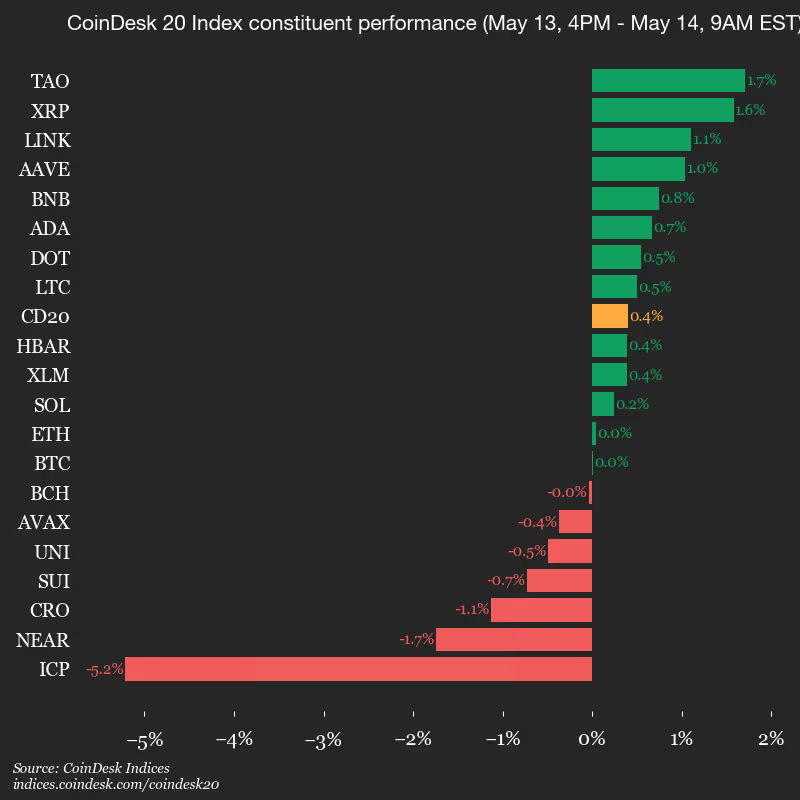
Bittensor (TAO) rises 1.7%, leading index higher
Tony Dokoupil pauses CBS broadcast for crew member's 'medical emergency' live on air: 'Is he okay?'

Major Spygate update as hearing date set and play-off final now in jeopardy

Manchester United reach agreement with Casemiro over contract clause amid transfer speculation

US brings back mandatory military draft registration

Steven Gerrard disagrees with Gary Neville over ‘shock’ Chelsea and Arsenal claim | Football


-
 Crypto World6 days ago
HarrisX Poll Found 52% of Registered Voters Support the CLARITY Act
-

 Fashion6 days ago
Weekend Open Thread: Marianne Dress
-

 Fashion3 days ago
Coffee Break: Travel Steam Iron
-

 Fashion3 days ago
What to Know Before Buying a Curling Wand or Curling Iron
-

 Tech4 days ago
Auto Enthusiast Carves Functional Two-Stroke Engine from Solid Metal
-

 Politics3 days ago
What to expect when you’re expecting a budget
-
 Business5 days ago
Ignore market noise, India’s long-term story intact, say D-Street bulls Ramesh Damani and Sunil Singhania
-

 Politics5 days ago
Politics Home Article | Starmer Enters The Danger Zone
-

 Tech3 days ago
GM Agrees To Pay $12.75 Million To Settle California Lawsuit Over Misuse Of Customers’ Driving Data
-

 Politics7 days ago
Simon Cowell Says He Was ‘Horrible’ To Susan Boyle During BGT Audition
-

 Entertainment7 days ago
General Hospital: Ric & Ava Bombshell – Ric’s Massive Secret Exposed!
-

 Crypto World5 days ago
PROS explodes 48% as Upbit and Bithumb listings ignite demand
-

 Crypto World4 days ago
CZ says US crypto rivals tried to block Trump pardon
-

 Sports6 days ago
Bayern Munich vs PSG UEFA Champions League SF2 live match time, streaming | Football News
-

 Entertainment6 days ago
YNW Melly Denied Bond Again Ahead Of Double Murder Retrial
-

 Tech3 days ago
GM agrees to $12.75M California settlement over sale of drivers’ data
-

 Politics7 days ago
Euphoria Creator Praises Sydney Sweeney Amid Season 3 Scenes Backlash
-
Entertainment7 days ago
Hantavirus — cause of death for Gene Hackman's wife — at the center of Dutch cruise outbreak
-
 Sports7 days ago
IPL 2026: Bhuvneshwar Kumar scripts history, becomes first pacer to… | Cricket News
-
Crypto World6 days ago
The Hantavirus Danger: Can a Potential Outbreak Spark a New Meme Coin Frenzy?
You must be logged in to post a comment Login