





But economists warn of potential recession ahead as the impact of the Middle East conflict deepens

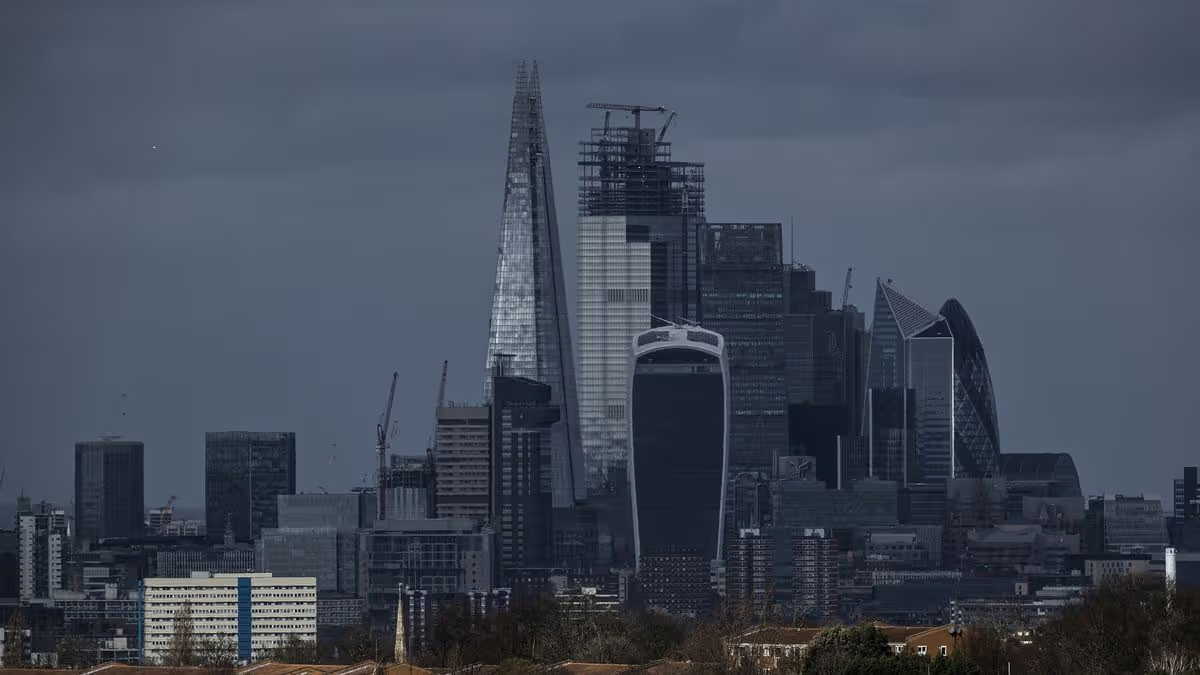
View of London(Image: Getty Images)
The UK economy maintained its upward trajectory in March, with growth surpassing expectations, according to official figures, though the data may represent the calm before the storm in the months ahead.
The Office for National Statistics (ONS) revealed that GDP growth stood at 0.3 per cent in March, contributing to overall growth of 0.6 per cent across the first quarter.
The services sector expanded by 0.8 per cent in the first quarter, while production edged up 0.2 per cent and construction rose by 0.4 per cent.
“Growth picked up in the first quarter of the year, led by broad-based increases across the services sector,” said Liz McKeown, director of economic statistics at the ONS.
“Within that wholesale, computer programming and advertising performed particularly well.”, as reported by City AM.
The latest figures cover the first month of the Iran war, with data from April onwards expected to lay bare the economic damage caused by a collapse in global trade following disruption across the Strait of Hormuz.
Chancellor Rachel Reeves said “now is not the time to put our economic stability at risk” following the release of the figures.
“Today’s figures show the government has the right economic plan,” Reeves said.
“The choices I have made as Chancellor mean our economy is in a stronger position as we deal with the costs of the war in Iran.
“This government is getting on with the job of building an economy that is stronger, more resilient, and prepared for the future.” Shadow chancellor Sir Mel Stride said: “The chaos surrounding the Labour leadership is destabilising Britain’s economy.”
Projections for UK economic growth in 2026 have been cut. Capital Economics deputy chief UK economist Ruth Gregory stated that “prolonged political instability” represented an “extra downside risk” to forecasts.
“We would be very surprised if growth doesn’t weaken from May as the temporary boost from stockpiling unwinds and the squeeze on households’ real incomes from higher energy prices intensifies,” Gregory said.
“In our adverse scenario, the economy suffers a mild recession. So the economy will probably give whoever is Prime Minister a rough ride.”
Energy markets have been in upheaval since the outbreak of war, with Brent crude jumping by around 50 per cent since March amid concerns over ongoing supply disruption.
Economists have cautioned that the UK could face more severe consequences than other advanced economies as a net energy importer.
Elevated import costs are likely to filter through to inflation while weakening global demand could impact exports and suppress growth.
The Treasury will be reviewing the data before announcing an energy support package for businesses and consumers.
Survey data has revealed that consumer confidence has dropped sharply since the war commenced. Business investment, which had displayed tentative signs of recovery earlier in the year, is widely anticipated to stagnate as bosses await clarity.
Chancellor Rachel Reeves is also grappling with the question of whether she could retain her role under a new Labour leader, should Sir Keir Starmer be forced out.
Bond traders are anticipating a shift to the left within the government, one that would result in fiscal rules being relaxed and Labour’s growth strategy being cast aside.
Starmer has previously pledged to remain as leader, citing geopolitical instability as a key factor weighing on the UK economy.
Following the King’s Speech on Tuesday, he declared he would “tear down” the status quo and pledged a “radical agenda” in a bid to reassure restless backbenchers.














































You must be logged in to post a comment Login